
Grilling pizza is not “just baking outside.” It’s a tiny, high‑heat, lid‑down bake where the margin for error is about the width of a crust bubble. One minute too early and you get pale, bready bottoms. One minute too late and you get charcoal freckles, bitter flour scorch, and toppings that dry out before the cheese even finishes melting.
And here’s the part most guides never say out loud: the grill isn’t the hard part. The heat management is. Great grill pizza is a three‑piece puzzle: a hot, stable deck (your stone/steel/pan), strong top heat (the lid doing “oven work”), and a launch technique that doesn’t turn your dough into a folded calzone in front of your guests.
If you’re shopping for pizza stones for grills, you’re already on the right path. A good stone or steel doesn’t just “cook pizza.” It turns your grill into a predictable little pizza oven: it stores energy, evens out hot spots, dries the dough where it matters, and buys you time so you’re not sprinting between flare‑ups and undercooked centers.
This guide is built for real life. Not “spec-sheet comparisons.” I’m going to focus on what actually changes outcomes: how thickness affects heat recovery between back‑to‑back pies, why perforated peels keep bitter burnt flour off your crust, how to place your stone so the top cooks at the same pace as the bottom, and the cleaning habits that keep your stone from turning into a smoke machine.
Below are 15 strong options—cordierite stones, a serious pizza steel, one cast‑iron wildcard, and several sets that include the tools most people forget they need until the first sticky launch.
How to Choose the Right Pizza Stones For Grills
A “good” grill pizza setup isn’t the one with the most accessories. It’s the one that makes your cookout feel calm: you preheat, you launch, you rotate once or twice, and you pull a crisp, browned crust that doesn’t sag in the middle. To get there, you need to choose a deck that matches how your grill actually behaves.
1. Start with your grill type (because heat behaves differently)
This matters more than diameter, thickness, or any marketing badge. Your grill’s heat profile determines whether your pizza bakes like a brick oven—or like a frying pan.
- Gas grills: Strong, controllable bottom heat. Great for pizza—if you create a buffer so the bottom doesn’t outrun the top.
- Charcoal kettles: Incredible top heat potential (especially with lid on). You’ll love a stone that holds steady heat and resists shock.
- Pellet grills / smokers: Stable, even heat, but sometimes weaker top browning. Bigger stones can help, and placement becomes critical.
- Kamados: The closest “mini pizza oven” feel you can get. A sturdy stone (or steel if you know what you’re doing) can be magic here.
- Small portable grills: Space is tight, and top heat is often limited. Smaller stones + parchment strategy can save you.
2. Choose your deck material like a pizza-maker, not a shopper
Most people buy a stone, crank the burners, and wonder why the crust burns before the cheese finishes. That’s not bad luck. That’s the physics of conduction vs radiation.
Cordierite stone: steady, forgiving, consistent
Cordierite stones are popular because they’re stable, porous, and forgiving. They store heat well and tend to cook evenly. The micro‑porosity helps drive off moisture near the dough surface (that’s part of what creates that “set” base). If you’re new to grill pizza, a cordierite stone is usually the easiest path to consistent wins.
Pizza steel: faster browning, higher intensity, requires control
Steel conducts heat much faster than ceramic stones. That can be incredible for thin, crisp styles—especially when your dough is well fermented and you want that fast set and deep browning. But the tradeoff is real: steel can burn bottoms if your top heat isn’t strong enough (or if you place it too close to burners/coal).
Steel is an “upgrade” tool—amazing in the right hands, punishing if you copy‑paste stone habits onto it.
Cast iron: break‑proof and powerful (but heavy and hungry for preheat)
Cast iron sits between stone and steel in the “feel.” It holds a lot of heat and browns well, and it won’t crack like a stone can. But it’s heavy, it needs a real preheat, and it rewards you most when you treat it like a deck: hot, stable, and not constantly moved around.
3. Size is not about “bigger is better”—it’s about airflow and your grill’s ceiling
A huge stone can be a dream… or a self‑inflicted problem. The right size is the largest deck that still allows proper airflow. You want a gap around the stone so hot air can circulate and brown toppings. If you block airflow, you’ll get great bottoms and pale tops.
- 13″–15″ round: Great for most grills and easy to maneuver. Perfect if you’re making one pie at a time.
- 15″ x 12″ rectangle: Flexible shape for “not perfectly round” pizzas, flatbreads, and breads.
- 16″ round: Big deck energy. Great for larger pies, but confirm it fits with clearance and airflow.
- 20″ rectangle (or larger): Party mode. Excellent for multiple pies and breads—if your grill/oven can physically handle it.
4. Thickness is your “heat battery” (and it changes how stressful pizza night feels)
Thickness isn’t a flex. It’s the answer to this question: “When I drop cold dough onto this surface, how quickly can it recover?”
- Thinner stones: Heat up faster and are lighter. But they can lose heat quickly between pies—especially if you’re baking several in a row.
- Medium thickness (around 0.6″): The best “everyday sweet spot” for most grillers: stable heat, good recovery, still manageable to move.
- Very thick / very heavy decks: Incredible stability and browning power, but they demand longer preheats and safe handling habits.
5. Your peel choice can make or break you (literally)
A stone can be excellent and still produce miserable pizza if launching is chaotic. Most “sticky launch” disasters are not dough problems—they’re workflow problems.
- Wood peels: Great for launching because wood grips flour differently. They can warp if soaked—wipe and air dry, don’t bathe them.
- Perforated metal peels: Great for grill pizza because excess flour falls away (less bitter burning), and steam escapes faster after the bake.
- Folding metal peels: Convenient storage, especially for small spaces. Just be mindful of rigidity with heavier pies.
If you’re launching wet, Neapolitan‑style dough, parchment paper can be a cheat code: build the pizza on parchment, launch, then slide the parchment out after 30–90 seconds once the bottom sets.
6. Placement is your “top heat” control
People think the stone is the whole story. It isn’t. The lid is the secret. Your goal is to mimic an oven: strong top heat plus a hot deck.
- For gas grills: Use a two‑zone approach. Put the stone over indirect heat (burners off under the stone, on around it) so the top can catch up.
- For charcoal kettles: Bank coals to one side or use a charcoal ring approach; place stone away from direct coal contact and rely on lid heat.
- For pellet grills: Place stone where airflow is strongest; preheat longer and consider thinner pies for better top browning.
7. Care and cleaning is not “aftercare”—it’s performance
A stone’s surface is supposed to season naturally. Dark spots happen. They’re not failure; they’re your stone becoming more non‑stick. The big mistakes are soap, soaking, and thermal shock.
- No soap. Porous decks can hold onto odors.
- No soaking. Water can sit in pores and contribute to cracking or steam‑shock.
- No sudden temperature swings. Put the deck in the grill while it’s cool, preheat gradually, and let it cool down slowly.
- Scrape hot, wipe cold. After cooking, let the deck cool, then scrape residue and wipe with water (or use a dedicated scraper/brush).
Quick Comparison: 15 Pizza Stones For Grills Picks
Use this table to quickly match your grill style to the right deck. Then jump into the deep reviews for the real‑life details— like launch behavior, heat recovery between pies, and which sets actually include the tools you’ll use every weekend.
On smaller screens, swipe or scroll sideways to see the full table.
| Model | Material / style | Grill strength | Best match | Amazon |
|---|---|---|---|---|
| Hans Grill Pizza Stone PRO XL (15 x 12) | Cordierite + perforated peel | Cleaner launches (less burnt flour), crispier bottoms, strong all‑around workflow | Most backyard grillers who want consistent results fast | Amazon |
| KitchenStar 16" Pizza Making Set (6 pcs) | Full kit | Great tool bundle (peel + rocker + brush) with a big, high‑heat deck | Families who want a “complete pizza night” setup | Amazon |
| Primica Pizza Steel XL (16 x 13.4) | Steel | Fast browning and intense crisp—great for thin styles when top heat is strong | Experienced grillers chasing “pizza shop” crunch | Amazon |
| Unicook Large Rectangular Stone (20 x 13.5) | Cordierite (extra large) | Massive deck + strong heat retention for multiple pies | Big grills, big ovens, party‑style pizza nights | Amazon |
| Ritual Life 16" Round Stone Kit | Round kit | Large round deck + detachable handles/rack for safer movement | Grillers who want a big round pie with better handling | Amazon |
| Ritual Life 15" Rectangular Stone Set (handles) | Rect kit | Handles help with safety; solid “giftable” bundle | Beginners who want confidence + safer lifting | Amazon |
| Hans Grill Rectangular Stone (15 x 12) + wood peel | Cordierite + wood peel | Simple, sturdy, predictable deck with classic peel feel | People who want “no fuss” stone + peel | Amazon |
| Hans Grill Circular Stone (15") + wood peel | Cordierite (round) | Classic round deck for traditional pies | Round‑pizza people who want a stable stone | Amazon |
| GOFOWRK 5‑Piece Stone Set (15 x 12) | Metal tools set | Thick deck + metal peel/cutter combo for practical cleanup | Grillers who prefer metal tools over wood | Amazon |
| KitchenStar 16" Stone (handles) + rack + scraper | Cordierite (handles) | High heat resistance + safer movement, with a simple accessory bundle | People who want handles without a full kit | Amazon |
| Cuisinart 3‑Piece Pizza Grilling Pack (13") | Compact kit | Foldable peel + reliable stone for smaller grills and storage | Small grills, first‑timers, quick weekend pies | Amazon |
| 4‑Piece Rectangular Stone Set (15 x 12) + oak peel | Value kit | Includes parchment + basics for low‑stress launches | Budget shoppers who still want a full starter bundle | Amazon |
| Lodge Cast Iron Pizza Pan (15") | Cast iron | Break‑proof deck with serious heat retention | People who want “never crack” durability | Amazon |
| Ritual Life 20" Pizza Stone Kit (20 x 13.5) | Huge kit | Massive deck for big batches, plus a straightforward accessory set | Large ovens/grills + holiday baking + pizza nights | Amazon |
| ROCKSHEAT Extra‑Large Stone (23.6 x 15.8) | Mega stone | Turns big grills into a “pizza deck” for crowds | Large grills, big parties, serious batch baking | Amazon |
In‑Depth Reviews: 15 Grill‑Ready Picks That Make Pizza Night Easier
Now we’ll go pick by pick. I’m going to talk like a griller, not a catalog: how each deck behaves under real heat, what helps you launch cleanly, what makes back‑to‑back pizzas easier, and what to watch out for so your first cook doesn’t turn into a smoky, sticky mess.
1. Hans Grill Pizza Stone PRO XL (15 x 12) – The “Clean Launch, Crisp Crust” Workhorse

If you want one setup that immediately makes grill pizza feel more “professional,” this is it—because it solves the part that ruins most first attempts: the launch. The star of this kit is not only the cordierite deck, it’s the perforated peel. That detail is quietly powerful on a grill: excess flour drops away before it hits the stone, which reduces bitter burnt flour and keeps the deck cleaner over multiple pies. Then, once the pizza is baked, those perforations help steam escape from the underside faster—so your crust stays crisp when you slice and serve.
The stone itself is a sweet‑spot size for real homes: large enough for family pies and rectangular “rustic” shapes, but not so massive that it blocks airflow or becomes a nightmare to store. It also feels stable in the grill—important because a wobbly deck turns your rotation into a topping slide. If you’ve ever tried to rotate a pizza and watched half the cheese drift to one side, you already know why that matters.
Where this kit really earns its “best overall” label is in how predictable it feels after one practice run. You’ll get the most out of it if you treat the deck like a little oven floor: put it in while the grill is cool, preheat with the lid closed, and give it enough time to soak heat. Then you can cook with confidence instead of guesswork.
Why it’s a standout
- Perforated peel advantage – Less burnt flour bitterness, cleaner deck, crispier under‑crust after the bake.
- Rectangular flexibility – Great for round pizzas, rectangles, flatbreads, and artisan bread bakes.
- Predictable heat behavior – A stable, consistent deck makes rotations and timing easier.
- “Looks used” is normal – The surface seasons naturally and gets more non‑stick with time.
Good to know
- Like any stone, it can crack from thermal shock—preheat gradually and don’t move it hot onto a cold surface.
- Perforated peels love proper dough prep; if your dough is very wet, parchment for the first minute can reduce stress.
- Flour management matters: use a light dusting (semolina is great) rather than a snowstorm of flour that will burn.
Ideal for: most grill owners who want a reliable, repeatable setup that makes launching and crisping noticeably easier from day one.
2. KitchenStar 16-inch Pizza Making Set (6 pcs) – The “Everything You Actually Use” Bundle
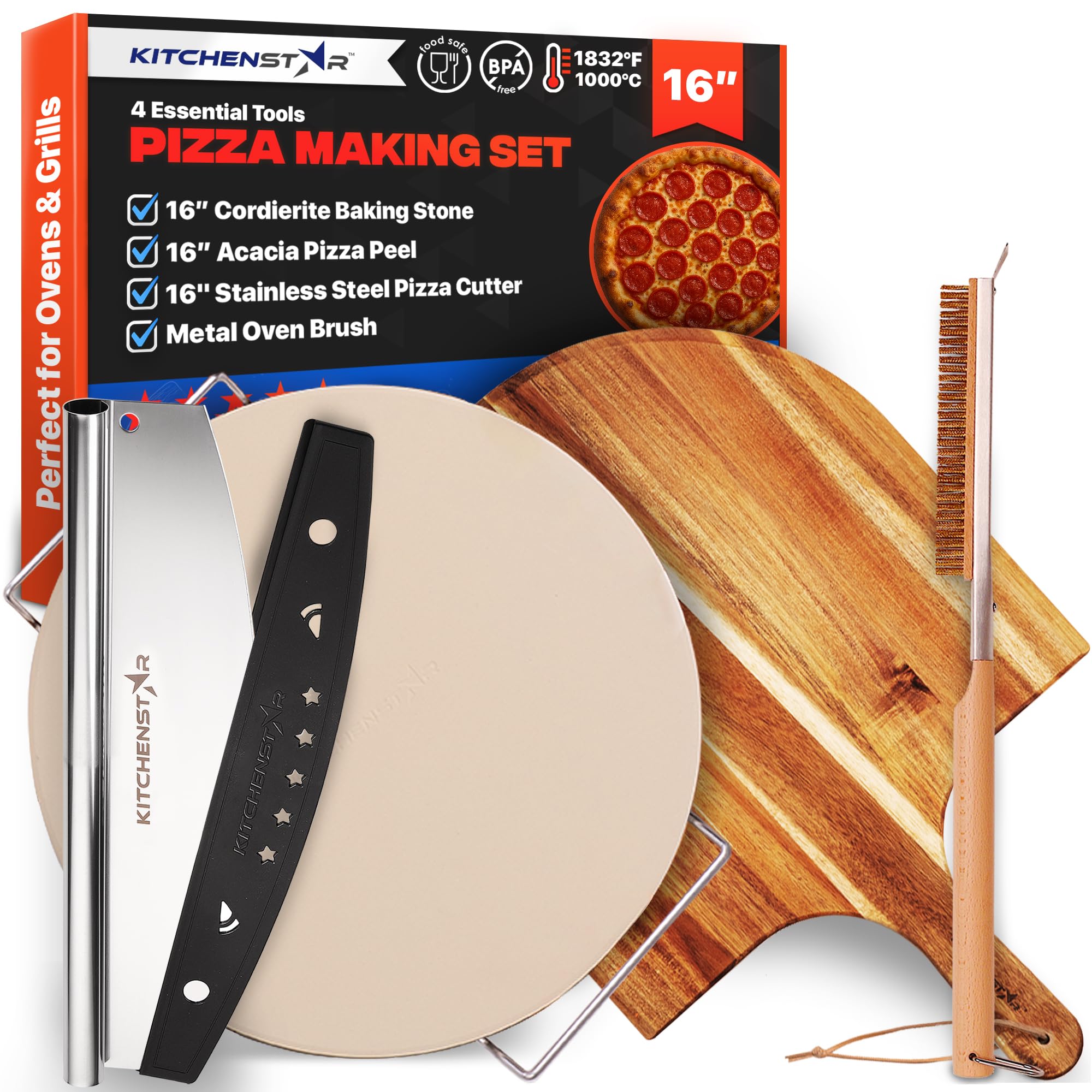
Some sets include a bunch of “nice to have” stuff you never touch again. This one is different. The reason it feels so satisfying is that it covers the full pizza workflow: launch, bake, pull, slice, clean. That sounds basic—until you’ve done grill pizza with the wrong tools and realized how fast a fun dinner turns into a juggling act.
The included rocker cutter is a bigger deal than most people expect. Wheels tend to drag toppings, especially when you have a crisp bottom and stretchy cheese. A rocker lets you cut cleanly with one decisive pass. That means your slices stay pretty and your cheese stays where you put it. The peel and the brush/scraper combo round out the “real life” value: you can launch confidently, then clean residue without picking at the stone like it’s a fossil dig.
The 16″ deck size hits a beautiful middle ground: large enough for a genuinely generous pie, but still manageable for most grills and ovens. For backyard pizza nights with friends, that size gives you enough surface area to bake confidently without pushing ingredients to the edge.
Why it works so well
- True end‑to‑end workflow – Tools you’ll actually use every time: peel, rocker, brush, rack.
- Clean slicing – Rocker cutters reduce topping drag and keep slices neat.
- Large deck feel – Enough room for bigger pies without instantly needing “mega stone” storage.
- Better cleanup habits – Having the right scraper encourages proper care (which improves performance over time).
Good to know
- Any big deck needs real preheat time; the payoff is heat recovery between pies.
- Wood peels stay happiest with wipe‑clean care and air drying—avoid soaking and keep them conditioned.
- If you store tools in a tight space, check how you’ll hang or stack the peel and cutter safely.
Ideal for: families who want one purchase that upgrades the whole pizza night experience—especially if you’re tired of makeshift tools and messy cleanup.
3. Primica Pizza Steel XL – The “Serious Crunch” Deck for Thin, Blistered Pies

A steel deck is not a “stone alternative.” It’s a different cooking tool with a different personality. Steel moves heat into dough faster, which means you can get that quick set and deep browning that screams “pizza shop” when the rest of your setup supports it. If you want thin, crisp styles or New York‑leaning pies with a firm base, steel can be a huge upgrade.
But here’s the expert reality: steel is only as good as your top heat. If the top of your pizza can’t keep up, your bottom will finish first. That’s when people say “steel burns everything.” It’s not the steel—it’s the placement. On a gas grill, the smartest move is often indirect heat under the steel with burners running around it and the lid closed. On charcoal, you want a strong lid‑heat environment and the steel not sitting directly above a roaring coal pile.
The payoff is speed and texture. When you nail it, the crust sets quickly, toppings stay juicy (because the bake is shorter), and you get that crisp chew that makes slices hold their shape. It’s also a multi‑use tool: breads, flatbreads, and even smash‑style sears on the grill become possible—just remember that it’s heavy and holds heat.
Why people love steel
- Fast browning – Excellent for crisp, thin styles when your top heat is strong.
- Heat recovery is excellent – Back‑to‑back pizzas feel easier because steel rebounds quickly.
- Durable, long‑term tool – Treated like cast iron (dry + light oil), it’s built to last.
- Versatility – Great for pizza, breads, and high‑heat cooking experiments.
Good to know
- Steel can burn bottoms if placed over direct heat; indirect setup is your best friend.
- It’s heavy—plan your storage and your lifting habits.
- Keep it dry and maintained; unlike stone, steel can rust if neglected.
Ideal for: grillers who already understand their grill’s heat zones and want the fastest, crispest deck possible for thin, crunchy pies.
4. Unicook 20" Rectangular Baking Stone – The Party‑Mode, Multi‑Pizza “Oven Floor”

A 20″ stone changes the vibe of pizza night. Instead of “one pie at a time, hope it works,” you start thinking like a small pizzeria: you can bake large pizzas, run multiple personal pies, or do bread and appetizers without constantly resetting your setup. That’s the advantage of a big deck: more thermal mass, more real estate, and more consistency once it’s fully heat‑soaked.
This stone is especially compelling for grills because it can smooth out uneven heat and create a more stable baking environment. On gas grills, it’s also a practical workaround for burner hot spots: the stone becomes your heat buffer. But there’s a tradeoff you need to respect: size requires airflow. If your grill is too small and the stone blocks circulation, you’ll get fantastic bottoms and under‑browned tops. The fix is simple—choose a grill that can fit it with breathing room, or move down to a 16″ deck.
This is also a stone that rewards discipline. It likes a gradual preheat and a full heat soak (especially before the first pizza). Once it’s hot, it stays hot. That means your second and third pies bake more confidently—less “cold dough shock,” fewer pale centers.
Why it’s a powerhouse
- Huge baking surface – Great for big pies, multiple small pies, and batch baking.
- Stable heat – Excellent for consistent bottoms once fully preheated.
- Great for grills and ovens – Functions like a true deck surface.
- Simple care – Scrape, rinse, dry—stains are normal and often improve release.
Good to know
- Confirm fit and airflow; oversized stones can choke circulation in smaller grills.
- It’s heavy—plan a safe method for moving it (or leave it in place during the season).
- If sauce or cheese spills, expect smoke on the next preheat; use parchment under messy pies if you want a cleaner deck.
Ideal for: big‑grill owners, entertainers, and anyone who wants a “batch baking” deck that makes pizza night feel smooth instead of frantic.
5. Ritual Life 16" Round Stone Kit – Big Pie Energy With Safer Handling
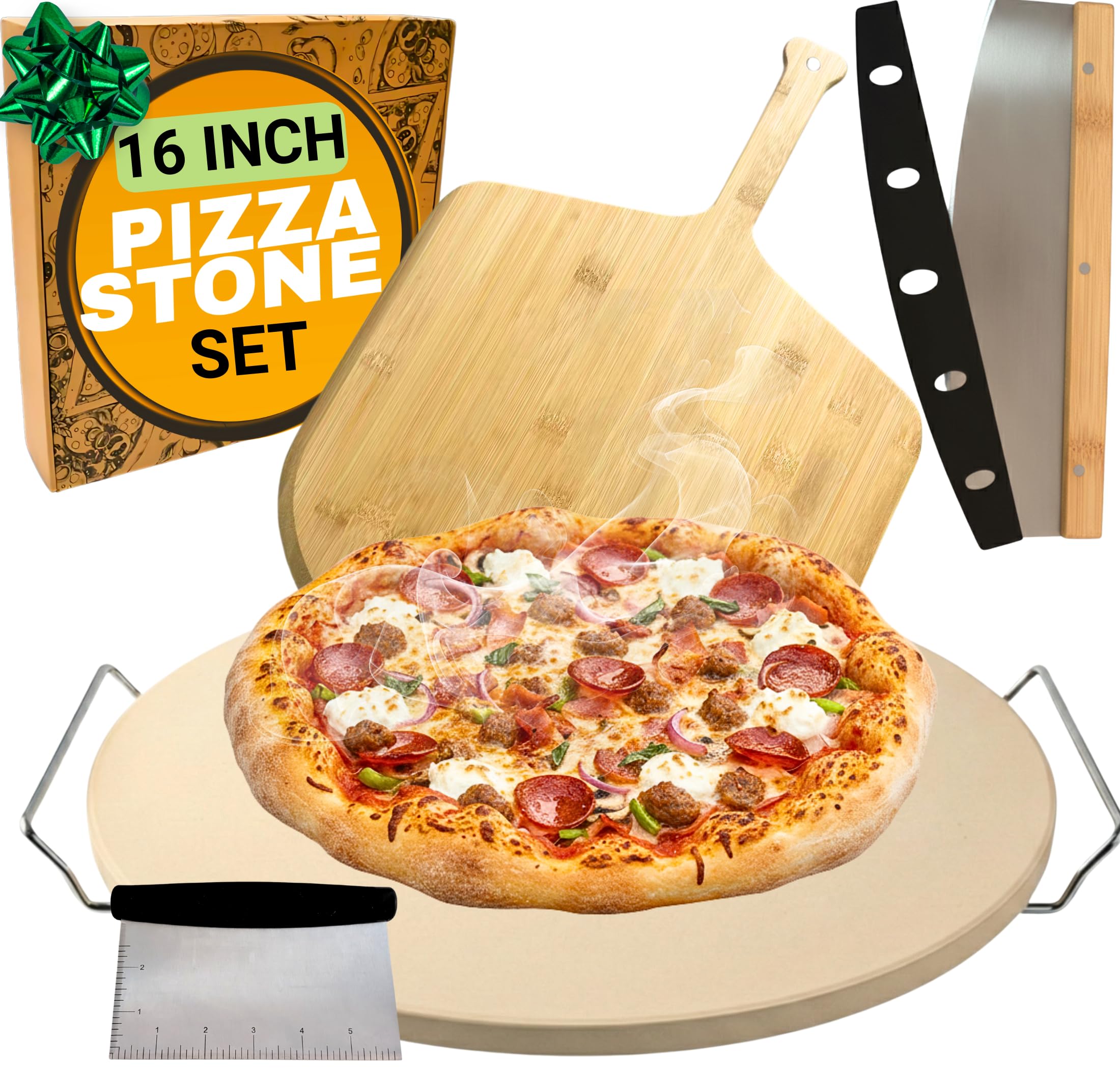
A 16″ round deck is the “I’m serious about pizza night” size. It gives you room for a proper family pie and enough margin to rotate without panic. But big stones introduce a new issue: handling. That’s why this kit’s handles/rack concept is so useful. It encourages safer habits: you can move the stone when appropriate and let it cool on a rack rather than shocking it on a cold countertop.
In practice, this kit shines for people who like to host. The stone is large enough to produce that “toasty bottom” effect people chase on grills, and the included tools make it easier to manage the entire process. It’s also a good match for grills that can build strong lid heat—because a bigger deck doesn’t help if your top is weak.
One honest tip: this size can be too big for some ovens and some grills. That’s not a quality problem—it’s a geometry problem. Measure your cooking area and make sure you still have airflow. If you do, this is a very satisfying “big pizza” setup that feels stable and confident.
Why it earns a spot
- Large round deck – Great for big pies and easier rotation.
- Handles/rack concept – Helps with safer cooling and reduces thermal shock habits.
- Strong crust results – Big surface and solid heat retention deliver a crisp base.
- Useful tool bundle – Better than buying random pieces separately.
Good to know
- Size can be too large for smaller grills/ovens—measure before you commit.
- Any handle system still needs heat‑safe gloves and a calm workflow.
- Big stones like longer preheats; don’t rush the first pie.
Ideal for: anyone who wants a large round deck with safer handling built into the setup—especially great for hosting and frequent pizza nights.
6. Ritual Life 15" Rectangular Stone Set (Handles) – Beginner‑Friendly, Gift‑Ready, Practical
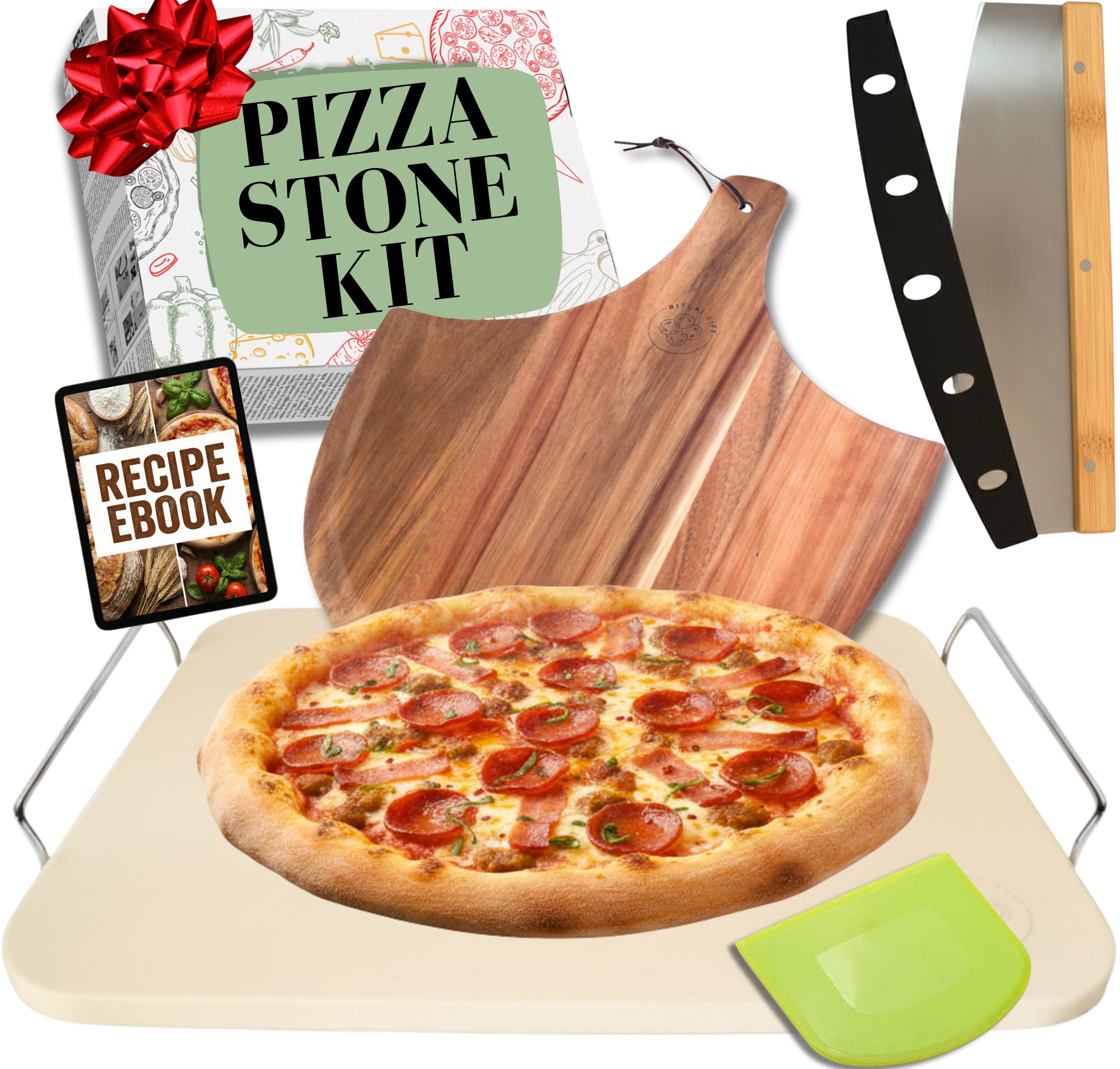
If you’re newer to grill pizza, this kit has a smart advantage: it doesn’t just give you a deck—it nudges you toward better habits. The removable handles can act like a safety upgrade, and the “use upside down as a resting rack” idea is exactly the kind of detail that prevents cracking. Thermal shock is the silent killer of stones; anything that helps you cool safely is a performance feature.
The rectangular size is also quietly beginner‑friendly. New pizza makers often build pizzas that aren’t perfectly round (welcome to reality). A rectangle gives you more forgiveness while your stretching skills catch up. It’s also excellent for bread, reheating pizza without sogginess, and flatbreads, so it feels useful even on nights you’re not doing full pizza production.
One important expert note: do not “season” a porous stone with oil. That’s a common internet myth. Oil can soak into pores and produce smoke and odors when heated. Let the stone season naturally through cooking; it will darken over time and release better.
Why beginners do well with it
- Handles for safer movement – Helps build good habits and reduces risky lifting.
- Rectangular versatility – Great for pizzas, bread, pastries, and reheat sessions.
- Complete kit feel – Peel + cutter + dough tool makes the workflow smoother.
- Natural seasoning payoff – Gets better at release as it builds character.
Good to know
- Cleaning can be a little “hands-on” if cheese bakes onto the surface—use parchment for messy pies.
- Wood handles on cutters should be treated gently; harsh scrubbing can damage finishes.
- Like all stones, it wants a full preheat (and patience) for best results.
Ideal for: beginners and gift buyers who want a practical kit with safer handling and strong “first pizza night” success potential.
7. Hans Grill Rectangular Stone (15 x 12) + Wood Peel – The “No‑Fuss” Everyday Option

This is the version you buy when you want the essentials done right: a sturdy cordierite deck and a classic wooden peel. For a lot of home cooks, wood peels feel more intuitive for launching—especially if you’re using a moderate‑hydration dough. Wood tends to “hold” flour differently than smooth metal, so the pizza can release with less drama once you learn the timing.
The rectangular shape is also a quiet advantage on grills. Many grill cooking areas are rectangular, and this format can play nicely with grates and heat zones. It’s also excellent for “pizza night plus”: baking bread, reheating slices, and making flatbreads without a floppy middle.
The most important tip with this setup is peel care and launch rhythm. Build fast, launch fast. If a pizza sits too long on a wooden peel, moisture migrates and sticking increases. If you want a calmer workflow, build on a lightly floured surface and transfer to the peel right before launching, or use parchment for the first minute to reduce anxiety.
Why it’s a good everyday pick
- Simple and sturdy – A dependable deck that does the core job well.
- Rectangular flexibility – Great for imperfect shapes and multi‑use baking.
- Wood peel feel – Many people find launching more intuitive with wood.
- Seasons with use – Stains and darkening usually improve release over time.
Good to know
- Wood peels can warp if soaked—wipe clean and air dry flat.
- Flour can burn on grills; use just enough for release, not a heavy layer.
- Preheat gradually to avoid cracking and to build a stable bake environment.
Ideal for: home cooks who want a straightforward stone + peel combo that works for pizza and lots of other baking without extra complexity.
8. Hans Grill Circular Stone (15") + Wood Peel – Traditional Round Pies, Consistent Results

If you’re a “round pizza only” person, a circular stone just feels right. It matches the shape you’re building, and it makes rotation feel more natural because your pie isn’t drifting toward a corner. This 15″ deck is also a sweet spot: large enough to feel like a real pizza, but still manageable on many grills.
The big advantage of a round deck on a grill is airflow around the edges. Rectangular stones can sometimes sit closer to the grill walls and restrict circulation. Round stones often leave natural gaps that help hot air wrap around the pie and brown toppings more evenly. That’s not guaranteed—but it’s a helpful tendency if your grill struggles with top browning.
Like the rectangular version, the wooden peel experience is about timing. Don’t let a dressed pizza sit too long on the peel. If you want calm, build your base, sauce it lightly, then top quickly and launch. You can also keep a small bowl of semolina nearby and dust as needed to keep things sliding.
Why round can be easier
- Great airflow potential – Often leaves edge gaps for hot air circulation.
- Natural rotation feel – Round deck matches round pies and simplifies turning.
- Classic pizza vibe – Great for traditional family pies.
- Multi‑use baking – Still useful for breads and reheating slices.
Good to know
- Round stones are less flexible for rectangular bakes and multiple small items.
- Wood peel care matters (wipe, dry, condition) to prevent warping and cracking.
- As with all stones, gradual preheat and slow cool protect longevity.
Ideal for: people who mostly make classic round pizzas and want a stable, familiar deck shape that plays well with grill airflow.
9. GOFOWRK 5 PCS Set (15 x 12) – Thick Deck + Metal Peel for Practical Grill Work

This kit is built around a simple idea: make pizza night feel more “tool‑ready.” The deck is thick enough to feel stable, and the included metal peel and rocker cutter give you a more “grill station” workflow—easy wipe‑down tools, no worry about wood soaking, and a cutter style that’s great for clean slices.
For grillers specifically, the thickness matters because grills can run hot and uneven. A thicker deck is a better buffer, which can help reduce those surprise scorched spots when your burners or coal bed spike. But the real win is how this kit encourages a proper preheat habit. Many grill pizza successes come down to one boring truth: you need the deck fully hot before you launch. That’s what gives you the quick set and crisp base without sticking.
One very real “grill life” note: metal peels can bend if you force them under a stuck pizza. That’s not a product defect so much as a technique moment. If your pie sticks, don’t pry harder—give it 10–15 seconds to bake and release naturally, then shimmy gently. A light dusting of semolina or cornmeal (used sparingly) can also prevent the problem in the first place.
Why grillers like it
- Thick, stable deck – Helps even out heat and supports crisp bottoms.
- Metal peel practicality – Easy maintenance for outdoor cooking workflows.
- Rocker cutter included – Clean slices with less topping drag.
- Beginner‑friendly kit – Covers the key steps without extra fluff.
Good to know
- Metal peels can flex if forced under stuck dough—use gentle release technique.
- Thin, high‑hydration dough benefits from parchment for the first minute.
- Deck stains are normal; don’t fight the “seasoning” phase with soap.
Ideal for: grill‑first cooks who want metal tools, a thick deck feel, and a practical set that behaves well in outdoor conditions.
10. KitchenStar 16" Stone (Handles) + Rack & Scraper – Simple, High‑Heat, Safer to Move
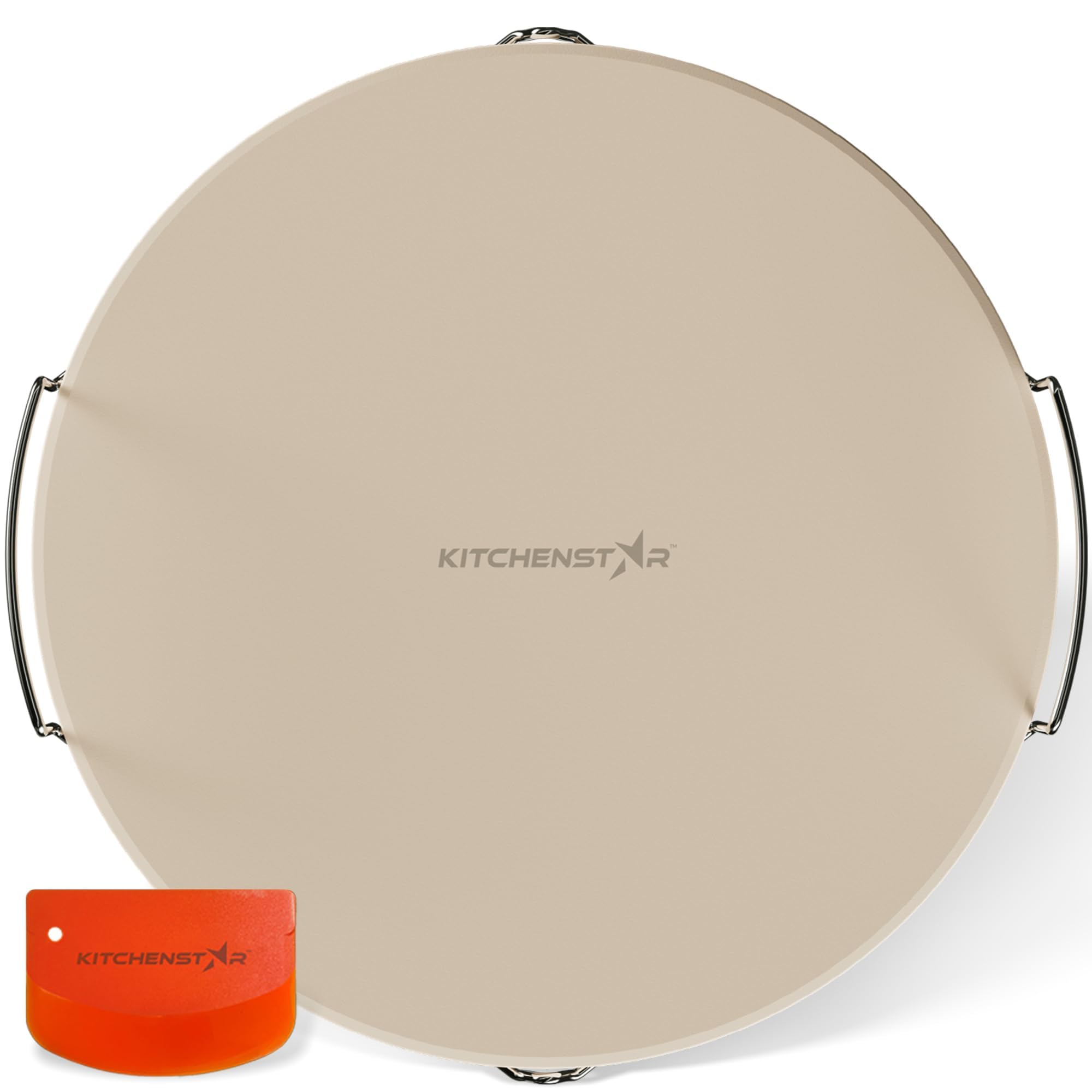
If you like the idea of a large deck but don’t want a full “tool kit,” this is a clean middle ground: a 16″ stone with handles plus a stand and a scraper. That’s enough to make the process safer and easier without filling a drawer with gadgets. The stand matters more than you think—it gives you a safe place to rest a hot deck while it cools, which supports longevity.
For grill pizza, a 16″ round deck is often a sweet spot because it delivers “big pizza” capability without totally taking over the grill. If your grill has strong lid heat, this setup can produce a crisp base and evenly cooked top with a consistent, repeatable routine: preheat fully, launch, rotate once or twice, then pull and rest before slicing.
One important realism check: a small number of users report odor issues with certain stones over time. The best response is simple and responsible: if you ever notice a strong, unusual smell when heating, stop cooking on it, let it cool, and contact the seller. A stone should not make your eyes water. Most people never experience this, but it’s worth knowing the signal.
Why it’s useful
- Handles improve safety – Easier movement when appropriate and safer cooling practices.
- High‑heat capable – A confident match for grills that run hot.
- Stand + scraper combo – Encourages proper care and less messy cleanup.
- 16" size sweet spot – Big enough to feel premium without going “mega stone.”
Good to know
- Large stones still require space and airflow—measure your grill area.
- Preheat discipline matters; rushing the first pie is the most common mistake.
- If you ever detect an unusual odor, stop use and contact the seller.
Ideal for: grillers who want a big handled stone and a simple accessory bundle—without committing to a full multi‑tool kit.
11. Cuisinart 3 Piece Pizza Grilling Pack (13") – Small‑Grill Friendly and Easy to Store

Not everyone has a giant grill. And not everyone wants a giant stone. This set shines because it’s compact and realistic: a 13″ stone is an easy fit for many grills (including tighter setups), and the folding peel makes storage genuinely painless. If you’re making personal pizzas, smaller family pies, or you just want a “Friday night routine” without reorganizing your garage, this kit makes sense.
One of the smartest real‑world techniques people use with this kind of kit is parchment paper workflow. Build on parchment on the peel, launch cleanly, then remove the parchment after the bottom sets. This is especially helpful for wetter dough styles. It makes transfers smooth, reduces sticking, and keeps your peel from becoming a stress trigger.
The honest weak link in many compact kits is the cutter. Wheels in budget sets can feel small or light. If you’re serious about pizza, you’ll probably upgrade to a larger wheel or a rocker cutter eventually. But as a “stone + peel” starter pack for grill pizza, it’s a very approachable entry point.
Why it’s a smart starter
- Fits smaller grills – 13" is practical for many backyard setups.
- Folding peel – Easy storage, especially in tight kitchens or patios.
- Great for parchment workflow – Very compatible with “launch, then slide paper out” method.
- Solid stone performance – Even heat distribution and crisping potential when preheated properly.
Good to know
- The cutter can feel like a “bonus” item rather than a premium tool.
- Smaller decks limit pizza size; it’s best for personal pies or modest family pies.
- Still needs lid‑down baking; don’t treat it like open‑grill cooking.
Ideal for: small‑grill owners, beginners, and anyone who wants a compact kit that stores easily and supports low‑stress launches.
12. 4 PCS Rectangle Pizza Stone Set (15 x 12) – Starter Kit With Parchment for Easy Wins

If you want a full starter bundle without overthinking it, this set gets you the basics that actually matter: a usable deck, a peel, a cutter, and parchment paper. That last part is underrated. Parchment is one of the best “confidence tools” for grill pizza—especially if you’re still learning dough handling. You can build on paper, launch cleanly, and remove the paper once the crust sets. It’s not “cheating.” It’s smart.
The deck size is flexible and works well for rectangular pies, flatbreads, and bread bakes. It’s also easier to fit than very large stones, which is why a lot of people find it a comfortable first upgrade. The oak peel is a nice touch, but wood care matters: wipe clean, avoid soaking, and let it dry flat. Some peels can temporarily warp if wiped with too much moisture—air drying usually resolves it.
The key to success with thinner decks is heat management. Preheat properly, and if you bake multiple pizzas, give the stone time to recover between pies. That way your first pizza isn’t perfect and your second one isn’t pale and soft.
Why it’s a strong value
- Starter workflow included – Deck + peel + cutter + parchment supports real success.
- Easy launch strategy – Parchment reduces sticking and stress for new pizza makers.
- Flexible rectangle size – Great for pizzas, flatbreads, and reheating slices.
- Good for casual pizza nights – Delivers a noticeable crust upgrade from pans.
Good to know
- Wood peels need gentle care; avoid soaking and dry flat.
- Thinner decks may need recovery time between pies for consistent browning.
- As always: no soap on porous decks and avoid thermal shock.
Ideal for: beginners who want a complete, budget‑friendly start and appreciate parchment as a stress‑reducing launch tool.
13. Lodge Cast Iron Pizza Pan (15") – The “Never Crack” Deck With Serious Heat

If you’ve ever broken a stone (or you just don’t want to babysit one), cast iron is your low‑drama answer. This pan behaves like a heat battery: once it’s hot, it stays hot, and it browns the bottom confidently. That’s why so many people describe the “first cook” experience as a revelation—suddenly the crust looks like it came from a real pizza place.
Cast iron also brings a practical advantage: cleaning is often easier than porous stone. You can scrape, rinse, dry, and keep moving. And unlike many stones, cast iron isn’t fragile. You still need smart handling (it’s heavy, and it gets extremely hot), but you’re not living in fear of cracking from one wrong move.
The tradeoffs are exactly what you’d expect: weight and handling. This is a heavy piece of iron. If your oven or grill setup requires awkward lifting, plan your movement carefully and use proper gloves. Also, because cast iron is a strong conductor, it can brown aggressively—so indirect heat placement on gas grills is still a smart idea.
Why cast iron is different
- Break‑proof durability – No cracking anxiety, great for long‑term use.
- Excellent browning – Strong bottom crisping and satisfying crust texture.
- Often easier cleanup – Scrape, rinse, dry—simple routine.
- Multi‑use pan – Great for pizza, flatbreads, and high‑heat cooking.
Good to know
- Very heavy; moving it in and out of grills/ovens can be challenging.
- Can brown fast—indirect placement and timing matter.
- Like all cast iron, it prefers dry storage and basic maintenance.
Ideal for: anyone who wants a durable, crisp‑making deck without stone fragility—and doesn’t mind a heavy, serious piece of cookware.
14. Ritual Life 20" Pizza Stone Kit (20 x 13.5) – Big‑Batch Baking With a Gift‑Worthy Setup
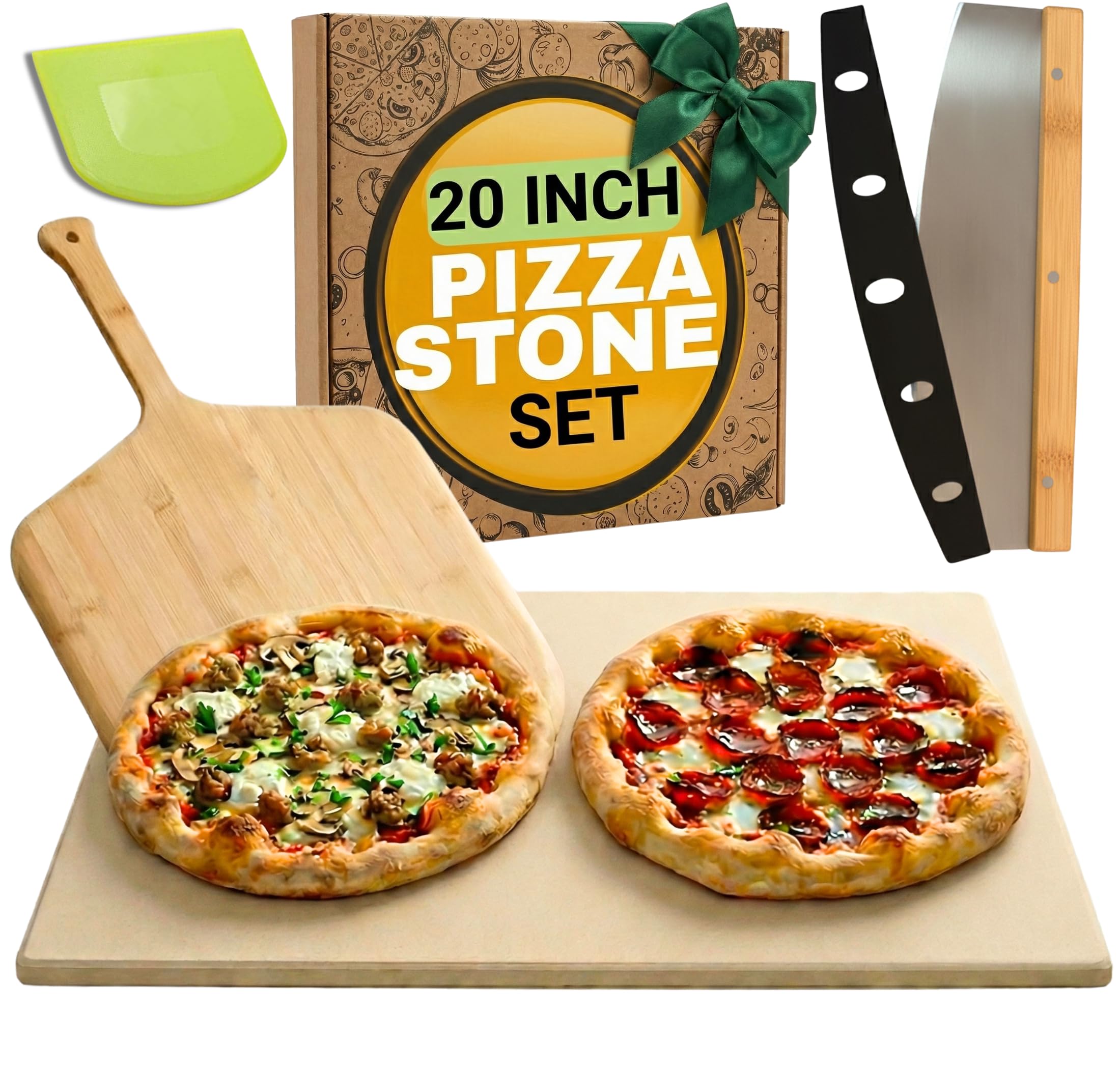
A 20″ deck is a commitment—in the best way. It’s the kind of surface you can use for pizza, bread, cookies, and holiday baking with real confidence. If you host, or if “pizza night” is a recurring tradition, a big deck can make everything easier because it stays stable and gives you room to work. You’re not trying to squeeze a large dough onto a tiny target. You’re building on a platform that feels like a real oven floor.
This kit is especially appealing because it pairs the big stone with a clean, straightforward tool set. A large wooden peel can double as a serving board, and a rocker cutter is a smart match for crisp pies because it cuts cleanly without dragging toppings. If you’re buying this as a gift, it has that “wow” factor when someone opens it—large, solid, and clearly built for serious cooking.
The honest challenge is movement. Big stones can be awkward to slide around on oven racks or grill grates. Many owners simply leave a deck like this in place during cooking seasons and treat it like a permanent part of the setup. That’s a smart strategy: preheat gradually, bake, then let it cool down slowly right where it sits.
Why big decks win
- Massive surface area – Great for big pizzas, multiple small bakes, and batch cooking.
- Strong heat stability – Once heat‑soaked, it supports consistent crust results.
- Practical accessory set – Peel + rocker + tool covers the core workflow.
- Gift‑ready vibe – A satisfying “serious cook” present for pizza lovers.
Good to know
- Large stones are awkward to move; many people leave them in place during use.
- Fit matters: confirm your grill or oven can handle it with airflow space.
- As always, don’t oil‑season porous stones; natural seasoning is the correct approach.
Ideal for: big ovens, big grills, and big traditions—especially if you want one deck that handles pizza night and holiday baking without compromise.
15. ROCKSHEAT Extra‑Large Stone (23.6 x 15.8) – The “Turn My Grill Into a Pizza Oven” Giant
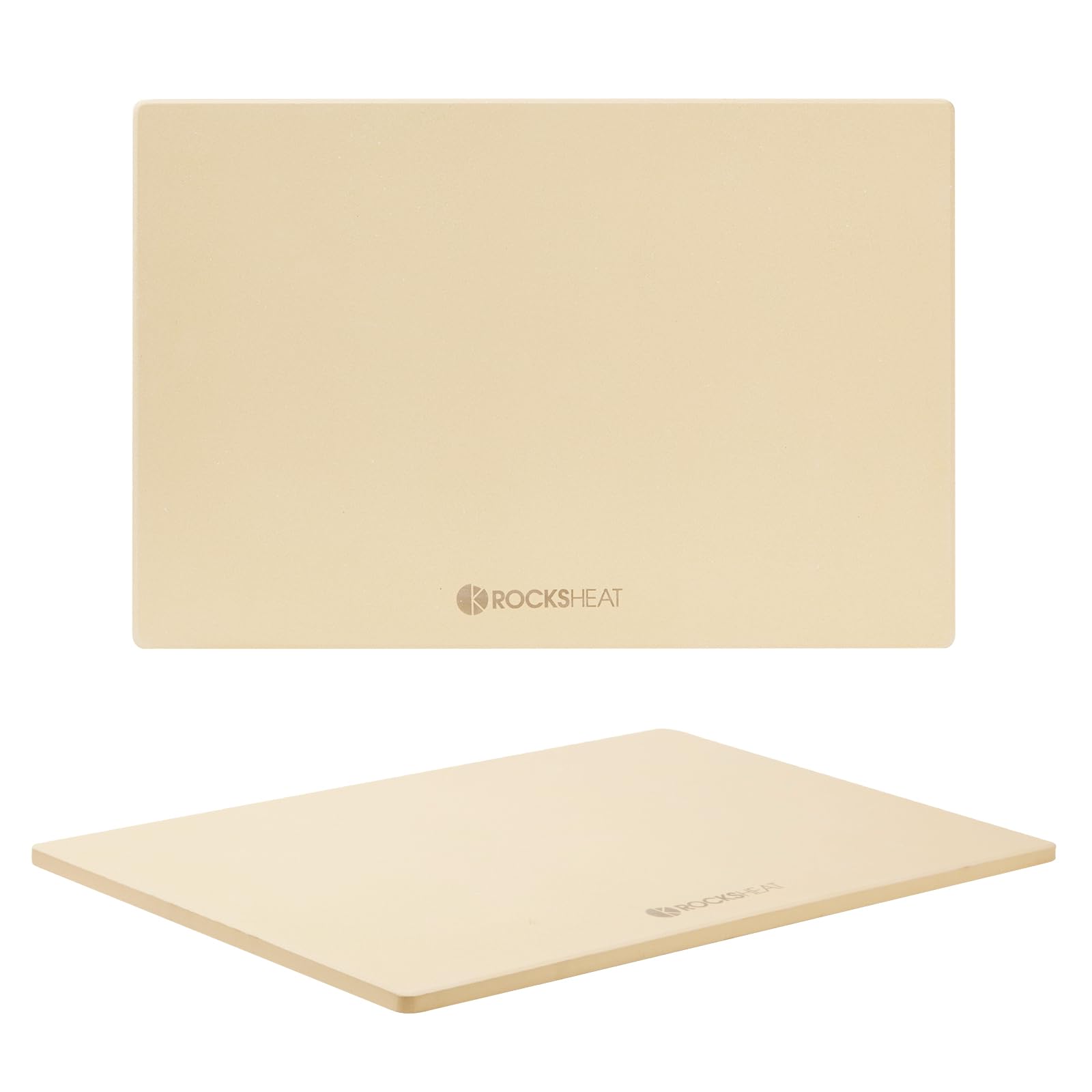
This is the “serious surface area” pick. If you have a large grill (or a big oven) and you want a deck that feels closer to a commercial baking floor, an extra‑large stone like this can be an absolute game changer. It lets you bake multiple pizzas, big loaves, and large batches of cookies or pastries without constantly rearranging your setup.
For grill pizza specifically, the joy of a giant deck is stability and confidence. Once it’s hot, it acts like a heat reservoir. That means you can bake, pull, and bake again with less temperature dip. It also makes it easier to manage toppings because you have room to launch and rotate without crowding the edges.
But you need to respect the size. This is not a stone you casually pull in and out mid‑cook. It’s big, it’s heavy, and it requires gentle movement. It also demands good cleaning tools: when cheese or sauce bakes on, you’ll want a dedicated brush/scraper rather than trying to scrub it like a pan. If you have the space and the right mindset, though, it can give your grill a whole new purpose.
Why it’s worth considering
- Massive deck capacity – Great for crowds, parties, and serious batch baking.
- Strong heat stability – Big stones can feel like true “oven floors” once preheated.
- Excellent for bread too – Big loaves, baguette runs, and multi‑tray baking become easier.
- Transforms large grills – Gives rarely used grills a new “pizza oven” life.
Good to know
- Confirm your grill/oven fit; this is not a “maybe it’ll fit” purchase.
- Handling and cleaning require the right tools and calm workflow.
- Expect normal seasoning and darkening—don’t chase a pristine look with soap.
Ideal for: large grill owners and entertainers who want a true “big deck” experience and are ready to treat the stone like a semi‑permanent baking surface.
How Grill Pizza Actually Works (and Why Top Heat Matters)
Most grill pizza failures come from one mismatch: a grill produces strong bottom heat easily, but pizza needs strong top heat too. In an indoor oven, top heat comes from the hot air and the oven walls. On a grill, top heat is created by the lid trapping and circulating hot air. Your deck gives you the bottom set. Your lid and fire setup finish the top.
What makes a grill setup “pizza‑friendly”
- Lid‑down baking – If the lid is open, you’re grilling, not baking. Pizza needs a baking environment.
- Indirect deck placement – Especially on gas grills, placing the deck over indirect heat prevents bottom burn before top melt.
- Heat soak time – A deck needs time to store energy. Warm is not hot. Hot is not heat‑soaked.
- Airflow around the deck – Hot air must circulate. If a stone blocks airflow, the top stays pale.
- Rotation strategy – Even great grills have hot spots. Rotating the pie once or twice is normal, not failure.
Think of your deck as the pizza’s “floor” and your lid as the “ceiling.” Great pizza happens when the ceiling and the floor work together.
My “no‑stress” grill pizza routine
- Preheat gradually – Put the deck in while the grill is cool, then heat with lid down.
- Give it time – Let the deck heat‑soak before the first pie. Your second pie should feel easier, not harder.
- Launch with a plan – Dust lightly with semolina or use parchment for wet dough. Don’t improvise mid‑launch.
- Rotate early – The bottom sets fast on a grill deck. A quick early rotation prevents one‑side scorching.
- Rest before slicing – Give the pizza a minute. Steam needs a moment to escape so the bottom stays crisp.
Once you’ve done this a couple times, grill pizza stops feeling risky and starts feeling like a fun, repeatable dinner move.
FAQ: Grill Pizza Without Guesswork
Why is my pizza burning on the bottom but pale on top?
How long should I preheat a stone or steel on a grill?
My pizza sticks to the peel. What’s the fix that actually works?
Do I need a peel, or can I use a baking sheet?
Can I clean a pizza stone with soap?
Stone, steel, or cast iron—what’s the safest choice for beginners?
Final Thoughts: The Right Pizza Stones For Grills Make Pizza Night Easy
A great deck doesn’t just improve crust. It improves your whole experience: less sticking, less panic, fewer “why is it burning?!” moments, and more of that calm confidence where you can actually enjoy your cookout while the pizza bakes.
Here’s how to translate this guide into a decision that feels obvious:
- Want the most balanced “best overall” setup? Start with the Hans Grill Pizza Stone PRO XL. The perforated peel alone can improve crust flavor and reduce launch chaos.
- Want one purchase that upgrades the entire workflow? Choose the KitchenStar 16-inch Pizza Making Set. It’s the most “complete pizza night” bundle here: peel, rocker, brush, and a large deck that feels premium.
- Chasing fast, crisp, thin‑style bakes? Go for the Primica Pizza Steel XL if your grill can generate strong lid heat and you’re ready to cook with more control.
- Hosting and baking multiple pies back‑to‑back? Pick a bigger deck like the Unicook 20" stone or go full party mode with the ROCKSHEAT extra‑large deck if your grill is large enough to support it with airflow.
- Want a large round deck with safer movement? The Ritual Life 16" round kit is a great “big pizza” choice that encourages better handling and cooling habits.
- Need a compact starter for smaller grills? The Cuisinart 3‑piece pack is a practical first step, especially if storage space matters.
- Hate the idea of cracking a stone? Go cast iron with the Lodge cast iron pizza pan. It’s heavy, but it’s durable and can deliver beautifully crisp crusts.
Pick the pizza stones for grills that match how you actually cook—gas, charcoal, pellet, small grill, big hosting nights—and you’ll stop “hoping” your pizza turns out. You’ll start expecting it.
