
Making pizza at home has a frustrating tendency: the cheese and toppings can look like a masterpiece, but the bottom remains pale, limp, and totally uninspiring. You pull the pie from the oven, cut a slice, and the tip immediately flops over like a wet napkin. The flavors are there, but the foundation completely lacks that shattering, blistered crunch you get from a real pizzeria deck.
This is exactly why baking steels have completely taken over home kitchens. A steel is not a gimmick—it’s pure, brute-force thermodynamics: a massive, highly conductive slab that forces heat into your dough so rapidly that it simulates a professional oven inside your standard kitchen setup. Once you find the best baking steel for pizza that aligns with your specific routine (your oven’s quirks, your favorite dough recipe, your broiler strategy), you stop crossing your fingers and start pulling out perfect crusts every single time.
Here is the reality that most buying guides skip over: all pizza steels are not created equal when it comes to a busy Tuesday night. The real differences are found in the annoying friction points that actual users report: jagged edges that slice your hands, seasoning processes that fill your house with smoke, terrifying warping when left on a hot burner, nightmarish dough launches, and the sheer logistical hassle of storing a 20-pound block of iron in a cramped apartment.
Because of this, our guide is built entirely around practical reality—your available oven space, your physical lifting limits, your patience for cleanup, and your desire for immediate results. We are breaking down 15 exceptional choices, ranging from massive carbon-steel behemoths that replicate a commercial deck, to cutting-edge nonstick hybrids that wipe clean in seconds, all the way to a stunning soapstone kit designed for those who want their pizza to remain piping hot on the dining table.
In this article
How to Choose the Best Baking Steel For Pizza
If you’ve ever read a “pizza steel guide” that basically says “steel is better than stone” and calls it a day—yeah, we’re not doing that. Choosing the right steel is about matching heat transfer to your pizza style, and matching the steel’s practical reality to your kitchen: storage, weight, cleanup, and how you like to cook.
1. Start with your pizza style (because different crusts want different heat)
A steel isn’t a single-purpose tool. It can behave like a brick-oven deck, a giant griddle, or a thermal stabilizer—depending on how you use it. So first, decide what “great pizza” means in your house.
- NY-style / thin and foldable: You want high bottom heat, fast browning, and strong steam drive so the crust sets quickly without going cracker-dry.
- Neapolitan-ish in a home oven: The trick is balancing bottom browning with a fast, intense top finish—usually using a broiler phase. Your rack height matters as much as your steel.
- Pan pizza (Detroit/Sicilian): Your “baking surface” might actually be a pan, but a steel can supercharge the bake by acting as a heat battery below or by functioning as a preheated landing zone after an initial pan bake.
- Frozen pizza upgrades: You want predictable crisping, not a long ritual. Some newer hybrid “pizza steel pans” are designed for fast weeknight use.
- Bread first, pizza second: A thinner steel that preheats fast and evens out oven swings can be a better everyday companion than a huge heavyweight slab.
2. Thickness is your heat personality: sports car vs. truck
Thickness is not a flex. It’s a behavior choice.
- Thin steels (around 0.10″–0.15″) heat up faster, are easier to handle, and can be surprisingly effective—especially if you’re using them as an oven stabilizer for bread and occasional pizza. They can be more forgiving if your oven tends to run hot and scorch bottoms.
- Quarter-inch steels (0.25″) are the classic “deck” thickness. They store enough heat to brown aggressively, recover quickly between pizzas, and give you that signature crisp, blistered underside.
- Three-eighths steels (0.375″) are the “batch night” beasts. They take longer to heat fully, but once they’re there, they behave like a restaurant floor: you can bake back-to-back pizzas with less waiting and less performance drop-off.
Here’s the part most people miss: your oven is part of the system. If your oven struggles to reach high heat, a thicker steel can help because it stores energy. But if your oven is small, uneven, or your rack is a little flimsy, a very heavy steel can create new problems (hot spots, awkward handling, rack stress).
3. Size and shape decide your “ease of use” more than you think
On paper, “bigger is better.” In the real world, “fits comfortably” is better. Before you buy, measure:
- Rack width and depth: You want at least a little space around the steel for airflow.
- Door clearance: Handles can be helpful—or they can be the reason you can’t slide the rack smoothly.
- Your actual pizza size: If you bake 12″ pizzas, a 13″ square can be plenty. If you love 16″ pies, you need a surface that matches your ambition.
Common sweet spots:
- 14″ x 16″ is the classic “fits most ovens” rectangle for serious pizza.
- 16″ x 16″ is a powerful square for people who want both pizza and griddle-style cooking.
- 14″ x 20″ is the “I host pizza nights” size—huge deck feel if your oven can accommodate it.
- 13″ x 13″ can be perfect for smaller ovens, apartments, or anyone who wants high performance without the bulk.
4. Surface finish is the difference between “easy launch” and “stuck drama”
A steel’s surface is where your pizza relationship either becomes joyful or chaotic.
- Raw carbon steel (needs seasoning): Classic performance, classic maintenance. When seasoned well, it becomes naturally low-stick and improves over time—like cast iron.
- Pre-seasoned carbon steel: Less prep, faster to confidence. Great for beginners, but still benefits from light maintenance so it doesn’t rust.
- Textured / sanded / shot-blasted finishes: Often help with low friction and easy sliding. Also hide cosmetic “patina life” better.
- Hybrid nonstick surfaces: These are the “I want great pizza and easy cleanup” options. They’re usually easier to wipe clean, but you should treat them with respect: don’t scrape like you’re excavating fossilized cheese.
The crucial nuance: how you build the pizza matters. If you stretch dough and build directly on the steel like a pan, you can often skip launch stress. If you launch from a peel, you need a surface that plays well with flour/semolina and doesn’t trap sticky spots.
5. Handling and storage: the “you’ll regret it later” category
This is where real owners separate into two camps:
- Camp A: “It lives in my oven permanently.” (Great if you bake often and your oven rack is strong.)
- Camp B: “I move it for pizza nights only.” (Great if it’s manageable and you have storage space.)
Pay attention to:
- Edge finishing: Some steels have edges that are sharp enough to make you respect them. A tiny chamfer makes a huge difference.
- Handles or finger holes: Helpful for control—especially when you’re pulling a hot rack out and you don’t want the steel to slide.
- Weight distribution: A steel can be “not that heavy” but still awkward because it’s a dense slab with no safe grip points.
- Where it will live: Behind a baking sheet? Under the oven? In a drawer? If you can’t picture it, you’ll resent it.
6. Maintenance is simple—if you accept the rules
For carbon steel, the rules are not hard, but they’re non-negotiable:
- Dry immediately: Water is fine; leaving water is not. Rust is lazy moisture’s hobby.
- Oil lightly: Think “whisper coat,” not “salad dressing.” A thin film protects the steel and builds seasoning over time.
- Don’t fear patina: Darkening is normal. It’s performance history, not damage.
- Know when to re-season: If you get sticky patches, metallic smells, or rust freckles, re-season and move on.
Hybrid nonstick and stainless-based options change the maintenance game: they’re often easier to clean, but you must treat them like precision surfaces. The “best” maintenance system is the one you won’t fight with.
7. Your oven strategy matters more than the brand name
Two people can buy the same steel and get totally different results because they use different rack positions, preheat times, and broiler habits.
- For balanced bakes: Middle rack, fully preheated steel, steady bake.
- For fast top browning: Higher rack + broiler finish (or broiler-first then bake, depending on your oven).
- For avoiding burnt bottoms: Slightly higher rack, a thinner steel, or a shorter “deck contact” phase at the end.
The moment you treat your steel like an oven component—not a gadget—you start making pizza that feels inevitable.
Quick Comparison: 15 Best Baking Steel For Pizza Picks
Use this table to spot your “shortlist” fast, then jump to the full reviews for the real-life details—like handling, seasoning behavior, launch friendliness, and which models owners actually keep using week after week.
On smaller screens, swipe or scroll sideways to see the full table.
| Model | Category | Best for | Real-world strength | Amazon |
|---|---|---|---|---|
| Baking Steel – The Original (14″ x 16″) | Benchmark deck | Most home ovens + serious crust goals | Classic performance, thick “deck feel,” multipurpose kitchen workhorse | Amazon |
| HexClad Hybrid Nonstick Pizza Steel (14″ surface) | Hybrid nonstick | Easy cleanup lovers | Low-stick surface, fast weeknight workflow, versatile beyond pizza | Amazon |
| All-Clad Soapstone + Stainless Pizza Kit (13″) | Stone alternative | People who serve on the surface | Moisture-wicking soapstone, beautiful presentation, “keeps pizza hot” serving energy | Amazon |
| NerdChef Steel Stone (14.5″ x 16″ x 1/4″) | Pro-feel steel | Broiler-style “home oven Neapolitan-ish” | Heavy deck behavior, great heat transfer, built to last forever | Amazon |
| Conductive Cooking XL Steel Plate (14″ x 20″ x 3/8″) | Batch-night beast | Back-to-back pizza nights | Huge surface, intense heat storage, fast recovery between pies | Amazon |
| ThermiChef 16″ x 16″ Steel (3/8″) | Heavy-duty | Grill + griddle + pizza in one | Extreme heat retention, smashburger-level sear potential, crowd cooking power | Amazon |
| Artisan Steel High Performance (16″ x 14.25″ x 1/4″) | Classic steel | Reliable results + made-to-last vibe | Strong “never break” upgrade from stones, great on grills, improves with patina | Amazon |
| Hans Grill Pizza Steel PRO Set (13″ x 13″ + peel) | Starter set | Beginners who want a full workflow | Includes peel, manageable size, “first steel” friendly learning curve | Amazon |
| Tri-Ply Nonstick Pizza Steel Pan (up to 14″) | Weeknight pan | Low-drama pizza at home | Build-in-pan approach, easy release, multi-use “sheet pan” vibe | Amazon |
| Brod & Taylor Bread Steel Max (14″ x 14″ x 0.15″) | Lightweight steel | Bread-first bakers | Fast preheat, easier handling, “leave it in the oven” stabilizer energy | Amazon |
| Primica Pizza Steel XL (16″ x 13.4″ x 1/4″) | Value performer | Big results without fuss | Pre-seasoned convenience, strong crust improvement, easy-to-love daily performance | Amazon |
| ThermiChef 16″ x 16″ Steel (1/4″) | Big square | Two-burner griddle dreams | Large surface versatility, excellent for crowd cooking and repeat bakes | Amazon |
| UMAID Pizza Steel (16″ x 13.4″ x 1/4″) | Beginner-friendly | Recipe-guided learning | Pre-seasoned + recipe booklet, sturdy build, strong “crispy bottom” payoff | Amazon |
| Loftern Pizza Steel (14″ x 16″ x 1/4″) | Budget steel | First steel on a tight budget | Simple, sturdy, pre-seasoned convenience with classic steel benefits | Amazon |
| Pentole Agnelli Blue Steel Pan (55 x 38 cm) | Pan specialist | Focaccia + sheet-pan pizza | Carbon-steel pan character, great crisping potential, requires proper care | Amazon |
In‑Depth Reviews: 15 Best Baking Steel For Pizza Options That Real Kitchens Keep Using
Now we go model by model. I’m not going to speak “spec sheet.” I’m going to speak pizza night: how these bake in real ovens, how they behave when you’re rushing, how they clean up when cheese escapes, and which kind of cook each one truly matches.
1. Baking Steel – The Original Ultra Conductive (14″ x 16″ x 1/4″) – The Benchmark That Makes Ovens Behave
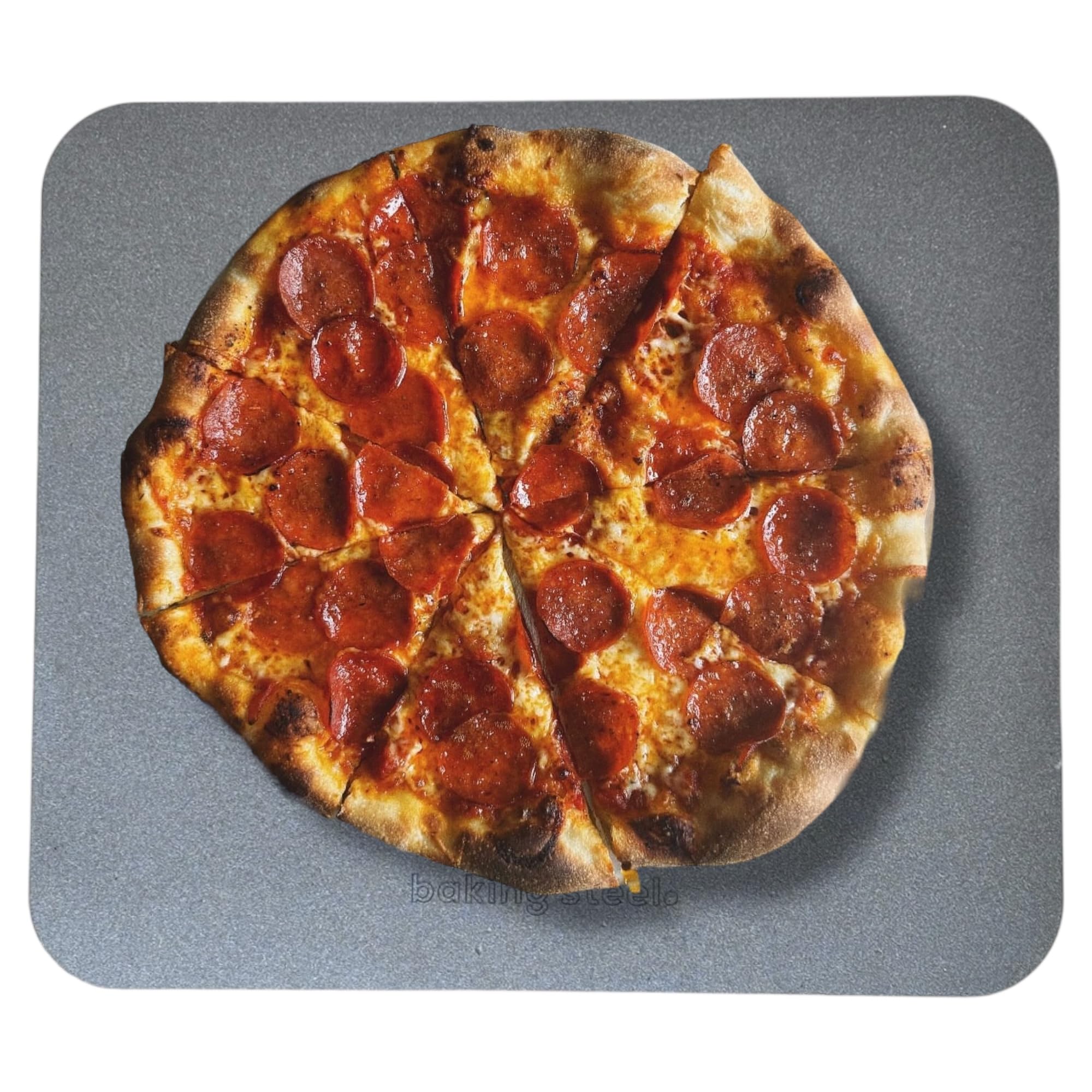
If you want the “one steel” that most serious home pizza people eventually orbit back to, this is it. The Baking Steel Original is the classic 14″ x 16″ workhorse: big enough to feel like a true deck, thick enough to deliver dramatic bottom browning, and versatile enough that it often becomes more than a pizza tool. In real kitchens, it turns into a permanent oven resident—part crust maker, part temperature stabilizer, part “why does my oven bake better now?” secret weapon.
What makes it special is not a gimmick. It’s the experience curve. With cheaper steels, you often spend a month “figuring it out” because the steel heats unevenly, the surface sticks unpredictably, or the edges feel sketchy to handle. With this one, the learning curve is shorter: preheat, launch, bake, repeat. You get that confident, repeatable “deck energy” that makes you comfortable doing back-to-back pizzas without panicking that the second pie will be half as good.
Owners who love it tend to describe the same transformation: they stop chasing higher and higher oven temperatures and start winning with better heat transfer. A properly heated steel can make a 500°F home oven feel way more serious than it has any right to. And the minute you dial in rack height + broiler timing, you’ll see the hallmark signs: blistering, fast underside browning, and a crust that holds structure without turning dry.
The honest reality: it’s heavy, it holds heat for a long time, and it will develop a patina. That patina is the point. The steel is meant to become seasoned and lived-in, not stay showroom shiny. If you want “effortless shiny,” look at a hybrid nonstick option. If you want performance that justifies itself every time you slice a crisp-bottom pie, this is the classic.
Why it earns “best overall”
- Deck-like heat transfer – The crust payoff is immediate once you preheat properly.
- Repeatable results – Less trial-and-error compared to many budget steels; it behaves predictably.
- Versatile beyond pizza – Bread bottoms brown beautifully; it can also behave like a griddle surface when you get creative.
- Long-term tool mentality – The steel improves with use instead of “wearing out.”
Good to know
- It’s heavy and stays hot for a long time—plan your handling and storage strategy.
- Like all classic carbon steels, it rewards basic maintenance (dry, light oil, don’t baby it).
- If your oven runs extremely hot on the bottom, you may need to adjust rack height to avoid overbrowning.
Ideal for: most home pizza makers who want a single steel that can become “the deck” in their oven and deliver consistent pizzeria-style crust results.
2. HexClad Hybrid Nonstick Pizza Steel – The “Great Crust, Minimal Scrubbing” Upgrade

A lot of people want the crust benefits of steel… without the “cast-iron lifestyle.” That’s exactly the niche HexClad is aiming at. This is not a raw slab you baby with seasoning rituals and oil coats. It’s a modern hybrid surface designed to behave like a steel deck while staying closer to “wipe clean, done” in daily life.
The real-world win is workflow. Many steels are amazing once everything is hot, but they can be fussy when you’re building pizza fast: flour gets stuck in textured patches, cheese welds itself to bare metal, or you’re nervous about scraping because you don’t want to tear up your seasoning. With HexClad’s hybrid approach, owners consistently talk about how easily pizza releases and how fast cleanup is—especially for the messy bakes where sauce creeps and cheese runs. That matters because the steels people keep using are the ones that don’t punish you for having fun.
Here’s the deeper reason this style works: it changes what “pizza night” can look like. Instead of being a dedicated “launch only” deck that you treat like a sacred surface, it can behave like a multipurpose high-heat pan. That opens up different bake styles:
- Build-on-surface pizzas when you don’t want peel stress.
- Reheat pizza slices for a truly crisp underside (the kind you can hear).
- Flatbreads and calzones that would normally glue themselves to a rougher steel.
The honest trade-offs: it’s large enough that storage takes thought, and like any premium hybrid surface, you should avoid treating it like a metal scraping battlefield. It’s designed to be durable, but “durable” doesn’t mean “attack it with a chisel.” If you want something that looks better with scratches, go raw carbon steel. If you want performance with a cleaner lifestyle, this is a very compelling lane.
Why it’s different
- Hybrid nonstick behavior – Great release and easier cleanup than traditional seasoned steels.
- Weeknight-friendly workflow – Less ritual, more pizza, fewer “ugh, cleanup” moments.
- Versatile cooking surface – Not just pizza; it behaves like a premium baking/griddle platform.
- Confidence for beginners – If seasoning maintenance intimidates you, this sidesteps the stress.
Good to know
- Large footprint means storage planning (especially in small kitchens).
- It’s designed for easy cleaning, but still deserves normal care—don’t scrape aggressively like bare steel.
- If you love “seasoning culture” and enjoy patina, a classic carbon steel will feel more satisfying.
Ideal for: pizza lovers who want steel-like crust improvement with a low-drama cleanup routine and a more modern “pan-like” lifestyle.
3. All-Clad Soapstone + Stainless Pizza Kit (13″) – The “Bake It, Slice It, Serve It” Showpiece

Let’s address the obvious: this one is not a “pizza steel.” It’s a soapstone baking stone kit—and it’s on this list because it solves a different problem than most steels do. If your pizza nights are part cooking and part presentation, this set has a unique superpower: you can bake on the stone, slice directly on it, and serve on a surface that holds heat like it’s guarding a secret.
Soapstone behaves differently than ceramic stones. In owner feedback, the most consistent praise is the crispness and the even bake, plus the “it stays hot” benefit when you leave the pizza on the stone as a serving platform. That matters in real life: if you’re feeding a group, the first slices don’t go lukewarm while you’re cutting. The stone becomes a heat reservoir on the table.
The “expert nuance” here is the material personality. Soapstone is porous and moisture-wicking, which can help with crisping—especially on doughs that tend to trap moisture. But it’s also softer than steel. That means cutting directly on it will leave marks. Some people love that “European pizzeria” etched look. Some people hate it. You need to know which person you are.
The stainless tray with handles is genuinely useful… but it comes with an important practical note owners run into: some instructions caution against using the metal tray/ring at very high temperatures. In other words, you may bake the stone by itself at high heat, then transfer it to the tray for serving. If your dream is “tray in the oven, easy lift-out,” confirm your workflow and keep it safe. This is a beautiful kit, but it rewards deliberate handling more than a simple steel plate does.
Why people love it
- Gorgeous serve-and-slice experience – It can go from oven to table with real presence.
- Crisp, even stone baking – Soapstone’s moisture-wicking character can be excellent for crust texture.
- Heat-holding serving power – Pizza stays hot longer while you slice and eat.
- High-quality accessories – The cutter is sharp and the tray handles add control (with the right workflow).
Good to know
- Soapstone is softer than steel; cutting on it will leave marks (normal, but not everyone likes it).
- It’s not the “fastest crust weapon” compared to a steel; it’s a different style of performance.
- The tray/stone separation can be a pro for cleaning, but also means you should plan safe high-heat handling.
Ideal for: pizza lovers who care about serving and presentation as much as baking, and want a stone kit that can live on the table like a centerpiece.
4. NerdChef Steel Stone (14.5″ x 16″ x 1/4″) – The Heavy Deck That Rewards Technique

NerdChef is for the person who wants their oven to act like a serious piece of equipment. This steel has a strong “industrial tool” vibe: thick enough to behave like a true deck, heavy enough that you respect it, and designed to reward a more deliberate pizza process. If you’re the kind of cook who likes dialing in rack positions, timing broiler phases, and chasing that “spotted, blistered” underside, this steel can feel like the missing component.
Where it shines most is the high-heat home-oven approach: you preheat aggressively, you launch a well-fermented dough, and you control the top finish with the broiler. That’s the closest most people get to “Neapolitan-ish” at home without owning a dedicated pizza oven. A steel like this gives you the bottom heat you need so the crust sets fast and stays crisp, while the top can catch up under intense overhead heat.
Owners often talk about two things at the same time: the results are outstanding and the steel is no joke heavy. That combination is real. The “heavy deck” behavior is why it works so well, but it also means you should plan how you’ll handle it safely. Many people leave steels like this in the oven permanently to avoid lifting and storing.
A subtle detail that matters in real use: steels with a slightly textured or sanded finish tend to help with sliding and reduce “sticky surprises.” If you struggle with launches, use a peel, keep your dough properly floured/semolina-dusted, and don’t over-sauce the center (the silent killer of launches). This steel can be incredibly forgiving once you learn its rhythm, but it will not compensate for a wet, sticky dough that’s been sitting too long on the peel.
Why serious home pizza makers like it
- Deck-style performance – Great bottom heat transfer for crisp, blistered crusts.
- Technique-friendly – Especially strong for broiler-assisted bakes and higher-rack strategies.
- Built to last – A steel like this doesn’t “wear out”; it becomes a seasoned tool.
- Multi-use potential – Can double as a griddle-like surface for certain cooking setups.
Good to know
- Heavy means safety planning (and often “leave it in the oven” is the best move).
- If your oven has uneven bottom heat, you may need to adjust rack position to avoid overbrowning.
- This is a performance tool; if you want “no-thought cleanup,” hybrid nonstick options may suit you better.
Ideal for: pizza hobbyists who love dialing in technique and want a serious steel deck feel for broiler-style high-performance bakes.
5. Conductive Cooking XL Steel Plate (14″ x 20″ x 3/8″) – The “Feed a Crowd” Heat Battery

This is the steel you buy when pizza night isn’t “me and two slices.” It’s “we’re hosting.” A 14″ x 20″ deck is not subtle. It’s the closest you can get to the feeling of a real oven floor in a home setup. And at 3/8″ thick, it’s built to store serious heat—meaning it doesn’t flinch as much between bakes.
Real-world feedback on thick XL steels tends to repeat: they’re heavy, they’re absurdly durable, and they make a noticeable difference in crust quality versus ceramic stones. Owners who came from stones often mention the same story: stones crack, steels don’t. Then they realize the bigger upgrade is not just “unbreakable”— it’s that the crust stops being mushy. That’s the signature of better heat transfer. Your dough sets fast. Steam escapes. The underside browns properly.
But let’s talk about the part that actually matters when you’re feeding people: recovery time. With lighter decks, the first pizza is great, the second is okay, and the third is… fine. With a thick XL steel, you can run a more efficient rhythm: launch, bake, pull, launch again, and you don’t feel like you’re starting from scratch each time. That’s why these are the steels people keep when they’re the “pizza person” in the friend group.
Now for the honest expert advice: thick steels demand patience at the front end. They don’t truly “wake up” instantly. If you under-preheat a thick steel, you’re basically using an expensive warm plate. Preheat until the steel itself is genuinely hot, not just the air around it. If you have an infrared thermometer, it’s eye-opening. If you don’t, preheat longer than you think and consider giving it a few minutes under the broiler before your first launch.
Why it’s a party weapon
- Huge deck space – Comfortable for large pies, multiple flatbreads, and confident launching.
- Thick heat storage – Better recovery between pizzas; excellent for back-to-back bakes.
- Indestructible vibe – No cracking fear like ceramic stones.
- Crust quality upgrade – Faster bottom set, less soggy center, better browning.
Good to know
- It’s heavy. Respect it. Moving it hot is not a casual activity.
- Thick steels reward longer preheat—plan ahead for pizza nights.
- Storage requires intention; this is not a “tuck it anywhere” tool.
Ideal for: people who host pizza nights, bake multiple pies in a row, or want the closest thing to a “restaurant deck” inside a home oven.
6. ThermiChef 16″ x 16″ Steel (3/8″) – The “Pizza Deck + Smashburger Griddle” Heavyweight
This steel is for the cook who doesn’t just want better pizza—they want a better kitchen platform. A thick 16″ x 16″ steel is basically a multi-tool: it can be your pizza deck, your high-heat bread base, your grill surface, and (if you have the right setup) your griddle for smashburgers. Owners who love steels like this tend to be “use it for everything” people. It becomes a core tool, not an occasional gadget.
The 3/8″ thickness is the defining behavior. Once it’s hot, it stays hot. That’s why people talk about excellent searing, strong browning, and quick recovery. But it’s also why this steel has a personality: it takes longer to heat fully, and it takes longer to cool. You don’t buy this for spontaneous “I want pizza in 12 minutes” energy. You buy it because you love the planning rhythm: preheat, prep, bake, repeat.
One of the most useful “real-life” insights from owners is about versatility under pressure. On a busy cooking day—hosting, holidays, meal prep—having a giant heat-stable surface changes what’s possible: you can crisp tortillas in batches, brown meat efficiently, hold a steady heat zone, and still bake pizza with confidence. That’s the difference between “nice pizza tool” and “my oven feels upgraded.”
The downside is also very real: weight. Heavy steels can be awkward to move and can make people worry about oven racks. If you choose this tier, commit to one of these strategies:
- Leave it in the oven permanently and treat it as part of your oven’s thermal mass.
- Use a safe storage plan (vertical beside sheet pans, or a dedicated slot) and only move it when it’s fully cool.
- Use gloves + a stable grip and avoid “half-grab” handling. Dense steel punishes sloppy moves.
Why it’s a powerhouse
- Massive heat retention – Excellent for consecutive bakes and high-browning cooking.
- Huge square surface – Great for pizza, bread, and “cook for a crowd” tasks.
- Grill and griddle potential – Strong for searing and smashburger-style browning.
- Durable, no-crack life – The “stone broke, never again” upgrade.
Good to know
- Heavy handling requires caution and a storage plan.
- Thick steel needs a longer full preheat to perform at its best.
- Edges can be rough on some heavy steels—use gloves and handle with respect.
Ideal for: home cooks who want one serious slab that can do pizza, bread, and high-heat cooking tasks like a compact commercial surface.
7. Artisan Steel High Performance (16″ x 14.25″ x 1/4″) – A Workhorse Upgrade from Stones

Artisan Steel is the kind of product you buy when you’re done with fragile stones and you want something that feels permanent. It’s a classic 1/4″ steel format in a very usable size: big enough for confident bakes, not so huge that it dominates your oven. People often end up here after a predictable sequence: they tried a stone, the stone cracked, they got tired of uneven bottoms, and they wanted a “forever tool.”
The real-world performance theme is very consistent: better bottom cooking, faster bakes, and less sticking when you learn a sensible launch routine. Many owners talk about how quickly they saw improvement versus a stone—especially the evenness of the underside. That’s the steel advantage: it transfers heat into the dough more aggressively, so you get a stronger “set” early in the bake. The result is the kind of crisp/chew balance that makes homemade pizza feel legitimate.
Now the “expert honesty” part: steels like this often arrive with protective oils from manufacturing and finishing. Some owners report a smell, residue, or initial “metallic” feel before washing and seasoning. That’s not a dealbreaker; it’s a normal first-day process for many carbon steels. But you should treat the first use like you would unseasoned cast iron: wash thoroughly, dry fully, apply a thin oil coat, and bake it in so it builds a stable, non-reactive surface. Once that’s done, the tool becomes easy.
Artisan Steel is also a strong “grill pizza” candidate. If you’ve used a grill like a pizza oven—lid closed, high heat, steel inside—you know how fun it is. A steel that won’t crack and that holds heat well can make grilled pizza feel much more controlled. In practice, that’s how a lot of owners end up using it: oven in winter, grill in summer, always chasing the same crust quality.
Why it’s a smart buy
- Reliable 1/4″ performance – Strong browning, solid heat retention, classic “deck” results.
- Stone upgrade energy – No cracking worries; durable tool mindset.
- Great for ovens and grills – Versatile placement and usage.
- Improves with use – Patina and seasoning build a better surface over time.
Good to know
- Initial wash/seasoning matters; some owners notice residue or smell until it’s properly prepped.
- Edges can feel sharp on some steels; gloves and careful handling are your friend.
- If you want “zero maintenance,” consider hybrid-coated options instead of raw carbon steel.
Ideal for: anyone replacing a pizza stone and wanting a classic, durable steel that delivers a noticeable crust upgrade without going full “giant slab” territory.
8. Hans Grill Pizza Steel PRO Set (13″ x 13″ + Peel) – The “Complete First Steel” Bundle
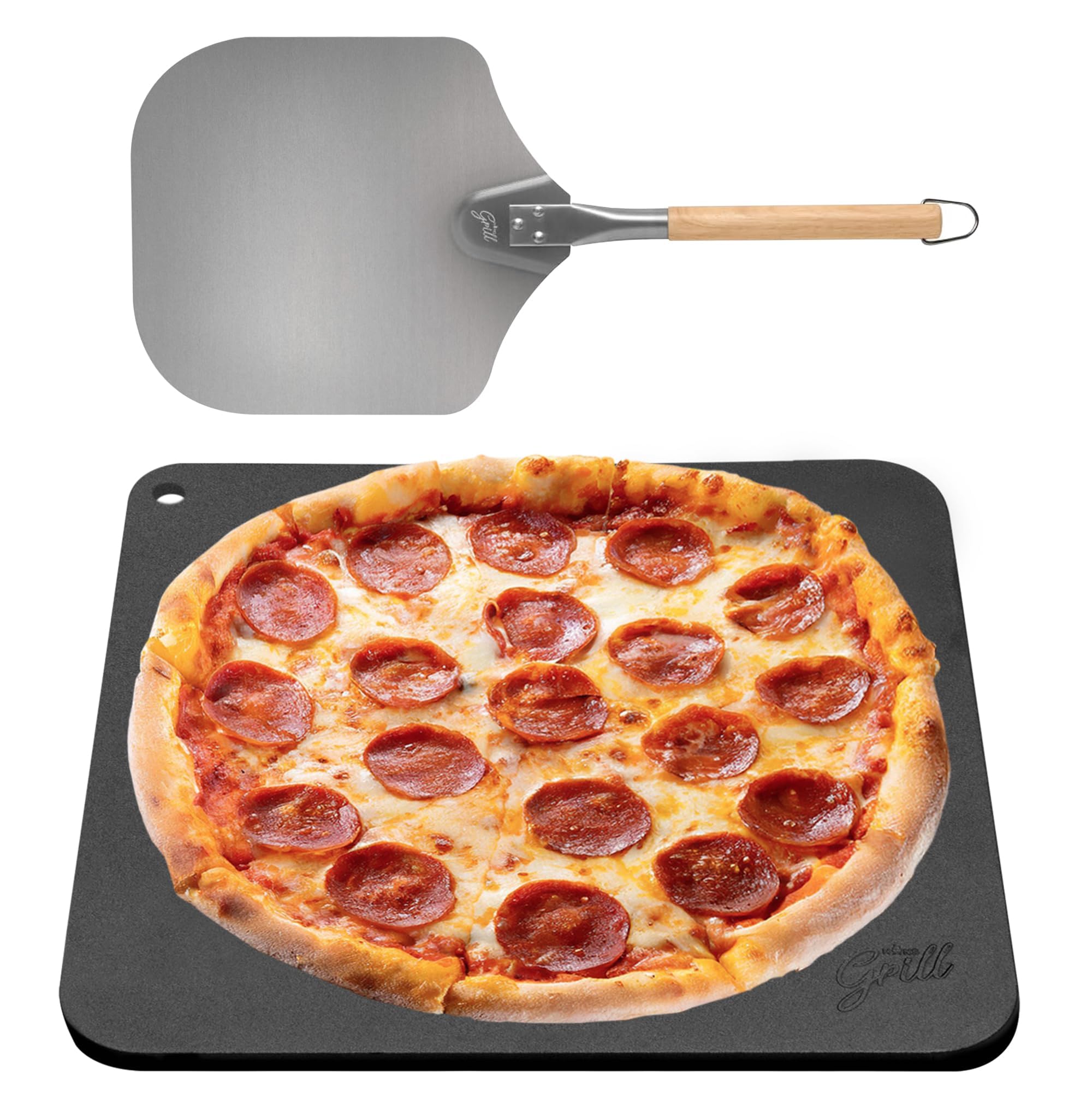
If you’re new to steels, your biggest enemy is not the steel—it’s the workflow. People buy a steel, then realize they still need a reliable way to launch pizza, manage timing, and avoid sticking. That’s why a set like this can be a genuinely smart first purchase: it gives you a cohesive system, not just a slab.
The 13″ x 13″ size is also a quiet advantage for a lot of kitchens. Not everyone has a wide oven with a deep rack. A smaller square steel can still deliver the “steel effect” (fast bottom browning, crispness, better structure) while being easier to store and handle. If you typically make 10″–12″ pizzas, this can feel just right—enough deck space to bake confidently without wasting kitchen real estate.
The included peel is the hero for beginners. Launching is where most people lose confidence: they stretch dough, build a pizza, then it sticks, folds, or lands like a sad calzone. A peel changes that. Even if you eventually upgrade to a different peel style, having one from day one makes you more likely to succeed—and success is what makes you keep using the steel.
Performance-wise, this set is about balanced practicality. It’s not the biggest or heaviest steel in the world, but it’s designed to be used often. And that’s the key to becoming good at home pizza: repetition with a consistent tool. If you bake twice a month because your tool is annoying, you never get better. If you bake twice a week because it’s easy, you level up fast.
Why beginners love it
- Complete workflow – The included peel reduces launch stress and improves early success.
- Manageable size – Great for smaller ovens and smaller pizzas without losing steel benefits.
- Solid crust improvement – Better browning and crispness than standard pans or many stones.
- Easy to keep using – A “first steel” that doesn’t feel like an engineering project.
Good to know
- 13″ x 13″ limits very large pies; if you want 16″ pizzas, you’ll want a bigger deck.
- As with most steels, a good preheat matters for the best crust results.
- If you already own a high-end peel, you may prefer to buy a larger standalone steel instead.
Ideal for: beginners who want a reliable first steel with a peel included, and anyone with a smaller oven or smaller-pizza habits.
9. Tri-Ply Nonstick Pizza Steel Pan (Up to 14″) – The “Build It, Bake It, Slide It Off” Shortcut
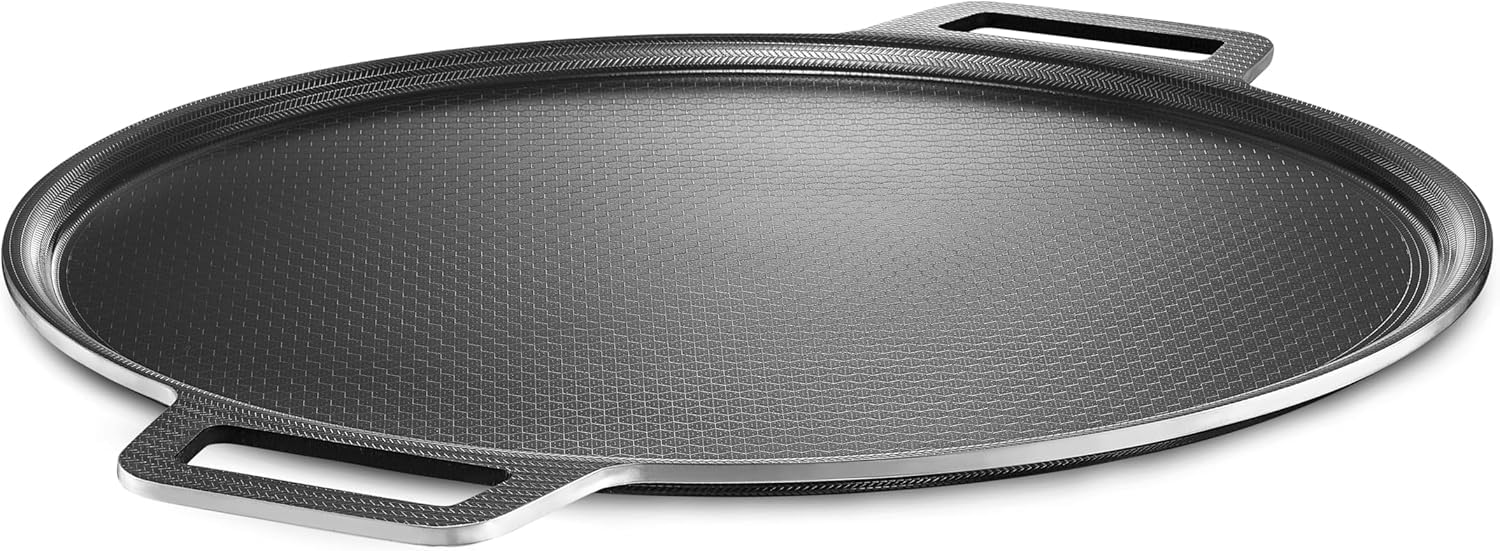
This is a different species than the classic “launch onto a preheated deck” steel. Think of it as a weeknight strategy tool: you can build pizza directly on it, bake, and slide the pizza off cleanly—without the peel anxiety that ruins a lot of home pizza nights. That’s why owners who love it tend to describe it as “no hassle” and “shockingly nonstick.”
Here’s the expert angle: tools like this shine when your goal is consistency without ceremony. A classic steel is the king of “raw deck energy,” but it also asks you to commit: long preheat, launch skill, seasoning behavior. A hybrid “steel pan” tries to give you much of the heat transfer benefit while behaving like a pan: easy release, easy cleanup, and a workflow where you don’t have to move an assembled pizza onto another surface.
If you’re chasing NY-style, here’s a practical technique that aligns with how many owners use these:
- Stretch dough directly on the pan (use a light flour dusting and work quickly so it doesn’t stick).
- Par-bake briefly to set the base.
- Top and finish at higher heat for browning.
That approach is less romantic than launching from a peel, but it’s brutally effective for home ovens—and it’s especially helpful for doughs that are wetter or stickier.
The trade-off is that it’s not trying to be a traditional brick-oven deck. If your dream is “one-minute bottom set, leopard spots, broiler blaze,” you’ll still prefer a classic raw steel. But if your dream is “crispy bottom, no sticking, quick cleanup, repeat,” this style can feel like the most realistic tool in the kitchen.
Why it’s a weeknight hero
- Build-on-pan simplicity – Reduces launch stress and makes pizza nights more consistent.
- Strong release behavior – Owners praise how easily pizza slides off.
- Fast cleanup – Hybrid surface makes post-pizza cleanup feel less like a chore.
- Multi-purpose use – Flatbreads, biscuits, reheating, and more benefit from the heat distribution.
Good to know
- It’s not the same as launching onto a fully preheated raw steel deck—different style, different strengths.
- Large enough to store thoughtfully; treat it like a “big pan” in your kitchen planning.
- For ultra-high-heat broiler work, classic raw steels may feel more “pure deck” in performance.
Ideal for: busy households that want crisp, consistent pizza with less technique stress and easier cleanup—especially for build-and-bake workflows.
10. Brød & Taylor Bread Steel Max (14″ x 14″ x 0.15″) – The Smart Choice for Bread-First Bakers

This is one of the most interesting picks on the list because it’s designed with a different priority: not “maximum thermal mass,” but “fast preheat, easier handling, and consistent baking.” If your kitchen life includes sourdough, artisan loaves, or frequent baking, a thinner steel like this can make more sense than a giant heavyweight slab.
The real-world praise is clear: people who are tired of heavy stones and massive steels love that this is easier to lift, easier to store, and still provides a noticeable performance boost. Some owners even treat it as a permanent oven resident because it stabilizes temperature swings—especially in ovens that cycle heat aggressively. That’s a real thing: ovens aren’t perfect; a steel acts like a thermal buffer.
For pizza, here’s the key insight: thin does not mean weak. A thinner steel still transfers heat far more efficiently than most stones, but it can be more forgiving. If you’ve ever scorched the bottom of a pizza on a thick steel while the top lagged behind, a thinner steel can help rebalance that equation. It can still crisp, still brown, still set the crust—just with a slightly gentler personality.
This steel also fits a specific kind of cook: someone who wants the benefits of steel without the “heavy concentrated mass” problem. If you’re baking at home frequently and you don’t want to treat your tools like gym equipment, this is a very compelling lane. You can still make fantastic pizzas—especially if you pair it with a smart rack strategy and a top-heat finish when needed.
Why it’s a smart daily tool
- Fast preheat feel – Less waiting compared to very thick steels; easier for frequent use.
- Easier handling – A real difference for smaller frames, older bakers, or anyone who hates heavy lifting.
- Great for bread – Helps deliver crisp bottoms and strong oven spring without a Dutch oven footprint.
- Oven stabilizer benefit – Can smooth out temperature cycling and improve consistency across bakes.
Good to know
- It won’t store heat like a 3/8″ slab; if you bake many pizzas back-to-back, thicker steels can recover faster.
- Still requires sensible maintenance as a steel surface (dry it well, avoid leaving moisture).
- If your dream is maximum “deck aggression,” a thicker 1/4″–3/8″ steel may feel more dramatic.
Ideal for: bread-focused bakers and everyday cooks who want steel benefits with easier handling, fast preheat practicality, and strong consistency.
11. Primica Pizza Steel XL (16″ x 13.4″ x 1/4″) – The “No Excuses” Crust Upgrade

Primica has a reputation for being one of those steels that people buy, use once, and immediately understand why steels became popular. Owners often describe it with the kind of “wow” language that’s hard to fake: crisp and chewy crust, fast bake times, strong heat retention, and a noticeable upgrade from stones. The pre-seasoned aspect is part of that early satisfaction—less friction on day one.
Here’s the deeper value: a 16″ x 13.4″ footprint is a very practical size for most home ovens. It gives you enough deck space to feel confident without the storage headache of a giant XL slab. For NY-style pizzas around 12″–14″, it’s a sweet spot. You get plenty of landing room, but you don’t feel like the steel is dominating your entire cooking setup.
One of the most useful real-world lessons from owners is about warping—and it’s more about user behavior than product failure. Some people get excited, throw a steel on the stovetop on high heat, and then act surprised when metal reacts. Steels are designed primarily as oven and grill surfaces. Use them in those environments, and they behave like champions. Use extreme direct burner heat without thinking, and you can create warp risk on almost any plate. The smart move: treat it like a deck, not a stovetop pan—unless the manufacturer explicitly guides that use.
Maintenance is straightforward: wipe clean, dry immediately, and keep a light oil film when stored. And because it’s pre-seasoned, it tends to feel more forgiving in the early weeks. That’s why it’s a great “value performer” choice: it delivers real crust improvement without demanding that you become a seasoning expert on day one.
Why it’s a crowd favorite
- Strong crust payoff – Noticeable improvement in bottom browning and crispness.
- Pre-seasoned convenience – Easier to start using quickly without heavy prep anxiety.
- Practical size – Fits many ovens well and supports common pizza sizes comfortably.
- Easy maintenance rhythm – Simple clean/dry/oil routine that becomes automatic.
Good to know
- Avoid high-heat stovetop experiments unless you know exactly what you’re doing.
- It’s still a steel: it’s heavy enough that storage and handling deserve thought.
- If you want ultra-large party decks, look at 14″ x 20″ XL options.
Ideal for: people who want a dependable, pre-seasoned steel that delivers a big crust upgrade with a practical size and low learning friction.
12. ThermiChef 16″ x 16″ Steel (1/4″) – The “Two-Burner Griddle Dream” Pizza Deck

A 16″ x 16″ steel changes what you can cook, period. For pizza, it gives you a generous landing zone. For everything else, it starts acting like a big commercial-style surface: a place where you can brown in batches, keep heat steady, and cook for more than one person without feeling cramped. That’s why many owners buy a big square steel for pizza… and then keep using it for everything else.
At 1/4″ thickness, it’s in the classic performance zone: thick enough to store meaningful heat, not so thick that preheat becomes a multi-hour event. This is the thickness tier where most home cooks feel the “steel difference” immediately: faster underside browning, better crispness, and quicker overall bakes. It also tends to recover well between pizzas, especially if your oven maintains temperature decently.
Now let’s talk about the most “real” issue owners bring up with large steels: edges and handling. Big plates of steel can arrive with edges that are functionally fine but not comfortable. If you’re moving a heavy square with bare hands, an edge that’s even slightly sharp becomes a bigger deal. The practical fix is simple: use good oven gloves and handle from stable grip points. Some people also lightly smooth edges with basic tools at home (if you’re comfortable doing that), but gloves solve most of the problem instantly.
The biggest reason this style of steel earns loyalty is multi-use: it can be pizza deck, bread base, and (for some setups) a griddle surface. If you love the idea of owning one “serious slab” that improves your kitchen output in multiple categories, a big square is an incredibly satisfying shape.
Why it’s so versatile
- Huge surface area – Great for pizza, bread, and batch cooking.
- Classic 1/4″ performance – Strong heat retention without the extreme preheat demands of thicker slabs.
- Excellent for crowd cooking – Lets you cook more at once without juggling pans.
- Durable upgrade – Built to outlast stones and thin pans easily.
Good to know
- Large and heavy means you need a storage plan and safe handling habits.
- Some steels benefit from edge awareness (gloves recommended).
- If you only ever bake small pizzas, a smaller steel may be more convenient day-to-day.
Ideal for: cooks who want a big square surface that can do pizza nights and also function like a serious multi-purpose cooking platform.
13. UMAID Pizza Steel (16″ x 13.4″ x 1/4″) – The “Recipe-Backed” Steel That Teaches You Fast
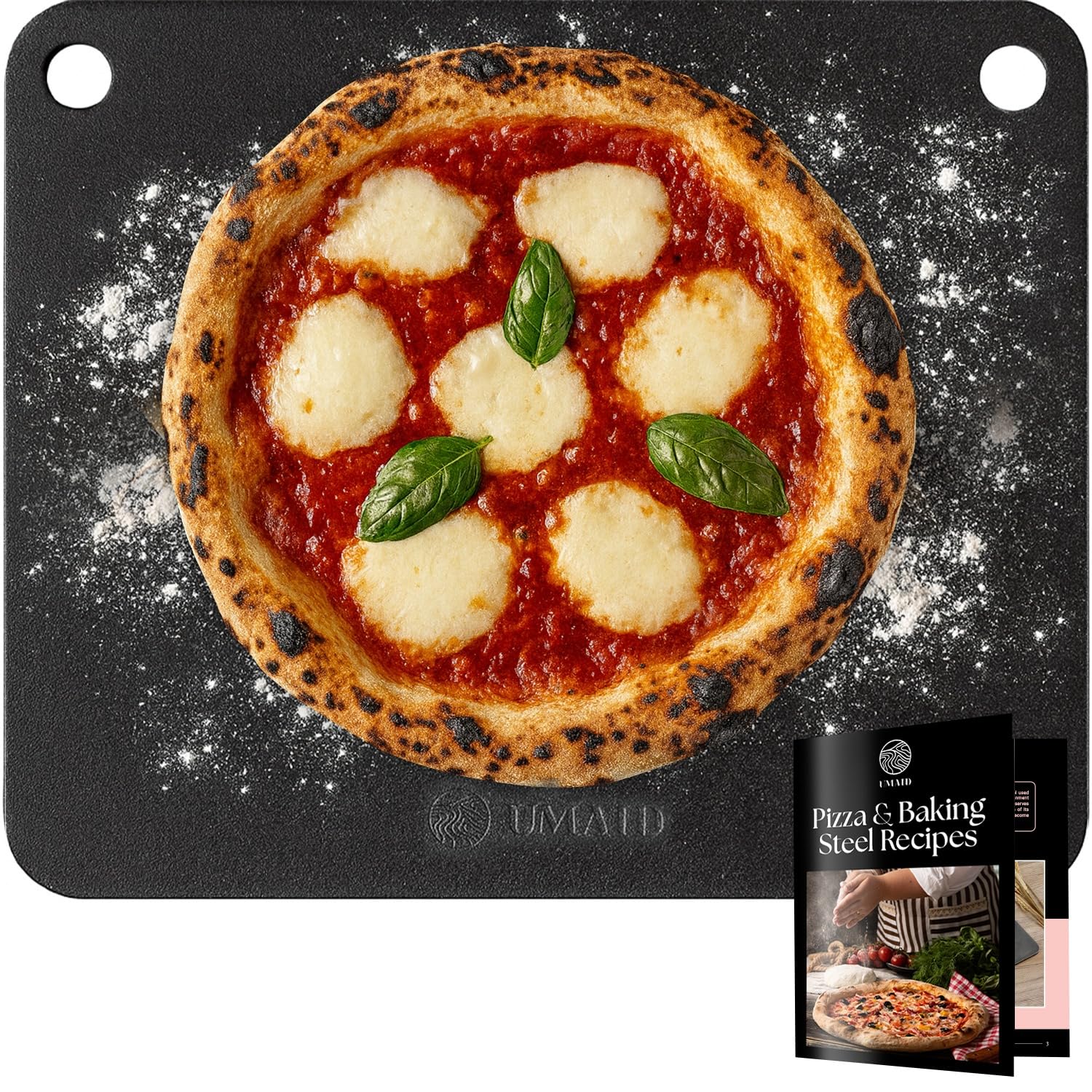
Here’s the reality: most people don’t fail at pizza because they chose the wrong steel. They fail because they don’t have a system. They don’t know how long to temper cold dough, how to time preheat, how to reduce sticking, or why their bottom browns too fast. A steel that includes guided recipes can shorten that painful trial-and-error phase dramatically.
UMAID’s appeal is that it’s positioned as a complete learning tool: a sturdy pre-seasoned steel plus a recipe booklet that nudges you into good habits. That matters more than people think. When you’re new, you need two things:
- Confidence (the sense that you’re following a plan that works)
- Repetition (doing the process enough times to internalize it)
A recipe booklet encourages both. It reduces “what do I do next?” anxiety and makes you more likely to use the steel again next week. That’s how skills build.
Performance-wise, this is a classic 1/4″ style steel in a very practical size. Owners who love it tend to mention the same outcome: crisp bottom, faster bake, and a sturdiness that makes stones feel fragile by comparison. There’s also a repeated theme with this style of steel: once you experience how quickly the bottom sets, you often need to adjust your bake timing to avoid overbrowning. That’s not a flaw—it’s the steel doing its job. You adapt by shortening bake time, changing rack height, or using a quick broiler finish rather than a long bake.
The main “good to know” is weight. A steel is a dense piece of metal, and the first time you handle it, you realize this is not a flimsy baking sheet. Use good gloves, don’t move it hot unless you absolutely have to, and think about where you’ll store it. If you can commit to that, it becomes a high-value tool for building pizza confidence quickly.
Why it’s beginner-friendly
- Recipe guidance – Helps beginners build a repeatable process faster.
- Pre-seasoned convenience – Reduces first-day friction and encourages use.
- Strong crust improvement – Classic steel behavior: crisp bottom, faster bake, better structure.
- Versatile use – Works for pizza, bread, and other high-heat baking.
Good to know
- It’s heavy; safe handling matters.
- Steel can brown bottoms fast—expect to fine-tune time/rack position in early bakes.
- If you want a very large deck, consider bigger XL formats.
Ideal for: anyone who wants a sturdy pre-seasoned steel plus a structured learning path to start making consistently great pizza quickly.
14. Loftern Pizza Steel (14″ x 16″ x 1/4″) – The Affordable “No More Soggy Bottoms” Entry Point
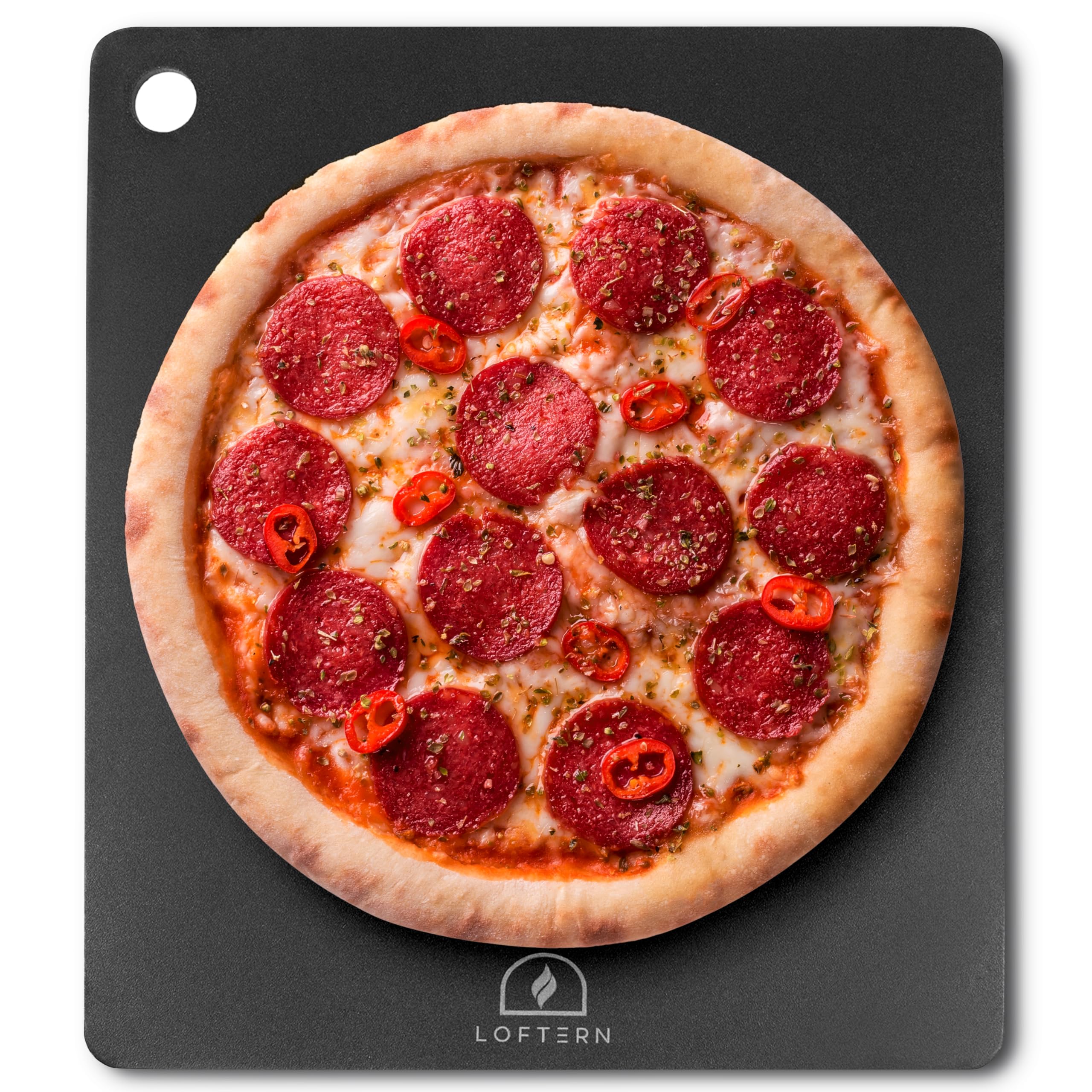
If you want the core benefit of steel—better crust browning, crispier bottoms, and more “pizzeria deck” behavior—without going all-in on premium branding, a straightforward 14″ x 16″ budget steel can be a smart move. Loftern fits that lane: a simple heavy-duty plate designed to bring steel performance to a normal oven.
The real value here is the “first steel transformation.” If you’ve been baking on a thin sheet pan or a stone that never quite browns the bottom, the difference a steel makes can feel dramatic. Your crust sets faster, steam escapes better, and you stop getting that gummy center. That’s why people call steels “game changers” even when they’re describing relatively simple products.
To get the most out of a budget steel, focus on technique rather than obsessing over branding:
- Preheat thoroughly so the steel, not just the oven air, is hot.
- Launch with confidence (use a peel, parchment for the first minute if needed, and don’t let the pizza sit assembled too long).
- Finish with top heat if your cheese and toppings lag behind the bottom browning.
Budget steels also tend to have more variability in finishing details—especially edges. That doesn’t mean they’re bad. It just means you should handle with gloves and treat it like a real tool. If you do that, a simple steel like this can deliver results that embarrass “fancier” setups that are used poorly. Pizza is a technique game. The steel just raises your ceiling.
Why it’s a good entry pick
- Classic 14″ x 16″ size – Fits many ovens and supports common pizza sizes well.
- Steel crust upgrade – Better browning and crispness than basic pans and many stones.
- Simple, durable design – Steel won’t crack like ceramic.
- Great for learning – Lets you build technique without overspending.
Good to know
- Edge finishing may be less refined—use gloves and handle confidently.
- Steel performance depends on proper preheat and rack strategy.
- If you want premium nonstick cleanup, hybrid-coated options will feel easier.
Ideal for: budget-conscious buyers who want the core benefits of steel in a classic size and are happy to “win with technique.”
15. Pentole Agnelli Blue Steel Pan (55 x 38 cm) – The Focaccia + Sheet-Pan Pizza Power Move

This is the curveball—and it’s here because not every great pizza night is a “launch a round pie onto a deck” night. Sometimes, the best pizza you can make at home is a deeply satisfying pan pizza: crisp bottom, airy interior, fried edges, and a bake that feels forgiving even when you’re cooking for people who are hungry now. A serious blue-steel pan like this is built for that style of baking.
Blue steel (carbon steel) has a personality: it needs seasoning-like care, it can rust if neglected, and it tends to improve with use. Owners who love this pan talk about exactly that: once it’s treated properly, it develops great nonstick behavior and makes excellent focaccia and pizza with a crisp base. That’s the payoff: a pan that becomes naturally slick and bakes beautifully.
The honesty, though, matters: thin steel pans can warp under heat. Some owners report warping even at moderate oven temperatures. Other owners say it bends but doesn’t affect cooking much. This is the kind of product where your expectations must be realistic:
- If you want perfectly rigid, always-flat performance, a thick steel plate is more dependable.
- If you want pan pizza and focaccia excellence, and you’re comfortable with carbon steel care, this can be deeply satisfying.
Here’s how to win with this pan: season it lightly before first use, avoid harsh soap, dry thoroughly, and keep it lightly oiled after baking. Then use it for the styles it was born for: focaccia, Sicilian, grandma pizza, roasted toppings, and anything that benefits from a hot, seasoned pan surface. If your pizza identity leans “thick, airy, crispy edges,” this is a great lane to explore.
Why it’s worth considering
- Excellent for focaccia + pan pizza – Built for crisp bottoms and satisfying edges.
- Carbon steel character – Develops better nonstick performance with use and seasoning-like care.
- Large rectangular format – Great for feeding groups and baking sheet-pan styles.
- Italian-made pan vibe – Designed for serious baking, not disposable sheet life.
Good to know
- Can warp under heat depending on oven and usage—expect some movement in this category.
- Requires careful maintenance (dry well, oil lightly, avoid leaving it wet).
- This is a pan specialist, not a classic “steel deck” for launching round pies.
Ideal for: cooks who love focaccia, Sicilian, and sheet-pan pizza styles and want a serious carbon-steel pan that can become better with time.
How Pizza Steels Actually Work (and How to Use Them Like a Pro)
A pizza steel works because it changes the timing of your bake. In a home oven, the top of a pizza often cooks faster than the bottom at first, but then the bottom never quite catches up—especially on thick doughs or wetter toppings. A steel flips that script: it gives the dough a fast hit of bottom heat, so the crust sets early, steam escapes, and browning starts sooner. That’s the foundation of “pizzeria-style” texture at home.
What makes a steel feel “next level” in real life
- Heat transfer speed – Steel pushes energy into dough quickly, creating crispness and structure early.
- Heat storage – Thicker steels hold more energy and recover faster between pizzas.
- Evenness – A well-preheated steel reduces the “pale center / burnt edge” pattern that frustrates home bakers.
- Steam management – Faster crust setting helps release moisture instead of trapping it into gumminess.
- Consistency – The more stable your deck, the easier it is to make repeatable pizza without guesswork.
This is why so many people feel like a steel “unlocks” their oven. Your oven becomes less about chasing temperature and more about using heat intelligently. And once you understand the steel, you stop treating pizza like a gamble.
Technique moves that improve results immediately
- Preheat the steel, not just the oven – If the steel isn’t truly hot, you’re leaving performance on the table.
- Use rack height as a control knob – Lower rack boosts bottom browning; higher rack helps the top keep up.
- Broiler finish (strategically) – When the crust is set, a quick broiler blast can deliver the “pizzeria top” without drying the dough.
- Launch smarter – Don’t let a built pizza sit on the peel. Build fast, launch fast, bake confident.
- Use parchment as training wheels – If you’re learning, launch on parchment for the first minute, then pull it out for direct deck contact.
The goal is not perfection. The goal is control. A steel gives you the ability to control the bake instead of reacting to it.
FAQ: Pizza Steels, Seasoning, and Getting Crisp Crust Without Stress
Do I have to preheat a pizza steel?
Why did my bottom burn before the cheese browned?
How do I prevent sticking when launching?
Do I need to season my steel like cast iron?
Can I wash a steel with soap?
Can I use a pizza steel on a grill?
What’s the difference between a steel and a baking stone?
Should I cut pizza on the steel?
Final Thoughts: Pick the Tool That Makes You Bake More Pizza, Not Just Read About It
The ultimate truth about upgrading your kitchen gear is this: the perfect tool is the one that seamlessly integrates into your actual routine. A massive, heavy-duty steel is life-changing—if you don’t mind the long preheats and heavy lifting. A nonstick hybrid is brilliant—if you value a fast, mess-free workflow over traditional techniques. A deep blue-steel pan is unmatched—if you are obsessed with thick, fried-edge focaccia.
Here is the fastest way to turn all this research into a rock-solid purchase:
- Looking for the gold standard, do-it-all deck for a standard oven? Grab the Baking Steel – The Original. It remains the benchmark for home bakers because it consistently delivers that shattering, professional crust.
- Want an incredible crust with absolutely zero cleanup anxiety? Opt for the HexClad Hybrid Nonstick Pizza Steel. It is engineered for cooks who want elite performance without the fussy maintenance of raw cast iron.
- Regularly hosting parties and churning out multiple pies in a row? The massive Conductive Cooking XL 14″ x 20″ (3/8″) offers the vast surface area and rapid heat recovery necessary to feed a hungry crowd.
- Need a multi-purpose beast that can handle pizza and smashburgers? Invest in the ThermiChef 16″ x 16″ (3/8″) to get extreme heat retention and incredible versatility across your entire menu.
- Finally upgrading from a cracked, disappointing ceramic stone? The Artisan Steel High Performance is an incredibly rugged, reliable slab that will likely outlive your oven.
- Starting from scratch and want a foolproof entry into pizza making? Look at the Hans Grill Pizza Steel PRO Set or the UMAID Pizza Steel. Both bundles provide the guidance and accessories you need to nail your very first bake.
- Baking artisanal bread is your true passion, but you still love pizza? The Brød & Taylor Bread Steel Max is a thinner, faster-heating option that is significantly easier to maneuver around your kitchen.
- Obsessed with thick, Detroit-style, or Sicilian pan pizzas? The Pentole Agnelli Blue Steel Pan is a specialized tool that, with proper care, yields incredibly airy dough with perfectly fried edges.
Ultimately, you are not just buying a heavy piece of metal—you are buying predictability in the kitchen. Select the best baking steel for pizza that perfectly aligns with your cooking habits (whether that means sliding dough off a peel, avoiding heavy lifting, or mastering the broiler), and you will instantly transform your home oven into your new favorite pizzeria.
