
Swirl (NC701) is for real soft-serve cones; Creami (NC301) is the value king for scoopable pints, smoothie bowls, and mix-ins.
Full Technical Specs (Side-by-Side)
| Spec | Ninja CREAMi NC301 (7‑in‑1) | Ninja CREAMi Scoop & Swirl NC701 (13‑in‑1) |
|---|---|---|
| Core output |
Scoopable frozen treats from a frozen base Designed around pint-based “spin to serve” |
Scoopable and swirled/dispensed treats (soft serve style) Built-in soft serve handle + dispensing lid system |
| One‑touch programs |
7 preset treat programs: Ice Cream, Sorbet, Gelato, Milkshake, Smoothie Bowl, Lite Ice Cream, Mix‑in + Re‑spin function for texture refinement |
13 one‑touch programs (adds dedicated soft‑serve style options) Includes Soft Serve + specialized modes like Fruit Whip, Frozen Custard, and CreamiFit + Mix‑in / Re‑spin workflow depending on recipe |
| Pint system (included) | (2) 16‑oz CREAMi pints + storage lids |
(2) 16‑oz CREAMi 2‑in‑1 pints with nozzles + storage lids Dispensing lid with swirl press + pull‑out drip tray |
| Soft‑serve dispense |
No built‑in dispensing / cone swirl feature (You scoop or spoon‑serve) |
Yes — automatic Soft Serve Handle (cone-friendly workflow) Designed for “swirl” serving and family-style cones |
| Wattage / power | 800W | 800W |
| Dimensions (L × W × H) | 12.07″ × 6.52″ × 15.95″ |
10.04″ × 15.16″ × 17.52″ (Wider + taller footprint) |
| Weight | 13.6 lb | 20.8 lb |
| What’s in the box |
Motor base (2) 16‑oz pints + lids Creamerizer paddle Outer bowl + lid Recipe inspiration guide |
Motor base (2) 16‑oz 2‑in‑1 pints w/ nozzles + lids Dispensing lid with swirl press Creamerizer paddle Outer bowl + lid Pull‑out drip tray Recipe inspiration guide |
| Dishwasher safe parts | Pints, lids, and paddle are dishwasher safe (top rack recommended) | Pints, lids, paddle, swirl press parts are dishwasher safe (BPA‑free parts called out) |
On smaller screens, swipe sideways to view the full table.
At A Glance: The Breakdown
Ninja CREAMi NC301 — Classic Pint Powerhouse
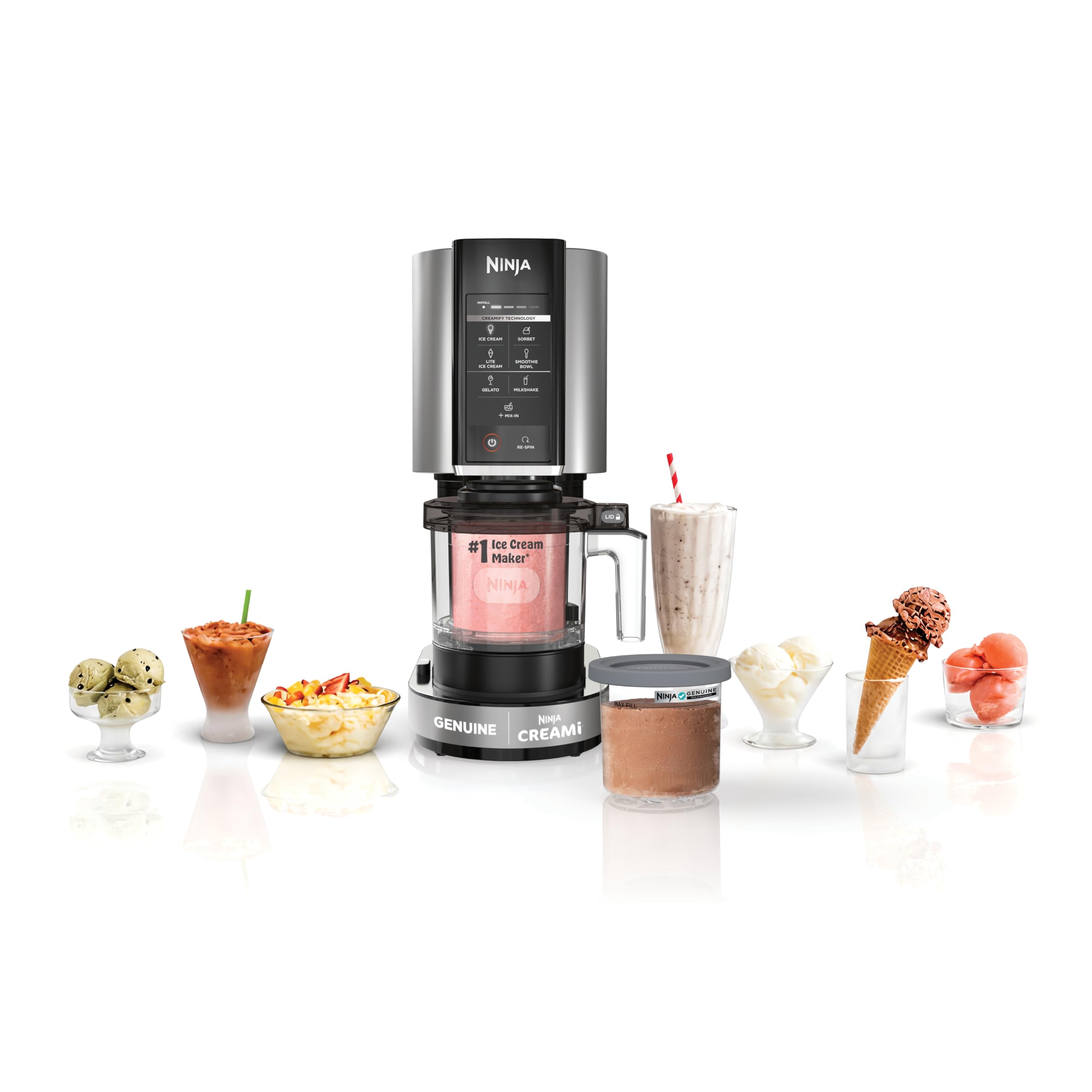
- Best For: Value-focused buyers who want premium texture from a pint (ice cream, gelato, sorbet, smoothie bowls)
- Workflow Personality: Prep pints in advance; “spin to serve” in minutes; re‑spin turns crumbly into creamy
- Texture Strength: Thick, scoopable results that feel “ice cream shop” when your base is balanced
- Diet Flex: Excellent for low sugar, dairy‑free, keto‑leaning, and high‑protein experiments (once you learn your base)
- Countertop Reality: Compact-ish footprint; easier to live with in smaller kitchens
- The Catch: No built‑in cone swirl; some recipes need a splash of liquid + re‑spin to look “perfect”
- Best Pro Tip: Freeze flat and level—this machine rewards “clean prep” more than expensive ingredients
Ninja CREAMi Scoop & Swirl NC701 — Soft Serve Mode
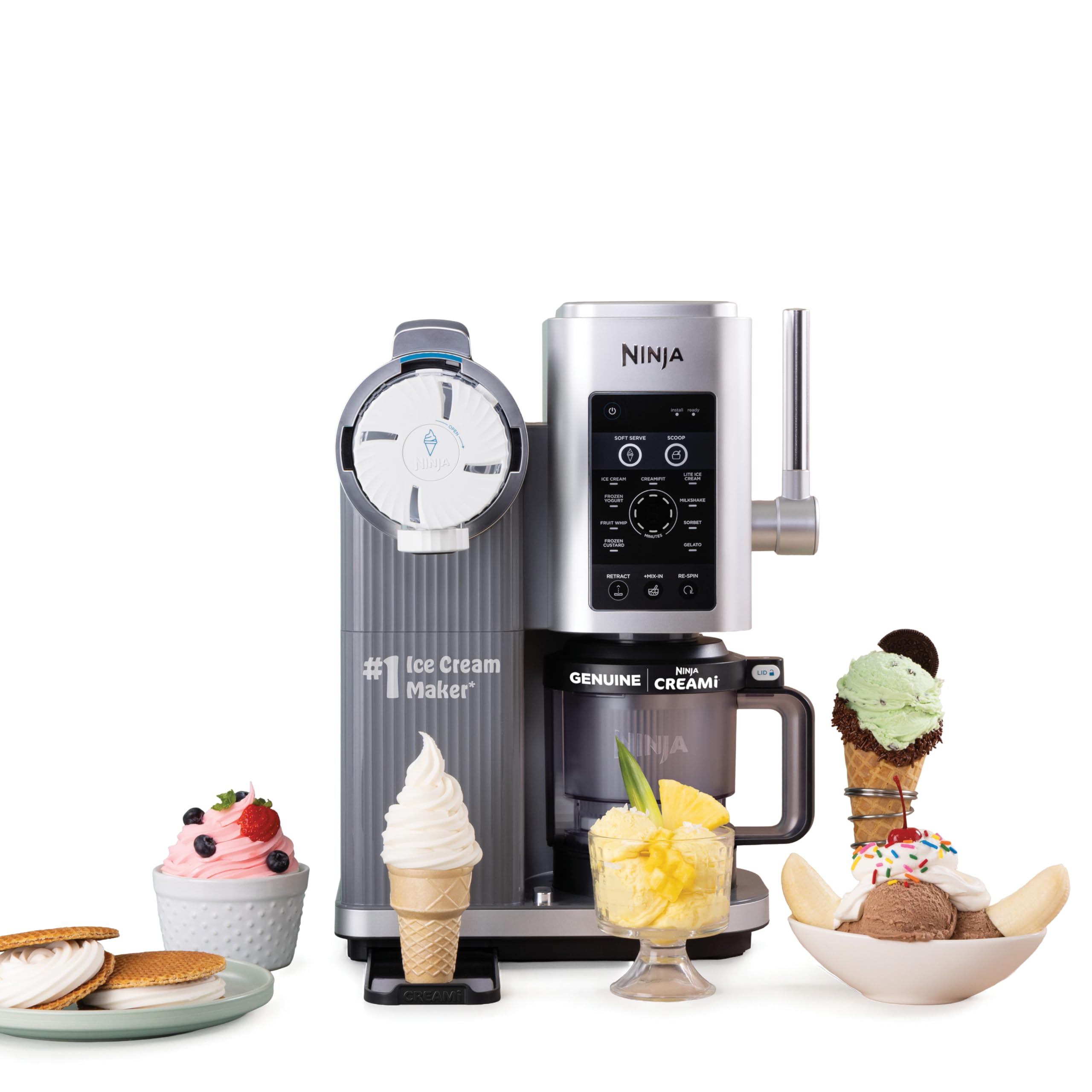
- Best For: People who want real soft‑serve cones at home (plus the classic scoopable modes)
- Signature Upgrade: Soft serve handle + dispensing lid system makes dessert feel like an “event,” not a bowl
- Program Depth: 13 one‑touch programs, including soft‑serve-style modes like Fruit Whip and Frozen Custard
- Fitness-Friendly Mode: CreamiFit aims to make lower‑calorie, high‑protein results smoother with less tinkering
- Countertop Reality: Wider, taller, and heavier; this is more “appliance” than “gadget”
- The Catch: More parts to wash; cone swirl can be finicky if your base melts fast or your texture is too loose
- Best Pro Tip: Buy the correct 700‑series pints—older pint systems won’t fit reliably
If you’re torn between these two, you’re not overthinking. You’re doing what smart buyers do: trying to predict how dessert-making will feel after the honeymoon—when you want something creamy at 9 PM, you don’t want a sink full of parts, and you don’t want to learn the hard way that “soft serve” and “scoopable pint” are two different lifestyles.
Here’s the confidence I’m bringing into this guide: most comparisons stay stuck on the spec sheet. I’m going to translate the spec sheet into real-life friction (and real-life joy). Because with machines like these, the winner isn’t the one with more buttons—it’s the one that fits your habits: how you snack, how you prep, how you clean, and whether you want your kitchen to feel like a mini ice cream shop or a low-effort “pint lab.”
And yes, Ninja Creami vs Swirl looks like a simple “newer is better” story. In reality, it’s a workflow decision: do you want the absolute best value for pint-based frozen treats… or do you want the cone-swirl experience that turns dessert into a family ritual?
Ninja Creami vs Swirl: The 60-Second Verdict
If you want the fastest honest answer, use this framework (it’s shockingly accurate):
- Choose the CREAMi NC301 if you mostly want scoopable pints (ice cream, gelato, sorbet, smoothie bowls), you like portion control, and you want the best “results per dollar” in the Ninja lineup.
- Choose the Scoop & Swirl NC701 if soft serve cones are the dream, you have kids (or you host), and you want the act of serving to feel like the main event—not just the texture in the bowl.
Now let’s go deep—because the best pick depends on what kind of frozen-treat person you are, and the machines reward different types of people.
Ninja Creami vs Swirl: What Changes in Real Life
Both machines live in the same family tree: you freeze a base into a solid pint, then the machine “creamifies” it into something that feels like it came from a shop. That’s the shared DNA. The difference is what happens after the texture is created.
- NC301’s philosophy: “Make a pint. Perfect the pint. Scoop the pint.” It’s a clean, minimal workflow. Few parts. Fast serving. Strong for people who want to experiment with flavors and macros.
- NC701’s philosophy: “Make a pint. Perfect the pint. Then dispense it like soft serve.” It adds a whole second layer: the swirl hardware, the handle, the nozzle pints, the drip tray, and a serving experience that can make your kitchen feel like a frozen yogurt shop.
So the question isn’t only “Which makes better ice cream?” Both can make outstanding texture. The real question is: do you want a pint machine… or a pint machine plus a serving machine?
How These Machines Actually Work (And Why It Matters)
Traditional ice cream makers (the bowl-churn types) freeze while they churn. These Ninja machines flip that: they make you freeze first, then they process the frozen block. Think of it less like a churner and more like a “frozen texture engine.”
That has three consequences that explain almost every love story and almost every complaint:
- You must plan ahead: if the pint isn’t fully frozen, you’ll get weird texture—slushy pockets, icy bits, or a “melts too fast” feeling. You’re basically betting your results on your freezer time.
- Your base recipe matters more than your machine: fat, sugar, protein, and stabilizers decide whether the first spin looks like silky soft serve or like dry snow that needs re‑spin.
- Flat-and-level freezing isn’t optional: if your pint freezes with a hump, the blade can struggle, scrape, or stress the mechanism. The machines are powerful, but they’re not designed to bulldoze uneven frozen terrain.
Once you understand that, the whole game becomes predictable. And predictable is what you want—because “surprise texture” is how people end up disappointed with machines that are actually very capable.
The Biggest Difference: Serving Style (Bowl Life vs Cone Life)
NC301: The “Bowl First” Machine
The NC301 is built for the scoop. That sounds basic until you realize something: most people don’t need a cone swirl every night. They need a reliable, repeatable, satisfying texture—especially for the kinds of treats you make more often than you expected: protein ice cream, fruit sorbet, smoothie bowls, and “I want something sweet but I also want to control the ingredients.”
If you’re the type who eats with a spoon while watching a show, or you like making a pint that becomes your dessert for the evening, the NC301’s simplicity is a feature. Fewer moving parts. Less “assembly energy.” Less cleanup friction. It’s a machine that fits into normal life.
NC701: The “Cone Night” Machine
The NC701 is for people who want dessert to feel like an experience. The soft serve handle is the point. It’s the moment. It’s what your kids remember. It’s what makes friends say, “Wait… you have a soft serve machine?”
But here’s the honest part: soft serve is a more sensitive format. In a bowl, slightly loose texture is fine. On a cone, loose texture turns into “falls down the cone” drama. That means NC701 rewards people who are willing to learn a couple of texture rules (I’ll give you those rules later). If you’re willing, the payoff is awesome. If you want zero learning curve, the NC301 is the calmer life.
Programs & Presets: What They Really Do (Not Just Button Names)
Buttons don’t make ice cream. They make processing patterns. These machines tweak speed, pressure, and time to match the expected hardness and composition of different bases.
NC301’s 7-in-1 programs: fewer modes, highly usable modes
What I like about the NC301 program lineup is that it maps cleanly to how people actually eat:
- Ice Cream / Gelato: your “dairy-based, richer base” home zone.
- Lite Ice Cream: your macro-friendly experiment zone (protein, lower fat, lower sugar).
- Sorbet: your one-ingredient fruit flex zone.
- Smoothie Bowl: your thick spoonable breakfast/dessert hybrid zone.
- Milkshake: your “make it drinkable” zone.
- Mix‑in + Re‑spin: your texture finishing tools (these two matter more than people realize).
Notice what’s missing: anything “showy.” The NC301 is built to be used often, not just shown off.
NC701’s 13-in-1 programs: more specialized, more “dessert shop”
The NC701 expands into true soft-serve territory. That includes programs designed for the “dispense and swirl” workflow and for bases that behave differently—like Fruit Whip (fruit-forward texture) and Frozen Custard (denser, richer structure). It also introduces a fitness-oriented approach with CreamiFit, meant for high-protein/low-calorie pints that can otherwise turn into dry, crumbly snow.
My practical take: the NC701’s extra modes are valuable if you’ll use them. If you’re 90% an ice cream + smoothie bowl person, the NC301 already covers your life.
Texture Reality: Why Some Pints Come Out “Powdery” (And How To Fix It)
This is the part most guides avoid because it’s not a feature—it’s food science. But if you want consistently creamy results, you need this.
When people say their pint came out “powdery,” “dry,” or “like frozen sand,” it usually means the base froze too hard and too crystalline. The machine shaved it, but there wasn’t enough fat, sugar, or stabilizing structure to bind the shavings into a creamy matrix on the first run.
Here’s the cheat code: creaminess is built before you freeze, then confirmed when you spin. The machine can do a lot, but it can’t invent structure that isn’t present.
Three levers that control creaminess
- Fat: adds richness and reduces “icy bite.” Too little can be dry; too much (especially in soft serve programs) can feel greasy or even slightly buttery if overworked.
- Sugar / sweeteners: affect freezing point. Less sugar can mean a harder block that spins into crumbs. (Also: colder temps can mute perceived sweetness, so you may need slightly more sweetness than you expect in the liquid base.)
- Stabilizers / protein structure: eggs, gelatin, pudding mix, xanthan/guar, dairy proteins, Greek yogurt, cottage cheese—these help create a smoother, more stable texture with fewer ice crystals.
The “re-spin” truth
Re-spin isn’t a rescue button for a bad machine. It’s a normal part of the workflow for lower-fat, lower-sugar, high-protein, or fruit-heavy bases. If your goal is a macro-friendly pint that still feels like dessert, re-spin is often the difference between “snow” and “soft serve.”
My rule of thumb: if the first spin looks crumbly, don’t panic. Scrape down the sides, add a small splash of liquid (milk, alt milk, or whatever matches your base), then re‑spin. It’s a two-minute habit that turns “almost” into “wow.”
Soft Serve Is Pickier Than Scoops (NC701 Owners: Read This)
Soft serve is not just ice cream in a cone. It’s ice cream with a narrower window of texture: it needs to be smooth enough to dispense, thick enough to hold a swirl, and stable enough not to slump immediately.
That’s why NC701 can feel magical one day and fussy the next—especially when you’re experimenting.
What makes soft serve slump?
- Too much liquid added post-freeze: a “helpful splash” can become a texture collapse if you overdo it.
- Warm kitchen, warm cone, warm pint: soft serve is sensitive to temperature. If your cone is warm (or your pint sat out too long), gravity wins.
- Low structure base: super low-fat, low-sugar bases can dispense but won’t always stack.
My “cone-worthy” workflow
- Spin first, judge second. Don’t pre-decide it needs liquid—see what the program gives you.
- If it needs help, add liquid in drops—not splashes. You can always add more; you can’t un-add.
- Dispense in a calm rhythm. Soft serve looks best when you let the swirl build with consistent pressure, not a panic squeeze.
- Serve immediately. This is not a “make it and leave it on the counter” dessert.
If you want soft serve to feel effortless, keep a couple of “known good” base recipes in rotation (vanilla, chocolate, fruit whip), then experiment with mix-ins after you’ve nailed the fundamentals.
Noise & Kitchen Timing: The Hidden Cost People Don’t Mention
Let’s be plain: these machines are loud. Not “oops I can still hear my podcast” loud—more like “vacuum/blender energy for a few minutes” loud. It’s short, but it’s real.
This matters because dessert usually happens at night. And night is when kids sleep, partners unwind, neighbors exist, and you’re least excited to run something that sounds like a small power tool.
So here’s how to choose based on noise tolerance:
- If you need quiet dessert: neither machine is a perfect fit—unless you’re okay running it earlier and refreezing (which often means you’ll re-spin later anyway).
- If you can plan around it: both are totally usable. Treat it like a blender: quick, loud, worth it.
- If you live in an apartment with thin walls: choose your timing carefully, and consider placing the machine on a stable, dampening surface (it reduces vibration “anger”).
Cleanup: “Easy To Clean” Can Mean Two Very Different Things
Both machines can be easy to clean compared to traditional ice cream makers—because you’re not scraping semi-frozen ice cream out of a deep bowl around a paddle. But there’s a big difference in how many things you have to clean.
NC301 cleanup feel
The NC301 is the cleaner lifestyle. Most nights, you’re washing the pint, the lid, and the paddle/lid assembly components. That’s why it becomes a “use it often” machine. Less friction means more reps, and more reps means you actually get your money’s worth.
One practical note: pay attention to any gasketed areas and crevices on the lid components. Quick rinse right after use prevents dried-on residue, which is what makes “easy to clean” turn into “why is this annoying?”
NC701 cleanup feel
The NC701 is still manageable, but it has more parts: the dispensing lid system, swirl press components, drip tray, and the nozzle-style pints. More parts means more places for dessert to hide. That doesn’t make it bad—it just makes it a bigger commitment.
This is where the NC701’s value becomes very personal: if you’ll actually use the swirl feature weekly, the extra cleaning is worth it. If you think you’ll use swirl twice a month, you might resent the extra parts.
Pint Strategy: The Most Underrated Buying Advice
These machines live and die by pints. If you only have two, your life looks like this:
Make base → fill pints → freeze for a full cycle → spin next day → wash → repeat.
That’s fine, but it’s not the “ice cream whenever I want” dream you probably have.
How to think about pint count
- For solo users: two pints can be enough, especially if you eat a pint over 1–2 sessions.
- For couples: you’ll want more so you can keep two “core flavors” ready and still experiment.
- For families: extras aren’t optional if you want the machine to feel effortless.
Also: pint compatibility matters. The NC701’s pint system is not the same “grab anything labeled Creami” situation. If you’re buying extras, buy the ones made for your exact series. This avoids the most frustrating kind of problem: a pint that looks right, fits wrong, and ruins your night.
Reliability & “Quirks”: What Experienced Owners Learn
I’m going to be honest in a way most reviews aren’t: any machine that repeatedly drills through a frozen block is doing hard mechanical work. That means two things can be true at once:
- The results can be incredible.
- Careless habits can create real problems.
Here are the most common “experienced owner” lessons that reduce headaches on both models:
1) Treat the flat top like a safety feature
If your pint freezes with a hump, don’t spin it like that. Let it sit briefly, level it, and only then process. This isn’t being picky—this is protecting the mechanism from uneven resistance and potential scraping.
2) Don’t use the machine as a blender
Blend your base before freezing if you’re using solid ingredients. These machines are built to texture a frozen base, not to pulverize a pile of frozen chunks from scratch. The “it’s not a blender” rule prevents strain and improves texture.
3) Keep the connection points clean
Wipe and rinse the parts that connect and spin. Sticky residue can cause fit issues, weird noises, or inconsistent performance. A 20-second wipe after each use is the difference between “this thing is flawless” and “why is it acting strange?”
4) Expect occasional re-spin nights
Especially on high-protein or ultra-low-sugar recipes, you’ll sometimes need more than one cycle. That’s not failure—that’s the trade-off for controlling ingredients.
The Recipe Masterclass: Build Bases That Always Work
This is where you stop needing “random internet recipes” and start being the person who can improvise a pint confidently.
The “Balanced Base” formula (for classic ice cream texture)
A classic creamy texture usually comes from a base that has:
- Enough fat to smooth the mouthfeel
- Enough sweetness to prevent a rock-hard freeze (and to taste sweet when cold)
- Some stabilizing structure (dairy proteins, eggs, or a gentle stabilizer)
If you’re making a rich dairy base, you’ll often get excellent results on the first spin—especially on Ice Cream or Gelato modes.
The “Macro Base” formula (high protein, lower calorie)
High-protein recipes can be wildly satisfying… but they’re also the most likely to turn into “crumbly snow” if you under-build structure.
To make protein pints taste like dessert instead of sacrifice, focus on:
- Protein choice: some powders taste better cold than others, and some need sweetness help.
- Texture support: Greek yogurt, cottage cheese, pudding mix, gelatin/collagen, or a tiny amount of xanthan/guar can change everything.
- Freezer temp awareness: if your freezer is extremely cold, expect more “powdery first spin” nights; re-spin becomes normal.
If this is your main use case, the NC701’s CreamiFit program can be a real quality-of-life feature. But the NC301 can still be excellent here once you learn your base.
The “Fruit-Only” formula (sorbet & fruit whip style)
Fruit-only treats are where these machines feel like magic: pineapple, mango, berries, peaches—especially when the fruit is naturally dense and sweet.
Two expert tips for smoother fruit results:
- Blend first when needed: it reduces strain and gives a more uniform freeze.
- Use the right program: Sorbet / Fruit Whip style modes are tuned for fruit-heavy bases.
Fruit sorbet is also the easiest way to justify the machine for “healthier dessert” households—because it turns simple ingredients into something that feels like a treat.
Which One Fits Your Life? Real Buyer Profiles
1) “I want a pint every night and I care about ingredients”
Pick: NC301 if you want the simplest routine and the best value. This is the machine that quietly becomes part of your weekly rhythm.
2) “I want soft serve cones, parties, and kid excitement”
Pick: NC701. The swirl handle isn’t a minor upgrade—it’s the whole reason the machine exists.
3) “I’m a gym person and protein pints are my dessert”
Pick: NC701 if you want the extra program support and you’ll actually use the soft-serve vibe. Pick: NC301 if you want value and don’t care about dispensing.
4) “I have a small kitchen and I hate countertop clutter”
Pick: NC301. The NC701 is bigger, heavier, and more of a commitment to keep out.
5) “I want the least annoying ownership experience”
Pick: NC301. Fewer parts and a simpler serving method usually means fewer nightly reasons to procrastinate dessert-making.
6) “I want the most fun ownership experience”
Pick: NC701. If you’re going to use it like a mini dessert station, the swirl experience is hard to beat.
FAQ: Quick Answers That Save You From Regret
Do these machines actually freeze ice cream?
No—your freezer does the freezing. The machine processes a fully frozen base into a creamy texture. That’s why planning and pint prep matter.
Do I really need a full freeze cycle?
If you want consistent texture, yes. Under-frozen pints are one of the fastest paths to “melty” or inconsistent results.
Can the NC301 make soft serve?
You can make a softer texture and serve it immediately, but it won’t give you the true cone-dispense experience the NC701 is designed for.
Will leftovers stay scoopable like store ice cream?
Often no—because homemade bases without commercial stabilizers can re-freeze hard. The upside is ingredient control. The normal fix is: level the surface, refreeze, then re-spin later.
Which one is “more worth it”?
If you’ll mostly eat pints: NC301. If you’ll actually use the swirl handle often: NC701. The “worth it” is directly tied to whether you’ll use the signature feature.
So… Which Should You Actually Buy?
I’ll make this simple and honest:
- Buy the NC301 if you want the best value, the cleanest workflow, and consistently great scoopable results with fewer parts and less fuss.
- Buy the NC701 if soft serve cones are the dream and you want dessert to feel like a mini ice cream shop at home—even if it means more parts and a bit more learning.
And here’s my best tie-breaker question—because it gets to the heart of what you really want:
Do you want dessert to be a habit… or a moment?
If you want a habit, NC301 wins. If you want a moment, NC701 wins. That’s the real answer behind Ninja Creami vs Swirl.
My Honest Recommendation
If you want the smartest “use it constantly” option—great texture, strong versatility, fewer parts, and the best value—go with the Ninja CREAMi NC301. It’s the model that fits real life: pints ready in the freezer, quick spins, easy cleanup, and plenty of room to build your perfect base—whether that’s indulgent gelato or a protein-heavy “dessert you can justify.”
But if your dream is cones, swirls, and the full soft-serve experience—and you’ll actually use that feature regularly—the Ninja CREAMi Scoop & Swirl NC701 is the more satisfying “dessert station” pick. It’s bigger, bolder, and built for the kind of fun that makes people walk into your kitchen and say: “Wait… you have soft serve at home?”
Either way, the win comes from one thing: nail your base, freeze it flat, and treat re-spin as a normal tool—not a failure. Do that, and Ninja Creami vs Swirl becomes less about specs and more about choosing the machine that matches your dessert personality.
