
A great range hood isn’t “just a fan.” It’s the difference between a kitchen that feels fresh and a kitchen that quietly collects grease film on cabinet doors, carries last night’s sear into your curtains, and sets off the smoke alarm the moment you do anything interesting in a pan.
If you’re searching for a kitchen hood cover, you’re probably in one of two situations: you’re either upgrading ventilation because cooking has outgrown your current setup… or you’re remodeling and you want that “wow” focal point above the range without buying something that looks good but vents poorly. Either way, you’re playing a game most shoppers don’t realize they’re in: capture + airflow + install quality. Get those three right, and even the loudest recipes (high-heat stir-fry, fish, steaks, curries) stop lingering. Get them wrong, and you can spend more and still feel disappointed.
This guide is built differently on purpose. I’m not going to tell you “this one is better because it’s bigger” and call it a day. Instead, I’m going to walk you through the real friction points that show up after weeks and months of ownership: the finishes that wipe clean versus the ones that hate harsh cleaners, the controls that feel slick until you’re cooking with wet hands, the “CFM on the box” versus what you actually feel at the stove, and the hidden install realities (ducting runs, chimney fit, wall studs, and why you should always test the unit before you bolt it to the wall).
Below are 10 standout picks that cover the full range of real homeowner needs: modern stainless hoods that prioritize raw airflow, designer wood hoods that function as a true centerpiece, custom-style wood covers that let you choose your own insert, and a couple of budget-friendly workhorses that keep things simple.
In this article
How to Choose the Right Kitchen Hood Cover
A hood can look perfect on a product page and still disappoint in real life. That’s because “good ventilation” isn’t one feature—it’s a system. The smart way to buy is to decide what you want your hood to do (performance, style, or both), then choose the design that makes that outcome easy. Here’s the decision framework I’d use if I was designing your setup from scratch.
1. First decision: are you buying a complete hood or a cover that needs an insert?
This is the biggest confusion point online, and it’s why some remodels go sideways. In plain language, you have two product types in this guide:
- Full range hoods (motor included): You mount them, connect ducting (or set up recirculation), and you’re ready to cook. Think stainless canopy hoods and some designer wood hoods.
- Decorative hood covers (insert not included): These are the “custom look” wood shells. They’re meant to wrap around a separate liner/insert that contains the fan, filters, and controls.
Why it matters: a decorative cover can look incredible, but the performance depends almost entirely on the liner you pair with it. That’s not a downside—it’s a power move for remodelers who want a very specific airflow level, a certain noise profile, or a particular brand of insert. It’s just important to know before you click “buy.”
2. Ducted vs ductless: the real difference (and the “honest expectations” version)
If you can duct outside, duct outside. I’m not saying that to be dramatic—I’m saying it because it’s the single most reliable way to remove smoke, grease, and moisture instead of just moving it around.
- Ducted (vented outside): Best for searing, frying, wok cooking, frequent garlic/onion cooking, and anything that tends to create smoke or strong aromas.
- Ductless (recirculating with carbon filters): Useful when outside venting isn’t possible, but it’s a compromise. It can reduce odors, but it will not remove moisture the same way, and grease control is typically weaker.
The big hidden truth: a ductless setup can still feel “good” if your cooking is light-to-moderate and you’re diligent about filter maintenance. But if your goal is to stop smoke alarms and eliminate lingering smell, ducted almost always wins.
3. Airflow isn’t the whole game—capture area is the secret weapon
A lot of people shop by CFM numbers alone. That’s understandable, but it can lead you to overbuy power and underbuy performance. What actually matters at the stove is whether the hood can capture the plume of smoke/steam and then move it.
- Capture area: The shape and depth of the hood—the “umbrella” that catches what rises off your pans.
- Airflow: The motor’s ability to pull air through filters and ducting.
A hood with smart shape and decent airflow can outperform a “high CFM” hood that’s too shallow or mounted too high. This is why designer-style canopies and deep wood hoods can feel surprisingly effective: they create a generous capture zone, so the fan doesn’t have to work as hard to win.
4. Size and fit: don’t guess—match the hood to your range and your ceiling
Most people get the width right (30-inch range → 30-inch hood), but forget the details that actually change daily use:
- Depth matters: A deeper hood catches front-burner smoke better. If you cook on the front burners a lot, prioritize depth and canopy shape.
- Mounting height matters: Too high = weak capture. Too low = head bumps and cramped cooking. Stay within the hood’s recommended install range.
- Chimney range matters: Many chimney hoods can fit standard ceiling heights, but taller ceilings often need extensions. Wood hoods may be trimmable—but plan the cut before install day.
Also: if you’re buying a heavy wood hood, plan your wall structure. These aren’t “toggle bolt” installs. They want studs, blocking, or a proper mounting system.
5. Noise: the trick is buying a hood you can actually tolerate using
Here’s the psychology of kitchen ventilation: if the hood is loud or annoying, people don’t use it until it’s too late. Then they blame the hood for being weak. The goal is to buy a hood that feels useful at low and mid speeds—because those are the settings you’ll actually turn on every day.
- Look for multiple speeds: More steps means you can find a “sweet spot” that removes fumes without dominating the room.
- Expect high speed to be louder: That’s normal. You’re buying the option to go turbo, not the requirement to live there.
- Install affects noise: Flexible ducting, sharp elbows, and restricted duct sizes can add noise and reduce airflow.
6. Filters and cleaning: your future self is begging you to care about this
Grease filtration isn’t glamorous, but it’s one of the top reasons owners love or hate their hood later. In this guide, you’ll see two common filter types:
- Baffle filters: Typically stainless steel, often dishwasher safe, and excellent for heavier cooking. These tend to feel “professional.”
- Mesh filters: Often aluminum, lighter, and common in budget models. They can work well, but maintenance and durability vary by build quality.
Real-life tip: no matter what you buy, grease builds fastest when you cook on high heat without turning the hood on early. If you want less scrubbing, run the hood for a few minutes before you start cooking and keep it running after you finish.
7. Controls and lighting: small details that become daily comfort
This is where “spec sheet” shopping fails most often. Touch controls, buttons, and gesture sensors can all work well—but each has a different real-life feel:
- Touch/gesture: Looks modern and wipes clean, but can be finicky if the sensor is picky or if you expect instant response in steamy conditions.
- Buttons: Less flashy, often more reliable, and easier to use without looking—especially when you’re cooking fast.
- Lighting placement matters: A light can be “bright” but still useless if it throws a small pool of light in the wrong spot.
If you cook a lot at night, lighting quality matters more than people admit. Great lighting makes your cooktop feel safer, cleaner, and easier to manage.
8. The “performance killers” nobody tells you about (but every installer knows)
Even the best hood can feel weak if the install is working against it. Here are the most common issues that show up in real homes:
- Too many duct turns: Every elbow adds resistance. Keep the duct run as straight as possible.
- Wrong duct size: Choking a strong hood through a small duct is like breathing through a straw.
- Long flexible ducting: Flex duct adds drag and can trap grease. Smooth ducting performs better.
- No makeup air (in tight homes): If your house is sealed tight, the hood can struggle because there’s nowhere for replacement air to come from.
- Skipping “test before mount”: Always power on and test lights, fan speeds, and controls before final install—especially on heavier builds.
The best buying strategy is to pick a hood that matches your cooking intensity, then install it like you want it to win.
Quick Comparison: 10 Kitchen Hood Cover Picks
Use this table to quickly match your priorities to the right style—then jump to the full reviews for the “real owner” details like control quirks, finish durability, install surprises, and what people love after living with each hood.
On smaller screens, swipe or scroll sideways to see the full table.
| Model | Type | Real-life strength | Best match | Amazon |
|---|---|---|---|---|
| IKTCH 36″ Black Wall Mount (900 CFM) | Full hood | Big airflow with modern controls + strong customer support reputation | Most cooks who want power, style, and low-regret ownership | Amazon |
| ZLINE 30″ Wooden Hood (Cottage White) | Full hood | Designer wood look with “real hood” function (not just decor) | Bright, transitional kitchens that want a centerpiece that vents | Amazon |
| ZLINE 30″ Wooden Hood (Rustic Dark) | Full hood | Farmhouse drama + solid daily ventilation with easy-clean baffles | Modern farmhouse, rustic, or moody kitchens that cook often | Amazon |
| ZLINE 30″ Hand-Hammered Copper (Designer Series) | Full hood | Statement finish + practical ventilation in a clean-lined form | Design-forward kitchens that want a showpiece without going “custom” | Amazon |
| Castlewood Rustic Shiplap Chimney Hood (with liner) | Cover + liner | Rustic wood look with a ventilator included—less sourcing hassle | Farmhouse remodels that want a wood hood without shopping inserts | Amazon |
| Riley & Higgs Curved Front White Cover (31.5″ x 30″) | Cover only | High-end “custom built-in” look with two-piece access design | Remodelers who want a premium white hood look and choose their liner | Amazon |
| Riley & Higgs Sloped Front Unfinished Cover (31.5″ x 30″) | Cover only | DIY finish freedom (paint or stain) with statement molding | Hands-on homeowners who want the look to match cabinets perfectly | Amazon |
| Riley & Higgs Curved Front Unfinished Cover (31.5″ x 36″) | Cover only | Taller, more dramatic profile + trimmable height flexibility | Taller ceilings or anyone chasing that “designer hood” silhouette | Amazon |
| SNDOAS 30″ Black Hood (450 CFM, 3-speed) | Full hood | Simple, affordable, modern look with solid everyday function | Budget remodels, rentals, or “just need it to work” kitchens | Amazon |
| SNDOAS 30″ Black Hood (button control) | Full hood | Entry-level chimney hood that looks sleek and installs quickly | Light-to-moderate cooking in small kitchens on a tight budget | Amazon |
In‑Depth Reviews: 10 Hood Picks That Make Cooking Feel Cleaner (and Look Better)
Now we’ll go model by model. I’m going to review these like someone who actually cooks: what feels powerful in real use, what’s easy to install and live with, what owners complain about after the honeymoon phase, and what you should plan before you click buy.
One quick note before we start: with ventilation, your install quality and your ducting layout can change your results dramatically. That’s why you’ll see me talk about duct runs, filter access, chimney fit, and controls—not just airflow claims.
1. IKTCH 36″ Black Wall Mount Range Hood – Big Airflow, Modern Controls, and “They Actually Helped Me” Support

If you cook often and you want a hood that feels like a true upgrade—not just a prettier box above the stove—this IKTCH is the most balanced choice in this lineup. It’s built around a simple promise: move a lot of air without punishing you with noise, and do it with a modern interface that looks clean in a finished kitchen.
In real owner feedback, you see two themes that matter far more than “features on paper.” First, the airflow feels genuinely strong even at lower speeds. That’s exactly what you want because low and mid speeds are what you’ll use daily. Second, people routinely describe the hood as “not very loud” for the level of suction—meaning it’s a hood you’ll actually turn on early, not just when the smoke alarm bullies you into it.
Now the real-life nuance: gesture controls are either your favorite thing or something you ignore. Multiple owners mention that gesture activation can be finicky (especially early), and some report a sensor that worked briefly and then stopped responding. Here’s the important part: when people reached out, IKTCH support often shipped replacement parts (control systems, sensor bars, power panels) quickly—and in more than one case, the fix fully resolved the issue. That support story is not a small detail. Range hoods are long-lived fixtures. When a brand proves they’ll solve a problem instead of ghosting you, it’s a huge quality-of-life win.
Another real-world point owners mention: the interface logic. This hood uses multiple speeds, but it can feel “linear” in a way that makes some users tap through speeds to get to off. That isn’t a dealbreaker, but it’s the kind of daily friction you should know about. If you like the idea of gesture control but don’t want to rely on it, think of gesture as a bonus, not the main operating method. Touch control and remote are still there.
For installation, people consistently report the unit looks sturdy and mounts well—especially as a replacement for a builder-grade hood. If you’re venting outdoors, the hood’s ability to clear smoke quickly becomes the headline. If you’re cooking aromatic foods (strong spices, frying, searing), this is the kind of airflow that changes how your kitchen feels after dinner. And because the baffle-style stainless filters are designed to be removable and dishwasher friendly, maintenance doesn’t feel like punishment.
Why it earns “best overall”
- Power you can feel – The airflow isn’t theoretical; owners describe it as genuinely strong, even on lower speeds.
- Noise is controlled for the output – It can get louder at max (as any hood will), but it’s designed to be usable day-to-day.
- Easy cleaning workflow – Stainless baffle filters are meant to come off and be cleaned without drama.
- Customer service reputation – Multiple owners report quick part replacements and strong follow-through.
- Modern look without looking fragile – The black finish reads “designer,” but the build feels substantial.
Good to know
- Gesture control can be finicky; treat it as a bonus feature and learn the touch/remote flow.
- Some users report light humming or control issues at first—testing before final install is smart.
- Interface speed changes may feel “tap-heavy” to some; if you hate menus, consider how you like to operate appliances.
Ideal for: home cooks who want strong ventilation with a modern look and a brand that (based on owner experiences) tends to help when a component needs attention.
2. ZLINE 30″ Wooden Wall Mount (Cottage White) – The “This Changed My Kitchen” Statement That Still Vents Like a Real Hood

This ZLINE wooden hood is for the person who wants their range area to look intentional—not like you picked a hood at the last second because the contractor asked for one. It has the “built-in custom” vibe people chase in high-end remodels, but it’s still a functional hood with a real motor and baffle filtration. In other words: it’s not just decoration.
In owner feedback, the most common reaction is immediate: “beautiful,” “showpiece,” and “I replaced stainless and I’m happier.” That’s exactly what you want from a hood that’s acting as a focal point. Stainless can be sleek, but wood changes the visual temperature of a kitchen. It makes the space feel more finished and less “appliance showroom.”
Now the practical truth you should know before buying: the color is often described as more of a cream tone than a stark bright white. For many kitchens, that’s a feature because it feels warmer, especially alongside off-white cabinets or natural stone. But if you need a perfect match, there’s a real-world workaround owners mention: the wood can be painted. Several people describe painting it to match cabinets more closely, and doing it successfully. That paintability is a quiet advantage of wood hoods: you can dial in the finish instead of settling.
Installation reality is the second big theme. Wood hoods are heavy—this isn’t a “one person, one ladder” situation. One owner mentions paying for install and an outlet setup, and that’s common: these are real fixtures, not lightweight décor. The good news is that ZLINE designs these with standard ductwork compatibility and includes chimney elements meant to fit common ceiling heights. The chimney can be trimmed for lower ceilings, and that flexibility matters more than you’d think because many kitchens aren’t perfectly standard.
On performance, the point isn’t to chase maximum airflow. The point is daily usability: multiple speeds let you find your comfort zone, and the baffle filters are designed to be cleaned without treating grease like a lifelong curse. Noise depends on speed, but that’s true of all hoods—what matters is having a low/mid setting that’s pleasant enough to use constantly. That’s how you win the long game: you turn it on early, and your kitchen stays clean-feeling without drama.
One more real-life detail: shipping and finish condition. A few owners mention receiving a unit with scratches and waiting on responses. That’s not unique to this hood—anything large and semi-custom-feeling can arrive with cosmetic issues if shipping gets rough. The smart move is to inspect immediately and test functionality before final mount. With wood hoods, it’s also worth keeping your paint/stain plan in mind. If you were going to paint anyway, minor surface issues may be easier to solve.
Why homeowners love it
- Instant focal point – This is the kind of hood that makes the whole kitchen look more custom.
- Still a real hood – Motor + baffle filtration means you’re not trading function for looks.
- Paintable flexibility – If the “white” tone isn’t a perfect match, owners successfully repaint to match cabinets.
- Trim-friendly fit – Chimney components can be cut to suit ceiling height realities.
- Great replacement for basic stainless – Owners who switched often report they’re happier with the new look.
Good to know
- The color often reads cream rather than bright white; plan accordingly (or plan to paint).
- These installs are heavy-duty; expect to use proper wall support and likely a helper.
- Inspect on arrival; cosmetic shipping issues happen in this category and are easier to solve early.
Ideal for: remodelers who want a bright, classic wood-hood look that feels custom while still delivering everyday ventilation without needing a separate insert purchase.
3. ZLINE 30″ Wooden Wall Mount (Rustic Dark) – Moody, Rustic, and Surprisingly Practical to Live With
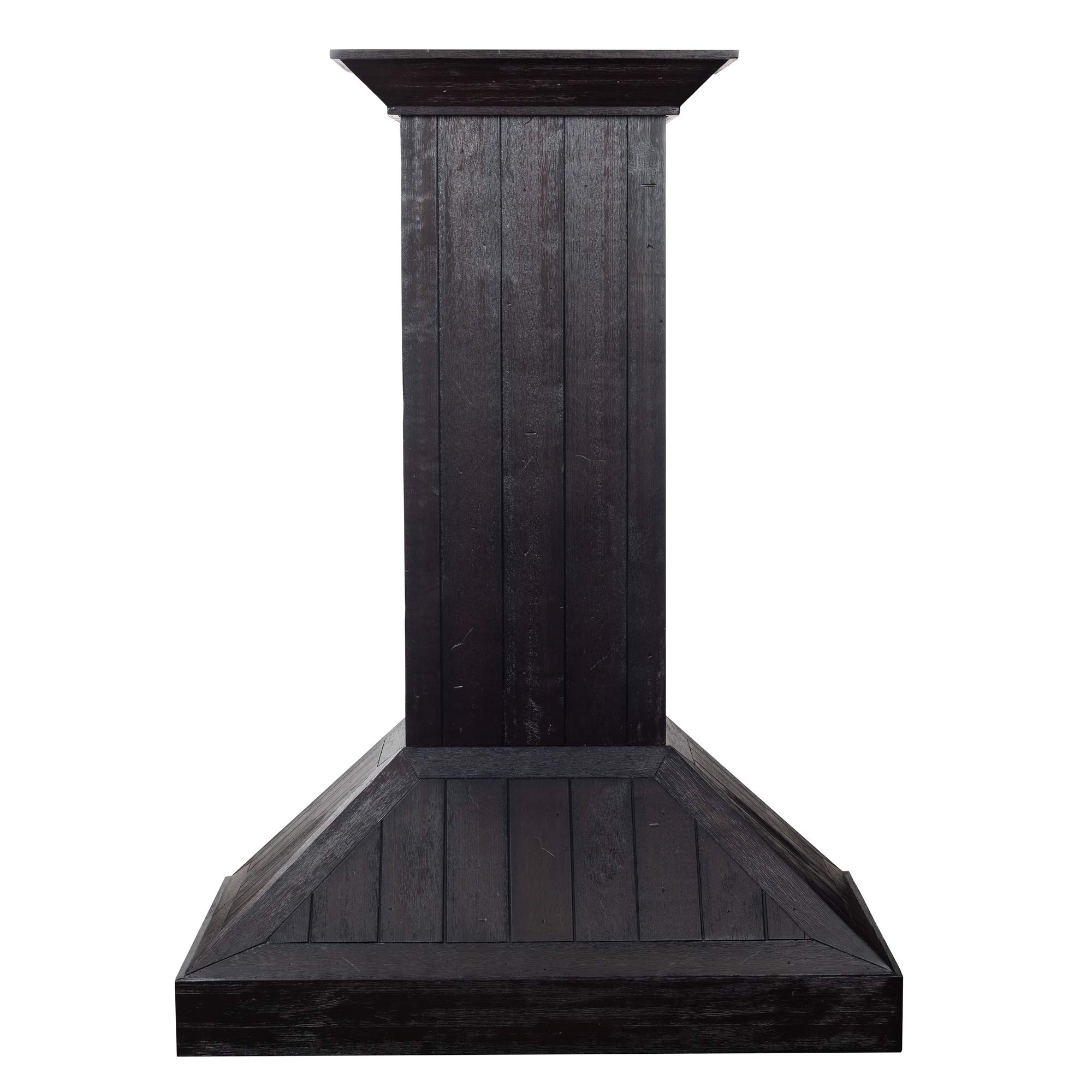
If the Cottage White version is the bright, airy choice, the Rustic Dark is the “warm and grounded” one. This hood is built for modern farmhouse kitchens, moody kitchens, rustic kitchens, and any space where you want contrast above the range. It’s the kind of piece that reads like built-in millwork—because it basically is.
Owners who love it tend to sound the same: “gorgeous,” “better than pictured,” and “it looks amazing in our farmhouse kitchen.” That’s not marketing fluff—it’s the real value of a wood hood. The hood becomes a design anchor. It can make basic tile look more expensive and help the whole cooking wall feel intentional.
But here’s what makes this model worth considering even if you’re a function-first buyer: it’s still a straightforward, practical hood in day-to-day use. You get multiple fan speeds, LED lighting, and stainless baffle filters that can go in the dishwasher. This “easy clean” detail matters more on darker finishes than people admit—because dark surfaces look incredible, but they also make grease and dust more visible if you’re not on top of maintenance.
The real-life trade-offs show up in two places: install and sound. These are heavy. One owner mentions install complexity simply because of the weight, and that’s a common theme with wood hoods. If you’re DIYing, you’ll want a second person and you’ll want to plan the mounting structure properly. If you’re hiring out, make sure the installer treats it like cabinetry, not like a light fixture.
Noise is the second reality check. Some owners note it can be “a little loud” at higher speeds, but also say smoke removal is great. That combination makes sense: strong airflow produces sound, especially when you’re actually moving air through filters and ducting. The winning strategy is to use low and mid speeds for most cooking, then go high for searing, frying, or those “this is going to smoke” moments. A hood like this is a tool—you don’t run a power tool at max all day. You use the right setting for the job.
One more detail many buyers overlook: this hood is designed to connect to standard circular ducting and includes a chimney piece with crown molding styling. That crown detail matters if you’re aiming for a built-in look. And because the chimney is typically trimmable for lower ceilings, it plays nicely with real-world homes that aren’t perfectly standard.
Why it’s a standout
- High-impact style – This is a true statement piece that reads custom and expensive once installed.
- Easy cleaning setup – Dishwasher-safe baffle filters help keep dark finishes looking crisp.
- Practical multi-speed control – Lets you run low/mid daily and save high for heavy smoke cooking.
- Fits common ceiling scenarios – Chimney elements are designed with real homes in mind and can be cut as needed.
- Strong owner satisfaction – Many people describe it as better in person than expected.
Good to know
- It’s heavy—plan your install approach (studs/blocking and a helper) before delivery day.
- Like most hoods, it can be louder at higher speeds; your duct layout can amplify or reduce this.
- Distressed finishes vary; embrace the character rather than expecting a perfectly uniform look.
Ideal for: farmhouse and rustic kitchens that cook often and want a dramatic wood focal point without giving up the practicality of a real, cleanable ventilation system.
4. ZLINE 30″ Hand‑Hammered Copper Hood – The “Designer Moment” That Changes the Whole Wall
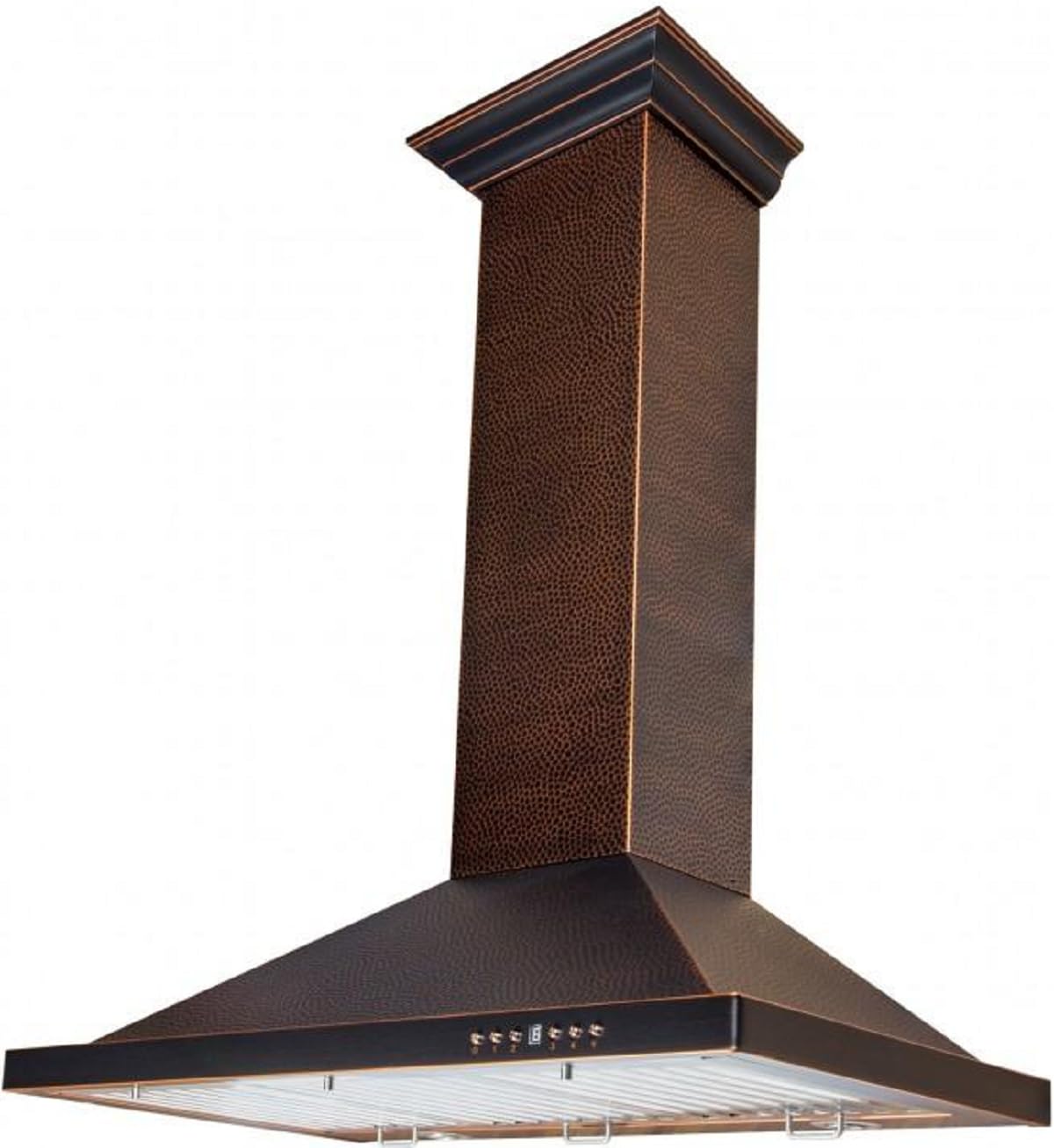
Copper hoods are one of the fastest ways to make a kitchen feel custom—because they’re not common in builder-grade homes, and they instantly read “designer.” This ZLINE hand-hammered model is a strong option for anyone who wants that look without commissioning a fully custom metal shop build.
Here’s the most important real-life detail from owners: the finish can look different than the photos depending on your lighting and your expectations. Multiple buyers say the actual hood has more black/darker variation than pictured, and that the effect is more dramatic in person. That’s not necessarily a negative. In fact, it can be a big win if you want the hammered texture and patina to feel bold. But if you expected a smoother, brighter copper look, that surprise can be frustrating. The best mindset with hammered finishes is to treat them like natural stone: variation is the point.
Functionally, this hood is designed to be straightforward: push button controls, multiple speeds, LED lighting, stainless baffle filters, and the option to run ducted or convert to ductless with charcoal filters (often purchased separately). The “convertible” detail matters for older homes or tricky layouts where outside ducting is complicated. If you can duct outside, do it—copper hoods are too beautiful to be paired with lingering odors. But it’s useful to have a viable ductless option if your home forces your hand.
In daily use, copper has a different maintenance personality than stainless or painted black. It hides fingerprints better, but it also invites “patina thinking.” Do you want it to age and deepen over time? Or do you want it to stay closer to a specific tone? The right cleaning approach depends on that answer. Many owners treat these like “wipe with gentle products” pieces rather than scrubbing like a stainless sink. The hood’s internal stainless baffles remain the workhorse for grease, while the outer copper surface is the aesthetic layer you protect.
Lighting feedback is mixed (and this is common across many hoods). Some owners simply “don’t like the light,” which could be brightness, color temperature, or placement. If cooktop lighting is crucial for you, consider that many people supplement hood lights with under-cabinet lighting anyway. The hood lights become a bonus, not the only task light.
The reason this hood makes sense in this lineup is that it gives you a high-end look without forcing you into the complexity of a cover-only custom build. You get a cohesive unit: mount it, vent it, clean the baffles, and enjoy the design moment.
Why it’s worth considering
- High-impact design – Hammered copper instantly makes a kitchen feel custom and elevated.
- Practical hood fundamentals – Multi-speed fan + baffle filters + simple controls = easy daily use.
- Convertible flexibility – Can be set up ducted or ductless depending on your home’s constraints.
- Variation adds character – The dramatic finish can look even better in person if you want depth and texture.
- Showpiece without “cover-only complexity” – You get a complete unit without sourcing a separate liner.
Good to know
- Finish can be darker/more dramatic than photos; buy expecting variation, not uniform copper.
- Lighting preferences vary; if you’re picky about task lighting, plan supplemental lighting.
- Like any statement finish, gentle cleaning habits protect the look long-term.
Ideal for: homeowners who want a bold focal point above the range, love the hammered/patina look, and want a complete hood solution rather than a cover-only project.
5. Castlewood Rustic Shiplap Chimney Hood – A Rustic Showpiece That Arrives “More Complete” Than Most Wood Options

This Castlewood model sits in a very specific sweet spot: it gives you the “custom rustic wood hood” look, but it’s not purely a decorative shell that leaves you scrambling to source the entire ventilation system. The included economy ventilator/liner means fewer moving pieces for homeowners who want a wood hood without turning the project into a multi-cart build.
Owners who love it tend to use strong language: “absolutely gorgeous,” “looks very high end,” and “my favorite part of my kitchen.” That’s exactly what a wood hood should do—especially a shiplap-inspired design. It creates texture and shadow lines that make the cooking wall feel like real millwork, not just an appliance zone. One owner also notes early delivery and that their handyman could trim the chimney to handle an uneven ceiling. That trim ability matters more than you’d think because older homes often have small ceiling inconsistencies that show up the moment you try to run a perfectly straight chimney to the top.
Now the expert perspective: any time you buy a “more complete” wood hood kit, you should think like an installer for five minutes. That means you plan where power will come from, how ducting will route, how the liner will be accessed for service, and whether the unit is being mounted into proper wall structure. Wood hoods are not forgiving of lazy mounting. The “it looks heavy” vibe isn’t just a vibe—it’s physics.
The second piece of realism is support and documentation. Some owners mention the instructions aren’t great, and one review complains that the fan didn’t work and they couldn’t get help. That’s not something to ignore. It’s also not something to panic about—it’s something to plan for. The smartest move with any hood (especially one you’ll customize into a finished wall) is to do a full functionality test before final installation:
- Power the unit and verify every fan speed.
- Turn on lights and check for flicker or unusual noise.
- Confirm the controls respond consistently.
- Inspect the liner seating and filter fit.
If something is wrong, it’s far easier to solve before the hood is permanently mounted and ducted. This is true for every brand. It’s just more critical with wood installations because removal is more labor-intensive and risks finish damage.
Performance-wise, a 350 CFM class ventilator can be perfectly fine for many kitchens—especially when paired with a generous capture area (which this style provides) and a clean, short duct run. If you cook with very high heat constantly, you may want a stronger liner, but remember: capture and ducting can make moderate airflow feel surprisingly effective. For light-to-moderate home cooking, this can be a very satisfying setup that looks far more expensive than a typical metal chimney hood.
The final benefit: the hood is pre-finished and styled. That matters because finishing a large wood hood well is not a trivial DIY project. If you want rustic character without the woodworking schedule, this kind of product can save you weeks of “project drag.”
Why it’s a smart rustic choice
- High-end rustic look – Shiplap styling creates texture and a built-in, custom feel.
- More complete kit – Includes a ventilator/liner so you’re not forced into a separate insert hunt immediately.
- Trimmable chimney – Helpful for real homes with imperfect ceilings or custom height needs.
- Big “wow” payoff – Owners often describe it as the star of the kitchen once installed.
- Good value in the custom-look category – You get the look without commissioning a carpenter to build from scratch.
Good to know
- Instructions may be limited; if you’re DIYing, be prepared to think like a builder or hire help.
- Some reviews mention support issues; test the unit fully before final mount to reduce risk.
- Airflow level is best paired with smart ducting (short, smooth runs) to keep performance feeling strong.
Ideal for: farmhouse and rustic remodels that want a wood hood look with fewer sourcing steps, and homeowners who are willing to test early and install thoughtfully.
6. Riley & Higgs Curved Front White Cover – The Custom Built‑In Look (With Smart Two‑Piece Access)
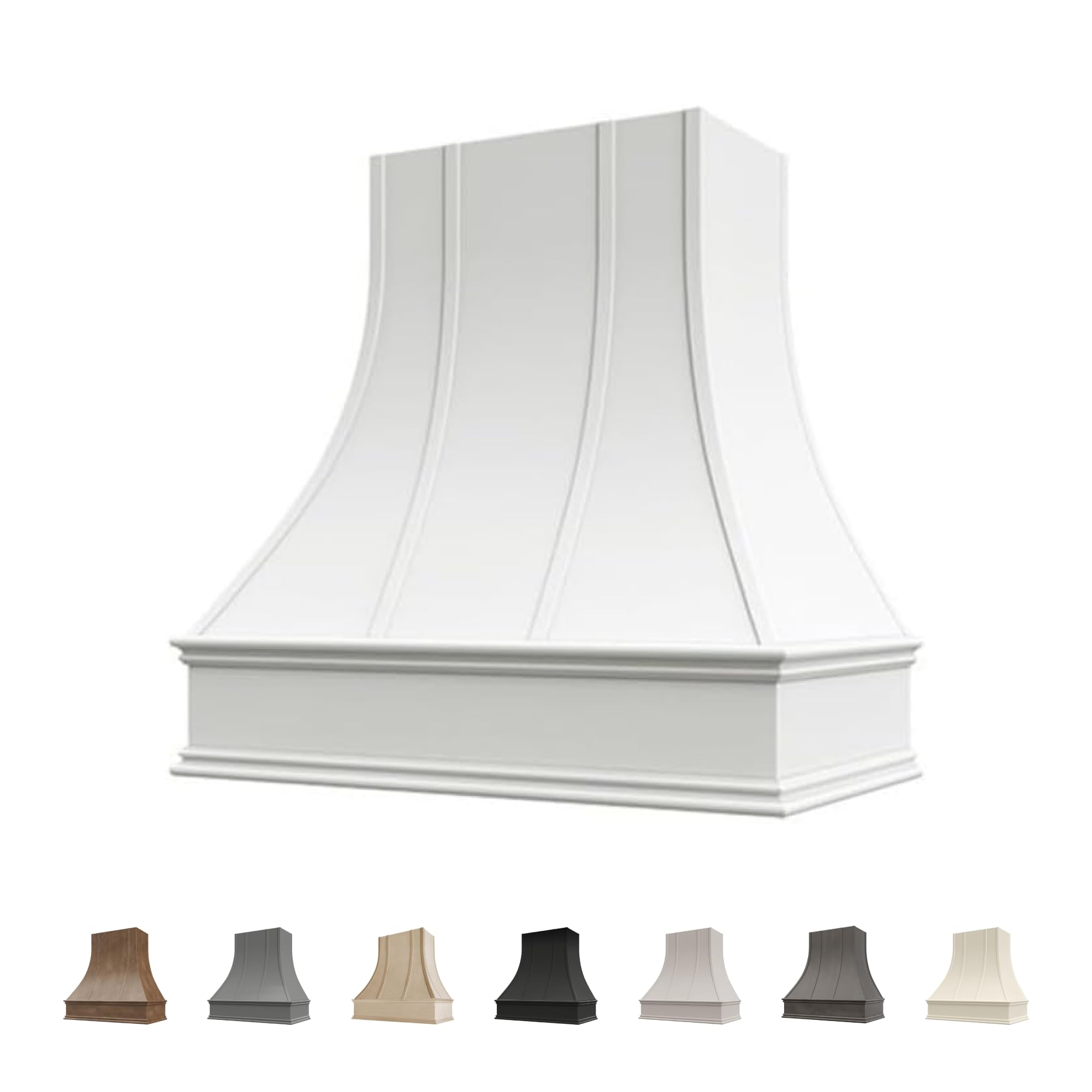
Let’s be crystal clear up front: this is a hood cover, not a complete vent hood. That’s not a drawback—it’s the reason it looks like something your cabinet maker built. It’s a premium decorative shell designed to wrap around a separate ventilation insert/liner that you choose. If you’re remodeling and you want that “custom kitchen” silhouette, this is exactly the category that delivers it.
Why Riley & Higgs shows up in so many remodel shortlists is craftsmanship and construction. Owners describe “excellent quality,” “fine craftsmanship,” and a finished result that looks like a true showpiece. One of the most practical details is the two-piece design. That sounds minor until you’ve lived with a hood for a year: access matters. A two-piece approach can make installation simpler, and it can make future access to ducting or fan components less of a headache.
Another real-life detail: shipping and logistics. These custom-style covers are delivered by truck to curbside delivery. That means you need to be present, and you need a plan to move it inside. It’s not complicated, but it is different than “small box on your porch.” People who are happiest with these products tend to plan that day: clear a path, have a helper, and treat it like cabinetry.
Finish flexibility is also part of the appeal. Owners mention ordering a primed piece and painting it themselves, with beautiful results. This is a big advantage in white kitchens, because “white” is never just white. Cabinets have undertones. Walls have undertones. Tile has undertones. When you can paint the hood to match your exact cabinet color, you stop playing the “close enough” game and start playing the “it looks built-in” game.
Now the most important expert tip with cover-only purchases: shop the liner at the same time. One reviewer on a similar cover style says the only downside is “finding a motor.” That’s not a small downside if you wait too long. Your liner choice controls:
- Airflow power: how aggressively you want to clear smoke and odors.
- Noise profile: some inserts are smoother/quieter at mid speed.
- Control placement: where your buttons/touch controls will live (and how convenient they’ll feel).
- Lighting quality: some liners have better task lighting than others.
This is where premium covers shine: they let you build your “perfect system” instead of accepting a fixed package.
If you love a curved-front hood look, want decorative molding, and want the finished kitchen to feel like a magazine photo (without being fragile or fussy), this is a strong pick—just don’t treat it like a standalone fan. Treat it like custom cabinetry that needs the right engine inside it.
Why remodelers love it
- True custom look – Curved front + decorative molding delivers a high-end built-in aesthetic.
- Two-piece practicality – Easier installation and better long-term access for maintenance.
- Finish control – Primed/paintable options make cabinet matching dramatically easier.
- Strong build quality – Owners consistently describe it as well made and well protected in shipping.
- Made for design cohesion – It’s built to complement farmhouse and modern kitchens alike.
Good to know
- Ventilation insert/liner is not included—you must choose and buy it separately.
- Delivery is curbside freight style; plan help to move it safely into your home.
- Performance depends on the liner you select, so make that decision early.
Ideal for: design-driven remodels that want a premium white built-in look and the freedom to choose the exact ventilation insert that fits the home’s cooking style.
7. Riley & Higgs Sloped Front Unfinished Cover – “Cabinet‑Matched Perfect” If You Plan Your Insert Early
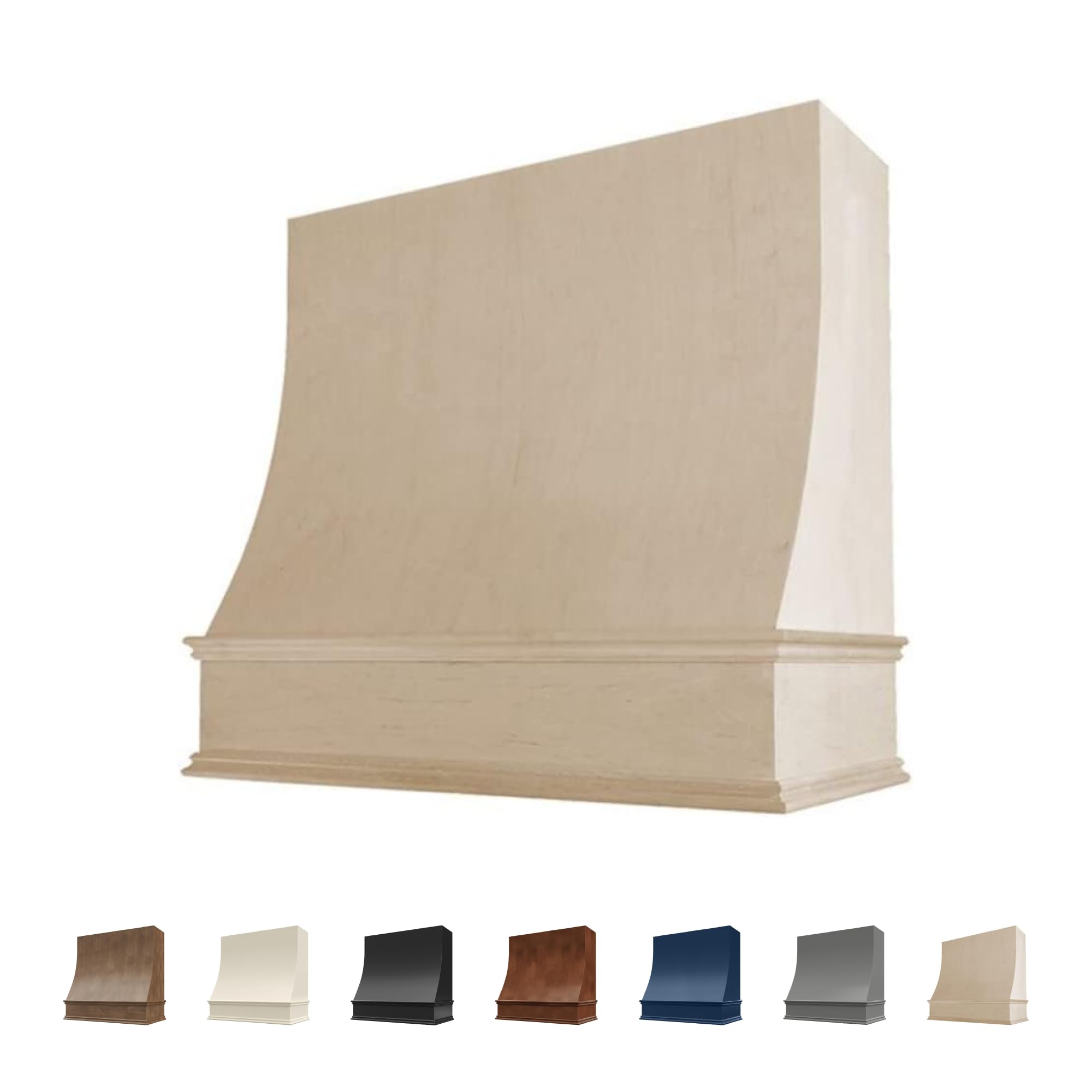
This is the hood cover you choose when “matching the kitchen” matters more than choosing a pre-finished color. Unfinished means you can paint it to match your cabinets, stain it to complement flooring, or finish it to coordinate with beams, shelves, or trim. That finish control is the difference between a hood that looks purchased and a hood that looks built-in.
Owners use phrases like “excellent addition,” “show stopper,” and “professional workmanship,” and that’s exactly the point of an architectural hood profile. The sloped front design feels classic and strong without being overly ornate. It’s the kind of form that works in farmhouse kitchens, transitional kitchens, and even modern kitchens when finished in a clean, minimal paint color.
But here’s the practical truth that separates smooth remodels from stressful ones: this cover does not include a liner/insert. One owner calls out the only downside: finding a motor to go with it, and recommends shopping for that at the same time. That advice is gold. When you buy a cover first and “figure out the fan later,” you risk delays, mismatched sizing, and last-minute compromises. When you pick your liner early, you can plan ducting, electrical, and control placement properly.
The other real-life win owners mention is that it’s easy to hang. That’s not always true in the custom-look category, and it matters. Ease of hanging usually comes down to good internal structure and smart mounting design. Still, treat it like cabinetry: anchor into studs or proper blocking, and make sure your wall is prepared for the weight.
From an expert perspective, the most powerful advantage of an unfinished cover is how it solves the “white isn’t white” and “wood tone doesn’t match” problem. You can have your cabinet maker finish it to match your exact cabinets—or you can finish it yourself if you’re confident. Either way, the result can look so cohesive that guests assume it was built with the kitchen.
The two-piece access approach (common in this brand’s covers) also matters for real ownership. Hoods need cleaning. Ducting sometimes needs checking. Having easier access reduces the “I’ll deal with it later” effect that turns maintenance into a long-term problem.
Why it’s a remodeling win
- Finish it your way – Unfinished wood lets you match cabinets perfectly (paint or stain).
- Statement profile – Sloped front + molding reads custom and upscale once installed.
- Well-made build – Owners consistently describe craftsmanship and professional feel.
- Easy to hang (for the category) – Real-world feedback suggests installation is manageable with good planning.
- Better long-term access – Two-piece design can simplify maintenance and cleaning workflows.
Good to know
- Insert/liner is not included—plan and purchase it early to avoid remodel delays.
- Delivery is freight-style curbside; schedule help to move it safely.
- Your final look depends on finishing quality—budget time for proper paint/stain and sealing.
Ideal for: homeowners who want a custom hood look that matches the rest of the kitchen perfectly—and who are willing to plan their ventilation insert at the same time.
8. Riley & Higgs Curved Front Unfinished (31.5″ x 36″) – Big Presence, Flexible Height, and a True Designer Silhouette

This is the version you choose when you want your hood to look like architectural millwork, not a small accessory. The taller profile creates drama above the range—especially in kitchens with higher ceilings, stacked cabinetry, or a big backsplash feature. It’s the kind of hood that makes the entire cooking wall feel intentionally designed.
Owners highlight three details that matter for real remodels. First, build quality: “well made,” “great quality,” and “excellent” are common themes. Second, install practicality: one reviewer points out you can trim up to a certain amount of height if needed. That kind of flexibility is huge, because kitchens are full of surprises: ceiling heights that aren’t exactly what the plan said, crown molding that steals space, or a duct location that forces you to adjust. Third, customer service: multiple owners mention good support, which matters when you’re buying a big, freight-shipped piece you’ll be staring at every day.
Unfinished is a strategic choice here. With a large hood, color mismatch becomes more obvious. Finishing it yourself (or having a pro finish it) lets you match cabinetry, match a beam, or create a contrasting stain that ties into shelves and trim. The end result can look like it belongs in the home rather than looking “added.”
Now the expert note that protects your sanity: because this is a cover-only product, the insert/liner is the real engine. One owner says they would “definitely buy the recommended fan,” and that’s the right mindset. Your liner choice determines airflow, noise, and lighting. If you go too weak on the liner, you’ll have a gorgeous hood that doesn’t keep up with your cooking. If you go too aggressive without planning ducting, you may get noise and turbulence. The cover gives you the look. The liner gives you the performance. Treat them like a matched set.
The two-piece design also matters more as the hood size increases. Bigger covers are harder to maneuver as a single rigid piece. Splitting the install into more manageable steps reduces damage risk and makes alignment easier. It also makes future service access less intimidating.
If you’re chasing that “designer hood” look that’s tall, sculpted, and intentional—and you’re willing to plan your ventilation insert properly—this is a high-payoff choice. It’s not the simplest route, but it can be the most satisfying one if you want your kitchen to feel genuinely custom.
Why it’s a showpiece
- Big architectural presence – Taller profile creates a premium designer silhouette.
- Finish control – Unfinished means you can match cabinets perfectly or create a controlled contrast.
- Height flexibility – Trimmable design helps handle ceiling and remodel realities.
- Two-piece practicality – Easier installation, safer handling, and better long-term access.
- Positive service experiences – Owners often mention responsive support and good shipping protection.
Good to know
- Insert/liner is not included—performance depends on the fan system you choose.
- Freight delivery means planning: be present and be ready to move it inside safely.
- Finishing takes time; the best results come from careful prep, paint/stain, and sealing.
Ideal for: higher-ceiling kitchens or statement remodels that want a tall, curved hood profile and the freedom to choose a liner that matches real cooking demands.
9. SNDOAS 30″ Black Hood (Ducted/Ductless) – Simple, Sleek, and Surprisingly “Good Enough” When Installed Smart

This SNDOAS is for the buyer who wants a clean, modern black chimney hood without turning the hood line item into a major budget event. It’s also for the person who understands a key truth: at the budget level, the hood’s real success is heavily influenced by your setup. A short, clean duct run makes almost any hood feel stronger. A long, twisty, restrictive run makes even “powerful” hoods feel disappointing.
Owners who like this hood often point out the same things: it looks sleek once installed, it removes steam from boiling water and everyday cooking, and it’s easy enough to install that many people treat it as a straightforward DIY project. One reviewer even describes doing a simple “candle test,” noticing that it pulled smoke quickly without needing the highest fan setting. That kind of real-world test is more valuable than marketing claims because it reflects actual capture and suction in a normal kitchen environment.
Now for the honest “live with it” details. Several owners note that the metal can be softer than premium hoods. That matters most during installation (avoid scratching while handling) and during cleaning (avoid abrasive pads and harsh chemicals). One repeat buyer specifically warns that the black finish can peel over time if you use the wrong cleaners. Their solution is simple and smart: gentle soap and water, soak filters briefly, and treat the hood like a finished surface rather than scrubbing it like a grill. That advice is exactly how you keep budget finishes looking good.
Controls are another area where budget hoods show their category. Some people say the buttons feel solid but look cheap; others are fine with them. The key question is your personality: do you want “luxury feel,” or do you want “it works every time”? Buttons often win on reliability, even if they don’t feel fancy.
Lighting feedback is mixed. Some owners say the lights are bright and feel premium; others say the LED looks cheap or is oddly placed and not very useful as a task light. This is common in budget hoods, and it’s why I recommend planning under-cabinet lighting if you care about perfect cooktop illumination. Treat hood lighting as a bonus unless reviews consistently praise it (and in this case, it’s variable).
Performance-wise, this hood is best for light-to-moderate cooking and for kitchens where the main goal is reducing everyday odors and steam. If you do a lot of high-heat searing, you’ll want a stronger hood or a deeper capture design. But if your current setup is “no hood or weak hood,” this can feel like a big improvement—especially ducted.
Why it’s a solid value
- Modern black look – Clean chimney style that upgrades the visual fast.
- Simple install path – Many owners describe it as easy and straightforward to mount and set up.
- Everyday ventilation wins – Steam, light smoke, and odors are handled well in normal cooking.
- Low-regret maintenance – Filters are designed to be removable and cleaned without complex steps.
- Budget-friendly path to “a finished kitchen” – Great when you want the space to look complete.
Good to know
- Finish durability depends on cleaning habits—use gentle soap and water, not harsh chemicals.
- Lighting opinions vary; consider under-cabinet lighting if you need strong task illumination.
- Best results come from ducting it outside with a short, smooth run.
Ideal for: budget remodels, rentals, first-time upgrades, and anyone who wants a clean black hood that works well for everyday cooking when installed thoughtfully.
10. SNDOAS 30″ Black Hood (Button Control) – The Entry-Level Option That Can Still Make a Real Difference

This is the kind of hood people buy when they want the space to look finished and they want basic ventilation without complexity. It’s a simple chimney-style hood with basic push buttons, multiple fan speeds, and a straightforward design that can fit many kitchens. If you’re replacing a recirculating microwave hood or an older, weak under-cabinet fan, even an entry-level wall hood can feel like a major upgrade.
Owners who are happy with it tend to talk about three things: it looks great, it was easy to install, and it does a good job removing smoke and cooking odors during everyday use. Some people mention the light is bright and helps illuminate the cooktop area. Others mention the fan speeds can be loud—which is not surprising in this category. At the budget level, you typically trade premium sound engineering for affordability.
There’s also a crucial “buyer maturity” point in the reviews: skepticism about airflow claims. One reviewer argues that the advertised airflow seems overstated and says the hood doesn’t feel as powerful as claimed. This is why I always encourage buyers to think in outcomes rather than numbers:
- If you duct outside with a short run, the hood will feel stronger.
- If you ductless recirculate, performance will feel weaker—because you’re filtering and returning air, not exhausting it.
- If you cook lightly, “good enough” is often truly good enough.
So, rather than expecting this hood to behave like a high-power unit, treat it like a practical, clean-looking ventilation upgrade for modest cooking demands.
The real-world advantage of simple button controls is reliability. You don’t need to learn gestures, you don’t need to interpret touch panels, and you can turn it on without looking. If you’re the kind of cook who wants the hood to disappear into the background and just function, buttons can be a feature.
Filter maintenance is also straightforward here: aluminum mesh filters are common in this price tier. They’re typically removable and reusable. The key is consistency: clean them regularly so airflow doesn’t drop and odors don’t linger. With budget hoods, maintenance is what preserves the “it works” feeling over time.
If you’re on a very tight budget or you’re upgrading a rental, this hood is a reasonable way to get a cleaner-looking cooking wall and functional ventilation. Just set your expectations properly: it’s designed to be simple, not luxurious—and it can be a satisfying purchase if you buy it for the right job.
Why people buy it
- Clean, modern look – Matte black finish and chimney styling upgrade the visual quickly.
- Easy controls – Straightforward buttons that many users find intuitive and reliable.
- Simple installation – Owners often describe setup as manageable with basic tools and help.
- Everyday odor/steam control – Works well for typical home cooking when vented properly.
- Budget-friendly path to a “finished” stove wall – Great for first-time upgrades and rentals.
Good to know
- At this tier, airflow claims can feel optimistic; ducting and cooking style heavily affect results.
- Fan noise at higher speeds is common in budget hoods—use mid speed for daily comfort.
- Ductless mode can help with odor, but ducted is the best path to “fresh air” results.
Ideal for: light-to-moderate cooks who want a clean black chimney hood look on a tight budget, and who can vent outdoors (or are realistic about ductless performance).
How Range Hood Ventilation Actually Works (and Why Installs Matter More Than Marketing)
If you’ve ever wondered why two hoods with similar specs can feel wildly different in real life, this is why: a hood isn’t just a motor. It’s a combination of capture area, airflow through filters, and ducting resistance. When those three line up, your kitchen feels cleaner and fresher fast. When they fight each other, the hood can run loud and still feel weak.
What makes a hood feel powerful (even without maxing out the fan)
- Generous capture zone – Deeper canopies and sculpted wood forms catch the plume before it spreads into the room.
- Clean filter path – Baffle filters and well-designed air channels keep airflow moving instead of clogging quickly.
- Short, smooth ducting – Smooth ducts with fewer turns maintain airflow and reduce turbulence noise.
- Correct duct size – Choking a hood through the wrong duct size is the fastest way to lose real performance.
- Usable low/mid speeds – The best hoods do real work before you ever touch the highest setting.
This is why a deep wood hood can outperform expectations: it “catches” the smoke first, so the fan doesn’t have to chase it across the ceiling. It’s also why some budget hoods feel decent when installed with a straight, short vent run.
Simple habits that dramatically improve results (and keep the hood cleaner)
- Turn it on early – Start the hood a few minutes before high-heat cooking to create steady airflow.
- Use the lowest effective speed – Daily comfort matters. Save max speed for searing, frying, and smoke-heavy moments.
- Let it run after cooking – A few minutes after you’re done clears lingering odor and moisture.
- Clean filters before they look dirty – Airflow drops long before filters “look” clogged.
- Wipe finishes gently – Painted black finishes in particular stay beautiful longer with soft cloths and mild soap.
The hood you love is the hood you use. The hood you use is the hood that keeps your kitchen feeling fresh.
FAQ: Buying the Right Hood (Without Overthinking It)
Do I need a full hood, or should I buy a cover and add a liner?
Is ducted really that much better than ductless?
Why do some “high airflow” hoods still feel weak?
What’s the easiest way to keep a black hood looking new?
Are baffle filters really easier than mesh filters?
I want a wood hood look. What’s the biggest mistake people make?
Final Thoughts: Buy the Hood That Fits How You Actually Cook
A hood should do two jobs: keep your kitchen feeling clean after real cooking, and look good enough that you’re happy every time you walk into the room. The best choice is the one that matches your home, your cooking intensity, and your willingness to manage a full install vs a cover + insert build.
Here’s the simplest way to translate this guide into a confident purchase:
- Want the best overall balance of power, modern design, and strong real-owner support stories? Start with the IKTCH 36″ Black Wall Mount Range Hood. It’s a strong blend of airflow, usability, and long-term confidence.
- Want the “my kitchen looks custom now” wood centerpiece—without needing a separate liner purchase? Choose the ZLINE Cottage White wooden hood (or the ZLINE Rustic Dark version if you want a moodier farmhouse look).
- Want a statement metal hood that reads “designer” instantly? The ZLINE Hand‑Hammered Copper hood delivers high-impact style with a complete hood build.
- Want rustic wood style with fewer sourcing steps? The Castlewood Rustic Shiplap Chimney hood includes a ventilator/liner so you’re not starting from zero.
- Want the most “custom built-in” look and you’re ready to choose your own liner? Go with a Riley & Higgs cover like the Curved Front White cover or the Sloped Front Unfinished cover (or the taller Curved Front Unfinished 36″ option for extra presence).
- Need a budget-friendly black chimney hood that still looks clean and works for everyday cooking? Consider the SNDOAS 30″ Black hood (ducted/ductless) or the more entry-level SNDOAS button-control model.
If you take nothing else from this guide, take this: the “best” hood is the one you’ll actually use every time you cook. Pick the kitchen hood cover that matches your real cooking style, then install it like you want it to win—and your kitchen will feel cleaner, calmer, and more finished every single day.
