
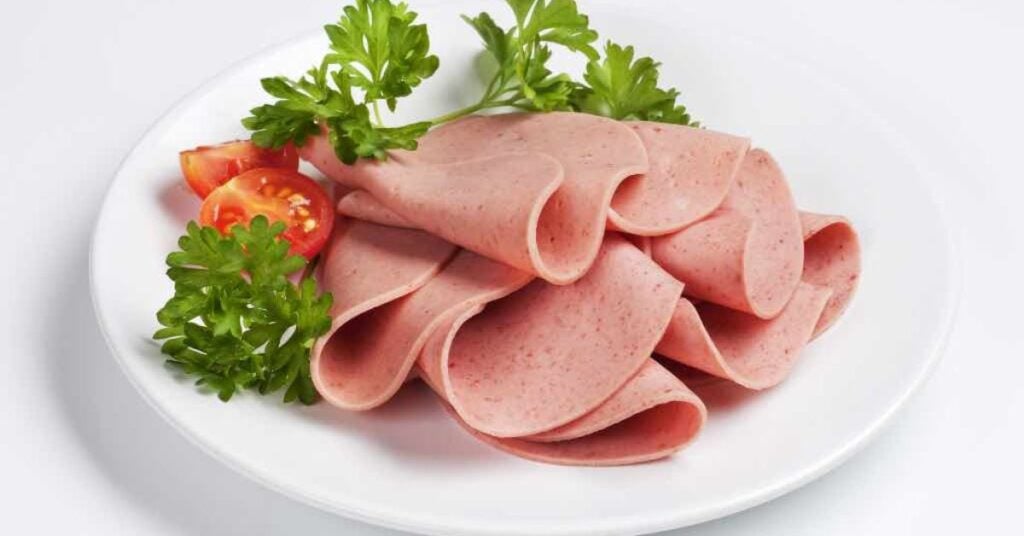
No, bologna left out overnight should be tossed; get it back in the fridge within 2 hours (1 hour if it’s hot).
Bologna feels like a “tough” food. It’s cured, it’s salty, it’s been cooked. So when a pack sits on the counter until morning, your brain starts bargaining: “It smells fine. It looks fine. Maybe it’s fine.” I get it.
Still, this is one of those calls where the simple answer is also the smart answer. Overnight at room temperature is far past the window that food-safety agencies use for perishable foods. Deli meats like bologna can carry germs that grow fast at warm temps, and some can still be a problem even when the meat goes back in the fridge.
What “Left Out Overnight” Means For Bologna
When people say “overnight,” it’s rarely two hours. It’s often 6, 8, 10 hours. That matters because bacteria don’t need a warning label to start multiplying.
Food-safety rules revolve around time and temperature. Once bologna sits in the USDA “Danger Zone” (40°F–140°F), germs can grow to levels that cooking later may not fully “fix,” since some bacteria can leave toxins behind.
Also, bologna is a ready-to-eat deli meat. You’re not planning to cook it hard the way you would raw chicken. Most people eat it cold, and that keeps the risk higher once it has sat out too long.
| Scenario | What To Do | Why This Call Makes Sense |
|---|---|---|
| Unopened bologna sat out 3–4 hours at room temp | Discard | Sealed packaging doesn’t stop growth once the meat warms up. |
| Opened pack sat out 2–3 hours | Discard | More contact with air and hands raises contamination odds. |
| Bologna sandwich left out 4+ hours | Discard | Bread, mayo, cheese, and meat all add risk; temps rise fast. |
| Left out in a warm room or car | Discard | Heat speeds bacterial growth; the safe window shrinks fast. |
| Room was above 90°F | Discard if out over 1 hour | Agency rules tighten to 1 hour in hot conditions. |
| Pack was in a cooler with ice, still cold to the touch | Refrigerate and use soon | If it stayed below 40°F, time out matters less. |
| Not sure how long it was out or how warm it got | Discard | Uncertainty is the risk; guessing doesn’t protect your stomach. |
| Someone pregnant, older, or immune-compromised will eat it | Discard | Higher-risk groups get hit harder by foodborne bugs. |
Bologna Left Out Overnight Rules With Real Numbers
Here are the numbers I use when I’m making the call at home. They come from the same core rule you’ll see from major food-safety agencies.
- 2 hours at room temp: That’s the standard limit for perishable foods. Past that, discard.
- 1 hour above 90°F: If it’s hot out or the kitchen is sweltering, discard sooner.
- 40°F or colder: That’s the target fridge temp for storing deli meats.
The FDA says to refrigerate or freeze perishables within 2 hours, and within 1 hour if the temp is above 90°F. Their safe food handling rule is the same kind of “don’t gamble” rule that keeps most people out of trouble.
Why Bologna Is Not Like Shelf-Stable Snacks
Bologna is cooked, but it’s still moist and protein-rich, which is exactly what bacteria like. Salt helps, curing helps, and sealed packaging helps, yet none of those turn it into jerky.
Deli meats also have a history with Listeria, a germ that can survive in the fridge. That’s not a “counter overnight” issue only. It’s one more reason to treat deli meat with a tighter mindset and keep your storage clean.
Can You “Save” It By Cooking It?
People ask this a lot: “What if I fry it?” Cooking can kill many bacteria. The snag is toxins. Some bacteria can produce toxins that heat won’t remove once they’ve built up. You also can’t see the bacterial load with your eyes.
If bologna sat out overnight, cooking it is not a reset button. Tossing it is the cleaner choice.
How To Decide In 30 Seconds
When you’re standing in the kitchen at 7 a.m., you don’t want a lecture. You want a quick rule that works.
- Count the hours. If “overnight” means more than 2 hours, you already have your answer.
- Check the temp vibe. Warm room, sunny window, near the stove, or in a car means faster growth.
- Ask who will eat it. If anyone is higher-risk, don’t roll the dice.
- Respect uncertainty. If you can’t confirm time and temp, treat it as unsafe.
Signs That Don’t Protect You
Smell, taste, and looks are weak filters for foodborne germs. Bologna can smell normal and still carry a load that wrecks your day. Also, tasting “a little bit” is still eating it.
So if your only reason to keep it is “it seems fine,” that’s not enough.
What To Do After You Toss It
Throwing away food feels annoying. The best payoff is learning how to stop it from happening again.
Store It So The Fridge Does The Work
- Put bologna in the coldest part of the fridge, not the door.
- Keep the pack sealed, and press out extra air after opening.
- Use a fridge thermometer. “Feels cold” can fool you.
Pack Lunches Like You Expect Delays
If you carry bologna sandwiches to work or school, pack them like you expect traffic and meetings. Use an insulated bag and a cold pack. If lunch will sit in a warm room, swap to shelf-stable options.
Clean Up The Spots That Spread Deli Germs
Deli meats can drip. Cutting boards and fridge shelves can pick up residue. A quick wash with hot soapy water after handling bologna cuts down the chance of cross-contamination.
A Quick Table For Borderline Cases
Not every situation is a clear “8 hours on the counter.” Sometimes it’s murky. Use this table to stop overthinking.
| If This Happened | Do This | Notes |
|---|---|---|
| You bought bologna, drove 30 minutes home, then forgot it 60 minutes | Refrigerate | Total time at room temp is under 2 hours. |
| You found it on the counter after 3 hours | Discard | Past the standard limit. |
| It sat out during a picnic, and the day was hot | Discard sooner | Heat shortens the window to about an hour. |
| It was in a cooler with ice, still fridge-cold after 6 hours | Refrigerate and eat soon | Cold control is what matters; keep it below 40°F. |
| You aren’t sure if the pack stayed cold | Discard | Guessing is the problem. |
| You’re thinking of cooking it “just in case” | Discard | Cooking isn’t a fix for long time in the danger zone. |
My Straight Answer If You’re Still On The Fence
If you already ate some, watch for vomiting, diarrhea, fever, or cramps. If symptoms hit hard or linger, call a doctor.
If bologna was left out overnight, I would throw it away. Not because I love wasting food, but because the downside is a miserable day, and the upside is a few slices of meat.
Next time, set bologna out only when you’re ready to make the sandwich, then put it right back. That small habit saves money and saves you from the “should I risk it?” debate.
