
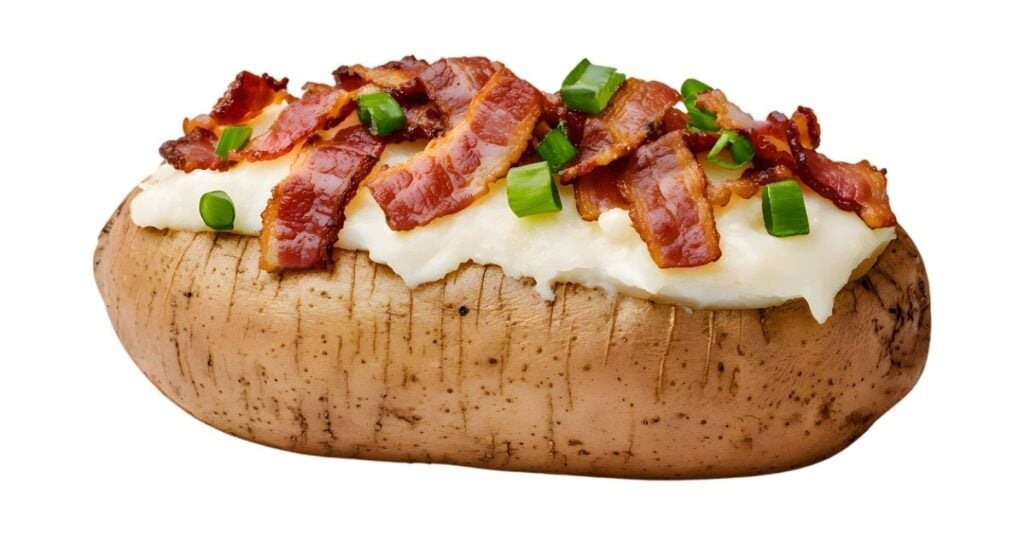
Yes, a baked potato is healthy when you keep the skin, pick light toppings, and pair it with protein to balance carbs.
A plain baked potato gives you fiber, potassium, vitamin C, and B-vitamins with almost no fat. The health payoff hinges on size, toppings, and what you eat with it. This guide shows how to get the benefits, dial down the downsides, and answer the common question head-on: is a baked potato healthy?
Is A Baked Potato Healthy? Nutrients, Risks, And Smart Toppings
Short answer: yes, when served skin-on, in a sensible portion, and with toppings that don’t drown it in salt and saturated fat. The potato itself is nutrient-dense; the “loaded” part is usually the problem. Keep reading for exact nutrition, blood-sugar tips, and topping swaps that keep the baked potato healthy in everyday meals.
Baked Potato Nutrition At A Glance (Medium, Skin-On)
The numbers below are for one medium baked potato, skin-on. Values can shift a bit by variety and size, but this snapshot captures the big picture.
Table #1 (broad and in-depth; within first 30%)
| Nutrient | Amount (1 medium, ~173 g) |
|---|---|
| Calories | ~161 kcal |
| Carbohydrates | ~36.6 g |
| Fiber | ~3.8 g |
| Protein | ~4.3 g |
| Total Fat | ~0.2 g |
| Potassium | ~925 mg |
| Vitamin C | ~16.6 mg |
| Vitamin B6 | ~0.54 mg |
| Sodium | ~17 mg (unsalted) |
Why The Skin Matters
The skin holds a notable share of fiber and micronutrients. Leave it on for better satiety and a steadier glucose rise than you’d get from a peeled, mashed version. A scrubbed, roasted skin also adds texture, which helps smaller portions feel satisfying.
How A Baked Potato Fits Into Balanced Plates
A potato is a starchy vegetable. Treat it like the starch on your plate, not the vegetable side and the starch. Aim for a quarter-plate portion, then fill the rest with non-starchy vegetables and a lean protein. That plate balance keeps the meal’s carb load moderate and the baked potato healthy in context.
Blood Sugar: Cooking, Cooling, And Pairing
Many white potatoes score high on glycemic index when eaten hot and plain. Cooling cooked potatoes increases resistant starch, which can blunt the glucose rise. You can chill cooked potatoes and then reheat them gently; the texture stays pleasant, and you preserve some of that resistant starch. Pair with protein and non-starchy vegetables for a steadier response.
Simple Moves That Help
- Pick a medium potato, not a giant one.
- Serve with fish, chicken, eggs, tofu, or beans for balance.
- Cool and reheat for more resistant starch when that suits the meal.
- Use olive oil, yogurt, herbs, and crunchy veg as flavor anchors.
Sodium And Fat: Where Baked Potatoes Go Off The Rails
The plain tuber is naturally low in sodium and very low in fat. The overload comes from butter, cheese, bacon, and heavy salt. If you’re watching blood pressure, keep total daily sodium in check and season a baked potato with herbs, pepper, citrus, or a pinch of salt instead of a heavy shake. A quick swap or two keeps is a baked potato healthy in a weeknight rotation.
Smarter Topping Playbook
Lean protein and bright flavors beat heavy dairy and salty meats. Use the table below as a quick chooser for taste, texture, and nutrition without the bloat.
Table #2 (after 60% scroll)
| Topping Swap | What You Get | Why It Works |
|---|---|---|
| Greek yogurt (2–3 tbsp) instead of sour cream | Protein boost, tang | Similar creaminess with less saturated fat |
| Olive oil drizzle (1 tsp) instead of butter | Milder calories, unsaturated fat | Savory finish without dairy fat |
| Chives, scallions, parsley | Fresh bite, aroma | Big flavor with near-zero sodium |
| Roasted broccoli or peppers | Volume, color, fiber | Turns a side into a fuller meal |
| Cottage cheese (¼ cup) | Protein and creaminess | Hearty and balanced |
| Beans or chili (lean) | Protein + fiber | Slow release energy |
| Salsa + avocado | Acid + richness | Flavor pop with better fats |
Portion And Frequency
A medium potato fits well in most calorie budgets when the rest of the plate is balanced. If you train hard or walk a lot, a potato can be a simple pre- or post-workout carb. If you live with insulin resistance or diabetes, stick with modest portions, add protein, and consider the cool-and-reheat approach for a gentler curve.
Cooking Tips That Keep It Light
Basic Skin-On Bake
- Scrub and dry the potato. Pierce a few times.
- Rub with a thin film of olive oil; sprinkle a little salt if you use it.
- Bake at 200 °C (about 400 °F) until tender, 45–60 minutes depending on size.
Microwave-Then-Oven Shortcut
- Microwave 4–6 minutes to par-cook.
- Finish in a hot oven for a crisp skin, about 10–15 minutes.
Air Fryer Route
- Rub with a little oil, air-fry at 200 °C (about 400 °F) for 30–40 minutes, turning once.
Color Matters When You Roast
Deep browning on starchy foods can form more acrylamide. Aim for a light golden color when roasting wedges or skins. Keep the temperature and time in a reasonable range, skip very dark crusts, and don’t store raw potatoes in the fridge.
When A Baked Potato Is A Smart Choice
You Want Filling Carbs With Potassium
Potatoes deliver lots of potassium in a budget-friendly package. That can help close the gap many people have in daily potassium intake while keeping sodium low.
You’re Building A Simple, Balanced Meal
Add a piece of salmon or a bean chili, plus a big mixed salad. That combo hits fiber, protein, texture, and flavor with almost no heavy lifting.
You’re Watching Calories
A medium, skin-on baked potato sits around 160 calories on its own. The big swings come from add-ons. Keep toppings modest and you get a lot of fullness per calorie.
When You Might Pick Another Carb
If a hot, plain baked potato spikes your glucose, try the cool-and-reheat route, cut the portion, or swap in beans or intact whole grains that suit you better. Personal response varies; a small tweak in prep can make a big difference.
One H2 With A Close Variation Of The Keyword
Baked Potato Health Benefits And Downsides (By Context)
Benefits
- Fiber for fullness, especially with the skin.
- Potassium for everyday diets that skew low on this mineral.
- Vitamin C and B-vitamins that round out simple meals.
- Easy prep that works with lighter cooking fats.
Downsides
- High GI when eaten hot and plain in large portions.
- Common toppings can add lots of saturated fat and sodium.
- Very dark roasting can produce more acrylamide on the surface.
Two Mid-Article Links You Can Trust
Salt adds up fast across the day. See the AHA sodium limit for daily targets that keep blood pressure in range. For roasting and toasting guidance on browning and storage, check the FDA acrylamide advice.
Quick Builds: Tasty, Balanced Baked Potato Meals
Smoky Yogurt & Veg
Split the potato, add a dollop of plain Greek yogurt, smoked paprika, chopped chives, and roasted broccoli. Add grilled chicken or chickpeas for a fuller plate.
Herb Oil & Crunch
Blend olive oil with lemon, garlic, and parsley. Drizzle over the potato and top with diced cucumbers and tomatoes. Add tuna or white beans on the side.
Chili-Ready
Top with a lean beef or turkey chili or a bean chili. A spoon of yogurt or a sprinkle of scallions finishes the dish without a heavy fat hit.
Bottom Line
Is a baked potato healthy? Yes—when you leave the skin on, keep portions sensible, and choose toppings that favor protein, fiber, and low-sodium flavor. Use a medium potato as the starch on the plate, not the whole plate. That’s the steady way to enjoy it often and feel good after you eat.
