
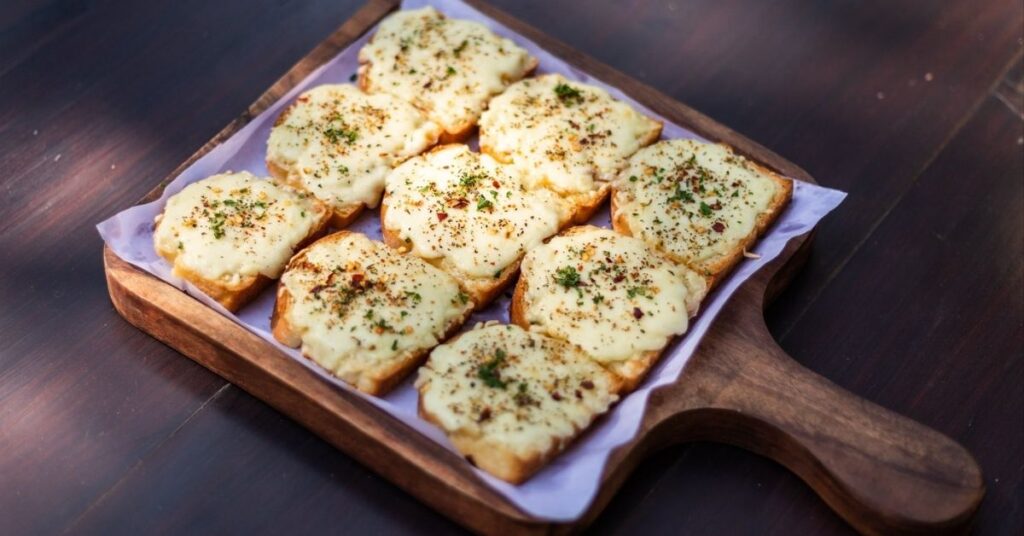
Frozen cheese garlic bread cooks best at high heat from frozen: 200–220°C for 8–15 minutes until crisp edges and melted cheese.
Want that golden crunch with a gooey center? You don’t need thawing or guesswork. This guide shows fast, repeatable ways to cook from frozen in a standard oven, convection, air fryer, toaster oven, grill, or skillet. You’ll get clear times, temps, and fixes for common hiccups like pale centers or scorched edges. The steps below keep it simple, safe, and consistent.
How To Cook Frozen Cheese Garlic Bread (Oven, Air Fryer, Grill)
If you only use one method, make it the hot oven. High heat crisps the crust and melts cheese without drying the crumb. The air fryer is the speed champ for small batches. Toaster ovens shine for singles. A covered skillet can rescue you when an oven isn’t handy.
Oven Method: Big Batches, Even Browning
- Heat the oven to 220°C (425°F). Place a rack in the upper-middle position.
- Line a tray with parchment. Set slices cut-side up, still frozen, with space between.
- Bake 10–14 minutes. Start checking at 8 minutes. Look for bubbling cheese and crisp edges.
- For deep color, move to the top rack for the final 1–2 minutes or broil briefly.
- Rest 1 minute so cheese settles, then serve.
Convection Oven: Faster, Lighter Crust
Set 200°C (400°F) on fan. Bake 8–12 minutes on a middle rack. Convection moves hot air, so watch the last minutes to prevent over-browning on edges before the center finishes.
Air Fryer: One-Pan Speed
- Preheat to 190°C (375°F) for 3 minutes.
- Air-fry frozen slices cut-side up for 6–10 minutes.
- Check at 5 minutes; baskets run hot. Add 1–2 minutes for thick toast or extra cheese.
Toaster Oven: Weeknight Workhorse
Use Bake at 220°C if available; Toast mode also works. Keep slices on a small tray for easy cleanup. Expect 8–13 minutes. Rotate the tray once for even color.
Grill (Indirect Heat): Smoky Notes Without Soot
- Set up a two-zone fire. Target ~200–220°C on the cool side.
- Place slices on the cool side, lid closed, 6–10 minutes until melted and crisp at the edges.
- For charred spots, finish 10–30 seconds over direct heat, cheese side up.
Skillet, Covered: No Oven Needed
- Warm a heavy pan over medium-low. No oil needed.
- Add slices cheese-up. Cover with a lid or foil dome to trap heat.
- Cook 6–9 minutes until cheese melts and bottoms are crisp, not scorched.
Quick Reference: Times And Temps From Frozen
Use this table to pick a method. Start at the low end of the range; add time in small steps.
| Method | Temperature | Time Range |
|---|---|---|
| Oven (Conventional) | 220°C / 425°F | 10–14 min |
| Oven (Convection) | 200°C / 400°F | 8–12 min |
| Air Fryer | 190°C / 375°F | 6–10 min |
| Toaster Oven | 220°C / 425°F | 8–13 min |
| Grill (Indirect) | ~200–220°C | 6–10 min |
| Skillet, Covered | Medium-low heat | 6–9 min |
| Broiler Finish | High broil | 30–90 sec |
Frozen Cheese Garlic Bread Cooking Methods And Key Steps
Whatever gear you use, a few cues lead to better texture: heat high, leave space, and finish hot. That sequence gives a crisp base and stretch in the cheese.
Heat High, Cook From Frozen
Skip thawing. Direct heat drives off surface moisture fast so crusts stay snappy. Thick loaves do need a minute or two more than thin slices, so watch color, not just the clock.
Leave Space
Overcrowding traps steam. Steam softens crust. Keep a finger’s width between slices and use multiple trays when you scale up.
Finish Hot For Color
If the center looks pale but cheese has melted, move the tray closer to the top element or broil briefly. Don’t walk away; cheese browns quickly.
Add-Ons That Don’t Mess Up Texture
- Fresh herbs: toss on after cooking so they stay bright.
- Chili flakes or black pepper: add during the last minute so aromatics bloom.
- Extra cheese: sprinkle thinly; heavy piles slow browning.
How To Cook Frozen Cheese Garlic Bread For A Crowd
Batch cooking favors a hot oven and two racks. Rotate trays front-to-back and swap racks at the halfway mark. Use parchment for faster release and cleanup. If slices vary in thickness, group like with like on separate trays so they finish together.
Staging And Serving So Every Piece Stays Crisp
- Cook the first tray to just shy of target color.
- Hold on a wire rack, not a plate. Air under the base prevents soft bottoms.
- Right before serving, broil 30–60 seconds to refresh the crunch.
Safety, Doneness, And Leftovers
Frozen cheese garlic bread contains dairy, and many versions include toppings like pepperoni or bacon. If you’re reheating leftovers the next day, aim for 74°C (165°F) in the center. That standard appears in USDA leftovers guidance. For mixed dishes with meat or sausage, you can also check the safe minimum temperature chart.
Cooling And Storage
- Cool on a rack 5–10 minutes to vent steam.
- Refrigerate in a shallow container within 2 hours.
- Reheat at 200–220°C until hot and crisp again; air fryer 3–5 minutes works well.
How To Cook Frozen Cheese Garlic Bread With Perfect Texture
This section puts the small tweaks in one place so you can hit the same result every time. It also satisfies searchers who ask the phrase how to cook frozen cheese garlic bread verbatim and want a short, direct path to a better bite.
Control Moisture
Moisture is the main enemy of crunch. Keep slices in a single layer. Bake cut-side up so steam escapes. If toppings release fat, tilt the tray for a second after cooking and blot gently.
Choose The Right Rack Position
Upper-middle makes edges color faster. Middle rack gives balance. Avoid the lowest rack for cheese-heavy toasts; bottoms may darken before the top sets.
Know Your Bread Style
- Texas toast: thick, needs 1–2 extra minutes.
- Thin baguette slices: reduce time by 1–3 minutes.
- Stuffed halves: cook longer at 200°C to warm through without scorching cheese.
Finish Smart
Broil only at the end and only as needed. Keep the door cracked if your broiler runs hot so you can watch the color shift. Pull just after the first deep golden spots form.
Common Problems And Fast Fixes
Use this quick table when results aren’t quite right. The symptoms below map to a likely cause and a simple fix. Small adjustments go a long way.
| Symptom | Likely Cause | Fix |
|---|---|---|
| Soggy base | Tray overcrowded or thawed slices | Space out; cook from frozen; use a preheated tray |
| Pale cheese | Heat too low or short time | Move rack up; add 1–2 min or broil briefly |
| Burnt edges | Top element too close | Lower rack; shield edges with a loose foil ring |
| Cheese slides off | Over-oily toppings or steep angle | Cook level; finish with a short broil to set |
| Dry crumb | Too long at low heat | Use hotter oven; shorten time |
| Uneven color | Hot spots in oven | Rotate tray halfway; swap racks |
| Rubbery cheese | Overcooked or low-moisture only | Pull earlier; blend mozz with a touch of provolone |
Flavor Boosts That Don’t Fight The Crunch
Keep toppings light so heat can reach the center. Strong flavors need small amounts. Think micro upgrades, not heavy layers.
Before Cooking
- Rub the cut side with a halved garlic clove for extra bite.
- Add a thin swipe of butter to dry, freezer-aged slices.
- Dust with a pinch of grated hard cheese for nutty notes.
After Cooking
- Shower with chopped parsley or chives.
- Finish with lemon zest for brightness.
- Drizzle a tiny splash of good olive oil for aroma.
Serving Ideas And Pairings
Frozen cheese garlic bread plays well with speedy soups, simple pastas, and big salads. Keep the plate balanced: if the bread is rich, serve something fresh next to it.
Quick Pairings
- Tomato soup with a swirl of cream.
- Spaghetti with marinara or pesto.
- Chopped salad with a sharp vinaigrette.
Ingredient Notes And Swaps
Most boxed slices use mozzarella or a blend. A touch of provolone or fontina adds melt and flavor. If you’re sprinkling extra cheese, keep it thin. Heavy piles pool oil and block browning.
Dairy And Allergen Notes
Many frozen loaves contain milk, butter, and wheat. If you’re serving a mixed crowd, keep packaging on hand. Those who need to reheat the next day should bring the center to 74°C, in line with the USDA leftovers page.
How To Reheat Without Losing Crunch
Use dry heat again. Air fryer for 3–5 minutes at 180–190°C revives the crust fast. Oven at 200–220°C works for batches. Skip the microwave unless you like soft bread; it warms but softens the base.
When To Use Foil
Foil helps when cheese starts to darken before the center warms. Tent loosely over the top for the middle stretch, then remove the foil for the last minute to regain color. Don’t wrap the base; trapped steam makes the crust soft.
Two Smart Finishes For Extra Color
Hot Sheet Trick
Preheat an empty baking sheet. Slide parchment with slices onto the hot metal. The shock seals the base and speeds browning.
Broiler Blitz
When the cheese is melted, broil 30–90 seconds. Pull right after the first deep golden freckles appear.
FAQ-Free Recap You Can Cook From
High heat, space between slices, and a brief hot finish. That’s the play. Whether you use an oven, air fryer, grill, or skillet, these cues land the same target: a crisp base and a melty top. If you came searching how to cook frozen cheese garlic bread, the steps above get you there on the first try and the fifth tray.
