
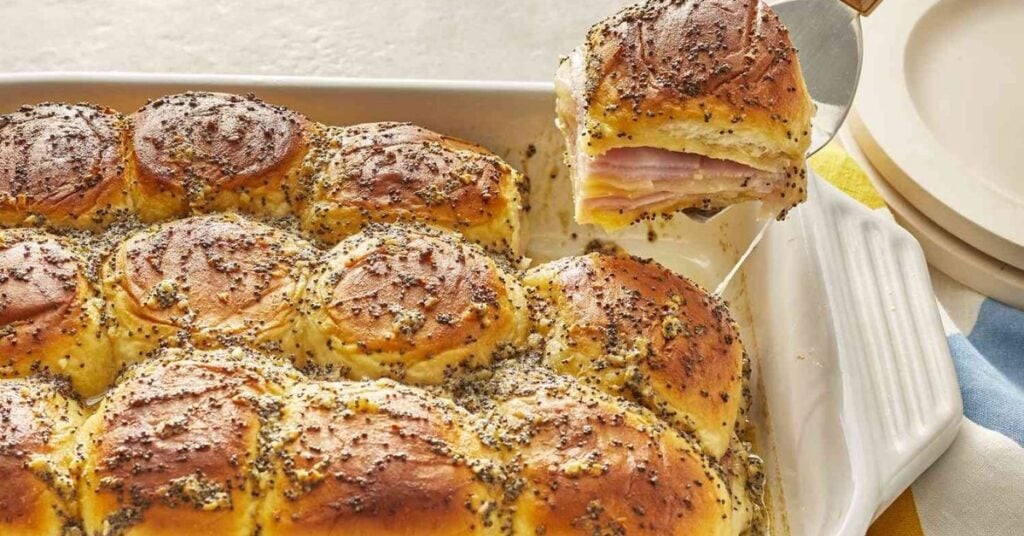
This ham and cheese slider recipe makes 12 buttery, melty sliders in about 40 minutes with a sweet-tangy mustard butter glaze.
Need a fast, no-stress party tray that disappears the minute it hits the table? This ham and cheese slider recipe delivers soft, pull-apart buns, a molten cheese layer, and edges brushed with a glossy mustard-butter glaze. The method is simple, the ingredients are flexible, and the results taste like deli-counter comfort with a bakery finish. You’ll prep once, bake once, and feed a group without standing over a stovetop.
Ham And Cheese Slider Recipe: Ingredients and Yield
Yields: 12 Sliders
Prep time: 10 minutes | Cook time: 25 minutes | Total time: ~40 minutes
Here’s the base formula for 12 sliders baked as one slab. You’ll split the rolls horizontally, stack ham and cheese, pour on seasoned melted butter, and bake until the tops are bronzed and the cheese flows. The table lists amounts plus why each piece earns a spot.
| Ingredient | Amount | Why It Works |
|---|---|---|
| Soft Dinner Rolls (Pull-Apart) | 12-pack (approx. 16–18 oz) | Stay tender, bake as a sheet, slice cleanly after melting. |
| Deli Ham, Thin-Sliced | 1 lb (16 oz) | Salty, meaty bite; thin slices fold for even layering. |
| Swiss Cheese or Provolone Cheese | 8–12 slices | Melt well; nutty or mild profile balances the glaze. |
| Unsalted Butter, Melted | 6 tbsp | Moistens tops, carries flavor, helps browning. |
| Dijon Mustard | 1 tbsp | Sharpness cuts richness; classic with ham. |
| Brown Sugar or Honey | 1 tbsp | Balances salt and heat; promotes caramelization. |
| Worcestershire Sauce | 1 tsp | Adds savory depth and a hint of tang. |
| Poppy Seeds (Optional) | 1 tsp | Crunch and classic slider look. |
| Garlic Powder | 1/2 tsp | Gentle savoriness without harsh bite. |
| Onion Powder | 1/2 tsp | Round, sweet allium note that suits the glaze. |
| Fine Salt + Black Pepper | 1 pinch each | Adjusts sweetness and sharpness to taste. |
Instructions
1. Prep The Roll “Book”
Keep the 12-pack of rolls connected. Use a long serrated knife to split the slab horizontally, creating a top and bottom “book.” Set the bottom in a buttered or parchment-lined 9×13-inch pan so the edges don’t stick.
2. Layer The Ham And Cheese
Shingle half the cheese slices on the bottom, folding them so they reach edge to edge. Add the deli ham in loose folds rather than compressed stacks; this traps pockets of heat and melts the cheese more evenly. Finish with the remaining cheese slices to glue the top bun on during baking.
3. Whisk The Mustard Butter
Blend the melted butter, Dijon mustard, brown sugar (or honey), Worcestershire sauce, garlic powder, onion powder, poppy seeds (if using), and a light pinch of salt and pepper. Taste; the mix should read a little bold before baking because the bread will mute it.
4. Brush, Rest, And Bake
- Set the roll tops on, then brush generously with half the mustard butter mixture, letting it drip down the sides.
- Cover the pan with foil and rest for 5–10 minutes. This mini rest hydrates the crust and starts the absorption.
- Bake at 350°F (175°C) covered for 12–15 minutes until the cheese loosens.
- Uncover, brush with the remaining butter mixture, and bake for 5–8 minutes more until the tops are golden brown.
- Cool for 5 minutes, then slice along the seams to portion. Serve warm.
Technique Tips For Golden, Gooey Sliders
Edge Browning Without Drying
Start covered to steam and melt; finish uncovered to color. A rimmed pan fits tight foil, which keeps moisture in. For glass or ceramic, check a minute earlier on the second phase since those hold heat longer.
Cheese That Melts Clean
Swiss, provolone, Monterey Jack, and Havarti run smooth and bind the stack. Cheddar adds bite but can split if very sharp; mix with a slice or two of milder cheese for a silkier pull.
Seasoning The Butter
Dijon brings brightness; honey or brown sugar adds gloss and balance. If you like a little heat, add 1/4–1/2 tsp hot sauce to the butter bowl so it spreads evenly.
Food-Safe Heat
These sliders reheat cooked ham, so you’re aiming to warm through and melt cheese, not cook raw meat. For general safe serving temperatures, see the CDC’s chart for safe internal temps. Keep trays above 140°F when holding and refrigerate leftovers within two hours.
Taking Ham And Cheese Sliders To A Party: Make Ahead Plan
Assemble up to 24 hours in advance. Brush with only half the butter, cover, and chill. Before baking, let the pan sit at room temp 15–20 minutes, then bake covered as written. Add the second butter brush when you uncover for browning. For transport, preheat the host’s oven and finish there, or bake fully and carry in an insulated bag. Keep extra glaze in a small jar for a quick refresh right before serving.
Batching For A Crowd
Each 9×13 pan yields 12 sliders. Two pans feed a small gathering; three to four pans feed a game-day crowd. Stagger pans on different racks and rotate halfway through the uncovered phase for even color.
Holding Without Sog
After baking, vent the foil so steam doesn’t drench the tops, then close loosely for transport. On arrival, re-brush with any saved glaze and pop back into a hot oven for 3–5 minutes to re-crisp.
Flavor Swaps And Add-Ins
Cheese Twists
- Gruyère + Swiss: Deeper nuttiness and a stronger melt.
- Pepper Jack: A mild kick that pairs with sweet glaze.
- White American: Extra creamy if serving to kids.
Ham Alternatives
- Turkey: Lighter profile; add a smear of cranberry or fig jam.
- Pastrami: Bolder spice; swap Dijon for yellow mustard.
- Roast Beef: Add horseradish to the butter for lift.
Spread And Topping Ideas
- Everything seasoning: Replace poppy seeds with a teaspoon of mix.
- Onion jam: A thin layer under the ham adds sweet depth.
- Pickle chips: Tuck a few under the cheese for snap.
Nutrition And Portion Planning
Exact numbers swing with brand and cut. As a ballpark, one slider lands around 230–320 calories depending on cheese and butter load. Sodium can climb with cured meats, so serve with crisp veggies and water pitchers. If you’re cooking for guests with allergies, scan labels for milk, wheat, and sesame. See the FDA’s page on major food allergens for the current list.
| Serving Size | Approx. Calories | Notes |
|---|---|---|
| 1 Slider | 230–320 | Range reflects cheese choice and butter amount. |
| 2 Sliders | 460–640 | Typical casual portion with sides. |
| 3 Sliders | 690–960 | Hearty plate for game day. |
| 12-Slider Pan | ~2,800–3,800 | Helpful for planning across multiple trays. |
Troubleshooting Common Slider Problems
Soggy Bottoms
If pans trap steam, the bottoms soften. Line with parchment, bake on a preheated sheet tray, and uncover for the final minutes to vent moisture. Let the slab rest five minutes before slicing so juices settle.
Dry Tops
Brush enough butter and keep the first phase covered. If the top looks dry at the end, add a light extra brush of melted butter right out of the oven; the heat will pull it in without overbaking.
Cheese Spillover
Cheese that’s cut to the exact edge may run. Leave a small margin inside the crust and set the top quickly after layering so the melt bonds early.
Uneven Browning
Ovens run hot or cool. If the back browns first, rotate the pan during the uncovered stage. For darker color, move the rack up one notch and watch closely in the last two minutes.
Storage, Reheating, And Freezing
Short-Term Leftovers
Cool to room temp, then refrigerate in a covered container up to three days. Rewarm in a 300°F oven for 8–10 minutes. Microwaves soften crust; if using one, re-crisp in a toaster oven for a minute.
Freeze For A Future Tray
Wrap the baked, cooled slab tightly in foil, then place in a freezer bag for up to one month. Thaw overnight in the fridge. Reheat, covered, at 325°F for 15 minutes, then uncover 3–5 minutes for shine and snap.
Cleanup And Gear Notes
A 9×13 metal pan gives the best color and easy slicing. Parchment prevents sticking and makes lift-out simple. A serrated bread knife keeps the slab intact during the big horizontal cut and the final portioning.
