
There are coffee makers that “do the job”… and then there are coffee makers that make the morning. If you’ve ever watched coffee rise, darken, and swirl like it’s putting on a tiny stage show, you already get the appeal: it’s part caffeine, part ritual, part calm confidence that today can’t bully you.
That’s exactly why so many people fall hard for a glass coffee percolator. It’s not just about brewing—it’s about seeing the process, staying in control of strength, and getting that bold, nostalgic body that drip machines often flatten. Done right, it’s rich, aromatic, and ridiculously satisfying.
But here’s the part most “buyer guides” get wrong: a lot of products get lumped together under the same umbrella. Some are true percolators (water cycles through grounds), some are moka pots (pressure-assisted espresso-style), and some are siphon brewers (vacuum brewing with a clean, tea-like finish). They look similar online, yet they behave wildly differently on your stovetop—and those differences decide whether you’re sipping magic or muttering “why is this bitter?”
So in this guide, I’m not going to waste your time listing obvious specs. Instead, we’re going deep: what actually changes flavor, what experienced owners keep praising (and complaining about), how to avoid the classic percolator pitfalls, and which of these nine options matches your taste, lifestyle, and patience level.
In this article
- How to choose the right brewer for your taste (and your stovetop).
- Quick comparison table of the 9 picks.
- In‑depth reviews: what owners love, what they don’t, and who each is for.
- Brew science made simple: time, temperature, grind, and pressure.
- FAQ: glass safety, cleaning, bitterness, and best practices.
How to Choose a Glass Coffee Percolator That Fits Your Brew Style
Before you buy anything, pause and decide what you actually want in the cup. A glass coffee percolator can mean different things depending on the design, and your “perfect coffee” might be someone else’s “too strong” or “too fussy.”
1. First: Identify Your Brewer Type (This Changes Everything)
A huge chunk of buyer regret comes from ordering the wrong category. Here’s the simplest, most useful way to tell them apart:
- True Percolator (stovetop or electric): Water repeatedly cycles up a tube and showers over the grounds. This produces a classic, bold, full-bodied cup—but it can turn bitter if you let it run too hot or too long.
- Moka Pot (stovetop espresso maker): Steam pressure pushes water through coffee once, creating a concentrated espresso-style brew. It’s not espresso-machine pressure, but it’s strong, syrupy, and latte-ready.
- Siphon / Vacuum Brewer: Water rises into the top chamber, steeps, then gets pulled back down through a filter. The flavor is often clean, aromatic, and “crafted,” but the process is more involved.
2. Glass Isn’t Just Aesthetic—It Changes Heat Behavior
Borosilicate glass is made for heat, but it still behaves differently than metal. Metal spreads heat quickly; glass responds more slowly and can be sensitive to sudden temperature swings. That’s why good glass brewers often include (or benefit from) a heat diffuser.
- On gas: Keep the flame under the base—never licking up the sides. Glass rewards gentle, steady heating.
- On electric coil: Use a diffuser if recommended; it prevents hot spots that can stress glass.
- On glass/ceramic cooktops: A diffuser often helps stabilize heat and reduce the chance of thermal shock.
- On induction: Glass-only brewers won’t work. You need a stainless base designed for induction (common with moka pots).
3. Strength Control: The Real “Skill Ceiling” of Percolators
Percolators can taste phenomenal—when you control two variables: heat intensity and perking time. Owners who “hate percolators” usually ran them on high heat until they tasted sharp or burnt. Owners who love them usually do this:
- Bring it up to perking, then reduce heat to maintain a gentle, steady perk.
- Use a timer and stop earlier than you think—strongness comes fast once it’s stable.
- Choose a grind that doesn’t clog (too fine can cause overflow or grit).
4. Electric Percolators: The Keep-Warm Detail Most People Miss
Electric percolators are convenient, but pay attention to what “keep warm” really means in real life. The best designs hold temperature without aggressively re-cycling brewed coffee through grounds. If an electric unit keeps “bubbling” or re-perking, coffee can shift from bold to harsh. A simple expert move:
- Brew → turn off → serve. If you want extra-hot refills, pour into a pre-warmed thermal carafe rather than letting it endlessly heat.
- Use the right grind. Store-ground “drip” can be too fine. Coarser = cleaner cup and fewer clogs.
5. Cleanup & Longevity: Where Great Products Get Ruined
A glass brewer can last a long time, but only if you treat it like glass (not like a stainless pot you can bang in the sink).
- Don’t shock it: No cold water rinse while it’s piping hot.
- Rinse oils quickly: Coffee oils become stale and “old” tasting if they build up.
- Watch the small parts: Stems, tiny springs, gaskets, and filter cloths are the pieces people lose.
6. Capacity Reality Check (Without the Marketing Confusion)
Percolator “cups” are often smaller than modern mugs. If you drink coffee in a large mug, choose more capacity than you think—especially if you want seconds without reburning the brew. For espresso-style moka pots, “cups” usually mean demitasse servings (small but mighty).
Quick Comparison: 9 Glass Coffee Percolator Picks
Here’s the fast overview. After the table, I’ll break down each one like a human—what it’s really like to use, who it’s best for, and what to watch out for.
On smaller screens, swipe or scroll sideways to see the full table.
| Model | Type | Best For | Key Feature | Amazon |
|---|---|---|---|---|
| NONNA 2.0 Retro Glass Percolator | Stovetop | Plastic-free ritual & bold, classic coffee | Mostly glass + stainless build (with diffuser) | Amazon |
| KIDISLE Glass & Steel Electric Percolator | Electric | Families who want volume + visibility | Glass carafe + temperature sensor keep-warm behavior | Amazon |
| The London Sip Glass Moka Pot | Moka Pot | Espresso-style coffee you can watch | Stainless base + borosilicate upper (induction-friendly) | Amazon |
| APOXCON 12-Cup Electric Percolator | Electric | Hosting, offices, and “always ready” refills | No-aluminum construction claim + cordless serve | Amazon |
| APOXCON 8-Cup Electric (Wood Handle) | Electric | Daily driver that feels classic (but easy) | Wood handle + extra brew knob included | Amazon |
| Japanese-Style Siphon Brewer (1–3 cups) | Siphon | Coffee geeks + clean, aromatic cups | Vacuum brewing with alcohol burner theater | Amazon |
| Farberware 12-Cup Stovetop Percolator | Stovetop | Durability + bold coffee during outages | Classic stainless body + glass “perk” knob | Amazon |
| Mogrecha Clear Glass Moka Pot (4-cup) | Moka Pot | Compact espresso-style coffee on a budget | Clear upper chamber + stainless lower | Amazon |
| Café Brew 8-Cup Glass Stovetop Percolator | Stovetop | Budget-friendly glass perking with visibility | Borosilicate glass + diffuser, dishwasher-safe glass pot | Amazon |
In‑Depth Reviews: 9 Glass-Forward Brewers Ranked by Real-World Use
These are ordered to match how most people shop in the real world: start with the “I want the best experience” picks, then move toward specialized ritual brewers and budget options. I’ll also point out the hidden gotchas—like what makes grounds sneak into your cup, why keep-warm can change flavor, and what “easy cleaning” truly looks like on a Tuesday morning.
1. NONNA 2.0 Retro Glass Percolator – The Purist’s Stovetop Ritual
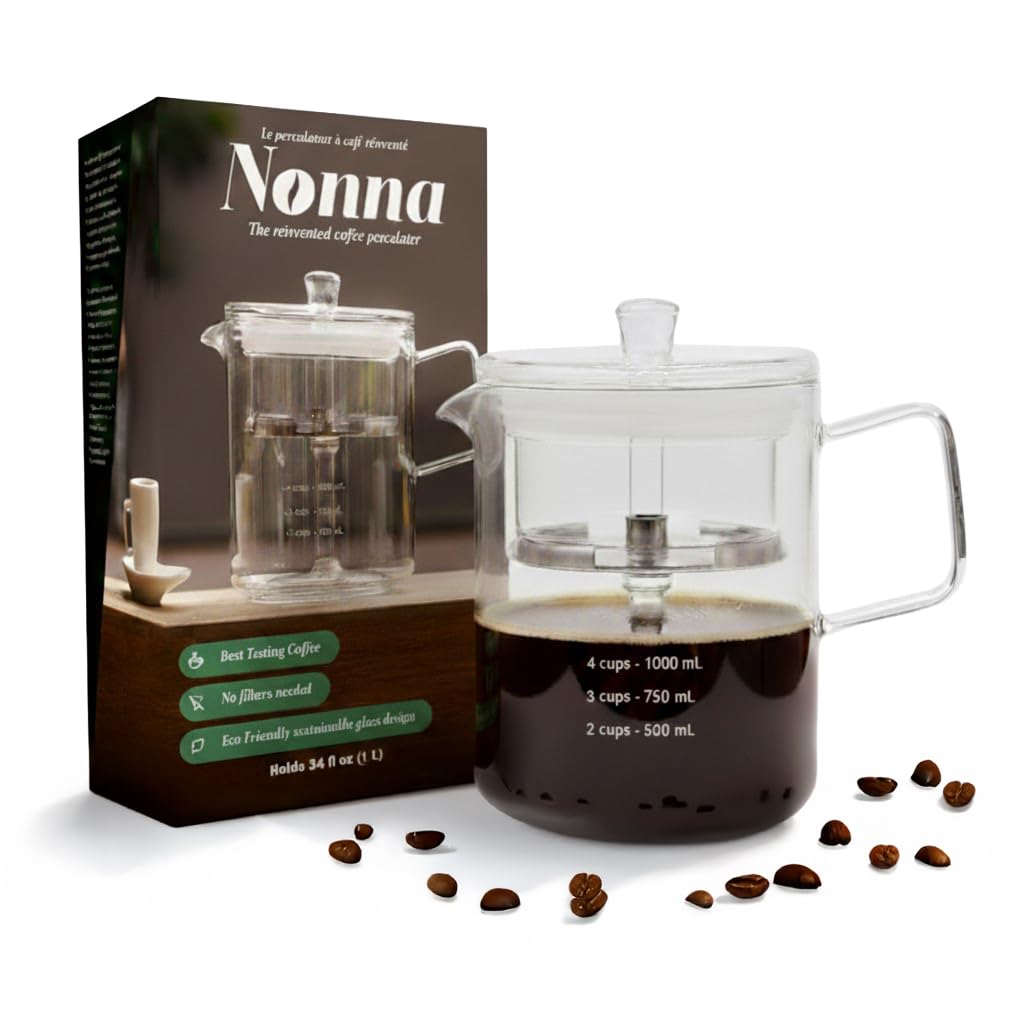
If your dream coffee setup is plastic-free, visual, and unapologetically old-school, the NONNA 2.0 hits that sweet spot. It’s the kind of brewer that turns “making coffee” into a tiny event—especially because you can watch extraction happen instead of blindly trusting a machine.
Where it shines is in control. Owners who love it tend to treat it like a craft tool: medium heat, steady perking, and a short, intentional finish. That’s how you get that classic percolator depth without drifting into bitterness. The design also aims to improve on common glass-perc frustrations (like awkward parts and finicky fit) by leaning on stainless and silicone where it matters, while keeping the coffee contact surfaces largely glass/steel.
Where some users get disappointed is usually not “quality” but technique. If you run it too hot, too long, or with a grind that’s too fine, you can end up with weak coffee (because the cycle wasn’t stable), or gritty coffee (because fine grounds migrate). Also: because it’s glass, it demands calm handling. If you want to treat your coffee gear like a camping kettle, pick stainless instead.
Why it’s the top pick
- Ultra-clean materials: Built for people who actively avoid plastic in the brew path.
- Strength by sight: You can literally see when the coffee “hits” the level you like.
- Ritual-friendly: Slow brewing feels like a feature, not a flaw.
- Diffuser included: Helps tame heat on modern stovetops.
Good to know
- Glass demands care: no rushing the cleanup, no sink-banging.
- If you go too fine with grind, you may see sediment or overflow behavior.
- Some buyers expect “fast” coffee and get frustrated—this is a stovetop ritual tool.
Ideal for: People who want a plastic-minimized, stovetop ritual brewer and enjoy controlling strength by sight and timing.
2. KIDISLE Glass & Steel Electric Percolator – The Countertop Crowd-Pleaser
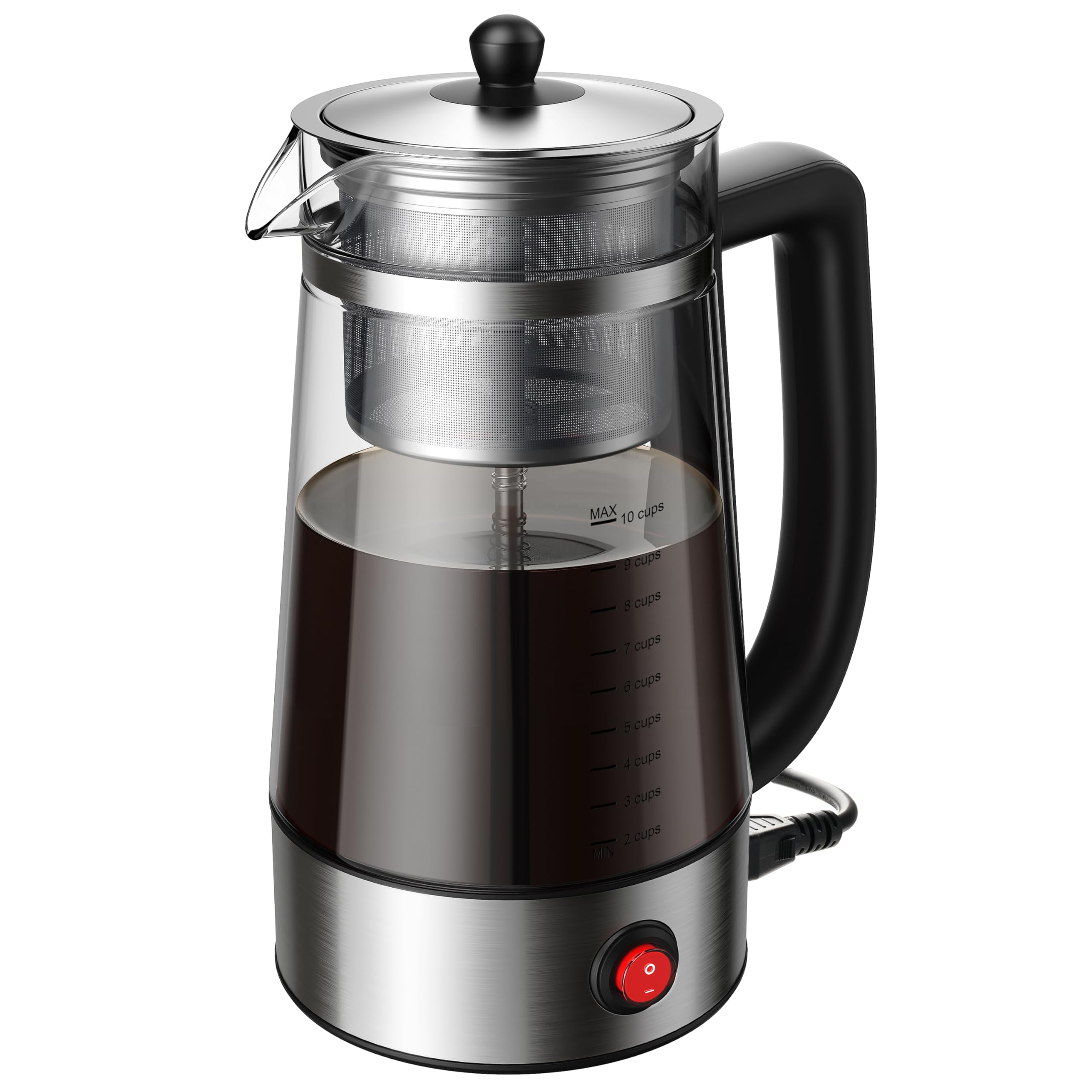
This is the pick for people who love the look and visibility of glass, but want the convenience of a countertop brewer. The KIDISLE combines a clear borosilicate carafe with a stainless basket and simple button-based operation—so you still get that satisfying “watch it happen” vibe without babysitting a burner.
In real kitchens, the biggest win is how quickly it gets you from “I need coffee” to “coffee is happening.” Owners who love it mention full-bodied results and easy cleaning. The wide glass opening matters more than you’d think: it makes daily cleanup feel normal instead of annoying, which is the difference between a brewer you use twice and a brewer you use for years.
The most important expert note is how you treat the keep-warm behavior. Some electric percolators hold heat gently; others “wake up” and re-agitate. If you’re sensitive to burnt notes, don’t let any percolator (electric or stovetop) keep cycling forever. Brew, serve, and turn it off. If you want hot refills later, decant into a thermal carafe or pre-warm mugs—your coffee will taste fresher for longer.
Why it wins for most families
- Glass visibility: Looks great on the counter and makes brewing feel “alive.”
- Easy cleanup design: Wide opening and reusable basket = less daily friction.
- Flexible batch size: Works for small mornings and bigger pots without changing your whole workflow.
- Comfortable pouring: Cool-touch handle + drip-resistant spout is huge for daily use.
Good to know
- If left heating too long, percolated coffee can taste harsher—turn it off after brewing.
- Best results typically come from a slightly coarser grind than standard drip.
- Glass is durable, but still not immune to drops and temperature shock.
Ideal for: Families and daily drinkers who want electric convenience, glass visibility, and a reusable basket—without the “machine complexity” of pump-based brewers.
3. The London Sip Glass Moka Pot – Espresso Vibes, See‑Through Brew
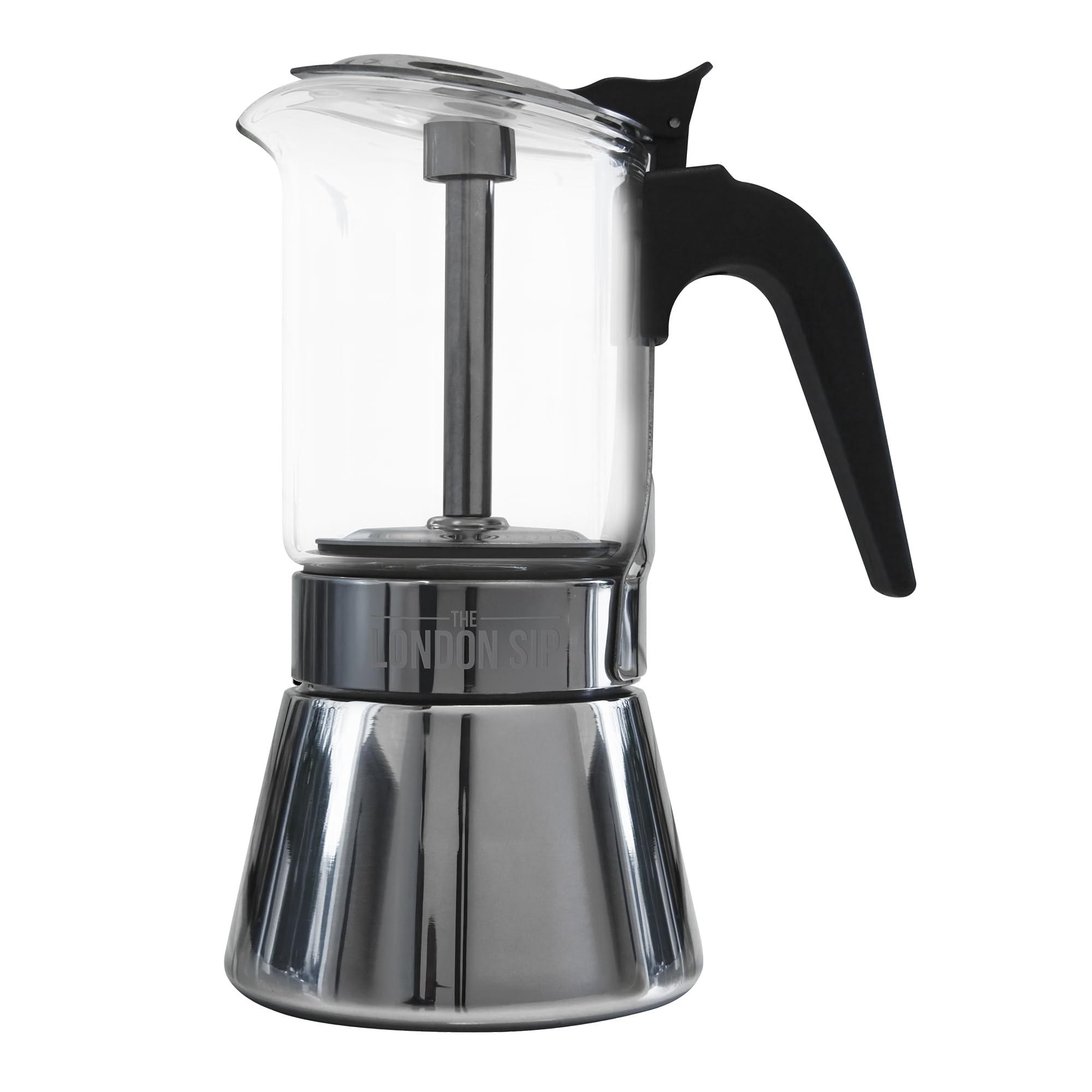
Let’s be clear (pun absolutely intended): this is not a classic percolator. It’s a moka pot—meaning it makes a concentrated, espresso-style brew using steam pressure. But if you’re shopping in this niche because you love glass and you love watching coffee happen, this one is a superstar.
Why moka pots can taste burnt in inexperienced hands: too much heat, too late. The secret is to slow down the final phase. Use medium-low heat, and the moment the flow turns pale or starts to sputter aggressively, pull it from heat. That one move turns “burnt moka” into “bold café strength.” Owners who rave about moka pots tend to follow a careful, watchful process—exactly what this clear upper chamber encourages.
The London Sip’s stainless base makes it friendly to induction cooktops (a big deal if you can’t use glass-only stovetop brewers). It’s also a great bridge product: you can drink it straight if you like intensity, or dilute with hot water for an Americano, or add steamed milk for lattes without owning a full espresso machine.
Why it feels “premium” in use
- Induction compatibility: Stainless base expands where you can brew.
- See the extraction: You’ll learn faster because you can watch the flow change.
- Espresso-style strength: Great for milk drinks and bold cups.
- Simple to maintain: No pods, no pumps, no hidden tubes.
Good to know
- Moka pot “cups” are small servings—this brew is concentrated by design.
- Glass needs careful cleaning if you want it to stay crystal-clear.
- Like all moka pots, overheating is the enemy of sweetness.
Ideal for: Espresso-style coffee lovers who want a compact stovetop setup, need induction compatibility, and love watching the brew develop.
4. APOXCON 12‑Cup Electric Percolator – The No‑Fuss Host
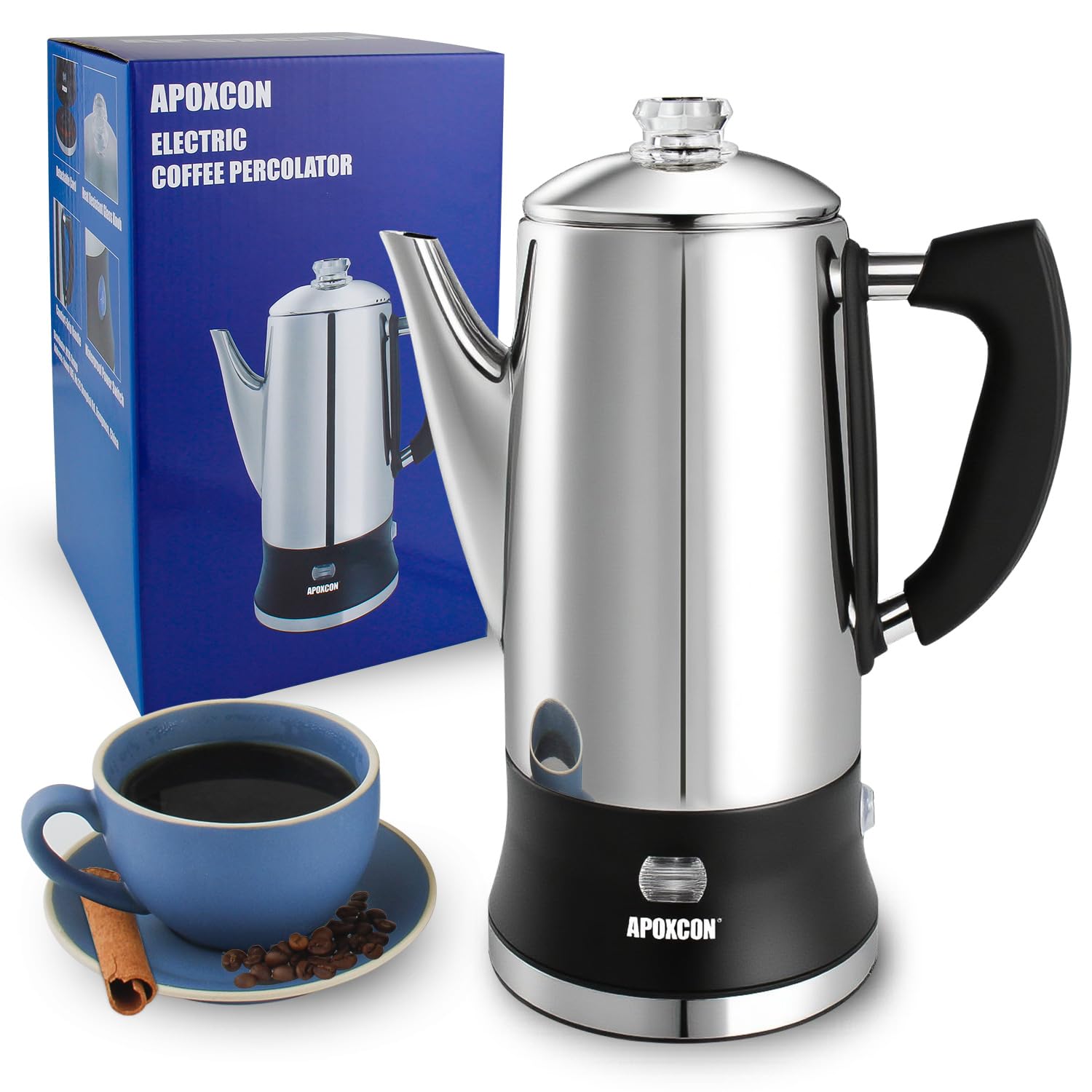
If your priority is “make a lot of coffee, keep it hot, don’t overcomplicate my morning,” this is exactly what electric percolators are built for. The APOXCON 12‑cup model leans into classic percolator simplicity: water, grounds, switch on, wait for the indicator behavior, pour. No pumps. No reservoirs you can’t see. No mystery tubing.
What experienced percolator owners appreciate about big electric models is consistency: once you nail your coffee dose and grind, you’ll get the same strength over and over. And the glass brew progress knob up top is more useful than it looks—it teaches you the rhythm of perking, so you stop relying on guesswork.
The advanced-user advice is the same as with any electric percolator: treat keep-warm as “holding,” not “re-brewing.” If you notice aggressive bubbling for long periods, don’t let it run endlessly. Brew, serve, and if you want to preserve flavor for a long hangout, decant some into a thermal container. That’s how you keep boldness without adding harshness.
Why it’s great for groups
- Built for volume: Ideal when you’re serving multiple people or refilling throughout the morning.
- Simple controls: No menus, no programming rabbit holes.
- Cordless serving: Move it to the table without trailing a cord.
- Visual progress: The glass knob helps you learn the brew, not just wait for it.
Good to know
- Like many percolators, it prefers a coarser grind than drip machines.
- If any electric percolator is left heating too long, flavor can drift “overdone.”
- Some buyers prefer a heavier base feel—place it on a stable surface and pour calmly.
Ideal for: Households, offices, and hosts who want a high-output coffee routine with classic percolator flavor and minimal fuss.
5. APOXCON 8‑Cup Electric (Wood Handle) – The Cozy Classic Without the Drama
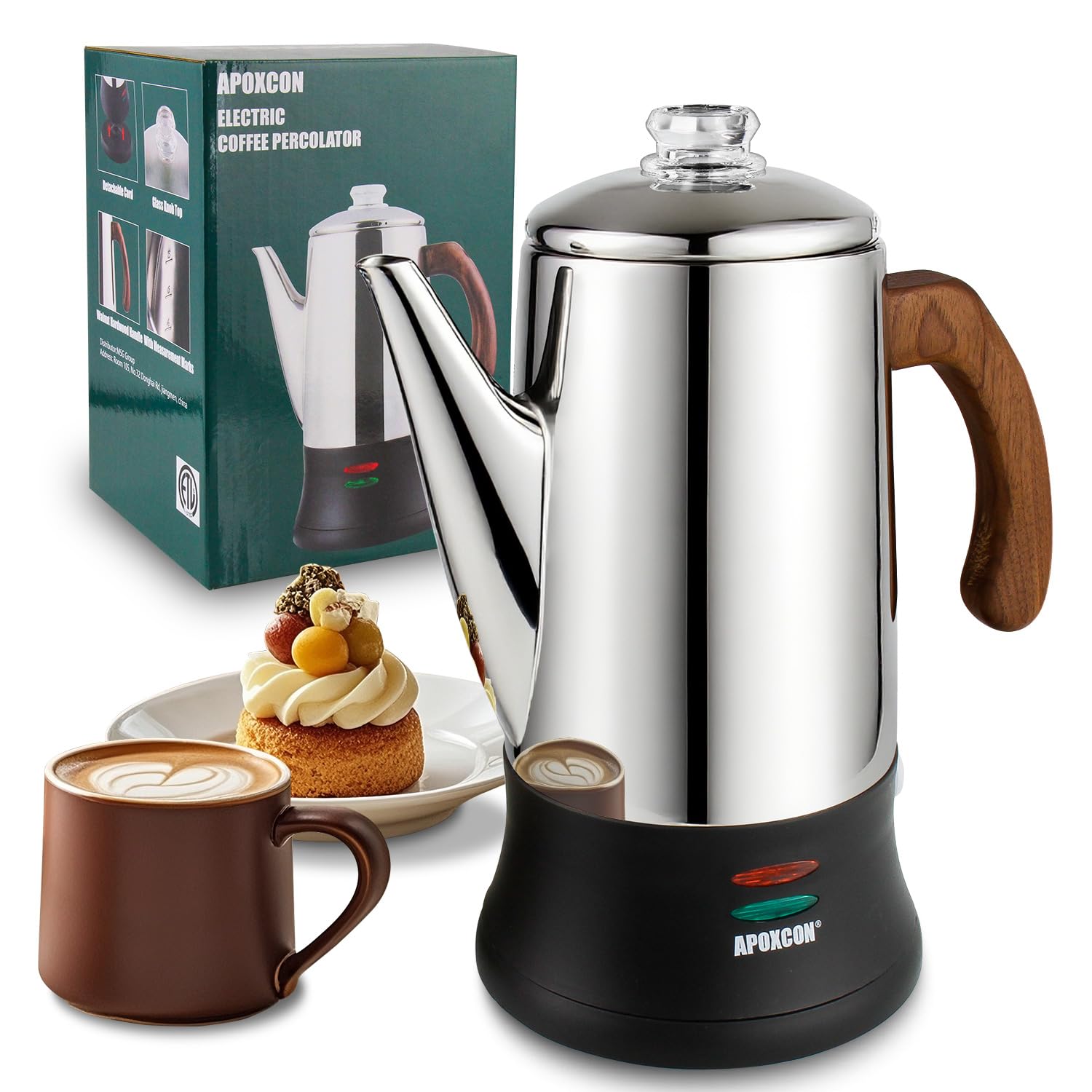
This one is for people who want the comfort of an electric percolator, but not the bulky “appliance energy” of a huge countertop machine. The 8‑cup size tends to match how real households drink: a couple big mugs, maybe a second round, but not an office-sized output.
Owners who love it often talk about two things: it brews hot and it feels thoughtfully designed. The wood handle isn’t just a style move—it’s a practical heat break that makes pouring feel safer and more confident. And the clear brew progress knob gives you that classic percolator feedback loop: you can literally see how active the perk is and adjust your timing next brew if you want stronger or smoother.
One tiny usability tip that saves frustration: pay attention to the on/off switch style. Some people expect a “push button,” but it behaves more like a simple toggle. Once you understand that, daily use becomes brain-off easy.
Why people keep it on the counter
- Great size for daily life: Enough coffee without over-brewing a giant batch.
- Comfortable handling: Wood handle improves grip and reduces heat anxiety.
- Hot coffee, classic aroma: Percolators shine when you like boldness and fragrance.
- Maintenance-friendly: Basket and parts are easy to rinse and reset.
Good to know
- If you use very fine store-ground coffee, consider adding a round paper filter to reduce sediment.
- Don’t lose small internal parts during washing—wash over a bowl, not an open drain.
Ideal for: Anyone who wants an easy electric percolator for daily brewing, with a classic look and a comfort-forward pour experience.
6. Japanese‑Style Siphon Brewer – The Showpiece That Makes a Clean, Aromatic Cup

This is the brewer you buy when you want coffee to be a hobby for a few minutes. A siphon brewer is part science experiment, part old-school craft—and when it’s dialed in, the cup can be stunning: aromatic, clean, and surprisingly “bright” compared to percolator-style body.
The tradeoff is effort. Siphon brewing asks you to assemble parts, manage a burner, and clean a filter system. Owners who adore siphon coffee usually say the flavor payoff is worth it. Owners who abandon it usually say the same thing: it’s not for rushed mornings. Think of it like making a proper pasta sauce—amazing, but not the fastest weekday option.
Here’s the expert advice that makes siphons less annoying:
- Pre-rinse and properly seat the filter: If the filter isn’t seated, drawdown can stall or let fines through.
- Stir with intention: Gentle stir at bloom and one more mid-steep—don’t whip it into a muddy mess.
- Clean immediately: Coffee oils harden as they cool; rinsing right away is half the battle.
Why it’s special
- Clean, nuanced flavor: Often highlights bean aromatics beautifully.
- Conversation starter: People will stop and watch it brew—every time.
- Hands-on control: You influence steep time, agitation, and drawdown behavior.
Good to know
- More pieces to clean than percolators or moka pots.
- Not ideal if you need coffee in “two minutes, go.”
- Keep track of accessories (filters, hooks, cloth) so you’re not stuck later.
Ideal for: Coffee lovers who want a cleaner, aromatic cup and enjoy hands-on brewing as part of the experience.
7. Farberware 12‑Cup Stovetop Percolator – The Power‑Outage Workhorse

If you want the “classic percolator experience” but prefer stainless steel durability over full-glass brewing, Farberware is the dependable, no-nonsense pick. This is the kind of pot people keep for years, pull out during camping trips, and swear makes coffee that tastes like it used to.
What experienced users love most is the control. A stovetop percolator gives you direct authority over heat—meaning you can brew bold without scorching. The glass knob is your dashboard: when perking begins, you reduce heat; when the color looks right, you stop. That “brew by sight” approach is the difference between legendary percolator coffee and bitter regret.
Pro move: when it’s done, don’t leave it actively perking. Either remove from heat or drop to a very low setting that keeps it warm without cycling hard. And if you’re extra sensitive to sediment, a simple paper filter disk in the basket can make cleanup easier without changing the percolator personality.
Why it’s a classic for a reason
- Stainless durability: Less anxiety than all-glass brewers.
- Strong coffee potential: Great for people who like robust flavor and heat.
- Manual control: You can tune the cup to your exact preference.
- Easy to keep going: No electricity required.
Good to know
- As with many percolators, the small glass top can be the most fragile part—handle with care.
- Technique matters: too much heat for too long = bitterness.
Ideal for: Anyone who wants a sturdy stovetop percolator for bold coffee, camping, or backup brewing—without committing to full glass construction.
8. Mogrecha Clear Glass Moka Pot – The Compact Espresso Fix

If you want the fun of watching moka extraction without going full premium, the Mogrecha is a strong value play. It’s compact, it’s visually satisfying, and it’s built around the same moka principle: pressure-assisted brewing that makes coffee strong enough for milk drinks.
The big expectation-setting point is capacity. Moka “cups” are not mug-sized; they’re small, concentrated servings. If you’re expecting a giant drip-style mug, you’ll be confused. If you’re expecting a bold base for a latte or an Americano, you’ll be delighted.
Expert tip that upgrades moka pot flavor instantly: start with hot water in the base (carefully), brew on medium-low heat, and stop as soon as the flow turns pale or sputtery. The sweetest moka is the first part of the flow; the harshest flavors tend to show up when people let it rage on high heat until it’s dry.
Why it’s a smart budget pick
- Clear brew show: You can learn the “right stop point” by watching.
- Compact size: Great for small kitchens, travel kits, or minimal setups.
- Espresso-style strength: Makes a powerful base for milk drinks.
Good to know
- Use controlled heat—glass moka tops don’t like flames climbing the sides.
- Hand-washing helps keep glass looking clean and clear over time.
Ideal for: Anyone who wants espresso-style coffee on a budget and likes the idea of a clear brew chamber for better control.
9. Café Brew 8‑Cup Glass Stovetop Percolator – The Affordable Nostalgia Starter

This is the entry point for people who want to try glass percolator brewing without diving straight into the premium end. You get the big advantage glass offers: you can see what’s happening. That single detail makes percolator brewing easier to learn, because you’re not guessing—you’re watching.
Owners tend to praise it for delivering that percolator aroma and a hot, satisfying cup once you learn the rhythm. The included heat diffuser is a quiet hero here: it helps stabilize heat, especially on electric stoves where hot spots can be harsh. If you respect the diffuser guidance and keep your heat moderate, you can get a really enjoyable classic cup.
The tradeoff: some internal components in this style of brewer may use non-glass materials. That’s not automatically a dealbreaker for everyone, but if your priority is a mostly glass-and-metal brew path, you’ll lean toward the more “purist” picks earlier in this guide. For many people, though, this is the gateway that gets them back into percolator coffee—without the learning curve feeling intimidating.
Why it’s a great starter
- Affordable entry: Lets you try percolator flavor without overcommitting.
- See the strength: Visual brewing helps you stop at the right moment.
- Diffuser included: Stabilizes heat and supports safer stovetop use.
- Easy to clean glass pot: Oils rinse out quickly when cleaned right after brewing.
Good to know
- Follow diffuser guidance carefully on electric coils to avoid hot spots.
- Like all glass brewers, it rewards gentle handling and calm cleanup habits.
Ideal for: Curious buyers who want to try glass percolator brewing on a budget and prefer learning strength control visually.
Brew Science Guide: How to Get the Flavor You Want (Without the Bitterness)
Percolator-style brewing has a reputation problem because people confuse “bold” with “overcooked.” Here’s the simple, expert-friendly framework that fixes most problems fast: manage temperature, manage time, choose the right grind, and (for moka pots) respect pressure.
Temperature & Time: The Two Knobs You Control
Think of brewing like toasting bread. The same slice can be perfect or ruined depending on heat and time. With stovetop percolators, you want a steady, gentle perk—not a raging boil. Once the cycle is active, reduce heat and use a timer. Strongness comes quickly after the perk stabilizes, so you can stop earlier than you expect and still get a bold cup.
Electric percolators do the heat management for you, but you still control the “when to stop” behavior. If your coffee tastes harsh, don’t leave it heating endlessly. Brew, serve, then shut it down.
Grind, Filtration, and Pressure: Why “Fine” Often Backfires
Percolators generally prefer a coarser grind than drip machines because water cycles repeatedly through the grounds basket. Too fine can clog the basket, cause overflow, or sneak sediment into the cup. If you’re using store-ground coffee and seeing grit, a round paper filter disk inside the basket can help.
For moka pots, grind is a balancing act: too fine can choke flow and cause harshness; too coarse can under-extract and taste thin. Fill the basket level, don’t tamp, and let the pressure do its job. The best moka coffee comes from controlled heat and stopping at the right moment, not from cranking the flame.
FAQ: Glass Brewers, Percolator Strength, and Daily Use
Why does percolator coffee sometimes taste bitter?
How do I keep my glass brewer from cracking?
Do I need paper filters with a percolator?
My electric percolator keeps “bubbling” after brewing—should I leave it?
Moka pot vs percolator: which is stronger?
Is a siphon brewer worth the effort?
Final Thoughts: Choosing the Right Glass Coffee Percolator
If you want the purest, most ritual-forward stovetop experience, the NONNA 2.0 Retro Glass Percolator is the one that feels like a “forever” kitchen piece—beautiful, bold, and satisfying when you control heat and time. If you want electric convenience without losing the joy of watching coffee brew, the KIDISLE Glass & Steel Electric Percolator is the practical everyday pick. And if you’re chasing espresso-style strength with a clear view of the action (especially on induction), the London Sip Glass Moka Pot is a seriously fun upgrade.
No matter which direction you go, the “secret” to loving these brewers is the same: stay in control. Gentle heat, smart timing, and the right grind turn glass brewing from a gimmick into a daily obsession.
