
A stovetop griddle looks simple… until you actually live with one. The first time you try to cook a “full breakfast” and the center is blazing while the edges lag behind, you learn the truth: a griddle isn’t a pan. It’s a system—metal, burner layout, heat control, grease management, and the kind of surface that matches how you cook.
If you’re shopping for a flat grill for stove top, you’re not really buying “more cooking space.” You’re buying a faster morning, fewer pans, and the ability to run a real heat zone strategy—sear on one side, warm on the other, keep pancakes fluffy while sausage browns, and finish grilled cheese without burning the butter.
But here’s what most buying guides miss (and what most Amazon listings can’t tell you): the best griddle isn’t the one with the longest feature list. It’s the one that behaves predictably on your stove and fits your tolerance for maintenance. Some people want cast iron that becomes better every month. Some want a ceramic-coated “wipe-clean” surface that stays sleek and simple. Others want a full-range steel slab that turns a 30-inch range into a diner line—at the cost of needing better ventilation.
So this guide is built around real-life friction points: how to avoid warping on glass tops, why some grease troughs feel like a genius feature and others feel like a tiny trap, how “nonstick” actually changes your cooking technique, and why handle design matters more than you’d think when the pan weighs as much as a small dog.
Below you’ll find 16 standout options—ranging from premium ceramic double-burner griddles to classic reversible cast iron workhorses, plus oversized range-top and outdoor-style inserts that surprisingly work indoors for the right kitchen setup.
How to Choose the Right Flat Grill For Stove Top
If you remember one thing from this guide, make it this: griddles don’t fail because the product is “bad.” They fail because the buyer’s expectations don’t match the griddle’s personality. Some griddles reward patience and ritual. Others reward low heat and gentle utensils. And some reward you most when you treat them like a restaurant line: preheat, zone, scrape, wipe, done.
1. Start with your stove’s “shape” (not just its fuel type)
Two stoves can both be “gas,” but behave totally differently under a griddle. What matters is burner layout and how much of the griddle actually sits above consistent heat.
- Bridge burner / center oval burner: This is griddle heaven. A long burner keeps the middle from being the only hot zone.
- Four separated burners: You can absolutely use a griddle, but you’ll rely on technique—preheat longer and rotate zones.
- Glass-top electric: Warping resistance matters more, and thick metal helps. So does a griddle with stable contact points.
- Induction: You need magnetic material (cast iron or compatible steel) and a base that sits flat enough to “read” properly.
2. Choose your “surface personality” (this is the real decision)
Most arguments about griddles are actually arguments about surfaces. Here’s the honest breakdown:
- Raw cast iron (seasoned): Incredible sear, deep browning, gets more nonstick over time, tolerates metal tools, and lasts forever. Trade-off: heavy, needs drying/oiling habits, and it’s not “wipe-clean glossy.”
- Carbon steel / steel plate: Restaurant energy. Fast browning, strong heat tolerance, can be seasoned, and often more stable across large surfaces. Trade-off: can be smoky, needs seasoning-like care, and may arrive with coatings you need to remove before first use.
- Ceramic-coated (non-toxic style coatings): The “clean and calm” option. Low oil, easy wipe-down, friendly for eggs and pancakes, and great for daily use. Trade-off: wants medium heat and gentle tools; you win by cooking smarter, not hotter.
- Nonstick-coated grill inserts: Designed for easy release and quick cleanup with grease troughs and high sidewalls. Trade-off: you must respect the coating (avoid overheating, avoid sharp metal scraping).
- Stainless steel: Durable, dishwasher-friendly on some models, great for smash-burger scraping. Trade-off: can stick until it’s seasoned by use and technique; heat zones matter a lot.
3. Grease management is either your best friend… or your weekly annoyance
Grease troughs sound like a win, and often they are. But pay attention to design:
- Wide, full-width troughs: Easier to manage when cooking bacon, burgers, or sausage in quantity.
- Small troughs: Fine for occasional use, but can fill quickly when you cook fatty foods for a crowd.
- Removable drip trays: A real quality-of-life upgrade—especially if you’re cooking messy foods often.
- No trough, low-lip griddles: Better for pancakes, eggs, tortillas, and foods that don’t pool grease.
Real talk: if you cook a lot of bacon and your range hood is weak, the trough isn’t your only problem. Your “real upgrade” is heat control and airflow. A griddle can make bacon easier—nothing makes bacon invisible.
4. Warping resistance is mostly about thickness + habits
Warping happens when one area heats and expands fast while another stays cool. Thick metal helps, but technique matters too:
- Preheat on low for longer than you think. The goal is even metal temperature, not instant sizzle.
- Use matching burners when possible (same size output) so one corner isn’t doing all the work.
- Avoid thermal shock—don’t pour cold water on a screaming-hot griddle and expect it to stay perfectly flat.
- Choose reinforcement if you want a large coated insert: bracing ridges are there for a reason.
5. Weight is not just a spec—it’s your life, your sink, and your storage
Heavy can be amazing (stability, heat retention, better sear). Heavy can also be the reason a griddle lives on your stove forever because it’s too annoying to store.
- If you want a “daily driver,” prioritize handle comfort and manageable weight.
- If you want restaurant output, accept heft and plan storage like you plan appliances.
- If you want camping + home, think about transport: detachable handles can be surprisingly helpful.
6. Decide your “main meal” first—then buy the griddle that loves it
Here’s the cheat sheet I use:
- Eggs, pancakes, grilled cheese, tortillas: ceramic-coated or proven seasoned cast iron.
- Smash burgers, cheesesteaks, high-heat sear: steel plate, heavy cast iron, or durable stainless.
- Bacon in volume + less mess: griddles with higher sidewalls and grease troughs (plus a strong hood).
- Big-batch cooking for groups: large steel or modular outdoor griddles (Camp Chef style).
Quick Comparison: 16 Flat Grill For Stove Top Picks
Use this table to find the models that match your cooking style, then jump to the full reviews for the “real life” details— like how the grease trough behaves when you cook bacon for a crowd, or whether the surface rewards metal scraping or demands gentle utensils.
On smaller screens, swipe or scroll sideways to see the full table.
| Model | Surface type | Best match | Signature strength | Amazon |
|---|---|---|---|---|
| Caraway Double Burner Griddle (Marigold) | Ceramic-coated | Everyday stovetop meals with low oil + easy cleanup | Non-toxic feel + oven-friendly versatility | Amazon |
| Stanbroil Flat Top for 30" Ranges | Steel plate | Turning a standard range into a diner-style griddle line | Huge surface + drip trays + warp resistance | Amazon |
| Camp Chef Professional Fry Griddle (3-burner) | Seasoned steel | Camping groups, reunions, food-truck energy | Massive capacity + diffuser plates | Amazon |
| Lodge Pro-Grid Reversible 20" x 10.44" | Cast iron | Classic cast iron fans who want griddle + grill in one | Legendary heat retention + gets better with use | Amazon |
| Lodge Reversible 9.5" x 16.75" | Cast iron | Two-burner cooking without oversized bulk | Simple, durable, excellent for breakfasts | Amazon |
| Vayepro 2-Burner Griddle + Glass Lid | Aluminum nonstick | Low-mess breakfast + faster weeknight cooking | Lid reduces splatter + dishwasher-friendly cleanup | Amazon |
| Vayepro 17" Stove Top Flat Griddle | Aluminum nonstick | Lightweight two-burner cooking + easy storage | Fast heat-up + easy wipe-down routine | Amazon |
| Skyflame Stainless Steel Griddle 17" x 13" | Stainless steel | People who want scraping, searing, and easy cleaning | Cross-bracing for even heating + grease well | Amazon |
| QuliMetal 25" x 16" Nano-Ceramic Griddle | Nano-ceramic | Big-batch cooking with nonstick convenience | Large surface + even heat strategy + grease trough | Amazon |
| Utheer 25" x 16" Pre-Seasoned Nonstick Griddle | Coated cast iron | Backyard-to-kitchen griddle cooking with a trough | Detachable handles + stability ridges | Amazon |
| Onlyfire Universal Cast Iron Griddle 23" x 16" | Cast iron | High-sidewall, grease-contained cooking indoors/out | Big surface + splash control + sturdy feel | Amazon |
| BBQ Future Universal Griddle + Spatula Set 23" x 16" | Cast iron | People who want a “starter kit” for griddle cooking | Thick iron + included toolset | Amazon |
| Utheer 23" x 16" Enameled Cast Iron Griddle | Enameled cast iron | Rust-resistant, premium-feel big griddle cooking | Enamel convenience + reinforced ridges | Amazon |
| Utheer 25" x 16" Nano-Ceramic Griddle | Nano-ceramic | Nonstick big-surface cooking with easy wipe-down | High sidewalls + scratch-resistant coating approach | Amazon |
| Utheer 17" x 13" Nonstick Insert Griddle | Compact | Small grills and smaller stove setups | Easy handling + trough + removable handles | Amazon |
| Caraway Double Burner Griddle (Cream) | Ceramic-coated | Same performance, softer neutral aesthetic | Choose the color that matches your kitchen | Amazon |
In‑Depth Reviews: 16 Griddles That Feel Great in Real Kitchens
Now we go model by model. I’m going to talk like someone who actually cooks on these shapes—not like a spec sheet. You’ll see the “why” behind each pick: what it’s best at, where it can frustrate you, and what little habits turn it from “fine” into “why didn’t I buy this sooner?”
1. Caraway Double Burner Griddle (Marigold) – The Clean, Confident Daily Driver
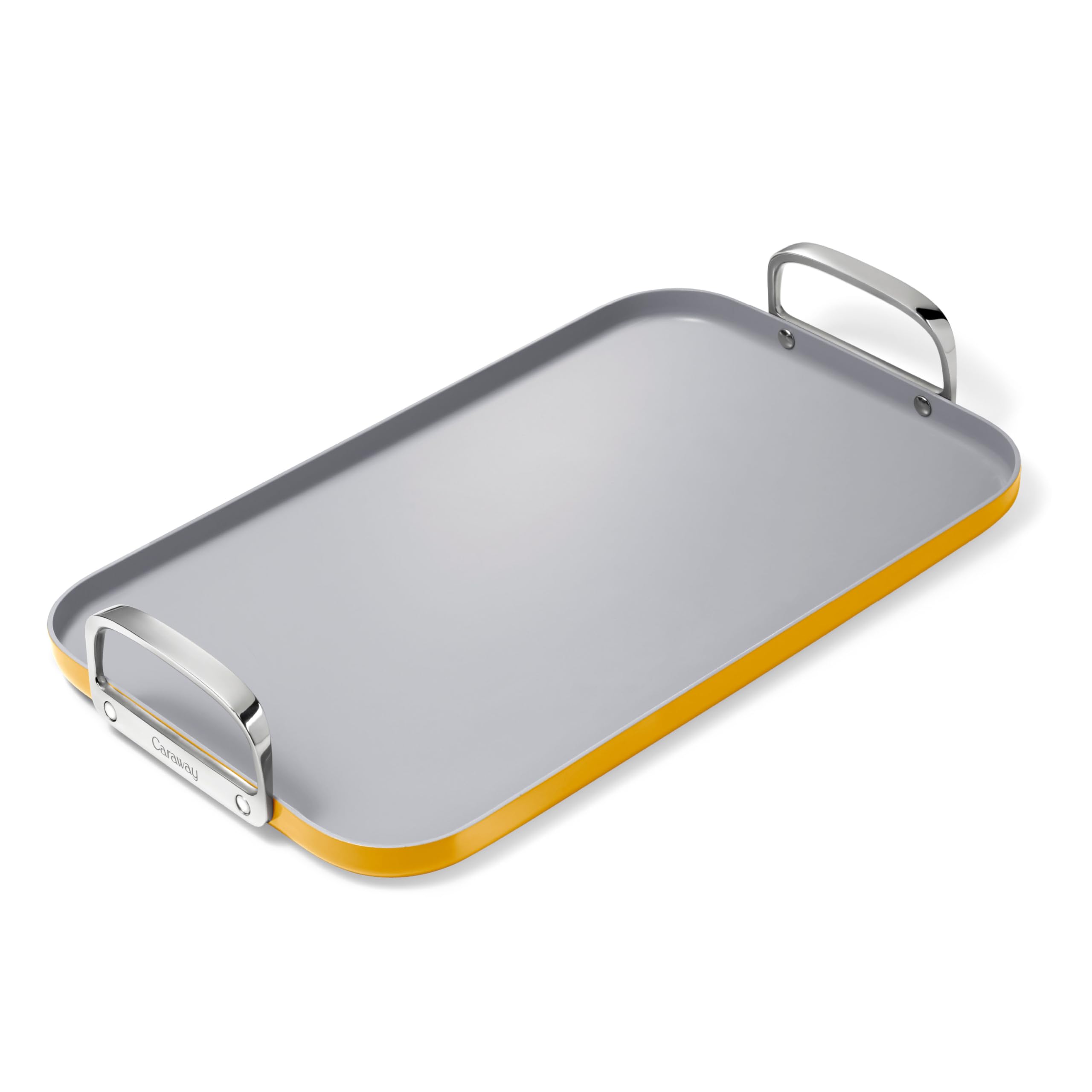
Caraway’s griddle is what I recommend when someone says, “I want a griddle I’ll actually use,” and what they really mean is: “I don’t want a new hobby called griddle maintenance.” This one is designed for people who cook often and want a surface that behaves like a premium nonstick skillet—slick, consistent, and easy to reset back to “beautiful” after a chaotic breakfast.
Real-world owners keep circling the same point: it feels like a balanced piece of cookware. Not flimsy, not absurdly heavy. That matters more than people admit. If a griddle is too light, it can heat unevenly and shift around. If it’s too heavy, it becomes a once-a-month tool. Caraway’s “Goldilocks” reputation shows up in the way people talk about it—proper heft, comfortable handles, and a surface that makes food feel “cleaner” and cooking feel less greasy.
The underrated feature here is the tall-ish side lip. On many griddles, the edge is just enough to stop pancakes from escaping. On this one, that lip turns it into a shallow sheet-pan style cooking surface you can use for all-in-one meals—think chopped fajita veg, smashed potatoes, or “everything on the griddle” breakfast for a big group. It’s also a subtle splatter reducer when you’re cooking sausage or burgers.
How to make it feel elite: cook lower than you think. Ceramic surfaces reward controlled heat. If you crank it like cast iron, you’re missing what makes it special. Give it a gentle preheat, add a thin film of butter or oil, and you get that “food glides” feeling that makes weekday cooking feel luxurious.
Why you’ll love it
- Low-friction cooking – Eggs, pancakes, and grilled cheese feel smooth and predictable with minimal oil.
- Daily-driver ergonomics – Balanced heft and comfortable handles mean you’ll actually reach for it.
- Raised edge = real utility – Helps contain splatter and supports sheet-pan style griddle meals.
- Non-toxic materials story – A big reason people switch from older nonstick lines and feel better about everyday use.
Good to know
- It rewards medium heat and gentle tools; treat it like premium ceramic cookware, not a backyard steel griddle.
- Some kitchens find the handle height can make storage trickier—plan a shelf or vertical storage spot.
- If your favorite food is “hard sear steak at max heat,” cast iron or steel will match that style better.
Ideal for: the cook who wants a premium, easy-clean griddle that makes everyday breakfasts and quick dinners feel calmer and faster.
2. Stanbroil Flat Top for Standard 30" Ranges – The Full-Size Range Transformation

This is not a “griddle pan.” This is a station. The Stanbroil is what you buy when you want your range to behave like a flat-top line: multiple zones, lots of food at once, and the ability to cook a full meal without juggling cookware. If you’ve ever watched a short-order cook push food around a steel surface and thought, “That looks fun,” this is the closest your home stove gets to that energy.
What stands out in owner experiences is how “beefy” it feels. That thickness matters because large steel plates can be warping-prone if they’re thin. With this one, users consistently talk about even heating and stability—plus the fact that it doesn’t feel like it’s going to buckle when you sear hard or cook for a crowd. It’s the kind of purchase that changes how you meal prep, because you can do protein, veg, and bread all at the same time.
Now the honest part: a full-range griddle turns your entire cooking style into “open surface cooking.” That means more airborne grease. If you cook bacon often, you’ll notice it—some owners mention wiping cabinets more frequently. This isn’t the griddle’s fault; it’s what happens when you cook fatty foods on a broad, hot surface. The fix is not “don’t buy it.” The fix is “use your hood, use lower heat, and treat bacon like a controlled project.”
The other truth: steel griddles often require a serious first clean to remove factory residue or coatings. If you love the ritual of making a surface better, you’ll enjoy the setup. If you want out-of-the-box perfection, ceramic-coated options will feel simpler. Once it’s dialed, though, this style of griddle becomes addicting.
Why it’s a game-changer
- Maximum capacity – Cook for a family (or a hungry friend group) without batch cooking.
- Real heat zoning – You can build a “sear zone” and a “hold warm” zone just by burner control.
- Drip tray system – Removable trays make grease management feel intentional, not chaotic.
- Durable, pro-style feel – It’s built like a piece of cooking equipment, not a lightweight accessory.
Good to know
- Expect more grease vapor on heavy bacon weeks; better ventilation makes this griddle feel twice as good.
- Initial cleaning / prep can take effort—think “seasoning mindset,” not “rinse and go.”
- It’s large, so storage is essentially “it lives on the range” or “it gets a dedicated home.”
Ideal for: cooks who want a true flat-top experience on a 30-inch range and are happy to treat it like a serious piece of equipment.
3. Camp Chef Professional Fry Griddle (3-Burner) – The Crowd-Feeding Machine

This is the griddle you buy when “breakfast” means feeding a small army. Camping trips with multiple families. Tailgates where everyone expects hot food at the same time. Backyard parties where you want to cook like you’re running a pop-up brunch stand. The Camp Chef Professional Fry Griddle is basically a restaurant flat-top that decided it wanted to travel.
What owners love is exactly what you’d hope: sheer capacity and thick, confidence-inspiring steel. You can run multiple passes—pancakes across one section, eggs in another, bacon at the hottest zone, and then the whole surface becomes a stir-fry or cheesesteak stage for dinner. People who camp in groups often describe this kind of griddle as the thing that “centralizes chaos.” Instead of five camp stoves and ten pans across picnic tables, you get one cooking station that just pumps food.
The real value is the heat diffuser approach. Large flat-tops can have aggressive hot spots right above burners. Diffusers help smooth that out so you’re not fighting “burn here, pale there” patterns. You still get zones—because you want zones—but the zones become predictable, not random.
The trade-offs are honest and physical: it’s big, heavy, and wants respect. Transport is easier with the right bag or storage plan. Cleaning is also “flat-top style”: scrape while warm, wipe, thin oil film, done. If you treat it like a delicate nonstick pan, you’ll hate it. If you treat it like a professional surface, you’ll feel like a cooking wizard.
Why big cooks swear by it
- Ridiculous capacity – The fastest way to feed groups without batch-cooking misery.
- Better heat spread – Diffuser plates help reduce harsh burner hot spots.
- High sides + grease drain – Made for volume cooking without runaway mess.
- Built to be used hard – It’s the kind of gear you’ll still have years later.
Good to know
- It’s large and heavy; plan transport and storage like you would a camp stove.
- Cleaning is easy if you scrape while warm. If you let it crust overnight, you’ll work harder.
- This is best for Camp Chef-style cooking systems and outdoor setups; it’s overkill for a small apartment kitchen.
Ideal for: campers, tailgaters, and big-family cooks who want one powerful cooking surface that replaces a whole pile of cookware.
4. Lodge Pro-Grid Reversible 20" x 10.44" – The “Buy Once, Use Forever” Classic

If you’ve ever wondered why cast iron fans sound a little evangelical, this griddle is one reason. The Lodge Pro-Grid is the kind of tool that feels simple on day one and quietly becomes essential by month three. It’s a big, thick slab of iron with two personalities: flat griddle on one side, ridged grill on the other. And in a real kitchen, that means you can go from pancakes to burgers without changing gear.
The “secret” to loving this griddle is understanding how cast iron likes to be treated. Cast iron doesn’t want instant max heat. It wants a slow climb. When you preheat patiently, the whole surface becomes a stable temperature platform that browns beautifully and holds heat like a champ. That’s why owners keep saying it cooks evenly and the flavor feels different. The metal’s thermal mass makes cooking feel less twitchy—less “oops, I burned it” and more “I can control this.”
This is also where your technique level matters. One of the most useful cast iron truths: food releases when it browns. People coming from Teflon often move food too early and think the pan is “sticky.” With cast iron, you let the Maillard reaction do its thing—then the food releases like magic. On this griddle, that means eggs can be surprisingly easy (with the right heat), and smash burgers can be deeply satisfying if you use the griddle like a flat-top: press, scrape, flip, repeat.
The downside is not performance. It’s weight. This is heavy enough that some households treat it like an installed appliance. That’s not a dealbreaker. It’s just a reality. If you want cast iron results without cast iron weight, you’ll look at aluminum nonstick options. But if you want something that literally gets better with time, this is it.
Why it’s legendary
- Heat retention for days – Stable temperature means better browning and less fussy cooking.
- Two surfaces in one – Flat griddle for breakfast; ridged side for grilling and fat-draining meals.
- Metal-tool friendly – Scrape, press, and flip like a diner cook without babying it.
- “Forever” durability – With basic care, it can outlast your stove and your next one.
Good to know
- It’s heavy. If lifting is a concern, plan how it will live and how you’ll clean it.
- Cast iron likes preheat patience; rushing it can create hot spots and sticking.
- The ridged side is great, but it takes longer to clean—worth it if you grill often.
Ideal for: anyone who wants classic cast-iron performance and doesn’t mind the “heirloom tool” weight.
5. Lodge Reversible 9.5" x 16.75" – The Practical Two-Burner Workhorse

If the Pro-Grid feels like a commitment, this Lodge reversible feels like a smart, realistic upgrade. It still spans burners and still gives you that cast iron magic, but in a footprint that’s easier to live with. For many kitchens, it’s the sweet spot: big enough to cook multiple pancakes at once, small enough that you can store it without rearranging your entire cabinet life.
Owners talk about the two big benefits: even cooking and the ability to do a true breakfast line at home. The flat side shines for pancakes, eggs, sausage, and tortillas. The ribbed side shines when you want grill marks and when you want fat to drain away from meats. And because it’s cast iron, you get that deep browning that makes simple food taste better.
Here’s the nuance most people don’t say out loud: not every ribbed side is equally easy to clean. This model’s rib channels can be a little annoying depending on how the ends are designed. If you cook sticky marinades on the ribbed side and let it cool completely before scraping, you’ll make your life harder. The solution is easy: clean while warm, use a stiff brush, and accept that the ribbed side is the “extra effort” side. In exchange, you get a griddle that behaves like it belongs in a campsite, a kitchen, and a cabin woodstove.
The smartest way to use this size is to build zones on purpose. Let the center run hotter, and treat it like your sear zone. Use the ends for holding or finishing. That’s not a compromise—that’s the same strategy restaurant cooks use on big flat-tops.
Why it’s so popular
- Big enough for real meals – Breakfast for multiple people without endless batches.
- Cast iron browning – Better sear and crisping than most lightweight nonstick griddles.
- Two-sided versatility – Flat for breakfast; ribbed for meats and veggies.
- Simple storage – No massive handles sticking out; easier to stash.
Good to know
- Ribbed channels take more cleaning effort—clean warm and use the right brush.
- It’s still heavy compared with aluminum options.
- Cast iron needs dry-and-oil habits if you want it to stay rust-free and happy.
Ideal for: cooks who want cast iron flavor and durability in a two-burner-friendly size.
6. Vayepro 2-Burner Griddle + Glass Lid – The “Splatter Control” Weeknight Hero

This griddle wins on one feature that changes daily life: the lid. A lid on a griddle seems small until you’ve cooked bacon, sausages, or smash burger onions on an open surface and watched grease travel like it has its own agenda. The Vayepro turns “big surface cooking” into something that feels more controlled—less splatter, more consistent heat, and fewer kitchen wipe-downs after.
Owners consistently describe it as surprisingly nonstick and easy to clean. That matters because griddles can become “special occasion” tools when cleanup feels annoying. Here, a quick wipe often does the job, and it’s even dishwasher-friendly for people who prioritize convenience above all else. Another practical detail: the lip around the edge helps keep food from sliding off when you’re working fast. That lip + lid combo makes it feel like a giant shallow sauté pan when you need it.
Where people sometimes get tripped up is heat alignment. Aluminum heats fast, which is great, but it also means your burner placement matters. If your stove’s two burners are different sizes or different outputs, one side may run hotter. That’s not a product failure. It’s a “learn your stove” moment. Once you dial in the flames, the griddle becomes extremely efficient for breakfast spreads and quick dinners like grilled chicken strips and warm tortillas.
If you want maximum longevity, treat the nonstick surface with respect: use silicone or wood tools, avoid aggressive metal scraping, and keep heat in the low-to-mid range. Used like that, this griddle feels like a cheat code for busy households.
Why it’s a daily-life upgrade
- Lid = less chaos – Helps reduce grease splatter and keeps heat more consistent.
- Fast heat-up – Aluminum gets you cooking quickly on rushed mornings.
- Easy cleanup – Nonstick release makes wipe-down simple; dishwasher option is a bonus.
- Big surface efficiency – Cook multiple breakfast items at once without pan juggling.
Good to know
- Not compatible with induction; it’s aluminum, so it won’t work on magnetic induction surfaces.
- Burner mismatch can cause uneven heat; a little practice solves most of it.
- Nonstick lasts longest with gentle tools and medium heat—treat it like premium coated cookware.
Ideal for: busy home cooks who want big-surface breakfast power with less mess and faster cleanup.
7. Vayepro 17" Stove Top Flat Griddle – The Easy-to-Store, Easy-to-Lift Option
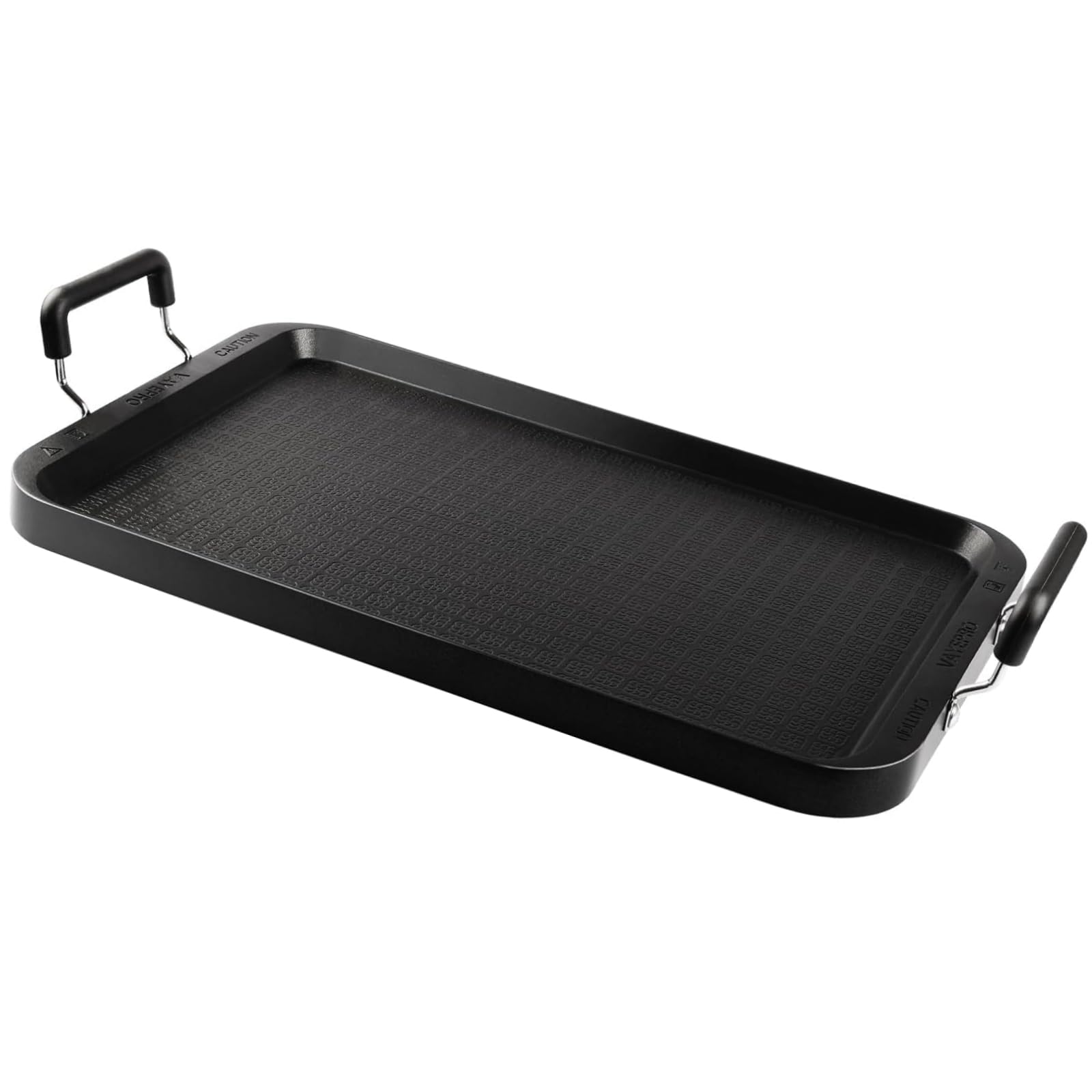
This is the griddle for people who want the two-burner experience without committing to cast iron weight. If you’ve ever loved the idea of a griddle and then realized you don’t want to deadlift cookware before coffee, a lightweight aluminum nonstick like this is a very sane answer.
Owners talk about two things: it’s genuinely easy to clean, and it’s big enough to make breakfast feel efficient. Eggs, pancakes, ham, potato patties—this is exactly the kind of griddle that turns weekend breakfasts into something you can do without dirtying half your kitchen. A quick butter wipe often handles sticking, and the surface is forgiving for delicate foods.
There are two “real-life quirks” to know. First, it can leave a light pattern on foods like pancakes because of the surface texture. That’s not usually a problem; it’s just a surprise if you expect a perfectly smooth diner pancake. Second, like most two-burner griddles on older or mismatched burner setups, heat can vary across the surface. The fix is a simple habit: preheat longer on low, and treat one area as your hotter zone. Once you do that, it feels predictable.
This is also a strong pick for people who camp or have portable stoves. Because it’s easier to carry, you’re more likely to actually bring it. That’s the underrated value of lighter cookware: use frequency.
Why it’s a smart everyday pick
- Lightweight handling – Easier to lift, wash, and store than heavy cast iron.
- Great nonstick performance – Food releases easily with minimal oil or butter.
- Big enough for real breakfasts – Cook multiple items at once; fewer pans needed.
- Fast cleanup – Wipe-down simplicity makes it easy to use often.
Good to know
- Not for induction; it’s aluminum.
- Surface texture can leave light marks on pancakes (not a flaw, just a characteristic).
- Heat uniformity depends on your burner layout; longer preheat helps a lot.
Ideal for: anyone who wants quick, nonstick two-burner cooking without heavy lifting or high-maintenance care.
8. Skyflame Stainless Steel Griddle 17" x 13" – The Crisping + Scraping Specialist

Stainless steel griddles are for a specific personality: the cook who likes a spatula scrape, likes a sear, and likes the idea of a surface that can take a beating without needing babying. The Skyflame is essentially a small flat-top plate with bracing designed to encourage more even heating, plus sidewalls and a grease well to keep the mess more contained.
Here’s the part most guides won’t say: stainless can feel “stickier” than cast iron or ceramic until you learn the technique. That doesn’t mean it’s bad. It means it wants heat management and proper fat. If you throw eggs on cold stainless, you’ll hate it. If you preheat properly, add a small amount of oil, and wait for the surface to be ready, it becomes a very capable griddle—especially for foods that want crisp edges. Smash burgers, chopped onions, browned tortillas, and seared veggies can be extremely satisfying on stainless.
The grease well is also more important than it looks. Without a place for oil and scraps to go, a flat top can become a slippery mess. With a well, you can scrape debris forward and keep cooking like a short-order cook. Just don’t overflow it. Grease overflow is one of the few ways a griddle day goes from fun to stressful.
This one is also a good “bridge” piece for outdoor and indoor use. If you want something that can live on a grill sometimes and still be manageable to clean, stainless is a nice compromise—especially for people who don’t want to manage seasoning rituals.
Why stainless lovers choose it
- Scrape-friendly cooking – Great for smash burgers, chopped onions, and flat-top style meals.
- Durability – Stainless can handle frequent use without coating anxiety.
- Grease well + sidewalls – Helps keep the surface manageable during multi-item cooking.
- Even-heating support – Bracing improves the “one hot corner” problem on smaller griddles.
Good to know
- Stainless requires technique: proper preheat, a little oil, and patience for release.
- Heat zones can still happen; use them intentionally instead of fighting them.
- If you mostly cook delicate eggs, ceramic or seasoned cast iron may feel easier.
Ideal for: cooks who want a tough, scrape-friendly surface for crisping and searing—and don’t mind learning stainless technique.
9. QuliMetal 25" x 16" Nano-Ceramic Griddle – Big Surface, Low-Stick Cooking
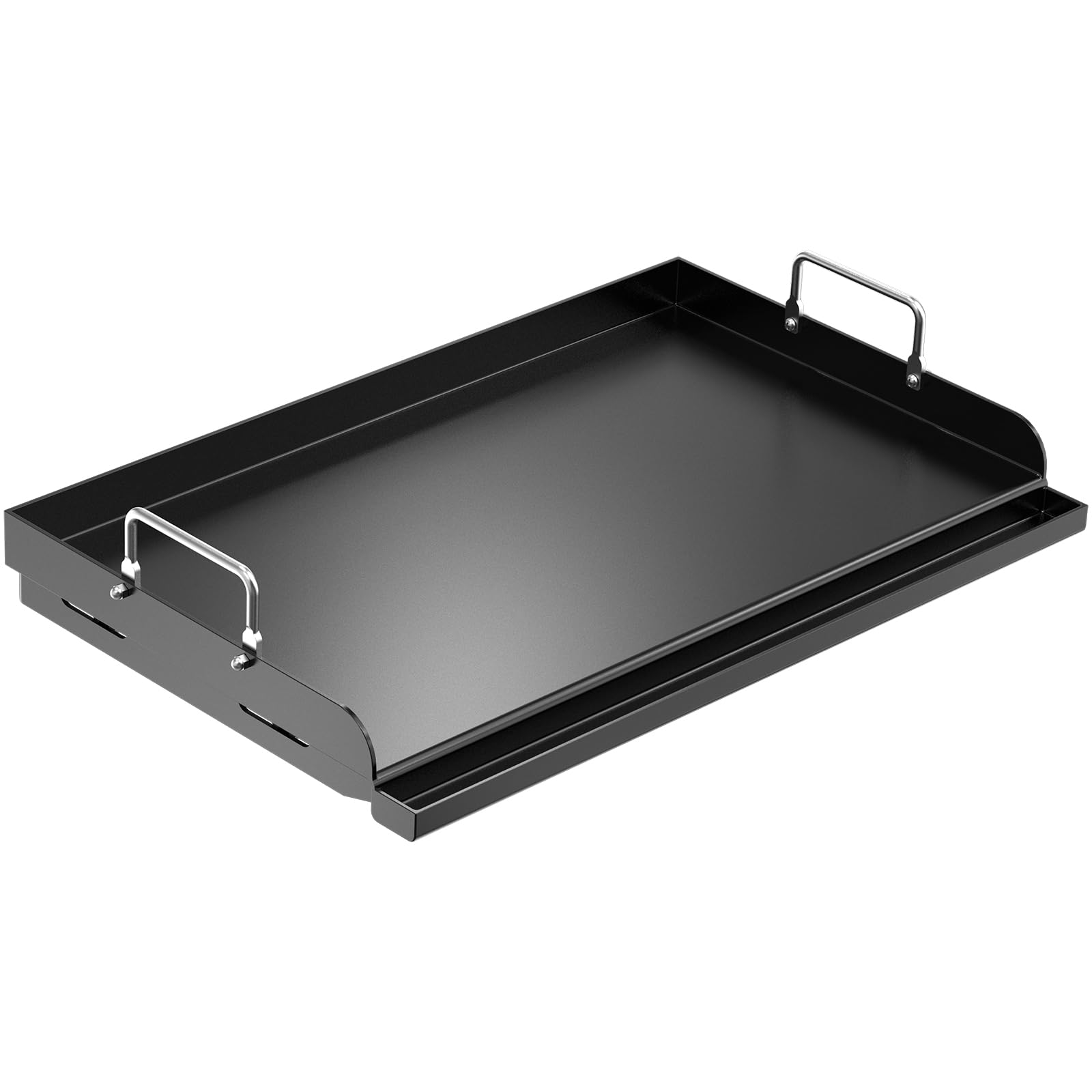
This style of griddle exists for one mission: cook a lot of food without a lot of sticking or a lot of scrubbing. The QuliMetal nano-ceramic griddle is sized for crowd cooking—think “burgers + eggs + sausage all at once”— and the surface is designed to release food more easily than raw iron, while still giving you that heavy, stable platform feeling.
Owners who love this category usually love the same things: it holds heat well (because it’s hefty), it can sear convincingly, and it cuts down cleanup because the coating is doing some of the release work for you. That’s a real advantage when you’re cooking sticky breakfast foods or when you want smash burger crust without fighting meat weld.
The key is using it like coated cookware, not like bare steel. You can absolutely get great sear results, but you don’t need (or want) max burner heat across the whole surface. A controlled preheat, moderate heat, and a small oil film give you a better result and keep the coating happier long-term. Also: utensil choice matters. Many people start with plastic or silicone spatulas for peace of mind, then graduate to careful metal once they understand how the coating behaves.
One more real-life note: some griddles ship with clips or accessories that not everyone uses. That’s normal. The “real product” is the plate itself. If it sits stable and heats evenly in your setup, you’ve won.
Why it works so well for many families
- Large cooking capacity – Great for batch cooking and feeding groups.
- Nonstick-friendly surface – Less oil needed and easier release for eggs and pancakes.
- Heat stability – Heavy construction helps maintain cooking temperature.
- Grease management – Trough helps keep fatty cooking more controlled.
Good to know
- It’s heavy; plan where it lives and how you’ll handle it safely.
- Coatings last longer with medium heat and gentle scraping technique.
- Size is a feature and a commitment—measure your burner spacing and storage plan.
Ideal for: people who want a big griddle surface with easier food release and easier cleanup than raw cast iron.
10. Utheer 25" x 16" Pre-Seasoned Nonstick Griddle – The Stable, High-Capacity Insert

This Utheer is in that interesting category: marketed for grills and outdoor cooking, but plenty of people use plates like this indoors when they want a large flat-top surface and a built-in grease trough. The difference between “love it” and “why is this annoying” comes down to two things: how stable it sits on your heat source, and how you treat the coating.
Owners love the stability and heat retention—this is not a flimsy sheet of metal. It’s designed to hold shape and handle higher cooking loads without warping. That matters when you’re doing smash burgers or cooking for a crowd. The detachable handles are also more useful than they sound: they make carrying and storing large plates less awkward, and they help you move it without grabbing hot edges.
One of the smartest tips from real-life griddle users: treat coated griddles like nonstick pans. Medium heat, silicone tools, and “scrape gently” habits make these plates feel effortless. If you throw it over extremely high heat and drag sharp metal across it, you’ll shorten its best years. When used properly, the release is excellent and cleanup can be shockingly simple—often a wipe and a quick rinse.
The grease trough is a huge win for burgers, bacon, and sautéed onions. Just keep an eye on it when you’re cooking very fatty foods in volume. The trough is there to help, but it’s not infinite.
Why it’s so practical
- Large, stable surface – Great for multi-item cooking and feeding groups.
- Detachable handles – Makes handling and storage less annoying than many large plates.
- Nonstick convenience – Excellent release when used with proper heat control.
- Grease groove – Helps keep fatty cooking more controlled and less smoky.
Good to know
- It’s heavy; you’ll want a safe lift habit and a stable resting spot.
- Use gentle utensils if you want the coating to stay perfect long-term.
- On some stoves, full-size plates can have cooler zones—preheat and zone strategically.
Ideal for: cooks who want a large flat-top plate with a trough and easy-release surface, and don’t mind a heavier tool.
11. Onlyfire Universal Cast Iron Griddle 23" x 16" – The “Keep It Contained” Flat-Top

High sidewalls on a griddle are either a “nice extra” or a complete lifestyle change—depending on what you cook. If you cook bacon, burgers, chopped veggies, and anything that likes to spit and splatter, sidewalls are a gift. The Onlyfire is built around that concept: it’s a big flat-top surface with taller walls that help keep food and grease where it belongs.
Owners who love it describe the same wins: it heats evenly, it holds temperature, and the nonstick behavior is strong once you learn how it wants to be used. The “feels like professional cookware” vibe shows up because this is heavy-duty by design. That weight is doing work for you: stability, less shifting, better heat retention, and fewer “thin plate” hot spots.
Here’s the important reality: because the walls are high and the plate is big, you need a plan for grease. If the design uses a catch tray or trough, great—use it. If it requires lifting to drain, that’s doable, but it changes your workflow. Many people handle this by cooking a batch, scraping grease forward, and wiping with paper towels during the cook. That’s how restaurant cooks do it too.
This is also one of the better picks if you want a griddle that can move between indoor and outdoor cooking. If you ever wished you could do “flat-top” style fajitas in winter without going outside, a plate like this is how.
Why it’s a mess-reducer
- High sidewalls – Keeps food and grease on the surface; makes cooking feel more controlled.
- Even heat behavior – Stable platform for searing, sautéing, and batch cooking.
- Versatile use – Works as a flat-top plate in multiple cooking setups.
- Built to last – Heavy-duty feel that holds up to repeated cooks.
Good to know
- It’s heavy and large; storage and handling matter.
- Grease management is part of the experience—use the trough/tray plan and don’t ignore it.
- If your main goal is ultra-light breakfast cooking, aluminum options are easier to lift.
Ideal for: cooks who prioritize splatter control and want a big, stable flat-top surface with “contained cooking” energy.
12. BBQ Future 23" x 16" Griddle + Spatulas – The “Ready to Cook Like a Pro” Bundle
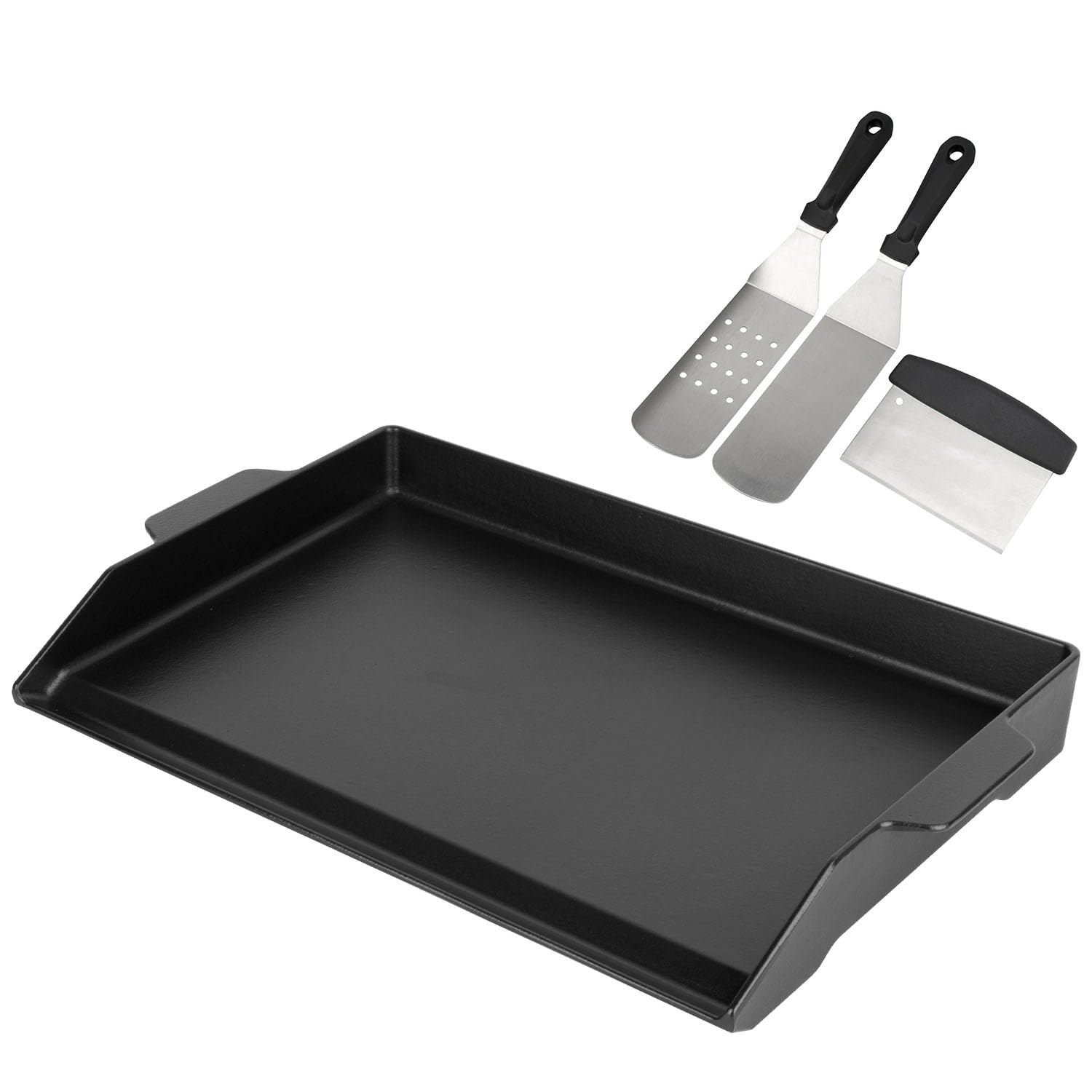
Most people underestimate how much the tools shape the griddle experience. A big flat-top plate without the right spatulas is like buying a chef’s knife and using it with a butter knife grip. The BBQ Future bundle solves that problem by giving you the plate and the tools that make flat-top cooking feel natural: wide spatulas for flipping, scraping, and moving food like a line cook.
In real use, this kind of griddle shines when you’re cooking high-volume, high-sizzle meals: smash burgers, fajita veggies, breakfast hash, chopped cheesesteak onions. The heavy iron helps maintain temperature when you add cold food, and the sidewalls help keep loose food from sliding off when you’re working fast. Owners often mention that it feels thick and solid—exactly what you want if you hate warpy thin plates.
One of the best “hidden uses” people discover with thick iron plates is baking. A thick griddle can behave like a baking steel for pizzas, breads, and high-heat oven work—if it fits your oven. That “if” matters. This is a big piece of metal. Measure your oven and your stove clearance before you assume it will slide in comfortably. When it does fit, it can be an incredibly versatile piece of cookware.
The main limitation is grease trough capacity during very fatty cooks. If you do a lot of burgers and bacon in one session, monitor the trough and manage it mid-cook. That’s not hard—it’s just part of cooking like a pro.
Why the bundle approach works
- Includes the right tools – The spatulas make flat-top cooking easier immediately.
- Thick iron stability – Holds heat and resists deformation under heavy cooking.
- High sidewalls – Keeps loose foods and grease more controlled.
- Multi-use potential – Can serve as a heavy baking surface if it fits your setup.
Good to know
- It’s large and heavy; storage and maneuvering are real considerations.
- Grease trough can fill on ultra-fatty cooks—monitor and manage it mid-session.
- Seasoning and care habits matter if you want classic cast iron performance long-term.
Ideal for: anyone who wants to start cooking “flat-top style” right away with the right tools included.
13. Utheer 23" x 16" Enameled Cast Iron – The Premium-Finish “No Rust Anxiety” Pick

Enameled cast iron griddles exist for people who like the stability and heat retention of iron but don’t want the “raw iron” anxiety. No one wants to discover rust after forgetting to dry a pan once. This Utheer leans into that problem: an enameled-style finish that resists rust and wear better than bare iron, combined with reinforcement ridges designed to keep the plate stable under higher heat.
Owners who are impressed often talk about even heating and the “premium” feel of the surface. Enameled finishes can also make cleanup quicker because you’re not relying solely on seasoning to create release. You still cook smarter than hotter, but you’re less likely to feel like you’re babysitting the pan. That makes it a strong pick for people who want big-surface cooking and hate scrubbing.
The trade-off is physical: it’s heavy. Big enameled cast iron plates are not the kind of cookware you casually lift with one hand. If you buy it, plan your workflow: where it lives, how you move it, how you clean it. Many people treat these plates like a semi-permanent cooking surface. That’s fine—honestly, it’s a compliment. It means the griddle earns its spot.
A smart way to use it on the stove is to treat it like a “four-burner zone map.” If your heat source is uneven, preheat longer and then build zones: one section for searing, one for holding, one for delicate cooking. That’s how you make a big plate feel like a controlled tool instead of a guessing game.
Why it’s a great “step up”
- Rust resistance – A big relief for people who don’t want bare-iron maintenance stress.
- Even cooking feel – Reinforcement helps reduce random hot spots and deformation worries.
- Easy release vibes – Enameled finishes can feel less sticky and easier to clean.
- Big batch capability – Ideal for parties, family meals, and meal prep sessions.
Good to know
- It’s heavy; plan storage and safe handling.
- Use reasonable heat—enamel and coated surfaces reward medium heat control.
- Size is a feature; measure your cooking surface and burners so it sits how you expect.
Ideal for: cooks who want big-surface iron stability but prefer a more maintenance-forgiving finish.
14. Utheer 25" x 16" Nano-Ceramic Griddle – Easy Release, Easy Cleanup, Big Capacity
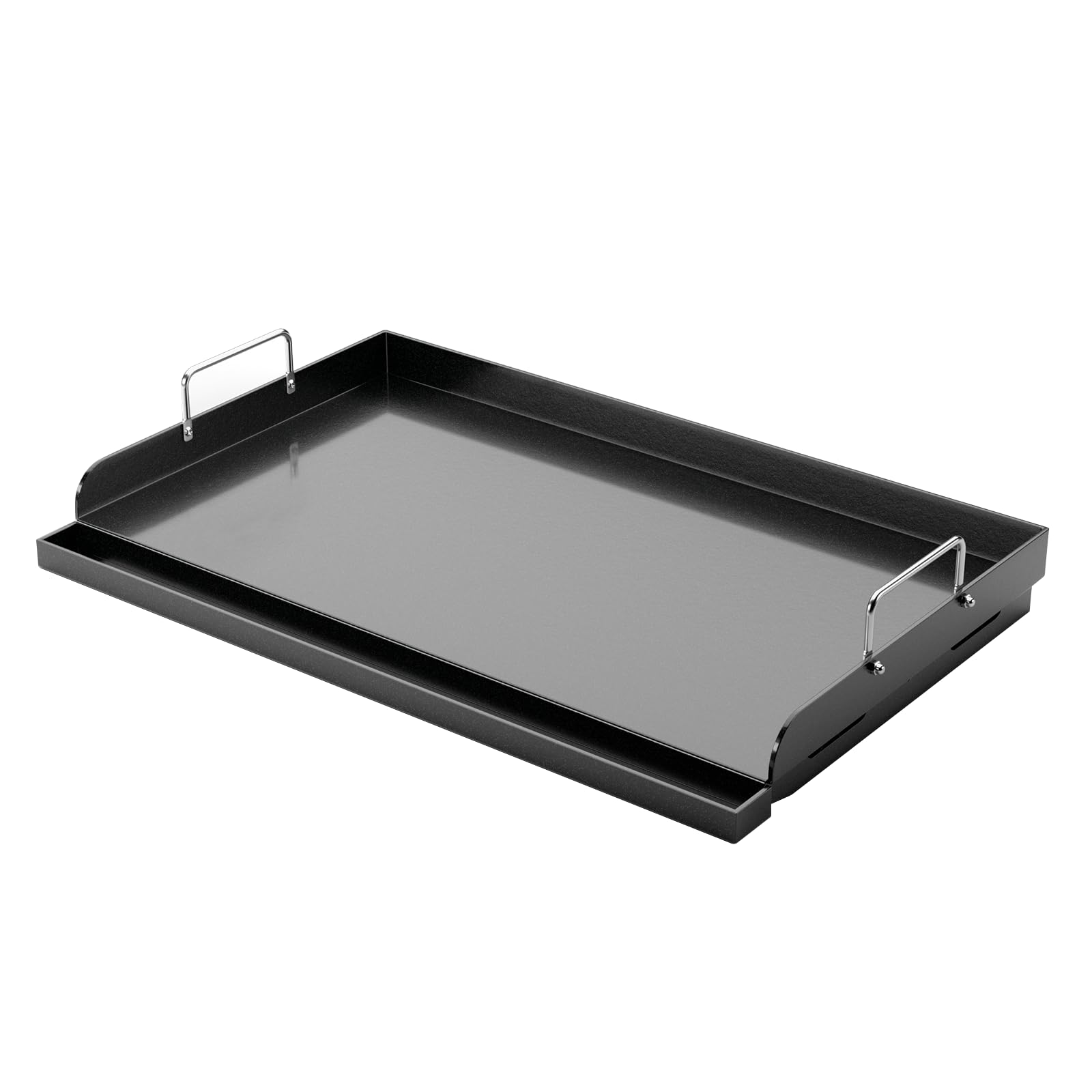
If you love the idea of a large flat-top surface but you want the experience to feel “wipe and done,” nano-ceramic coated plates like this Utheer are built for you. The goal is simple: keep food release high, keep oil needs low, and keep cleanup fast. That makes it especially appealing for breakfast cooking, seafood, and anything sticky that you don’t want to wrestle off raw iron.
Owners highlight the nonstick behavior and the fact that it’s heavy enough to feel stable. That stability matters because large plates can be frustrating if they shift or flex. With reinforced ridges and a thicker build, it’s designed to stay flat and distribute heat more consistently. The detachable handles are also a practical win: big plates become much easier to store and carry when you can remove “extra width.”
The best way to use nano-ceramic coated griddles is to make them your “medium-heat champions.” You’ll still get browning—especially with a good preheat—but you don’t need to run scorching heat the way you might on bare steel. Used properly, this kind of surface can make delicate cooking feel almost effortless. That’s why people mention fish and seafood: it releases cleanly, and it’s less likely to tear.
A realistic drawback: shipping scuffs or minor edge dings can happen because this is heavy gear. Functionally, it’s usually not a problem. But if you’re picky about perfect cosmetics, inspect on arrival and handle it gently in storage to avoid edge knocks.
Why it’s so convenient
- Easy release cooking – Great for eggs, pancakes, seafood, and sticky items.
- Fast cleanup – Often a wipe-down is enough when used properly.
- Big cooking surface – Great for gatherings and meal prep.
- Handles + sidewalls – Easier handling and better containment than low-lip plates.
Good to know
- Use gentle utensils and medium heat for best coating longevity.
- It’s heavy; plan how it will live in your kitchen or grill setup.
- Grease trough helps, but you still need to monitor it during very fatty cooks.
Ideal for: anyone who wants a big, easy-release griddle surface and values cleanup speed as much as cooking capacity.
15. Utheer 17" x 13" Nonstick Insert – The Smaller, Easier-to-Handle Plate

Not every kitchen needs a griddle the size of a small tabletop. If you want the flat-top experience but you’re working with a smaller stove, a smaller grill, or you simply don’t want a heavy oversized plate, this compact Utheer is the more realistic move. It still gives you the key benefits—more cooking surface than a skillet, a grease groove for messy foods, and side handles for control—without the “where do I store this?” drama.
The coated surface is designed to release easily, but the real-world trick is still the same: preheat before oil, use enough oil, and then add food. That routine builds better release and reduces the “first cook panic” some people feel when coated plates don’t act like Teflon. Owners who follow that habit often describe it as easy to use, easy to clean, and a strong value.
This size is also perfect for learning heat zoning without feeling overwhelmed. On a big plate, zones can feel confusing. On a smaller plate, the zones are obvious. You quickly learn where your hot spot lives and how to use it: sear in the hot area, finish or hold in the cooler area. That’s the path to “I actually understand griddle cooking” confidence.
If you’re buying a griddle as a first griddle, small can be smart. You’ll use it more because it’s easier to lift and easier to reset after. Then, if you fall in love, you can go bigger later with no regret.
Why this size makes sense
- Easier handling – Less awkward than oversized plates for many kitchens.
- Nonstick convenience – Good release and fast cleanup with proper heat habits.
- Grease groove – Helpful for burgers, sausages, and messier cooks.
- Great “first griddle” – Big enough to feel useful, small enough to feel manageable.
Good to know
- Still prefers gentle utensils and controlled heat.
- Not as much capacity as the 23" or 25" plates; it’s a “small group” tool.
- On some burners, you’ll still see heat gradients—use them as zones.
Ideal for: smaller kitchens, beginner griddle users, and anyone who wants an easy-to-handle plate with grease control.
16. Caraway Double Burner Griddle (Cream) – Same Performance, Softer Look

Same griddle, different vibe—and that matters more than some people admit. If a piece of cookware looks good in your kitchen, you’ll use it more. If it’s beautiful enough to live on your stove without looking like “camp gear,” it becomes part of your daily cooking rhythm. That’s exactly what the cream finish does for people who prefer softer, neutral tones.
Performance-wise, you’re getting the same core experience as the Marigold version: a slick ceramic-coated surface that rewards medium heat and minimal oil, a lip that helps contain food and mess, and a build that feels premium and balanced rather than flimsy. The difference is visual and emotional: cream blends into more kitchens and often feels more “calm.”
If you’re deciding between colors, here’s my practical advice: choose the one that you’ll be happy seeing every day. A griddle that becomes a “leave it on the stove” tool is a griddle that pays you back constantly—faster meals, fewer pans, easier breakfasts.
Why the color choice matters
- Same top-tier performance – All the benefits of the Caraway griddle, just in a different finish.
- More kitchens match cream – Especially helpful if you prefer neutral cookware aesthetics.
- Encourages daily use – “Looks good enough to leave out” is a real value factor.
- Premium feel – Balanced heft and comfortable handles make it feel like a true upgrade.
Good to know
- Like all ceramic-coated cookware, it prefers medium heat and gentle utensils.
- Storage can be tricky in tight cabinets because of the handle height—plan a spot.
- If you want maximum sear at extreme heat, cast iron or steel will match that style better.
Ideal for: anyone who wants the premium Caraway griddle experience and prefers a softer, neutral finish.
Flat Grill For Stove Top Heat & Seasoning: The Pro Moves
Most “griddle disappointment” is not a product problem—it’s a heat strategy problem. When you treat a griddle like a frying pan, you chase hot spots and blame the surface. When you treat a griddle like a flat-top, you build zones, control grease, and cook with confidence. Here are the practical moves that separate “meh” from “I’m never going back.”
Heat control: the 5-minute preheat that changes everything
- Preheat low and slow – Especially on cast iron and steel. Even heat matters more than fast heat.
- Use zones on purpose – One burner set a touch higher becomes the sear zone; another stays medium for eggs/pancakes.
- Test with water – A few drops should bead and dance, not evaporate instantly. Instant evaporation is often “too hot.”
- Don’t chase perfection – A griddle with a “cooler zone” is useful. It’s how you keep finished food warm without overcooking.
- Respect your surface – Ceramic and coated surfaces usually perform best on low-to-mid heat; raw cast iron tolerates higher output.
Once you stop fighting zones and start using them, griddle cooking becomes predictable. You’ll cook faster because you’re not waiting for “everything to be the same temperature” (it never truly is).
Seasoning & cleanup: the habits that make griddles feel effortless
- For cast iron/steel: scrape while warm, rinse with hot water, dry fully, then wipe a thin oil film.
- For ceramic-coated: cool slightly, wipe with a soft sponge, avoid harsh abrasives, and keep heat moderate.
- For coated inserts: use silicone/nylon tools, avoid sharp scraping, and wipe the trough mid-cook on fatty meals.
- Reset sticky moments – If something sticks, don’t panic-scrape. Add a splash of warm water once the griddle is off-heat and use a gentle scraper.
- Keep a “griddle kit” – A scraper, paper towels, and a small bowl for grease make cleanup feel automatic.
The people who love griddles aren’t cleaner than everyone else—they just clean at the right time. Warm-surface cleanup is the difference between “easy wipe” and “why is this glued on?”
FAQ: Stovetop Griddles (Without the Confusion)
Why does my griddle cook hotter in the middle?
Which material is easiest for eggs and pancakes?
Do I need a grease trough?
How do I prevent warping on a large griddle?
Should I use metal spatulas on coated or ceramic surfaces?
What’s the simplest “first griddle” to buy?
Final Thoughts: Buy the Griddle That Fits Your Real Cooking Life
The best griddle isn’t the fanciest one. It’s the one that makes you cook more often because it feels easy, predictable, and satisfying. That’s why this guide focused on “friction points”—heat zones, grease control, cleanup habits, storage reality—because those are the things that decide whether a griddle becomes a favorite or a regret.
Here are the smartest shortcuts based on how people actually cook:
- Want the premium, daily-driver griddle that feels clean and easy? Start with the Caraway Double Burner Griddle. It’s built for real-life breakfasts and fast dinners, and it rewards smart, medium-heat cooking with effortless release.
- Want the closest thing to a diner flat-top on your range? The Stanbroil 30" Range Griddle is the “turn my stove into a cooking station” answer—especially if you cook for a family or love batch cooking.
- Want the most timeless cast iron option? Choose the Lodge Pro-Grid or, for a slightly smaller footprint, the Lodge 9.5" x 16.75" reversible. These are the “buy once, use forever” tools that reward good preheat habits.
- Need less mess and less cleanup stress? The Vayepro griddle with glass lid is a surprisingly practical upgrade for bacon, sausages, and any cooking week where splatter drives you nuts.
- Want big capacity with easy release on a coated surface? Look at the QuliMetal nano-ceramic griddle or the Utheer nano-ceramic plate. They’re built for volume cooking without constant scrubbing.
- Cooking for a crowd outdoors? The Camp Chef Professional Fry Griddle is the “feed everyone fast” tool that replaces a table full of cookware.
Pick the flat grill for stove top that matches what you cook most—breakfast, sear-heavy dinners, big family batches, or low-mess weeknight meals—and you’ll stop thinking about your cookware and start enjoying the food again.
