
Let’s cut through the “feature checklist” noise and talk about what actually makes stacked-oven cooking feel effortless. Because the pain isn’t usually “does it have convection?” The pain is workflow: preheat speed, heat recovery after you open the door, how evenly the corners brown, whether the controls make sense when you’re mid-recipe, and whether the second cavity is a true workhorse or a “cute bonus oven” that only fits a small pan.
If you’re shopping for a double stack oven, you’re really shopping for a lifestyle shift: two temperatures at once, two foods finishing together, and far less “wait your turn” cooking. But here’s the part most guides miss: stacked ovens only feel magical when the design details support real kitchen behavior—busy weeknights, holiday chaos, reheating, proofing dough, air frying in bursts, and “one tray too many” moments.
This buyer guide is built the way a serious home cook thinks. Instead of repeating specs you can already see on a listing, I’m focusing on the friction points that show up in real owner feedback: door geometry (and why it matters more than you’d think), rack usability (the hidden “height tax” of some roller racks), how well flavors stay separated in split-cavity countertop models, what cleaning feels like after month three, and which brands make ownership easy—or complicated—when something needs service.
Below you’ll find 20 standout models across three big categories: countertop two-cavity ovens, double-oven ranges, and double wall ovens. You’ll also see two “specialists” for people who want pro-style countertop heat (pizza decks and commercial convection).
How to Choose the Right Double Stack Oven for Your Kitchen
A stacked-oven setup isn’t “good” because the spec sheet looks fancy. It’s good because it solves your specific kitchen bottleneck: time, space, temperature control, or simply the need to cook two foods differently without playing musical chairs. Here’s the decision framework I use when I’m evaluating whether a model will feel smooth in real life—weeknight to holiday.
1. First, pick your category (this is the decision that actually matters)
Most people jump straight to brand names. Don’t. Start with the category that fits your home and cooking rhythm.
- Countertop dual-cavity ovens: Best for renters, small kitchens, secondary ovens, fast family meals, and people who want air-fry + bake running at the same time without heating up a whole kitchen.
- Double-oven ranges: Best for “one-appliance upgrade” homes where you want stacked ovens plus a cooktop in one unit (great for households that cook on the stovetop daily).
- Double wall ovens: Best for serious bakers, big holiday cooks, and kitchens designed for built-ins (especially if you already have a separate cooktop).
- Specialty countertop heat: Pizza deck ovens and commercial convection units are niche—but for the right person, they’re the shortcut to the results you want.
2. Understand the “two ovens” trap: not all second cavities are equally useful
A second cavity can be a true second oven… or it can be a convenience zone that feels small once you start using it daily. Ask yourself what you want to do at the same time:
- Roast + bake: You need meaningful interior height and rack usability, not just a “warm and toast” top zone.
- Air fry + bake: You want strong airflow in the crisping cavity and stable heat in the baking cavity, plus controls that make syncing simple.
- Proof + bake: You need precise low-temp stability (proofing is where jittery temperature control shows up fast).
- Quick reheat + main meal: A fast preheat top oven becomes a daily hero.
Owners who love their stacked ovens usually have one thing in common: they planned their “two tasks at once” use case before buying. That’s the difference between “game changer” and “nice but I don’t use it much.”
3. Heat recovery is the secret spec you won’t see on the listing
Two-cavity cooking feels premium when the oven recovers quickly after door openings. Slow recovery creates a ripple effect: cookies spread, crusts pale, roasts take longer, and you start “babying” the oven instead of cooking naturally.
Real-world tells that an oven is designed for smooth recovery:
- Strong convection design (when you want it) that doesn’t feel like it’s just blowing air.
- Intuitive rack positions so you don’t have to keep opening the door to move food “to the better spot.”
- Stable broil/bake performance so top browning and bottom doneness stay balanced.
4. Controls and ergonomics are not “nice-to-have”
This is where the best stacked ovens separate themselves. Owners don’t complain about wattage. They complain about:
- Door handles that block full opening if the oven sits too far back on a counter.
- Controls that are “too touchy” or hard to read in low light.
- One crumb tray for two cavities (a small annoyance that becomes a weekly frustration).
- Roller racks that steal vertical space and surprise you when a tall dish suddenly doesn’t fit.
If you want your purchase to feel “effortless,” prioritize controls you’ll enjoy using twice a day.
5. Cleaning reality: choose the oven you’ll still respect after month three
Self-clean is helpful, but it’s not the full story. The best “cleanability” features are the ones that reduce mess in the first place:
- Hidden bake elements that create a smooth wipeable floor.
- Air-fry baskets and trays that don’t turn into a sticky nightmare after one chicken-wing night.
- Door geometry that lets you wipe edges without feeling like you need a toothbrush.
- Crevice discipline—some designs have seams and gaps where spills feel permanent.
6. The service factor: “beautiful on day one” isn’t the same as “easy to own”
Some brands have deep service networks and lots of tech familiarity. Others are newer to residential ovens, or have fewer local technicians depending on where you live. This matters most for wall ovens and ranges because they are heavy, built-in, and not something you casually swap.
The best ownership experience usually comes from one of these scenarios:
- Well-supported mainstream brands where parts and technicians are easier to find.
- Brands with responsive customer service that actually solves problems (extra racks, replacement boards, clear troubleshooting).
- Simple designs that don’t rely on tricky electronics for basic operation.
Quick Comparison: 20 Double Stack Oven Picks
Use this table to shortlist the models that match your kitchen reality, then jump to the deep-dive reviews for the “real life” details—like door clearance, heat behavior, cleaning friction, and which ovens owners actually keep using every week.
On smaller screens, swipe or scroll sideways to see the full table.
| Model | Format | Standout strength | Best for | Amazon |
|---|---|---|---|---|
| Ninja Double Stack XL (DCT651) | Countertop dual-cavity | Two-zone cooking with flavor separation + thermometer-driven precision | Busy families who want weeknight speed and “two foods, one finish” control | Amazon |
| Ninja Double Stack XL (DCT601) | Countertop dual-cavity | Same stacked workflow with a simplified learning curve | People who want the double-zone experience without the probe-first approach | Amazon |
| Ninja Double Oven (DCT451) | Countertop dual-cavity | Fast preheat + “mini full-size oven” feel for daily use | Homes that want a reliable second oven for baking, roasting, and reheating | Amazon |
| Ninja Double Stack XL (Renewed DCT651) | Countertop dual-cavity | High-performance two-zone setup at a lower entry barrier | Value hunters who want the premium workflow (and inspect items carefully on arrival) | Amazon |
| PowerXL SmartSynx Dual Door Oven | Countertop dual-cavity | Simple presets + synced finishing without complexity | Quick meals, toast, and basic air-fry use when simplicity matters most | Amazon |
| Nuwave Brio 15.5Qt Rotisserie Oven | Air fryer oven | Rotisserie + multi-rack cooking with a watch-your-food window | Protein-heavy households who want crisping without heating the whole kitchen | Amazon |
| Elite Gourmet French Door Convection (ETO4510B) | Large countertop oven | Big capacity + classic knob controls + rotisserie option | People who want a spacious countertop oven with minimal electronics | Amazon |
| VEVOR Commercial Convection Oven (66L/60Qt) | Commercial countertop | Batch baking volume with pro-style heft | Big-batch bakers who want countertop capacity that feels “shop ready” | Amazon |
| VEVOR 14" Double Deck Pizza Oven | Pizza deck | Two-stone decks for party-style pizza production | Indoor pizza nights, pretzels, flatbreads, and “feed a crowd” snacking | Amazon |
| GE Profile Smart Slide-In Double Oven Range (PS960YPFS) | Double-oven range | Premium electric range workflow + smart control + convection performance | Homes upgrading one appliance to get stacked ovens + strong cooktop daily | Amazon |
| GE Slide-In Double Oven Electric Range (JSS86SPSS) | Double-oven range | True convection in a sleek slide-in footprint | People who want a clean built-in look without switching to wall ovens | Amazon |
| LG Smart Wi‑Fi Double Oven Gas Range (LDGL6924S) | Double-oven range | Gas cooking feel + stacked oven flexibility | Gas households that want two-cavity scheduling without switching fuels | Amazon |
| GE Freestanding Double Oven Range (JBS86EPES) | Double-oven range | Accessible double-oven cooking with air-fry convenience | Value-focused upgrades where you still want a true second oven cavity | Amazon |
| GE 30" Double Wall Oven (JTD5000SNSS) | Double wall oven | Traditional double-oven feel with sturdy rack system | Kitchen remodels that want dedicated baking space above/below | Amazon |
| Rangaire 30" Glass Touch Double Wall Oven (RWOD301GS) | Double wall oven | Modern controls + convection + air-fry capability | People who want modern features without boutique-brand pricing | Amazon |
| COSMO Haven Double Wall Oven (COS-30EDWC) | Double wall oven | True convection top + blue porcelain + self-clean convenience | People who love even baking and want a bold “built-in statement” | Amazon |
| KoolMore 30" Double Wall Oven (KM-WO30D-SS) | Double wall oven | Commercial-leaning build feel + fast cooking reputation | Heavy home bakers who want sturdy doors, racks, and “workhorse” vibes | Amazon |
| GE 27" Double Wall Oven (JKD5000SNSS) | Double wall oven | Fit-focused replacement size + convection performance | Homes replacing an older 27" cutout without redoing cabinetry | Amazon |
| Samsung Smart Double Wall Oven (NV51K6650DG/AA) | Double wall oven | Steam cooking + dual convection + smart control convenience | People who want moisture control for breads, roasts, and crisp finishes | Amazon |
| Samsung Flex Duo Double Wall Oven (NV51K7770DG/AA) | Double wall oven | Divider-based flexibility to cook two temps in one cavity | Homes that want “one big oven or two smaller zones” depending on the day | Amazon |
In‑Depth Reviews: 20 Stacked-Oven Picks That Real Cooks Actually Enjoy Using
Now we’ll go model by model. I’m going to talk like a real kitchen: what feels effortless, what feels fiddly, what owners praise after months of use, and what you should know before you commit.
1. Ninja Double Stack XL (DCT651) – Two Meals, Two Zones, One Calm Finish

This is the model for people who don’t just want “two ovens.” They want synchronization. And that’s the real reason the DCT651 wins: it turns stacked cooking from a juggling act into a repeatable routine. Steak in one zone, fries in the other—both done together. Kids’ nuggets below, grown-up salmon above—different settings, same dinner deadline.
What makes it feel premium isn’t a single feature. It’s the combination: two independent cavities, FlavorSeal technology that keeps the smell and taste of foods from bleeding into each other, and a thermometer-driven cooking system that removes the hardest part of home cooking—guessing doneness. Owners who lean into the thermometer tend to describe the experience as “shockingly consistent,” especially for proteins where timing varies by thickness.
The real-world friction points are the ones you can plan for. It’s a larger countertop unit than many people expect, and airflow/heat management matters. A lot of experienced owners treat the top like a heat zone and use a protective board or clearance strategy when placing it under cabinets. The other “learn it once” detail is the control logic: it’s not hard, but it’s different from a basic toaster oven, and the first week is when you build muscle memory.
Why it’s a standout
- Two-zone meals that actually finish together – Smart Finish is the difference between “two ovens” and “one coordinated dinner.”
- Flavor isolation that matters – Fish below and cookies above is no longer a risky experiment.
- Thermometer = repeatable doneness – Perfectly cooked meat without babysitting is the kind of upgrade you feel every week.
- Fast daily rhythm – Owners repeatedly call out preheat speed and how quickly weeknight meals get on the table.
Good to know
- It’s big; treat it like a serious appliance, not a tiny toaster oven.
- Some foods won’t crisp “exactly like” a dedicated basket-style air fryer—more like a high-performing oven-air-fry hybrid.
- Plan the placement so the handle and door opening feel safe and comfortable (especially if your counters are deep).
Ideal for: families and meal-preppers who want consistent results, faster dinners, and a countertop setup that feels like a real second oven—not a compromise.
2. Ninja Double Stack XL (DCT601) – The Same Magic, Slightly Simpler Habit

Think of the DCT601 as the “I want this to be easy on day one” option inside the Double Stack family. The core advantage remains the same: two independent cavities that can cook in different modes and still land at the finish line together. But for many households, the simplest path is the best path, especially if multiple people will use the oven.
Owners tend to love this unit for the most human reasons: it looks sharp on the counter, it feels well-built, it toasts evenly, and it turns the usual weeknight sequence (“cook entrée, wait, cook side, wait”) into parallel cooking. That’s not just convenience—it’s reduced mental load. The dual doors also feel more premium than they sound; when you’re in and out constantly, good door design changes the vibe.
The realistic trade-offs are similar to the DCT651: it’s not small, it needs breathing room, and cleanup is easiest when you treat the trays like “real cookware” and wash them with intention rather than hoping they’ll behave like nonstick magic. Owners who keep a simple routine—liner or light oiling when appropriate, wipe-down after messy cooks—stay happiest long term.
Why people love it
- Two meals, less chaos – This is the unit that makes busy dinners feel organized.
- Even toasting and reliable reheating – A daily quality-of-life win that ends up replacing your toaster.
- Feels premium on the counter – Doors, buttons, and screen design create a “this is a real appliance” impression.
- Great for family portions – Built to handle the foods families actually cook, not just “small snacks.”
Good to know
- Ventilation and clearance planning matters; this unit works best when it can breathe.
- It can be louder than a basic toaster oven (fans are doing real work), but many owners find it totally manageable.
- Hand-washing larger accessories is part of life here—plan for that convenience trade.
Ideal for: households that want the Double Stack workflow in a straightforward, family-friendly package that people can learn quickly and use daily.
3. Ninja Double Oven (DCT451) – The Countertop Oven That Acts Like You Own Two

Some countertop ovens feel like “bigger toasters.” This one doesn’t. Owners often describe the DCT451 as a mini version of their main oven that just happens to be faster, easier, and less heat-heavy for the kitchen. That’s exactly the niche it fills: the reliable second oven you end up using every day unless you’re cooking for a crowd.
The real-world strength here is rhythm. This unit preheats quickly and cooks consistently enough that people stop thinking about it and start using it as a daily default: reheat, toast, bake small batches, roast a pork loin with the thermometer, crisp sides below while the top handles the main. It’s also the kind of appliance that quietly replaces multiple gadgets: toaster, air fryer, and “I don’t want to turn on the big oven” cooking.
Where owners get surprised is usually in the physical interaction. The door design is clever—open the top only, or open the full door for both cavities. But if you want to access the bottom while the top is running, that integrated motion can feel less “surgical” than two completely separate doors. Another repeated theme is placement: if you push it too far back on the counter, the handle can become a geometry issue when fully opened. This isn’t a dealbreaker; it’s a placement problem you solve once and then forget.
Why it earns loyalty
- Feels like owning a second oven – Not just “convenience,” but real cooking performance in daily life.
- Preheats fast – Owners frequently call out the speed to common temps as a time-saver.
- Thermometer cooking works – Great for roasts and proteins when you want “set it and relax.”
- Doesn’t heat the house like a big oven – A huge win in warm climates or small kitchens.
Good to know
- Door/handle clearance matters; plan placement so you can safely pull the bottom rack without awkward angles.
- Some owners wish for two independent doors and two crumb trays—small annoyances that are easy to plan around.
- Interior width can surprise pizza-pan users; measure your pans (not just the food) before you assume fit.
Ideal for: anyone who wants a countertop unit to behave like a dependable second oven—fast, consistent, and used constantly.
4. Ninja Double Stack XL (Renewed DCT651) – Premium Workflow, Lower Entry Barrier
If you want the high-performance two-zone cooking experience but you’re shopping with a sharper value mindset, the renewed listing can be a smart route. The reason it’s worth including in this guide is simple: the DCT651 workflow is strong enough that many households are happy to choose it again—even refurbished— as long as the unit arrives in good condition.
The “real life” advice here isn’t about cooking performance (it’s the same core engine). It’s about ownership habits. When you buy renewed, your first five minutes matter. Owners who are happiest with renewed appliances do a quick checklist: verify doors align and seal cleanly, confirm controls respond, run the initial heat cycle, and test both cavities with something basic like toast and a quick bake. That early test eliminates 90% of future frustration.
If you’re already sold on the two-zone concept and you’re comfortable being a little more intentional at unboxing, this can be one of the best “value power moves” in the category.
Why it can be a smart buy
- Same two-zone cooking advantage – You’re not giving up the feature that matters most.
- Great for experienced buyers – If you already know you’ll use it daily, renewed can make sense.
- Often becomes the “main oven” – Many owners end up using this more than their wall oven for daily meals.
- Strong versatility – Toast, roast, bake, air fry, reheat—this is a real multi-tool.
Good to know
- Renewed units deserve a quick functional check right away (controls, doors, both cavities).
- Cosmetic dents or minor scuffs can happen; decide what matters to you before you unbox.
- For gift purchases or “no surprises” comfort, new may feel emotionally easier.
Ideal for: value-focused shoppers who want premium two-cavity performance and are comfortable doing a quick, sensible unboxing check.
5. PowerXL SmartSynx Dual Door – Simple Presets for Quick Two-Zone Dinners

The SmartSynx wins on one big idea: make dual-zone cooking approachable. Two doors, two compartments, preset-driven cooking modes, and a syncing concept that tries to get the main and the side to the table at the same time. If you’re not looking for a “chef toy” and you just want dinner to be easier, this kind of design can be incredibly appealing.
Real-life feedback tends to split into two camps. People who mainly use it for toast, quick reheats, basic air-fry style cooking, and “don’t heat the big oven” meals often enjoy it. People who expect elite crisping and perfectly even results across a full basket can end up disappointed—especially when comparing to top-down fan designs. This is one of those appliances where matching expectations to the design makes the ownership experience.
The smart way to think about it: it’s a convenience-first dual-compartment oven. Use it for the things it’s naturally good at: small-to-medium batches, quick presets, and faster weeknight routines. If you want “restaurant-crisp wings every time,” step up to a more aggressive airflow system.
Why it’s useful
- Dual-compartment convenience – Cook two foods in parallel without overthinking settings.
- Preset-driven ease – Great for households that want button simplicity.
- Solid for toast and quick meals – Many owners highlight it as a daily-use countertop helper.
- Separate doors help reduce flavor crossover – A real quality-of-life win for mixed meals.
Good to know
- Results can be less crisp than top-mounted fan air fryers, especially with wetter or sauced foods.
- Food closer to airflow can cook faster—rotating trays is sometimes needed for evenness.
- Clearance matters; it’s a heat-producing appliance and needs breathing room.
Ideal for: budget-minded kitchens that want two-compartment convenience for quick meals, toast, and everyday reheating—without chasing premium airflow performance.
6. Nuwave Brio 15.5Qt – The “Watch It Cook” Workhorse for Protein Nights

The Brio 15.5Qt is the kind of appliance that earns its countertop space by doing the unglamorous things well: batch cooking, crisping, roasting, reheating, and turning “I need dinner” into “dinner is handled.” The rotisserie function isn’t a gimmick here—many owners say it’s the feature that makes chicken nights dramatically better: browned outside, juicy inside, and far less babysitting than oven roasting.
One of the most underrated advantages is the glass front and internal light. It changes how you cook. Instead of opening the door (losing heat) to check doneness, you can visually read browning and adjust timing with confidence. That reduces overcooking and improves consistency for people who cook a lot of different foods rather than repeating the same recipe weekly.
The trade-offs are typical of large countertop ovens: it needs space and clearance, and it’s not “tuck it under a cabinet and forget it” friendly. A few owners also mention long-term wear issues like door hinges or timer quirks. That doesn’t automatically make it a bad buy—it simply means it’s best for households that will use it constantly and treat it like a serious cooking appliance, not a disposable gadget.
Why it shines
- Rotisserie results – A real “wow” feature for chicken and protein-heavy meal planning.
- Multi-rack cooking – Great for families who batch cook across shelves.
- Window + light – Fewer door openings means better heat stability and better food.
- Doesn’t heat the whole kitchen – A frequent reason owners move away from full-size ovens for daily meals.
Good to know
- It’s tall and needs clearance—measure your cabinet height before you commit.
- Some owners report long-term hinge/timer quirks; treat it like a real appliance and keep an eye on wear.
- Like all air fryer ovens, tray management and drips matter—use the right accessories to keep cleanup easy.
Ideal for: families who cook lots of protein, want rotisserie performance, and love the ability to monitor food visually without opening the door constantly.
7. Elite Gourmet French Door Convection (ETO4510B) – Big Space, Old-School Controls

If touch panels annoy you and you want a big countertop oven with familiar knob controls, the Elite Gourmet is a strong contender. French doors are more than aesthetics here: they reduce the “counter space collision” problem because you don’t need one big door swing. For smaller kitchens, that design detail can be the difference between “I love this” and “this is in my way.”
Real-life feedback tends to praise three things: capacity, simplicity, and versatility. People use it for pizzas, reheating, baking, broiling, and rotisserie-style cooking. It’s the kind of appliance that becomes a holiday helper because it can run as a second oven while your main oven is busy. It’s also popular with people who want to keep the house cooler—countertop ovens often produce less ambient heat than running a full-size oven for small tasks.
The honest caution is heat behavior. Several owners mention uneven results for baking—especially bottoms browning or burning faster than expected. That’s not always a “bad unit”; it’s often a design reality when heating elements sit closer to food, combined with pan choice and rack position. If you bake delicate items (muffins, pastries), you’ll want to dial in your rack height and pan type early.
Why people buy it
- Big interior – Fits the kind of food people actually cook (pizza, casseroles, multi-tray snacks).
- Knobs are intuitive – No app, no nested menus, no “why won’t this button respond.”
- French doors save space – Especially helpful in tight kitchens or crowded countertops.
- Great as a second oven – Holiday and batch cooking support without remodeling.
Good to know
- Baking can brown bottoms fast; rack placement and pan choice matter more than usual.
- Accessory sets vary; some owners wish for more racks/trays out of the box.
- Like many large countertop ovens, it benefits from a short learning curve before you trust it completely.
Ideal for: people who want a spacious countertop oven with simple controls—and who are willing to learn the “best rack position” for their most common bakes.
8. VEVOR Commercial Convection (66L/60Qt) – Batch Baking Muscle on a Standard Counter
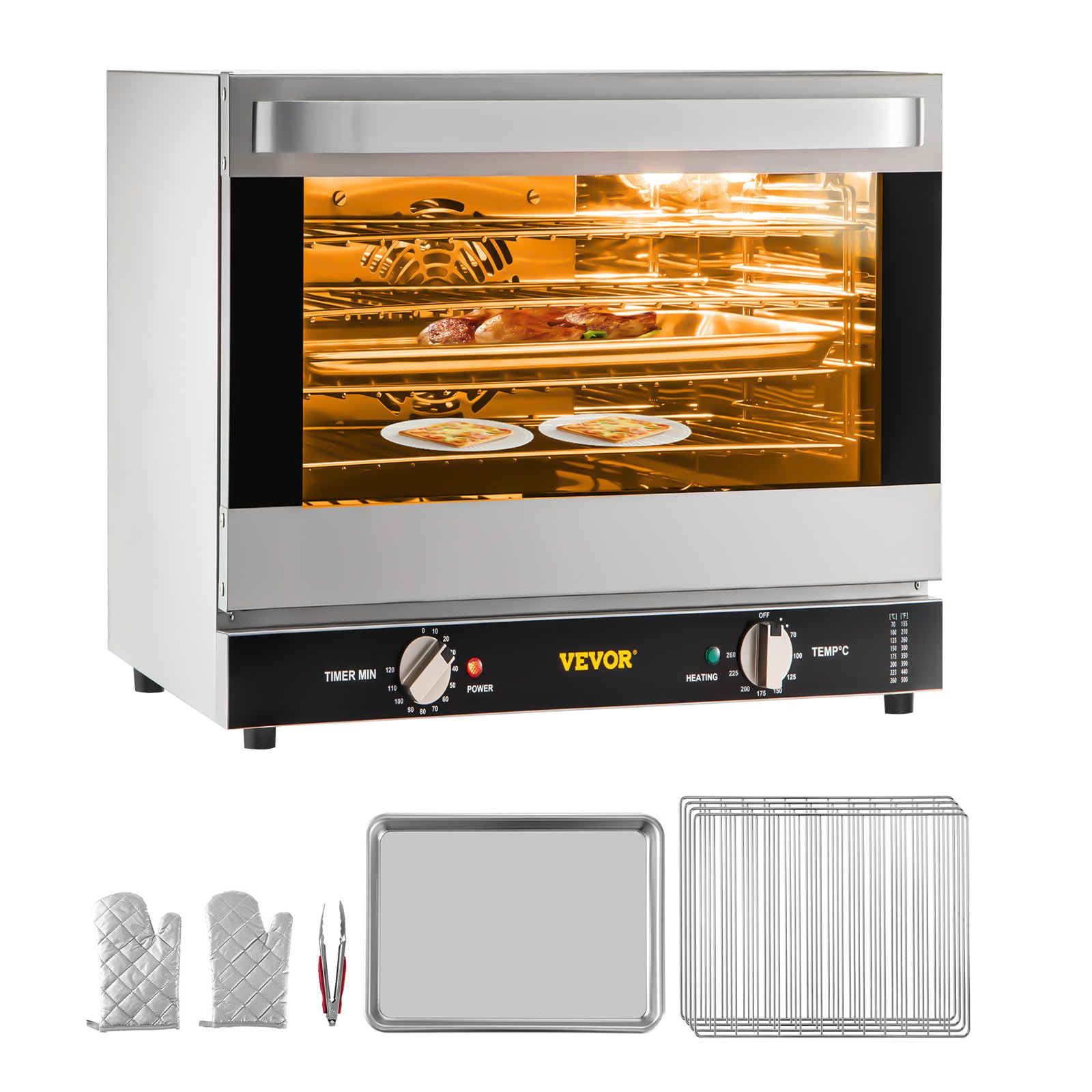
This is not a “cute countertop oven.” It’s a heavy, big-capacity convection box designed to move heat and bake volume. If your cooking behavior looks like: multiple trays, batch cookies, big pan meals, or cooking for crowds—this kind of unit can feel like the shortcut to doing more without remodeling.
Owners who love this style tend to emphasize three things: it holds a lot, it feels sturdy, and it doesn’t require a built-in cabinet conversion to get large-capacity oven behavior. That last point is huge for renters, frequent movers, or anyone who wants to avoid turning a kitchen upgrade into a construction project. The glass door is also a practical win: you can monitor browning without constantly opening and losing heat.
The caution here is “heavy appliance reality.” Big countertop commercial units can be awkward if you ever need to move them, and shipping/returns can be more complicated simply because of size. If you want something that feels pro, you’re signing up for pro-level heft.
Why it’s compelling
- Large batch capacity – Designed for multi-tray cooking, not just one pan at a time.
- Stainless durability – Built to handle real use without feeling fragile.
- Glass door visibility – Helps maintain stable heat because you open the door less.
- Countertop alternative to remodeling – Big oven behavior without built-in complexity.
Good to know
- It’s heavy; plan the countertop spot like it’s permanent.
- Preheat can take longer than small toaster ovens—this is a larger chamber to saturate with heat.
- Commercial-style dials and controls are simple, but not “smart” or app-driven.
Ideal for: serious batch bakers and big-family cooks who want countertop volume and convection muscle without committing to built-in installation.
9. VEVOR 14" Double Deck Pizza Oven – Two Stones, One Fast Snack Machine

A double-deck pizza oven is a very specific kind of joy: you can run two pizzas back to back (or at the same time), feed a group without waiting forever, and get that stone-baked bite that basic ovens struggle to deliver. This VEVOR model is designed to be an indoor “pizza party engine,” but it’s also surprisingly versatile for pretzels, flatbreads, reheating slices, and snack-batch cooking.
Real-life feedback is pretty consistent: it can make great pizzas once it’s properly preheated, and it tends to reward patience. These deck ovens are all about thermal saturation—stone needs time to store heat so the crust bakes with strength rather than softness. People who rush the preheat often feel underwhelmed. People who treat it like a real deck (preheat fully, use a peel, manage timing) tend to be far happier.
The honest limitation is heat intensity relative to high-end specialty ovens. Many home pizza diehards chase extremely high temperatures and ultra-fast bakes. This model is best for households who want better indoor pizza and fun, not necessarily a perfect replica of a super-hot outdoor pizza oven.
Why it’s fun (and useful)
- Two decks = faster feeding – Great for families, parties, and anyone who makes multiple pizzas in a row.
- Stone baking changes crust quality – Better bottom texture and structure than a sheet pan.
- Independent control knobs – Lets you fine-tune top/bottom heat for your style of pizza.
- More than pizza – Pretzels, flatbreads, snacks, and baked sides work well too.
Good to know
- These ovens reward full preheat; rushed preheat usually disappoints.
- It’s a specialty appliance; if you mainly bake cookies and casseroles, a convection oven may fit your life better.
- Shipping condition matters with heavy countertop units—inspect on arrival.
Ideal for: indoor pizza lovers who want double-deck speed and stone-baked texture, and who enjoy the “process” of learning their perfect bake routine.
10. GE Profile PS960YPFS – A Range That Makes Two-Oven Cooking Feel Modern
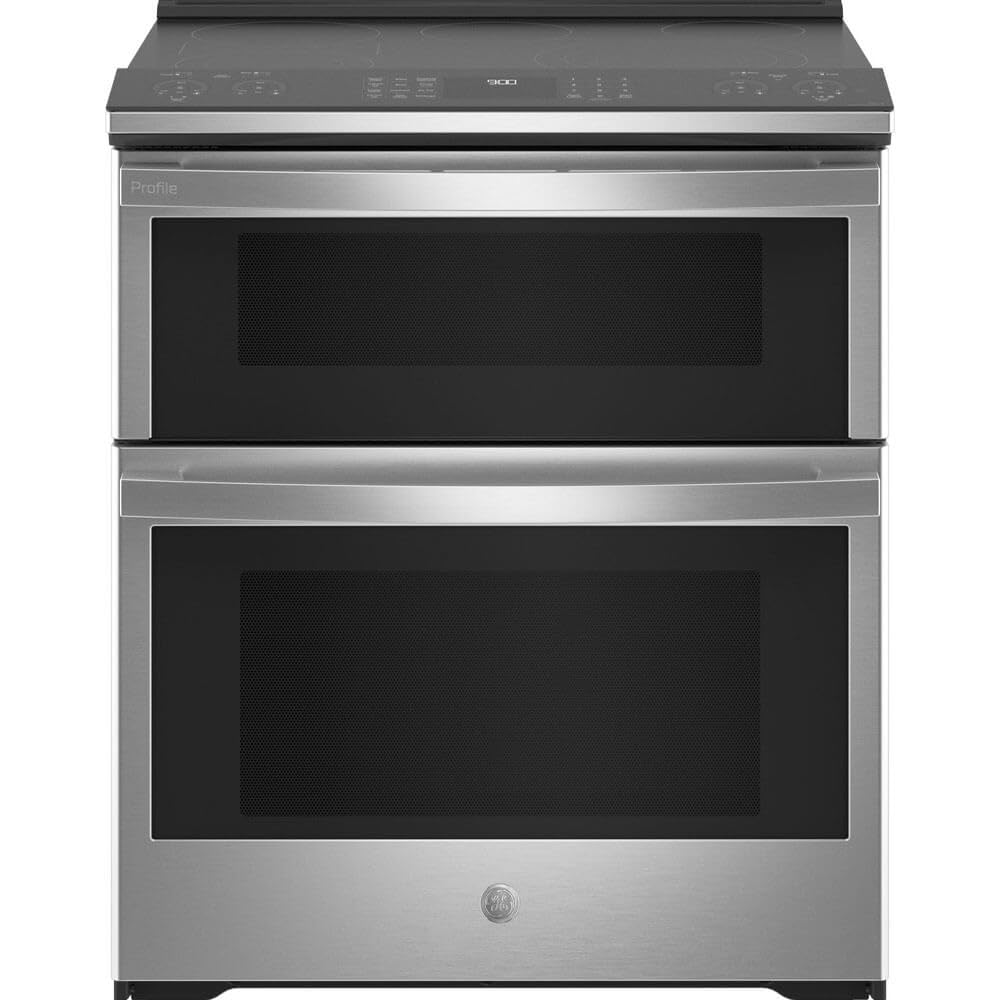
If you want a one-appliance upgrade that feels like you redesigned your cooking routine, this is the lane. The GE Profile PS960YPFS is built for people who actually use the second oven—daily. The top cavity becomes the “fast lane” for quick meals, sides, reheat, and smaller bakes, while the lower oven carries the big work: roasts, multiple trays, holiday cooking, and anything that needs room.
The best part of a strong double-oven range is how it reduces timing stress. You stop waiting for the main oven to free up. You stop making compromises like “I’ll just bake the dessert later.” You start running two temperatures like it’s normal. Owners who enjoy smart features also like being able to monitor or adjust via phone when they’re multitasking—especially during long cooks.
Where expert expectations matter: a stacked range is not a double wall oven. The top cavity is typically smaller, and that’s intentional. It’s designed to be quick and convenient, not necessarily to hold your tallest Dutch oven. If you buy this understanding the role of each cavity, it feels brilliant. If you expect both ovens to behave like two full-size chambers, you may feel limited.
Why it’s a premium upgrade
- Two-oven workflow + cooktop in one – The most efficient “single appliance” kitchen upgrade.
- Top oven becomes a daily tool – Great for quick meals, reheat, and smaller bakes without warming the entire kitchen.
- Smart control convenience – Helpful for long cooks and busy household schedules.
- GE Profile feel – Designed to look integrated and modern in a kitchen refresh.
Good to know
- Top oven is intentionally smaller; plan your most-used cookware around that reality.
- Like many sleek touch-control ranges, daily wipe-down habits keep it looking sharp.
- Installation and delivery should be planned like a real appliance project—these are heavy units.
Ideal for: households that want stacked ovens and a cooktop together, and love the idea of a fast top cavity plus a true “main oven” below.
11. GE JSS86SPSS – Slide-In Style with a Practical Two-Oven Rhythm

The JSS86SPSS lives in a sweet spot: you want a slide-in aesthetic (clean, integrated look), you want two ovens so you can stop “waiting your turn,” and you want a brand category where parts and service tend to be more familiar to technicians. The result is a practical two-cavity rhythm without turning your kitchen into a remodel project.
A slide-in double-oven range is especially valuable for cooks who use the stovetop constantly but also bake and roast often. Instead of choosing between a range upgrade or a wall-oven/cooktop split, you get the “one unit does it all” path. The real difference-maker is how you use the smaller oven: quick sides, warm holding, small-batch bakes, and anything you don’t want to run a large oven for. That’s where owners tend to feel the daily benefit.
Ergonomics matter here too. With double ovens in a range format, you’re often bending less for quick tasks (because the smaller cavity is higher). If you’ve ever pulled a sheet pan out of the lowest rack and thought “this feels like a squat workout,” you’ll appreciate that workflow change.
Why it’s a strong pick
- Slide-in look – A more built-in aesthetic without needing a wall-oven cabinet conversion.
- Two-oven scheduling – Bake and roast in parallel instead of sequential cooking.
- Practical daily use – The smaller oven becomes a high-use convenience cavity when you cook often.
- Balanced feature set – Enough performance to feel upgraded without being overly complex.
Good to know
- Touch controls are great when clean—wipe-down habits keep the experience pleasant.
- As with all ranges, ensure the cutout and electrical requirements match your existing setup.
- Plan your most-used cookware around the top cavity’s real usable height.
Ideal for: people who want a sleek slide-in range that delivers true two-oven usefulness in everyday cooking—without shifting to separate wall ovens and cooktop.
12. LG LDGL6924S – Gas Cooking Feel with Two-Oven Scheduling Freedom
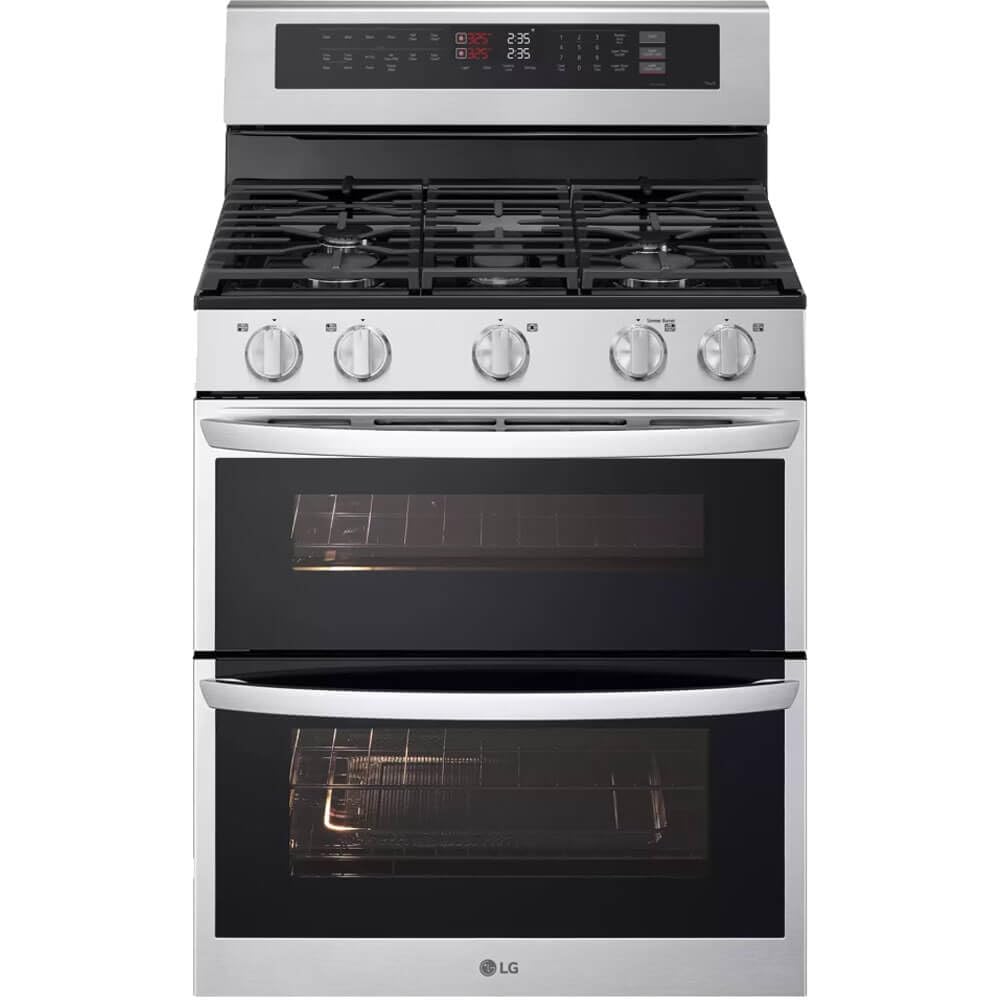
If your kitchen is a gas kitchen and you love how gas feels for daily cooking, a gas double-oven range is one of the most satisfying upgrades you can make without splitting your layout into wall ovens + cooktop. The LG LDGL6924S is built for that reality: stovetop use stays familiar, but baking and roasting become more flexible because you can run two temperatures on the same night.
The real benefit for gas households is that you stop negotiating with your oven schedule. You can keep a side dish warm above while the main roast finishes below, or bake something delicate in one cavity while the other does high-heat cooking. It’s also a strong fit for people who host often: stacked ovens reduce the “I’m doing oven Tetris” stress and let you time dishes more like a restaurant kitchen.
Because this listing has limited visible long-form owner feedback in the snippet, the expert way to approach it is to decide whether your household’s identity is “stovetop heavy.” If yes, this format keeps your favorite cooking mode and adds scheduling freedom where you need it most.
Why it’s worth a look
- Gas stovetop + stacked ovens – Keeps the cooking feel you love while adding oven flexibility.
- Two-cavity timing control – Cook mains and sides without compromise.
- Great for hosting – Makes multi-dish timing dramatically easier.
- Modern convenience – Smart features can add comfort if you like monitoring and timers.
Good to know
- Gas range installation considerations (gas line, venting approach) should match your home setup.
- As with many range-format double ovens, the upper cavity is typically smaller by design.
- Always confirm the size and fit expectations for your kitchen cutout.
Ideal for: gas households that cook daily on the stovetop and want the scheduling freedom of stacked ovens without changing kitchen layout.
13. GE JBS86EPES – A Straightforward Two-Oven Range for Real Life

Not everyone wants a “smart kitchen command center.” Some people want a dependable range that gives them two ovens and gets out of the way. That’s what this GE freestanding double-oven format can do when it matches your expectations: the top cavity becomes the quick cooker, the bottom cavity becomes your real baking and roasting space, and your cooktop remains the daily workhorse.
Owner experiences often reflect what matters most in this category: when it works well, people love having two ovens and talk about how much more flexible their daily cooking becomes. When frustrations appear, they tend to show up in long-term durability themes on certain components (like burners), or concerns about surface scratching if the cooktop isn’t treated gently. This is exactly why “how you cook” matters: if you’re gentle on surfaces and you want functional convenience more than premium polish, this style can be a strong fit.
The best way to use a range like this is to assign roles: top oven = fast tasks, small-batch baking, warming, and quick crisping. Bottom oven = big dishes, multi-tray work, and anything tall. When you embrace that workflow, the two-oven benefit feels huge.
Why it can be a great buy
- Two-oven flexibility – The top cavity is a daily convenience win for quick tasks.
- Accessible feature set – Air fry and self-clean options add usefulness without complexity.
- Knob control simplicity – Many cooks prefer tactile knobs over super-sensitive touch panels.
- Strong “family dinner” rhythm – Cook mains and sides without waiting.
Good to know
- Cooktop surfaces can scratch if treated roughly—use smart cookware habits.
- Long-term component reliability can vary; this is where warranty comfort and brand familiarity matter.
- As with all double-oven ranges, the top cavity is smaller—plan around it.
Ideal for: households that want a practical double-oven range with modern convenience features, without stepping into premium pricing tiers.
14. GE JTD5000SNSS – The Classic Built‑In Two‑Oven Upgrade

A double wall oven is the “I bake and cook like it matters” upgrade. It’s not about convenience alone; it’s about capacity, control, and being able to run two serious dishes without compromise. The GE JTD5000SNSS hits that classic built-in identity: two full oven cavities, a clean stainless look, and a design language that fits many kitchen styles.
One of the most important real-life details with wall ovens is rack usability. Owners sometimes discover that certain premium rack systems (like roller-style racks) can take up more vertical space than expected, which changes what tall dishes fit and where. The upside is ease: heavy dishes slide out more smoothly, which is a real safety and confidence upgrade when you’re managing hot roasts or multiple trays. The key is to think about your cookware: if you use tall covered roasters, you may prefer a simple sliding rack setup or plan rack configuration intentionally.
Installation wise, wall ovens are a “measure twice” situation because cutouts and cabinet support matter. But once installed, they give you the cleanest stacked-oven workflow: you can bake in one, roast in the other, and never fight for space again.
Why wall oven buyers like it
- Two serious oven cavities – Real double-oven cooking for holidays and everyday baking.
- Build-in kitchen polish – A clean, integrated look that feels like a true upgrade.
- Sturdy rack system – Designed to handle real cookware weight and frequent use.
- Reliable “classic double oven” identity – The kind of appliance you plan meals around.
Good to know
- Some rack systems reduce interior vertical clearance—plan tall cookware accordingly.
- Installation requires correct cabinet support and electrical readiness.
- Wall ovens are heavy; delivery and install planning matters.
Ideal for: remodel kitchens and serious home cooks who want a true built-in double wall oven experience for baking, roasting, and hosting.
15. Rangaire RWOD301GS – Modern Glass Touch Without Overcomplication

Rangaire is a compelling pick when you want a wall oven that looks modern and operates like a modern oven—without feeling like you’re paying mainly for brand halo. The glass touch panel is the design statement, and in daily life it’s also a cleanliness statement: a smooth surface is easier to wipe down than rows of raised buttons.
The features here are chosen for real cooking rather than marketing bingo: true convection for even baking, a meat probe for precision, and cooking modes like air fry and keep-warm that match how people actually feed families. If you’re the kind of cook who does a mix of roasting, baking, and weeknight “crisp it fast” meals, that combination has real value. The probe alone is a quiet superpower if you cook proteins often—because it turns “I hope it’s done” into “it’s done exactly when it should be.”
The best way to think about this oven is “modern utility.” It’s built to cover the foods you make most, to look clean in a kitchen refresh, and to avoid the biggest wall-oven frustration: uneven baking that forces you to rotate everything.
Why it’s appealing
- Glass touch looks premium – Clean design, easy wipe-down, modern kitchen feel.
- True convection baking – Better evenness and more reliable browning across racks.
- Meat probe precision – Great for roasts, poultry, and “don’t overcook this” meals.
- Useful modes – Air fry and keep-warm add practical daily flexibility.
Good to know
- Touch controls are best when your hands are dry/clean—small habit shift if you’re used to knobs.
- As a wall oven, the installation/cabinet cutout fit is part of the purchase decision.
- If your priority is “most service techs know it,” mainstream brands can feel more comfortable.
Ideal for: homeowners who want a modern-looking double wall oven with practical cooking modes and the kind of precision features that actually improve results.
16. COSMO COS‑30EDWC – Blue Porcelain Style with “Hot and Fast” Personality

Cosmo’s Haven double wall oven is the kind of appliance people buy because it looks like a statement—then keep using because it cooks with energy. Real owner feedback includes a theme you should take seriously: this oven can run hot and bake fast. That can feel amazing if you’re the kind of cook who hates sluggish ovens. It can also be jarring if you expect every oven to behave like your old one.
The smartest way to approach this model is to treat it like a “high-output” oven that may need a short calibration and learning period. Some owners have reported temperature overshoot issues and a support experience that can vary depending on technician availability. But owners who get a stable unit and learn its personality often praise fit, finish, and how dramatically it improves cooking compared to older ovens. This is one of those products where the upside is high—just don’t treat it like a basic, forgiving oven that you can ignore.
The blue porcelain interior is more than aesthetics. It signals a design focus that feels more premium inside the cavity, and the self-clean function adds practical maintenance support. If you like even convection performance, the top cavity’s true convection can be a real win for baking cookies, pastries, and anything where “every corner browns the same” matters.
Why it can be impressive
- Convection cooking personality – Designed to cook evenly and efficiently when dialed in.
- Bold interior style – The blue porcelain look is a real “wow” factor in a kitchen upgrade.
- Multiple cooking functions – Useful variety without needing separate gadgets.
- Self-clean convenience – Helps keep the interior manageable long-term.
Good to know
- Some owners report temperature behavior that requires calibration and learning.
- Service support can be a bigger factor depending on your area.
- It’s a wall oven project—cabinet fit and installation readiness matter.
Ideal for: buyers who want a stylish built-in double wall oven with strong cooking performance—and who don’t mind learning (and fine-tuning) an oven that runs “energetic.”
17. KoolMore KM‑WO30D‑SS – Sturdy, Fast, and Built for Heavy Baking Habits

KoolMore is one of those brands that gets attention because it leans into a more commercial identity. And the most compelling owner feedback reflects that: people describe the doors, racks, and overall build as “serious,” and they talk about cooking speed and output like it’s built for someone who bakes constantly.
What makes the real-life story interesting is the mix of strong performance and a few practical annoyances that show up repeatedly. One common frustration is rack quantity out of the box—some owners expect multiple racks per oven and feel surprised when the setup is minimal. The good news is that customer service experiences can be very positive: owners report reaching out and receiving additional racks. Another real-world note: some people wish the keypad/controls were backlit, because it affects visibility at night. These are not “cooking performance” problems; they’re usability details that matter when you cook every day.
If your identity is “I bake constantly” or “I host and need two ovens that feel powerful,” KoolMore can be a very satisfying pick—especially if you’re the type who values robust doors and a sturdy, workhorse feel over ultra-polished consumer electronics.
Why heavy bakers like it
- Sturdy build feel – Doors, racks, and controls are designed to feel more “workhorse” than delicate.
- Fast cooking personality – Owners often describe strong heat and quick results.
- Useful mode selection – Bake, broil, proof, convection—covers real baking life.
- Customer service can be a bright spot – Some owners report responsive support for practical issues like extra racks.
Good to know
- Racks may be fewer than expected out of the box; plan for that detail.
- Non-backlit controls can be less friendly in low light.
- As with all wall ovens, installation and cabinet fit should be planned carefully.
Ideal for: busy home bakers who want a sturdy, fast-feeling double wall oven and appreciate a more commercial-leaning build vibe.
18. GE JKD5000SNSS (27") – The “Don’t Redo My Cabinets” Double Wall Oven

A 27-inch double wall oven is a very specific and very practical category: it exists for homeowners replacing an older built-in setup without wanting to rip up cabinetry. That’s the core value here. The oven isn’t just “a product,” it’s a solution to a kitchen constraint.
In real life, replacement sizing is one of the biggest upgrade blockers. People want the improved cooking of a modern double oven, but they don’t want the cost and disruption of rebuilding the cabinet cutout. This is where the JKD5000SNSS shines as a strategy. You get the double-oven capability and convection performance, but you keep the existing layout intact.
If you’ve ever seen a kitchen upgrade spiral from “new oven” into “new cabinets, new counters, new backsplash,” you understand why size-strategy matters. This model is for the buyer who wants a clean, contained upgrade.
Why it’s a smart path
- 27" replacement focus – Helps you upgrade without triggering a full cabinet rebuild.
- Double-oven capability – True stacked cooking for baking, roasting, and hosting.
- Convection performance – Supports more even baking across racks.
- Clean control design – Backlit-style control approach helps readability and modern feel.
Good to know
- 27" ovens are about fit strategy; confirm your cutout measurements precisely.
- Capacity is great for the category, but it’s not the same as some larger 30" units.
- Wall-oven installation is a serious job—plan support and alignment carefully.
Ideal for: homeowners replacing a 27" built-in double wall oven who want a contained upgrade without a cabinet redesign.
19. Samsung NV51K6650DG/AA – Steam Cooking for Crisp Outside, Juicy Inside

Steam cooking in a wall oven isn’t a gimmick when you use it the right way. It’s a texture tool. The Samsung NV51K6650DG/AA is designed to add moisture at specific moments so foods can brown and crisp while staying tender. That’s especially valuable for breads, roasts, and baked dishes where the line between “perfect” and “dry” is thin.
Owners who enjoy this category often love the combination of dual convection and smart control: faster, more even cooking plus the ability to monitor and adjust when you’re doing ten other things. This is a true “busy household” feature set. The best experience comes when you treat the oven like a system: use steam intentionally (not randomly), and leverage convection as your consistent evenness engine.
The expert reality of steam ovens is that they reward good habits. Keep the tray routine clean, understand which foods benefit from moisture, and you’ll get restaurant-style texture improvements that basic ovens can’t match consistently.
Why steam is a real advantage
- Texture control – Crisp outside + tender inside is exactly what steam timing is designed to support.
- Dual convection evenness – Better consistency across racks and corners.
- Smart control convenience – Helpful when you’re hosting or multitasking.
- Modern look – Black stainless style can be a beautiful kitchen upgrade.
Good to know
- Steam is best when you use it intentionally—learn your “steam foods” early.
- Smart features are great, but the oven should still feel good to use manually day-to-day.
- As with all wall ovens, the install/cabinet fit planning is part of the buying decision.
Ideal for: cooks who care about texture—especially breads and roasts—and want the combined advantage of steam timing, convection evenness, and smart convenience.
20. Samsung NV51K7770DG/AA – Flex Duo Divider for “One Big Oven or Two Zones” Days

Flex Duo is a clever concept for people who don’t always want the same oven layout. Some days you want one big uninterrupted cavity for a large roast. Other days you want two temperature zones without running a second full oven. The divider approach is built to give you that flexibility.
In real life, this kind of feature is only valuable if you actually use the “switching behavior.” If you’re mostly a one-oven cook, it can feel like a cool feature you rarely touch. If you host, bake multiple dishes, or cook complicated meals where timing matters, it can become part of your regular routine. Steam cooking adds another layer of interest—texture improvements for certain foods can be very real.
The honest ownership theme in this category is reliability confidence. Some owners report frustrations with electronics and long-term dependability, and cleaning complexity can matter depending on your spill habits (crevices and seams are where ovens become emotionally exhausting). This is the kind of purchase where you should be very clear about your priorities: flexibility and features vs long-term simplicity.
Why it’s uniquely useful
- Divider flexibility – One large cavity or two zones depending on the day.
- Steam + convection combo – Designed for even cooking with moisture control possibilities.
- Great for multi-dish cooking – Can reduce the “timing puzzle” in complex meals.
- Modern control ecosystem – Smart connectivity and guided options for busy cooks.
Good to know
- Flex features are only valuable if you’ll truly use them—be honest about your cooking habits.
- Some owners report long-term reliability frustrations; factor that emotional risk into the decision.
- Design crevices can be harder to clean after spills—mess discipline matters.
Ideal for: cooks who genuinely switch between “one big oven” and “two-zone cooking,” and who value flexibility enough to accept a more feature-heavy ownership profile.
How Two‑Cavity Cooking Actually Works (and Why Airflow Matters)
Most disappointment with stacked ovens comes from one mismatch: people buy “two ovens” expecting identical performance everywhere. But stacked cooking is really about roles and air movement. When you understand what each cavity is designed to do, you can predict which models will feel effortless—and which will feel like a compromise.
What makes a stacked oven feel “effortless” in real life
- Clear role separation – One cavity is the fast lane (reheat, toast, quick meals). One cavity is the workhorse (roast, bake, big dishes).
- Strong heat recovery – The oven rebounds quickly after door openings so your bakes stay consistent.
- Airflow that matches the mode – Crisping needs aggressive circulation; baking needs even distribution without drying everything out.
- Controls that support real behavior – Easy switching, clear feedback, and no “button anxiety” during busy cooking moments.
- Pan and rack practicality – The best ovens reduce the need to rotate trays and fight for the “good spot.”
This is why certain countertop models become “everyday ovens” for families: they were designed around fast, repeatable workflow. And it’s why true double wall ovens remain the holy grail for bakers: two serious cavities, two real temperatures, zero compromises.
How to get better results immediately (without changing anything else)
- Assign roles to your cavities – Decide what the top and bottom will do most often, and build your routine around that.
- Preheat with intention – Quick ovens still need a real preheat when baking; crisping modes often benefit from a short warm-up too.
- Use the right pan – Dark pans brown faster, glass holds heat differently, and thick sheets stabilize temperature swings.
- Stop opening the door “to check” – Use windows and lights when available; door openings are the #1 consistency killer.
- Let airflow do its job – Overcrowding trays blocks circulation and reduces crisping dramatically.
The best stacked-oven cooking isn’t complicated. It’s consistent. Once you set roles and build muscle memory, you’ll cook faster with fewer mistakes—and far less stress.
FAQ: Double Stack Oven Questions, Answered Simply
What’s the biggest difference between a countertop dual-cavity oven and a double wall oven?
Should I choose a double-oven range instead of wall ovens?
Do stacked ovens really save time, or is it just a “nice-to-have”?
Which features matter most for everyday cooking?
Why do some owners complain about uneven cooking in countertop ovens?
What’s the smartest way to avoid buyer’s remorse?
Final Thoughts: Pick the Setup That Makes Your Cooking Life Easier
The best stacked oven isn’t the one with the loudest marketing. It’s the one that makes you think, halfway through a busy week, “Wait… why did I ever cook everything one-at-a-time?”
Here’s how to translate this guide into the right purchase—fast:
- Want the best all-around countertop two-zone experience? Start with the Ninja Double Stack XL (DCT651). It’s the strongest blend of performance, two-cavity workflow, and repeatable results for real family cooking.
- Want the Double Stack rhythm with a simpler daily habit? Choose the Ninja Double Stack XL (DCT601) for approachable two-zone cooking and fast weeknight wins.
- Want a countertop unit that feels like a “mini full-size oven” you’ll use constantly? Pick the Ninja Double Oven (DCT451) for fast preheat, reliable daily performance, and true second-oven behavior.
- Want a premium kitchen upgrade in one appliance? The GE Profile PS960YPFS is the “range + stacked ovens” move for households that cook daily and want modern convenience.
- Want a true built-in double wall oven feel? The GE JTD5000SNSS and Rangaire RWOD301GS are strong “two serious ovens” paths depending on whether you prefer classic vs modern control feel.
- Want a heavy-baker, sturdy wall oven vibe? Look at the KoolMore KM‑WO30D‑SS for a more workhorse build feel.
- Want a specialist for pizza nights? The VEVOR 14" Double Deck Pizza Oven is built for two-stone party cooking and indoor pizza fun.
- Need big batch capacity on a countertop? The VEVOR Commercial Convection (66L/60Qt) is for volume, not minimalism.
Once you pick the right category and the right workflow, a double stack oven stops being a “purchase” and becomes a daily advantage: less waiting, more control, and meals that finish when you need them to—without stress.
