
Let’s be honest: most people don’t buy cookware because they “need” cookware. They buy it because they’re tired of fighting dinner. Hot spots that burn your garlic. Sauces that go from silky to scorched in one distracted minute. Pans that look gorgeous online but feel clumsy in real hands.
That’s why copper clad pans have such a loyal following. They’re not just pretty. They’re responsive. They heat quickly, change temperature fast, and give you that “I’m actually in control here” feeling—especially on the recipes that punish slow cookware: butter sauces, caramel, risotto, seared proteins, reductions, and anything where timing matters.
But here’s the part most guides get wrong: buying copper-clad isn’t about picking “the most expensive” or “the thickest.” It’s about matching a pan’s personality to how you cook—your burner type, your patience level, your go-to meals, and whether you want a single hero pan or a full set that makes your kitchen feel like it finally leveled up.
This guide is built differently. I’m not going to drown you in spec soup or pretend every pan is “perfect.” Instead, I’ll walk you through the real-life friction points that show up in owner reviews and long-term use: handle comfort, how easily food releases once you learn the heat game, what patina actually looks like, what cleans up fast, and which pieces become your daily drivers (versus the ones that only come out on holidays).
Below, you’ll find 8 standout picks—two complete sets for different types of cooks, plus the exact single pans that most people end up using 80% of the time. By the end, you’ll know exactly what to buy—and why.
How to Choose the Right Copper Clad Pans for Your Kitchen
Copper performance is addictive—once you feel that “instant response” when you lower the heat and the pan listens, it’s hard to go back. But not every copper-ish pan behaves the same, and not every kitchen needs the same kind of copper. This section is your filter: it’s how you avoid buying something gorgeous that you quietly stop using.
1. First, decide if you’re buying a “set life” or a “hero pan”
Most cooks fall into one of these camps. There’s no wrong answer—only the one that fits your reality.
- The set person: You want matching pieces that cover most meals, look great, and remove decision fatigue. One purchase, done.
- The hero-pan upgrader: You cook with the same pan constantly and want one piece that makes everything easier (usually a 12-inch fry pan or a sauté pan).
- The sauce specialist: You care about reductions, emulsions, and gentle simmer control more than “big sear power.” A saucepan is your anchor piece.
- The “learning curve is fine” cook: You’ll happily spend a week dialing in heat habits because you want restaurant-level results.
- The “I just need dinner” cook: You want forgiving cookware that performs even when you’re multitasking and tired.
2. Copper exterior vs copper-core: what you feel at the stove
Both styles can cook beautifully, but they behave differently in ways that matter.
- Copper exterior (copper-clad look): You get the visual drama and the fast heating you expect. You also get patina. Some people love that “worked-in” copper tone. Others want it shiny and end up polishing more than they expected. If your pans live on a rack in the open, this matters.
- Copper-core (copper hidden inside): You still get the responsiveness, but the outside is stainless. That means less visual maintenance and fewer “why did my pan change color?” moments. It’s often the more practical daily-driver approach—especially in busy kitchens.
Here’s the real-life difference: copper is about control, not just speed. The best copper-assisted pans heat evenly and recover temperature quickly when you add food. That means fewer scorched corners, fewer “cold puddles” in the center, and more consistent browning.
3. If you use induction, pay attention to “induction compatibility” the right way
Induction isn’t about a pan being “good” or “bad.” It’s about magnetic coupling. A pan can have copper in the build and still be induction-ready if it has the right stainless layer to interact with the induction field. All of the picks in this guide are intended to work on induction, but your experience will still vary based on:
- Pan size vs burner size: If your pan base is larger than your induction coil, edges can cook differently.
- Cooktop sensitivity: Some induction units adjust power in pulses; others feel smoother. Responsive pans make that more noticeable (in a good way).
- How you preheat: Slow preheat wins. Rushing is how people warp pans—especially on high-powered induction.
4. Handle comfort is not a minor detail—it decides whether you use the pan
This is the thing reviewers mention when they’ve cooked with a pan for months. Some premium lines use angular handles that feel “weird” at first, then become a control advantage once your grip adapts. Other handles are instantly comfortable but offer less stability for tossing and pouring.
If you’ve ever felt a pan twist as you pour, or felt your wrist fatigue after flipping food, that’s handle geometry. It’s not glamour—it’s daily ergonomics. If you see lots of owners saying “learning curve,” don’t panic. Just know you’ll want a few practice cooks before hosting a dinner party.
5. Stainless interiors don’t behave like nonstick—and that’s the point
A lot of bad cookware guides pretend stainless is “nonstick if you do it right.” That’s not the right mental model. Stainless is a browning tool. It’s a fond-building machine. It wants contact. The trick is controlling when food sticks and when it releases.
- Preheat gradually. Medium is your friend. The pan should feel evenly warm before you go hotter.
- Add fat after the pan is ready. Oil in a cold pan is how people burn oil and blame the pan.
- Let proteins release on their own. If it’s stuck, it’s not done browning yet. Give it time. When the crust forms, it lets go.
- Lower your heat more than you think. Copper-assisted pans move heat efficiently. Many cooks overshoot at first.
This is why some owners say “eggs stick” and others say “nothing sticks.” They’re not using different pans. They’re using different heat timing. And once you learn the timing, stainless becomes easier to clean than people expect—because food isn’t welding itself to the metal.
6. Maintenance reality: shine, patina, and “I want it to look new” energy
You can’t pick copper cookware without being honest about aesthetics. Some copper pieces develop a quick patina that looks amazing and lived-in. Others look “messy” if you prefer showroom shine.
- If you love the patina look: choose copper exterior and enjoy the character.
- If you want low-maintenance visuals: choose copper-core with stainless exterior (or accept occasional polishing as part of the ritual).
- If you want it to look new forever: you’ll do best with stainless exterior pieces, and you’ll keep a gentle cleaner on hand for quick resets.
Quick Comparison: 8 Copper Clad Pans Picks That Actually Make Cooking Easier
Use this table to match your “cook personality” to the right product fast. Then jump to the in-depth reviews for the real-life details— like which handles take a day to love, which pieces become daily drivers, and which are better as “forever kitchen” investments.
On smaller screens, swipe or scroll sideways to see the full table.
| Model | Type | Best for | Standout feel | Amazon |
|---|---|---|---|---|
| GreenPan x Bobby Flay Copper Clad 8‑Piece Set | Copper exterior set | Most kitchens wanting a complete, modern copper look + daily performance | Fast heating, stainless interior, helpful markings & glass lids | Amazon |
| All‑Clad Copper Core 10‑Piece Set | Copper‑core set | Heirloom-level build + precision control across many pieces | Instant response, stainless exterior, iconic professional feel | Amazon |
| All‑Clad Copper Core Fry Pan 12‑Inch | Single pan | Your main skillet: searing, sautéing, pan sauces, “one-pan dinners” | Big surface area + fast recovery for confident browning | Amazon |
| All‑Clad Copper Core Sauté Pan 5‑Quart (with lid) | Single pan | Braises, reductions, pasta finishes, family-sized sautéing | Deep sides + wide base = the “weeknight hero” shape | Amazon |
| All‑Clad Copper Core Sauté Pan 3‑Quart (with lid) | Single pan | Smaller households who still want straight sides and versatility | “Big pan energy” in a more manageable footprint | Amazon |
| All‑Clad Copper Core Sauce Pan 3‑Quart | Single pan | Soups, rice, oatmeal, sauces, reheats for families | Precise simmer control + easy pouring + loop handle | Amazon |
| All‑Clad Copper Core Sauce Pan 2‑Quart | Single pan | Daily small sauces, ramen/tea pot, quick boils | Fast boil + tight control for delicate sauces | Amazon |
| Made In 12‑Inch 5‑Ply Stainless Clad Fry Pan | Value alternative | “I want pro stainless performance” without going full copper | Even heating, lighter feel, strong support reputation | Amazon |
In‑Depth Reviews: 8 Copper‑Powered Picks You’ll Actually Enjoy Using
Now we go piece by piece—no fluff, no “it’s bigger so it’s better” nonsense. I’m going to talk about what matters after the honeymoon phase: the habits that make these pans shine, the learning curves that surprise people, and how each product behaves when you’re cooking in real life (not in a staged promo kitchen).
1. GreenPan x Bobby Flay Copper Clad 8‑Piece Set – The “Modern Copper Set” That Fits Most Kitchens
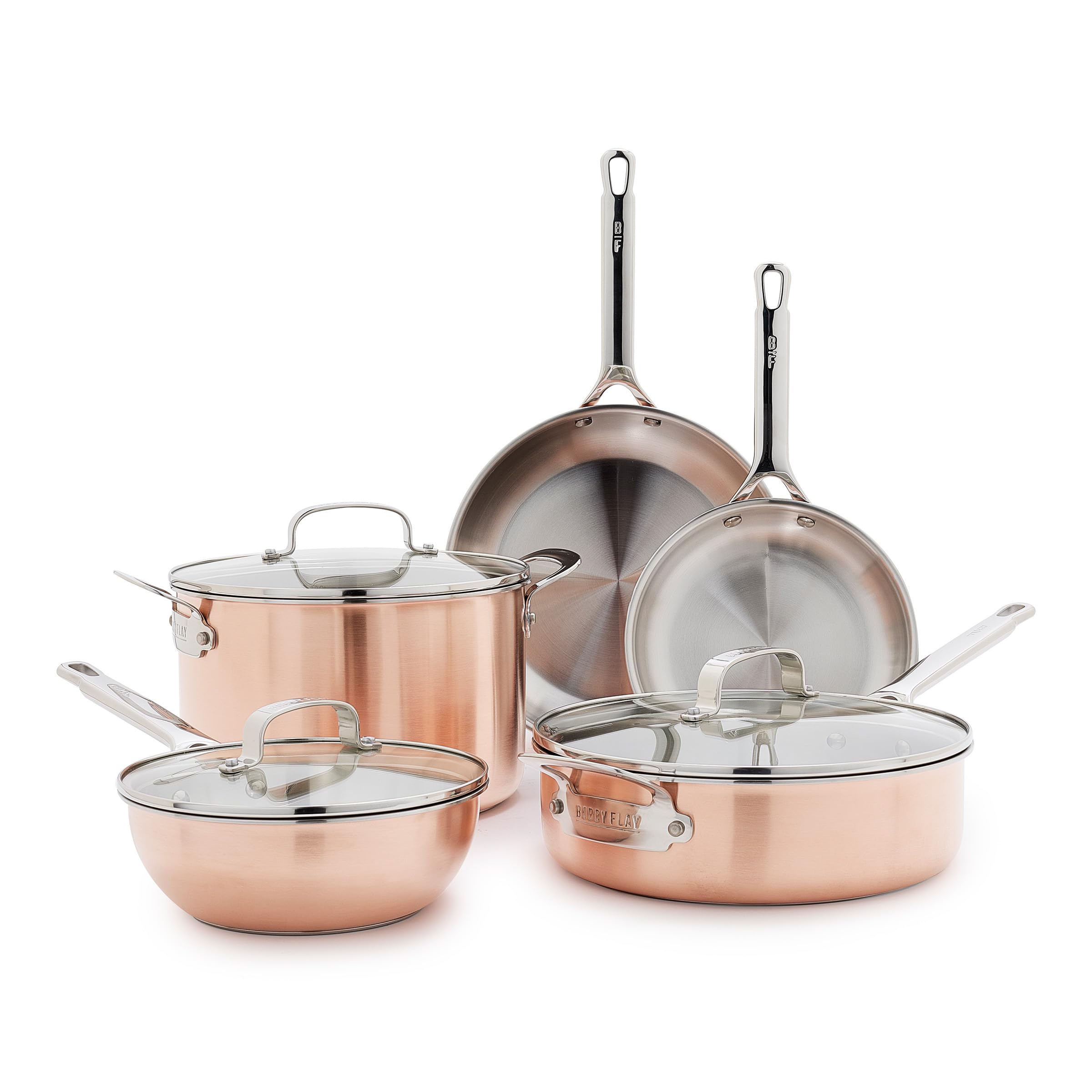
If you want a full copper-look set that feels modern, cooks fast, and doesn’t demand chef-level patience to get great results, this is the smartest place to start. The Bobby Flay x GreenPan Copper Clad set is built around a very practical concept: a copper exterior for fast heating, an aluminum base for responsiveness, and a stainless steel interior for durable daily cooking. In plain English? You get copper vibes and copper speed, but you’re still cooking on stainless—so you can sear hard, deglaze, whisk, and build sauces without babying the surface.
The little design details are why this set “feels” expensive in use: measurement markings (so you’re not juggling a measuring cup mid-recipe), glass lids (so you can watch a simmer without lifting and losing heat), and sturdy stainless handles that feel secure when you’re moving a pot that’s actually full. Owners consistently mention how quickly it heats and how evenly it cooks, especially for sauces and holiday-style tasks like gravy and cranberry sauce— the stuff that punishes pans with hot spots. A pan that heats evenly doesn’t just cook better; it makes you calmer.
Now the real-life honesty: this is copper exterior. Copper changes. It develops patina. Some owners love the “I actually cook” look. Others want it polished back to showroom shine, which adds a maintenance step if your cookware is on display. If you keep pans in cabinets, it’s a non-issue. If you hang them, decide right now if you’re a patina person or a polishing person. The good news: performance doesn’t care. Patina doesn’t ruin cooking. It just changes the visual.
The other “real use” point: weight. Good cookware usually has some heft because it’s built to distribute heat and stay stable on the burner. This set isn’t absurdly heavy, but it feels substantial, especially the lidded pieces. That stability is why it cooks evenly, but it’s also why you’ll love having a good grip. Most owners describe the balance as solid—meaning it feels secure, not tip-happy.
Why you’ll like it
- Fast, even heating that feels “pro” – Great for sauces, reductions, and anything where control matters.
- Thoughtful everyday details – Measurement markings and glass lids remove tiny annoyances that add up.
- Stainless interior confidence – You can sear and deglaze aggressively without worrying about coatings.
- Induction ready + high oven tolerance – Works across common kitchen setups and lets you finish dishes in the oven.
Good to know
- Copper exterior patinas quickly; polishing is optional but aesthetic expectations matter.
- Hand washing is part of the long-term “keep it pretty” routine, especially for copper shine lovers.
- If you want zero-maintenance visuals, a stainless-exterior copper-core line may suit you better.
Ideal for: cooks who want a complete copper-look set that performs fast and feels modern—without committing to the most intense premium “heirloom set” price tier.
2. All‑Clad Copper Core 10‑Piece Set – The “Forever Kitchen” Investment for Precision Cooks

This set is for the person who cares about cooking the way other people care about cameras or guitars. All‑Clad Copper Core isn’t “just nicer cookware.” It’s a control system. The construction is built to move heat quickly and evenly, and the way it’s bonded all the way up the sides matters more than most people realize. A lot of cheaper “copper-ish” cookware is basically “hot bottom, cooler sides.” This isn’t. When you’re reducing a sauce, simmering dairy, or building a stew, sidewall heating changes your results.
The real owner story is consistent: people upgrade from midrange sets, then they’re shocked by two things: (1) how quickly the pans respond to heat changes, and (2) how much easier cleanup becomes once they stop over-heating. Many buyers have a moment where they realize they can use lower burner settings than they did with their old cookware. That’s the copper-core effect: the pan transfers heat efficiently, so “medium” behaves like “medium-high” used to. Once you learn that, burning becomes rarer and fond becomes intentional instead of accidental.
Let’s talk about the elephant in the room: All‑Clad handles. Some people love them instantly. Others hate them for a week, then suddenly it clicks. That “nub” and the angle are designed for control—especially when you’re lifting a full pan and pouring or tossing. In long-term reviews, you’ll see people describe a learning curve, then describe surprisingly stable control once their grip adapts. If you do a lot of sautéing, pan sauces, and one-hand pouring, the design starts to make sense. If you want purely cushy comfort, it may feel sharp compared to rounded handles.
Now the practical truth that makes this set shine: you still need the right technique. If you throw eggs into cold stainless, you’ll hate your life. If you crank heat, you’ll get discoloration and you’ll think “it’s hard to clean.” The people who adore this set are the people who preheat properly, add fat at the right time, and let food release naturally. Many owners keep a stainless-friendly cleaner around (and some use a dedicated copper cleaner for the exposed accent band) because they enjoy keeping the set looking sharp. But even if you don’t polish anything, the cooking performance stays elite.
This is also a “legacy set” in the way owners talk about it. You’ll see comments about passing it down, keeping it for decades, and feeling like it’s finally the last cookware purchase they’ll make. That’s the best compliment a cookware set can get.
Why it’s special
- Precision heat control – Rapid response helps you nail delicate sauces and controlled browning.
- Bonded sides matter – Consistent heating up the walls improves reductions and simmer-heavy cooking.
- Durability reputation – Owners routinely describe this as true “lifetime cookware.”
- Real versatility – Pieces cover daily cooking, oven finishing, and serious multi-step recipes.
Good to know
- Handle feel can be a learning curve; it’s designed for control more than plush comfort.
- Stainless rewards technique—preheat and timing matter more than with nonstick.
- If you want “shiny always,” you’ll do occasional polishing/cleaner routines (especially for the copper accent).
Ideal for: serious home cooks who want a “forever” set with ultra-responsive heat control—and who are happy to learn the stainless rhythm that makes it effortless.
3. All‑Clad Copper Core Fry Pan 12‑Inch – The One Pan That Can Change Your Weeknights

If you’re only going to upgrade one piece, this is the shape most people should choose. A 12-inch fry pan is the “I actually cook dinner” size. It’s the size that prevents crowding, which is the silent killer of good browning. Crowd a pan and your food steams. Give food space and it sears. This pan is built to make that space pay off: fast heat response, even distribution, and enough surface area to build real fond without scorching it.
The Copper Core difference shows up most when you do the two things home cooks struggle with: (1) searing without burning, and (2) pan sauces without scorching. Because the pan responds quickly when you lower the flame, you can back off heat the moment you see “this is browning fast,” and the pan actually cools down in a useful timeframe. That’s why owners describe it as heating fast and cooling faster than their older stainless pieces.
Here’s what separates happy owners from frustrated ones: heat discipline. Most stainless “sticking” complaints come from one of these mistakes: too cold (food grips), too hot (oil burns), or flipping too early (protein hasn’t released). A Copper Core pan amplifies your mistakes because it’s responsive. That sounds scary, but it’s actually a gift: you learn faster. You get feedback immediately. And once you’ve got the rhythm, you can cook with more confidence at lower burner settings.
What I love about this pan as a daily driver is how it handles “messy real dinner” cooking: chicken thighs that render fat, steak that needs a hard sear, mushrooms that want aggressive evaporation, and vegetables that need to brown without turning to mush. It also shines in the second phase—deglazing. Because it builds fond cleanly and evenly, you can splash liquid in, scrape with a wooden spoon, and turn drippings into a sauce without it tasting burnt. That’s restaurant cooking at home, and it’s the easiest “wow, this pan is different” moment you’ll have.
Cleaning is the same story: technique changes your life. If you use the pan like a cast iron skillet (preheat gradually, use fat properly, let release happen), you’ll often wipe it clean. When you do get a stubborn spot, a short soak or a stainless-friendly cleanser brings it back. Owners frequently mention Bar Keepers Friend as a reset tool. That’s not because the pan is “hard to clean.” It’s because people who buy premium cookware tend to care about keeping it looking sharp.
Why it’s a top single-pan upgrade
- Prevents crowding – The size alone improves browning and reduces steaming.
- Responsive control – Fast heat changes make sauces and sears feel more precise.
- Fond-building machine – Excellent for pan sauces, gravies, and deglazing without bitterness.
- Oven-ready versatility – Easy to start on the stove and finish in the oven.
Good to know
- Stainless has a learning curve; you’ll get the best results after a handful of practice cooks.
- For eggs, many cooks still prefer a dedicated nonstick pan (that’s normal, not a failure).
- If your burner is small, you’ll want to preheat slowly so heat spreads evenly across the base.
Ideal for: anyone who wants one “hero pan” that elevates most meals—especially searing, sautéing, and pan sauces.
4. All‑Clad Copper Core Sauté Pan 5‑Quart – The Deep, Wide Workhorse for Real Meals

If a fry pan is your “sear and toss” tool, a sauté pan is your “feed people” tool. This 5‑quart shape is the secret weapon of weeknight cooking because it does the full story: brown, deglaze, simmer, reduce, finish. And it does it without splatter chaos because the sides are tall enough to contain the party.
This is the pan you use when you’re making: chicken piccata, creamy mushroom pasta, chili, shakshuka, braised greens, pan-roasted vegetables, or any dish where you want a big surface area and you want the option to add liquid without switching pots. The lid matters too: it turns the pan into a gentle braising chamber, which is how you take cheap cuts and make them taste expensive. In real kitchens, “having a lid” is the difference between “I’ll do that recipe” and “I’ll pick something easier.”
The Copper Core performance shows up in two places with this shape. First: when you add a lot of ingredients and the pan temperature drops, it recovers quickly. That means less “soggy sauté” and more real browning. Second: when you reduce liquids (wine, stock, cream), you can micro-adjust heat to avoid scorching. That’s why owners describe these pans as being “sensitive” in a good way: they react quickly, so you can steer the cook.
Now the honest stuff that matters: capacity doesn’t mean “light.” A 5‑quart sauté pan is a substantial piece, and that’s before you fill it with food. If you cook big batches, you’ll love it. If you have wrist issues or you like flick-tossing food constantly, you may prefer a lighter fry pan for some tasks. The good news is the handle design is built for stability once you learn it. And the pan’s balance—especially when you use two hands (main handle + helper handle or lid grip)—makes it feel secure.
Owners also repeatedly mention cleaning as a pleasant surprise once they learn heat control. A deep pan like this is great because it encourages lower heat simmering and controlled browning, which means fewer baked-on spots. And when you do build fond (which you want), it usually lifts cleanly during deglazing, leaving you less to scrub later. That’s the hidden luxury: not just cooking better, but cleaning faster.
Why it earns a permanent spot on the stove
- One-pan meal versatility – Brown, deglaze, simmer, reduce, and finish without switching cookware.
- Wide base for browning – Helps you cook in batches less often and build better flavor.
- Heat control for reductions – Excellent for sauces and liquid-heavy dishes that need precision.
- Lid makes it a braise tool – Turns weeknight meals into “slow-cooked taste” without extra pots.
Good to know
- This is a substantial pan; if you want featherlight tossing, a fry pan is more playful.
- Stainless needs the right heat rhythm—practice once and it becomes easy.
- If you’re strict about “looks like new,” you’ll occasionally do a quick polish/cleaner routine.
Ideal for: cooks who make real meals (not just quick eggs) and want one pan that can carry a recipe from raw ingredients to finished sauce.
5. All‑Clad Copper Core Sauté Pan 3‑Quart – Big Versatility Without Big Bulk

This is the sauté pan for people who cook often, want straight-sided versatility, but don’t want to wrestle a giant pan every day. A 3‑quart sauté pan is that sweet spot where you can still build a sauce, still simmer, still finish pasta in the pan— but you’re not hauling around “family-batch” capacity when you’re cooking for one or two.
The shape is what makes it special. Straight sides are your splatter shield, your sauce container, and your “add liquid without panic” safety net. A fry pan is great, but it’s honest: it wants tossing and quick evaporation. A sauté pan is more flexible. It lets you brown, then transition into gentle cooking. That’s why it’s a favorite for dishes like: risotto, stroganoff, pan-braised chicken, meatballs in sauce, and vegetable sautés that finish with broth, lemon, or cream.
Owners who love this pan usually say some version of: “It became my go-to for almost everything.” That makes sense. It’s big enough to feel capable, small enough to feel convenient. It’s also an excellent “learn stainless” pan because you can see the whole cooking surface clearly and practice the release timing without feeling overwhelmed by a huge footprint. And because Copper Core responds quickly, you can correct heat mistakes fast—so you build confidence faster.
Let’s talk about the handle learning curve again—because it’s real in this line. Some users describe initial discomfort, then describe a “hand retraining” moment where the grip clicks and they suddenly have more control. This pan is a great candidate for that learning curve because it’s not massive and heavy; it’s easier to handle while you adapt. If you’ve ever felt nervous pouring from a pan because it feels unstable, the All‑Clad handle design can end up feeling reassuring once it’s familiar.
Cleaning is generally friendly once you stop overheating. If you’re making a sauce or reduction, the responsive heat helps you avoid scorch lines and burnt residue. And because the lid encourages controlled simmering, you often end up with fewer “crusty edges” than you would in a wider shallow pan.
Why it’s a smart daily driver
- Right-sized versatility – Handles saucy meals without the bulk of a huge sauté pan.
- Straight sides reduce splatter – Cleaner stovetop, easier liquid cooking, easier stirring.
- Fast response makes it forgiving – You can adjust heat quickly and stay in control.
- Lid expands what you can cook – Quick braises, covered simmering, gentle finishes.
Good to know
- If you batch-cook for a crowd, the 5‑quart sauté pan will feel more comfortable.
- Like all stainless, it rewards proper preheating and patience with release timing.
- If you want “flip and toss” energy, a fry pan is still your faster tool.
Ideal for: smaller households, frequent cooks, and anyone who wants sauté-pan versatility without the size and weight of a larger piece.
6. All‑Clad Copper Core Sauce Pan 3‑Quart – The “Do-It-All Liquid Pan” for Real Kitchens

A great saucepan is the quiet backbone of a kitchen. It’s what you reach for when you’re not trying to impress anyone—when you’re just trying to make food that tastes right. The 3‑quart size is the sweet spot for most homes because it handles: rice, oatmeal, reheats, soups, pasta water in a pinch, and sauces that you actually want to stir without sloshing over the rim.
Copper-assisted responsiveness matters in saucepans more than people expect. The hardest sauces to make aren’t the fancy ones—they’re the simple ones that punish heat mistakes: custards, thickened gravies, cheese sauces, caramel, and milk-based simmering. A responsive pan gives you the ability to correct temperature quickly, which is how you avoid scorching the bottom while the top looks “fine.” Owners who use this line for daily tasks often describe how it heats evenly and how heat changes feel almost immediate. That’s exactly what you want when you’re whisking and trying to keep the texture smooth.
A practical feature here is the loop helper handle. It sounds minor until you’re lifting a full pot of soup or pouring hot liquid. That second grip point stabilizes the pour and reduces wrist strain. You don’t need it until you really need it—then you’re grateful it exists. The flared rim also helps with drip-free pouring, which is one of those “adult cookware upgrades” you appreciate every time you pour without leaving a trail on the stovetop.
Now, the “real talk” maintenance tip that saves people frustration: stainless can develop little white spots or pits if salt sits on the surface before the liquid is hot enough. The fix is simple: add salt after the liquid is simmering or boiling, or after ingredients begin cooking. This isn’t an “All‑Clad problem.” It’s stainless physics. But this pan is a premium piece, so people notice marks more. Cook with that one habit and you’ll keep the interior looking much cleaner over time.
Cleanup tends to be easy because the pan distributes heat well (less scorching) and because the surface is true stainless. That means you can clean confidently without fear of damaging a coating. Many long-time stainless users keep a gentle cleanser around for the occasional “bring it back to bright” moment—but for daily use, hot water, soap, and a sponge is usually enough.
Why it’s worth owning
- Excellent for simmer control – Helps prevent scorching and uneven thickening in sauces.
- Loop handle improves safety – More stable pours and easier lifting when full.
- Drip-free rim design – Less mess, cleaner pours, more confidence.
- True daily versatility – Rice, soups, sauces, reheats, and quick boiling tasks.
Good to know
- Use smart salt timing to avoid cosmetic spotting (boil first, salt second).
- If you mainly cook tiny portions, the 2‑quart may fit your daily routine better.
- Like all premium stainless, it shines most when you cook with controlled heat instead of blasting high.
Ideal for: families and frequent cooks who want a reliable, precise saucepan that handles most liquid cooking without drama.
7. All‑Clad Copper Core Sauce Pan 2‑Quart – The “Small Batch Precision” Tool You’ll Use Constantly
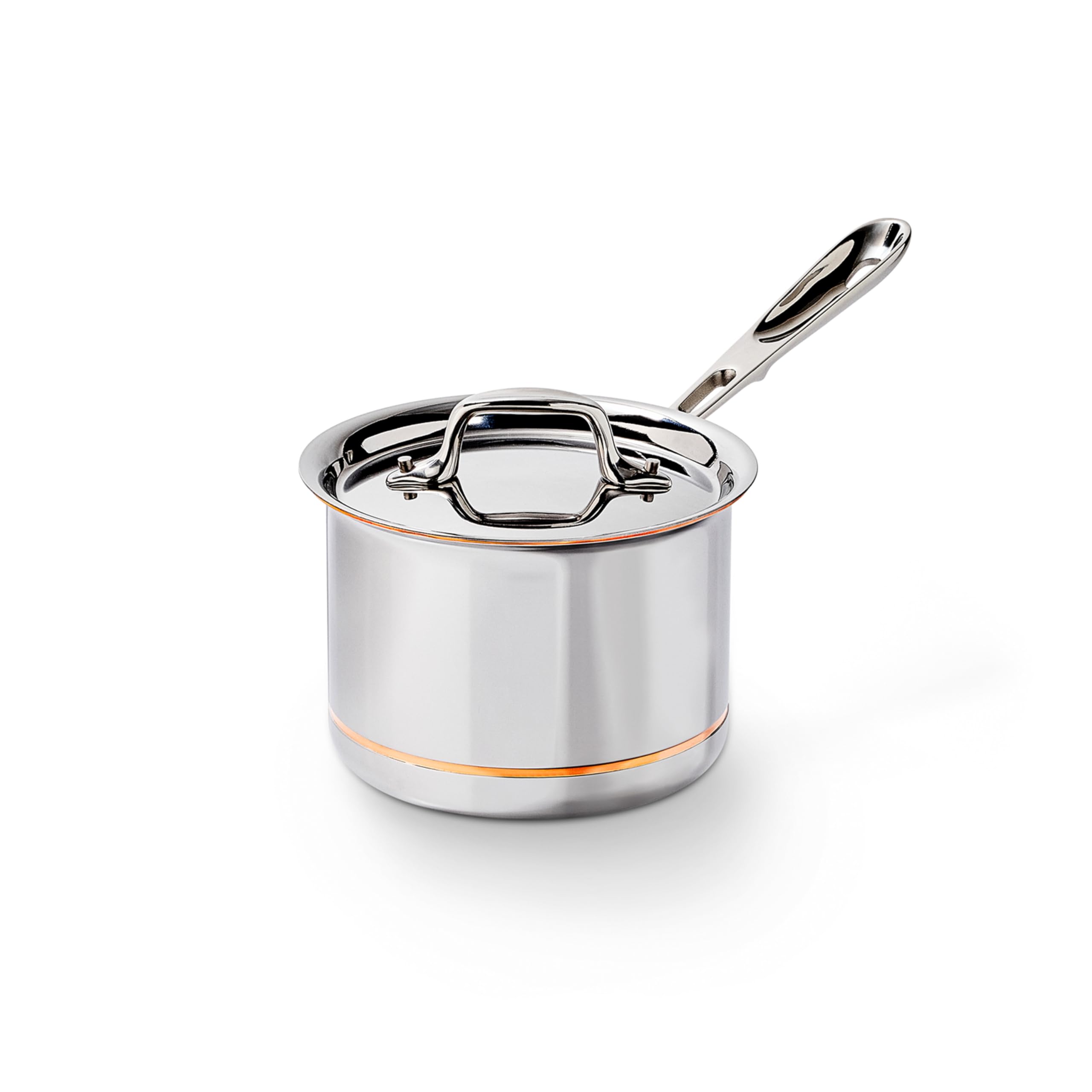
If a 3‑quart saucepan is your “family utility” pot, the 2‑quart is your “I need this now” pot. It’s the size you grab for: tea, ramen, reheating soup, melting butter, warming milk, building a quick pan sauce, or making a small batch of something without dragging out a larger piece. That convenience is why owners get attached to it. It becomes part of the kitchen rhythm.
This pan is also a perfect showcase for what copper-assisted stainless does well: fast boiling and precise simmer control. Owners talk about how quickly it heats water and how responsive it is to burner changes—especially on gas or induction. That responsiveness matters because small pots are easier to overheat. A cheap small pot can scorch milk fast because the bottom overheats before heat spreads. A more responsive, evenly heating pot gives you more reaction time.
There’s a funny kind of honesty in some reviews: people joking about using it as the “world’s most expensive ramen pot.” That joke exists because it’s true: this is a premium tool doing a simple job exceptionally well. It’s the same principle as a great chef’s knife: you don’t “need” it to cut an onion, but once you use it, you understand why it costs more. The water boils faster. The simmer is steadier. The pour is cleaner. The cleanup is easier.
Another subtle feature that matters at this size is handle control. When you’re pouring hot liquid, you want a handle that doesn’t twist in your grip. All‑Clad’s handle design can feel angular at first, but in practice it gives you a predictable grip point. If you do a lot of sauces or hot liquids, that predictability becomes safety.
Just like the larger saucepan, the same stainless habits apply: don’t blast heat unnecessarily, and be mindful with salt timing to keep the interior looking clean. If you’re doing frequent milk heating (chai, hot chocolate), keep the heat moderate and stir occasionally. A responsive pan rewards that with less scorched residue—and owners often mention exactly that improvement compared to older cookware.
Why it becomes a favorite
- Perfect “small batch” size – Ideal for quick daily tasks you do constantly.
- Fast boil + quick response – Great for tea, ramen, and quick sauce work.
- Easy cleanup when used right – Even heating reduces scorching and stuck-on residue.
- Premium feel in the hand – Stable grip and controlled pouring for hot liquids.
Good to know
- If you regularly cook for multiple people, you’ll still want a 3‑quart saucepan too.
- Premium stainless rewards good habits; learn the heat rhythm and it’s effortless.
- If your cooktop is slow to change heat (some electric coils), you’ll need to anticipate adjustments a bit earlier.
Ideal for: daily cooks who want a small, precise saucepan for sauces and quick boils—especially if you’re tired of cheap pots that scorch easily.
8. Made In 12‑Inch 5‑Ply Stainless Clad Fry Pan – Pro Performance Without Going Full Copper

Not everyone needs copper to cook well. Sometimes you want the “pro stainless experience” without committing to the premium copper-core tier. That’s where this Made In 12‑inch pan is a smart inclusion in a copper-focused guide: it’s the alternative that performs like a serious tool, teaches you stainless technique quickly, and gives you a big, versatile surface without feeling clunky.
Owners who love this pan tend to say the same thing in different words: “I wish I understood stainless earlier.” That’s because fully clad stainless (with multiple layers) behaves very differently than thin stainless with a cheap disc bottom. It heats more evenly, holds heat better, and gives you stable browning once it’s up to temperature. If you’ve been burned by “stainless” that’s really just hot-spot chaos, this is the kind of pan that changes your opinion.
The most useful real-world lesson from Made In owners is how much preheat matters. People talk about doing a simple water-drop test, adding oil at the right moment, and suddenly seeing food slide instead of weld. They also talk about using lower burner settings than expected. That’s the signature of good clad cookware: it doesn’t need brute force heat to perform. Once you learn that, the pan becomes incredibly versatile—searing steak, browning vegetables, stir-frying, and building sauces off fond.
Another big “trust signal” from owner feedback is support. When quality control hiccups happen (no brand is perfect), some reviewers mention quick replacement and strong customer care. That matters because a pan is a long-term relationship. You want to know the brand stands behind it.
Now the honest positioning: if your top priority is the signature rapid responsiveness that copper brings, copper-core or copper exterior will still feel “snappier.” But if your real goal is simply: “I want a pan that cooks evenly, cleans up well, and feels like a lifetime tool,” this is a strong choice. It’s also a great “second 12-inch pan” strategy: one pan for high-heat searing, one for vegetables and sauces, without fighting for space.
Why it’s a smart buy
- Even, professional-style heating – Fully clad build reduces hot spots and improves browning consistency.
- Great learning pan – Helps you master stainless technique fast with clear feedback.
- Versatile 12-inch footprint – Big enough for real meals and less overcrowding.
- Strong owner trust – Many reviewers note solid build feel and supportive customer service experiences.
Good to know
- This is stainless clad, not copper-core; it won’t have the same instant “copper snap,” but it still performs strongly.
- Stainless still needs technique—preheat and timing are the difference between love and frustration.
- A 12-inch pan rewards space; store it where it won’t get banged around to keep it looking sharp.
Ideal for: cooks who want high-performance stainless with a pro feel, and who want a strong alternative if they’re not ready to commit to premium copper-core pricing.
The Heat‑Control Playbook: Why Copper‑Powered Pans Feel Different (and How to Use That Advantage)
Here’s the cheat code: copper-assisted cookware doesn’t just heat faster. It communicates faster. When you turn the heat down, the pan actually responds in a useful timeframe. That changes how you cook—if you let it. Most frustration comes from using copper-powered cookware like cheap cookware: blasting heat, rushing preheat, and expecting coatings to save you.
The three moments copper makes you a better cook
- When you sear: Even heating = less random scorching. Better browning = better flavor without bitterness.
- When you deglaze: Fond forms more evenly, so pan sauces taste deeper and cleaner instead of “burnt edge.”
- When you simmer: Temperature changes are more precise, so dairy, custards, and reductions are less risky.
That’s why owners of copper-core and copper-clad sets often talk about “control” more than “speed.” Speed is nice. Control is what makes you cook like you actually meant to.
The simplest stainless routine that prevents 90% of sticking
- Preheat gradually: medium heat for a minute or two. Let the whole pan warm, not just the center.
- Do a quick readiness check: a few drops of water should bead and dance (not instantly evaporate).
- Add oil, then lower heat slightly: oil should shimmer, not smoke aggressively.
- Add food and leave it alone: let browning happen; release happens when the crust forms.
Once you internalize this, stainless stops feeling “sticky” and starts feeling like a controlled browning surface.
What to do when something sticks (without panicking)
- Don’t pry immediately: if meat is stuck, it probably isn’t done browning. Give it 30–60 seconds more.
- Lower heat, not higher: high heat can weld proteins and burn fond. Lower heat helps release.
- Use steam as your friend: a tiny splash of water can loosen stuck bits so you can scrape cleanly.
- Deglaze like a pro: wine, stock, lemon, or even water will lift fond and create sauce—turn “stuck” into “flavor.”
The copper exterior reality: patina is not damage
- Patina = oxidation: it changes the look, not the cooking performance.
- Polish only if you care: if your pans live in cabinets, it’s optional.
- Don’t chase perfection daily: quick hand wash and dry keeps copper looking good over time without turning cooking into a hobby project.
When you use copper-powered cookware with the right mindset, it stops being “fancy cookware.” It becomes your kitchen on easy mode.
FAQ: Copper‑Clad Cookware (Answered Like a Real Cook, Not a Marketing Page)
What’s the real difference between copper-clad and copper-core?
Do copper-powered stainless pans replace nonstick?
Why do some people say “everything sticks,” and others say “nothing sticks”?
Will these work on induction?
Do I need to polish copper exteriors?
What’s the most “worth it” first upgrade if I’m unsure?
Final Thoughts: Your Copper Clad Pans Shortcut (Pick Fast, Buy Once, Cook Happier)
You don’t need the “perfect” cookware to cook well. You need cookware that makes good cooking feel natural. The best purchase is the one that makes you think, halfway through a weeknight meal, “Oh—this is easier than it used to be.”
Here’s the fastest way to choose with confidence:
- Want a complete copper-look set that fits most kitchens? Start with the GreenPan x Bobby Flay Copper Clad 8‑Piece Set. It’s the “modern set” that balances performance, practical features, and everyday usability.
- Want a forever set with elite precision control across many pieces? Go for the All‑Clad Copper Core 10‑Piece Set. This is the heirloom-level choice for cooks who love technique and want a lifetime build.
- Only upgrading one piece and want the biggest daily impact? Choose the All‑Clad Copper Core 12‑Inch Fry Pan. It’s the pan that fixes overcrowding, improves browning, and unlocks better sauces.
- Cook saucy meals, braises, and one-pan dinners often? Pick the All‑Clad Copper Core 5‑Quart Sauté Pan. The shape is a weeknight superpower.
- Want sauté-pan versatility but in a smaller, easier footprint? Grab the All‑Clad Copper Core 3‑Quart Sauté Pan. It’s a high-utility piece that doesn’t feel oversized.
- Need a daily saucepan that makes liquids and sauces feel controllable? Go with the All‑Clad Copper Core 3‑Quart Sauce Pan (or the 2‑Quart for smaller daily tasks).
- Want a strong “pro stainless” alternative without going full copper? The Made In 12‑Inch 5‑Ply Fry Pan is a smart performance pick with a loyal following and a clean learning path for stainless cooking.
If you take one thing from this guide, let it be this: copper performance isn’t about bragging rights. It’s about control. Pick the setup that matches how you actually cook—set life or hero pan, sauce lover or sear fanatic— and your copper clad pans won’t just sit pretty. They’ll earn their keep, meal after meal.
