
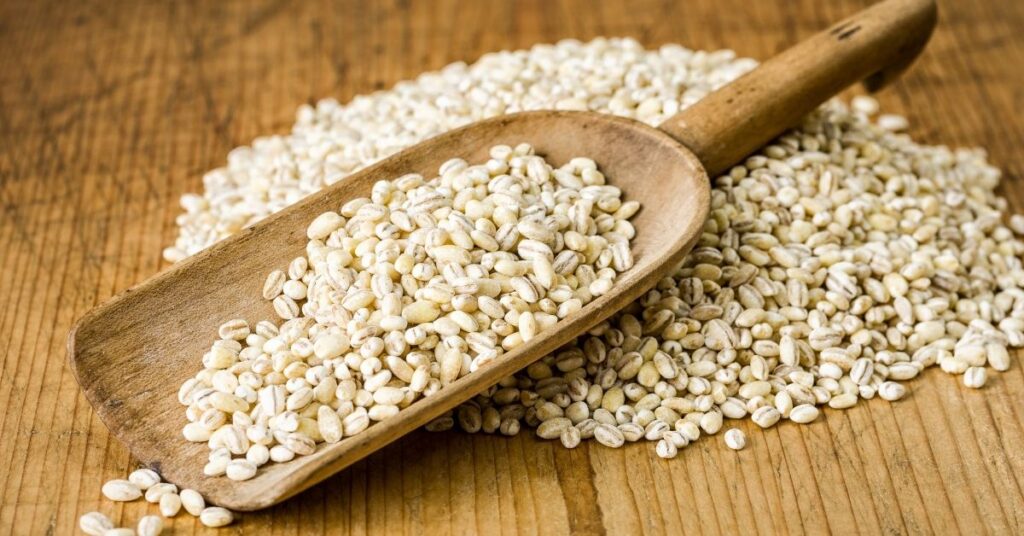
For pearled barley cooking time, plan 25–35 minutes simmered (1 cup barley to 2½–3 cups water); pressure cook 18–20 minutes with natural release.
Pearled barley is polished so it cooks faster than hulled barley yet still lands that springy, satisfying bite. The sweet spot is a tender, slightly chewy center without burst kernels or gummy starch. This page gives you exact timing by method, smart ratios, and texture checkpoints so you can hit the mark on the first try.
Cooking Time For Pearled Barley In Different Appliances
If you want a quick win, use the chart below and then skim the method notes. Times assume well-rinsed pearl barley and sea-level timing. Add a few minutes if your grains are very old or your water is hard.
| Method | Liquid Ratio (Per 1 Cup Barley) | Cook Time* |
|---|---|---|
| Stovetop Simmer (Absorption) | 2½–3 cups water or broth | 25–35 minutes |
| Pressure Cooker / Instant Pot | 2 cups water or broth | 18–20 minutes + natural release 10 |
| Rice Cooker (White-Rice Mode) | 2½ cups water or broth | 45–55 minutes (until switch flips) |
| Oven-Baked (Covered 350°F / 175°C) | 3 cups hot broth + 1 Tbsp oil | 40–50 minutes |
| Pilaf (Sauté First, Then Simmer) | 2½ cups stock | 28–32 minutes |
| Soup Add-In (No Pre-Cook) | N/A (in soup) | 30–40 minutes in simmering soup |
| Soak 2 Hours, Then Simmer | 2¼–2½ cups water | 18–25 minutes |
*Times are for standard pearl barley. “Quick-cooking” pearl is par-cooked and will be done in 10–15 minutes; use less liquid.
Pearled Barley Cooking Time By Method And Ratio
Stovetop Absorption
Rinse well until the water runs clear. Boil the measured liquid, stir in barley and salt, then drop to a gentle simmer and cover. Check at 20 minutes and then every 5 minutes. You’re done when the center no longer shows a chalky dot when you bite a kernel, and most liquid is absorbed. If liquid remains but grains are perfect, rest 5 minutes and fluff; the barley will drink the last bit off heat.
Many extension programs list a 3:1 ratio and a 45–60 minute window for pearl, which works, but lands softer. If you prefer light chew, start closer to 2½:1 and pull at 25–35 minutes. For a conservative baseline, see OSU Extension’s stovetop barley timings.
Pressure Cooker / Instant Pot
Add rinsed barley, liquid, and a small splash of oil to reduce foaming. Cook on high pressure for 18–20 minutes and let the pressure drop naturally for 10 minutes before venting. The trapped steam finishes the center without blowing out the hull. If you want firmer texture for salads, set 17–18 minutes; for soups, 20 minutes gives a softer finish.
Rice Cooker
Use the white-rice setting with 2½:1 liquid. The machine may need a few extra minutes after the switch flips; let it sit on warm for 10 minutes, then peek. If the pot shows pockets of wetness around the edges, stir, close, and let the residual heat finish.
Oven-Baked Pilaf
Toast rinsed barley in a little oil in a Dutch oven until it smells nutty. Stir in hot stock (3:1) and cover tightly. Bake at 350°F / 175°C for 40–50 minutes. This set-and-forget method is great for large batches and keeps kernels intact. Finish with a 10-minute rest before fluffing.
In Soups And Stews
Add pearl barley directly to a steady simmer and give it 30–40 minutes. Acidic liquids slow softening, so if your soup is tomato-heavy, add the tomatoes in the last 15 minutes or cook the barley separately and combine at the end.
Soak-Then-Simmer
Soaking trims time and improves evenness. Cover the grains with cool water for 1–2 hours, drain, then simmer in 2¼–2½ cups fresh liquid for 18–25 minutes. This option suits tight weeknight windows while keeping texture lively.
What Changes The Clock: The Factors That Matter
Pearl Level And Kernel Age
Deeper pearling removes more bran, so the center hydrates faster. Older pantry stock also hydrates slowly. Plan the high end of the window if your bag looks dusty or has been open for months.
Soaking And Rinsing
Rinsing clears surface starch that can thicken liquid early and trap steam. A short soak evens moisture and trims a few minutes. Skip soaking for “quick-cooking” pearl since it’s already par-cooked.
Altitude And Boil Temperature
As elevation rises, water boils at a lower temperature, which stretches simmer time. CSU Extension notes that simmered foods need longer time at altitude; add time or use pressure to compensate, since pressure cooking raises the boiling point. See high-elevation cooking guidance for why this happens and how to adjust.
Liquid, Salt, And Acidity
Too little liquid stalls hydration; too much leaves you with soup. Salting the pot early is fine; the kernels still hydrate. Strong acid like lots of tomatoes keeps the hull firm, so fold in acidic ingredients late if you want a faster cook.
Stirring And Heat Level
A rolling boil scuffs kernels and bursts starch. Keep it to a gentle simmer. Stir once or twice only; constant stirring breaks the outer layer and creates gluey cooking liquid.
Texture Targets, Doneness Checks, And Saving A Batch
What Done Looks And Feels Like
Bite a kernel. You want a plump shape, a glossy surface, and a center that offers light bounce but no chalkiness. If you slice a grain, the core should match the color of the exterior with no opaque dot.
Fixes When Things Go Sideways
If the pot is dry and the center is still firm, splash ¼ cup hot liquid, cover, and steam for 5 minutes. If it’s close, just rest covered for 10 minutes; carryover heat smooths the last bit. If the pot is soupy but texture is right, vent the lid slightly and simmer 2–3 minutes while stirring.
| Problem | Likely Cause | Quick Fix |
|---|---|---|
| Too Firm After Time | Low simmer or old grain | Add ¼–½ cup hot liquid; cover 5–10 minutes |
| Soupy Pot | Excess liquid or weak simmer | Uncover and cook 2–5 minutes, stirring |
| Gummy Or Gluey | Hard boil or over-stirring | Spread on sheet pan to steam-off; next time, gentler heat |
| Blown-Out Kernels | Overcooked or quick-cook variety | Use shorter time; switch to 2:1 liquid |
| Bitter Edge | Scorched pot | Transfer to new pot; add splash of broth and stir in herbs |
| Uneven Doneness | Hot spots or thick pot layer | Stir once mid-cook; lower heat; ensure level layer |
Portions, Yield, And Meal Prep Tricks
Ratios And Yield Math
One cup dry pearl barley yields about 3 to 3½ cups cooked. For side portions, plan ½ cup cooked per person; for bowls or salads, plan ¾–1 cup. Batch cook, chill fast, and you’ll have a hearty base for the week.
Rinse, Chill, And Store Safely
Spread hot barley on a sheet pan to cool within 30 minutes, then pack and chill. Keep cooked barley refrigerated up to 4 days or freeze for 3 months. Reheat with a splash of water on the stove or in the microwave, covered, until steamy all the way through.
Flavor Moves That Work
Use stock instead of water, toast the grain in oil first, and add a bay leaf or a strip of lemon zest during the simmer. Finish warm bowls with olive oil, pepper, and fresh herbs. For salads, rinse quickly after cooking to knock off extra surface starch, then dress while warm so flavors sink in.
Common Questions, Answered Briefly
Do I Need To Soak Pearl Barley?
No. Soaking is optional for speed and evenness. For the best texture, rinse and cook as directed. A short soak helps older grain and trims a few minutes.
Why Is My Timing Different From A Package?
Brands vary in how much bran gets polished off. Kitchen gear and altitude matter, too. If you want a published baseline with a softer finish, check the OSU Extension stovetop method and adjust toward firmer or softer from there.
What’s The Best Way For Salads?
Use the stovetop absorption or pressure cooker method with the low end of the time window, then rest and fluff. You’ll get distinct kernels that hold up under dressing.
Ratios, Water Quality, And Seasoning Timing
Hard Water And Mineral Load
Hard water slows softening. If your pot often runs long, switch to filtered water or add a tiny pinch of baking soda. Keep it small—about 1⁄16 teaspoon per cup of dry barley—so kernels stay intact and flavor stays bright. A gentle simmer and a tight lid also move hydration along without roughing up the surface.
Salt And Umami
Salt early when cooking in plain water. If you use packaged stock, go light at the start since reduction concentrates sodium near the end. For deeper flavor without extra salt, cook in low-sodium broth and drop in a bay leaf, a cheese rind, or a splash of soy near the finish for steady, even results.
Bringing It All Together
The cooking time for pearled barley shifts with method, altitude, and how polished the grain is, but the texture cues stay the same. Use the quick chart to set your timer, then rely on the bite test and a short covered rest to finish. With these ratios and checkpoints, the cooking time for pearled barley becomes a simple, repeatable routine you can trust for soups, salads, and warm bowls.
