
Yes, you can microwave small amounts of new, smooth aluminum foil if your oven manual permits it, but crumpled foil causes fire hazards and arcing.
You probably grew up hearing that metal in the microwave equals disaster. That rule is not entirely true anymore. Modern technology and specific guidelines allow for limited use of foil, mainly for shielding food. But if you get it wrong, you risk ruining your dinner and the appliance.
Knowing the boundaries saves you from a kitchen fire. You need to know exactly when to use it, how to shape it, and when to swap it for a safer cover.
Can I Microwave With Aluminum Foil?
The short answer is yes, but you must follow strict conditions. The Food and Drug Administration (FDA) states that small amounts of aluminum foil can be used for shielding, provided the microwave manufacturer allows it. The confusion comes from older ovens. Older magnetrons could not handle the reflection of energy as well as modern ones.
You must check your specific owner’s manual first. Some manufacturers still ban metal completely to avoid liability. If your manual gives the green light, you still have to follow specific physical laws to prevent sparks.
Microwaves cook food by vibrating water molecules. Metal does not absorb these waves; it reflects them. Flat sheets of foil reflect the waves like a mirror. This is useful for blocking heat from delicate parts of a meal, like chicken wings. The danger starts when the foil has wrinkles or sharp edges.
Common Kitchen Materials And Microwave Safety
Before you start heating leftovers, you need to know which materials react poorly to microwave radiation. This table breaks down common items you might grab instead of or alongside foil.
| Material Type | Microwave Safe? | Usage Notes |
|---|---|---|
| Smooth Aluminum Foil | Conditional | Use only for shielding; keep flat and new. |
| Crumpled Foil | No | Causes arcing and fire immediately. |
| Foil Containers | Conditional | Only if 3cm deep or less; keep top open. |
| Metal Twist Ties | No | The paper burns off; the wire sparks. |
| Gold-Rimmed Plates | No | Paint contains metal; will spark and ruin the plate. |
| Parchment Paper | Yes | Safe for covering and preventing splatters. |
| Wax Paper | Yes | Safe, but melts if food gets too hot. |
| Plastic Wrap | Conditional | Must not touch high-fat/sugar foods. |
Why Aluminum Foil Sparks In The Microwave
You have likely seen the lightning storm effect inside an oven. This is called arcing. It happens when electric current flows through the conductive metal and jumps through the air. Foil is a conductor. When microwaves hit it, electrons move.
On a flat sheet, the electrons slide back and forth safely. When you crumple the foil, you create sharp points and gaps. The electric charge builds up at these sharp tips. When the charge gets too high, it jumps to the nearest conductive surface. That jump is the spark you see.
This heat is intense enough to damage the microwave’s walls or the magnetron itself. It can also burn holes in the foil or ignite the grease on your food. This is why the “smooth and flat” rule exists. Wrinkles act as launchpads for electricity.
Rules For Microwaving With Aluminum Foil Safely
If you decide to use foil, you cannot just wrap your burrito and toss it in. You have to apply specific techniques to keep the appliance safe. Follow these protocols every time you use metal shielding.
Use New Foil Only
Recycling is great, but not here. Used foil often has crinkles, tears, or food residue stuck to it. These imperfections create the sharp points mentioned earlier. Always pull a fresh sheet from the roll. Smooth it out completely before placing it on the food.
The 25 Percent Coverage Rule
Never cover the entire dish. The USDA recommends covering no more than one-quarter of the food with foil. If you cover the whole plate, the waves cannot reach the food. Your meal will stay cold. Shield only the parts that cook fastest, like poultry wings or leg tips.
Keep Distance From Walls
Metal must not touch the interior walls, the door, or the ceiling of the oven. The GE Appliances support team advises keeping foil at least one inch away from the metal cavity walls. If the foil touches the wall, it completes an electrical circuit. This causes massive arcing that will scorch the interior paint and potentially destroy the unit.
Mold Foil To The Food
Loose foil acts like an antenna. You want the foil to sit flush against the food item. This reduces the chance of edges sticking up and acting as spark conductors. If you are shielding a chicken leg, wrap the foil tightly around the bone and meat. Do not leave flags of metal hanging off.
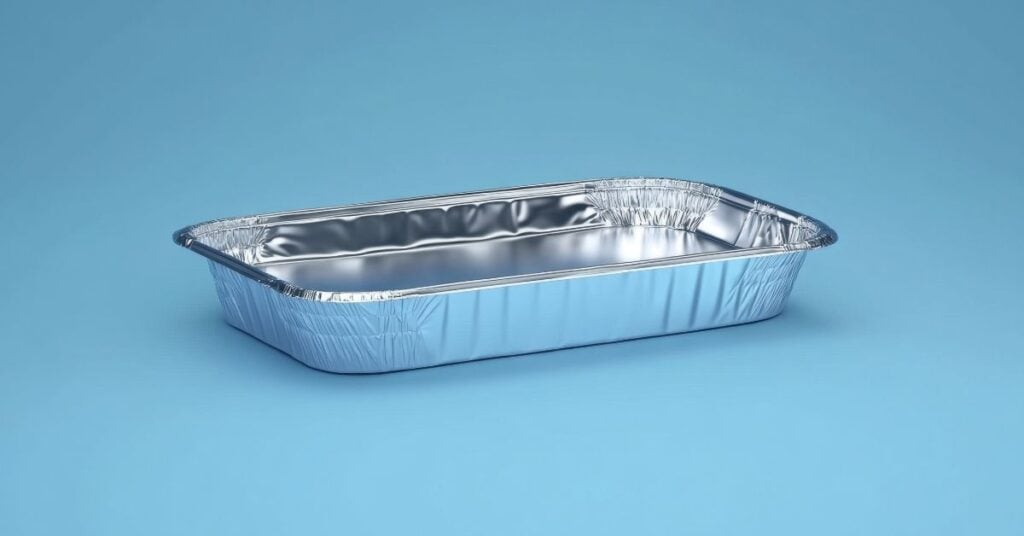
Can I Microwave With Aluminum Foil Containers?
Takeout trays pose a different challenge. Many restaurants serve food in shallow aluminum trays. You can microwave with aluminum foil containers if they are shallow, but you have to be careful. A container deeper than 1.5 inches usually blocks too much energy. The food at the bottom will not heat up.
If you use a foil tray, remove the paper lid first. Metal lids or lids with foil lining are dangerous here. Place the tray on the glass turntable. If your microwave has a metal rack or a metal turntable, you cannot use a foil tray. Metal on metal creates sparks instantly.
Pour enough food into the tray to fill it. Empty or half-empty foil trays can overheat. The food absorbs the energy; without enough food, the energy reflects back into the magnetron, which shortens the lifespan of your appliance.
Risks Of Ignoring Safety Guidelines
Skipping these safety steps leads to expensive problems. The most immediate risk is fire. A single spark can ignite dry paper towels, grease, or parchment paper nearby. Even if a fire does not start, the damage to the oven accumulates.
Magnetron Failure
The magnetron is the engine of your microwave. It pumps out the waves. When you put too much metal inside, the waves reflect back into the magnetron tube. This feedback loop overheats the tube. Eventually, the magnetron burns out. Replacing this part often costs as much as buying a new microwave.
Glass Turntable Shattering
Arcing generates intense localized heat. If a spark jumps from the foil to the glass tray, the thermal shock can shatter the glass. You end up with a broken plate and a meal full of glass shards.
Using Foil For Shielding Poultry
The best use case for foil is cooking a whole chicken or turkey parts. The extremities, like wings and drumsticks, have less mass. They cook faster than the breast meat. By the time the thick meat is safe to eat, the wings are dried out jerky.
You can use small strips of smooth foil to cover these thin parts for the first half of the cooking time. Halfway through, you pause the oven and remove the foil. This allows the rest of the bird to catch up. This technique yields juicy meat across the whole bird.
Always double-check that the foil stays molded to the skin. If the fan inside the oven blows the foil loose, it might drift and touch the walls.
Safer Alternatives To Foil
While you can use foil, it is often not the best tool for the job. If you just want to cover food to stop splatters or keep moisture in, other materials work better and carry zero risk.
Paper towels are excellent for absorbing excess moisture. They prevent soggy textures in breads and pizza. Wax paper is another great option. It holds heat in but does not trap steam as aggressively as plastic wrap. Parchment paper tolerates higher heat and is grease-resistant.
For steaming vegetables, microwave-safe plastic wrap is the standard. Just make sure you vent a corner to let excess steam escape. If the wrap seals too tightly, the steam pressure can explode the bag or warp the container.
Comparison Of Microwave Covers
Choosing the right cover depends on what you are cooking. This comparison helps you decide when to risk using foil and when to grab a glass lid.
| Cover Type | Best Used For | Risk Level |
|---|---|---|
| Aluminum Foil | Shielding thin meat; preventing overcooking. | High (Fire/Arcing) |
| Microwave Cover (Plastic) | General reheating; splatter guard. | Low (Melting if low quality) |
| Paper Towel | Pizza, breads, bacon, light splatters. | None |
| Glass Lid | Casseroles, steaming, long cook times. | None |
| Ceramic Plate | Reheating bowls; short durations. | Low (Must be microwave safe) |
What To Do If You See Sparks
Sometimes you follow the rules and things still go wrong. Maybe a piece of foil bent upward or the tray shifted. If you see blue lightning or hear a loud buzzing pop, act fast.
Press the Stop/Clear button immediately. Do not wait for the timer to run out. Open the door and inspect the contents. Look for burn marks on the foil or the food. If the food is catching fire, keep the door closed and unplug the unit. The lack of oxygen will choke the flames.
Remove the metal object. Transfer the food to a ceramic or glass dish. Check the interior walls for scorch marks. If the paint is chipped, you might need to repair it with microwave-safe paint before using the oven again. Exposed metal on the walls can cause future arcing even without foil present.
Manufacturer Variations And Manuals
Not all microwaves are built the same. Convection microwaves often have metal racks and interior linings that handle heat differently. These units might allow more metal usage than a standard solitary unit. However, combo units (microwave + toaster) have heating elements that pose extra fire risks with paper or wax.
Always verify the wattage and age of your machine. Older units from the 80s or 90s lack the advanced sensors and wave stirrers of modern appliances. They are less forgiving of metal reflection. If you have an antique unit, skip the foil entirely.
Does Foil Block Radiation?
People often ask if wrapping food in foil prevents radiation from reaching it. Yes, it does. That is why we use it for shielding. The metal reflects the waves away.
If you wrap a potato completely in foil, it will never bake. The microwave energy bounces off the wrapper. The potato remains raw, and the energy bounces around the oven cavity looking for something to absorb it. This usually ends up being the magnetron.
You use this blocking property to your advantage. By covering the tips of asparagus or the edges of a lasagna, you force the energy to focus on the dense, cold center of the dish. This promotes even heating.
Can I Microwave With Aluminum Foil In Convection Mode?
Many modern kitchens feature combination ovens. These appliances switch between microwave energy and standard convection heat (hot air). When your oven is in 100% convection mode, you can use metal just like in a regular oven.
The danger arises in “Combination Mode.” This setting uses both microwaves and hot air simultaneously. In this mode, the strict rules apply again. You cannot use large metal pans or fully cover dishes. You must stick to the 25% shielding rule.
Accidentally leaving a metal spoon or a large foil sheet in the oven while switching modes is a common user error. Always double-check which icon is lit up on the display panel before hitting start.
Testing Your Dishware
If you are unsure if a plate with a metallic rim or a shiny glaze contains real metal, do not risk it with food. Perform a standard safety test. The USDA guidelines suggest placing a cup of water next to the dish in question. Microwave for one minute.
If the dish gets hot but the water stays cool, the dish is absorbing energy and is not safe. If the dish remains cool and the water gets hot, the dish is transparent to microwaves. If you see sparks during the test, stop immediately. That shiny rim is conductive metal.
Environmental Considerations
Using foil for a single microwave session generates waste. Since you cannot reuse foil that has crinkles or food residue for shielding, you end up tossing it. Paper towels are biodegradable. Glass lids are infinitely reusable.
From a sustainability angle, investing in a good set of vented glass or silicone lids makes sense. They handle the heat better, never spark, and save money over time. You should reserve aluminum foil for the grill or the conventional oven where it truly shines.
Final Safety Checklist
Before you press start, run through this quick mental list. It takes five seconds and ensures your kitchen stays smoke-free.
- Is the foil new and completely smooth?
- Is less than 25% of the food covered?
- Is the foil at least one inch away from all walls and the door?
- Is the foil molded tightly to the food shape?
- Did I remove all twist ties and metal clips?
- Is the turntable glass (not metal)?
Following these steps makes the tool useful rather than dangerous. You get evenly cooked meat without the burnt edges. Respect the physics of the appliance, and you can leverage the benefits of metal shielding without fear.
