
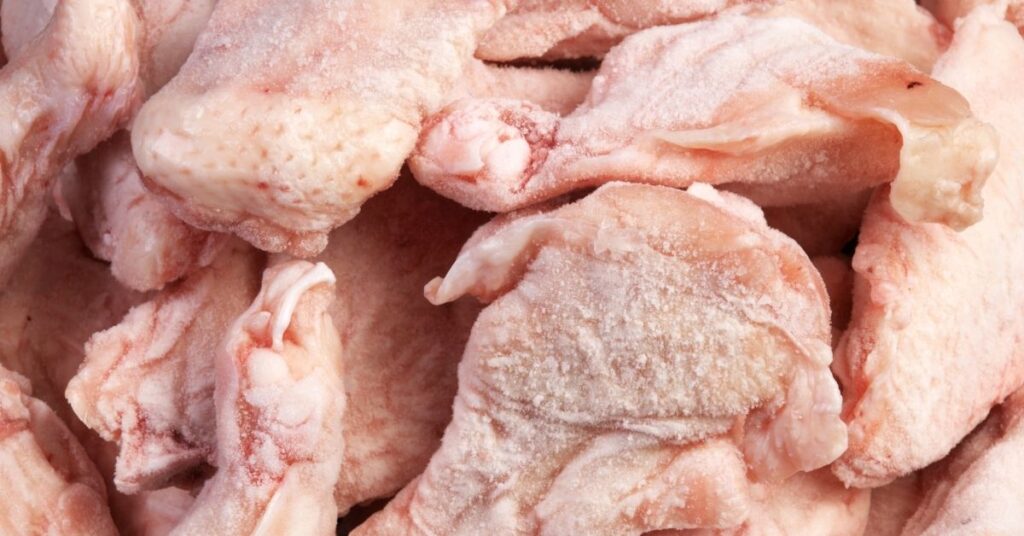
Yes, you can microwave frozen chicken to thaw it, but cooking it fully from frozen often causes uneven heating and bacterial growth risks.
You forgot to pull the meat out of the freezer this morning. Now it is dinner time, and you are staring at a rock-hard block of poultry. This scenario happens in kitchens everywhere. The microwave seems like the fastest solution to save the meal.
Using the microwave is the quickest way to get dinner on the table, but it requires specific steps to keep the food safe. If you toss a frozen bird in and hit “Start,” you risk serving meat that is rubbery on the outside and raw in the middle. Worse, you might create an environment where bacteria thrive.
We will break down exactly how to handle this safely, preserving the texture of your meat and protecting your health.
Can I Microwave Frozen Chicken?
Many home cooks ask, “can i microwave frozen chicken?” when they are pressed for time. The short answer is yes, but you must distinguish between thawing and full cooking. The microwave is an excellent tool for the defrosting phase. It uses electromagnetic waves to excite water molecules, generating heat that melts ice crystals.
However, microwaves do not heat evenly. They create hot spots and cold spots. If you attempt to cook a chicken breast from a solid frozen state to a fully cooked state in one go, the edges will likely dry out and turn into leather before the center reaches a safe temperature. This uneven heating is the main reason why culinary experts advise against cooking raw poultry from frozen in the microwave without a defrost cycle first.
The Safety Risks Involved
Safety is the primary concern here. Raw chicken often carries Salmonella or Campylobacter. These bacteria multiply rapidly between 40°F and 140°F, a range known as the “Danger Zone.”
When you microwave frozen meat, parts of the food may become warm enough to encourage bacterial growth while other parts remain frozen. If you do not cook the meat immediately after thawing, those bacteria have a chance to spread. This is why you must never thaw chicken in the microwave and then put it back in the fridge to cook later.
Comparison Of Chicken Thawing Methods
Understanding how the microwave stacks up against other methods helps you decide if the speed trade-off is worth it. This table outlines the differences in time and quality.
| Method | Time Required | Quality & Safety Notes |
|---|---|---|
| Microwave Defrost | 10–15 Minutes | Fastest option. Requires immediate cooking. High risk of uneven texture if not monitored. |
| Cold Water Bath | 1–3 Hours | Even thawing. Requires a sealed bag and water changes every 30 minutes. Maintains texture well. |
| Refrigerator | 12–24 Hours | Safest method. Zero effort involved. Best for texture. Requires advanced planning. |
| Countertop | Never | Unsafe. The outer layer hits the Danger Zone while the center remains frozen. Do not use this method. |
| Hot Water | Never | Encourages rapid bacterial growth. Starts cooking the outside layer prematurely. |
| Cooking From Frozen (Oven/Stove) | 50% Longer Cook Time | Safe for oven or stovetop, but not recommended for microwaves due to cold spots. |
| Sous Vide | 1–2 Hours | Very safe. Cooks and thaws simultaneously. Requires specific equipment. |
USDA Guidelines For Safe Defrosting
Federal food safety agencies provide strict rules for this process. According to the USDA Food Safety and Inspection Service, you must cook meat immediately after microwave thawing because the process may raise the temperature of some areas enough to start the cooking process.
Any partial cooking means bacteria present on the meat would not be destroyed and could reach optimal temperatures for growth. The USDA explicitly warns against holding partially cooked food for later finishing. Once that microwave beeps, you need to move that protein to a skillet, oven, or grill instantly.
Step-By-Step Guide To Microwaving Frozen Chicken
If you need to use this method, follow this protocol to minimize quality loss and maximize safety.
1. Remove Store Packaging
Never put the foam tray or plastic wrap from the grocery store into the microwave. These materials are not heat-stable. They can warp, melt, and leach harmful chemicals into your food. Transfer the pieces to a microwave-safe glass or ceramic dish.
2. Use The Defrost Setting
Set your microwave to “Defrost” or 30% power. High power blasts the food with energy, cooking the outside instantly while the inside stays frozen. The lower power setting cycles the magnetron on and off, allowing heat to conduct from the warmer outer layers to the frozen center more gently.
3. Separate And Flip
This step is non-negotiable. Microwave for two minutes, then open the door. Flip the meat over. If you have multiple pieces frozen together, try to pry them apart gently. If they are still stuck, give them another minute and try again. Separating the pieces allows the waves to penetrate evenly from all angles.
4. Check The Progress
The goal is pliable meat, not hot meat. The chicken should feel cold to the touch but soft. If the edges start turning white or looking cooked, stop immediately. You can finish the thawing process in the pan or oven.
Handling Different Cuts Of Poultry
Not all chicken behaves the same way in the microwave. The shape and bone content dictate how the energy absorbs.
Boneless Skinless Breasts
These are the easiest to thaw but the easiest to ruin. Because they are lean, they dry out fast. Place them in a single layer. Check them frequently. If the thin tapered ends start to cook, you can shield them with small strips of foil (if your microwave manual permits small amounts of foil; otherwise, just rotate them to the center of the plate).
Bone-In Thighs And Drumsticks
Bones act as conductors. The meat near the bone often warms up faster than the rest. This creates a high risk of the “Danger Zone” issue near the bone while the surface is still icy. Use lower power settings and longer intervals for bone-in cuts.
Whole Birds
Avoid microwaving a whole frozen chicken. The density and size make it nearly impossible to thaw evenly without cooking the wings and legs. The cavity creates a haven for bacteria if it does not thaw at the same rate as the breast. For a whole bird, the cold water method or refrigerator method is far superior.
Impact On Texture And Flavor
You might notice a difference in the final dish when you rush the thawing process. Microwaved chicken often suffers from moisture loss. The rapid excitement of water molecules forces liquid out of the protein fibers.
The result can be a dry, chewy texture, often described as “rubbery.” This is less noticeable in soups, stews, or heavy sauces where moisture is added back in. However, if you plan to grill or sear the meat, you will likely notice the quality drop compared to slow-thawed meat. To combat this, ensure you brine or marinate the meat immediately after thawing to reintroduce some flavor and moisture.
Common Mistakes To Avoid
Home cooks often ruin their dinner by skipping small details. Watch out for these errors.
Using High Power
Patience saves the meal. Blasting the meat on 100% power will not speed things up effectively; it will just give you a boiled exterior and an ice-pop interior. Always stick to the 30% power range.
Covering Tightly
Do not cover the chicken tightly with plastic wrap. You want steam to escape. If you trap the steam, you effectively steam-cook the surface of the meat. Use a microwave-safe cover with vents or a paper towel to prevent splatter while allowing airflow.
Refreezing The Meat
Once you thaw chicken in the microwave, you cannot put it back in the freezer raw. The bacteria have likely woken up. You must cook the chicken fully. After it is cooked, you can freeze the cooked dish safely.
Internal Temperature Guidelines
Visual cues are unreliable with microwave-thawed meat. The white appearance might make you think it is cooked when it is not. You need hard data to ensure safety.
| Cut of Meat | Target Internal Temp | Checking Placement |
|---|---|---|
| Chicken Breast | 165°F (74°C) | Thickest part of the meat, avoiding fat. |
| Thighs / Wings | 165°F – 175°F | Thickest part, avoiding the bone. |
| Ground Chicken | 165°F (74°C) | Center of the patty or loaf. |
| Whole Chicken | 165°F (74°C) | Deepest part of the thigh and breast. |
| Leftovers | 165°F (74°C) | Center of the reheating vessel. |
Cooking From Frozen Without Thawing
Sometimes you might want to skip the thawing phase entirely and cook the frozen block. This is safe on the stove or in the oven, but it takes longer. The rule of thumb is to add 50% to the standard cooking time.
For example, if a fresh chicken breast takes 20 minutes to bake at 350°F, a frozen one will take about 30–35 minutes. This method works well because the ambient heat of the oven surrounds the meat evenly, unlike the directed energy of a microwave. Just verify the internal temperature reaches 165°F before serving.
The FDA also notes that slow cooking frozen poultry in a slow cooker is not recommended, as the meat stays in the Danger Zone for too long. Stick to the oven or stovetop for direct-from-frozen cooking.
Final Thoughts On Microwave Usage
While the answer to “can i microwave frozen chicken?” is a qualified yes, you should view it as a last resort. It works best for small, boneless cuts that you plan to cook immediately in a high-heat dish like a stir-fry or curry.
For the best dining experience, try to plan ahead. Move your proteins from the freezer to the fridge the night before. If you forget, the cold water method is the middle ground between quality and speed. Use the microwave only when you have zero time to spare and are willing to monitor the process closely to avoid the dreaded rubber chicken dinner.
