
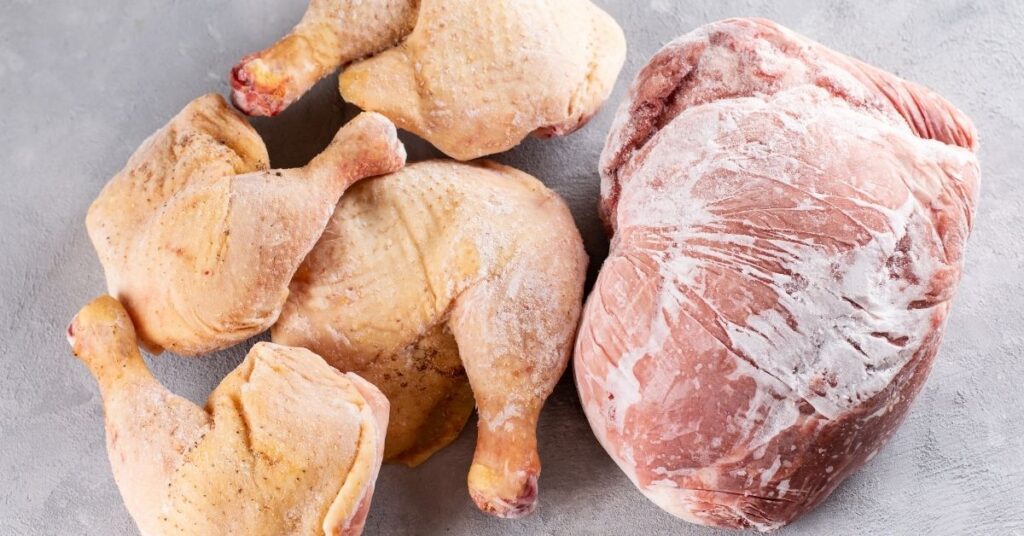
No, you should not marinate chicken while it is frozen because the meat cannot absorb flavors, and thawing it on the counter creates bacterial risks.
You pull a rock-hard chicken breast from the freezer at 5 PM. You want dinner to taste amazing, but you forgot to prep.
This situation happens to home cooks every day. You stare at the ice-cold poultry and reach for the bottle of Italian dressing or soy sauce. You pause.
Is this safe? Will the flavor actually get inside the meat?
The short answer is clear, but the “why” involves food science that protects your health and your dinner’s quality. Attempting to season a block of ice wastes your ingredients. The marinade will slide right off the surface.
Worse, leaving that meat on the counter to thaw in the sauce puts you in the bacterial danger zone.
We will cover the specific reasons this method fails, the serious safety hazards involved, and the correct ways to get flavor into your meat, even if you are short on time.
Can I Marinate Frozen Chicken? The Safety Facts
You cannot effectively marinate frozen chicken for two main reasons: physical barriers and temperature safety. These are not just suggestions; they are rules defined by physics and biology.
When chicken freezes, the water inside the muscle fibers turns into ice crystals. These crystals expand and take up all the available space within the meat structure. There is literally no room for the marinade to enter.
If you pour a marinade over a frozen breast, it sits on the surface. It essentially creates a flavored ice shell. The acid, oil, and herbs cannot penetrate the muscle fibers because the ice blocks them.
The Bacterial Risk
The second issue is far more critical. Most people who ask “can I marinate frozen chicken” intend to leave the bowl on the kitchen counter to thaw.
This is a major food safety error. The exterior of the chicken will reach room temperature long before the center thaws. Bacteria like Salmonella and Campylobacter multiply rapidly between 40°F and 140°F.
According to the USDA Food Safety and Inspection Service, this temperature range is known as the “Danger Zone,” where bacteria can double in number in as little as 20 minutes.
By the time your chicken is soft enough to absorb the marinade, the surface has been in the danger zone for hours. Cooking might kill the bacteria, but it may not eliminate the heat-resistant toxins some bacteria leave behind.
Comparison Of Marinating Scenarios And Outcomes
Understanding the difference between fresh, frozen, and pre-frozen prep methods helps you choose the right path for your meal.
| Method Scenarios | Flavor Absorption | Safety Rating |
|---|---|---|
| Pouring Sauce On Frozen Meat | Zero (slides off surface) | Low (if thawed on counter) |
| Thawing In Fridge With Sauce | Low to Medium (dilutes with water) | High (temperature stays safe) |
| Fresh Meat, Then Marinated | High (penetrates fibers) | High (standard practice) |
| Marinating In Bag Before Freezing | Maximum (absorbs during thaw) | High (safest meal prep) |
| Microwave Thaw Then Marinate | Medium (texture may suffer) | Medium (cook immediately) |
| Cooking Frozen In Sauce | Low (surface flavor only) | High (if internal temp hits 165°F) |
| Cold Water Thaw Then Marinate | High (standard absorption) | High (fast and safe) |
The Problem With Water Dilution
Even if you thaw the chicken in the refrigerator safely while it sits in marinade, you face a quality issue. As chicken thaws, it releases liquid. This is natural purge water from the cells.
This excess water mixes with your marinade. It dilutes the acidity and the salt content. Your carefully balanced recipe becomes watery and weak.
The chemical reaction you want from a marinade requires specific concentrations. Salt denatures the proteins to retain moisture. Acid tenderizes the fibers.
If the marinade becomes watered down by melting ice, these reactions stop working. You end up with chicken that tastes bland, even though it sat in liquid for hours.
Marinating Frozen Chicken Risks And Texture Issues
Texture is another casualty when you try to force flavor into frozen poultry. Acids like lemon juice, vinegar, or yogurt act on the meat’s surface.
When the meat is frozen, the acid eats away at the very outer layer of the flesh while the inside remains rock hard. This can result in a mushy, chalky exterior once cooked.
Enzymatic marinades are even riskier. Ingredients like pineapple, papaya, or ginger contain enzymes that break down meat proteins.
On frozen meat, these enzymes pool in one spot. They digest the surface meat too aggressively. You might find your cooked chicken has a pasty texture on the outside but remains tough on the inside.
Uniformity is the goal of cooking. Starting with a frozen block prevents uniformity.
Proper Thawing Methods Before Marinating
You must thaw the meat first. There are three safe ways to do this. Once the meat is thawed, you can marinate it effectively.
1. The Refrigerator Method
This requires planning. Place the frozen chicken in a bowl or on a rimmed baking sheet. Put it on the bottom shelf of your fridge.
- It takes about 5 hours per pound to thaw.
- A boneless breast might be ready overnight.
- A whole bird takes days.
Once thawed, pat it dry. Then apply your marinade. The meat is now receptive to the flavor, and you have not introduced any bacterial risk.
2. The Cold Water Method
This is faster. Seal the frozen chicken in a leak-proof plastic bag. Submerge the bag in a large bowl of cold tap water.
- Do not use hot water. Hot water starts the bacterial growth cycle on the outside.
- Change the water every 30 minutes.
- Small packages thaw in an hour or less. Larger cuts take 2 to 3 hours.
Once soft, proceed with your recipe immediately.
3. The Microwave Method
Use the defrost setting. Check the weight of your chicken and enter it correctly. Stop the microwave halfway through to flip the meat.
Microwaves heat unevenly. You might get cooked spots on the edges while the center remains icy. If you use this method, you must cook the chicken immediately after thawing.
Note: Do not put the meat back in the fridge to marinate after microwaving. The partial cooking has already raised the temperature too high for storage.
The Exception: “Freezer Bag Meals”
There is one scenario where marinades and freezers work together perfectly. This is the meal prep strategy known as “dump dinners” or freezer marinades.
This works because you combine fresh (unfrozen) chicken and the marinade in a freezer bag before you freeze them.
- You place raw, fresh chicken into a bag.
- You pour the marinade over it.
- You squeeze out the air and freeze it immediately.
The magic happens later. When you take that bag out to thaw in the fridge, the marinade works on the meat as it defrosts. The contact is direct. The flavors have time to mingle while the temperature rises slowly.
This is different from pouring sauce on a frozen block. In this case, the sauce surrounds the meat before the ice barrier forms. As it thaws, it marinates automatically.
Safe Internal Temperatures For Chicken
Regardless of how you prep, the final temperature determines safety. Visual checks are not reliable. Juices running clear is an old myth.
You must use a digital food thermometer. Insert it into the thickest part of the meat. It should not touch the bone.
Poultry must reach 165°F (74°C) to be safe for consumption. If you marinate properly and cook to this temperature, you avoid foodborne illness.
Some cooks pull the meat at 160°F and let it rest. The residual heat carries it over to 165°F. This prevents the dry texture common in overcooked breast meat.
Strategies For Flavor When You Forgot To Thaw
If it is 6 PM and you still have a frozen block of chicken, do not panic. You cannot marinate it, but you can still flavor it.
- Use a Glaze: Cook the chicken from frozen (which takes 50% longer) or quick-thaw it in water. Once the chicken is cooking and the exterior is seared, brush on a glaze. Since heat opens up the pores of the meat, applying flavor during the cooking process is more effective than a failed frozen marinade.
- Stir-Fry Method: You can also slice the chicken once it is partially thawed. Semi-frozen chicken is actually easier to slice thinly. Cut it into strips for a stir-fry.
- Season While Frying: Toss the strips in cornstarch and spices. Fry them immediately. The increased surface area allows the flavor to coat every bite without needing a long soak.
Thawing Times By Cut And Method
Knowing exactly how long the thawing process takes allows you to plan your marinade window accurately.
| Chicken Cut Type | Fridge Time (Safe) | Cold Water Time (Faster) |
|---|---|---|
| Boneless Skinless Breasts | 12 – 24 Hours | 1 Hour |
| Bone-In Thighs / Legs | 24 Hours | 2 – 3 Hours |
| Whole Chicken (4-5 lbs) | 2 Days | 3 – 4 Hours |
| Chicken Wings (Pack) | 12 Hours | 1 Hour |
| Thin Sliced Cutlets | 8 – 10 Hours | 30 – 45 Minutes |
| Ground Chicken (1 lb) | 24 Hours | 1 – 2 Hours |
| Tenders / Strips | 10 – 12 Hours | 45 Minutes |
Why Salt Matters More Than Liquid
If you are in a rush, a dry brine is superior to a wet marinade. This involves salting the meat generously.
Salt is unique. It penetrates meat deeply, unlike garlic or herbs which stay on the surface. If you manage to quick-thaw your chicken using the cold water method, pat it very dry.
Sprinkle kosher salt on all sides. Let it sit for just 30 minutes while you prep vegetables. This short “dry brine” improves juiciness significantly more than a rushed soak in Italian dressing.
The salt draws moisture out initially, dissolves into a brine on the surface, and then gets reabsorbed. This seasons the meat from within.
Cooking From Frozen Safely
You can bypass thawing and marinating entirely. It is safe to cook chicken directly from the freezer. The FDA (Food and Drug Administration) confirms this is safe in their guidelines, provided you adjust the timing.
You must increase the cooking time by about 50%. If a recipe calls for baking fresh breasts for 20 minutes, frozen ones will need 30 to 35 minutes.
Roasting or baking works best. Pan-frying frozen chicken is dangerous because the water melts into hot oil, causing violent splatters.
Since you cannot marinate beforehand, season halfway through. Bake the frozen chicken for 15 minutes until the ice glaze melts and the surface dries slightly. Then apply your spice rub or sauce.
Final Thoughts: The “Danger Zone” Nuance
Many home cooks believe that if the center is frozen, the food is safe. This is false. The outside of the food warms up first.
Imagine a thick frozen breast on the counter. The air in your kitchen is likely 70°F. The surface of the chicken hits 40°F (the start of the danger zone) relatively quickly.
The center might stay frozen for five hours. During those five hours, the surface is sitting in warm air, breeding bacteria. By the time the center is ready, the surface is a biology experiment.
This is why the question, “can I marinate frozen chicken on the counter?” always gets a hard “no” from food safety experts. The risk outweighs the convenience.
References & Authorities
For more information on safe poultry handling, please consult the following official sources used in this guide:
