
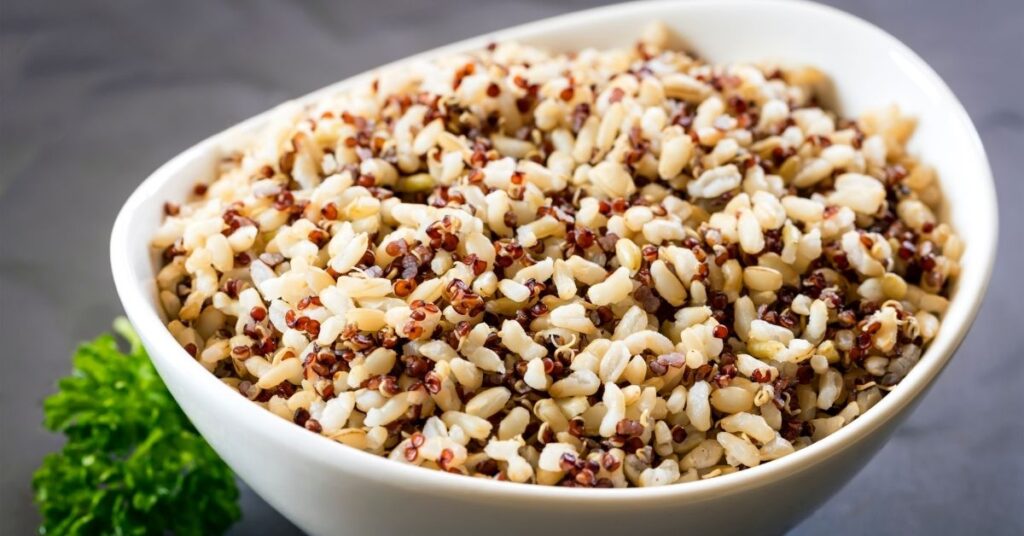
Yes, you can make quinoa in a rice cooker using about 2 parts liquid to 1 part rinsed quinoa on a standard white-rice or similar cycle.
Quinoa cooks beautifully in a rice cooker, which means no watching the stove, no guessing when the water is gone, and far fewer scorched pots. If you already lean on your cooker for rice, adding quinoa to the mix is a small shift that pays off in quick weeknight meals, lunches, and breakfast bowls.
Many home cooks still wonder, can i make quinoa in a rice cooker? The short answer is yes, and once you dial in ratios and timing, it can become the easiest way to cook this grain-like seed on busy days.
Can I Make Quinoa In A Rice Cooker? Basic Answer
You can cook most types of quinoa in a rice cooker as long as the cooker can bring the pot to a gentle boil and then hold a steady simmer. If it cooks white rice, it can almost always cook quinoa. You just need the right water or broth ratio, a quick rinse, and a bit of resting time after the cycle ends.
Rice cookers work by sensing when the liquid is absorbed and the temperature climbs. Quinoa follows the same pattern as rice: simmer in liquid, absorb, then sit and steam. The process is forgiving, which is ideal if you are new to cooking quinoa or using a basic one-button cooker.
People who type “can i make quinoa in a rice cooker?” into a search bar are usually hoping for two things: fluffy texture and a method that does not demand much attention. The method in this article covers both, plus variations and fixes if your first batch comes out too wet or too dry.
Making Quinoa In A Rice Cooker: Ratios And Settings
Good quinoa in a rice cooker starts with the liquid ratio and the right cooking program. A small tweak in water can turn soggy grains into fluffy ones, and the setting you pick decides how firm the quinoa feels when you bite into it.
Standard Water To Quinoa Ratios
On the stove, many recipes call for 2 cups of water for every cup of dry quinoa. In a rice cooker, that same range works well, though some cooks prefer slightly less liquid for a drier texture. The table below gives a practical starting point for most homes.
| Quinoa Type / Situation | Liquid Per 1 Cup Quinoa (By Volume) | Resulting Texture |
|---|---|---|
| White (Standard) Quinoa | 1 3/4 to 2 cups | Fluffy with tender bite |
| Red Quinoa | 2 cups | Chewy and separate grains |
| Black Quinoa | 2 to 2 1/4 cups | Firm, slightly nutty bite |
| Tri-Color Blend | 2 cups | Mix of soft and chewy |
| Pre-Rinsed Boxed Quinoa | 1 3/4 cups | Light, less sticky |
| Soaked Quinoa (15–20 min) | 1 1/2 to 1 3/4 cups | Softer, shorter cook time |
| Quinoa Mixed With Long-Grain Rice | 2 cups | Soft, good for pilaf-style dishes |
These ranges give you room to adjust. If you like loose grains for salads, stay near the lower end. If you prefer softer quinoa that clings together for bowls or breakfast, use closer to 2 cups of liquid per cup of quinoa.
Picking The Right Rice Cooker Setting
Most rice cookers have at least one main cycle. If yours has separate buttons for white and brown rice, treat white quinoa like white rice. Use the white or “regular” cycle for standard white or tri-color quinoa, and the brown cycle for red or black quinoa, which hold their shape longer.
On very basic cookers with a single switch, the machine will flip from “cook” to “warm” once the liquid is absorbed. That is perfect for quinoa, which benefits from a few extra minutes steaming on warm. If your cooker has a “quick cook” mode, save that for tiny batches, since it sometimes leaves the center a bit firm.
Rinsing And Toasting For Better Flavor
Quinoa has a natural coating called saponin that can taste bitter. Many brands pre-rinse their quinoa, yet a quick rinse under cold water in a fine mesh strainer still helps. Swish the grains with your hand for 20–30 seconds, then let the water drain fully so you do not throw off the ratio.
If your rice cooker has a nonstick pot and an option to heat with the lid open, you can toast the rinsed, drained quinoa in a teaspoon of oil before adding liquid. Stir for a few minutes until it smells nutty, then pour in water or broth. This small step deepens flavor and can improve texture.
Step By Step Method For Rice Cooker Quinoa
Once you know the basic pattern, cooking quinoa in a rice cooker becomes almost automatic. Here is a clear process that works on most electric and digital models.
Basic Rice Cooker Quinoa Method
- Measure the quinoa. Add 1 cup of dry quinoa to a measuring cup. This usually yields about 3 cups of cooked grains.
- Rinse thoroughly. Place the quinoa in a fine mesh strainer and rinse under cold running water, rubbing the grains lightly with your fingers.
- Add to the cooker. Shake off excess water and pour the quinoa into the rice cooker pot.
- Add liquid and salt. Add 1 3/4 to 2 cups of water or low-sodium broth, plus about 1/4 teaspoon of salt per cup of dry quinoa.
- Stir and level. Stir once to spread the grains, then level them out so they cook evenly.
- Choose the setting. Use the standard white-rice setting for white or tricolor quinoa, or the brown-rice setting for red and black quinoa.
- Let the cycle finish. When the cooker switches to warm, leave the lid closed for 5–10 minutes so the quinoa steams and sets.
- Fluff with a fork. Open the lid, fluff gently from the edges toward the center, and taste. Adjust salt while the grains are still warm.
Adjusting For Different Cooker Types
Many modern rice cookers use fuzzy logic or induction heating, which helps handle small changes in water. These models can usually take slightly lower liquid ratios, such as 1 3/4 cups per cup of quinoa, and still give soft results. If your cooker has a “grain” or “mixed” setting, that option often works nicely for quinoa blends.
On small, older cookers, stick closer to 2 cups of liquid, especially if the lid does not seal tightly. Steam loss is higher in those models, so a little extra water helps. Try a test batch on a day when dinner does not depend on it, note the texture, then nudge the liquid up or down by a couple of tablespoons next time.
Texture Tweaks And Flavor Variations
Once you know you can make quinoa in a rice cooker, the next step is tuning the texture and flavor to match your meals. Small changes in liquid, fat, and aromatics can turn plain quinoa into a base that feels tailored to salads, stews, or breakfast dishes.
Adjusting Water For Softer Or Firmer Quinoa
Texture is personal. Some people love bouncy grains with a clear pop, while others want a softer spoonful. For firmer quinoa, use closer to 1 3/4 cups liquid for each cup of grains and allow a full 10 minutes of resting on warm. For softer quinoa, use a full 2 cups of liquid and let it sit a bit longer with the lid closed.
If the batch feels wet when you open the lid, leave it on warm with the lid slightly ajar for 5 minutes and fluff again. If it feels too dry and crunchy, sprinkle a couple of tablespoons of hot water over the top, close the lid, and let it steam on warm for another 5–10 minutes.
Flavoring Quinoa In The Rice Cooker
Broth is the easiest upgrade. Swap some or all of the water for low-sodium vegetable or chicken stock. Add a small splash of olive oil or a pat of butter for a softer mouthfeel. You can stir in a bay leaf, a smashed garlic clove, or a strip of lemon peel before cooking; just remember to remove whole pieces when fluffing.
For a simple seasoned base, stir in ground spices with the dry quinoa. Mild chili powder, cumin, curry powder, smoked paprika, or dried herbs all work. Start small, about 1/2 teaspoon per cup of dry quinoa, and adjust in later batches. Rice cookers hold flavor well, so strong spices can build up if you never scrub the pot, which is another reason to wash it between cooks.
Nutrition And Why Quinoa Is Worth Cooking
Quinoa is a high-protein seed that behaves much like a grain in meals. A cooked cup brings a mix of carbohydrates, protein, fiber, and minerals such as magnesium and iron. Resources like the Harvard Nutrition Source on quinoa explain how this profile compares with other staples and why many dietitians like it for balanced meals.
If you want quinoa to feel more filling, pair it with beans, roasted vegetables, eggs, or tofu. The mild, nutty flavor works with both savory and sweet toppings, which makes a big batch in the rice cooker a handy base for keeping breakfasts and lunches simple during the week.
Troubleshooting Rice Cooker Quinoa
Even with good ratios, the first few batches might not land exactly where you want them. Quinoa can come out mushy, undercooked, or scorched in spots if the cooker or the ratios are off. Use the table below to match what you see in the pot with a likely cause and a quick fix.
| Problem | Likely Cause | Simple Fix |
|---|---|---|
| Mushy, stuck-together grains | Too much liquid or no resting time | Cut liquid by 2–4 tbsp next time; let sit 10 min on warm |
| Hard or crunchy centers | Too little liquid or early opening of lid | Add 2–4 tbsp hot water, steam on warm, keep lid closed |
| Scorched layer on bottom | Not enough liquid or extended warm cycle | Increase liquid slightly; scoop gently, soak pot to clean |
| Uneven texture, some wet pockets | Quinoa not leveled or cooker tilted | Stir once before cooking; place cooker on flat, stable surface |
| Bitter taste | Saponins not rinsed off | Rinse longer under cold water; choose brands labeled pre-rinsed |
| Foam or sputtering from vent | Pot too full or starchy broth | Cook smaller batch; leave extra headspace; skim foam if needed |
| Timer ends but quinoa still wet | High moisture broth or cooler kitchen | Leave on warm with lid closed 5–10 minutes more, then fluff |
Try changing just one variable at a time: water, resting time, or setting. That way you learn how your specific cooker behaves. Some home cooks like to note their preferred ratio on a piece of tape on the lid so they never have to look it up again.
Rice Cooker Quinoa For Meal Prep
One full pot of quinoa can carry you through several meals. Cook a batch on a quiet evening, let it cool, then pack it into shallow containers before chilling. Quinoa cools faster when spread out slightly instead of piled in a deep bowl.
Storage And Reheating Safely
Once cooled, cooked quinoa keeps in the fridge for about three to four days when sealed. For longer storage, pack it into freezer bags or containers in flat layers and freeze for up to a couple of months. Label with the date so you can use older portions first.
To reheat, add a spoonful of water, cover, and warm gently in the microwave or on the stove. Stir halfway so the middle heats evenly. Quinoa dries out in the fridge, so that splash of water brings the texture back to something close to fresh.
Everyday Ways To Use Cooked Quinoa
Quinoa from the rice cooker slips easily into daily meals. Mix it with chopped vegetables, beans, and a simple vinaigrette for a lunch salad. Swap it for rice under stir-fries or curries when you want a change of pace. Stir warm quinoa with milk, nuts, and fruit for a breakfast bowl.
If you enjoy general grain cooking charts, the Whole Grains Council cooking guide shows how quinoa compares with barley, oats, and other grains in cook time and water needs, which can help when you mix grains in one pot.
When To Skip The Rice Cooker
Rice cookers shine for basic, fluffy quinoa, yet a pot on the stove or a pressure cooker still has a place. If you are cooking a very small amount, such as 1/4 cup of dry quinoa, a wide pan on the stove gives more control. The sensor in some cookers does not always register tiny batches well.
For pilaf-style dishes where you want to sauté onions or spices in fat before adding liquid, a stove or electric pressure cooker often handles browning better than a rice cooker pot. You can still cook quinoa separately in the rice cooker and fold it into the sautéed mixture right before serving.
The main takeaway: once you know that the answer to “can i make quinoa in a rice cooker?” is yes, you can choose the method that matches your kitchen habits. Use the rice cooker when convenience matters and you want hands-off cooking, and switch to other pots only when you need very small batches, heavy browning, or recipes with special steps.
