
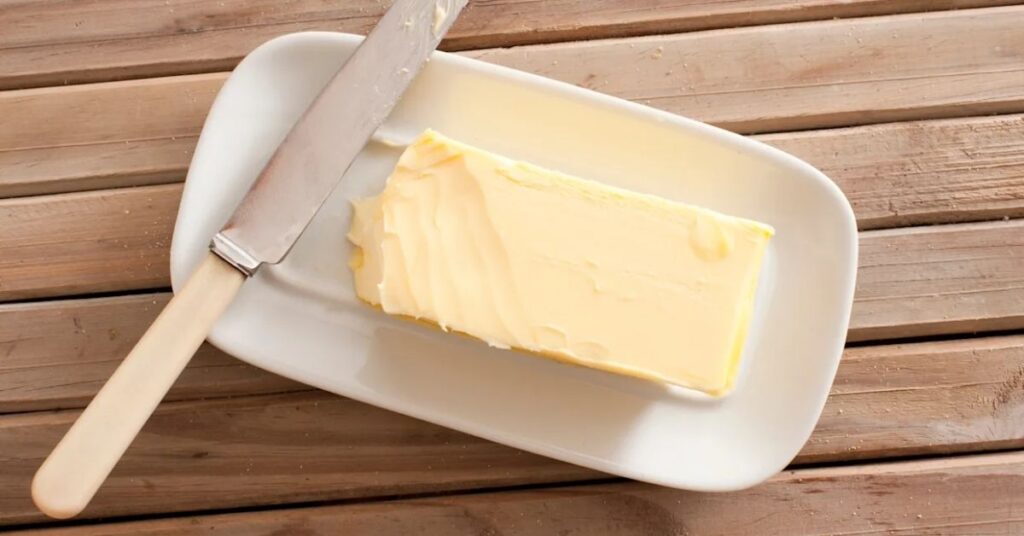
Yes, you can leave butter on the counter, but keep a small portion out for only a day or two at cool room temperature and refrigerate the rest.
Can I Leave Butter On The Counter? Safety Basics
Many home cooks ask, “can i leave butter on the counter?” because soft butter spreads better on toast and bakes more evenly in cakes and cookies. The short answer is that a little salted butter can sit out at room temperature for a short time, as long as your kitchen stays cool and the butter stays protected from light, air, and crumbs.
Butter is mainly milk fat with a small amount of water and milk solids. That high fat content makes butter less welcoming to bacteria than milk or cream, which is why advice for butter on the counter is a bit more relaxed. Food safety agencies still put butter in the dairy group though, so the safest habit is to leave only a small portion out and keep the rest cold.
Leaving Butter On The Counter Safely: Time And Temperature Rules
Food safety experts agree on two points: cooler kitchens are safer, and time at room temperature should stay limited. The U.S. Dairy Export Council notes that salted butter can sit out for a couple of days in a cool room, while some brands such as Land O Lakes tell home cooks not to leave any butter out for more than about four hours. Treat this as a range and lean toward the strict end if anyone in your home is pregnant, elderly, or has a weak immune system.
| Butter Type | Room Temp Time | Best At-Home Practice |
|---|---|---|
| Salted stick butter | Up to 1–2 days in a cool kitchen (under about 70°F) | Keep a small piece in a lidded dish; chill the rest |
| Unsalted stick butter | Short softening only, about 30–60 minutes | Store in the fridge; cut what you need and return the block |
| European style butter (high fat) | Similar to salted butter; 1 day at cool room temperature | Leave out only what you will finish quickly |
| Whipped butter | Follow brand advice, often no more than a few hours | Refrigerate between uses; whip or soften just before serving |
| Flavored or compound butter | Short time only, usually under 2 hours | Garlic, herbs, or cheese add risk, so chill soon after serving |
| Plant-based butter spread | Varies by recipe; often not suited to long time on the counter | Check the label and follow storage directions closely |
| Clarified butter or ghee | Longer time at room temperature than regular butter | Cool cupboard storage is common, but still keep the jar sealed |
Why Salted And Unsalted Butter Behave Differently
Salt pulls water away from microbes and slows their growth, which is why salted butter stays stable longer than unsalted butter. The more salt and fat a butter holds, the drier the surface remains and the slower bacteria grow. Unsalted butter has no extra barrier, so food scientists and dairy councils treat it much more like other chilled dairy foods and remind home cooks that it belongs in the refrigerator except for short softening periods. That is why many chefs keep a small crock of salted butter by the stove but tuck unsalted sticks deep in the coldest part of the fridge for baking.
How Kitchen Temperature Affects Butter Safety
Butter behaves in different ways in a cool cottage kitchen than in a hot summer apartment. FoodSafety.gov reminds home cooks that bacteria grow fastest between 40°F and 140°F, which spans the whole “room temperature” range. In a cool room under about 70°F, salted butter holds its shape, smells fresh, and resists spoilage longer, while in a warm kitchen closer to 80°F the same butter melts, separates, and picks up off odors from nearby foods.
Simple Checks Before You Leave Butter Out
Before you decide how long to leave butter out, run through three quick checks. First, think about who will eat it; higher risk guests call for stricter habits. Second, check how warm your kitchen feels and how often the sun hits the counter. Third, think about pets, kids, and airflow; crumbs, dust, and fur land on soft butter easily if the dish sits with no lid.
How To Store Butter On The Counter The Right Way
If you enjoy spreadable butter on toast, you can set up a small butter station that respects food safety rules. Take one stick of salted butter from the fridge, cut it in half, and put just that half in a clean butter dish with a tight lid. Return the rest to the coldest part of the refrigerator so it stays firm and fresh.
Place the lidded dish away from the stove, dishwasher steam, and direct sunlight. Heat speeds up spoilage, and strong smells pass through butter paper and lids. A corner of the counter that stays shaded and cool works better. Try to finish that small piece within a day or so; if it starts to smell sour, darken in color, or form a greasy film, throw it out.
Picking A Safe Butter Dish Or Crock
A good butter dish protects butter from air, light, and strong smells. Ceramic or glass dishes with fitted lids work well because they clean easily and do not hold odors. Water based butter crocks keep butter smooth and spreadable, but you still need to change the water often and wash each part with hot soapy water between refills.
Choose a dish that fits a partial stick so the surface stays small. A big open dish looks pretty on the table but exposes more butter to room air and crumbs. When you lift the lid, check the butter closely. Any mold, sour aroma, or strong cheesy note is a sign to throw it away instead of scraping the surface.
Fridge And Freezer Rules For Butter Storage
Cold storage is where butter lasts longest. Food safety agencies advise that household fridges stay at or below 40°F and that chilled foods spend as little time as possible at warmer temperatures. To line up your butter habits with those rules, store most of your butter in the refrigerator and move only what you need for the next meal to the counter.
The US Dairy butter storage guide notes that butter can stay in the fridge for several weeks and much longer in the freezer, while still keeping good flavor. A small wrap of foil or a freezer bag adds another layer of protection from air and odors. When you need a new stick, shift it from freezer to fridge a day ahead so it can thaw gently.
| Storage Method | Typical Time | Home Cook Tips |
|---|---|---|
| Salted butter in the fridge | Up to about 1 month past purchase date | Keep in original wrapper in the coldest section |
| Unsalted butter in the fridge | Use within about 2 weeks for peak flavor | Store tightly wrapped away from onions and strong foods |
| Butter in the freezer | Several months without big flavor loss | Wrap well and label with date; thaw in the fridge |
| Softened butter on the counter | A few hours, up to a day in a cool room | Set out just before a meal, then chill again |
| Compound butter logs | About 1 week in the fridge, longer frozen | Slice what you need and freeze the rest tightly wrapped |
| Ghee or clarified butter | Long fridge life; often stable in a cool cupboard | Use clean spoons and seal the jar after each use |
| Restaurant style butter pats | Short holding time; follow food code rules | At home, treat these pats like any other perishable |
How To Soften Butter Quickly Without Leaving It Out All Day
Kitchen pros melt only a few grams of butter by accident before they learn faster softening tricks. Cut cold butter into small cubes and spread them on a plate so the extra surface area helps the cubes warm in fifteen minutes or so. You can also grate a frozen stick on the small holes of a box grater; thin shreds warm in minutes and blend cleanly into doughs and batters. These approaches give you spreadable butter on demand without long periods at room temperature, which keeps flavor fresher and lines up with strict food safety advice.
When To Throw Butter Away
Even when butter never leaves the fridge, it will age. Butter that has gone past its best has a darker yellow surface, greasy or wet patches, and a sour or soapy smell. Any sign of mold calls for the trash bin, because mold roots can extend deep into soft fat and trimming the surface does not make the butter safe again. If you have left butter on the counter longer than you planned, give it a quick sniff and visual check before you spread it on toast and throw it away if anything seems off.
Practical Rules You Can Follow At Home
If you still wonder, can i leave butter on the counter?, the safest answer starts with portion size and timing. Keep only a small amount of salted butter in a lidded dish, use it within a day or so in a cool room, and store the rest in the fridge or freezer. Treat unsalted, flavored, or low salt butters more strictly and rely on short softening windows instead of long holding times.
To build habits that match public health advice, glance at tools such as the FoodSafety.gov cold storage charts. These charts remind cooks to keep fridges cold, limit time in the danger zone, and watch storage times for dairy foods. With a small lidded dish, a cool corner of the counter, and a strong thermometer in your fridge, you can enjoy spreadable butter and still play it safe.
References & Official Guidelines
For more specific regulations regarding butter storage and dairy safety, please refer to the official sources cited in this guide:
- U.S. Dairy: Does Butter Need to Be Refrigerated?
- FoodSafety.gov: Cold Food Storage Charts
- USDA FSIS: “Danger Zone” (40 °F – 140 °F)
