
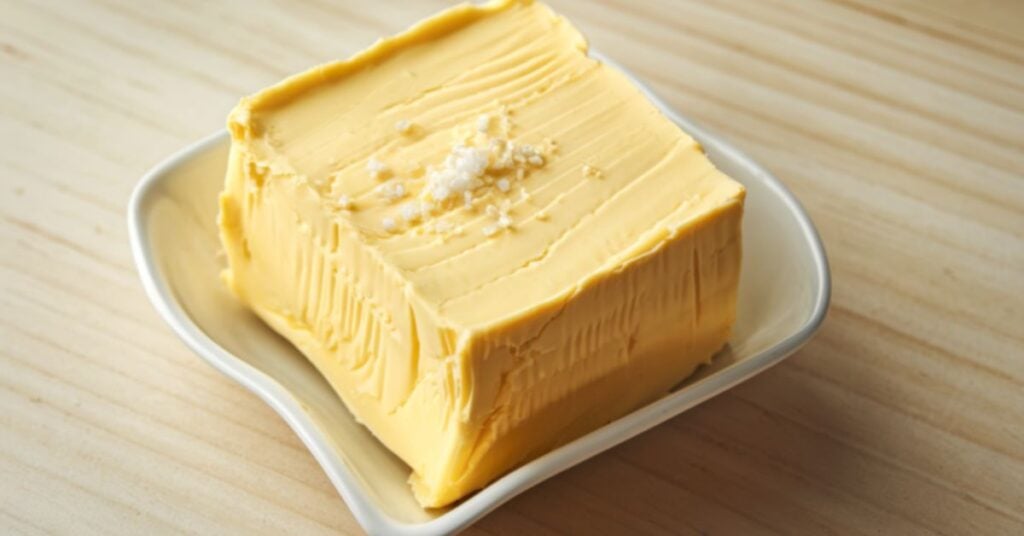
Yes, you can keep salted butter on the counter for a short time if your kitchen stays cool and you protect it from heat and light.
If you like soft, spreadable toast butter, you’ve probably asked yourself this exact question: can i keep butter on the counter? Food safety messages often shout “chill your dairy,” which makes that little butter dish feel risky.
The real story is more nuanced. Salted butter behaves differently from other dairy products, and food safety agencies treat it in a special way. Once you understand what makes butter low-risk and where the limits sit, you can enjoy smooth toast without worrying about stomach trouble.
Can I Keep Butter On The Counter? Safety Basics
Short answer: yes, you can keep a small amount of salted butter on the counter for a limited time as long as your kitchen stays reasonably cool, the butter is covered, and you rotate it often. Unsalted or whipped butter needs closer care and belongs in the fridge most of the time.
An FDA food safety evaluation classifies commercial salted butter as a non–time/temperature control for safety food (non-TCS). That means typical room conditions do not create the same rapid bacteria growth risk that you see with items like milk or cream sauces, especially when the butter is made from pasteurized cream and contains salt.
| Butter Style | Safe Room-Temp Window* | Best Fridge Storage |
|---|---|---|
| Salted Stick Butter | Up to 1–2 days in a cool kitchen under 70°F (21°C) | 1–2 months for best flavor |
| Unsalted Stick Butter | 30–60 minutes before use, then back in the fridge | About 1 month |
| Whipped Butter | Keep chilled; only soften briefly for serving | Several weeks, follow package date |
| Cultured/European-Style Butter | Similar to salted butter; limit to 1 day out | 1–2 months |
| Compound Butter With Herbs/Garlic | Not for long counter storage; chill or freeze | 1 week in fridge, longer in freezer |
| Clarified Butter Or Ghee | Much more stable; can sit sealed at room temp | Several months, check label |
| Margarine Or Soft Spread | Short time for serving only | Follow label; usually several weeks |
*These ranges assume a clean, covered dish and a kitchen below about 70°F (21°C). Warmer rooms shorten the safe window.
So, can i keep butter on the counter and still stay on the safe side? You can, as long as you stick with salted butter, keep the portion small, and treat that counter dish as a short-term serving zone rather than long-term storage.
Why Salted Butter Acts Differently From Unsalted Butter
Salt lowers the water activity of butter and makes the surface less friendly to many bacteria. The fat content is high, the moisture level is low, and the cream used for commercial butter is pasteurized. These points work together to keep microbial growth slow under normal room conditions.
Unsalted butter lacks that extra salt guard. It still benefits from pasteurization, but it picks up off flavors faster and has less protection once exposed to warm air. That’s why brands, chefs, and food safety educators nearly always recommend that unsalted butter spend almost all of its life in the fridge or freezer.
Room Temperature Limits And Kitchen Conditions
Butter might sit out in a bakery display all day, yet that doesn’t mean the same routine fits a small, home kitchen. Temperature swings from cooking, bright sunlight, or a warm climate can push the butter into a range where quality drops fast.
Guidance based on USDA and extension sources tends to land on this pattern: salted butter can stay out for about one to two days in a covered dish in a cool room, while the rest belongs back in cold storage. A summary of the USDA FoodKeeper app guidance reaches that same conclusion and adds that fridge and freezer storage extend freshness far beyond that short counter window.
Keeping Butter On The Counter Safely At Home
Now let’s turn that science into a simple routine. Most home cooks want two things: spreadable butter on demand and a low food poisoning risk. With a little planning, you can have both.
Pick The Right Butter For Counter Storage
For counter use, stick with salted butter from pasteurized cream. If you bake a lot and prefer unsalted bricks, keep those in the fridge or freezer and only soften what you need for a recipe on a given day.
- Use salted butter in the dish on your counter.
- Keep unsalted, whipped, and herb-packed compound butters chilled.
- Turn to ghee or clarified butter when you want room-stable fat for high-heat cooking.
This split lets you keep your baking ingredients safe while still enjoying the ease of a soft spread with breakfast.
Size The Counter Portion For One To Two Days
Rather than leaving a full block out, cut a small chunk that you can finish within one or two days. A good starting point is half a stick for a family that eats toast daily, or even less for a single person.
- Estimate how much butter your household uses in a day or two.
- Place only that amount in a covered butter dish.
- Leave the rest wrapped and chilled in the fridge.
This habit keeps turnover high, which means each portion spends minimal time in the warm zone.
Use A Covered Dish Or Butter Bell
Covering the butter keeps dust, insects, and stray crumbs away while also limiting air and light. A simple lidded crock works well. A butter bell that flips a cup of butter into water adds another barrier against oxygen and can stretch the quality window a bit longer.
Whichever container you pick, wash it regularly with hot, soapy water, and dry it completely before refilling. Any film or old residue can pass off-flavors or microbes to a new stick.
Morning Setup
In the morning, set your covered dish on a section of counter away from the stove, dishwasher vent, and direct sunlight. Those spots tend to stay cooler and more stable, which slows down flavor changes.
End-Of-Day Check
At night, check the butter. If it still smells sweet and creamy and the texture looks smooth, you can keep it out for a second day in a cool kitchen. If anything seems off, scrape that portion into the trash and refill the dish from the fridge the next day.
How Temperature And Time Affect Butter Quality
Even though salted butter resists rapid bacteria growth, time and warmth still take a toll. Fat can oxidize, and the flavor shifts from rich and sweet to flat, then harsh and soapy. That happens faster when the butter sits near a warm stove or under bright light.
Food safety agencies also teach a general “two-hour rule” for many perishable foods, meaning items that need refrigeration shouldn’t sit in the warm zone longer than that timeframe. Butter sits in a special category because of its salt and fat balance, which is why both USDA and FDA materials treat it as lower risk at room temperature than milk or cream sauces.
Even with that exception, those same agencies and large butter brands often take a cautious line for household storage. Many brand guides, plus groups like Land O’Lakes and Kerrygold, advise that butter left at room temperature should be eaten within a day or two and that any long rest on the counter can dull flavor and color even if safety isn’t the main concern.
Fridge, Freezer, And Butter Crock Options
Your fridge and freezer still do most of the heavy lifting for long storage. The counter dish is just a short-term comfort zone for daily use.
- Fridge: Store sealed bricks in their original wrapper, tucked in the coldest section, not in the door. This slows down temperature swings each time you open the fridge.
- Freezer: For bulk buys, freeze extra packs before the date on the box. Wrap them tightly in foil or freezer bags to keep frost and odors away.
- Butter crock: If you use a water-seal butter bell, refresh the water every couple of days and keep the crock away from strong sunlight.
When Butter On The Counter Should Be Thrown Away
At some point, even salted butter on the counter moves from “safe and tasty” to “off and wasteful.” Food safety advice always says: when in doubt, throw it out. Your senses do a solid job here as a first screen.
| Warning Sign | What It Usually Means | What You Should Do |
|---|---|---|
| Sour, cheesy, or paint-like smell | Fat oxidation or microbial change | Discard the butter and wash the dish |
| Darker yellow surface or oily puddles | Oxidation and fat separation | Discard; keep the next batch cooler |
| Visible mold spots or fuzzy patches | Fungal growth on surface | Throw away the entire piece, not just the spot |
| Stale, soapy, or bitter taste | Rancidity, even if smell seems mild | Spit it out and discard that batch |
| Crusty, dry edges that crumble | Extended air exposure and moisture loss | Trim if mild, or discard if texture feels odd |
| Dish surface feels greasy or grimy | Old residue or cross-contamination | Wash dish well before adding fresh butter |
Never try to scrape mold off butter and keep the rest. The spores travel deeper than the colored patch you see, and the risk simply isn’t worth a small stick of fat. A clean, fresh batch costs less than a doctor visit.
Cross-Contamination From Crumbs And Knives
Beyond time and temperature, crumbs and shared knives can turn your butter dish into a small petri dish. When you swipe the knife across jam, then go back into the butter, you introduce sugar and moisture that bacteria enjoy.
- Use a dedicated butter knife when you can.
- Avoid double-dipping after the knife touches meat juices, eggs, or sauces.
- Scoop a portion onto a plate for cooking instead of dipping the pan spoon into the dish.
These small habits keep extra ingredients out of the butter and stretch both quality and safety.
Quick Rules For Everyday Butter Storage
By now, the original question, can i keep butter on the counter, should feel less mysterious. You can, as long as you respect a few boundaries and let the fridge handle most of the long-term work.
- Use salted, pasteurized butter for your counter dish; keep unsalted and whipped versions chilled.
- Limit the counter batch to what you’ll eat in one to two days in a cool room.
- Keep butter in a clean, covered dish away from heat and sun.
- Store backup sticks in the coldest part of the fridge, with extras in the freezer.
- Trust your senses; if butter smells odd, tastes harsh, or shows mold, throw it away.
Follow these simple rules and you can enjoy smooth, spreadable butter each morning without turning breakfast into a food safety gamble.
References & Official Guidelines
For more specific regulations regarding dairy safety and food storage, please refer to the official sources cited in this guide:
- FDA Guidelines: FDA Food Safety Evaluation
- MSU Extension / USDA: USDA FoodKeeper App Guidance
