
A vacuum sealer can be the most “boringly powerful” kitchen purchase you ever make — the kind you stop noticing because it quietly fixes the same problems over and over: freezer burn, soggy produce, stale snacks, mystery leftovers, and that expensive bulk buy you meant to use… but didn’t.
But here’s the reality most buying guides miss: vacuum sealing isn’t one task. It’s a chain of tiny micro-decisions you make in real time — how wet the food is, whether the bag mouth is wrinkled, how you hold the bag so liquid doesn’t surge forward, how you store rolls so you don’t waste film, and whether the machine still seals perfectly on bag #37 of a bulk session.
If you’re searching for the best vacuum food sealer, you’re not really shopping for a “machine.” You’re shopping for repeatability: a setup that makes airtight seals feel effortless — even when you’re tired, meal-prepping fast, or sealing messy marinades. And the truth is: most “bad experiences” come from a few predictable friction points (wrinkles, moisture, punctures, and gasket wear) that you can avoid when you pick the right style of sealer for how you actually cook.
This guide is built around real-world value: what makes a vacuum sealer feel smooth on a busy weekday, how to avoid the top leak patterns, which designs are easiest to clean after sealing juicy meats, and why some machines feel “strong” but still let air creep back in days later. You’ll also see exactly who each model fits best — from serious bulk packers and hunters to compact-counter cooks and cordless handheld fans.
Below are 18 standout picks, ordered in a way that mirrors how most kitchens upgrade: start with a true workhorse if you want to “buy once,” then choose your perfect match based on automation, wet-food control, storage footprint, or portable convenience.
In this article
How to Choose the Best Vacuum Food Sealer for Real Kitchen Life
A vacuum sealer isn’t “good” because it has more buttons. It’s good because it makes airtight sealing feel predictable: same tight seal on bag #1 and bag #30, no drama with wet foods, no weird “why did this inflate?” surprises in the fridge. Use this decision framework and you’ll pick a machine that fits your actual habits — not the habits you wish you had.
1. Start with your sealing personality (this matters more than specs)
Most households fall into one of these patterns. Pick the pattern that sounds like your real week, not your “ideal” week.
- The bulk freezer packer: You buy meat in large packs, portion everything, and want fast, repeatable sealing sessions.
- The wet-food problem solver: You seal soups, stews, saucy marinades, or juicy cuts and want minimal mess.
- The daily leftover re-sealer: You open bags often and want quick reseals (snacks, cheese, deli meat, produce).
- The sous vide prepper: You need dependable seals that hold during long water baths.
- The small-counter minimalist: You want a compact footprint or vertical storage so it doesn’t “live” on your counter.
- The cordless convenience fan: You like zipper bags/containers and want fast sealing without dragging out a big machine.
2. Understand the two jobs: “pull the air out” vs “keep the air out”
This is the part that separates good sealers from frustrating ones. Vacuum strength helps remove air quickly, but long-term success is about how consistently the machine creates a uniform heat seal and how well the gasket maintains compression along the seal line. A machine can feel powerful and still leak if:
- The bag mouth wrinkles slightly where the seal bar hits.
- Moisture or fat sits in the seal zone (invisible but deadly for long holds).
- The gasket compresses unevenly or gets dirty, letting micro-leaks form.
- The bag film punctures from sharp edges or frozen crystals.
3. Wet foods: pick a design that gives you “control,” not just power
If you seal anything juicy, you need control mechanisms. Look for features that reduce panic: pulse vacuum, extended seal or double seal options, removable drip trays, and (bonus) the ability to vacuum containers for liquids when bags feel annoying.
Two designs handle wet foods especially well:
- Upright sealers: Keeping the bag vertical helps liquid stay down and away from the seal bar.
- Container-capable systems: Vacuuming glass/rigid containers is the cleanest way to seal soups and marinades.
4. Bag strategy matters: rolls, pre-cut bags, or reusable zipper systems
Bags are half the experience. Your “best sealer” can feel average if your bags are thin, too smooth, or prone to punctures. Here’s the simplest way to decide:
- Rolls: Best when you seal odd sizes often. You’ll save material long-term if you cut thoughtfully. Built-in cutters make this painless.
- Pre-cut textured bags: Fastest for bulk sessions. Great when you portion in consistent sizes (chicken packs, steaks, veggies).
- Reusable zipper bags: Best for daily open/close living (snacks, produce, sandwich prep). Not ideal for long freezer storage unless the seal is excellent and you check for leaks.
5. Ergonomics: one-hand lock beats “two-hand wrestling”
You can spot the sealers people love by one thing: they don’t require a weird ritual. Easy-lock handles, bag clips, and alignment trays prevent the #1 hidden seal killer — bag mouth wrinkles. If you seal often, you’ll feel the difference immediately.
6. Bulk sessions: duty cycle and cooling matter more than you think
If you’ll ever seal dozens of bags in one session, pay attention to how the machine handles back-to-back sealing. Some models are built to run continuously; others need short pauses so the sealing bar doesn’t overheat. That doesn’t make them bad — it just changes how you use them. If you’re a hunter, gardener, or bulk shopper, you’ll want a “workhorse” design that stays consistent when you’re moving fast.
7. Cleanup and parts: the boring details that save you years
The easiest machines to live with are the ones that plan for real life: removable drip trays, wipeable surfaces, and gaskets you can replace without replacing the whole machine. If you ever seal wet foods, you will thank yourself for choosing a model that makes cleaning simple instead of awkward.
8. Accessories: only pay for what you’ll actually use
Accessory ports can be incredibly useful (containers, jar sealers, bottle stoppers), but only if you’ll use them monthly. If you only seal freezer meat, don’t overpay for “smart” features. If you do meal prep and leftovers daily, a reusable bag system can be life-changing.
Quick Comparison: 18 Best Vacuum Food Sealer Picks
Use this table to find the models that match how you cook, then jump to the full reviews for the “real-life” details — like how each one handles wet foods, whether bag alignment feels forgiving, and what owners consistently praise (or complain about) after months of use.
On smaller screens, swipe or scroll sideways to see the full table.
| Model | Sealer type | Real-life strength | Best match | Amazon |
|---|---|---|---|---|
| POTANE Precision Vacuum Machine (VS5736) | Workhorse | Built for repeatable bulk sessions with reliable sealing and long-use confidence | “Buy once” kitchens that want consistent, pro-style sealing | Amazon |
| FoodSaver V4400 2-in-1 System | Premium auto | Automatic bag detection + moisture sensing + integrated handheld convenience | Shoppers who want automation + a brand ecosystem | Amazon |
| FoodSaver Automatic Bag Detection (FM2100) | Everyday | Simple, consistent seals with smart detection and classic FoodSaver workflow | Families who want straightforward daily sealing and bulk buys | Amazon |
| NESCO Deluxe VS-12 | Batch pro | Double seal option + pressure choices + pulse control for serious food prep | Hunters, homesteaders, and bulk meat sessions | Amazon |
| Chef Preserve Starter Bundle (Glass Containers + Bags) | Reusable kit | Fast handheld vacuum + glass containers for liquids and delicate foods | Daily leftovers, soups, marinades, and low-waste kitchens | Amazon |
| Gasbye 95kPa Precision Sealer (VS5166) | Durable | Replacement parts + long coverage + wet-food-friendly design details | People who want long-term ownership confidence | Amazon |
| Beelicious Pro 95kPa Precision Pro (Double Pump) | Fast power | Strong suction feel + double heat seal confidence + tidy roll storage setup | Meal prep + freezer packing with a premium counter presence | Amazon |
| InstaSeal Upright Vacuum Sealer | Vertical | Upright design helps control liquids and keeps mess out of the machine | Small kitchens + people sealing soups and marinades | Amazon |
| Bonsenkitchen Full Stainless 135W (Bag Clamp) | Batch fast | Designed for many seals in a row with wrinkle control and a countdown display | Frequent sealers who want speed and neat bag handling | Amazon |
| Bonsenkitchen Globefish Technology Sealer | Seal control | Clear vacuum channel design to reduce “weak vacuum” frustration | People who want a forgiving, consistent sealing workflow | Amazon |
| QIQIAOB 95kPa Commercial-Style Sealer | All-in-one | Water detection + cooling system + modes for wet and delicate foods | People who want features that reduce wet-food mistakes | Amazon |
| Chef Preserve Compact Sealer (30 Reusable Bags) | Portable | Quick handheld sealing for repeat open/close storage without bulky machines | Snack bags, produce, sandwiches, and daily reseals | Amazon |
| Sandifeng 95kPa Automatic Sealer (Double Strip) | Double seal | One-hand lock + double heat strip workflow aimed at secure freezer holds | Bulk meat sealers who love double-seal confidence | Amazon |
| FoodSaver PowerVac Compact (VS0150) | Compact | Vertical storage + simple dry/moist modes for no-fuss sealing | Small counters and occasional bulk shopping | Amazon |
| Beelicious Pro AirLock ProSeal (App + Timer) | Smart | Compact countertop design with digital timer + optional app-based tracking | Organized meal preppers who love logging and reminders | Amazon |
| FoodSaver Mini Handheld (Marinate Mode) | Handheld | Fast zipper-bag sealing and a quick marinate cycle for weeknight cooking | Quick fridge storage + marinades + on-the-go sealing | Amazon |
| NutriChef Automatic Vacuum Sealer | Starter | Simple corded sealing with dry/moist modes and included accessories | First-time buyers who want a straightforward machine | Amazon |
| MZROT 6-in-1 Compact Vacuum Sealer (75KPa) | Budget | Surprisingly capable modes + digital timer in a slim, easy-to-store body | Budget shoppers who still want dry/moist control | Amazon |
In‑Depth Reviews: 18 Vacuum Sealers That Feel Great to Use (Not Just Good on Paper)
Now we’ll go model by model. I’m going to talk like a real cook who seals real food: how the workflow feels, where leaks usually happen, what’s genuinely helpful (and what’s noise), and which sealing habits make each machine shine.
1. POTANE Precision Vacuum Machine (VS5736) – The “Buy Once, Seal Forever” Workhorse

If your goal is simple — “I want a vacuum sealer that feels professional, seals consistently, and doesn’t make me baby it” — the POTANE is the strongest all-around answer in this lineup. It’s built for repeat use, which is what most households actually need once they get serious about bulk buying and meal prep: you don’t vacuum seal one bag. You vacuum seal thirty, and you want bag #30 to look as clean as bag #1.
What makes this model feel different in daily use isn’t a flashy feature. It’s the way the whole workflow stays steady: the lid lock is designed for one-hand operation, the bag storage and cutter are integrated cleanly, and it’s built to handle long sessions without you feeling like you’re managing the machine. Owners who’ve used multiple name-brand units often describe this as quieter, quicker, and less “stop-and-wait.”
The most useful “expert move” with the POTANE is to treat it like a sealing station: store a roll inside, cut bags to the exact length, and use the manual control when sealing delicate or moist foods. That lets you stop the vacuum at the perfect moment — right before liquid creeps into the seal zone or soft food starts to compress.
Why you’ll like it
- Built for repeat sessions – Feels calm when you’re sealing many bags in a row.
- Great “seal confidence” – Clean, even seals that hold up well for freezer storage.
- Smart layout – Bag storage + cutter make daily use faster and reduce wasted film.
- Manual control when you need it – Helps protect delicate foods and keeps wet seals cleaner.
- Ownership-friendly support vibe – Long coverage and a brand reputation for helping users.
Good to know
- Accessory ports are useful, but the hose fit can feel stiff until you get used to it.
- Compact for a workhorse, but still a countertop machine — plan a “home spot.”
- If you only seal chips once a month, you won’t use its full potential.
Ideal for: anyone who wants one serious vacuum sealer that can handle bulk meat, meal prep, and sous vide bags with consistent, repeatable results.
2. FoodSaver V4400 2‑in‑1 System – “Let the Machine Do It” Convenience (with Ecosystem Perks)

The V4400 is for the person who wants vacuum sealing to feel like pressing “print.” You slide the bag in, the machine detects it, pulls the air, and seals with minimal fuss. That automation is the real premium here — it reduces the “am I inserting the bag correctly?” brain load, especially if multiple people in the house will use the machine.
The other big advantage is the 2‑in‑1 concept: this style is designed to cover both classic heat-seal bags and accessory-style sealing (zippers, containers, canisters) without you hunting for extra attachments. That means you can do freezer meat on Sunday, then do quick fridge organization during the week — opened coffee, half onions, leftover cheese — without turning it into a project.
Where owners tend to split is the roll workflow. Many love the built-in roll storage and cutter for custom bag sizes. Others mention they use pre-made bags more because it’s faster and reduces “did I cut and seal the bottom edge right?” mistakes. If you’re buying this model, the pro strategy is simple: use pre-cut bags for bulk sessions, and use roll storage for odd sizes (racks of ribs, long fish fillets, big roasts).
Why it’s worth it
- Automation reduces user error – Bag detection makes sealing feel almost effortless.
- Handles wet foods more gracefully – Moisture detection + drip tray design reduce mess risk.
- Great “ecosystem” flexibility – Works nicely if you use zipper bags, containers, and accessories.
- Countertop-friendly workflow – Built-in cutter/roll storage are genuinely practical when used intentionally.
- Strong brand familiarity – Many households already know how FoodSaver-style sealing works.
Good to know
- It’s larger than compact sealers; it earns space, but it does take space.
- If you want ultra-fast bulk sealing, you may still prefer a simpler “go-go-go” workhorse approach.
- Some users report occasional roll-seal quirks; keeping the seal area clean matters a lot.
Ideal for: people who want a premium, automated sealing experience and like the idea of one system that handles both bags and accessories smoothly.
3. FoodSaver Automatic Bag Detection (FM2100) – Simple, Familiar, and Surprisingly Addictive

The FM2100 is what I call a “daily driver” sealer: not trying to be fancy, just trying to be consistently useful. Owners who’ve used FoodSaver for years often describe this kind of unit as the one they keep coming back to because it feels intuitive — seal a bag within minutes of unboxing, and the habit sticks.
Where it shines is the repeatable rhythm: insert bag, lock, press, done. It’s the kind of machine that makes you start sealing things you didn’t expect — coffee, snack bags, chopped veggies, leftover roast chicken — because it stops feeling like “a project.” And for sous vide fans, the consistent sealing becomes a quiet superpower: you don’t want to worry about a seam opening mid-bath.
The most important “real-life” note is accessory compatibility. FoodSaver ecosystems evolve, and if you’re someone who has older attachments, you may need to adapt the workflow a bit. For most buyers, that’s not a problem — the core bag sealing is the main value here. Treat it as your everyday machine, keep the seal channel clean, and it performs like the reliable kitchen tool it’s meant to be.
Why people keep it for years
- Low learning curve – You can be sealing confidently in minutes.
- Consistent seals – A strong “set it and trust it” feel for freezer and fridge storage.
- Great for bulk buys – Easy to portion meat and lock freshness in fast.
- Bag cutter helps reduce waste – Custom bags without awkward scissors-on-counter routines.
- Solid kitchen rhythm – Works well as a dependable everyday tool, not a once-a-year gadget.
Good to know
- Wet-food success still depends on technique (pulse control isn’t the main focus here).
- If you seal very wet foods often, prioritize models with stronger wet control features.
- Accessory/hose expectations can vary by package — treat accessories as a bonus, not the core.
Ideal for: households that want a familiar, easy, consistent FoodSaver-style sealing experience for everyday storage and bulk shopping.
4. NESCO Deluxe VS‑12 – The Double‑Seal Machine That Hunters and Meal Preppers Love

The NESCO VS‑12 is the kind of vacuum sealer that wins long-term fans because it gives you real control: dry vs moist vs double seal, plus normal vs gentle vacuum pressure, plus pulse when you want to “feather” the vacuum. That combination matters most when you’re sealing foods that can get messy or crushed — juicy cuts, soups, delicate berries, or soft breads.
The signature strength is the double seal workflow. Many experienced vacuum sealers admit they used to “seal twice” on older machines for peace of mind. With the VS‑12, the goal is to get that confidence without the extra steps. If you freeze a lot of meat, process game, or batch-cook meals, that kind of reliability becomes addictive because you stop second-guessing your storage.
Real-life ownership notes are refreshingly honest: it’s sturdy, it locks securely, it can handle serious use — but like many powerful machines, it rewards good habits. Don’t store it locked (protect the gasket), keep the sealing strip clean, and use manual control for liquid-heavy items. If you do those things, it behaves like a dependable “kitchen tool,” not a temperamental appliance.
Why it’s a bulk-packer favorite
- True control settings – Dry/moist/double plus gentle pressure for soft foods.
- Double seal confidence – Great for freezer storage and long holds.
- Pulse mode is genuinely useful – Helps keep liquids where they belong.
- Sturdy build feel – Owners often describe it as more “serious” than basic units.
- Bag storage + cutter – Makes bulk sessions cleaner and more efficient.
Good to know
- Some users find the interface a bit “button-sensitive” until you learn its feel.
- Wet foods still need technique; pulse/manual sealing is the smart move.
- It’s not the tiniest footprint — it’s built like a real tool.
Ideal for: hunters, homesteaders, and serious meal preppers who want double-seal strength and the ability to protect delicate foods with gentle/pulse control.
5. Chef Preserve Starter Bundle – The Low‑Waste Setup That Changes How You Store Food

This is the kit for people who don’t want vacuum sealing to be a “special event.” Chef Preserve is about daily convenience: seal something in seconds, open it later, take what you need, reseal just as fast. And because it uses reusable bags and glass containers, it shifts vacuum sealing from “freezer project” to “everyday storage habit.”
The glass containers are the secret weapon. Bags are amazing for freezer packing, but containers are the cleanest way to handle liquids and delicate foods: soups, stews, marinades, pastries, lettuce, sliced fruit. You vacuum the container without dragging liquid toward a heat strip, and it stays organized in the fridge. Owners often report containers holding vacuum impressively well when the sealing surfaces are kept clean.
The honest “expert take” is that handheld systems have a technique curve. Don’t press too hard against the valve (you can block airflow), and if a container valve sticks, you may need a quick tap or a reset motion so it drops back into its sealed position. Once you learn the rhythm, it becomes one of those products you use constantly because it’s always within reach.
Why people use it every day
- Fast reseals – Perfect for snacks, produce, deli items, and leftovers you open often.
- Containers make wet foods easy – Clean sealing for soups, marinades, and saucy dishes.
- Reusable system – Bags can be washed and reused, which many kitchens love.
- Compact storage – No bulky appliance living permanently on the counter.
- Surprisingly strong results – Many users say it rivals their larger machines for daily needs.
Good to know
- There’s a learning curve for perfect valve placement and not blocking airflow.
- Sharp dry foods can puncture reusable bags; treat them with care.
- Instructions can be thin; the workflow is simple, but details matter.
Ideal for: low-waste, high-organization households who want vacuum sealing to be an everyday habit — especially for fridge storage, liquids, and delicate foods.
6. Gasbye 95kPa Precision Sealer (VS5166) – The “Parts, Support, and Confidence” Choice
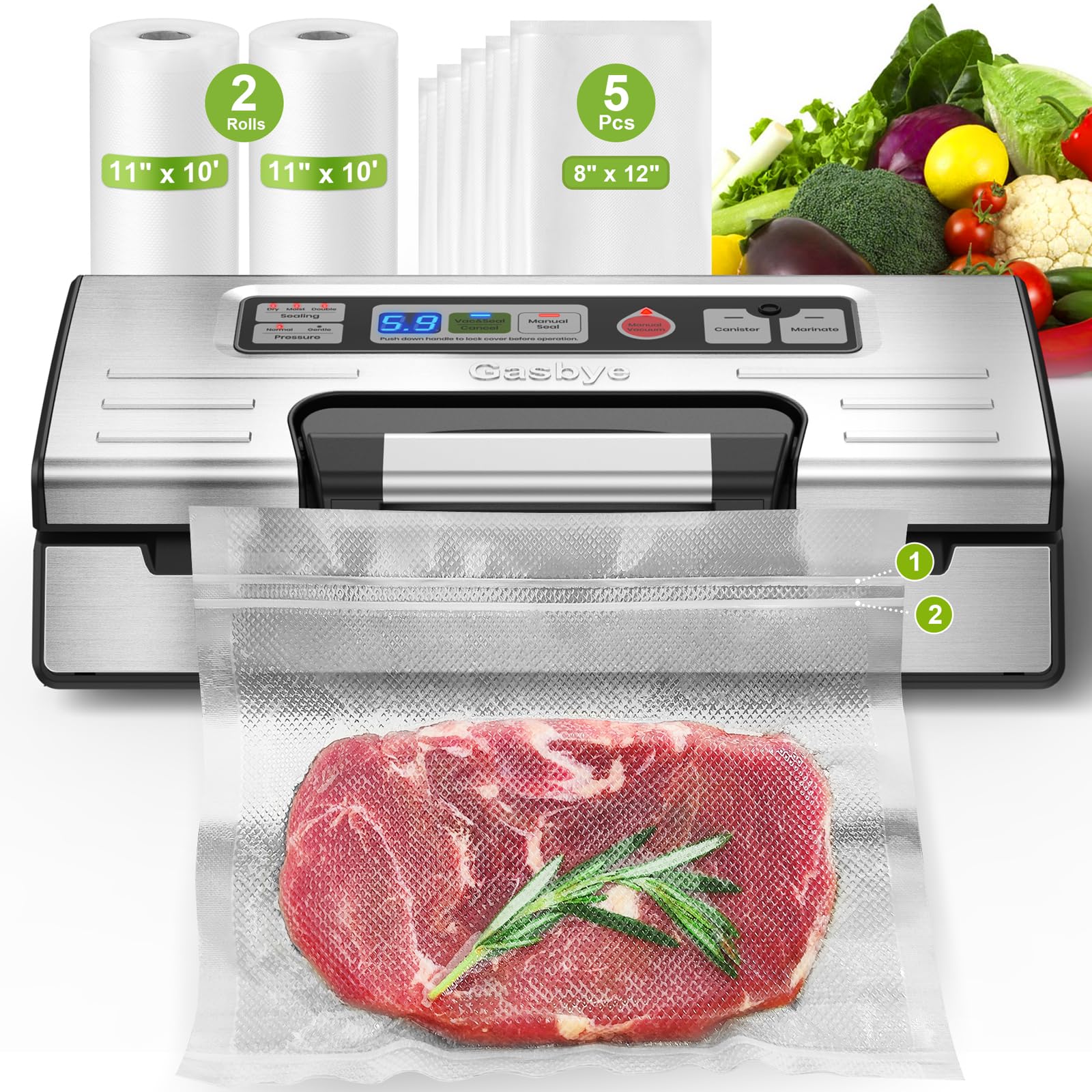
Gasbye’s biggest advantage isn’t just performance — it’s the ownership philosophy. This model is built around the idea that vacuum sealers fail for small reasons (gaskets, drip trays, cutters), and you shouldn’t have to replace the whole machine because of one small part. That’s a very “real kitchen” stance, and it shows up in how owners talk about support and replacement availability.
In use, the VS5166 is a versatile, wet-food-aware machine: pulse mode for gentle control, double heat seal for confidence, and a removable drip tray that helps keep the inside clean when you’re sealing juicy foods. The built-in storage and cutter support a smart bag strategy: rolls for odd sizes, pre-cuts for speed. People who seal a lot of meat (or do sous vide) tend to appreciate the “tight, consistent seal” feel.
The pro move with Gasbye is to treat it like a system, not just a sealer. Use the pulse mode when sealing foods that can surge liquid forward, and keep the sealing surfaces clean so the gaskets can do their job. When you do that, it becomes the kind of machine you trust with big freezer sessions: venison links, bulk chicken, garden veggies, and meal-prep packs.
Why it’s a smart buy
- Replacement parts mindset – A rare advantage for long-term ownership.
- Great wet-food features – Pulse + double seal + drip tray reduce mess and leaks.
- Strong user confidence – Owners often describe it as easy to learn and reliable.
- Compatible with many bags – Works well across brands of textured/embossed bags.
- Support reputation – People frequently praise responsiveness and helpfulness.
Good to know
- Vacuum containers may be separate; if you want container sealing, plan your ecosystem.
- Like all sealers, bag punctures (bones, sharp edges) can mimic “machine leaks.”
- It rewards basic maintenance — wipe, check, and keep the gasket area clean.
Ideal for: anyone who wants a capable countertop sealer with strong wet-food handling and a genuinely reassuring “parts and support” ownership story.
7. Beelicious Pro 95kPa Precision Pro – Big Suction Energy, Clean Seals, and a Tidy Counter Setup
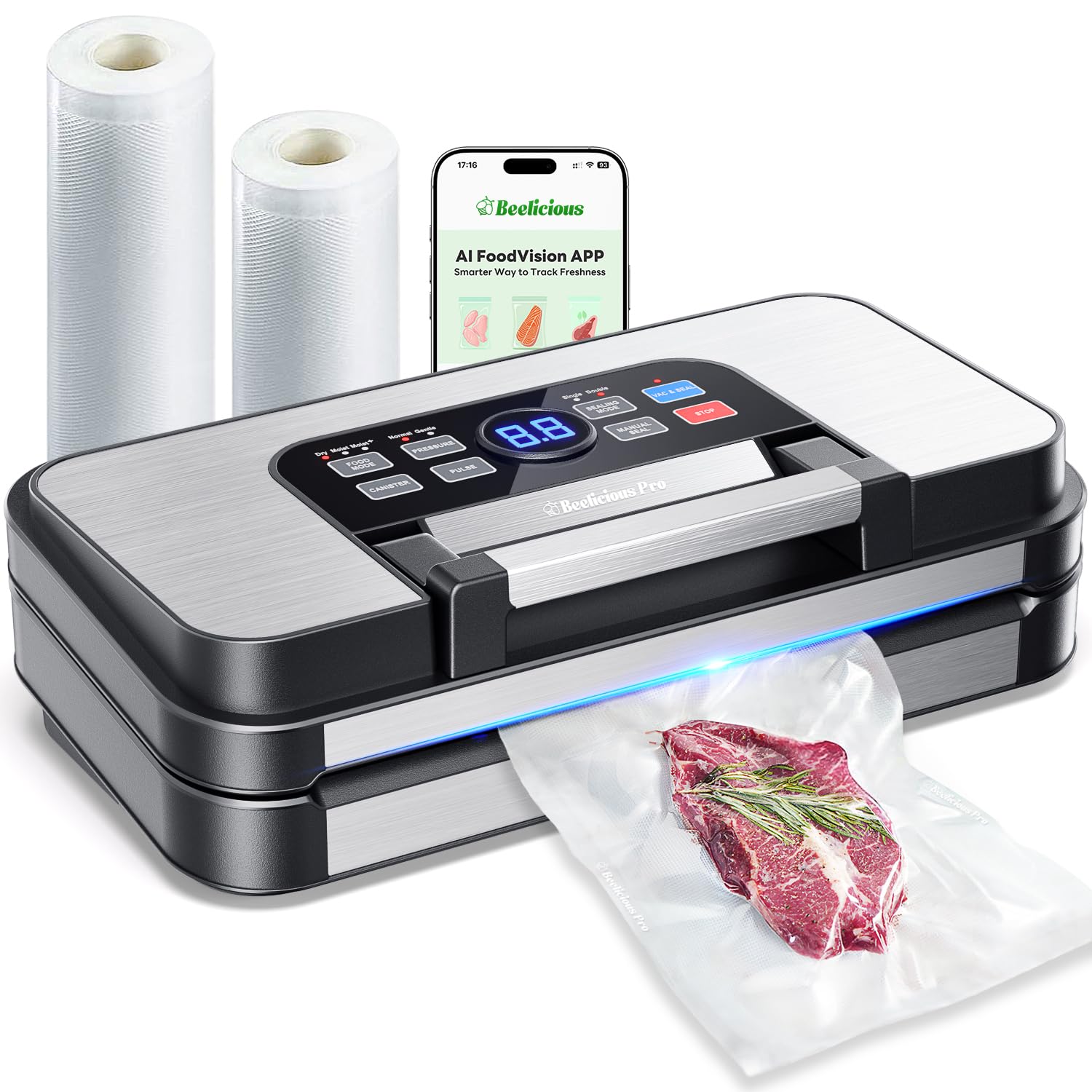
The Beelicious Pro Precision Pro is built for people who vacuum seal often and want that “commercial-style” feel at home: strong suction that evacuates quickly, double heat sealing when you want extra security, and a workflow that keeps your counter from turning into a bag mess. The built-in roll storage and cutter aren’t just extras here — they’re part of why the machine feels organized in daily use.
Owners consistently praise two things: how fast it pulls air and how confident the double seal feels, especially on meats and liquid-heavy foods. That combination matters because the real frustration with vacuum sealing is not “it didn’t vacuum” — it’s “it vacuumed, then leaked later.” Double-seal options reduce that anxiety, particularly for long freezer holds.
The “expert trick” with this style of high-power machine is to use the modes intentionally. Dry and moist settings aren’t gimmicks if you actually match them to the food. For juicy cuts, consider pulse or gentler pressure if your goal is to keep juices in the bag rather than pulling them forward. Pair it with good textured bags, keep the seal zone clean, and it feels like a professional tool.
Why it feels premium
- Strong, fast evacuation – Great when you’re portioning lots of meat quickly.
- Double seal confidence – Helps reduce leak anxiety for freezer and sous vide prep.
- One-hand locking – Makes the workflow smoother when you’re moving fast.
- Tidy roll management – Built-in storage + cutter keep prep clean and efficient.
- Counter-friendly design – Stainless finish and removable drip tray make cleanup easier.
Good to know
- High suction means wet foods need technique; pulse/gentle settings matter.
- Like any sealer, bag quality changes results — thin bags can puncture and mimic “leaks.”
- If you only seal occasionally, the feature depth may be more than you need.
Ideal for: meal preppers and bulk shoppers who want strong suction, double-seal security, and a clean “sealing station” experience with built-in roll management.
8. InstaSeal Upright Vacuum Sealer – The “Seal Soup Without Panic” Vertical Solution
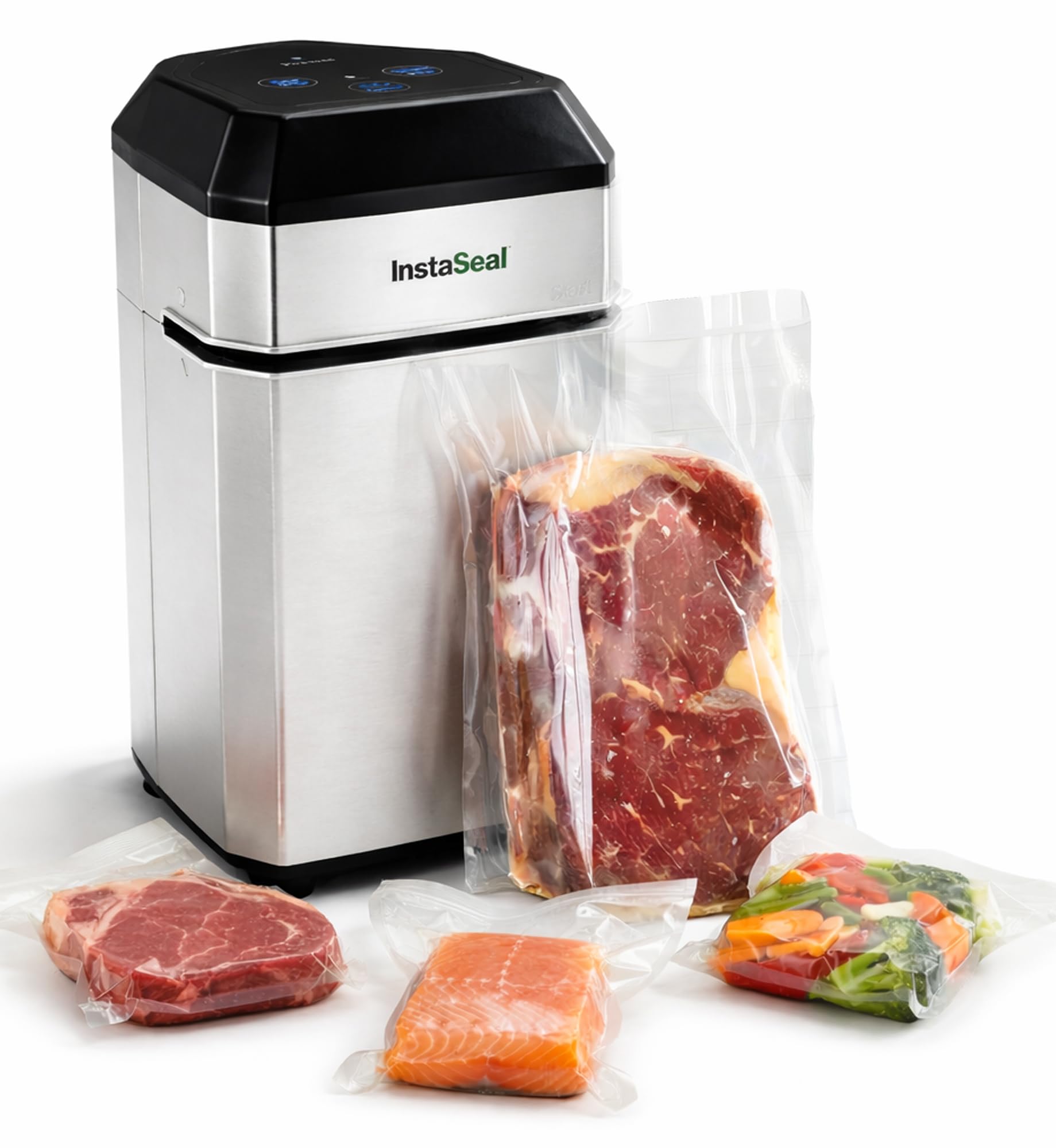
Upright sealers are underrated — especially for people who seal moist foods. The InstaSeal’s vertical design changes the game because gravity becomes your helper: liquid naturally stays down, away from the seal area. That reduces one of the most common “new user disasters” where a wet bag gets pulled forward, contaminates the seal line, and you end up with a weak seal that fails later.
Another practical win: the compact footprint. Many countertop sealers are long and wide; this one is designed to live in a cabinet or sit neatly on a counter without taking over your kitchen. Owners often highlight the simple workflow and the included starter bags as a “seal right away” setup.
The honest trade-off is speed expectations. Some users love how controlled it feels; others wish it sealed faster in high-volume sessions. If you’re a bulk packer doing dozens of bags in one go, a horizontal “batch machine” may feel faster. But if you seal soups, marinades, and juicy foods regularly — and you value keeping the machine clean — upright design can feel like a superpower.
Why upright can be brilliant
- Liquid control advantage – Vertical orientation reduces messy seal failures.
- Compact footprint – Easy to store and friendly for smaller kitchens.
- Double seal approach – Helps hold freshness and reduce freezer burn risk.
- Simple controls – Easy to learn, easy to use for quick reseals.
- Cleaner machine interior – Less liquid intrusion means less maintenance stress.
Good to know
- Not the fastest “50 bags in a row” experience; it’s more about controlled sealing.
- Accessory expansion may require sourcing compatible parts separately.
- With very soft foods, you still want gentle control so you don’t compress them.
Ideal for: small kitchens and wet-food sealers who want a compact machine that makes liquid-heavy sealing feel safer and less messy.
9. Bonsenkitchen Full Stainless 135W – The “Seal a Month of Food in One Session” Machine
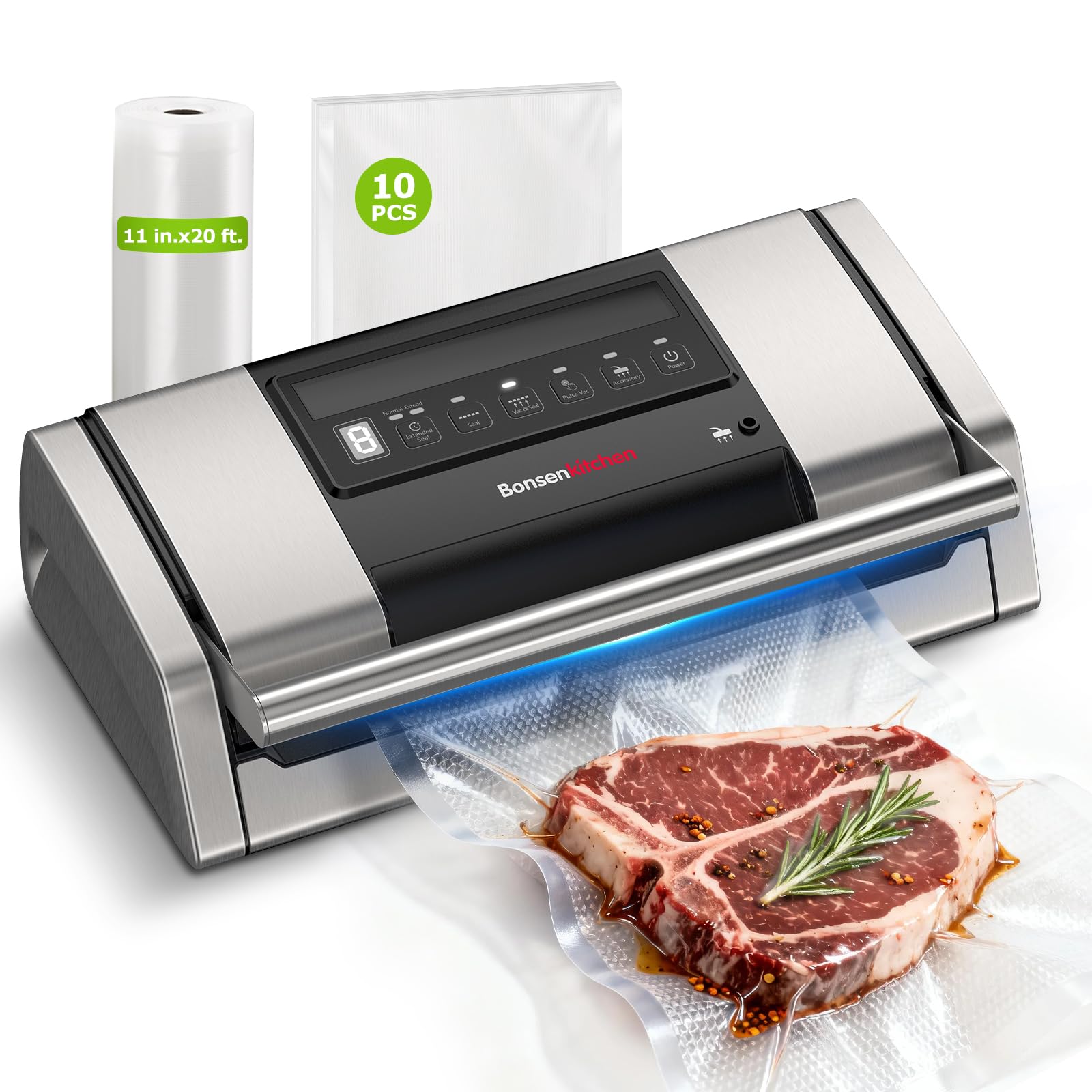
This Bonsenkitchen model is built around one thing: momentum. If you’re the kind of person who buys in bulk and wants to “knock it all out” — portion, seal, label, stack — this design supports that rhythm. The combination of strong multi-pump suction, bag clamp control, and a countdown display helps you move quickly without constantly redoing seals.
The bag clamp feature seems small until you’ve lived the vacuum sealer life. Bag wrinkles are one of the top hidden reasons seals fail. Clamping the bag opening so it stays flat improves seal consistency — especially if you’re sealing quickly and not babying each bag. It also reduces that annoying situation where the bag shifts right as suction begins.
Where it stands out in real use is the “better than expected” reputation. Owners who previously used name-brand sealers often describe this as more satisfying for bulk sessions: it does what it’s supposed to do without making you wait, fight, or overthink. If you want one machine to handle meal prep, sous vide prep, and freezer stocking, this is a strong contender.
Why bulk shoppers like it
- Designed for speed – Great for sealing many bags back-to-back.
- Bag clamp reduces wrinkles – Better seals with less “redo” frustration.
- Countdown display – Surprisingly useful for feeling in control of the process.
- Multiple modes – Pulse + extended sealing help with wet and delicate foods.
- Strong value reputation – Many users call it better than pricier brand-name units.
Good to know
- It can be a bit loud during vacuum cycles (common for high-power sealing).
- Wet foods still need technique; pulse + extended seal is the smart combo.
- Like all roll-based systems, keeping the cutter track clean helps performance.
Ideal for: high-volume sealing households who want a fast, organized workflow with wrinkle control and useful wet-food modes.
10. Bonsenkitchen “Globefish” Sealer – The Anti‑Frustration Pick for Cleaner, Tighter Vacuums
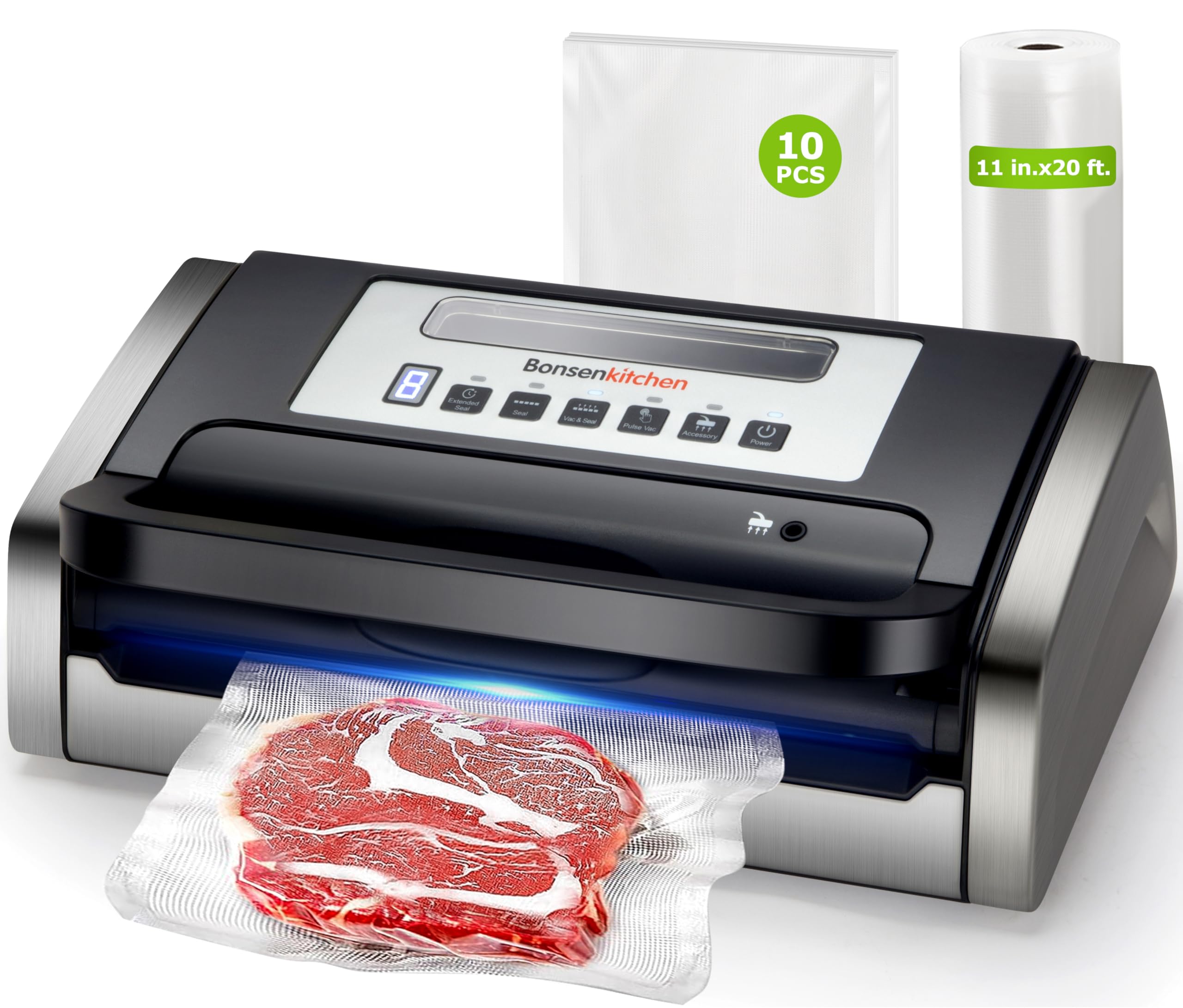
If you’ve ever used a vacuum sealer that “kind of” vacuums — leaving little pockets of air near the food — you understand why vacuum channel design matters. This Bonsenkitchen model leans into that problem: it’s designed to keep the vacuum path clear so air evacuates more evenly and the seal is more consistent. In real-life terms, it’s the difference between “I think it worked” and “I know it worked.”
Owners often mention the quiet, smooth workflow and the practical features that reduce bag waste: built-in roll storage, a cutter that works easily, and modes that make sense (pulse and extended seal for wet foods, for example). It’s also one of those machines that encourages better sealing habits: make custom small pouches, stop wasting half a bag roll, and seal food in portions you’ll actually use.
The key technique note is simple: getting all air out can still be tricky if the bag mouth isn’t flat or if the food creates awkward gaps. Use the bag clip, keep the seal area clean, and don’t be afraid to use pulse for a “finish vacuum” when you want more control. That’s how you get restaurant-looking packages from a home setup.
Why it’s an easy one to like
- More even vacuuming – Channel design helps reduce weak-air-pocket frustration.
- Low-noise feel – Quiet enough that it doesn’t feel obnoxious to use often.
- Great bag management – Roll storage + cutter support smarter portioning.
- Wet-food modes that work – Pulse + extended seal are practical, not gimmicky.
- Value reputation – Many users say it outperforms pricier “name brand” units.
Good to know
- Air removal can still depend on bag placement; use the clip and keep the mouth flat.
- For sharp foods (bones, pasta), punctures are a bag issue — double seal helps.
- Like any sealer, cleaning the seal area improves long-term consistency.
Ideal for: anyone who wants a forgiving, consistent vacuum-and-seal experience and likes the idea of a machine designed to reduce “weak vacuum” headaches.
11. QIQIAOB 95kPa Commercial‑Style Sealer – The “Wet Food Safety Net” with Smart Mess Control
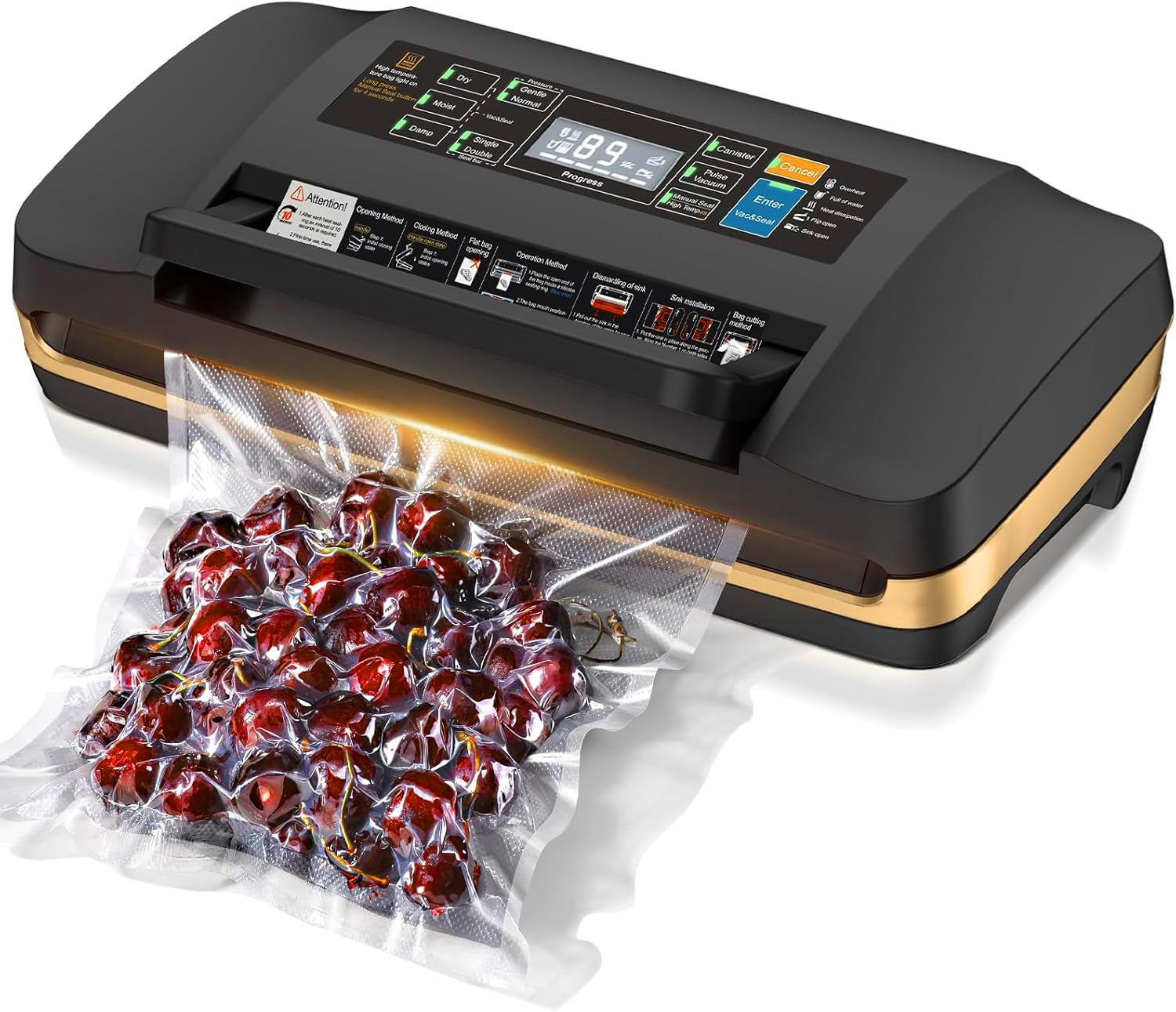
If you love features that prevent mistakes, QIQIAOB is the kind of machine that feels reassuring — especially when you seal wet foods. The combination of double heat seal capability, multiple moisture modes, adjustable vacuum strength, and a drip tray that helps detect when it’s time to clean creates a “safety net” experience: fewer surprises, fewer messy failures, fewer weak seals you only discover later.
The best real-world benefit is that it encourages good habits automatically. A removable drip tray makes you more likely to clean it. A countdown display makes the process feel predictable. A cooling system that supports repeated seals matters if you do bulk sessions — because a hot sealing bar can lead to inconsistent seals if you rush.
Owners note one important reality: instructions can be weaker than the machine itself. That’s common with feature-rich sealers. Once you understand the basics (bag must be textured, seal zone must be dry, pulse for delicate/wet foods), the machine does what it’s designed to do: create tight, professional-looking seals with less manual drama.
Why feature lovers pick it
- Wet-food error reduction – Water detection + drip tray = cleaner long-term use.
- Custom control – Dry/moist/extra moist + normal/gentle + pulse adds real flexibility.
- Double seal confidence – Great for freezer and sous vide bags when you want extra security.
- Built-in storage + cutter – Keeps the workflow tidy and reduces wasted bag film.
- Continuous-seal friendly – Cooling system supports back-to-back sealing sessions.
Good to know
- Instructions may not teach you technique; you’ll learn faster with a quick practice run.
- Works best with textured bags; smooth bags can slip and cause weak vacuums.
- Like any machine, you still need to avoid wrinkles at the seal line for long holds.
Ideal for: people who seal a mix of dry and wet foods and want a feature set that actively reduces mess and supports consistent bulk sealing.
12. Chef Preserve Compact Sealer (30 Bags) – The “Grab, Seal, Reseal” Countertop Minimalist

Think of this as the “vacuum sealing habit builder.” If you already own a big heat-seal machine, you might still love this because it solves a different problem: keeping a small sealer handy for quick reseals. It’s the difference between “I should vacuum seal that” and “I did vacuum seal that.” And for many households, that’s where the real food-waste savings comes from.
Real users tend to do the same things with it: prep chopped veggies for roasting, seal shredded greens without crushing them, keep cheese and deli meats fresher, and even prep sandwiches for the week. The key is the workflow: fill, zip, vacuum, store. When you open it later, you can reseal in seconds — which makes it more likely you’ll actually use it consistently.
The “expert reality” with reusable zipper bags is that the zipper seal is part of the system. If the zipper isn’t fully closed, the bag will slowly pull air back in. The fix is simple: use the sealing slider/clip properly, check the top with your fingers, then vacuum. For moisture, keep the valve area dry — hold the bag upright or briefly chill the contents so condensation doesn’t interfere.
Why it’s so easy to use
- Always-ready convenience – Small enough to keep handy, so you seal more often.
- Fast reseal loop – Open, take food, reseal in seconds without cutting new bags.
- Great for fridge organization – Produce, snacks, and leftovers stay fresher and neater.
- Rechargeable portability – Useful for travel, RV life, and quick kitchen routines.
- Reusable bags – Many users love being able to wash and reuse bags for the same foods.
Good to know
- You lose some usable bag space because the valve area needs to sit flat.
- Reusable bags require careful cleaning and best practice (often reuse for the same food types).
- Not the best choice for sharp or jagged foods that can puncture bag seams.
Ideal for: anyone who wants a portable, quick reseal system for daily storage — especially if a full-size vacuum sealer feels too bulky for everyday use.
13. Sandifeng 95kPa Automatic Sealer – Double Heat Strip Security (When You Want Redundancy)
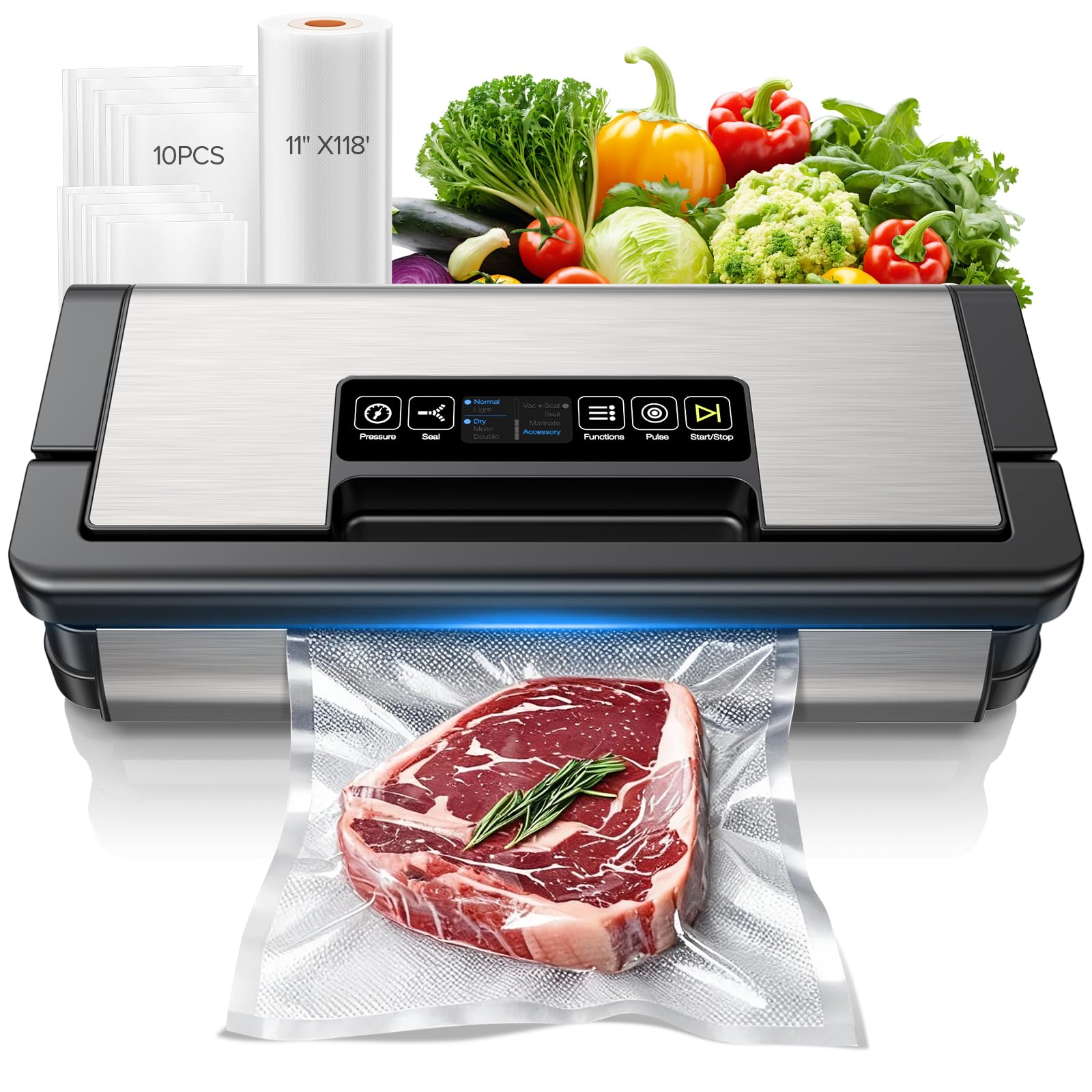
Sandifeng is the type of sealer people buy for one reason: they want double-strip sealing confidence without needing to do “double sealing” as a manual habit. If you freeze meat often, that redundancy can feel calming — because a tiny imperfection on one strip doesn’t automatically mean failure.
The workflow design aims to reduce hassle: easy-lock handle for one-handed operation, built-in roll storage and cutter for quick bag sizing, and straightforward modes like vac & seal, pulse, seal-only, and accessory sealing. It’s the kind of feature set that covers real-life scenarios: chips and pantry bags, freezer meat, and occasional container sealing.
The honest real-world note is that experiences can vary on suction “feel.” Some users love it and describe it as powerful and fast. At least one experienced sealer user reports it underperforming expectations. That tells you the deeper truth about vacuum sealers: your results depend on bags, technique, and keeping the seal zone clean and wrinkle-free. If you treat this machine like a “double seal insurance” tool and use pulse on wet foods, you’ll get the best version of what it offers.
Why it’s a freezer-friendly pick
- Double heat strip – Built-in redundancy for long freezer storage confidence.
- One-hand lock – Reduces the “two-hand clamp wrestling” frustration.
- Solid starter bundle – Includes bags/rolls so you can start sealing immediately.
- Pulse + accessory modes – Useful flexibility for wet foods and containers.
- Quiet-ish operation for its class – Many users find it comfortable to run.
Good to know
- Suction performance can feel inconsistent if bag placement isn’t flat; wrinkles matter.
- Wet foods need pulse control or short pre-freeze to keep the seal zone clean.
- Like many machines, it rewards practice — run a few “test bags” first.
Ideal for: freezer-focused kitchens that want double-strip sealing confidence and a straightforward “one-hand lock + cutter” workflow.
14. FoodSaver PowerVac Compact (VS0150) – Small Footprint, Big Lifestyle Upgrade

The VS0150 is a great pick when you want vacuum sealing benefits without giving up a big chunk of counter space. Vertical storage is the point: it’s easier to store, easier to “bring out and use,” and more likely to become a habit instead of an appliance you forget.
Functionally, it’s a simple, practical machine: dry and moist modes, clear bag placement support, and compatibility with the FoodSaver bag ecosystem. Owners tend to describe it as consistent and easy, with one repeating theme: you don’t need advanced features to get real value. If you mainly seal meats, fish, and vegetables for freezer storage — and you’re happy to keep things straightforward — this fits beautifully.
The most useful real-life note is about lid locking and technique. Some users mention it can take a bit of force to lock the lid. That’s not necessarily a negative — sealing depends on compression — but it’s worth expecting. Once locked, seals are typically strong. For moist foods, a simple trick (wipe the seal zone and add a few extra seal seconds if needed) can make it even more reliable.
Why it’s a smart small-kitchen choice
- Vertical storage – Easier to store and easier to actually use regularly.
- Simple, consistent operation – Great for everyday sealing without feature overload.
- Dry/moist modes – Basic but useful for common foods.
- Good for bulk meat savings – Helps portion and freeze without freezer burn stress.
- Compatible ecosystem – Works well with common FoodSaver bags and accessories.
Good to know
- Not loaded with advanced wet-food tricks; technique matters for juicy foods.
- Roll storage isn’t the main focus; many users rely on pre-made bags for speed.
- Lid locking can feel firm — it’s part of achieving reliable compression.
Ideal for: small counters, simple routines, and anyone who wants vacuum sealing to be easy to store, easy to use, and easy to keep consistent.
15. Beelicious Pro AirLock ProSeal – Compact Sealing with a Digital Timer (and Optional App Brains)
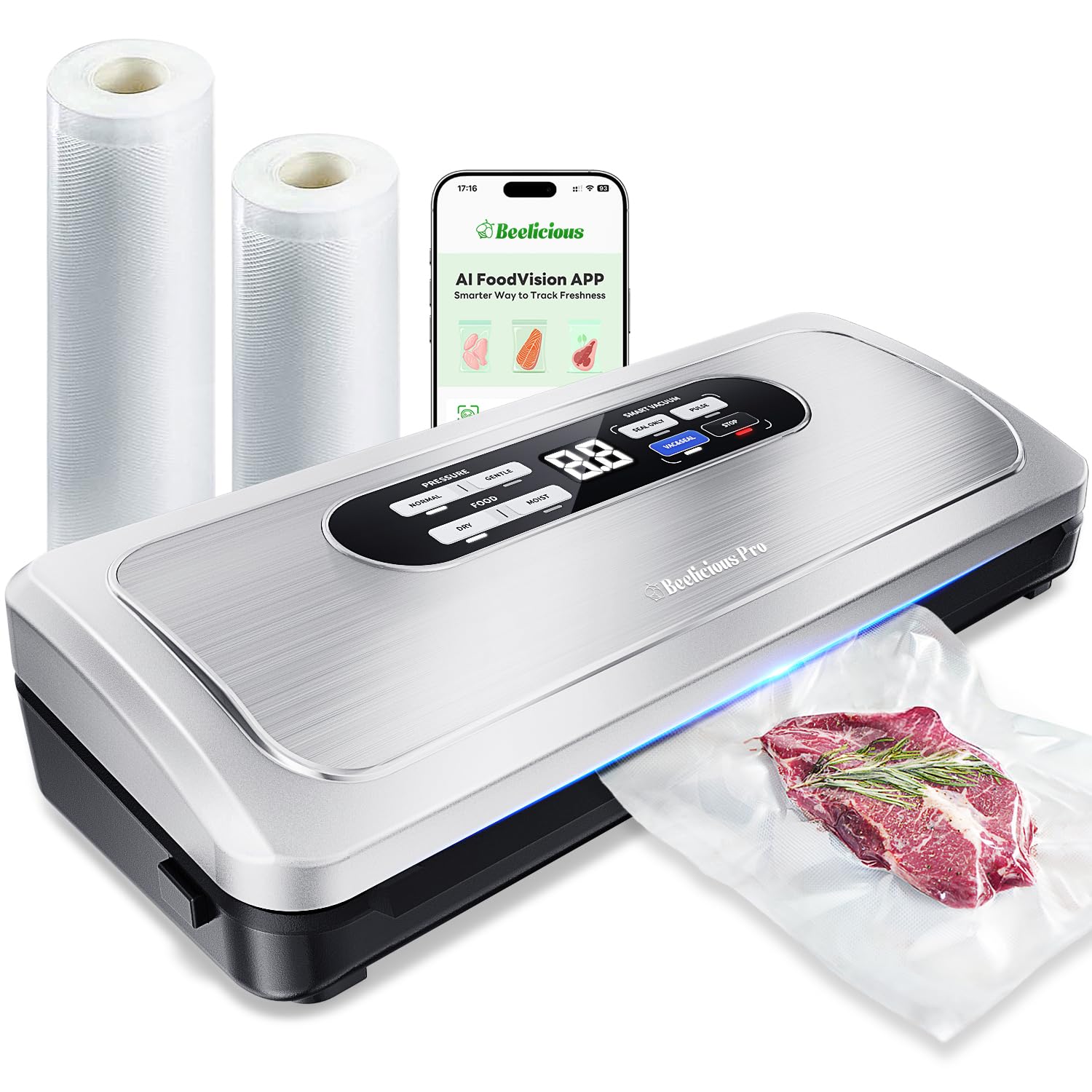
This model is for the organized cook who wants a compact vacuum sealer that still feels modern and guided. The digital timer is more useful than it sounds — it gives you feedback and makes the process feel repeatable. And the integrated roll storage and cutter keep the workspace neat, which matters if you’re sealing often but don’t want a “kitchen project” every time.
The standout twist is optional app integration for tracking and reminders. Not everyone wants that, and you don’t need it to seal food well — but for meal prep and inventory-minded households, it can be genuinely helpful: seal dates, expiration nudges, and less “what is this mystery bag?” energy in the freezer.
Performance-wise, this sits in the “solid daily sealer” category: dry and moist modes, reliable suction, and a compact body that doesn’t dominate the counter. Owners tend to describe it as fast and easy, with a satisfying “tight seal” outcome on common foods like meats, vegetables, and leftovers.
Why it’s a neat modern pick
- Compact but capable – Easy to keep on the counter without feeling cluttered.
- Digital timer feedback – Makes the sealing process feel guided and repeatable.
- Roll storage + cutter – Keeps everything tidy and speeds up bag sizing.
- Dry/moist modes – Covers most daily sealing needs without complexity overload.
- Optional tracking workflow – Helpful for organized meal preppers who like reminders.
Good to know
- “Smart” features are optional; don’t buy it only for the app — buy it for the workflow.
- For very wet foods, you’ll still want pulse-style technique (pre-freeze or keep bag upright).
- If you do massive bulk sessions, a heavy-duty batch-focused machine may feel faster.
Ideal for: compact kitchens and organized meal preppers who want a clean, guided sealing experience and like the idea of optional tracking tools.
16. FoodSaver Mini Handheld – Tiny, Cordless, and Weirdly Useful for Weeknight Cooking

This handheld is not trying to replace a full-size heat sealer. It’s trying to make vacuum sealing feel casual. You grab it, seal a zipper bag, pop it in the fridge, and move on. That’s why people who hated bulky countertop machines often love it: it takes almost no space and still delivers a noticeable freshness improvement for everyday storage.
The signature feature is the marinate cycle, which uses repeated vacuum/release cycles to speed up flavor infusion. It’s the kind of feature that sounds like marketing — until you actually use it on a busy day when you didn’t plan ahead. Pair that with reusable zipper bags and you get a system that supports weeknight habits: prep chicken, marinate quickly, store neatly, and cook later.
The “expert tip” is to treat zipper bag sealing as a technique. A redesigned valve can make attachment easier, but you still want a clean valve area, a fully closed zipper, and a bag that isn’t overfilled. For storage, it shines with produce, cheeses, and snacks. For freezer-long-term storage, a full heat-seal system can still be stronger — but for everyday, this handheld can be the most-used tool in your kitchen.
Why it’s a daily favorite
- Small but mighty – Easy to keep out and actually use often.
- Marinate mode – Great for last-minute flavor prep without overnight waiting.
- Reusable workflow – Zipper bags reduce constant cutting/sealing of new film.
- Fast sealing – Many users describe it as quick and surprisingly strong for a handheld.
- Great for fridge storage – Produce and leftovers stay fresher and more organized.
Good to know
- Not a full replacement for heavy freezer packing with heat-seal bags.
- Reusable bags can occasionally fail if the zipper isn’t fully sealed or the valve area is wet.
- Best results come from using compatible bags and keeping valves clean.
Ideal for: fridge-focused sealing, quick marinades, and anyone who wants a cordless tool that makes daily storage feel effortless.
17. NutriChef Automatic Vacuum Sealer – The No‑Frills Machine That Gets the Job Done

NutriChef is a familiar “starter sealer” for a reason: it’s compact, simple, and does the core task well when you use it with the right habits. You get dry and moist modes, straightforward controls, and included accessories to start sealing without building a whole system from scratch. For many households, that’s all they need to begin seeing real benefits: less waste, better freezer storage, and more organized meal prep.
The real-world story around this machine is mixed in a way that teaches an important lesson. Many users report years of dependable use. Some report breakage at a weak point like a latch/tab after extended use. That’s not unique to NutriChef — it’s a common “stress point” in budget-friendly sealers — but it does mean you should treat the lock mechanism gently and avoid forcing it.
If you’re buying this, your best path to success is simple: use good textured bags, keep the seal zone clean, don’t overfill, and for wet foods, use the moist mode plus technique (hold bag upright or pre-chill). Do that, and it’s a very capable everyday vacuum sealer that can pay for itself fast through reduced waste.
Why beginners like it
- Simple controls – Easy to learn and easy to use for common foods.
- Compact size – Doesn’t dominate the counter and stores easily.
- Good results for the effort – Strong improvement over regular storage methods.
- Accessories included – Helpful for container/canister sealing without extra shopping.
- Solid value reputation – Many users report dependable performance over years.
Good to know
- Latch/lock components can be a long-term weak spot; avoid forcing the lid.
- Auto sealing timing can require practice for perfect vacuum on some foods.
- Like all sealers, bag quality and seal-zone dryness determine long hold success.
Ideal for: first-time buyers who want a straightforward corded vacuum sealer for meats, veggies, and everyday storage without a complicated learning curve.
18. MZROT 6‑in‑1 Compact Sealer (75KPa) – The Slim, Simple Option That Overdelivers for Starters

If you’re budget-conscious but still want real modes (dry, moist, seal-only, external vacuum) and a digital timer that makes the process feel clear, this slim MZROT-style machine is a strong entry point. The long, narrow body is also a practical advantage: it stores easily in cabinets and drawers and doesn’t feel like “another giant appliance” you need to babysit.
Users often describe it as easy, compact, and surprisingly effective — especially for pantry protection (cereal, flour, snacks), fridge organization, and basic meat/vegetable storage. It comes with starter bags and even an extra gasket, which is a thoughtful touch for new users because gaskets are often the first wear part that affects performance.
The technique note is exactly what you’d expect: moist foods require practice. If you vacuum wet items flat on the counter, liquid can surge forward. Instead, use a simple habit: hold the bag slightly elevated so liquid stays away from the seal area, or chill the food briefly first. Do that, and this small machine can deliver results that feel far above “starter class.”
Why it’s a great first buy
- Compact, slim storage – Fits easily in small kitchens and cabinets.
- Helpful mode set – Dry/moist/seal/stop + external vacuum adds real versatility.
- Digital timer – Makes it easier for beginners to feel in control.
- Starter kit included – Bags + hose help you start using it immediately.
- Great for pantry protection – Resealing packages helps prevent staleness and pests.
Good to know
- Wet foods need technique; otherwise moisture can interfere with seal quality.
- Not built for massive bulk sessions like heavy-duty workhorses.
- Best results come with textured sealing bags and careful bag-mouth alignment.
Ideal for: beginners and budget shoppers who want a compact sealer with real modes and a clear, guided experience — especially for pantry and everyday fridge storage.
How Vacuum Sealing Actually Works (and Why Most Leaks Happen)
Here’s the “expert truth” that saves you the most frustration: vacuum sealing is not one event. It’s two events. First, the machine removes air. Second, the seal has to remain perfectly uniform for days, weeks, or months — through temperature swings, stacking pressure in the freezer, and the microscopic reality of moisture and fat.
The 4 most common reasons a vacuum-sealed bag “inflates” later
- Wrinkles at the seal line: Even a tiny crease can create a micro-channel for air to creep in.
- Moisture or oil in the seal zone: It can look dry, but a thin film can weaken the heat weld.
- Punctures: Bones, sharp pasta edges, frozen crystals, or granola can poke tiny holes you don’t notice.
- Gasket compression issues: A dirty gasket, worn gasket, or uneven clamp pressure can cause weak seals.
My favorite wet-food techniques (the ones that actually work)
Wet foods are where people rage-quit vacuum sealing — but it doesn’t have to be that way. Use one of these simple methods and your success rate jumps:
- The short pre-freeze: Chill wet foods 10–20 minutes so juices thicken and won’t surge into the seal area.
- The “hang the bag” method: Hold the bag opening higher than the food so liquid stays down while air evacuates.
- Paper towel dam: Place a small folded paper towel above the food (below the seal area) to catch stray moisture.
- Pulse control: Use short pulses so you can stop vacuuming the moment liquid approaches the seal zone.
- Use containers for liquids: Glass/rigid vacuum containers are the cleanest way to store soups and marinades.
Bag choice: the hidden performance multiplier
A great machine plus a weak bag equals weak results. Textured/embossed bags help air flow out of the bag effectively. Thin bags puncture more easily and can “false-fail” your machine. If you store anything sharp or frozen, double sealing and thicker bags can dramatically improve long holds.
Cleaning and maintenance: the 60-second routine that extends machine life
- Wipe the seal bar area after wet seals.
- Empty and clean drip trays (when your machine has one).
- Keep the gasket area free of crumbs and residue.
- Don’t store the machine clamped shut if the manual warns against it (protect the gasket shape).
Do these simple habits and the machine you buy today is far more likely to stay “strong” and consistent years from now — because most performance decline isn’t the motor, it’s the sealing surfaces getting dirty, worn, or uneven.
FAQ: Vacuum Sealer Questions (Answered Like a Real Human)
Should I buy a countertop heat sealer or a handheld reusable-bag system?
Why does my bag still have tiny air pockets after vacuuming?
How do I seal soups, stews, or marinades without making a mess?
Do I need double sealing?
Can I use bags from other brands?
What’s the fastest way to reduce bag waste?
How do I stop soft foods from getting crushed?
My bag inflates in the fridge after a day — is the machine broken?
Final Thoughts: Picking the Best Vacuum Food Sealer Without Regrets
A great vacuum sealer doesn’t just preserve food — it changes how your kitchen feels. You waste less, you prep with confidence, you buy bulk without fear, and your freezer stops being a graveyard of half-used ingredients.
Here’s the fastest way to translate this guide into the right purchase for your life:
- Want the most balanced “buy once” workhorse? Start with the POTANE VS5736. It’s built for repeatability and long sealing sessions without drama.
- Prefer premium automation and a full ecosystem? Choose the FoodSaver V4400 2‑in‑1 for bag detection, moisture handling, and accessory-style flexibility.
- Want a reliable daily driver with familiar controls? The FoodSaver FM2100 is a clean, consistent choice for everyday sealing and bulk buys.
- Do serious bulk meat sessions and want double-seal confidence? Go with the NESCO VS‑12 for control settings, pulse sealing, and freezer-friendly redundancy.
- Want the most practical reusable system for daily life? Pick the Chef Preserve Starter Bundle for fast reseals, glass containers, and clean handling of liquids and delicate foods.
- Care about long-term ownership, parts, and support? The Gasbye VS5166 is built around lasting confidence and practical maintenance.
- Want fast, premium-feel suction with a tidy roll workflow? Consider the Beelicious Pro Precision Pro for strong vacuum energy and double-seal peace of mind.
- Seal wet foods often and want a compact, liquid-friendly shape? The InstaSeal Upright uses vertical design to keep mess out of the seal zone.
- Need a fast batch machine that reduces bag wrinkles? Look at the Bonsenkitchen Full Stainless 135W or the Bonsenkitchen Globefish for high-volume sealing with practical control features.
- Want a feature-packed sealer with wet-food “safety nets”? The QIQIAOB 95kPa adds water detection, multiple modes, and a workflow designed for fewer mistakes.
- Want compact storage and simple FoodSaver-style sealing? Try the FoodSaver PowerVac VS0150.
- Want a compact sealer with a digital timer and optional tracking workflow? Choose the Beelicious Pro AirLock ProSeal.
- Want a cordless handheld for quick marinades and zipper bags? Grab the FoodSaver Mini Handheld.
- Need a simple corded machine to get started? Start with the NutriChef Sealer.
- Want the smallest budget-friendly option with real modes? Try the MZROT 6‑in‑1 Compact.
If you take one thing from this guide, let it be this: the best vacuum food sealer is the one that matches your real routine — how wet your foods are, how often you bulk pack, and whether you want a countertop workhorse or an always-ready handheld system. Pick the workflow that feels effortless, and you’ll seal more food, waste less, and feel calmer every time you open your freezer.
