
Buying a slow juicer sounds simple until you actually live with one. Because the real “juicer test” isn’t the first glass — it’s the tenth glass… on a weekday… when you’re tired… and the sink is already full. That’s when a machine either becomes your favorite health habit, or it quietly gets exiled to a cabinet like a regrettable impulse buy.
If you’re hunting for the best slow juicers, here’s the honest truth: most people don’t quit juicing because the juice tastes bad. They quit because the workflow feels annoying — too much prep, too many parts, too many clogs, too much “why won’t it start?”
So this guide is built around the friction points that actually matter in real kitchens: how wide chutes behave when you try to feed whole produce, where pulp secretly hides during cleanup, which designs stay calm with celery and ginger, and which machines feel “predictable” — meaning you can juice without babysitting the unit like it’s a temperamental science experiment.
Below you’ll find 13 standout cold press picks — from premium high‑torque workhorses and family-sized self-feeding hoppers to compact “weeknight friendly” juicers that rinse clean fast. And yes: I’m going beyond the surface-level marketing phrases. You’ll get the small details that make a buyer feel confident: what to feed first, what to feed last, what to peel, what to cut, and how to avoid the handful of common mistakes that make people think they bought the “wrong” juicer.
In this article
- How to choose a slow juicer that fits your routine (and won’t get abandoned).
- Quick comparison table of 13 standout models.
- In-depth reviews of each juicer, with honest pros and cons.
- How slow juicing actually works (and how to prevent clogs).
- FAQ: storage, pulp, cleaning shortcuts, and buying tips.
How to Choose the Best Slow Juicers for a Routine You’ll Actually Keep
A slow juicer isn’t “good” because the listing says high yield. It’s good because it gets used. The best match is the one that fits your ingredients, your time, and your tolerance for cleanup — while staying consistent when you run it on autopilot at 7:12 AM.
1. Choose based on your hardest ingredient, not your easiest
This is the most common buying mistake: people shop for oranges and apples… then wonder why the machine struggles with celery. Your “hardest ingredient” is the one that exposes a juicer’s weak spots.
- Leafy greens & celery: These are the classic stress tests. Long fibers can wrap, stall the auger, and clog the pulp exit if the design can’t clear itself smoothly.
- Ginger & turmeric: Small, dense, and fibrous — they can turn into “wet sawdust” if you feed too fast or don’t chase them with something juicy.
- Soft fruits (watermelon, very ripe berries): These can flood the chamber and make juice pooling look like “it’s not extracting,” especially if you overfill.
- Root veg (carrot, beet): Great for judging torque and build stability. Weak builds vibrate; strong builds stay planted and steady.
- Citrus: Easy to juice, but peel and pith choices affect bitterness. Some people love bold citrus; others think it tastes harsh unless peeled.
2. Wide feed chutes save time — but only if the chute is truly “self-feeding”
A wide chute is only a win if it reduces your “prep friction.” Here’s the difference you’ll feel in daily life:
- Wide + self-feeding hoppers: You can load a full recipe, then let the auger pull ingredients down with minimal babysitting. These shine for families, batch prep, and anyone who wants to multitask while juicing.
- Wide but still “guided feeding”: Still faster than narrow chutes, but you’ll get the best yield when you feed in a steady rhythm instead of dumping everything at once.
- Narrow chutes with strong augers: Less convenient for whole produce, but often very consistent for daily single-glass use — and sometimes easier to rinse quickly.
If you’re buying a slow juicer to save time, prioritize hopper-style designs and models that owners describe as “set-and-go.” If you’re buying it for quality and don’t mind a little cutting, you can choose a more compact design and still be happy.
3. “Easy to clean” is a parts + geometry problem
Real easy-clean isn’t about fewer features — it’s about fewer pulp traps. Two machines can have the same number of parts, but one rinses clean in two minutes while the other needs a brush and a grudge.
- Mesh vs. mesh-free filters: Fine mesh can create ultra-smooth juice, but it can also trap micro-pulp that requires brushing. Mesh-free designs rinse faster but can leave slightly more texture.
- One-piece filter assemblies: Great when well-designed, because they remove “tiny crevice cleaning.”
- Spout and pulp-exit design: This is where most hidden gunk lives. Some models have removable stoppers or channels that you must know about to clean properly (and once you do, cleanup becomes dramatically easier).
- Dishwasher-safe parts: Convenient, but “dishwasher safe” doesn’t always mean “dishwasher effortless” — you still want a design that rinses quickly when you don’t feel like running a full cycle.
4. High yield is mostly about feed technique (and that’s good news)
A lot of people think yield is a fixed property of the machine. In real use, yield is a relationship between: ingredient cut size, feed order, and how fast you push.
That means you can often upgrade your results without upgrading your juicer:
- Alternate fibrous + juicy: Celery with apple, greens with cucumber, ginger chased with orange — this keeps the chamber flowing.
- Don’t overstuff the hopper: Overfilling can cause pooling and early clogs even in powerful units.
- Use reverse strategically: Reverse isn’t a failure button; it’s a workflow tool. One quick reverse pulse can clear a developing jam before it becomes a full stop.
The best designs make “good technique” easier because they pull produce down predictably and clear pulp consistently.
5. Decide if you want juice only — or a “kitchen system”
Some slow juicers are focused, simple juice machines. Others act like a mini wellness station: nut milk, sorbet, different strainers, pulp control, and “hands-free” batch workflow.
- Choose a focused machine if you want fast daily juice with minimal thinking.
- Choose a multi-function machine if your household will actually use nut milk or sorbet — and you want one device that covers multiple cravings.
- Choose pulp-control models if different people in your home like different textures (smooth vs. pulpy).
6. Support matters more than you think
Juicers are simple machines… but they’re also high-torque appliances that meet fibrous, messy ingredients daily. Longer warranties, responsive support, and available replacement parts can be the difference between a “five-year favorite” and a “one-year disappointment.”
If you’re a daily juicer, pay attention to build stability, warranty language, and how easy it is to get help. Even the best machine will eventually need a gasket, a container, or a small part — and that’s normal.
Quick Comparison: 13 Best Slow Juicers That Earn Their Counter Space
Use this table to shortlist the models that match your style — then jump to the full reviews for the “real life” details like how they behave with celery, what owners learn about cleanup, and which designs feel easiest when you’re busy.
On smaller screens, swipe or scroll sideways to see the full table.
| Model | Juicer style | Signature strength | Best match | Amazon |
|---|---|---|---|---|
| Anybear 350W Dual‑Stage (4.9″) | Vertical cold press | High torque feel + dual-stage extraction for consistent, dry-pulp results with mixed produce | “One juicer for everything” households (greens, roots, citrus, daily blends) | Amazon |
| Anybear 200W Big Mouth (4.3″) | Vertical cold press | Beginner-friendly kit vibe: simple build, strong documentation, and long-warranty confidence | New juicers who want guidance, consistency, and easy rinse cleanup | Amazon |
| Canoly C16 (6″ + 3 strainers) | 3‑in‑1 system | Huge hopper + brushless quiet motor concept + juice/nut milk/sorbet flexibility | Families, batch-prep, and “make it once, drink it all week” routines | Amazon |
| Ninja NeverClog JC151SL | Pulp control | Two filters for texture + anti-drip spout + dishwasher-safe parts for easy daily use | People who want quick, tidy weekday juicing with predictable cleanup | Amazon |
| Airpher 400W (5.8″) | High power vertical | Power-forward motor feel + stable one-piece body for fast, low-drama extractions | Hard-veg lovers who want speed without the blender-style chaos | Amazon |
| TUUMIIST 3‑in‑1 Touch (6.5″) | Smart 3‑in‑1 | Touch modes + big hopper + auto-reverse for batch juicing and variety | Busy households that want juice + nut milk + sorbet in one station | Amazon |
| Cuisinart CSJ‑300 Easy Clean | Mesh‑free style | Traditional brand feel + quieter operation + smooth juice with a rinse-friendly filter design | People who want “classic appliance” simplicity and a tall, counter-friendly footprint | Amazon |
| TUUMIIST 6.5″ Hopper (100oz) | Hands‑free batch | Load-the-recipe hopper convenience + quiet operation + strong everyday yield | Meal-preppers and families who want “dump, juice, rinse” | Amazon |
| Godspeeds (5.8″) | Daily wellness | Wide chute + easy-clean design (with a “hidden” cleanup trick owners love) | People who want daily celery/greens habits without a long scrub session | Amazon |
| YPONE (5.8″) | Low-speed press | Low-RPM squeeze + double-strainer approach for smooth juice and dry pulp feel | Families making multiple bottles — with a mid-session quick-clear plan | Amazon |
| AMZCHEF 5.4″ Stainless | Compact stainless | Small footprint + quiet run + smooth juice with strong everyday usability | Counter-space savers who still want whole-produce convenience | Amazon |
| Whuto Touchscreen (Gray knob) | Multi‑use | Touch controls + compact stainless body + “try new things” extras (nut milk/sorbet) | People who want a modern UI and don’t mind dialing in container setup | Amazon |
| ACOQOOS Auto‑Feed (5.3″) | Budget wide chute | Wide chute + auto-feed capacity + easy assembly for a low-effort entry point | First-time buyers who want maximum convenience at minimal learning curve | Amazon |
In‑Depth Reviews: 13 Best Slow Juicers (What Owners Actually Notice)
Now we’ll go model by model. I’m going to talk like someone who actually juices — not like a spec sheet. You’ll see where each machine feels effortless, where it needs a quick technique tweak, and who it truly fits.
1. Anybear 350W Dual‑Stage (4.9″) – The “One Juicer” Choice That Stays Consistent
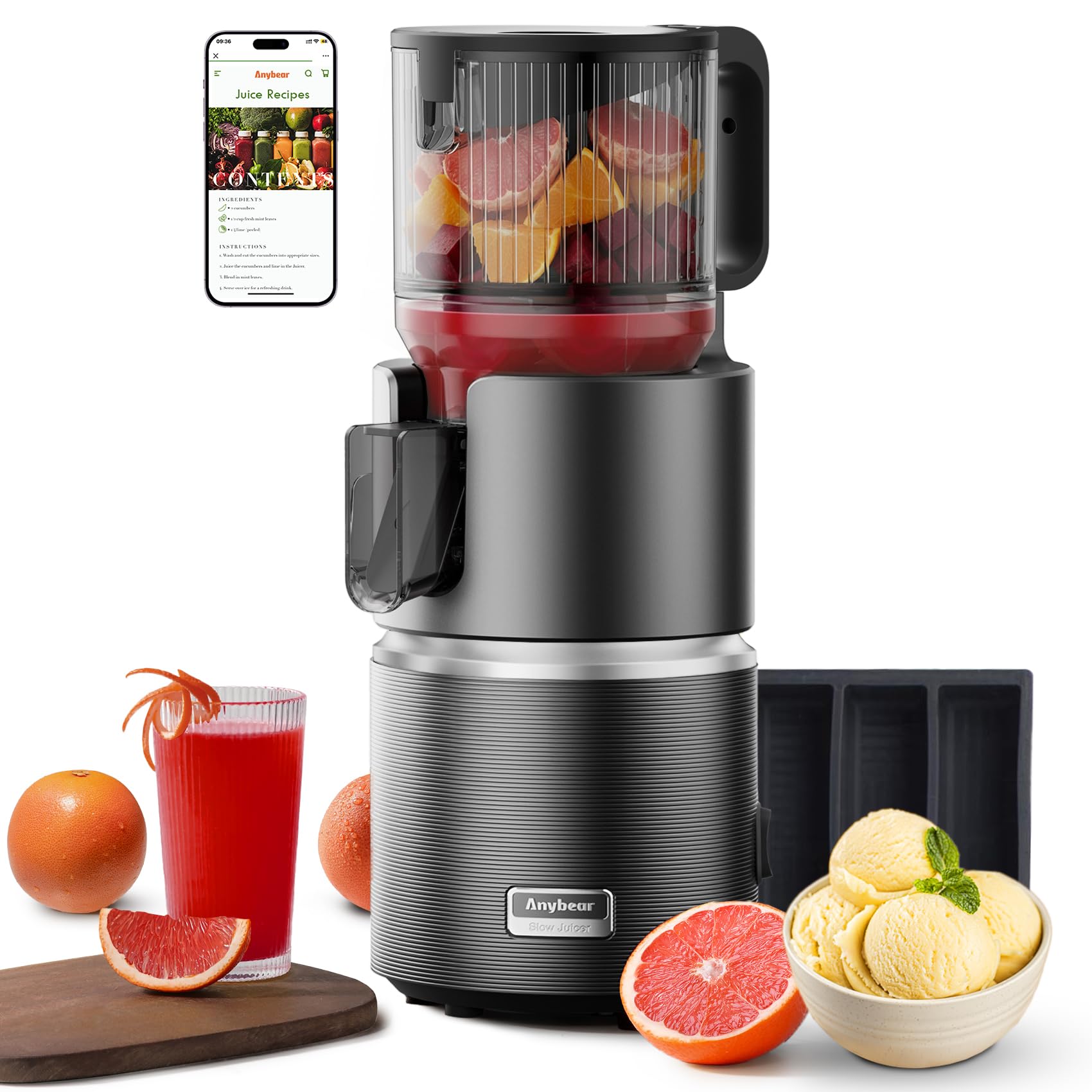
If you want one machine that feels “ready for whatever is in the fridge,” this Anybear model is a strong place to start. The reason isn’t just power — it’s the way it extracts. Dual-stage squeezing designs tend to do a better job staying steady when you mix soft fruit, hard veg, and fibrous greens in one session. In real kitchens, that translates to fewer “why is it suddenly struggling?” moments.
The wide chute is a real time-saver, but here’s the expert nuance: you still get the best results when you treat the hopper like a steady rhythm, not a dump bucket. Feed in waves, and you’ll see a more consistent flow out of both spouts — juice stays smooth, and the pulp exits with that “compressed, drier” feel owners love to mention when a machine is extracting well.
Where this unit especially shines is mixed produce habits: think celery + apple, beet + orange, greens chased by cucumber. It has enough torque to keep moving through tougher items, and the reverse function is there when you do what all of us eventually do: feed a little too fast because the machine is “handling it so well.” The difference between a frustrating juicer and a lovable one is how quickly you can recover without taking the entire thing apart mid-session. This one is built for that reality.
Cleanup is one of the reasons this lands as “best overall.” Owners consistently praise that the removable parts come apart quickly, and the filter design doesn’t feel like a fine-mesh punishment. That matters because a juicer can have incredible juice quality and still fail as a purchase if cleaning becomes a nightly argument with your sink.
Why you’ll like it
- Consistent extraction with mixed produce – Great for people who don’t juice “one ingredient at a time.”
- Wide chute saves real prep time – Less chopping, faster weekday use.
- Easy rinse cleanup – Built for the “I’ll clean it now so I keep juicing tomorrow” lifestyle.
- Reverse function feels practical – Helps you recover quickly from early jams.
Good to know
- Wide chutes still reward a steady feed rhythm — overstuffing can reduce flow and increase pooling.
- Stringy celery is always a technique ingredient; short cuts + alternating with juicy produce keeps everything smooth.
- If you only ever juice oranges and apples, this may feel like “more machine” than you truly need.
Ideal for: most households who want one reliable cold press juicer for daily blends — especially if your ingredients change throughout the week.
2. Anybear 200W Big Mouth (4.3″) – The “Guided Start” Juicer With Long‑Warranty Energy
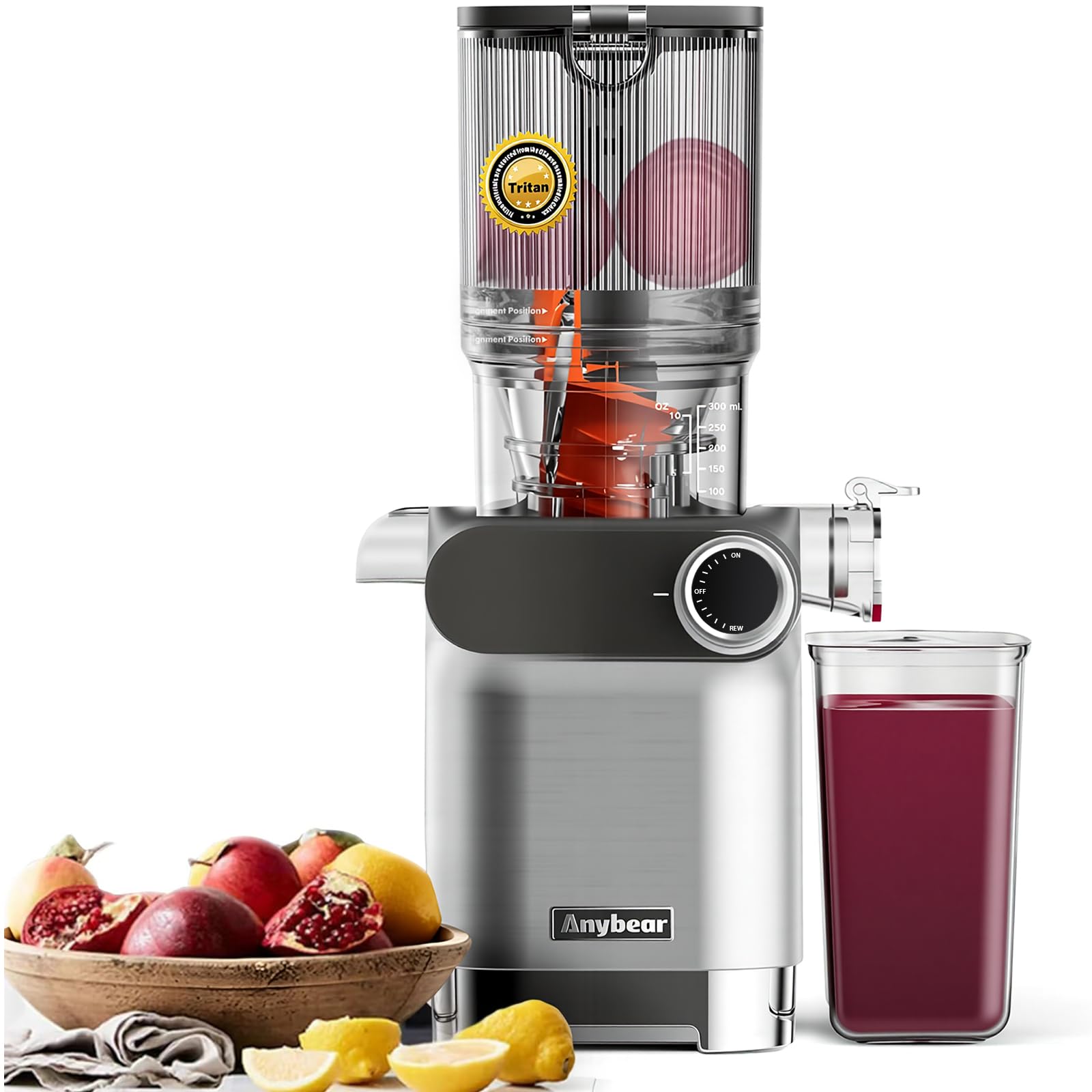
Some juicers are designed for people who already know all the little “juicer rules.” This one feels designed for the opposite: the person who wants a strong first experience so they actually build the habit. Owners repeatedly point out the documentation quality and the included extras, which sounds small — until you remember that most returns happen because someone got confused on day one and decided the machine was “too much work.”
The practical win here is the balance: it’s sturdy without being absurdly bulky, and it’s straightforward enough that you don’t feel like you need a tutorial playlist just to make a glass of juice. The wide chute does what you want it to do: reduce prep time on everyday fruits and many vegetables. And in feedback, people frequently mention that it produces smooth, fresh-tasting juice with minimal foam — a hallmark of slow juicing done right.
Let’s talk about the “real life” limits so you buy with your eyes open. A typical pattern in owner comments is that it handles apples, carrots, celery, grapes, and softer produce very well, but like many vertical cold press units, it can benefit from smart sequencing on fibrous ingredients. If you jam celery in like you’re feeding a woodchipper, you’ll eventually have to use reverse or pause. If you feed celery in shorter pieces and chase with something watery, it stays calm.
Cleaning is one of the biggest reasons people keep using it. The filter design is described as quick to rinse, and the parts come apart without a fight. One thing new users should know: if the locking mechanism doesn’t feel intuitive at first, that’s normal. Do two “dry runs” (assemble, lock, unlock) before your first juice session. That tiny practice step prevents the classic “it won’t turn on” panic, which is almost always a safety-lock alignment issue.
Why beginners love it
- Confidence-building instructions – Makes the first week feel easy instead of overwhelming.
- Wide chute reduces prep – Especially noticeable with apples and chunked produce.
- Quiet, steady operation – Easier to use early mornings without feeling like chaos.
- Easy rinse cleanup – Helps you keep the habit because cleanup isn’t a chore.
Good to know
- Don’t treat it like a “dump everything at once” hopper; steady feeding improves flow and pulp dryness.
- Very fibrous ingredients still need technique (short cuts, alternating produce, occasional reverse).
- If you want nut milk/sorbet versatility, a 3-in-1 system may fit better.
Ideal for: first-time juicers who want a smooth learning curve, easy cleaning, and a machine that feels supportive rather than finicky.
3. Canoly C16 (6″ + 3 Strainers) – Batch‑Prep Power for Juice, Nut Milk, and Sorbet
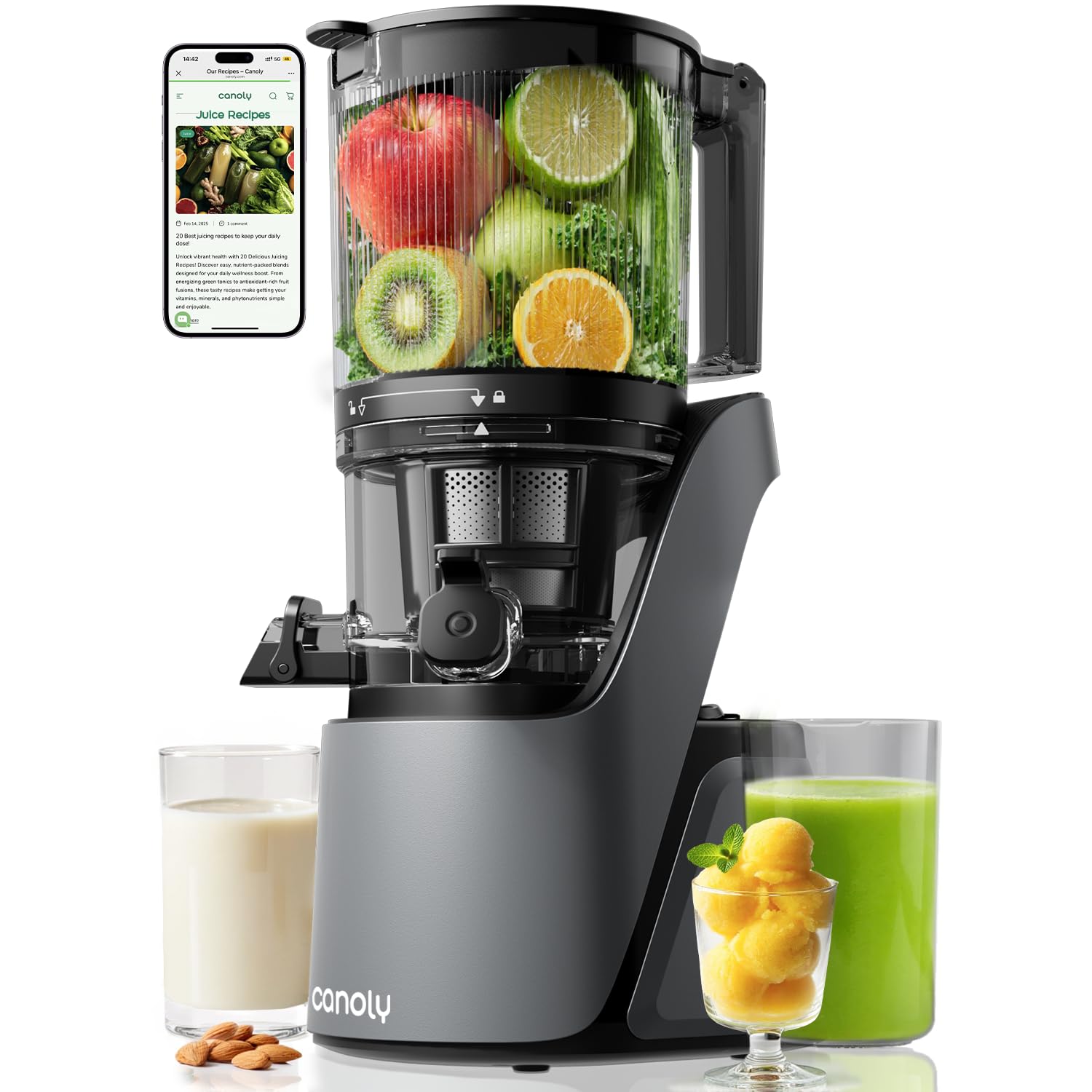
The Canoly C16 is for a very specific type of person: the one who wants a juicer to feel like a system, not a gadget. It’s built around high-throughput convenience — a wide chute, a big hopper, and multi-strainer flexibility so you can move between fresh juice, creamy nut milk, and fruit sorbet without buying separate machines.
The biggest “aha” owners describe is the yield + dryness: when a juicer is extracting well, people don’t say “I got 10 ounces.” They say “the pulp is dry.” That’s exactly the language that shows up in real feedback here, especially after hard-ingredient tests like carrots and ginger. And because this is a larger-format build, it tends to feel calmer when you’re doing bigger sessions — fewer stops, less babysitting, more “load and let it run.”
Here’s the deeper, expert take: multi-function juicers only stay loved if the swap workflow is easy. If changing strainers feels annoying, you’ll never use sorbet mode again after week two. The C16 gets praise because the parts are designed to detach cleanly and the machine doesn’t feel “precious” — owners talk about rinsing, reassembling, and getting back to life without a long ritual. Dishwasher-safe removable parts also matter for households that want to do larger batches without dreading cleanup.
One of the strongest trust signals in customer stories is support behavior: people report surprisingly fast responses and generous resolution when something goes wrong. That kind of experience matters because high-torque appliances live hard lives — fibrous produce, daily use, lots of rinsing — and a brand that stands behind the product changes the entire ownership experience.
The only real caution: this style of machine is larger and more “station-like” than compact daily juicers. If your goal is one small glass a few times a week, a compact unit might feel more convenient. But if your goal is to make juicing and homemade “clean treats” (like fruit sorbet) part of your household rhythm, this is the kind of machine that can actually sustain it.
Why it stands out
- True batch workflow – Built for big sessions without constant stopping.
- 3-in-1 versatility – Juice + nut milk + sorbet in one system is a real lifestyle upgrade.
- Dry-pulp extraction feedback – Owners describe strong extraction on harder ingredients.
- Cleanup feels manageable – Designed so multi-use doesn’t become multi-mess.
Good to know
- It’s a bigger countertop commitment than compact daily models.
- Sorbet and nut milk modes work best when you prep properly (soak nuts; use semi-thawed fruit chunks).
- If you only want ultra-smooth juice and nothing else, a simpler single-purpose juicer may feel faster.
Ideal for: families and meal-preppers who want a high-capacity “juice station” that can also cover nut milk and sorbet cravings.
4. Ninja NeverClog JC151SL – The “Tidy Counter” Juicer With Texture Control

Ninja’s NeverClog line is popular for one main reason: it feels designed for normal people, not hobbyists. If you care about a clean countertop, fast cleanup, and a machine that you can break down quickly without thinking, this is one of the easiest to keep in rotation.
The standout feature is texture control. Two filters (less pulp vs more pulp) sounds like a small perk, but in real households it can be the difference between “everyone drinks the juice” and “only one person likes it.” When people can choose smooth or more textured juice, you get less waste and more consistent use.
The other underrated win is the anti-drip behavior. Mess is the silent habit killer. A juicer that drips down the front, pools under the spout, or leaves little sticky puddles makes you resent the machine. Ninja’s design leans into “no more messes” thinking, which is why so many owners describe it as fast to clean and easy to live with.
Here’s the expert nuance: compact, tidy juicers often trade wide-chute convenience for predictability. That means you may do more cutting — but you also get a very controlled feed into the auger, which can reduce the “overstuffing” problems that happen with big hoppers. If you’re a weekday juicer who makes one to two glasses at a time, that’s a great trade. And if you do hit a jam, reverse exists for a reason — use it quickly and you’ll rarely have to disassemble mid-session.
Why it’s a daily favorite
- Pulp control filters – Lets different people enjoy the juice the way they like it.
- Dishwasher-safe parts – Makes “I’ll do it later” less risky.
- Anti-drip design – Helps keep counters clean and reduces sticky cleanup.
- Compact footprint – Easy to store, easy to keep out, easy to use.
Good to know
- Chute size is more compact than the wide-hopper models, so expect some cutting for larger produce.
- For huge batch sessions, a big hopper model will feel more hands-free.
- Very fibrous ingredients still benefit from smart sequencing (alternate with watery produce).
Ideal for: people who want a clean, predictable weekday juicing routine — especially if texture preferences vary in the household.
5. Airpher 400W (5.8″) – Fast, Stable, “No Hesitation” Crushing for Tough Produce
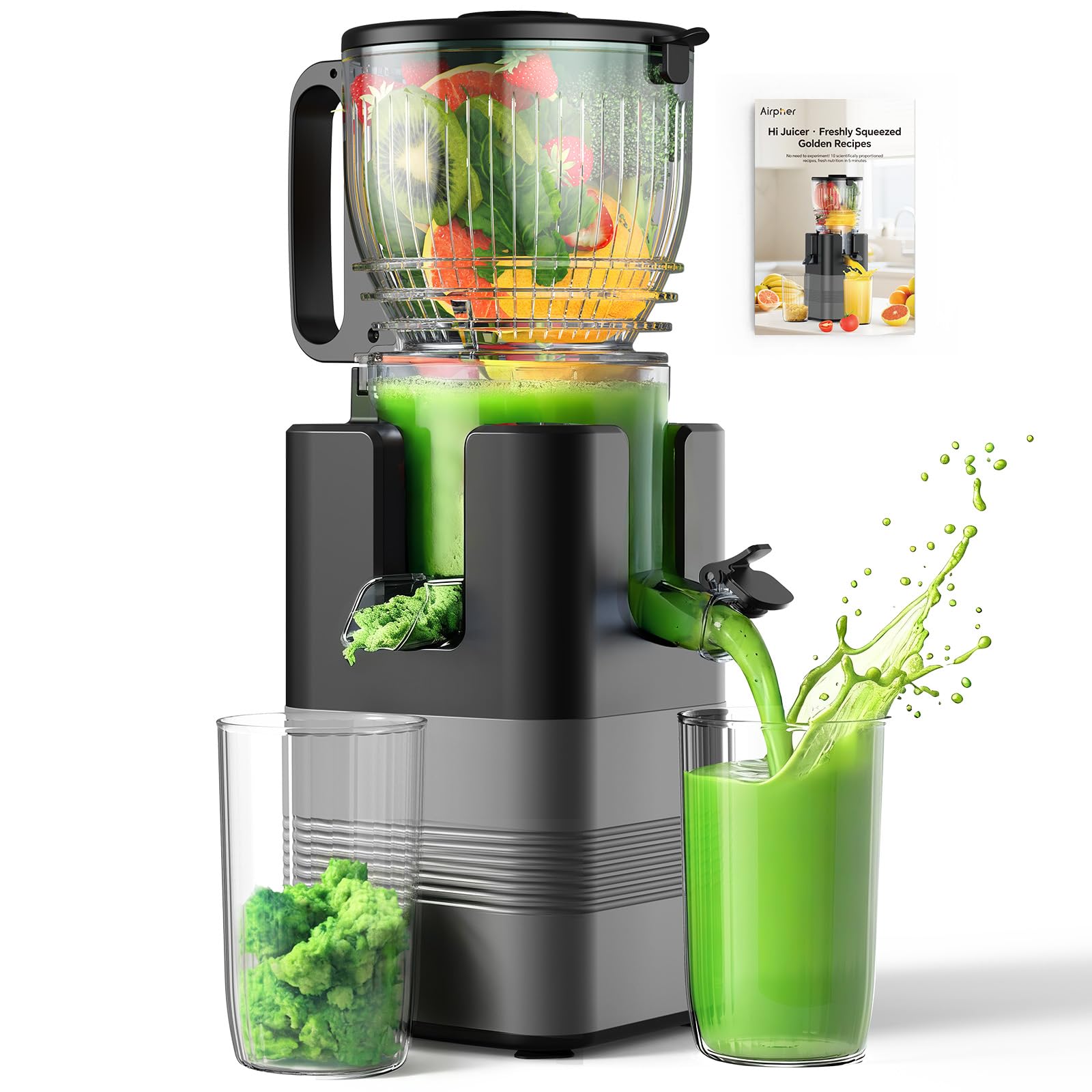
If your juicing personality is “I want it done in minutes,” Airpher is the kind of machine that fits. Owners describe the experience as quick and surprisingly quiet for its power class — and that combination is exactly what you want when you’re working with hard veggies, dense fruit, and greens that normally make cheaper units stall.
The wide chute is a huge time-saver, but what matters more is how the unit stays stable while it works. Powerful motors can be annoying if the body vibrates, walks, or rattles. This model leans into a stable, one-piece body feel, which makes the whole process calmer: ingredients go in, juice comes out, and you don’t feel like you’re holding the machine down like a bucking bronco.
From an expert point of view, this is the kind of juicer that rewards one simple behavior: use reverse early, not late. If you ever hear the motor pitch change or you see pulp flow slow down, don’t keep pushing. Tap reverse briefly, let the chamber clear, then continue at a steady pace. That tiny habit change prevents the “everything is stuck and now I’m disassembling it” scenario that makes people hate juicing.
Another real-world note: some users mention that proper assembly alignment matters. That’s not a flaw — it’s a safety design. Most wide-chute machines include a lid lock that prevents operation if things aren’t seated correctly. So before your first session, do a quick assemble/lock/unlock practice cycle. After that, it becomes muscle memory and you’ll never think about it again.
Why it’s a strong buy
- Power-forward performance – Great for hard veg and leafy greens without constant stalling.
- Wide chute reduces chopping – Faster daily setup and less prep resentment.
- Stable, smooth operation – Less shaking and noise drama than many high-power designs.
- Reverse + safety features – Helps prevent jams and improves “family-safe” usability.
Good to know
- Like most powerful units, it works best with a steady feed rhythm instead of aggressive stuffing.
- Soft fruits can flood the chamber if you overfill; mix with firmer produce for smoother flow.
- Always rinse immediately after use — powerful juicers still hate dried pulp.
Ideal for: people who juice tough ingredients and want fast results with a stable, confident-feeling machine.
6. TUUMIIST 3‑in‑1 Touch (6.5″) – Big Batch Convenience With One‑Tap Variety
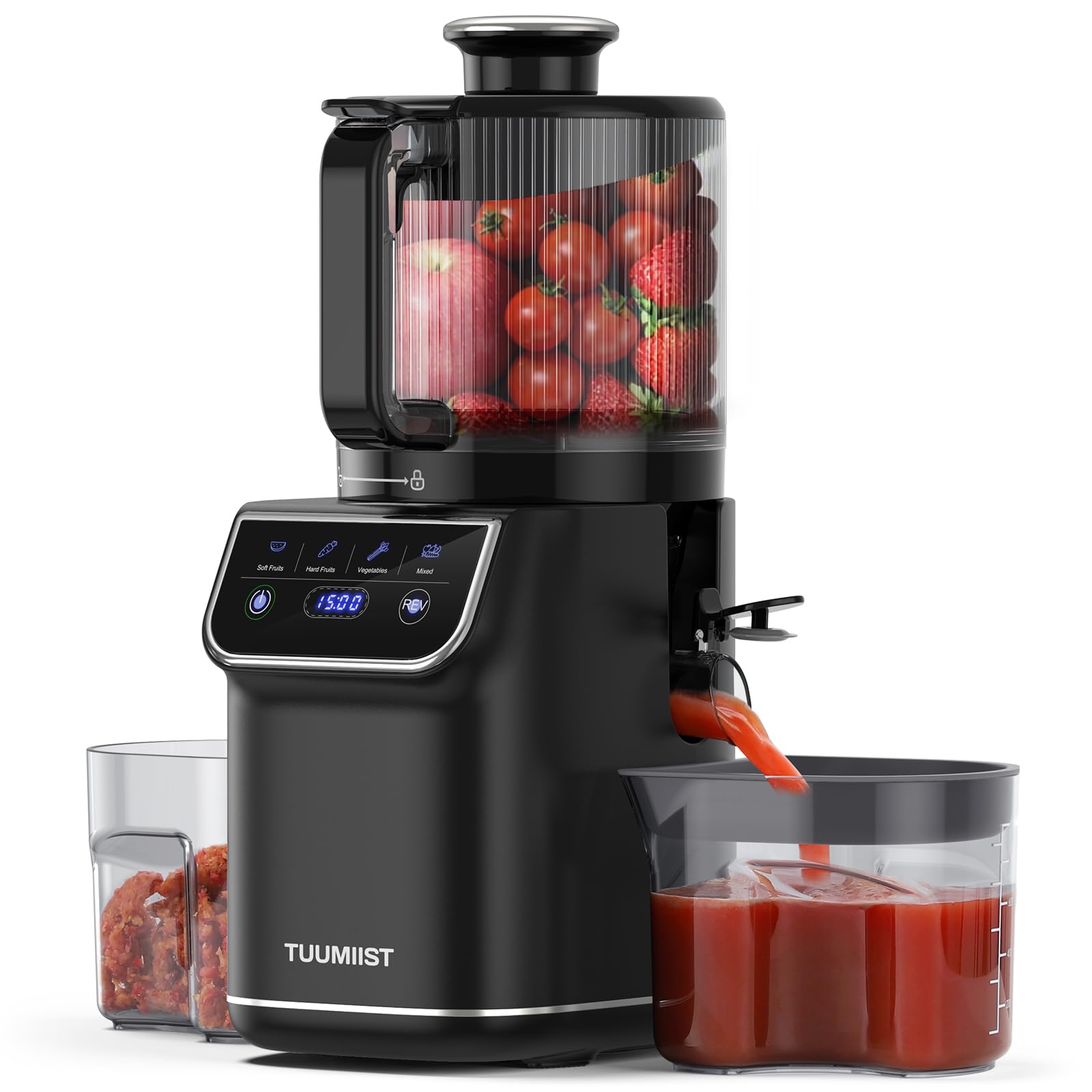
The TUUMIIST 3-in-1 is the kind of machine you buy when you want your juicer to do more than “make juice.” It’s built around modern convenience: a wide, self-feeding style chute, a touch interface that guides your mode selection, and a workflow that’s clearly designed for bigger batches rather than tiny single servings.
What owners tend to praise most is the low-friction setup: alignment stickers, simple assembly, and a “you press a button and it goes” experience. That matters because the more a machine feels like a mini-ritual, the less often it gets used. Here, the design goal seems to be: remove decisions, remove confusion, remove scrubbing. When buyers talk about dry pulp and easy rinse cleanup, that’s usually a strong sign the system is extracting efficiently and not trapping pulp in awkward places.
As an expert, I like this style for families because it supports a batch mindset. If you want to fill bottles, share with a partner, or prep for the next day, large-capacity designs feel dramatically easier. You load your recipe, let the machine run, and your job is mostly “keep the flow consistent.” And because it includes auto-reverse behavior, it’s built to protect the motor when you feed fibrous items that would normally stall cheaper units.
This also falls into the “fun stays fun” category. If you actually plan to use nut milk and sorbet functions, you want a machine that makes switching modes feel realistic. For nut milk, the key is prep: soak and rinse your nuts, then feed slowly and chase with water or watery produce (depending on your recipe). For sorbet, semi-thawing frozen fruit for a few minutes before feeding can make a huge difference in smoothness and motor strain.
Why it’s a lifestyle fit
- Wide hopper convenience – Big chute and batch mindset reduce daily prep friction.
- Touch interface is genuinely helpful – Makes the machine feel approachable, especially for beginners.
- Easy rinse cleanup – Owners repeatedly mention “no scrubbing” vibes.
- 3-in-1 versatility – Great if you’ll actually use juice + nut milk + sorbet.
Good to know
- Bigger capacity means more parts get used per session — quick cleanup still matters, but don’t let pulp dry.
- Very fibrous produce may still need a mid-session clear if you’re making large batches.
- If you want ultra-compact storage, a smaller daily juicer might fit better.
Ideal for: households that want batch-friendly juicing plus the flexibility to make nut milk and sorbet without buying extra machines.
7. Cuisinart CSJ‑300 Easy Clean – Smooth Juice With a “Rinse-Friendly” Filter Style

The Cuisinart CSJ‑300 is the “classic appliance” option in this lineup — and that matters to a lot of buyers. Some people don’t want a trendy, app-adjacent gadget from a brand they’ve never heard of. They want a recognizable kitchen name, a straightforward control style, and juice quality that feels clean and consistent.
Where this model earns its keep is the filter approach. Many owners describe it as easier to clean than fine-mesh designs, because the filter rinses under the tap without the same level of micro-scrubbing. That’s a big deal for daily use. “Easy to clean” doesn’t mean “no parts” — it means “the parts rinse quickly and don’t trap pulp in tiny slots.” In real usage, that’s the difference between a juicer you keep out on the counter and one you dread.
Now for the honest reality check — because this is where expert guides should be brave. This juicer can make excellent juice, but it’s not the best fit for aggressive, daily celery-only routines. Stringy celery fibers are notorious for jamming many machines, and owner experiences vary based on technique and intensity. If celery is your daily non-negotiable, you’ll get better results by cutting it smaller, feeding it slowly, and chasing it with something watery (cucumber or peeled citrus) to keep the chamber moving.
Also: think about your kitchen layout. This is a taller unit. That’s great for footprint (it doesn’t sprawl across the counter), but it can be inconvenient under low cabinets while operating, and it can require more cutting because it’s not a wide, whole-fruit hopper style. If you’re okay with that, it’s a satisfying “reliable juicer” that produces smooth juice and feels calm in operation.
Why people stick with it
- Recognizable brand feel – Appeals to buyers who want a traditional appliance experience.
- Rinse-friendly filter style – Often easier to clean than fine mesh screens.
- Quiet, steady operation – Less “kitchen chaos” energy.
- Good juice quality – Smooth results compared with centrifugal-style juicers.
Good to know
- Tall build may not fit under cabinets while running in some kitchens.
- Not a whole-fruit hopper style, so expect more cutting vs 5.8–6.5″ chute models.
- Fibrous celery is a technique ingredient — slow feeding + alternating produce matters.
Ideal for: buyers who want a recognizable brand juicer with smooth results and rinse-friendly cleanup — and who don’t mind doing some cutting.
8. TUUMIIST 6.5″ Hopper (100oz) – Load the Recipe, Juice While You Do Something Else
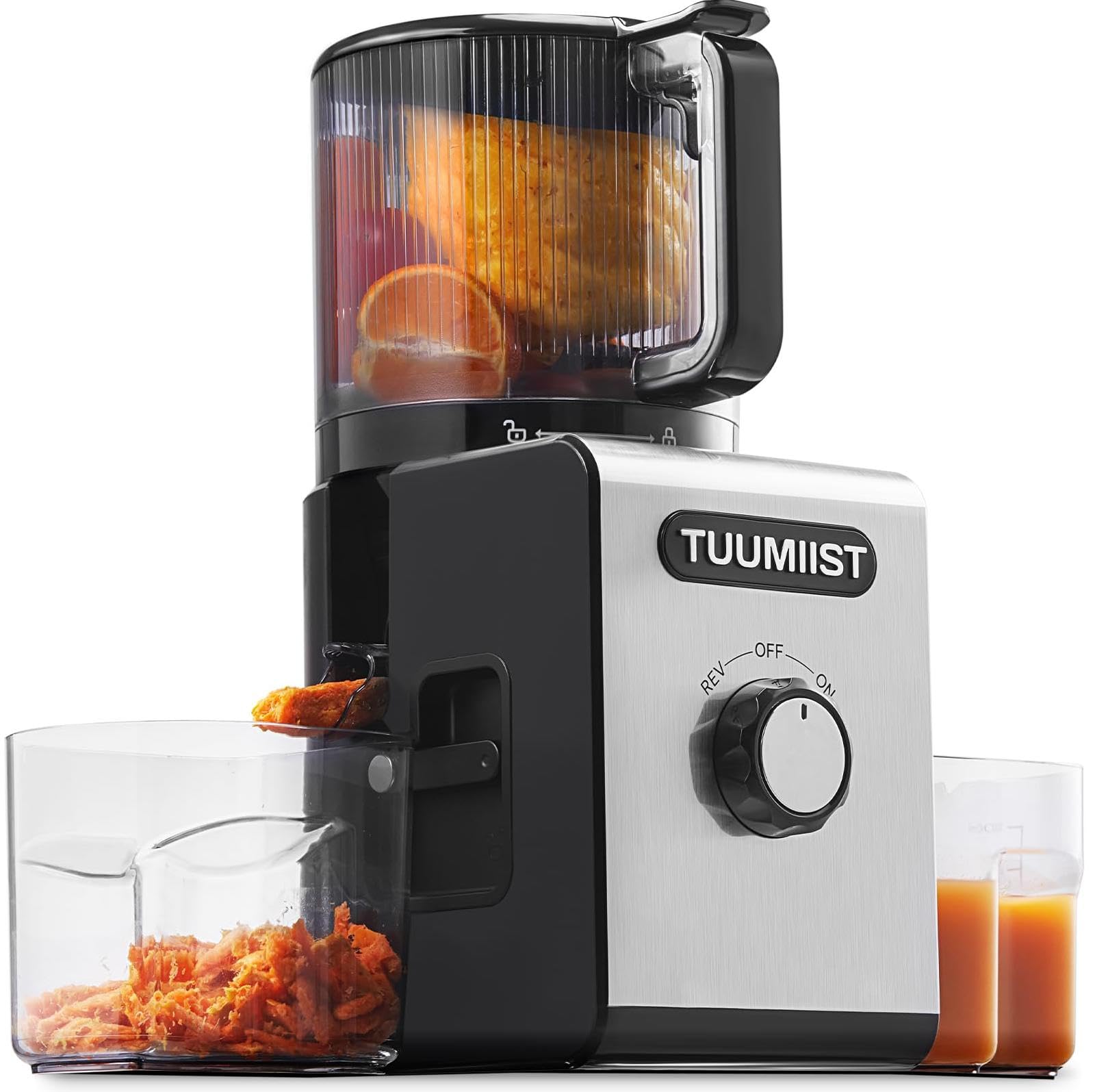
This TUUMIIST model is built for the person who wants juicing to feel like a background task. The big hopper is the headline: instead of feeding one piece at a time, you can load a full recipe and let the machine do the steady work. That’s a lifestyle upgrade if you make juice for more than one person or you like to prep ahead.
In real user feedback, you see a familiar pattern: people love the low noise, the strong yield feeling, and the “pulp is dry enough” results — but what stands out is how quickly owners learn the small cleanup trick that makes it feel easy. Some machines hide key removable pieces in the exit channel area, and if you don’t know that, you spend time scrubbing the wrong places. Once you understand how the exit path opens and rinses, the cleanup experience changes dramatically.
From an expert perspective, this is the kind of machine that makes feed order feel almost irrelevant — but not completely. If you’re doing leafy greens or celery in big quantities, don’t do an entire hopper of pure fiber. Alternate with something watery or firm (apple, cucumber, peeled citrus) so the auger keeps pushing pulp out instead of letting fibers braid together. You’ll get better flow, fewer “mid-pineapple cleanouts,” and a more satisfying pulp exit.
One more real-life note: no slow juicer is immune to herbs and micro-leaves slipping through. If you want absolutely ultra-smooth juice, you may still strain through a fine sieve. But many people actually like a little natural texture — and the win is that you’re getting fresh juice without a loud, messy centrifugal experience.
Why it works for families
- Big hopper convenience – Great for batch recipes and shared households.
- Quiet operation – Easier to run early morning or evening without irritation.
- Strong everyday yield feel – Dry-pulp feedback shows up often in owner comments.
- Quick-release cleaning workflow – Built to rinse fast when you know the right access points.
Good to know
- Huge hoppers still benefit from smart sequencing on fibrous produce.
- Some ultra-soft fruits may pool if you overfill; mix with firmer produce for better flow.
- Clean immediately — batch machines touch more produce, so dried pulp can get stubborn.
Ideal for: meal-preppers and families who want hands-free batch convenience and a juicer that feels easy to keep in rotation.
9. Godspeeds (5.8″) – The Juicer People Love Once They Discover the Hidden Cleanup Step
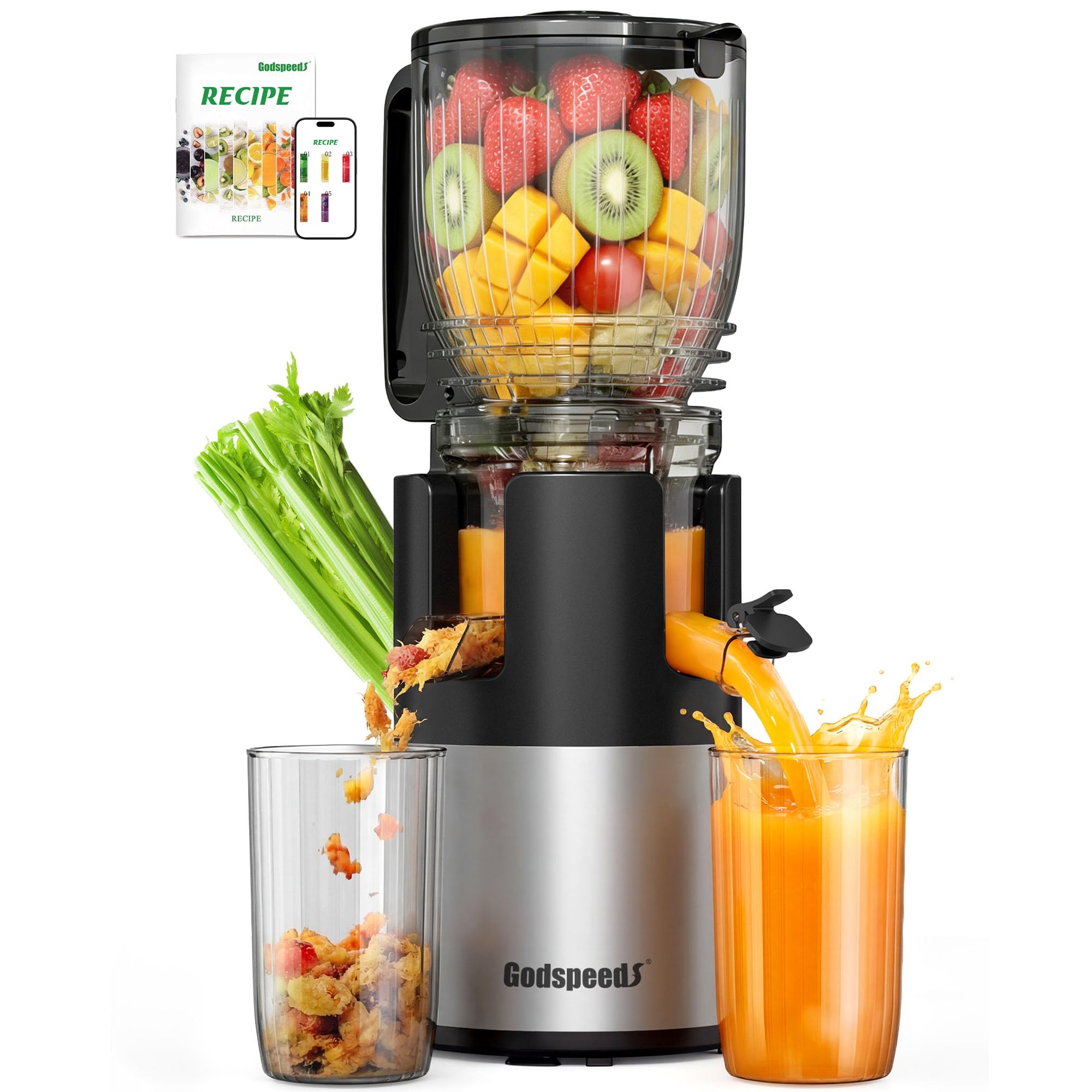
This is one of those products where the best feature is not the motor — it’s the ownership “aha.” Multiple owners describe the same moment: they were almost going to rate it lower… until they discovered a small removable piece (a rubber stopper/plug behavior in the spout area) that makes cleanup dramatically faster. That is exactly the kind of real-life detail most buying guides skip — and exactly the kind of detail that determines whether you keep using a juicer.
Performance-wise, this machine gets praise for handling common wellness ingredients like celery, beets, grapes, and leafy greens with good yield and minimal drama. When it struggles, it’s usually with ingredients that are challenging for almost every slow juicer: ginger (dense and fibrous) and citrus peel/pith bitterness. The smart takeaway isn’t “it can’t do it.” It’s: prep matters. Peel citrus if you dislike bitterness, and chase ginger with a watery ingredient so it doesn’t just turn into pulp.
The wide chute is a real convenience boost, and owners repeatedly mention that they can feed large pieces (sometimes surprisingly large). But the machine’s best “daily habit” quality is that it’s not precious: simple parts, easy assembly, and a cleanup routine that can legitimately feel under five minutes when you rinse immediately and use the spout plug access properly.
As an expert, I’d describe this as a great “daily juice habit” machine — especially if you’re the type who will quit if cleaning feels annoying. If you like strong produce blends (greens, celery, apples, carrots) and you want a wide chute without a complicated system, it’s a very practical pick.
Why owners love it
- Cleanup becomes fast – Once you learn the spout/plug rinse path, it feels genuinely easy.
- Wide chute reduces prep – Encourages daily use because setup is quick.
- Good results on celery & greens – Strong everyday wellness performance in owner feedback.
- Simple build, simple habit – Less “device management,” more “make juice.”
Good to know
- Ginger can be a low-yield ingredient unless you chase it with juicy produce.
- Citrus bitterness depends on peel/pith — peel fully if you want sweeter juice.
- Wide chute doesn’t mean “stuff it”; steady feeding still improves flow.
Ideal for: people building a daily juicing habit who care more about easy cleanup and consistent results than fancy extras.
10. YPONE (5.8″) – Smooth Juice, Dry Pulp, and “Make Several Bottles” Capability

If you want a juicer that can support a “make juice for the household” routine, YPONE is worth a look. Owners describe using it repeatedly for multi-bottle sessions and liking the smoothness and dryness of the pulp — two signs that the straining and pressing design is doing a competent job at separating juice from fiber.
The design philosophy is straightforward: low-speed squeezing (the kind of approach people buy slow juicers for), a wide chute for reduced prep, and a build that’s meant to feel stable and durable rather than flashy. In the feedback provided, people also call out setup and cleaning as easy and time-efficient — which matters, because batch juicing touches more parts and creates more pulp. A machine that makes batch juicing feel manageable is rare, and it’s exactly what family routines require.
The honest “expert note” is about fibrous volume. When you juice a lot of celery in one session (especially multiple pounds), some machines will eventually slow pulp output simply because fiber accumulates at the exit. A few users describe needing to clear the fiber output port mid-session. That’s not a failure; it’s physics. The fix is simple: if you’re doing huge celery sessions, plan one quick pause halfway through, clear the exit, and continue. Or alternate celery with cucumber/apple so the chamber keeps pushing pulp out efficiently.
If you’re switching from a centrifugal juicer, you’ll likely notice the difference immediately: less noise, less foam, and a more “fresh” taste. And if you’re switching from blender + nut bag, you’ll notice the lifestyle difference even more: you’re no longer doing manual straining work.
Why it’s a strong value
- Good for multi-bottle routines – Owners describe using it for family batches.
- Smooth juice feel – Double-strainer approach aims for low-residue results.
- Wide chute convenience – Faster prep and easier daily use.
- Easy cleaning workflow – Important when you’re doing bigger sessions.
Good to know
- Large celery-only sessions may require a mid-session fiber clear.
- It can feel slower than some higher-RPM machines — that’s normal for slow pressing.
- If you want nut milk/sorbet accessories, look at 3-in-1 options instead.
Ideal for: families who want smooth juice and a machine that can support bigger routines — especially if you’re okay with a quick mid-session clear on very fibrous batches.
11. AMZCHEF 5.4″ Stainless – Small Footprint, Quiet Run, and Solid Everyday Juice
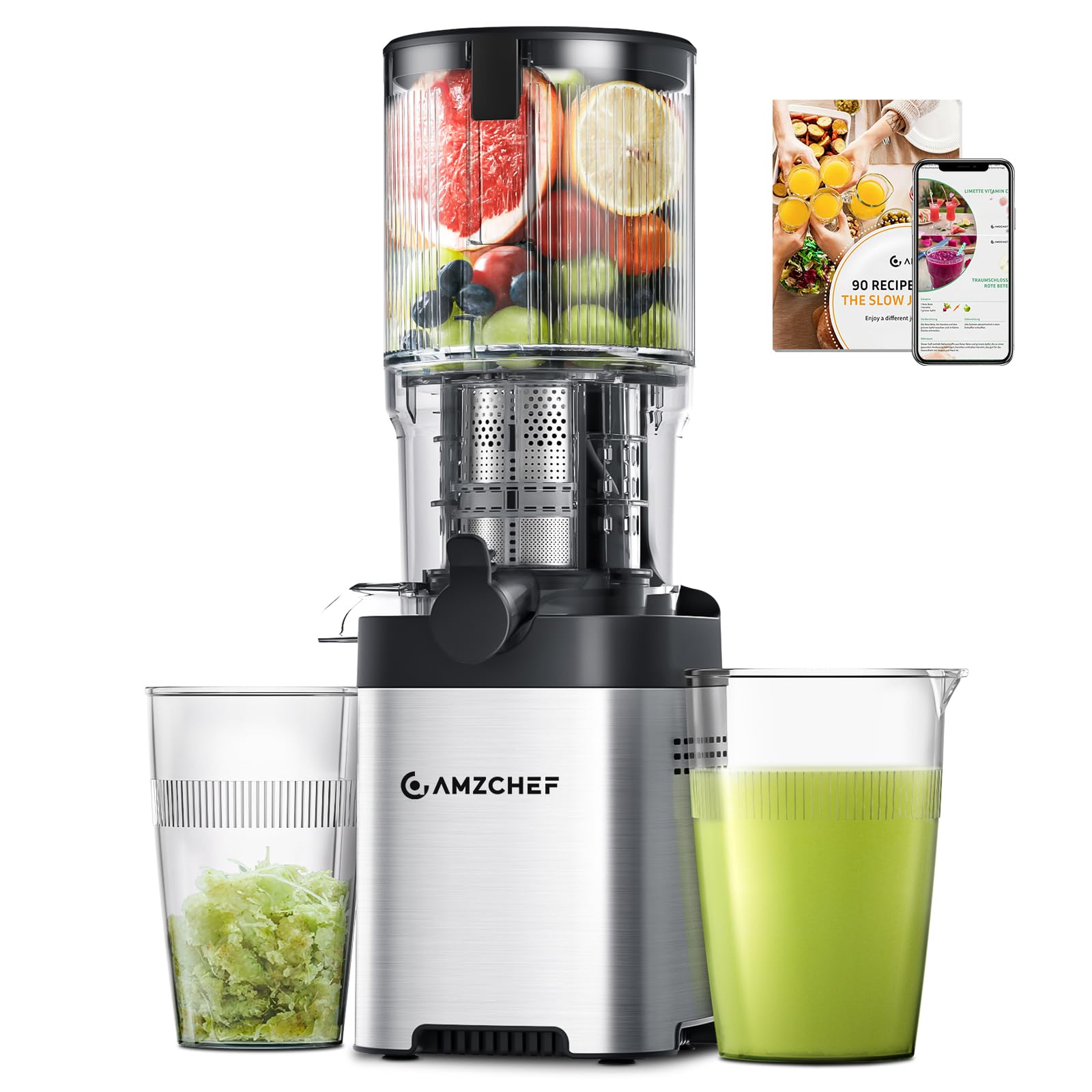
AMZCHEF’s wide-chute stainless model earns attention because it hits a sweet spot: it looks premium on the counter, doesn’t take over the kitchen, and still gives you the whole-produce convenience that makes slow juicing feel realistic. In reviews, you see consistent praise for quiet operation, smooth-tasting juice, and an assembly/cleanup routine that feels straightforward.
The triple-strainer idea is meant to reduce sediment and keep juice clean. In real life, what you’ll notice is whether the machine keeps flowing without constant unclogging — and many owners say it does. But there are two ingredients that expose the “edge cases” of almost every juicer: celery and pineapple. Those show up in feedback here too. Celery can generate a surprising amount of fibrous pulp, and pineapple’s long fibers can occasionally plug a drain point.
Here’s the expert fix that turns those issues into a non-issue: save celery and pineapple for last, and don’t do a whole pineapple without a quick check. If you want pineapple juice, cut out the hardest core pieces, feed more slowly, and chase with a watery ingredient. For celery, cut shorter and alternate with apple/cucumber to keep the pulp exit moving. Those two simple habits make this machine feel dramatically more “high-end” in daily use.
This is also one of the better picks for people who care about ease of handling. A compact vertical profile is easier to lift, easier to store, and easier to rinse without banging parts against the sink. If you’re returning to juicing after years away, this is the kind of model that feels approachable again.
Why it’s a smart pick
- Stainless, compact design – Looks good and doesn’t dominate your counter.
- Quiet operation – Helps the machine fit into real mornings.
- Smooth juice results – Designed to reduce sediment and keep texture clean.
- Easy assembly/cleanup – Owners frequently mention simple daily maintenance.
Good to know
- Pineapple fibers can require a mid-session quick clear; feed slowly and chase with watery produce.
- Celery is easier when you cut short and run it last.
- Like all slow juicers, immediate rinse cleanup is the difference between “easy” and “annoying.”
Ideal for: people who want a compact, premium-looking juicer with whole-produce convenience — and who are willing to use smart sequencing for pineapple/celery sessions.
12. Whuto Touchscreen (Gray Knob) – Modern Controls + “Try New Things” Features
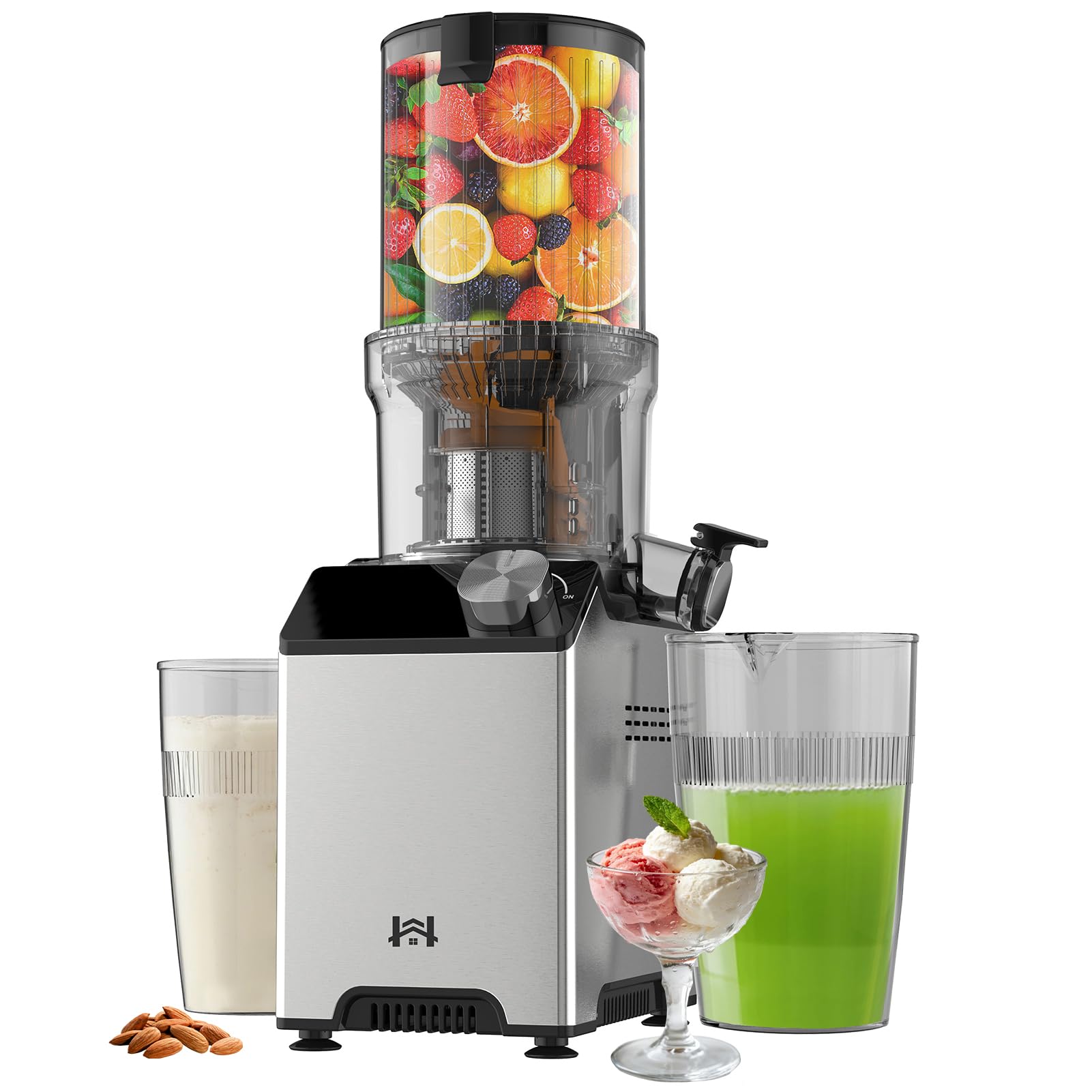
This Whuto model is the pick for people who like modern, guided controls and a premium-looking stainless build. It’s also one of the more “playful” options in the lineup: besides basic juice, it positions itself for extras like nut milk and sorbet-style creations. That matters if you want your juicer to be a kitchen tool you experiment with, not just a celery machine.
In real user feedback, the praise is clear: easy assembly, strong extraction, minimal pulp in the juice, and surprisingly easy cleaning. People also mention it handles tough ingredients like ginger well, which is a strong test because ginger can expose weak auger pressure quickly. When a machine does ginger without constant clogging, it usually means the press geometry and reverse function are doing their jobs.
Now the expert “buying honesty”: the most common frustration reported isn’t the juicing — it’s the container setup. If the pulp container sits too close or the pulp exit throws fiber toward the edge, you can get small amounts of pulp where you didn’t want it. This is not a deal-breaker, but it is the kind of small annoyance that matters for picky users who want pristine separation. The fix is simple: position your containers carefully (or swap in slimmer containers you already own), and don’t overfill with extremely soft fruits that can cause juice pooling in the chamber.
Also, don’t overthink the “fruit pictures” on the interface. Owners mention that the interactive choices are basically soft vs hard + reverse — not a full ingredient-specific program. That’s fine. The machine doesn’t need a library of fruit icons to work well. What matters is that you use the mode that matches the texture you’re feeding and you keep a steady feed rhythm.
Why it’s fun to own
- Modern control experience – Touchscreen-style UI feels approachable and premium.
- Good extraction on tough produce – Ginger and fibrous ingredients are reported as workable.
- Compact stainless design – Looks great on a counter and feels sturdy.
- Easy cleaning – Owners describe fast disassembly and rinse cleanup.
Good to know
- Container geometry can matter; some users adjust containers to avoid pulp crossover.
- Very soft fruits can pool if you overload; mix with firmer produce for smoother flow.
- The interface is more “soft/hard” than fully ingredient-specific — simple is the point.
Ideal for: buyers who want a modern-looking juicer with touchscreen-style controls and don’t mind dialing in container placement for the cleanest separation.
13. ACOQOOS Auto‑Feed (5.3″) – Easy, Efficient, and Surprisingly High‑Yield for First‑Timers

If you want a first slow juicer that feels easy right away, ACOQOOS is a strong entry point. Owners describe the same set of wins: wide chute convenience, simple assembly, quiet operation, and surprisingly satisfying yield. That matters because first-time juicer buyers don’t need a complicated “system” — they need a machine that makes day one successful.
The auto-feed capacity is what makes it feel more premium than many budget options. Instead of hovering and feeding one piece at a time, you can load more produce and let the machine work. That’s a huge quality-of-life upgrade if you’re juicing for a partner, making a quick morning blend, or just trying to keep the process from feeling fussy.
Cleaning is another reason it works for beginners. People describe it as easy to take apart and rinse, with fewer of the “fine mesh nightmare” vibes that make some juicers feel high-maintenance. And because the machine is designed with safety stops (it won’t run when the lid is open), it feels more comfortable in family kitchens.
The only recurring “small complaint” in feedback is about container stability — some users mention the juice holder area can feel a little shaky. That’s not typically a performance issue, but it’s worth knowing if you’re the type who wants everything to feel locked-in and heavy-duty. If your priority is maximum sturdiness above all else, step up to the heavier premium models. But if your priority is “easy, effective, and I’ll actually use it,” this one is a great start.
Why it’s a great starter
- Wide chute saves prep time – Helps new juicers stay consistent.
- Auto-feed capacity – Makes the workflow feel easier and more hands-free.
- Easy assembly + cleanup – Reduces the learning curve dramatically.
- Quiet, efficient operation – Owners describe satisfying yield without excess noise.
Good to know
- Container stability can feel less “heavy-duty” than premium machines.
- As with all juicers, fibrous produce still benefits from smart sequencing.
- If you want nut milk/sorbet functions, choose a 3-in-1 model instead.
Ideal for: first-time buyers who want wide-chute convenience and an easy, low-maintenance workflow without spending for premium extras.
How Slow Juicing Actually Works (and Why Clogs Happen)
A slow juicer isn’t “magic.” It’s a controlled squeeze system: an auger crushes produce at low speed, the chamber builds pressure, juice is pushed through a filter pathway, and pulp exits separately. When people get frustrated, it’s almost always because one of those flows gets interrupted.
What makes a slow juicer feel effortless in real life
- Predictable feeding – The best machines pull ingredients down steadily instead of forcing you to push constantly.
- Pulp exits cleanly – Dry pulp is good, but “dry and moving” is the real goal. If pulp slows, clogs begin.
- Smart access points for cleaning – If the spout and exit channel open easily, cleanup stays fast and you stay consistent.
- Reverse that actually helps – Reverse is most useful as a quick pulse, not a last resort after everything stalls.
- Mess control – Anti-drip spouts and stable containers prevent sticky counters (which quietly kill habits).
That’s why some models become “daily drivers.” They don’t just make good juice — they protect your patience.
The simple feed order that prevents 80% of clogs
- Start with firm + juicy (apple, cucumber, peeled citrus): primes the chamber and gets flow moving.
- Alternate fibrous items (celery, greens) with watery items: prevents fiber braiding and keeps pulp moving.
- Use ginger/turmeric in small doses: feed a little, then chase with something watery so it doesn’t compact into paste.
- Run soft fruits with structure: pair very ripe fruit with firmer produce to avoid pooling.
- Finish with a “rinse ingredient” (cucumber or peeled citrus): pushes leftover pulp through so cleanup is easier.
If you adopt that order, most “this juicer clogs” complaints disappear — even on machines that aren’t marketed as heavy-duty. Technique is a superpower, and the right machine makes that technique easier.
FAQ: Slow Juicers (Answered Like a Real Person, Not a Manual)
Is a cold press slow juicer actually better than a centrifugal juicer?
How do I keep my juice tasting fresh longer?
Do wide chutes really matter, or is it just marketing?
Why does celery clog so many juicers?
What does “pulp control” actually change?
What’s the single best “easy cleaning” habit?
Final Thoughts: Buy the Juicer That Protects Your Habit
A slow juicer should make you feel confident, not cautious. The best purchase is the one that fits your ingredients and your patience level — because that’s the one you’ll still be using months from now.
Here’s the simplest way to choose from this guide:
- Want the most balanced “one juicer for everything” pick? Start with the Anybear 350W Dual‑Stage. It’s the best blend of mixed-produce capability, wide-chute convenience, and real-life cleanup ease.
- Want a beginner-friendly machine with confidence-building guidance? Consider the Anybear 200W Big Mouth. It’s a strong “start here” option if you want a smooth learning curve and an easy rinse routine.
- Want a family batch station that also does nut milk and sorbet? Pick the Canoly C16 (or the TUUMIIST 3‑in‑1 Touch if you like touch-mode guidance and batch convenience).
- Want the easiest “weekday tidy counter” routine? Choose the Ninja NeverClog JC151SL for pulp control, dishwasher-safe parts, and a low-mess workflow that keeps you consistent.
- Want power and speed for hard veggies and greens? Go with the Airpher 400W for a stable, confident-feeling press that doesn’t hesitate with tougher produce.
- Want hands-free hopper convenience without a complicated system? Look at the TUUMIIST 6.5″ Hopper. It’s built for “load the recipe, let it run” batch sessions.
- Want a practical daily juicer with a genuinely useful cleanup shortcut? The Godspeeds 5.8″ is a strong daily habit pick once you learn the quick spout-clean access.
- Shopping value-first but still want wide-chute convenience? Start with the ACOQOOS Auto‑Feed as a low-effort entry point that can still feel surprisingly satisfying.
At the end of the day, the best slow juicers aren’t the ones with the loudest claims — they’re the ones you’ll use on a normal Wednesday. Choose for your toughest ingredient, keep your cleanup fast, and your juicer won’t just make juice… it’ll build a routine.
