
There’s a moment in every pizza night that decides everything.
You’ve stretched the dough. You’ve built the pie. The oven is roaring hot. Your kitchen smells like flour and ambition. And then… the launch.
If the pizza sticks, folds, or drags toppings into a messy pile, it’s not because you “lack talent.” It’s because you’re trying to do a precision transfer with the wrong tool (or the right tool, used the wrong way). The difference between a clean, confident launch and a “why is my cheese on the stone?” disaster often comes down to one thing: your peel.
This guide is built for real cooks, not spec-sheet scrolling. We’re going to talk about friction, hydration, perforations, bevel angles, belt-style conveyor peels, and the tiny habits that make your dough behave. And yes—we’re going to review 16 strong contenders using the one metric that matters most: how reliably they help you move a delicate pizza from prep surface to screaming-hot stone.
If you came here looking for the best pizza peels for your specific oven, dough style, and storage reality, you’re in the right place. By the end, you’ll know exactly which peel belongs in your hands—and how to use it like someone who’s done this a thousand times.
In this article
How to Choose the Best Pizza Peels for Your Oven Setup
Buying a peel is easy. Buying the right peel is where most people go wrong—because “pizza peel” is not one job. A peel can be a launch platform, a retrieval spatula, a turning tool, a serving board, and sometimes a full-on training wheel for sticky dough. Before you pick a model, lock in your workflow.
1) Choose Your Job First: Launch, Turn, Retrieve, or All Three
Here’s the pro-level way to think about it: you don’t buy “a peel.” You build a tiny system.
- Launch Peel (uncooked pizza): Prioritizes low sticking and controlled slide. Wood, composite, perforated aluminum, and belt-style sliding peels dominate here.
- Turning Peel (during bake): Small round head, long handle, very nimble. This is how you rotate a Neapolitan-style pizza without pulling it fully out.
- Retrieval Peel (cooked pizza): Thin metal edge that slips under a baked crust easily. Solid aluminum often wins for this job.
If you bake at very high heat (outdoor pizza ovens), many home cooks end up happiest with a launch peel + a turning peel. If you’re doing a standard home oven on a stone or steel, a launch peel + a thin retrieval peel is the comfort combo.
2) Material Isn’t a Preference—It’s Physics
Material affects two things you feel immediately: surface friction and confidence at the edge of the oven.
- Wood (basswood, acacia, bamboo): Naturally “forgiving” for launching because dough doesn’t suction-cup to it as easily as smooth metal. Wood also holds a light dusting of flour/semolina like a gentle grip tape. Downsides: hand-wash, possible warping, and bevel thickness varies wildly between brands.
- Aluminum (solid or perforated): The favorite for outdoor ovens because it’s light, fast, and thin at the edge. Solid aluminum is great for retrieving; perforated aluminum is great for launching (when used correctly). Downsides: dough can stick if you build too long, and thin aluminum can flex if you’re rough.
- Composite (Richlite-style boards): The “cheat code” for people who want wood-like launch performance with easier maintenance. It’s stable, dishwasher friendly on some models, and doesn’t need oiling. Downsides: heat ratings vary and some users notice an initial odor that fades.
- Sliding/Belt Conveyor Peels: These don’t rely on you “sliding” the dough at all. They lift and transfer with a conveyor motion—amazing for high-hydration dough and beginners. Downsides: learning the motion, keeping the belt clean, and watching heat exposure on the cloth.
3) Perforated vs Solid: The Difference Nobody Explains Clearly
Perforations can be magic… but only if you respect what they do.
- Why perforations help: Less surface contact = less sticking. They also let excess flour fall away so it doesn’t burn on the stone, and steam can escape quickly from under the dough as you move it.
- Why perforations sometimes frustrate: Very soft, very wet dough can sag into holes and “catch.” Also, if you dump flour onto a perforated peel, it can fall straight through—so you must dust the dough (or use semolina) instead of trying to create a flour bed on the peel.
4) The “Wiggle Test” Is Your Launch Insurance Policy
Before you walk to the oven, do this every time:
- Hold the peel level, then do two quick micro-shakes—left/right, left/right.
- If the pizza moves like it’s on tiny ball bearings, you’re safe to launch.
- If it doesn’t move, stop. Lift the edge of the dough and toss a pinch of flour/semolina under the sticky spots, or gently “air-scoop” with your fingertips to break suction.
This one habit prevents more ruined pizzas than any fancy accessory ever will.
5) Size & Handle Reality: Measure the Oven Opening, Not Your Dreams
The most painful “why didn’t anyone tell me?” moment is when a peel is too wide for the oven mouth or too long for your storage space.
- Oven opening width: A 14″ peel often fits 14″ ovens, but always check the mouth clearance (handles, lips, and side rails matter).
- Handle length: Longer is safer for high heat, but harder to store. Foldable or detachable handles solve this—at the cost of occasional wobble if you don’t tighten them.
- Blade length: Shorter blades maneuver better in compact ovens, while longer blades can be easier for indoor ovens where you have space and want a stable platform.
6) Cleaning & Maintenance: Don’t Buy a “Project” You Won’t Maintain
- Wood: Hand wash quickly, dry immediately, store vertically if possible. Oil only if the manufacturer recommends it.
- Perforated aluminum: Brush off flour, wipe clean, avoid long soaking. Keep it from banging around to reduce edge dings.
- Composite: Some models are dishwasher safe—massive convenience. Great if you hate fussy tools.
- Belt-style sliding peels: The belt is part of the performance. Expect occasional washing and watch for fraying or scorch marks if it touches heat.
Quick Comparison: 16 Best Pizza Peels for Real‑World Use
Here’s the fast map. I’m grouping these by how people actually use them: belt-style “no-fail” launch tools, perforated launch peels, retrieval-focused metal paddles, and wood/composite boards that feel natural under dough.
On smaller screens, swipe or scroll sideways to see the full table.
| Model | Type | Best For | Key Feature | Amazon |
|---|---|---|---|---|
| EXO Super Peel Pro Composite (14″) | Sliding Belt | High‑Hydration Launches | Conveyor Pickup Control | Amazon |
| ITALX NEW EZ Pizza Peel 14 V3 | Sliding Belt | Zero‑Stress Transfers | Self‑Launching Design | Amazon |
| KitchenStar 16″ Pizza Making Set (6 PCS) | Kit | Starting From Scratch | Stone + Peel + Cutter | Amazon |
| Ooni 14” Perforated Pizza Peel | Perforated | Fast, Clean Launches | Flour Falls Away | Amazon |
| Ooni Pizza Turning Peel (7″) | Turning Tool | Even Browning | Small Round Head | Amazon |
| Epicurean Pizza Peel (21″ x 14″) | Composite | Prep + Launch + Serve | Dishwasher Friendly Board | Amazon |
| New Star 50196 Aluminum Peel (16 x 18) | Solid Metal | Retrieval & Heavy Pies | Triple‑Rivet Strength | Amazon |
| Chef Pomodoro Pizza Peel (16″) Foldable | Foldable | Small Storage Spaces | Folds Into Drawers | Amazon |
| KitchenStar 16″ Acacia Wood Pizza Peel | Wood | Classic Launch Feel | Beautiful Serving Board | Amazon |
| Hans Grill Pizza Peel PRO | Perforated | Value Pro Launch | Detachable Handle | Amazon |
| Ninja XSKOPPL Woodfire Perforated Peel | Perforated | Ninja Oven Fit | Rust‑Resistant Aluminum | Amazon |
| New Star 50295 Wooden Peel (16 x 14) | Wood | Budget Launch Board | Tapered Edge | Amazon |
| Biconimi Sliding Pizza Peel (Metal Tray) | Sliding Belt | Beginner Confidence | Stainless Frame + Belt | Amazon |
| Ooni 12” Aluminum Pizza Peel | Solid Metal | Light Retrieval & Serve | Thin, Agile Paddle | Amazon |
| Chef Pomodoro Pizza Peel (12″) Foldable | Foldable | Apartment Kitchens | Compact, Lightweight | Amazon |
| Mooues 12″ Aluminum Peel + Rocker Cutter | Budget Set | All‑In‑One Basics | Storage Bag Included | Amazon |
In‑Depth Reviews: 16 Pizza Peels Ranked by Real Kitchen Reality
Here’s the promise: these reviews are not “it’s bigger so it’s better.” Pizza peels succeed or fail based on how they behave under dough, how predictable the edge is at the oven mouth, and how calm you feel using them when the heat is blasting.
I’ve ordered this list the way a smart buyer actually thinks: first, we solve the hardest problem (launching without stress), then we add the tools that level up consistency (turning and retrieval), and finally we cover storage-friendly and budget-friendly options that still get the job done.
1. EXO Super Peel Pro Composite (14″) – The “I Can’t Believe That Worked” Launch Tool

This is the peel I recommend when someone says, “My dough keeps sticking and I’m ready to give up.” Because the Super Peel doesn’t ask you to be a launch wizard. It changes the mechanics of the transfer.
Instead of sliding a soft pizza off a surface, you use a belt-style conveyor motion to pick it up and place it exactly where you want it. That detail matters most for high-hydration doughs (the kind that taste amazing but behave like a sleepy jellyfish). Owners who bake wet doughs—especially sourdough and long-fermented styles—consistently describe the same experience: the pizza keeps its shape during pickup and arrives in the oven with toppings still where they belong.
The real secret is not “pull the belt.” It’s hold the belt handle steady and move the board. Think of it like feeding paper into a printer: the belt stays calm, the board does the work. Once that clicks, the Super Peel becomes almost goof-proof.
The composite body is also part of the win. It stays stable, doesn’t act like a sponge, and doesn’t demand the same babying that some wood peels do. You still need to respect the belt—don’t use it as a shovel to pull cooked pizzas out and expect it to stay pristine. Treat it like a launch specialist and it pays you back with consistency.
Why it’s the top pick
- Shape protection: Great for high-hydration dough that usually stretches during launches.
- Beginner confidence: Removes the “panic shuffle” that ruins pizzas at the oven mouth.
- Stable base: Composite board stays flat and predictable in use.
- Repeatable technique: Once learned, it’s the same motion every time—no guessing.
Good to know
- It’s a specialist: Use it primarily to launch; retrieve with a metal peel for best longevity.
- Belt care matters: Expect occasional washing and some discoloration if flour scorches.
- Size reality: Measure your oven opening—14″ wide is perfect for many, but not all setups.
Ideal for: Anyone who wants the calmest, most repeatable launches—especially with wet dough, heavy toppings, or outdoor ovens where timing is everything.
2. ITALX NEW EZ Pizza Peel 14 V3 – The Fastest Path to “Perfectly Landed” Pizzas
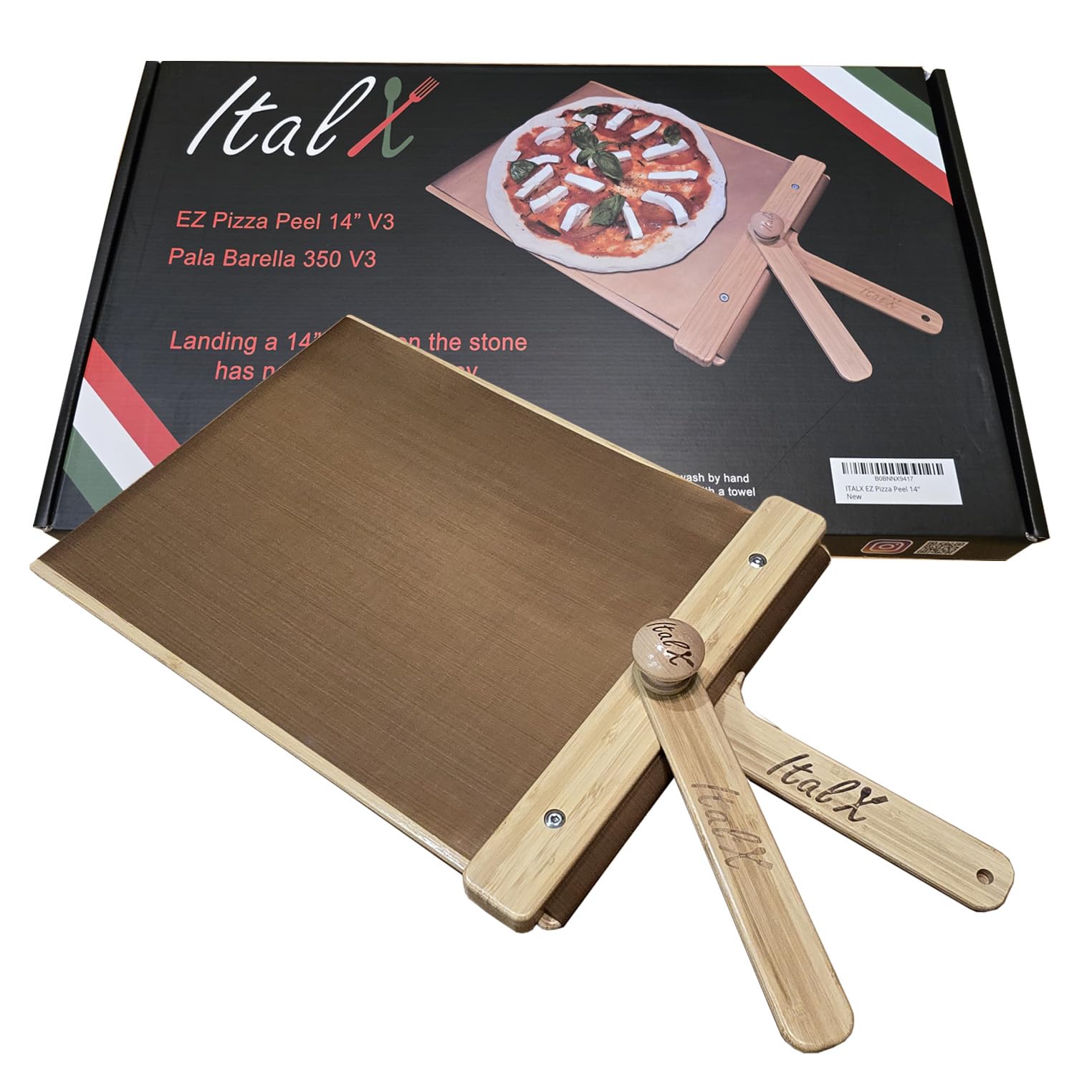
If the Super Peel is the “training wheels that still feel pro,” the ITALX EZ Peel is the “I want premium feel and a clean landing every time” tool. Real users describe a very specific moment with this peel: the first launch that doesn’t fight back.
The belt material is the star. Owners consistently say “nothing sticks” to the sliding surface—even when working with dough that usually glues itself to wood or metal. And because the design lets you build the pizza directly on the belt, you can keep your workflow tight: stretch, top, quick wiggle check, and launch.
Where the EZ Peel shines is control at the oven mouth. The motion is smooth, and once you learn the technique, the pizza lands flat and centered. Multiple users mention a learning curve—usually one “practice run” is all it takes. A smart approach is to rehearse with an empty crust or a cold oven so you can focus on hand position without heat pressure.
Two real-world notes matter here. First, some owners notice early fraying at the belt edge (threads on the sides). This is exactly the kind of “small but important” detail that separates good tools from great ones. The best feedback pattern is that the maker often responds quickly and replaces parts when needed, which is reassuring if you use your peel weekly.
Second, high-heat ovens can darken the belt from soot or heat exposure. In practice, that’s normal. People who cook in very hot outdoor ovens often turn the burner down or off briefly during the launch to reduce stress, then ramp heat back up after the pizza is safely on the stone.
Why people love it
- Ultra low-stick surface: The belt handles sticky dough better than many classic peels.
- Controlled landing: The “self-launch” motion helps place the pizza cleanly and flat.
- Easy cleanup: Many owners describe it as wipe-down simple for day-to-day use.
- Strong support reputation: Users report fast help when parts arrive missing or need replacing.
Good to know
- Expect a short learning curve: Practice once before your big pizza party.
- Belt edges can fray: Watch for loose threads and keep the edge tidy.
- Heat discipline: Don’t let the belt sit in the oven—launch fast, then pull back.
Ideal for: Home pizza makers who want the most reliable “no drama” launch experience with a premium feel and repeatable results.
3. KitchenStar 16‑Inch Pizza Making Set (6 PCS) – The “Everything Finally Matches” Bundle
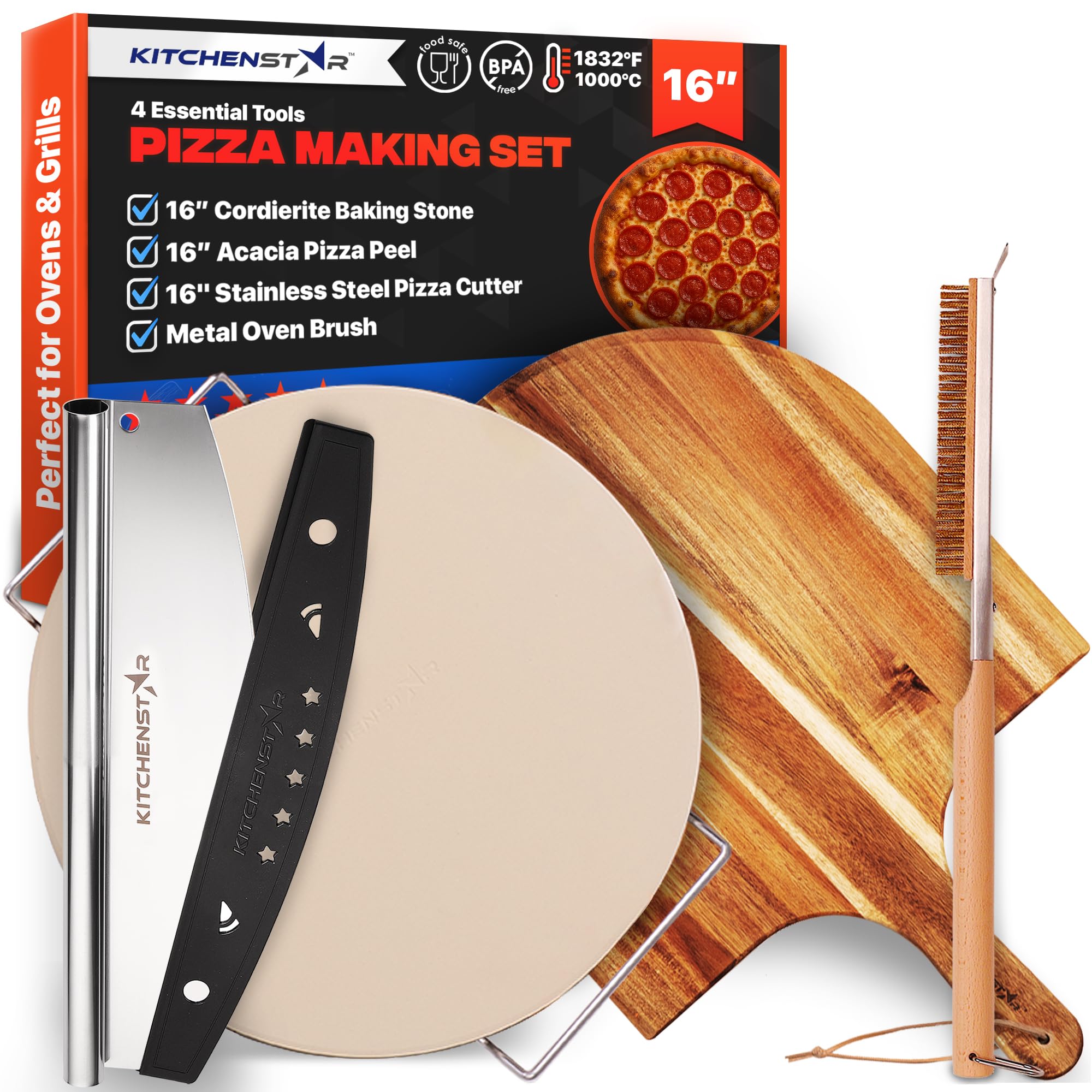
Some people don’t need “a peel.” They need a full reset.
If you’re currently making pizza with a random baking tray, a cheap roller cutter that drags toppings, and a mystery “stone” that never crisps the base, a matched kit can be the fastest route to better results. The KitchenStar set is built around a simple promise: give you the core tools that make pizza feel predictable.
The peel included in this kit is acacia wood—great news for launching because wood naturally helps reduce sticking compared to smooth metal. You can stretch dough, top quickly, and slide with confidence if your dusting is right. The rack makes stone handling safer (and helps prevent the “why did I touch that?” moment when you’re moving hot gear).
The underrated win in this kit is the rocker cutter + protective cover. Many home cooks discover the same annoying truth: wheel cutters tend to smush and drag cheese across the slice line, especially on hotter, softer pies. Rocker cutters cut with a clean press-and-rock motion. Users who switch often describe the same improvement: toppings stay where they belong, slices look sharper, and serving feels less messy.
Finally, the brush/scraper matters more than people think. A clean stone bakes better. Old flour and burnt bits can create bitter spots and uneven browning. A dedicated brush turns “stone maintenance” from a chore into a 30-second habit.
Why it’s a smart bundle
- Coordinated basics: Stone + peel + cutter covers the biggest quality bottlenecks.
- Wood peel advantage: Easier launches for most home cooks than solid metal.
- Cleaner cuts: Rocker cutter avoids topping drag that roller wheels often cause.
- Maintenance included: Brush/scraper encourages consistent stone care.
Good to know
- It’s a kit, not a specialization: If you already own a great peel, you may not need the bundle.
- Wood still needs respect: Keep it dry and clean; don’t soak.
- Stone workflow matters: Preheat long enough and avoid thermal shock (cold water on hot stone is a no).
Ideal for: Anyone building a reliable home pizza setup from scratch—especially if you want your tools to “fit together” from day one.
4. Ooni 14” Perforated Pizza Peel – The Pro-Style Perforation Advantage
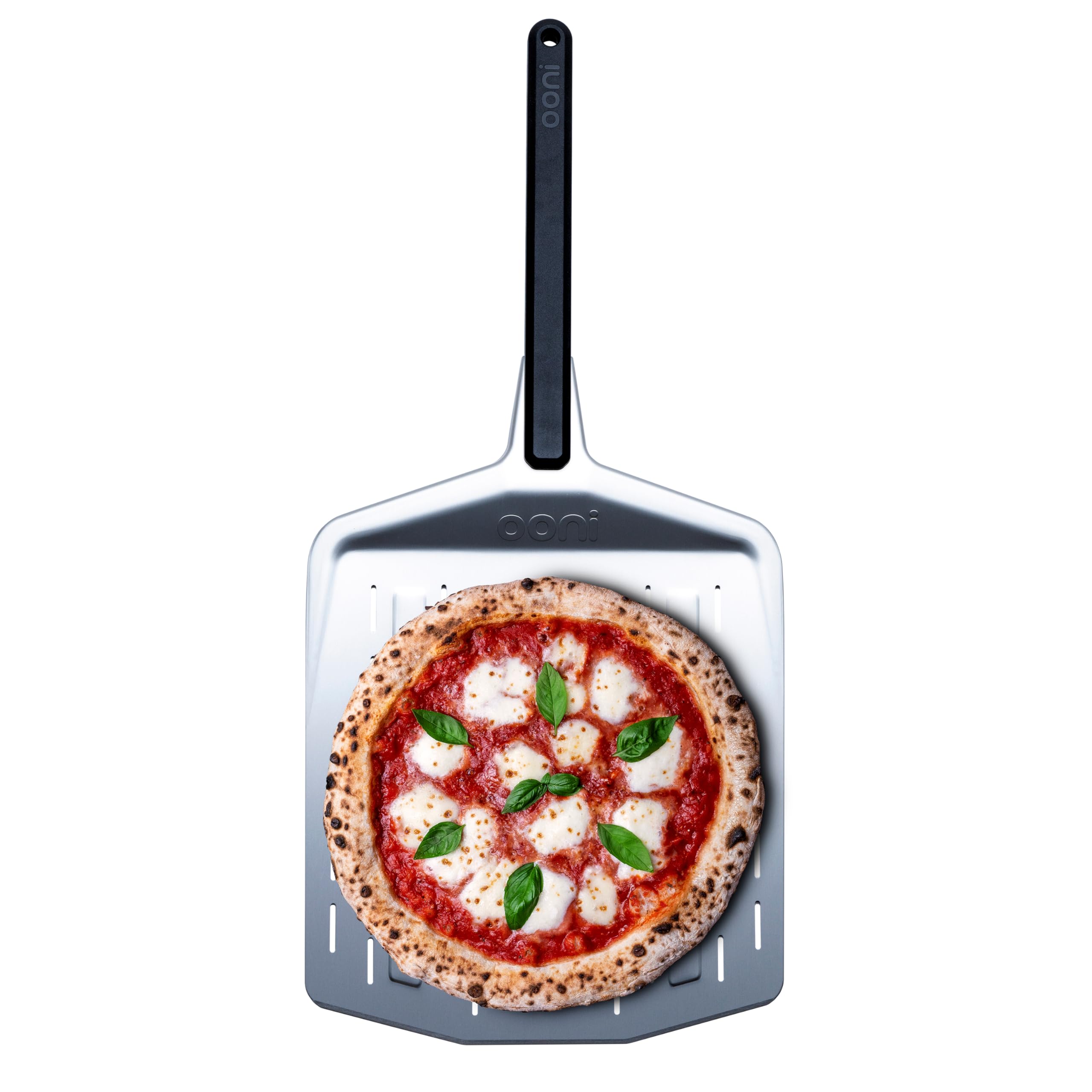
Perforated peels are the “professional tool of choice” for a reason: when you get the technique right, launches become smoother and crusts taste cleaner.
Here’s what the perforations do in real life: they reduce contact between dough and peel (less sticking), and they let excess flour fall away before your pizza hits the stone (less burnt flour flavor). Owners who pair this peel with semolina on the work surface often describe a near-effortless glide—one reviewer even called the combo a “perfect couple.”
The Ooni 14″ is also sized in a way that feels intentional. For many outdoor ovens, it’s a sweet spot: wide enough for generous pies but not so oversized that it feels clumsy in tight oven mouths. And the build quality gets consistent praise—people mention solid workmanship and a weight that feels light in the hand but not flimsy.
Now the important part: perforated peels punish slow workflows. If you build your pizza and let it sit while you chat, dough will start to bond to the metal and sink into the perforations. The fix isn’t panic flour—it’s rhythm. Build fast, do the wiggle test, and launch. If you’re hosting a pizza party, pre-portion toppings and sauce so you can assemble quickly.
Also, don’t confuse “perforated peel” with “turning peel.” Many owners still prefer a smaller turning peel for rotating during the bake. The 14″ is great for launching and retrieving, but turning inside a compact oven is easier with a smaller head.
Why it’s a standout
- Cleaner bakes: Less excess flour carried onto the stone.
- Fast launches: Perforations reduce sticking when your workflow is tight.
- Light and agile: Easy to maneuver without wrist strain.
- Made for hot ovens: Long handle helps keep you away from intense heat zones.
Good to know
- Timing matters: Not ideal for “slow builders” who take a long time topping pizzas.
- Not a turning specialist: Consider pairing with a smaller turning peel for high-heat ovens.
- Dusting strategy changes: Dust the dough/bench with semolina; don’t dump flour onto the peel.
Ideal for: Outdoor oven owners who want a pro-style perforated launch peel and are willing to keep a quick build rhythm.
5. Ooni Pizza Turning Peel (7″) – Even Cooking Without the “Full Pull-Out”

If you’ve ever tried turning a pizza with a full-size peel inside a compact outdoor oven, you already know the frustration: there’s not enough room to rotate cleanly, and you end up dragging the pizza across the stone (or worse, folding the edge).
That’s why turning peels exist. The Ooni turning peel is built to do one job extremely well: rotate the pizza while keeping the base in contact with the stone. That contact matters because it keeps cooking consistent. Instead of lifting the whole pizza off the stone for a long moment (which can soften the base), you do quick, controlled turns and keep the bake moving evenly.
Owners rave about how much easier it makes the process—“quick and effortless” is a phrase you see a lot. And importantly, people don’t just say it’s convenient; they say their pizzas cook more evenly because they can turn without disturbing toppings or tearing the crust.
The technique is simple but worth spelling out:
- Slide the turning peel under the pizza edge about an inch.
- Lift just enough to break stone contact (a moment, not a lift-and-hold).
- Rotate in small increments, then set back down.
Pair this with a dedicated launch peel and your whole bake gets calmer. It’s one of those “I thought it was unnecessary until I used it” tools that quickly becomes non-negotiable for high-heat pizza nights.
Why it’s essential
- Precision turns: Rotates pizza without pulling it fully out of the oven.
- More even browning: Helps manage hot spots in compact ovens.
- Confidence at high heat: Long handle keeps your hands away from the blast zone.
- Feels sturdy: Owners report durability even with frequent use.
Good to know
- Not a launcher: This is not meant for loading raw pizzas.
- One-job tool: It’s a specialty purchase—but a valuable one for outdoor ovens.
Ideal for: High-heat outdoor oven users who want evenly cooked pies and smoother control during the bake.
6. Epicurean Pizza Peel (21″ x 14″) – The “Wood Feel, Less Fuss” Workhorse
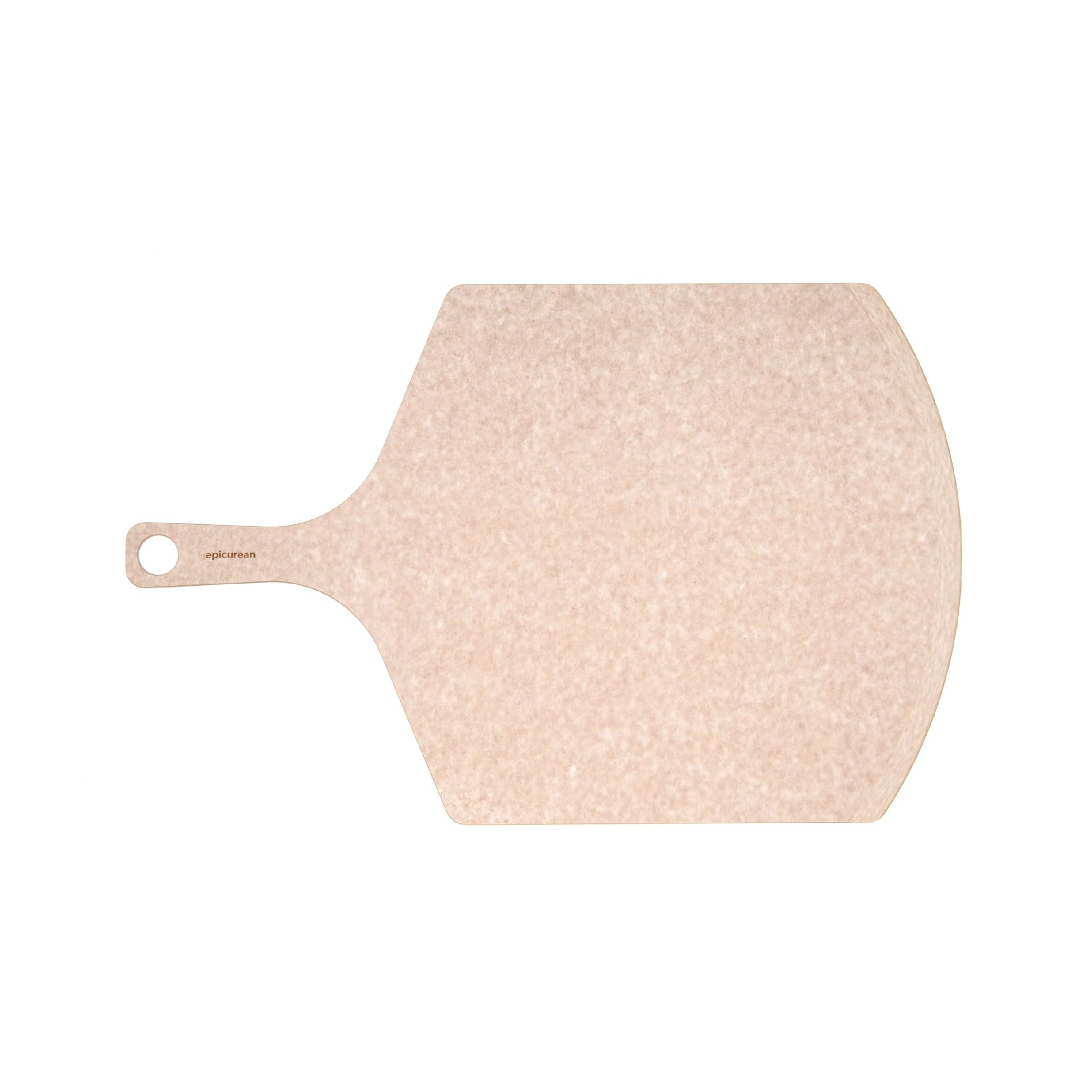
Epicurean peels have a loyal following for a reason: they hit a rare balance between “launches like wood” and “cleans like a modern kitchen tool.”
Owners who switch to this peel often describe the same discovery: dough behaves better on this surface than on solid metal. That’s especially true for people practicing Neapolitan-style pizzas indoors on a hot stone or steel. Composite surfaces tend to have a subtle texture that holds a minimal amount of flour well—meaning you can get a clean launch without dumping flour that later burns.
The beveled front edge matters here. A peel doesn’t just carry pizza; it needs to slide under it when you’re retrieving or repositioning. Epicurean’s edge is thin enough to feel precise, while the board stays sturdy and doesn’t flex like ultra-thin aluminum sometimes can. Multiple users describe it as “thin yet very sturdy,” which is exactly what you want when you’re lifting a loaded pizza without wobble.
Now for the real-life nuance that buyers appreciate: some people notice an odor when the peel is new. In most cases, it fades with washing and use—and users often say it doesn’t affect food taste. If you’re sensitive to smells, washing it before first use and letting it air out is the simple move.
Heat ratings on composite boards can make people nervous, but the practical reality is this: a launch should take seconds. If you’re not leaving the peel inside the oven, the exposure is brief. Many owners report using it to launch onto hot stones without damage as long as they keep the motion fast and controlled.
Why it’s a favorite
- Launch-friendly feel: Composite behaves closer to wood than to slick metal.
- Low maintenance: No oiling routine; easy cleaning for regular pizza nights.
- Multi-use: Prep, cut, and serve on the same surface.
- Stable and sturdy: Holds shape under heavier pizzas without feeling flimsy.
Good to know
- Handle comfort varies: Some users wish for a more ergonomic grip.
- Initial odor for some: Usually fades; wash and air out before first use.
- Not a “leave in the oven” tool: Launch fast and pull back—always.
Ideal for: Home oven pizza makers who want a reliable launch surface that’s easy to maintain and doubles as a serving board.
7. New Star Foodservice 50196 Aluminum Peel – The “Restaurant Tough” Retrieval Paddle

This peel shows up in home kitchens, but it behaves like something built for a busy line. People who use it for years describe it as durable, lightweight, and surprisingly strong under loaded pies.
Here’s where it fits best in a real setup: retrieval and handling cooked pizzas. The thin aluminum blade slips under baked crust far more easily than thicker wood boards, and that matters when your pizza is fragile and blistered. One reviewer who struggled with a wooden peel described a big improvement the moment they switched to this style for in-and-out handling.
Now let’s address the two common “bad review” complaints you’ll see across many aluminum peels:
- “The edges are rough.” Some owners do note a less polished edge. In practice, it’s usually not sharp like a knife, but it may feel unfinished compared to premium brands.
- “Dough sticks.” Solid metal can grab wet dough if you build slowly or under-dust. That doesn’t make it a bad peel—it makes it a better retrieval peel than a launch platform for beginners.
The best way to use this peel is the classic pro pairing: launch with wood/composite/perforated, then retrieve with this thin metal blade. That combo gives you both low-stick launching and effortless retrieval without grinding a wooden edge against a hot stone.
If you’re buying one peel and you mainly cook frozen pizzas, par-baked crusts, or stiffer dough, it can still launch. But where it really earns its keep is in durability and confident handling at heat.
Why it’s a workhorse
- Great retrieval edge: Thin aluminum slips under cooked pizza cleanly.
- Strong under load: Holds heavier, fully topped pies without folding.
- Long-lasting: Owners report multi-year durability with regular use.
- Easy cleaning: Aluminum doesn’t absorb odors or moisture like wood can.
Good to know
- Not the easiest launch for wet dough: Solid metal requires fast workflow and good dusting.
- Finish may feel utilitarian: Some users prefer sanding a handle or smoothing minor edge feel.
- Turning inside a small oven is harder: Pair with a turning peel for high-heat outdoor ovens.
Ideal for: Anyone who wants a tough, reliable metal peel for retrieving pizzas and handling hot bakes like a pro.
8. Chef Pomodoro 16″ Foldable Handle Peel – The “I Actually Have Drawer Space” Solution

A lot of pizza tools are designed like you live in a farmhouse kitchen with unlimited wall space. Real life is more like: one drawer, one cabinet, and a cutting board wedged behind the toaster.
This is where a foldable-handle peel makes immediate sense. Chef Pomodoro’s 16″ version gives you a full-size working surface, then folds down so you can store it in a drawer beneath the oven or tuck it into a narrow cabinet. Owners who live in small apartments mention exactly that—this peel makes pizza doable because it doesn’t demand permanent storage real estate.
In use, the aluminum head is thin enough to act as a solid retrieval tool, and it’s sturdy enough for more than pizza. One user even described using a similar peel shape to lift larger roasts off heat—translation: it’s not flimsy. The fold mechanism is the main thing to watch: screws can loosen over time on any foldable design, so treat “tighten the hardware occasionally” like sharpening a knife—basic upkeep, big payoff.
The other practical point: solid metal peels reward speed. If you build your pizza slowly on metal, dough can stick. The smarter workflow with this peel is either:
- Use it primarily for retrieval (pair it with a wood/composite launch peel), or
- Use a fast build with semolina/flour under the dough and launch promptly.
If storage is your biggest limitation, the foldable handle can be the difference between “pizza night happens” and “pizza stone stays in the closet forever.”
Why it earns space
- Folds for storage: A real advantage for apartments and small kitchens.
- Versatile paddle: Useful for pizzas, breads, trays, and general oven transfers.
- Thin metal edge: Good for retrieving cooked pies from stones and steels.
- Comfortable length: Feels safe at heat without being awkward to handle.
Good to know
- Hardware upkeep: Tighten screws occasionally to keep the handle solid.
- Metal launch learning curve: Best launches require quick rhythm and proper dusting.
- Hand wash: Keep the wood handle in good shape by avoiding long soaking.
Ideal for: Anyone who wants a full-size peel but refuses to sacrifice storage space to get it.
9. KitchenStar 16″ Acacia Wood Pizza Peel – The Beautiful Board That Actually Works
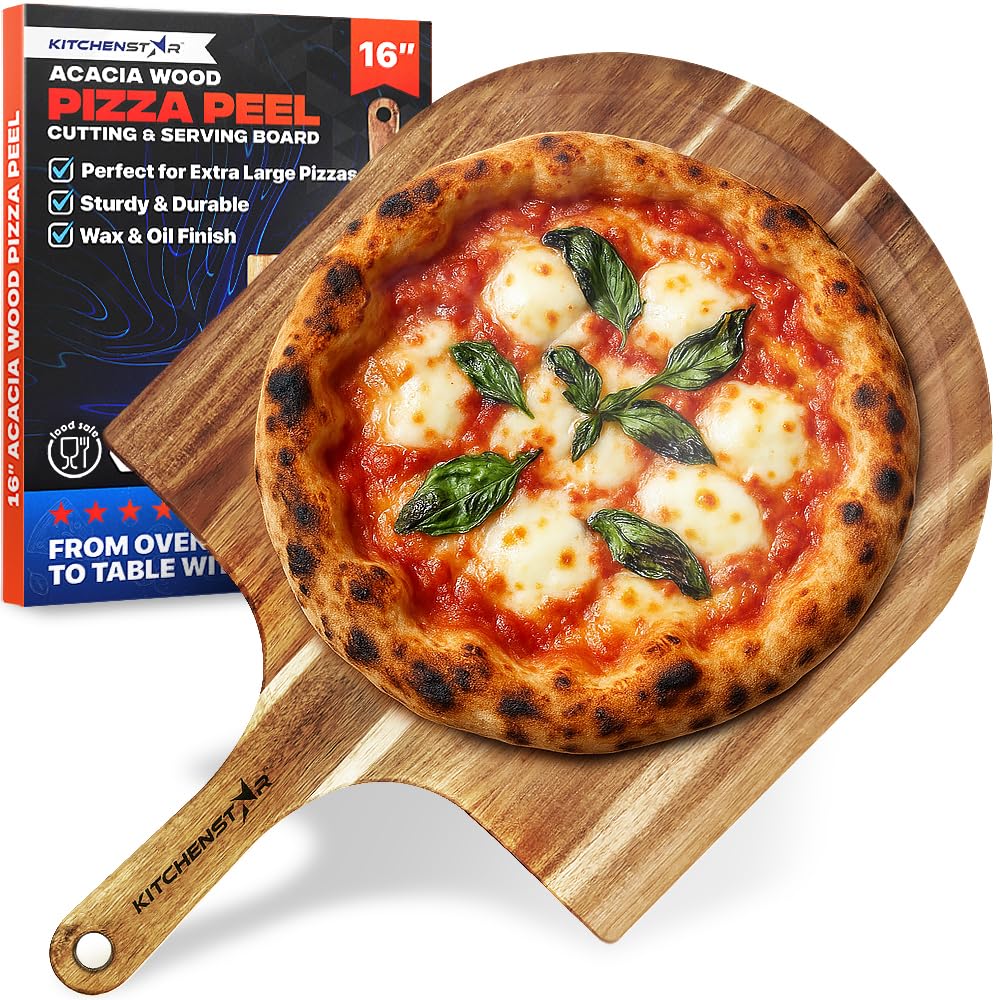
Acacia wood peels hit a sweet spot for many home pizza makers: they’re launch-friendly, they look great on the table, and they feel stable under dough. Owners often describe this peel as well made, smooth finished, and easy to maintain—plus it’s the kind of tool people hang on the wall because it’s genuinely good-looking.
From a performance standpoint, wood is forgiving. It doesn’t suction-grab dough the way smooth metal can. If you dust lightly and keep your build moving, the pizza slides with less drama. That makes this peel particularly friendly for home-oven pizza stones and countertop ovens where you want controlled handling without ultra-long handles.
The main real-world nuance with wood peels is bevel geometry. A wood peel doesn’t need to be sharp like a knife, but the front edge must be thin enough to get under dough when you’re adjusting or retrieving. One detailed owner note mentions a “steep bevel” that can push dough instead of slipping under it—this is not uncommon in thicker wood boards. The fix is technique: approach with a flatter angle, and don’t try to spear under the dough; instead, shimmy gently and let the bevel slide.
Also worth noting: a “16-inch” peel is rarely a perfect 16-inch pizza platform in real life. If you bake true full-size pies, you typically want a little margin so the crust isn’t hanging off the edge. Many home cooks actually prefer that margin because it gives you control during the launch.
If you want a peel that can go from dough prep to serving platter without looking like a tool from a workshop, this one fits that role nicely.
Why it’s a great wood pick
- Forgiving launches: Wood reduces sticking compared to solid metal for many doughs.
- Beautiful and functional: Doubles as a serving board for pizza and charcuterie.
- Stable under dough: Feels balanced and sturdy in the hands.
- Easy daily care: Simple wipe-down and quick hand wash maintenance.
Good to know
- Bevel angle matters: Thicker bevels require a gentler “shimmy,” not a push.
- Hand wash only: Treat it like a good cutting board—don’t soak.
- Not the best retrieval on blazing stones: Use metal for pulling out if you bake very hot.
Ideal for: Home cooks who want classic wood launch behavior plus a board they’re proud to serve on.
10. Hans Grill Pizza Peel PRO – The “Perforated Pro Feel” Without Overthinking It

Hans Grill earns loyalty in a very specific way: it makes people feel like they finally unlocked homemade pizza.
One passionate owner story basically reads like a mini-therapy session: months of wrecked launches, toppings flying, dough tearing—and then suddenly, with this peel (and the right semolina), they’re launching multiple pizzas confidently in a row. That’s not hype; that’s the exact kind of emotional win a good peel can produce when it matches your workflow.
Performance-wise, this peel leans into the same benefits as other perforated options: excess flour falls away, steam escapes, and the pie slides with less sticking when you do the motion cleanly. Users describe it as sturdy and well balanced, with good control and a feel that’s “more expensive than it is.” The detachable handle is also a practical advantage—storage gets easier, especially if you don’t want a long handle taking over your kitchen.
There’s one important “adulting” detail: if your handle is detachable, you must tighten it properly. A reviewer who worried about “dumping the pizza” pointed out something smart: many of those incidents likely come from a handle that wasn’t secured firmly. Before every session, make “handle check” part of your preheat routine.
If you want a perforated peel for launching and you’re willing to keep your topping workflow efficient, Hans Grill gives you that pro-style behavior with a storage-friendly design.
Why it’s a value win
- Perforation benefits: Less burnt flour and cleaner crust flavor.
- Confidence booster: Owners report big improvement after repeated launch failures.
- Detachable handle: Easier storage than fixed long-handled peels.
- Sturdy feel: Balanced and controlled during launches and retrieval.
Good to know
- Fast workflow required: Perforated metal punishes slow topping sessions.
- Handle discipline: Tighten properly to prevent wobble and maintain confidence.
- Not a turning peel: Pair with a small turning peel for oven rotation.
Ideal for: Pizza makers who want perforated launch advantages and a detachable-handle design that stores easily.
11. Ninja XSKOPPL Woodfire Perforated Pizza Peel – The Brand‑Matched Convenience Pick

Brand-matched accessories aren’t always the best value… but they often solve fit and workflow questions instantly. If you’re using a Ninja Woodfire outdoor oven, this peel is designed to match the typical pizza size and handling needs of that setup.
Owners who like it describe it as functional, easy to maneuver, and “the regular paddle” they use for getting pizzas out. The hanging loop is a small but meaningful detail—outdoor cooking tools need quick access and easy storage, and hanging beats hunting through a drawer while your stone is overheating.
That said, this peel also shows a key reality of perforated designs: they don’t behave the same for every user. A critical negative pattern you’ll see from dissatisfied owners is this: “Dough sticks, and I can’t add flour because it falls through.” That complaint is not nonsense—it’s a technique mismatch.
If you buy a perforated peel, you must change where your dusting happens. You dust the dough and the bench (semolina is a common solution), then transfer to the peel quickly. You don’t create a flour mattress on the peel. Also, you don’t let raw dough sit on perforated metal while you slowly top it. That’s when sticking and “cooking onto the peel” problems happen in high-heat environments.
So here’s my practical recommendation: if you’re a fast builder and you want a peel that fits your Ninja setup, this is a convenient choice. If you’re slower, prefer high-hydration dough, or like to build elaborate pizzas carefully, a wood or sliding/belt peel will likely feel easier.
Why it fits Ninja users
- Designed for the system: Size and handling feel aligned with Ninja outdoor oven use.
- Lightweight control: Easy to maneuver in outdoor cooking setups.
- Outdoor-friendly storage: Hanging loop makes it quick to grab and stash.
- Perforations help crust: Less excess flour on the stone when used correctly.
Good to know
- Technique sensitive: Slow builds and wet dough can stick on perforated metal.
- Dusting must shift: Dust dough/bench; avoid dumping flour onto the peel.
- Not beginner-proof: If you want “easy mode,” belt-style or wood may feel calmer.
Ideal for: Ninja Woodfire oven owners who want a matching peel and can keep a quick, efficient launch rhythm.
12. New Star Foodservice 50295 Wooden Pizza Peel – The Classic “Launch Board” That Just Works
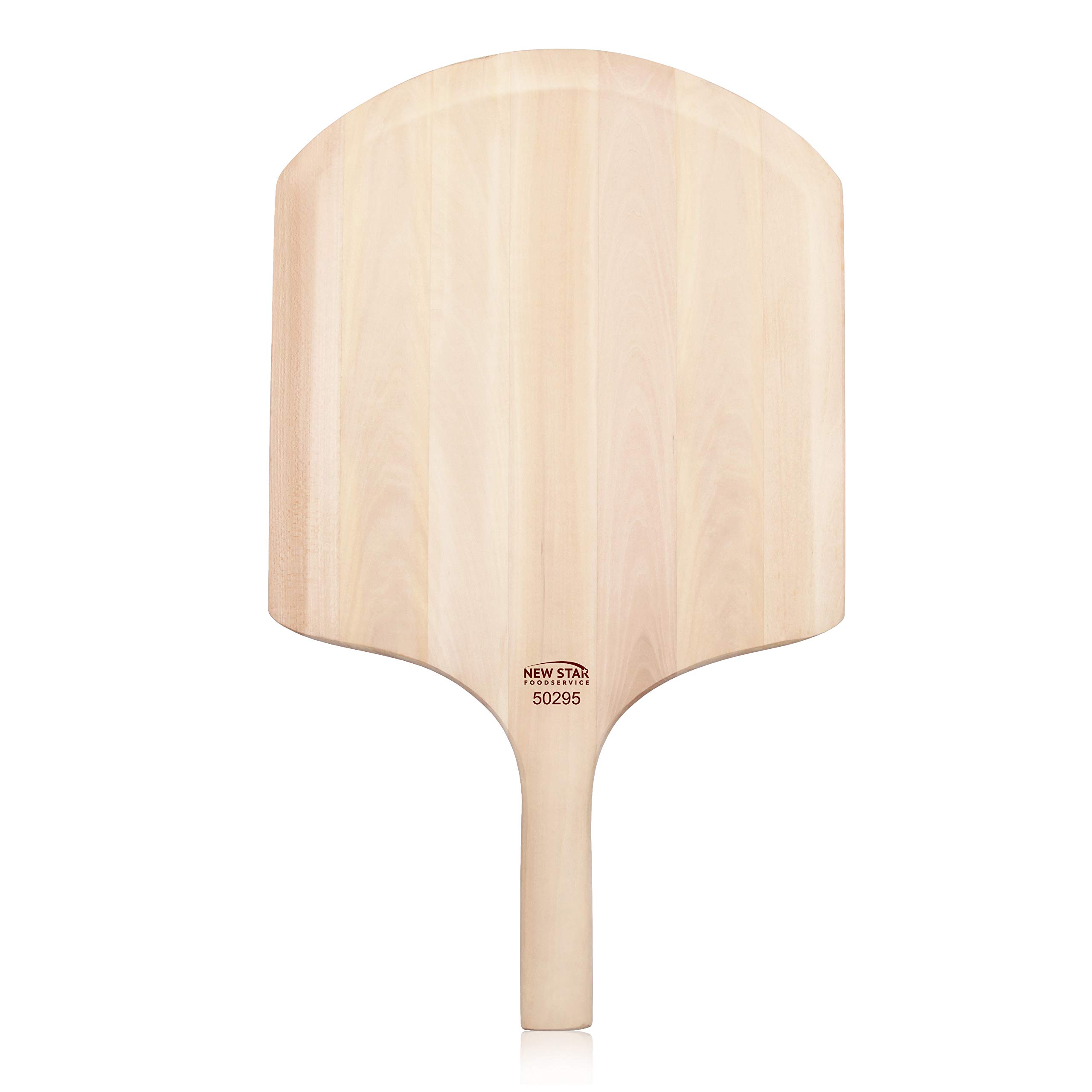
This peel shows up in a lot of home setups for one simple reason: it solves the launch problem without asking you to change your entire personality.
Wood peels are often the easiest entry point for reliable launching because the dough doesn’t cling as aggressively as it can on metal. People who love this peel describe exactly what you want to hear: they dust lightly, the dough doesn’t stick, and launches feel smooth and repeatable.
One long-form owner writeup that’s worth learning from makes a key point that many beginners miss: two peels can be better than one. They describe using a wood peel to launch (because raw dough releases more easily), then switching to a thin metal peel to retrieve cooked pizzas (because metal slides under baked crust more easily and doesn’t chew up on hot stones).
That advice is gold. Even if you keep your setup simple, thinking in “launch tool vs retrieval tool” helps you stop blaming yourself when a metal peel struggles with sticky raw dough. It’s not you—it’s physics.
The New Star 50295 also tends to be lightweight and easy to maneuver, with a lip designed to get under dough. If your main goal is “stop ruining pizza night,” this peel can get you there with minimal fuss.
Why it’s a smart wood choice
- Launch-friendly surface: Wood naturally reduces sticking for many dough styles.
- Simple technique: Light dusting and the wiggle test go a long way.
- Lightweight feel: Easy handling for indoor ovens and grill setups.
- Great as part of a 2‑peel system: Launch with wood, retrieve with metal.
Good to know
- Hand wash only: Dry promptly to protect the wood.
- Retrieval limits at high heat: Wood is thicker; metal is usually better for pulling out.
- Stains happen: Unfinished wood can darken over time—performance usually stays fine.
Ideal for: Anyone who wants an affordable, traditional wood launch peel that feels forgiving and straightforward.
13. Biconimi Sliding Pizza Peel – The “Standard Peel Was Impossible” Fix
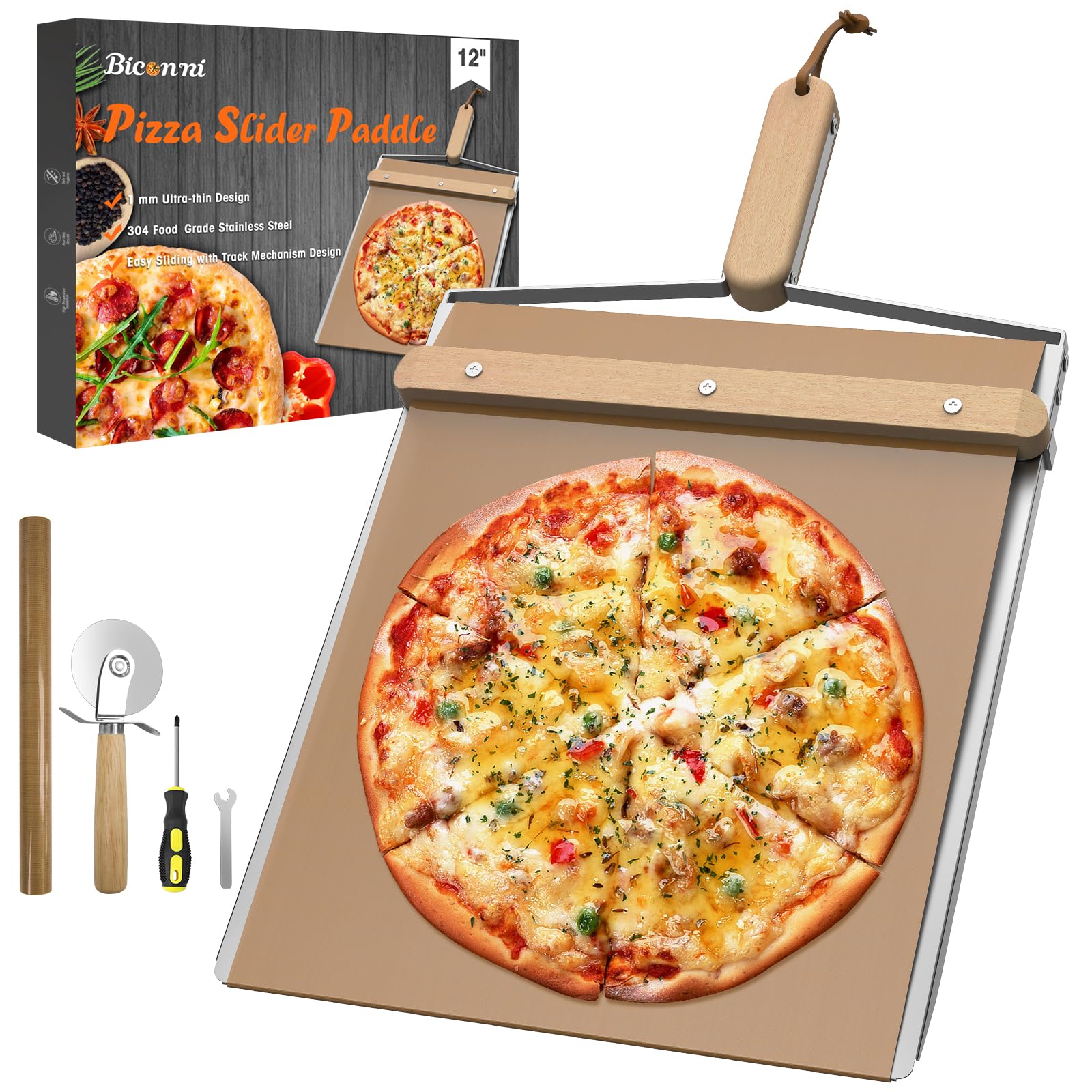
Sliding peels exist because a lot of people genuinely can’t make a standard peel work at first—especially with small pizza ovens where there’s no room for hesitation. If you’ve ever had a pizza fold in half at the oven mouth, this style is instantly appealing.
Owners who like this peel describe the same win: the pizza doesn’t stick, and the transfer feels controlled. The conveyor cloth becomes your “moving platform,” so you don’t rely on the dough sliding across a surface at all. It’s a similar advantage to other belt-style peels: it protects the shape and keeps toppings from shifting during the transfer.
However, this is the kind of product where real-world usability depends on small mechanical details. One user noted they had to loosen tight sliders on the rail to get the motion smooth. That’s not necessarily a deal breaker, but it’s important: if you want a peel that’s perfect out of the box with zero adjustments, premium belt peels tend to feel more refined.
Another smart owner warning is about the metal tray. Stainless is durable, but it can be unfriendly to delicate countertops if you drop or scrape it. The easy fix is simple: set it down on a towel, cutting mat, or wooden board, especially during assembly and cleanup.
If you’re using a compact oven and you want a belt-style transfer without committing to the most premium options, this is a solid “bridge” product—especially if you’re comfortable making tiny adjustments for smoother sliding.
Why it helps beginners
- Conveyor transfer: Reduces sticking and shape distortion during launch.
- Sturdy materials: Stainless frame feels stable under heavier pizzas.
- Useful for compact ovens: Controlled landing helps when oven mouths are tight.
- Accessory-friendly: Often includes tools and spare hardware for setup.
Good to know
- May need adjustment: If rails/sliders feel tight, you might tune it for smoother motion.
- Countertop caution: Metal tray can scratch surfaces—use a mat or towel under it.
- Not a retrieval specialist: Pair with a thin metal peel for pulling out cooked pizzas cleanly.
Ideal for: People who struggle with standard peels and want conveyor-style transfer—especially for compact outdoor ovens.
14. Ooni 12” Aluminum Pizza Peel – Lightweight, Clean, and Easy to Handle

This is the “simple done right” peel. Owners consistently describe it the same way: high quality, thin, light, and easy to handle. And that combination matters more than fancy features when you’re moving hot pizza quickly.
A solid aluminum peel like this excels at retrieval and general handling. Once a pizza is baked, the crust is firm and releases more easily. A thin metal edge can slide under without tearing the base or dragging toppings. That’s why many people use a wood or perforated peel to launch, then use a solid metal peel to pull the pizza out and serve.
Can it launch raw pizza too? Yes—especially if you’re using a stiffer dough, you dust properly (cornmeal is commonly mentioned by owners), and you move quickly. The key is not letting the dough sit. Metal is less forgiving than wood when you pause mid-build.
If you own a compact outdoor oven and you want a dedicated peel that feels like it was designed for that environment—light enough to move fast, sturdy enough to trust—this one fits the role beautifully.
Why it’s a strong pick
- Very lightweight: Easy handling for quick in/out oven movement.
- Thin leading edge: Great for retrieving cooked pizzas cleanly.
- Premium feel: Owners report a refined build and design.
- Perfect for smaller pies: Great match for 12″ pizza workflows.
Good to know
- Launch timing matters: Solid metal is less forgiving for slow toppings.
- Hand wash: Keep it looking great and protect the handle.
Ideal for: Anyone who wants a lightweight metal peel for retrieval and serving, especially with compact outdoor ovens.
15. Chef Pomodoro 12″ Foldable Handle Peel – Small Space, Big Convenience

This is the smaller sibling of the 16″ foldable peel, and it’s a strong choice if your pizzas are typically in the 10–12″ range or you’re working with a tighter oven opening.
The advantage is the same: it folds down and stores like a normal kitchen tool instead of a giant paddle. That makes it especially appealing for apartment kitchens, RV setups, or anyone who cooks pizza often but refuses to keep a long-handled peel permanently on display.
In performance terms, treat it like a compact solid metal peel. It’s excellent for retrieving and moving cooked pizzas, and it can launch when your technique is quick and your dusting is right. If you’re gluten-free or working with dough that tears easily, the thin edge can also make retrieval less stressful—you’re not prying with a thick wooden board.
The one habit that matters most with foldable peels is the hardware check. If you want stable confidence at the oven mouth, keep screws tight. Many owners see this as normal upkeep rather than a flaw—like keeping a pizza stone clean or a knife sharp.
Why it’s useful
- Drawer-friendly storage: Folds down for small kitchens and compact spaces.
- Great for smaller ovens: 12″ head is easy to maneuver and control.
- Thin metal edge: Helpful for retrieving cooked pies cleanly.
- Multi-use: Works for pizza, bread, and general oven transfers.
Good to know
- Not as forgiving for launches as wood: Best for retrieval or quick launches.
- Hardware upkeep: Tighten occasionally for consistent stability.
Ideal for: Compact ovens, smaller pizzas, and kitchens where storage is the deciding factor.
16. Mooues 12″ Peel + Rocker Cutter + Bag – The “Pizza Night Starter Pack”

If you want a budget-friendly way to improve both transfer and slicing, this bundle is a practical pick. Owners tend to highlight two things: the peel feels sturdy without being overly heavy, and the rocker cutter slices cleanly without dragging toppings around.
The peel itself is a compact aluminum paddle with a foldable wooden handle—great for family pizza ovens, countertop ovens, and smaller home setups. For retrieval and serving, it does the job well. For launching, the same rule applies as other solid metal peels: keep your build efficient, dust properly, and don’t let the dough sit and bond to the metal.
The storage bag is an underrated benefit. Pizza peels are awkward shapes, and many people end up tossing them into a cabinet where they get scratched or bent. A bag keeps the set together and protects the paddle during storage or travel (great for backyard pizza nights at a friend’s place).
One real-world note from owners: screws can loosen on foldable designs. That’s normal. Treat it like a quick pre-flight check, and you’ll stay happy.
Also: if your peel arrives with a protective film (some budget paddles do), peel it off before using. It’s a small detail, but it prevents the “why is this peeling?” confusion during the first bake.
Why it’s a strong budget pick
- All-in-one value: Peel + rocker cutter solves two common pizza-night problems.
- Easy storage: Bag helps keep everything protected and together.
- Comfortable handling: Compact size fits family ovens and smaller pizza workflows.
- Clean slicing: Rocker cutter reduces topping drag compared to many wheel cutters.
Good to know
- Fold hardware upkeep: Tighten screws periodically for stability.
- Metal launch learning curve: Best used as retrieval/serve unless you launch fast.
- Protective film: If present, remove before cooking.
Ideal for: Beginners building their pizza tool kit on a budget—especially if you want better slicing along with a reliable peel.
Performance Guide: What Actually Makes a Pizza Peel “Work”
To choose the best pizza peels for your setup, focus on performance traits you can feel—not marketing buzzwords. Pizza peel performance is mostly about friction control, edge geometry, and heat behavior.
Friction & Moisture Management
Raw pizza dough is basically a sticky membrane with a moisture gradient. The longer it sits on a surface, the more it bonds. The peel that “works” is the one that helps you manage that bond.
- Wood and composite: Tend to reduce suction and hold dusting more evenly.
- Solid metal: Launches best when you build fast and dust well; retrieves like a champion after baking.
- Perforated metal: Reduces contact and sheds excess flour—but needs speed and the right dusting approach.
- Sliding/belt peels: Replace “slide off” with “lift and place,” which is why they feel like magic with wet dough.
Edge Geometry & Heat Reality
The front edge of your peel is the part that actually interacts with your pizza and your stone. A peel can be beautiful and still fail if its edge is too thick, too blunt, or too flexible.
- Thinner edges: Slide under cooked crust more easily and help with delicate retrieval.
- Bevel angles: Shallow bevels slip; steep bevels push. If your wood peel “shoves” dough, it’s often bevel geometry, not you.
- Handle stiffness: A wobbly handle creates nervous launches and jerky movement. Tighten foldable/detachable hardware.
- Heat exposure: Any peel can be ruined by being left in the oven. A good launch is seconds—practice the motion cold if needed.
FAQ: Pizza Peels, Sticking Dough, and Getting Consistent Launches
Do I really need more than one peel?
My pizza sticks even when I add more flour. What am I missing?
Are perforated peels better than solid ones?
Which peel style is easiest for beginners?
How do I stop toppings from flying off during launch?
Can I wash these in the dishwasher?
Final Thoughts: The Right Peel Depends on Your Dough—and Your Personality
Here’s the clean takeaway: the “best” peel is the one that makes your launches boring. Boring is good. Boring means your pizza lands flat, your toppings stay put, and you stop bracing for impact every time you walk to the oven.
If you want the calmest launches with wet dough or you’re tired of beginner disasters, start with the EXO Super Peel Pro Composite. If you want a premium-feeling “self-launch” tool with strong owner satisfaction, the ITALX NEW EZ Pizza Peel 14 V3 is a powerhouse. And if you’re building a complete setup from scratch in one move, the KitchenStar Pizza Making Set gives you the core tools to make pizza night feel like a system, not a gamble.
No matter what you choose, remember: the peel is only half the equation. The other half is your rhythm—wiggle test, fast build, confident launch. Nail those, and your pizza will start behaving like it wants to be great.
