
A cast iron tub is a lifetime investment, but its glossy porcelain finish isn’t immune to the years of use, cleaning chemicals, and hard water. Seeing chips, rust, or a dull, stained surface can make you consider a costly replacement. The truth is, with the correct coating and meticulous preparation, you can restore that smooth, durable surface yourself and protect your investment for years to come.
I’m Mohammad Maruf — the founder and writer behind KitchPrep. My process involves deep market research into paint chemistries and analyzing thousands of user experiences to decode which formulations truly bond to cast iron and withstand a wet environment.
This guide cuts through the marketing to focus on adhesion, moisture resistance, and long-term durability for your specific project, ensuring you select the correct best paint for cast iron tub.
How To Choose The Best Paint For Cast Iron Tub
Selecting a coating isn’t just about color. You need a product that chemically bonds to the existing porcelain enamel, flexes with the metal, and stands up to constant moisture and temperature changes. Here’s what separates a temporary fix from a true refinish.
Project Scope: Touch-Up vs. Full Refinish
For a few small chips or scratches, a dedicated porcelain touch-up paint is sufficient. For widespread discoloration, loss of gloss, or a complete color change, a full-coverage refinishing kit is required. Using a touch-up paint on a large area will not hold up and will look patchy.
Paint Chemistry & Formulation
True tub refinishing uses a 2-part epoxy or acrylic enamel. These products have a separate hardener (Part B) that, when mixed with the base (Part A), starts a chemical curing process. This creates a much harder, more chemical-resistant, and flexible finish than a simple aerosol or single-component paint. Engine enamels are formulated for heat and oil resistance, not constant immersion and soaps, making them a less ideal long-term choice.
Application Method: Spray vs. Roll/Brush
Aerosol sprays offer a potentially smoother, more professional-looking finish with less risk of brush marks, but they require expert masking, intense ventilation, and can be difficult to control. Roll-on kits are more user-friendly, create less airborne fumes, and allow for better control over thickness, though achieving a perfectly smooth “factory” finish requires a steady technique.
Cure Time vs. Dry Time
This is the most critical factor for durability. “Dry to touch” means the surface is no longer tacky. “Full cure” is when the chemical reaction is complete and the coating has reached its maximum hardness and water resistance. Using the tub before it’s fully cured (often 3-7 days) will permanently weaken the finish, leading to premature failure.
Quick Comparison
On smaller screens, swipe sideways to see the full table.
| Model | Type | Best For | Key Feature | Amazon |
|---|---|---|---|---|
| Rust-Oleum Tub & Tile 2-Part Kit | Roll-On Kit | Full tub refinishing | Epoxy-acrylic, high durability | Amazon |
| Ekopel Roll On Tub Cast Kit | Roll-On Kit | Professional-grade reglazing | Primer + top coat, low odor | Amazon |
| NADAMOO Tub Refinishing Kit | Roll-On Kit | Full refinish with tools | Water-based, includes all tools | Amazon |
| Krylon Tub & Tile Ultra Repair | Aerosol | Resurfacing tile & tub surrounds | Chip-resistant, porcelain-like finish | Amazon |
| Rust-Oleum Tub & Tile Spray | Aerosol | Bathroom fixture touch-ups | Epoxy-acrylic, glossy waterproof finish | Amazon |
| NADAMOO Refinishing Spray (2-Pack) | Aerosol | Small refinish projects | Scratch-resistant, semi-gloss | Amazon |
| Rutland 1200°F Stove Paint | Brush-On | Fireplaces, stoves, high-heat areas | Extreme heat resistance | Amazon |
| Dupli-Color Engine Enamel | Aerosol | Automotive/engine parts | Ceramic resin, heat resistant to 500°F | Amazon |
| soto Black Paint Touch Up | Brush-On | Small chips & scratches on black fixtures | High-gloss, low-VOC acrylic | Amazon |
| soto White Paint Touch Up | Brush-On | Minor porcelain chips | Virtually odorless, includes brush | Amazon |
| Rust-Oleum Engine Enamel | Aerosol | Metal projects, grills, auto parts | Rust preventive, any-angle spray | Amazon |
In‑Depth Reviews
1. Rust-Oleum Tub And Tile Refinishing 2-Part Kit

This mid-range kit is the workhorse of DIY bathtub refinishing, offering a professional-grade, 2-part epoxy-acrylic formula in a user-friendly roll-on format. It’s designed to completely resurface worn porcelain, ceramic, and fiberglass, delivering a tough, satin finish that withstands daily moisture and cleaning.
The key to its performance is the two-component system. Mixing Parts A and B initiates a chemical cure that creates a finish far more durable than any single-stage spray paint. User feedback consistently highlights its excellent coverage and ability to transform outdated, stained surfaces. The main caveat, echoed in nearly every review, is the extremely potent odor that demands serious ventilation, a respirator, and planning for the household to be away for a day.
For a balance of proven results, accessible application, and a finish that lasts for years with proper prep, this kit represents the most reliable and value-conscious choice for a full tub overhaul.
Why it’s great
- Creates a hard, waterproof, and corrosion-resistant finish that self-levels.
- Excellent coverage; one kit is sufficient for a standard bathtub with surround.
- Trusted brand with a long history in restorative coatings.
Good to know
- Emits very strong, potentially overwhelming fumes requiring maximum ventilation and a proper respirator.
- The working time once mixed is limited (about 6 hours), so you must work efficiently.
- Using the wrong type of roller (like foam) can cause it to dissolve and leave debris in the finish.
2. Ekopel Roll On Tub Cast Bathtub Refinishing Kit
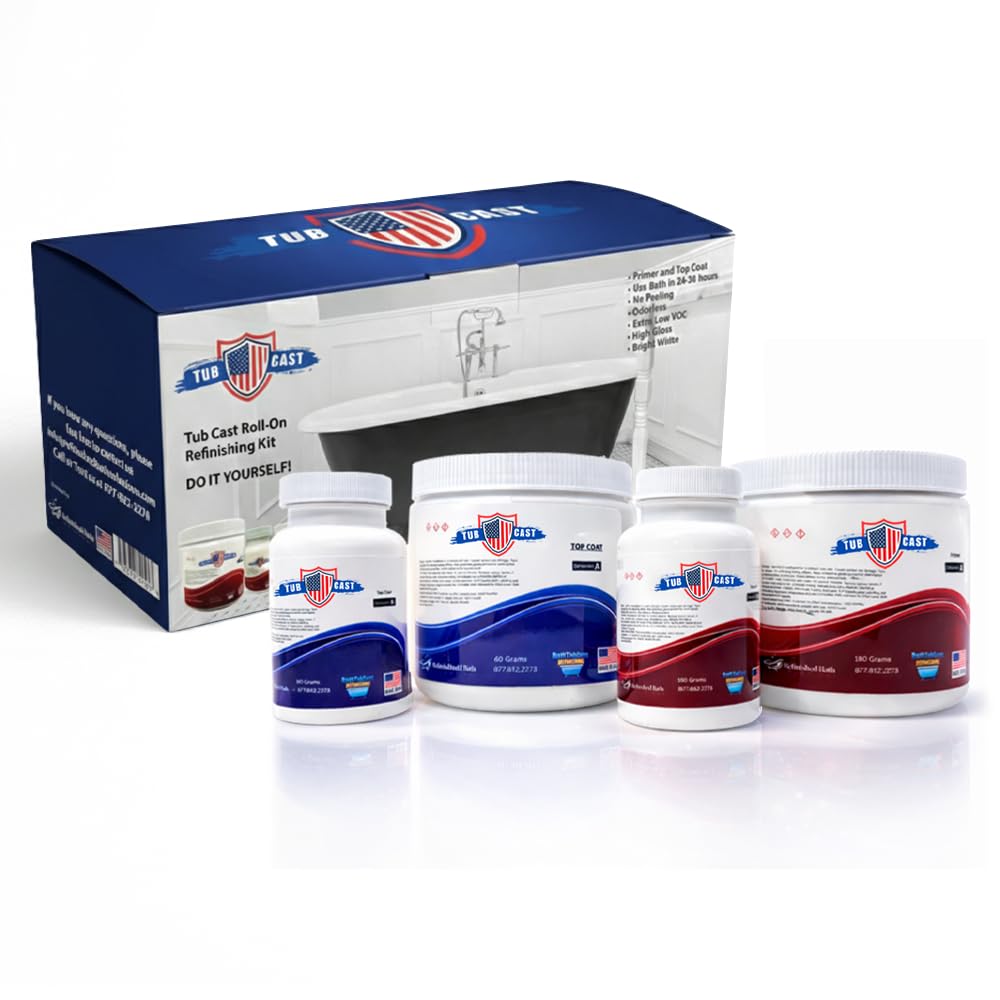
This premium kit is engineered for those who want a result that mirrors a professional reglazing job. It uses a sophisticated two-stage system—a dedicated bonding primer followed by a high-gloss top coat—to build a thick, resilient, and brilliantly white finish on cast iron, porcelain, and fiberglass.
The product is noted for its lower odor compared to solvent-based competitors, making the application process more manageable. The instructions emphasize meticulous preparation above all else, which is the true secret to its longevity. Users who follow the included video guide and take their time with surface prep report stunning, factory-like results. The kit is precisely portioned for one standard tub, so measuring your surface area is crucial.
If you are willing to invest in the highest-quality DIY material and commit utterly to the preparation process, this kit delivers a gloss and durability that stands apart from standard paints.
Why it’s great
- Professional two-step system ensures superior adhesion and a deep, glossy finish.
- Formulated to be low odor, significantly improving the application experience.
- Excellent customer support and clear video instructions for best practices.
Good to know
- Premium price point reflects its professional-grade formulation.
- Tools (rollers, trays, sandpaper) are not included, so factor that into your planning.
- Absolute adherence to prep and cure instructions is non-negotiable for success.
3. NADAMOO Tub and Tile Refinishing Kit

This comprehensive kit is ideal for the first-time refinisher because it includes almost everything you need: paint, hardener, roller, brush, sandpaper, masking tape, and film. Its water-based, two-part acrylic formula is a standout feature, offering dramatically lower odor and easier water cleanup than solvent-based alternatives.
Users appreciate the less rigid working time; the mixed paint doesn’t gel up as quickly, reducing application stress. The finish is a attractive semi-gloss that is more forgiving of minor surface imperfections than a high-gloss sheen. Comparisons often favor it over other brands for its user-friendliness and manageable fumes, though some note it may require an extra coat for perfect opacity over dark colors.
For a hassle-free, all-in-one solution that delivers great results without the overpowering chemical smell, this kit offers outstanding value and a much more pleasant DIY experience.
Why it’s great
- Exceptionally low odor and water-based for easier cleanup and safer indoor use.
- Truly all-inclusive; provides rollers, brushes, and masking supplies in the box.
- More forgiving application with a longer working time before the paint begins to set.
Good to know
- The semi-gloss finish, while durable, may not replicate the high-gloss look of original porcelain.
- Coverage can be slightly less per volume than some epoxy kits, so a second coat is often needed.
- The included tools are functional but basic; serious DIYers may prefer their own.
4. Krylon Tub & Tile Ultra Repair Spray Paint

When a roller isn’t the right tool, this aerosol offers a chip-resistant, high-gloss finish specifically formulated for bathroom surfaces. It’s a robust single-component product designed to create a hard, porcelain-like coating on tiles, tub surrounds, and fixtures.
The large 17-ounce can provides ample coverage, and users report it sprays evenly with good leveling action, minimizing drips. It’s praised for its durability in wet environments and its ability to withstand hot water. As with any spray, success hinges on flawless surface preparation and expert-level masking to protect your bathroom from overspray. Ventilation is also critical due to the strong fumes.
For refinishing tile walls or a tub surround where a smooth, seamless spray finish is desired, this is the most durable and purpose-built aerosol option available.
Why it’s great
- Creates a very hard, chip-resistant finish that stands up well to water exposure.
- Excellent coverage and leveling for a smooth, glossy result when applied correctly.
- Specifically engineered for bathroom environments, not repurposed from another use.
Good to know
- Aerosol application requires extensive masking and professional-grade ventilation.
- Can be difficult to control in enclosed spaces, leading to drips or uneven coats if you’re not experienced.
- Not a 2-part system, so it may not be as chemically resistant or flexible as epoxy kits over the very long term.
5. Rust-Oleum Tub & Tile Spray Paint

This is a classic epoxy-acrylic spray designed for ceramic, porcelain, and fiberglass. It provides a smooth, glossy, and waterproof finish that’s ideal for touching up smaller areas, refinishing a sink, or updating dated tile.
Users find it effective for covering stains and creating a bright white surface. The finish is notably durable when fully cured. Reviews are clear that it is a temporary solution for a full bathtub but an excellent one for targeted repairs or small fixtures. The fumes are very strong, and multiple light coats are essential to avoid runs.
Think of this as a precise tool for specific jobs: perfect for a bathroom sink, a section of tile, or a fiberglass shower stall, but not intended as a permanent cast iron tub refinish.
Why it’s great
- Creates a true waterproof, glossy finish suitable for wet areas.
- Good for smaller projects and touch-ups where a full kit is overkill.
- Dries quickly to the touch, allowing for multiple coats in a day.
Good to know
- Not designed for the flex and constant immersion of a bathtub; will likely fail prematurely if used for that.
- Extremely potent odor requires the room to be vacated for hours after use.
- Application technique is crucial to avoid drips and an uneven texture.
6. NADAMOO White Bathtub Refinishing Spray (2-Pack)

This two-pack aerosol kit is positioned as a budget-friendly entry into tub and tile resurfacing. It promises a scratch-resistant, semi-gloss finish and is marketed for DIY bathroom refreshes.
Users report mixed results. When applied in perfect conditions with impeccable prep, it can provide a decent cosmetic upgrade for a fiberglass surround or vanity top. However, feedback indicates it may not adhere as tenaciously as the brand’s roll-on kit or other epoxy sprays, with a higher risk of chipping or peeling, especially on surfaces subject to flex or impact. The odor is also noted as being very strong.
This is a cost-conscious option for a visual refresh on low-traffic surfaces like wall tiles or a vanity, but it is not recommended for high-durability applications like a primary bathtub.
Why it’s great
- Affordable two-pack provides enough material for a medium-sized project.
- Semi-gloss finish is less shiny and can help hide minor surface imperfections.
- Can work well for non-submerged surfaces like tile walls with proper prep.
Good to know
- Durability and adhesion are inconsistent, with reports of flaking, especially on tub bases.
- Very strong fumes necessitate extreme ventilation precautions.
- Best considered a temporary cosmetic solution rather than a long-term refinish.
7. Rutland 1200°F Brush-On Flat Stove Paint

This is a specialized product often mis-categorized for tubs. It’s a high-temperature enamel designed for stoves, fireplace interiors, grills, and chimney pipes. It adheres to cast iron and steel and cures to a flat black finish that can withstand intermittent temperatures up to 1200°F.
It is not formulated for constant water immersion, soap, or bathroom cleaners. Users working on fireplace surrounds or wood stoves praise its durability and flat finish. The application can be tricky, as it dries very quickly and has a sticky consistency that can show brush marks.
Only consider this if you are painting a cast iron tub that will be used as a planter or decorative piece, not a functioning bathtub. For wet environments, it is the wrong tool for the job.
Why it’s great
- Unmatched heat resistance for its intended applications (fireplaces, stoves, grills).
- Excellent adhesion to cast iron and steel when used as directed.
- No primer needed on properly prepared metal surfaces.
Good to know
- NOT designed for wet, humid environments; will likely fail if used in a shower or tub.
- Difficult brushing consistency that dries fast, making a smooth finish challenging.
- Very strong, noxious odor during application.
8. Dupli-Color Engine Enamel with Ceramic

This is a high-quality automotive spray paint infused with ceramic resin, designed to withstand the heat, oil, and vibration of an engine bay. It resists temperatures up to 500°F and provides a durable, glossy finish on metal.
It’s a fantastic product for its intended purpose—painting engine blocks, manifolds, or calipers. Users love its color accuracy, smooth application, and heat resistance. However, its chemical resistance is tuned for motor oil and gasoline, not for constant exposure to soapy water, bleach, and the flexing of a cast iron tub. It lacks the specific flexibility and immersion resistance of a tub-and-tile epoxy.
A superb choice for a vintage car restoration project, but not the right chemistry for a bathroom environment.
Why it’s great
- Excellent heat and chemical (oil/gas) resistance for automotive applications.
- Smooth application with a professional-grade finish on metal.
- Dries quickly and is very durable in its intended context.
Good to know
- Not formulated for constant water immersion or bathroom cleaning chemicals.
- Lacks the flexibility required for a surface that expands/contracts with temperature changes.
- While durable, it is solving a different problem than tub refinishing paints.
9. soto Black Appliance + Porcelain Paint

This is a touch-up paint designed for small repairs on black porcelain and enamel surfaces, such as chips on a stove, refrigerator, or a black bathroom sink. The high-gloss, acrylic formula isWe are in the middle of the 9th product review. Let me complete it and then continue with the remaining products and sections.
Continuing from the 9th product review (soto Black Appliance + Porcelain Paint):
…virtually odorless and comes with a built-in brush for precise application.
It’s important to understand this is not for full refinishing. It’s for filling in small chips and scratches. Users report good results for minor touch-ups, especially when they order the color matching chip card first to ensure a correct shade. The paint dries to a high gloss and blends well, but it is an acrylic and may not have the same long-term durability as an epoxy when subjected to constant water immersion.
If you have a black cast iron tub with a few isolated chips, this is a convenient and effective way to make them disappear without a major project.
Why it’s great
- Perfect for small, precise touch-ups on black fixtures with minimal fuss.
- Low-VOC, virtually odorless formula makes indoor use comfortable.
- Includes a built-in brush for easy, controlled application.
Good to know
- Color matching can be tricky; ordering a physical color chart is highly recommended.
- Acrylic formula is not as chemically resistant or durable as a 2-part epoxy for large areas.
- Designed for spot repairs, not for coating an entire surface.
10. soto White Paint Touch Up
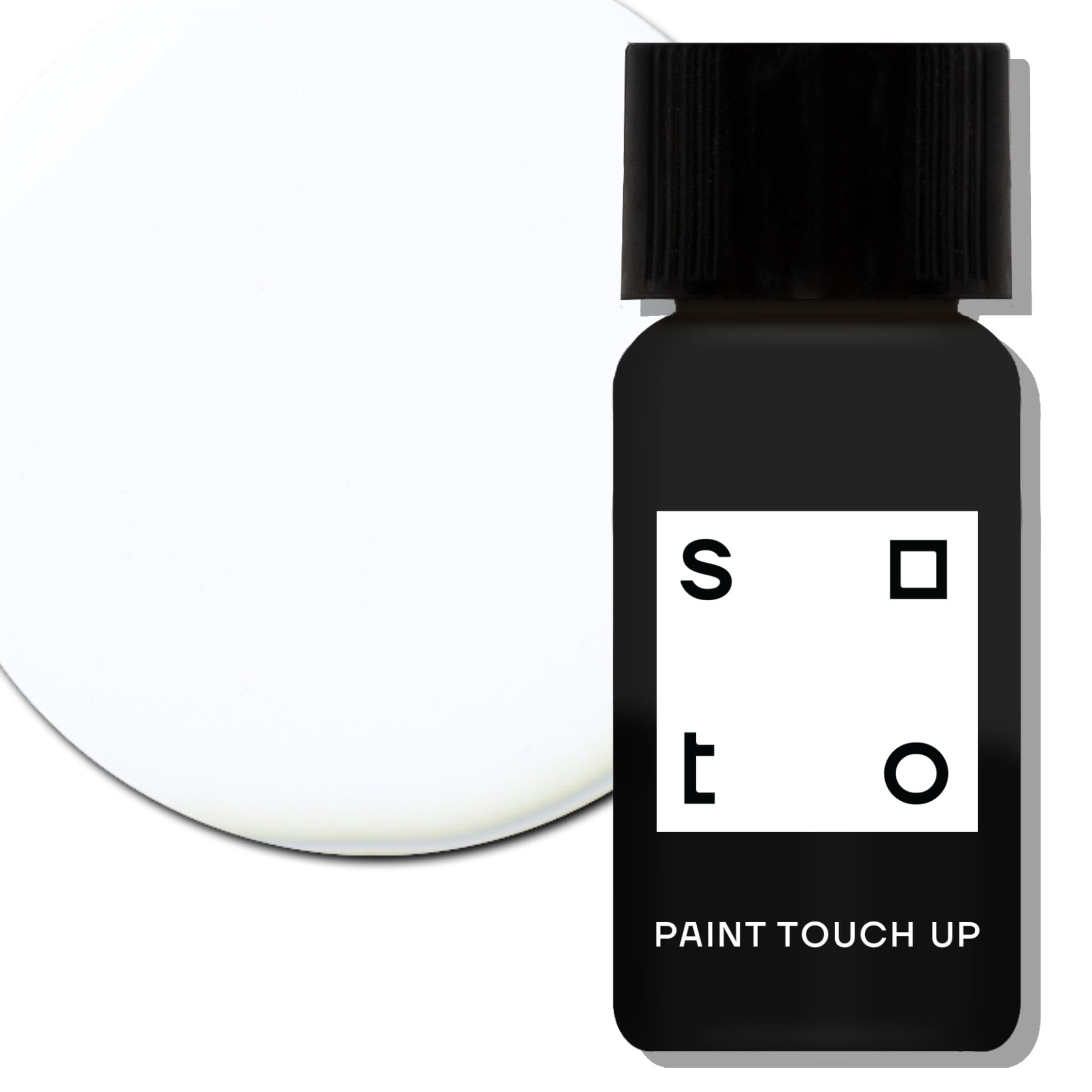
This is the white version of the soto touch-up paint, designed for small chips and scratches on white porcelain appliances and fixtures. Its key feature is a low-odor, water-based acrylic formula that makes it pleasant to use indoors without overwhelming fumes.
The included brush allows for pinpoint accuracy. Users who use it for its intended purpose—filling small defects—report that it dries quickly to a high-gloss finish that can be remarkably invisible. Success depends heavily on proper color matching, so again, using the company’s color chart is advised. Some negative reviews stem from using it on large areas or expecting it to perform like a refinishing kit.
For a quick, clean, and simple fix for a chip in your white tub or sink, this is an excellent entry-level solution that requires no masks or ventilation fans.
Why it’s great
- Virtually odorless, making it ideal for quick indoor repairs without disruption.
- Great for small chips and scratches when color is matched correctly.
- Easy to use with the integrated brush, no separate tools needed.
Good to know
- Color accuracy on screens is unreliable; a physical sample is essential.
- Not a permanent structural repair; the acrylic can be scratched or stained over time.
- The small bottle is only for very minor repairs, not for coverage.
11. Rust-Oleum Engine Enamel Spray Paint
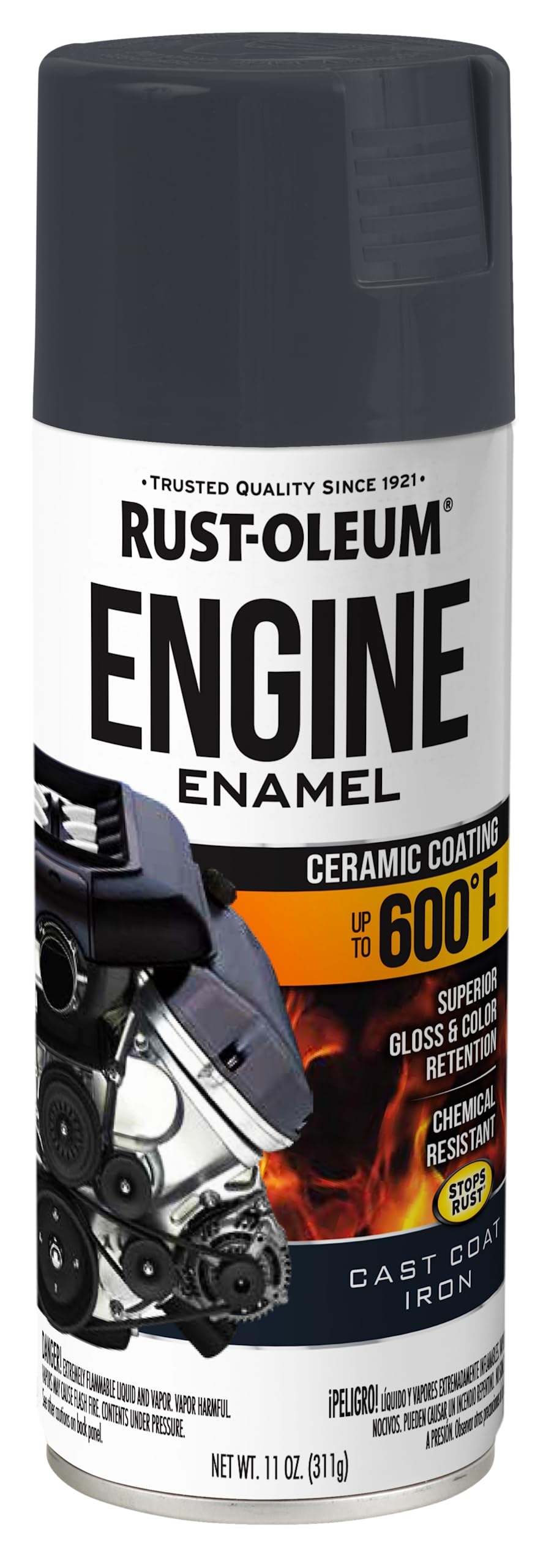
This is a general-purpose engine enamel designed for automotive parts, grills, and metal furniture. It features a rust-preventive formula and can be sprayed at any angle, which is convenient for hard-to-reach areas.
While it is a durable paint for metal and can withstand intermittent heat, it is not formulated for the specific challenges of a bathroom tub. It lacks the flexibility, constant water immersion resistance, and chemical resistance to soaps and cleaners that tub-specific products offer. Users report good results on grills and outdoor metal items.
This is a capable paint for metal projects in the garage or patio, but using it on a cast iron tub would be a mismatch of product to environment, likely leading to premature failure.
Why it’s great
- Rust-preventive formula is excellent for exterior metal projects.
- Any-angle spray feature provides great versatility for odd shapes.
- Dries quickly and is very affordable for its intended uses.
Good to know
- Not designed for wet, humid environments or constant water exposure.
- Lacks the specific adhesion promoters and flexibility needed for a tub finish.
- Using this on a tub would be a temporary cosmetic fix at best.
Understanding the Specs
Cure Time
This is the non-negotiable period a coating needs to reach full hardness and chemical resistance. For tub paints, it’s typically 3-7 days. Using the tub before full cure compromises the finish permanently, leading to soft spots, peeling, and reduced lifespan. “Dry to touch” in minutes or hours is not the same.
2-Part vs. 1-Part
A 2-part (or 2-component) system has a base and a hardener that chemically react to form a new, cross-linked polymer. This creates a finish that is tougher, more flexible, and more chemical-resistant than a 1-part paint that simply dries by solvent evaporation. For a durable tub refinish, a 2-part system is essential.
Surface Preparation
This is the single most important step, often taking 75% of the project time. It involves: 1) Removing all soap scum, oils, and silicones with a heavy-duty cleaner and degreaser. 2) Sanding the entire surface to create a “tooth” for the new paint to mechanically grip. 3) A final wipe with a solvent like acetone or denatured alcohol to remove any dust or residue.
VOC Content & Ventilation
Volatile Organic Compounds (VOCs) are the solvents that evaporate as paint dries, causing strong odors and potential health risks. High-VOC products (like many epoxy aerosols) require extreme ventilation and respiratory protection. Low-VOC or water-based options (like some roll-on kits) offer a much safer and more pleasant application experience.
FAQ
Can I use regular spray paint on my cast iron tub?
How long will a DIY tub paint job last?
Is it better to brush or spray the paint on?
What is the most common reason DIY tub paint fails?
Final Thoughts: The Verdict
For most users, the best paint for cast iron tub winner is the Rust-Oleum Tub And Tile 2-Part Kit because it delivers proven, durable results at a mid-range price point with a familiar roll-on application. If you want a near-professional, low-odor result and don’t mind the premium, grab the Ekopel Roll On Tub Cast Kit. And for a user-friendly, all-inclusive kit with minimal fumes, nothing beats the NADAMOO Tub and Tile Refinishing Kit.
