
A “nonstick pan” is not a product category. It’s a daily relationship. It’s the pan you reach for half-asleep to fry an egg, the one you lean on when dinner needs to happen fast, and the one that decides whether cleanup is a quick wipe… or a 12‑minute scrub you didn’t plan for.
And the lid? The lid is the underrated power move. A good lid changes the entire behavior of a skillet: splatter control, moisture retention, faster weeknight braises, gentler fish cooking, and the kind of “cover it and let it finish” moment that saves dinner when you got distracted by life.
If you’re hunting for best non stick frying pans with lids, you’re probably not looking for “cute features.” You’re looking for something more specific and more valuable: a pan that stays slick longer, heats evenly on your stove (especially if you’re on induction), doesn’t warp when you crank the heat, and doesn’t make you baby it like fine china just to keep eggs from welding to the surface.
This guide is built differently on purpose. I’m not going to tell you “Pan A is better than Pan B because it’s bigger.” Instead, I’m going to walk you through the friction points real owners talk about after weeks and months: when a lid handle gets hot, when rivets become a cleaning trap, when a “metal utensil safe” claim is technically true but practically misunderstood, and why some hybrid pans feel amazing for steaks but need a different approach for delicate eggs.
Below you’ll find 15 standout options—from premium hard‑anodized sets to scratch‑resistant nonstick, hybrid honeycomb “sear + release” skillets, PFAS‑free ceramic picks, and deep sauté pans with lids that can replace multiple pieces of cookware.
In this article
- How to choose the right pan + lid combo for your cooking style.
- Quick comparison table of 15 standout models.
- In-depth reviews of each pan, with pros and cons.
- The “make it last” rules: heat, oil, tools, and cleaning that actually work.
- FAQ: coating safety, induction, dishwasher reality, and buying shortcuts.
How to Choose the Best Non Stick Frying Pans With Lids
Here’s the honest truth most “top 10 lists” skip: you don’t buy a nonstick pan for the day you unbox it. You buy it for week 14—when you’re in a rhythm, you’ve used it hard, and you still expect it to release food cleanly without turning every meal into a cleanup project. The lid matters just as much: a poorly designed lid can make a great skillet feel annoying every single day.
So instead of drowning you in specs, I’m going to give you a decision framework that predicts real-world satisfaction: how the pan behaves at different heat levels, how forgiving it is when you’re tired, what it’s like to wash, and how the lid changes what you can cook.
1. Start with your “daily food” (because coating behavior is food-specific)
Your best pan depends on what you cook most. Here’s the simple mapping I use when helping someone choose fast:
- Eggs, pancakes, delicate fish: You want a slick, low-friction surface that performs on medium heat. Pure nonstick coatings tend to feel easiest here.
- Steaks, burgers, crispy chicken: You want heat stability, good browning, and a surface that can handle deglazing without panicking. Hybrids and heavier bases shine.
- One-pan meals, sauté + simmer: A deeper “chef pan” shape with a lid can replace a saucepan and a skillet in one go.
- Sauces and reductions: Watch out for rivets and “texture patterns” that can trap sticky sugars if you cook very hot and dry.
2. Know what “nonstick” you’re actually buying
“Nonstick” is an umbrella term. In this guide you’ll see three main styles, and each has a different personality:
- Hard-anodized aluminum with nonstick coating: Often the most “classic” everyday feel—fast, even heating with a reliably slick surface. Good sets here (like All‑Clad HA1 and KitchenAid’s hard‑anodized line) tend to feel stable, not flimsy, and they’re usually easy to clean.
- Ceramic nonstick (often PFAS/PTFE-free): Can feel great when used correctly (usually medium heat, light oil). Ceramic can be a beautiful choice if you prioritize specific material preferences, but it can be less forgiving if you run screaming-hot heat day after day. Blue Diamond is the well-known example here, and KOKHUB takes a ceramic-forward approach in a multi-pan set.
- Hybrid / honeycomb / laser-etched patterns: This is the “sear + release” philosophy: raised stainless patterns protect the coating and improve browning. It’s often more durable against tool contact, and it tends to brown better than ultra-slick traditional nonstick. But it rewards technique: you’ll get best results by preheating properly, using a small amount of fat, and letting food release when it’s ready. HexClad is the famous name; several newer brands mimic the concept at different price points.
None of these is “automatically best.” What matters is matching the style to your habits: if you’re a low-to-medium heat cook who wants the easiest egg performance, classic nonstick is hard to beat. If you like hard sears and deglazing, hybrids can be addictive.
3. Induction compatibility is not a “nice-to-have” anymore
If you cook on induction—or you might switch to induction later—don’t treat compatibility as an afterthought. On induction, cookware quality shows up immediately:
- Good induction cookware: heats quickly, evenly, and responds fast when you lower the setting.
- Bad induction cookware: feels slow, creates hot spots, or “pulses” heat in a way that burns one area and undercooks another.
How to sanity-check: if the base has a strong magnetic layer and feels substantial, it usually performs better. And if your cookware is “sort of” induction compatible, you’ll often feel it in how inconsistent searing becomes.
4. The lid is a performance tool—judge it like one
A lid is not just “extra.” It changes the cooking physics inside the pan. If you use a lid often, you want to evaluate these details:
- Fit and seal: Does it sit snugly, or does it rattle and leak steam?
- Vent design: A small vent can prevent boil-over and reduce lid chatter.
- Visibility: Glass lids let you track browning and moisture without opening (which drops heat).
- Oven limits: Many pans are oven-safe to high temps, but the lid may have a lower limit. Know that before you plan stovetop-to-oven meals.
- Handle heat: “Stay-cool” claims vary. A lid handle that gets scorching hot becomes annoying fast.
5. Shape matters more than diameter
Most people shop by inches. Better shoppers shop by shape. Two 12-inch pans can behave completely differently depending on wall angle and depth:
- Flared sides: easier flipping and omelets, less splatter control.
- Straight sides: more usable flat area and better simmering, slightly harder “roll” for omelets.
- Deep chef-pan style: the best “one pan does it all” option—sauté, simmer, shallow fry, even light braising with the lid on.
If you hate splatter and cook saucy meals, a deeper pan with a lid is often the best upgrade you can make—even if you never thought you were “a lid person.”
6. Tool- and cleaning-forgiveness is the real durability test
Here’s how pans actually die in real kitchens:
- Heat abuse: blasting high heat day after day, especially dry preheating.
- Cold shock: taking a screaming hot pan and running it under cold water.
- Storage abrasion: stacking pans and lids without protection.
- Dishwasher harshness: detergent + high heat + long cycles can be rough on many coatings (even when “dishwasher safe” is technically true).
If you know your household is hard on cookware (kids cooking, roommates, busy schedule), prioritize pans designed to be more forgiving: scratch-resistant nonstick (Circulon A1) or hybrid patterns that protect the surface (HexClad-style designs). If your household is careful, classic nonstick can last beautifully and feel effortlessly slick.
7. A fast “buying shortcut” that rarely fails
If you’re stuck between options, ask yourself these three questions:
- Do I need induction compatibility? If yes, that instantly narrows the field.
- Do I want the easiest egg release, or better searing? Easy eggs = classic nonstick. Better sear = hybrid/honeycomb.
- Do I cook covered a lot? If yes, prioritize lid fit/vent and a pan shape that benefits from covering (deeper walls help).
That’s it. If you answer those honestly, your “best pan” becomes obvious.
Quick Comparison: 15 Best Non Stick Frying Pans With Lids Picks
Use this table to find the pans that match your cooking style, then jump to the full reviews for the “real-life” details— like how the lid behaves under steam, how forgiving the coating is, and which pans owners say stay nonstick longer with normal use.
On smaller screens, swipe or scroll sideways to see the full table.
| Model | Pan type | Real-life strength | Best match | Amazon |
|---|---|---|---|---|
| All-Clad HA1 Hard Anodized Nonstick (5-Piece) | Hard-anodized set | Premium everyday performance: even heat, strong build, lids included | Most households who want a “buy once, cook daily” set | Amazon |
| Circulon A1 ScratchDefense (8.5″, 10″, 12″ + Lids) | ScratchDefense set | Extreme scratch resistance + dishwasher-friendly convenience | Busy kitchens that want maximum forgiveness | Amazon |
| HexClad Hybrid 10-Inch Frying Pan + Lid | Hybrid | High-heat versatility + strong searing with easier cleanup | Steak lovers who still want nonstick convenience | Amazon |
| KitchenAid Hard Anodized Induction Set (10″ & 12.25″ + Lids) | Hard-anodized set | Even heating + slick release + oven-ready flexibility | Families who want two workhorse sizes with lids | Amazon |
| KOKHUB Titanium Ceramic Tri-Ply Set (8″, 10″, 12″ + Lids) | Ceramic tri-ply | PFAS/PTFE-free direction + tri-ply heat stability + no rivets | Health-conscious cooks who still want real sear power | Amazon |
| imarku Cast Iron Honeycomb Set (10″ & 12″ + Lids) | Cast-iron hybrid | Cast-iron-style heat retention with easier release | Induction users who want more “real pan” feel | Amazon |
| SENSARTE 12″ Deep Frying Pan (5 Qt) + Lid | Deep sauté | One-pan meals: deep walls, helper handle, easy cleanup | People who cook covered and hate splatter | Amazon |
| OATOFP Hybrid Skillet Set (8″, 10″, 12″ + 2 Lids) | Hybrid set | Edge-to-edge hybrid surface + easy cleanup pattern | Shoppers who want hybrid benefits in a full-size trio | Amazon |
| Tibbicc 12″ Hybrid Stainless Skillet + Lid | Hybrid | Big, versatile pan with clear “use it right” heat guidance | Everyday cooks who want one big do-it-all skillet | Amazon |
| Yonida 12″ Hybrid Nonstick Skillet + Lid | Hybrid | Family-size capacity + consistent hybrid surface to the rim | Home cooks who want better browning without sticking | Amazon |
| FogDream 10″ Honeycomb Stainless Skillet + Lid | Honeycomb hybrid | Affordable “hybrid feel” with a surprisingly premium lid | People who want HexClad-style behavior for less | Amazon |
| USELUCK 8″ Honeycomb Skillet + Lid | Small skillet | Compact daily pan that behaves best on medium heat | Eggs, single meals, and quick sears for one or two | Amazon |
| T-fal Ultimate Hard Anodized 10″ + Lid | Classic value | Reliable daily performance + preheat indicator + deep sides | Budget-minded cooks who still want a “serious” pan | Amazon |
| Blue Diamond 12″ Ceramic Skillet + Lid | Ceramic | High-heat oven range + PFAS/PTFE-free ceramic direction | Cooks who want ceramic convenience for big batches | Amazon |
| SENSARTE Deep Nonstick Skillet 10″ (3.5 Qt) + Lid | Deep sauté | Small-but-deep pan that punches above its size | One-pan meals for one or two, without splatter | Amazon |
In‑Depth Reviews: 15 Best Non Stick Frying Pans With Lids (Real-World Buying Guide)
Now we’ll go pan by pan. I’m going to talk like someone who cooks daily: how the coating behaves with eggs, how the lid changes the cooking, where cleaning gets annoying, and which pans are forgiving when you’re moving fast.
1. All-Clad HA1 Hard Anodized Nonstick Fry Pan Set (5-Piece) – The Premium “Daily Driver” Set
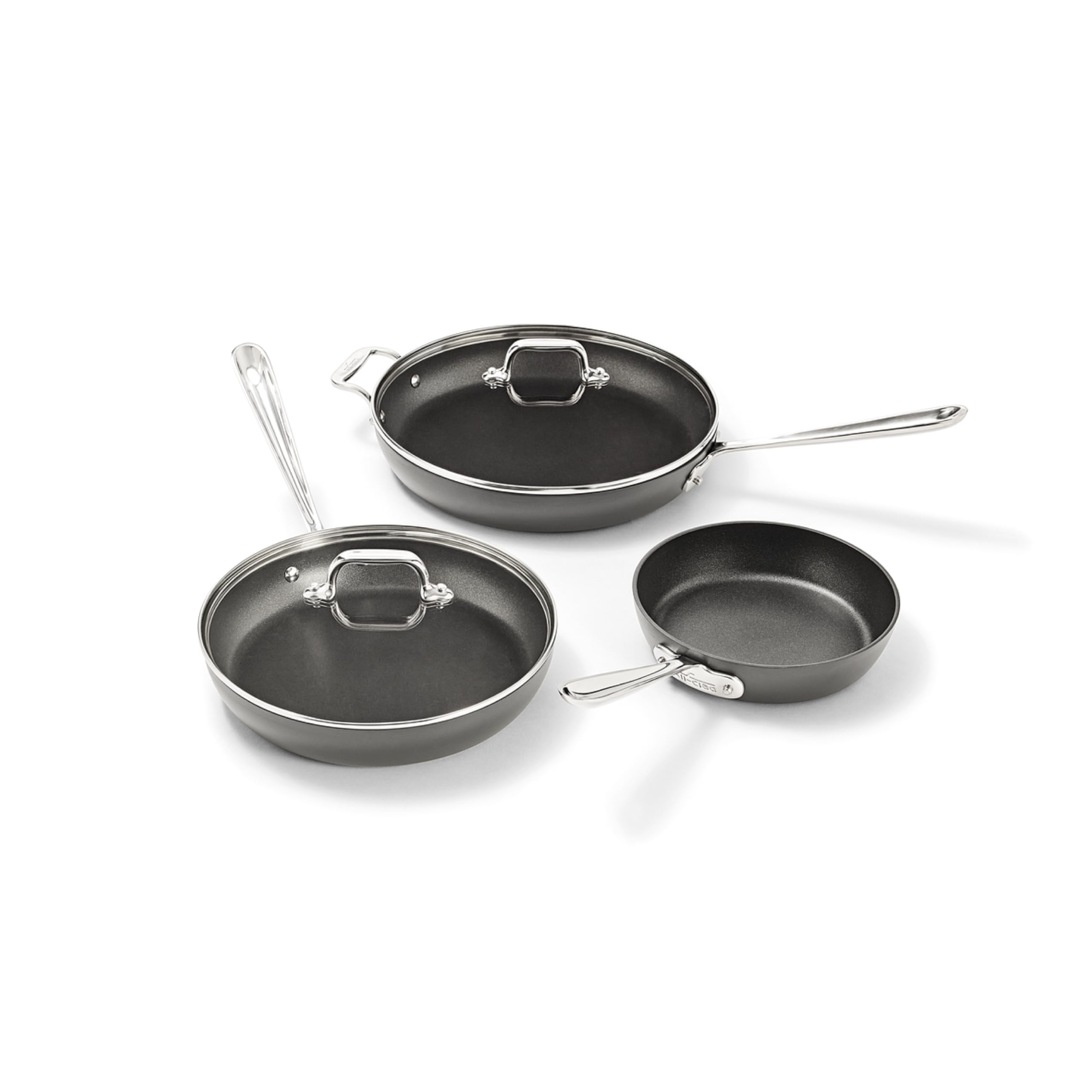
If you want one purchase that immediately upgrades your everyday cooking—and doesn’t feel like a “compromise set”—All‑Clad HA1 is the best balance in this list. It’s not trying to be trendy. It’s trying to be dependable: stable heat, a confident build, and a nonstick surface that rewards normal, reasonable care with consistent performance.
Where this set shines in real kitchens is the “weeknight rhythm.” The 10-inch is your everyday hero: eggs, sautéed vegetables, quick browns, a fast covered simmer with the lid on. The 12-inch is your crowd pan: chicken cutlets, stir-fries, pasta finishes, and anything where you hate overcrowding. The 8-inch is the quiet MVP for a single egg, toast-side bacon, or a small reheat where you don’t want to drag out the big pan.
Owners who cook a lot often say the same thing: the coating stays reliably nonstick when they avoid high heat abuse, skip metal tools, and don’t treat the dishwasher like a required step. That tracks with how long nonstick tends to stay at its best: the pan lasts longer when you respect heat, avoid abrasive storage, and clean it like you want it to keep performing.
One important “expert reality check” here: the shape is slightly straighter on the sides than a super-flared omelet pan. That’s fantastic for sauces and sautéing because you get more usable flat area. But if you want a pan that flips omelets like a French chef, you may add a dedicated shallow omelet pan later. As an overall set, though, HA1 gets the fundamentals right.
Why you’ll like it
- Even, controlled heat – Great for both gentle eggs and higher-temp browning without feeling twitchy.
- Feels “serious” in the hand – Not flimsy, not ultra-light; stable on the burner and easier to control.
- Smart size trio – The three sizes cover real daily needs instead of giving you duplicates you never use.
- Lids that make the pans more useful – Covered simmering, splatter control, faster finishing.
- Induction ready – A safe long-term choice if you cook on induction now or later.
Good to know
- Not the most “flippy” pan shape for classic omelets—great all-around, less specialized.
- Like all premium nonstick, it rewards care: medium heat and gentle cleaning keeps it slick longer.
- If your household is rough on cookware, a more scratch-forgiving hybrid may feel less stressful.
Ideal for: most households who want a premium nonstick setup that feels great every day and stays consistent when treated with basic common sense.
2. Circulon A1 ScratchDefense Set – The “Stop Babying Your Pans” Upgrade

Circulon A1 ScratchDefense is for a very specific kind of person (and kitchen): the one that’s tired of being told “just don’t use this tool, don’t stack it, don’t look at it wrong.” This set is built around a simple promise—extreme nonstick that’s engineered not to scratch easily— and the design choices reflect that mission.
In real life, the biggest advantage is psychological. When you don’t have to treat cookware like it’s fragile, you cook more. You reach for the pans without overthinking. You hand the spatula to someone else without panic. That’s what durability buys you: not just longevity, but ease.
Performance-wise, this set tends to feel stable and consistent because of the thick, edge-to-edge steel base and the overall “built to last” vibe. Owners who switch from cheaper nonstick often describe a familiar experience: food releases like it did on day one, cleanup stays easy, and the pan still looks newer longer because the exterior is built for stain resistance too.
Here’s the nuance: “metal utensil safe” is not a license to scrape like a caveman. It means the surface is built to tolerate normal metal-tool contact better than typical nonstick. You still get the best long-term results by cooking at sane temperatures and cleaning without aggressive abrasion. But if you want the most forgiving nonstick set in this guide, this is the one.
Why it stands out
- Scratch-forgiveness – Great for busy families, shared kitchens, and “real life” cooking habits.
- Reliable release over time – Owners often praise that it stays slick with frequent use.
- Dishwasher-friendly convenience – Practical for people who value speed and simplicity.
- Comfortable handles – Better grip and control, especially when the pan is full.
- Three-lid coverage – Each size gets a lid, which increases everyday usefulness.
Good to know
- Hybrid/hard-wearing builds can feel heavier—great for stability, less great for weak wrists.
- Even “dishwasher safe” pans can last longer with gentler cleaning; treat the dishwasher as optional, not mandatory.
- If you want the slickest egg-slide feel, classic nonstick may still feel slightly “easier.”
Ideal for: households that cook a lot and want the most forgiving, low-stress nonstick set—especially if multiple people use the cookware.
3. HexClad Hybrid 10-Inch + Lid – The “Sear Like Stainless, Clean Like Nonstick” Workhorse
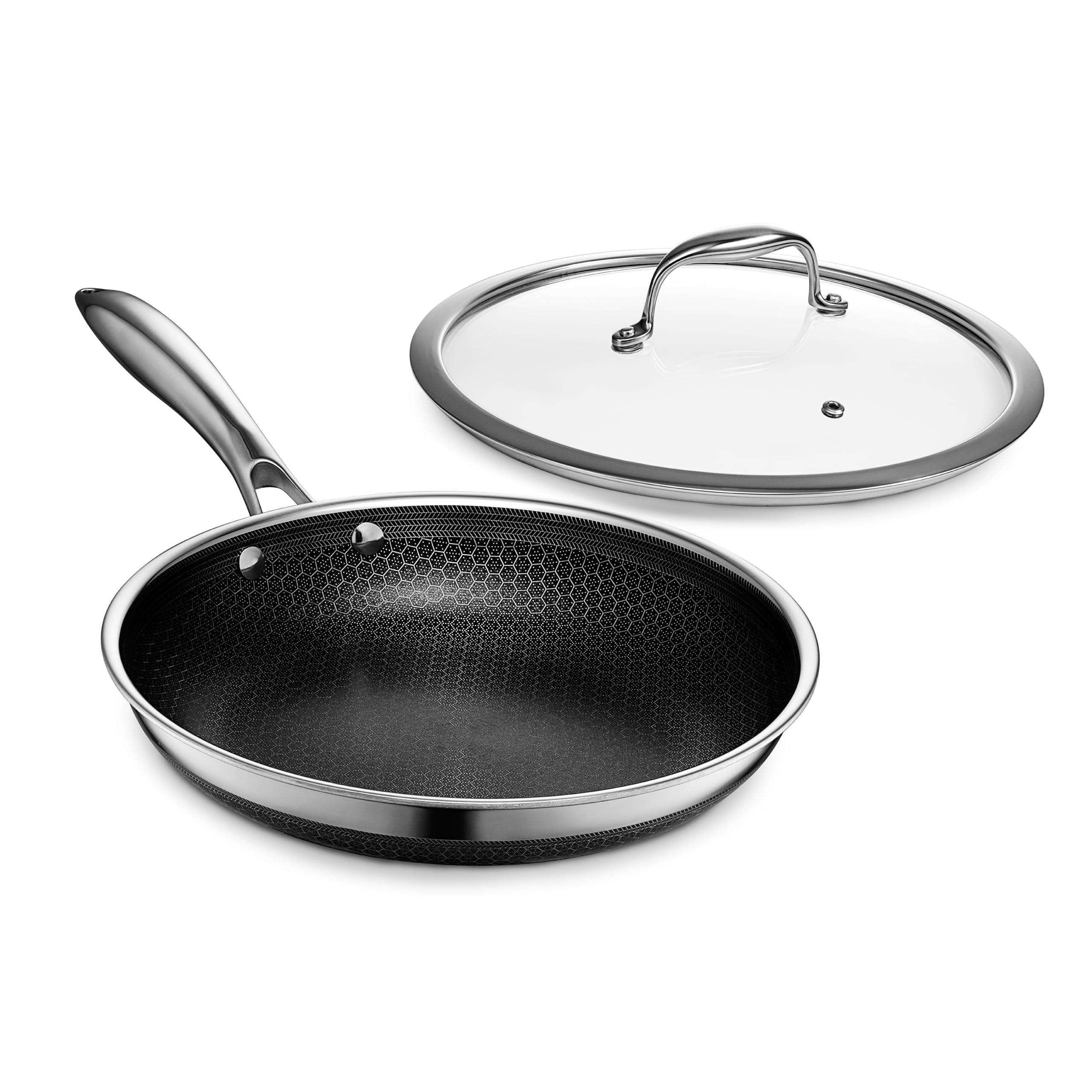
HexClad is famous because it solves a real problem: many people want the browning and deglazing power of stainless steel, but they don’t want the cleaning drama. The hybrid design—raised steel “ridge” pattern with nonstick valleys—creates a pan that can sear more confidently than most classic nonstick while still cleaning up far more easily than fully bare stainless.
The most important thing to understand before buying: this is not the same experience as a super-slick PTFE pan on day one. Owners often report a short “learning curve.” Eggs may stick the first couple of uses if you don’t preheat properly, use medium heat, and add a small buffer of fat. Then the pan starts to feel better and better as it breaks in and you understand its rhythm. That rhythm usually looks like this: preheat on medium, add a little oil, let food release naturally, and clean without stripping the surface.
Where HexClad becomes addictive is steak night, chicken thighs, burgers, and any meal where you want a hard sear, then a quick deglaze or sauce. That hybrid surface gives you better browning than most pure nonstick, and the lid lets you finish gently or trap heat for faster cooking. It’s also a strong option for induction users who want a pan that feels stable and responsive.
This is the pan for cooks who actually like cooking—people who enjoy dialing heat, building fond, and getting restaurant texture— but still want a practical cleanup and a skillet they can use daily.
Why it’s worth it
- Better browning – Great for steaks, crispy proteins, and deglazing.
- Hybrid durability – Raised pattern helps protect the surface from day-to-day tool contact.
- Easy cleanup for what it can do – Deglaze, wipe, and wash without the usual stainless struggle.
- Induction ready – Strong option for modern cooktops.
- Lid included – Useful for covered finishing and moisture control.
Good to know
- Not a “magic egg pan” on day one—technique matters, especially for delicate eggs.
- Best performance often comes from medium to medium-high heat, not blasting max heat.
- If your cooking style is purely low-heat eggs and pancakes, a classic slick nonstick may feel easier.
Ideal for: home cooks who want a skillet that sears confidently, cleans easily, and feels like an upgrade in both performance and durability.
4. KitchenAid Hard Anodized Induction Set (10″ & 12.25″ + Lids) – Two Sizes You’ll Actually Use
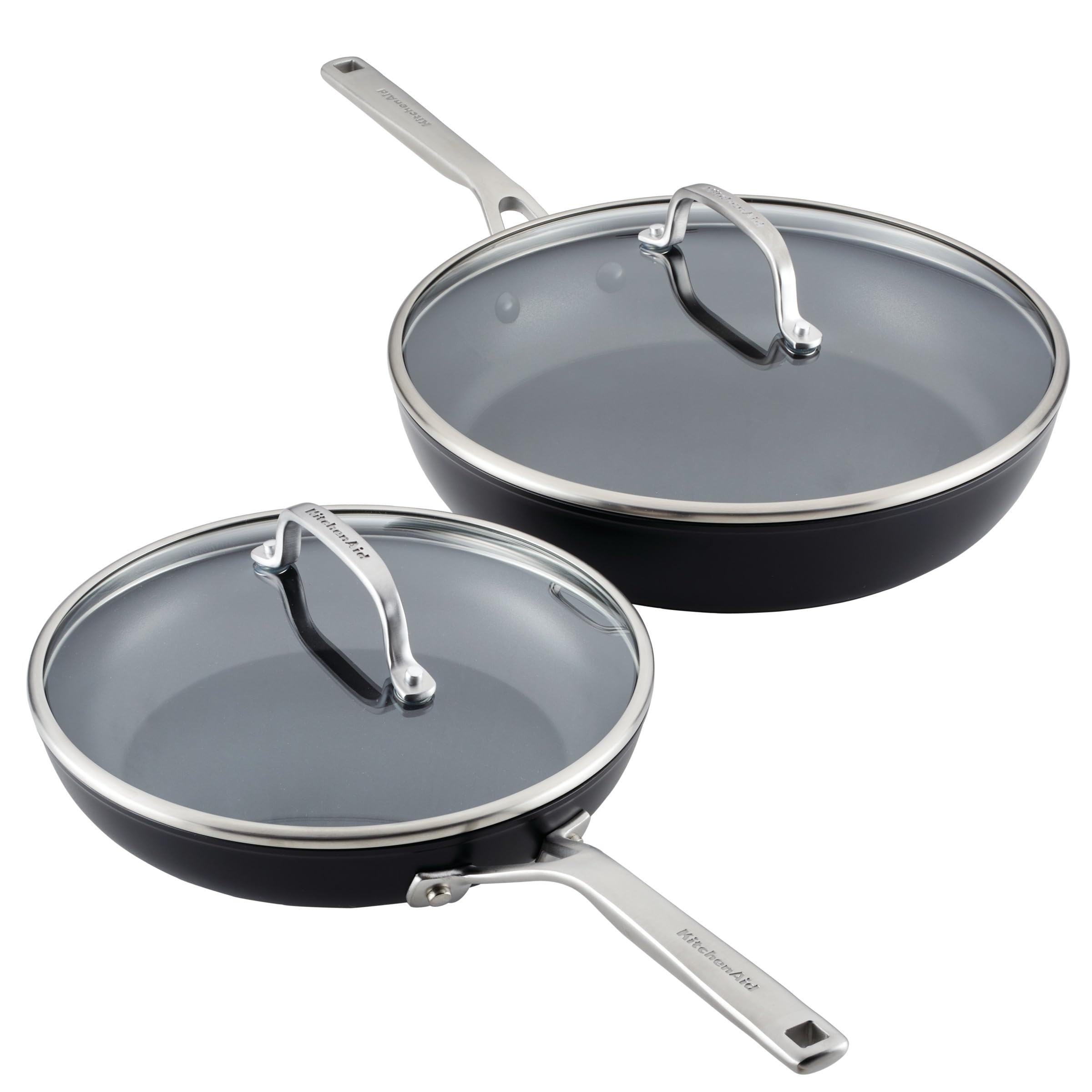
This KitchenAid set is the “two-pan strategy” done right: a medium pan and a large pan, each with its own lid, designed to cover real daily cooking. It’s a great choice if you don’t want a huge set—you want the sizes you’ll reach for constantly.
Owners consistently praise two things: the nonstick performance (especially for eggs and sandwiches) and the even heating from the thick forged base. That base matters more than most people realize. Thin pans don’t just cook unevenly—they force you to compensate with more oil, more stirring, more attention, and more cleanup. A stable base makes food behave.
The tempered glass lids are genuinely useful: they lock in heat for gentle finishes and keep your stove cleaner. But there’s one “real life” complaint that shows up: some people notice lid scratching earlier than expected even with careful use. This usually isn’t a “defective lid” story—it’s a storage story. Glass lids scratch when they rub against other cookware or abrasive surfaces. The fix is boring but effective: store lids with a soft barrier (felt, a towel, or a pan protector) and avoid stacking glass-on-glass.
Where this set really wins is practical versatility. You can do a quick weekday breakfast in the 10-inch, then move to the 12-inch for dinner: seared chicken, sautéed vegetables, then cover with the lid to finish. It’s a clean workflow that makes cooking feel simpler.
Why people love it
- Even heating base – More consistent browning and fewer “hot spot” headaches.
- Strong nonstick release – Especially praised for eggs and low-oil cooking.
- Two perfect everyday sizes – No filler pans you never use.
- Rivet area treated for easier release – Less gunk sticking around hardware.
- Oven-ready flexibility – Great for stovetop-to-oven finishing (lid limits still matter).
Good to know
- Some users report lid scratches sooner than expected—storage protection helps a lot.
- As with most nonstick, medium heat habits preserve performance longer.
- If you want a full set of sizes, look at All‑Clad HA1 or Circulon A1 for broader coverage.
Ideal for: cooks who want a high-quality, everyday 10″+12″ combo with lids and a stable base that makes nonstick feel effortless.
5. KOKHUB Titanium Ceramic Tri-Ply Set (8″, 10″, 12″ + Lids) – No Rivets, Strong Sear, Easy Cleanup
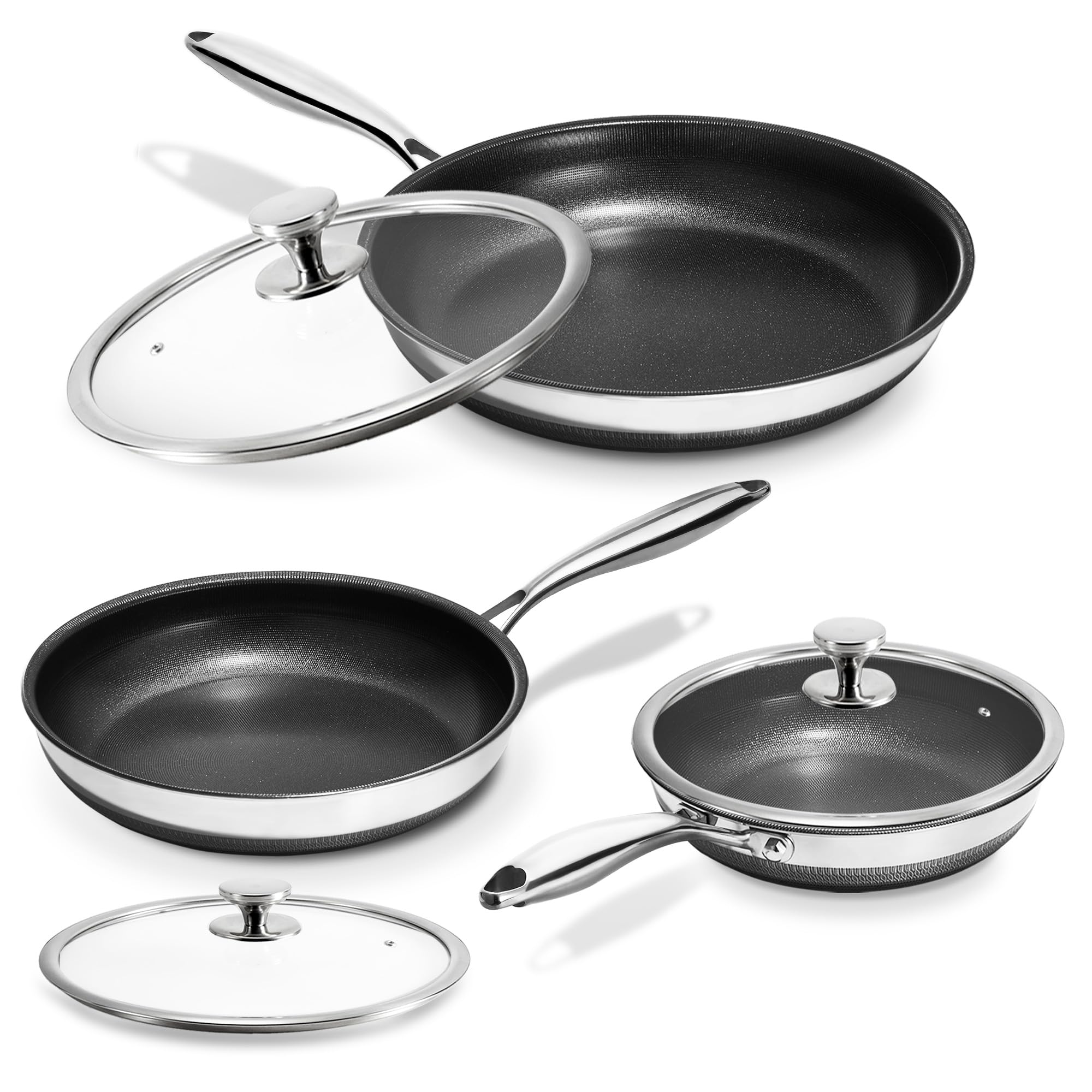
KOKHUB is a standout because it blends three things most people rarely get in the same box: a tri‑ply style build for more stable heat, a ceramic-forward nonstick direction that appeals to people avoiding certain coatings, and a design detail that instantly improves daily life: no rivets inside the cooking surface.
That rivetless interior is a bigger deal than it sounds. Rivets are where sauces burn on, where egg residue hides, and where sponges snag. A smooth interior means faster cleanup and fewer “why is this pan suddenly sticky?” moments caused by gunk buildup around hardware.
Owner feedback highlights the “surprise factor” here: people expect textured surfaces to stick, then find that the lotus-leaf style micro-texture actually releases food well when used properly. Another theme is balance. These pans are substantial enough to feel durable, but not so handle-heavy that they tip or feel awkward on the stove.
One practical note: some buyers mention assembly (handles and lid knobs). It’s not hard, but it’s worth doing slowly the first time so everything feels tight and solid. After that, the set behaves like a premium daily driver—especially if you cook a mix of eggs, sautéed vegetables, and seared proteins.
Why it’s a smart pick
- No interior rivets – Easier cleaning, fewer stuck-on “ring” stains.
- Tri-ply heat stability – More consistent browning and less temperature drama.
- Great lid coverage – Covered cooking becomes a real feature, not an afterthought.
- Feels durable without being absurdly heavy – A good “daily rotation” weight.
- Non-toxic direction – Appeals to cooks who prioritize specific coating preferences.
Good to know
- Textured ceramic performs best with medium heat and a little oil—extreme high heat can reduce slickness over time.
- Assembly is required (handles/knobs); do it carefully once and you’re set.
- If you want the slickest eggs possible with the least technique, classic nonstick may still feel easier.
Ideal for: health-conscious cooks who still want a strong, stable pan build, love the idea of a rivet-free interior, and cook a mix of sauté + sear meals.
6. imarku Cast Iron Honeycomb Set (10″ & 12″ + Lids) – Heat Retention Without the Sticky Stress

This set is for people who love what cast iron does to food—crispy edges, stable heat, consistent browning— but don’t want the full cast iron maintenance lifestyle. The honeycomb texture is designed to reduce sticking and distribute oil more evenly, which helps you get “cast iron vibes” with less effort.
Real owners often describe two things at once (and both can be true): it’s heavier than aluminum nonstick, but it’s not nearly as heavy as traditional cast iron. That middle weight is exactly the point. It gives you better heat retention and stability, so food browns more predictably and the pan doesn’t feel flimsy on high-heat cooking days.
This is also a surprisingly strong fit for induction users. Many people switch to induction and suddenly realize their “induction ready” aluminum pans don’t heat as evenly as expected. A more iron-forward skillet tends to feel more uniform and confident on induction—especially once you learn to preheat gently and let the pan come up to temperature instead of blasting it from cold to max.
One expert tip: treat this like a “hybrid cast iron,” not like disposable teflon. Even if it’s marketed as easy-care, you’ll likely get better results by drying it well after washing and keeping a light oil film if the care instructions recommend it. That tiny habit often makes the coating feel better over time and reduces the chance of surface dulling.
Why it’s a winner
- Heat retention and stability – Great for browning meats and maintaining consistent heat.
- Honeycomb texture helps release – Food slides more easily than you’d expect from “cast iron style.”
- Lids included – Covered cooking becomes part of the strategy, not an accessory.
- Induction-friendly performance – Many users report better “true induction” cooking feel.
- Feels like an upgrade – Premium build and presentation (great gift factor too).
Good to know
- Heavier than basic nonstick—two hands for the big pan is normal.
- Best longevity comes from gentle cleaning and storage protection (avoid rough stacking).
- If you want ultra-light “flip the pan with one wrist,” choose a lighter aluminum nonstick instead.
Ideal for: cooks who want cast-iron-like results with less stick and easier cleanup, especially on induction.
7. SENSARTE 12″ Deep Frying Pan (5 Qt) + Lid – The One-Pan Meal Machine

If you’re the kind of cook who constantly wishes your skillet had “just a little more height,” this is your pan. A deep skillet with a lid can replace multiple pieces of cookware: sauté pan, shallow fryer, even a small braiser. And SENSARTE’s deep-pan design is popular because it makes that upgrade accessible without feeling flimsy or cheap.
Owners love it for exactly the meals that stress a normal skillet: fried chicken, one-pan pasta finishes, stir-fry that would normally fling sauce everywhere, or anything that needs simmering with the lid on. The helper handle matters too—this isn’t a marketing detail. When a pan is full, the second grip changes how safe and controlled it feels.
The coating performance is usually described as strong and easy to clean, especially because the interior avoids rivets that catch food. That “no rivets” detail shows up in a lot of happy reviews because it changes cleanup time in a very real way: you wipe and you’re done, instead of scrubbing around metal bumps.
A real-world note to consider: a few users mention lid fit variance—some lids don’t drop into place as snugly as expected. That can happen with glass lids across many brands, but it’s worth checking when you unbox: does it sit flat, does it rattle, does steam leak heavily? If it’s a perfect fit, you’ll love it; if it’s a “meh” fit, it still cooks fine, but it won’t feel as premium.
Why it’s so useful
- Deep walls + lid – Better for sauces, splatter control, and one-pan meals.
- Helper handle – Makes lifting and pouring safer when full.
- Very easy cleanup – No rivets inside means fewer stuck-on traps.
- Heats evenly – A common owner compliment for daily cooking consistency.
- Versatile cooking range – Sauté, simmer, fry, braise, steam—one pan covers a lot.
Good to know
- Deep pans can feel bulky in small sinks—handwashing is still easy, but space matters.
- Some units may have less-than-perfect lid fit; check immediately on arrival.
- When full, it’s naturally heavier—use the helper handle like it’s there for a reason.
Ideal for: anyone who cooks saucy meals, fries often, or wants one pan that can handle “dinner for the whole house” with the lid on.
8. OATOFP Hybrid Skillet Set (8″ + 10″ + 12″ + 2 Lids) – Edge-to-Edge Hybrid for Full Coverage Cooking
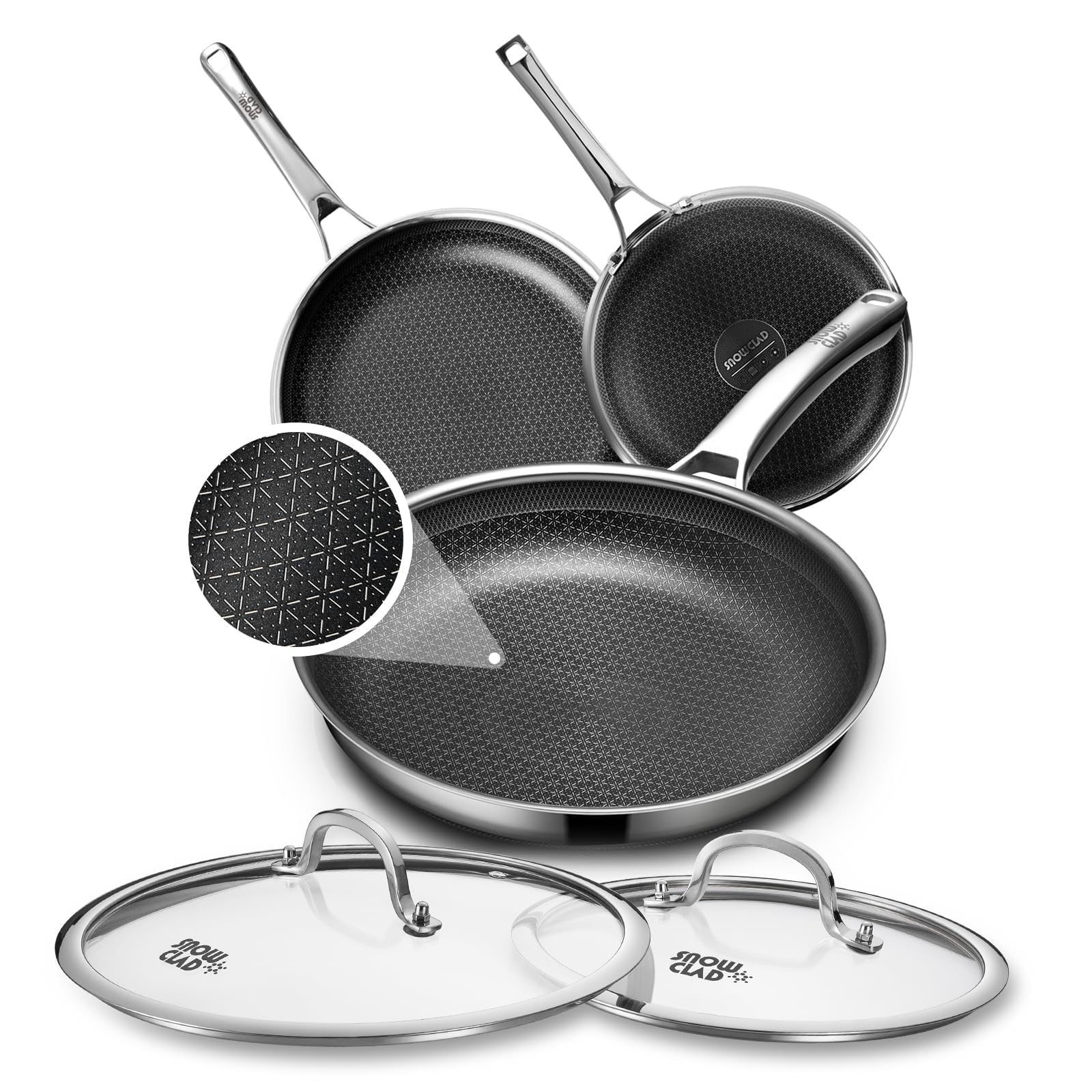
Hybrid sets can be tricky. Some brands give you a hybrid pattern only on the “flat center” and leave the edges behaving differently, which makes cooking feel inconsistent. This set’s big promise is that the hybrid surface extends all the way to the rim, so the pan behaves more uniformly from center to edge. That matters for real cooking, especially sauces and stir-fries that climb the walls.
Owners often describe these pans as looking more premium in person than photos suggest—shiny stainless presence, sturdy feel, and surprisingly good food release once you learn the heat rhythm. That last part is key: hybrid cooking is a relationship with temperature. If you throw eggs into a cold pan, you’re going to think it “lies.” If you preheat gently, add a small amount of oil, and let the food release naturally, it starts to feel like a best-of-both-worlds setup.
Where this set is especially useful is “coverage.” A small pan for quick tasks, a medium for daily meals, and a large for family cooking. And because you get lids, you can actually use these pans for covered techniques: steam vegetables, finish chicken, or trap moisture for gentle fish. That makes a set like this far more than “three frying pans.”
Durability is the question most buyers have with newer-brand hybrid sets, and that’s fair. The good news is that early review patterns tend to focus on strong nonstick behavior and easy cleaning. The best way to protect your investment is simple: medium heat, avoid thermal shock, and store with separators so the pattern doesn’t grind against other cookware.
Why it’s compelling
- Edge-to-edge hybrid surface – More consistent behavior than “center-only” hybrids.
- Three useful sizes – Covers daily cooking without redundancy.
- Hybrid browning advantage – Better sear potential than ultra-slick nonstick.
- Cleanup stays easy – Hybrid design often wipes clean when used with proper heat.
- Dishwasher-friendly option – Helpful for busy households (handwashing can still extend life).
Good to know
- Hybrid pans perform best with preheat + a little oil; treat that as part of the design, not a flaw.
- Newer brands have less long-term reputation than All‑Clad or T‑fal—use care to maximize lifespan.
- If your top priority is ultra-slick eggs with zero technique, classic nonstick may feel easier.
Ideal for: shoppers who want hybrid benefits across three sizes, cook a mix of sear + simmer meals, and value a set that behaves consistently to the rim.
9. Tibbicc 12″ Hybrid Stainless Skillet + Lid – The “One Big Pan” Strategy Done Right
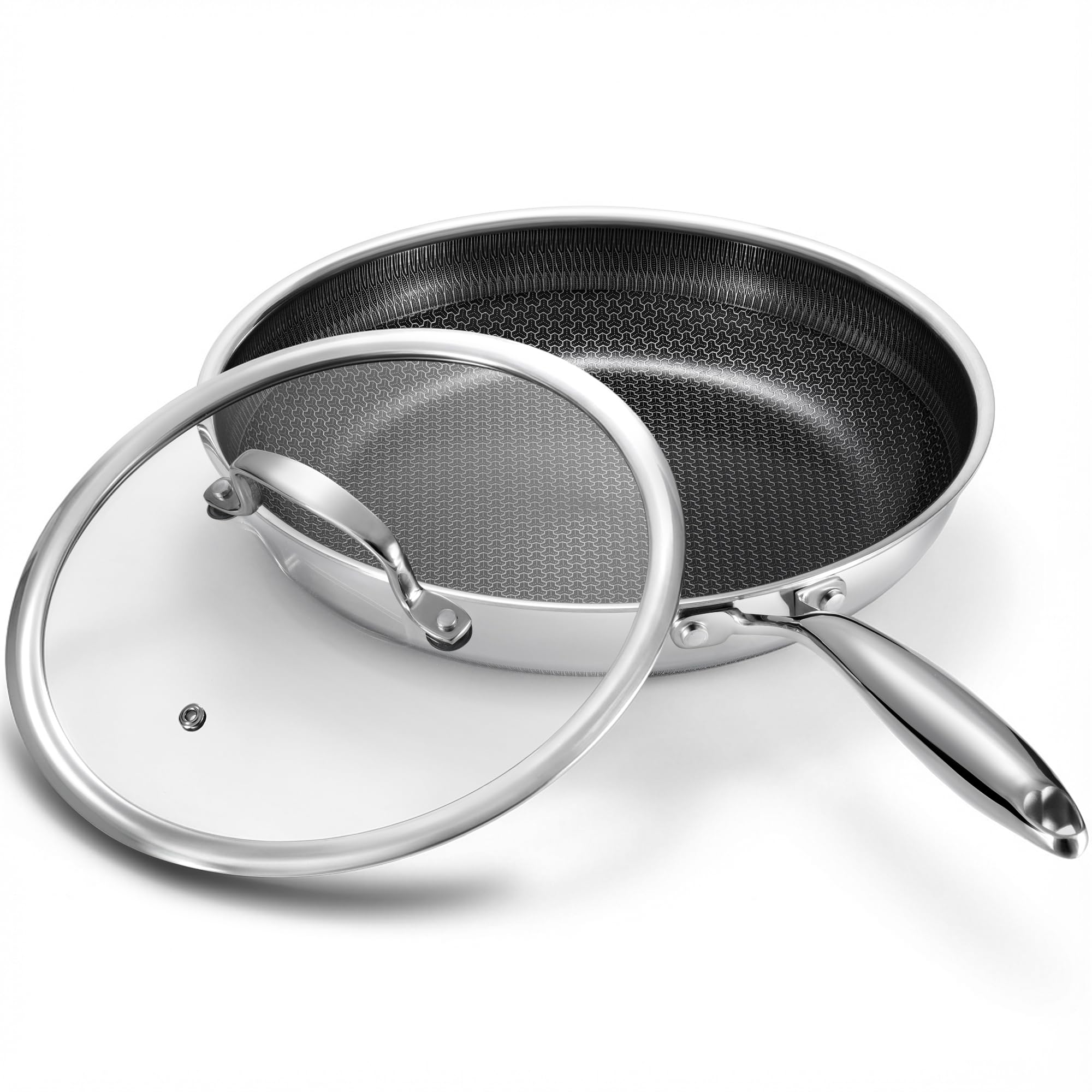
Some people don’t want a set. They want one pan that can carry most of their cooking—and they want it to come with a lid so it’s actually versatile. That’s the sweet spot for this Tibbicc 12-inch hybrid skillet.
The tri-ply construction matters here because 12-inch pans can be frustrating when they’re thin: they develop hot spots, they warp, and the center cooks differently than the edge. A more stable build makes a big skillet feel predictable. That predictability is what makes weeknight cooking easier—especially when you’re cooking multiple portions.
Owners often highlight the same combo: even heat, easy release with minimal oil, and the “wipe-clean” effect after cooking. But I love one specific detail in the way this brand frames usage: it explicitly pushes low-to-medium heat and gives a simple preheat test (water droplet behavior). That’s not marketing fluff. That’s how hybrid surfaces perform best. When you follow that rhythm, eggs and vegetables glide, proteins sear better, and cleanup stays easy.
The lid turns this into a more complete tool. You can cover to finish chicken without drying it out, trap heat to melt cheese without scorching, or simmer sauces without splattering your stove. That lid is the difference between “just a skillet” and “a pan you can actually build meals in.”
Why it earns a spot
- True one-pan potential – A big skillet that can handle most meals.
- Heat guidance that improves results – Medium heat habits make hybrid pans shine.
- Even heating – Big plus for family meals and multi-portion cooking.
- Easy cleaning – Often wipes clean when you deglaze and wash gently.
- Lid included – Unlocks covered finishing and simmering.
Good to know
- Hybrid pans are “nonstick with rules”: preheat, use a little oil, and don’t crank max heat constantly.
- Bigger pans feel heavier—if you flip food by wrist, you’ll notice it.
- For tiny meals, you’ll still want an 8-inch pan eventually (like USELUCK).
Ideal for: cooks who want one big, capable skillet with a lid—especially if you cook for family and like the hybrid browning advantage.
10. Yonida 12″ Hybrid Nonstick Skillet + Lid – Big Meals, Better Browning, Easy Cleanup
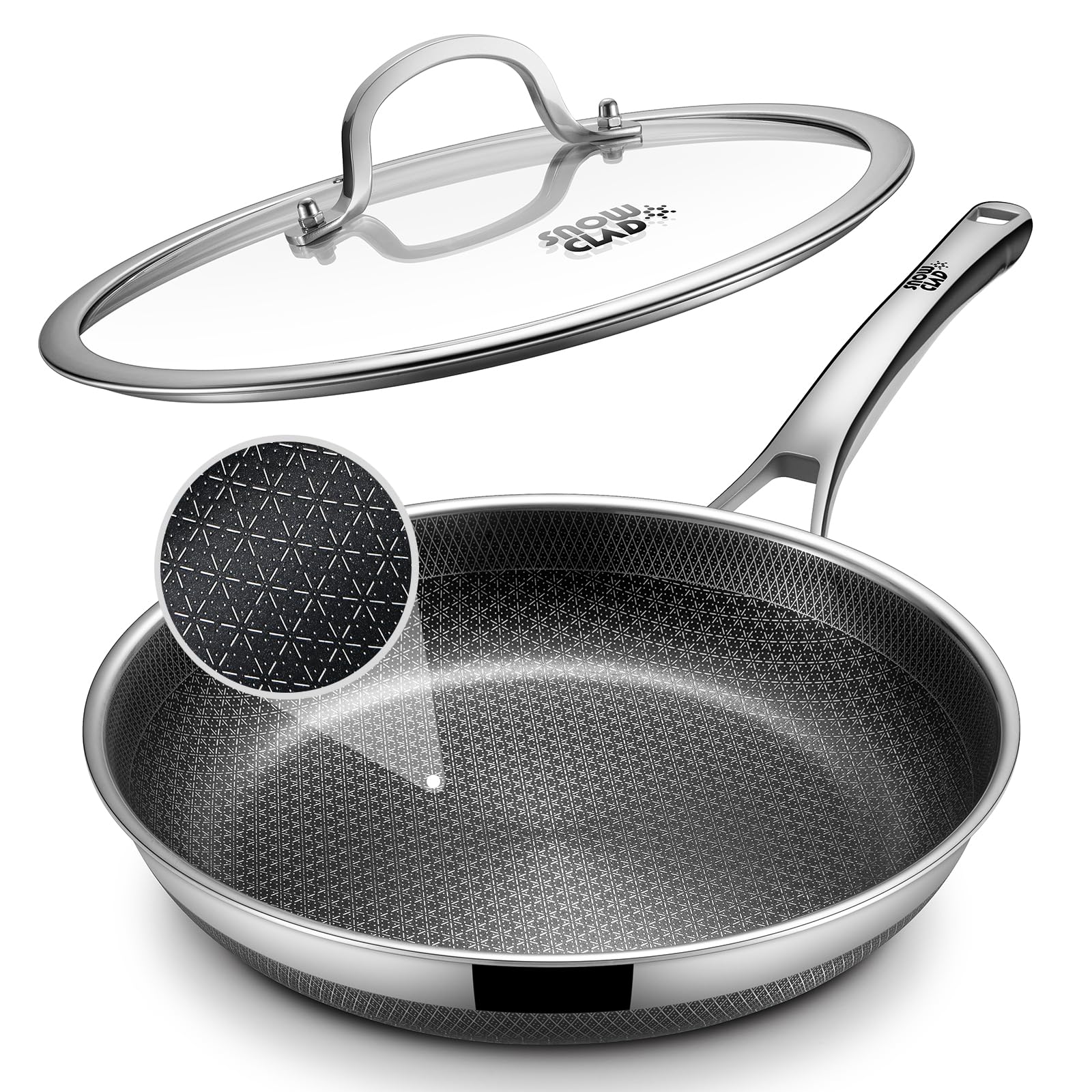
The Yonida 12-inch hybrid skillet is the kind of pan people buy when they’re trying to solve a specific pain: “I want to cook bigger meals and get better browning… but I don’t want food to glue itself to stainless steel.” Hybrid designs exist for that exact reason, and this one leans into the practical details that make hybrids feel more consistent.
One of the best design choices here is extending the hybrid surface to the rim. In real cooking, you don’t just cook on the flat center—you push food up the sides, you reduce sauces, you toss vegetables. When the pan behaves consistently edge-to-edge, you get fewer “why is this sticking only on the side?” surprises.
Owner feedback tends to highlight a few themes: solid weight (feels higher-end than expected), reliable heat distribution, and easy cleanup. Many people also note that the lid fits snugly, which matters more than most shoppers realize. A snug lid means better moisture control and less splatter—especially if you cook saucy meals or do a lot of covered finishing.
My expert take: if you’re buying a hybrid pan at this tier, your success is mostly technique. Treat it like a professional surface: preheat, add oil, don’t crowd food, and let it release naturally. Do that and you’ll get a skillet that can replace multiple “specialty” pans in your routine.
Why it works
- Edge-to-rim hybrid surface – More consistent cooking behavior.
- Great for family meals – Big enough for proteins + sides in one go.
- Better browning than typical nonstick – Hybrid texture helps build color.
- Lid included – Great for covered finishing and simmering.
- Easy cleaning routine – Deglaze + wipe often keeps it looking sharp.
Good to know
- Hybrid performance is strongest with medium heat and a small oil buffer.
- Not as “slick” as pure nonstick for eggs if you don’t preheat properly.
- If you prefer super lightweight cookware, this will feel more substantial.
Ideal for: cooks who want a big hybrid skillet with a lid for family meals, and who appreciate better browning without the stainless cleanup hassle.
11. FogDream 10″ Honeycomb Stainless Skillet + Lid – Small, Sharp, Surprisingly Premium
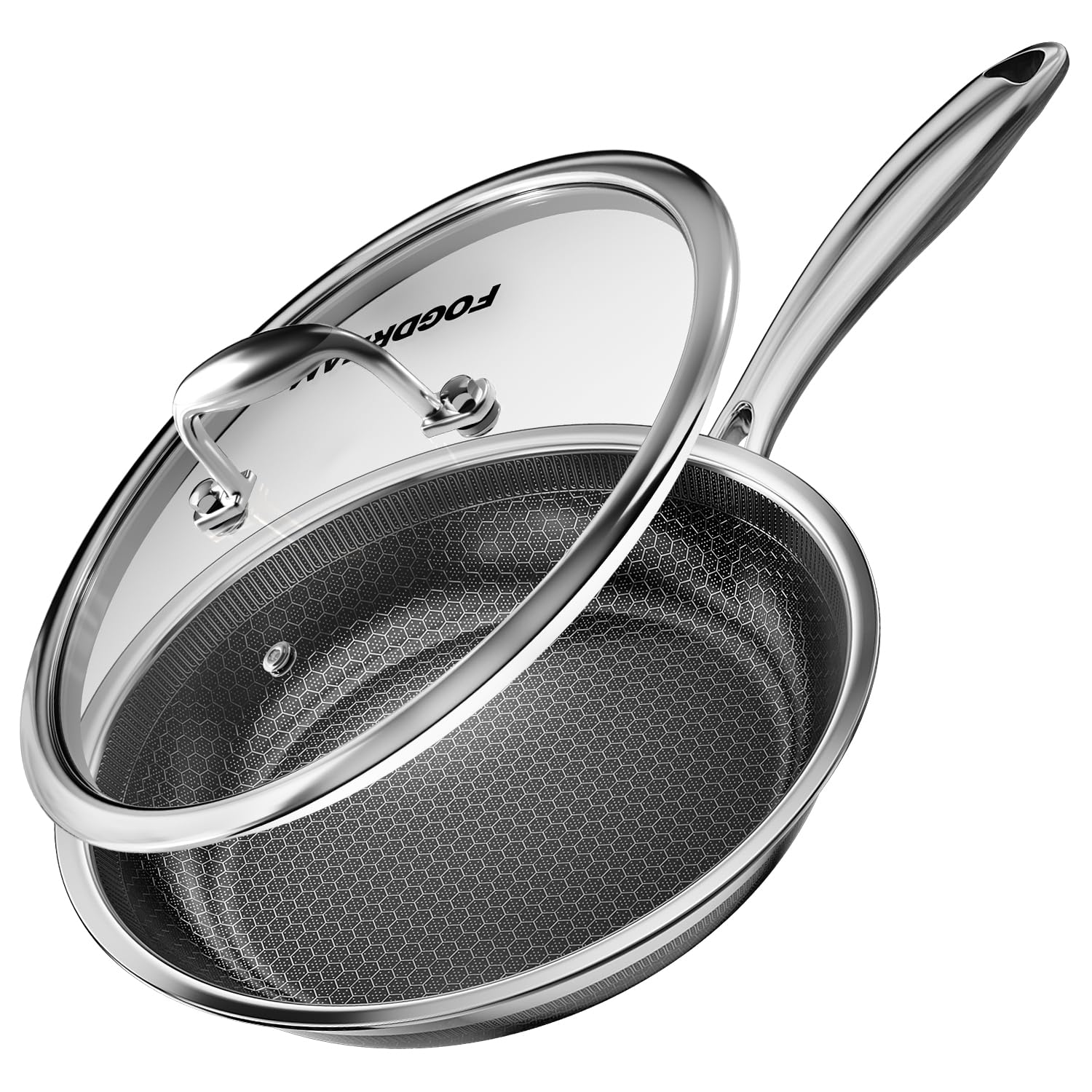
This is a great example of why you shouldn’t ignore smaller brands automatically. FogDream’s 10-inch honeycomb skillet delivers a lot of what people want from the “famous hybrid pan concept”: more searing capability than ultra-slick nonstick, easier cleaning than bare stainless, and a lid that expands what you can cook.
Real owners talk about three standout points: even heating from the tri-ply-style construction, strong nonstick behavior with minimal oil, and a surprisingly premium feel for a pan in this tier. The lid gets praise because many 10-inch pans don’t include one, and a snug lid is genuinely useful for melting, simmering, and finishing.
The best way to understand this pan is to think “nonstick is relative.” If you want to cook eggs with zero fat and zero technique, that’s not how most hybrid/honeycomb surfaces shine. But if you’re willing to use a tiny bit of oil, keep heat at medium, and let food release naturally, you’ll get great daily performance. Owners who do that often describe it as becoming a go-to pan for eggs, salmon, and quick meals.
One practical note you’ll see in reviews: some units ship with assembly steps (usually handle or lid knob). It’s simple, but if you hate assembling anything, know that upfront. Once it’s assembled, it behaves like a normal pan.
Why it’s a sleeper hit
- 10-inch sweet spot – The most-used size for many households.
- Honeycomb browning advantage – Better texture on proteins than super slick pans.
- Lid included – Useful for covered finishing and splatter control.
- Easy cleanup – Often wipes clean fast after cooking.
- Premium feel – Owners often say it looks and feels more expensive than expected.
Good to know
- Hybrid-style pans still prefer medium heat + a little fat for best “nonstick” behavior.
- Assembly may be required; do it carefully once.
- If you use harsh abrasives, any coating will degrade faster—gentle cleaning wins long-term.
Ideal for: cooks who want a daily 10-inch pan with a lid, like the hybrid browning advantage, and want strong value without jumping to premium pricing.
12. USELUCK 8″ Honeycomb Skillet + Lid – The Everyday Egg + Quick Sear Specialist
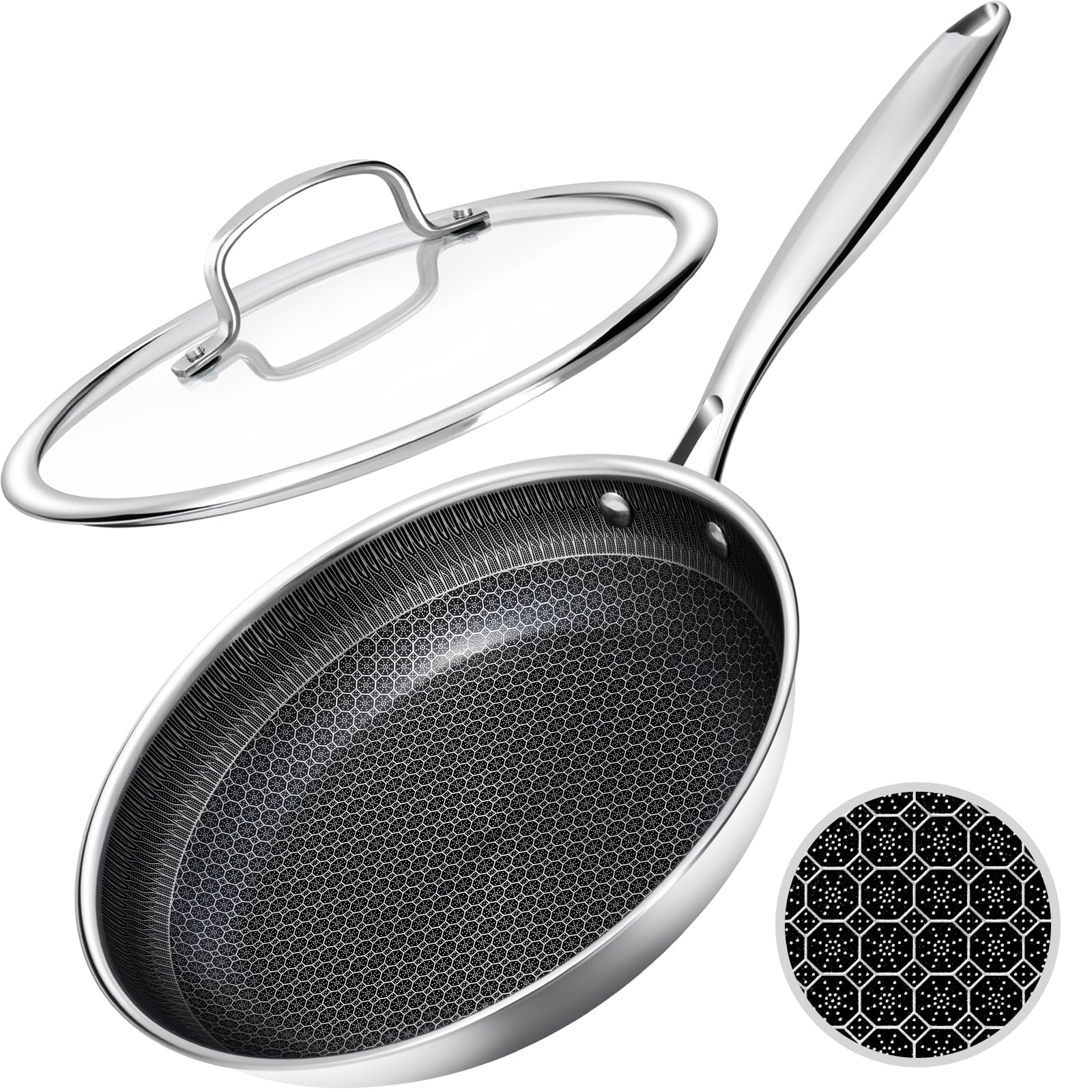
If you cook for one or two, an 8-inch pan can be more useful than a big skillet because it heats quickly, uses less oil, and is easy to wash. What makes this USELUCK pan special is that it includes a lid and uses a honeycomb surface that bridges the gap between stainless and nonstick.
Owners love it for daily egg dishes, sautéed vegetables, grilled sandwiches, and quick protein sears. They also highlight a very realistic performance detail: it behaves best at controlled temperatures. Used at the recommended medium range, food releases easily and browning looks great. Crank it to high, and you’re more likely to burn food before the coating can “do its job.” That’s not a failure—it’s how many hybrid/honeycomb designs work best.
The lid is a big value add. Many small pans skip lids entirely, but a lid is exactly what turns a small skillet into a versatile tool: you can steam vegetables, melt cheese without scorching, or cover to finish thicker omelets. It also reduces splatter, which makes the pan feel cleaner in daily use.
One expert tip: because small pans heat fast, preheating is a bigger deal. Give it a minute on medium heat, add a small amount of oil, and then cook. That simple rhythm tends to produce the “wow, this is really nonstick” experience people praise in reviews.
Why it’s a smart small-pan pick
- Perfect daily size – Eggs, small portions, quick meals.
- Lid included – Unusual for 8-inch pans and very useful.
- Induction compatible – Great for modern kitchens.
- Honeycomb texture browns better – More “real cooking” texture than typical slick pans.
- Easy maintenance – Quick wash, quick dry, easy storage.
Good to know
- Stick to medium heat for best results—high heat can reduce nonstick performance fast.
- Use silicone/wood tools to preserve coating longer, even if the surface feels tough.
- If you cook for four regularly, you’ll want a bigger pan alongside this.
Ideal for: small-household cooking, egg lovers, and anyone who wants a compact pan with a lid for everyday quick meals.
13. T-fal Ultimate Hard Anodized 10″ + Lid – The “Reliable Workhorse” That’s Been Proving Itself for Years

T-fal earns its reputation the old-fashioned way: by being the pan people rebuy after they wear one out. And that’s actually a compliment. When someone uses a pan hard for years, then buys the same one again, it means the pan delivered the kind of consistent daily performance people want from nonstick.
The Ultimate series is built to feel more substantial than bargain cookware. Owners often mention the weight and thickness—this is not a flimsy thin pan—and the deep sides that make it feel more like a sauté pan than a shallow skillet. That depth, combined with the lid, makes it good for simple stews, saucy sautéing, and covered finishes.
One of the signature features is the Thermo-Spot indicator, designed to help you preheat consistently. Some people love it. Some people shrug and cook by feel. My expert take: the concept matters more than the dot. Consistent preheating is how you reduce sticking and get better browning. If the indicator helps you build that habit, great. If not, just use medium heat and give the pan time to come up to temperature.
Where owners sometimes nitpick is lid behavior: some report noises under steam, lid trim shifting, or the lid handle getting hotter than expected. That’s not universal, but it’s worth knowing. If you cook covered frequently, keep an oven mitt nearby and treat the lid like it might get warm. The pan performance itself is the reason people keep recommending it: “nothing sticks,” fast cleanup, and solid heat distribution for everyday meals.
Why it stays popular
- Proven everyday performance – Many owners use it for years and rebuy.
- Deep sides + lid – More versatile than a shallow skillet for sauces and covered cooking.
- Easy cleaning – Often wipes clean with minimal effort.
- Stable base – Less warping and more consistent heat than cheap pans.
- Budget-friendly upgrade – Feels more premium than its category suggests.
Good to know
- Not induction compatible—important if you use induction.
- Rivets can collect residue; keep a soft brush for quick cleaning around them.
- Lid handle heat varies; assume it can get hot during steaming.
Ideal for: cooks who want a reliable, affordable hard‑anodized pan with a lid for daily use (especially on gas/electric stoves).
14. Blue Diamond 12″ Ceramic Skillet + Lid – Big Batch Cooking with a PFAS/PTFE-Free Direction

Blue Diamond is popular because it makes ceramic nonstick feel accessible and fun—bright look, easy cleanup, and a coating direction many people prefer. This 12-inch version with a lid is especially useful if you cook big meals: pancakes for the family, sautéed vegetables for meal prep, or a big one-pan dinner.
Owners often rave about the “new pan feeling”: food slides, cleanup is quick, and the pan heats fast. That fast heating is a strength, but it’s also where technique matters. Ceramic nonstick tends to perform best when you avoid extreme high heat and use a light amount of oil—especially for eggs. Some owners who expected “zero oil egg magic” feel disappointed when eggs stick unless they add oil. That’s not a brand-specific flaw; it’s a realistic ceramic behavior pattern. If you cook with that in mind, you’ll be happy.
The lid is a genuine advantage because ceramic pans are often used for quick meals where splatter is the enemy. Covering helps you melt cheese, trap heat for faster finishing, or gently cook fish without drying it out. And glass lets you monitor without opening, which keeps the heat stable.
One important note: this is not for induction. If you have induction, look at induction-ready hybrids or hard-anodized sets in this guide instead. But for gas/electric/ceramic glass tops, this can be a great “high performance for the money” ceramic choice.
Why it’s a strong ceramic option
- Quick heating – Great for fast meals and weeknight cooking.
- Easy cleanup – Often wipes clean quickly with minimal scrubbing.
- Lid included – Better splatter control and covered finishing.
- Good for big batches – 12-inch size helps prevent overcrowding.
- Non-toxic direction – Appeals to ceramic-focused shoppers.
Good to know
- Not induction compatible—double-check your stove type.
- Ceramic likes medium heat; high heat can reduce nonstick behavior over time.
- For eggs, a small amount of oil usually improves results dramatically.
Ideal for: shoppers who want a ceramic nonstick skillet with a lid for big meals—especially on gas or electric stoves.
15. SENSARTE 10″ Deep Skillet (3.5 Qt) + Lid – Small Footprint, Big Utility

This pan is a great example of “smart design beats fancy branding.” It’s a deep skillet with a lid—meaning it can do more than a typical 10-inch fry pan—and it focuses on the details that make daily cooking easier: a comfortable stay-cool handle, a glass lid for visibility, and a shape that supports simmering and shallow frying without splashing everywhere.
Owners often describe it as the perfect size for one-dish meals (think quick pasta finishes, sauté + simmer dinners, or breakfast scrambles) without taking over the stove. The nonstick performance is generally praised, and cleaning is frequently described as fast and painless, especially because there are no interior rivets trapping residue.
A nuanced detail shows up in reviews: a slight doming on some units, where oil drifts outward a bit. That can happen with many pans and is sometimes so minor you barely notice. If you cook with a small amount of oil and move food around, it typically won’t ruin your experience—but if you’re extremely sensitive to perfectly flat interiors, it’s something to be aware of.
The pour spouts are another “real-life” win. Draining grease or pouring sauce without making a mess feels small until you do it twice a week. Then it becomes one of those features you miss when you don’t have it.
Why it’s a great value
- Deep pan versatility – Better than a shallow skillet for saucy meals and splatter control.
- No interior rivets – Easier cleaning and fewer sticky traps.
- Pour spouts – Practical for draining oil or pouring sauces.
- Even heating for the category – Many owners praise consistent cooking results.
- Comfortable handle + lid – Makes it feel like a “real tool,” not a cheap pan.
Good to know
- Some units may show slight doming; check on arrival if you’re picky about flatness.
- Hand washing tends to keep coatings happiest long-term, even when dishwasher use is possible.
- If you cook for four regularly, pair this with a 12-inch pan for full coverage.
Ideal for: people who want a small-but-deep daily pan with a lid for quick meals, low mess, and easy cleanup—especially in apartments or smaller kitchens.
The “Make It Last” Rules: How to Keep Nonstick Slick (Even After Months)
Most people blame the pan when nonstick performance fades. But in real kitchens, the pan is usually reacting to a system: heat habits, oil habits, cleaning habits, and storage habits. Fix the system and the same pan performs dramatically better. Here are the rules that actually change outcomes—regardless of which model you buy.
Rule #1: Medium heat is the secret to “nonstick that stays nonstick”
If you want maximum release and maximum lifespan, treat high heat like a special tool—not the default. High heat is for searing and quick browning, not for everything. For eggs, pancakes, and gentle fish, medium (or even medium-low) gives you better results and protects the coating.
Rule #2: Preheat first, then add oil, then add food
A huge percentage of sticking complaints come from one pattern: food hits a cold pan, the coating is not “awake,” and proteins latch on. A simple preheat habit solves this. Give the pan a minute, add a small amount of oil, and then cook. Hybrid/honeycomb pans especially reward this routine, but it improves results on classic nonstick too.
Rule #3: Don’t shock your pan
If you take a hot pan and run it under cold water, the metal contracts fast. That’s a recipe for warping over time. Instead, let it cool a bit, then wash. This single habit can keep a pan flatter and performing better for longer.
Rule #4: Treat lids like part of the cookware—not random accessories
- Don’t stack glass lids bare against other glass or metal. That’s where “mystery scratches” come from.
- Don’t assume lid handles stay cool. Steam and oven use can heat them quickly—use a mitt when in doubt.
- Check lid fit early. If it wobbles badly out of the box, it will annoy you forever.
Rule #5: “Metal utensil safe” doesn’t mean “metal utensil immune”
Scratch-resistant and hybrid surfaces can tolerate normal metal-tool contact better than classic nonstick. But scraping aggressively, chopping in the pan, or using sharp edges still increases wear. If you want your pan to feel slick longer, use silicone, wood, or nylon tools as the default—especially for eggs.
Rule #6: Dishwashers are convenient… and often harsh
Some pans truly can handle dishwashers. But detergent and high heat can be abrasive over time. If your goal is maximum lifespan, handwash with a soft sponge. If your goal is maximum convenience, use the dishwasher sometimes—but not as the only cleaning strategy.
Rule #7: Deglaze for both flavor and easier cleanup
If you seared something and see stuck-on bits, don’t attack with a scrubber. Add a splash of water while the pan is warm, let it bubble for 15–30 seconds, then wipe. This protects the surface and makes cleanup faster. It also creates the base for better pan sauces.
Rule #8: Storage is a hidden killer
Many pans die from abrasion, not cooking. If you stack pans, use a soft separator (felt, towel, pan protector). If you stack lids, avoid glass-on-glass contact. This simple habit keeps both pans and lids looking newer for longer.
If you follow just three habits—medium heat most days, gentle cleaning, protected storage—you’ll be shocked how much longer your cookware stays satisfying.
FAQ: Nonstick Frying Pans With Lids (Real Answers, No Confusion)
Should I choose ceramic nonstick or “classic” nonstick?
Do I really need a lid for a frying pan?
How do I know if a pan will work on induction?
Why do some hybrid pans feel “not nonstick” for eggs?
Is “dishwasher safe” the same as “dishwasher best”?
What’s the fastest way to ruin a nonstick pan?
What size frying pan should I buy first?
How do I know when it’s time to replace a nonstick pan?
Final Thoughts: Pick the Pan That Matches How You Actually Cook
The best pan isn’t the one with the loudest marketing. It’s the one that fits your habits: your stove, your heat style, your favorite meals, your tolerance for maintenance, and how often you’ll actually use the lid.
Here’s the simplest way to turn this guide into the right purchase:
- Want the most balanced “buy once and cook daily” set? Start with the All-Clad HA1 Hard Anodized Nonstick Set. It’s premium without feeling gimmicky, and the size mix is practical.
- Need maximum forgiveness because your kitchen is busy (or shared)? Go for the Circulon A1 ScratchDefense Set. It’s designed for real life—less panic about tools and wear.
- Cook steaks and want better browning without stainless cleanup drama? Choose the HexClad Hybrid 10-Inch + Lid. Just commit to the “hybrid rhythm” and it rewards you.
- Want a simple two-pan setup that covers most meals? The KitchenAid Hard Anodized Induction Set is an excellent “10 + 12 with lids” strategy.
- Prefer a ceramic-forward, rivet-free interior and tri-ply stability? Look at the KOKHUB Titanium Ceramic Tri-Ply Set. It’s built for people who want easier cleaning and stable heat.
- Want cast-iron-like cooking with easier release? The imarku Cast Iron Honeycomb Set is a strong pick—especially on induction.
- Need the most versatile “one-pan meal” skillet with a lid? Choose the SENSARTE 12″ Deep 5 Qt Pan for deep cooking, frying, simmering, and splatter control.
- Want a smaller deep pan that still cooks like a workhorse? The SENSARTE 10″ Deep Skillet is a compact, high-utility choice for everyday meals.
If you came here looking for best non stick frying pans with lids, here’s the real “winning move”: pick the pan that matches your heat habits and the food you cook most—then protect it with three simple behaviors: medium heat most days, gentle cleaning, and protected storage. Do that, and your pan won’t just be “good on day one”… it’ll stay the pan you reach for months from now without thinking twice.
