
A Dutch oven isn’t “just another pot.” It’s a heavy, heat-storing cooking engine that turns everyday ingredients into the meals people remember: a glossy Sunday braise, a crusty loaf that cracks when you tap it, chili that tastes better on day two, and soups that somehow feel richer than the same recipe made in a thin stockpot.
But here’s the part most buying guides skip: Dutch ovens don’t fail because the spec sheet was wrong. They fail because real life is messy. Handles are too tight for mitts. The lid doesn’t seal the way you assumed it would. The knob can’t handle the oven temps you like. The interior stains until you feel like you “ruined” it. Or the pot is so heavy, you stop reaching for it (which is the saddest possible ending for a piece of cookware you wanted to love).
If you’re hunting for the best dutch oven pot, you don’t just need “top picks.” You need a clear, confidence-building framework: how to choose the right material for your cooking style, what size really feels effortless, and which design details matter after the honeymoon period is over. That’s what this guide is built for—real-life value, not generic hype.
Below, you’ll find 16 standout options across premium French enameled cast iron, high-value everyday workhorses, stainless steel “do-it-all” pots, and classic bare cast iron for high-heat and rugged cooking. I’ll tell you what each one does brilliantly, what to watch out for, and who should buy it.
How to Choose the Best Dutch Oven Pot
The right Dutch oven is the one you’ll still love after the 40th meal—when you’re tired, hungry, and you want dinner to work without babysitting. So instead of comparing cookware like a catalog, let’s choose it like a cook: by heat behavior, ergonomics, cleaning reality, and the meals you actually make.
1. Start with the food you cook most (not the food you aspire to cook)
Dutch ovens are famously versatile, but your “dominant use case” should drive the purchase. Ask yourself:
- Braises & stews: You want thick walls, a lid that seals well, and heat retention that smooths out temperature swings.
- Bread baking: You want strong heat retention plus a lid that traps steam; handle/knob oven rating matters a lot here.
- Soups & batch cooking: You want capacity, comfortable handles, and a shape that gives you enough surface area to brown first.
- Tomato sauces & acidic cooking: Enameled cast iron or stainless steel will feel easiest and most low-stress.
- High-heat searing + outdoor cooking: Bare cast iron can be a powerhouse if you’re okay with seasoning and rust prevention.
2. Pick your material based on maintenance tolerance
Here’s the honest breakdown—no fluff, just reality.
- Enameled cast iron: The most forgiving for everyday home cooking. It doesn’t need seasoning, handles acidic foods well, and cleans up with less drama. The trade-off is you must avoid “abuse patterns” that can damage enamel (extreme heat while empty, and thermal shock—hot pot meets cold water).
- Bare cast iron (pre-seasoned): Incredible for high heat, campfire, and “I want a pan that can take a beating” energy. But it requires a relationship: dry it, oil it, re-season it when needed, and be mindful with long acidic simmers.
- Stainless steel Dutch ovens / stockpots: Great if you want lighter weight and dishwasher convenience, and you’re comfortable with technique (preheat correctly, deglaze, and accept that stainless isn’t “nonstick”). Tri-ply clad models heat more evenly up the sides; disc-bottom models often excel at steady bottom heat for soups.
3. Size and shape: the “spacious” pot isn’t always the best pot
Bigger sounds better until you’re lifting a full pot of stew with one hand and trying not to spill it on your countertop. Think about three things:
- Your default batch size: If you cook for 2–4 most nights, a 5–6 quart round pot is the sweet spot.
- Your protein shape: Whole chickens, briskets, and long roasts love an oval shape. Chili and bread love round.
- Your storage reality: A Dutch oven you can’t store comfortably becomes a “special occasion” piece—whether you intended that or not.
4. Lid design is the hidden difference between “good” and “wow” braises
You’ll see two main lid personalities:
- Smooth interior lids: Simple, classic, and easy to clean. They still trap steam, but they don’t actively “rain” moisture.
- Self-basting / spiked lids: Designed to condense steam and drip it back down more evenly. In long braises, that can mean less surface drying and more consistent top-to-bottom tenderness.
Here’s the nuance: a self-basting lid won’t fix overcooking or dry heat, but it can widen your margin of error (especially if you’re the type who opens the lid a few times “just to check”).
5. Light vs dark interior: it’s not aesthetics—it’s feedback
A light enamel interior helps you see browning, fond, and color changes while you sauté and reduce. A dark matte interior hides stains and can be excellent for aggressive searing, but you’ll rely more on smell, sound, and timing. Neither is “better,” but one may match your cooking personality more.
6. Knobs, handles, and “mitt-fit” matter more than most people admit
This is where many buyers get burned—literally. Before you pick a pot, look for:
- Loop handles with room: If your mitt barely fits, you’ll dread using the pot when it’s full.
- Knob oven rating: Some knobs are metal and handle high oven temps easily; others are temperature-limited and can restrict your baking workflow.
- Wide, stable lid grip: A lid you can’t control with mitts is a lid you’ll eventually drop or tip.
7. Cleaning reality: the easiest Dutch oven is the one you’re not afraid to use
A Dutch oven should feel like freedom, not a fragile museum piece. The best day-to-day habits:
- Stay medium or medium-low most of the time: Cast iron holds heat; you don’t need “high” as often as you think.
- Avoid thermal shock: Let the pot cool naturally before washing, and don’t add cold liquid to a screaming-hot empty pot.
- Use gentle tools: Silicone or wood tools keep enamel looking fresh; a nylon scrubber is your best friend.
- Deep clean smart: For stuck-on bits, simmer water with a spoonful of baking soda, then scrape gently with a silicone spatula.
Quick Comparison: 16 Best Dutch Oven Pot Picks
Use this table to narrow down your short list fast, then jump to the reviews for the “real kitchen” details—like handle comfort, lid behavior, cleaning reality, and which pots feel effortless when they’re actually full.
On smaller screens, swipe or scroll sideways to see the full table.
| Model | Material | Signature strength | Best match | Amazon |
|---|---|---|---|---|
| Le Creuset Signature Round (5.5 qt) | Enameled cast iron | Iconic “do-everything” balance: heat control + light interior feedback | Most home cooks who want one heirloom-quality daily driver | Amazon |
| STAUB Round Cocotte (9 qt) | Enameled cast iron | Moisture-focused lid + dark interior that loves deep browning | Braise lovers, big-batch cooks, and “hands-off” comfort food people | Amazon |
| Lodge Enameled (7.5 qt) | Enameled cast iron | Big capacity with strong performance—without the “luxury ecosystem” price | Families, meal-preppers, and stew/soup people who want value | Amazon |
| Lodge Enameled (6 qt) – Oyster White | Enameled cast iron | Clean, classic workhorse: easy caramelization + friendly cleanup curve | First-time buyers who want dependable everyday performance | Amazon |
| Crock-Pot Artisan Oval (7 qt) | Enameled cast iron | Oval shape that’s roast-friendly and table-pretty | Roasts, loaf bread shapes, and anyone who loves a statement pot | Amazon |
| Le Creuset Signature Oval (15.5 qt) | Enameled cast iron | Crowd-cooker capacity for turkeys, big roasts, and party-scale braises | Entertainers and big-family cooks who go large on purpose | Amazon |
| Tramontina Tri-Ply Clad (5 qt) | Stainless tri-ply | Even heating + lighter handling for people who hate “giant pot weight” | Stainless lovers, sauce makers, and quick weeknight cooks | Amazon |
| Cuisinart PureClad (4.5 qt) | Stainless tri-ply | Compact, refined build with glass-lid visibility | Smaller households and anyone who wants a “neat and nimble” pot | Amazon |
| Cooks Standard Stainless (9 qt) | Stainless (disc base) | Wide footprint for browning + steady simmer for stocks and soups | Bone broth, canning prep, and batch soup people | Amazon |
| Cuisinart Contour (5 qt) | Stainless (disc base) | Simple, sturdy soup-pot feel with glass-lid practicality | Everyday soups, stews, and “I want easy cleaning” cooks | Amazon |
| CAROTE Tri-Ply Stockpot (6 qt) | Stainless tri-ply | Measurement markings + “watch-it-cook” glass lid | Soup and pasta cooks who love precision and visibility | Amazon |
| Lodge Pre-Seasoned Cast Iron (7 qt) | Bare cast iron | High-heat durability + self-basting lid built for rugged cooking | Campfire cooks, high-heat sear lovers, and “cast iron forever” people | Amazon |
| Lodge Enameled (6 qt) – Blue | Enameled cast iron | Classic Lodge Color look that serves beautifully (watch knob temp) | Style-forward cooks who still want sturdy everyday function | Amazon |
| Nuovva Enameled Cast Iron (6.4 qt) | Enameled cast iron | Low-maintenance “bread + stew” starter with fun color options | Value shoppers who still want enamel convenience | Amazon |
| Umite Chef Enameled Cast Iron (5 qt) | Enameled cast iron | Beginner-friendly enamel + included potholders for safer handling | New Dutch oven owners focused on bread, stews, and simplicity | Amazon |
| Amazon Basics Pre-Seasoned Cast Iron (7 qt) | Bare cast iron | Simple, heavy-duty entry point (expect seasoning + cleaning effort) | Budget-first buyers who want classic cast iron results | Amazon |
In‑Depth Reviews: 16 Best Dutch Oven Pot Picks That Make Cooking Feel Effortless
Now we’ll go model by model. I’m not going to waste your time repeating obvious specs you can read on a box. Instead, I’ll focus on what matters after you’ve cooked in the pot: heat behavior, lid performance, handle comfort, cleanup reality, and the small details that separate “I like it” from “I reach for it constantly.”
1. Le Creuset Signature Round Dutch Oven (5.5 qt) – The Goldilocks Daily Driver

This is the Dutch oven that earns its reputation the hard way: by doing nearly everything well, every week, for years. The 5.5-quart round format is the “Goldilocks” size for most kitchens—big enough for a braise, soup, or pasta sauce, but not so huge that stirring, lifting, and cleaning feel like a workout.
The signature advantage is not just heat retention (many pots can do that). It’s cooking feedback. The light interior makes it easy to see fond forming, judge browning, and catch “too hot” moments before your aromatics go bitter. That seems small until you realize how many recipes start with “brown the meat well” and how many people accidentally under-brown because they can’t see what’s happening.
Real-life owners tend to describe Le Creuset in the same emotional language: “worth it,” “a lifetime piece,” “beautiful,” and “it cleans easier than expected.” That last part matters. A well-finished enamel interior makes cleanup feel less like a battle, especially when you use the pot the way it wants to be used: medium heat, patient browning, and deglazing the moment anything sticks.
If you’re choosing one pot to anchor your kitchen—braises, sourdough loaves, Sunday sauces, weeknight chili—this is the classic “buy once and stop shopping” pick.
Why it’s the everyday favorite
- Goldilocks capacity – Big enough for real cooking, not so big it becomes a storage or lifting burden.
- Light interior = better browning control – You can actually see your fond and adjust in time.
- Truly versatile – Braise, bake, fry, roast, simmer, and serve without changing cookware.
- High “love it for decades” potential – This is the kind of piece people keep and pass down.
Good to know
- It’s still cast iron—expect real weight, especially when full.
- Light enamel can show stains if you run too hot; that’s usually cosmetic, but it can annoy perfectionists.
- Best results come from medium heat and patience (which is how this pot rewards you).
Ideal for: cooks who want one “do-it-all” Dutch oven that feels confidence-building for everything from bread to braises—and looks great doing it.
2. STAUB Cast Iron 9‑qt Round Cocotte – Deep Browning + Juicy, Glossy Results

If Le Creuset is the “balanced all-rounder,” Staub is the braise specialist that loves intensity. The matte dark interior is famous for how well it supports browning—especially with proteins—because it holds heat like a champ and doesn’t visually “wash out” the sear the way light interiors can sometimes feel.
The lid is the second part of the Staub personality. Those interior spikes aren’t a gimmick; they’re a moisture strategy. In slow cooking, steam rises, condenses, and returns to the food. The spike design aims to distribute that condensation more evenly, which helps the top surface stay moist and reduces the “dry ring” effect you can see in long braises.
Owner feedback across the web tends to cluster around a few themes: “it cooks better than my other pots,” “it’s heavy,” and “it looks new longer.” That last point matters because the dark interior hides staining and small discolorations that can bother people on light enamel. The trade-off is you’ll rely more on technique than visuals. If you’re already comfortable cooking by smell, sound, and timing, you’ll love that.
This 9-quart size is a statement. It’s not the pot you buy for two servings of soup. It’s the pot you buy to feed people, cook ahead, and make dishes that taste like you spent all day (even when the pot did most of the work).
Why braise lovers adore it
- Moisture-focused lid design – Helps keep long cooks juicy and glossy, especially for roasts and stews.
- Dark interior hides stains – A big psychological win for people who cook often.
- Excellent browning behavior – Built for deep sears and sturdy heat retention.
- Big-batch capacity – Great for meal prep, entertaining, and “cook once, eat twice” households.
Good to know
- It’s heavy even when empty—plan your storage and lifting strategy.
- Dark interiors reduce visual feedback; you’ll cook more by cues than by color.
- If you mostly cook for 1–3 people, the size can feel excessive day-to-day.
Ideal for: people who love braises, roasts, and deep comfort food—and want a pot that makes “low and slow” feel automatic.
3. Lodge 7.5‑Quart Enameled Dutch Oven – The “Big Pot” That Still Feels Smart

This is the pot for cooks who want “real Dutch oven power” without buying into a premium brand identity. The 7.5-quart capacity is genuinely useful: it gives you room to brown without overcrowding, space for big soups and stews, and enough headroom to avoid the dreaded boil-over stress when you’re simmering.
What makes this Lodge model especially practical is the “enamel convenience” factor. You get cast iron heat retention (steady simmer, gentle braises, great oven performance) with easier maintenance than bare cast iron. And because it’s designed for stovetop-to-oven cooking, it fits the way most people actually cook: brown first, build flavor, then finish low and slow.
In real-life feedback, Lodge enameled ovens often get praised for even heating and easy cleanup—especially when users follow the golden rule: lower heat than you think, and deglaze early. Many people also love the included storage protectors (those rubber tabs), because small habits like “protect the rim in storage” are what keep enamel looking good long-term.
If you’ve been on the fence about a Dutch oven because you’re not sure you’ll use it, a high-value, high-capacity enamel option like this is a smart way to commit. It’s big enough to feel exciting, but still simple enough to live with.
Why it earns its reputation
- Big capacity that’s actually usable – Great headroom for soups, chili, roasts, and meal prep.
- Enamel convenience – No seasoning routine, and acidic foods are less stressful.
- Strong stovetop-to-oven flow – Browning + braising in one vessel feels natural.
- Storage-friendly extras – Rim protectors help prevent “stacking damage” over time.
Good to know
- It’s heavy—protect countertops and avoid sliding on glass tops.
- As with most enamel, exterior chips can happen if it’s banged around; treat it like cookware, not a brick.
- If you mostly cook small batches, a 6-quart can feel more nimble.
Ideal for: families and meal-preppers who want a high-capacity, enamel-easy Dutch oven that feels dependable for weekly cooking.
4. Lodge 6‑Quart Enameled Dutch Oven (Oyster White) – The “First Dutch Oven” Home Run

If you want a pot that teaches you why Dutch ovens are loved—without requiring a lifestyle change—this is the one. Six quarts is the “most people, most nights” size: big enough for a real stew, a roast chicken dinner, or a loaf of bread, and small enough to lift, wash, and store without groaning.
Two details matter more than they seem. First, the light interior. It makes sautéing and browning less stressful because you can see what’s happening, which helps beginners build confidence quickly. Second, the dual handles. Lodge handles are typically wide and easy to grab with mitts, which reduces the “awkward lift” danger when the pot is full.
Owners consistently mention how evenly it heats and how easy it is to clean when used correctly. That “when used correctly” part is key: enamel rewards steady heat. If you treat it like stainless and blast it on high, you’ll get sticking, scorching, and stains. If you cook on medium, deglaze, and let the pot cool before washing, it behaves like a dream.
This is also a great choice if you want a pretty pot that can go straight to the table. When a pot looks good, you use it more. And when you use it more, it becomes your signature “one pot meal” tool.
Why it’s such a smart pick
- Practical everyday size – Works for soups, stews, bread, and weeknight braises.
- Light interior helps technique – Easier to judge browning and fond development.
- Easy cleanup curve – Enamel + proper heat management keeps washing simple.
- Table-to-kitchen versatility – Looks good enough to serve from.
Good to know
- It’s still heavy enough to scratch surfaces if you drag it—lift, don’t slide.
- Stains can happen; they’re usually cosmetic and can be improved with gentle cleaning methods.
- If you cook for big crowds often, the 7–9 quart range is less cramped.
Ideal for: first-time Dutch oven buyers who want a dependable, low-maintenance enamel pot that fits real-life cooking beautifully.
5. Crock‑Pot Artisan 7‑Quart Oval – A Roast‑Friendly Shape That Serves Beautifully

Oval Dutch ovens solve a very specific, very real kitchen problem: the “my roast doesn’t fit comfortably” problem. Whole chickens, pork shoulders, longer cuts of beef, and loaf-shaped breads all behave better when they aren’t crammed into a round pot. This Crock‑Pot Artisan model is popular because it brings that oval utility in a package that feels approachable and table-friendly.
Owners talk about three things repeatedly: it’s beautiful, it cooks evenly, and it cleans up easier than they expected. That’s exactly what a good enameled cast iron pot should do—hold heat steadily, trap moisture, and keep cleanup within reason. The light interior is especially helpful if you’re browning flour-coated beef or building a dark stew base, because you can see color development clearly.
Now for the “real life” part: many enameled pots—premium or budget—can develop exterior chips or interior staining over time. This doesn’t necessarily affect cooking performance, but it can affect how you feel about the pot. If you want it to look great longer, treat it gently: don’t clang the lid, don’t stack metal-on-enamel, and use storage spacers or soft cloth between pieces.
If you’ve been craving an oval pot specifically for roasts and “serve-it-in-the-pot” meals, this is one of the most satisfying shape upgrades you can make.
Why oval lovers choose it
- Oval shape fits real food – Better for long roasts, whole poultry, and loaf-style bread.
- Even heat + steady simmer – Cast iron behavior that supports braises and stews beautifully.
- Light interior helps browning – Easier to build flavor without guessing.
- Table-ready aesthetics – Looks great for serving without transferring dishes.
Good to know
- It’s heavy; oval pots can feel “wide” when lifting, so use both hands.
- Over time, enamel may stain or chip if handled roughly—care habits matter.
- If you bake bread often at very high temps, double-check your preferred lid/knob handling routines.
Ideal for: cooks who routinely make roasts, loaf-shaped bakes, and big oval-friendly meals—and want a pot that can go straight to the table.
6. Le Creuset Signature Oval (15.5 qt) – The “Feed Everyone” Showstopper

This is not a “maybe someday” pot. This is a “you know exactly who you are” pot. If you regularly cook for a crowd—holiday meals, big family weekends, meal prep at a serious scale—this kind of capacity becomes less luxury and more logic. The oval shape is made for whole birds, long cuts, and big roasts with room for vegetables to cook around the protein instead of being shoved underneath it.
What owners repeatedly emphasize is the same truth: it’s heavy, but it’s extraordinary. That weight isn’t just inconvenience; it’s thermal mass. It’s the reason a turkey roasts evenly, why braises stay steady, and why the lid traps moisture so effectively. This is the kind of pot that can make “big food” feel more controlled, because heat retention reduces the peaks and valleys that dry out meat.
The best way to think about this pot is as a tool that changes what’s possible. Instead of splitting a recipe into two pots, you do it once. Instead of “maybe it will fit,” it fits. Instead of your lid sitting awkwardly on top of a roast, it closes and does its moisture job. That is a real upgrade—if you actually live in that kind of cooking rhythm.
The honest warning: plan your lifting. Full pot + full roast is a two-hand or two-person move for many cooks. If your kitchen layout requires awkward transfers, factor in whether you can lift safely from stove to oven.
Why it’s worth it (for the right person)
- True crowd capacity – Built for big birds, big roasts, and party-scale meals.
- Oval shape advantage – Better fit for long proteins and whole poultry.
- Exceptional heat retention – Steady cooking that supports tender results.
- Heirloom build – The kind of pot people plan meals around for years.
Good to know
- It’s extremely heavy, especially when full—be realistic about lifting and storage.
- Not a “daily driver” for most households; it shines on big-meal days.
- Large enamel cookware rewards careful handling to avoid bumps and chips.
Ideal for: entertainers, big families, and serious batch cooks who want one premium pot that can handle the biggest jobs confidently.
7. Tramontina Tri‑Ply Clad (5 qt) – Lighter, Faster, and Surprisingly “Chef-y”

Not everyone wants cast iron weight. And not everyone wants enamel rules. If you love the idea of a Dutch oven but want something faster to heat, easier to lift, and more “weeknight agile,” stainless can be a brilliant choice. Tramontina’s tri‑ply clad build is popular because it brings that even-heating, responsive feel that lets you adjust quickly as you cook.
The real magic of tri‑ply is sidewall behavior. With fully clad construction, heat doesn’t just sit at the bottom—it travels up the sides more evenly. That helps with sauces, reductions, and anything where you want consistent simmering and fewer “hot ring” surprises. It also makes browning feel more controllable because temperature changes respond faster than cast iron.
The flip side: stainless isn’t “nonstick.” If you toss food into a cold pot, it will cling. But if you preheat properly, add fat, and let proteins release naturally, it’s incredibly satisfying. This is why many experienced cooks love stainless: it rewards technique with gorgeous fond, and fond is flavor.
One honest note from real owners: capacity can feel a bit smaller than expected because shape and fill line matter. If you like cooking “to the brim,” you may want to size up or choose a wider model. But if you want a nimble, professional-feeling pot you’ll use constantly, this one belongs on your shortlist.
Why stainless fans love it
- Lighter than cast iron – Easier lifting, easier washing, more weeknight-friendly.
- Responsive heat control – Great for cooks who like precision and faster adjustments.
- Tri-ply sidewall heating – Helps simmering, reductions, and overall even cooking.
- Dishwasher convenience – A real quality-of-life win for busy kitchens.
Good to know
- Stainless requires technique: preheat, oil, and patience to prevent sticking.
- It won’t trap heat like cast iron, so very long braises may need more attention to oven temp.
- Some users feel the “true usable volume” is a touch less than the number suggests.
Ideal for: cooks who want a lighter pot for daily use, love stainless technique, and want a single vessel that can simmer, braise, and serve without cast iron weight.
8. Cuisinart PureClad Triple Ply (4.5 qt) – Small Kitchen, Big Performance
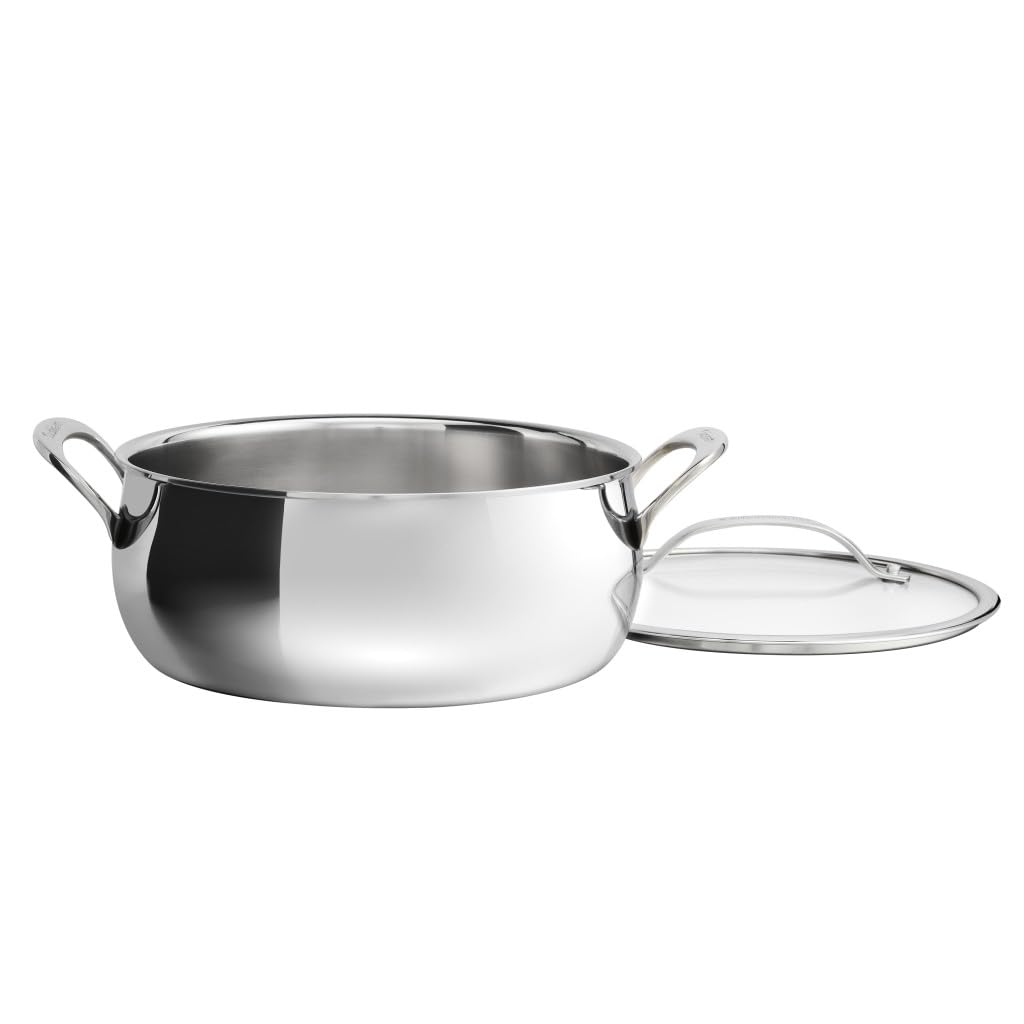
This is the pot for people who want “real cookware feel” without committing to cast iron bulk. At 4.5 quarts, it’s a practical size for smaller households, tighter storage, and cooks who prefer making fresh meals more often instead of giant batches. The triple‑ply build gives it a more even, steady heating personality than thin stainless pots, especially when you’re simmering or reducing.
The glass lid is a subtle lifestyle upgrade. Being able to check a simmer without lifting the lid saves heat, reduces boil-over surprises, and helps new cooks feel more in control. That matters more than we admit—because confidence keeps people cooking. Just remember: glass lids often have a slightly lower oven rating than the pot itself, so if you’re a high-heat oven cooker, keep that in mind when planning.
In real life, this pot shines for stovetop braises, soups, rice-based dishes, and sauces that want steady heat. If you do a lot of acidic cooking (tomatoes, wine sauces, citrus), stainless is blissfully low-maintenance. And unlike enamel, you don’t worry about micro-chipping or color staining. You worry about technique—preheat and deglaze—and that’s a trade many cooks are happy to make.
If you want one pot that feels “grown-up,” durable, and easy to keep looking good, this is a strong pick—especially if your kitchen is short on space.
Why it fits real life
- Compact but capable – Great for 1–3 people and smaller kitchens.
- Tri-ply cooking performance – More even heat than thin stainless.
- Glass lid control – Watch simmering without losing heat.
- Easy cleaning – Stainless is forgiving and doesn’t “stain emotionally” the way light enamel can.
Good to know
- Stainless requires proper preheating to prevent sticking.
- Glass lids may have lower oven temp limits than metal lids—plan accordingly.
- If you meal-prep for a family, you may want a larger capacity.
Ideal for: smaller households who want a durable stainless pot that feels polished, heats evenly, and makes stovetop braising and simmering easier to manage.
9. Cooks Standard Stainless (9 qt) – Wide, Steady, and Built for Batch Cooking

This is the pot you buy when your cooking includes big, practical projects: bone broth, garden harvest batches, large soups, and sauces that simmer for hours. The standout detail isn’t just capacity—it’s the shape. A wide, shorter pot gives you more surface area to brown and reduce, which can make soups and stocks taste richer without needing complicated steps.
A disc-bottom stainless pot can be a real workhorse for these jobs because it often holds steady bottom heat beautifully. That steady base helps prevent scorching in thick soups and long simmers—especially when you’re cooking down tomato bases or reducing broth. And because it’s stainless, you’re free to cook acidic foods without thinking twice, which is a big mental relief if you’ve ever worried about enamel staining or chipping.
Real-world feedback highlights how sturdy these pots feel, how evenly they conduct heat, and how well they clean up—especially when you deglaze early. Some users mention the lid fit can be looser than premium cookware, but that’s not always a dealbreaker for stocks and soups, since many people cook those partially uncovered anyway to control evaporation.
If your “Dutch oven” needs are less about bread and more about volume cooking, this style of pot is a smart, utilitarian win.
Why batch cooks love it
- Wide shape = better browning – More surface area helps build flavor efficiently.
- Great for long simmers – Disc base supports steady heat for soups and stocks.
- Stainless freedom – Acidic foods are easy and worry-free.
- Durable, practical build – Designed for real kitchen work, not delicate handling.
Good to know
- Lid fit can be less “sealed” than premium pots—fine for many soups, but noticeable if you want a tight braise.
- Bigger pots get heavy when full, even in stainless—plan lifting with care.
- This is more “batch tool” than “artisan bread showpiece.”
Ideal for: broth makers, soup people, and anyone who cooks in volume and wants stainless durability with a wide cooking surface.
10. Cuisinart Contour Stainless (5 qt) – Simple, Sturdy, and Soup‑Ready

This is the kind of pot that becomes “the one you always grab” for soups, stews, pasta, and weeknight cooking—especially if you prefer stainless. The contour shape and glass lid make it feel practical and modern: you can watch a simmer, keep an eye on liquid level, and avoid lifting the lid every few minutes (which is a sneaky way people accidentally mess up timing and boil-over control).
The encapsulated base design is a classic stainless strategy: keep heat distribution strong where it matters most (the bottom), so you get steady simmering and fewer hot spots for soups and sauces. It’s not the same as fully clad tri‑ply up the sidewalls, but for many home cooking tasks, it performs beautifully—especially when you’re stirring occasionally, like you would with chili or stew anyway.
Owners often describe it as sturdy, attractive, and “heats beautifully.” Some note that stainless can discolor over time if you run high heat, but that’s not a flaw—it’s stainless life. The good news is stainless responds well to proper cleaning routines, and most “spots” are recoverable with the right method.
If you want a reliable stainless Dutch oven that’s easy to live with, easy to wash, and doesn’t require cast iron lifting strength, this is a strong practical choice.
Why it’s a weeknight hero
- Everyday-friendly size – Great for soups, stews, pasta, and family staples.
- Steady bottom heat – Encapsulated base supports consistent simmering.
- Glass lid visibility – Less lid-lifting, more control.
- Easy maintenance – Stainless tolerates real life and cleans up well with good habits.
Good to know
- Not “nonstick” by nature—preheat and deglaze to avoid frustration.
- Sidewalls won’t heat like full-clad tri‑ply; for reductions, tri‑ply may feel more even.
- Glass lids can have lower oven temp limits than the pot itself.
Ideal for: stainless fans who want a dependable soup-and-stew pot that feels practical, sturdy, and easy to keep in rotation.
11. CAROTE 6‑Qt Tri‑Ply Stockpot – Precision-Friendly for Soup, Pasta, and Simmering
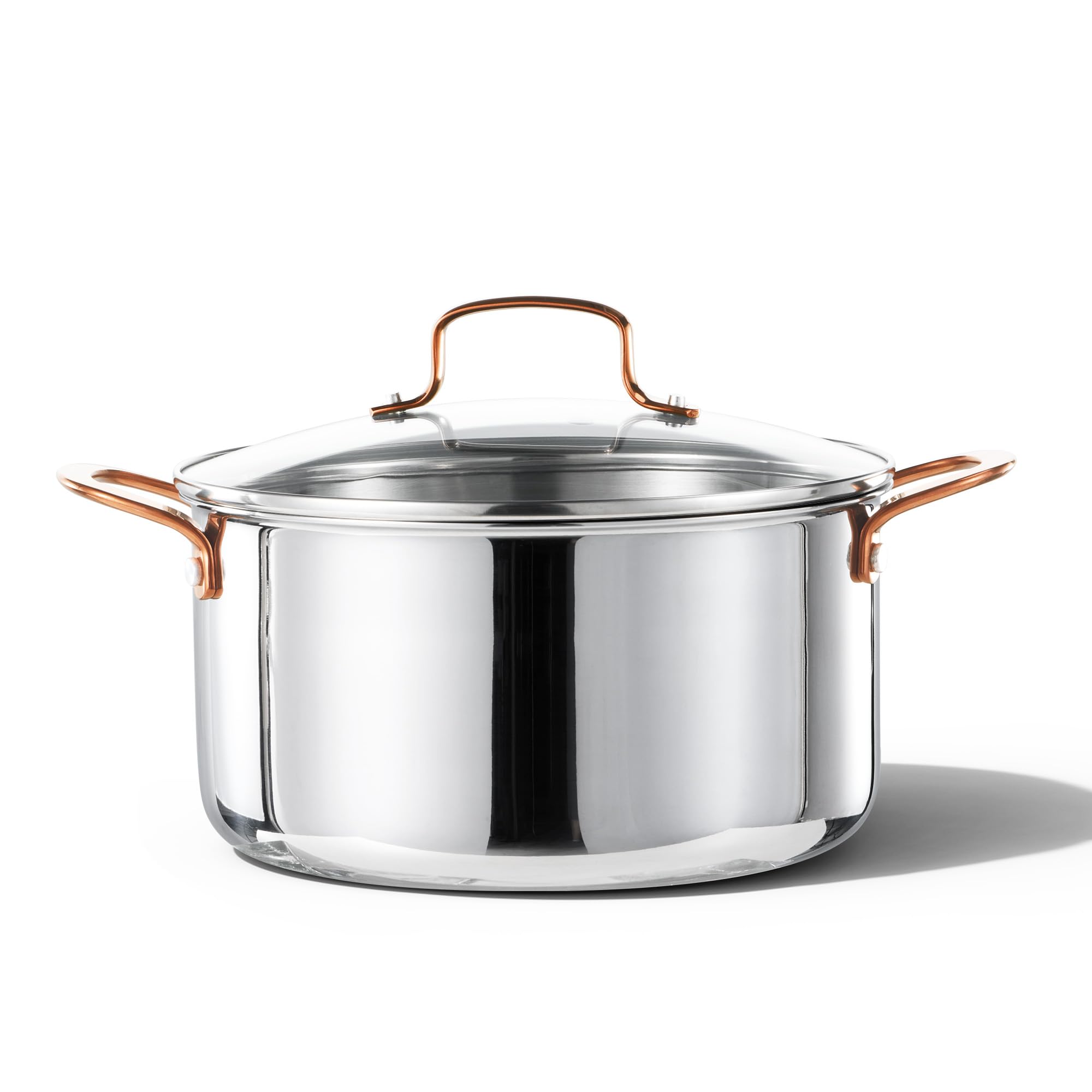
This pot is for cooks who like control: clear measurement markings, a glass lid for visibility, and a size that’s perfect for soup, pasta, and everyday simmering. That sounds basic—until you realize how often people overfill a pot, misjudge liquid level, or lift the lid repeatedly because they can’t see what’s happening. Visibility changes behavior, and behavior changes results.
A tri‑ply build can also give you a more even, predictable heating pattern than thin stainless. That matters in real cooking when you’re making rice soups, oatmeal-style simmers, or sauces that want gentle consistency without scorching. The loop handles and controlled pour rim also matter in the real world: transferring hot liquids is where people spill, and where “good design” feels like safety.
Owner feedback highlights the build feel—sturdy, good weight, and details like interior markings that are genuinely helpful. As with all stainless, the biggest “success lever” is technique: preheat, use enough fat, and deglaze the moment fond forms. When you do that, stainless becomes one of the cleanest, most satisfying surfaces to cook on.
If you want a daily-use stainless pot that behaves like a grown-up tool but still feels approachable, this is an easy one to like.
Why it’s so practical
- Measurement markings – Makes broth, soup, and pasta water control simpler.
- Glass lid visibility – Reduces boil-over risk and heat loss from constant checking.
- Tri‑ply build feel – More stable heating than thin pots.
- Pour control – Helpful rim design and handles for safer transfers.
Good to know
- Stainless isn’t “nonstick”—you’ll love it most if you enjoy technique.
- Glass lids can limit ultra-high oven finishes; check your preferred cooking routines.
- Like many modern pots, it rewards medium heat more than aggressive high heat.
Ideal for: soup-and-pasta households who want stainless durability with better visibility and measurement convenience.
12. Lodge 7‑Quart Pre‑Seasoned Cast Iron – The “Forever Pot” for High Heat

Bare cast iron is a different personality than enamel. It’s not “pretty and pristine.” It’s tough, seasoned, and built for real heat. This Lodge Dutch oven is beloved because it handles high temperature cooking, can move from stovetop to oven confidently, and—depending on your setup—can be used in more rugged environments than enamel (including campfire-style cooking).
The lid design is a big part of the appeal. Self-basting tips help return condensation back to food, which is useful for braises and slow cooking. Some users also love that certain Lodge-style lids can double as a cooking surface, giving you extra flexibility in a small kitchen: pot + lid use in creative ways. That kind of versatility is why cast iron people are so loyal.
The maintenance reality is the trade: dry it, oil it, and don’t leave it wet. If you do that, it rewards you with a cooking surface that improves over time and can become surprisingly slick. Many first-time cast iron owners overthink seasoning; the truth is steady use and simple care is what builds a great surface.
If you want a pot that feels like it can survive anything—and you don’t mind giving it the care routine it deserves—this is a classic.
Why cast iron fans swear by it
- High-heat toughness – Great for searing, frying, and aggressive cooking.
- Seasoning improves with use – The more you cook, the better it can feel.
- Moisture-friendly lid design – Helps long cooks stay juicy and consistent.
- Rugged versatility – Built for kitchens that want durability over delicacy.
Good to know
- It requires maintenance: wash, dry thoroughly, and lightly oil to prevent rust.
- Long acidic cooks can be trickier than with enamel or stainless.
- It’s heavy—cast iron is not the “light cookware” lifestyle.
Ideal for: people who love classic cast iron cooking, want high-heat capability, and prefer cookware that can take a beating and keep going.
13. Lodge 6‑Quart Enameled (Blue) – Beautiful, Capable, and Worth One Smart Check

This is a “looks gorgeous on the stove” Dutch oven that can absolutely do real cooking—soups, stews, braises, and baking. Lodge’s color enamel line has long been popular because it gives you that classic enameled cast iron vibe (beautiful exterior, light interior, dual handles) with a very approachable day-to-day feel.
Here’s the expert detail that matters: some versions of these color-line pots come with knobs that have lower oven temperature ratings than stainless steel knobs. That’s not a dealbreaker—it’s just a workflow detail. If your cooking includes very high-temp bread baking or long oven finishes at high heat, you want to confirm the knob’s heat rating and plan accordingly. Many cooks solve this simply by using a different lid/knob strategy (or choosing a model with a metal knob from the start).
Cooking performance is what you’d expect from enamel cast iron: great heat retention, steady simmering, and excellent braise behavior when you keep the heat moderate. Owners often rave about even heating and how quickly it becomes a go-to pot for one-pot meals. Cleanup is typically easy when you use the “deglaze early” habit.
If you want a pot that looks like a centerpiece but still behaves like a workhorse, this is a very satisfying choice—just do that one smart knob check first.
Why people love it
- Beautiful classic color look – Great for stovetop display and table serving.
- Light interior – Helpful for browning and monitoring cooking progress.
- Cast iron steadiness – Strong heat retention for soups, stews, and braises.
- Approachable everyday use – Doesn’t feel precious; feels usable.
Good to know
- Confirm knob oven rating if you bake at very high temps often.
- As with all enamel, avoid thermal shock and rough handling to protect the finish.
- If you want maximum oven flexibility out of the box, choose a model with a stainless knob.
Ideal for: cooks who want a stylish, classic enameled Dutch oven for daily meals and serving—especially if high-temp baking isn’t your main use.
14. Nuovva Enameled Cast Iron (6.4 qt) – Big Capability for Bread, Stews, and Everyday Meals

This is the kind of Dutch oven people buy when they want the enamel lifestyle—easy cleanup, no seasoning, good heat retention— without feeling like they need to buy a “forever luxury” brand to get started. And for many cooks, it delivers exactly what they hoped: strong performance for soups, stews, and bread baking, plus a look that’s attractive enough to serve from.
Owners often highlight “surprisingly even heat,” “easy to clean,” and “perfect for sourdough.” That makes sense: cast iron’s thermal mass supports steady baking and steady braising, and enamel lowers the maintenance barrier. Some reviews also mention thoughtful extras like a booklet or guidance included in the packaging—a small detail, but it helps beginners feel supported.
The real-life nuance with many value enamel pots is the rim area (where lid meets pot) and small hardware details like lid screws. If the rim is bare cast iron (common on many brands), it can benefit from being kept dry and lightly oiled after washing to avoid rust spots. That’s not hard—just a quick wipe—but it’s the kind of detail most buyers aren’t told until they discover it themselves.
If you want a capable enamel pot for bread and stews and you’re okay treating it with normal care (avoid thermal shock, don’t use metal scrapers), this is a strong “value enamel” contender.
Why it’s a value favorite
- Great capacity – Spacious enough for real meals and bread baking.
- Enamel convenience – No seasoning routine and easier cleanup than bare cast iron.
- Strong heat retention – Great for steady braises and oven bakes.
- Looks good on the table – A practical pot that’s also presentable.
Good to know
- If the rim is bare cast iron, keep it dry and lightly oiled to prevent rust.
- Color shades can vary from photos; treat it as “color family,” not exact paint match.
- As with all enamel, gentle tools and gradual heat are your best friends.
Ideal for: cooks who want a spacious, enamel-easy Dutch oven for bread, soups, and stews—without making the purchase feel like a major commitment.
15. Umite Chef Enameled Cast Iron (5 qt) – Beginner-Friendly Bread & Stew Companion

If you’re new to Dutch ovens, the best first experience is one that feels safe and simple. This Umite Chef model is designed to be approachable: enamel interior (no seasoning required), a size that fits most family meals, and included cotton potholders so you’re not improvising with towels when the handles get hot. That last detail sounds minor until you realize how many kitchen accidents happen during “quick grab” moments.
The cooking personality is classic enameled cast iron: preheat gently, cook on medium or medium-low, and let the pot’s thermal mass do the work. Owners often mention bread baking success because a 5-quart size is a sweet spot for sourdough loaves: it’s roomy enough for rise and expansion, but not so massive that steam gets diluted. A tight-fitting lid also supports crust development by trapping moisture early in the bake.
Where beginners win with this pot is learning heat discipline. Cast iron holds heat; if you crank the burner the way you would with thin stainless, things can scorch. Once you get used to “lower than you think,” the pot becomes effortless: sear, braise, bake, and clean up without the cast-iron seasoning learning curve.
The biggest care tip: avoid thermal shock. Let it cool, clean gently, and treat the enamel like the smooth glass-like surface it is. Do that, and this becomes a very satisfying first Dutch oven.
Why it’s a smart starter
- Beginner-friendly enamel – No seasoning needed, easier cleanup, less intimidation.
- Family-use size – Great for stews, soups, and a whole chicken-style meal.
- Included potholders – Makes handling safer right out of the box.
- Bread-friendly shape – A practical volume for most sourdough bakes.
Good to know
- Hand-wash is the safest long-term habit for enamel longevity.
- Cast iron is heavy; even a “medium” size needs two-hand lifting when full.
- Heat discipline matters—this pot rewards medium heat, not high flame.
Ideal for: first-time Dutch oven owners who want an approachable enamel pot for bread, stews, and everyday meals—plus safer handling accessories included.
16. Amazon Basics Pre‑Seasoned Cast Iron (7 qt) – Simple, Heavy, and “Old School”

This is cast iron in its simplest form: heavy pot, heavy lid, classic heat retention, and the expectation that you’ll do the care routine. For buyers who mainly want “a big cast iron pot” for braising, beans, rice, or stew—and want to spend as little as possible to get started—this can be appealing.
The most important thing to understand is the surface reality. Pre-seasoned doesn’t mean “nonstick.” It means the pot has a starter seasoning layer. Over time, with use and proper drying/oiling, it can become more naturally release-friendly. But early on, you should expect sticking if you cook too hot, or if you rush the preheat. This is where many people get frustrated with cast iron: they expect instant nonstick, then blame the pan. In reality, cast iron is a skill + habit tool.
Some owners mention cleaning friction when the bottom has ridges or texture, because stuck bits can hide. If you’re comfortable using a sturdy scrubber and maintaining seasoning, that’s manageable. If you want “wipe clean,” enamel or stainless will feel friendlier.
If you treat this pot as a budget entry into classic cast iron cooking—and you’re willing to care for it—it can absolutely make great food. Just don’t expect it to behave like enamel on day one.
Why it can be a good starter
- Classic cast iron results – Strong heat retention for stews, beans, and braises.
- High-heat capable – Great if you like oven cooking and strong sears.
- Long-term potential – Seasoning can improve with consistent use and care.
- Simple design – No enamel rules, just cast iron fundamentals.
Good to know
- Pre-seasoned is not instant nonstick; technique and time matter.
- Requires rust prevention: dry thoroughly and lightly oil after washing.
- Textured bottoms can make burnt-on food harder to clean if you overheat.
Ideal for: budget-first buyers who want a big cast iron pot and don’t mind seasoning, scrubbing, and classic cast iron maintenance habits.
How Dutch Ovens Actually Cook (and Why Lids + Heat Control Change Everything)
A Dutch oven is basically a heat battery with a lid. It stores energy in thick walls, then releases it steadily. That steadiness is why braises feel forgiving, soups simmer calmly, and bread bakes with that “bakery steam” effect. But the same power can punish rushed cooking—especially if you treat cast iron like thin cookware and crank the heat.
What makes a Dutch oven feel “legendary”
- Thermal mass – Thick walls smooth out burner fluctuations and oven cycling.
- Tight lid behavior – Better moisture retention means tender meat and less surface drying.
- One-pot flavor building – Brown → sauté → deglaze → simmer in one vessel, so flavor compounds stay in the system.
- Steam management – Especially for bread: trapped steam early in baking supports oven spring and crust development.
- Time leverage – Long cooks become “set it and check occasionally” instead of constant stirring.
That’s why premium enamel, moisture-focused lids, and smart handle design can feel like real upgrades: they reduce the number of things you need to fight while cooking.
Power moves that make every Dutch oven cook better
- Use medium heat as your default – Cast iron holds heat; high heat often creates scorching and stubborn fond.
- Deglaze early – If brown bits form, add liquid and scrape them up while they’re still friendly.
- Don’t fear sticking (use it) – Fond is flavor in stainless and cast iron; the key is releasing it with liquid, not scraping it dry.
- Cool before washing – Protect enamel and reduce warping risk in stainless by avoiding shock cooling.
- Store with airflow – A slightly cracked lid (or a towel spacer) helps prevent trapped moisture odors.
When you cook with the pot’s physics instead of against it, your results get better and cleanup gets easier—at the same time.
FAQ: Dutch Oven Buying Questions (Answered Like a Real Cook)
What size Dutch oven should most people buy first?
Enameled cast iron or bare cast iron: which is better?
Why does food stick in stainless steel Dutch ovens?
Can I bake bread in an enameled Dutch oven safely?
How do I clean stubborn stains or burnt bits without damaging enamel?
Should I worry about interior discoloration?
Final Thoughts: Buy the Dutch Oven You’ll Actually Use Every Week
The right Dutch oven doesn’t just make food better. It makes cooking feel calmer. When your pot holds heat steadily, seals moisture well, and cleans without drama, you cook more—and you enjoy it more.
Here’s how to turn this guide into a confident choice (without overthinking it):
- Want the most balanced “one pot for everything” pick? Go with the Le Creuset Signature Round (5.5 qt). It’s the most universally satisfying blend of performance, feedback, and long-term joy.
- Prefer maximum braise magic and big-batch comfort food? Choose the STAUB 9‑qt Round Cocotte for moisture-focused cooking and deep, confident browning.
- Want a high-value enameled cast iron workhorse for families? The Lodge 7.5‑Quart Enameled Dutch Oven is a big, capable choice that feels smart for frequent cooking.
- Buying your first enamel Dutch oven and want the safest everyday size? Start with the Lodge 6‑Quart Enameled (Oyster White). It’s the easiest “first win” for soups, stews, and braises.
- Need an oval pot for roasts and loaf-style bakes? The Crock‑Pot Artisan 7‑Quart Oval is a shape upgrade you’ll feel immediately.
- Cooking for crowds and want a true centerpiece pot? Pick the Le Creuset Signature Oval (15.5 qt) for big roasts, holiday cooking, and serious batch meals.
- Want stainless convenience instead of cast iron weight? Look at the Tramontina Tri‑Ply Clad (5 qt) for even heating and daily agility.
- Want rugged, high-heat cast iron on a budget? Try the Lodge 7‑Quart Pre‑Seasoned Cast Iron or the Amazon Basics 7‑Quart Cast Iron if you’re comfortable with seasoning and maintenance.
At the end of the day, the “right” pot is the one that fits your cooking rhythm and your tolerance for maintenance. Pick the best dutch oven pot for how you really cook, and you’ll get the best kind of result: great meals, made often, with less effort.
