
Specs are compiled from manufacturer listings and verified buyer reviews and can change over time — please confirm the key details on the product page before buying.
If sitting at your desk or driving makes your lower back ache, a proper lumbar cushion is the fix — but the wrong firmness can make it worse. The picks below cover every sitting situation, from a lightweight memory-foam pillow that wraps around your sides to a gel seat cushion that takes pressure off your tailbone. You will know exactly which one fits your chair, your body, and your back.
I’m Mohammad Maruf — the founder and writer behind KitchPrep. This guide is built by comparing the manufacturers’ published specifications and the patterns across verified customer reviews, so you get each pick’s real strengths and trade-offs instead of marketing spin.
Firmness is the make-or-break spec, since a cushion that feels right on day one can turn too hard after an hour of sitting. Getting the shape and density right is what separates a comfortable workday from a stiff, achy evening. This guide breaks down the best cushions for a bad back so you can pick with confidence.
Our Picks at a Glance
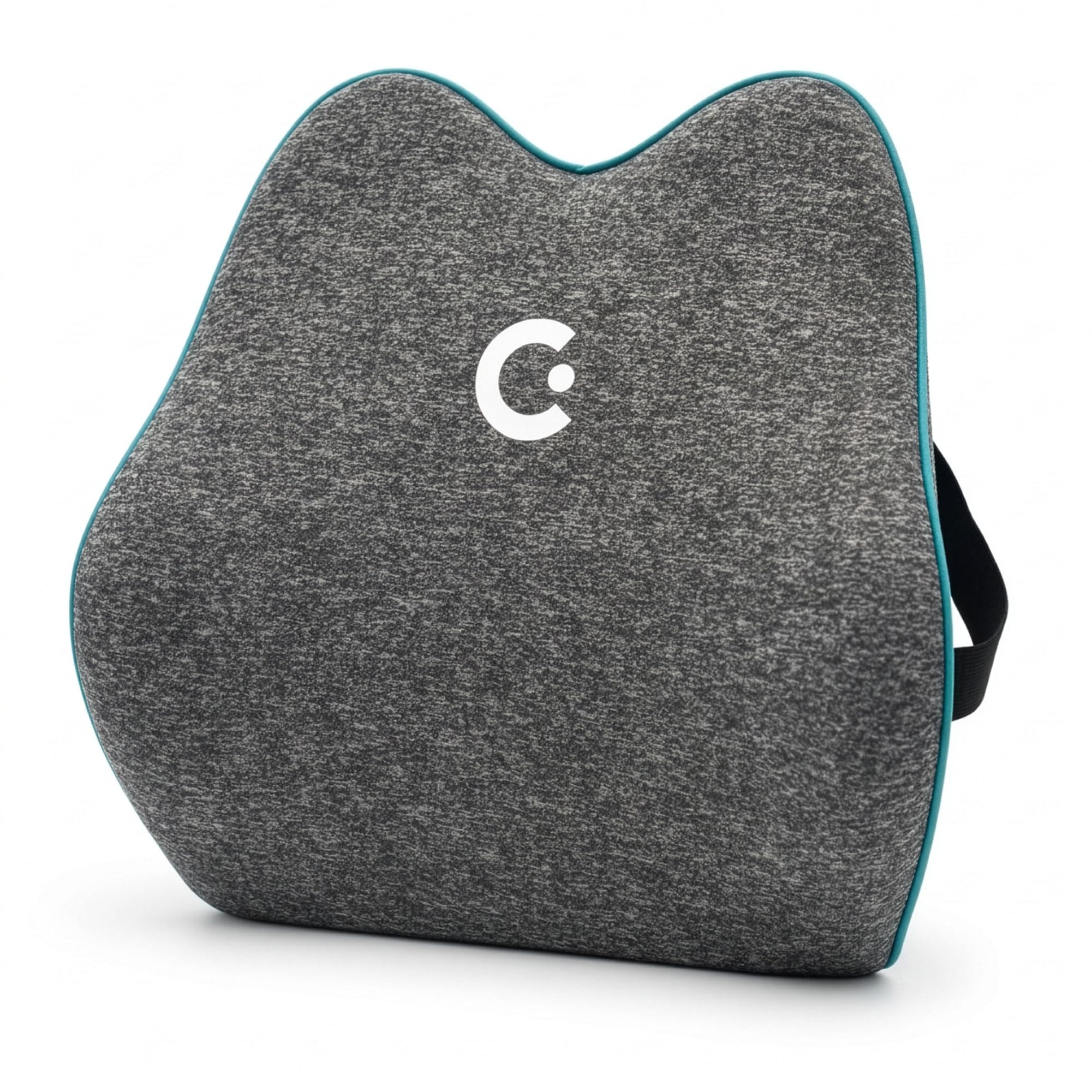
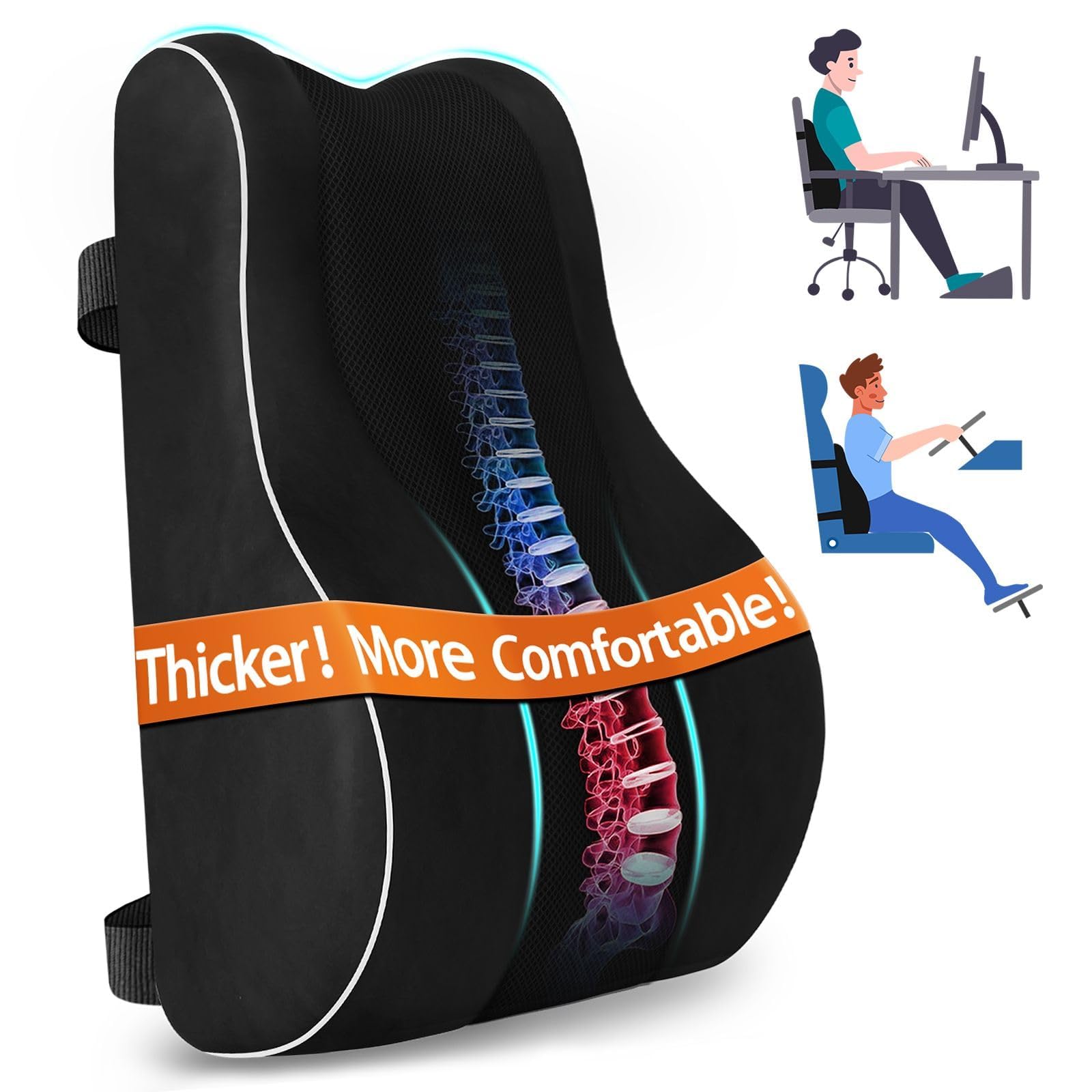

How To Choose The Best Cushions for a Bad Back
The first split to make is between a back support cushion and a seat cushion — they fix different problems. A lumbar pillow presses into the curve of your lower back to keep your spine upright. A seat cushion lifts your hips and takes weight off your tailbone and sitting bones. If your ache sits high up your back, a lumbar pillow is usually the answer. If it collects at the base of your spine after a long drive, you want a seat cushion.
Firmness is the number one complaint
Across the reviews in this category, firmness is the spec buyers argue about most. A cushion described as medium-firm can feel perfect to a 150-pound sitter and punishing to someone lighter — or the reverse. The takeaway: match firmness to your body weight and how long you sit, not just to the product photo. Many cushions also list a recommended weight range, so check that before you commit.
Look at how it stays put
A cushion that slides down your chair stops helping the moment it moves. There are two common fixes: an adjustable strap that loops around the chair back, or a non-slip rubber base that grips the seat. Straps suit office and car chairs with a tall backrest. A non-slip base suits flat seats and wheelchairs. If a cushion does not name either, expect to reposition it yourself.
Shape and coverage
A taller back support cushion covers more of your spine, which some sitters prefer over a small pad that only hits the lower back. A seat cushion with a U-shaped cutout suspends the tailbone so it never touches the seat. Both designs have a place — pick the shape that lines up with where your ache actually is.
Quick Comparison
| Model | Best For | Type | Firmness | Size (L x W) | Amazon |
|---|---|---|---|---|---|
| Cubii Cushii V2★ Best Overall | All-day desk and car support | Back support | Medium firm | 15.7″ x 14.5″ | Amazon |
| CloudBliss Lumbar Support PillowTallest Coverage | Tall back coverage | Back support | Medium soft | 18.1″ x 16.5″ | Amazon |
| Amazon Basics Back Support CushionFirm Back Support | Straight-back chairs | Back support | Firm | 15.75″ x 13.39″ | Amazon |
| Samsonite Lumbar Support Pillow | Commutes and road trips | Back support | Medium firm | 13.5″ x 14″ | Amazon |
| QUTOOL Lumbar Support | Reversible upper or lower back | Back support | Medium firm | 16.6″ x 14.8″ | Amazon |
| QUTOOL Car Lumbar Support | Long drives and truckers | Back support | Medium | 18.9″ x 17.3″ | Amazon |
| Everlasting Comfort Lumbar Pillow | Hot-running sitters | Back support | Medium | 13″ x 3.5″ | Amazon |
| ComfiLife Gel Seat Cushion | Tailbone and pressure relief | Seat cushion | Medium firm | 17.5″ x 13.7″ | Amazon |
| Everlasting Comfort Seat Cushion | Full-base sitting comfort | Seat cushion | Medium | 17.3″ x 14″ | Amazon |
In‑Depth Reviews
1. Cubii Cushii V2 Back Support Cushion
Our pick — 4.5★ from 900+ verified ratings; the strongest balance of quality and price.
The wider footprint that keeps supporting your back even when you shift in your seat
What makes the Cubii Cushii V2 stand out is the way it cups the sides of your back instead of sitting flat behind you. A flat lumbar pillow loses contact the moment you lean or twist. This one wraps around, so the support stays steady whether you are at your desk or on the couch. The memory foam fill is covered in a breathable mesh outer layer that lifts off and goes in the wash.
It weighs just 22 ounces, so moving it from the office chair to the car takes no effort. The adjustable strap loops around the chair back to hold it in place rather than letting it slide down. Set against the CloudBliss above, its footprint is the more compact of the two — 15.7″ by 14.5″ versus the CloudBliss at 18.1″ by 16.5″. That means more room in tighter chairs like a standard car seat.
What wins most people over is the back support itself, which is what the feedback keeps circling back to. Buyers report it eases lower-back pain within days of daily desk or car use. One pattern worth knowing: some sitters find the foam runs firm, and a handful find it shifts on certain chair types. It suits chairs with a backrest you can strap around.
What works well
- Curved shape keeps contact when you shift, unlike a flat pillow
- 22-ounce weight moves easily between chairs
- Breathable mesh cover is removable and washable
- Adjustable strap holds placement — works in cars and recliners too
Worth knowing
- Firmness divides sitters — some prefer a softer pad
- On certain chair types it may need occasional repositioning
- Smaller footprint than the CloudBliss, so less back coverage
Reach for this if: you want one lightweight cushion that moves from office chair to car to couch without losing support.
Look elsewhere if: you sit deep in a wide chair and want maximum back coverage — the CloudBliss runs bigger.
2. CloudBliss Lumbar Support Pillow
A backrest that reaches from your lower back almost to the top
If the ache climbs higher than your lumbar, this is the pick to look at first. Its pear-shaped ergonomic design measures 18.1 inches long by 16.5 inches wide by 5.5 inches thick — enough to hug the whole run of your spine instead of a single spot. The foam is high-density memory foam rated to hold form under sitters between 100 and 200 pounds, and it molds to your body in seconds.
Holding it steady is a two-part job here: double adjustable straps plus an anti-slip bottom. That combination works on office chairs, car seats, gaming seats, train and plane seats. The breathable mesh cover circulates air to cut the sweat that builds on long sits, and a smooth zipper lets you pull it off for cleaning.
Support is what buyers talk about most, and the comfort level runs medium-soft — a relief if firm foam tends to feel like a plank to you. As owners put it, it “reaches from the lower back almost to the top,” not like pads that leave you feeling something is missing. The honest catch is size: several sitters note it can feel small, and plus-size buyers have found a larger size would suit them better. Its 18.1″ by 16.5″ footprint is the widest in this lineup, so it needs a roomy chair to sit right.
Best fit for sore upper backs: the taller profile is the reason to choose this over the Cubii, covering more of the spine in one piece.
The size call: it runs large for a cushion but small for bigger bodies — check the 100 to 200-pound rating against your own frame before ordering.
Choose this one if: your ache sits higher up your back and you want medium-soft foam that spans more of your spine.
Think twice if: your chair is narrow or you weigh outside the 100–200 lb range it is rated for.
3. Amazon Basics Rectangular Memory Foam Back Support Cushion
A firm pad that stays put on straight-back chairs without constant fiddling
For a straight-backed office chair or folding chair, firm is the right call, and this is the firmest back cushion on the list. The memory foam is rated firm and molded to follow your body’s natural contour, so it pushes your spine back into a straighter line rather than sinking under you. A non-skid base does the holding instead of straps, which suits flat chair backs.
At 1.4 pounds it is easy to lift chair to chair, and the rectangular 15.75″ by 13.39″ shape sits neatly on a standard desk chair. Owners mention the non-slip base makes a real difference — “no sliding or constant adjusting of it,” as one put it, and it works well on the straight backs of work and folding chairs.
Here is the trade: firm cuts both ways. If you want a cushion that gives back support without a hard edge, this is it. If you prefer a softer hug, its firm foam may feel like too much. Efficiency and value drive the praise, and where it earns its keep is the secure placement, so you are not reaching behind you to fix it mid-task.
The core appeal: firm, contoured foam plus a non-skid base means it stays aligned on a straight chair back with no strap to fuss with.
The trade-off: that same firmness is the single most debated trait — it is built for support, not plushness.
Pick this for: a firm, no-nonsense back support on a desk or folding chair where a non-slip base beats a strap.
Pass if: you want medium-soft foam or a cushion that spans most of your spine — this is a lower-back and mid-back pad.
4. Samsonite Lumbar Support Pillow
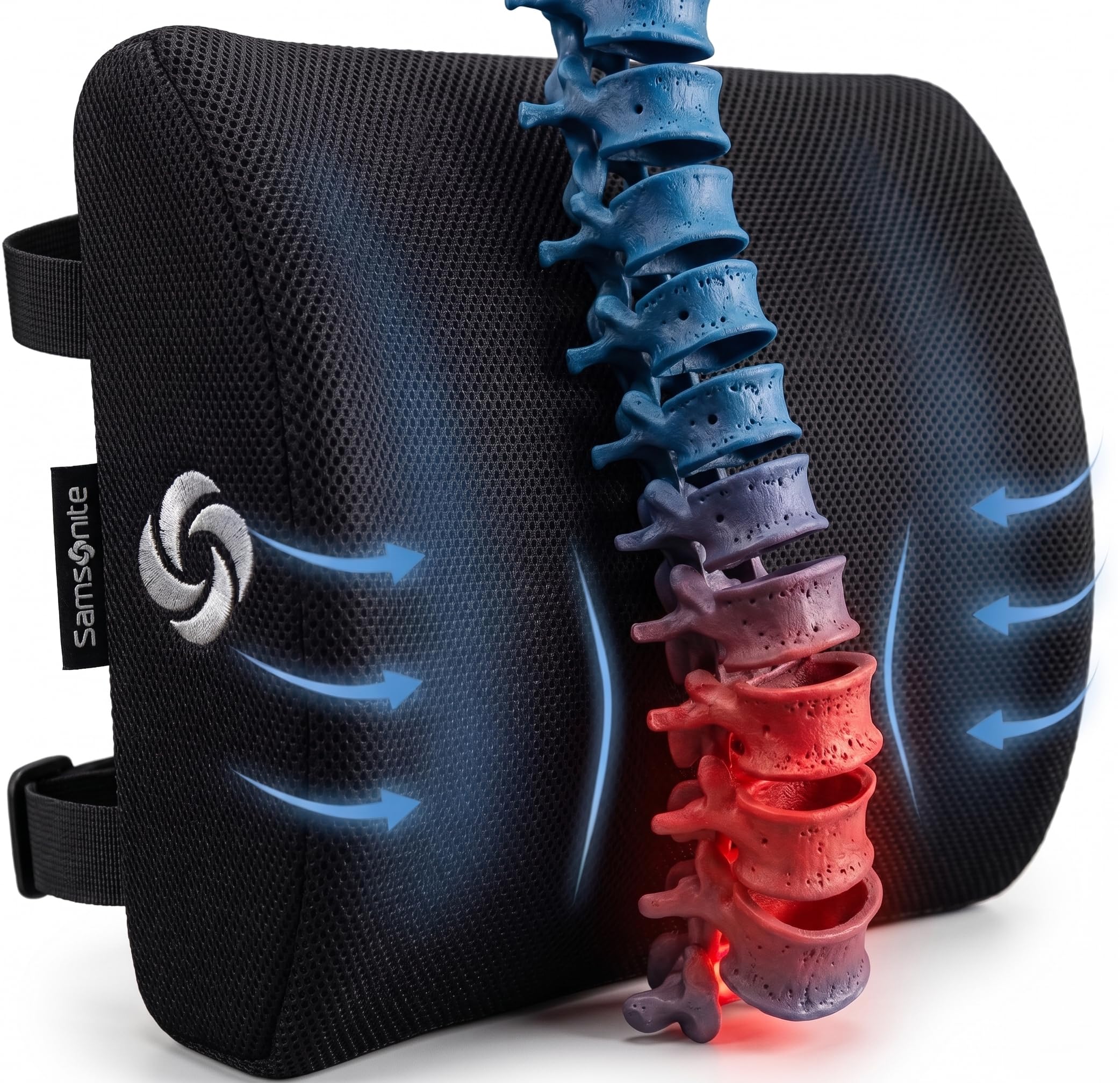
The cushion that has quietly survived long commutes for the longest stretch of time
Samsonite has built this one for the driver, and the numbers back the following. Support leads the feedback by a wide margin, with comfort and pain relief close behind. The compact medium-firm memory foam uses a contoured curve to hold neutral posture, and at 1.3 pounds it travels without dragging down your bag.
The design keeps two things in mind: airflow and staying put. A ventilated mesh cover moves air so you do not cook against the backrest through a long workday or a weekend drive. Adjustable straps hold it to the seat, which is where most of the mixed notes land — the right amount of softness holds for some, and a few find the foam firm and the straps shifting. The delivery-driver crowd covering 80+ miles a day is the honest test case here.
It is the most established brand in the group, and the ride-along reputation is earned. That makes it the safe pick when you want something that fits a car seat, a classroom chair, or an airplane seat and asks for no adjusting.
Why it earns the following: support is the standout trait by a large gap, backed by comfort and pain relief on long road trips and desk hours alike.
What to watch: firmness and strap stability split opinion — a heavy sitter or a bucket seat may need a firmer fit.
Best for: frequent drivers and desk workers who want proven, portable lumbar support from a recognized brand.
Skip if: you dislike scratchy fabric or need straps that never shift on a deep bucket seat.
5. QUTOOL Patented Lumbar Support
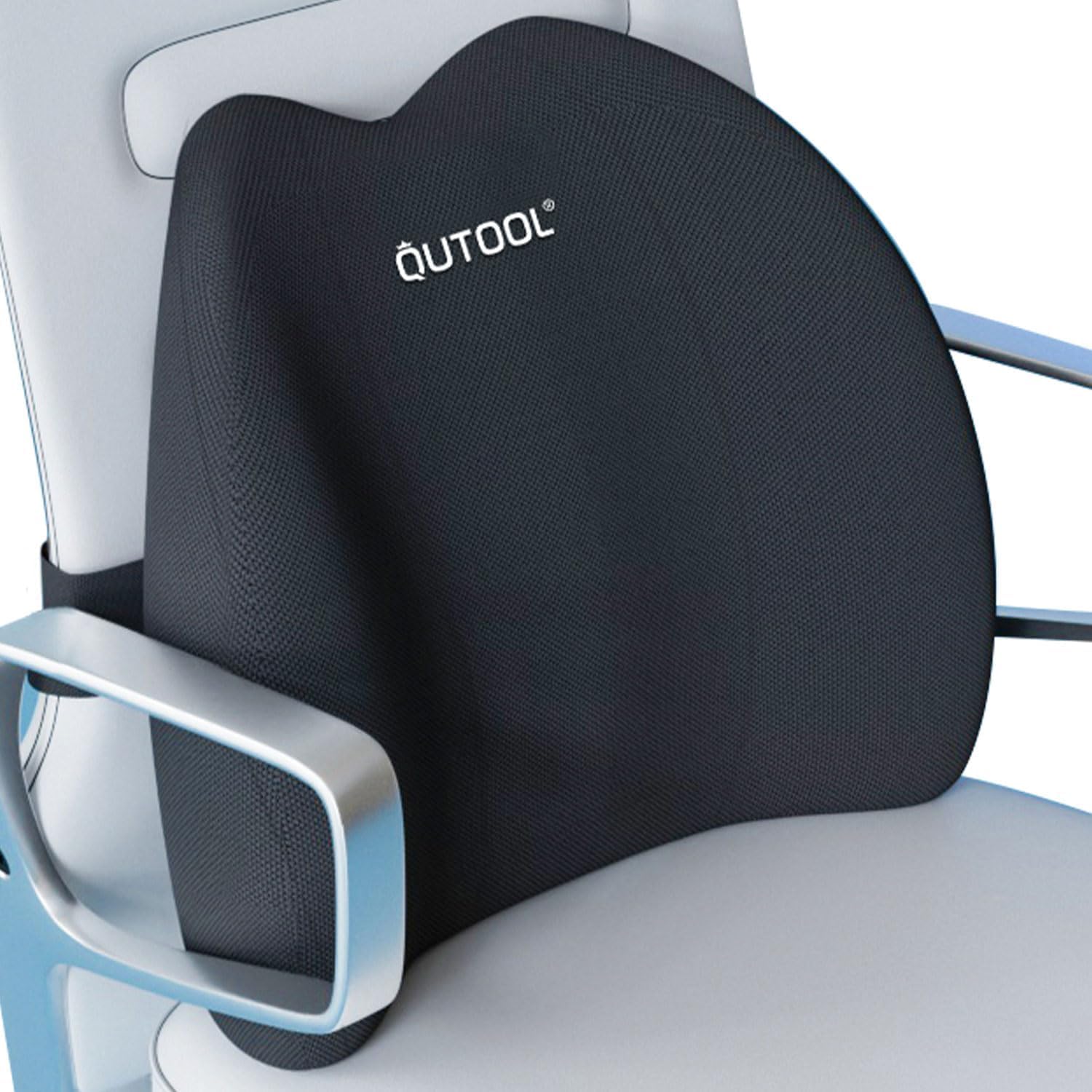
One cushion that flips over to support either your upper or your lower back
Most back cushions lock you into one position — this one does not. Place it upright and it supports your lower back; flip it over and it targets your upper back. That flexibility comes from a medium-firm memory foam core at 16.6 inches long by 14.8 inches wide by 3.9 inches thick, molded to hold its density rather than flatten out under pressure. It is rated for sitters between 100 and 200 pounds.
Two upgraded straps hold it to office chairs, computer chairs, car seats, trucks, and wheelchairs. The mesh cover is removable and machine washable, and the open weave keeps air moving so your back stays cool and dry through all four seasons. A molded, high-density foam core like this holds its shape far longer than a soft lumbar roll.
The honest limit is right in the design: it is built for chairs, not sofas or recliners, and it may sit awkwardly in small spaces. A very short sitter has found it works better on a couch to close the gap to the backrest. Back support and quality drive the favorable notes, though firmness gets a mixed read — it is on the firmer side by design, so a sitter who wants plush may want more give.
Standout feature: flipping it over changes the target zone from your upper to your lower back — no second cushion required.
Where it stops: made for strap-on chairs, it is a poor match for sofas, recliners, and tight seating.
Reach for this if: your sore spot moves around and you want one cushion you can flip to match.
Think again if: you mostly sit on a sofa or recliner, or you weigh outside the 100–200 lb range.
6. QUTOOL Car Lumbar Support Pillow
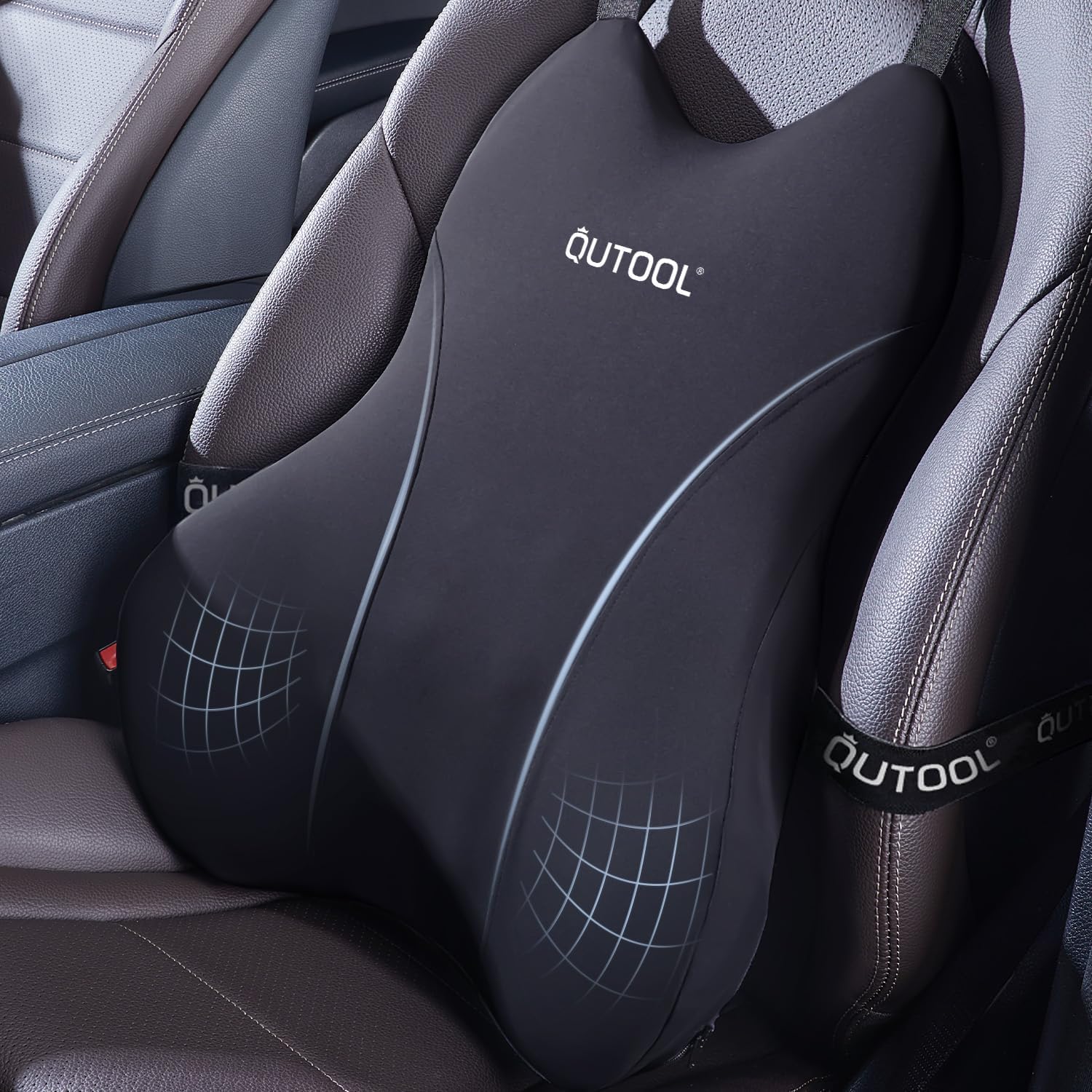
A wide, slow-rebound pillow built to turn a tired truck seat into a comfort zone
Spend your day behind the wheel and the seat back becomes the enemy. This one answers with a big 18.9-inch length and 17.3-inch width, so it covers more of your back than most car cushions can. The medium high-density memory foam uses a slow-rebound formula that adapts to your body heat over time, and two adjustable elastic straps are made for car-seat attachment.
It is aimed squarely at the driver: SUVs, pickups, trucks, and buses all get the benefit, and the thin profile does not crowd the seat. The smooth-touch jacket lifts off for cleaning. One thing to plan for — the foam may look thin when it first comes out of the pack, so give it 24 to 48 hours in a suitable temperature to fully expand to its stated 3.1-inch thickness.
Support is the clear strength here, with comfort and effectiveness backing it up for long trips. Several truckers report it holds up after months of daily use. The trade-off follows the seat itself: on some car seats the strap fit is snug and the pillow shifts, which is why fitting varies by vehicle. If you drive a bucket seat with a tight back, measure first.
what separates it: it covers more of your back than the slimmer commuter picks, thanks to an 18.9″ by 17.3″ footprint (the pad’s width and height in inches) — so the support reaches higher up your spine on long drives.
Fit note: strap snugness and seat shape decide the experience — it is not a universal drop-in for every car.
Made for: drivers logging long hours who want a wide, cooling-covered back pad that holds up trip after trip.
skip it if: your seat back is narrow or curved, or you wanted something that never shifts position once placed.
7. Everlasting Comfort Lumbar Support Pillow
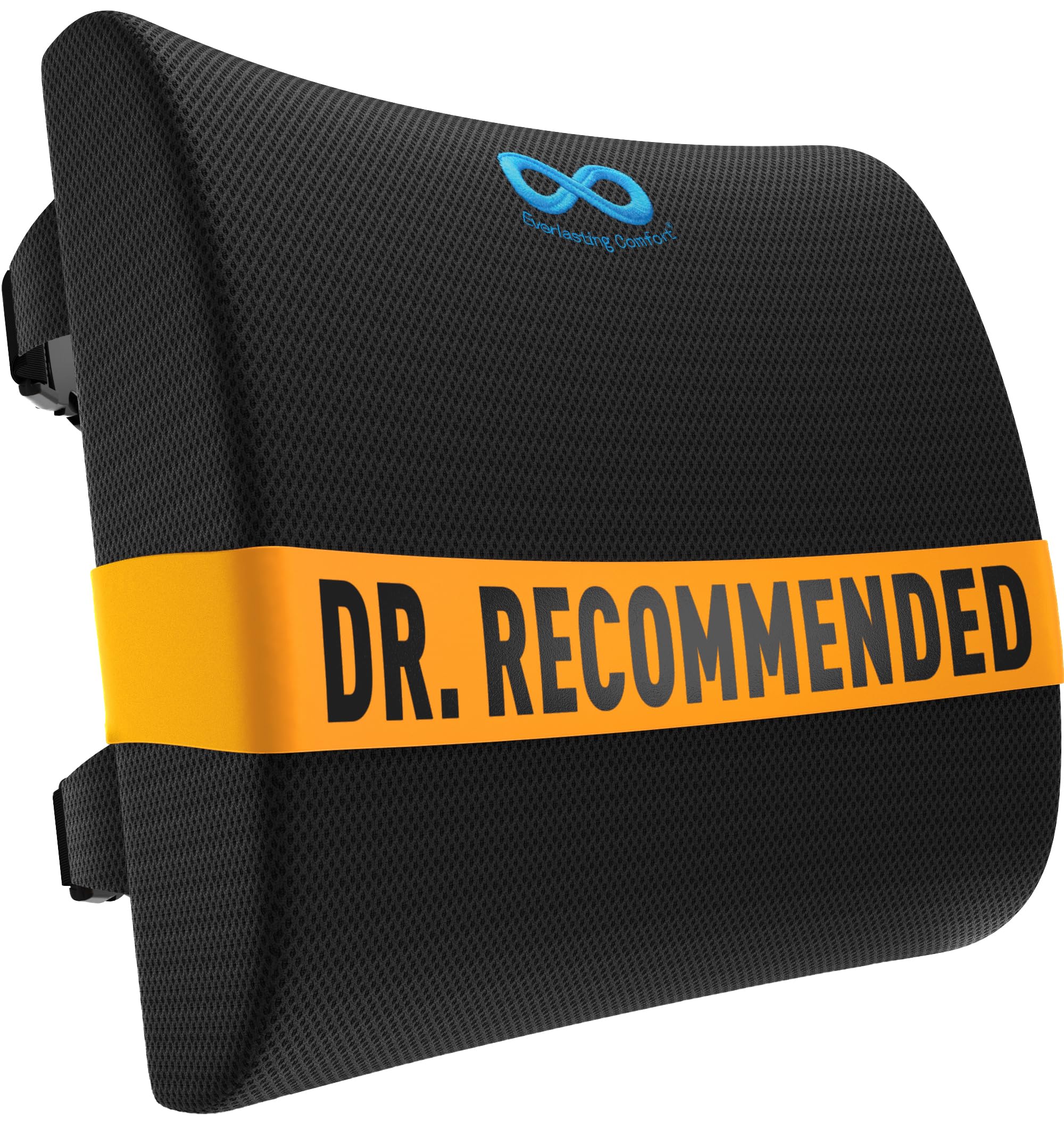
A low-profile back cushion with a breathable mesh cover and a lifetime guarantee
If your chair runs hot and you stack up long desk hours, the mesh cover here is the reason to shortlist it. This is a compact back cushion at 13 inches by 3.5 inches, so it sits low against your frame instead of bulking up the seat behind you. The medium high-density foam is engineered to gently support the natural curve of your spine, and the cover is removable and machine washable.
Twin adjustable straps with extension pieces secure it to chairs up to 32 inches wide. That makes it usable on office chairs, gaming chairs, recliners, couches, and car seats — the extension pieces are there so you can cinch it tight instead of letting it slip. The mesh design keeps air moving so you stay cool while working, driving, or relaxing.
This is the most-followed name in the group, and comfort heads the list of reasons why. A recurring note is that the straps can lose elasticity over time, letting the cushion slide down — so if you want the firmest possible grip, a strap-and-base model like the Cubii may hold better. Otherwise it earns its keep across desk, car, and couch.
The design win: a compact low-profile shape plus a mesh cover keeps it cool and unobtrusive on busy chairs.
The trade-off: elastic straps can stretch out with use, and extended straps only reach so far.
Right for: sitters who overheat and want a low-profile, breathable back cushion with a lifetime replacement guarantee.
Not ideal if: you want firm, immovable fixation — the elastic straps soften over time.
8. ComfiLife Gel & Memory Foam Seat Cushion
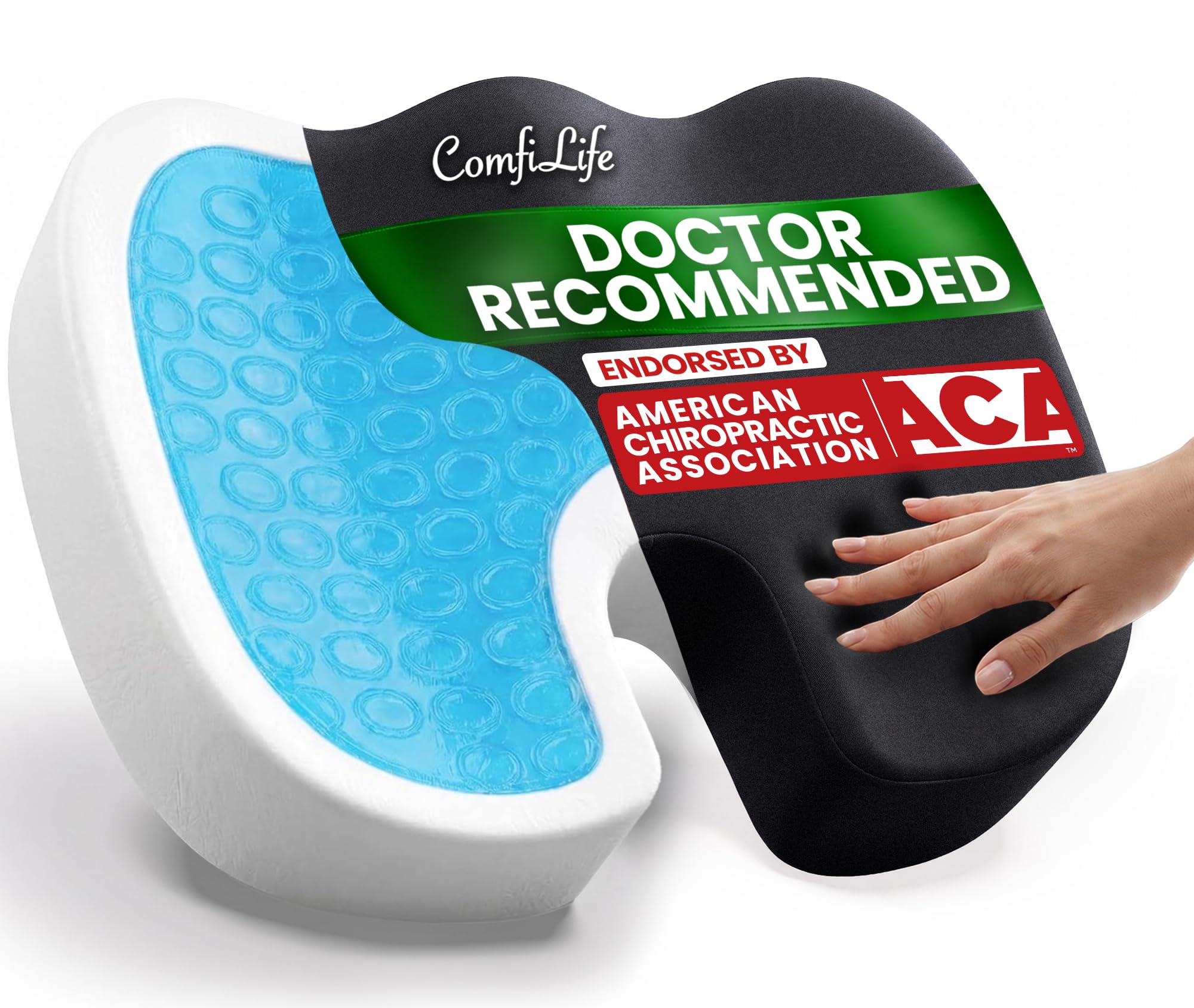
The gel-topped seat cushion that lifts weight off your tailbone and hips
This one works differently from the back pillows: it goes under you, not behind you. A U-shaped cutout suspends your tailbone so it never presses against a hard seat, and the design redistributes weight across the sitting bones instead of concentrating it. It is rated medium firm at 17.5 inches long by 13.7 inches wide by 2.8 inches tall, a flat, firm footing that takes the pressure off the base of your spine.
Comfort is the headline trait, followed by quality and pain relief. A cool-gel layer sits on top of the memory foam, and the non-slip rubber base holds it in place on slick seats. The velour cover zips off and goes in the machine. The recessed U-cutout is designed for sciatica relief — position it with the cutout toward the tailbone.
The honest catch is height: it is made to lift your hips slightly, so on a deep bucket seat or a soft chair it can feel tall — lower your chair if it does. And like every memory foam, firmness draws mixed views: to one sitter it is exactly right, to another it feels hard after an hour. On a flat, firm chair, the gel-topped foam keeps pressure off the sciatic nerve through long stretches.
What earns it praise: comfort leads by a distance — the gel-topped foam plus the U-shaped cutout combine to take pressure off the tailbone.
The lift caveat: expect the cushion to raise you a touch, so a soft or deep seat may sit high until you lower the chair.
Best for: anyone whose ache is under them — tailbone pressure, sitting-bone soreness, or long hours on a hard flat seat.
Think twice if: your chair is already tall or you dislike a lifted seat height.
9. Everlasting Comfort Memory Foam Seat Cushion
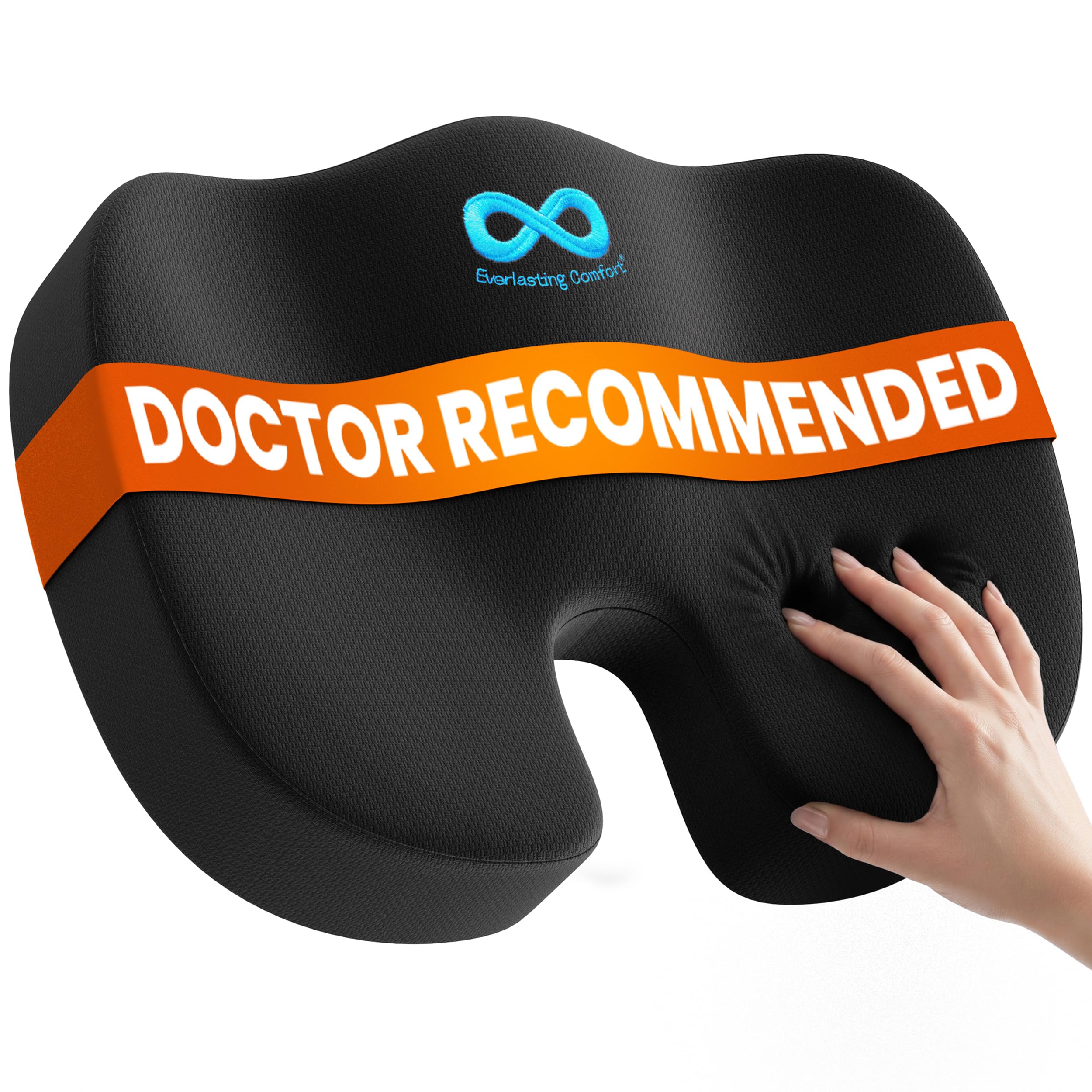
A large, simple seat cushion that puts the pressure under you, not on your spine
The sibling to the back pillow above, this one seats you rather than supports your spine. Made from 100 percent memory foam, it uses an ergonomic U-shaped cutout to keep pressure off the tailbone and lower back. The large size measures 17.3 inches by 14 inches by 3.15 inches, and the medium-firm core is built to keep its shape over time rather than flatten under you.
The cover is breathable and machine washable, and the non-slip bottom holds steady on office chairs, car seats, airplane seats, stadium benches, and wheelchairs. Compact enough to carry between chairs and rooms, it suits desk work, long travel, and drivers who want a cushion that keeps pressure off the tailbone. It is a size you can move without effort.
Comfort is its claim to fame, with pain relief close behind. Customers note the U-shaped cutout eases tailbone discomfort enough to sit through long desk sessions and wheelchair transport. Two things to weigh honestly: the regular size runs small for anyone over 200 pounds, so the large is the safer bet there; and firmness still divides sitters as it does across this whole category. Otherwise this is the value pick that punches above its tier.
Why it punches above its tier: comfort leads the feedback by a big margin, and the U-shaped cutout keeps weight off the tailbone for long sitting.
Size check: the regular runs small — heavier sitters do better in the large version.
The wallet-friendly pick: a large, simple foam seat cushion for desk, car, and wheelchair use.
Look bigger if: you are over 200 pounds — step up to the large size for proper coverage.
Understanding the Specs
Memory Foam Density and Firmness
Memory foam is a slow-rebound padding that molds to your shape and eases back. Density decides whether it holds up or squashes flat over months. A high-density core keeps supporting you long-term, while a soft, low-density pad may feel great on day one then give out. Firmness is a separate dial: firm foam pushes your body into alignment, medium foam gives a little more cushion. Neither is better — the right one depends on your body weight and how long you sit.
Back Support Cushions vs Seat Cushions
They fix opposite ends of a bad back. A back support cushion sits behind you, pressing into the lumbar curve to hold your spine upright — the fix for upper and mid-back fatigue. A seat cushion sits under you, lifting your hips and taking load off the tailbone and sitting bones — the fix for lower pain that builds while sitting. Some sitters use one or the other; a tailbone ache paired with poor posture may call for both.
Cover Material and Airflow
Long sits trap heat, and sweat makes a cushion slide and get uncomfortable. Breathable mesh covers and ventilated fabrics let air pass through so your back or seat stays drier. Mesh is also light and easy to zip off for washing, which matters because a foam core cannot be cleaned. Look for a removable, washable cover and a breathable outer layer if you sit for hours.
Straps and Non-Slip Bases
A cushion only works while it stays where you put it. Adjustable straps loop around the backrest to anchor a back support cushion, and models with extension pieces fit wider chairs. A non-slip rubber base grips the seat instead, which suits flat chairs and wheelchairs. Elastic straps are convenient but can stretch out over time, while a base or double-strap setup tends to hold its grip longer.
FAQ
Will a lumbar cushion fit my office chair or car seat?
Should I choose a firm or soft cushion for lower back pain?
How long will a memory foam cushion last before it flattens?
Can a cushion help with sciatica or tailbone pain?
Do back support cushions work in a car as well as a chair?
Is a seat cushion or a back cushion better for a bad back?
How do I clean a memory foam cushion?
Does cushion thickness affect how much support I get?
Is weight range important when choosing a cushion?
Can I use a back cushion on a sofa or recliner?
Final Thoughts: The Verdict
If your lower back aches after a long sit, the Cubii Cushii V2 is the best cushion for a bad back for most people — its curved shape keeps supporting you when you shift, it straps securely so it stays put, and at 22 ounces (about the weight of a can of soup) it moves easily between office chair, car, and couch. If your ache sits higher up your spine and you want medium-soft foam that spans more of your back, the CloudBliss Lumbar Support Pillow is the one to reach for. And if the pain is under you rather than behind you, grab the ComfiLife Gel Seat Cushion, whose U-shaped tailbone cutout (a notch that takes pressure off your tailbone) is built for exactly that.
How We Picked
We do not accept paid placement. Every pick is matched to a real buyer and a real use-case; we do not hands-on test units.
Sources & Methodology
Specifications: manufacturer listings and product documentation. Review insights: verified customer reviews, as of September 2026. Pricing: not shown on this page (it changes often); check the current price via the retailer link.
As an Amazon Associate, KitchPrep earns from qualifying purchases. This does not affect which products we feature.
Related Guides
