
In a busy kitchen—whether that’s a restaurant line, a catering prep table, or a home cook who treats Tuesday like service—cookware isn’t “just gear.” It’s your heat control, your timing, your cleanup speed, and your sanity when tickets stack up.
If you’re hunting for Best Chef Cookware, here’s the truth nobody puts on the product page: great cookware feels predictable. It heats the way you expect, responds when you drop the flame, deglazes cleanly when you need a pan sauce, and doesn’t punish you with weird hotspots or fragile coatings when you’re moving fast.
This guide pulls together 17 chef‑level picks on Amazon—from “smart budget” workhorses to lifetime investment sets. Instead of repeating specs you can already see, I’m going to focus on the stuff that matters to workers: how pieces behave under real heat, what owners love (and complain about) after months of use, and which tools are worth buying now vs. later.
How to Choose the Best Chef Cookware for Busy Kitchens
Before we talk brands, let’s talk logic. In commercial operations (and serious home kitchens), cookware gets judged by a few brutally practical standards: consistency, speed, durability, and cleanup friction. If a pan cooks beautifully but makes your dish pit miserable, it eventually stops getting used.
1. Start with the “job” the cookware must do
The fastest way to buy the wrong thing is shopping by hype instead of task. Here’s the chef-style way to think about it:
- High‑heat sear + pan sauce: stainless steel clad (or carbon steel if you season well).
- Eggs, delicate fish, sticky cheeses: nonstick (ceramic or hybrid) used at medium heat.
- Braises, soups, bread, big batches: enameled cast iron Dutch oven or a solid stockpot.
- Fast stir‑fry and “wok hei” style cooking: carbon steel wok (flat bottom for home stoves).
- Holiday roasting + gravy: a real roaster pan with a rack (and walls tall enough to prevent chaos).
A chef’s kit isn’t one magical pan. It’s a small set of specialized tools that each do their job without drama.
2. Choose the right material (and know the tradeoffs)
- Clad stainless steel: the backbone of professional kitchens. You get strong browning, excellent deglazing, and no coating to baby. The “learning curve” is mostly heat control and preheating.
- Carbon steel: the high-heat, fast-response cousin of cast iron. With seasoning, it becomes naturally slick. It rewards good habits—preheat, oil, clean/dry—then works for decades.
- Enameled cast iron: heat retention and gentle simmering power, with no seasoning required. It’s heavy, but for braising and bread it’s pure comfort and consistency.
- Ceramic nonstick: a clean release surface without traditional PFAS-based coatings. Best on medium heat, and it lasts longest when you avoid sprays and avoid overheating.
- Hybrid “nonstick + stainless” patterns: a convenience play—easy cleanup with better browning than most nonstick. Still benefits from proper preheating and moderate heat.
3. Handles and lids matter more than most people think
If you’ve ever poured off pasta water with a floppy lid, you already know. For worker-style cooking, pay attention to:
- Handle comfort under load: a pan feels fine empty… and awful when it’s full of stew.
- Rivets vs. rivetless: rivets are strong, but they trap gunk. Rivetless interiors are easier to wipe spotless.
- True lid fit: tight lids reduce evaporation for braises and help a stockpot behave.
- Helper handles: a second grip on heavier pans is not a luxury—it’s safety.
4. Induction compatibility: don’t assume
Induction is amazing for speed and control, but it punishes warped cookware and uneven bases. If you cook on induction:
- Look for a magnetic base (stainless exterior or a dedicated induction base).
- Avoid thermal shock (don’t blast a cold pan on max power; don’t dunk a hot pan in cold water).
- Expect carbon steel and cast iron to be “more sensitive” to fast heat changes—warm them gradually.
5. Buy in the right order (so your money actually shows up in your food)
If you’re building a “chef battery,” this order gets you results fastest:
- A 12-inch stainless skillet for searing, sautéing, and sauces.
- A nonstick skillet for eggs and delicate foods.
- A Dutch oven for braises, soups, bread, and batch cooking.
- Then carbon steel (for high-heat searing and wok cooking) if you enjoy the craft.
- Then specialty pieces like a roaster or grill pan once you’re actually using them.
Quick Comparison: 17 Chef‑Ready Cookware Picks on Amazon
Use this table to spot the right tool for your cooking style, then jump to the full review for the hands‑on details. I’ve ordered these in a “step‑up” path—from budget wins to investment pieces—so you can upgrade without wasting money.
On smaller screens, swipe or scroll sideways to see the full table.
| Product | Category | Material / Size | Best match | Amazon |
|---|---|---|---|---|
| Craft Wok 14″ Flat Hand‑Hammered Wok | Wok | Carbon steel / 14″ | High‑heat stir‑fry on home burners | Amazon |
| GreenPan Valencia Pro 11″ Fry Pan | Nonstick | Ceramic / 11″ | Eggs, fish, low‑oil daily cooking | Amazon |
| Lodge 6‑Qt Enameled Dutch Oven | Dutch oven | Enameled cast iron / 6 qt | Budget braises, soups, bread | Amazon |
| de Buyer MINERAL B Pro 9.5″ Fry Pan | Carbon steel | Carbon steel / 9.5″ | Searing + “gets better with use” pan | Amazon |
| Made In Seasoned Blue Carbon Steel 12″ Pan | Carbon steel | Carbon steel / 12″ | Restaurant‑style crusts at home | Amazon |
| Scanpan CTX 12.75″ Fry Pan | Nonstick | Premium nonstick / 12.75″ | Nonstick that can brown & deglaze | Amazon |
| Made In 12″ 5‑Ply Stainless Fry Pan | Stainless | 5‑ply clad / 12″ | Seared proteins + pan sauces | Amazon |
| HexClad Hybrid Nonstick 12″ Fry Pan | Hybrid | Hybrid / 12″ | Easy cleanup with better browning | Amazon |
| All‑Clad D3 3‑Qt Sauté Pan with Lid | Sauté | Tri‑ply / 3 qt | One‑pan meals, braises, sauces | Amazon |
| Le Creuset 10.25″ Square Skillet Grill | Grill pan | Enameled cast iron / 10.25″ | Indoor grill marks & fat draining | Amazon |
| All‑Clad Large Roaster 13×16 + Rack | Roaster | Stainless / 13×16″ | Holiday turkeys + gravy + veggies | Amazon |
| Tramontina Tri‑Ply Clad 12‑Piece Set | Cookware set | Tri‑ply + glass lids | Best value “whole kitchen” upgrade | Amazon |
| All‑Clad D3 8‑Qt Stockpot with Lid | Stockpot | Stainless / 8 qt | Stocks, pasta, meal prep batches | Amazon |
| STAUB 5.5‑Qt Round Cocotte | Dutch oven | Enameled cast iron / 5.5 qt | Deep braises + self‑basting lid | Amazon |
| Le Creuset 5.5‑Qt Signature Round Dutch Oven | Dutch oven | Enameled cast iron / 5.5 qt | Iconic all‑rounder + table‑ready | Amazon |
| Hestan ProBond TITUM Nonstick 10‑Piece Set | Premium set | Clad stainless + nonstick | Luxury nonstick durability + speed | Amazon |
| Demeyere 5‑Plus Stainless 10‑Piece Set | Pro set | 5‑ply stainless | Long‑term stainless investment | Amazon |
In‑Depth Reviews: 17 Best Chef Cookware Picks for Working Cooks
Below are the real “why this matters” reviews—how each piece behaves in everyday cooking, what it’s like to clean, and who should (and shouldn’t) spend the money. If you want one clean decision by the end, start with the tool that matches your most frequent job: eggs, searing, braising, or batch cooking.
1. Craft Wok 14″ Flat Hand‑Hammered Carbon Steel Wok – Real Stir‑Fry Energy

If you’ve ever wondered why restaurant stir‑fry tastes different, it’s not just “secret sauce.” It’s heat + speed + steel. A carbon steel wok gives you a huge hot zone in the center, cooler sides for staging, and the ability to toss ingredients without steaming them into sadness.
This Craft Wok is a flat‑bottom design, which matters for home stoves (gas or electric) because it can actually sit stable and make contact with the heat source. It’s also thicker and heavier than ultra‑thin bargain woks, which helps it hold heat when you add cold ingredients—exactly the moment cheap woks go limp and start boiling food instead of searing it.
Here’s the worker‑style advice: season it like you mean it. Clean off the factory coating, blue the steel, then build a few thin oil layers. After that, cooking becomes maintenance: hot rinse, quick scrub, dry on heat, wipe with a whisper of oil. Do that, and this becomes one of the lowest-cost, highest-impact upgrades you can make.
Why you’ll like it
- Fast stir‑fry results – Great for crisp vegetables, seared proteins, and quick noodles.
- Flat bottom practicality – Better stability on home stoves than round-bottom woks.
- Durable steel – Carbon steel can take high heat, metal utensils, and real use.
- Big capacity – Excellent for family portions or meal prep in one go.
Good to know
- It’s heavy; tossing food is easier with the helper handle and a towel grip.
- Seasoning and drying are non‑negotiable—ignore them and rust shows up fast.
- High‑heat stir‑fry creates smoke; you’ll want ventilation.
- Flat-bottom woks still don’t behave like a restaurant wok burner—use smaller batches for best “wok hei.”
Ideal for: anyone who loves stir‑fry, fried rice, or noodle dishes and wants a legitimate wok experience without spending a fortune.
2. GreenPan Valencia Pro 11″ – The “Egg Pan” That Can Handle Real Cooking

Every serious kitchen needs at least one pan that says: “Yes, you can cook eggs at 7 AM without negotiating with burnt protein.” The Valencia Pro is that tool for a lot of cooks because it behaves like a slick nonstick, but feels more “chef-y” than the ultra-light bargain skillets that warp and die.
This pan is built on a hard‑anodized body with an induction base, and it’s designed for medium‑heat daily work: omelets, fish, pancakes, sautéed vegetables, even quick browning for chicken cutlets. The big win is how predictable it feels: less sticking, less oil, less cleanup time.
The key to long life (this applies to basically all ceramic nonstick): skip aerosol cooking sprays, keep heat moderate, and clean gently. When owners say “it started sticking,” it’s often carbonized oil buildup, not “the coating failed overnight.” A warm-water simmer and a gentle scrub can restore performance far more often than you’d expect.
Why it stands out
- Extremely low-stick cooking – Eggs and delicate foods release with minimal oil.
- Induction friendly – Great choice if you upgraded stoves and had to replace pans.
- Oven flexibility – Useful for finishing frittatas or keeping food warm (check lid limits if you buy one).
- Easy cleanup – Most messes wipe out fast when you don’t scorch oils.
Good to know
- High heat shortens nonstick life—this is a “medium heat hero,” not a steak pan.
- Sprays can create sticky buildup; use a small amount of oil or butter instead.
- Metal utensils are technically allowed, but silicone is smarter for longevity.
- Like all nonstick, it’s not truly forever—plan on it being your reliable daily driver, not your heirloom pan.
Ideal for: cooks who want a reliable, induction-ready nonstick skillet for eggs, fish, and weekday cooking with minimal cleanup.
3. Lodge 6‑Qt Enameled Dutch Oven – The “Do Everything” Pot at a Friendly Price
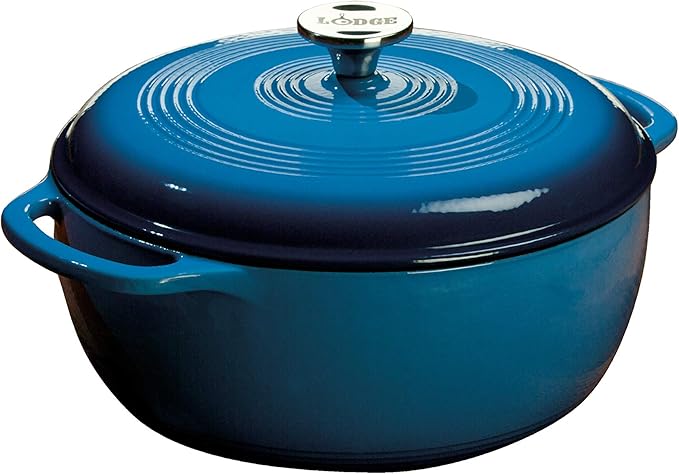
In real kitchens, Dutch ovens earn their keep because they do the “slow and steady” jobs that turn cheap ingredients into something people remember: chili, pot roast, beans, braised chicken, Sunday sauce, even no‑knead bread. The Lodge 6‑quart hits that sweet spot where the pot is big enough for families and meal prep, but still manageable on a daily basis.
Enameled cast iron gives you two major advantages: even heat and forgiving simmering. You can brown in the pot, deglaze, then cover and braise without switching cookware. And because it’s enamel, you don’t have to worry about seasoning or reactivity with acidic foods like tomatoes.
The “worker tip” here is about preventing enamel stress: avoid extreme high heat when empty, don’t thermal‑shock it (don’t go hot pot → cold sink), and use wood or silicone utensils. Treat it like a heavy tool, not a disposable pot, and it will keep showing up for years.
Why you’ll like it
- Huge versatility – Soup to bread to braises in one pot.
- Great heat retention – Helps prevent scorching and keeps simmering stable.
- No seasoning required – Easier than raw cast iron for beginners.
- Budget friendly – One of the best “big upgrade” purchases without premium pricing.
Good to know
- It’s heavy (like all cast iron). Use two hands and good mitts.
- Enamel can chip if banged or abused—don’t clang the lid or drag it on grates.
- Staining is normal over time; baking soda soaks help.
- Handwashing is often best for keeping the exterior pretty.
Ideal for: anyone who wants a true Dutch oven for soups, braises, and bread without jumping straight to luxury pricing.
4. de Buyer MINERAL B Pro 9.5″ – The “Cadillac” Carbon Steel Feel

Carbon steel is what a lot of working cooks reach for when they want two things at once: fast heat response (like steel) and developing natural nonstick (like cast iron) without the weight penalty. The Mineral B Pro has a thick, serious feel—and the stainless handle is a big deal because it removes the “handle heat” anxiety that comes with many carbon steel pans.
This smaller 9.5″ size is sneaky-useful. It’s big enough for a couple eggs, a chicken breast, or a quick sauté, and small enough that it heats evenly on more stoves. It’s also a great “training pan” for learning carbon steel habits: preheat gradually, add a thin oil film, cook, then clean and dry immediately.
One expert note: many “carbon steel warping” horror stories come from blasting induction on max power from cold. Warm the pan at medium for a minute or two, then go up. Carbon steel rewards patience with performance.
Why chefs love it
- Seared crusts – Excellent Maillard reaction on proteins and vegetables.
- Natural nonstick potential – Gets slicker over time with real use.
- Comfortable handle – Stainless “pro” handle is more oven-friendly than coated handles.
- Induction ready – Works across gas/electric/induction when heated thoughtfully.
Good to know
- Carbon steel needs seasoning and drying—this is a relationship, not a fling.
- Acidic foods (tomatoes, wine reductions) can strip seasoning if cooked long.
- Smokes during seasoning—ventilation helps.
- Size is smaller; if you cook for 3–4 often, you may want a larger pan too.
Ideal for: cooks who want chef-style searing and a pan that improves with use—and don’t mind basic seasoning care.
5. Made In Seasoned 12″ Blue Carbon Steel – High Heat Without the Bulk

This is the pan you buy when you want that restaurant-style sear—steaks, burgers, chicken thighs—without living the full cast-iron lifestyle. Carbon steel heats quickly, develops a working patina, and can go from stovetop to oven or even open flame when you’re cooking like you mean it.
The “pre-seasoned” aspect is a convenience, not a miracle. Some owners love it out of the box; others strip and rebuild seasoning to get a smoother surface. Either way, your results come down to the same chef fundamentals: keep heat in the medium-to-medium-high zone, use enough fat for the job, and let proteins release naturally instead of forcing them.
Where this pan shines is speed. When you’re cooking multiple components, you can crank out quick sears, wipe, re-oil, and move on. That rhythm is why carbon steel is so common in professional kitchens—fast, tough, and responsive.
Why it’s worth it
- Excellent heat response – Quick changes in burner power actually matter.
- Big cooking surface – 12″ is the sweet spot for most households and prep cooks.
- Develops real patina – Gets more nonstick as you use it well.
- High heat capability – Great for searing, roasting, and aggressive browning.
Good to know
- Cleaning is different: wipe, hot water, dry, re-oil. Soap is limited unless reseasoning.
- Acidic sauces can damage seasoning; use stainless for long tomato cooks.
- Induction users should preheat gradually to reduce warping risk.
- No lid; you may need a universal lid or splatter screen.
Ideal for: cooks who want fast, aggressive searing and don’t mind a little maintenance to earn a slick surface.
6. Scanpan CTX 12.75″ – Nonstick That Doesn’t Feel “Delicate”

Most nonstick pans are either (a) slick but fragile or (b) tough but disappointing. Scanpan’s CTX line has a reputation for feeling like an actual cooking tool: heavier base, steadier heat, and a surface that releases food without acting like it can’t handle browning.
This is the kind of pan people buy after they’ve burned through cheap nonstick every year and finally decide: “I’d like to stop re-buying this category.” In practice, CTX works best as a “daily driver” for foods that would be annoying in stainless—eggs, delicate fish, sticky sauces—while still being able to sauté or sear more confidently than many ceramic-coated alternatives.
The best expert tip: treat premium nonstick like a precision instrument. Medium heat does 90% of jobs, preheat gently, and don’t punish it with metal scraping if you want maximum life—even when the marketing says it can take it.
Why it stands out
- Confidence cooking – Less fear of sticking and less oil needed.
- Heavier, steadier base – Helps with even heat and fewer hotspots.
- Induction compatible – Works well when you want predictable heating.
- Premium build feel – Feels like a “real pan,” not disposable nonstick.
Good to know
- It’s pricey for a nonstick pan—this is an upgrade, not a starter.
- Still not the best choice for ripping-hot steak sears (stainless/carbon steel win).
- Heavier than bargain pans; consider handle comfort and wrist strength.
- Longevity improves dramatically with gentle utensils and moderate heat.
Ideal for: cooks who want a premium nonstick pan that feels substantial, heats evenly, and doesn’t baby you with constant “do not” warnings.
7. Made In 12″ 5‑Ply Stainless Fry Pan – Fast, Even, Chef‑Style Control

If you want to cook like a pro, stainless is the foundation. It’s the pan you reach for when you need deep browning, a clean fond, and a pan sauce that tastes like you knew what you were doing all along. The Made In 12″ is built for that rhythm: sear → flip → deglaze → reduce → finish.
A 12-inch fully clad skillet is also the most “ROI-positive” upgrade you can make because it replaces multiple weak pans. It gives you surface area (so food browns instead of steaming), and it holds heat well enough that you can cook multiple portions without the pan collapsing in temperature.
The stainless learning curve is simpler than people fear. Two rules: (1) preheat until a drop of water dances (not evaporates instantly), then (2) add oil and let proteins release when they’re ready. If you do that, sticking becomes an occasional tool (fond), not a daily problem.
Why it’s a chef staple
- Excellent searing – Great crusts and clean fond for sauces.
- Temperature control – Responsive when you lower heat mid-cook.
- Built for decades – No coating to fail; scratches don’t kill performance.
- Induction ready – Works across cooktops if you avoid overheating from cold.
Good to know
- Stainless requires technique—preheat and proper fat matter.
- Expect some discoloration; Bar Keepers Friend restores shine fast.
- If you cook mostly eggs, you’ll still want a dedicated nonstick pan.
- Like any premium pan, occasional defects happen—inspect for warping on arrival.
Ideal for: anyone ready to cook with real searing and pan sauces—this is the “chef pan” most kitchens should own.
8. HexClad Hybrid 12″ – The “Meet in the Middle” Skillet

Hybrid pans aim for a specific promise: “Give me easier cleanup than stainless, but better browning than typical nonstick.” HexClad’s laser‑etched pattern (stainless peaks + nonstick valleys) is built around that idea.
When used correctly—moderate heat, a thin layer of fat, and patience on preheat—it can be a genuinely convenient weeknight pan. You can sauté, crisp, and do one‑pan meals with less sticking drama than stainless, especially for cooks who don’t want to think too hard about heat management.
The worker-level reality check: it’s not “magic nonstick.” It’s a tool that performs best when you treat it like a hybrid: preheat like stainless, cook like nonstick (medium heat), and clean like a grown-up. Do that, and it can be a practical middle ground.
Why people reach for it
- Convenient cleanup – Easier release than stainless for many foods.
- Better browning than most nonstick – Pattern helps develop color.
- Cooktop flexibility – Works across stovetops, including induction.
- Durable “feel” – Heftier than typical nonstick skillets.
Good to know
- Not a true Teflon-style slip surface; eggs may need fat and heat control.
- Overheating can still cause sticking and buildup; medium heat is your friend.
- Marketing says metal utensils are OK, but gentler tools extend life.
- Always verify authenticity and seller—counterfeit concerns exist for popular brands.
Ideal for: cooks who want a single pan that’s easier than stainless but more capable than basic nonstick for browning and daily meals.
9. All‑Clad D3 3‑Qt Sauté Pan – The Pan That Replaces a Pile of Pans

A sauté pan is the “quiet MVP” of professional-style cooking because it does dry heat and moist heat in one shape: wide surface area for browning, straight sides for sauce volume, and a lid that turns sauté into braise. The 3‑quart size is especially useful because it’s big enough for real meals, but still manageable for everyday use.
This is the kind of pan you grab for: chicken thighs that start with a sear and finish under a lid, pasta sauces that need room to reduce, vegetables you want to brown without flying off the edge, and quick weeknight pan meals where you want to keep splatter under control.
The handle design is famously polarizing. Some cooks love the control; others find it uncomfortable under weight. My practical advice: if you routinely lift a full sauté pan, consider using a towel wrap for grip—or prioritize models with an extra helper handle if wrist comfort is a big issue.
Why it earns its keep
- Huge versatility – Sear, sauté, simmer, shallow-fry, and braise.
- Strong heat performance – Reliable browning and deglazing.
- Lid included – Makes it genuinely multi‑purpose.
- Built to last – No coating; stainless can handle scrubbing and real use.
Good to know
- Handle comfort is personal—try a similar handle style if possible.
- Stainless needs technique; it’s not an “eggs with zero fat” pan.
- Rivets can trap grime—soak or use a brush to clean around them.
- Premium pricing makes more sense if you’ll use it multiple times per week.
Ideal for: cooks who want one pan that can handle 70% of meals—especially sauces, braises, and one‑pan dinners.
10. Le Creuset 10.25″ Square Skillet Grill – Grill Marks Without the Backyard

A grill pan is not a replacement for an outdoor grill. But it is a strong answer for apartments, condos, and anyone who wants indoor “char‑adjacent” cooking with decent fat drainage and strong browning potential. This Le Creuset is thick enameled cast iron, which means it holds heat extremely well once it’s preheated.
The ridges give you two things: grill marks and a channel for fat to collect away from food. That can be great for steaks, chops, and chicken. It can also be excellent for fast-seared vegetables (think asparagus, zucchini, onions) when you want color without a lot of oil.
The downside is the same for every grill pan: cleaning between ridges. The best pro trick is to let the pan cool while you eat, then soak with warm water. For stuck bits, a little baking soda + low heat loosens debris without scratching the enamel.
Why it’s satisfying
- Serious heat retention – Great for searing once fully preheated.
- Beautiful presentation – Grill marks and table-ready styling.
- Fat drainage – Ridges help separate rendered fat from food.
- Durable enamel – No seasoning required and no rust worries.
Good to know
- It’s heavy and needs two hands for safe handling.
- Ridges take extra cleaning effort compared to a flat skillet.
- It can smoke indoors—ventilation is important.
- This is a specialty pan; don’t buy it before you have your core skillet and Dutch oven.
Ideal for: indoor cooks who love steaks, chops, or grilled vegetables and are willing to trade extra cleaning for grill-style results.
11. All‑Clad Large Roaster 13×16 + Rack – “Real Roasting Pan” Energy

Roasting pans are one of those purchases you don’t think about until you need one—and then you really need one. A proper roaster does three jobs: supports a big bird, collects drippings cleanly, and gives you a stable base for gravy. This All‑Clad is built for that “big day” cooking, and the rack is there for a reason: airflow = better browning.
In worker terms, what you’re buying is control. Tall sides reduce splatter and make it easier to move a heavy roast without sloshing. The rack keeps meat elevated so the underside doesn’t stew in fat, and it also makes it easier to lift the roast safely for resting.
Pro tip: roast veg in the drippings. Carrots, onions, potatoes, and celery underneath a bird turn into flavor bombs. After roasting, set the pan on the stovetop and deglaze with stock or wine—this is how gravy stops tasting “thin.”
Why it’s worth owning
- Big capacity – Built to handle large turkeys and serious roasts.
- Great drippings management – Perfect for gravy and pan sauces.
- Rack helps browning – Better airflow and easier lifting.
- Solid handles – Safer transfers when hot and heavy.
Good to know
- It’s a specialty item—buy it if you roast often or host holidays.
- Storage takes space; measure your cabinet or oven drawer.
- Rack coatings vary; follow rack temperature guidance carefully.
- For “once a year” users, this may be overkill compared to cheaper solutions.
Ideal for: holiday hosts, meal-prep roasters, and anyone who wants the roasting + gravy process to feel controlled instead of chaotic.
12. Tramontina Tri‑Ply Clad 12‑Piece Set – The “Smart Whole-Kitchen Reset”

When a kitchen needs a clean reset—especially after switching to induction—this Tramontina set is the type of value play that makes sense. You get core sizes (fry pans, saucepans, sauté pan, stockpot, Dutch oven) in tri‑ply clad construction, which means more even heating than thin single-layer stainless.
The underrated feature here is the “complete kit” nature. For workers and busy households, having the correct size pot reduces messy workarounds—no more boiling pasta in something too small, or browning meat in a pan that crowds and steams.
The key limitation is also obvious: glass lids are convenient, but they cap oven temperatures. That’s not a deal-breaker; it just means you’ll finish more recipes stovetop or use a sheet pan/foil when a lid would otherwise go in the oven. If you want “one set that does everything in the oven,” jump to Demeyere or Hestan later.
Why it’s a killer value
- Even heating – Tri‑ply clad performs far above basic stainless.
- Excellent coverage – Sizes make sense for everyday cooking.
- Induction ready – Works across modern cooktops.
- Strong price-to-performance – One of the smartest “whole kitchen” upgrades.
Good to know
- Glass lids have lower oven limits—plan accordingly.
- Stainless needs technique; you may still want one dedicated nonstick skillet.
- Handles can get hot during long simmers; keep a towel nearby.
- A set is only a bargain if you’ll use most pieces—otherwise buy à la carte.
Ideal for: anyone who wants a full stainless cookware foundation at a sensible price—especially new induction owners.
13. All‑Clad D3 8‑Qt Stockpot – Batch Cooking Without Scorching

Stockpots don’t get the glory, but they do the heavy lifting: pasta night, chicken stock, soup for the week, chili for a crowd, lobster boils, meal prep grains. A good stockpot makes two things easier: steady simmering and clean flavor.
All‑Clad’s stockpots are designed to feel solid and stable, with a quality lid fit and strong handles for safe movement. The performance value tends to show up on long cooks—when cheap thin pots develop hotspots and scorch the bottom. If you make stock or soup regularly, avoiding one burned batch pays for the upgrade faster than you’d think.
Worker tip: a stockpot is also a “prep vessel.” Use it to parboil potatoes, blanch greens, pre-cook pasta, or hold warm water for cleaning as you go. In a busy kitchen, multi-use capacity is efficiency.
Why it’s worth it
- Reliable heat – Better simmer control and less scorching risk.
- Solid lid fit – Helps reduce evaporation for stocks and soups.
- Big enough – 8 qt is a practical “batch cook” size without being enormous.
- Durable stainless – Built for years of use and aggressive cleaning.
Good to know
- Premium pricing—only worth it if you actually batch cook often.
- Large pots are awkward when full; plan your sink and transfer strategy.
- Rivets require a little extra cleaning attention.
- For very large batches, you may want 12–16 qt instead.
Ideal for: meal preppers, soup makers, and anyone who cooks stocks or pasta weekly and wants fewer scorch disasters.
14. STAUB 5.5‑Qt Round Cocotte – Moist Braises, Deep Flavor, Built Like a Tank

If you want to talk about “chef cookware” with a straight face, STAUB is one of the names that shows up in real kitchens. The reason is simple: it’s built for long cooks, it holds heat beautifully, and the lid design is purpose-built. Those little spikes under the lid create a self-basting effect—condensation forms, then drips back down across the food, helping keep braises moist.
The interior matte black enamel is also a different vibe than creamy interiors. It’s great for browning and it hides stains better, which is a practical win if you cook aggressively. Over time, with regular cooking, it tends to feel more “naturally releasing,” especially with fatty braises.
This is not lightweight cookware. But in exchange you get stability. When you’re browning meat, the pot stays hot. When you’re simmering sauce, it behaves like a steady temperature battery. That consistency is why people treat these like lifetime tools.
Why it earns loyalty
- Self‑basting lid – Helps braises stay moist without babysitting.
- Excellent browning – Matte interior is great for developing flavor.
- Durable feel – Built to take years of use with proper care.
- Table-ready – Looks like a centerpiece when you serve from the pot.
Good to know
- It’s heavy—plan on two-handed lifts and good oven mitts.
- Use low-to-medium heat; enamel doesn’t need blasting.
- Thermal shock can crack enamel—cool gradually before washing.
- Premium price is justified if you braise often; otherwise Lodge may be enough.
Ideal for: cooks who love braising, soups, and bread and want a French-made Dutch oven that feels built for decades.
15. Le Creuset 5.5‑Qt Signature Round Dutch Oven – The Classic That Just Works

Le Creuset’s 5.5‑quart Dutch oven is a classic for a reason: the size is wildly practical, the enamel is smooth and easy to live with, and the whole thing is designed to move from stove to oven to table without feeling like a compromise. If you make soups, braises, stews, or bread even semi-regularly, it’s a “use it forever” kind of purchase.
The sand-colored interior enamel promotes caramelization while being easy to clean compared to raw cast iron. It’s also forgiving for beginner braisers because the pot holds heat so steadily that you’re less likely to scorch sauces or stew bottoms.
One chef tip that matters: you don’t need high heat. In fact, staying at low-to-medium heat protects the enamel and still gives you beautiful browning. Let the pot preheat gradually, then brown in batches. That’s how the fond builds, and that’s where the flavor lives.
Why it’s beloved
- Reliable performance – Even heat and predictable simmering.
- Great size – Works for most households without feeling too small.
- Easy cleaning – Smooth enamel releases well with soaking and gentle scrub.
- Heirloom feel – Built to last and looks beautiful on the table.
Good to know
- Weight can be a deal-breaker for some cooks—consider your comfort lifting it.
- Enamel can stain if overheated; keep heat moderate.
- Metal utensils can mark enamel—wood or silicone is safer.
- It’s a premium price; Lodge is a strong budget alternative if you’re unsure.
Ideal for: anyone who wants a high-quality, versatile Dutch oven that’s as much a cooking tool as it is a lifetime kitchen staple.
16. Hestan ProBond TITUM 10‑Piece Set – Nonstick That’s Built Like Premium Stainless

This set is for a very specific shopper: someone who wants premium stainless-style performance and construction, but still wants the daily comfort of nonstick surfaces for easy release and fast cleanup. Hestan’s TITUM system is marketed as a multi‑layer nonstick reinforced with diamond particles, anchored with titanium plasma technology—translation: it’s aiming for higher durability than typical nonstick.
In practice, the appeal is “worker speed.” You get responsive clad construction (so the pan doesn’t lag behind heat changes), plus an easier release surface for sticky proteins and quick breakfasts. Details like sealed rims and flush rivets also matter more than they sound: less gunk buildup, easier wipe-downs, better stacking and nesting.
If you’re spending this much, use the set like a pro: keep heat in the medium range for nonstick longevity, avoid metal scraping even if it claims toughness, and clean with soft tools. Treated well, this is the kind of kit that can carry a kitchen for years.
Why it’s special
- Premium build – Clad construction with thoughtful finishing details.
- Nonstick convenience – Easier everyday cooking and cleanup than pure stainless.
- Flush rivets – Less food buildup and easier cleaning inside.
- Induction ready – Works across cooktops without needing a separate kit.
Good to know
- Expensive—this is a luxury purchase, not a starter set.
- Nonstick longevity still depends on heat control and gentle utensils.
- Set value depends on your cooking style—don’t buy sets with pieces you won’t use.
- Always follow the included care guide for max oven temps and dishwasher use.
Ideal for: cooks who want a premium all-in-one kit with nonstick ease and stainless-style performance—and are willing to invest for it.
17. Demeyere 5‑Plus 10‑Piece Set – Rivetless, Heavy‑Duty, Built for the Long Haul

Demeyere sits in that “serious cookware” tier where the goal is not shiny marketing—it’s engineering that holds up over time. This 5‑ply construction is designed for strong heat conduction and retention, which matters when you’re searing, reducing, or cooking on induction where power changes are instant.
One of the most practical differentiators is the interior design. Many cooks love sets that reduce interior rivets because it makes cleanup simpler and keeps the inside walls smoother. In busy cooking, that translates to minutes saved, less scrubbing, and fewer “mystery grime” spots that make cookware look old fast.
This is the set you buy when you’re done buying cookware. If you cook frequently and want a long-term stainless system, Demeyere is a strong “buy once, cry once” candidate—just understand that it’s heavy-duty gear, not lightweight convenience.
Why it’s a top-tier set
- Excellent heat performance – Strong conduction and retention for consistent results.
- Induction excellence – Designed to behave well on modern cooktops.
- Easy-clean interior design – Less gunk trapping means less scrubbing over time.
- Lifetime mindset – Built to outlast trends and cheap replacements.
Good to know
- Premium price is only “worth it” if you cook often enough to feel the difference.
- Heavier pieces can be tiring—consider your comfort moving full pots.
- Warranty experiences vary by brand; keep paperwork and follow care rules.
- As with any set, make sure the included sizes match your real cooking habits.
Ideal for: serious cooks who want a long-term stainless system with pro-level heat performance and easier long-run cleanup.
Why Cookware Materials Matter (and How Chefs Get Better Results)
If cookware marketing disappeared tomorrow, chefs would still choose tools the same way: by how they handle heat, how they behave when crowded, and how fast they recover when you add cold food. Here’s what actually changes results.
Heat control: thickness, cladding, and recovery
- Clad stainless spreads heat across the whole cooking surface and responds well when you adjust the burner.
- Carbon steel heats quickly and makes crusts fast, but it demands controlled preheating—especially on induction.
- Cast iron holds heat like a battery: slower to change, but extremely stable for long cooks and deep browning.
- Nonstick (ceramic or hybrid) performs best at medium heat; overheating is the fastest way to shorten its lifespan.
The “chef move” is matching the material to the job. Want a hard sear? Stainless or carbon steel. Want eggs without stress? Nonstick. Want braises that taste like you did everything right? Enameled cast iron.
How chefs avoid sticking (without panic)
- Stainless: preheat properly, add oil after preheating, and let proteins release when browned.
- Carbon steel: build seasoning with thin layers, cook with fat, and keep the surface dry and lightly oiled after cleaning.
- Enameled cast iron: avoid screaming-hot empty preheats; brown in batches and deglaze to lift fond cleanly.
- Ceramic nonstick: skip spray oils, keep heat moderate, and deep-clean carbonized oil buildup when needed.
Once you nail these habits, cookware stops being “temperamental.” It becomes predictable—and predictable cooking is fast cooking.
FAQ: Chef‑Style Cookware, Answered
What does “chef cookware” actually mean?
Do I need a full set, or should I buy pieces?
Is carbon steel hard to maintain?
Why do people complain about sticking on nonstick pans?
What’s the best “starter trio” if I want one smart upgrade path?
Final Thoughts: The Fastest Way to Pick the Right Cookware
Cookware should remove friction—not add it. The best pieces make cooking feel controlled: food browns when you want it to, sauces reduce cleanly, and cleanup doesn’t steal your night.
Here’s the simplest way to decide based on how you cook:
- Want the best value “whole kitchen” reset? Start with the Tramontina Tri‑Ply 12‑Piece Set, then add one dedicated nonstick skillet like the GreenPan Valencia Pro 11″.
- Want one “chef pan” that changes how you cook? Go for the Made In 12″ Stainless (or a sauté pan like the All‑Clad D3 3‑Qt Sauté if you love one-pan meals and sauces).
- Want braises and soups to taste “restaurant rich”? Choose a Dutch oven that fits your budget: Lodge 6‑Qt for value, or STAUB 5.5‑Qt / Le Creuset 5.5‑Qt for premium.
- Want high‑heat searing and stir‑fry power? Add carbon steel: de Buyer Mineral B Pro for classic searing, the Made In Blue Carbon Steel 12″ for bigger batch sears, and the Craft Wok 14″ for stir-fry.
- Want the “buy once, cook hard” top tier? For an all-in-one premium kit, look at the Demeyere 5‑Plus set (stainless) or the Hestan ProBond TITUM set (clad + high-end nonstick convenience).
If you pick based on the job you cook most—and you match the material to that job—any of these can become your go-to Best Chef Cookware setup. Start with one upgrade you’ll use constantly, build from there, and enjoy the difference every single time the pan hits the heat.
