
If you cook for workday lunches, late-night “I’m too tired to think” dinners, or a hungry crew that somehow always wants rice, a ceramic-lined rice cooker can be the quietest upgrade you make all year.
Here’s the magic: rice cookers remove the two things that ruin rice most—guessing and distractions. You measure once, press a button, and the cooker handles the boil, simmer, steam finish, and keep-warm transition. With a ceramic surface (or a pure ceramic/clay pot), cleanup can be dramatically easier, and many people prefer the idea of cooking without visible traditional nonstick wear-and-tear over time.
This guide is built to help you choose the Best Ceramic Rice Cooker for your real life—not the fantasy version where you carefully monitor water ratios while the kitchen is spotless. I’m focusing on what actually matters: bowl material, steam control, lid design, keep-warm behavior, portion size, and the small details you only notice after month two.
Disclosure: As an Amazon Associate, I may earn from qualifying purchases. Prices move fast on Amazon, so use the links below to check today’s deal and availability.
How to Choose the Best Ceramic Rice Cooker for Your Kitchen
A rice cooker looks simple, but small design differences completely change the day-to-day experience—especially if you use it like most workers do: on autopilot, between meetings, kid pickups, and “what’s for dinner?” moments. Here’s how to choose the right one the first time.
1. Understand what “ceramic” means (because it’s not one thing)
“Ceramic rice cooker” can mean three different bowl types:
- Ceramic-coated nonstick: The most common. You get an easy-release surface on top of an underlying metal bowl. Many brands market these as PFAS/PFOA-free, but always check what the brand discloses and how they describe the coating.
- Pure ceramic / pottery bowl: A thicker, fully ceramic inner pot (no coating layer). It behaves more like cookware than a “nonstick insert”: excellent heat retention, different steaming behavior, and often a more “traditional” rice texture.
- Clay pot (earthenware): Similar to pure ceramic but typically more porous and “pottery-like.” Many people buy this specifically for aroma, texture, and old-school clay-pot flavor notes.
Your tradeoff: coated bowls are usually the easiest to clean and the most forgiving, while pure ceramic/clay bowls can feel more premium and “natural,” but they can be heavier, slower, or require gentler handling.
2. “Cup” ratings are not kitchen cups—use the included scoop
Most rice cookers use a traditional rice measuring cup (often around 180 ml), not an 8 oz kitchen cup. That’s why a “10-cup” rice cooker doesn’t mean 10 kitchen cups of uncooked rice. If you do one thing for perfect results: use the included rice cup and fill water to the bowl’s internal lines for the program you’re using.
If you like precision, here’s the practical approach I recommend:
- Everyday method: Use the included cup + internal bowl lines (fastest and easiest).
- Dialed-in method: Weigh rice in grams and use tested ratios for your specific rice type.
- Busy-worker method: Rinse rice quickly, use the bowl lines, and rely on fuzzy logic (more on that below).
3. Match capacity to how you actually eat (not how you “should” eat)
Capacity is the #1 reason people regret a purchase. Don’t shop by the maximum—shop by your routine:
- Solo / couples / meal-prep sides: 2 cups uncooked (about 4 cups cooked) is perfect, faster, and easier to store.
- Small families: 3–4 cups uncooked (6–8 cups cooked) covers dinner + leftovers.
- Big families / batch cooking: 5–6 cups uncooked (10–12 cups cooked) keeps you from running two cycles back-to-back.
If you cook rice for lunch bowls, fried rice, or freezer meals: choose a capacity that gives you leftovers on purpose. That’s where rice cookers pay for themselves.
4. Decide if you want “one-touch” simplicity or fuzzy logic control
Both can be excellent—but they feel different:
- One-touch cookers are the simplest. They heat until water is gone, then switch to warm. They’re fantastic for basic white rice, but they can be less consistent with brown rice, mixed grains, or very large batches.
- Fuzzy logic (micom) cookers use sensors and staged cooking programs to adjust temperature and timing. In practice, this usually means: better brown rice, better texture consistency, and fewer “mushy edge / crunchy center” surprises—especially when you’re distracted.
If you cook brown rice weekly, love sushi rice, or want oats/porridge and grains to behave predictably, fuzzy logic is usually worth the step up.
5. Don’t overlook lid design (it’s the hidden cleanliness factor)
The lid is where steam condenses and starch spray lands. Two lid features make a big difference long-term:
- Removable inner lid: Easier deep-cleaning, less lingering “rice cooker smell,” and better long-term hygiene.
- Condensation collector: Helps keep countertop drips down and prevents “mystery puddles” after cooking.
If you’re choosing between two similar cookers, pick the one with the easier-to-clean lid system. You’ll thank yourself later.
6. Choose features that make weekday life easier
These are the features that consistently help real households (and tired humans) the most:
- Delay timer: Load it before work, eat when you get home.
- Keep warm you can trust: Great for staggered dinners, but you still want rice that stays fluffy—not crusty.
- Steam basket or tray: The “two things at once” win: rice below, veggies/dumplings/protein above.
- Quick mode: Not always perfect, but very useful when dinner is already late.
Quick Comparison: 15 Best Ceramic Rice Cooker Picks
Use this table to spot the right category first—budget starter, small-space, family batch-cooker, low-carb, or pure ceramic/clay— then jump to the review that matches your routine.
On smaller screens, swipe or scroll sideways to see the full table.
| Model | Cooker style | Capacity | Best match | Amazon |
|---|---|---|---|---|
| AROMA CoreCoat One-Touch (1.5 qt) | Ceramic-coated | 6 cups cooked | Under-$25 simplicity for sides, soup, and small households | Amazon |
| GreenLife Rice & Beans (1.5 qt) | Ceramic-coated | 2 cups uncooked | Budget fuzzy-logic mini with a real beans preset | Amazon |
| AROMA CoreCoat Digital (8 cups cooked) | Ceramic-coated | 4 cups uncooked | Family-friendly value with delay timer + steamer basket | Amazon |
| Starfrit 10-Cup w/ Glass Lid | Ceramic-coated | 10 cups cooked | Big, simple switch-style cooking (watch through glass) | Amazon |
| GreenLife Digital Rice Cooker (1.5 qt) | Ceramic-coated | 2 cups uncooked | Compact, cleaner look with fuzzy logic + presets | Amazon |
| AROMA HeatFlow Pro Serve & Store (12 cups cooked) | Ceramic-coated | 6 cups uncooked | Entertainers: lift-out handles + silicone storage lid | Amazon |
| Gourmia 3 Qt Digital + Steamer Basket | Ceramic-coated | 12 cups cooked | Batch rice + steam veg/protein in one cycle | Amazon |
| TOKIT Mini (9 presets) | Ceramic-coated | 3 cups uncooked | Small homes that want yogurt/cake/soup modes too | Amazon |
| Yum Asia Kumo YumCarb | Low-carb | 5.5 cups uncooked | Rice-nerd texture + low-carb function + 3D heating | Amazon |
| COSORI 10-Cup Fuzzy Logic (18 functions) | Multicooker | 10 cups cooked | All-in-one “weekday hero” with sauté + slow cook | Amazon |
| AROMA Purple Clay Pot (ARC-7206P) | Clay pot | 12 cups cooked | Traditional clay flavor & aroma, modern controls | Amazon |
| Yum Asia Panda Mini | Premium mini | 3.5 cups uncooked | Couples who want high-end texture in a small body | Amazon |
| GreenPan Low-Carb + Soup Mode | Low-carb | 4 cups uncooked | Health-focused rice + soups + dishwasher-safe accessories | Amazon |
| Joydeem Pure Ceramic Pot (DFB-C300) | Pure ceramic | 6 cups uncooked | Thick, fully ceramic pot for “no coating” shoppers | Amazon |
| Yum Asia Sakura (Motouch + Tahdig) | Premium | 8 cups uncooked | Top-tier texture + multicook modes + crust/tahdig | Amazon |
In-Depth Reviews: 15 Ceramic-Focused Rice Cookers
Below are the “real talk” reviews—the kind you wish product pages had. I’ll still cover features, but the focus is how each cooker behaves in an actual kitchen: texture, steam control, cleaning, and the little quirks that turn a good device into a daily favorite (or a cabinet ornament).
1. AROMA CoreCoat One-Touch (1.5 Qt) – Simple Rice, Zero Drama

This is the rice cooker for people who want the result—not a hobby. Add rice and water, press the single switch, and it automatically flips to warm when the cook cycle finishes. That’s it. No menus. No decision fatigue. If you’re a busy worker who mainly needs rice for bowls, burritos, quick curries, or side dishes, this kind of “one-touch confidence” is gold.
The CoreCoat ceramic surface is the main reason this model belongs in a ceramic-focused roundup. With basic care—soft sponge, no metal utensils—these simple bowls can stay pleasant to clean. The tempered glass lid is also underrated: it lets you see boil intensity, which helps you learn how much rinse/drain your rice needs to reduce foam and starchy bubbling.
Why you’ll like it
- The “just cook” switch – Perfect for beginners and anyone who hates overthinking dinner.
- Great value for small households – Enough cooked rice for two meals or one meal + leftovers.
- Low effort cleanup – Ceramic surface + simple parts = fewer nooks for starch to hide.
- Surprisingly versatile – People use these for oatmeal, simple soups, and pasta-style sides when they learn the water ratios.
Good to know
- Keep-warm is convenient, but leaving rice warming too long can dry edges and create light browning—plan to fluff and serve soon.
- One-touch cookers don’t “think” much—brown rice and multigrains may need extra water and patience.
- If you routinely cook for 4+ people, you’ll outgrow this quickly.
Ideal for: dorms, apartments, couples, and anyone who wants budget-friendly ceramic-coated cooking without complicated controls.
2. GreenLife Digital Rice & Beans Cooker (1.5 Qt) – Tiny, Smart, Surprisingly Useful

This GreenLife model is a great example of “small but mighty.” It’s built for 1–2 people (or 1–3 if rice is a side), and it adds something most budget cookers skip: a beans preset alongside white rice, brown rice, and steel-cut oats. That matters because for many workers, the real daily win isn’t just rice—it’s easy meal-prep staples.
The real benefit here is the blend of convenience and guardrails. The control panel is straightforward, you can adjust timing, and the cooker uses fuzzy logic to adapt cooking. When it works well, it feels like it “rescues” you from slightly wrong water levels or a rushed rinse. And because it’s compact, it’s also easy to store—important if your counter is already crowded.
Why it stands out
- Beans preset – A rare feature at this price, and great for bowl meals and meal prep.
- Compact footprint – Fits small kitchens and doesn’t feel like a commitment to store.
- Fuzzy logic smoothing – Helps improve consistency, especially for brown rice and oats.
- Easy cleanup – Removable ceramic-coated pot + simple parts.
Good to know
- Capacity labels confuse people—treat it as a 2-cup uncooked cooker and you’ll be happy.
- Some users report touch controls that feel less sensitive; deliberate presses help.
- Very firm bean varieties may need longer than the default beans setting—plan to test your favorite type once.
Ideal for: students, singles, or couples who want a ceramic-coated mini that can do rice + beans without paying premium pricing.
3. AROMA CoreCoat Digital (8 Cups Cooked) – The “Set It Early” Weeknight Helper
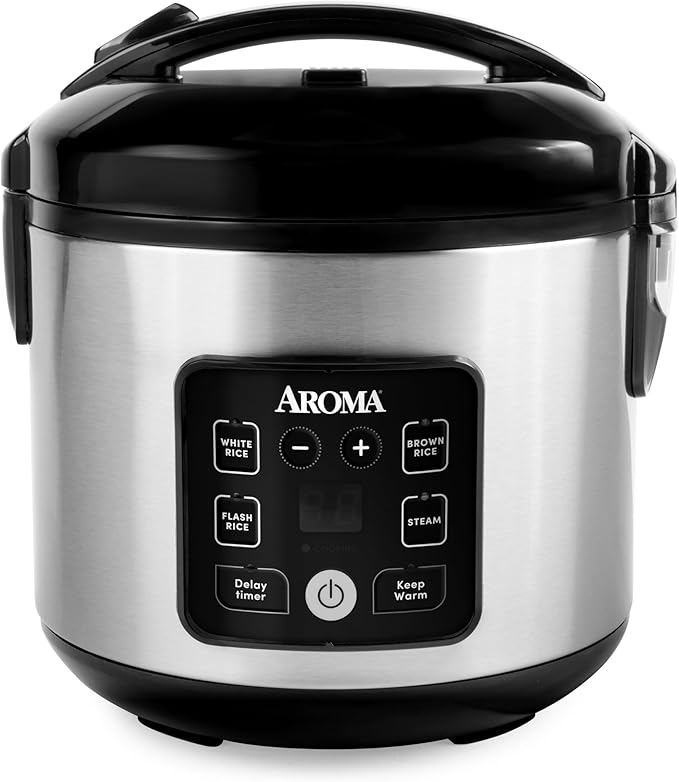
If you want a “real rice cooker experience” (digital presets, delay timer, and more than one mode) without jumping into $100–$160 territory, this AROMA CoreCoat digital cooker hits a sweet spot. It’s sized for a family dinner—big enough to feed a crowd, but not so huge that it dominates the counter.
The biggest win for workers is timing flexibility. With a delay timer and an auto-warm finish, you can load it while making the rest of dinner (or before you leave the house) and let it do the boring part. The steamer basket also turns this into a two-level meal: rice underneath, vegetables or dumplings above. That’s the kind of “one appliance, two dishes” efficiency that makes weeknights feel less chaotic.
Why it’s a great value
- CoreCoat ceramic pot – Easy-release cooking and simpler cleanup.
- Delay timer – A genuine lifestyle feature if you plan meals around work schedules.
- Steamer basket included – Great for vegetables, fish, dumplings, and quick proteins.
- Good “family size” – A practical capacity for dinner + leftovers without multiple batches.
Good to know
- Like many mid-priced cookers, the lid may take a little more effort to wipe clean after starchy batches.
- Use the included cup and bowl water lines—most “it didn’t work” complaints come from mismatched measuring.
- Flash/quick modes can be helpful, but for best texture, the normal rice mode is usually worth the extra minutes.
Ideal for: families who want ceramic-coated cooking, a steamer basket, and flexible timing without paying premium fuzzy-logic prices.
4. Starfrit 10-Cup Rice Cooker (Glass Lid) – No-Fuss Batch Cooking You Can Watch

Some people don’t want a rice cooker that feels like a tiny computer. They want a solid, simple “cook → warm” machine that can handle a big batch of jasmine or basmati and keep it ready for dinner. That’s the Starfrit vibe—especially with the clear glass lid, which lets you visually monitor steam and bubbling without lifting anything.
This style is underrated for workers and meal-preppers because it reduces friction: you can do a big batch, portion into containers, and be done. The simplicity also makes it guest-friendly. If a friend is helping with dinner, they’re not going to fear “pressing the wrong mode.” They’ll just… cook rice.
Why it’s worth considering
- Big capacity – Great for gatherings, meal prep, or families who go through rice fast.
- Glass lid visibility – Helps you learn boiling behavior and avoid overfilling.
- Simple operation – Minimal learning curve, easy for anyone to use.
- Ceramic-coated pot – Designed for easier release and cleanup than old-school bare aluminum pots.
Good to know
- Simple cookers can be less precise for brown rice and multigrains—expect a little trial-and-error.
- Some buyers report switch/return-to-warm quirks; test it during your return window with a couple batches.
- If you want “premium texture control,” jump to fuzzy-logic cookers later in this list.
Ideal for: big-batch families and meal-preppers who want a simple, watch-through-the-lid rice routine.
5. GreenLife Digital Rice Cooker (2 Cups Uncooked) – Small, Clean Aesthetic, Reliable Results

If you want a small rice cooker that feels like a deliberate kitchen choice (not a cheap dorm appliance), this GreenLife model fits the bill. It’s compact, modern-looking, and focused on the presets people actually use: white rice, brown rice, quinoa, and steel-cut oats. It’s the kind of cooker that quietly becomes your weekday breakfast maker too.
From an “expert usage” angle, what makes it work is the combination of fuzzy logic and a small bowl volume. Smaller cookers heat up quickly and can be more consistent because the cooker isn’t trying to control a huge thermal mass. That’s why many couples report very repeatable results—especially for jasmine and basmati.
One practical tip: if you hate squinting at dark bowl markings, consider measuring water in a separate cup for the first week until you memorize your favorite ratio. Several owners mention that darker ceramic interiors can make lines harder to see.
Why people keep it on the counter
- Compact and tidy – Great for apartments and smaller kitchens.
- Fuzzy logic consistency – Helps brown rice and grains come out more predictably.
- Easy cleaning setup – Removable ceramic pot and dishwasher-friendly parts.
- Great “two servings + leftovers” size – Perfect for couples who hate wasting rice.
Good to know
- It’s designed for 2 cups uncooked; pushing above that can cause overflow or uneven cooking.
- Markings may be hard to see depending on lighting—use a flashlight once, then you’ll be fine.
- If you need “family pot” capacity, skip to the Aroma/Gourmia options.
Ideal for: couples, small households, and workers who want consistent rice, oats, and quinoa without sacrificing counter space.
6. AROMA HeatFlow Pro Serve & Store (12 Cups Cooked) – The Entertainer’s Rice Cooker
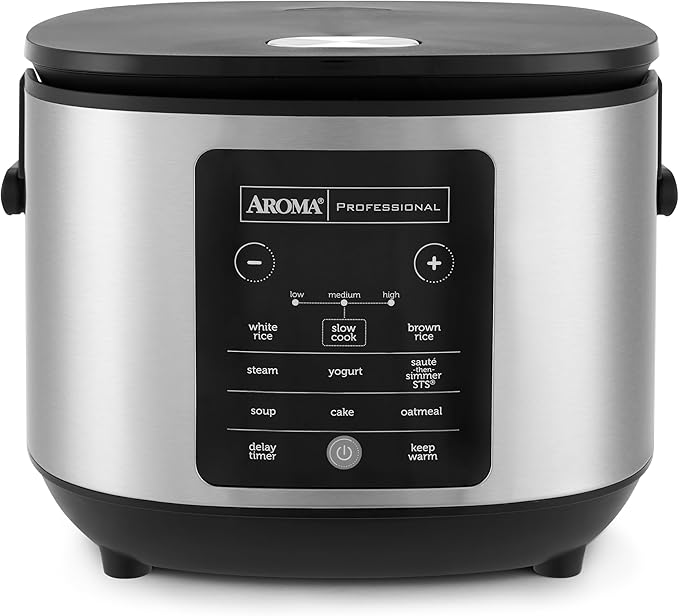
This AROMA model is one of the most “thoughtful” designs in the lineup. The headline feature isn’t a fancy screen—it’s the experience: you cook, lift out the inner pot with built-in handles, serve at the table, and then cap leftovers with the included silicone storage lid. That’s a genuinely useful workflow upgrade if you entertain, potluck, or simply want fewer containers.
From a cooking standpoint, you get multiple modes (including slow cook and sauté), plus steaming capability. But the real advantage is how it fits into dinner logistics: if people eat at different times (common in working households), you can keep food warm, serve when ready, and store quickly when done. That means less rice drying out, less “mystery warm mode” after-hours, and fewer dishes.
Why it’s different (in a good way)
- Lift-out pot handles – Safer serving, easier carrying, and less “hot pot juggling.”
- Silicone storage lid – Saves containers and makes leftovers feel intentional.
- Multi-mode versatility – Useful beyond rice: oatmeal, yogurt, slow cooking, steaming.
- Family capacity – Great for batch cooking and gatherings.
Good to know
- More modes means more learning—start with white rice, then add functions as you go.
- Any large cooker benefits from rinsing rice well to prevent starchy foaming and lid mess.
- If you want the “most precise rice texture,” fuzzy-logic premium models still win.
Ideal for: families, entertainers, and anyone who loves the idea of cooker-to-table serving and easy leftover storage.
7. Gourmia 3 Qt Digital Rice Cooker – Two-Level Meals Without Extra Pans

This Gourmia is built around the “one cycle, two foods” concept. You cook rice or grains below while steaming vegetables or protein above. If your weekday dinner is usually “rice + something,” this is a big time saver because you’re not babysitting a second pot, and you’re not juggling burner space.
Owners frequently highlight two things that matter more than specs: the rice texture and the cleanup. A ceramic nonstick bowl that releases rice cleanly can be the difference between “I use this daily” and “I dread cleaning it.” The delay timer and keep-warm also make it friendly for meal prep: load it, do your work, then come back to hot rice ready to portion.
One expert tip for two-level cooking: steam timing. Vegetables and fish often need less time than rice, so add the steamer basket partway through the cycle if your cooker allows it, or steam a quick side afterward if you want perfect doneness. The goal isn’t just “cooked”—it’s “rice fluffy, broccoli still bright.”
Why it earns its keep
- Rice + steam in one appliance – Weeknight efficiency without extra pans.
- Family-sized capacity – Great for lunches, leftovers, and feeding a group.
- Hands-off features – Delay timer + keep warm make it easy to schedule around work.
- Easy cleanup reputation – A good ceramic bowl makes daily use feel realistic.
Good to know
- Two-level meals require a little timing practice for best texture (especially for delicate steamed foods).
- Large-capacity cookers take more counter space—measure your “parking spot.”
- As with many brands, warranty confidence is best when you register promptly and keep your receipt.
Ideal for: families and meal-preppers who want batch rice plus easy steaming in the same cooking session.
8. TOKIT Mini Rice Cooker (9 Presets) – Tiny Counter Footprint, Big Routine Upgrade

The TOKIT mini is designed for the “we want better rice, but we don’t want a giant appliance” crowd. Its capacity is right in the sweet spot for 1–3 people, and it’s loaded with presets—white rice, brown rice, soup, yogurt, cake, steaming, and even a “clay rice” mode that aims for deeper flavor and texture.
From an expert perspective, the value here is the intersection of size and flexibility. Mini cookers often become “the secondary cooker” in larger homes—used for oats in the morning, rice at lunch, and a small soup at night. For workers who prefer short, repeatable routines, this model can become a reliable daily tool rather than a once-a-week gadget.
One thing to watch: keep-warm texture. Many compact cookers keep rice warm but can turn it softer or “gloppy” if rice sits too long. The fix is simple: fluff immediately when done, then either serve or store. If you’re a meal prepper, storing promptly is how you keep that fresh-cooked texture for tomorrow’s lunch bowl.
Why it fits real life
- Compact and portable – Side handles and small footprint for tight kitchens.
- Useful presets – Soup, yogurt, cake, and steaming make it more than a rice-only device.
- Fuzzy logic consistency – Helps stabilize texture across different grains.
- Easy-clean design – Removable parts and ceramic nonstick feel reduce daily friction.
Good to know
- Instructions/UI can feel less intuitive at first—plan a “practice batch” on a relaxed day.
- Keep-warm may soften rice if left too long; fluff and store for best texture.
- If you cook for 4–6 people regularly, you’ll prefer a larger family cooker.
Ideal for: small households who want a modern-looking mini cooker that can also handle yogurt, soups, and simple cakes.
9. Yum Asia Kumo YumCarb – “Rice Nerd” Control Without the Premium Price Shock

Yum Asia is a brand that tends to attract people who genuinely care about rice texture. The Kumo sits in a really appealing spot: advanced fuzzy logic, a high-quality ceramic-coated bowl, and a low-carb (YumCarb) feature—without going to the most expensive tier. If you’ve ever been frustrated by “good enough” rice that never quite tastes restaurant-right, this is a meaningful step up.
The way these cookers win is not by brute heat—it’s by staged cooking. Multi-phase programs and 3D heating aim to control soaking, heating, steaming, and resting in a more deliberate way. That’s why people often report better brown rice texture (less hard edges), better sushi rice stickiness control, and more consistent repeat batches when they follow the bowl lines.
Practical pro tip: many owners use the included stainless basket for rinsing rice to avoid scratching the bowl over time. It’s a small habit, but it extends the “new bowl” feel. Also, expect to fine-tune water slightly for your favorite brand of rice—every cooker has a personality.
Why it’s a smart upgrade
- Advanced fuzzy logic – Better texture control and more repeatable results than basic cookers.
- Low-carb option – A practical feature for households trying to reduce starch intake.
- Quality accessories – Stainless basket and thoughtful tools help daily use feel premium.
- Great “family but not huge” size – Enough for meal prep and guests without a giant footprint.
Good to know
- Low-carb functions can change how well rice absorbs seasoning—plan to flavor in the dish (curries, stir-fries) rather than in the pot.
- Like most ceramic-coated bowls, gentle utensils matter; treat it like premium cookware.
- If you want a “bigger screen, more modes” multicooker, COSORI may suit you better.
Ideal for: anyone who cares about rice texture and wants low-carb flexibility, without jumping straight to the priciest premium cooker.
10. COSORI 10-Cup Fuzzy Logic (18 Functions) – The Busy-Home Multicooker

If I had to describe this COSORI in one sentence: it’s a rice cooker for people who don’t want only a rice cooker. You get 18 functions, fuzzy logic micom cooking, a stainless steamer basket, sauté mode (a huge deal for flavorful rice), and slow cooking for soups and stews. It’s a one-appliance answer to “I need a real dinner plan, not just plain rice.”
The expert advantage is the cooking sequence. Fuzzy logic handles the multi-step process—preheat, soak, controlled boil, steam finish, rest—so you get more consistent rice across different types (long grain, short grain, brown) without standing there. The dual heating concept (top + bottom heat management) is also meant to reduce condensation drip-back, which helps texture on keep-warm compared with simpler designs.
One transparency note: coating descriptions can be confusing across brands. COSORI markets a ceramic inner pot, while regulatory disclosures may list certain fluoropolymer materials for some models/components. If you’re extremely strict about “no PTFE anywhere,” it’s worth verifying directly with the manufacturer before purchase and keeping documentation for your peace of mind.
Why it feels “next level”
- Sauté mode – The easiest way to get fragrant, restaurant-style rice (toast aromatics, then cook).
- 18 functions – Rice, grains, oats, steaming, slow cook soups, and more.
- 24h keep warm + delay – Great for workers and meal-prep schedules.
- Easy-clean design – Removable lid components and dishwasher-safe accessories reduce cleanup dread.
Good to know
- It’s larger than compact minis; measure your counter “parking spot.”
- Bowl markings may be harder to see in low light—many owners wish they were more contrasty.
- With many modes, your first week should be “learn your favorites” rather than trying everything at once.
Ideal for: busy households who want excellent rice and real multicooker versatility (sauté, grains, oats, soups) in one unit.
11. AROMA Professional Purple Clay Pot (ARC-7206P) – Clay-Pot Aroma Without the Restaurant Bill

This is the cooker for people chasing a specific experience: clay-pot rice texture and aroma. The inner pot is uncoated pottery, and the whole point is the way clay holds heat and steams rice differently. Many owners describe the rice as more flavorful and more “restaurant-like” compared with basic metal-bowl cookers.
Expert expectations matter here. Clay is not “nonstick,” and it’s not “indestructible.” You treat it like a real piece of cookware: no sudden thermal shock, gentle cleaning, and mindful handling. In exchange, you get a style of rice that can feel more fragrant and textured—especially for short grain or dishes where aroma is part of the meal.
The keep-warm behavior is also different with clay. Some people love the heat retention for serving, but clay pots can be less forgiving if rice sits too long on warm. If you buy clay for flavor, plan to cook closer to meal time or store leftovers promptly rather than keeping it warm for extended stretches.
Why people fall in love with it
- Clay-pot flavor profile – Aroma and texture can feel more “special” than standard cookers.
- Uncoated inner pot – Appeals to shoppers avoiding coated surfaces.
- Looks great on the table – The pot can double as a serving piece.
- Great for slow-style dishes – Soups and stews benefit from heat retention.
Good to know
- Clay can chip or break if mishandled—this is not a “throw it in a bag” cooker.
- Long keep-warm can create sticking or browning; serve and store instead of holding forever.
- Expect longer cooking times than basic rice cookers—clay’s advantage is texture, not speed.
Ideal for: rice lovers who want clay-pot style taste and are willing to treat the inner pot like real pottery cookware.
12. Yum Asia Panda Mini – Small Cooker, Big “Perfect Rice” Energy

The Panda Mini is what happens when a small rice cooker is designed like a serious appliance. It targets 1–3 people and prioritizes texture: multiple rice functions (including short grain/sushi) plus advanced fuzzy logic with staged cooking phases. Owners who upgrade from basic $20 cookers often describe the difference as “night and day”—especially for sticking and consistency.
The bowl is a big part of the experience. A thicker, quality ceramic-coated bowl with clear rice level lines can make cooking more repeatable and cleaning less annoying. When a mini cooker is easy to clean, you actually use it more—oats in the morning, rice at lunch, rice again at dinner. That’s how it becomes a daily workhorse rather than a specialty item.
This is also a great “quality-of-life” cooker for couples who waste rice in larger warmers. Big warmers often struggle with tiny batches; the Panda is designed for them. You cook what you need, and the texture stays consistent because the machine isn’t trying to manage a huge pot.
Why it’s worth the premium
- Excellent small-batch consistency – Great for couples who want “perfect rice” without waste.
- Advanced fuzzy logic – Better handling of sushi rice and brown rice than basic cookers.
- High-quality bowl – Designed for easy release and long-term everyday use.
- Multicooker options – Useful settings beyond rice when you want one compact appliance.
Good to know
- Premium price for a small capacity—this is for quality seekers, not maximum volume.
- Mini means mini: if you cook for 4+ people often, choose a larger cooker.
- As with all ceramic-coated bowls, gentle utensils and rinsing habits help protect the surface long-term.
Ideal for: couples and small households who want premium texture in a compact footprint and hate wasting rice in oversized warmers.
13. GreenPan Low-Carb Rice Cooker – Starch-Reducing Mode + Soup Mode in One

GreenPan’s standout move is building a rice cooker around health-specific functionality without turning it into a confusing gadget. The low-carb mode uses a tray system that separates rice from starchy water during cooking, and it pairs that with straightforward presets for grains, beans, oats, and soup. For many workers, the soup mode alone is a win—set it, work, come back to dinner.
Where this cooker can be especially helpful is household compliance. If one person is trying to cut carbs and another person refuses to give up rice, a low-carb program gives you a middle path. And because it’s a structured preset (not a DIY hack), it’s easier to repeat consistently.
Expert tip: low-carb rice is different rice. It can be less sticky and less able to absorb seasoning in the pot. If you love flavorful rice, you may prefer seasoning in the final dish (curries, stir-fries, burrito bowls) rather than expecting the pot to do all the flavor work.
Why it’s a strong “health routine” pick
- Low-carb mode – Designed to reduce starch by separating cloudy water during cooking.
- Soup mode – Real convenience for busy schedules and one-pot dinners.
- Preset variety – White/brown rice, multigrain, quinoa, beans, oats.
- Easy cleanup design – Dishwasher-safe accessories make frequent use easier.
Good to know
- Capacity is modest; great for households, but not the biggest batch cooker.
- Some users report rice can over-dry if left on keep-warm too long—serve or store for best texture.
- More inserts/trays mean more pieces to rinse (worth it if you use low-carb mode often).
Ideal for: health-focused households that want a true low-carb rice feature plus soup/grain versatility in a ceramic-coated system.
14. Joydeem Pure Ceramic Pot (DFB-C300) – No-Coating Shoppers, This One’s for You

If your main goal is avoiding coatings entirely, the Joydeem is one of the clearest answers in this lineup: a fully ceramic inner pot, not just a ceramic finish on metal. That changes how it cooks and how it feels. The pot is heavier, more “cookware-like,” and many users describe the rice as clean-tasting without metallic notes.
Joydeem also aims for even heating with a curved-bottom pot design and a “suspended heating” approach. In practice, you should expect this kind of cooker to behave more like a traditional pot: slightly longer warm-up, strong heat retention, and a different sticking profile than coated bowls. Some owners mention that a light oil mist or brief rinse-and-soak habit reduces sticking and improves release.
This is the kind of rice cooker that rewards consistency: rinse rice well, follow the bowl lines, and keep the pot treatment gentle. If you want a “throw it around and scrape it with metal” experience, choose a coated-bowl model instead. Pure ceramic is a premium cooking surface—it deserves premium handling.
Why it’s special
- Fully ceramic inner pot – Appeals to shoppers avoiding coatings altogether.
- Excellent heat retention – Helps with steady steaming and serving warmth.
- Good capacity – Works well for families and batch cooking.
- Useful presets – Rice, porridge, soup, multigrain, reheat, and “clay pot rice” style mode.
Good to know
- Pure ceramic can stick more than coated bowls; habits like rinsing well and occasional light oil help.
- Replacement pot availability may be limited—handle the pot carefully like real cookware.
- Some users report learning-curve issues with instructions; plan a practice cycle to learn the interface.
Ideal for: shoppers who specifically want a fully ceramic cooking surface and are willing to treat the pot like premium cookware.
15. Yum Asia Sakura – The Premium Texture King (Plus Tahdig/Crust Mode)

If you want the “this replaces two rice cookers” experience, the Yum Asia Sakura is the premium end of that idea. It’s built around advanced fuzzy logic, multi-phase rice cooking, and a high-quality ceramic-coated bowl with easy-lift handles. But what makes it stand out is cultural flexibility: people use it for sticky Korean/Japanese styles, fluffy Persian-style rice, and crust/tahdig-type results—often from the same machine.
The difference between “good rice” and “wow rice” is usually the finish: steam control, resting, and heat distribution. Premium fuzzy-logic cookers focus on that. They’re not just “hot plates with a timer.” They’re staged programs designed to manage hydration and steam. That’s why many owners describe very even results without burned spots or undercooked pockets—especially with short grain.
Is it worth the price? If rice is a weekly staple and you care about texture, yes—because you buy it once and then stop thinking about rice forever. The only real annoyance reported by some users is button sensitivity. If you can tolerate slightly finicky button presses in exchange for excellent rice, this is a top-tier pick.
Why it’s premium
- Advanced fuzzy logic – Strong texture control across rice types.
- High-quality bowl – Thick, easy-clean ceramic-coated pot with handles.
- Crust/tahdig capability – A rare feature that can replace a “second” specialty cooker for some households.
- Built like an appliance – Feels durable and designed for long-term use.
Good to know
- Premium cost—this is an investment pick, not a budget buy.
- Some users describe button responsiveness as finicky; deliberate presses help.
- Like many premium rice cookers, cooking can take longer (because it’s optimizing texture, not rushing).
Ideal for: rice lovers, multi-cultural households, and anyone who wants premium texture, multicook versatility, and crust/tahdig capability in one machine.
How Rice Cookers Actually Cook (and Why “Fuzzy Logic” Matters)
A rice cooker isn’t magic—it’s smart physics. Understanding how it works helps you pick the right type (one-touch vs fuzzy logic) and get better results from any model you buy.
The basic rice cooker “brain” (even in cheap models)
- Water limits temperature – While water is present, the pot hovers around the boiling point. Rice absorbs water, and steam cooks the top layer.
- When water is gone, temperature rises – That rise is the cooker’s signal to switch from “Cook” to “Warm.”
- Keep-warm is gentle heat – It’s meant to hold food, not keep cooking aggressively—but different cookers handle this better than others.
That’s why basic one-touch cookers can still make good white rice. Their thermostat logic is simple but effective. Where they struggle is consistency across different grains and large batch sizes, because they don’t adapt much.
What fuzzy logic changes in the real world
- Multiple phases – Many fuzzy logic cookers run soak, heat, simmer, steam, and rest stages rather than a single cook blast.
- Sensor-based adjusting – They can react to conditions like batch size and temperature shifts inside the pot.
- Better brown rice – Brown rice needs more controlled hydration and time; fuzzy logic helps reduce hard centers and mushy edges.
- More repeatable results – When you’re busy, repeatability is the luxury.
In practical terms, fuzzy logic is why some cookers consistently produce “restaurant rice” with less effort—especially with short grain, sushi rice, multigrain blends, or oats.
FAQ: Ceramic Rice Cookers, Answered
What’s the difference between ceramic-coated and pure ceramic/clay pots?
Do I have to rinse rice before cooking?
Why does the measuring cup feel “wrong”?
Is a low-carb rice cooker worth it?
How do I keep a ceramic-coated bowl from wearing out?
Can I cook more than rice in these?
Final Thoughts: Pick Once, Eat Better All Week
A good rice cooker is one of those “quiet lifestyle” appliances. It doesn’t just cook rice—it removes friction from your day. When you can load rice, press start, and move on with your life, dinner gets easier, lunches get cheaper, and you stop relying on last-minute takeout.
Here’s the fastest way to decide:
- Want the cheapest reliable start? Go with the simple AROMA CoreCoat One-Touch or the tiny-but-smart GreenLife Rice & Beans.
- Need family capacity on a budget? Pick the AROMA CoreCoat Digital, the serve-and-store AROMA HeatFlow Pro model, or the batch-friendly Gourmia 3 Qt.
- Want premium texture without going full premium? The Yum Asia Kumo YumCarb is a fantastic “rice nerd” upgrade.
- Prioritizing health features? Look at the GreenPan low-carb cooker.
- Want the most “no coating” experience? Try a pure-pot approach like Joydeem or clay-style cooking with AROMA Purple Clay.
- Want the premium “I’m done thinking about rice forever” pick? That’s the Yum Asia Sakura.
If you want one confident recommendation for most busy households, the COSORI stands out because it behaves like a real multicooker while still delivering consistent rice. For many people, it becomes the Best Ceramic Rice Cooker simply because it solves more weekday problems than a rice-only machine. Pick the size you’ll actually use, choose the bowl material you feel good about, and you’ll have better rice (and easier meals) for years.
