
There’s a reason ceramic cookware has become a “quiet obsession” in so many kitchens: when it’s chosen well, it makes everyday cooking feel smoother—less scrubbing, less oil, fewer “ugh, this pot again” moments.
This guide to the Best Ceramic Cooking Pots is built for real life: weeknight soups, quick pasta, oatmeal that normally welds itself to the bottom, and the kind of sauces that love to scorch when you look away for 30 seconds. I pulled together 19 standout options—from tiny 2.5‑quart saucepans to big 8‑quart stockpots and true Dutch ovens— and focused on what actually matters after the first week: heat control, handle comfort, cleaning reality, and how forgiving each pot is when you’re cooking tired.
One quick note: ceramic cookware isn’t one single “thing.” Some pots here are ceramic nonstick coatings over aluminum (lightweight, slick, easy cleanup). One is enameled cast iron (ceramic enamel over iron—heavier, incredible heat retention, not the same kind of slippery nonstick). And one is a tri‑ply stainless pot with a ceramic exterior layer (less “nonstick,” more “built like a tank”).
Disclosure: This post contains affiliate links. If you buy through them, we may earn a commission at no extra cost to you.
How to Choose the Best Ceramic Cooking Pots for Your Kitchen
Ceramic cookware can feel like a maze because brands use the word “ceramic” for a few different constructions. So before we jump into the reviews, let’s get you to the fastest possible “yes, that’s the one” decision.
1. Start with the job: what do you actually cook most?
- If you cook soup, chili, pasta water, seafood boils: you want a stockpot (4.5–8 qt is the normal sweet spot).
- If you cook sauces, oatmeal, rice, mac & cheese: you want a saucepan (1–3 qt) with comfortable pouring.
- If you braise, bake bread, roast chicken, do “one‑pot dinners”: you want a Dutch oven (typically 5–6 qt).
Most homes do best with one “main pot” (5–6 qt) plus one smaller saucepan. If you already have stainless, ceramic can be your “easy mode” option for sticky foods.
2. Understand what “ceramic” means (so expectations stay realistic)
- Ceramic nonstick coating (most picks here): slick, easy release, usually aluminum underneath. It cooks best on low‑to‑medium heat and rewards gentle tools. Think: “easy cleanup,” not “metal‑whisk friendly.”
- Enameled cast iron (Overmont): ceramic enamel (glass‑like) over heavy iron. Great browning and heat retention, oven confidence, and long simmering. It’s heavier and not the same kind of slippery release.
- Stainless tri‑ply with ceramic exterior (CAROTE 6QT tri‑ply): more about durability and even heating than nonstick. This is for people who want induction performance and dishwasher convenience.
3. Match capacity to your household (no “quart regret” later)
- 1–2 people: 2.5–4.5 qt is ideal for soups, small pasta nights, and reheats.
- 3–5 people: 5–6.6 qt is the sweet spot for weekly cooking without overflow anxiety.
- Families, meal prep, holidays: 8 qt earns its keep fast—especially for stocks, big chili batches, and pasta.
Pro tip: bigger isn’t always better. A huge pot that’s only half full can scorch more easily because the food sits in a thinner layer on the base. Buy the size you’ll actually fill.
4. Induction compatibility is the #1 “hidden dealbreaker”
If you have an induction cooktop, don’t guess. You need a pot with a magnetic base (often stainless steel). In this guide, several options are explicitly induction‑ready, while some popular ceramic brands are not induction compatible. If induction is your world, prioritize pots like BEZIA, SENSARTE, CAROTE’s tri‑ply stockpot, Our Place, and Caraway.
5. The features that genuinely change day‑to‑day cooking
- Rivetless interiors: fewer grime traps, easier cleaning, and less “mystery gunk.”
- Straining lids & pour spouts: great for pasta, potatoes, and quick draining without a colander.
- Comfortable handles: silicone grips or well‑spaced handles matter once the pot is full.
- Oven limits: some ceramic pots are stovetop‑only; others handle 450–600°F. Match this to how you cook.
- Clear lids: underrated for simmer control—less lid lifting means more stable cooking.
Quick Comparison: 19 Best Ceramic Cooking Pots Picks
Use this table to quickly spot the size, style, and “best use” for each pick. Then jump to the matching review for the real‑world details and the honest tradeoffs.
On smaller screens, swipe or scroll sideways to see the full table.
| Model | Pot type | Capacity | Best match | Amazon |
|---|---|---|---|---|
| BEZIA Ceramic Stock Pot | Stockpot | 8 qt | Induction‑ready big batches with cool‑grip handles | Amazon |
| GreenPan Lima Casserole/Stock Pot | Hard‑anodized ceramic | 5.2 qt | High‑heat oven/broiler flexibility with a proven brand | Amazon |
| Blue Diamond Ceramic Stockpot | Stockpot | 8 qt | Huge capacity + very high oven/broiler rating | Amazon |
| Our Place Perfect Pot | Multi‑use pot | 5.5 qt | “One pot replaces many” premium upgrade (induction + oven) | Amazon |
| Overmont Enameled Cast Iron Dutch Oven | Dutch oven | 5.5 qt | Braising, bread baking, and deep heat retention | Amazon |
| Gotham Steel Ceramic Dutch Oven | Lightweight Dutch oven | 5 qt | Easy‑lift bread baking without cast‑iron weight | Amazon |
| GreenLife 6QT Stockpot (Black) | Stockpot | 6 qt | Everyday soups + straining lid convenience | Amazon |
| GreenLife 6QT Stockpot (Turquoise) | Stockpot | 6 qt | Same features, brighter kitchen aesthetic | Amazon |
| SENSARTE Ceramic Stock Pot | Induction‑ready | 4.5 qt | Couples who want nonstick without the bulk | Amazon |
| SENSARTE Multi‑Size Ceramic Stock Pot | Induction‑ready | 2.6–8.5 qt (options) | Pick the exact size you need (everyday to party) | Amazon |
| CAROTE 6QT Fully‑Clad Tri‑Ply Stockpot | Stainless tri‑ply | 6 qt | Induction performance + dishwasher confidence | Amazon |
| CAROTE 5QT Ceramic Stock Pot | Ceramic nonstick | 5 qt | Budget‑friendly soups, sauces, and pasta nights | Amazon |
| Caraway Ceramic Sauce Pan | Saucepan | 3 qt | Premium, oven‑safe saucepan for sticky foods | Amazon |
| MICHELANGELO Ceramic Sauce Pan Set | Saucepan set | 1/2/3 qt | Full small‑pot lineup for everyday cooking | Amazon |
| SENSARTE Saucepan Set | Saucepan set | 1.5 + 2.5 qt | Durable small‑batch set with sturdy feel | Amazon |
| CAROTE 2QT & 3QT Sauce Pan Set | Smart‑lid set | 2 + 3 qt | Built‑in strainers + pour spouts (less mess) | Amazon |
| MICHELANGELO Nonstick Sauce Pan Set | Saucepan set | 1/2/3 qt | Budget set that’s easy to wash and lightweight | Amazon |
| Gotham Steel Pasta Pot (Strainer Lid) | Pasta pot | 5 qt | Fast draining, fewer tools, easy cleanup | Amazon |
| Redchef Ceramic Saucepan | Saucepan | 2.5 qt | Small daily pot for oatmeal, eggs, sauces | Amazon |
In‑Depth Reviews: 19 Standout Ceramic Cooking Pots
Below are the detailed reviews—written the way you’d want a friend who actually cooks to explain them: what each pot is great at, what’s annoying, and who should skip it.
1. BEZIA 8 Quart Ceramic Stock Pot – The “Just Right” Family Soup Pot

If you want one pot that instantly upgrades soup night, chili, spaghetti sauce, and “I’m feeding people” cooking, this BEZIA 8‑quart hits a sweet spot: roomy without being obnoxiously tall, and wide enough that ingredients sauté nicely before you add liquids. The silicone grip covers on the handles are a genuinely useful detail—especially when you’re moving a full pot off the stove.
Here’s the expert angle: big ceramic pots win when they don’t demand constant babysitting. This one earns points for even heating and a clear lid (so you can simmer instead of boil‑over guessing). Just treat it like ceramic: medium heat is your friend, and silicone/wood tools keep the surface performing longer.
Why you’ll like it
- Real 8‑qt usefulness – stocks, bone broth, big pasta water, and family chili without overflow stress.
- Cool‑grip comfort – silicone handle grip reduces “where are the potholders?!” moments.
- Easy cleanup – ceramic release shines on starchy soups and sticky sauces.
- Induction‑friendly versatility – works across cooktop types (great for upgrades or moves).
Good to know
- Like most ceramic nonstick, it prefers low‑to‑medium heat for longevity.
- A full 8‑qt pot is heavy no matter what—lift with both handles, not one.
- Avoid hand mixers/immersion blender blades touching the coating.
Ideal for: households that cook big batches weekly and want an induction‑ready ceramic pot that feels safe and easy to live with.
2. GreenPan Lima 5.2QT – Hard‑Anodized Strength, Ceramic Peace of Mind
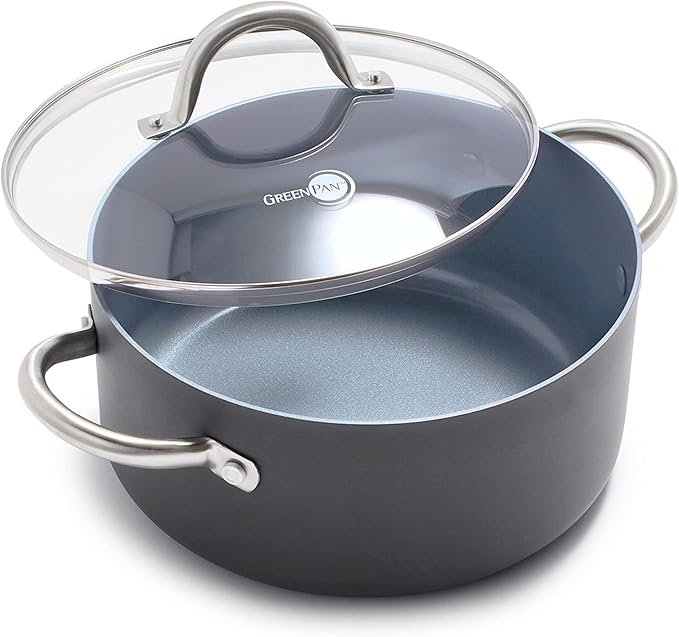
GreenPan is a “grown‑up” choice when you want ceramic nonstick but you also want a tougher body that holds up to daily use. The Lima’s hard‑anodized construction is the quiet hero here: it helps resist scratches and gives the pot a more solid, stable feel than super‑thin aluminum.
The practical win is flexibility. This pot can move from stovetop to oven for braises, baked pasta, or finishing sauces without switching cookware. If you’re trying to reduce your pot collection but still cook a lot, this style of casserole/stockpot is the sweet spot. Just note: it’s not induction compatible, and many owners baby it with hand washing.
Why it stands out
- Durable body – hard‑anodized aluminum feels sturdier than many entry ceramic pots.
- Oven confidence – great for “start on stove, finish in oven” meals.
- Even heat – smoother simmering and fewer scorch surprises.
- Comfortable steel handles – secure grip when moving hot, heavier meals.
Good to know
- Not for induction cooktops.
- Handles can get hot—use potholders like you would on stainless.
- Hand washing tends to keep ceramic coatings happier long‑term.
Ideal for: frequent cooks who want a reputable ceramic brand with a sturdier body and real oven versatility.
3. Blue Diamond 8QT Stockpot – Big Meals, Fast Boils, Easy Cleanup

This is the “feed a crowd” ceramic pot for people who want big capacity but still want that satisfying nonstick wipe‑out cleanup. Owners rave about how quickly it heats water, how much pasta it holds, and how easily even red sauce releases. Blue Diamond’s signature is the “diamond‑infused” ceramic coating—designed for durability and marketed as scratch‑resistant.
Here’s the real‑world advice: it’s durable, but it’s not invincible. Avoid beating mashed potatoes with a hand mixer in the pot (yes, people have learned that lesson). Use silicone tools, keep heat reasonable, and you’ll get the best combination of fast cooking and low‑stress cleanup.
Why you’ll love it
- 8‑qt capacity – soup, stew, seafood boils, big pasta, holiday sides.
- Very easy cleanup – the “wipe clean” effect is real when treated gently.
- High oven rating – handy for oven finishing and baked casseroles.
- Lightweight for its size – easier than heavy cast iron when full.
Good to know
- Not induction compatible.
- Steel handles may get hot during long simmers.
- “Metal utensil safe” claims vary in real life—gentle tools keep it prettier longer.
Ideal for: large families and meal preppers who want a huge ceramic pot that cleans fast and can handle oven finishing.
4. Our Place Perfect Pot 5.5QT – The Multi‑Tasker You’ll Actually Use

If you’ve ever thought, “I want fewer pots, but I still want to cook real meals,” this is the vibe. The Perfect Pot is designed as an 8‑in‑1 piece: boil, bake, braise, roast, strain, and serve—all with one pot. The lid’s built‑in strainer sounds like a gimmick until you’re draining pasta without hunting for a colander.
The expert truth about premium ceramic: it’s as much about design behavior as it is about coating. The pot is lightweight enough for daily use, but thick enough to feel stable. Owners who love it tend to follow the “ceramic rules”: medium heat, no metal tools, gentle cleaning. If you want a statement piece that also cooks, this is it.
Why it’s worth considering
- Truly versatile – replaces multiple “random” pots in many kitchens.
- Induction compatible – a big deal in premium ceramic.
- Strainer lid convenience – fewer tools, fewer dishes, faster weeknights.
- Looks great on the table – serving straight from the pot feels intentional.
Good to know
- Premium price: it’s a “buy once” decision, not a casual add‑on.
- Best results come from medium heat (high heat can shorten coating life).
- Hand washing is the safest long‑term routine.
Ideal for: small‑to‑medium households who cook often and want one beautiful pot that handles most daily tasks.
5. Overmont 5.5QT Enameled Cast Iron – Deep Flavor, Serious Heat

This is a different kind of ceramic: enameled cast iron. It’s heavier, holds heat like a champion, and makes braises taste like you worked harder than you did. Overmont’s appeal is “Le Creuset energy” without the wallet punch—owners use it for pot roast, stews, and sourdough with consistently strong results.
The pro move with enameled cast iron is patience: preheat gradually, brown in batches, and avoid thermal shock (no cold water into a screaming‑hot pot). Do that and it becomes the kind of piece you keep for years. If you want the most forgiving pot for low‑and‑slow cooking, this is a top contender.
Why it shines
- Heat retention – steady simmering and exceptional braises.
- Bread‑baking friendly – heavy lid helps trap steam for great crust.
- Induction compatible – cast iron plays well with induction.
- Table‑ready – looks great serving stew straight to the table.
Good to know
- It’s heavy—this is not a “one‑hand lift” pot.
- Enamel can chip if dropped or abused; treat it with respect.
- Handles get hot (normal for Dutch ovens).
Ideal for: anyone who wants classic Dutch oven cooking—braises, bread, roasts—with dependable enamel performance.
6. Gotham Steel 5QT Ceramic Dutch Oven – Easy‑Lift, Easy‑Clean Baking

This is the “I want Dutch oven results, not Dutch oven weight” option. Gotham Steel uses cast aluminum to keep the pot dramatically lighter than traditional cast iron, which is a game‑changer if you bake bread or move hot pots often. Owners love it for sourdough because it heats quickly, bakes evenly, and cleans up in minutes—even after long oven cooks.
The expert tradeoff: lightweight ceramic nonstick is convenience‑first. You’ll want silicone utensils, gentle cleaning, and a little care when nesting or storing it. If you treat it kindly, it feels like a cheat code for bread and one‑pot meals.
Why it’s popular
- Lightweight handling – easier in and out of the oven than cast iron.
- Very easy cleanup – baked‑on foods release quickly with a short soak.
- Self‑basting lid – helps keep roasts and braises moist.
- High oven rating – great for bread baking and roasting.
Good to know
- Handles and lid knob can get hot—plan for potholders.
- Some owners mention surface scratching/chipping if treated roughly.
- Size is great for many loaves, but extra‑large boules may feel tight.
Ideal for: bread bakers and anyone who wants Dutch oven function without cast‑iron heft.
7. GreenLife 6QT Stockpot (Black) – Strain, Pour, Done

If your goal is “less mess, fewer tools,” GreenLife’s straining lid design is genuinely helpful. You can drain pasta, potatoes, or veggies without grabbing a separate colander, and the pour spout keeps things controlled. Owners also love the stay‑cool handles—one of those features you don’t appreciate until you do.
As an expert tip: ceramic nonstick + dishwasher can be a mixed bag. It might be dishwasher safe, but if you want the coating to stay peak‑slick, hand washing is the gentle route. Keep heat medium‑ish, and you’ll get that easy‑release performance people buy ceramic for.
What makes it easy
- Straining lid – fewer dishes and faster pasta nights.
- Stay‑cool handles – safer draining and moving.
- 6‑qt sweet spot – big enough for families, not huge on the stove.
- Quick cleanup – especially great for soups, chili, and rice.
Good to know
- Not induction compatible.
- Oven safe limit is lower than premium brands—best as stovetop‑first.
- Like many ceramic coatings, it can chip if used at high heat or stored roughly.
Ideal for: households that cook pasta and soup often and want practical, built‑in “drain + pour” convenience.
8. GreenLife 6QT Stockpot (Turquoise) – Same Features, Happier Countertop

Same pot, different vibe. If you want the exact GreenLife straining‑lid convenience but you’d rather your cookware look bright and cheerful, this turquoise version is a fun pick—especially for new apartments, registry gifts, or kitchens that lean light and colorful.
Performance notes stay the same: medium heat, gentle tools, and a quick hand wash keep it looking fresh. If you tend to cook a lot of tomato sauce, rinse sooner rather than later to avoid staining on the exterior.
Why people buy this color
- Same practical features – straining lid + pour spout + easy cleanup.
- Looks great – a little joy on the stovetop matters.
- Comfort handles – safer pouring and moving.
- Good everyday capacity – 6 qt covers most weekly cooking.
Good to know
- Not for induction.
- Lower oven‑safe rating (stovetop is its main lane).
- Ceramic coatings last longest with gentle heat and soft utensils.
Ideal for: anyone who wants the GreenLife convenience in a brighter, giftable look.
9. SENSARTE 4.5QT Ceramic Stock Pot – Small Family, Big Comfort

For many homes, 4.5 quarts is the most-used size: big enough for soup for two (plus leftovers), pasta for a couple of people, or a weeknight stew—without pulling out a massive stockpot. SENSARTE’s version is lightweight but substantial, and the rivetless interior is a big deal for easy cleaning.
Owners consistently praise even heating and fast cleanup. The only recurring “heads up” is handle heat: some users say the handle warms up faster than expected on longer cooks. If you simmer for hours, keep a small potholder nearby and you’ll be fine.
What it does well
- Perfect everyday size – not tiny, not massive, easy to store.
- Induction compatible – great for modern cooktops.
- Rivetless interior – fewer places for food to hide.
- Easy release – rice, oatmeal, and thick soups clean up fast.
Good to know
- Handle may get warm during long simmers (keep a mitt nearby).
- Hand washing is recommended if you want the coating to stay pristine.
- Best performance comes from medium heat, not full blast.
Ideal for: couples and small families who want an induction‑ready ceramic pot they’ll use constantly.
10. SENSARTE Multi‑Size Stock Pot – Dial In the Exact Capacity You Need

If you like SENSARTE’s approach but want a different capacity (from compact 2.6 qt up to a party‑ready 8.5 qt), this listing is basically the “build your perfect pot” option. The design focuses on practicality: rivetless interior, thick base for induction performance, and easy food release.
This is especially smart if you’re replacing an old “mystery nonstick pot” and you already know your sweet spot. The only thing I’d flag is oven use—many ceramic pots with bakelite/wood‑grain handles are meant for stovetop cooking, so treat this as a stovetop star unless the specific size/variant says otherwise.
Why it’s a smart buy
- Multiple sizes – choose based on how you actually cook.
- Induction compatible – thick base helps avoid hot spots.
- Rivetless cleaning – fast wipe‑downs, fewer stuck bits.
- Great aesthetics – the neutral look fits many kitchens.
Good to know
- Check oven‑safe ratings per size (don’t assume).
- Some users dislike handle cutouts for grip—consider your hand size.
- Gentle tools keep ceramic coatings performing longer.
Ideal for: anyone who wants SENSARTE’s ceramic style but needs a specific capacity—small, medium, or truly huge.
11. CAROTE 6QT Fully‑Clad Tri‑Ply Stockpot – Stainless Strength, Easy Exterior

This is the “I want something that lasts” pick. It’s not ceramic nonstick inside; it’s fully‑clad tri‑ply stainless, which means you can sear, simmer, and boil hard without babying it like delicate coatings. The “ceramic layer” here is on the outside, aimed at resisting stains and keeping the pot looking cleaner.
If you have induction and you’re tired of warped budget pots, tri‑ply is a strong upgrade. It’s heavier than the pure ceramic‑coated options, but it’s also more tolerant of high heat and metal tools. Think of it as your “forever soup pot” that still looks good.
Why it’s different (in a good way)
- Tri‑ply heating – fewer hot spots, more consistent simmering.
- Induction ready – built for modern cooktops.
- Durability – stainless interior handles real cooking habits.
- Easy cleanup routine – dishwasher safe and stain‑resistant exterior.
Good to know
- Not a “slippery nonstick” pot—use normal stainless techniques (oil + heat control).
- Heavier than thin ceramic‑coated aluminum pots.
- For sticky foods, a true ceramic nonstick saucepan may still be easier.
Ideal for: induction users who want a durable 6‑qt workhorse and don’t want to worry about coating wear.
12. CAROTE 5QT Ceramic Stock Pot – Light, Pretty, Surprisingly Useful

CAROTE has a loyal fan base for a reason: you often get a lot of “nice” for the price. This 5‑quart ceramic pot is lightweight (great if heavy cookware hurts your shoulder), easy to clean, and sized for the meals most people actually make: soups, sauces, oatmeal, and pasta for a couple of people.
The expert tip is heat discipline: use low‑to‑medium heat and you’ll get better longevity and better texture (especially for dairy sauces). Also, the lid is flat—some owners love it, others find it awkward to set down mid‑cook. A small spoon rest or lid rest fixes that fast.
Why it’s a great value
- Very easy cleanup – quick wipe, quick rinse, done.
- Everyday size – 5 qt fits most weekly cooking needs.
- Lightweight comfort – easier handling than heavy cast iron.
- Owner‑approved – lots of praise for even heating and “nothing sticks.”
Good to know
- Handles may warm up a bit during long cooks.
- Flat lid can be awkward to place on a counter while cooking.
- Not the pot to blast on high heat—ceramic likes medium.
Ideal for: budget‑minded cooks who want a daily soup/sauce pot that cleans up fast and looks good doing it.
13. Caraway 3QT Ceramic Sauce Pan – The “Never Again” Mac & Cheese Pot

Caraway is the saucepan people buy when they’re tired of “nonstick that stops being nonstick.” The 3‑quart size is perfect for risotto, sauces, ramen, reheating soups, and yes—mac & cheese that normally sticks like glue. Owners consistently praise the sturdy feel and the way it heats evenly without hot‑spot scorching.
This is where expert care matters: keep heat low‑to‑medium, don’t stack cookware without protection, and stick to silicone/wood utensils. Treated well, it’s a premium piece that can make daily cooking feel cleaner and calmer.
Why it feels premium
- Excellent nonstick feel – especially for dairy, rice, and sticky sauces.
- Great daily size – 3 qt is the “most used” saucepan capacity for many homes.
- Induction + oven flexibility – premium ceramic that’s not limited to gas/electric.
- Looks gorgeous – it’s cookware you’ll actually leave out.
Good to know
- Price is high compared to budget ceramic sets.
- Best longevity comes from hand washing and gentle heat.
- Not for metal whisks, forks, or aggressive stirring tools.
Ideal for: cooks who want one premium saucepan that makes sticky foods painless and works across cooktops.
14. MICHELANGELO 1/2/3QT Set – The “All the Small Pots” Starter Pack

If you’re building a healthier “small pot” setup, this 1/2/3‑quart trio covers almost everything: butter, syrup, oatmeal, rice, sauces, gravy, reheats, and quick pasta portions. Owners consistently point to even heating and easy cleaning, with the big win being simply having the right size pot every time.
One expert note: the set includes a 1‑quart pot that may not work on induction (many sets like this only support induction on the larger sizes). If induction matters, treat that as a “double check” item and plan to use the 2‑ and 3‑quart on induction.
Why it’s useful
- Great size range – covers 90% of small‑pot tasks.
- Even heating – less scorching on sauces and milk‑based cooking.
- Easy to clean – nonstick performance is the point here.
- Nice look – a cohesive set feels cleaner in the kitchen.
Good to know
- Inspect handle edges on arrival (a few owners mention sharp spots).
- Hand washing and soft tools extend coating life.
- Very light pots can tip if the smallest size is empty and bumped.
Ideal for: anyone who wants a complete “small pot” set for daily cooking without spending premium‑brand money.
15. SENSARTE 1.5 + 2.5QT Set – Balanced, Durable, Easy to Love

This SENSARTE set is for people who want small pots that feel stable and “real,” not flimsy. Owners regularly mention excellent heat distribution and a sturdy handle feel—plus the set includes thoughtful extras like a tool to attach the handle securely (which tells you the brand is paying attention).
In daily life, these shine for oatmeal, eggs, ramen, reheating soup, boiling a few eggs, and quick sauces. If you’re replacing old sticky saucepans, this set can be a huge quality-of-life upgrade—especially if you keep heat medium and skip harsh scrubbers.
Why it earns fans
- Sturdy feel – thicker base, less wobble, more confidence.
- Induction compatible – good choice for modern kitchens.
- Easy cleanup – rivetless interior makes wiping fast.
- Useful sizes – small pot + mid pot covers most daily tasks.
Good to know
- Lid venting can release steam (good for boil‑overs, less ideal for tight rice cooking).
- Oven rating is limited—treat it as stovetop cookware.
- Like all ceramic, it rewards gentle utensils and hand washing.
Ideal for: everyday cooks who want a small saucepan set that feels durable, balanced, and induction friendly.
16. CAROTE 2QT & 3QT Set – Strainers + Pour Spouts = Less Mess

If you love clever kitchen design, this CAROTE set is a standout because the lids do more than “cover.” Built‑in strainers and pour spouts make draining pasta, rinsing grains, and pouring soups cleaner—especially in small kitchens where you don’t want extra tools.
The real‑world nuance is speed: some users say the strainer holes drain more slowly than a colander. My take? It’s still a win for quick weeknights and smaller portions. If you’re draining a giant batch of pasta for a party, you’ll still reach for a colander. For daily cooking, the “lid strains it” feature is surprisingly addictive.
Why it’s convenient
- Straining lids – fewer dishes and less counter chaos.
- Two useful sizes – 2 qt + 3 qt covers most small‑pot meals.
- Nonstick performance – great for oatmeal, rice, and sauces.
- Good value – a lot of functionality for the price.
Good to know
- Drain speed can be slower than a separate colander.
- Lid strainers may discolor if tomato sauce sits for long periods.
- Hand washing and soft utensils help maintain the finish.
Ideal for: anyone who wants fewer tools, cleaner pouring, and practical “smart lid” features for everyday cooking.
17. MICHELANGELO 1/2/3QT Set – Lightweight, Simple, Gets the Job Done
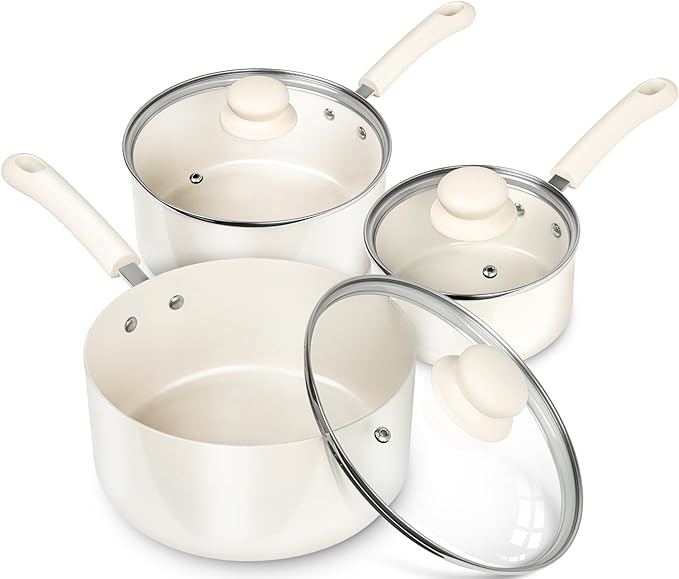
This set is the straightforward, budget‑friendly answer to “my old pots are gross and I want a fresh start.” You get three common sizes, easy cleaning, and a lightweight feel that’s especially nice for smaller kitchens. Owners generally like the even cooking and the way food releases with minimal oil.
Expert reality: lighter cookware can slide or tip more easily if the smallest pot is empty and you bump it. If you want that “planted” feel, the SENSARTE or Caraway pieces feel sturdier. But if your priority is value and convenience, this set checks the boxes.
Why it’s a good deal
- Three sizes – covers small cooking, reheats, and sauces.
- Easy cleaning – quick wipe, quick wash.
- Lightweight – easier to handle than heavy cookware.
- Dishwasher option – convenient when life is busy.
Good to know
- Lightweight build can feel “thin” compared to premium pots.
- Smallest pot may be less stable when empty.
- Gentle utensils still recommended for coating longevity.
Ideal for: budget shoppers who want a complete small‑pot set now and are okay with a lighter, simpler build.
18. Gotham Steel 5QT Pasta Pot – Lock, Strain, Serve (Less Chaos)

This pot is basically three tools in one: a stock pot, a strainer lid, and twist‑lock handles that help keep draining controlled. If your kitchen workflow is “cook pasta, drain, toss back in, mix sauce,” this kind of design is a real time‑saver—and it frees you from washing a separate colander.
My expert advice: treat the lock as a safety feature, not a license to rush. Make sure it’s fully engaged before you tilt, and drain slowly at first. Also, there’s occasional confusion online about oven use—always follow the instructions that come with your specific unit. As a stovetop pasta pot, though, the design is genuinely clever.
Why people love it
- Built‑in strainer lid – no colander required for most pasta tasks.
- Twist‑lock handles – helps keep the lid stable while draining.
- Nonstick cleanup – starchy pasta residue wipes out fast.
- Great for grains – also handy for rinsing and draining rice.
Good to know
- Not induction compatible.
- Always confirm the lid is locked before draining.
- Use gentle tools to keep the coating in good shape.
Ideal for: pasta lovers who want fewer tools, less mess, and easier cleanup on busy weeknights.
19. Redchef 2.5QT Saucepan – Oatmeal, Eggs, Sauce: Effortless

A 2.5‑quart saucepan is the unsung hero of daily cooking. It’s the oatmeal pot, the “heat the soup” pot, the quick ramen pot, the egg‑scramble pot, and the small sauce pot. Redchef wins here because owners consistently describe it as truly nonstick, easy to wipe clean, and nicely balanced in the hand.
One detail I love (and it’s rare at this price): people mention the outside cleans easily too, which matters if you cook starchy foods that boil over. Keep heat moderate, use soft tools, and this becomes one of those pots you reach for every single day without thinking.
Why it’s a great little pot
- Perfect size – daily oatmeal, sauces, reheats, and small pasta portions.
- Easy cleanup – wipes clean with minimal effort.
- Comfortable handling – ergonomic handle and balanced feel.
- Cooktop flexibility – works across common stove types, including induction.
Good to know
- Small capacity means it’s not for family pasta nights.
- Like all ceramic nonstick, avoid metal utensils.
- For long simmers, keep heat low to protect the coating.
Ideal for: anyone who wants one small pot that makes sticky foods easier and cleanup faster.
How Ceramic Cookware Behaves (and How to Make It Last Longer)
Ceramic cookware is famous for easy release—but the best results come from understanding how it likes to be used. Think of ceramic as “high performance, low drama” when you cook with the right habits.
Why ceramic sometimes disappoints (and how to avoid it)
- Too much heat is the #1 enemy. Ceramic nonstick performs best on low to medium heat for most tasks.
- Thermal shock (cold water in a hot pot) can stress coatings and enamel—let pots cool a bit before washing.
- Metal tools can scratch coatings, even when brands claim “utensil safe.” Soft tools keep the surface smoother longer.
- Harsh dishwashers can dull finishes over time; hand washing is usually kinder.
If your old ceramic pot “stopped being nonstick,” it usually wasn’t because ceramic is useless—it’s because ceramic is less forgiving of high heat and abrasive habits than stainless steel. Treat it like a great knife: not fragile, but deserving of basic respect.
My simple “ceramic routine” for better results
- Preheat gently for 30–60 seconds, then add oil/butter (especially for eggs and rice).
- Use medium heat for simmering sauces and soups; go higher only when the pot is designed for it.
- Soak instead of scrub – warm water + soap for 10 minutes beats any abrasive pad.
- Store smart – if you stack, use a soft liner or towel between pieces.
- Rinse tomato sauces sooner to reduce staining on light-colored exteriors.
Do those five things and ceramic cookware becomes exactly what it’s supposed to be: the pot you reach for when you want fast, clean, and reliable cooking without babysitting a sticky mess.
FAQ: Ceramic Cooking Pots, Answered
Is ceramic cookware actually safer than traditional nonstick?
What’s the difference between ceramic nonstick and enameled cast iron?
Do ceramic pots work on induction cooktops?
Can I put ceramic cookware in the dishwasher?
How long should ceramic cookware last?
Final Thoughts: Picking the Best Ceramic Cooking Pots for You
The “best” ceramic pot is the one that matches how you actually cook. Not how you aspire to cook on a perfect Sunday, but how you cook on a busy Wednesday when the kitchen is messy and you want dinner to be easy.
- If you want the most useful big family pot (especially for induction): start with the BEZIA 8QT Stock Pot.
- If you want a premium “one pot replaces many” upgrade: the Our Place Perfect Pot is the most design-forward multi-tasker in this list.
- If you want classic Dutch oven cooking (braises + bread): go for the Overmont Enameled Cast Iron.
- If you want lighter bread baking and faster cleanup: check the Gotham Steel 5QT Ceramic Dutch Oven.
- If you want the easiest pasta workflow: the Gotham Steel Pasta Pot is a simple “less mess” upgrade.
- If you want the best sticky-food saucepan upgrade: the Caraway 3QT Sauce Pan is the splurge that people actually use.
Any of the 19 picks above can become your Best Ceramic Cooking Pots if you match the size and style to your routine. Decide the pot type first (stockpot vs saucepan vs Dutch oven), confirm induction needs, and then choose the one that fits your real cooking nights. Once you do, you’ll cook more at home—not because you “should,” but because it’s simply easier.
