
Buying cast iron isn’t about buying “a pan.” It’s about choosing a cooking style—one where heat is steady, browning is bold, and your tools get better the more you use them. That’s the magic… and also why cast iron can be confusing on day one. A pan arrives “pre-seasoned,” you cook eggs, they cling like glue, and suddenly you’re Googling in a panic while your breakfast turns into a scrape-fest.
If you’re hunting for the best cast iron pans, you’re probably trying to solve one of these very real problems: (1) you want a pan that sears and browns like a steakhouse, (2) you’re done with coatings that chip or age out, or (3) you want one piece of cookware that can handle stovetop, oven, grill, and even a campfire without acting precious.
Here’s the truth most guides skip: cast iron performance isn’t a spec-sheet contest. It’s an interaction between the pan’s surface texture, its thermal mass, how flat it sits on your stove, and whether the handle design fits the way you actually cook. A huge skillet is “better” until it doesn’t fit your oven. A smooth pan is “better” until you realize you baby it because it cost more. A lid is “better” until you hate storing it.
This guide is built around what actually matters after the honeymoon phase: how your pan behaves on week three, how it cleans when you’re tired, how quickly it rusts if you forget it for a night, whether it warps on induction, and how confidently you can move it from burner to oven without feeling like you’re doing a deadlift.
Below you’ll find 16 carefully chosen options—from classic Lodge workhorses to premium smooth-surface skillets, extra-large crowd cookers, a sheet-pan-style cast iron baking pan, and a couple of “two-in-one” pieces that pull double duty for bread baking and everyday searing.
In this article
- How to choose the right cast iron pan for your cooking style.
- Quick comparison table of 16 standout picks.
- In-depth reviews of every pan, with pros and cons.
- How cast iron actually works (and why seasoning + heat matter more than hype).
- FAQ: common questions, mistakes to avoid, and buying shortcuts.
How to Choose the Best Cast Iron Pans for Your Cooking Style
A cast iron pan isn’t “good” because it’s heavier or because the box says “nonstick.” It’s good because it matches your kitchen reality: your stovetop type, your wrist comfort, your oven size, and the foods you cook most. Use the framework below and you’ll end up with a pan you reach for constantly—not one you respect from afar.
1. Start with the food you actually cook (not the food you aspire to cook)
This is the simplest way to pick the right first pan—and it’s the step most people skip. Think about your weekly habits:
- Steak, chops, burgers: you want a skillet with strong heat retention, a generous cooking surface, and comfortable lifting handles.
- Eggs, pancakes, delicate fish: prioritize smoother cooking surfaces (or be ready to build seasoning patiently) and focus on gentle heat control.
- Pan pizza, cornbread, baked pasta: look for roomy interiors, oven-friendly handles, and side walls that match your recipes.
- Sourdough bread: a combo cooker or lidded piece that traps steam is a cheat code for a crackly crust.
- Big family meals: extra-large skillets are amazing—if your stove and oven can actually handle them.
2. Choose your “daily-driver” size before you buy anything else
Most kitchens need one dependable everyday skillet first, then specialty pieces later. Here’s the sizing shortcut that rarely fails:
- 10–10.25 inch: the sweet spot for 1–3 people, easy to store, easy to preheat evenly, and surprisingly versatile.
- 12 inch: the best “family skillet” size—more space for browning, more room for one-pan dinners, and still manageable.
- 15–17 inch: party pans—amazing for pizza, fajitas, big breakfasts, and oven bacon, but they demand space and technique.
If you’re only buying one skillet, a 10.25-inch or 12-inch is almost always the smartest move. Everything else is a specialized tool.
3. Understand surface texture (it changes how “nonstick” feels)
Modern cast iron often has a slightly textured, pebbly surface. That’s not “bad”—it’s a manufacturing reality and it seasons up beautifully over time. But it changes how the first few weeks feel:
- Textured pans: typically grip food a bit more early on, but become incredibly reliable once the seasoning builds and you learn heat control.
- Smoother/machined pans: often feel easier with eggs sooner and can clean up faster—especially for sticky sauces and delicate proteins.
If you’re impatient with the learning curve, a smoother pan can feel like “fast-forward.” If you’re happy to learn, a classic textured pan can become just as satisfying.
4. Handles matter more than you think
A pan can be technically amazing and still annoy you every day if the handling is awkward. Pay attention to:
- Helper handles: they turn heavy lifts into confident lifts, especially when moving from stovetop to oven.
- Dual loop handles: great for ovens, grills, and compact kitchens where long handles get in the way.
- Heat management: some designs stay cooler longer, but every cast iron handle can get hot—plan on using mitts.
- Pouring control: some pans pour cleanly from any angle; others rely on spouts; some drip if you rush.
5. If you cook on induction or glass-top, flatness is king
Cast iron loves induction—when the pan sits flat and you preheat responsibly. The most common frustrations on induction or glass-top stoves are:
- Wobble: a slightly warped bottom can rock, especially on induction.
- Heat rings/feet: some pans have a raised ring that reduces contact area on smooth surfaces.
- Aggressive heat: induction can heat fast; fast heat + thick iron can create hot spots early if you crank it.
If you’re induction-heavy, choose pans known for staying flat and practice gradual preheating. It’s not a “cast iron problem,” it’s a “physics problem.”
6. Lids: decide whether you want cast iron, glass, or none
A lid changes what your pan can do:
- Cast iron lids: great heat retention, oven/grill safe, and some have self-basting bumps that help roasts and braises stay juicy.
- Glass lids: underrated for everyday simmering because you can see what’s happening without lifting the lid (and losing heat).
- No lid: totally fine for most searing and sautéing—just accept that you’ll use foil or a universal lid sometimes.
7. Maintenance should feel “simple,” not “fragile”
Cast iron care is easy—when you stop trying to make it complicated. Your goal is to avoid three things:
- Long soaking: water + time is how rust starts.
- Storing wet: even a little moisture can lead to orange spots.
- Thermal shock: cold water on a screaming-hot pan is a cracking risk and can warp thinner pieces.
8. Don’t buy “one pan to do everything” if your kitchen needs a small team
The best cast iron setup for most homes is not one giant pan. It’s a small, smart lineup:
- One daily-driver skillet (10.25″ or 12″)
- One lidded/deeper piece for frying, braises, and bread
- Optional: one big “party pan” if you cook for crowds
That’s it. If you build that trio well, you’ll cover almost every recipe style without cluttering your cabinets.
Quick Comparison: 16 Best Cast Iron Pans Worth Owning
Use this table to find the models that match your cooking style, then jump to the full reviews for the real-life details—like which pans are easier to lift, which ones are bread-baking superstars, and which large skillets require a little technique to heat evenly.
On smaller screens, swipe or scroll sideways to see the full table.
| Model | Pan type | Standout strength | Best match | Amazon |
|---|---|---|---|---|
| Lodge 5 Quart Deep Skillet with Lid | Deep skillet | High sides + lid make it a true “do everything” daily-driver | Most households that want one versatile workhorse | Amazon |
| Stargazer 12-Inch Cast Iron Skillet | Premium smooth | Smooth cooking surface + modern handle + clean pouring | Cooks who want “vintage feel” without vintage hunting | Amazon |
| Lodge 2-in-1 Cast Iron Combo Cooker (3.2 Qt) | Combo cooker | Two pieces become one bread-baking, frying, searing machine | Sourdough lovers + people who want maximum versatility | Amazon |
| Lodge 5 Piece Cast Iron Set | Full set | Instant cast iron kitchen: skillets, griddle, Dutch oven + lid | New homeowners and “buy once” kitchen builders | Amazon |
| Lodge 3 Skillet Bundle (12″, 10.25″, 8″) | Skillet set | Perfect “size ladder” for daily cooking without guesswork | Anyone replacing nonstick with a complete skillet trio | Amazon |
| Lodge 17 Inch Skillet (Dual Assist Handles) | Extra-large | Pizza-party capacity + campfire toughness | Crowd cooks with the space to store it | Amazon |
| EDGING CASTING 17 Inch Large Skillet | Extra-large | Big, deep, and grill-friendly—great for roasts and one-pan feasts | Outdoor cooks who want a large pan without premium pricing | Amazon |
| Amazon Basics 15 Inch Cast Iron Skillet | Budget large | Huge cooking surface for the money | Big-batch cooking on a budget (especially oven use) | Amazon |
| Lodge 12 Inch Dual-Handle Skillet | Oven-friendly | No long handle = easier oven/grill handling + compact storage | People who bake and broil often (and hate handle clutter) | Amazon |
| Lodge 12 Inch Skillet + Silicone Handle Holder | Everyday skillet | Classic shape + built-in comfort for hot handling | First-time cast iron owners who want safety and simplicity | Amazon |
| Backcountry Iron 12 Inch Round Skillet | Boutique feel | Smoother finish vibe + sturdy build for long-term seasoning | Small-brand supporters who want a “nicer” everyday 12″ | Amazon |
| Cuisinel 12″ Skillet with Glass Lid | Lidded skillet | See-through simmering + oven-safe cast iron base | Home cooks who braise, sauté, and like visibility | Amazon |
| Lodge 10.25 Inch Skillet | Sweet spot | The classic size that gets used constantly | Most people who want one “always out” skillet | Amazon |
| Lodge Skillet Set (8″, 10.25″, 12″) | Skillet set | Three sizes that cover almost every home recipe | Families building a practical cast iron lineup fast | Amazon |
| EDGING CASTING 2-in-1 Dutch Oven (5 Qt) | 2-in-1 pot | Dutch oven + skillet lid for soups, bread, searing, camping | Budget-friendly bread baking and stew lovers | Amazon |
| Lodge Cast Iron Baking Pan (15.5″ x 10.5″) | Baking pan | Sheet-pan utility with cast iron browning + stovetop griddle tricks | People who roast, bake, and want one pan to replace coated trays | Amazon |
In‑Depth Reviews: 16 Cast Iron Picks That Feel Good to Own
Now we’ll go piece by piece. I’m not going to talk like a marketing brochure—I’m going to talk like a real cook: how it feels to preheat, what it’s like to lift, how it behaves with sticky food, and what to expect once the pan is “broken in.”
1. Lodge 5 Quart Deep Skillet with Lid – The One-Pan Workhorse That Actually Earns Counter Space

If you want a cast iron pan that can replace multiple pieces of cookware without feeling gimmicky, this deep skillet is a strong “start here.” The defining feature is the wall height: it’s tall enough for shallow frying and saucy one-pan meals, but it still behaves like a skillet when you want fast browning or a hard sear.
The lid matters, too. A lot of people underestimate how often a lid turns “good” into “effortless.” You can sear chicken thighs, add aromatics, and then cover to finish gently without drying things out. You can reduce splatter during frying. You can hold heat while you set the table. And if you bake, a lidded cast iron piece opens up roasts, braises, and even bread-style cooking where trapped heat helps build texture.
Where this pan really shines is consistency. Once it’s preheated properly (give it time—cast iron rewards patience), it holds temperature through ingredient additions far better than thin pans. That means better browning, steadier frying, and fewer “why is this sticking?” moments because the pan didn’t drop in temp. Owners who use it frequently often describe it as the most-used pan in the kitchen for exactly that reason: it simply handles the job without drama.
It is heavy—no point pretending otherwise. But that weight is also stability. The pan sits confidently, the heat feels “even,” and you’re less likely to scorch one spot while another stays pale. If you treat it like a daily driver, it becomes the kind of tool you hand down, not replace.
Why you’ll love it
- Deep sides change everything – better for frying, sauces, and splatter control than a standard skillet.
- Lid expands your recipe range – braises, covered finishes, moist roasts, and easier weeknight meals.
- Rock-solid heat retention – steady temperature means steadier results.
- Real “one-pan dinner” energy – sear, sauté, simmer, bake—without switching cookware.
Good to know
- It’s legitimately heavy; plan on two hands and a confident grip.
- Because it’s deep, it takes a little longer to preheat evenly than a shallow skillet.
- If you primarily cook delicate eggs, you’ll still want gentle heat and enough fat—deep skillets don’t magically fix technique.
Ideal for: anyone who wants one cast iron piece to handle frying, braising, baking, searing, and big weeknight meals—without feeling like a specialty tool.
2. Stargazer 12-Inch Cast Iron Skillet – Smooth, Modern, and “Vintage-Feeling” in All the Right Ways

This is the kind of skillet you buy when you already know you like cast iron… you just want it to feel more refined in daily use. The Stargazer’s calling card is the smooth cooking surface and the modernized geometry—details that don’t sound exciting until you cook with them and realize how much friction they remove.
A smoother surface tends to clean up faster, especially when you’re working with sticky reductions or proteins that leave fond. It’s not “nonstick like a coated pan,” but it’s noticeably less grabby when you manage heat well. Where textured cast iron sometimes feels like it needs a few months to calm down, a smooth pan often feels closer to “dialed in” earlier—particularly for eggs, fish, and pancakes.
Then there’s the handling. Stargazer leans into ergonomics: a longer handle designed to stay cooler longer (still use protection—cast iron is cast iron), a generously sized helper handle for controlled lifts, and a rim design that pours cleanly from almost any angle. That last part sounds small, but it’s a daily quality-of-life upgrade if you cook bacon, pan sauces, or anything where you’re draining fat or transferring drippings.
The honest learning curve: some owners notice the factory seasoning wears a bit early, and the pan “becomes yours” as you cook and add your own seasoning layers. That’s normal. What matters is that once it settles, it tends to stay stable, flat, and confidence-building—especially for people who want a premium pan without chasing antique skillets.
Why it’s special
- Smooth surface advantage – easier cleanup and a more “polished” cooking feel.
- Pouring is genuinely cleaner – less dripping mess when draining or pouring sauces.
- Comfort-forward design – handle + helper handle make the pan feel more controlled.
- Heirloom-level build – the kind of skillet you buy once and keep for decades.
Good to know
- This is a premium piece; if you’re unsure you even like cast iron, start with a classic first.
- Like all cast iron, eggs still need correct heat and fat—smooth doesn’t mean “no technique.”
- Don’t expect instant perfection on day one; give it a few cooks to build your own seasoning.
Ideal for: cooks who want the performance and longevity of cast iron, but with a smoother, more refined everyday experience.
3. Lodge 2-in-1 Cast Iron Combo Cooker – The Bread-and-Sear Legend That Teaches You Better Cooking

The combo cooker is one of those rare pieces that feels like a “cheat code” because it changes what you can cook at home. It’s a deep pot and a shallow skillet that fits as a lid—so you basically get two useful pieces that stack into one compact footprint. But the real fame comes from bread.
For sourdough and no-knead loaves, this design is outrageously effective: preheat it, drop your dough onto the shallow skillet side, cap it with the deep pot, and you’ve created a steam-trapping mini oven that helps you get that crackly bakery crust at home. The key is how easy it is to load and unload dough when the “bottom” piece is shallow—you’re not lowering dough into a deep canyon and burning your wrists. It’s practical, not precious.
Outside of bread, this is a daily cooking monster. Use the skillet lid as a standard frying pan. Use the deep pot for chili, braises, stews, and shallow frying. Use both pieces separately when you’re cooking multiple components. And if you cook outdoors, this is exactly the kind of cast iron that feels natural over a fire because it doesn’t rely on coatings or delicate parts.
There are two real-world truths to respect. First: it’s heavy—both pieces. This is not a “one-handed flip” situation, and you shouldn’t leave it near counter edges. Second: cast iron rewards restraint. People who love this cooker often talk about learning to use enough cooking fat and no more heat than necessary. That’s not old-school romanticism; it’s the technique that makes cast iron shine.
Why it’s a classic
- Two tools in one – deep pot + skillet lid cover a huge range of recipes.
- One of the best bread-baking shapes – easy loading and steam-trapping performance.
- Durable and “go anywhere” – oven, stove, grill, or campfire without fear.
- It improves your cooking – teaches heat patience and fat management (the real cast iron skills).
Good to know
- Very heavy—especially as a two-piece set.
- Preheating takes time; rushing it can create hot spots and sticking.
- If you dislike cast iron maintenance, you won’t magically enjoy it here—this is a “commit and be rewarded” piece.
Ideal for: home bakers, meal-prep cooks, and anyone who wants one compact cast iron setup that can do “serious cooking” without fuss.
4. Lodge Pre-Seasoned 5 Piece Set – The Smart Way to Build a Cast Iron Kitchen Fast

If you’re starting from scratch (new home, new kitchen, or you’re rebuilding after ditching coatings), this set is a strong “one purchase” foundation. The value here isn’t just that you get multiple pieces—it’s that you get the pieces that actually get used: a griddle, two skillets, and a Dutch-oven-style pot with a lid that can do double duty.
Here’s how a set like this changes your cooking workflow: you stop thinking in “single-pan recipes.” You can sear in one skillet while the griddle handles pancakes or grilled sandwiches. The Dutch oven becomes your chili and bread tool. The lid becomes a heat-retaining cover for both pot and skillet depending on what you’re cooking. Suddenly cast iron becomes a system, not a novelty.
Owners who love this kind of bundle usually say the same thing: they used one piece constantly, then they found themselves reaching for the others because the cooking results were simply better—more even browning, better heat retention, and the confidence of using metal utensils without worrying about scratching. Also, for baking bread, the Dutch oven in the set is often the gateway drug: once you pull a loaf with a crisp crust and a great crumb, you start looking for excuses to bake.
The caution is storage and weight. Five pieces of cast iron are not “light.” If you have limited cabinets or weak shelving, plan your storage setup. But if you have the space, this is one of the cleanest ways to build a long-term cookware lineup that won’t age out.
Why it’s a win
- A complete functional lineup – not filler pieces; these are sizes you’ll genuinely use.
- Better cooking across the board – cast iron’s even heat and retention show up in every meal.
- Great for bread and roasts – the lidded pot expands your capabilities immediately.
- Long-term value – with basic care, these pieces can last for decades.
Good to know
- Storage matters: this set is heavy and takes space.
- You’ll likely want a simple cleaning tool (scraper or brush) to make maintenance feel effortless.
- If you only want one pan, start with a single skillet instead of a full set.
Ideal for: anyone who wants to “go cast iron” in a practical, complete way—without piecing together a collection over years.
5. Lodge 3 Skillet Bundle (12″, 10.25″, 8″) – The Size Ladder That Makes Cast Iron Click

This bundle is popular for a reason: it solves the most common cast iron problem—owning one pan that’s “almost right” but not quite. Three sizes means you stop forcing the wrong pan to do the job. That sounds basic, but it’s the difference between enjoying cast iron and getting annoyed by it.
The 8-inch is your quick breakfast pan and single-portion hero. The 10.25-inch is the daily-driver sweet spot for sautéing, pan sauces, and most weeknight meals. The 12-inch is for family-sized browning, bigger steaks, larger batches of vegetables, and one-pan dinners where crowding would ruin the sear. If you’ve ever tried to brown too much food in too small a skillet, you know exactly why that matters.
What’s especially nice about a matching set is rhythm: the pans behave similarly, season similarly, and clean similarly. Once you learn your “cast iron routine” (preheat, add fat, cook, wipe, dry, lightly oil), it translates across all three pieces. Owners often mention that the set becomes a daily rotation—one pan always on the stove, another cooling after oven use, and a third ready for the next meal.
The only real downside is that you’ll want a handle cover or mitt strategy, because cast iron handles don’t care about your fingers. And like all classic textured cast iron, it may take a little time before it feels truly egg-friendly—especially if you’re coming from modern nonstick. But if you stick with it, the payoff is huge.
Why it’s a favorite
- Three sizes = fewer compromises – cook the right amount of food without crowding.
- Excellent for learning cast iron – one routine, three pans, lots of repetition (and fast improvement).
- Versatile across cooking styles – stovetop, oven, grill, or campfire.
- Everyday practicality – this set matches how real households cook.
Good to know
- Storage takes planning (nest them with a towel/paper between to protect seasoning).
- Egg performance improves with time—don’t judge it by the first two cooks.
- Cast iron is heavy; lifting a 12″ pan full of food is a two-hand job for many people.
Ideal for: households replacing nonstick and wanting a complete, practical cast iron skillet lineup without guesswork.
6. Lodge 17 Inch Skillet – The Party Pan for Pizza, Fajitas, and Big-Batch Breakfasts

A 17-inch skillet is not subtle. This is a “feed people” tool—perfect for breakfast spreads, big fajita nights, and especially pizza-style cooking where the cast iron gives you that crisp, browned base you can’t fake with flimsy pans. If you love hosting, this skillet can feel like a superpower.
But the real reason people fall in love with a skillet this size is not just capacity—it’s heat behavior in the oven. For pizza, cast iron acts like a thermal battery. Once preheated, it blasts the crust with steady heat and keeps slices warm long after the oven timer beeps. For oven bacon, it can handle an entire crowd’s worth in one go. For roasted vegetables, you get edge-to-edge caramelization that sheet pans often struggle to deliver.
On the stovetop, there’s a technique note: most home stoves don’t heat a 17-inch surface evenly. You’ll get hot zones over burners and cooler zones around the edges, especially early in the cook. That’s not a flaw—it’s a reality of big metal over small heat sources. The fix is simple: preheat longer, rotate food through hot zones, and use the edges as a “resting/cooking finish” area. Once you treat the skillet like a cooking station (not a perfectly uniform surface), it becomes incredibly fun to use.
Also: measure your oven. Some ovens can fit it comfortably, others can’t. People who adore this skillet often mention it “barely fits” or requires careful placement. If it fits, you’ll use it constantly. If it doesn’t, it becomes an expensive wall decoration.
Why it’s amazing
- Massive cooking surface – cook full meals without crowding.
- Pizza and oven meals shine – crisp bottoms, steady heat, long warmth retention.
- Dual handles are practical – easier to lift than a giant long-handle skillet.
- Outdoor-ready – grill and campfire cooking feel natural with this size.
Good to know
- Very heavy. Plan your lift before you cook.
- Stovetop heating can be uneven; it rewards longer preheats and food rotation.
- Oven fit is not guaranteed—measure first.
Ideal for: big families, entertainers, and pizza lovers with enough space (and strength) to use a truly massive skillet.
7. EDGING CASTING 17 Inch Large Skillet – A “Monster Skillet” for Grills, Roasts, and Big Chili Nights

This is the kind of pan people buy with a specific mission: “I want a huge cast iron skillet for outdoor cooking, roasting, and big meals, and I don’t want it to feel precious.” If that’s you, this EDGING CASTING skillet is worth a serious look. It’s wide, deep, and built to handle high-heat searing and low-and-slow oven meals.
The real advantage here is the combination of diameter and wall height. That makes it feel less like a flat griddle and more like a “one-pan roaster.” It’s especially useful for chili, stew-style cooking, or roasted meat-and-veg meals where you want browning first and then a covered/slow finish (even if you cover with foil). On ceramic grills and egg-style cookers, people love these big cast iron pans because they create a stable, heat-retaining platform that turns a grill into an oven-like environment.
A practical note from real-world use: many larger, budget-friendly cast iron pieces arrive with a basic factory seasoning that’s more “rust protection” than “egg-ready.” That’s not a deal-breaker—it just means you’ll want to cook fatty foods early (bacon, sausages, roasted chicken skin-on) and build a better seasoning layer through use. If you’re the type who enjoys that “seasoning journey,” you’ll be happy. If you want instant perfection, you’ll be frustrated.
The final truth: a skillet this big is heavy and awkward in tight kitchens. The dual handles help, but you still need a plan. If your cooking style leans heavily toward oven and grill, you’ll love it. If you mostly sauté quick meals on the stovetop, it may be too much pan.
Why it works
- Big + deep – more versatile than a wide shallow pan for roasts and saucy meals.
- Outdoor cooking friendly – great on grills and campfire setups.
- Dual handles – safer handling than a giant long handle.
- Solid value for size – a practical way to go extra-large.
Good to know
- Expect to add your own seasoning over time for peak performance.
- Storage and lifting are real considerations—this is not a “quick flip” skillet.
- Stovetop heat zones are likely; preheat longer and rotate food.
Ideal for: grill users, big-batch cooks, and anyone who wants a large cast iron skillet that doesn’t demand premium pricing.
8. Amazon Basics 15 Inch Cast Iron Skillet – Huge Capacity, Simple Build, Surprisingly Useful

This skillet exists for one reason: you want a big cast iron pan without turning it into a big financial decision. And honestly? That’s a valid way to shop. A 15-inch skillet is incredibly useful for cooking a lot of food at once—browned meats, big breakfasts, sheet-pan-style dinners, and oven pizza experiments that need a wide, heat-holding base.
The surface tends to be more textured than premium pans, which is common at this price point. That means the “break-in” period can be more noticeable: early sticking is usually about heat control and seasoning build, not a defect. Owners who are happy with this pan often do one simple thing: they add a couple of thin seasoning layers at home and cook fatty foods early on to fill in the microtexture. After that, it becomes a reliable big-pan tool.
One practical detail worth noting is how some large budget skillets are designed underneath. If a skillet has a raised ring or “foot,” it may not make perfect contact on smooth glass-top stoves, which can slightly affect heat transfer. That’s not always a deal breaker—many people primarily use a skillet this large in the oven or on a grill— but it’s something to consider if your main use is a smooth-top electric stove.
If you accept it for what it is—a big, sturdy, no-frills cast iron skillet—it can be an excellent part of a cast iron lineup. It’s especially good as a “project pan” for pan pizza, oven bacon, or big roasts where the priority is capacity and heat, not finesse.
Why people buy it
- Huge cooking surface – big batches without crowding.
- Oven-friendly workhorse – great for pizza, bacon, roasting, and big meals.
- Simple, sturdy build – no fragile parts, no coatings to baby.
- Budget-friendly way to go big – great as a second or third cast iron piece.
Good to know
- Texture means you’ll want to build seasoning for best “nonstick” behavior.
- Very heavy. Moving it loaded is a two-hand job.
- Check compatibility if you rely on a glass-top stove; large pans can be finicky depending on bottom design.
Ideal for: big-meal cooks who want a large cast iron skillet as a value play—especially for oven and grill cooking.
9. Lodge 12 Inch Dual-Handle Skillet – For People Who Hate Long Handles (and Love Baking)

This is a deceptively smart shape. Most people picture a cast iron skillet with a long handle—but long handles can be annoying: they crowd the stovetop, they bump into adjacent burners, and they make oven use feel awkward when you’re trying not to burn your forearms. Dual-handle skillets solve that.
The biggest advantage is oven handling. When you’re baking cornbread, roasting vegetables, broiling chicken, or making a skillet dessert, two loop handles let you lift with a balanced two-hand grip. It feels safer and more controlled, especially if you’ve ever tried to wrestle a heavy long-handle pan out of a hot oven while a towel slips.
This design is also a storage win. Dual-handle skillets stack neatly and don’t create that “handle jutting out” cabinet problem. If you have a compact kitchen or a countertop oven, a shorter footprint can be the difference between “I use it weekly” and “I never bother.”
Cooking-wise, it behaves like classic Lodge: strong heat retention, a seasoning surface that improves with use, and the ability to cook almost anything once you learn the rhythm. For searing, the wide surface gives you space to brown without crowding. For baking, the shape feels purpose-built. If you’re a grill person, it’s also easier to place on grates and rotate than a long-handle pan.
Why it’s so practical
- Oven handling feels safer – balanced two-hand lifts.
- Less stovetop clutter – no long handle hogging burner space.
- Storage friendly – stacks neatly in cabinets.
- Classic cast iron performance – great sear, great baking, gets better with use.
Good to know
- If you like long handles for sautéing one-handed, this shape may feel unfamiliar.
- Handles still get hot—always plan your grip.
- As with most textured cast iron, “egg perfection” comes with seasoning and heat control practice.
Ideal for: bakers, broilers, grill cooks, and anyone who wants cast iron performance without the long-handle inconvenience.
10. Lodge 12 Inch Skillet + Silicone Handle Holder – The Classic Shape with a Smart Safety Upgrade

A 12-inch Lodge skillet is a classic for a reason: it’s big enough to cook real meals, small enough to store, and tough enough to live on your stovetop forever. What makes this version especially beginner-friendly is the included silicone hot handle holder—because the #1 beginner cast iron mistake is grabbing the handle and learning a painful lesson.
Performance-wise, this is pure cast iron fundamentals: preheat patiently, cook with enough fat, and enjoy the browning you can’t get from flimsy pans. The thickness helps it hold heat when you add food, which is why it’s so good for searing and why it makes roasted vegetables taste more caramelized. It also shines in the oven: skillet cornbread, baked pasta, chicken thighs, skillet cookies—this is the shape those recipes were made for.
Where beginners get tripped up is overheating. Cast iron doesn’t need high heat to sear well. In fact, many owners who fall in love with this pan learn to stay well below “full blast.” Let the pan come to temperature gradually, then cook on medium-ish heat and you’ll get better browning without burning off your oil or ending up with sticky seasoning.
The silicone handle holder is a convenience, not a magic forcefield—always double-check grip and heat, especially if you move the pan into the oven. Some cooks remove silicone pieces for high-heat oven sessions and then slide them back on once the pan is out and resting. Either way, it’s a thoughtful add-on that makes daily cooking feel safer.
Why it’s a staple
- Perfect “family skillet” size – enough room for real meals without crowding.
- Included handle protection – makes cast iron less intimidating for beginners.
- Excellent oven versatility – from cornbread to roasted chicken.
- Builds a great seasoning layer – the more you use it, the better it cooks.
Good to know
- Still heavy—use the helper handle and plan two-hand lifts.
- Don’t crank heat; cast iron rewards gradual preheating.
- Like all cast iron, it needs basic drying and oiling habits to prevent rust.
Ideal for: first-time cast iron buyers who want one classic skillet that can cook almost anything—and includes a built-in safety helper.
11. Backcountry Iron 12 Inch Round Skillet – A “Nicer Feel” Everyday Skillet for People Who Cook a Lot

Backcountry Iron aims at a specific kind of cook: someone who likes cast iron, uses it often, and wants a skillet that feels a bit more “considered” than the most basic entry-level options. The brand leans into smoother-finish messaging and a small-company vibe, and many buyers choose it because they want something that nods toward vintage performance without needing to hunt antique stores.
In practice, this skillet is about steady results: good heat retention, reliable browning, and a seasoning layer that improves quickly when you cook with intention. Owners often mention that the pan performs best after additional seasoning and a few real cooks. That’s not a flaw—cast iron is a relationship. But it’s a helpful expectation-setting: if you want the pan to feel “dialed in,” plan on giving it a short break-in period.
What I like about skillets in this category is the mindset shift they can create. Because the pan feels “nice,” people tend to treat preheating as part of the recipe instead of a rushed step. That leads to better food. And because cast iron is basically indestructible when cared for, buying a skillet you enjoy touching and using usually means you’ll cook at home more.
A practical note: multiple reviews mention weight—especially for older cooks. That’s the trade-off for thermal mass and durability. If you’re concerned about wrist comfort, consider whether a 10.25-inch skillet might be a better daily driver and keep a 12-inch for bigger meals. But if a 12-inch is your sweet spot, this is a compelling option in the “upgrade without going extreme” category.
Why it stands out
- Feels more refined – a “nicer” everyday skillet experience for frequent cooks.
- Strong browning performance – steady heat helps with searing and roasting.
- Versatile cooking range – stovetop, oven, grill, and outdoor use.
- Built for long-term seasoning – improves meaningfully with consistent use.
Good to know
- Plan to add seasoning layers and build your patina through cooking.
- Weight can be a deal breaker for some—be honest about comfort.
- If you want guaranteed “perfect flatness” for induction, choose carefully and preheat gently.
Ideal for: people who cook often and want a 12-inch cast iron skillet with a slightly more premium feel than a basic starter pan.
12. Cuisinel 12″ Cast Iron Skillet with Glass Lid – The “See What’s Happening” Braise-and-Simmer Pick
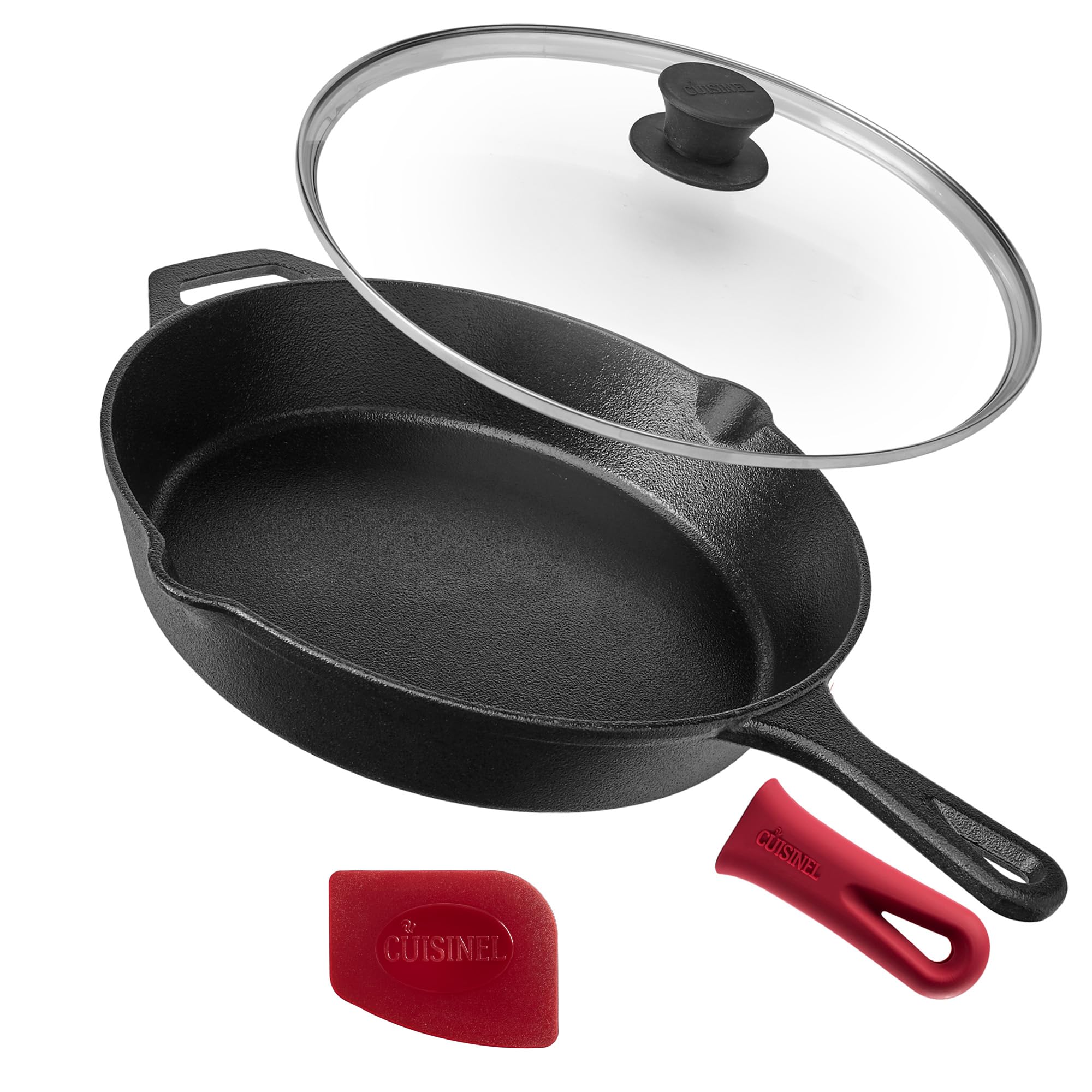
If you’ve ever cooked a sauce, a shallow braise, or a covered sauté and thought, “I hate lifting the lid and losing heat,” you already understand the appeal here. A tempered glass lid changes the everyday experience: you can watch bubbling, reduce splatter, and control moisture without constantly peeking. That’s not just convenience—it’s better cooking because you’re not interrupting the heat cycle.
This set also comes with a silicone handle holder, which makes handling feel safer in the moment—especially if you’re serving from the pan at the table. The skillet itself is classic cast iron: good heat distribution, strong heat retention, and the ability to move between stovetop and oven for recipes like baked pasta, skillet casseroles, or a stovetop-to-oven finish on chicken.
A real-world note: shipping and handling matter with cast iron because it’s heavy and brittle if abused. Some buyers have experienced damage in transit. The practical takeaway isn’t “avoid cast iron,” it’s: inspect it when it arrives and don’t accept a cracked handle or damaged rim. When the pan arrives intact, people tend to be very happy with the sturdiness and the lid quality—especially when the glass feels thick and confidence-building, not flimsy.
Cooking tip: for lid-on meals, cast iron can trap heat aggressively. Keep your burner lower than you think you need. You’ll still maintain a gentle simmer, and you’ll avoid scorching sauces or burning the seasoning surface. If you’re the kind of cook who makes chili, baked ziti, skillet mac, or covered chicken regularly, this is a very satisfying setup.
Why it’s useful
- Glass lid is a daily upgrade – see simmering without lifting and losing heat.
- Great for braises and saucy meals – lid helps control splatter and moisture.
- Solid cast iron base – sear on the stove, finish in the oven.
- Comfort accessories included – silicone holder adds safety.
Good to know
- Glass lids are not for every extreme-heat situation—treat them with common sense.
- Cast iron requires drying and oiling habits; neglect can cause rust.
- Heavy piece—be mindful when moving a lidded pan full of food.
Ideal for: cooks who love one-pan meals, covered sautéing, and simmering—and want visibility without constantly lifting a lid.
13. Lodge 10.25 Inch Skillet – The Sweet-Spot Size That Quietly Does Everything
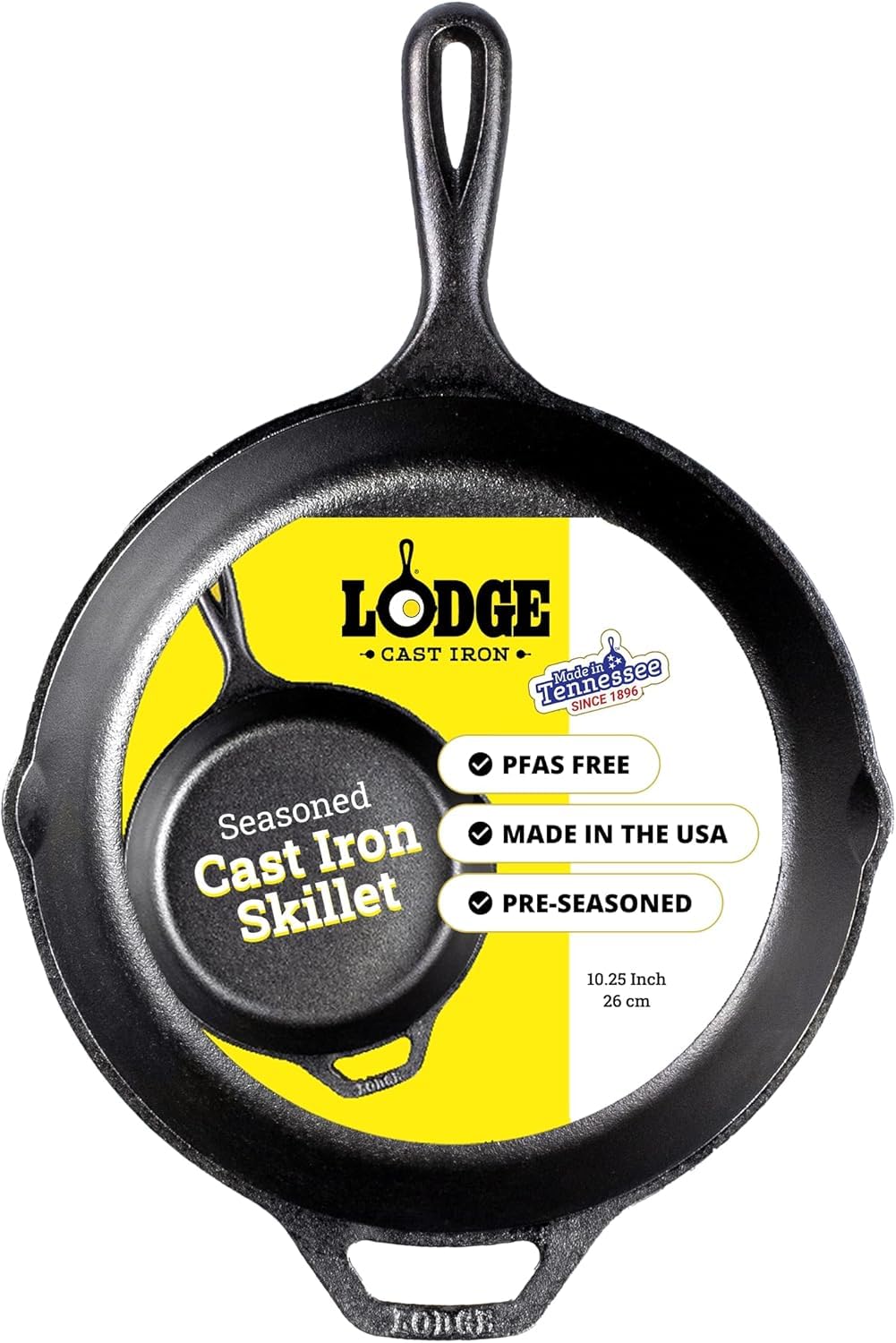
If you ask experienced cast iron users what size gets used the most, you’ll hear “10-inch-ish” constantly. This 10.25-inch Lodge sits right in the practical sweet spot: big enough for real meals, small enough to preheat evenly, and manageable enough that it doesn’t feel like a workout every time you cook.
It’s the skillet that turns cast iron into a habit. Morning eggs? Yes, once your seasoning and heat control are dialed in. Burgers and steaks? Absolutely—this size browns beautifully without making your stovetop feel crowded. Roasted vegetables, skillet cornbread, quick pan sauces, sautéed greens, shallow frying—this is the “I can do that” pan. And because it’s cast iron, you can use metal spatulas confidently, which is especially handy for scraping fond and getting clean flips on proteins.
One of the most overlooked advantages of this size is cleanup. A massive pan may keep you from washing it quickly. A medium-sized pan is easy to rinse, brush, dry, and oil—so you actually maintain it well. Many long-term users develop a simple routine: hot water (or even kettle-hot water after cooking), a quick scrape or brush, a short dry on the burner, and a whisper-thin oil wipe. When cast iron maintenance feels that simple, you stop thinking about it.
If you’re new to cast iron, this is also a great teacher. It’s heavy enough to show you what heat retention feels like, but not so heavy that you fear moving it. It’s large enough to show you the importance of preheating, but not so large that your burner can’t keep up. That balance is why this size becomes a forever favorite.
Why it’s a go-to
- Perfect everyday size – cooks most meals without being awkward or huge.
- Easier to heat evenly – less fighting hot spots compared to extra-large skillets.
- Low-friction maintenance – quick to clean, dry, and store properly.
- Versatile cooking range – breakfast to dinner to oven bakes.
Good to know
- Eggs still require technique (moderate heat + fat + patience).
- A lid is not included; you’ll use foil or a universal lid for covered cooking.
- Like all cast iron, it dislikes long soaking and wet storage.
Ideal for: almost anyone—especially if you want one skillet that’s always ready and always useful.
14. Lodge Skillet Set (8″, 10.25″, 12″) – The No-Regrets Trio for Real Kitchens

This set wins because it’s simple and correct. It’s not trying to impress you with unusual shapes or niche accessories. It just gives you the three sizes that cover nearly every home recipe: a small skillet for quick meals, a mid-size daily driver, and a larger pan for family cooking and better browning.
From a workflow perspective, three skillets unlock a smoother kitchen rhythm. You can cook eggs in the 8-inch while the 12-inch handles bacon or hash. You can sear chicken in the 12-inch and finish vegetables in the 10.25-inch. You can keep one pan “seasoning friendly” for delicate cooking and let another do the messy searing and sauce work. That separation alone often makes people enjoy cast iron more—because you’re not forcing one surface to handle everything.
A small but important benefit: when you own multiple sizes, you stop crowding food. Crowding is the hidden enemy of good cast iron cooking. It drops the pan temperature, creates steam, and turns searing into simmering. With a size ladder, you match the pan to the portion and get the browning cast iron is famous for.
The only caution is storage and stacking. If you stack cast iron bare-on-bare, you can scuff seasoning over time. The fix is easy: store with a thin towel or paper between pans, and keep everything dry. Do that, and this set can become an heirloom-level everyday lineup.
Why it makes sense
- Three sizes you’ll actually use – no weird filler pieces.
- Better browning from less crowding – match pan to portion.
- Great for multitasking – breakfast spreads and one-pan meals become easier.
- Classic cast iron longevity – built for years of cooking.
Good to know
- Storage planning matters—cast iron stacks best with protection between pieces.
- Heavier than a nonstick set; lifting and washing require intention.
- If you want a lid included, consider a lidded deep skillet or Dutch oven alongside a set like this.
Ideal for: families and practical cooks who want a complete skillet toolkit without overthinking it.
15. EDGING CASTING 2-in-1 Dutch Oven (5 Qt) – Two Pieces, Tons of Meals, Great for Sourdough

This is a very practical piece for cooks who want the “combo cooker” idea—bread baking, stews, and a skillet—without stepping into premium territory. The design is straightforward: a Dutch-oven-style pot with a lid that doubles as a shallow skillet. That means you can bake, braise, roast, fry, and cook outdoors with a single compact set.
For sourdough, the appeal is obvious: a lidded cast iron vessel traps steam from the dough, helping crust develop and allowing the loaf to expand. For soups and stews, cast iron holds heat and makes simmering stable. For camping or BBQ use, the two handles and durable build make it feel purpose-built. Many people buy a piece like this for bread—and then discover they use it for everything else.
Real-world expectations matter with budget cast iron. Some owners describe the cooking surface as a bit rougher, and some mention that factory seasoning can vary. That’s common in this category. The fix is simple: wash, dry thoroughly, apply a very thin oil layer, and cook a few oily meals early on. If you’re comfortable with basic cast iron care, this is not a problem—it’s just part of making the cookware “yours.”
A small ergonomic note: silicone handle covers can be helpful, but they can also shift if they aren’t secured. Treat them like an accessory, not a guarantee. Always lift with a stable grip and an oven mitt if needed. Once you respect that, this 2-in-1 becomes a very satisfying workhorse for bread, stews, roasts, and everyday cooking.
Why it’s a great value
- 2-in-1 versatility – Dutch oven + skillet lid covers a huge recipe range.
- Great for sourdough – lidded baking creates a steamy environment for crust.
- Indoor/outdoor flexibility – stove, oven, grill, or camp cooking.
- Compact for what it does – two useful pieces that store together.
Good to know
- Surface may be rougher than premium pans; seasoning improves with time and use.
- Handle covers are helpful but not foolproof—use smart lifting habits.
- As with all cast iron, avoid thermal shock and long soaking.
Ideal for: budget-conscious cooks who want bread-baking ability and a versatile lidded cast iron setup for soups, roasts, and more.
16. Lodge Cast Iron Baking Pan (15.5″ x 10.5″) – The “One Pan, Many Jobs” Piece for Bakers and Roasters

This is the sleeper hit of cast iron cookware because it doesn’t look flashy—but it’s wildly useful. Think of it as a cast iron sheet pan with side walls and real handles. It’s built for edge-to-edge browning, and unlike thin coated baking sheets, it won’t warp or feel disposable after a year of high-heat roasting.
For the oven, it’s incredible for roasted vegetables, chicken pieces, biscuits, rolls, and any bake where you want consistent browning. The side walls are tall enough to catch juices and drippings, but low enough that you can still use it like a sheet pan for cookies or pizza-style bakes. And because it’s cast iron, you don’t have to worry about metal utensils or scraping—this pan is built for real use.
Now for the fun trick: on some gas ranges, this pan can span two burners and act like a makeshift griddle. That means pancakes, burgers, grilled sandwiches, and breakfast spreads can happen faster because you’ve expanded your cooking surface. It’s not a perfect replacement for a dedicated griddle, but it’s surprisingly effective—and it’s one of those “why didn’t I do this sooner?” moments.
The only real downside is weight and heat retention. This pan is heavy, and it stays hot for a long time. That’s a feature in cooking, but it means you should avoid sudden temperature shocks. Don’t pull it hot from the oven and rinse with cold water. Let it cool, rinse with warm water, dry, and you’ll keep it happy for years.
Why it’s worth it
- Consistent browning – edge-to-edge baking and roasting results.
- Replaces coated sheet pans – no coating to chip; built to last.
- Two-burner griddle option – a clever bonus for breakfast and burgers.
- Heirloom durability – doesn’t warp, dent, or feel disposable.
Good to know
- Heavy, and stays hot—use both handles with protection.
- Not a quick-cool pan; plan time for safe cleaning and storage.
- Thermal shock is the enemy—avoid cold water on a hot pan.
Ideal for: bakers and roasters who want a non-coated, long-lasting sheet-pan alternative that also has a few bonus stovetop tricks.
How Cast Iron Actually Works (and Why Most People Struggle at First)
Cast iron is simple: it’s a thick slab of iron that holds heat. But the cooking experience depends on two things you control: seasoning and heat management. If you master those, cast iron becomes ridiculously satisfying. If you fight them, you’ll think cast iron is “overrated.”
1. Seasoning is not a coating—it’s a baked-on, protective cooking layer
Seasoning is oil that has been heated until it polymerizes and bonds to the metal. Over time, it forms a thin, dark layer that protects against rust and reduces sticking. “Pre-seasoned” means the pan has a starter layer. It does not mean it behaves like a brand-new nonstick pan on day one. Think of it like a new cutting board: usable out of the box, better once it’s broken in.
2. The #1 cast iron skill is preheating patiently
Cast iron heats slowly and holds heat. That’s the whole point. But it means you can’t treat it like a thin pan. If food goes into a pan that’s still warming unevenly, sticking is almost guaranteed.
- Preheat on low-to-medium heat for several minutes.
- Then add your cooking fat (oil, butter, etc.).
- Then add food once the fat shimmers (or butter stops foaming aggressively).
Once you do this consistently, cast iron suddenly “becomes nonstick.” It didn’t change. Your timing did.
3. Texture changes the break-in timeline
Textured cast iron has tiny valleys. Early on, food can grab those valleys. As you cook and season, those valleys fill in and the surface becomes smoother in practice. Smoother/machined cast iron tends to feel friendlier faster—but both styles can become excellent.
4. Eggs are a temperature test, not a pan test
If your eggs stick, it’s usually one of these:
- Pan too hot: the proteins seize and bond before the fat can do its job.
- Pan too cold: food sits and wets the surface, then grabs as it warms.
- Not enough fat: fat is the lubricant; cast iron is not magic.
- Seasoning too new: early seasoning needs repetition to stabilize.
The fix is boring but powerful: medium heat, enough fat, and patience. Once you nail eggs, everything else feels easier.
5. Cleaning cast iron should take 60 seconds
Here’s the simple routine that keeps cast iron happy:
- Let the pan cool a bit (warm is fine; screaming hot is not).
- Rinse with warm water and scrub with a brush, scraper, or chainmail if needed.
- Dry completely (towel + a quick minute on a burner is perfect).
- Wipe on a tiny bit of oil while the pan is warm, then wipe off excess.
6. Avoid the two big killers: soaking and thermal shock
- Don’t soak overnight (water + time = rust).
- Don’t dump cold water into a blazing hot pan (thermal shock can crack or warp iron).
If you treat cast iron like a durable tool—not a fragile heirloom—you’ll be fine. Just respect those two rules.
7. A simple “first week” plan that makes cast iron feel good fast
If your pan is new and you want it to become easier quickly:
- Cook fatty foods early: bacon, sausage, roasted chicken thighs, grilled onions, pan-fried potatoes.
- Avoid long acidic simmering (tomatoes, vinegar-heavy sauces) in the first few cooks.
- Add one or two thin oven-seasoning layers if you want to speed things up.
In short: cook, clean, dry, lightly oil. Repeat. Your pan will reward you.
FAQ: Cast Iron Questions People Ask Right After Buying One
Do I need to wash a pre-seasoned cast iron pan before first use?
Is soap allowed on cast iron?
Why does my pan feel sticky after seasoning?
Can cast iron go on induction or glass-top stoves?
What’s the easiest way to make eggs not stick?
Is rust dangerous?
Do I need a smooth-surface cast iron skillet?
How should I store cast iron so it doesn’t rust?
Final Thoughts: Choosing Your Best Cast Iron Pans Shortlist
The “right” cast iron isn’t the fanciest pan on the internet. It’s the pan that fits your kitchen, your strength, your stove, and the meals you actually cook. Use this guide as a shortcut to a smart lineup—and you’ll get that feeling cast iron fans love: better browning, better texture, and cookware that improves with you.
Here’s the simplest way to translate everything above into a confident buy:
- Want the most versatile daily-driver for real meals? Start with the Lodge 5 Quart Deep Skillet with Lid. It’s the best blend of capacity, control, and “I can cook anything in this” energy.
- Want a premium, refined skillet that feels special to use? Go for the Stargazer 12-Inch Skillet. It’s built for cooks who love cast iron and want a smoother, modern experience.
- Want the ultimate bread-baking + searing combo? Choose the Lodge Combo Cooker for sourdough, stews, and serious versatility.
- Want a complete cast iron kitchen in one purchase? The Lodge 5 Piece Set is the cleanest “start strong” option.
- Want a simple skillet ladder that covers daily cooking? Pick the Lodge 3 Skillet Bundle or the Lodge 8/10.25/12 Set. Both give you “the right pan for the job” without guessing.
- Cooking for a crowd and love pizza-night energy? Consider the Lodge 17 Inch Skillet, or the EDGING CASTING 17 Inch Skillet if you want a big-pan alternative.
- Want a big skillet without overthinking the budget? The Amazon Basics 15 Inch Skillet is a practical “big capacity” tool—especially for oven and grill use.
- Love baking and want an uncoated sheet-pan replacement? Grab the Lodge Cast Iron Baking Pan for roasting, baking, and even griddle-style tricks.
Pick the pieces that match your life, then commit to the simple routine: preheat patiently, cook with enough fat, clean quickly, dry completely, lightly oil. Do that—and the best cast iron pans won’t just cook better food… they’ll make your whole kitchen feel more capable.
