
Homemade almond milk can be jaw-droppingly good… and also weirdly disappointing. Not because the recipe is “wrong,” but because almond milk is a texture project. The moment you stop relying on store-bought stabilizers and gums, you’re left with the real problem to solve: how do you turn hard almonds into a silky drink without grit, sludge, or a sink full of cleanup?
That’s why a true almond-milk-friendly machine isn’t just “a blender.” It’s a system. A great unit needs to do three things well: pulverize (no crunchy almond sand), separate (pulp out, milk in), and reset fast (cleanup that you’ll actually do daily). And yes—if you’re hunting for the best blender for almond milk, those three behaviors matter more than the marketing on the box.
This guide is built around the friction points real people keep talking about in long-term ownership: the lid that creeps upward after a few months, the “self-clean” cycle that still leaves milk scale, the filter that’s technically there but lets fine sediment through, and the machines that claim they heat—but don’t actually bring a batch to a reliable temp. You’ll see those patterns in the pros/cons below, so you can buy with calm confidence.
You’ll also see something most quick guides skip: how your almond milk style changes what “best” means. If you want barista-style foam, your priorities are different than if you want a thick cereal milk, or if you want a super-clean ingredient list for daily protein shakes. So I’ve organized these picks to make decision-making simple: start with your routine, then pick the machine that removes the most friction for your week.
Below are 16 standout options—from premium blend-and-strain systems to family-size multi-function soy/nut milk makers—each reviewed from a real-life, countertop, “will I still love this after the honeymoon?” perspective.
In this article
How to Choose the Best Blender For Almond Milk (Without Grit)
Most people buy an almond milk “blender” the same way they buy a toaster: compare a few features, pick a price point, and hope. But almond milk is one of those kitchen tasks where the design details quietly decide your daily happiness. Here’s the decision framework I use when I want you to end up with a machine you’ll still use months from now.
1. Start with your almond milk personality
Your ideal machine depends on how you drink almond milk. Choose the category that feels like your real life:
- The “latte every day” person: You want smoothness, consistent texture, and easy repeatability. You’ll love true blend-and-strain systems.
- The “cereal + smoothies” household: You want larger batches and reliable grinding—even if you occasionally strain for ultra-silky results.
- The “clean label” minimalist: You want ingredient control, zero additives, and a workflow that’s fast enough to do daily.
- The “multi-use kitchen” cook: You want soups, porridges, hot drinks, and soy milk too—so heating programs and stainless interiors matter.
- The “single/couple” sipper: You want compact size, quick cycles, and a batch that fits your fridge habits without waste.
2. Understand the real enemy: “grit physics”
Grit comes from two sources: particle size and what escapes the separation step. You can buy the strongest motor in the world, but if your filtration step is weak (or your workflow makes you skip it), you’ll still end up with sandy milk.
- Particle size: Better blade geometry + smarter programs produce smaller particles. Smaller particles feel creamier and settle more slowly.
- Separation quality: A fine filter (or a good bag) stops sediment. A coarse filter lets “micro-pulp” through—often visible as silt on the bottom of your bottle.
- Almond skins: Unpeeled almonds can increase specks and sediment. If you’re sensitive to grit, blanched almonds are an easy win.
That’s why “no straining needed” can mean two different things. Sometimes it’s truly no-strain. Other times it means “you won’t need to strain if you’re okay with a little sediment.” This guide calls that out clearly.
3. Decide how you want pulp handled
There are three main pulp workflows, and each one changes the feel of ownership:
- Integrated separation (the low-mess approach): The machine physically separates pulp from liquid during the cycle (think filter baskets or built-in extraction). This is the easiest daily routine because it removes the “wet bag” chore.
- Included bag/strainer (the control approach): You decide how fine the final milk should be by choosing how much you strain and how hard you press. This can produce extremely smooth milk, but it’s more hands-on.
- Minimal separation (the fastest approach): The machine blends well, but you’ll still want to strain if you’re picky. This can be fine if you don’t mind a quick pour-through strainer, but it’s not for “zero effort” days.
4. Batch size is a lifestyle decision
Capacity isn’t just “how much it makes.” It’s how your week flows:
- If you drink it daily: Medium batches feel best—fresh enough to taste great, large enough to avoid constant repeats.
- If a family uses it: Bigger batches reduce friction. You want “make once, serve all” volume.
- If you’re a couple: Smaller batches prevent waste and keep you in the “fresh window” where taste is brightest.
Also watch the container shape. Some units look big but have conservative max-fill lines. Others look compact but produce a surprisingly satisfying batch. In the reviews below, I’ll tell you what owners actually experience—not what the marketing implies.
5. Heating is not an almond-milk requirement—but it can be a superpower
Almond milk itself doesn’t need cooking. But heating becomes valuable if you also want:
- Soy milk or bean milk: Proper cooking matters for flavor and for a “finished” drink.
- Oat milk: Heat can help with texture (and can also create thickness fast, depending on the program).
- Hot drinks and soups: If you want one machine that does breakfast and dinner, heating turns a milk maker into a kitchen workhorse.
The catch: not every machine that claims heating delivers consistent results. That’s why I treat heating as a “trust but verify” feature—and owner feedback matters.
6. Cleaning design is the hidden deciding factor
The best almond milk machine is the one you’ll still use when you’re tired. Here’s what makes cleaning either effortless or annoying:
- Detachable containers: Being able to carry the jar to the sink sounds small, but it changes everything.
- Stainless vs. glass interiors: Stainless resists odors and handles heat; glass lets you see residue and can feel “cleaner” psychologically.
- Self-clean cycles: Helpful, but not magical. The best self-clean is paired with a quick rinse routine so residue never hardens.
- Lid seals and splash control: A lid that creeps, lifts, or leaks turns “easy milk” into “kitchen cleanup.”
7. Reliability and support: the part nobody wants to think about
Almond milk makers live a tough life: grinding, heat (sometimes), and frequent washing. Two things tend to separate “happy long-term owners” from “return it” stories:
- Consistency: Does it keep performing after dozens of cycles? Does the lid stay tight? Do buttons remain responsive?
- Support: When something goes wrong, do you get help fast? Owners talk about this more than you’d think—because it matters.
Quick Comparison: 16 Best Blender For Almond Milk Picks
Use this table to narrow your shortlist fast, then jump to the full reviews for the “ownership details”— like whether you’ll still need a quick strain, how picky the max-fill line is, and which machines people actually use daily.
On smaller screens, swipe or scroll sideways to see the full table.
| Model | Type | Signature strength | Best match | Amazon |
|---|---|---|---|---|
| Almond Cow Essentials Bundle | No‑strain system | Filter-basket design + storage pitcher/brush makes daily milk genuinely easy | Most households who want the smoothest routine with minimal mess | Amazon |
| MioMat 8‑in‑1 Plant Milk Maker | Heated multi‑cook | Programs for nuts/grains/legumes + soups/porridge with a quiet, stainless interior | People who want almond milk and hot soy/oat/soup in one machine | Amazon |
| Nama M1 Plant Milk Maker | Premium blend+strain | Barista-smooth results fast, with pulp extraction that keeps cleanup simple | Daily latte people who want maximum smoothness with minimum steps | Amazon |
| Almond Cow Milk Maker Machine | No‑strain system | Fast plant milk with a built-in pulp separation workflow | Buyers who want the core machine and already own storage gear | Amazon |
| Beyn 10‑in‑1 (60oz) | Big batch | Family-size volume + strong blade system + self-clean convenience | Homes that want fewer batches and a “set-and-forget” workflow | Amazon |
| Livatro 12‑in‑1 (50.73oz) Detachable Glass Jar | Detachable jar | Carry-to-sink cleaning + presets + delay/keep-warm workflow | People who value easy washing and like glass visibility | Amazon |
| Flelano 10‑in‑1 (50oz) Glass‑View Maker | All‑rounder | Large capacity + visible blending + hot drinks/soups capability | People who want one machine for milks + warm drinks (with smart fill-line habits) | Amazon |
| Nutrikeep Upgraded 10‑in‑1 (40oz) Stainless Lid | Value+control | Good texture potential with a hands-on filtering workflow when you want ultra-smooth | Beginners who want results now, and “premium” later if they love the routine | Amazon |
| Novalife 8‑in‑1 (40oz) Nut Milk Maker | Everyday | Solid daily milk making + smoothies/boil water workflow | People who want a straightforward “milk + smoothie” kitchen helper | Amazon |
| SilkSpin Milk‑Smooth (35oz) | Soy‑ready heat | Strong grind + thorough heating + compact daily workflow | People who want authentic soy milk results and smooth nut milk too | Amazon |
| KIDISLE Automatic Soy Machine (32oz) – Black | Compact batch | Simple “dump + press start” routine with optional filtering control | Heavy almond milk drinkers who want a smaller footprint and quick repeats | Amazon |
| KIDISLE 8‑in‑1 Nut Milk Maker (32oz) – Cream | Alt finish | Same “set it and go” style in a different build/finish profile | Buyers who prefer this form factor and will use the correct voltage setup | Amazon |
| NuttyWhiz 10‑in‑1 (42oz) LED Touchscreen | Feature‑rich | Touchscreen control + countdown feel + multi-mode versatility | People who want more “appliance guidance” and less guesswork | Amazon |
| GDOR 9‑in‑1 (35oz) Stainless Liner | Easy kit | Looks great + practical accessories + dishwasher-safe components | People who want a neat, complete starter kit and a tidy routine | Amazon |
| KIDISLE Nut Milk Maker (20oz) Compact | Small batch | Fast, simple portions with a tiny footprint | Singles/couples who want fresh milk without storing big batches | Amazon |
| DBJRP 8‑in‑1 (44oz) with E‑Cookbook | Budget pick | Large batch potential + timer + self-clean (with mixed owner experiences) | Budget-focused buyers who still want presets and a bigger capacity | Amazon |
In‑Depth Reviews: 16 Best Blender For Almond Milk Options (Real-World Pros & Cons)
Now we’ll go model by model. I’m not going to pretend the spec sheet tells the whole story. Instead, I’m focusing on what ownership feels like: texture reality, separation workflow, cleanup behavior, noise/timing, and the small design details that decide whether this becomes a daily habit or a cabinet ornament.
1. Almond Cow Essentials Bundle – The Smoothest “Daily Routine” for Almond Milk
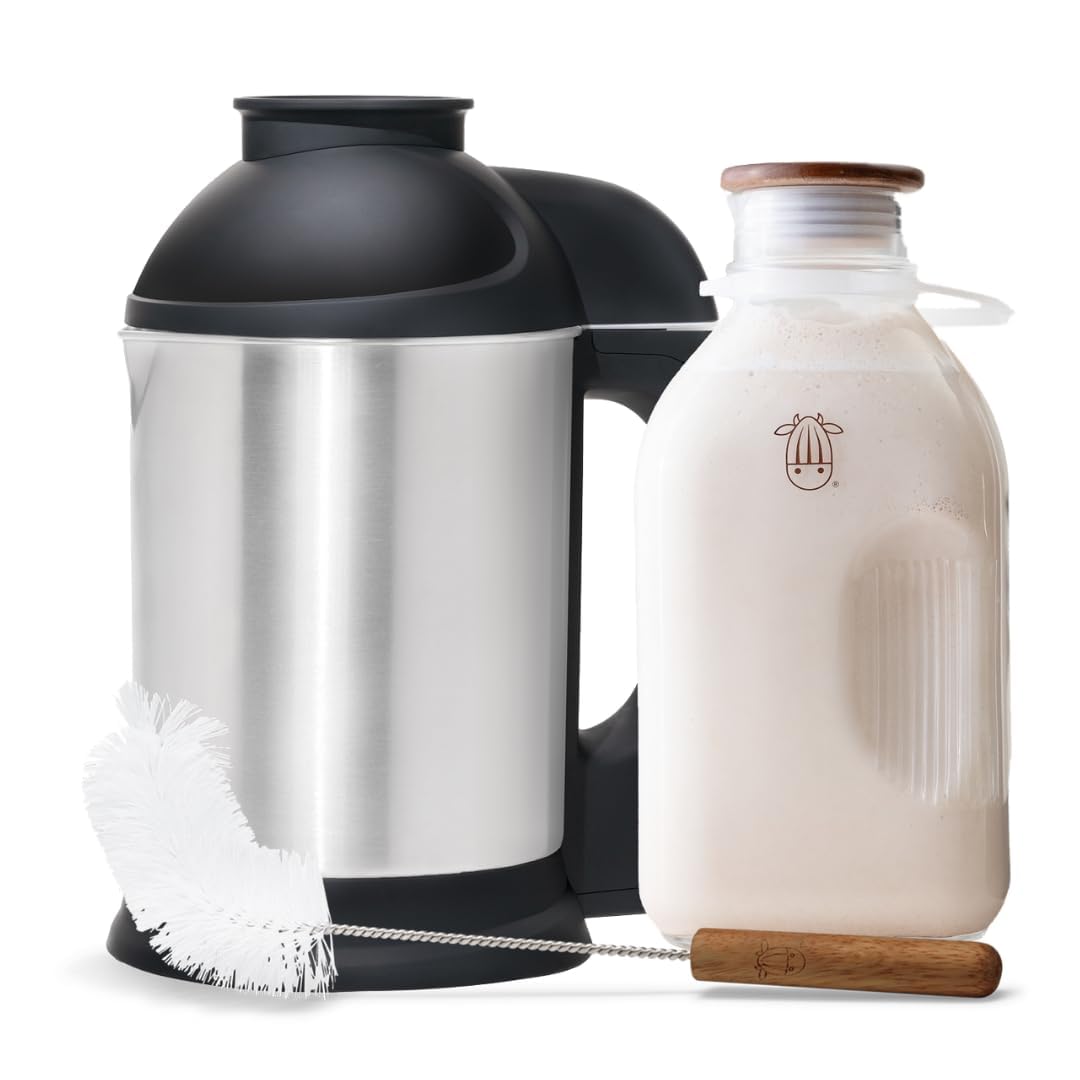
If you want homemade almond milk to become a habit, not an occasional weekend project, this bundle is one of the smartest ways to remove friction. The core Almond Cow concept is simple: it functions like a blender with a purpose-built filter basket that keeps pulp contained, so you’re not wrestling a dripping nut milk bag over the sink. The “bundle” part is what turns it from a good machine into a complete routine: a storage pitcher that’s made for pouring, plus a long brush that makes cleanup feel fast instead of fiddly.
Here’s what owners consistently love: it’s easy to understand on day one. Water lines are clearly marked, the ingredient basket is straightforward, and the workflow doesn’t punish you for being human. You add your almonds (and anything else you want—dates, vanilla, cinnamon, a pinch of salt), fill with water, press the button, and the pulp stays where it should. That matters because almond milk making is one of those tasks where “one extra messy step” is usually the reason people stop.
The expert-level tip with Almond Cow is how you dial in thickness. A lot of “watery” complaints are simply ratio issues, not machine issues. If you want that richer, café-style vibe, use less water, and treat the included pitcher as your standard storage so you’re not constantly hunting for containers. Also: don’t waste pulp. Dry it a little, then use it in oatmeal, muffins, granola, or as a thickener in smoothies. When your byproduct feels useful, you feel better about making milk often—and that’s part of what makes a system like this stick long-term.
Why it earns “best overall”
- No nut bag routine – The filter basket keeps pulp contained and reduces sink drama.
- Fast learning curve – Clear markings and a simple workflow make it beginner-friendly.
- The bundle completes the system – Proper storage + a long brush turns this into a real daily habit.
- Great for customization – Easy to experiment with dates, spices, and thicker “creamer-style” batches.
Good to know
- If you’re extremely sensitive to sediment, you may still prefer an ultra-fine final pass (that’s true of most homemade milk).
- Like many pulp-separating systems, thickness depends heavily on your almond-to-water habit—learn your ideal ratio and you’re golden.
- Cleanup is easy, but you still want to rinse promptly so residue never hardens into “milk scale.”
Ideal for: anyone who wants homemade almond milk to feel easy enough for weekdays—especially households that value low mess and repeatable results.
2. MioMat 8‑in‑1 – The “Milk + Soup + Hot Drinks” Workhorse That Feels Premium

MioMat is for the person who wants almond milk… but also wants the machine to earn its counter space by doing more than one job. It’s designed as a true multi-program plant milk maker with built-in heating, which means it can handle nuts, seeds, grains, and legumes in a more intentional way than “just blend and hope.” In real owner feedback, two themes show up again and again: it’s surprisingly quiet for what it does, and it produces a smooth, creamy drink that feels closer to “finished” than the traditional blender + bag method.
Here’s where MioMat shines for almond milk specifically: it’s good at delivering a rich result without making the experience feel complicated. If you’re the type who likes warm almond milk, golden-milk style drinks, or you want to add a “toasted” note by gently warming ingredients, the built-in heat becomes a quality-of-life upgrade. And if you rotate between almond milk, oat milk, and soy milk depending on your week, MioMat’s program approach reduces the “trial-and-error tax” that makes some people give up on homemade.
The honest, expert-level truth: MioMat is also the kind of machine where your cleanup habits decide your happiness. Owners who rinse immediately tend to love it. Owners who let it sit tend to complain about residue. A quick rinse plus a short scrub right after pouring makes it feel easy. Also note that some owners don’t love the included filter size and choose to do a second, finer strain when they want absolutely zero fiber. That’s not a failure—it’s simply the difference between “smooth enough” and “barista-smooth.”
Why people love it
- Real versatility – Milk, soups, porridges, smoothies: it earns its footprint.
- Quiet confidence – Many users describe it as noticeably quieter than high-speed blenders.
- Great texture potential – Consistently creamy results when you nail your ratios.
- Feels built for long-term use – Stainless interior and insulated design help it feel like an appliance, not a gadget.
Good to know
- Some users wish the filter setup were larger or included more fine-filter options; picky texture people may do a second strain.
- Self-clean cycles help, but you’ll still want a quick manual rinse to avoid residue build-up.
- If you only want cold almond milk and nothing else, a dedicated no-strain system may feel even simpler.
Ideal for: households that want almond milk plus hot soy/oat, soups, or warm drinks—without turning every batch into a messy project.
3. Nama M1 – The “Fast, Latte‑Worthy Smooth” Machine for Daily Almond Milk

Nama M1 is what you buy when you’re done playing games with straining bags—and you want a result that feels “café smooth” without turning your kitchen into a rinse station. Its core promise is simple: blend and separate in one streamlined workflow, producing a creamy finished milk and leaving behind pulp that’s easier to handle than the typical wet sludge. That last part matters more than it sounds. Wet pulp is the reason many people stop making almond milk at home. Dry-ish pulp is something you can actually store, reuse, or toss cleanly.
In real-world usage, the M1 tends to shine for the latte crowd. The milk comes out notably smooth, and the workflow is short enough that you’ll actually do it before work. That’s the difference between “I could make almond milk” and “I do make almond milk.” You also don’t need to pre-soak to get a satisfying texture, which makes it feel more spontaneous: you can decide you want almond milk right now and actually have it soon.
Now the honest nuance: even premium blend-and-separate systems can leave very fine sediment, depending on your ingredients and your expectations. Some owners describe a tiny bit of ultra-fine residue (think coffee-fine) as a trade-off they’re happy to make in exchange for no additives and no messy straining routine. If you’re ultra sensitive to that, you can still do a quick fine-pass—but most people buying this machine are buying it specifically to avoid that step.
Why it feels premium
- Fast daily workflow – Designed to reduce steps so making milk doesn’t feel like a project.
- Smooth texture – A strong option for latte-style almond milk and “no grit” expectations.
- Pulp handling is cleaner – The leftover solids are easier to deal with than bag-strained sludge.
- Feels intentionally designed – The whole experience is built around real-world use, not just features.
Good to know
- This is a premium appliance; you’re paying to remove friction, not to get “more buttons.”
- Ultra-fine sediment can still happen depending on ingredients—homemade milk is real food, not factory-filtered.
- If you need very large family batches, you may prefer a big-capacity maker and accept a quicker strain step.
Ideal for: daily almond milk drinkers who care about smoothness and speed, and want a low-mess process that actually sticks.
4. Almond Cow Milk Maker – No‑Strain Almond Milk Without Buying the Bundle
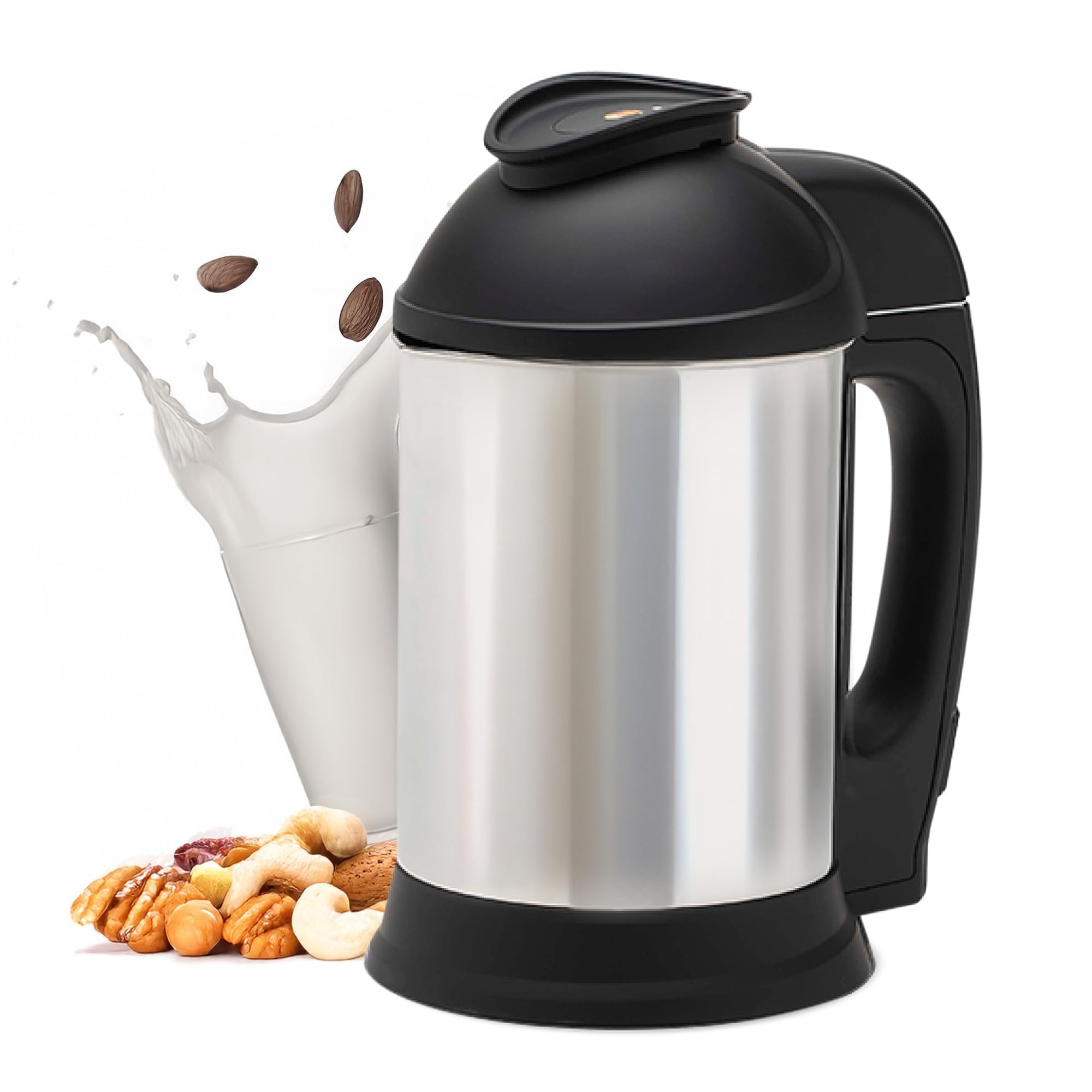
Think of the Almond Cow as the “no excuses” way to make almond milk: it’s designed so pulp separation is part of the process, not an extra chore you do after blending. That single design decision changes ownership. Instead of pouring a thick slurry into a bag and squeezing, you’re using a basket that catches pulp while milk flows out cleanly. Owners consistently describe it as easy to use, easy to understand, and quick enough to fit into real mornings.
This standalone version is perfect if you already have your own storage system—maybe you’ve got glass bottles you love, or you’re already set with a pitcher and a brush you trust. It gives you the core experience: labeled fill guidance, a powerful blending process, and a clean separation workflow. Many users also like that it’s easy to experiment: almond milk one day, oat/cashew blends the next, then a thicker “creamer” version for coffee.
The one thing to understand before buying: your thickness is your job. The machine makes it easy to repeat ratios, but it won’t choose them for you. If you want thick, creamy milk, use less water and don’t be shy about adding a tiny pinch of salt (it makes the flavor feel fuller without making it “salty”). If you want very thin milk, you can do that too—but most people who love Almond Cow are making the richer, fresher version that store-bought can’t match.
Why it’s a favorite
- No straining bags – The built-in separation workflow reduces mess and effort.
- Beginner-friendly – Clear markings and a straightforward process.
- Great for experimentation – Easy to try flavor add-ins and thickness tweaks.
- Easy cleanup (when you rinse promptly) – Owners routinely describe cleanup as simple compared to manual methods.
Good to know
- If you want a complete “store + clean” setup in one purchase, the bundle version is the more turnkey option.
- Some users prefer a super-ultra-fine finish; if you’re picky, a quick fine-pass can still be your friend.
- Like many countertop systems, you’ll want to avoid soaking the motor/electrical parts during cleanup.
Ideal for: buyers who want the Almond Cow no-strain workflow, but don’t need the extra storage/cleaning accessories included in the bundle.
5. Beyn 10‑in‑1 (60oz) – The “Make Once, Serve All” Family Batch Machine
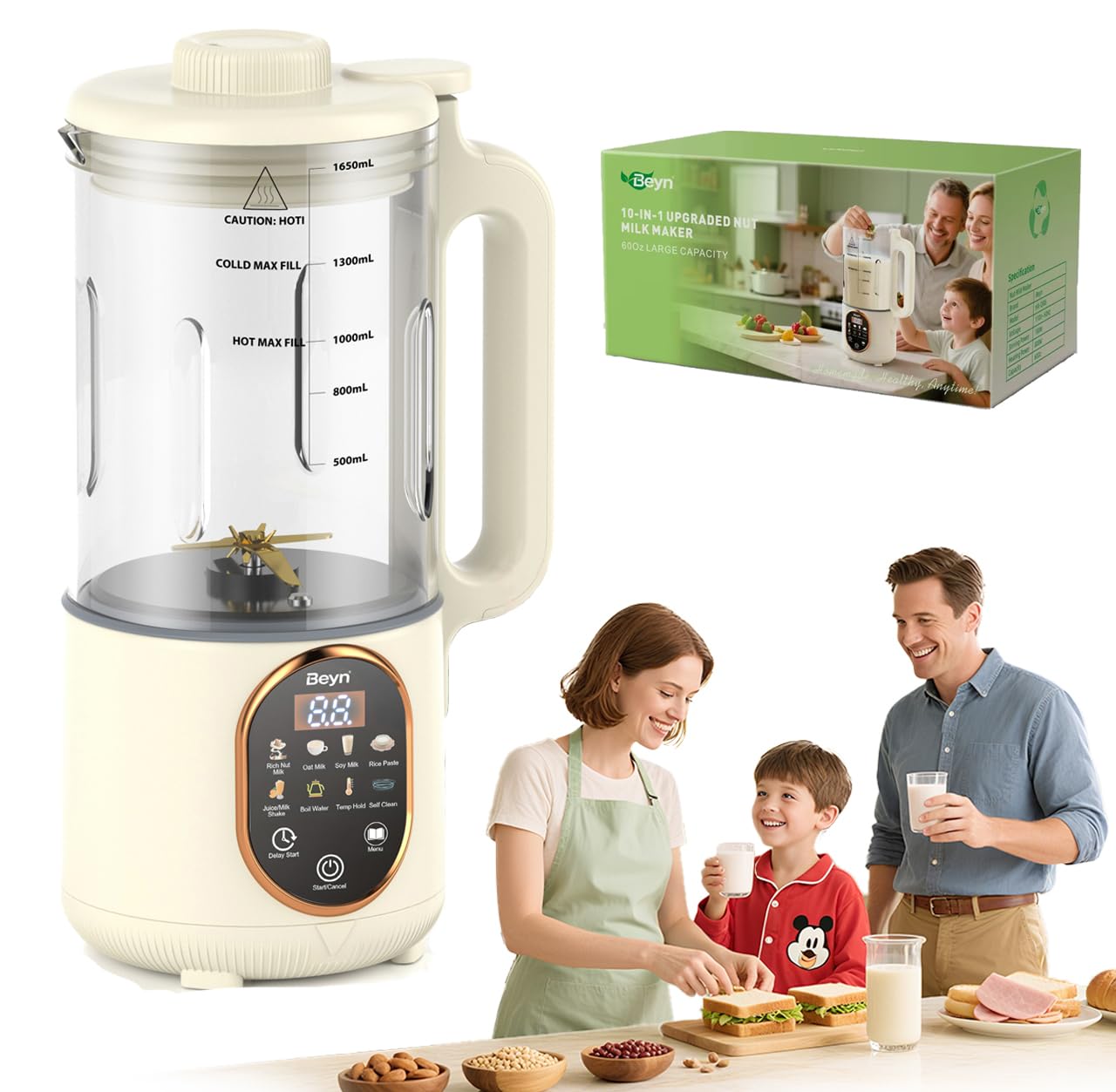
The Beyn is built for people who hate running two batches. Its larger capacity is the headline feature, but the practical benefit is lifestyle: you can make enough almond milk for multiple days (or multiple people) in one go. Owners who love it tend to describe the milk as impressively smooth, and they rave about the convenience features—especially when they’re trying to reduce store-bought cartons and keep the kitchen routine predictable.
This kind of machine usually earns its keep when your household uses plant milk in several ways: cereal in the morning, smoothies after workouts, and coffee throughout the day. In that world, a bigger batch isn’t about “more milk”—it’s about fewer interruptions. The self-cleaning function is also part of the appeal: not because it replaces real washing, but because it makes the machine feel less “high maintenance.” You do a rinse, run a clean cycle, and move on.
Now the truth you deserve: big-capacity, feature-rich machines sometimes show variability in owner experiences—especially around heating claims. Some users report great warm drink performance. Others report underwhelming heating on specific modes. That doesn’t automatically make it a bad buy, but it does mean the Beyn is best for people who primarily want great blending + volume, and treat heating as a bonus rather than the core reason to purchase.
Why families like it
- Big-batch convenience – Fewer runs, more milk, less daily friction.
- Very smooth results (for many users) – Strong grinding performance for nut and grain blends.
- Useful automation – Delay start and keep-warm features help busy routines.
- Self-clean helps consistency – Makes it easier to keep the machine “ready” for the next batch.
Good to know
- Heating performance can vary by mode and expectations; treat “warm milk” as a feature to verify early.
- Larger machines still need respectful max-fill habits to avoid foaming or overflow.
- If you only make small personal batches, a compact unit will feel faster and more efficient.
Ideal for: households that want fewer batches per week and value a family-size workflow more than ultra-premium finishing.
6. Livatro 12‑in‑1 (Detachable Glass Jar) – The Sink‑Friendly Choice
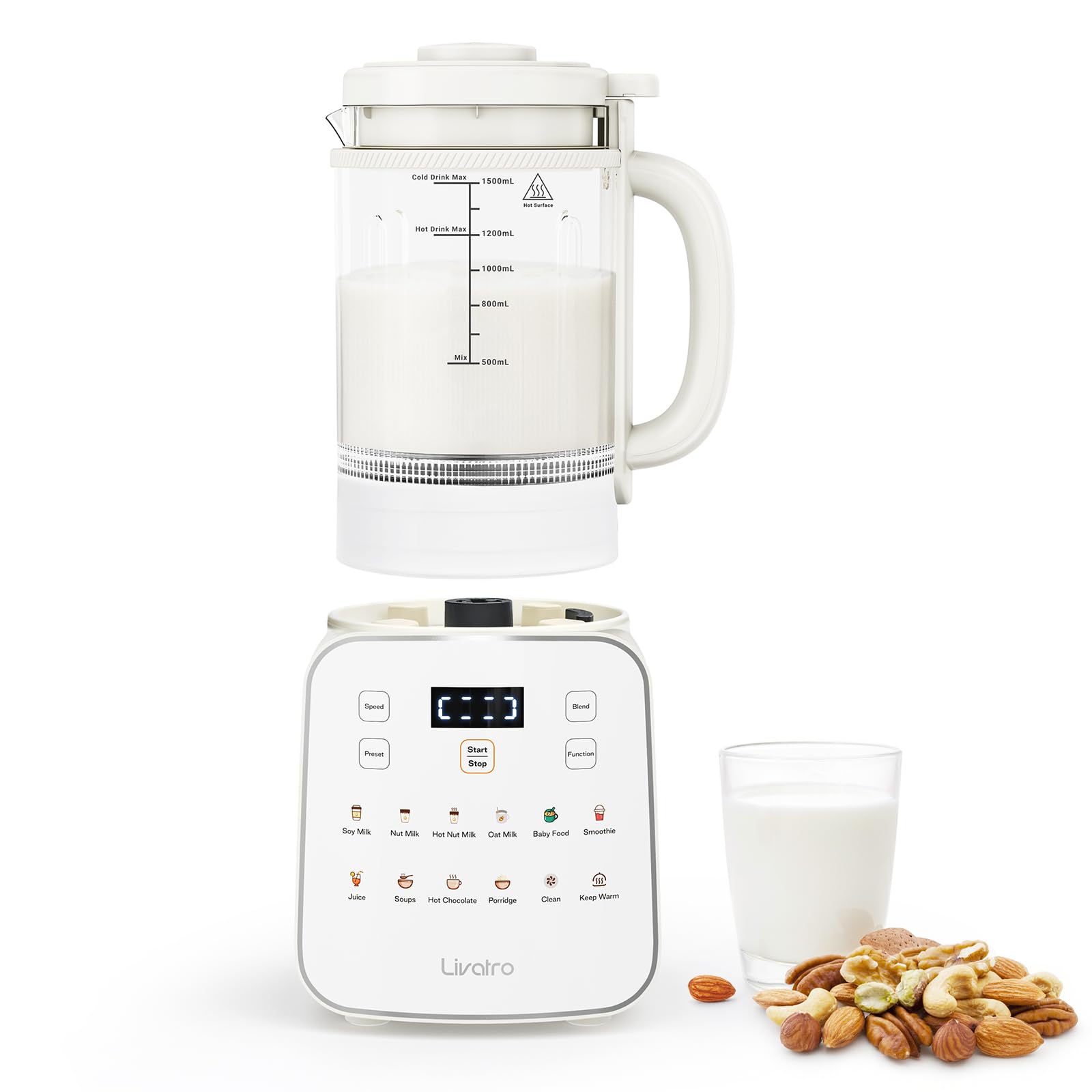
A detachable jar seems like a small feature until you’ve owned a machine with a non-detachable base. Then it becomes a big deal. Livatro’s main “real life” advantage is that you can carry the glass jar to the sink and clean it like a normal container—no awkward wiping around an electrical base, no careful balancing, no “how do I rinse this without soaking the wrong part?” anxiety. If you’re the kind of person who stops using appliances because washing them is annoying, this design choice can be the difference between occasional use and real habit.
For almond milk, the appeal is the combo of volume and convenience. You can make a satisfying batch, run an auto-clean, and still do a quick hand rinse without feeling like you’re scrubbing a cement mixer. Owners who enjoy these multi-mode machines often mention that once you learn the right ingredient amounts, it becomes a simple routine: add almonds, add water, press the right mode, and let it work while you do something else.
One thing to watch with any glass-jar machine: thick recipes can leave more residue at the bottom if you let it cool. That’s not a flaw—just physics. The “expert habit” is to rinse while it’s still warm and fresh, because almond oils and fine pulp wash away easily before they settle and cling. Treat the auto-clean as your maintenance cycle and the quick rinse as your “keep it perfect” move.
Why it’s a practical win
- Detachable glass jar – The easiest style to clean day-to-day.
- Useful presets – Supports a variety of drinks beyond almond milk.
- Convenience scheduling – Delay start and keep-warm options fit busy routines.
- Good “beginner appliance” feel – Clear, repeatable workflow once you learn your favorite ratio.
Good to know
- Auto-clean helps but doesn’t replace a quick rinse—especially after thicker batches.
- As with many machines, you’ll get the best texture by learning your preferred almond amount and not overloading the jar.
- Always inspect packaging and condition on arrival; some shoppers report occasional shipping/condition disappointments across this category.
Ideal for: anyone who values easy, normal “sink cleanup” and wants an almond milk machine that behaves like a real appliance, not a fussy gadget.
7. Flelano 10‑in‑1 (50oz) – Big Capacity with a “See‑Through” Workflow

The Flelano is for people who like the feeling of a “real appliance” and enjoy seeing the process. A visible blending container changes your confidence: you can tell if you used too much water, if almonds are circulating properly, and whether froth is rising close to the lid. That visibility often prevents the most common beginner mistake in this category—overfilling and then blaming the machine when it makes a mess.
When it’s behaving, owners describe the output as creamy and satisfying, especially for hot soy-style drinks and cozy bedtime beverages. It’s also the kind of unit people enjoy for entertaining because it can handle warm drinks (think hot chocolate) without dragging out multiple tools. For almond milk, it can deliver a nice smooth result, but your best outcomes will come from two habits: (1) don’t ride the max fill line, and (2) rinse promptly so you never develop stubborn residue.
Now for the honest warning that matters: several owners report issues with lid sealing or the lid slowly lifting during operation. This is the kind of issue that can be minor (a little movement) or major (a messy counter) depending on the unit and the batch. If you choose this model, treat max-fill lines like they’re sacred, and do a “first week stress test” while you’re paying attention. If yours stays sealed and stable, you’ll likely love it. If not, you’ll want to know immediately.
Why people buy it
- Large batch potential – Great for making several servings at once.
- Visible process – Seeing the blend helps you learn faster and avoid overfill mistakes.
- Multi-function versatility – Milk, hot drinks, soups: a true countertop helper.
- Convenience features – Delay start and keep-warm are meaningful for routine use.
Good to know
- Lid seal behavior matters—some users report the lid can shift during operation. Respect fill lines and test early.
- Non-detachable container designs can be slightly less convenient to wash than detachable-jar models.
- If you want a “never think about it” lid design, a simpler no-strain system may feel safer.
Ideal for: people who want a larger multi-function machine and like being able to visually monitor the process while it runs.
8. Nutrikeep Upgraded 10‑in‑1 (40oz) – Great Taste, More Hands‑On Control
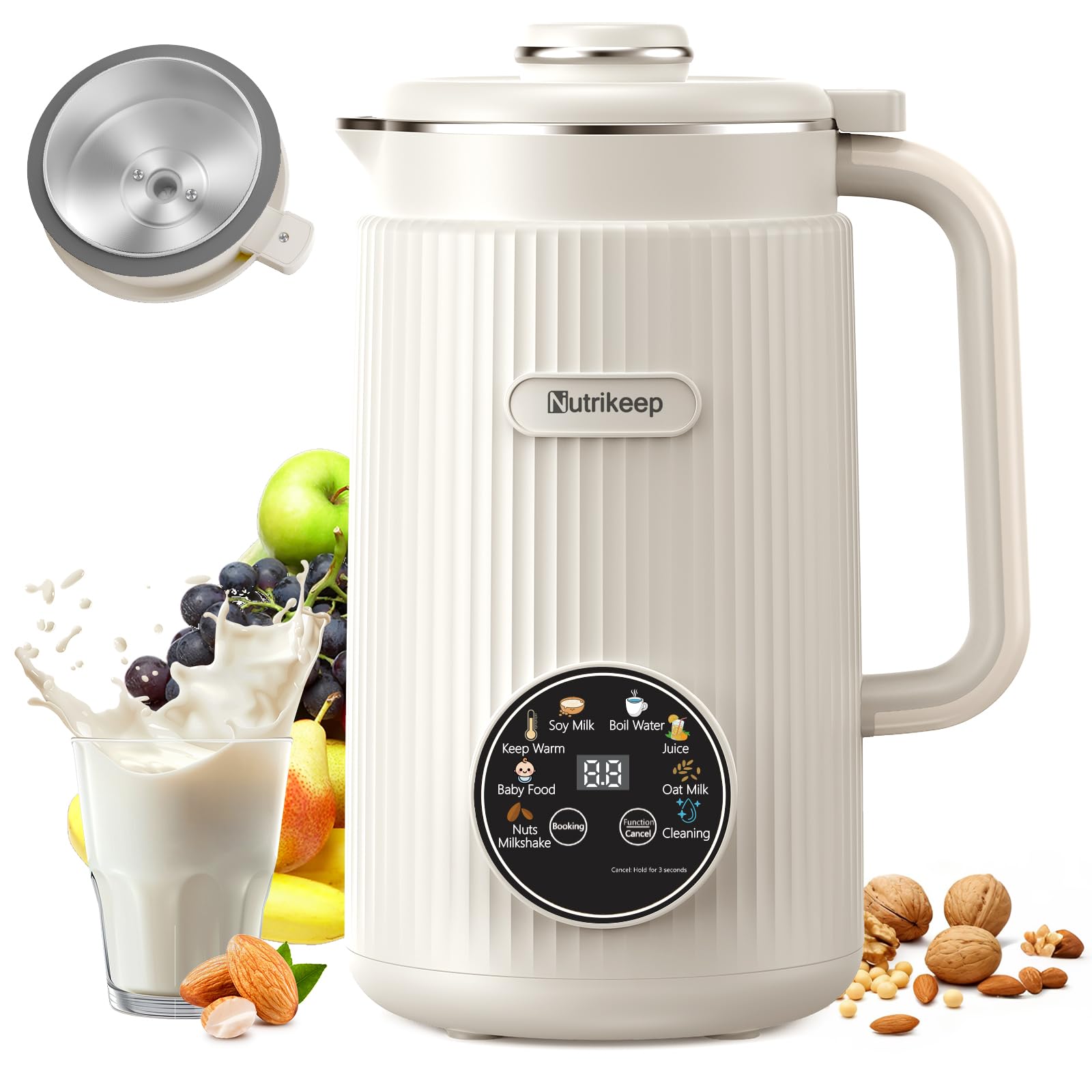
Nutrikeep is a smart pick for people who want to start making almond milk at home without committing to a premium no-strain system on day one. It’s the kind of machine that can produce a very satisfying texture—especially if you’re willing to do a quick strain when you want ultra-silky results. And that’s not a downside. It’s flexibility. You can make a thicker, more “whole” almond milk for cereal by straining less, or make a smoother latte milk by using the included bag for a cleaner finish.
Owners who enjoy this style of machine often describe a short learning curve: your first batch teaches you how much almond to use and how much water you personally like. After that, it becomes simple. The delay start and keep-warm features are genuinely useful if you like waking up to ready-to-drink milk or warm soy-style beverages. And the stainless lid/inner tank approach gives some buyers extra peace of mind about food-contact surfaces.
The biggest “expert-level” truth with Nutrikeep (and similar units) is that your straining tool defines your final texture. A fine bag can create exceptionally smooth milk—sometimes even smoother than an auto-separating system—because the pores can be smaller. But you pay for that smoothness with time and effort. If you don’t mind that trade, Nutrikeep can be a shockingly satisfying daily driver.
Why it’s a strong value
- Very good taste potential – Smooth results, especially when you fine-strain for coffee use.
- Useful convenience features – Delay start and keep-warm fit real schedules.
- Food-contact confidence – Stainless lid/inner surfaces appeal to many buyers.
- Great “learning machine” – Helps you figure out if homemade milk is your lifestyle.
Good to know
- There’s a trial-and-error phase—expect your first couple batches to be “learning batches.”
- Self-clean helps, but thicker recipes still need a quick rinse/brush pass.
- If your goal is zero effort and zero straining forever, a premium separation system will feel easier.
Ideal for: buyers who want great homemade almond milk now, with the flexibility to strain (or not) depending on how silky they want the final drink.
9. Novalife 8‑in‑1 (40oz) – A Straightforward Daily Milk & Smoothie Helper
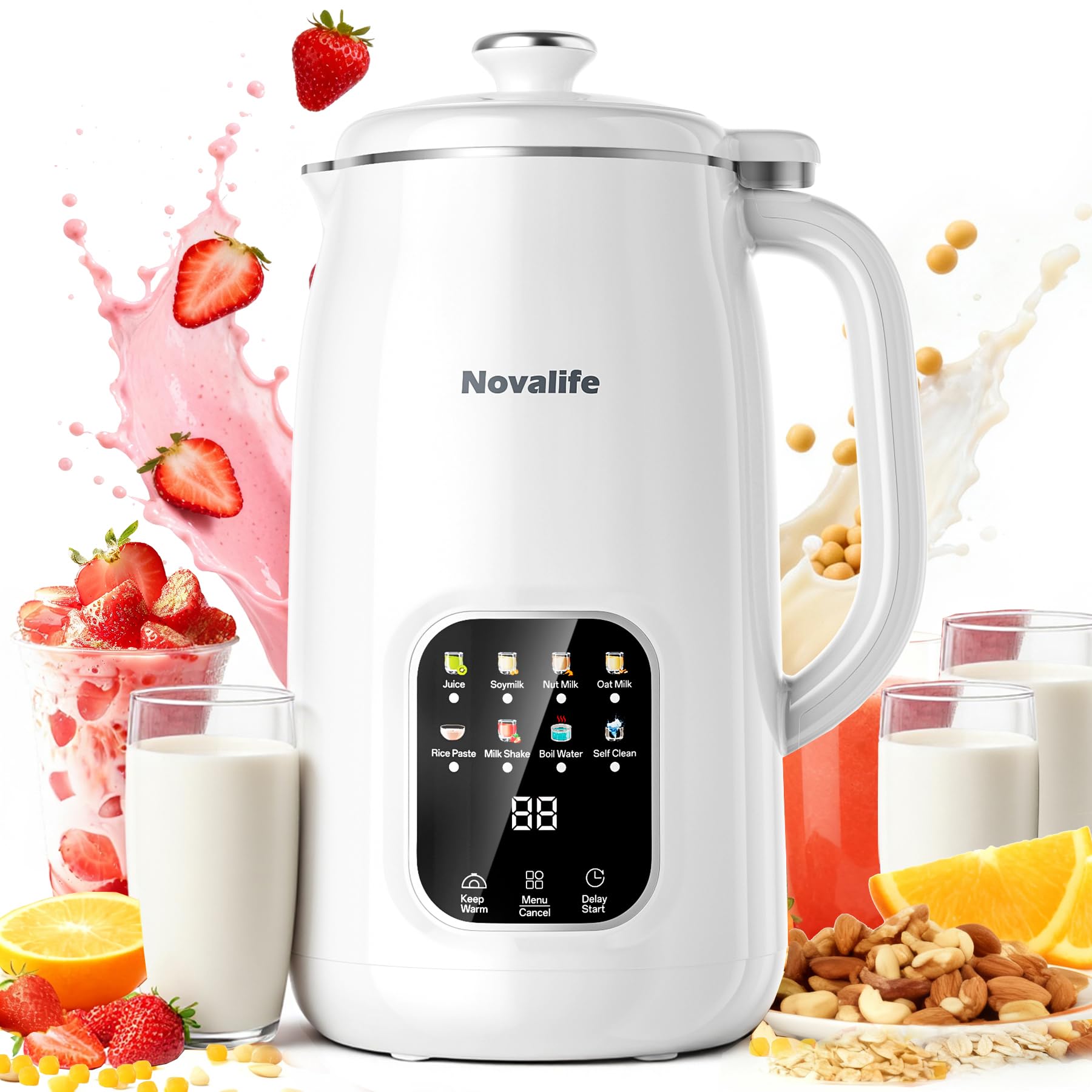
Novalife is the kind of machine people buy because they want consistency without fuss. The most common “happy owner” story sounds like this: “I wanted warm soy milk or fresh almond milk without babysitting a pot, and this just does it.” That matters because the real advantage of these countertop makers isn’t that they can make milk—it’s that they can make milk repeatably, while you do something else.
For almond milk, Novalife’s sweet spot is “smooth enough without drama.” If you use soaked almonds or blanched almonds, and you’re sensible with ratios, you can get a creamy result that tastes cleaner and fresher than cartons. If you want ultra-silky, you may still run it through a strainer bag—but for many households, that’s optional rather than mandatory. This is especially true if your almond milk is going into smoothies, cereal, or recipes where a tiny bit of sediment isn’t a dealbreaker.
The ownership tip is the same one that separates happy users from frustrated ones across this category: clean immediately. Not because it’s hard, but because milk residue is easy when fresh and annoying when it dries. Run the wash cycle right away, rinse, and your machine stays pleasant. Skip it, and your “easy appliance” becomes a “why is there a film on everything?” problem.
Why it works for daily use
- Simple “press and go” routine – Great if you want consistency without babysitting.
- Good everyday texture – Smooth results for most common almond milk uses.
- Useful extras – Boil water, keep-warm, and multiple modes add real value.
- Great for routine drinkers – A dependable option when you make milk several times per week.
Good to know
- Ultra-smooth “barista” results may still benefit from a quick strain, depending on almonds used.
- Like most machines, it will sound like a blender while grinding—plan around sleeping households.
- If you crave a true no-strain system, look at Almond Cow or a premium blend+separate machine.
Ideal for: people who want a reliable, multi-function almond milk maker that fits into daily life without complicated workflows.
10. SilkSpin Milk‑Smooth (35oz) – Rich, Cooked Soy Milk Power with Smooth Nut Milk Too
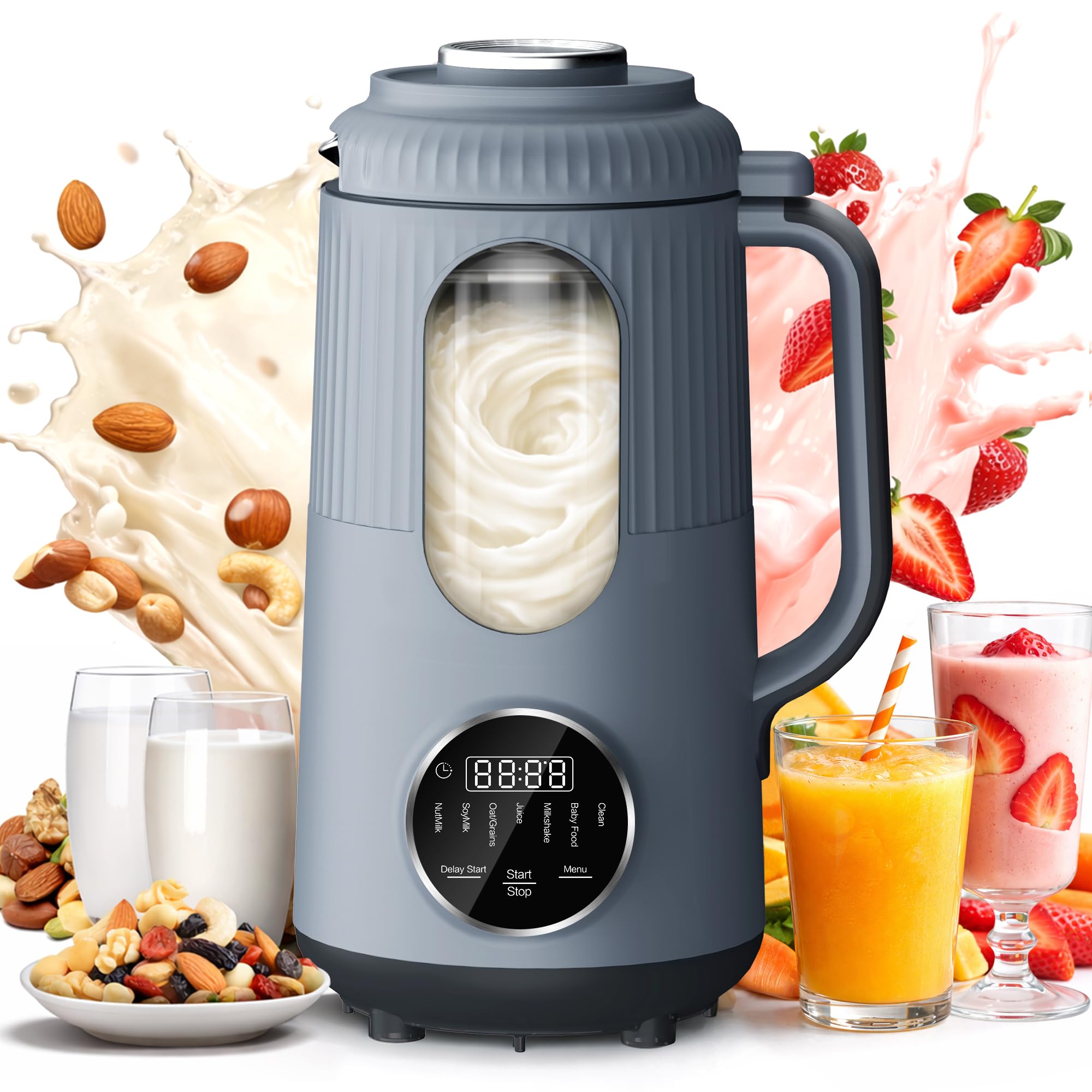
SilkSpin stands out in a specific way: it’s the kind of machine people buy for soy milk authenticity—and then realize it also makes a nice almond milk. That’s an important difference. When a machine is designed to grind and properly heat soy, it often has the “seriousness” needed for other tasks too. Owners who mention traditional soy milk specifically tend to praise how finely it grinds beans and how “finished” the cooked milk tastes. If you want that kind of consistency (and you also want almond milk), SilkSpin is a very compelling middle-ground option.
For almond milk, the benefit is grinding performance. If the machine can pulverize tougher beans and still produce a silky drink, almonds are rarely the challenge. What becomes the challenge is your preference: do you want ultra filtered, or do you want a slightly more “whole” almond milk? SilkSpin tends to satisfy both styles: drink it as-is for a richer texture, or do a quick strain if you want it ultra clean for coffee.
The other underrated advantage is daily practicality. Compact machines are easier to store, easier to justify on the counter, and easier to use repeatedly. If you’re a daily drinker who wants fresh milk often—but you don’t want a huge “tower appliance”—this size category can be the sweet spot.
Why it’s a smart hybrid
- Strong grind reputation – Owners praise the silky texture, especially for soy.
- Heating that matters – Helpful for cooked plant milks and warm drinks.
- Compact daily footprint – Easy to live with and easy to use frequently.
- Good “set-and-forget” feel – Works while you do other kitchen tasks.
Good to know
- Capacity is more daily-batch than family-mega-batch; large households may want bigger volume.
- As with all grinders, it will make blender-style noise during the grinding phase.
- If you only want cold almond milk and nothing else, a dedicated no-strain system may feel even simpler.
Ideal for: people who want authentic soy milk capability and also want smooth almond milk without buying a huge multi-appliance.
11. KIDISLE 32oz (Black) – The “Make It Often” Size with Optional Filtering Control

The 32oz KIDISLE sits in a sweet spot for a lot of real homes: big enough to feel worthwhile, small enough to repeat without resentment. Owners who love it tend to describe the workflow as effortless: add almonds and water, press the mode, and let it run while you do other things. That hands-off vibe is the reason people buy these machines in the first place. The other detail that matters for almond milk is that it gives you control over “grit vs creaminess.” Filtered is cleaner and lighter; unfiltered is creamier and richer but can carry some fine debris—especially with unpeeled almonds.
That “filter choice” is actually a positive if you’re realistic. Store-bought almond milk is aggressively filtered and stabilized. Homemade almond milk is real food. If you want a latte-friendly finish, you filter. If you want a richer cereal milk, you don’t. And because this machine doesn’t require constant babysitting, you can build that decision into your routine without it feeling like work.
The honest caution: some owners report reliability problems after months of use, while others report strong customer service and replacements. That mixed long-term story is common in this category, and it’s exactly why your first-week testing matters. If you love the output, keep it. If you see early issues, you want to catch them immediately—because you shouldn’t be stuck with a dead appliance after your return window.
Why it’s a practical size
- Repeat-friendly batch volume – Big enough to matter, small enough to remake often.
- Hands-off process – You don’t need to hover; it works while you multitask.
- Filtering flexibility – Choose grit-free or creamier based on how you’ll drink it.
- Good “paid for itself” potential – Heavy almond milk users often feel the value quickly.
Good to know
- It’s loud during grinding—plan around sleeping households if you run early morning batches.
- Long-term durability feedback can be mixed; test thoroughly in the first weeks.
- For truly no-strain, no-choices simplicity, a pulp-separating system may feel easier.
Ideal for: people who want a compact machine they can run often, and who like having the choice between “filtered smooth” and “richer, less filtered” milk.
12. KIDISLE 32oz (Cream) – Similar Workflow, Different Feel (Mind Your Voltage Setup)

This cream-finish KIDISLE option is here for a simple reason: some buyers care about how an appliance looks and feels in the kitchen, and this style hits that “clean counter” aesthetic. Functionally, it’s designed to be a multi-purpose nut milk maker and blender-style helper, which means it can cover almond milk, other plant milks, and everyday blending tasks—especially if you’re someone who meal preps and wants one machine to handle multiple small jobs.
The texture story is similar to other compact units: it can grind finely enough for satisfying almond milk, and your final smoothness depends on whether you strain (and how fine your strainer is). If you want richer milk, keep more of the fine solids. If you want grit-free coffee milk, do a quick pass through the bag. This “choose your finish” approach is actually useful because different uses want different textures.
The most important practical note for this model is power compatibility. If you’re outside regions that use the correct voltage and you’re relying on a simple plug converter, you can run into serious problems. This isn’t unique to KIDISLE—it’s true of many appliances with heating and motors. The safe approach is to use the correct voltage setup, not a casual adapter. If you’re buying for standard home outlets in the intended region, you’ll likely be fine. If not, be smart about how you power it.
Why people choose it
- Nice countertop look – The cream finish appeals to style-focused kitchens.
- Multi-purpose use – Nut milks, smoothies, sauces: a flexible helper.
- Batch size fits daily routines – Good for people who prefer fresher, smaller batches.
- Simple operation – Built to be approachable for everyday use.
Good to know
- Power/voltage compatibility matters—use the correct setup for your region.
- Like many compact units, it can be loud during grinding.
- If you want truly “no straining ever,” consider a pulp-separating system instead.
Ideal for: buyers who like this design/finish and want a compact multi-use nut milk machine—especially those who will run it on the correct voltage setup.
13. NuttyWhiz 10‑in‑1 (42oz) – A Feature‑Forward Pick for People Who Like Feedback
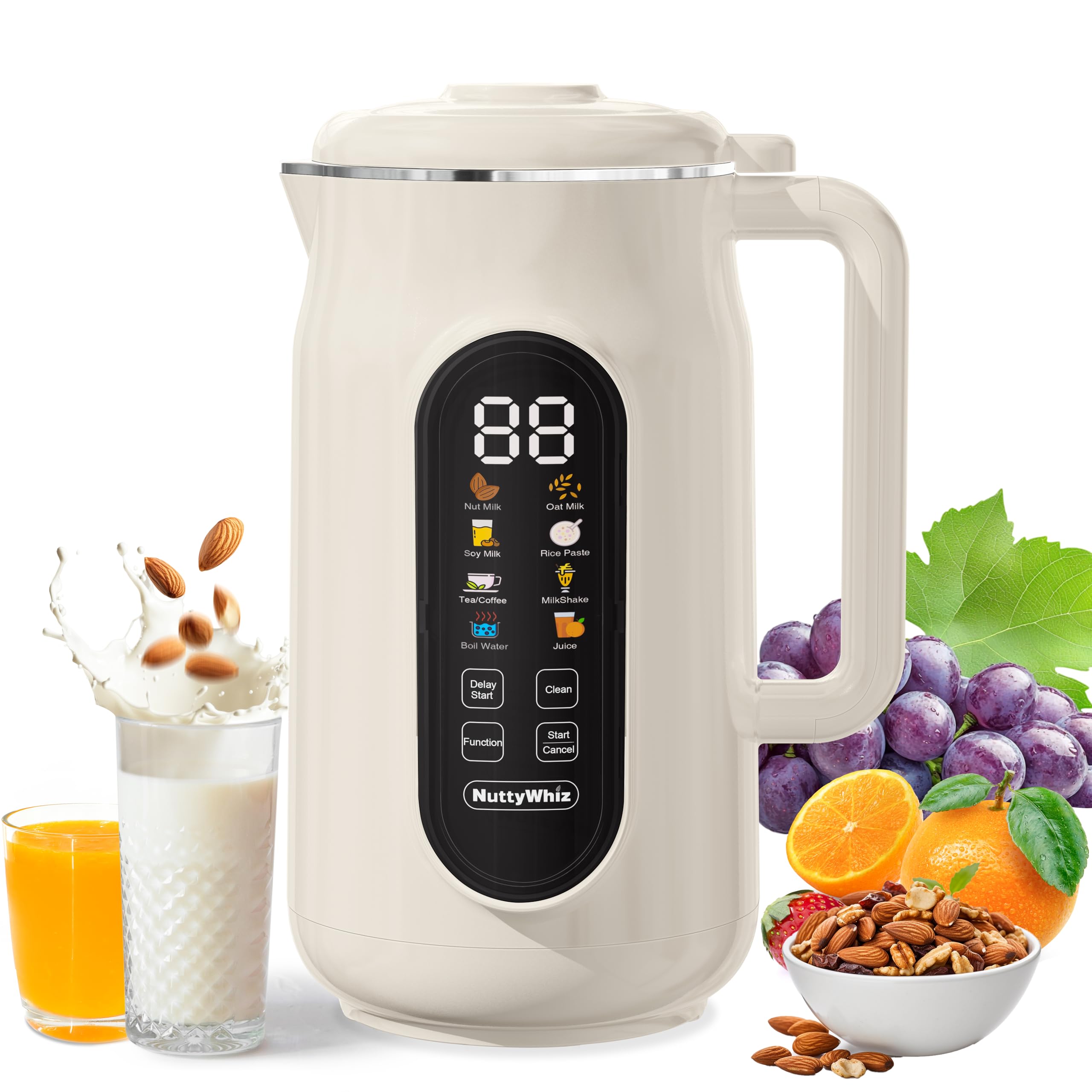
NuttyWhiz is a strong fit for people who like appliances that “talk back” a little—clear mode icons, a more guided interface, and the sense that the machine is controlling the process rather than you guessing. That psychological comfort matters when you’re trying to build a routine. If you’re replacing store-bought cartons, you want a machine that feels predictable: you press a mode, you get the result, you clean, you repeat.
For almond milk, the blending performance can be very satisfying, and the real benefit is that the machine is built to be a set-and-forget countertop tool. Users who love it often emphasize the freedom of controlling ingredients (no sweeteners unless you add them) and the convenience of delay/keep-warm style features for morning routines. One batch size also tends to feel right for many homes: enough for daily use without turning into “a gallon sitting in the fridge.”
There are some practical owner cautions worth respecting. A few users report receiving units that appeared used, or noticing dents or finish issues. Others mention dripping from the pour area, which is the kind of small annoyance that can matter if you’re picky about clean counters. None of this guarantees you’ll have the same experience, but it does mean you should inspect the unit on arrival and do a quick “full cycle test” early. That’s how you protect yourself and ensure you keep a unit you genuinely enjoy using.
Why it appeals
- Guided LED controls – Clear modes and a more appliance-like experience.
- Good routine features – Delay/keep-warm style functions help busy mornings.
- Solid multi-function value – Milk, grains, and other modes add flexibility.
- Ingredient control – Helps people escape store-bought additives and sweetness.
Good to know
- Inspect on arrival; some buyers report condition issues in this category.
- Minor drips can happen—keep a small towel habit if you’re counter-proud.
- For the most effortless no-strain finish, premium separation systems still win.
Ideal for: people who want a more guided, feature-forward nut milk maker and like clear controls for repeatable daily use.
14. GDOR 9‑in‑1 (35oz) – Pretty, Practical, and Surprisingly Beginner-Friendly
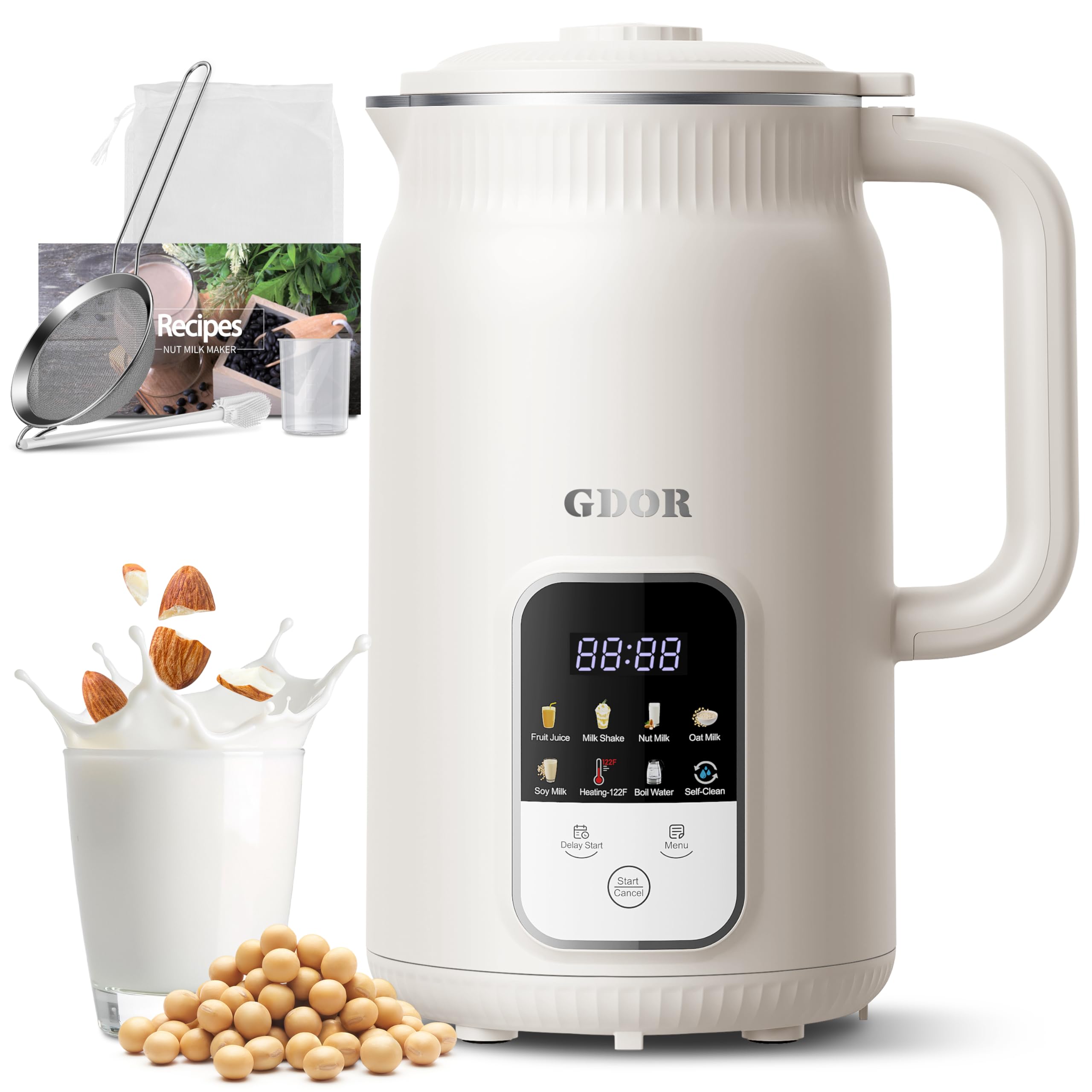
GDOR is one of those machines that wins hearts with the overall experience: nice packaging, a pretty countertop look, and a “complete kit” approach that includes the accessories beginners always end up buying anyway. That matters because the first time you make almond milk, you want the process to feel guided: measure, blend, strain if needed, and store. A kit that includes a strainer, bag, and brush removes the “what do I need next?” hassle.
For almond milk specifically, owners tend to describe results as smooth and satisfying—especially when they use sensible ratios. One practical note that shows up in real usage: you can adjust thickness easily by changing water amount. Thicker milk is more flavorful and creamier, but can foam more. Thin milk pours like store-bought, but often tastes less impressive. GDOR makes it easy to experiment, and the machine’s delay/keep-warm feature makes it feel more like a planned breakfast tool than a one-off gadget.
The biggest limitation is capacity if you’re a heavy juice or big-family household. Some users note they run a second batch to fill a larger pitcher. That’s not a dealbreaker—it just tells you who this is best for: small to medium households who value ease, looks, and a tidy routine. The dishwasher-safe claim on components is also a big morale boost for long-term use—because fewer hand-wash chores means you’ll use it more often.
Why it’s beginner-friendly
- Complete accessory set – Strainer, bag, brush, and measuring tools reduce friction.
- Nice countertop design – People genuinely enjoy leaving it out.
- Flexible texture control – Easy to go thick or thin depending on how you’ll drink it.
- Convenient scheduling – Delay start + keep-warm can fit morning routines well.
Good to know
- Capacity is great for daily use but may require two batches for large pitchers or big households.
- Like all grinders, it makes noise during blending—plan around quiet hours.
- If you want a true no-strain system, this is a “strain optional” style rather than an auto-separation premium unit.
Ideal for: buyers who want a complete starter kit with a clean routine, and who value a machine that looks good and feels easy to live with.
15. KIDISLE Compact (20oz) – Fresh Almond Milk Without Storing Big Batches
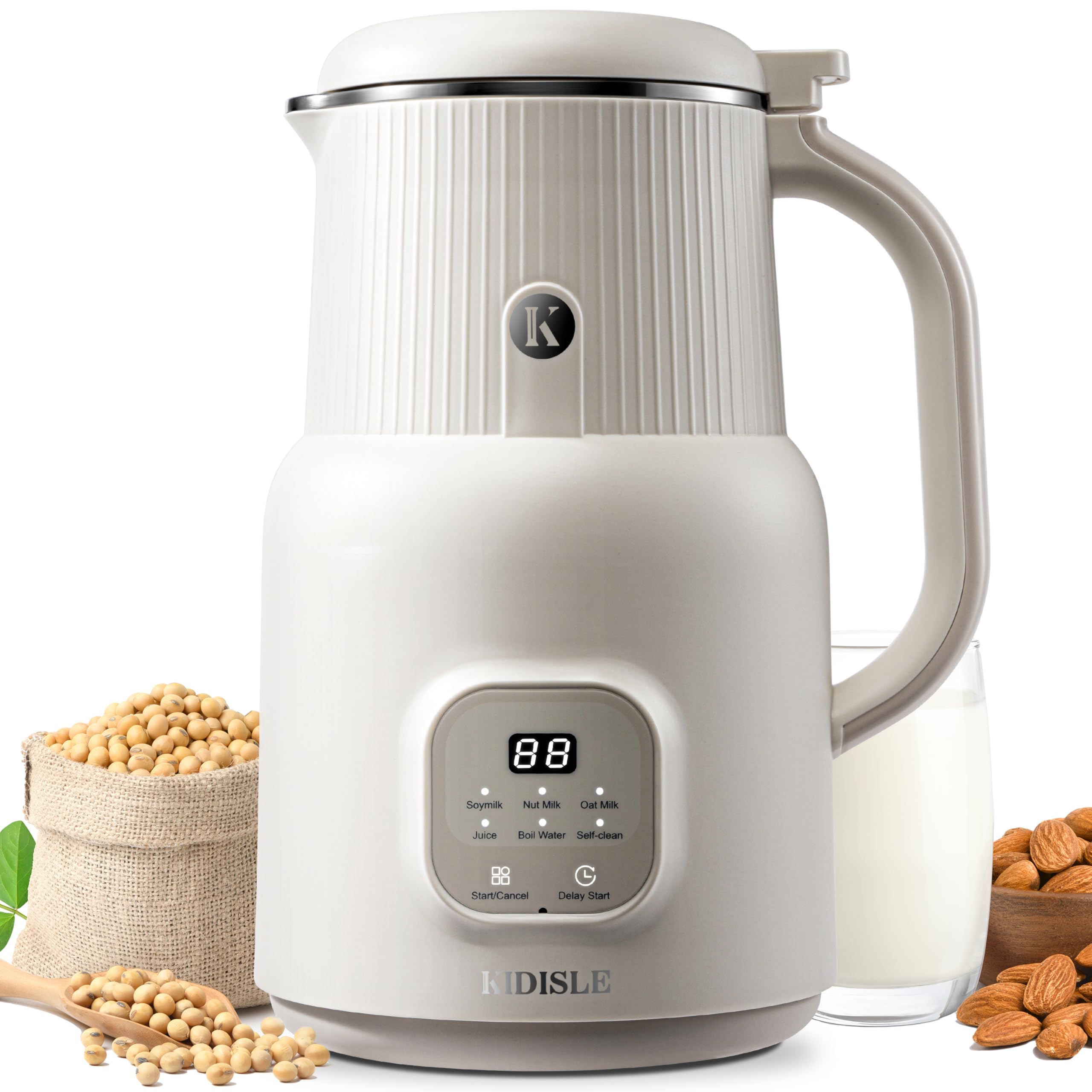
Not everyone wants a huge almond milk setup. If you’re a single person, a couple, or someone with a small kitchen, big-batch machines can actually create waste: milk sits too long, separates, and stops tasting “fresh and exciting.” That’s where compact models like this KIDISLE make sense. You make a smaller portion, you drink it quickly, and you’re always in the “fresh window.” For many people, that’s the secret to loving homemade milk.
Owners who love this style highlight the obvious benefits: it’s easy to use, easy to store, and quick enough to run daily. The self-cleaning cycle helps keep it from feeling high maintenance, and the included accessories (like a strainer and bag) give you options for smoother finishes. This is also the kind of machine that can quietly change your routine: instead of buying cartons “just in case,” you make what you want when you want it.
The important caution in the compact category is safety and consistency. Because these are smaller, budget-friendly appliances, it’s especially smart to inspect on arrival and do a full test cycle early. If your unit runs smoothly, great—you’ll probably love it. If you notice any abnormal behavior, you want to catch it immediately. Also note: some compact machines heat only on certain modes, so if warm almond milk is your goal, confirm how your preferred mode behaves.
Why it’s a good small-kitchen pick
- Small batch freshness – Great for people who don’t want milk sitting in the fridge for days.
- Compact footprint – Easy to store and easy to keep on the counter.
- Simple operation – Built for quick daily routines.
- Helpful accessories – Strainer/bag options for texture control.
Good to know
- Small batch means you’ll run it more often if you drink a lot of almond milk.
- Some modes may be warm while others are not—choose based on your preferred drinking style.
- Inspect and test early; compact budget appliances benefit from “first-week confidence checks.”
Ideal for: singles, couples, and small kitchens that want fresh almond milk without storing large batches—and who value simplicity over maximum features.
16. DBJRP 8‑in‑1 (44oz) – Big Batch Features on a Tight Budget (With Mixed Feedback)
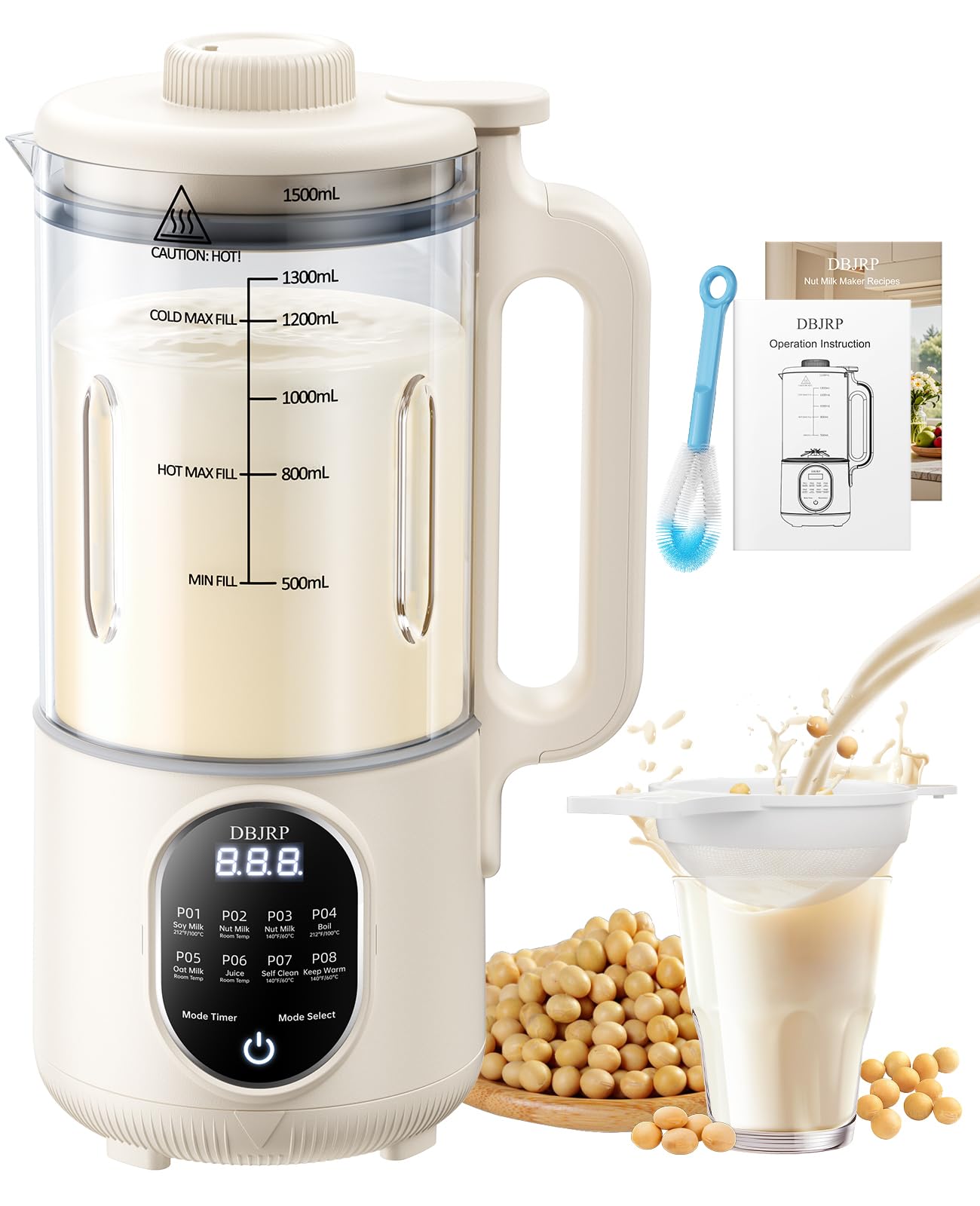
DBJRP is a “features for less” style option: bigger capacity, a programmable timer, multi-mode functionality, and an included electronic cookbook concept. If your goal is simply to stop buying cartons and you want a larger batch size without stepping into premium pricing, this category can be attractive. The value proposition is straightforward: you get a lot of functions in one countertop tool.
For almond milk, the experience tends to hinge on two things: your expectations and your unit’s consistency. Some users report smooth, fresh results and find the machine genuinely convenient. Others report frustrating behavior—like modes not behaving as expected. That mixed feedback doesn’t mean it can’t be a good purchase, but it does mean you should treat it like a “verify early” appliance. Run a few batches while you’re paying attention and make sure your unit performs properly.
If you do get a good unit, the smart way to enjoy it is to keep your process simple: use blanched almonds if you’re picky about grit, keep your ratios reasonable, and clean immediately after the pour. Because budget machines are less forgiving when residue builds up. Treat it kindly, and it can be a very functional tool for a cost-conscious home. Treat it like a premium appliance that can handle neglect, and you’re more likely to be disappointed.
Why budget buyers consider it
- Larger batch potential – A good fit for people who want more volume per run.
- Useful presets – Timer and self-clean features add convenience.
- Multi-function flexibility – Can support several drink types beyond almond milk.
- Cost-conscious entry – A way to try the homemade milk lifestyle without premium spend.
Good to know
- Owner experiences can be mixed; run early tests to confirm your unit behaves as expected.
- Cleaning matters—residue is harder to deal with if you let it sit.
- If you want a “buy once, love forever” premium feel, a higher-tier unit will likely satisfy more consistently.
Ideal for: budget-focused households that want larger batch features and are willing to verify performance early and keep up with simple cleaning habits.
How to Get Truly Smooth Almond Milk (and Why Separation Beats “More Power”)
The internet loves to talk about “power.” But for almond milk, power is only step one. Step two is separation—and step three is consistency. If your goal is zero-grit texture, here’s the truth: it’s easier to make almond milk smoother by improving separation than by chasing the strongest motor.
The three-phase method that fixes most almond milk problems
- Phase 1: Soften (optional) – If you want the smoothest possible milk, soaking or using blanched almonds reduces gritty risk. Not mandatory with many machines, but it’s the easiest “texture cheat” if you’re picky.
- Phase 2: Pulverize – Good blade geometry and smart programs matter. You want almonds to become “micro-particles,” not sand.
- Phase 3: Separate – This is the make-or-break moment. Filter baskets and blend+strain systems remove pulp with minimal mess. Strainer bags can be even finer—but require hands-on effort.
If your milk tastes good but feels gritty, your almonds probably aren’t the problem—your separation step is. That’s why no-strain systems (Almond Cow) and premium blend+separate machines (Nama M1) feel like “life upgrades”: they make the separation phase automatic.
The “settle test” to diagnose your machine
- Pour a small glass of fresh milk and let it sit for 10 minutes.
- If you see heavy sediment quickly, your particles are larger or your filtration is letting more through.
- If you see only a very fine haze on the bottom, your texture is already close to barista-grade.
- If you see almost nothing, congratulations—you’re in the “wow, homemade beats cartons” zone.
Texture upgrades that feel like magic (but aren’t)
- Use a pinch of salt – It doesn’t make milk salty; it makes it taste more “rounded” and less watery.
- Add one date (or a few drops of vanilla) – Sweetness and aroma cover “raw almond” sharpness and make the milk feel richer.
- Warm water can help – For some machines, slightly warm water improves blending and reduces the “chalky” vibe. (Not boiling—just warm.)
- Don’t overload – More almonds can mean creamier… but it can also mean more foam and more stress on filters/lids. Build up slowly.
- Rinse immediately – Milk residue hardens fast. A two-minute rinse today is a twenty-minute scrub tomorrow.
What “no straining needed” really means
- It usually means “no messy nut bag squeezing.” You still may see tiny sediment in truly homemade milk.
- Some machines separate pulp but leave micro-fines. That’s normal. It’s real food, not factory filtration.
- If you want the cleanest finish for coffee, a quick fine strain is the fastest “upgrade” you can do—without changing machines.
Once you understand this, choosing becomes easy: buy the workflow you’ll actually follow. Smooth almond milk comes from good separation plus a routine you can repeat.
FAQ: Almond Milk Machines (Answers That Actually Help)
Do I have to soak almonds to make smooth almond milk?
Why does homemade almond milk separate in the fridge?
How long does homemade almond milk stay good?
Is “self-clean” enough, or do I still need to wash it?
What do I do with the almond pulp?
Which is better: a no-strain system or a strainer bag?
Final Thoughts: Buy the Workflow You’ll Actually Use
You don’t need 20 features to make great almond milk. You need a machine that makes the process repeatable—even on busy days. When you choose the right workflow, homemade almond milk stops being a project and becomes something you casually do because it’s better than cartons.
Here’s how to translate this guide into the right purchase without overthinking:
- Want the smoothest, easiest daily routine? Start with the Almond Cow Essentials Bundle. It’s built around removing the messiest step and making daily use realistic.
- Want a multi-use appliance that does hot drinks and soups too? Go for the MioMat 8‑in‑1. It’s a great “milk plus kitchen workhorse” pick if you want more than cold almond milk.
- Want premium, latte‑worthy smoothness with minimal steps? The Nama M1 is the kind of upgrade daily latte people feel immediately.
- Want the Almond Cow workflow without the extras? Choose the Almond Cow Milk Maker Machine if you already have storage bottles and cleaning tools you like.
- Need bigger batches for a household? Look at the Beyn 60oz or a larger multi-function option like the Flelano 50oz if you prefer fewer runs per week.
- Want a beginner-friendly value pick with control over final smoothness? The Nutrikeep 10‑in‑1 is great if you don’t mind a quick strain when you want an ultra-clean finish.
- Prefer a complete starter kit and a tidy routine? The GDOR 9‑in‑1 is a neat “everything included” option.
- Want compact batches and simple daily use? Try the KIDISLE 32oz (Black) or the smaller KIDISLE 20oz if you don’t want big fridge storage.
- Budget-first but still want presets and capacity? The DBJRP 44oz can work well if you verify performance early and keep up with quick cleaning habits.
Pick the best blender for almond milk that matches how you actually drink it—latte, cereal, smoothies, warm drinks, small batches, or family batches— and you’ll end up with the only outcome that matters: a machine you genuinely use, because it makes your week easier.
