
Specs are compiled from manufacturer listings and verified buyer reviews and can change over time — please confirm the key details on the product page before buying.
If you sleep hot, wake up stiff, or just want your bedroom to feel less like a plastic box, the answer is usually a bed tatami mat — a woven rush-grass mat that sits on your floor, your futon, or right on top of your mattress. The right one pulls moisture away from your skin, stays firm enough to support your back, and folds up small when you are not using it. The wrong one smells like a barn for a month, slides around under you, or turns out to be a thin foam pad wearing a grass costume.
I’m Mohammad Maruf — the founder and writer behind KitchPrep. This guide is built by comparing the manufacturers’ published specifications and the patterns across verified customer reviews, so you get each pick’s real strengths and trade-offs instead of marketing spin.
Below you will find nine genuinely different takes on the same idea, from two-piece traditional rush-grass sets to compact foldable travel mats, plus the honest catch on each. Every entry below earns its place in this shortlist of the best bed tatami mat.
Our Picks at a Glance


How To Choose The Best Bed Tatami Mat
A bed tatami mat is not a mattress and it is not a rug. It is a firm, woven grass platform that goes between you and the floor, or between you and whatever you already sleep on. Getting the right one depends on four things: what it is actually made of, how thick the real cushioning is, how it sits on your particular surface, and whether you can live with the smell of cut grass in your bedroom for the first week.
Rush Grass Versus Rattan Versus Foam
Traditional tatami is woven from igusa, also called soft rush or rush grass — a hollow-stemmed plant that traps tiny pockets of air. Those pockets are what absorb sweat and release it again when the air dries out, which is why a rush-grass mat feels cool in summer and less cold underfoot in winter. Rattan-fibre mats use a different plant altogether: smoother to the touch and nearly odourless, but without the same moisture-trapping structure. Foam-filled mats are the softest of the three and the most bed-like, but they trap heat, and the cheaper ones can flatten under a hip or shoulder.
Measure Your Sleep Surface Before You Buy
A twin mat is designed to sit on a twin futon or a twin bed frame. A queen-sized mat needs a queen-sized base under it, or it will hang over the edge and curl. If you plan to fold the mat away every morning, check how many sections it folds into — a mat that folds into five can disappear behind a door, while one that rolls into a single tight cylinder will not. If you sleep on slats rather than a solid base, a thin mat on its own will let you feel every gap, so pair it with a futon underneath.
The Smell Question, Answered Honestly
New rush grass smells like hay, green tea, or a meadow after rain, depending on who you ask. That scent is natural, not chemical, and it fades. It fades faster if you unroll the mat in a well-ventilated room and let it air for a few days before you sleep on it. If you are sensitive to grass pollen or hay, this is the one category where you should think carefully before ordering a natural rush mat at all. A rattan-fibre mat is the low-odour alternative.
Firmness Is a Feature, Not a Flaw
Rush-grass tatami is firm by design. People who sleep on their back and want their spine held flat tend to love it; people with sensitive joints or who sleep on their side may find it too hard and want a futon mattress on top. Nothing here is a medical recommendation — it is simply how the material behaves. If you already know you need plush, a memory-foam futon in this list will suit you better than a traditional grass mat.
Quick Comparison
| Model | Best For | Size | Thickness | Material | Amazon |
|---|---|---|---|---|---|
| MIINA Japanese Traditional Igusa Tatami Mattress★ Best Overall | Cooling topper on an existing bed | 35″ x 79″ (Twin) | 0.3 inches | Woven rush grass | Amazon |
| VEVOR Japanese Tatami Mat Twin XLBest for Yoga | Yoga, Pilates and firm floor support | 80″ x 39″ (Twin XL) | 0.5 inches | Natural rush grass | Amazon |
| MYOYAY Large Japanese Tatami MatBest Square Layout | A square living-room or play space | 71″ x 71″ | 0.47 inches | Rattan fibre over sponge | Amazon |
| BJDesign Japanese Tatami Mat Twin XL | Layering under a futon on hard floors | 78.7″ x 39″ (Twin XL) | 0.4 inches | Mesh igusa over EPE foam | Amazon |
| WhatsBedding Japanese Floor Futon Mattress | Camping, vans and guest overflow | 80″ x 39″ (Twin) | 3 inches | Shredded memory foam | Amazon |
| DOWNSTORIA Japanese Floor Mattress | Guest beds and kids’ rooms | 80″ x 60″ (Queen) | 3 inches | Shredded memory foam | Amazon |
| Mollydot Japanese Floor Futon Mattress | Dorm rooms and small apartments | 80″ x 60″ (Queen) | 2.5 inches | High density foam | Amazon |
| EMOOR Japanese Tatami Mat Twin | Authentic traditional floor sleeping | 78.74″ x 39.37″ (Twin) | 0.52 inches | Undyed Igusa rush grass | Amazon |
| MustMat Japanese Floor Mattress 2-Piece Set | Wide setups and firm back support | 70.8″ x 78.7″ (2 pieces) | 1.2 inches | Rush grass over latex | Amazon |
In‑Depth Reviews
1. MIINA Japanese Traditional Igusa (Rush Grass) Tatami Mattress, Twin 35″ X 79″
Our pick — over 4★ from 700+ verified ratings; the strongest balance of quality and price.
A 100% rush-grass topper that fits over the bed you already own and runs cool all night.
This is the pick for someone who already has a mattress and just wants to stop waking up clammy. It measures 35 inches by 79 inches, so it is built for a twin futon or a twin bed frame — and if you sleep on something larger, be prepared to accept it covering only part of the surface. The whole mat is woven rush grass, top to fill, with no foam layer hiding inside it. It is the thinnest mat on this list by a wide margin at 0.3 inches, and it weighs 0.84 kg.
What makes it work over an existing bed is the set of elastic corner bands. Those little straps hook it in place so it does not slide out from under you in the night — a small detail that decides whether a topper is usable or infuriating. Rush grass itself absorbs moisture and releases it again when the air dries, which is why the mat stays cool through a hot night rather than heating up under you. When you are done with it, you roll it up and put it in a cupboard.
That thinness is the trade-off, and it is worth saying plainly: this is a topper, not a floor mattress. Put it straight on hardwood and you will feel every board. It works as a cooling layer over memory foam, and the grass scent fades within a few days rather than hanging around. The other thing to know is that the breathable surface fights against you if you are sensitive to hay or pollen — that is a real-world fit issue for a small slice of buyers, not a defect.
What it does best
- Woven rush grass top-to-fill, with no hidden foam core
- Elastic corner bands hold it tight to a futon so it stays put
- Rolls up small enough to live in a cupboard when unused
Where it asks something of you
- 0.3 inches of thickness means it needs a base underneath — floor boards come through
- 35-inch width covers a twin only, so a wider bed gets partial coverage
- Natural grass content is a poor fit for anyone already sensitive to hay or pollen
The one to grab: You own a mattress, you sleep hot, and you have a twin-sized base to lay it on.
Give it a miss: You need the mat itself to be the bed, because there is not enough padding in 0.3 inches for direct floor sleeping.
2. VEVOR Japanese Tatami Mat, Twin XL 39” x 80”
Firm, sound-dampening, and built for people who practise on the floor rather than sleep on it.
The measurements matter here. This mat runs 80 inches long by 39 inches wide at 0.5 inches thick, which is a full 1 inch longer and 4 inches wider than the MIINA — a meaningful difference when your shoulders need to stay on the mat during a stretch. It is also considerably heavier at 10.4 pounds, and that mass is the reason it stays flat on a hard floor instead of curling at the corners after a week.
Rush grass gives it all-season behaviour: it draws sweat off your skin in a warm room and holds a layer of still air underneath when the floor is cold. The mat folds into three layers, which keeps it slim enough to stand behind a door. Buyers use it for Pilates without socks, for a firm surface under a futon, and for simple quiet time on the floor — and the thing they keep coming back to is how much steadier their back feels on a flat panel than on a stack of cushions.
Two honest caveats. First, the natural scent is genuinely strong from the start and fades over days rather than hours, so it needs airing. Second, the firmness is real: several buyers love it and a few with sensitive joints find it punishing. One recurring note is that the bottom surface is scratchy felt rather than the grippy backing some expect, so on vinyl or laminate you may need grip tape to stop it travelling.
Who it suits: Anyone who wants a hard, honest, wide platform for yoga, Pilates, stretching, or a futon base rather than a soft surface.
The catch to weigh: If you want to sink into it, this is the wrong mat — 0.5 inches of rush grass is not going to feel cushiony anywhere.
Reach for this if: You want the widest firm working surface on the list and you are happy to air it out for the first few days.
Look elsewhere if: Your joints need give under them or you are laying it on a vinyl floor without tape.
3. MYOYAY Large Japanese Tatami Mat 71 x 71 in
Not a bed mat at all — a big square of calm that turns any corner into a sitting space.
Skip the twin-versus-queen argument entirely. This one is 71 inches by 71 inches, a square, and that shape is the whole point: it fits a studio nook, a play area, or the floor beside a low table in a way a long rectangle never does. At 0.47 inches thick it sits low and flat, and the surface is natural rattan fibre — smooth and delicate underfoot rather than the rougher weave of rush grass.
That material choice changes everything about ownership. Rattan carries almost none of the grassy, hay-like scent that rush grass is famous for, so if you have read the other listings on this page and felt nervous about odour, this is the route around it. Under the rattan is a layer of high-elastic sponge, and the base is plastic anti-slip non-woven cotton to stop it creeping across a hard floor.
It arrives with a storage bag, which sounds trivial and is not: you can pack the whole thing up, carry it to a car boot or a friend’s floor, and unfold it again. Buyers use it for sleeping, chilling, stretching and meditating. The trade-off is that it is a general-purpose floor mat rather than a traditional tatami, and its softness means it will not deliver the firm, spine-flat feel that rush-grass owners chase.
Why it earns a slot
- Square 71 x 71 footprint works where a long twin mat simply cannot
- Rattan surface sidesteps the strong grassy smell entirely
- Plastic anti-slip base plus a storage bag make it genuinely portable
What you give up
- Sponge core means soft, not firm — the opposite of traditional tatami
- Too thick and soft to work as a firm underlay beneath a futon
- Square shape leaves no room to extend lengthways if you are tall
Best for: Small spaces, low tables and multi-purpose floor use where shape matters more than tradition.
Not the pick: Traditionalists who want the real igusa experience and a hard platform.
4. BJDesign Japanese Tatami Mat, Foldable Igusa Rush Grass, Twin XL
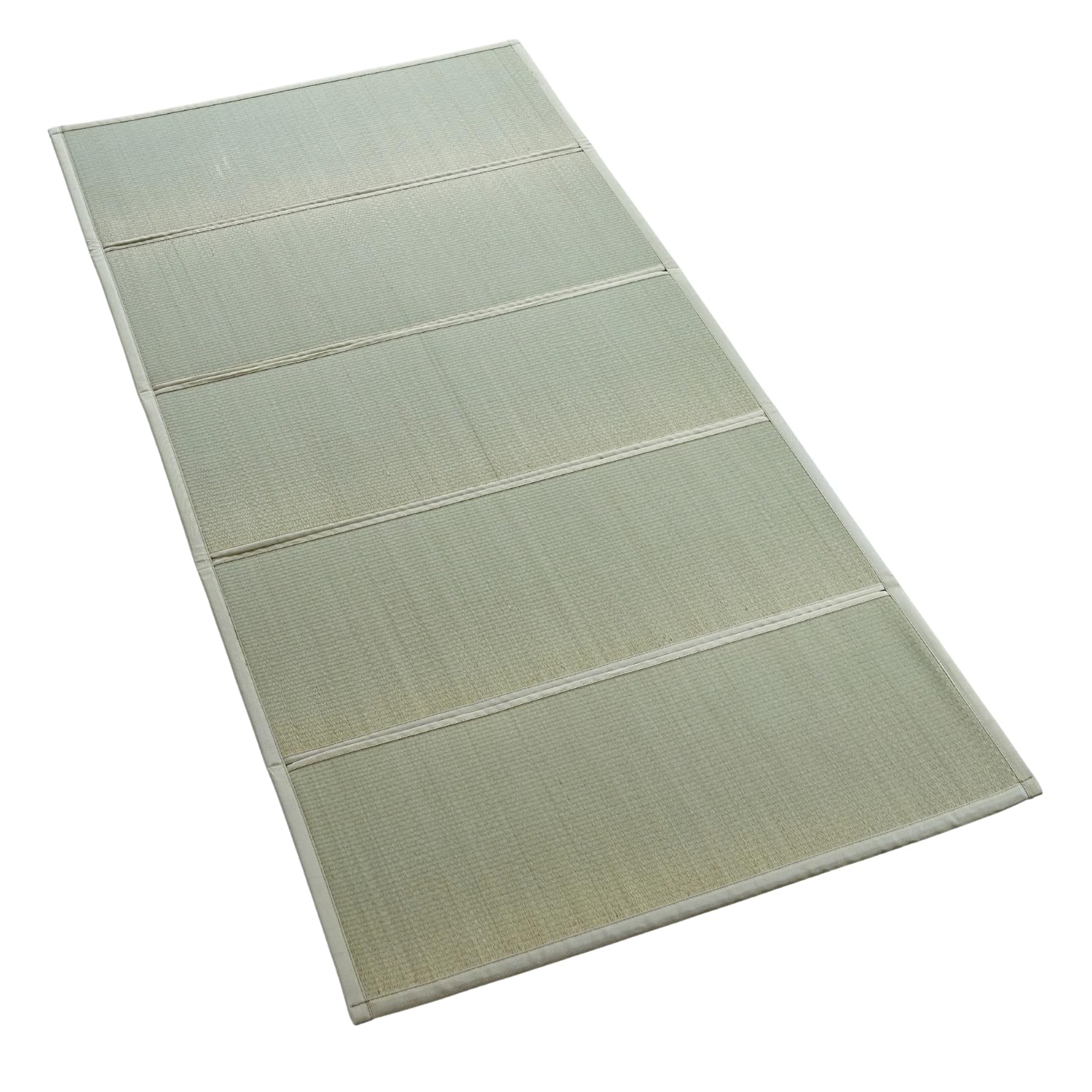
The lightest way to put real igusa between your futon and a hard floor.
At 4.4 pounds this is the easiest mat on the list to move, fold, and stand up against a wall — and for anyone who packs their bed away every single morning, that matters more than any other spec. It runs 78.7 inches long by 39 inches wide, with a mesh igusa top, a 9mm polyethylene foam middle layer, and a 100% polyester base.
The design brief here is layering. It is a supportive base for a Japanese floor mattress rather than a bed in its own right, and it earns its keep by what it does underneath: the 9mm foam layer softens noise from the floor, which is the reason apartment dwellers gravitate to it. Igusa absorbs moisture, sweat and odours and releases them again as the air dries, so a futon sitting on top stays drier than one sitting directly on boards.
There are two things to know before you commit. The natural igusa aroma is prominent when new — green tea or fresh hay depending on the nose, and it settles over several days. And a small number of buyers have found the panel joints less solidly stitched than they expected, with grass shedding over time, so treat it as a careful-use mat rather than an indestructible one. Both of those are fit notes, not reasons to write it off: it is genuinely well made and the foldability is the star.
Pick this when: You sleep on a futon over a hard floor and want the authentic grass layer without the weight.
Think twice if: You need a mat that takes rough handling or you dislike a strong natural scent for the first week.
5. WhatsBedding Japanese Floor Futon Mattress 3″ Grey Tatami Mat, Twin
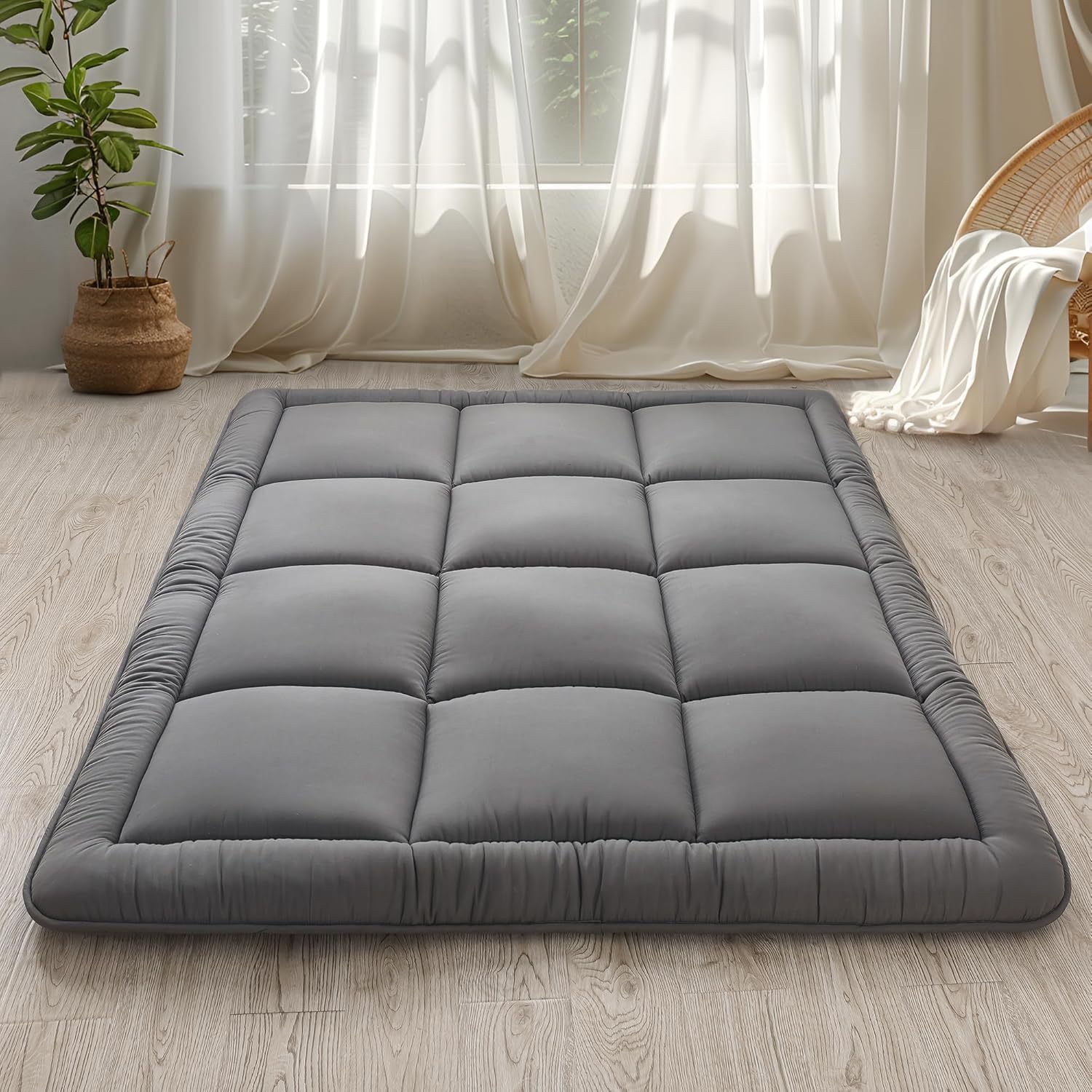
A 3-inch memory-foam pad that folds into a car boot and turns any hard surface into a bed.
Compare this to the MIINA above and you see two completely different philosophies. The MIINA is 0.3 inches of grass built to sit on a mattress; this is a 3-inch pad at 80 inches by 39 inches, built to replace the mattress. The cover is 100% polyester, the fill is a blend of polyurethane foam and polyester fibre, and the whole thing weighs 9.9 lbs on the listing spec and 5 pounds on the technical spec — enough to carry comfortably but not something you will forget you are holding.
Its real home is anywhere that is not a bedroom. Buyers have taken it to a music festival tent, used it as extra padding in a camper van, and layered it on top of a blow-up mattress when guests overflow. One useful thing it does that no rush-grass mat can: the fabric can be wiped and spot cleaned, so a dog, a kid, or a muddy campsite is not a catastrophe. It holds its shape without flattening after months of daily use, and one person can move it alone.
Now the honest part, because it matters here more than anywhere else on this list. The thickness is the most argued-about thing in the reviews. The manufacturer compresses it for shipping and asks for 2-3 days to recover, and buyers who skip that step tend to be the disappointed ones. Even expanded, a border of stuffing creates an impression of height that the middle does not fully back up, and on bare ground you will still feel the ground. Treat it as a comfort pad, not a mattress, and it delivers.
Where it wins
- 3-inch memory-foam fill gives real cushioning on hard surfaces
- Folds or rolls into a small bundle for a car boot or cupboard
- Wipeable polyester cover suits camping, vans and kids’ rooms
Where it needs care
- Needs 2-3 days to fully expand after the compressed delivery
- The stitched border reads thicker than the centre actually feels
- On bare ground you will still feel the ground through it
Get this for: Camping, vans, festival tents and guest overflow — anywhere you need a real pad you can carry.
skip it if: You want authentic rush-grass coolness or a mat that will not need days to puff up.
6. DOWNSTORIA Japanese Floor Mattress, 3 inch Foldable Futon, Queen 60×80
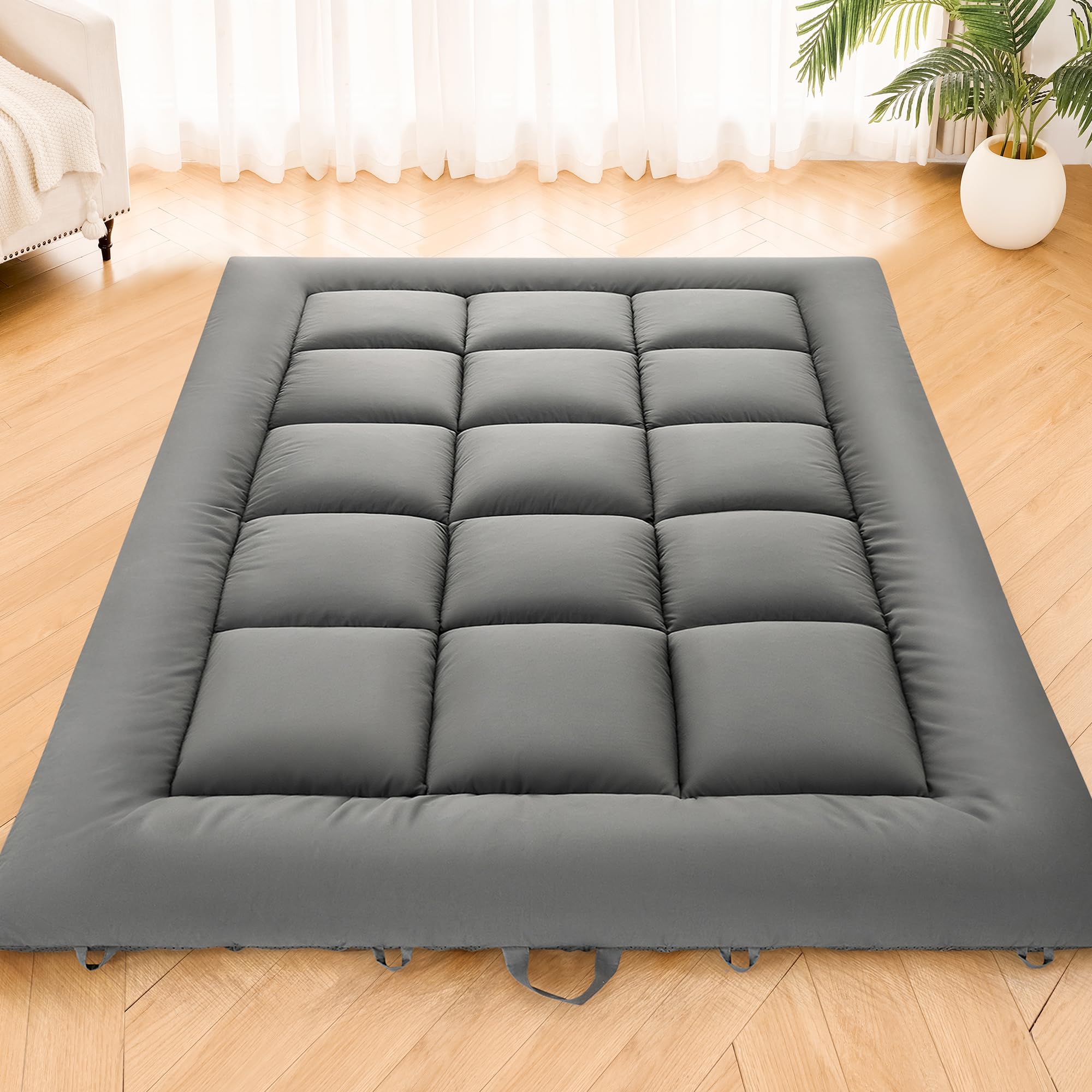
Queen-width memory foam with a carry handle, made for guest rooms that double as something else.
Width is the differentiator. At 80 inches by 60 inches this is a full queen-sized floor pad as well as a 3-inch-thick one, so two people can sleep on it without fighting for the edge — something no twin mat on this list can offer. The outer layer is peachskin polyester microfiber, the fill is a blend of polyurethane foam and polyester fibre, and it weighs 5.4 pounds.
The detailing is where this one separates itself from a generic foam pad. There is a carry handle and four Velcro straps, so you can fold it, strap it, and shift it on your own. The underside is a durable non-slip fabric that keeps it from sliding across a hard floor, and the box quilting holds the shredded foam in place so it does not migrate to one end after a month. Owners use it for guest beds, kids’ play, and office floor space.
Give it the time it asks for. The mattress ships compressed and the maker recommends unpacking it, laying it flat in sunlight for 1-2 days to restore thickness — people who skip that step report a flatter mat than people who do not. A handful of owners find the end result thinner than the listing implies, and fit is mixed. The fabric cover is not removable, so plan to protect it with a sheet and spot clean.
The case for it: Two-person floor sleeping in a queen footprint, with handles and straps that make storage a one-person job.
The case against it: It is not machine washable, and the compressed delivery means the first two days are not a fair test of its height.
Your pick if: You need a wide floor bed for guests or a spare room and you want to stow it easily afterwards.
Keep looking if: You want a washable cover or you have no sunny spot to let it expand in.
7. Mollydot Japanese Floor Futon Mattress, Queen 60″ x 80″, Brown
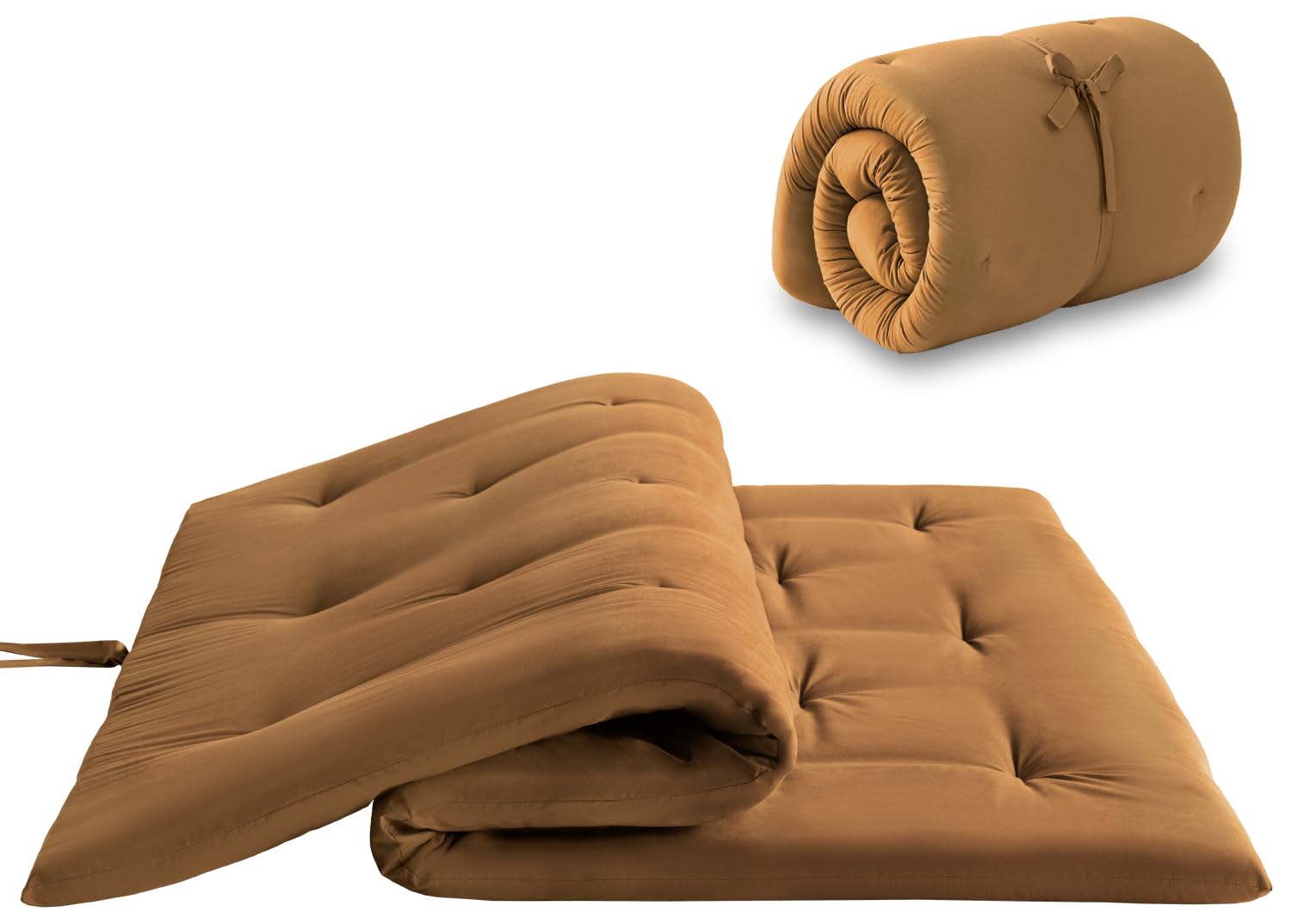
A five-layer queen futon that unrolls onto a dorm or spare-room floor and stays put.
Where the DOWNSTORIA above leans on handles and straps, this one leans on how it is built. Five layers stack up inside it: a polyester microfiber surface, a sponge core for firm, even support, and top and bottom layers of down-alternative fibre for cushioning. The quilted construction is the part that matters day to day, because it stops the filling from migrating into lumps. It measures 80 inches by 60 inches at 2.5 inches thick and weighs 8.4 pounds.
Owners use it as a primary bed rather than an occasional one, which says something about the durability of the quilted build. It handles lounging, napping, and doubling as a topper, and it fits a click-clack couch at three-quarter bed size according to buyers who measured first. The listing also warns you to flip and rotate it regularly and to air it in sunlight, and that is not decorative advice — it is what keeps a quilted foam futon feeling springy rather than packed down.
The one thing that frustrates owners is cleaning. There is no removable cover, and the fabric does not survive a washing machine — seams can split if you try. Spot cleaning and a protective sheet are the realistic answer. A few buyers also find the surface slippery underfoot, which is worth knowing if you have balance or mobility concerns, and it takes about 3 days to reach full thickness after the compressed delivery.
Choose it for: A dorm room or spare bedroom where the futon is the everyday bed and you want quilted, even support.
Not for you if: You need to machine-wash the whole thing, or you want a grippy surface to step onto barefoot.
8. EMOOR Japanese Tatami Mat Twin, Natural Rush Grass (Undyed)
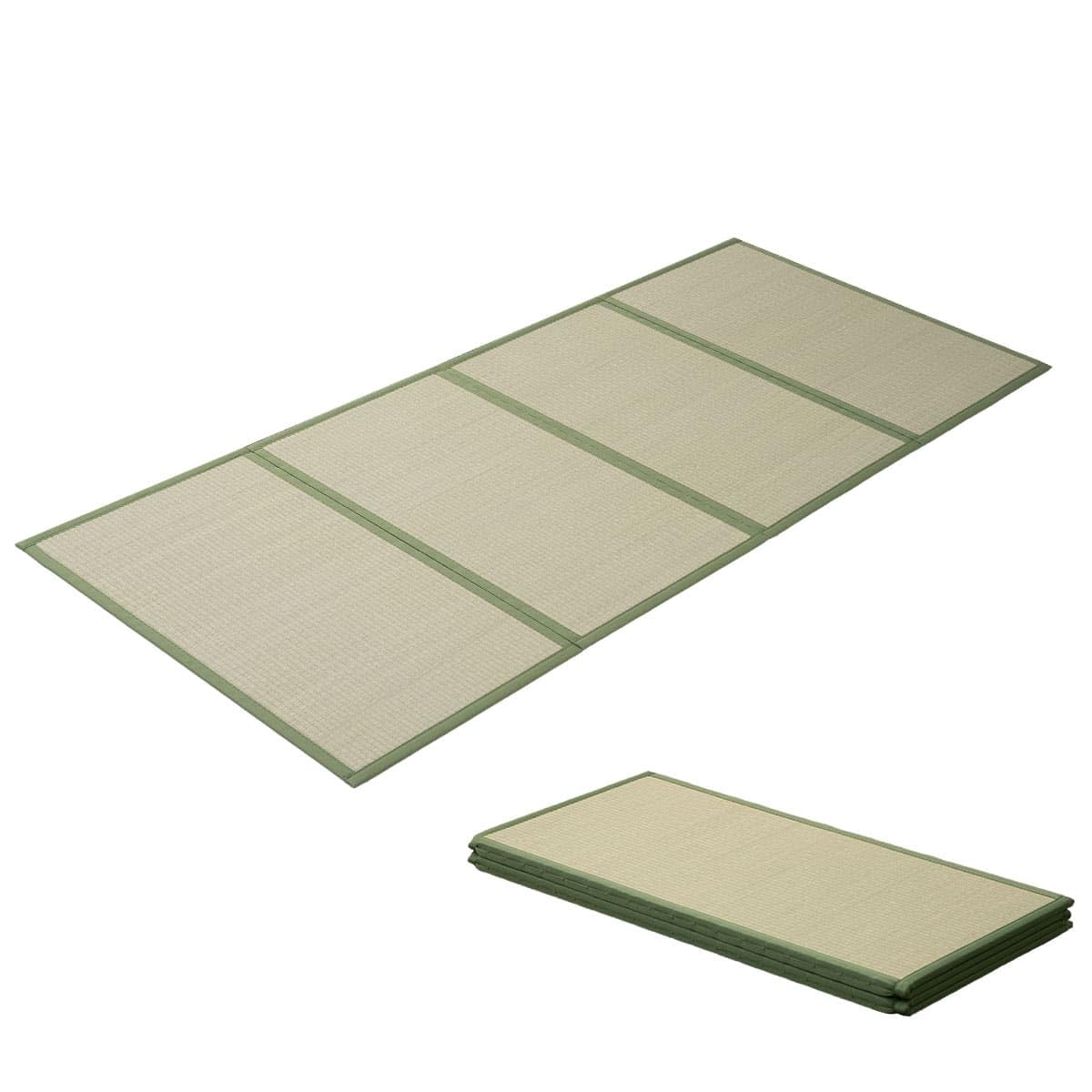
The traditional-mat option: undyed Japanese igusa, hand-finished, and it folds into a stack the size of a small suitcase.
The headline number here is the fold. Flat, this mat is 39.37 inches by 78.74 inches at 0.52 inches thick. Folded, it becomes 19.69 inches by 39.37 inches by 2.17 inches, which is a package you can tuck behind a door or under a bed. It weighs 3.65 kg, and both surfaces are considered: 100% Japanese natural igusa rush on top, and a non-woven fabric underside made specifically not to damage flooring.
Igusa is not decoration, it is engineering. The hollow rush stems hold tiny air pockets that take in moisture and release it again as conditions change, so the mat runs dry and cool in summer and holds a layer of warmth from the floor in winter. That same structure is why it makes such a good platform under a futon for anyone sleeping close to the floor. The undyed natural colour also develops a soft sheen over time with repeated dry wiping, which is a nice thing to own for years rather than a disposable pad.
Two things to plan for. The scent is the single most polarising part of this mat — some owners find it grounding and pleasant, others find it overpowering at first, so air it in a well-ventilated room before first use. And a small number of buyers needed to return theirs over a sizing mismatch, which is why measuring your base matters. It also needs dry wiping and regular airing rather than washing.
What stands out
- Undyed Japanese natural igusa, top layer and construction both
- Folds to a genuinely small package for stowing under a bed
- Non-woven underside designed not to scuff your flooring
What to plan for
- Not washable — dry wiping and regular airing only
- The natural rush scent is strong enough that some buyers return it
- Measure your base carefully, because sizing mismatches do happen
Settle on this one: You want the real thing — undyed igusa, foldable, and built to sit under a futon for years.
Stay clear if: You object to a strong natural grass scent or you want something you can throw in a machine.
9. MustMat Japanese Floor Mattress Foldable Tatami Mats, 2-Piece Set
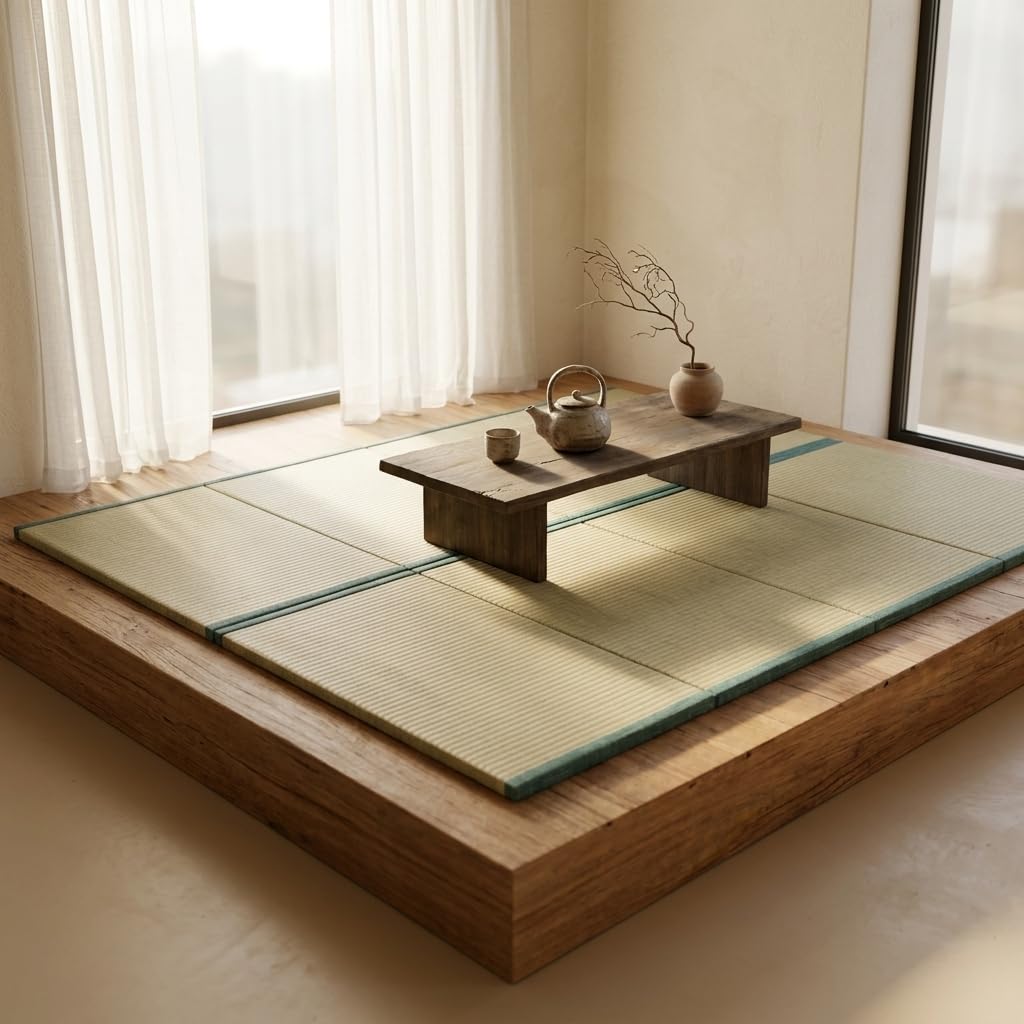
Two pieces, a latex core, and 15 pounds of rush grass for people who want to sleep low and hard.
Read the size honestly before you order, because the listing gives two figures: the set is described as 70.8 inches by 78.7 inches, and each mat measures 78.7 inches by 35.4 inches at 1.2 inches thick. It ships as two mats, so you lay them side by side for width or stack them for a longer run. The 15 pounds of weight is the heaviest here, and the 1.2-inch thickness makes this the most substantial rush-grass option on the list.
The build is what people keep returning to. A rush grass surface sits over a latex fill, with a non-woven fabric back — that latex layer is why this mat holds a firm, flat platform rather than settling into a concave groove under your hips. Firm and flat is the point: buyers describe it as improving posture and easing back discomfort through the day, and it stays comfortable enough for stretching and napping between sleeps. Rush grass also brings a cooling sensation on hot summer nights.
Honesty on the two recurring notes. The grassy smell is strong and lingers for some owners, and the mat does show wear faster under daily use than buyers expect from the weight of it — around a month was mentioned for one owner’s daily routine. A few units have arrived with slight discolouration or line-shaped dents across the weave. This is a substantial, firm mat; go in knowing both of those.
Why it earns its place: A two-piece rush-grass and latex set that holds a hard, flat platform for people who genuinely sleep better near the floor.
What to budget for: Air it out for the grassy scent before use, and treat it as a careful-use mat if you sleep on it nightly.
Pick this if: You want the thickest, heaviest rush-grass setup and you already know you like a firm, flat sleep surface.
Leave it if: You want something light enough to shift alone, or you need it to take daily floor-sleeping without showing wear.
Understanding the Specs
Thickness and What It Really Means
The number in the listing tells you less than you think. A 0.3-inch rush-grass mat and a 3-inch memory-foam pad are not different versions of the same thing — they do different jobs. Anything under about half an inch is a topper or an underlay: it changes how a surface feels, but it cannot be the bed by itself. Anything around 2.5 to 3 inches is thick enough to sleep on directly, at least for a night or two. On a memory-foam pad specifically, the stitch border is often the tallest part of the mat, so allow a couple of days after unpacking for the middle to fluff back up before you judge the height.
Rush Grass, Igusa and Rattan Explained
Igusa, rush grass, and soft rush all mean the same plant — a hollow-stemmed reed with thousands of tiny air chambers inside each stem. Those chambers pull moisture off your skin in humid weather and let it go again when the air dries out, which is what gives tatami its cool-summer, warm-winter feel and why so many people describe sleeping on it as sleeping on a bed of grass. Rattan fibre is a different material with a smoother, quieter surface and almost no natural smell. Foam is the other option: heavier under a hip, softer to lie on, and warm in a way grass never is. None of them is “better” — it depends on if you want authenticity, silence, or padding.
FAQ
Will a bed tatami mat fit my existing mattress or futon?
How long does the grass smell last on a new tatami mat?
Can I sleep directly on a rush-grass tatami mat on a hard floor?
How do I clean a tatami mat without ruining the weave?
Do tatami mats get mouldy in a humid room?
What is the difference between a rush-grass mat and a rattan-fibre mat?
Is a memory foam tatami mat as good as a real rush-grass one?
Should I put anything under a tatami mat on a bed frame?
Can two tatami mats be used side by side to make a wider bed?
Final Thoughts: The Verdict
If you already own a mattress and the problem is that you sleep hot, the MIINA Japanese Traditional Igusa Tatami Mattress is the one to buy — it is woven rush grass top to fill, it straps down with elastic corner bands so it stays put overnight, and it rolls away into a cupboard. If you want a firm surface you can do yoga, Pilates, or a full night on, the VEVOR Japanese Tatami Mat gives you the widest and longest platform on this list. For portability, the WhatsBedding Japanese Floor Futon Mattress folds into a car boot, and for an authentic traditional setup that sleeps close to the floor, the EMOOR Japanese Tatami Mat Twin with its undyed Japanese igusa is the one worth stretching for. WhWhichever you pick, choose your size from your own sleep surface rather than the picture, and give any rush-grass mat a few days of airing before its first night.
How We Picked
We do not accept paid placement. Every pick is matched to a real buyer and a real use-case; we do not hands-on test units.
Sources & Methodology
Specifications: manufacturer listings and product documentation. Review insights: verified customer reviews, as of September 2026. Pricing: not shown on this page (it changes often); check the current price via the retailer link.
As an Amazon Associate, KitchPrep earns from qualifying purchases. This does not affect which products we feature.
Related Guides
