
Specs are compiled from manufacturer listings and verified buyer reviews and can change over time — please confirm the key details on the product page before buying.
An adjustable bed is a moving machine, and that is exactly why most bedside rails quietly fail on one. When the head section rises, a frame-mounted rail can lift off the floor and start to lean. The four picks below are all built to stay useful while the bed changes shape, and the short answer is this: the Lesamediio rail is the one to buy if your bed frame sits high enough, the Able Life Click-N-Go is the safest bet if you want a certified rail and can spend more, and the Skuehod board-screw rail is the right call if your adjustable frame has a wooden board to fasten into.
I’m Mohammad Maruf — the founder and writer behind KitchPrep. This guide is built by comparing the manufacturers’ published specifications and the patterns across verified customer reviews, so you get each pick’s real strengths and trade-offs instead of marketing spin.
Every rail here is judged on the things that actually decide whether it helps you at 3 a.m.: how it anchors, how much weight it holds, and whether it survives a bed that hinges. That is the whole test behind finding the right bed rail for an adjustable bed.
Our Picks at a Glance
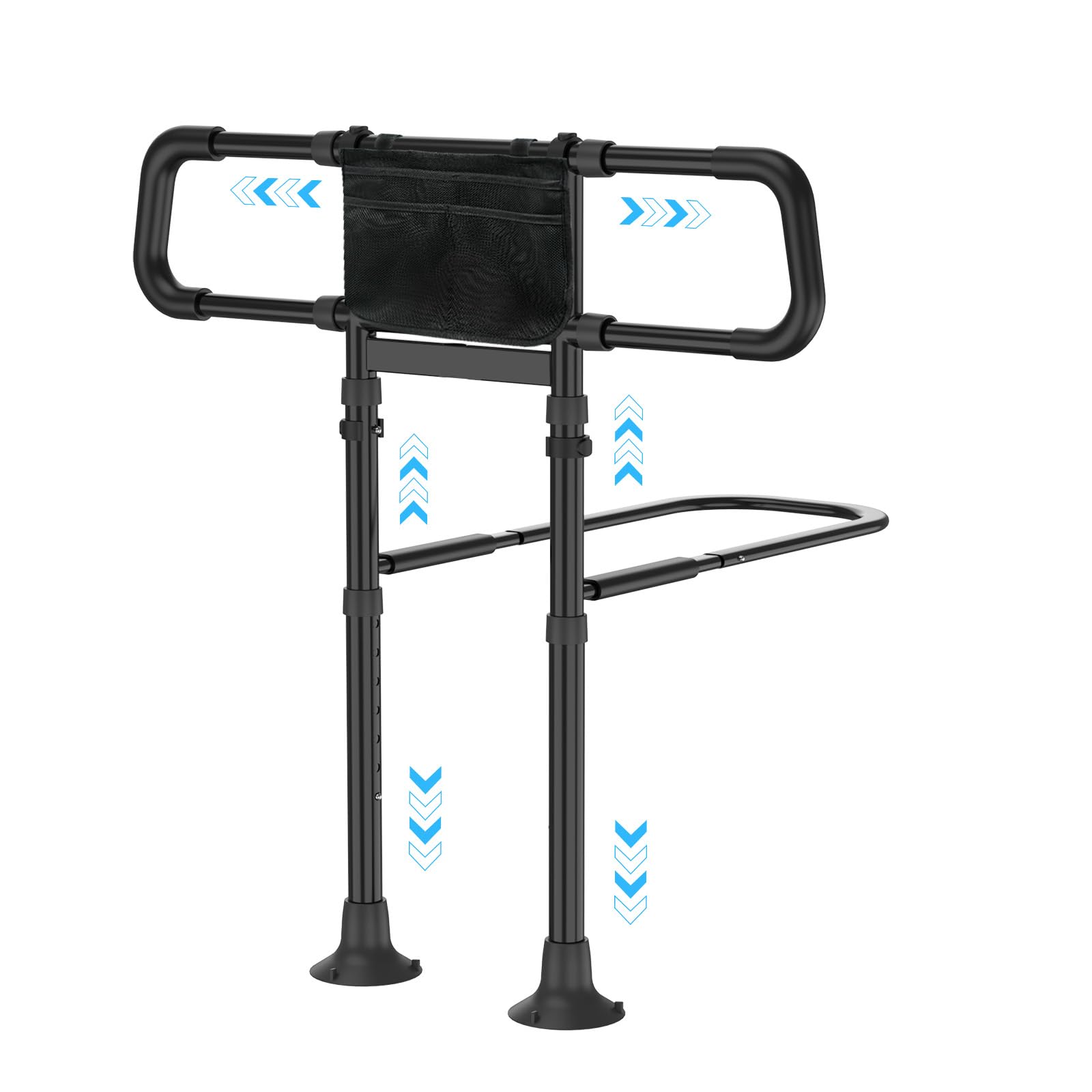
How To Choose The Best Bed Rail for an Adjustable Bed
The one thing that separates a rail that helps from a rail that annoys is how it attaches to a bed that moves. A standard flat bed never changes shape, so almost any rail works on it. An adjustable bed raises and lowers sections all night long, and a rail that leans on the floor or clamps the frame can shift right along with it. So before you look at anything else, decide how your rail should hold on.
Match the mount to your frame
There are three common ways these rails hold on. Some slide a flat plate under the mattress and box spring and tuck the rail against the bed edge. Others screw straight into a wooden board that sits on the adjustable frame. A few clamp or bind to the frame itself. Whichever you pick, the rail should be anchored on the part of the bed that stays put — not resting its weight on a section that tilts upward. If your frame has a solid wooden board, a screw-in rail gives you the most rigid connection. If it does not, a plate-and-strap design is the more forgiving choice.
Measure floor-to-frame height before anything else
This is the step people skip, and it is the one that causes most returns. Many under-mattress rails need a minimum gap between the floor and the bed frame so their legs can reach down and steady the rail. One pick here needs at least 13.8 inches of clearance and will not fit a lower bed at all. Grab a tape measure, check the distance from the floor to the bottom of your bed frame, and write it down before you shop. It takes thirty seconds and saves a return shipment.
Quick Comparison
| Model | Best For | Weight Support | Mounting Style | Width x Height | Amazon |
|---|---|---|---|---|---|
| Lesamediio Adjustable Bedside Assist Rail★ Best Overall | Most adjustable beds with a high frame | 400 lbs | Under-mattress plate plus safety belt | 32.68″W x 41.34″H | Amazon |
| Skuehod Screw-In Board Rail | Frames with a wooden board to screw into | — | Screws into wooden bed board | 21.5″W x 17″H | Amazon |
| Elderly Assis Bedside Handrail | Restless sleepers who make the bed often | 330 lbs | Screws, binding, or strap to frame | 22″W x 20.5″H | Amazon |
| Able Life Click-N-Go Extendable Bed Rail | Buyers who want an ASTM-certified rail | 300 lbs | Screws into wooden adjustable frames | 26″ x 23″ x 19.25″ | Amazon |
In‑Depth Reviews
1. Lesamediio Adjustable Bedside Assist Rail
Our pick — over 4.5★ from 60+ verified ratings; the strongest balance of quality and price.
A wide, tall grab bar that survives a bed that hinges underneath you.
Start with the size, because it is the thing you feel every night. The chassis on this rail measures 32.68 inches wide by 41.34 inches tall, which gives you a huge landing zone for your hand instead of a thin bar. Compare that to the Skuehod board rail at 21.5 by 17 inches and the difference is real: there is far more rail to grab while your bed’s head section is up and your footing is awkward. The frame itself is stainless steel and rated to hold up to 400 lbs, the highest support rating on this list.
Getting in and out of a moving bed is the whole point, and the design handles it well. Non-slip foam sits between the mattress and box spring to stop sliding, and a safety belt runs to the opposite side of the bed so the rail cannot tip outward. Adjustable legs and a height-adaptable grip bar let it sit level even when your floor-to-frame gap changes as the bed articulates. The grab bar also gets two glow-in-the-dark components, so you can find it in the dark without switching on a lamp. There is a storage pouch for glasses and a remote, and assembly is tool-free.
Now the honest part, and it is a fit question rather than a flaw. This rail needs at least 13.8 inches between the floor and your bed frame, and it will not work on anything lower, so measure first. Owners on adjustable beds report that with the head raised, one of the rail’s feet can lift off the floor. As buyers report, “it still works for us.” That is the correct way to read it — the rail keeps doing its job because the belt and plate hold the load, not the leg. Owners say the grab stays solid mid-tilt, and many used it to return to a wheelchair or the side of the bed unaided.
Where this rail earns its keep
- Rated to support up to 400 lbs, the highest figure in this comparison
- 32.68″ wide by 41.34″ tall chassis gives you a large, forgiving grab area
- Safety belt anchors to the opposite side of the bed to resist tipping
- Glow-in-the-dark grip points make it findable in a dark room
- Tool-free assembly, and it fits twin through king beds on either side
What to plan around
- Needs a floor-to-frame height of 13.8″ to 19.69″ — a short bed frame will not fit it
- When the head section rises, one foot can leave the floor
Buy this one: your bed frame sits at 13.8 inches or higher and you want the widest, strongest grab surface here for getting up from a raised head section.
Look elsewhere instead: your frame is low to the floor, or you would rather screw a rail into a wooden board than run a belt under the mattress.
2. Skuehod Screw-In Board Rail

A welded iron bar that bolts straight into an adjustable bed’s wooden board.
If your adjustable frame carries a wooden board, this is the most direct way to add a rail: you screw it down and it stops moving. The whole thing is welded from thick iron tube, so there is no hinge in the middle to flex, and the grab bar is wrapped in solid wood for a warm, firm surface rather than bare metal. It stands 17 inches tall on a 21.5-inch-wide footprint, and it is aimed at mattresses under 10 inches thick. The connector to the bed sits basically invisible, with no bump felt under the mattress.
Two details make it easier to live with than a bare bar. Thickened pockets on both sides are lined with a soft, skin-friendly fabric that keeps your hand off cold metal, and because they open from either side, grabbing a book or a remote does not mean reaching around the rail. It comes with a storage bag, and beyond the rail itself and the screws into the wooden board, there is nothing to assemble. What matters most to owners here is fit and how solid the bar feels once it is fastened down — that combination is what keeps the thing in place on a tilting bed.
The catch is homework before you buy, and it is worth taking seriously. This is a do-it-yourself install: the extensions reach only about 12 inches under the mattress, so owners who needed more spread added their own wood to extend it. The included screws are slim for a top-heavy rail, and more than one owner swapped in longer screws, washers, and nuts for a solid hold. That DIY step rules it out for a frail parent who wants zero fuss. Sized right and fastened properly, it stays put on a Twin XL or a Tempur-Pedic adjustable frame.
The sturdiness story: welded thick iron tube with a solid wood grip, and once it is screwed to a wooden frame it does not slide on a moving bed — owners who installed it properly describe it as holding firmly.
Read this before ordering: it only suits adjustable beds that have a wooden board to screw into, the included screws are undersized for the rail’s weight, and the 12-inch under-mattress reach may need extra wood. Plan a trip to the hardware store into the job.
Right for a handyman household: your adjustable bed has a wooden board, you own a power screwdriver, and you are happy to upgrade the fasteners for a rock-solid bar.
Skip if it lands on you: you need a rail that goes on with no tools and no trip to the hardware store, or your frame has no wood to drive screws into.
3. Elderly Assis Bedside Handrail

A folding stainless bar that slides out for bed-making and back in for the night.
Where the Lesamediio rail holds the bed with a belt and the Skuehod screws into wood, this one solves a different problem: access. It slides in and out of the bed easily, which means you can pull it free to make the bed and push it back when you turn in. That single motion is why it suits restless sleepers, and it is built on a 304 stainless steel frame that supports up to 330 lbs. Height adjusts from 15 to 19 inches, so it can be tuned to the height that feels natural for your arm, and it has a non-slip hand grip. A double armrest design lets both hands take the load at once when you push up. It is 22 inches wide and 20.5 inches tall overall.
Installation is the flexible part, and also the part to think through. You can fix the armrest to the bed with screws, or fasten it by binding or another secure method — so it can work on an adjustable bed that has no wooden board to drive screws into. Owners confirm it does the job on a moving bed: it holds steady, and one reflective note from a household that used it after open heart surgery is that raising and lowering the bar is as simple as pressing a button on the rail. It is described as sturdy and, fairly, as something that may take a little getting used to depending on your mobility.
Here is the honest caveat, and it is specific: the locking pin is the weak point. Owners mention that it takes a fight to seat on the first day — it needs to line up just right and wiggles before it snaps — and at least one found it would no longer snap through after a day of use, which is a genuine design issue worth knowing about before the return window closes. If you rely on that pin to lock the bar tight, test it hard in the first week. The bar itself is solid; the locking pin is the part to test early.
What it does well on a moving bed
- Slides in and out easily, so bed-making and nighttime use do not fight each other
- Supports up to 330 lbs on a 304 stainless steel frame
- Height adjusts from 15 to 19 inches to suit your reach
The pinch points to weigh
- The locking pin can be hard to seat, and it needs perpendicular alignment to snap
- You supply the mounting method — screws, binding, or strap — so results vary by bed
Great match for: a restless sleeper who wants a bar that folds out of the way, on an adjustable bed with no wooden board for screws.
Think twice if: you want a locked-in, zero-adjustment rail, because the pin is the one part customers note having to fuss with.
4. Able Life Click-N-Go Extendable Bed Rail

The one rail here that carries a published ASTM safety certification.
This is the pick for a buyer who wants paperwork, not just a weight figure. Able Life says it is one of the only bed rails on the market that has passed the ASTM F3186-17 safety standard for adult portable bed rails — that is an independent published standard covering falls and entrapment, and it is the reason to pay more here. It supports 300 lbs, installs in minutes, and suits mattresses 10 to 12 inches thick on both traditional and adjustable wood beds. The upper frame retracts and extends so you get a solid bar when you need one and clear access when you do not. It measures 26 by 23 by 19.25 inches and weighs 13.5 pounds.
The click feature is the standout for anyone caring for someone else. With one click you lift the rail off the bed entirely, which means you can be right beside your loved one for transfers without a bar in the way, then click it back on. Owners put it to work on adjustable Sleep Number frames, where it moves with the head section and doubles as a grab bar, and one remarkable owner note says it has held up for six years of daily use. Reviewers point out it takes hard pulling from a strong patient without shifting, as long as you align the rail flush and extended before screwing it down.
Two things are worth knowing before you commit. The frame is less rigid than the welded iron rails here — owners mention wobble, and on at least one unit the click assembly did not sit flush together, a manufacturing slip that left the buyer with a slightly loose joint. Treat the wood-frame screw-down as mandatory rather than optional, because that is what removes the movement. The other trade-off is reach and weight: at a 300 lb rating it sits below the Lesamediio rail’s 400 lbs, and the smaller bar won’t blanket the bed edge the way the wide chassis does. If ASTM certification is your deciding factor on an adjustable bed, this is the rail to pick.
The safety case: Able Life states this rail passed the ASTM F3186-17 standard for adult portable bed rails, so it is the pick to choose when you want a rail that has been through independent testing rather than one that only lists a weight rating.
Choose this if: you want a certified rail, a click-off design for easy caregiver access, and you can screw it into a wooden adjustable frame.
Pass if: rigid is your top priority, since the extendable frame has more give than the iron-tube rails above, or your mattress is thinner than 10 inches.
Understanding the Specs
Weight Support Rating
This is the load the maker lists for the rail, and it tells you how much leaning weight it is built for. On this list the numbers run from 300 lbs to 400 lbs. A higher rating gives you more headroom, but only if the rail is fastened the way the maker intended. A 400 lb rating means little if the included screws are undersized, while a 300 lb certified rail bolted down properly holds its full load. Check the rating, then check the mounting.
Floor-to-Frame Height
This is the distance between your floor and the bottom of your bed frame, and it decides whether an under-mattress rail can even be used. The Lesamediio rail needs at least 13.8 inches and works up to 19.69 inches; a lower frame rules it out entirely. Screw-in rails like the Skuehod and the Able Life avoid this check because they mount to the wooden frame instead of standing on the floor, which is why they suit shorter beds.
FAQ
Will a bed rail work on an adjustable bed that raises the head section?
Why does a rail need a minimum floor-to-frame height?
How much weight should a bedside rail support?
What does ASTM F3186-17 certification mean on a bed rail?
Can I install a bed rail without drilling into the bed?
Do I need a wooden board on my adjustable bed for these rails?
How thick should my mattress be for these rails?
Which rail is best if the person I care for is restless in bed?
Can I leave a bed rail attached while I make the bed?
Should I test the locking parts in the first week?
Final Thoughts: The Verdict
For most people searching for the bed rail for an adjustable bed, the Lesamediio Adjustable Bedside Assist Rail is the pick, because its 400 lb rating, wide 32.68-inch chassis, and belt-and-plate anchor hold firm even when the head section rises. If your adjustable frame has a wooden board and you want a rigid, welded iron bar you can screw down, the Skuehod Screw-In Board Rail is the better fit. And if a published ASTM safety certification is what you are after, the Able Life Click-N-Go is the rail to reach for.
How We Picked
We do not accept paid placement. Every pick is matched to a real buyer and a real use-case; we do not hands-on test units.
Sources & Methodology
Specifications: manufacturer listings and product documentation. Review insights: verified customer reviews, as of September 2026. Pricing: not shown on this page (it changes often); check the current price via the retailer link.
As an Amazon Associate, KitchPrep earns from qualifying purchases. This does not affect which products we feature.
Related Guides
