
Specs are compiled from manufacturer listings and verified buyer reviews and can change over time — please confirm the key details on the product page before buying.
If you want bay leaves that actually smell like something, buy a living plant instead of a jar of dried ones from the spice aisle. Fresh leaves carry far more oil than dried ones, and that oil is what does the work in a pot of stew or a braise. Below are the five live bay laurel plants worth your money, sorted by what each one is genuinely good at.
I’m Mohammad Maruf — the founder and writer behind KitchPrep. This guide is built by comparing the manufacturers’ published specifications and the patterns across verified customer reviews, so you get each pick’s real strengths and trade-offs instead of marketing spin.
Every plant here ships as living stock, so the real question is which one survives your doorstep and keeps producing. This breakdown of the bay leaf plant options covers shipping hardiness, pot versus ground rules, and who each one suits.
Our Picks at a Glance


How To Choose The Best Bay Leaf Plant
The plant that lands on your porch has already been through a box, a truck, and a temperature swing. What you do in the first ten minutes decides whether it becomes a kitchen staple or a stick in a pot. These are the four things that separate a plant that keeps producing for years from one that quits on you in a month.
Size On Arrival Is A Feature, Not A Flaw
Almost every bay laurel ships small, and that is normal for the species. A young start transplants more easily than a big one, and a root ball that has not yet circled its nursery pot settles into your soil without fighting you. Some listings show a plant measured from the bottom of the pot, which tells you the total height you are getting rather than just the foliage above the rim. Read that detail before you decide a plant looks short.
Know Your Hardiness Zone Before You Click Buy
The hardiness zone is a number that maps the coldest winter temperature your area sees. Bay laurel handles outdoor life best in zones 8 through 10, and a few listings stretch that range further because the plant lives in a container rather than the ground. If you sit north of zone 8, plan on a pot you can move indoors each fall. That is a lifestyle decision as much as a gardening one — the plant needs a bright window and a watering routine all winter.
Pot Or Ground Changes Which Variety You Want
Standard bay laurel grows faster and turns into a bigger tree, so it suits planting in the ground where it can spread its roots. A compact, pot-friendly growth habit is the better match if your plant will live in a container on a patio. Either way, bay laurel takes pruning well and can be shaped into a topiary or hedge if you want it to do double duty as decor.
What Arrives In The Box Matters Too
Shipping stress is the number one reason a healthy plant looks sad on day one. Nurseries that wrap roots in hydrating gel, seal moist paper around them, or sleeve a potted plant in craft paper are doing the work that keeps foliage intact. Open the package the day it lands and get the plant into light and water fast. A plant left in a dark mailbox for two days is a plant you paid for twice.
Quick Comparison
| Model | Best For | Hardiness Zone | Sunlight | Plant Height | Amazon |
|---|---|---|---|---|---|
| Daisy Ship Mediterranean Sweet Bay Laurel, 2 x 2-in Cups★ Best Overall | Best overall for a healthy start with care instructions included | 3-10 | Full Sun to Shade | 2 feet | Amazon |
| 4 Bay Laurel Plants in 3.5” CubesBest Value | Best value for hedging and planting several at once | — | Full Sun to Partial Shade | — | Amazon |
| Bay Leaf Tree Live Plant, Laurus Nobilis 8″-10″ from Bottom Pot | Best for a one-year-old specimen with real root structure | 8-10 | Full Sun to Partial Shade | — | Amazon |
| Sweet Bay Leaf Plant Live, 4 to 6 Inches in Height | Best for a windowsill grow-light setup | 4 | — | — | Amazon |
| Greenwood Nursery Live Bay Laurel, 2.5 Pot | Best for a patio container tree that can reach 15 feet | 8, 9 | Full Sun, Partial Sun | 15 feet | Amazon |
In‑Depth Reviews
1. Daisy Ship Mediterranean Sweet Bay Laurel, Standard, Plant – 2 x 2-in Cups
Our pick — over 4.5★ from 450+ verified ratings; the strongest balance of quality and price.
The standard-variety start that arrives packed like the seller actually cares whether it lives.
What you get is a live bay laurel shipped in 2 x 2-inch biodegradable cups — the kind of container you can plant straight into the ground or a larger pot, because it lets roots, water, and air pass through on their own. That container is the whole trick. You skip the transplant shock that comes with ripping a seedling out of plastic, and the roots keep growing the day they arrive.
What wins people over here is the overall quality of the plant itself, followed closely by how healthy it looks on arrival. Foliage shows up clean and green, new leaves and buds typically push within a few weeks, and the seller includes a detailed care sheet plus real support if something goes sideways in transit. The standard variety grows faster and larger than the compact Saratoga type, with smaller, more spread-out leaves and, notably, a stronger flavor — which is exactly what you want if the plant is going in the ground to feed your kitchen.
The honest trade-off is scale. Standard bay laurel is built for the ground, where it can reach heights of 50 to 60 feet and put on up to 4 feet of growth a year outdoors in good sun. In a container it stays manageable at roughly 4 to 6 feet with pruning. A recurring note from buyers is to keep a small start potted through its first winter rather than sticking it straight into garden soil — the plant is young and the cold is hard on it. One more thing worth knowing: the listing recommends opening the package as soon as it lands, since a plant that sits in a dark mailbox loses its best shot at a strong start.
Where This One Earns Its Spot
- Biodegradable 2 x 2-in cups go straight into soil — no root disturbance at planting time.
- Standard variety carries a stronger flavor than the compact type, ideal for cooking.
- Detailed care instructions and seller support included with every order.
- Rated for zones 3-10, with containers covering the colder end of that range.
Before You Commit
- Ships as a small 2 x 2-in start, so expect a young plant with a modest footprint.
- Standard growth habit wants ground space; a container will need pruning to stay 4 to 6 ft.
- A few cut leaves or a browned tip can show up after shipping — normal transit wear.
Made for you if: you want a fast-growing, strong-flavored bay laurel you can plant into the ground or size up into a bigger pot with zero repotting fuss.
Think twice if: you have no bright indoor spot for winter, since a plant this young needs to come inside during cold months in most zones.
2. 4 Bay Laurel Plants in 3.5” Cubes | Live Evergreen Shrub with Aromatic Glossy Green Leaves
Four rooted starts in one order, if you want a hedge line instead of a single specimen.
Buying four plants at once changes what you can do with them. You can run a low hedge along a patio edge, plant a staggered row as a screen, or keep two indoors and two outside as insurance against a bad shipping week. Each plant arrives in its own individually wrapped nursery cube, and the stronger root systems are the part that shows — plenty of roots, no wilting, foliage that is not sad-looking on arrival. Multiple plants also make the order tolerance different from a single plant: if one start struggles, you still have others growing.
The listing also lines up some household uses that are worth knowing about. The brand lists them as air-purifying, pollinator-attracting, and pest-resistant, and positions the leaves for soups, stews, meats, and sauces in Mediterranean cooking. The foliage works as topiary or hedging material too, and the plant is evergreen, so it holds its looks through winter rather than going bare.
Here is the part a careful buyer should weigh: size and growth rate draw the most disagreement among owners. Some plants stand around 8 inches tall and grow fast; others feel small and show little new leaf growth for months. The size of each cube is the biggest factor in how much plant you actually get, and a four-plant order scatters that result across the whole group. Give them a bright spot and patience — one owner reported the plant thriving eight months after delivery.
Root quality leads here: strong, well-developed roots are the most consistently praised trait, and that is the number one thing you can check when the box arrives.
The honest read on size: plan on small starts that need a season to settle in before they look like much, and treat the height difference between plants as normal rather than a defect.
Reach for this if: you want several plants to hedge, screen, or garden with at once, and you are comfortable letting small starts grow into their look.
Look elsewhere if: you need one big, immediately impressive potted tree on your patio this week.
3. Bay Leaf Tree Live Plant, Laurus Nobilis 8″-10″ from Bottom Pot

A one-year-old Laurus nobilis with the root structure that separates a tree from a twig.
What separates this pick from the other starts here is a measured height, taken from the bottom of the pot, so you know what is coming: an established one-year-old plant rather than a seedling. Its roots arrive healthy and, importantly, not root-bound, which means the plant is not already fighting its own container for space. Healthy color and solid packaging round it out, and for a bay laurel that is going to grow slowly for years, starting with an unbound root ball is worth a lot.
Expect steady growth rather than a dramatic leap. This tree settles in and then puts out new leaves, and the ones that ship healthy tend to keep pushing new foliage through the season. For soil, it prefers well-drained, loamy ground, and it handles full sun to partial shade. It thrives outdoors in USDA zones 8 to 10, and grows indoors in cooler zones — so the same plant works as a patio tree or a bright-window houseplant depending on where you live.
The snag to plan around is the one owners single out most: this leans small and does not always match the reference photos. That said, a small start is not a bad start with Laurus nobilis. A master gardener reviewing it called the small, young plant exactly right for this species and recommended starting small. One grower wiped fungus off the leaf undersides with a wet paper towel, repotted into slightly bigger pots, and watched the trees come back and flourish.
Right for you if: you want a one-year-old specimen with healthy, unbound roots and you are happy to grow it into the tree it will eventually become.
skip it if: you are buying for immediate size and want the plant to look like a nursery display piece the day it lands.
4. Swẹẹt Bay Leaf Plạnt Lịvẹ – Bay Laurel Trẹẹ – 4 to 6 Inches in Height

A tiny indoor potherb built for a sunny southern window and a grow light.
Bay laurel is a slow-growing plant, and that is exactly why this pick works on a windowsill. Because it grows so gradually, it can live in a pot for its whole life without outgrowing the space you have for it. The one thing to understand about the size — 4 to 6 inches in height — is that it is meant to be small. You are buying an indoor herb you can keep close, not a shrub to plant out the first weekend.
What it offers in return is flavor. Fresh leaves carry far more oil than dried ones, and that oil is what does the work in a pot of stew or a braise. Owners pair this small plant with a southern-facing window and a grow light running around 18 hours a day, and it responds by staying green and pushing new growth through the winter. Overwintering indoors this way is the move, because bay laurel does not enjoy cold.
Two cautions are worth knowing before you order. This is the smallest plant on the list, and buyers who expected more plant for the money say so plainly — some also describe a just-damaged start that had them worried. This plant is genuinely tender, too, and one grower’s advice to be careful even carrying it in and out of the house reflects how much it dislikes moving between temperature zones. Buy it for indoor flavor, keep it steady, and it does the job.
What It Does Well Indoors
- Slow growth is an advantage — it can stay potted permanently without needing a garden bed.
- 4 to 6 inches tall makes it a genuine windowsill plant, not a patio tree.
- Fresh leaves deliver far more oil than dried, which shows up in the flavor of a dish.
- Thrives under a southern window with a grow light running about 18 hours a day.
The Straight Talk
- This is the smallest plant in this lineup — if you want instant size, it will disappoint.
- Genuinely tender; it dislikes cold and does not enjoy being moved in and out of the house.
- Slow growing means slow payoff — you wait a while for a thick harvest.
Reach for this if: you want a small, permanent indoor herb for a bright window and you value fresh-leaf flavor over plant size.
pass on it if: you are looking for a statement plant to set on the patio today.
5. Greenwood Nursery: Live Perennial Plants – Bay Laurel Herb + Laurus Nobilis
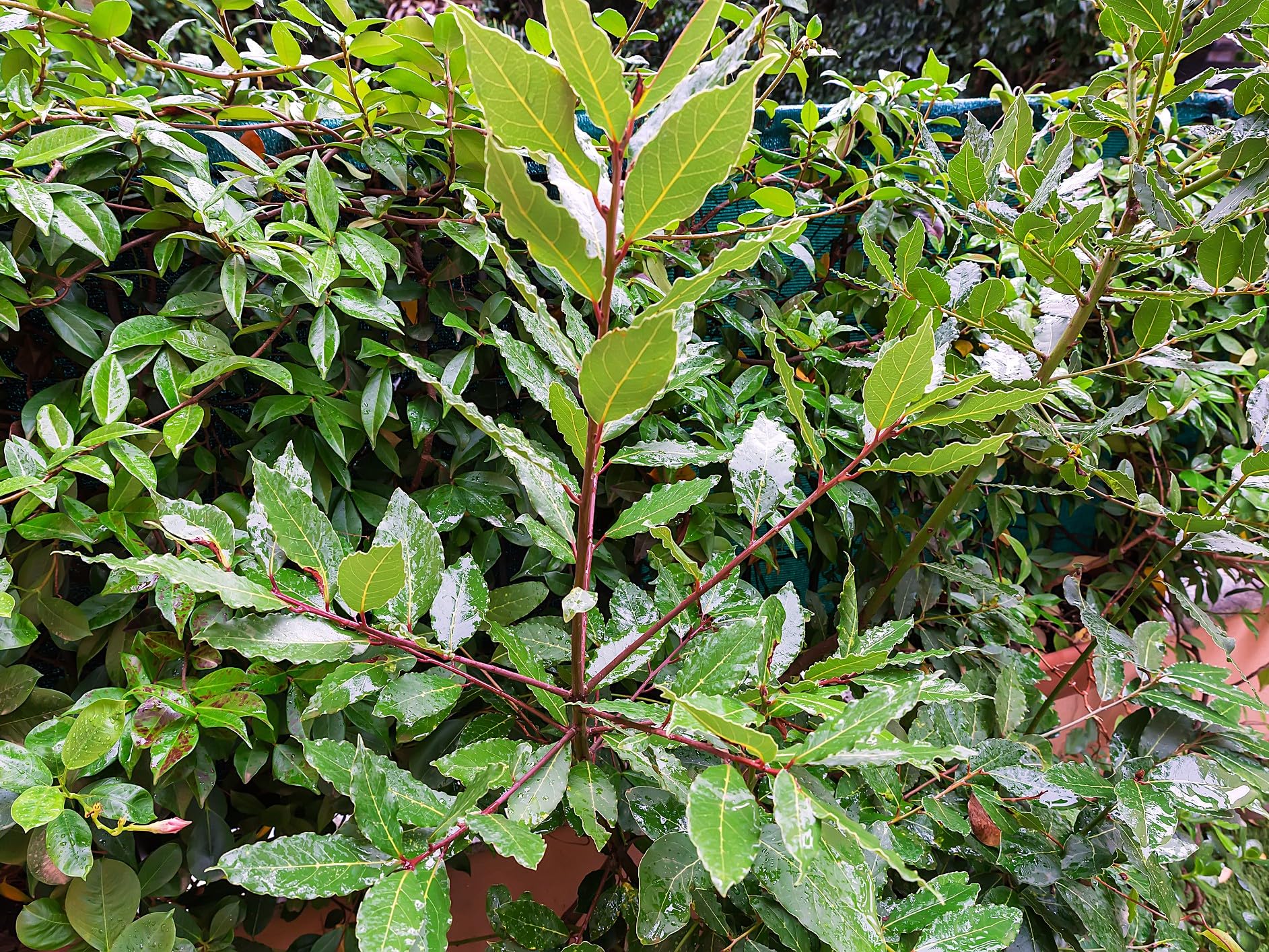
The container-grown patio tree that keeps going up — eventually to 15 feet.
Everything about this pick is built around a long game. The Laurus nobilis here is a slow-growing tree that reaches a mature height of 10 to 15 feet, and it wants fertile soil kept moderately moist. Its leaves carry the strongest flavor when dried, so a mature plant pays you back in the pantry; the listing positions it for seasoning, garnish, and pickling mixtures. Hardy outdoors only as far north as zone 8, it needs to come inside during fall and winter in colder regions, which is why a tub or container on the patio is the natural setup for it.
Shipping is where this one puts in real effort. Bare-root orders arrive inspected and bundled with roots coated in hydrating gel, then wrapped in moist paper and sealed to hold that moisture in. Potted plants are trimmed and watered, then sleeved in craft paper to protect the foliage and keep the soil where it belongs. It all ships in a fitted corrugated box stabilized with crunched craft paper and air pillows, and the brand backs the order with a guarantee window so you can flag a problem after delivery.
What to watch is consistent, and it is about size in both directions. Some plants land larger than expected and go straight into the ground healthy; others arrive very small, which is the most common complaint on this listing. The bright side is that a slow-growing tree you can keep in a container for years gives you time to work with whatever size shows up. Water it immediately, plant it as soon as you can, and it recovers from transit stress at its own pace.
The greenhouse standard: hydrating gel on the roots, moisture-sealed wrapping, and a sleeved pot show a level of packing care that genuinely protects the plant in a box.
A guarantee worth knowing: this listing carries a stated post-delivery guarantee window, which gives you a clear path if a plant arrives in rough shape.
Best for: a gardener who wants a container Bay Laurel that can grow into a patio tree over the long haul and supplies dried leaves for seasoning.
Not the one if: you need a big, full plant from the start — size on arrival varies, and several arrive quite small.
Understanding the Specs
Hardiness Zone
A hardiness zone is a number that tells you the coldest winter temperature a plant can survive in the ground. Bay laurel handles outdoor life best from zone 8 to zone 10, and some listings stretch the low end to zone 3 or 4 because the plant lives in a container you can move. If your area sits north of zone 8, plan on bringing the pot indoors for the cold months — that is a routine you keep, not a one-time decision.
Sunlight and Soil
Sunlight exposure tells you how much direct light the plant wants each day, and bay laurel tends to prefer full sun to partial shade. In practice that means a bright window indoors or an open patio spot outside. Soil matters too: these plants favor well-drained, loamy soil kept moderately moist, and they do not sit well in ground that stays soggy. A pot with drainage and a loose, fertile mix handles both needs at once.
FAQ
Can I keep a bay leaf plant in a pot forever?
What growing zone do I need for a bay leaf plant outdoors?
How tall will a bay leaf plant actually get?
Should I plant a small bay laurel start straight into the ground?
Do bay leaf plants need to come indoors in winter?
Why do fresh bay leaves taste stronger than dried ones?
Is a bay leaf plant the same as a bay laurel tree?
How much sun does a bay leaf plant need each day?
What should I do the moment my bay leaf plant arrives?
Final Thoughts: The Verdict
For most cooks, the strongest pick is the Daisy Ship Mediterranean Sweet Bay Laurel, because its standard variety carries a stronger flavor than the compact type while the biodegradable cup makes planting almost easy — and it holds the highest rating in this group at 4.6 stars across hundreds of ratings. If you want to fill a hedge or plant several at once, the four-plant Bay Laurel cube set gives you more starts and better odds through a rough shipping week. For a potted tree that can reach 15 feet over the years, the moisture-sealed Greenwood Nursery Bay Laurel is the long-haul choice. Whichever you pick, open the box the day it lands and get it into light and water — that first hour is the one you control.
How We Picked
We do not accept paid placement. Every pick is matched to a real buyer and a real use-case; we do not hands-on test units.
Sources & Methodology
Specifications: manufacturer listings and product documentation. Review insights: verified customer reviews, as of September 2026. Pricing: not shown on this page (it changes often); check the current price via the retailer link.
As an Amazon Associate, KitchPrep earns from qualifying purchases. This does not affect which products we feature.
Related Guides
