
Specs are compiled from manufacturer listings and verified buyer reviews and can change over time — please confirm the key details on the product page before buying.
That piercing low-battery chirp at 3 AM is the exact reason you are looking at a “batteryless” smoke alarm. This guide covers hardwired (AC-powered) smoke detectors that plug straight into your home’s electrical system, so they run on your house current instead of a disposable cell you have to change yearly. Many still include a backup battery for power outages, but the constant monitoring comes from your ceiling wiring, not a 9-volt you have to hunt down in a dark hallway.
I’m Mohammad Maruf — the founder and writer behind KitchPrep. This guide is built by comparing the manufacturers’ published specifications and the patterns across verified customer reviews, so you get each pick’s real strengths and trade-offs instead of marketing spin.
You will find picks here that run on your home’s 120V AC wiring, and some that also carry a backup battery for power outages. The right batteryless smoke alarm for you depends on three things: the sensor type (ionization for fast flames, photoelectric for smoldering), whether it can interconnect with other alarms, and how the backup battery is housed (replaceable or sealed).
Our Picks at a Glance

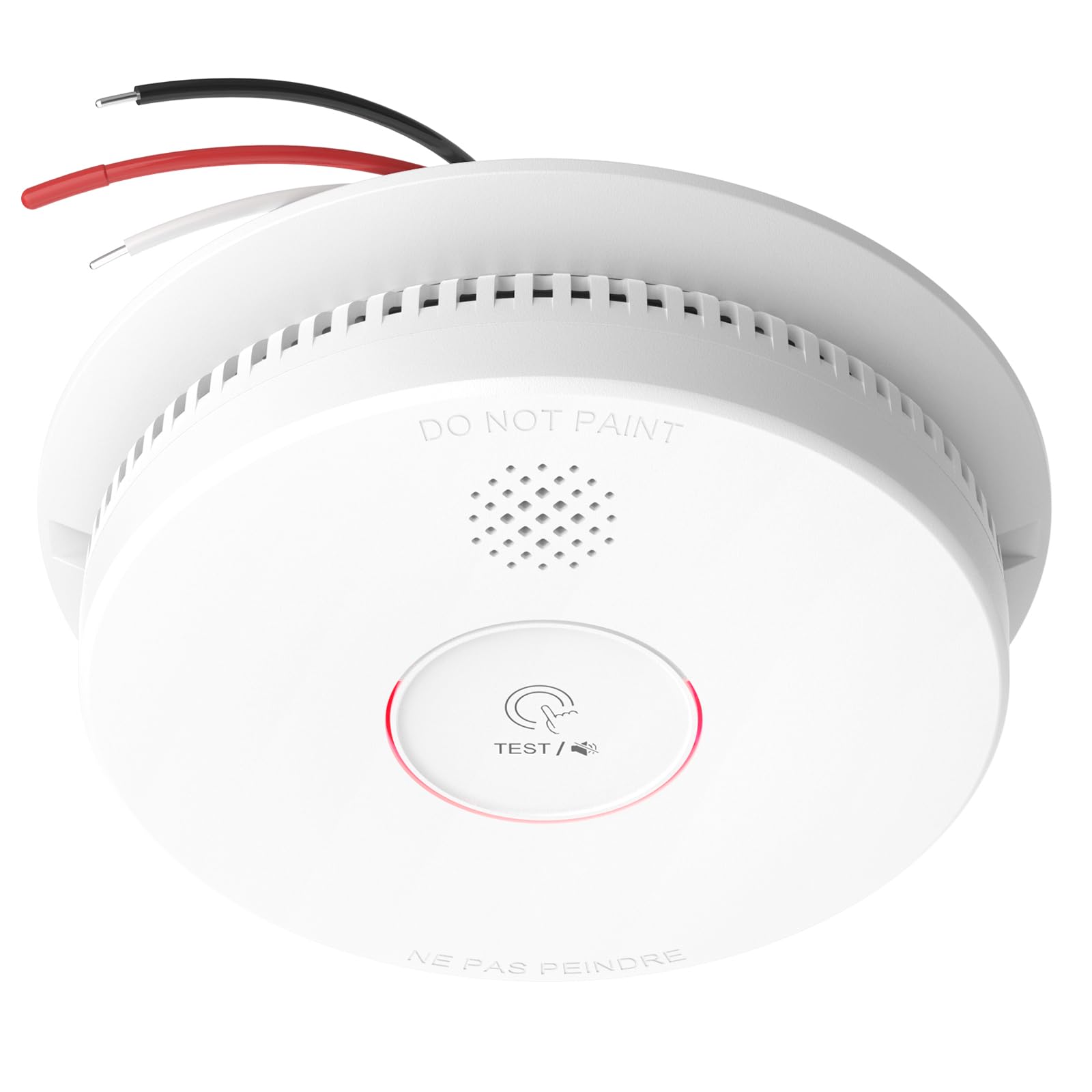

How To Choose The Best Batteryless Smoke Alarm
Buying the right hardwired smoke alarm means looking past the plastic casing to the sensor inside, the wires on the back, and how the backup power works. Your ceiling junction box already has the 120V AC power running to it — the detector you choose has to match that wiring and your home’s alarm network.
Sensor Type: What Fire Are You Protecting Against?
Ionization sensors react fastest to fast-flaming fires, while photoelectric sensors are better at catching slow, smoldering fires that produce lots of smoke before open flames. Some models combine both for broader coverage, but the trade-off is often a higher sticker price.
Interconnection: One Alarm or the Whole House
Interconnection is the feature that ties every unit together — when one detects smoke, the rest sound simultaneously so you hear the alarm from the basement while you sleep upstairs. Hardwired interconnect usually runs a red wire between units, but check whether the model uses that standard 3-wire setup or needs a special connector.
The Backup Battery Truth
Even a true “batteryless” unit stops working when the power goes out unless it has a backup. Some use a replaceable 9V or AA pack you swap annually, while higher-end units seal a 10-year lithium battery inside so you never touch it for a decade. The latter is the closest thing to a true set-and-forget alarm, but the battery is non-replaceable — when it dies, the whole unit gets replaced.
Quick Comparison
| Model | Best For | Sensor Type | Backup Battery | Alarm Loudness | Amazon |
|---|---|---|---|---|---|
| First Alert 9120BFF★ Best Overall | Direct replacement & value | Ionization | 9V (replaceable) | 85 dB | Amazon |
| Siterlink GS562AQuiet Kitchen Pick | Reduced false alarms | Photoelectric | 9V (replaceable) | 85 dB+ | Amazon |
| First Alert SMI105-ACMaintenance-Free | Zero battery swaps | Photoelectric | 10-yr sealed lithium | — | Amazon |
| Kidde 20SAR | Fast detection | — | 2x AA (replaceable) | 85 dB | Amazon |
| Kidde I12040 | Large interconnect system | Ionization | 9V (included) | — | Amazon |
| SITERWELL GS562A 5-pack | Whole-home coverage | Photoelectric | 9V (replaceable) | 85 dB+ | Amazon |
| First Alert SC9120B | Smoke + CO combo replacement | Ionization | 10-yr sealed lithium | 85 dB | Amazon |
| First Alert 9120BFF 12-pack | Big homes & contractors | Ionization | 9V (replaceable) | 85 dB | Amazon |
In-Depth Reviews
1. BRK First Alert 9120BFF/ SMI100-AC
Our pick — over 4.5★ from 19,000+ verified ratings; the strongest balance of quality and price.
The undisputed crowd favorite for replacing tired old wired units, plug-and-play simple.
If your ceiling already has a BRK or First Alert connector, this alarm is a direct swap. Owners repeatedly describe pulling the old unit off, plugging this one into the existing 120V AC wiring, and twisting it back on — many note it took under 20 minutes and needed “No ceiling work needed.” The ionization sensor inside is built to catch fast-flaming fires first., and the 85-decibel alarm is loud enough to be heard across a typical floor.
Reliability here is the headline — the sort of track record that made this the most-discussed pick in the category. What wins people over is how it simply works year after year; owners talk about retiring 25- and 35-year-old detectors for these and getting solid green LED confirmation. It uses a replaceable 9V backup battery for power outages, and the unit itself is backed by a 10-year limited warranty.
The honest caveat: battery life reports are mixed, with some units arriving with a fresh 9V while others report dead cells, so pop a known-good battery in at install. It is not a carbon monoxide detector — if you need CO sensing, this model is not it; check the combination units further down.
reliable wired duo
- Direct fit into existing First Alert/BRK brackets and connectors
- Install takes most owners under 20 minutes
- Loud 85 dB alarm with a subtle solid green power LED
- Interconnects with compatible BRK and First Alert units
battery door fuss
- Some units arrive with a dead 9V backup — test at install
- Ionization sensor is not aimed at smoldering fires
- Not a CO detector
best for: homeowners replacing an aging First Alert or BRK unit who want the most proven, easiest swap available.
think twice if: you need smoke plus carbon monoxide detection in one device.
2. Siterlink GS562A
A photoelectric alarm that ignores burnt toast and nails smoldering fires instead.
If your current detector screams every time you sear a steak, this one’s photoelectric sensor is the fix — it is designed to read the actual environment and cut out nuisance alarms from cooking. It runs on your 120V hardwired circuit with a 9V backup, and its advanced sensing is tuned for the slow, smoky fires that ionization units often miss. The build quality is what owners compliment most, especially as a 10-year replacement.
The one-touch silence mode is a standout — it mutes the alarm for up to 10 hours, so a late-night cooking mishap does not wake the whole house. Interconnecting is straightforward: when one sounds, they all do, which owners confirmed by swapping out 20+ year old wired units and linking every level in under an hour.
Fair warning: reliability draws the most comments overall, and the verdict is mixed. Most units perform flawlessly, but a small number of buyers report chirping after about a month and blame the included backup battery. Their advice: swap in a fresh name-brand 9V from day one.
budget battery pick: genuinely well-built for the money, with the anti-false-alarm sensor being the most praised feature.
limited smart links: superb for kitchens and hallways near cooking — just budget for a quality 9V battery immediately.
3. First Alert SMI105-AC
The closest thing to a true battery-free alarm, with a sealed 10-year lithium cell inside.
This is the alarm for anyone tired of ladder duty. Instead of a replaceable 9V, it packs a sealed 10-year lithium battery, so there is no annual swap and no battery door to fiddle with — as one happy owner put it, “I am getting to old to climb up on a ladder to change a battery.” It runs on your 120V AC wiring and uses First Alert’s Precision Detection (a sensor design meant to reduce false alarms from cooking) to cut down on kitchen nuisance alarms.
The photoelectric sensor (which detects smoke particles from slow, smoldering fires) excels at smoldering fires, and the unit interconnects with compatible First Alert alarms so the whole house sounds together. An alarm indicator light on the face tells you which unit actually triggered, a real timesaver in a multi-room system. Buyers consistently call it a good value for the 10-year low-maintenance window.
The catch is the same one that makes it convenient: that 10-year battery is non-replaceable. An end-of-life warning will eventually tell you to swap the whole unit, and durability feedback is mixed — several owners mention theirs still going strong, but the full decade is not guaranteed, especially in areas with frequent power flickers.
perfect for: anyone who wants to forget their smoke alarm exists for a full decade.
consider first: if you have frequent outages, since the sealed battery’s long-term health is the one open question.
4. Kidde 20SAR
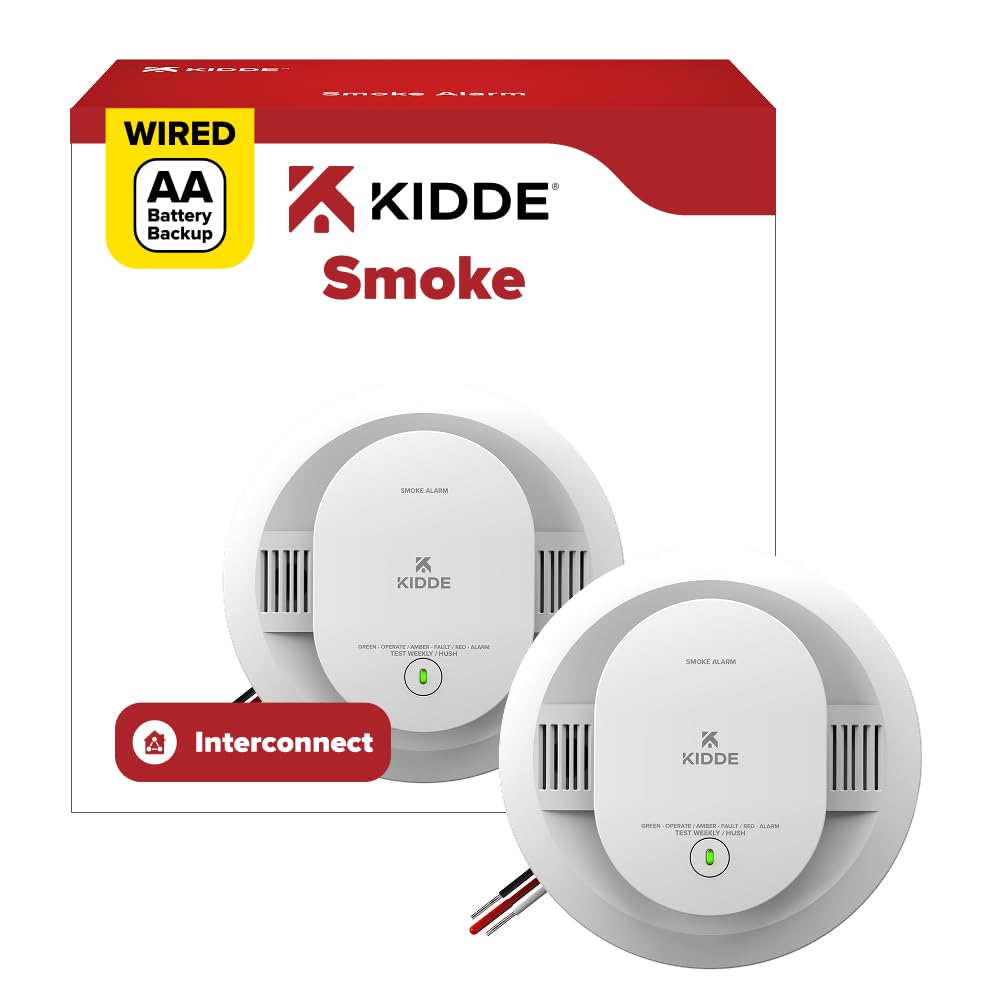
A loud 85-decibel alarm that detects smoke over 25% faster than standard units.
Kidde’s 20SAR leads with speed, claiming smoke detection over 25% faster than standard units., and the 85-decibel siren comes with a red LED that flashes for a clear visual cue alongside the noise. It hardwires to your 120V AC and keeps two AA batteries as backup, so a power cut does not leave you unprotected — and AA cells are far easier to find in a pinch than a specialty 9V.
Owners who replaced a dozen aging units at once raved about the install, noting the base is slightly larger than older models so it covers old mounting holes without touch-up painting. It meets UL 217 10th Edition and FCC standards for code compliance., which makes it a safe bet for code compliance. The interconnect feature links with other Kidde alarms, so the whole network sounds when one trips.
The honest concern, sized correctly: reliability draws genuinely mixed feedback. Most units hum along, but a small number of customers note a unit failing within the first year or triggering false alarms from dust — a quick blow-out with compressed air fixed one owner’s oversensitive unit. It is priced a touch higher than comparable First Alert models, but the detection speed is the differentiator.
pick it if: split-second detection speed and easy AA batteries matter more than the lowest price.
skip it if: you are on a strict budget — the First Alert above does the job for less.
5. Kidde I12040
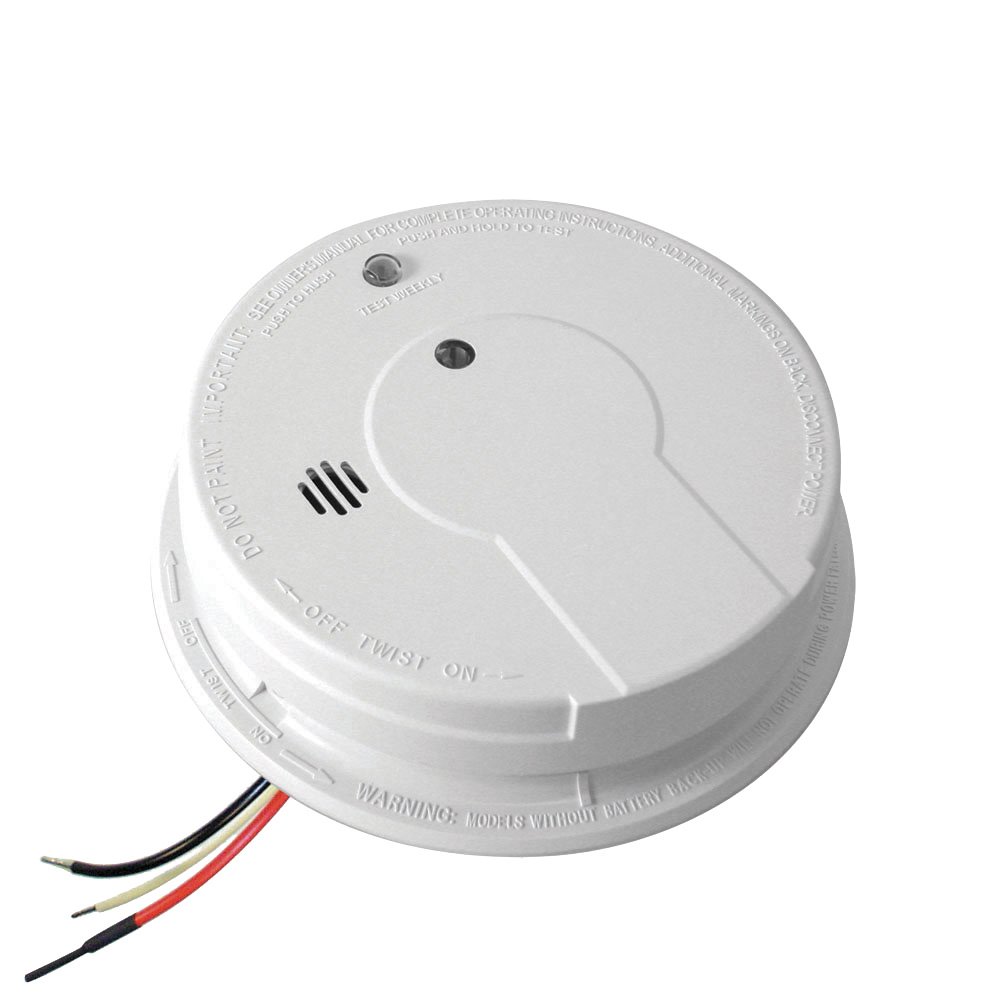
The network hub for large homes, linking up to 24 smoke, CO, and heat devices.
This is the alarm for a big house or a serious multi-unit setup. The I12040 interconnects up to 24 Kidde devices — 18 of which can be initiating alarms — so a fire in the garage workshop sets off every floor simultaneously. The 9V backup is included, and the front battery pull-tab lets you activate the backup without pulling the unit off its bracket, which installers will appreciate.
Setup is clearly its strongest suit, with owners highlighting the pre-stripped wiring harness that needs no stripper tool and a large base that covers imperfections in older paint. It also includes a tamper-resistant locking feature and alarm memory — a flashing red LED that marks which unit started the chain, so you do not have to guess which room had the problem.
The fair trade-off: while installation draws the most praise, battery and durability reports are split — some units last a full year or more, while others have died within 8 months. A Kidde adapter comes in the box to bridge newer connector styles to older wiring, but note the mounting bracket is not an exact fit for some older Kidde 1275 bases, so plan for a quick bracket swap.
reach for this if: you are building out a whole-home Kidde network across 20+ devices.
look elsewhere if: you just need one simple replacement — the single-unit First Alert is simpler.
6. SITERWELL GS562A (5-Pack)
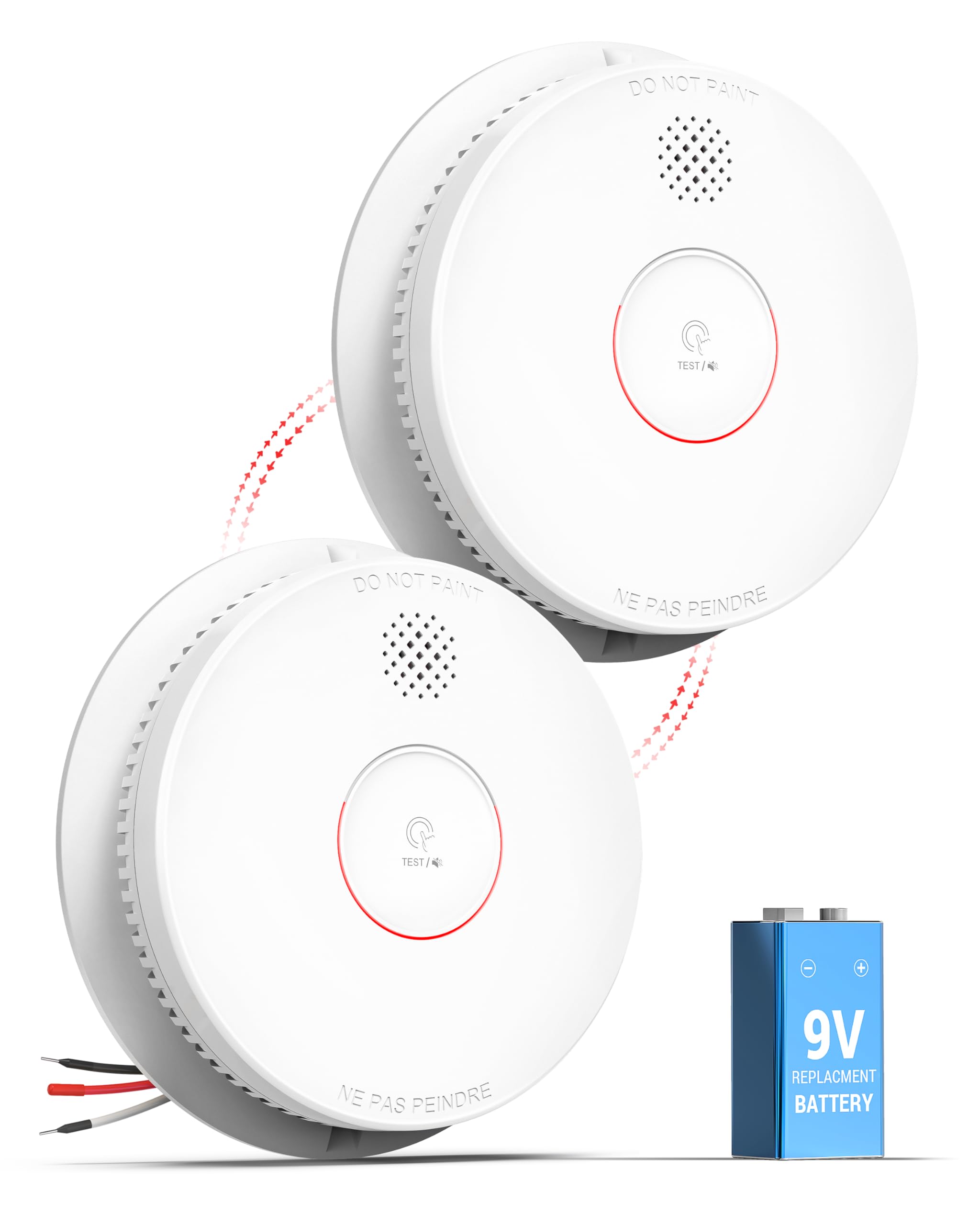
Five photoelectric alarms in one box to cover an entire floor plan at once.
Rectifying a whole home usually means five separate purchases. This 5-pack arrives as one order — each unit hardwires to 120V AC, links up to 12 alarms together, and carries a 9V backup battery in the box. When one senses smoke, the rest sound at over 85 decibels, and the photoelectric sensor is tuned to catch smoldering fires while ignoring common cooking smoke.
Owners were pleasantly shocked at how painless a linked install was — matching black, white, and red wires, mounting to a standard junction box, and locking the unit on. The slim profile drew compliments for looking “like the future” compared with bulkier old units, and the green power LED stays lit while red flashes every 40 seconds in normal operation. A Do Not Disturb mode mutes low-voltage or fault chirps for about 10 hours so a glitch does not ruin your night.
One serious flag to weigh: a few reviewers point out these are not UL certified despite claims, which caused failed home-sale inspections and forced a full replacement with certified units. If your local code or real estate transaction demands UL-listed hardware, confirm certification before committing to this multi-pack.
ideal for: outfitting multiple bedrooms on a budget in one fell swoop.
worth noting: whether your area requires strict UL certification, since inspection failures have been reported.
7. First Alert SC9120B

The plug-and-play combo alarm that replaces its own aging predecessor in minutes.
For anyone whose old SC9120B has reached end-of-life — the telltale relentless beeping — this is the exact-match successor. The convenience adapter plugs mean you are not touching wire nuts: owners describe simply unplugging the old unit, plugging this one into the same wiring harness, and twisting it into place, with one noting it was “connected and functioning in minutes.” It bundles smoke detection with an electrochemical CO sensor (which detects carbon monoxide gas) and runs on your 120V AC with a sealed 10-year lithium backup.
Quality is the most-cited strength, and the intelligent smoke sensing reduces nuisance alarms while indicator lights on the face show exactly which hazard triggered. The 85-decibel siren is clear and loud, and the locked battery drawer means no one can tamper with the 10-year cell. A single test/silence button keeps operation dead simple.
The value proposition gets mixed reviews — it is priced at a premium for a combo unit, and some owners find it pricey for what it delivers. The included adapter cables also drew a few negative mentions, so test your fit early. But for a like-for-like swap of a failing SC9120B, it is the lowest-friction path to a working alarm again.
buy it for: a direct, no-rewire replacement of a failed SC9120B with 10 years of sealed battery life.
hold off if: the higher price tag is the main friction point for buyers comparing against generic combos.
8. First Alert 9120BFF (12-Pack)

A dozen identical ionization alarms for a full rewire or a contractor’s job box.
There is a singularity to replacing every smoke detector in a large home: matching the same model across every room. This 12-pack solves that with the exact same BRK 9120B unit that tops this list, each with an ionization sensor, 85-decibel alarm, and 9V battery included in the box. The batteries ship with the units, which owners appreciated as a genuine value-add compared with buying cells separately.
Installation is the most-praised aspect, and it mirrors the single-pack experience: plug-in connectors mean you twist off the old base, unplug, click in the new unit, and twist it back — frequently without replacing the ceiling bracket at all. Owners who tackled a full 12-unit swap reported every alarm working and linking with existing First Alert interconnect wiring. Some even swapped the included 9Vs for lithium cells right away to stretch the maintenance window.
Honesty requires the same caveat as its single sibling: reliability scores highest in mention counts but the verdict is mixed. Most units are flawless, but a small share of shoppers say chirping after a couple of days and blame the bundled batteries — the consistent advice is to replace the included cell with a fresh brand-name 9V at install. The value is undeniable for volume, though it only makes sense if you genuinely need a dozen units.
best for: a whole-home or multi-property replacement where identical units across every ceiling matter.
think twice if: you need five or fewer — the per-unit cost is better spent on individual mid-range picks.
Understanding the Specs
Ionization vs Photoelectric Sensors
These are the two ways a smoke alarm “sees” a fire. Ionization sensors use a tiny amount of radioactive material to detect the invisible particles from fast-flaming fires. — the kind that start with a grease flare-up or paper catching light. Photoelectric sensors use a light beam to detect the larger visible smoke particles from smoldering fires., like a couch slowly burning or an electrical wire overheating. Neither is “better” — they catch different fire stages. Many modern homes use photoelectric units near kitchens to avoid nuisance alarms, and ionization units in bedrooms and hallways for speed.
Interconnection and the Red Wire
Interconnection is what turns scattered alarms into a single warning system. When one unit detects smoke, it sends a signal down a third red wire to every other interconnected alarm, and they all sound at once. This matters most at night — a fire starting in the basement will wake you in a second-floor bedroom. Some units, like the Kidde I12040, interconnect up to 24 devices including CO and heat alarms. Before buying, check whether your existing wiring has that red interconnect line, or you will only get single-unit coverage.
FAQ
What exactly does “batteryless” mean for a smoke alarm?
Will a hardwired alarm work when the power goes out?
Is an ionization or photoelectric sensor better for my home?
Can I install a hardwired smoke alarm myself?
What does “interconnected” mean and do I need it?
How long does a hardwired smoke alarm last before replacement?
What is the 10-year sealed lithium battery in some models?
Can I mix a smoke-only alarm with a smoke and CO combination unit?
Why does my hardwired alarm chirp with a fresh battery installed?
What does the UL certification on a smoke alarm mean?
Final Thoughts: The Verdict
The crowd favorite for a straight hardwired swap is the First Alert 9120BFF — it is the most-proven, easiest replacement in the category, and its thousands of owner experiences give it a reliability edge that is hard to argue with. If you want zero battery maintenance for a decade, the First Alert SMI105-AC with its sealed 10-year lithium cell is the one to grab. And for whole-home coverage in a single order, the SITERWELL 5-pack outfits multiple rooms on a budget — just confirm UL certification first if your local inspection demands it.
How We Picked
We do not accept paid placement. Every pick is matched to a real buyer and a real use-case; we do not hands-on test units.
Sources & Methodology
Specifications: manufacturer listings and product documentation. Review insights: verified customer reviews, as of September 2026. Pricing: not shown on this page (it changes often); check the current price via the retailer link.
As an Amazon Associate, KitchPrep earns from qualifying purchases. This does not affect which products we feature.
Related Guides
