
Specs are compiled from manufacturer listings and verified buyer reviews and can change over time — please confirm the key details on the product page before buying.
You want a solar panel kit that actually stores the sun’s energy in a battery, not just a panel that sits in the yard. The real question is how much stored power you need, how fast the kit can refill, and whether the battery chemistry will still be working in five years. This guide sorts through nine battery solar panel kits that run from compact phone-charging stations up to whole-house backup units, so you can match the right capacity to your actual life.
I’m Mohammad Maruf — the founder and writer behind KitchPrep. This guide is built by comparing the manufacturers’ published specifications and the patterns across verified customer reviews, so you get each pick’s real strengths and trade-offs instead of marketing spin.
From a 192Wh travel companion to a 3600Wh home fortress, here are the battery solar panel kits worth your money and which one fits your power needs.
Our Picks at a Glance

How To Choose The Best Battery Solar Panel Kit
Every kit in this list pairs solar panels with a battery, but they serve wildly different jobs. A 192Wh station is great for weekend camping; a 3072Wh unit can run a fridge for days. Start by listing what you must power and for how long, then work backward to the battery size.
Match capacity to your real loads
Battery capacity is measured in watt-hours (Wh) — the total energy stored. A 1024Wh station runs a 100W appliance for about 10 hours, while a 2048Wh station runs the same appliance for about 20 hours. For phones and laptops, even small stations work fine; for fridges and CPAP machines, go bigger.
Check the solar input wattage
The solar panel’s wattage dictates recharge speed, but only when the sun cooperates. A 60W panel can take about 4 hours to top up a small station, while a 400W panel can fully refill a large station in 6-8 hours of good sun. Cloudy days stretch those numbers considerably.
Prioritize LiFePO4 battery chemistry
Lithium iron phosphate (LiFePO4) batteries last far longer than standard lithium-ion and are the safer choice. Most kits here use LiFePO4 cells rated for thousands of charge cycles, which translates to roughly a decade of daily use before noticeable degradation.
Quick Comparison
| Model | Best For | Battery Capacity | AC Output | Solar Panel | Amazon |
|---|---|---|---|---|---|
| Anker SOLIX C200 DC★ Best Overall | Camping & phone charging | 192Wh | — | 60W | Amazon |
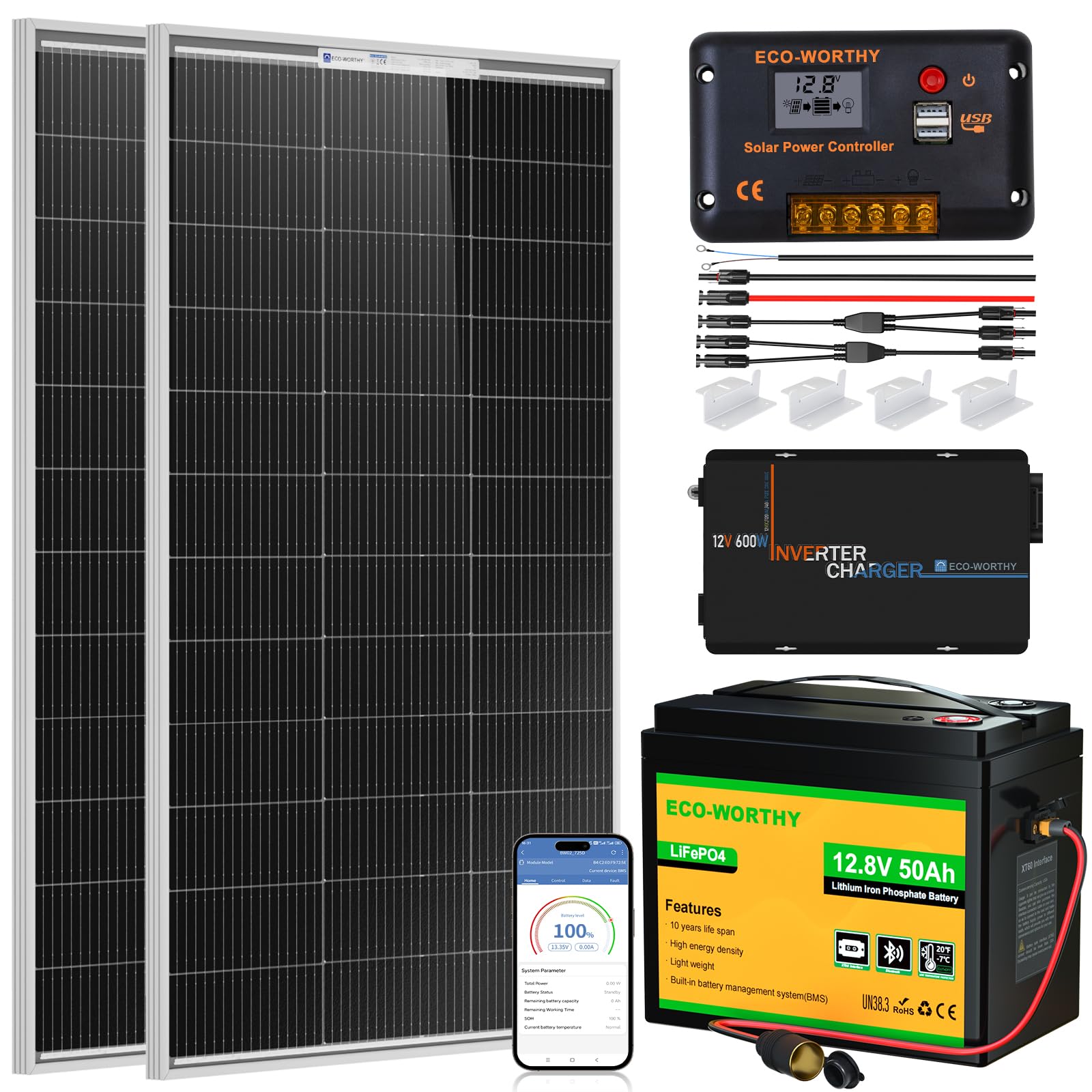
| ECO-WORTHY 200W 12VBest Value | RV & cabin setups | 12V 50Ah | 600W | 2×100W | Amazon |
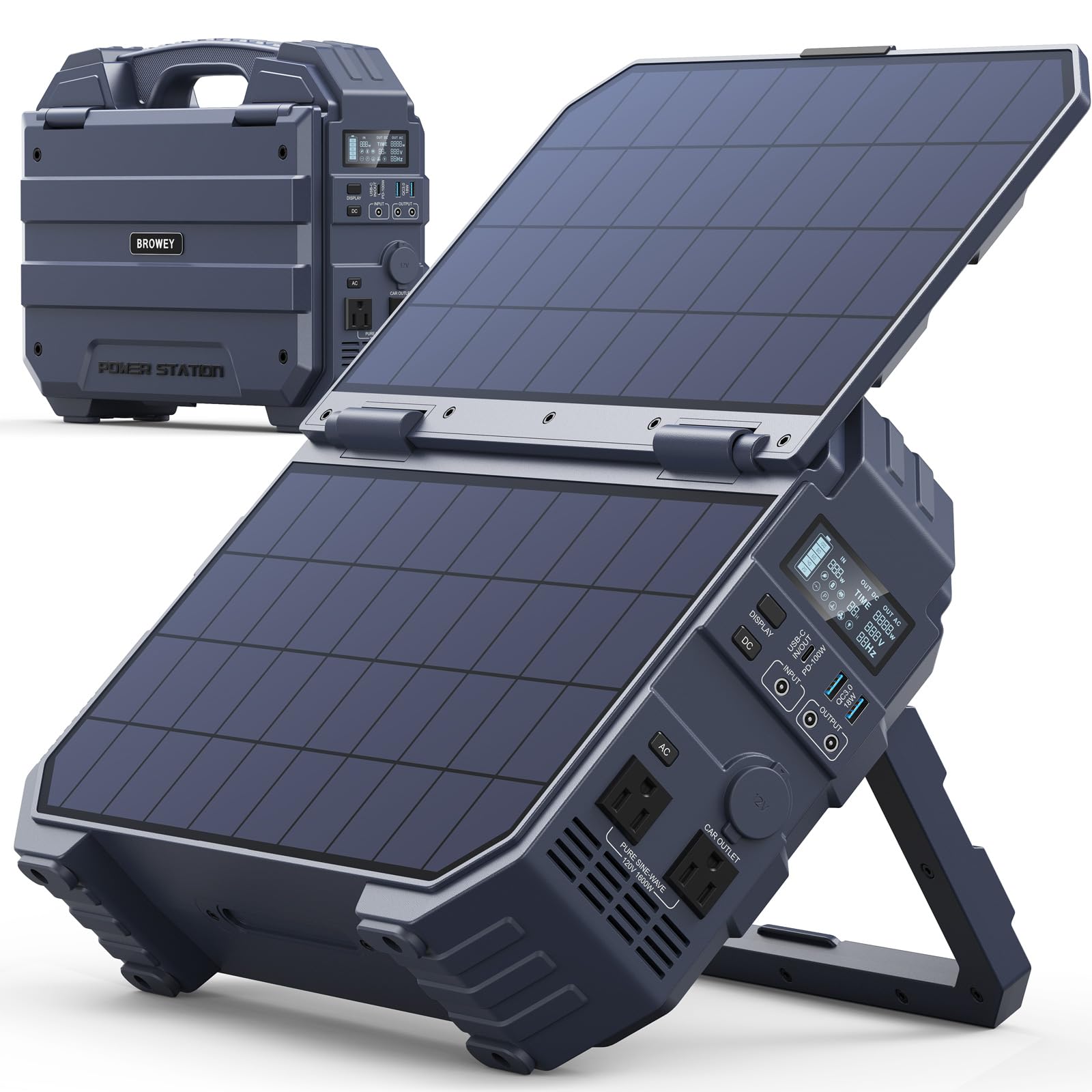
| BROWEY 1600WTop Performer | Fridge & CPAP backup | 1024Wh | 1600W | Built-in 40W | Amazon |
| EF ECOFLOW DELTA 3 Classic | Off-grid essentials | 1024Wh | 1800W | 220W | Amazon |
| EF ECOFLOW DELTA 3 MAX | Large appliances | 2048Wh | 2400W | 220W | Amazon |
| Jackery Explorer 2000 v2 | Home backup & camping | 2042Wh | 2200W | 2×200W | Amazon |
| ALLWEI 2400W | Expandable RV power | 2048Wh | 2400W | 400W | Amazon |
| Jackery HomePower 3000 | Whole-home essentials | 3072Wh | 3600W | 2×200W | Amazon |
| EF ECOFLOW DELTA Pro | Serious home backup | 3600Wh | 3600W | 400W | Amazon |
In‑Depth Reviews
1. Anker SOLIX C200 DC Portable Power Station and 60W Solar Panel
Our pick — over 4.5★ from 200+ verified ratings; the strongest balance of quality and price.
The compact trail buddy that keeps phones, drones, and even a Starlink mini humming off-grid.
This is the kit for the person who lives out of a backpack but refuses to give up their gadgets. The 192Wh battery pushes 200W of power through five ports, including a 140W USB-C fast-charge port that tops up laptops and drones quickly. It weighs just 1.9 kg and is 39% smaller than similar power stations, which is the difference between bringing it along and leaving it at home.
The 60W solar panel refills the battery in about 4 hours of full sun — buyers report exactly that, then using the stored power to charge 4 phones and other devices for two days before needing a recharge. One owner ran a Starlink mini for about 5-6 hours on a single charge, with the battery drawing 22-25W while the panel delivered 54W input, keeping the station topped up all day. Unlike the bigger ECO-WORTHY kit below, this one is purely DC output, so you won’t plug a heavy AC appliance into it — but you won’t want to, given how portable it is.
This is the crowd favorite — 4.7 stars across 230+ ratings — and what wins people over is battery life above all, with performance and charging speed close behind. The trade-off: it’s not compatible with Anker’s PS30, PS200, or PS400 panels, so you’re locked into the included 60W unit unless you buy the right accessory. For camping, road trips, and overnight outages, the Anker SOLIX C200 DC with its 60W solar panel delivers exactly what it promises.
Verdict: The best-balanced battery solar panel kit for portability and daily device charging, beating bigger units on size and convenience.
Reach for this if: You want a grab-and-go solar battery kit for camping, travel, or charging phones and laptops during outages.
Look elsewhere if: You need to run AC appliances, fridges, or power tools — this is a DC-only station.
2. ECO-WORTHY 200 Watt 12V Complete Solar Panel Starter Kit
A true starter kit that builds a permanent 12V system for your RV, shed, or cabin from the ground up.
This kit is the DIY answer for fixed installations — it’s not a portable station you toss in the trunk. It bundles two 100W N-Type monocrystalline panels (25% efficiency with up to 15% extra output from the dual-sided design) with a 12V 50Ah LiFePO4 battery, a 600W pure sine wave inverter, and a 30A charger with a 20ms UPS auto-switch. That’s everything needed to wire up a camper, boat, or outbuilding.
Owners mention it “works great in summer” powering LED lights, chargers, a vent, and a mini fridge on DC with batteries that never drain. In winter, though, the same owners note it’s marginal — needing a full charge and lasting only a weekend, not for full-time van living unless you see lots of sun. One owner installed everything in about 3 hours on a shed, praising the easy wiring and the useful 12V DC light hookup on the controller.
The system is rated for about 800Wh of daily output, and the 50Ah battery can be recharged 4000~15000 times in deep cycles — more than 10 times the lifespan of lead-acid batteries. The honest caveat from the review pages: reliability is a mixed bag, with a few units having controller issues and some owners finding the customer service slow. As a modular, expandable entry into solar with real battery storage, it’s tough to top for the price.
Smart pick: A complete fixed 12V system with battery and inverter for under worth of capability, ideal for beginners.
Best for: RV owners and cabin dwellers who want a permanent solar setup with battery backup.
Think twice if: You want a portable, plug-and-play station — this requires wiring and installation.
3. BROWEY 1600W Portable Power Station with Built-in Solar Panel
A 1024Wh station with solar panels built right into the lid, so the sun starts working the moment you unpack it.
The BROWEY S1600 is the rare design that folds solar collection into the unit itself — no separate panel to set up. It packs 1024Wh of LiFePO4 capacity with a 1600W (3200W peak) pure sine wave inverter, plus a built-in MPPT controller for faster solar charging. Customers note it handles around 5-700 watts without powering off, which covers a fridge, CPAP machine, tools, and more through 8 ports including a 100W USB-C PD.
One buyer during hurricane season called it “just what we needed,” charging fast via wall or solar and running all devices for a week. Another powers a refrigerator, washing machine, and window AC simultaneously. The built-in solar panel charges at up to 40W, and it can also connect to external panels to boost input. What wins people over is quality and reliability above all, though charging speed gets mixed feedback — 80% recharge takes about 3 hours via AC plus the 100W PD port together.
Weighing 26.5 pounds, it’s not a one-hand carry like the Anker C200, but it’s far more capable. The LiFePO4 cells are rated for 10+ years (3000+ cycles to 80% capacity) with an advanced BMS guarding against overvoltage, overheating, and short circuits. For emergencies, camping, and off-grid living where you want a genuinely powerful station that still wheels along reasonably, this is a standout.
Why owners love it
- Powers a fridge, CPAP, tools, and small appliances
- Solid LiFePO4 longevity with 3000+ cycles
- Built-in solar panel means fewer cables to manage
Owners’ honest gripes
- Built-in solar is just 40W, so full-sun top-ups are slow
- User manual is thin on shutdown instructions
- Heavy enough to need two hands
Pick this if: You want one self-contained solar generator for home backup and camping without juggling separate panels.
skip it if: You need fast solar recharging — the built-in 40W panel is slow compared to external 220W setups.
4. EF ECOFLOW Solar Generator Delta 3 Classic with 220W Solar Panel
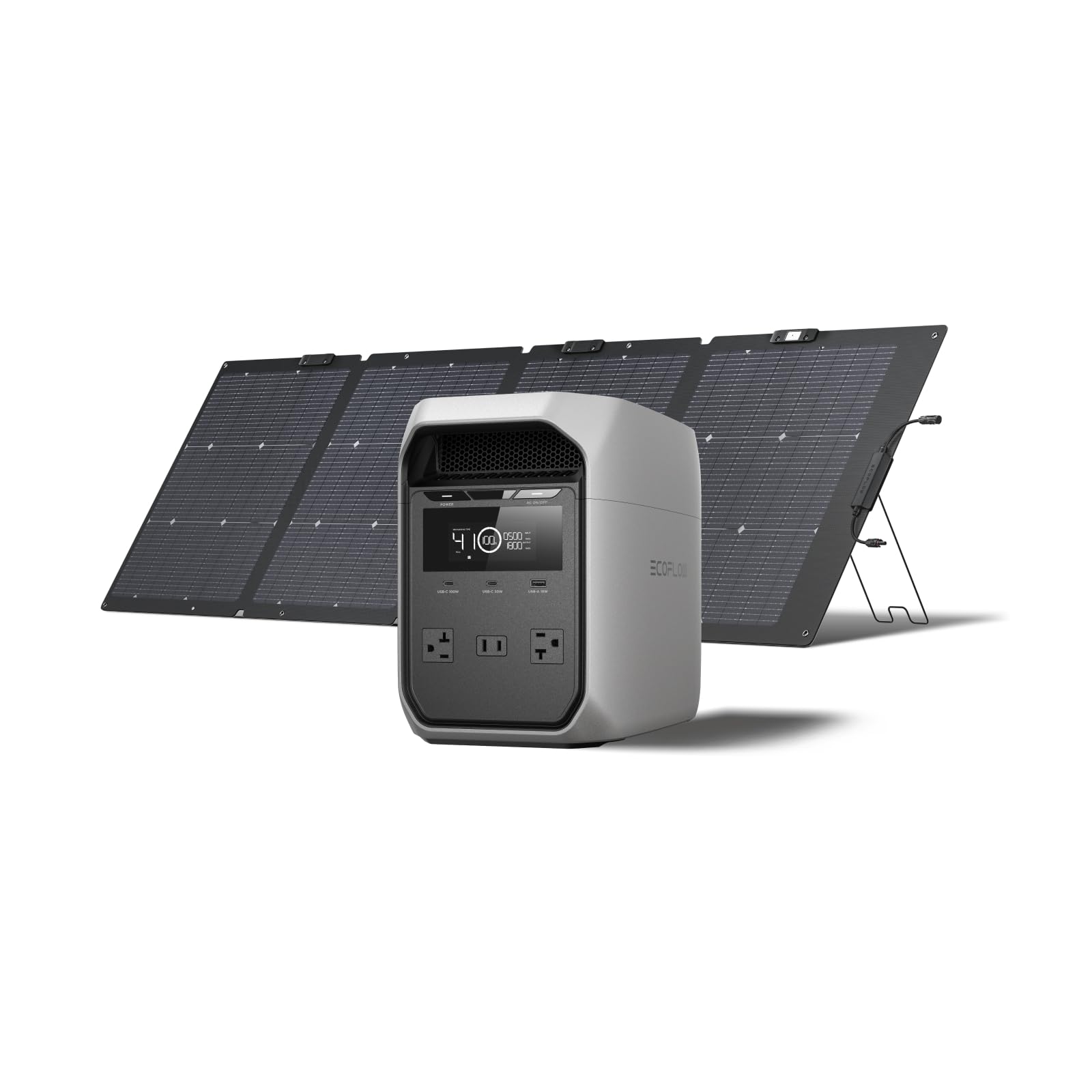
The sweet-spot 1kWh station that recharges so fast, you’ll forget it was ever empty.
EcoFlow’s Delta 3 Classic pairs a 1024Wh LiFePO4 battery with a beefy 1800W output (3600W surge) and X-Boost technology that can push up to 2600W for heavier loads. The included 220W bifacial solar panel has a high energy conversion rate of up to 25% thanks to N-Type cells, and it delivered 190-200W even in shade during owner testing. Solar recharge takes about 5.8 hours in full sun — numbers that beat the BROWEY’s built-in panel by a wide margin.
What shocks owners is the wall charging: 0-80% in just 45 minutes with X-Stream AC charging. One buyer at a lake picnic ran two slow cookers and a drip coffee pot while charging phones for 3.5 hours without any power loss, and carried the unit a quarter mile without strain. Another reported getting about 55% charge in a few hours from the solar panel while simultaneously charging phones and tablets — the unit charges devices at the same time it collects sunlight.
The premium-grade build earns the most praise, with reliability close behind, and the <10ms UPS switch protects sensitive electronics like PCs and medical devices during outages. Value for money gets mixed reviews — it’s pricier than the BROWEY for the same 1024Wh capacity — but you’re paying for EcoFlow’s 5-year warranty, app with WiFi control, and a far better solar panel. The battery is rated for 10+ years of daily use with an EV-grade CTC design.
Balanced take: Faster charging than the BROWEY and a better solar panel, but you pay for the brand and the app ecosystem.
Choose this for: Off-grid living and emergency backup where 45-minute wall refills and a quality 220W solar panel matter.
Not for: Budget buyers — the BROWEY delivers similar capacity for less, just with slower solar.
5. EF ECOFLOW DELTA 3 MAX Portable Power Station with 220W Solar Panel
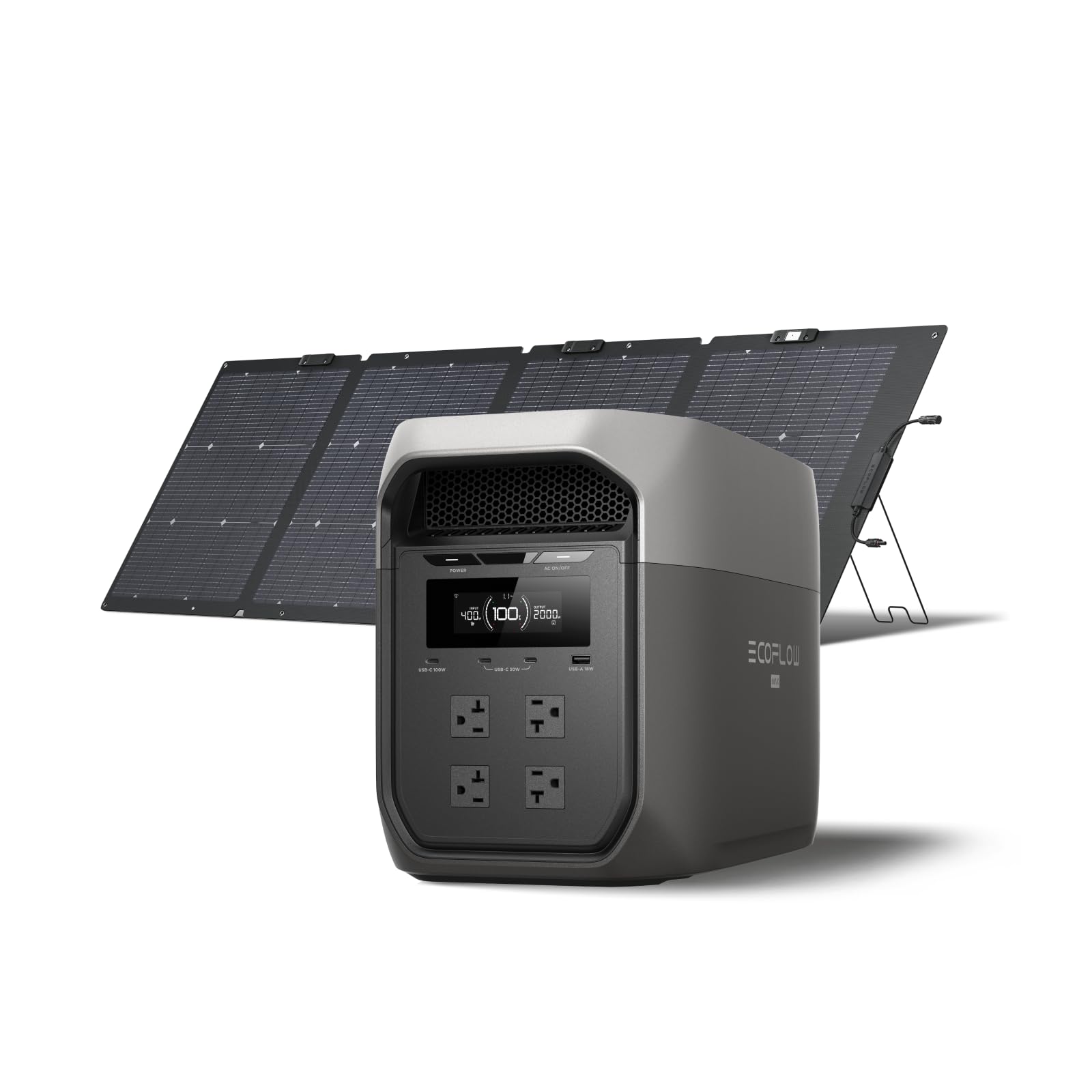
Double the capacity of the Classic, with 33% more power, all in a frame built to last a decade.
This is the step-up for anyone who found the Classic’s 1024Wh too small. The DELTA 3 MAX doubles capacity to 2048Wh and boosts continuous output to 2400W (4800W peak), with X-Boost extending to 3400W for heavy hitters like fridges, microwaves, and power tools. The 220W bifacial solar panel is foldable and efficient, though owners note the rear side needs a reflective surface to hit its 155-175W backside output, and bending it beyond 30° risks damage.
The headline feature is speed: 0-80% charge in just over an hour via X-Stream technology, with a full charge in about 80 minutes. That’s the difference between prepping for a blackout on short notice and being caught powerless. One owner runs a 28-cubic-foot fridge for about 22 hours on a full charge, and another prefers it over a loud gas generator for Florida storm backup. The <10ms transfer time keeps sensitive electronics safe, and its ultra-quiet operation means nights stay peaceful.
Quality is what owners praise most, with performance close behind, and the LiFePO4 battery is rated for 10 years of daily use with a 5-year service plan. The catch: battery life gets mixed feedback — while one owner gets 22 hours from a big fridge, another saw a full drain in under 1.5 hours under heavy load, so real runtime depends entirely on what you plug in. It’s lighter than the older Delta 2 Max, making it easier to shuttle from home to RV, and the app-based smart control lets you monitor energy use in real time.
The upgrades that matter
- 2048Wh runs a full-size fridge about 22 hours
- 0-80% recharge in just over an hour
- 3400W X-Boost handles power tools and microwaves
Real trade-offs
- Bifacial solar panel needs a reflective surface for max rear output
- No expandable battery on this model
- Heavy enough that you’ll plan your carries
Buy this for: Home backup and RV trips where you need double the runtime of a 1kWh station.
Consider the Classic instead if: You rarely need more than 1000Wh and want to save significantly.
6. Jackery Explorer 2000 v2 and 2x200W Solar Panels
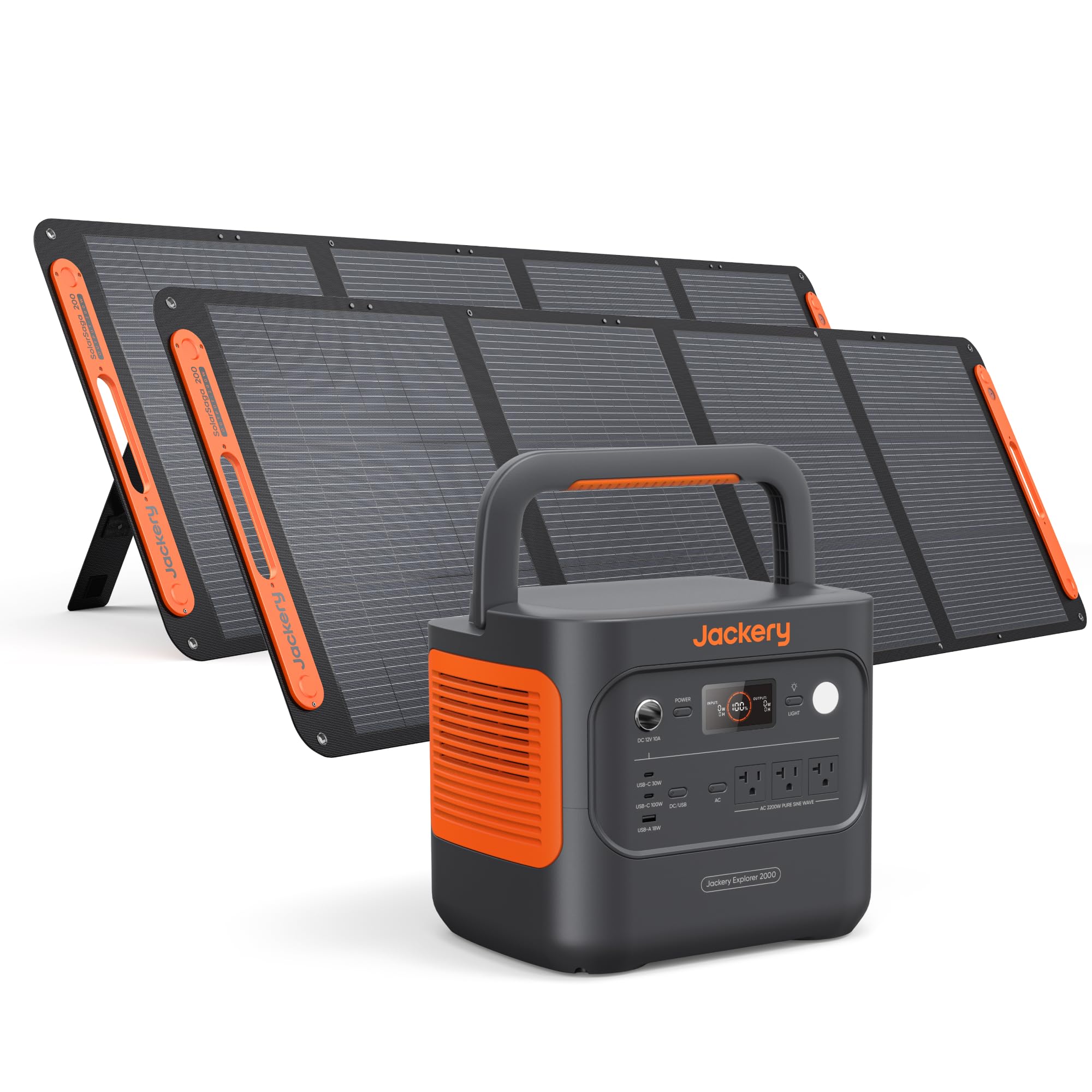
The smallest, lightest 2kWh station around, with two 200W panels that top it up in about 6 hours of sun.
Jackery’s 2000 v2 is an engineering statement: at 39.5 lbs it’s 41% lighter and 34% smaller than conventional 2kWh LiFePO4 stations, thanks to CTB (Cell-to-Body) technology borrowed from electric vehicles. The 2042Wh battery pushes 2200W through 3 AC ports plus a USB-C PD 100W port that fast-charges phones and laptops without extra adapters. The two included 200W SolarSaga panels deliver a full charge in about 6 hours of good sun.
Owners highlight the quick charging and ease of use above all. Another ran a window AC for 3.5 hours (100% to 45%) and solar-charged back to 60% in 1.5 hours. For storm backup, it’s a favorite over gas generators — silent, fume-free, and it powered a CPAP machine for 4-6 hours per night for one owner.
The 20ms UPS switching is UL1778-certified for uninterrupted power supply, protecting critical devices during outages. LiFePO4 cells are rated for up to 10 years of performance, and the app-enabled emergency super-charging mode hits a full charge in 102 minutes at just 30dB with silent charging. The catch from owners: it’s still ~40 lbs, so it’s lighter than rivals but not exactly a backpack item, and the solar panels can yellow grass underneath if left in one spot too long.
Standout spec: 41% lighter than comparable 2kWh stations while keeping a 2200W output — the best power-to-weight ratio in this list.
Best for: Home backup and camping where you want 2kWh of capacity without hauling a 60-lb brick.
Not ideal for: Full-house backup — the Jackery HomePower 3000 below has 50% more capacity.
7. ALLWEI 2400W Power Station With 400W Solar Panel & B200 PRO Battery
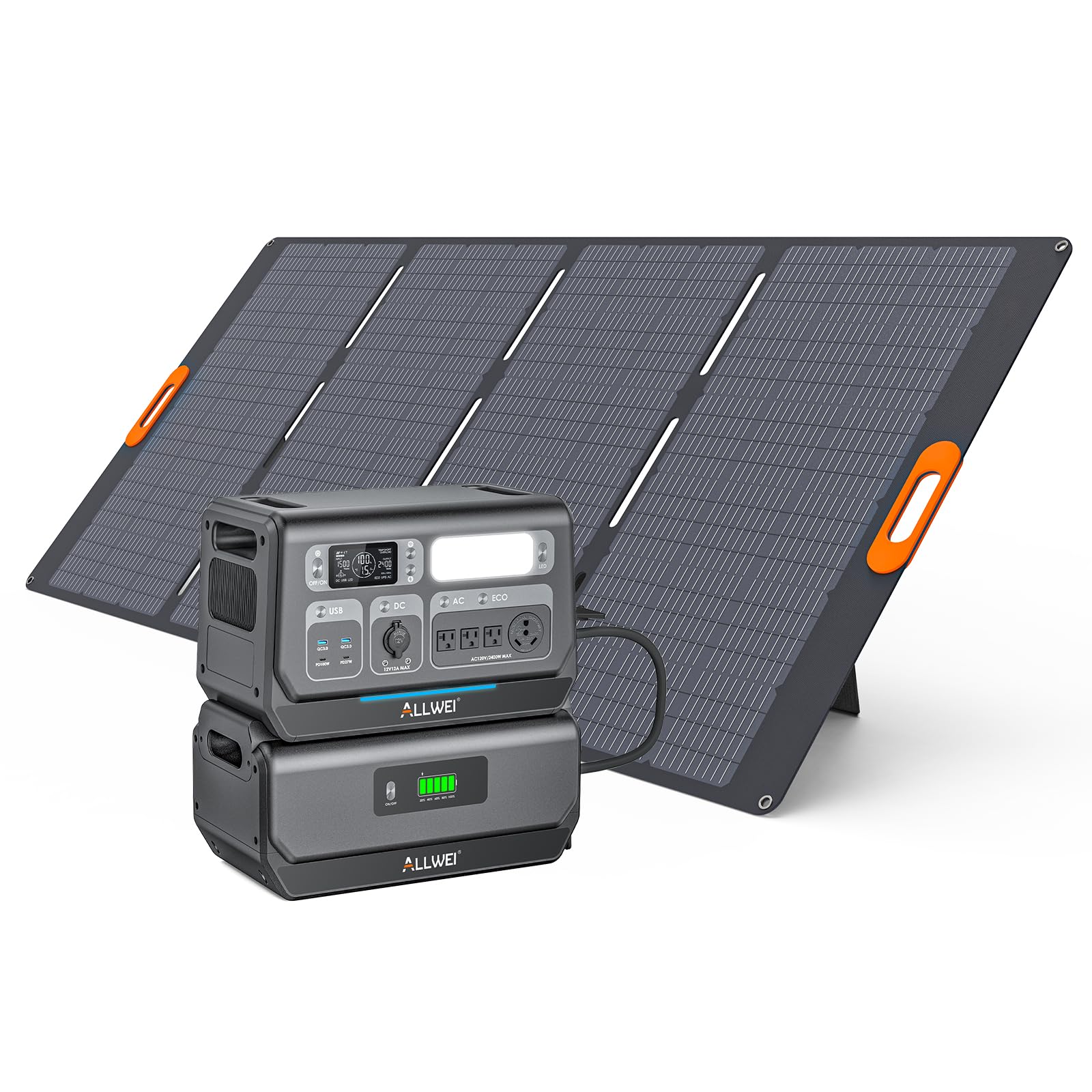
The modular system that starts at 2048Wh and can grow to 10240Wh as your off-grid ambitions expand.
The ALLWEI PPS2400-3 is built for growth. It ships as a 2400W power station, a 400W solar panel, and a 2048Wh expansion battery — and it supports up to 4 additional B200 PRO packs, scaling from 2048Wh all the way to 10240Wh. That’s the kit for someone who knows they’ll want more power later without buying a whole new system. The included 400W panel can feed the full station in 6-8 hours of sun, or you can use the 1200W fast solar input for a much quicker top-up.
Owners praise performance and charging speed above all, with one calling it “half the price, nearly double runtime” for their display lights compared to a previous setup. Another keeps it permanently plugged in as a UPS to keep a router and modem running — calling it a huge upgrade over an annoying beeping surge protector. The 1.5-hour full charge via AC in Q Mode and the 10ms UPS switch make it a legit home backup, not just a camping toy.
Reliability gets mixed feedback, so it’s note the occasional unit arrives with issues. The 4800W surge and 3600W super mode handle serious loads, and the 30A RV outlet means plug-and-play for campers. The LiFePO4 battery is rated for over 3500 cycles (about 10 years) with built-in BMS and MPPT protection. At 129.2 lbs with the battery included, it’s the heaviest kit here, so it stays put rather than moving around.
Biggest strength: Modular expansion from 2048Wh to 10240Wh — no other kit in this list scales this far.
Choose this for: RV off-grid setups and grow-with-me home backup where you’ll add battery packs over time.
Pass on this if: You want a single portable unit — this is a heavy, stationary system.
8. Jackery HomePower 3000 and 2x200W Solar Panels
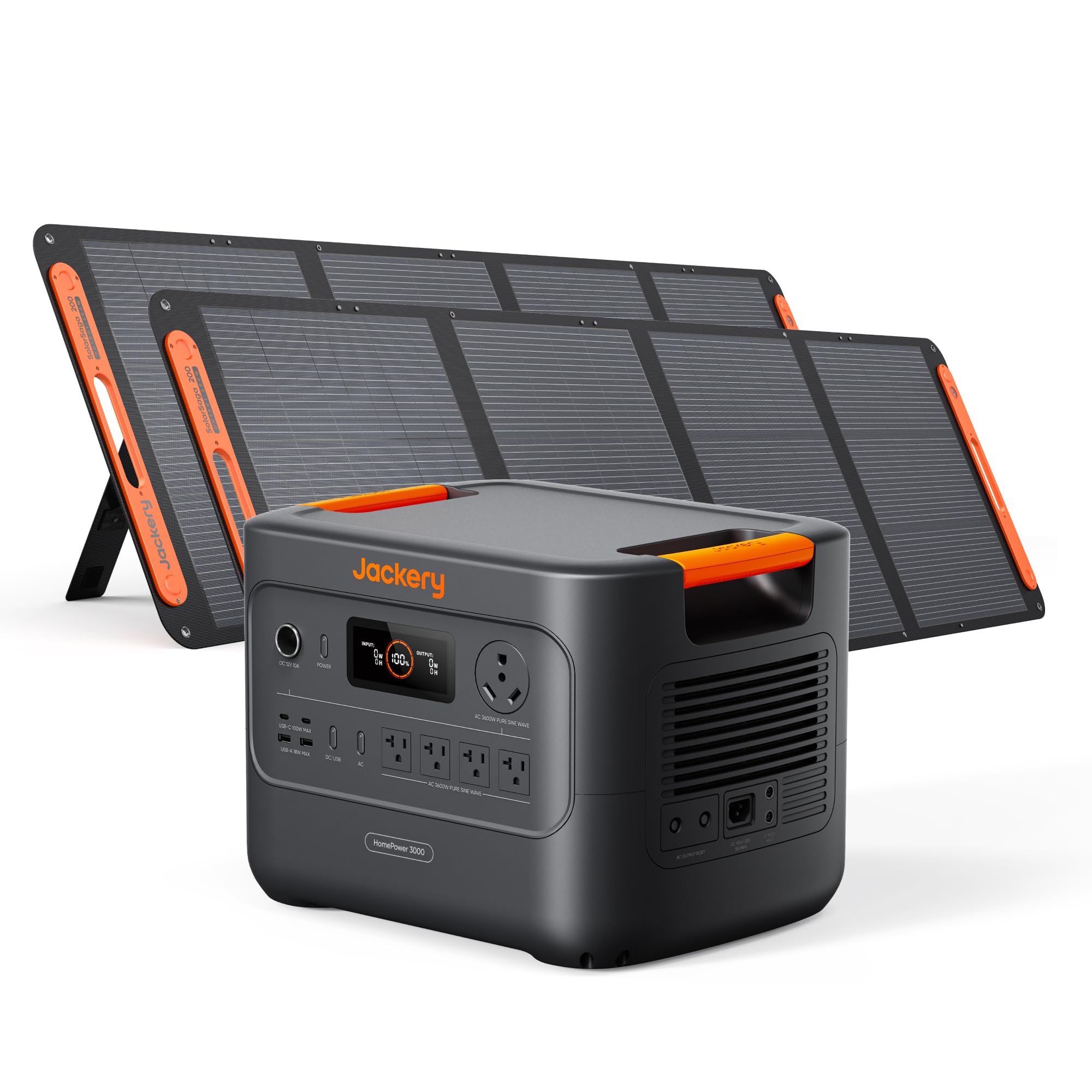
The 3kWh home fortress that runs your fridge, lights, and WiFi for up to 15 hours straight.
Jackery’s HomePower 3000 is the answer for whole-home essentials. With a 3072Wh battery and 3600W output (7200W surge), it powers a household for up to 15 hours and keeps a refrigerator running for 1 to 2 days. It’s the world’s first 3kWh portable power station with CTB technology — 47% smaller and 43% lighter than comparable models of the same capacity. During a 4.5-hour power outage, one owner ran three refrigerators and one freezer simultaneously without issue.
The dual 100W PD ports charge phones, tablets, and drones fast, while the built-in TT-30 RV port offers plug-and-play power for campers. The ≤20ms UPS switch is UL-certified, keeping security cameras, medical refrigerators, and Zoom calls running smoothly through outages. Two 200W SolarSaga panels charge it to 80% in about 9 hours of sun, though reviewers point out that number varies — one saw about 6 hours for a full charge on a sunny day.
Quality is what owners rave about most, with value for money close behind. The LiFePO4 battery offers 4,000 cycles while retaining 70% capacity, and ChargeShield 2.0 tech with AI algorithms boosts charging speeds and extends battery lifespan. The honest caveats: it weighs 59.5 lbs (a wheel kit is a popular add-on), it charges to full in 2.2 hours via AC or 1.7 hours with hybrid AC+DC, and one owner hit a rarely-reported random power-shutoff issue. Still, for serious home backup, this is the balanced heavyweight champion.
What wins owners over
- Runs a home’s essentials up to 15 hours
- 4,000 LiFePO4 cycles with 70% capacity retention
- 47% smaller than comparable 3kWh units
What to weigh
- 59.5 lbs — get the wheel kit
- No battery expansion option
- Solar recharge (9 hrs to 80%) is slower than wall AC
Best for: Homeowners prepping for outages and dry campers who need fridge-level backup power.
Look elsewhere if: You need expandable capacity or a unit light enough to carry regularly.
9. EF ECOFLOW Solar Generator 3.6KWh DELTA Pro with 400W Portable Solar Panel

The 3600Wh titan with a foldable 400W panel rated IP68 waterproof, built for real disaster backup.
The DELTA Pro is the biggest battery in this lineup, and it’s built for the worst-case scenario. With 3600Wh of capacity and 3600W output through 15 versatile ports — 5 AC outlets, 4 USB-A, 2 USB-C, 2 DC, a car power output, and an Anderson port — it runs a fridge for about 20 hours on a full charge, as shoppers say. The included 400W foldable panel is IP68 waterproof (dust and water tight) and weighs just 16kg (35.3lbs) with an adjustable carry case.
One owner shipped it to Cuba and kept power for most of the day — about 20 hours. Another runs a 1500W heater for about 2 hours, noting the fan engages above 70W and is audible. The panel’s conversion rate is 22.4%, and a single 400W panel fully recharges the station in 11 hours, while three 400W panels cut that to 3.5 hours. At 99 lbs with a wheeled pull handle, this is a stationary power plant, not a carry-on.
Accuracy is what owners praise most — the unit reports its state honestly — with ease of use and low noise close behind. The 2 expansion ports mean you can scale capacity further, and the EcoFlow app gives full remote control via WiFi or Bluetooth. For whole-home backup or serious off-grid living, nothing else here matches its raw capacity.
Powerhouse verdict: The largest battery solar panel kit here, with IP68-rated solar gear and 15 outputs for serious backup duty.
Get this for: Whole-home emergency backup and off-grid living where 3600Wh of capacity is non-negotiable.
Avoid if: You need portability — at 99 lbs this stays in one place, and the HomePower 3000 is lighter.
Understanding the Specs
Watt-hours (Wh) — the real capacity number
Watt-hours tell you the total energy the battery holds, and it’s the number that matters most when comparing kits. A 1024Wh station runs a 100W appliance for about 10 hours. Always match the watt-hours to the total wattage of everything you plan to power multiplied by the hours you need it running.
LiFePO4 vs. lithium-ion
Lithium iron phosphate (LiFePO4) batteries are the industry standard for solar kits because they handle thousands of charge cycles and hold their capacity for roughly a decade. Cheaper lithium-ion batteries wear out faster, so the LiFePO4 label is worth seeking out in any kit you plan to use long-term.
Solar input wattage — how fast the sun refills
The solar panel’s wattage determines recharge speed in full sun. A 60W panel takes about 4 hours to top up a small station, while a 400W panel can refill a large station in 6-8 hours. Cloudy days extend these times significantly, so bigger panels give you more margin on overcast trips.
UPS switch — smooth outage protection
A UPS (Uninterruptible Power Supply) function switches from wall power to battery in milliseconds when the grid fails, keeping computers and medical devices running without a blink. Look for a 10-20ms transfer time if you’re protecting sensitive electronics during outages.
FAQ
How long does it take to charge a battery solar panel kit from the sun?
What can a 1024Wh battery actually run?
Is LiFePO4 battery chemistry really better?
Can I run my refrigerator on a battery solar panel kit?
What does the UPS function do?
Can I expand the battery capacity later?
How many watts do I need to run my essentials?
Are battery solar panel kits safe for indoor use?
What’s the difference between a 12V battery and a power station?
How long will a battery solar panel kit last?
Final Thoughts: The Verdict
For most people, the battery solar panel kit winner is the Anker SOLIX C200 DC because it nails the balance of portability, real-world performance, and the trusted LiFePO4 chemistry — the crowd favorite at 4.7 stars across 230+ owners. If you want whole-home backup, grab the Jackery HomePower 3000 with its 3072Wh capacity. And for a fixed off-grid cabin or RV system, the ECO-WORTHY 200W 12V kit is the budget-friendly starter that grows with you.
How We Picked
We do not accept paid placement. Every pick is matched to a real buyer and a real use-case; we do not hands-on test units.
Sources & Methodology
Specifications: manufacturer listings and product documentation. Review insights: verified customer reviews, as of August 2026. Pricing: not shown on this page (it changes often); check the current price via the retailer link.
As an Amazon Associate, KitchPrep earns from qualifying purchases. This does not affect which products we feature.
Related Guides
