
Specs are compiled from manufacturer listings and verified buyer reviews and can change over time — please confirm the key details on the product page before buying.
Here is the short answer before anything else: a battery powered smoke and carbon monoxide alarm protects you during a power cut, which a wired unit cannot do. That single fact is why the right pick depends on your home, not on the biggest number on the box.
I’m Mohammad Maruf — the founder and writer behind KitchPrep. This guide is built by comparing the manufacturers’ published specifications and the patterns across verified customer reviews, so you get each pick’s real strengths and trade-offs instead of marketing spin.
You are about to see which units run on plain AA batteries and which seal a decade of power inside, and why that choice changes how much maintenance lands on your shoulders. Every pick below is a genuine two-in-one detector, and our pick for the battery powered smoke and carbon monoxide alarm shortlist starts with the AA model that owners describe as plug-and-play.
Our Picks at a Glance

How To Choose The Best Battery Powered Smoke and Carbon Monoxide Alarm
Start with the power source, because that one decision shapes everything else. A detector running on replaceable AA batteries asks you to swap cells on a schedule you have to remember. A detector with a sealed ten-year battery asks nothing at all — but when that decade ends, the whole unit gets replaced, not just the cells.
AA Batteries or a Sealed Ten-Year Cell
Replaceable AA models are the cheaper path up front, and you can keep spares in a drawer. The catch is the 3 a.m. chirp that tells you the cells are dying — exactly the annoyance the sealed-battery crowd is trying to escape. Sealed units skip that chirp entirely for a decade, then signal end-of-life so you replace the alarm itself.
If you own rental property, the sealed route is the one that stops you from chasing tenants about batteries. If you want the lowest entry point and do not mind a yearly reminder in your phone, AA models still do the same two jobs.
Smoke Sensing and False Alarms
The smoke half of these units uses a photoelectric sensor, which spots the visible particles thrown off by slow, smouldering fires rather than the fast flames of a grease fire. That is why the same sensor that catches a smouldering sofa cushion can also catch steam from a hot shower.
Look for wording about reduced nuisance alarms. Several models here use sensing logic that sorts real smoke from everyday cooking and steam, and that single feature is the difference between a detector you trust and one you unplug.
CO Sensing and the Display
The carbon monoxide half is an electrochemical sensor, a cell that reacts chemically to CO gas and is far more sensitive to it than any smoke sensor. Some models pair it with an LCD that shows real-time CO levels, so you can see a number instead of guessing.
Voice alerts are the other upgrade worth weighing. A unit that announces “Fire” or “Warning, Carbon Monoxide” tells you what the danger is from a different room, while a plain horn only tells you something is wrong.
Quick Comparison
| Model | Best For | Power Source | Alarm Type | Listing | Amazon |
|---|---|---|---|---|---|
| Kidde 30CUDR | Plug-and-play basics | 2 AA batteries | 85dB horn, red LED | UL 217 10th Ed, UL 2034 5th Ed | Amazon |
| X-Sense XP0H-SN | Set-and-forget value | 10-year sealed battery | Audible, LCD readout | UL 217 & UL 2034 | Amazon |
| First Alert SMCO200 | Low-profile ceilings | Battery powered | Audible, slim profile | Precision Detection sensing | Amazon |
| X-Sense SC06 | First-time buyers | 10-year sealed battery | Audible, LCD readout | UL 217 & UL 2034 | Amazon |
| Kidde 900-CUDR-V | Quiet-house voice alarms | 2 AA batteries | Voice alerts, 85dB | UL Listed | Amazon |
In‑Depth Reviews
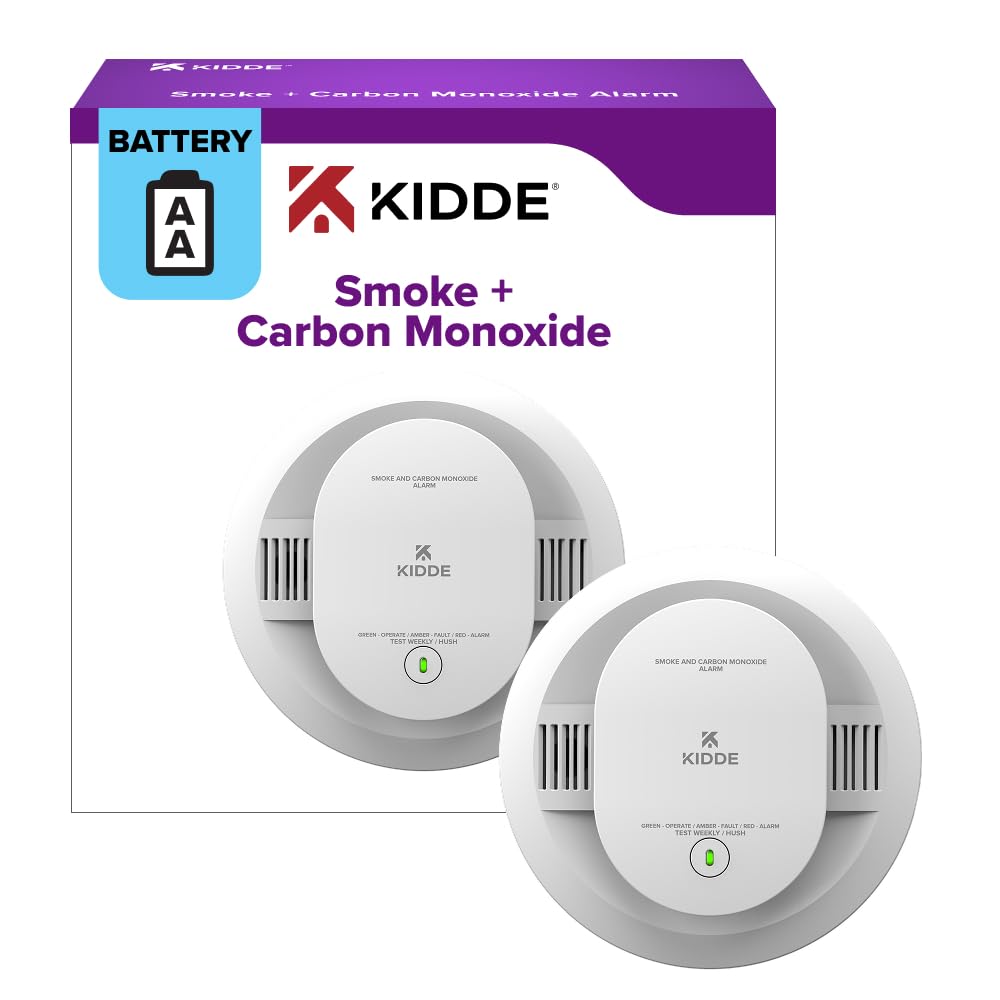
1. Kidde Smoke & Carbon Monoxide Detector, AA Battery-Powered, 30CUDR, 1 Pack
The straight-up swap-in unit that most households should start with
If you own a single-family house and just want a detector that works the moment you screw the bracket in, this is the one the crowd backs. It runs 4.5 stars from more than 700 owners, and what wins them over is plain accuracy — the sensor fires when it should and stays quiet when it shouldn’t. The unit is 5 inches wide and 5 inches tall with a depth of just 1.88 inches, so it hugs the ceiling without a lump.
You can have this alarm on your ceiling in about five minutes. The box includes two AA batteries, mounting hardware, and a user guide, so you do not need to run any wiring or call an electrician. Buyers describe it as plug-and-play. One thing to know before you buy: the mounting plate does not fit older Kidde brackets, so you may need to swap the plate instead of twisting the new unit onto the old base.
The alarm sounds at 85 decibels (a loud siren you can hear from the next room) and has a red LED light (a small indicator that helps you find it in the dark). Kidde says the sensing technology detects smoke over 25% faster than the previous generation and is designed to tell real smoke apart from cooking and steam. Fewer false alarms means you keep it armed instead of yanking it off the ceiling. It is tested to UL 217 10th Edition, UL 2034 5th Edition, and FCC standards, and it comes with a 10-year limited warranty from the purchase date.
What you are actually buying
- Two AA batteries included, so it is armed the day it arrives
- 85dB alarm with a red LED status light you can read across a dark room
- Accurate, code-compliant detection tested to UL 217 10th Edition and UL 2034 5th Edition
- 10-year limited warranty from the date of purchase
Sizing up the trade-offs
- You will eventually swap AA cells, and the low-battery chirp is the price of that convenience
- The bracket is not a drop-in match for older Kidde plates
- A dusty room can trip a fault light — a can of compressed air clears it, but you have to notice it first
Grab this one: if you want the simplest possible install on an existing ceiling point and do not mind a battery change now and then.
Look past it: if you would rather never touch a battery again — a sealed ten-year unit like the X-Sense XP0H-SN suits that temperament better.
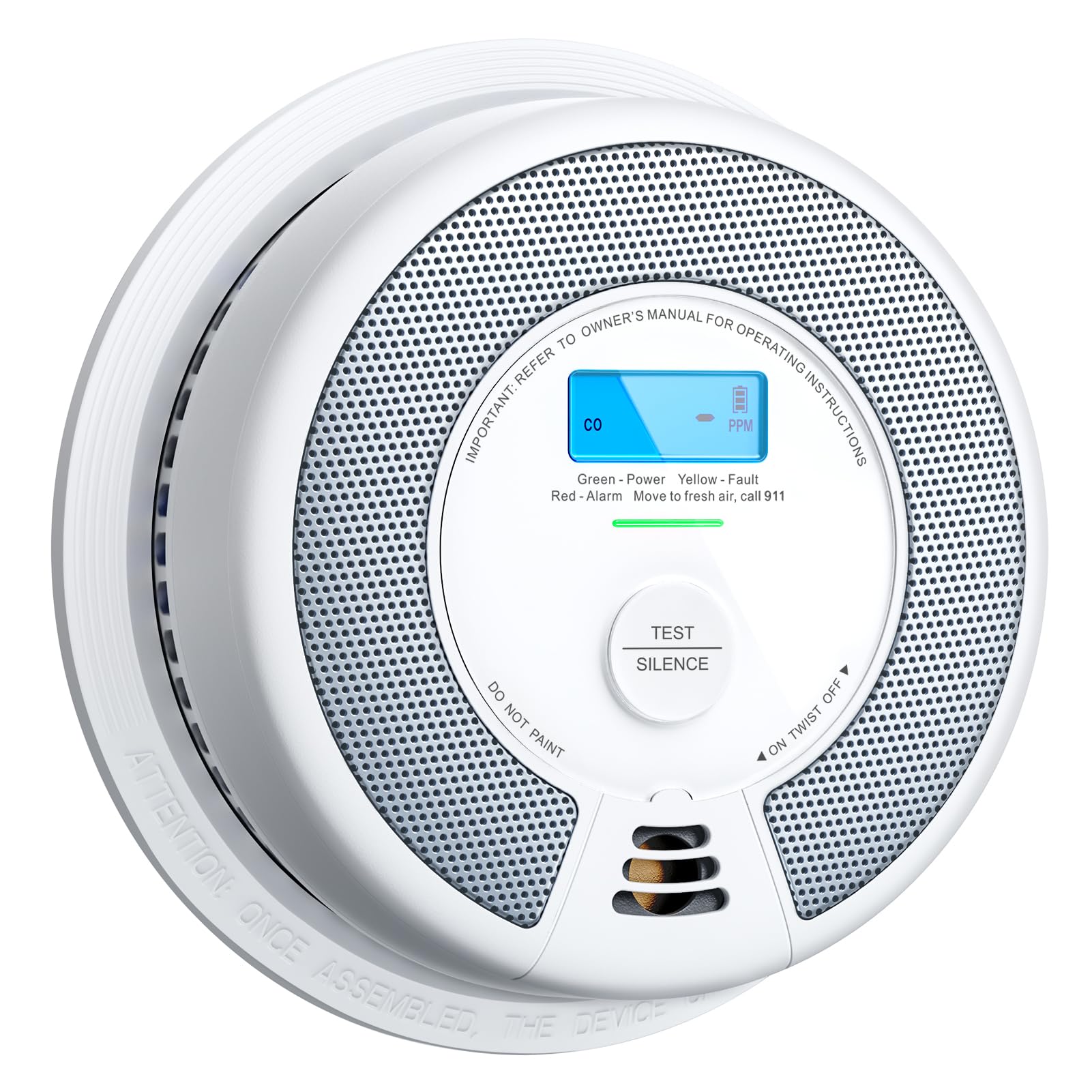
2. X-Sense Smoke Detector Carbon Monoxide Alarm Combo, XP0H-SN, 1-Pack
Ten years of power sealed in, and a screen that shows CO levels live
Choose this one if you have ever stood under a ceiling at midnight hunting a chirp. A 10-year sealed lithium battery (a built-in power cell you never change) keeps the detector powered for its entire rated life — Battery Average Life is listed at 10 years. When that decade ends, the alarm tells you to replace the whole unit instead of nagging you about batteries. The 5.7-inch bracket covers the old mounting scar on your ceiling, which matters when you are swapping out a dead alarm.
Installation is the thing everyone mentions, and it is easy: screw the bracket in with the supplied screws and anchor plugs, switch the unit on, and twist it into place. There is no rewiring at all. Owner after owner reports the process took minutes with two screws into either wall or ceiling, and the included instructions are clear enough that no second pair of hands is needed.
Inside sit two sensors doing different jobs — a photoelectric smoke sensor for smouldering fires and an electrochemical CO sensor for carbon monoxide. The large LCD displays real-time CO levels along with battery status and working state, so you can read a number instead of guessing at a light. It is ETL Listed to UL 217 and UL 2034, built from heat-resistant PC material, and covered by a five-year quality warranty plus lifetime technical support. The honest catch is the mounting plate: the hole positions are limited, so if your ceiling already has bracket holes in a different pattern, alignment can fight you.
The display earns its place: a live CO number is far easier to trust than a status light, and combined with a decade of sealed power it turns this into a genuinely low-maintenance detector.
Size it correctly: the 5.7-inch face is wider than the old Kidde footprint, so measure before you commit if your ceiling point is tight.
Reach for this if: you want a decade of power, a readable CO display, and you are starting fresh rather than matching an old bracket.
Think twice if: your ceiling already carries a different screw pattern — the limited hole positions may mean filling and re-drilling.
3. First Alert Battery Combination Smoke & Carbon Monoxide Alarm
Half the depth of a standard alarm, so it disappears against a white ceiling
First Alert built this one for people who care what their hallway looks like. The housing is just 1 inch thick against a 5.67-inch face, which First Alert describes as half the depth of a standard alarm. Compared with the Kidde 30CUDR at 1.88 inches deep, that is a noticeably flatter puck — the kind of detector you stop noticing after a week, which is exactly the point.
Underneath the slim shell sits Precision Detection sensing, First Alert’s advanced sensing technology that complies with new industry standards and is tuned to reduce cooking nuisance alarms. It gives you two-in-one coverage against smoke and carbon monoxide in one housing, which saves you ceiling real estate and one drilling job. Battery operation means it keeps working when the mains power drops, and the test button sits within easy reach.
The box includes AA batteries, and buyers report the install takes just a few minutes. An end-of-life warning tells you when to replace the alarm, so you are not left guessing. The dual-alarm behaviour is where experiences split: most owners run it without trouble, but a handful report nuisance trips. Keep it away from the steam plume from a bathroom door. Many owners also replace these on a ten-year rhythm rather than a battery-swap rhythm.
Where the value sits: the slim profile and reduced-nuisance sensing are the two features you actually feel day to day, and neither is an upsell — they are baked into the housing.
One thing to plan for: if your old alarm came off a different brand’s bracket, budget a few minutes for the swap rather than expecting a straight twist-on.
Best suited to: anyone mounting a detector in a visible spot where a chunky dome would bother them.
Not the pick if: you want zero chance of a cooking-driven trip — give it more clearance from the kitchen, or choose a model with a stronger nuisance-alarm record.
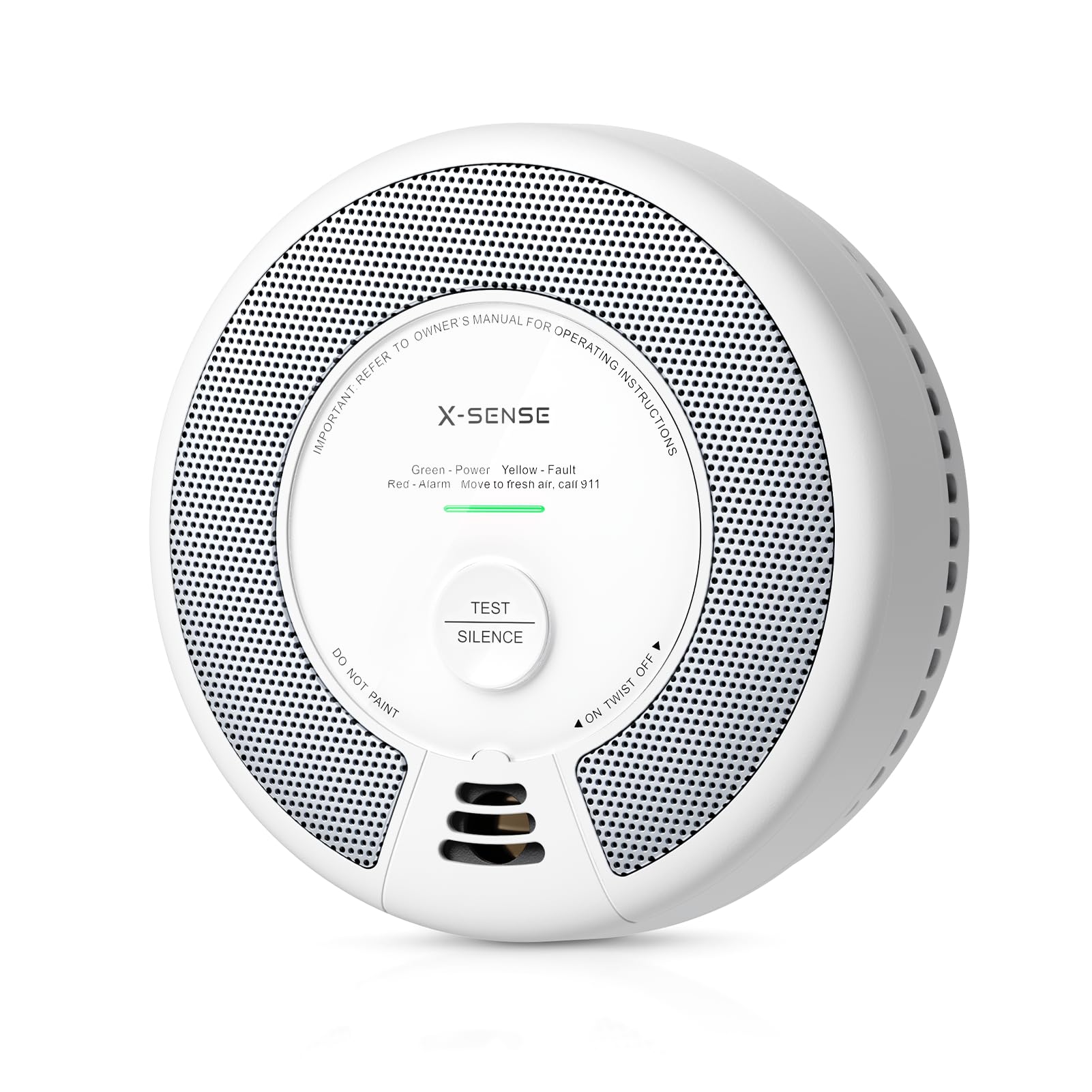
4. X-Sense Smoke & Carbon Monoxide Alarm, SC06, 1-Pack
The sealed battery nobody has to think about, at a first-detector price
What sells this one is the part you cannot remove: a sealed 10-year lithium battery that never needs changing. Owners who only found out after delivery that the cell is built in call it a relief, not a catch. When the decade ends, the alarm prompts you to replace the unit, and nobody has to remember a battery schedule in between. It has the same 5.7 by 5.7 by 2-inch footprint as the XP0H-SN above, so the two siblings share a ceiling presence.
Installation takes minutes and needs no rewiring. You screw the bracket into wall or ceiling with the included screws and anchor plugs, and the unit twists on. Instructions are clear enough that first-time buyers get through it without help, and the housing is made from heat-resistant PC material that looks and feels heavier than the price suggests.
Detection uses the same two-sensor setup: a photoelectric sensor (which spots smoke particles) and an electrochemical sensor (which measures carbon monoxide gas), both listed to UL 217 and UL 2034. An LCD screen shows real-time CO levels and battery status. The one honest gripe is the box, not the device: a few units arrive with the packaging beaten up. It has not affected the detector, but check a damaged carton on a life-safety item before you mount it. Long-term durability is unproven on a unit this new, which is normal for any sealed alarm.
Why it lands the position
- Sealed 10-year battery means no cell swaps and no chirping reminders
- Clear instructions and a genuinely tool-light install
- LCD readout for real-time CO levels, battery state and working status
- UL 217 and UL 2034 listed with a five-year quality warranty
Before you mount it
- You cannot drop in your own batteries — the sealed cell is the whole point, and the whole limitation
- Some cartons arrive dented, so inspect on arrival
- Do not expect a chunky horn sound — the alarm sits around 85dB like the rest of the group
Pick this if: it is your first combo detector and you want the no-maintenance route without paying premium money.
Skip this one if: you specifically want to keep spare AA cells on hand and swap them yourself.
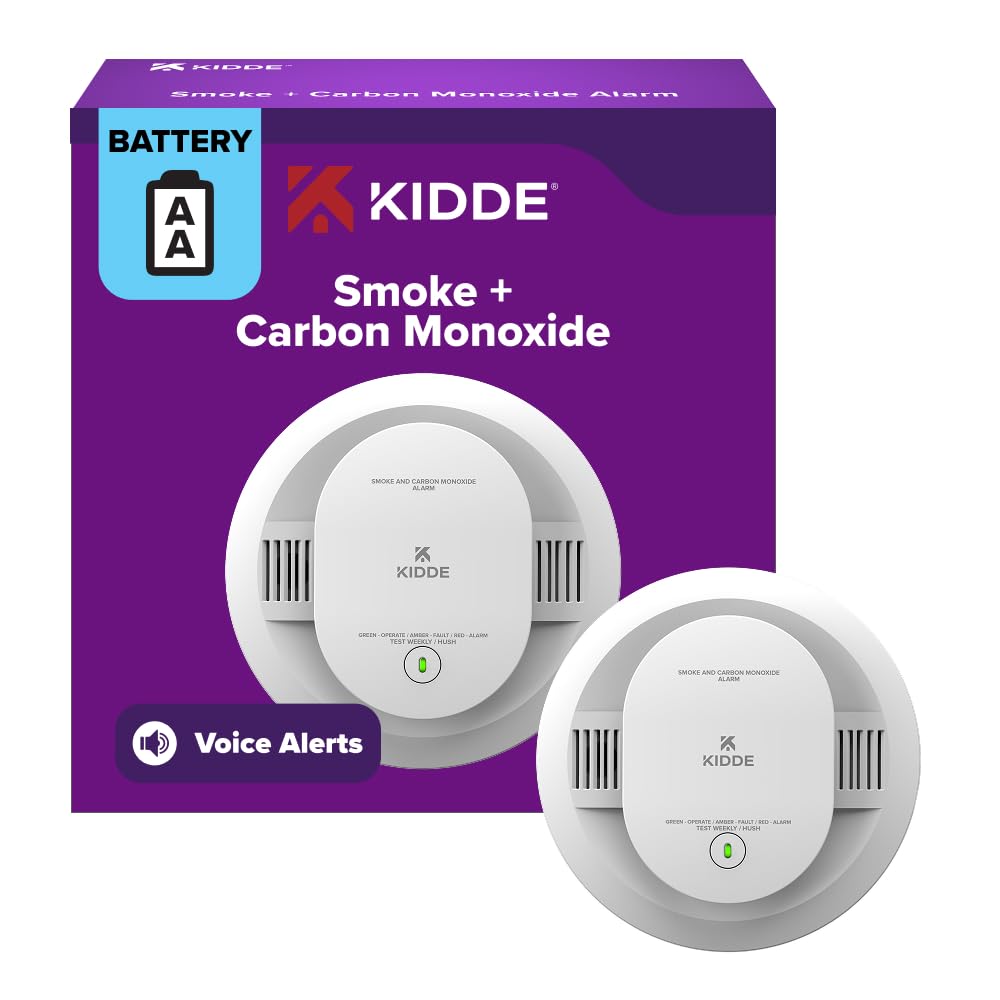
5. Kidde Smoke & CO Detector, AA Battery-Powered, 30CUDR-V, 1 Pack
A detector that tells you which danger it found, out loud
When this alarm goes off, it does not just shriek — it speaks. It says “Fire” when smoke is detected and “Warning, Carbon Monoxide” when CO is present,the unit constantly to confirm it is still working as expected. That matters most on the weeks you forget the manual push test. Kidde notes that self-testing is not a substitute for that manual button press, so you still owe it a weekly poke. But you are no longer relying on memory alone to know the sensor is alive.
Voice alerts follow the same script as the rest of the family: “Fire!” for smoke or fire, “Warning Carbon Monoxide” for CO gas, and — usefully — “Low Battery” when the cells need replacing. The LED indicators tell the same story in colour: green for normal operation, amber for an operating error, and red for a smoke, fire or CO event. Two AA batteries are included, and the 5.6 by 5.6 by 2-inch housing mounts in four orientations, so it fits awkward ceiling beams that other brackets fight.
The sensing pair is spelled out clearly here — a photoelectric sensor for the visible particles of slow, smouldering fires, and an electrochemical sensor for carbon monoxide. It is UL Listed with a 10-year limited manufacturer warranty on the alarm itself, which Kidde notes is not a battery performance claim. Quality is the feature owners praise most, and it shows in the 8.8-ounce build. The mixed part is reliability: a minority of units develop repeat false alarms months in, and the documented fix — pull the batteries, power down, reinsert, retest — is a workaround rather than a cure.
Standout capabilities
- 24/7 self-testing keeps watch between your manual checks
- Spoken alerts name the hazard, including a low-battery announcement
- Colour-coded LEDs — green, amber and red — read at a glance
- Mounts in four orientations for awkward beams and corners
What to weigh up
- Self-testing does not replace the weekly manual button test
- A small share of units develop repeat false alarms after a few months
- The warranty covers the alarm, not battery performance
Choose it for: a busy household that wants the detector actively checking itself plus spoken alerts naming the danger.
Consider alternatives if: you want the longest record of trouble-free ownership — the First Alert and X-Sense picks carry fewer reliability complaints.
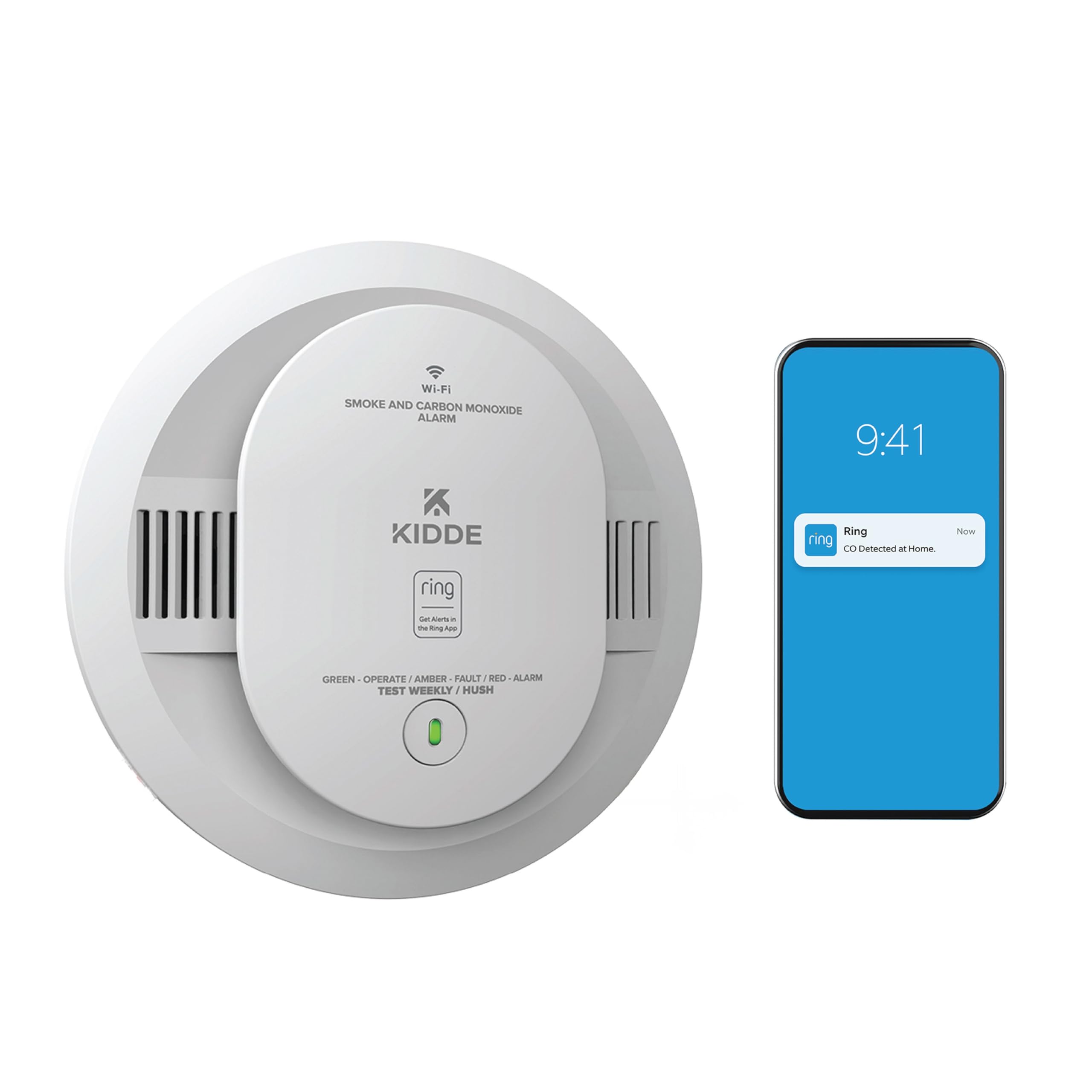
6. Kidde Smart Smoke & CO Detector with Ring, AA Battery, RGCUDR-RW
UL 217 and UL 2034 Listings
These are the two safety standards a combination detector is tested against, and the edition number tells you how recent that testing is. UL 217 governs smoke alarms and UL 2034 covers carbon monoxide alarms. The edition matters because a newer edition generally means a more demanding test, so a unit listed to UL 217 10th Edition cleared a tougher bar than one listed to an earlier edition. All nine picks here carry at least one of these listings.
85 Decibels and Voice Alerts
An 85-decibel alarm is loud enough to wake most people through a closed door, and every horn-based unit here is rated at that level. Voice-alert models add spoken wording — “Fire!” for smoke and “Warning, Carbon Monoxide” for CO — which tells you what the danger is, not just that one exists. That distinction saves seconds in the dark, and seconds are the whole point of a detector.
FAQ
Can a battery powered detector really protect me during a power outage?
How long does a sealed 10-year battery actually last?
What is the difference between a photoelectric and an electrochemical sensor?
Why does my detector keep going off when I cook?
Will the Kidde RGCUDR-RW alert my phone without a subscription?
How loud is an 85-decibel smoke and CO alarm?
Do I need an adapter to replace my older Kidde alarm?
How often do I need to test a battery smoke and carbon monoxide alarm?
Can one detector cover both my smoke and carbon monoxide needs?
Should I choose a two-pack or a single alarm?
Final Thoughts: The Verdict
For most homes, the battery powered smoke and carbon monoxide alarm winner is the Kidde 30CUDR because it combines accurate detection, an 85-decibel alarm and a five-minute install at a mid-range outlay that most buyers can justify. If you want to stop thinking about batteries for a decade, grab the X-Sense XP0H-SN and its sealed 10-year cell with the live CO display. And for a household already running Ring, the Kidde RGCUDR-RW is the one to reach for — it puts a smoke or CO event on your phone whether you are home or not.
How We Picked
We do not accept paid placement. Every pick is matched to a real buyer and a real use-case; we do not hands-on test units.
Sources & Methodology
Specifications: manufacturer listings and product documentation. Review insights: verified customer reviews, as of September 2026. Pricing: not shown on this page (it changes often); check the current price via the retailer link.
As an Amazon Associate, KitchPrep earns from qualifying purchases. This does not affect which products we feature.
Related Guides
