
Specs are compiled from manufacturer listings and verified buyer reviews and can change over time — please confirm the key details on the product page before buying.
If you want the honest short answer: a battery powered shop vac is now genuinely worth owning, and the one that suits the most people is the BOSCH GAS18V-3N — a 2.6-gallon cordless canister that runs on Bosch’s AMPShare batteries and leans on a washable HEPA filter (a fine-mesh filter that traps tiny dust particles instead of blowing them back into the room). The real question is not whether cordless can keep up with corded — it can — but which battery platform you already own, because most of these run as bare tools and need a battery you probably have in the garage.
I’m Mohammad Maruf — the founder and writer behind KitchPrep. This guide is built by comparing the manufacturers’ published specifications and the patterns across verified customer reviews, so you get each pick’s real strengths and trade-offs instead of marketing spin.
From a 2.6-gallon canister you can carry in one hand to a 9-gallon tank on wheels, each pick here solves a different cleanup job. This guide breaks down the battery powered shop vac choices that actually fit how you work.
Our Picks at a Glance


How To Choose The Best Battery Powered Shop Vac
The single biggest decision is which battery platform you already own. Almost every cordless wet/dry vac sold on Amazon is a bare tool — meaning no battery and no charger in the box — so if you have DeWalt 20V MAX batteries, a DeWalt-compatible vac is the cheapest upgrade. If you have Bosch 18V, you want the AMPShare system. Buying a vac for a battery you don’t own usually costs more than the vac itself.
Match the vac to your existing battery, not the other way around
The ReliaRoads 20V Cordless Vacuum runs on DeWalt 20V MAX batteries up to 5Ah. That means if you already own a DeWalt drill, you can grab the vac body and start cleaning. The Seesii ships with its own two 4.0Ah batteries, so it works from the start with no platform commitment. The Bosch and both Milwaukee units run on their own brand’s batteries only. Before you buy anything, pull the battery out of your drill and read the label.
Suction is measured three different ways and none of them mean the same thing
CFM (cubic feet per minute) measures airflow — how much air the vac moves. Water lift measures the strength of the pull at a sealed hose end. kPa (kilopascal) is the metric unit for the same pressure. The ReliaRoads vac lists 45 CFM and 12.1 kPa. The Seesii pushes 15kPa on its high setting. The EGO units both deliver 110 CFM with 100-inch lift — a much larger airflow figure than the smaller canister vacs. Comparing kPa to CFM directly is impossible because one is pressure and one is volume.
Tank size should match the mess, not your ego
A 2.6-gallon tank is right for car interiors, workshop corners, and small spills. A 7.5-liter canister handles a full HVAC line purge. A 9-gallon tank is what you buy when you’re clearing a garage bay or draining a water heater pan. Bigger tanks weigh more when full and take up more storage space. The EGO WDV0900 weighs 26.7 pounds empty, while the Seesii weighs 8 pounds — you’ll feel that difference every time you lift it off the ground.
Wet versus dry is a filter question, not a tank question
Every vac on this list claims both wet and dry pickup, but the filter setup matters when you switch. A HEPA filter is designed for fine dry dust — drywall powder, sawdust, allergens. A foam filter (like the Milwaukee MILM18VC20 uses) is meant for wet pickup. Some manufacturers want you to swap the filter before sucking up water. Read the manual for your specific model before you dump a spill into a dry-only setup.
Quick Comparison
| Model | Best For | Capacity | Filter Type | Battery Platform | Amazon |
|---|---|---|---|---|---|
| BOSCH GAS18V-3N★ Best Overall | Jobsite and workshop cleanup | 2.6 gallons | HEPA (washable) | Bosch 18V AMPShare | Amazon |
| ReliaRoads 20V Cordless (RCSV-20)Best Value | DeWalt owners wanting a cheap upgrade | 2.65 gallons | HEPA | DeWalt 20V MAX | Amazon |
| Seesii Cordless Wet Dry Shop VacComplete Kit | Camping, cars, and multi-surface cleanup | 2.6 gallons | HEPA (reusable) | Includes 2 x 4.0Ah | Amazon |
| Milwaukee MILM18VC20 | HVAC line clearing and wet jobs | 7.5 liters | Foam | Milwaukee M18 | Amazon |
| WORX WX031L | Car detailing with long reach | 2.1 gallons | Cartridge | Worx 20V Power Share | Amazon |
| Milwaukee M18FPOVCL | Home service calls and tight spaces | 2.5 gallons | HEPA | Milwaukee M18 | Amazon |
| Ryobi RV1811-0 | Workshop dust extraction on ONE+ tools | 11 liters | HEPA | Ryobi 18V ONE+ | Amazon |
| EGO WDV0900 | Garage-scale cleanup with bare tool value | 9 gallons | Cartridge with self-clean | EGO 56V ARC (not included) | Amazon |
| EGO WDV0904 | Large jobs on EGO platform, ready to run | 9 gallons | Cartridge with self-clean | EGO 56V ARC (5.0Ah included) | Amazon |
In‑Depth Reviews
1. BOSCH GAS18V-3N 18V Cordless Wet Dry Vacuum, Portable Shop Vac
Our pick — over 4.5★ from 700+ verified ratings; the strongest balance of quality and price.
The 10.2-pound bare tool that hangs off a shoulder strap and eats drywall dust without complaint
If you work on job sites or in a garage where fine dust is the enemy, the Bosch GAS18V-3N earns the top spot here. It weighs 10.2 pounds as a bare tool (no battery attached), so carrying it from the truck to a job is a one-hand job. The 2.6-gallon canister holds enough debris to finish a cabinet install before it needs emptying, and the 5.25-foot flexible hose reaches into corners without dragging the whole unit behind you. On the performance side, this is the most-loved vac on the list for a reason — the Rotational Airflow Technology keeps dust from choking the filter, and owners who run fine dust through this unit week after week say the suction just stays.
Battery is where you need to plan ahead. The Bosch runs on the AMPShare system and delivers up to 24 minutes of high-power cleaning with a 6.0Ah battery, which is sold separately. It is not compatible with DeWalt, Milwaukee, or Ryobi batteries — you are buying into Bosch’s 18V line whether you already own it or not. If you do own AMPShare batteries, the value here is excellent: you’re buying a bare tool body that accepts the same cells running your drill and impact driver. If you don’t, add the battery cost to your mental math before clicking buy. The 5.25-foot hose is also shorter than the 6.56-foot hose on the ReliaRoads vac below — a 1.31-foot difference that matters if you like to set the canister down and work at arm’s length.
What wins people over across hundreds of owner reviews is the sheer performance-to-weight ratio. The recurring note — repeated verbatim across multiple reviews — is that this vac runs through batteries fast if you’re using small packs. The solution owners converge on is running 6.0Ah or 8.0Ah batteries: “it does use your battery quickly 6or8 amp hr recommended.” One long-term owner reported four years of weekly jobsite use with an 8AH battery before suction finally failed despite regular airflow cleaning, and said the tool paid for itself and would be repurchased. That is not a defect curve — that is a used-and-abused jobsite tool surviving four years of fine and coarse dust. The canister detaches easily, the rubberized hose stays flexible in cold weather, and the HEPA filter traps 99.97% of drywall dust and sawdust.
Why It Earns The Top Spot
- Washable HEPA filter captures 99.97% of drywall dust and sawdust
- 10.2-pound bare-tool weight makes it a true grab-and-go unit
- Runs up to 24 minutes on high with a 6.0Ah AMPShare battery
- Five-year limited warranty on the tool, battery, and charger
- Flexible hose stays pliable and the canister detaches for easy emptying
What To Weigh Before Buying
- Battery and charger sold separately — Bosch AMPShare ecosystem only
- Small battery packs drain fast; plan on 6.0Ah or larger cells
- 5.25-foot hose is shorter than some competitors on this list
- Owners who set the canister on the ground and drag it wish it had casters
Committed to the Bosch platform: Buy this if you already own AMPShare 18V batteries — it is the highest-rated, most-proven wet/dry vac here for fine-dust cleanup.
Starting from scratch: Factor in the cost of a 6.0Ah battery and charger before you commit, since the tool ships bare.
2. ReliaRoads 20V Cordless Vacuum Cleaner-Wet/Dry Shop Vac, 2.6 Gallon Capacity, Compatible with DeWalt Batteries
The bare tool that turns your DeWalt drill batteries into a 6.6-pound cleanup machine
If you already own DeWalt 20V MAX batteries, this is the least-expensive way to get cordless cleaning into your garage. The body weighs 6.6 pounds, and the 2.65-gallon dust collector capacity means fewer trips to the trash can mid-job. Suction is rated at 45 CFM (airflow) and 12.1 kPa (pressure), which is substantial for a vac this small. The Seesii below pushes 15kPa on its high gear compared to this unit’s 12.1 kPa — a real, measurable difference in pull on stubborn debris, but not enough that most owners will notice in daily car cleanup. That 12.1 kPa figure still puts this above any plug-in dustbuster on the shelf.
That extra distance matters when you’re standing at the back of a car trunk and want the canister to stay on the ground. The accessory kit covers the basics well: soft hose and connectors, multi-purpose nozzle, crevice tool, sofa brush, extra long crevice tool, and a mini filter cartridge. It also does double duty — the blowing feature on this vac clears dust out of hidden spots like the inside of a chassis. The 1-1/4 inch hose diameter matches standard attachments, so if you already have a shop vac accessory set, most of it will snap on.
Typical runtime across owner reports sits around 15 to 20 minutes per charge with a 3Ah battery, so most buyers keep a spare on the charger. The reviews cluster hard around the value side — what stands out most is the sheer usefulness for the price, with performance as the most-discussed theme by a wide margin. Buyers consistently say it works with 20V DeWalt batteries without modification, and most consider it a worthwhile investment over corded alternatives: “Definitely better then wheeling around my normal shop vac and worrying about an extension cord.” The honest caveats are small. There is no built-in storage for all the tools — two of them stick up exposed on the body. One owner noted the small floor piece is not airtight in blower mode. And if the suction is your top priority, a buyer upgrading from this should look at the Seesii’s 15 kPa or the EGO’s 110 CFM units.
The DeWalt angle: Owners without DeWalt batteries should skip this — the whole value proposition collapses if you have to buy the battery separately.
Real-world pace: Faster than pulling out a large corded vac for a five-minute spill, and the 6.56-foot hose reaches a full car length without repositioning.
DeWalt household: The obvious pick if you have a stack of 20V MAX batteries already charging in the garage.
Tool storage matters to you: Look elsewhere if dangling accessories on the body bother you — this one has no on-board storage tray.
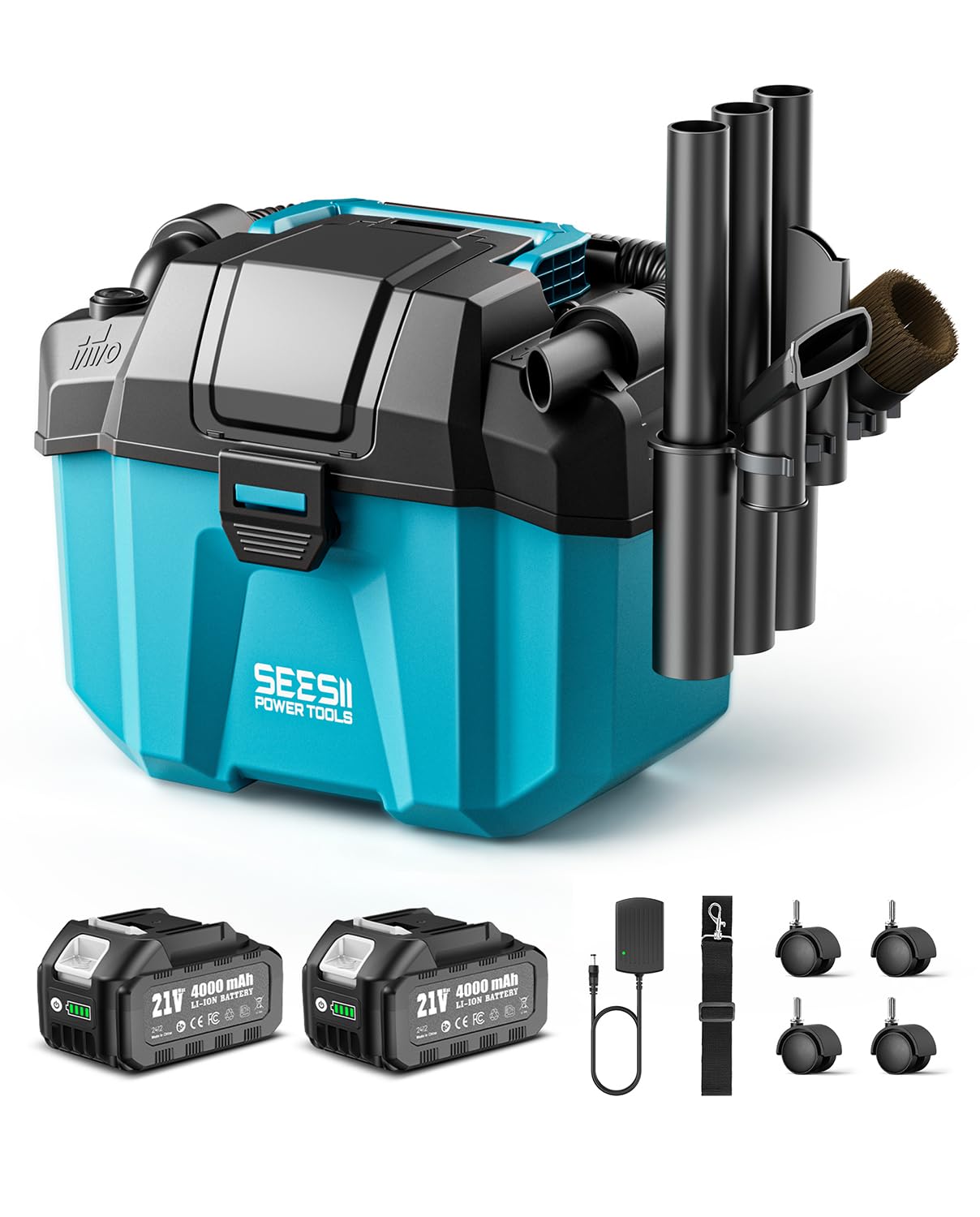
3. Seesii Cordless Wet Dry Shop Vac, 2 x 4.0Ah Rechargeable Batteries
Two batteries, one brushless motor, and a shoulder strap — the cordless vac that keeps working while you climb stairs
If you want a cordless wet/dry vac that arrives ready to run without adding a battery to your cart, this is the one. Seesii bundles two 4.0Ah batteries that give you 20 minutes on high gear or 40 minutes on low — a genuine two-battery workflow where one charges while the other works. The brushless motor is rated to run 30% cooler and last 2x longer than brushed motors. That’s the manufacturer’s own claim. On raw suction, this unit’s 15 kPa high gear beats the ReliaRoads vac’s 12.1 kPa — a measurable edge on pet hair and stubborn dirt.
The design leans hard into mobility. It’s a 2.6-gallon canister that weighs 8 pounds and stands up on its own, so it tucks into a garage corner or under a set of stairs without leaning against a wall. The 4 included wheels roll across a garage floor, but you can also leave them off and shoulder-carry the whole thing — one buyer who owns two cats says this is the vac that finally handles litter kicked from the start: “This suck it up no problem especially on high.” The kit includes a crevice tool for sofa gaps and car vents, a wide nozzle for garage floors, and a round brush for dusty curtains. Three extension tubes let you clean while standing up instead of bending over. Rapid 2 to 2.5-hour charge means the batteries don’t sit idle long.
The HEPA-rated filter captures 99.7% of dirt and rinses clean under tap water for reuse. What’s different about this unit compared to the EGO and Milwaukee tanks is the range of jobs it covers without fuss — cars, tents, garages, and small spills all fall under its reach because it weighs 8 pounds and carries by strap. The recurring gripe in the reviews is the hose. It’s 5.25 feet, and multiple owners say longer would be better, plus the attachment holder has a tendency to fall off the body during use. This is a real limitation, but it’s a limitation of the accessories, not the cleaning core. For a bundle price that includes two batteries and accessories, the value math is hard to argue with.
What stands out in daily use: The two-battery workflow and the shoulder strap turn this into a genuinely portable vac — strap it on, climb the stairs, and clean a second-floor mess in one trip.
Where it falls short: The 5.25-foot hose and loose attachment holder are the two things owners most often want changed — minor annoyances, not deal-breakers.
Buy-it-and-run crowd: The complete kit with two batteries makes this the simplest no-commitment cordless vac on the list.
Long-hose demands: If you clean deep into truck beds or work across large floors, the short hose will frustrate you more than the low suction would.
4. Milwaukee MILM18VC20 M18VC2-0, Wet/Dry Vacuum, 7.5 liters
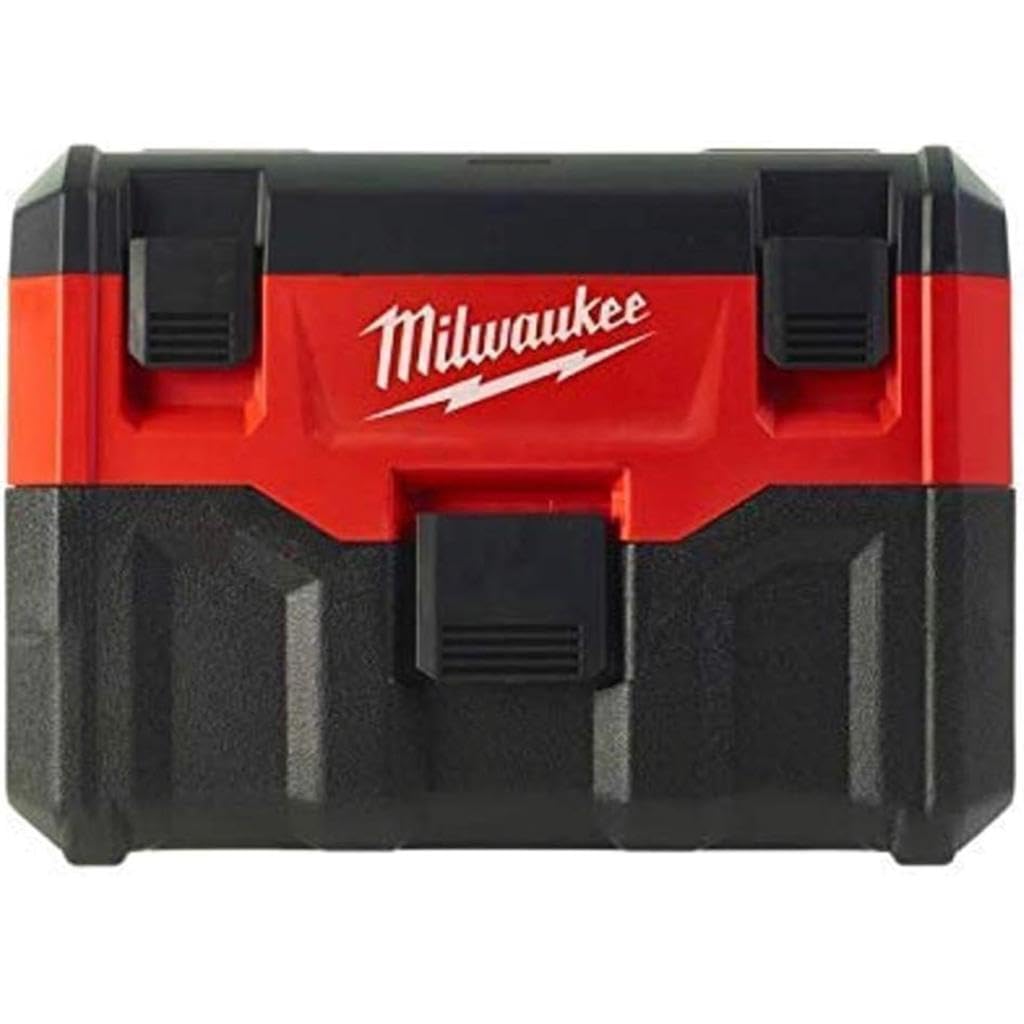
The 7.5-liter canister that converts to a blower — the M18 tool that keeps HVAC lines clear
For HVAC techs and homeowners with condensation drain lines to clear, this Milwaukee vac does one job exceptionally well: convert from suction to blower quickly and blow a clogged line clean without dragging a cord up a ladder. The 7.5-liter capacity dwarfsthe 2.6-gallon Bosch and Seesii canisters — you get substantially more debris volume per empty, which is exactly what you want when you’re pulling water or loose debris from a line for an extended run. The 2-meter (6.5-foot) hose is longer than the Bosch’s 5.25-foot hose, and it runs on Milwaukee M18 batteries like the rest of the M18 lineup.
Where this differs from the smaller cordless wet/dry vacs is the foam filter. Milwaukee ships this with a foam filter rather than a HEPA cartridge, which is the right call for wet pickup — foam holds up to water better than pleated paper. If you’re the kind of buyer who mostly pulls water out of a spill or empties a drain pan, foam is the more forgiving choice. It also runs ~4 hours on battery according to the spec sheet, which is dramatically longer than the 20 to 40 minutes you’ll see on the smaller bundled-battery vacs. That figure suggests most jobs finish long before the battery gives out.
Owner feedback is short and almost universally satisfied. The word that comes up most is “works” — as in it works like M18 should. The specific praise centers on the quick conversion between vacuum and blower for HVAC work: one user says he uses it specifically for keeping HVAC condensation lines clear and calls it powerful enough in both modes. A long-term dissenter does exist: one owner flags that battery life is limited and treats it as an accepted trade-off rather than a problem. If your job is pulling fine drywall dust, the Bosch or the Milwaukee M18FPOVCL below with HEPA filtration will suit you better. If your job is clearing a wet line or blowing out crevices, this is the more specialized tool.
Specialist pick: This is the right tool if your cleanup involves water, condensation lines, or blowing dust out — not the buyer chasing the most suction numbers.
Filter thinking: The foam filter is a wet-pickup advantage but a fine-dust disadvantage versus the HEPA-equipped alternatives.
M18 owners doing HVAC or plumbing work: Reach for this one — it converts fast, holds 7.5 liters, and runs on batteries you already own.
Fine-dust cleanup: Skip this if your main mess is drywall dust or fine sawdust — you want the HEPA-filtered units instead.
5. WORX Cordless Wet/Dry Vacuum, 20V 2.1 Gal, WX031L
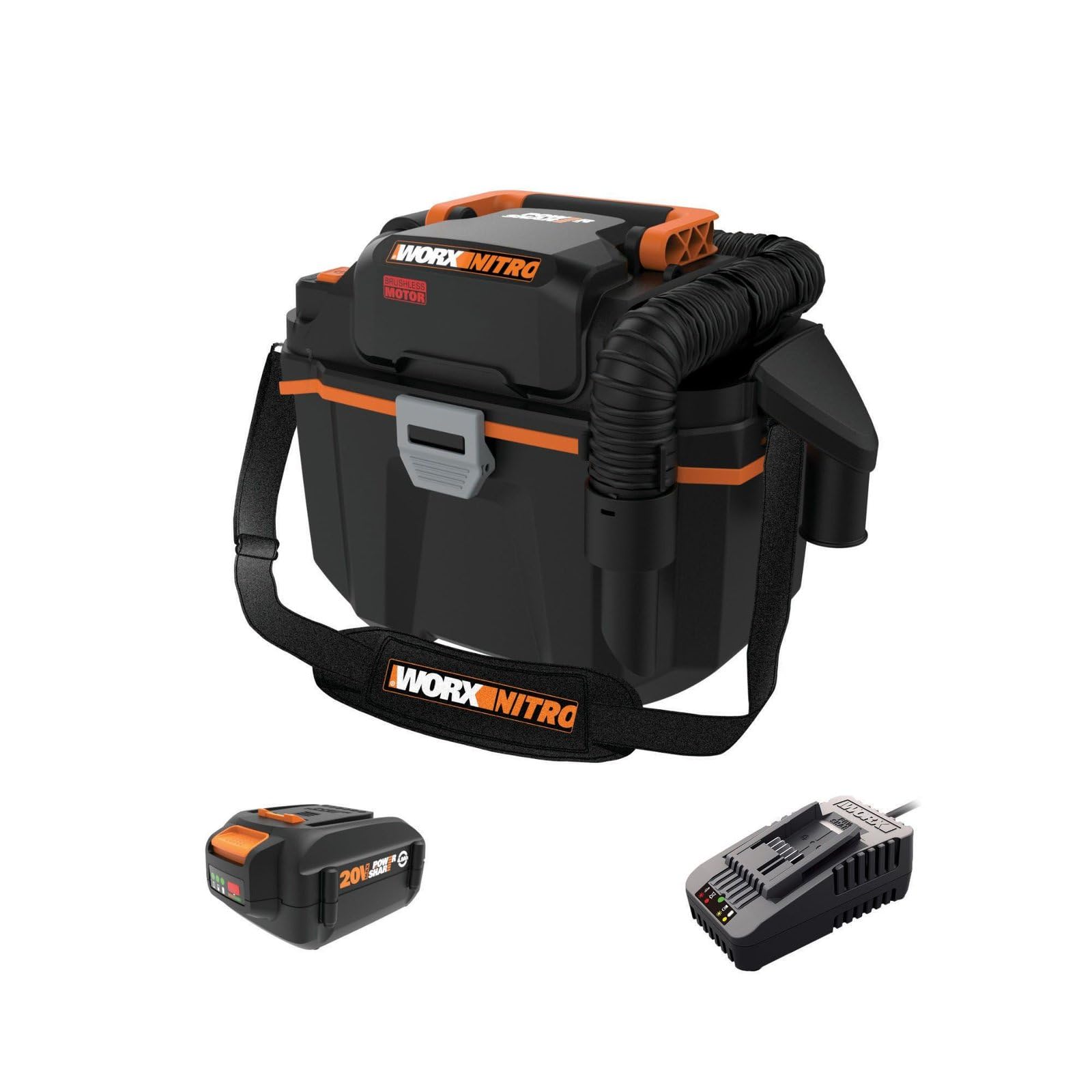
Six-and-a-half feet of stretch hose and 16 kPa of pull — the detailer’s vac that reaches the whole cabin
For car detailing specifically, the WORX WX031L’s 6.5-foot extendable hose is the feature that matters most. You set the 2.1-gallon canister on the ground next to the car and the hose stretches all the way across a cabin without pulling the body. The 16 kPa suction rating on this unit beats both the Bosch’s Rotational Airflow design and the ReliaRoads’ 12.1 kPa in raw pressure terms — an edge you feel when you’re digging sand out of floor mats. It runs on a 4.0Ah Power Share PRO battery (included with the tool), which is part of a family that powers 75+ lifestyle, garden, and power tools across 20V, 40V, and 80V.
This vac also comes with a shoulder strap and integrated carry handle, so you can hang it off your side while working around tight areas. The 2.1-gallon canister is the smallest tank on this list, but for car and small-workshop work it’s plenty — a buyer with an SUV who keeps the interior spotless reported using it in both the house and the vehicle without needing to empty it mid-job. The 6.8-pound body weight and compact footprint make it easy to store and easy to carry with the strap. The high/low speed switch lets you step down when you don’t need full pull. Cartridge filter, crevice tool, and wide nozzle all come in the box.
What stands out most from owners is raw suction. Reviews frequently compare it to corded shop vacs, and one long-term user who has owned it almost two years says the suction matches or outdoes plug-in units for cleaning truck floor dirt and pebbles. Multiple buyers report they can vacuum more than one vehicle on a single charge. The honest knocks were mostly about value — some buyers feel it’s not worth the ticket price versus cheaper cordless alternatives, and a small subset flag durability concerns. The performance-to-price equation is the biggest area to weigh before buying, especially when the ReliaRoads at position 2 delivers similar cleaning in a smaller (but similar price) package. If your reason for buying is the extendable hose and the Power Share battery ecosystem, this is worth the ticket. If neither of those applies, look at the cheaper picks.
For the dedicated weekend detailer: The 6.5-foot stretch hose and 16 kPa suction turn a car interior into a 20-minute job.
For the platform-agnostic buyer: The value argument is thinner here than on cheaper picks — you’re paying for ecosystem and hose length.
Power Share household: Worth the ticket if you already run Worx 20V batteries across other tools and want cordless cleanup that reaches everywhere.
Tight-budget value shopper: Check the ReliaRoads first if your priority is cleaning power per dollar, not ecosystem integration.
6. Milwaukee M18FPOVCL, Black, 800W, 2.5 Gallons, 87 Decibels
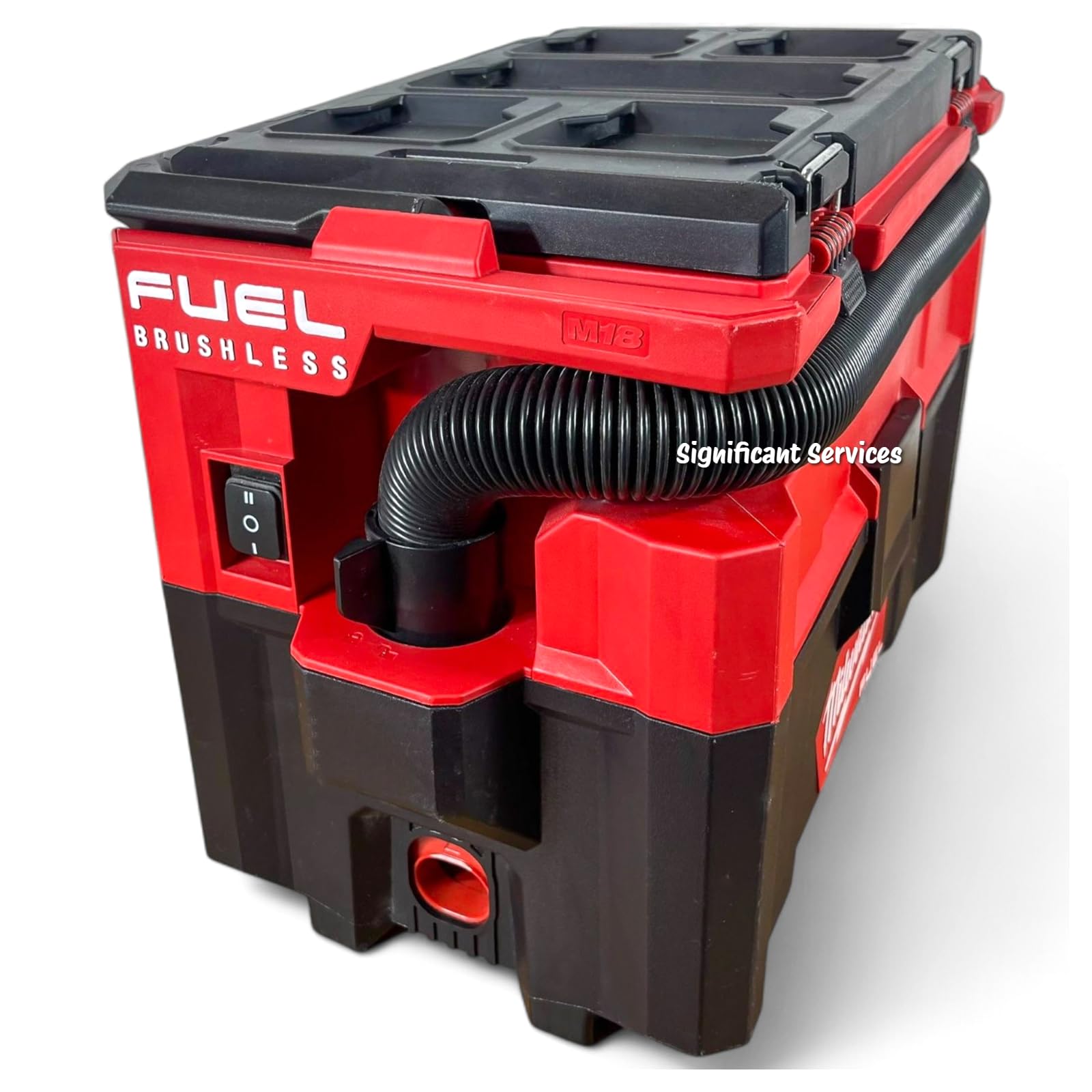
The service-call vac built to go into quiet homes without announcing itself — more suction, half the noise
If you work inside customer homes — HVAC, plumbing, appliance repair — the M18FPOVCL solves the exact problem that corded vacs create: they bark. It runs at 87 decibels — up to 2X quieter than the competition — with 50 CFM and 47-inch water lift. Milwaukee’s marketing name for it is “class-leading Mobility, Less Down Time,” and the honest read is that the mobility and quiet come at the price of the smallest tank in the professional tier here: 2.5 gallons. That’s fine for a service call, tight for a big cleanup. The 50-minute battery life per the spec sheet gives you roughly two or three service calls per charge from a full M18 pack.
The 2.5-gallon canister is a portable canister form factor with a HEPA filter included in the box. That HEPA setup captures fine drywall dust and allergen particles on customer sites rather than venting them back into the room, which is exactly what service techs care about. One owner who runs this in aerospace manufacturing said it replaced corded shop vacs on the floor to eliminate extension cord trip hazards — a real-world problem that this vac solves for anyone working in tight or high-traffic spaces. The same owner’s caveat is worth repeating honestly: it is not suitable for all-day continuous vacuuming or massive messes, and this is where a giant corded vac still wins.
Owner consensus is warm, with performance being the most-discussed theme. The most enthusiastic long-term review calls the design “from the start” thoughtful — easy to empty, lightweight, quiet enough to run inside a house, and it works with optional bags and sponge filters. One dissenting buyer expected more raw suction and complained the attachment storage feels awkward; a fair caution if your mental benchmark is a Dyson-grade handheld rather than a wet/dry canister. For contractors looking to drop cord extension hassle and keep customer rooms quiet, this is the right tool. For a homeowner who wants one vac that handles the entire garage bay, tank size will frustrate you before suction does.
Pro-service angle: The 87-decibel quiet rating is the whole reason to pick this over a bigger canister — it works in occupied homes.
Size reality: 2.5 gallons is a small tank; buy it as a service-call tool, not as a whole-workshop vac.
In-home service techs: The compact, quiet M18FPOVCL is the professional pick when both suction and courtesy matter.
Whole-garage cleanup: Look at the EGO WDV0900 instead — at 9 gallons it swallows messes this Milwaukee’s 2.5-gallon tank cannot.
7. Ryobi RV1811-0 18V ONE+ Cordless Wet & Dry Vac/Project Vac (Bare Tool)
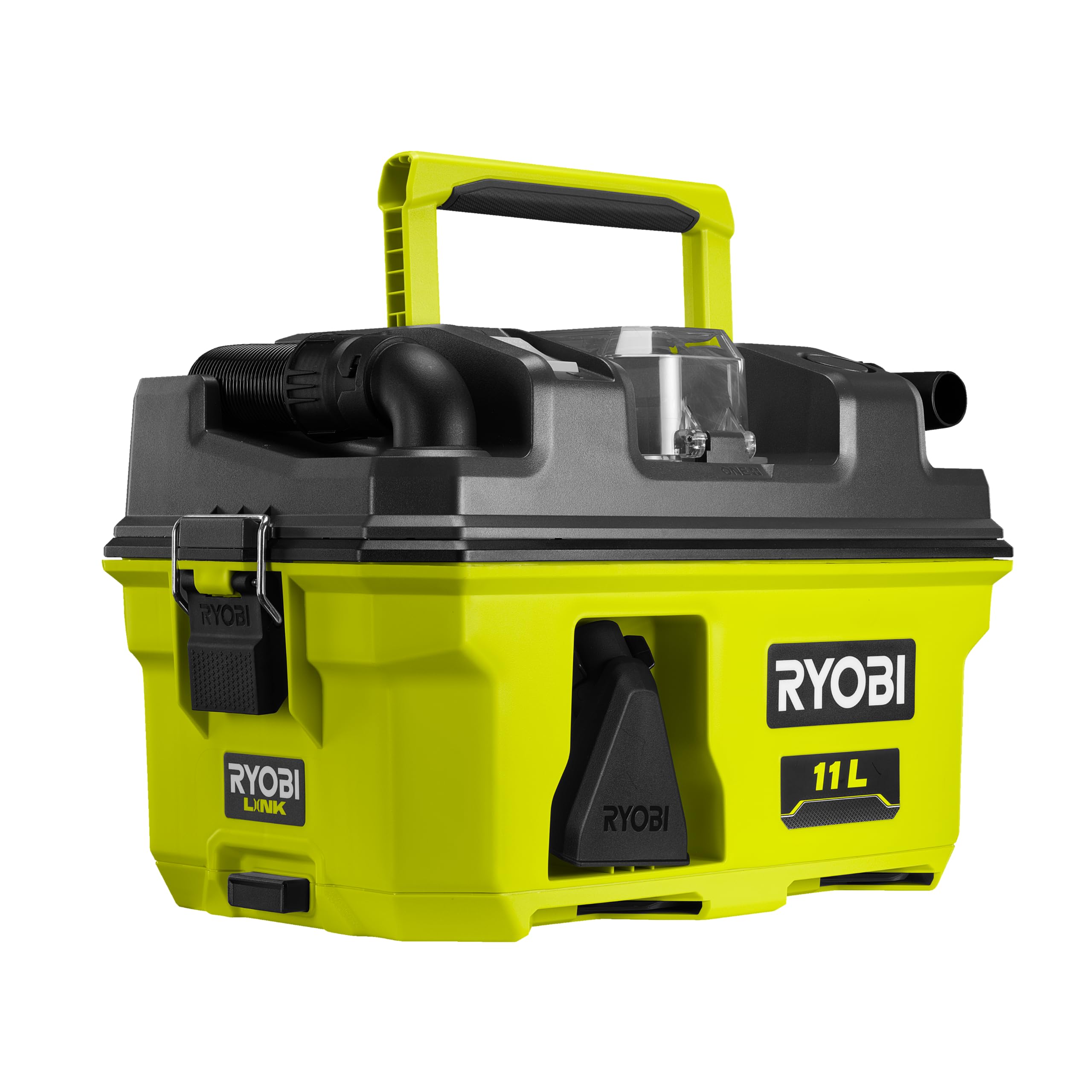
The one that plugs your sander into a vac — dust extraction for the ONE+ tool collection
Woodworkers and remodelers get the most from this Ryobi because of a feature most cordless wet/dry vacs don’t have: a universal adaptor for dust extraction on Ryobi ONE+ tools. Clip the adaptor onto a sander or router, run the hose to the vac, and you’re pulling dust at the source instead of chasing it across the shop. The 11-liter capacity dwarfs the 2.6-to-2.65-gallon canisters in the mid-range tier — this is the largest tank in the corded-lifestyle group and it comes in a compact package that weighs about 4.52 kilograms (just under 10 pounds). Runtime on the spec sheet is 37 minutes per charge.
Suction comes through an 18V motor pushing up to 1500 liters per minute of air flow, which is a strong airflow figure for a bare tool. The hose is 1.8 meters (about 5.9 feet), longer than the Bosch’s 5.25-foot hose and about the same reach as the ReliaRoads. HEPA filter is standard, which keeps fine sawdust out of the air while you work — the same reason Bosch buyers want HEPA on the jobsite. There’s onboard storage for the funnel and crevice tool so you don’t lose accessories between jobs. The bare-tool format means you supply the battery and charger if your ONE+ collection already has them.
Owner feedback is limited, which reflects the smaller review volume for this model. What’s there is positive about the core function: one user says it runs a long time on battery and has excellent suction for cleaning out vehicles, and a different one calls it a good little machine for handling small messes. A single unhappy buyer complained that the unit arrived without the battery cover shown in the product picture and objected to the price paid for that reason — a fulfillment issue, not a performance complaint, as the same buyer noted the vacuum itself performs well like other Ryobi tools. That single incident is note for anyone buying from a third-party seller, but it is not a reason to avoid the model. For ONE+ households with a workshop, this is the vac that turns your whole tool collection into a dust-extraction system.
Workshop-specific edge: The universal dust-extraction adaptor and 11-liter tank make this the pick for people who cut and sand indoors.
Reality check: If you don’t already own Ryobi ONE+ batteries and tools, the bare-tool angle plus the middle-tier price makes this an expensive first cordless vac.
ONE+ woodworker: This is the vac if your sander, router, and miter saw all live on the Ryobi 18V platform.
Generalist shopper: If you just want cordless cleanup around the garage and don’t plan to use dust extraction, you’ll get better value from the ReliaRoads or Seesii.
8. EGO Power+ Shop Vacuum Wet Dry WDV0900, 9 Gallon 110 CFM (Bare Tool)

The nine-gallon brushless tank that out-pulls most corded shop vacs and cleans its own filter
Step up from the palm-size cordless vacs and you land here. The EGO WDV0900 pushes 110 CFM of airflow with 100-inch water lift from a brushless motor — that is more than double the air volume of the ReliaRoads 45 CFM and nearly three times the Seesii’s 43-inch water lift figure. The 9-gallon tank has a drain plug for wet jobs, and the filter cleaning function knocks dust off the cartridge so suction stays at its peak instead of tailing off. This is the vac you buy when the job requires emptying the canister once instead of five times. Weight is 26.7 pounds, so it lives on its own wheels or its carry handle, not on your shoulder.
Runtime is where EGO’s system has the edge: up to 60 minutes on ECO, 30 minutes on high, and 20 minutes on turbo with the recommended two 6.0Ah ARC Lithium batteries. That’s a different league from the 20-to-40-minute bundled-battery vacs — but only if you’re supplying your own batteries and charger, because the WDV0900 is a bare tool. Multiple power modes are controlled on the unit or via the included wireless remote, which is a genuinely useful feature when you want to dim suction from the hose end instead of walking back to the tank. The vac includes a huge accessory kit — two extension tubes, crevice nozzle, round brush dust nozzle, large floor nozzle with brush bar, rubber bar, compact floor nozzle, 1-7/8-inch hose, and a power tool adapter for dust extraction like the Ryobi.
Owners talk about three things: suction, effectiveness, and the freedom that cordless cleaning brings. The most repeated early impression is that this thing is quiet — often quieter than a corded vac doing half the work — and one long-term user compared it directly to a 12-year-old Ridgid 3HP corded unit and said the high setting matches it while turbo exceeds it. Multiple owners mention cleaning an entire two-car garage or two vehicles on one battery charge. The one quirk worth knowing: the suction bypass collar on the remote has been reported by at least one owner to open inadvertently, which he solved by taping it shut. Weighted against how well this sweeps a garage bay, that is a small quibble, not a reason to pass.
Where It Wins Big
- 110 CFM and 100-inch water lift cut through garage-scale messes
- 9-gallon tank with drain plug handles wet jobs without constant emptying
- Up to 60 minutes on ECO with two 6.0Ah batteries — real working runtime
- Wireless remote lets you change power modes from the hose end
- Self-cleaning filter function keeps cartridge suction consistent
- Includes a deep accessory kit with brush bar and power tool adapter
Where It Asks More
- Battery and charger sold separately — you need EGO 56V ARC cells
- 26.7 pounds empty is a wheel-and-carry tool, not a shoulder tool
- Some customers note the suction bypass collar opening on its own during use
- Larger footprint means garage-corner storage, not closet storage
Already all-in on EGO 56V: Buy this as the garage tank for deep cleanups — the tank-to-power balance is class-leading here for big jobs.
First cordless vac purchase: Look at the kitchen-size canisters first if you don’t own EGO batteries — this vac’s math assumes you already do.
9. EGO Power+ Shop Vacuum Wet Dry WDV0904, 9 Gallon 110 CFM (5.0Ah Battery and Charger Included)
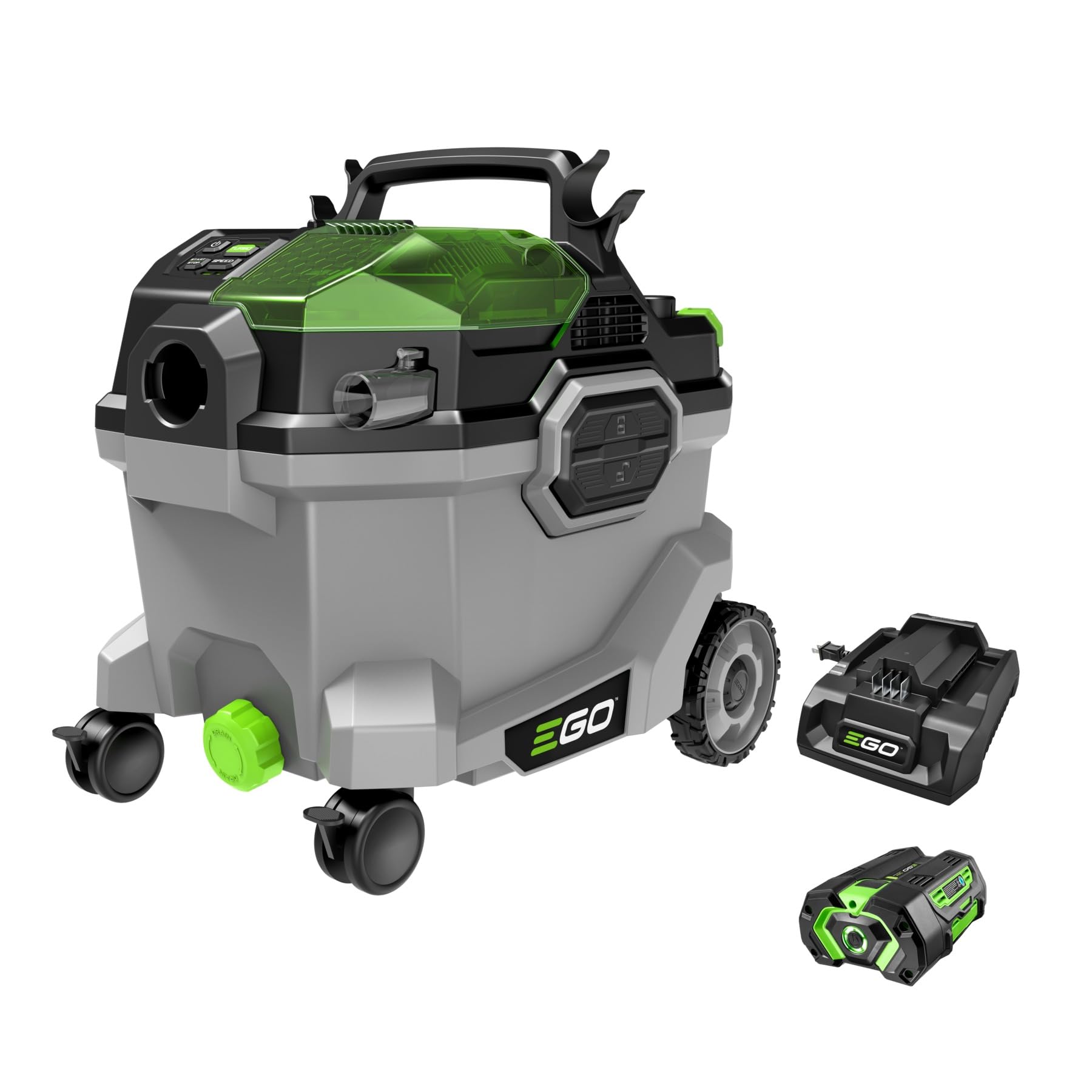
The turnkey 9-gallon EGO — same 110 CFM engine, battery in the box, no shopping ahead
Identical cleaning heart to the WDV0900 above, but this is the one you buy when you don’t want to hunt batteries down separately. The brushless motor delivers the same 110 CFM with 100-inch lift, the 9-gallon tank has a drain plug, and the filter cleaning function keeps the cartridge running at full suction. The difference is packaging: the WDV0904 ships with an EGO 56V 5.0Ah ARC Lithium battery and charger in the box, plus a wireless remote, onboard storage for nozzles, extensions, and hose, and the same accessory kit — two extension tubes, crevice nozzle, round brush dust nozzle, large floor nozzle with brush bar, rubber bar, compact floor nozzle, and 1-7/8-inch hose. Weight is 35.4 pounds when equipped.
Runtime rides on that included 5.0Ah battery: up to 60 minutes on ECO, 30 minutes on high, and 20 minutes on turbo. That’s the same published runtime table as the bare-tool WDV0900 with the recommended batteries, which tells you the 5.0Ah capacity is enough to hit the full runtime numbers on low-power modes. The reduced turbo runtime figure is the reality you’re accepting. Owners find the low setting sufficient for most work and reserve turbo for the worst spills. For pool heater pans, attic cleanups, cabin filters, and grills the vac covers the whole list — one owner specifically calls it ideal for AC pan clogs and attic access where cords are inconvenient and unsafe, and another says it emptied a spa better than a corded vac.
What stands out from the reviews on this specific SKU is that the included battery grade matters. When a vac ships with a bigger battery than most tools in the family, you feel it in the runtime. One EGO loyalist calls the kit “a good EGO intro with larger battery than most tools” — the 5.0Ah capacity beats what most people get bundled with an EGO mower or blower. If you already own EGO batteries, the WDV0900 above saves money by skipping the battery. If you don’t, this is the version that arrives ready to clean on day one. Take the warranty seriously too: 5 years on the tool and 3 years on the battery is a long coverage window for a battery-powered tool.
Turnkey package: The included 5.0Ah battery and charger remove the second purchase order from your shopping list.
Same machine underneath: If you already own EGO 56V batteries, the WDV0900 makes the identical vac without paying for the bundle.
New to the EGO platform: This is the pick that arrives with everything you need to start cleaning the moment you unbox it.
Already EGO-committed: Buy the bare-tool WDV0900 instead — you’d be paying twice for a battery you already own.
Understanding the Specs
Suction Rating (kPa, CFM, and Water Lift)
Three different unit types show up across these vacs: kPa (kilopascals — a measure of pressure at the hose inlet), CFM (cubic feet per minute — how much air volume moves through the hose), and water lift (measured in inches — how high the vac can pull a column of water). Since these measure different physical things, comparing kPa to CFM directly is impossible — a higher kPa means stronger pull at a sealed nozzle, while higher CFM means more airflow for sweeping large volumes of debris. The Seesii’s 15 kPa on high and the ReliaRoads’ 12.1 kPa are pressure figures. The EGO units’ 110 CFM and 100-inch water lift are volume and lift figures — a much larger airflow class than the smaller canisters. Buy the higher-kPa unit for stiff debris and the higher-CFM unit for big loose piles.
Filter Type (HEPA vs. Foam vs. Cartridge)
The filter determines what the vac is actually good at. HEPA filters — used on the Bosch, ReliaRoads, Seesii, Milwaukee M18FPOVCL, Ryobi, and both EGO units — trap fine dry particles like drywall dust and sawdust instead of venting them back into the room. Foam filters, like the one on the Milwaukee MILM18VC20, handle wet pickup more gracefully and tolerate water contact. Cartridge filters, used on the WORX WX031L and both EGO tanks, sit between the two — decent on both dry and wet applications. Always check whether your specific vac wants a filter swap before you suck up a spill.
FAQ
Can a battery powered shop vac really match a corded one for suction?
Will a bare tool shop vac work with batteries from my existing drill?
How long does a battery powered shop vac actually run on one charge?
Do I need to swap the filter when I switch between wet and dry pickup?
Is HEPA filtration worth paying extra for on a shop vac?
What size tank do I actually need for garage and car cleanup?
Can I use a shop vac to blow leaves and clear dust out of tight spots?
Are battery powered shop vacs quieter than corded ones?
Will a 20V shop vac pull water out of a drain pan or AC line?
Do these cordless shop vacs include onboard storage for accessories?
Final Thoughts: The Verdict
For most buyers, the battery powered shop vac winner is the BOSCH GAS18V-3N because it delivers the best blend of jobsite-grade suction, washable HEPA filtration, and grab-and-go portability in a bare tool that accepts batteries from a system you may already own. Its 4.6-star reputation and five-year warranty back up that recommendation. If you already own DeWalt 20V MAX batteries and want the cheapest cordless entry, grab the ReliaRoads 20V Cordless RCSV-20. And for garage-scale cleanups with a 9-gallon tank and self-cleaning filter, the EGO Power+ WDV0900 is the one to reach for. If you’re new to the EGO platform and don’t own their batteries yet, the WDV0904 bundle above is a sensible starting point — it arrives ready to clean on day one. Weigh your battery drawer first, then pick: the vac that runs on cells already in your shop saves the most headache.
How We Picked
We do not accept paid placement. Every pick is matched to a real buyer and a real use-case; we do not hands-on test units.
Sources & Methodology
Specifications: manufacturer listings and product documentation. Review insights: verified customer reviews, as of September 2026. Pricing: not shown on this page (it changes often); check the current price via the retailer link.
As an Amazon Associate, KitchPrep earns from qualifying purchases. This does not affect which products we feature.
Related Guides
