
Specs are compiled from manufacturer listings and verified buyer reviews and can change over time — please confirm the key details on the product page before buying.
If you want every smoke alarm in your house to sound at once when one detects a fire — without paying an electrician to run wires — this list is your answer. The best battery powered interconnected smoke detectors link rooms wirelessly, so a basement fire wakes you in the bedroom.
I’m Mohammad Maruf — the founder and writer behind KitchPrep. This guide is built by comparing the manufacturers’ published specifications and the patterns across verified customer reviews, so you get each pick’s real strengths and trade-offs instead of marketing spin.
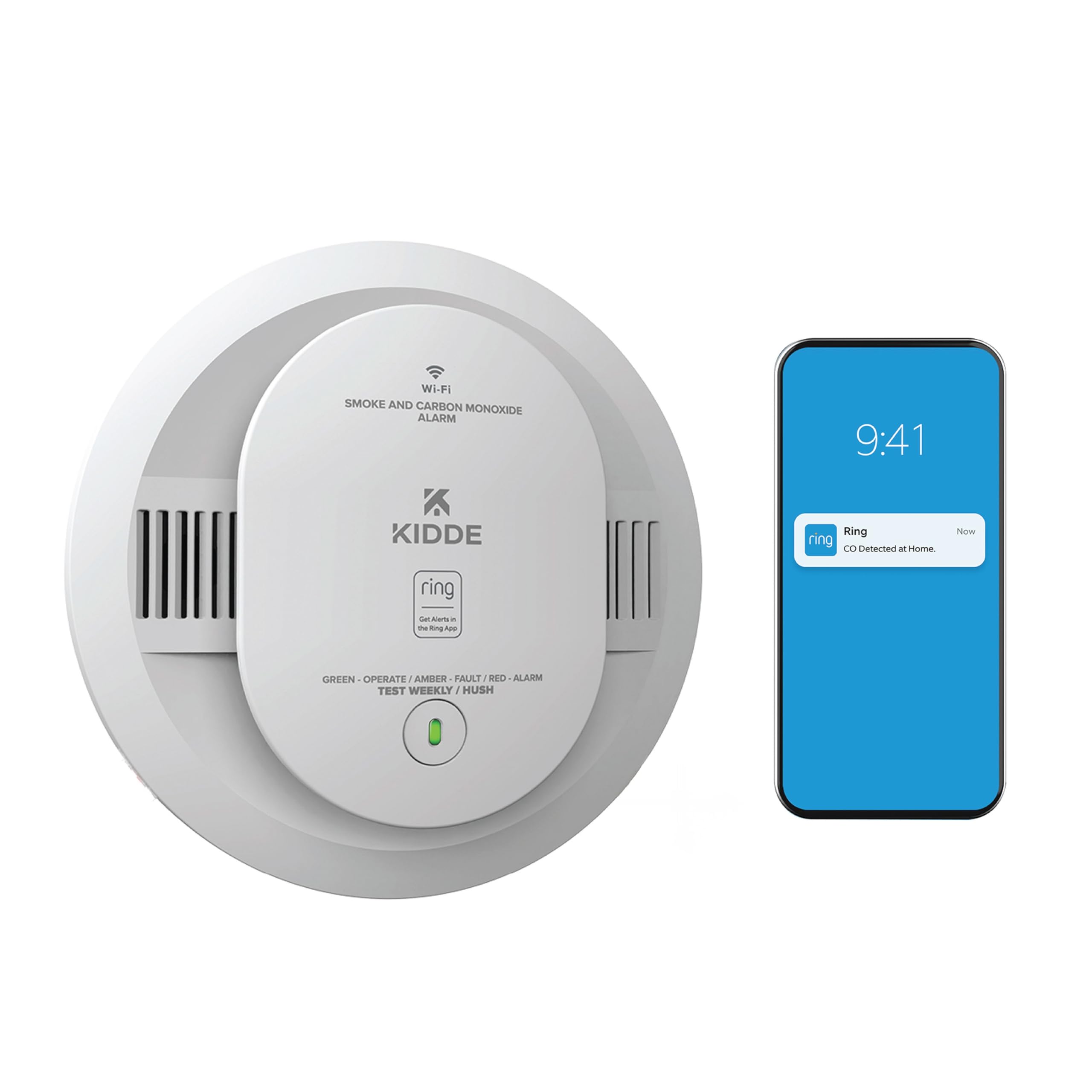
The crowd favorite here is the Kidde Smart with Ring — 4.4 stars across 300+ owners — for its wireless linking and theft of app alerts on a no-wiring install. battery powered interconnected smoke detectors no longer force a choice between safety and convenience.
Our Picks at a Glance
How To Choose The Best Battery Powered Interconnected Smoke Detectors
Battery-powered interconnected alarms fix the oldest home-safety problem: a lone basement detector chirping while a fire grows upstairs. Wireless links let every unit listen for the others, so the alert travels with the danger. Your job is picking the linking system, sensor type, and power source that fit your home.
Check the interconnection method first
Some brands use a proprietary radio frequency link that only works between their own models. Others tie into a smart home hub like Ring or Google Nest. If you already live inside the Ring or Google app, a matching alarm gives you phone alerts alongside the siren. If you want no apps at all, a self-contained RF network still sounds every unit together.
Match the sensor to your false alarm history
Photoelectric sensors react to slow, smoldering smoke and ignore most steam, which is why owners praise them near bathrooms and kitchens. Older ionization types catch fast flames but cry wolf over cooking. A combo alarm that also senses carbon monoxide adds protection for gas furnaces and attached garages in one ceiling mount.
Decide how long you want to think about batteries
A sealed 10-year lithium battery means you install the detector once and replace the whole unit at the end of its life — no chirping at 2 a.m. AA-powered models are cheaper to refresh, but you must remember the swap yourself. Both run during outages, the point of skipping hardwired installs.
Quick Comparison
| Model | Best For | Detection | Power Source | Interconnect Range | Amazon |
|---|---|---|---|---|---|
| Kidde Smart with Ring★ Best Overall | Ring and Alexa households wanting phone alerts | Smoke + CO | 2 AA batteries | Whole-home wire-free | Amazon |
| X-Sense SC01-W10-Year Workhorse | 10-year sealed battery and large linked networks | Smoke + CO | Sealed 10-year lithium | Up to 24 units linked | Amazon |
| First Alert SMCO500V | Voice directions naming the danger’s location | Smoke + CO | AA batteries | Compatible First Alert units | Amazon |
| Heiman S1-R | Renters and tight spaces with no-app linking | Smoke only | Lithium battery included | Up to 656 ft in open air | Amazon |
| First Alert SC5 Smart | Google Nest Protect households on one app | Smoke + CO | 3V CR123A lithium | Nest-compatible wireless | Amazon |
In‑Depth Reviews
1. Kidde Smart Smoke & CO Detector with Ring
Our pick — over 4★ from 350+ verified ratings; the strongest balance of quality and price.
The smart-home upgrade that installs in roughly two minutes per device and never needs a hardwired circuit.
The defining feature is the free Ring app link — smoke, CO, and low-battery alerts reach your phone anywhere, with no subscription. Owners call the QR-code install easy, and several report swapping six aging detectors in under half an hour.
It runs on 2 AA alkaline batteries that come in the box, yet it delivers two-in-one detection for both smoke and carbon monoxide. The maker claims detection over 25% faster than a leading competitor., plus sensing tech that cuts nuisance alarms from cooking.
You get 24/7 status checks, night-chirp prevention, and whole-home wire-free interconnectivity, so every Kidde alarm in your house sounds as one. Some buyers who moved from a Nest Protect note it lacks a night light and Google tie-in, but they still called it a worthy replacement. For Ring users, this is the smooth choice.
What owners cheer
- Barely-there install — a QR scan and two AAs get you running
- App alerts for smoke, CO, and dying batteries at no monthly cost
- Wireless linking means one alarm sets off the whole set
What to weigh
- Connectivity is mixed — some owners hit setup snags
- Optional 24/7 monitoring runs /month if you want it
- No night light or Google Home compatibility
Reach for this if: you live in the Ring or Alexa world and want phone alerts with zero wiring.
Look elsewhere if: you would rather not lean on an app and want a set-and-forget sealed battery.
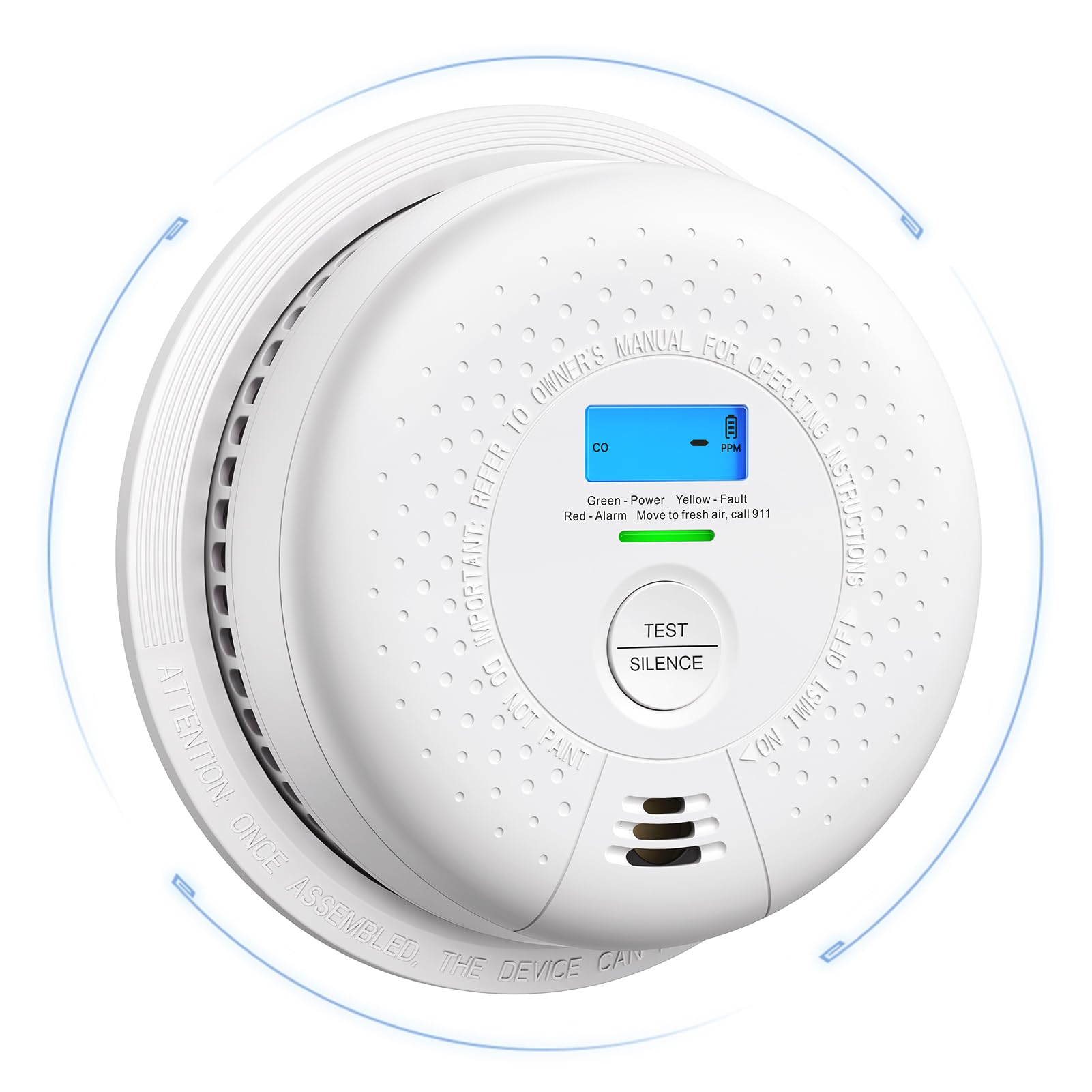
2. X-Sense Interconnected Smoke and CO Detector Combo
The longest-range thinker of the group — a sealed lithium core powers this dual-sensor alarm for a full decade.
Some detectors beg for fresh batteries every year; this one arrives with a sealed 10-year lithium battery and asks nothing of you until 2035 rolls around. That longevity pairs with 2-in-1 protection, sensing both smoke and carbon monoxide through photoelectric and electrochemical sensors.
The wireless link is genuinely whole-home: up to 24 X-Sense Link+ smoke, CO, and combo alarms can join one network, so a trigger in the garage sounds the attic. A small LCD shows current CO levels, and a green LED blinks once per minute to confirm the unit is alive even when the screen sits blank.
Owners describe linking six units to three others as straightforward, and say it wakes the house loudly during a small fire while ignoring normal cooking smoke. The trade-off is placement — the TEST/RESET button sits high on the unit and the LCD is small, so mount it where you can still reach it. The 10-year battery is the standout reason to pick this over an AA model.
The decade play: install it once, forget the battery drawer entirely, and link up to two dozen units across a large home.
The honest catch: a small hard-to-read LCD and a ceiling-high test button require a step stool — and a drop ceiling may need screw modifications.
3. First Alert Battery Combination Smoke & Carbon Monoxide Alarm

The alarm that tells you where the danger is, not just that danger exists — a spoken heads-up for safer escapes.
Most sirens scream and leave you guessing. This First Alert speaks the type and location of the threat, so you know whether to head for the kitchen or away from a CO leak. That voice direction is the detail owners call a genuine escape aid.
Detection is a reliable 2-in-1 — smoke and carbon monoxide — through what First Alert calls Precision Detection, a sensing system aimed at cutting cooking false alarms while still giving early warning. The battery unit links with other compatible First Alert alarms so one trigger sounds the whole home network.
Owners running seven units report three activations in six months — two kitchen smoke events and one bathroom steam case — all detected correctly, with one calling it a worthy stand-in for a wired system. The voice clarity and easy few-minute install earn steady praise. Note the setup itself can be noisy and took about 30 minutes for one buyer, and a rare unit has thrown random nighttime false alarms. Bring a Phillips screwdriver; screws and anchors ride in the box alongside the AA batteries.
What stands out
- Spoken alerts name the danger and its room location
- Interconnects so every compatible alarm sounds at once
- Batteries, screws, and anchors included for a quick mount
What to know
- Setup involves noise and roughly 30 minutes of pairing
- An occasional unit false-alarms at night — rare but real
Choose it for: spoken escape directions that a groggy family can follow in the dark.
Think twice if: you want app alerts or a sealed battery instead of replaceable AAs.
4. Heiman Smoke Detector, Wireless Interconnected Mini Smoke Alarm
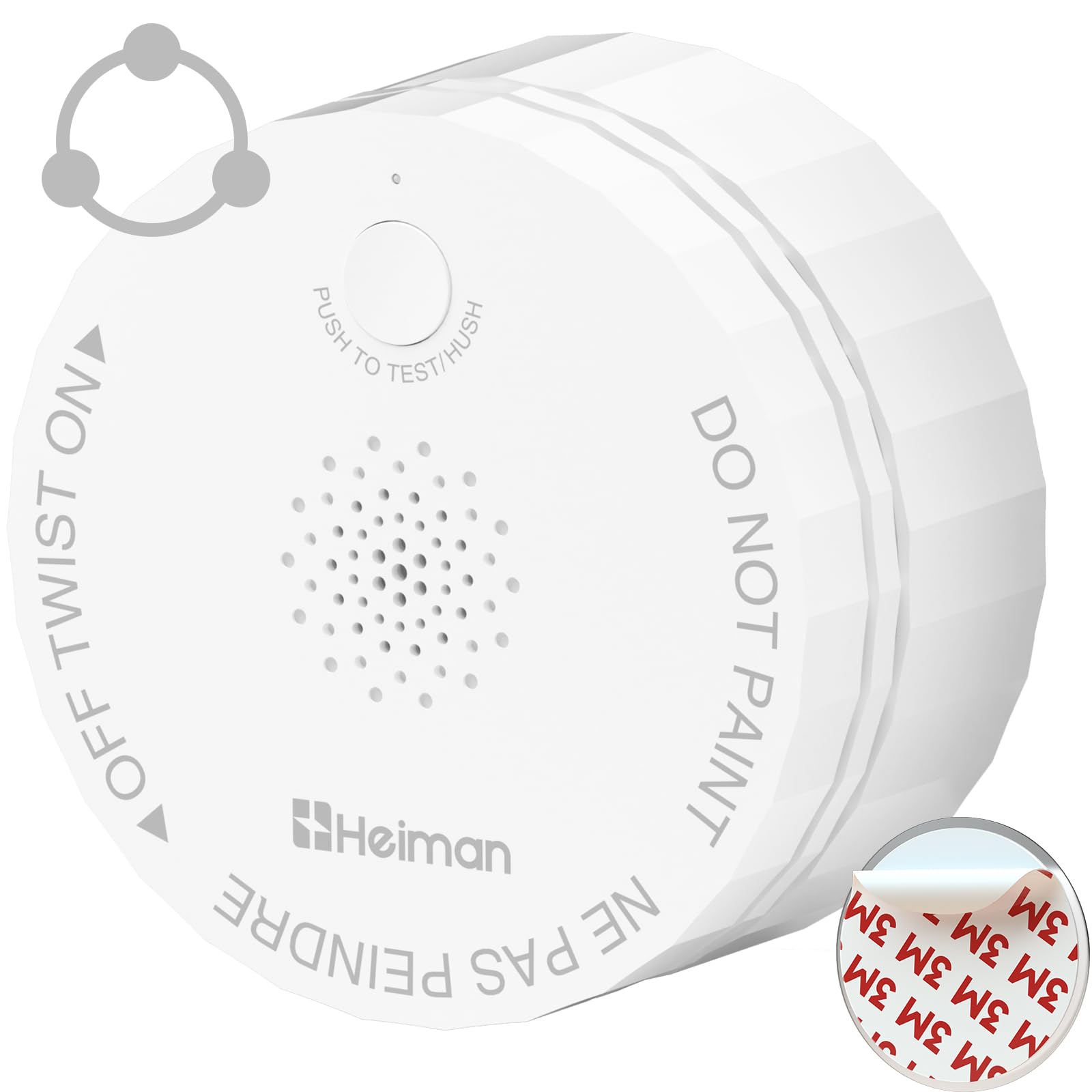
The palm-sized alarm that fits a small bedroom without shouting for attention — and links room to room with no app.
At just 2.7 inches across, this Heiman is the runt of the list, and that size is exactly its superpower for apartments and tight spaces. Owners call it small, discreet, and unobtrusive, with one noting their handyman had it on the ceiling in minutes. The test button doubles as a 10-minute hush for nuisance alarms.
It runs on a lithium battery included in the box, and its dual-beam photoelectric sensor (a type that detects smoke particles without using radioactive material) is why one buyer reports: “No more trouble with steam from my bathroom making this alarm go off.” The wireless interconnection range reaches up to 656 ft in open areas with no Wi-Fi or app required — you can even split five alarms into two separate networks.
Where it saves money and space, it asks for trust in a less-established brand. Reliability and battery life draw mixed notes — some owners see false alarms and a battery that failed within a year, while others praise the loud piercing test tone and easy magnet-held battery swaps. It holds a Red Dot Design Award and meets UL 217 10th Edition., but it is not UL Listed, so check local codes before relying on it for inspections. This is the value pick for renters who want linked protection without committing to a smart-home platform.
The size win: a 2.7-inch footprint slides onto a ceiling without looking bulky, and magnet pads make battery swaps a snap.
Who it is not for: owners who need UL Listed certification for a building inspection, or who demand app-based phone alerts.
5. First Alert SC5 Battery Smart Smoke & Carbon Monoxide Alarm
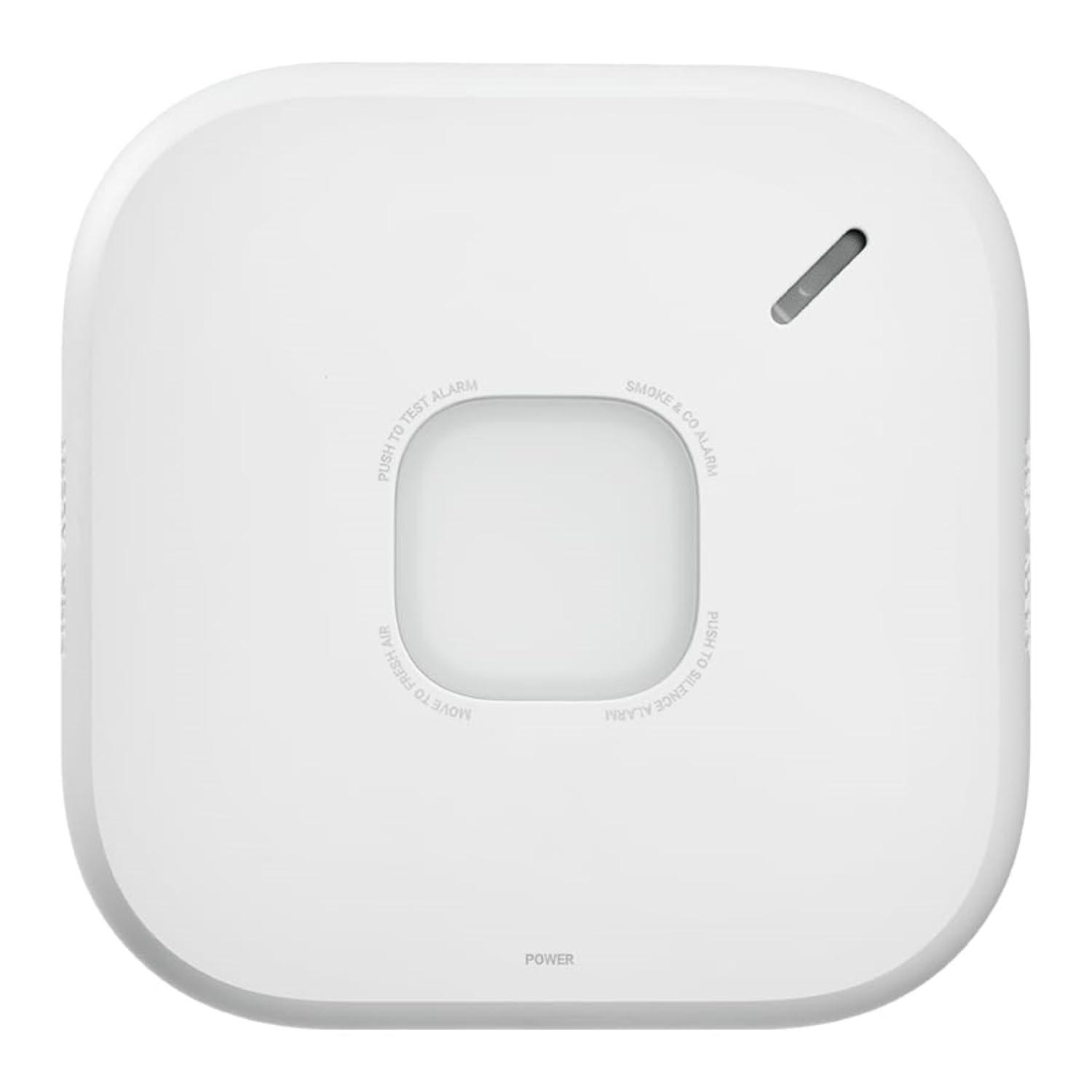
The licensed Nest Protect successor that keeps your Google Home ecosystem while adding First Alert’s sensing expertise.
If your home already runs on Google Nest, this alarm is built to slide into that bracket — literally. Buyers report it fits an existing Nest Protect mount and syncs with the Nest thermostat, letting the HVAC shut off when smoke is detected. Phone alerts for smoke, CO, and low batteries arrive through the First Alert app.
Voice alerts with a Heads-Up warning name the type and location of the danger, and a center glow echoes the Nest look. Power comes from 3V CR123A lithium batteries, keeping it fully wire-free while the interconnect means one sounding unit triggers every compatible alarm in the house.
The honest picture is split. Some buyers call it a worthy Nest replacement that pairs with their thermostat and auto-reconnects after a dropout. Others find it cheap-feeling and frustrating: false alarms, a loose battery door, a weak siren, and frequent disconnects top the list of complaints, alongside a stripped-down app. If you already own Nest hardware and want phone alerts without ripping out your ecosystem, this is the only licensed path forward — just temper expectations on build quality versus the original.
Why Nest owners look here
- Licensed Nest Protect alternative that fits the existing bracket
- Pairs with Nest thermostat to shut down HVAC on alarm
- Voice alerts name the danger type and location
What the reviews flag
- Reliability is the biggest sore spot — false alarms and dropouts recur
- Feels lighter and less polished than the Nest it replaces
- Setup needs the First Alert app plus a Google Home sync
Grab it for: a Google-centric home that needs a licensed drop-in replacement for an expiring Nest Protect.
skip it if: you can live outside the Nest walled garden — a simpler linked alarm avoids the app friction entirely.
Understanding the Specs
Wireless Interconnection
This is the feature that makes a whole network act as one. When any linked alarm detects a threat, it sends a radio signal to every other unit, and they all sound together. Some systems use a proprietary RF link between the same brand’s models, while others tie into a smart hub like Ring or Google Nest. A set of five linked alarms can be split into two separate networks if you want only certain rooms to trigger together.
Photoelectric vs. Ionization Sensors
Photoelectric sensors aim a light beam across a chamber and trigger when smoke particles scatter it — which makes them fast at catching slow, smoldering fires and largely immune to steam from a shower or a boiling pot. Ionization sensors detect fast-flaming fires but tend to false-alarm near cooking. Combo alarms pair a photoelectric sensor with an electrochemical cell that sniffs out carbon monoxide, giving you smoke and CO protection from a single ceiling mount.
Sealed Lithium vs. AA Batteries
A sealed 10-year lithium battery is welded into the unit, so you install it once and replace the entire detector at the end of its decade-long life. There is no battery drawer to find at 2 a.m. when the chirping starts. AA-powered models cost less to refresh, but you own the job of remembering the swap. Either way, battery power keeps the alarm alive during a power outage — the whole point of skipping the hardwired install.
False Alarm Reduction
Smart sensing logic separates real smoke from everyday steam and cooking fumes, so the alarm stays quiet when you are just searing a steak. Brands describe this as enhanced or precision detection, and owners confirm the difference — one reviewer noted their bathroom steam no longer sets off the alarm. Reserve the test button for real weekly checks, and use the hush function to silence a nuisance trigger for about ten minutes.
FAQ
What does interconnected mean on a battery smoke detector?
Do battery powered interconnected alarms work during a power outage?
How many interconnected smoke detectors can I link together?
What is the difference between photoelectric and ionization sensors?
How long does a 10-year sealed battery actually last?
Can I mix smoke detectors from different brands in one network?
Will a smoke alarm near my bathroom or kitchen go off from steam?
Do I need a smart home app to use interconnected smoke detectors?
Final Thoughts: The Verdict
Across the board, the battery powered interconnected smoke detectors winner is the Kidde Smart with Ring because it pairs a two-minute no-wiring install with free phone alerts and whole-home linking — the best rating and review count in this list back that call. If you want a decade of silence on battery swaps, grab the X-Sense SC01-W with its sealed 10-year lithium cell. And if your house already runs on Google Nest, the First Alert SC5 is the licensed drop-in that keeps your ecosystem intact.
How We Picked
We do not accept paid placement. Every pick is matched to a real buyer and a real use-case; we do not hands-on test units.
Sources & Methodology
Specifications: manufacturer listings and product documentation. Review insights: verified customer reviews, as of September 2026. Pricing: not shown on this page (it changes often); check the current price via the retailer link.
As an Amazon Associate, KitchPrep earns from qualifying purchases. This does not affect which products we feature.
Related Guides
