
Specs are compiled from manufacturer listings and verified buyer reviews and can change over time — please confirm the key details on the product page before buying.
That high-pitched chirp at 2 a.m. from a dying battery is the single most frustrating thing about a smoke detector. A true Battery Operated Smoke Detector ends that cycle—either with a sealed battery that lasts up to 10 years or with easy-to-swap AA batteries you can replace in seconds. Your real choice is how much maintenance you want to handle over the next decade.
I’m Mohammad Maruf — the founder and writer behind KitchPrep. This guide is built by comparing the manufacturers’ published specifications and the patterns across verified customer reviews, so you get each pick’s real strengths and trade-offs instead of marketing spin.
Here are the best battery-operated smoke detectors for every home, ranked on real protection and owner satisfaction. battery operated smoke detector
Our Picks at a Glance

How To Choose The Best Battery Operated Smoke Detector
Battery-powered smoke alarms are a simple but serious purchase, and the main differences come down to the battery type, the sensor inside, and whether the unit also watches for carbon monoxide. Understanding these three factors will narrow your options immediately.
Sealed Battery vs. Replaceable Batteries
The biggest fork in the road is how the alarm gets power. A sealed lithium battery lives inside the unit for up to 10 years, so you never swap batteries — you replace the entire alarm when it signals end-of-life. Other models run on 9V or AA batteries that you change yourself, often a couple of times over the product’s life. Sealed units cost a bit more upfront but remove the most common maintenance chore entirely.
Photoelectric vs. Ionization Sensors
Almost all modern battery alarms use a photoelectric sensor (a light-based detector) that excels at catching slow, smoldering fires — the kind that produce lots of smoke before flame. These sensors are also less likely to scream during a cooking mishap, since they react to larger smoke particles rather than tiny bits of flame. Look for the phrase “photoelectric” in the specs if you cook frequently.
Smoke-Only or Smoke + Carbon Monoxide Combo
Carbon monoxide (CO) is an invisible, odorless gas, and a smoke alarm cannot detect it. If you have any gas appliances, a furnace, or an attached garage, a combination alarm that also detects CO gives you two critical layers of protection in one mount. These combo units stay battery-powered, so they work even during a power outage.
Quick Comparison
| Model | Best For | Power Source | Sensor Type | Protection | Amazon |
|---|---|---|---|---|---|
| X-Sense SD2J0AX★ Best Overall | Best Overall | 10-Year Sealed Lithium | Photoelectric | Smoke | Amazon |
| Kidde 10SDRCompact Pick | Compact Ease | 2 AA Batteries | Advanced Sensing | Smoke | Amazon |
| SITERWELL GS509ABudget Pick | Budget Pick | 9V Battery | Photoelectric | Smoke | Amazon |
| SITERWELL GS525A | Sealed Convenience | 10-Year Sealed Lithium | Photoelectric | Smoke | Amazon |
| First Alert SMCO200 | Slim Design | AA Batteries | Precision Detection | Smoke + CO | Amazon |
| X-Sense SD2L0AX | Multi-Room 3-Pack | 10-Year Sealed Lithium | Photoelectric | Smoke | Amazon |
| Kidde 900-CUDR-V | Voice Alerts | 2 AA Batteries | Photoelectric + Electrochemical | Smoke + CO | Amazon |
| SITERLINK GS525A 4-Pack | Whole-Home Value | 10-Year Sealed Lithium | Photoelectric + AI | Smoke | Amazon |
In‑Depth Reviews
1. X-Sense 10-Year Smoke Alarm, Photoelectric Sensor, ETL Listed, SD2J0AX
Our pick — over 4.5★ from 450+ verified ratings; the strongest balance of quality and price.
The low-maintenance pick whose built-in lithium battery ends the midnight chirp ritual for a full decade.
This is the alarm for anyone tired of swapping batteries. It packs a sealed lithium battery rated for up to 10 years of power, so you will not touch it again until the unit signals end-of-life. It is ETL Listed to UL 217, so an independent lab verified its smoke-detection performance.
The photoelectric sensor (a light-based detector) is the key to kitchen peace — it helps reduce nuisance alarms from cooking fumes and steam while staying responsive to real smoke. Owners replacing 20-year-old units report the old ones chirped at night from dying batteries, and this model finally puts a stop to that. Installation takes minutes with the included screws and no electrician.
There is one honest catch: that battery is built in and cannot be replaced, so when the alarm reaches end-of-life you buy a new unit. Buyers report this detail in the description can be easy to miss, but they also note that at 10 years it is a non-issue for most households. An automatic self-test monitors status, and the Test/Silence button lets you quiet a nuisance alarm quickly.
What Wins Owners Over
- Sealed 10-year battery means zero replacements or routine maintenance
- Photoelectric sensor cuts cooking and steam false alarms
- Simple screw-in install with no wiring required
The Fine Print
- Battery is built in and cannot be swapped out
- Runs independently — no Wi-Fi or wireless linking between units
Your best bet if: you want a decade of protection with no battery chores and you cook often enough to dread false alarms.
Think twice if: you prefer replaceable batteries or need interconnected alarms that sound together across the house.
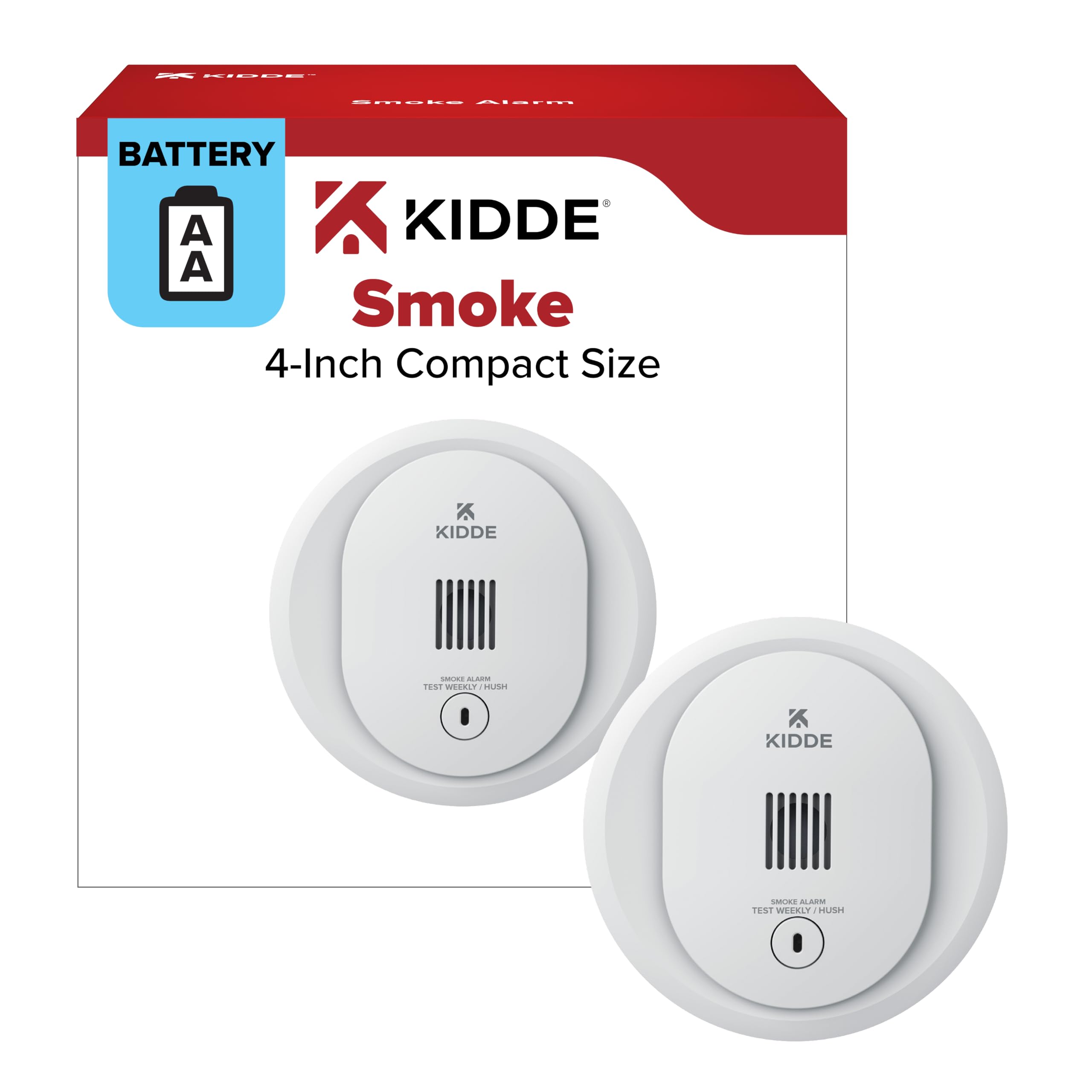
2. Kidde Compact Smoke Detector, AA Battery-Powered, 10SDR
A palm-sized 4-inch alarm that sticks to the wall with no drilling and still wakes the whole house.
If you hate the bulk of standard detectors, this one measures just 1.88 inches deep by 4 inches wide — a compact footprint that disappears on a wall or ceiling. Owners love that you can press the sticky side on the wall and attach the magnet piece, skipping the drill entirely. It runs on two AA batteries that are included and easy to load into the back.
Beyond the size, Kidde says its sensor detects smoke over 25% faster than the baseline standard., backed by a loud 85-decibel alarm with a red LED light so you get both sound and a visual cue. The advanced sensing helps tell the difference between real smoke and everyday cooking steam, cutting false alarms. It meets UL 217 10th Edition and FCC standards.
The honest trade-off here is the battery life feedback — while the unit ships with batteries and a 10-year limited warranty, some owners mention low-battery chirps after about a week, so it is worth having spares on hand. Even so, customers note their last one lasted a full 10 years, which is the expected lifespan of these devices. It is a proven, no-fuss design from a major safety brand.
Small but mighty: the 4-inch footprint pairs with a genuinely loud 85 dB alarm, and the no-drill magnetic mount makes it the easiest unit here to place.
Reach for this if: you want a discreet, compact alarm you can mount in seconds without tools and replace batteries yourself.
Look elsewhere if: you would rather never change a battery again — this one needs fresh AAs periodically.
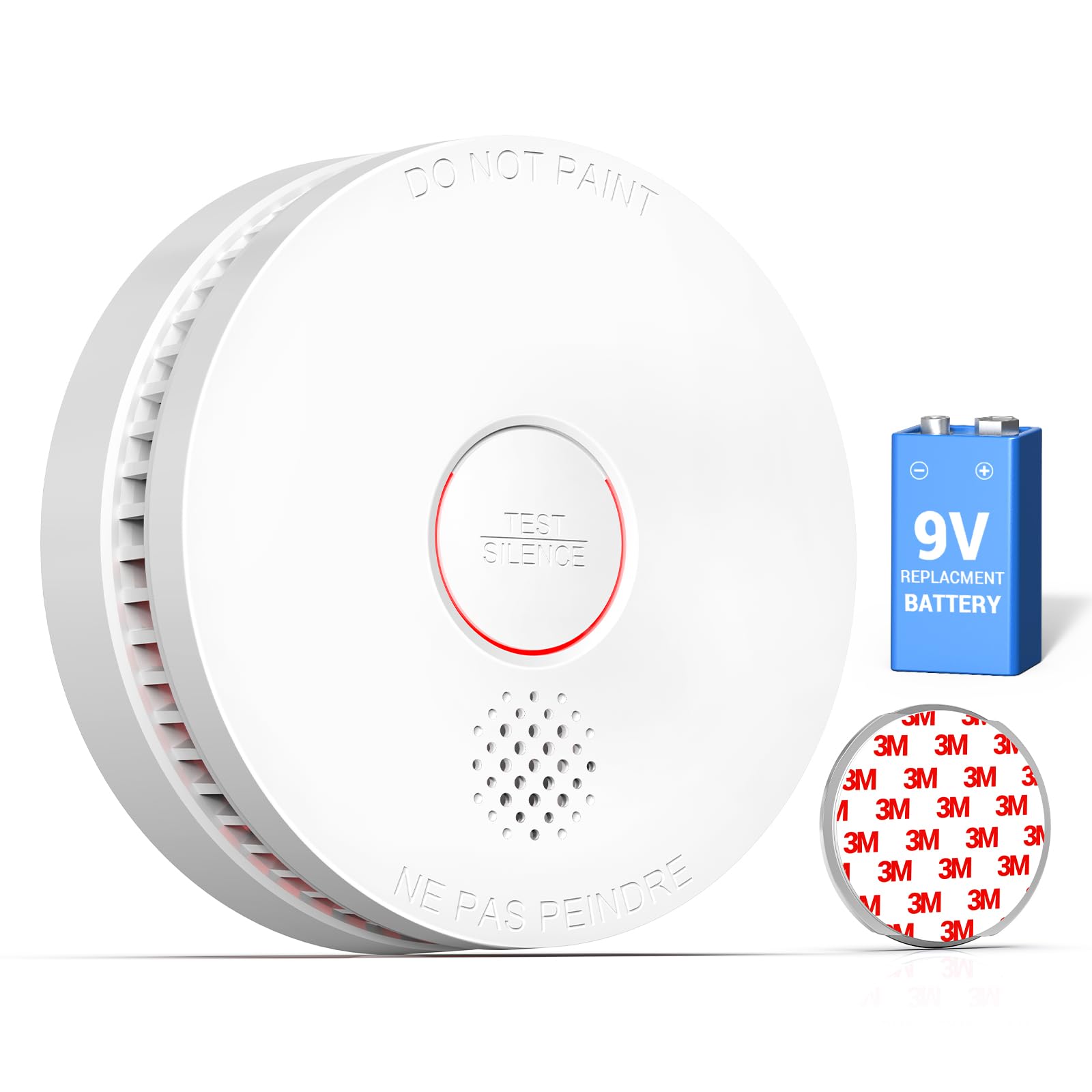
3. SITERWELL Smoke Detector Fire Alarms 9V Battery Operated
The featherweight 3.52-ounce alarm an 80-year-old owner hung with a grabber tool — no ladder needed.
At just 3.52 ounces, this is the lightest detector here — a full 77% lighter than the Kidde compact model — and the smallest footprint makes it fit almost anywhere. One owner in their 80s used a grabber tool to mount it without even touching a step stool, which tells you how simple the bracket setup is. A 9V battery runs it, with the unit designed for a 10-year product life through regular battery swaps.
It uses photoelectric technology (a light-based sensor), which is more sensitive to slow smoldering fires that generate light smoke and little heat. The Test/Mute button lets you verify operation weekly, and a low-battery signal chirps to tell you it is time for a fresh 9V. Build quality is the most-praised feature — well over three dozen buyers single it out positively, and the polycarbonate housing feels solid.
The mixed notes come down to loudness and the magnet — some owners find the alarm plenty loud while others wish it had more bite, and the magnetic attachment does not always include the magnetic piece. If you want a tiny, inexpensive alarm for a spare room or workshop, this is a genuine deal. It is easy to install, fits just about anywhere, and works when tested with a clear alarm.
The Strong Suit
- Ultra-light 3.52 oz body mounts anywhere with ease
- Photoelectric sensor catches smoldering fires early
- Budget-friendly price with a replaceable 9V battery
What to Watch
- Alarm volume gets mixed feedback — fine for some, modest for others
- Magnetic piece is not always included in the box
Best for: tight budgets and low-traffic spots like basements, garages, or guest rooms where a compact basic alarm does the job.
Not ideal for: large open areas where you need maximum volume to wake heavy sleepers.
4. SITERWELL Smoke Detector 10 Year Battery Smoke Alarm Fire Detectors
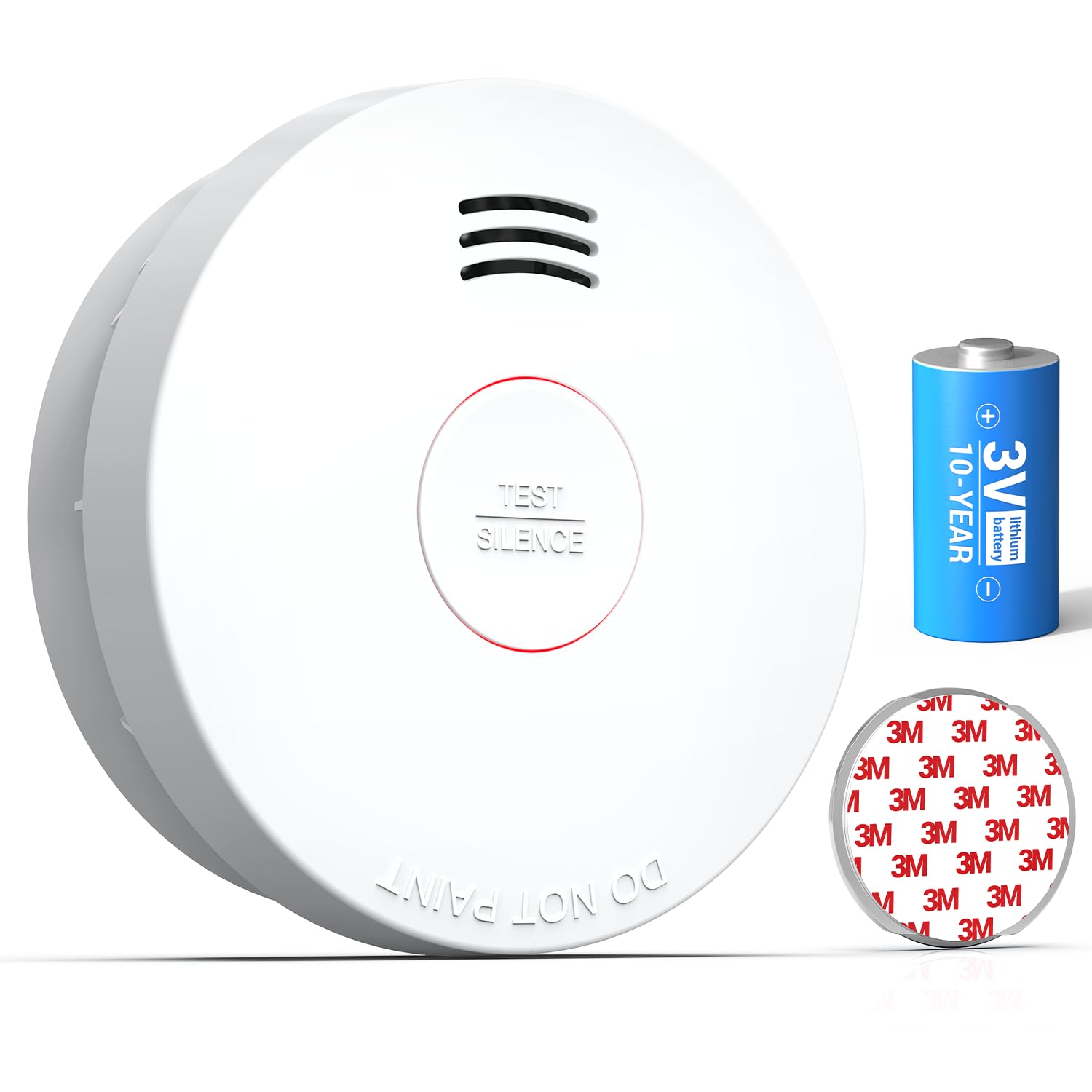
The sealed-lithium workhorse that magnetically snaps into place and ignores the steam from your shower.
This is the upgrade path for anyone who wants the 10-year sealed-battery convenience without paying flagship prices. A built-in 3V lithium battery runs for 10 years and reminds you with a fault signal when it is time to replace the unit. It is UL 217 listed, meaning it passed the recognized smoke-detection safety standard, and the photoelectric sensor targets slow smoldering fires.
Installation is genuinely flexible — both magnets and screws are included, so you can snap it to a smooth ceiling or screw it in elsewhere. Owners particularly like the magnetic mount on smooth surfaces, and the 85-decibel alarm is loud enough to wake sleepers across the room. An tune sensing algorithm filters out daily steam and cooking smoke interference, which is exactly what you want near a kitchen or bathroom.
The trade-offs surface in the details: the red blinking status light every minute is annoying in bedrooms — one owner taped over it — and the magnets do not stick well to textured surfaces. Reliability gets mixed feedback too, with some units stopping after initial use, so buy from a source with easy returns. Quality is the top praise with nearly 60 owners citing it, and the value-for-money sentiment is strong.
Big value, minor quirks: a 10-year sealed battery and dual mounting options at a budget-friendly price, held back only by a bright status blink and textured-wall magnet limits.
Choose this if: you want sealed-battery convenience with magnetic no-drill mounting on smooth ceilings.
skip it if: a blinking light in your bedroom would drive you crazy, or your ceiling is heavily textured.
5. First Alert Battery Combination Smoke & Carbon Monoxide Alarm

The 1-inch-deep sliver that hugs your ceiling and blends into the room instead of dominating it.
First Alert’s Precision Detection technology is the headline here — it is built to comply with new industry standards that cut cooking nuisance alarms while still giving early warning in a real fire. This is a 2-in-1 alarm, protecting against both smoke and carbon monoxide in a single slim unit. At just 1 inch deep, it is half the depth of a standard alarm, so it sits flush and looks far cleaner on a ceiling.
It runs on AA batteries, which owners appreciate because they are simple to replace — several note this model undercuts big-box store pricing on the same combo protection. An end-of-life warning tells you when the unit has reached the end of its service life, and the battery-operated design means it keeps working through power outages. The battery life is a genuine positive, with owners reporting roughly a decade before needing attention.
The catch is false alarms — while the sensing tech is designed to reduce them, a meaningful share of shoppers say frequent false alarms in daily use. Quality is the most-cited praise at over two dozen mentions, and the slim design earns consistent compliments. If you want a low-profile combo unit with replaceable batteries from a brand name you recognize, this fits the bill.
Looks + protection: the half-depth profile is the defining feature, and having replaceable AAs keeps the running cost low.
Best for: style-conscious homes that want a discreet dual smoke-and-CO alarm with easy battery swaps.
Not for: anyone hypersensitive to occasional false alarms from cooking or steam.
6. X-Sense 10-Year Smoke Detector, Photoelectric Sensor, ETL Listed, SD2L0AX

A three-pack of tamper-resistant lithium alarms that auto-activate the moment they click onto the bracket.
Buying a three-pack solves the whole-house problem in one order. These X-Sense units feature a built-in tamper-resistant lithium battery delivering up to 10 years of power, and owners love that they auto-activate when attached to the bracket — no on/off switch, no battery tab to pull. They are ETL listed to UL 217, meaning independent testing confirmed their smoke-detection performance.
Each alarm uses a photoelectric sensor that helps distinguish real smoke from steam and cooking fumes, cutting nuisance alarms while catching slow fires. The housing is fire-resistant ABS material for added protection, and a built-in self-test monitors alarm performance. One owner summed it up neatly: they bought the 3-pack because they needed three, and the install was so simple they did it all themselves.
The mixed feedback centers on reliability, with some units working great while a few just stop working, so test each one after mounting. Noise also gets mixed reviews, though most find it sufficient. The standout praise is ease of installation with 45 owners citing it, and the 10-year battery life at 22 mentions is a close second — this is a dependable multi-room value.
The Big Win
- Three alarms in one box for whole-home coverage
- Auto-activation on the bracket — zero setup fuss
- Fire-resistant ABS housing adds durability
The Trade-Off
- Reliability is mixed — a few units stop working, so test each
- Sealed batteries mean full replacement at 10 years
Choose this if: you are equipping multiple bedrooms or hallways and want one box to do it all.
Pass it over if: you need interconnected alarms or prefer to test each unit’s noise level before committing to three.
7. Kidde Smoke & Carbon Monoxide Detector, AA Battery Powered, Voice Alerts

An alarm that talks, telling you “Fire!” versus “Warning Carbon Monoxide” so you know the threat instantly.
This is the detector for anyone who has ever woken up confused by a generic beep. A voice alarm announces the hazard type — “Fire!” for smoke or fire, “Warning Carbon Monoxide” for CO gas, or “Low Battery” when the AAs need replacing — so you always know exactly what you are dealing with. It pairs a photoelectric sensor for smoldering-fire smoke with an electrochemical sensor for CO, all powered by two included AA batteries.
The 85-decibel alarm is backed by LED warning indicators: green means normal operation, amber signals an operating error, and red means smoke, fire, or carbon monoxide. It is UL listed and backed by a 10-year limited manufacturer warranty. A mounting bracket allows quick installation in four orientations, and being battery operated means it keeps detecting even during a power outage.
Quality is the most-cited praise with 40 owners mentioning it, and the voice alerts get consistent love for being genuinely helpful. The reliability picture is mixed — many say it works as advertised, but some report persistent false alerts after a few months, with at least one owner needing a replacement. Buyers report the voice alerts are worth it for the clarity they bring to an emergency.
Clear communication: the spoken hazard warnings and color-coded LED status make this the most informative detector on the list.
Your pick if: you want instant clarity on whether it is smoke or carbon monoxide, plus 24/7 self-testing components.
Think twice if: you are sensitive to occasional false alerts, as a minority of owners hit persistent ones.
8. SITERLINK Smoke Detectors 10 Year Battery Backup, GS525A 4 Pack
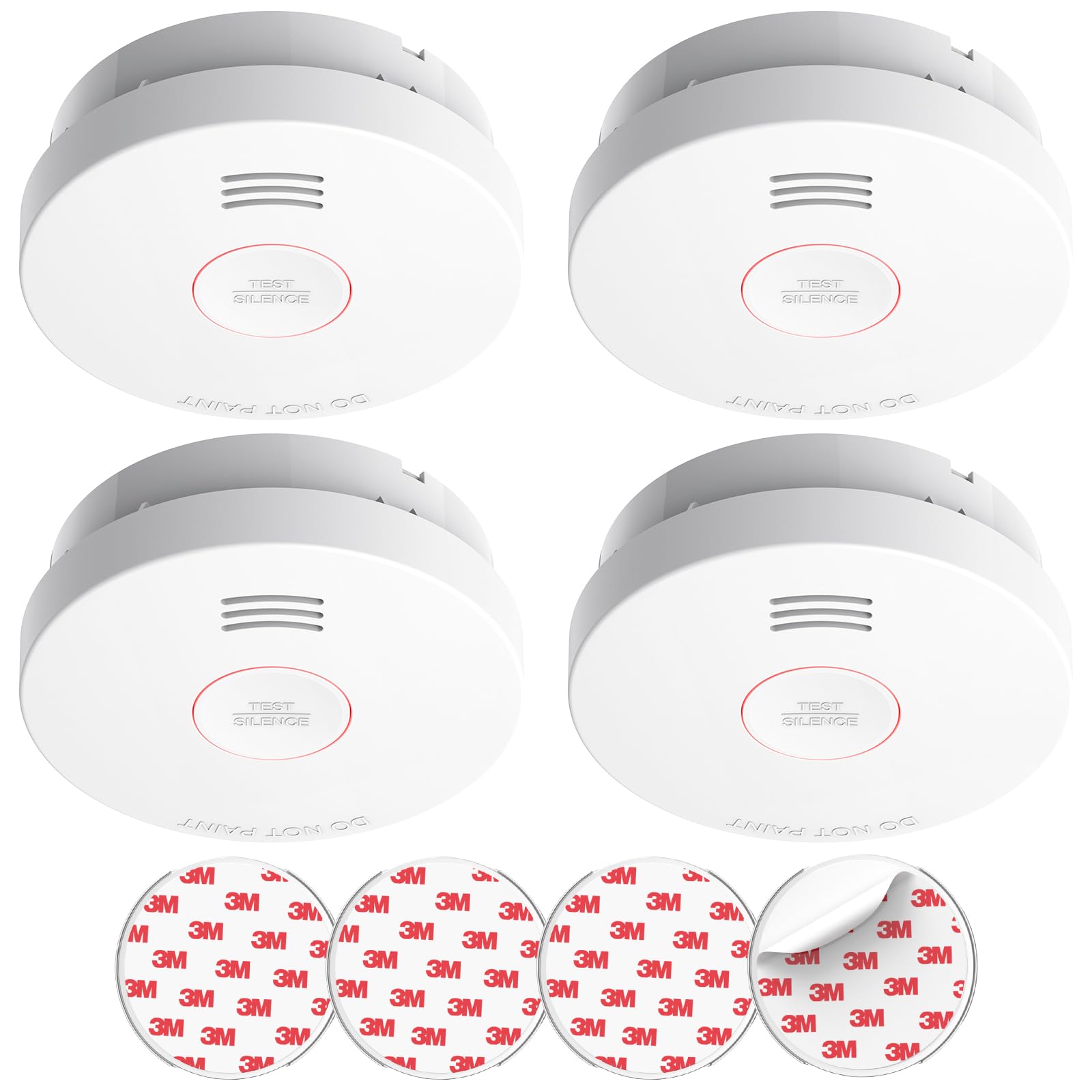
The four-pack that replaces every old detector in the house at once — adhesive-backed for zero ceiling holes.
For a full-home sweep, this four-pack is the most efficient way to bring every room up to current safety standards. Each unit packs a 10-year sealed lithium battery, so the entire house is covered for a decade with no battery swaps. Owners mention the adhesive backing sticks well and lets you mount high ceilings without drilling, and the units can be easily relocated when needed.
Beyond the sealed battery, this version adds what the maker calls advanced AI technology that actively learns your home environment to reduce false alarms from dust and steam. A photoelectric sensor handles the actual smoke detection, responding to slow smoldering fires while minimizing nuisance triggers. The compact size — 3.93 inches by 1.38 inches deep — and the Test/Silence button round out a genuinely simple design.
The standout feedback is installation, with 80 owners citing it as the top positive, followed closely by functionality at 65 mentions. Buyers love that you can stick them on without screws and that battery life is preinstalled and sealed. The mixed notes are on the compact size — some find it perfectly unobtrusive while others wish it were larger — and a 3-year limited warranty covers defects (not a battery performance claim).
The Efficiency Play
- Four alarms cover a whole home in one order
- Adhesive backing means no drilling on high ceilings
- AI-assisted sensing cuts dust and steam false alarms
Consider This
- Compact size gets mixed reactions — some want a bigger unit
- 3-year warranty covers defects, not the battery itself
Best for: homeowners replacing every outdated detector at once who want a decade of zero maintenance.
Not ideal for: anyone who wants a single premium unit rather than a bulk four-pack approach.
Understanding the Specs
The 10-Year Sealed Battery
Many modern battery smoke detectors hide a lithium battery inside the unit that is rated for up to 10 years of power. You never swap it — when the alarm signals end-of-life, you replace the whole unit. This eliminates the most common failure: forgetting to replace a 9V battery.
Photoelectric vs. Electrochemical Sensors
A photoelectric sensor uses light to detect the large particles from slow, smoldering fires — think a couch cushion smoldering before it flames. An electrochemical sensor is the piece that sniffs out carbon monoxide gas. Combo units pair both so one device catches two different threats.
FAQ
How does a sealed 10-year battery detector differ from one that uses AA or 9V batteries?
Will a battery-powered smoke detector work during a power outage?
Why does my smoke detector chirp at night even after I replaced the battery?
What is the difference between a photoelectric and an ionization smoke detector?
Can a battery-operated smoke detector also detect carbon monoxide?
How often should I test a battery-powered smoke detector?
What does UL 217 certification mean for a smoke detector?
Is it better to buy a single detector or a multi-pack for my home?
What should I do when my 10-year sealed battery detector reaches end-of-life?
Final Thoughts: The Verdict
For most people, the battery operated smoke detector winner is the X-Sense SD2J0AX because its sealed 10-year battery and photoelectric sensor deliver a decade of protection with zero maintenance chores. If you want combination smoke and carbon monoxide coverage, grab the X-Sense SC06 for two threats in one mount. And for equipping an entire home at once, the SITERLINK 4-pack is the one to reach for.
How We Picked
We do not accept paid placement. Every pick is matched to a real buyer and a real use-case; we do not hands-on test units.
Sources & Methodology
Specifications: manufacturer listings and product documentation. Review insights: verified customer reviews, as of September 2026. Pricing: not shown on this page (it changes often); check the current price via the retailer link.
As an Amazon Associate, KitchPrep earns from qualifying purchases. This does not affect which products we feature.
Related Guides
