
Specs are compiled from manufacturer listings and verified buyer reviews and can change over time — please confirm the key details on the product page before buying.
A battery-operated carbon monoxide alarm cuts the cord and the worry, working even when the power is out. The real buying question is simple: do you want to feed it batteries every few months, or have one sealed unit quietly protect you for a decade?
I’m Mohammad Maruf — the founder and writer behind KitchPrep. This guide is built by comparing the manufacturers’ published specifications and the patterns across verified customer reviews, so you get each pick’s real strengths and trade-offs instead of marketing spin.
Your search for a reliable, easy-to-install battery operated carbon monoxide alarm ends here — we break down battery life, sensor accuracy, and loudness to find your perfect safety match.
Our Picks at a Glance


How To Choose The Best Battery Operated Carbon Monoxide Alarm
Choosing a CO alarm depends on three decisions: the type of battery, the kind of sensor, and how loud and clear the alarm is. Get those right and you have a device that quietly watches the air for years.
Decide: Replaceable batteries or a sealed 10-year cell
Replaceable battery models, usually running on AAs or a 9-volt, cost less upfront and let you refresh the unit with fresh cells. Sealed lithium models cost more but lock in a decade of protection—several brands warn that you should never remove the battery, and the end-of-life chirp tells you when to buy a whole new unit, which removes the human error of forgetting to swap cells.
The sensor chip is the real brain
Serious buyers look for an electrochemical sensor (a chemical cell inside that reacts specifically to carbon monoxide gas). This is different from a photoelectric or ionization sensor used for smoke. An electrochemical chip is designed to ignore smoke and steam and sound off only when CO levels get dangerous, which directly cuts down on annoying false alarms.
Loudness and clear warnings matter most at night
You want an alarm rated at 85 decibels (about as loud as a blender or a lawnmower at close range) so it can wake a sleeping family. Many premium units add color-coded LEDs or voice alerts, so you instantly know whether the danger is smoke or carbon monoxide without guessing.
Quick Comparison
| Model | Best For | Power Source | Alarm Loudness | Detection Type | Amazon |
|---|---|---|---|---|---|
| Kidde KN-COB-LP2★ Best Overall | Budget-friendly reliability | 2-AA Batteries | 85 dB | CO Only | Amazon |
| First Alert CO400Best Value | Trusted brand value | 9V Battery | 85 dB | CO Only | Amazon |
| X-Sense SC06Top Performer | 2-in-1 convenience | 10-Year Sealed Battery | 85 dB | Smoke & CO | Amazon |
| X-Sense XP0H-SN | Reading CO levels | 10-Year Sealed Battery | Loud | Smoke & CO | Amazon |
| Kidde C3010 | Simple slide-in install | 10-Year Sealed Battery | Loud | CO Only | Amazon |
| SITERWELL GS828A | Portable travel use | 2-AA Batteries | 85 dB | CO Only | Amazon |
| First Alert CO410A | Digital PPM readouts | Battery Powered | 85 dB | CO Only | Amazon |
In‑Depth Reviews
1. Kidde Battery Powered CO Alarm with LEDs
Our pick — over 4.5★ from 36,000+ verified ratings; the strongest balance of quality and price.
The pocket-sized guardian that blends into any room while watching the air around the clock.
The defining feature here is the Event Memory—this small white disc records the last time CO was detected or the unit was tested, so you are never left wondering if an alarm went off while you were away. It runs on two easily replaced AA batteries, which are included, meaning this unit keeps guarding you even through a power outage since it needs no wiring at all.
What wins people over is sheer function—hundreds of owners single out that it simply works, and nearly as many praise the value for the money. It uses an electrochemical sensor (a chemical cell that reacts specifically to CO gas) to detect the threat, and when levels rise, you get an 85-decibel alarm (as loud as a blender right next to you) backed by a flashing red LED so there is both a sound and a visual cue.
Weighing just 8 ounces (about half a pound, lighter than a can of soup), you can pop it on a nightstand—its slim profile is a frequent point of praise. The honest trade-off is battery life: you will be swapping those AAs periodically, a minor chore owners note as the price of this unit’s low upfront cost. That 85dB siren is the kind of loud that cuts through sleep, which is exactly what you want from a device that guards your bedroom.
What owners rave about
- Functionality stands out as the top praise—well over 800 buyers report it does its job flawlessly.
- Value for money is the second most-cited strength, with buyers calling it a match for pricier rivals.
- The 2-AA battery design keeps it running during power failures (outages don’t stop the monitoring).
The honest trade-offs
- Battery life gets mixed feedback, with some owners reporting dead cells sooner than expected.
- Reliability has occasional hiccups, with a small number of faulty units reported.
The smart money pick: This is the crowd’s favorite battery-operated CO alarm, balancing a rock-bottom running cost with genuine life-saving function. It is the one to grab if you want dependable protection across multiple rooms without paying a premium.
Know before you buy: You will need to remember to change the AAs every so often—if you would rather never touch a battery for a decade, look at the sealed-lithium options further down.
2. First Alert Battery Carbon Monoxide Alarm
The no-frills workhorse that owners trust to sound the alarm for seven quiet years straight.
This is the detector that people buy as a direct replacement for a unit that just timed out—the reviews are full of owners saying their old First Alert “alerted us” it was done and this model was the drop-in successor. It ships with a 9V battery in the box, so you can be protected within five minutes of opening the package, no electrician or wiring involved.
At 11.2 ounces, it is noticeably heavier than the Kidde above—a 40% weight gap you can feel in the hand—which gives it a sturdier, more anchored feel on the wall. The core of the device is an advanced electrochemical carbon monoxide sensor (a cell that chemically reacts to CO and ignores other household gases) that the maker says its sensor reads accurately regardless of placement within the room.
That loud 85-decibel alarm (think a food blender at arm’s length) is what buyers describe as crisp and easy to hear from another room. One long-time owner’s unit lasted roughly 7 years before the end-of-life chirp began—that chirp is the built-in signal that tells you it’s time for a fresh unit, backed by a 5-year limited warranty. Owners love the easy, no-hardwiring setup that provides pure, unobtrusive confidence.
The durability question: Quality is the single most-mentioned strength here—over a thousand owners cite it—with functionality close behind. The main recurring gripe is that these units do eventually die, which is true of every alarm; the 7-year lifespan reported is actually a solid run for a replaceable-battery model.
Reach for this if: You want a trusted brand with a track record for longevity and you do not mind swapping a 9V battery a few times over the device’s life. It is also light enough to toss in a winter car bag if you worry about getting stuck in a blizzard.
Look elsewhere if: You want a combination smoke-and-CO unit—this one detects CO only, so you would still need separate smoke coverage.
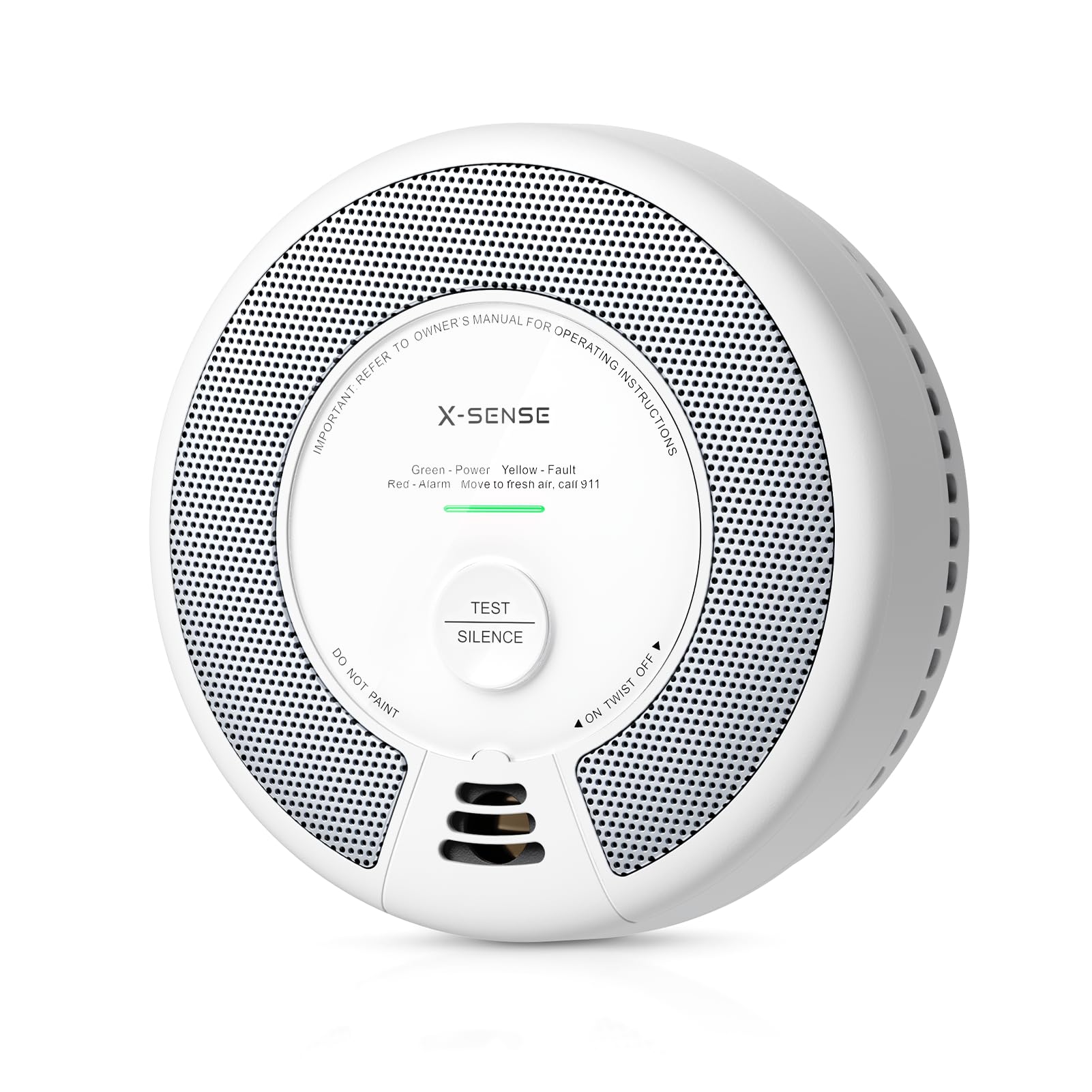
3. X-Sense Smoke & Carbon Monoxide Alarm, SC06
One ceiling disc that ends the battery swap ritual for a full decade of dual-threat protection.
This is the unit for people who know they will never remember to change a battery in the dark hours of a winter night—it packs a sealed lithium battery (a permanently built-in power cell you cannot remove) designed to last up to 10 years. The low-battery warning is really an end-of-life warning, telling you the whole unit is done so you replace it entirely, which owners call a genuine safety win.
It is a 2-in-1 alarm, watching for both smoke and carbon monoxide with dual sensors: a photoelectric type (which reacts to the larger particles of a smoldering fire) for smoke and an electrochemical type (a chemical cell that senses CO gas) for carbon monoxide. Both are certified to meet UL 217 and UL 2034 safety standards—the independent testing benchmarks for smoke and CO alarms respectively.
The false-alarm reduction is the real headline here. Owners mention they “can cook now without setting off the smoke detector”—a recurring scene in the reviews that describes the old nuisance of burnt toast tripping the alarm. It hits a loud 85 dB when it does sound, easy to hear from bedrooms. The one-button test and silence keeps operation simple, and the premium heat-resistant PC material (a tough polycarbonate plastic) makes it look and feel pricier than it is.
The decade-long win
- The sealed 10-year lithium battery is the standout feature—owners love never buying batteries again.
- The smoke-plus-CO combo means one device covers two deadly threats in rooms like kitchens and hallways.
Consider this first
- Reliability gets mixed notes; a small slice of owners say a unit failed within six months, though most report smooth operation.
- Because the battery is sealed, when the decade ends you replace the whole unit, not just the cell.
The hands-off pick: Buy this if you want to mount it and forget it for ten years, with both smoke and CO covered in one shot. The non-replaceable battery is actually the feature for safety—it forces you to replace the detector when it dies, as one owner put it, since “I don’t know anybody that replaces their detectors as often as they should.”
Who should skip: If you already have strong smoke coverage and only need to close the CO gap, a dedicated CO-only unit is the leaner buy.
4. X-Sense Smoke & CO Alarm Combo, XP0H-SN
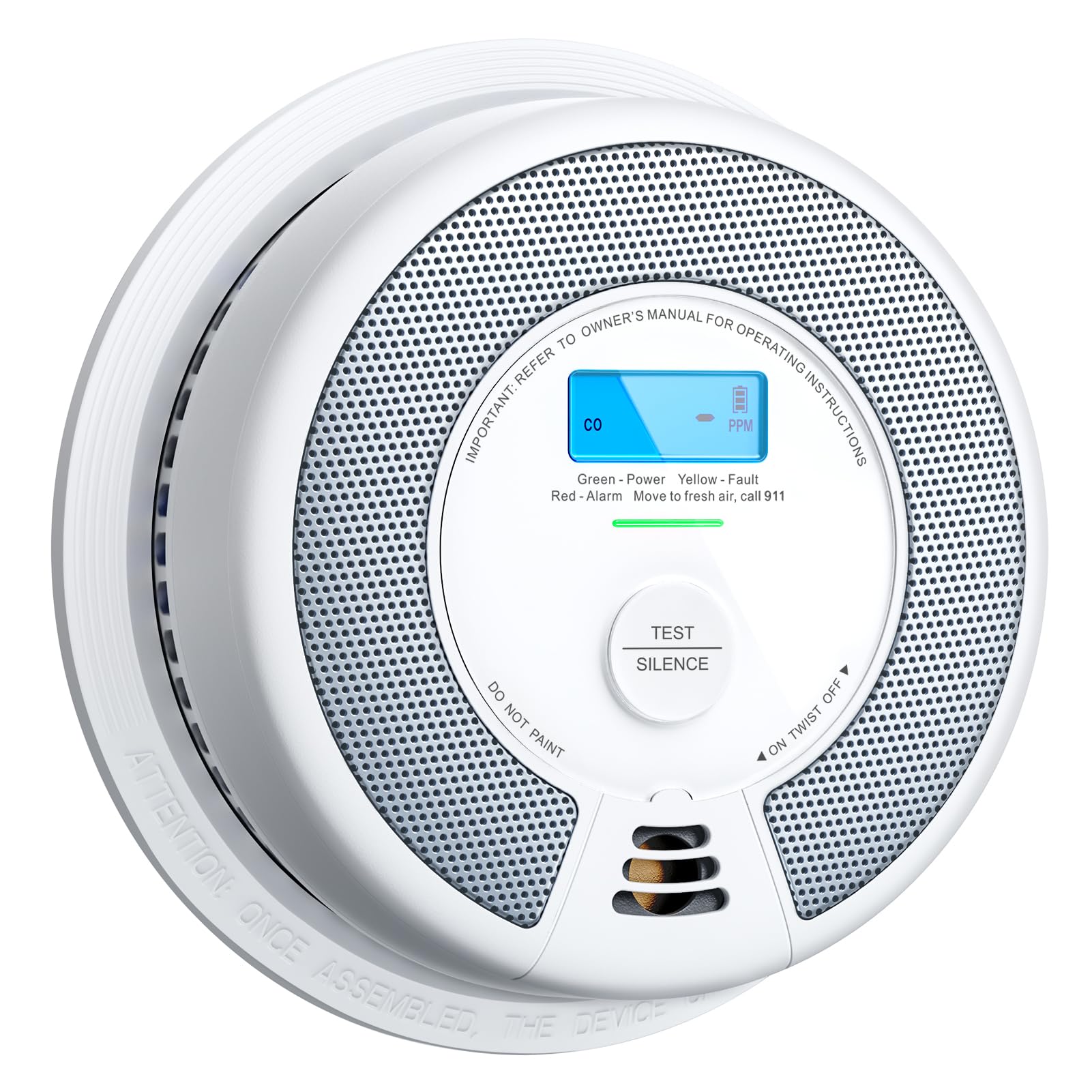
The detector that shows you the numbers, with a real-time CO readout right on its face.
The signature feature here is the built-in LCD screen that shows live carbon monoxide levels and battery status at a glance—you are not just trusting a beep, you are watching the parts-per-million count climb or stay at zero. The screen stays dark during normal standby and only lights up during an alarm or test, so it keeps you informed without glowing all night and disturbing your sleep.
It pairs that display with the same reliable 2-in-1 sensing as its sibling: it watches for both smoke and carbon monoxide, meeting UL 217 and UL 2034 safety standards. The power source is a 10-year sealed lithium battery (a permanently enclosed cell that cannot be swapped), which owners point out means you “don’t even have to buy a battery,” guaranteeing the unit stays armed for its full life.
Installation gets high marks, helped by an extra-large 5.7-inch mounting bracket—(a backplate that spans wider than typical ones) designed to cover up old screw holes and ceiling stains from a previous alarm so your wall looks freshly done with no patching. It also runs a built-in self-test every 60 seconds (an automatic internal check of the sensors, electronics, and battery), so you are not left hoping it still works. Owners repeatedly note there have been no false alarms, a direct contrast they draw to a major US brand that cried wolf.
The visual advantage: Reliability is the most-cited strength here, with easy installation running a close second—both praised by owners who swapped out older units that died within a couple of years. The trade-off is the mounting system: it gets mixed feedback, so expect to line up the bracket carefully on the wall.
Grab it for: The confidence that comes from seeing actual CO numbers on a display—ideal for the technically minded owner who wants proof, not just a promise, that the air is clean. It is also the smarter replacement if you are covering a blemished ceiling.
Note before buying: This is a standalone unit—it cannot link wirelessly to other alarms in the house, so do not expect it to trigger the whole network if you want interconnected protection.
5. Kidde low-maintenance CO Detector with 10-Year Sealed Battery

The slide-in, switch-on unit that makes installation feel like no installation at all.
The beauty here is self-activation—you screw the small bracket to the wall, slide the detector onto it, and the alarm turns itself on automatically. No complicated instructions, no downloads, no pull-tabs to fumble with. Owners describe exactly that: “just slide it in place and it works troubleshooting free for years.”
Under the hood is a sealed-in lithium power supply (a permanently built-in battery) that requires no replacement over the 10-year life of the alarm. That removes the worry of someone removing the battery to silence a chirp—a real problem the maker designed against, and one an owner noted was serious enough to spark a state law where they live. The LED system keeps you updated with a quick green flash every 30 seconds to confirm the unit is operating properly.
It is remarkably compact at just 4 ounces (light as a bar of soap), which owners say is small enough for creative installation spots that bigger units cannot fit. The alarm pattern is distinctive: 4 short beeps followed by 5 seconds of silence, repeating for 4 minutes—a pattern designed to grab attention. A secondary beep every 60 seconds signals low battery, and an amber LED fault flash tells you something is wrong.
Set-and-forget appeal
- easy slide-in installation is the most-praised feature, with owners calling it genuinely simple.
- The 10-year sealed battery runs second in praise—a decade with zero battery changes.
Worth knowing
- The alarm is genuinely loud—a few owners note it is really loud when you test it, so warn the household first.
- It is CO-only, so you will still need a separate smoke alarm in the same room.
The easy choice: Ideal for anyone who wants protection with zero maintenance thinking—mount it once and the device handles the rest for a decade. The compact body disappears into a hallway or bedroom corner.
Think twice if: You expect to reuse the unit across a move or want a digital readout; this model has no display and the sealed battery means its life is tied to this one installation spot.
6. Kidde Smoke & CO Detector, AA Battery-Powered, 30CUDR
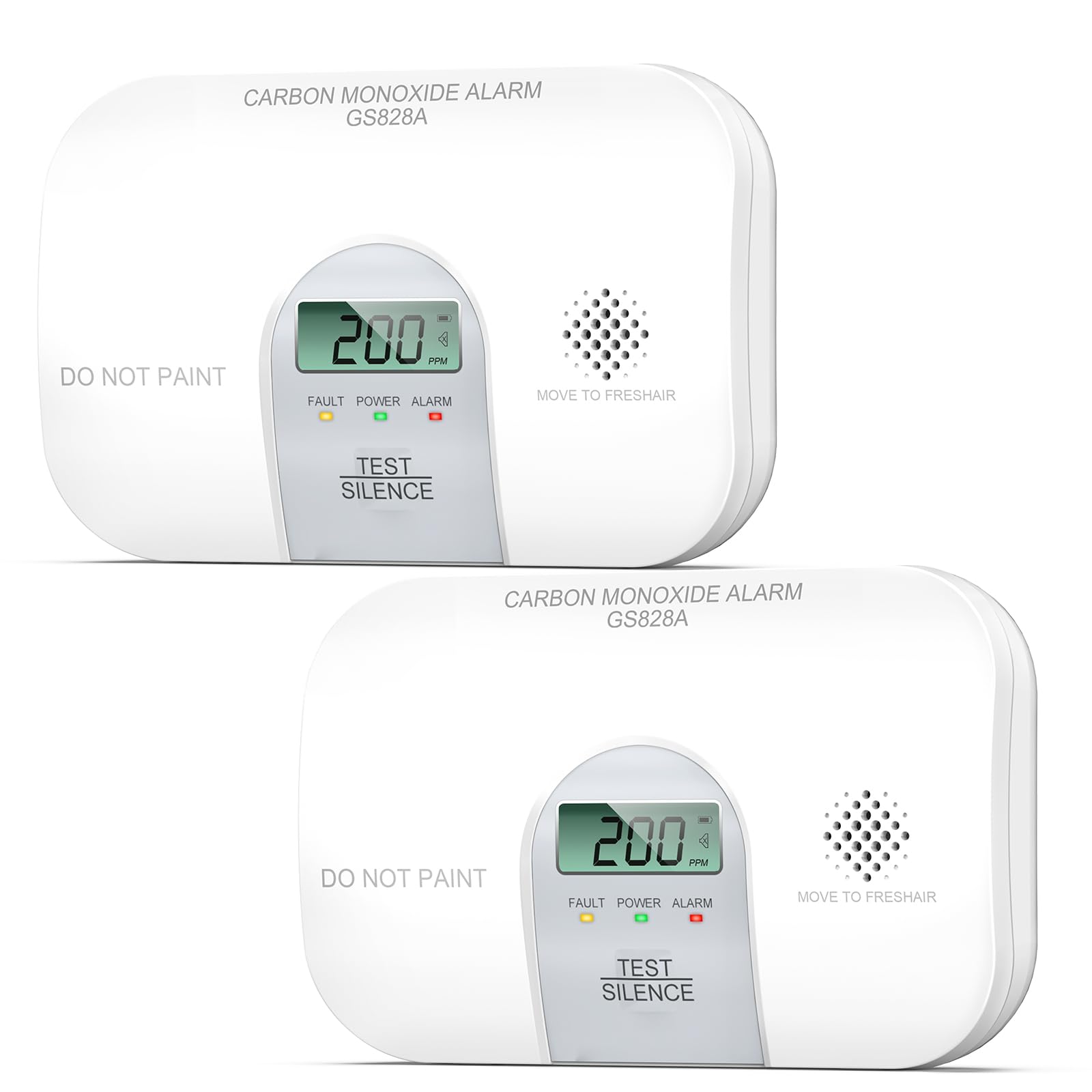
The compact CO sentry that stands on a hotel dresser just as happily as it hangs on your wall.
This is the unit travelers love—owners specifically mention standing it on a hotel dresser when on the road, since it runs on two AA batteries and needs no wiring. The built-in LCD screen shows real-time CO levels, so you can verify the air in a rental cabin or Airbnb before you settle in for the night. A tri-color LED flashes red, green, or yellow to signal alarm, power, or fault states.
Under the hood is an advanced electrochemical sensor (the chemical cell that detects CO gas specifically) that the maker says it meets ETL safety certification standards—an independent safety certification. In danger, it delivers an alarm of no less than 85dB at 3 meters (about as loud as a garbage disposal, measured from 10 feet away). The compact body is easy to hang and loud enough to do its job without dominating the room.
Flexible installation is the name of the game here: wall-mounted or free-standing, suitable for families, schools, hotels, garages and other spaces. The maker notes the unit itself can be used for up to ten years as long as you keep replacing those AA batteries when they run low—the batteries are swappable rather than sealed. It carries a three-year limited warranty (36 months from purchase) for extra confidence.
Compact and flexible
- Reliability is the top-cited strength, with easy setup close behind—owners find it works right from the start.
- It ships with batteries already installed; you just pull the tab and it starts after a 30-second air sampling.
The little quirks
- The flashing light every 40 seconds can be a mild distraction for light sleepers in a bedroom.
- Wall mounting requires drilling holes—a few owners wish for a no-drill adhesive option.
Buy it for: The road warrior who wants portable protection in hotels, garages, and vacation rentals—it is light enough to toss in a bag and simple enough to stand on any flat surface. The LCD readout is a bonus for checking air quality in unfamiliar places.
skip it if: You want a set-and-forget decade unit; this one asks you to keep an eye on those AA batteries, which run the device for its service life with normal replacements.
7. First Alert CO410A with Backlit Digital Display

The rugged reader that shines real-time PPM numbers in a semi-truck shop or a home garage.
This one earns its keep in heavy-duty settings—owners use it in a semi-truck shop and report it does the job well, showing real-time PPM (parts-per-million, the exact concentration of carbon monoxide) readings right on the screen. That backlit digital LED display is readable in dim workshop light, and it is easy to move from room to room as needs shift.
It is powered by batteries, so there is no wiring to fuss with, and the advanced electrochemical sensor (the chemical cell inside that detects CO) keeps the readings accurate. When CO levels climb, a loud 85-decibel alarm sounds—owners describe it as quite loud, noting you will hear it clearly during testing and setup, which is a good sign for a tool meant to grab your attention in a noisy environment.
For home users, it is easy to install and the batteries are simple to change when the time comes. The manufacturer backs it with a 7-year limited warranty, a longer coverage window than many rivals offer. Owners who have bought two for their home say they are quite happy, describing the alarm as a good size that works great—the kind of no-drama device you install and promptly forget about.
The real-world fit: The strongest endorsement comes from the workshop scene—an owner calls it a “solid tool for safety” that shows live numbers, which is a huge plus in a work environment where engines run indoors. The minor friction point is that its wall-mount screws may not match an older model’s holes, so expect possible re-drilling if you are replacing a previous First Alert.
Choose this for: Anywhere you want to see actual CO concentration numbers rather than just trusting a silent unit—workshops, garages, basements near furnaces, or anyone who likes data-driven confirmation of safety. The backlit screen makes those numbers readable around the clock.
Pass on it if: You need combination smoke-and-CO coverage in one device; this is a dedicated CO-only alarm, so plan separate smoke protection.
Understanding the Specs
Electrochemical Sensor vs. Other Types
The electrochemical sensor is the gold standard for CO detection. Inside is a chemical cell that reacts specifically with carbon monoxide gas, generating a tiny electrical signal that triggers the alarm. Because it is tuned to CO, it largely ignores smoke, steam, and cooking odors—which is why you see far fewer false alarms from a CO detector than from a smoke detector. When a listing says “electrochemical sensor technology,” it means the chip inside is purpose-built to sniff out this one gas.
The 85-Decibel Alarm Explained
The 85-decibel rating is the industry standard for waking a sleeping household. To picture it: 85 dB is roughly the volume of a food blender or a power tool running a couple of feet away. That is loud enough to cut through closed doors and deep sleep. Some premium units add a red LED flash alongside the sound so there is a visual cue for anyone with hearing loss—a feature worth seeking out if that matters in your home.
FAQ
How long does a battery-operated CO alarm actually last?
What is the difference between a sealed 10-year battery and replaceable batteries?
Where should I mount a battery-operated CO alarm in my home?
Should I buy a CO-only alarm or a combination smoke and CO alarm?
What does the 85-decibel alarm sound like in real life?
What does the end-of-life chirp mean and why should I care?
Can I take a battery-operated CO alarm with me when I travel?
Will a CO alarm work during a power outage?
What is the UL 2034 standard I keep seeing on CO alarms?
Why do the battery life reviews for CO alarms seem mixed?
Final Thoughts: The Verdict
For most people, the battery operated carbon monoxide alarm winner is the Kidde KN-COB-LP2 because it delivers the most-trusted functionality at a running cost of just two AA batteries, backed by the strongest owner consensus in the category. If you want a decade with zero battery swaps and dual smoke-and-CO coverage, grab the X-Sense SC06. And for the clearest warnings money can buy, the Kidde 30CUD10-V speaks the danger out loud so your family always knows exactly what to do.
How We Picked
We do not accept paid placement. Every pick is matched to a real buyer and a real use-case; we do not hands-on test units.
Sources & Methodology
Specifications: manufacturer listings and product documentation. Review insights: verified customer reviews, as of September 2026. Pricing: not shown on this page (it changes often); check the current price via the retailer link.
As an Amazon Associate, KitchPrep earns from qualifying purchases. This does not affect which products we feature.
Related Guides
