
Specs are compiled from manufacturer listings and verified buyer reviews and can change over time — please confirm the key details on the product page before buying.
Picking a battery-powered detector that watches for both smoke and carbon monoxide is one of the smartest safety upgrades you can make, but the market is crowded with confusing claims about battery life, false alarms, and certifications. This guide cuts through that noise by comparing the manufacturer specs and the patterns in thousands of verified owner experiences, so you know exactly which unit earns its spot on your ceiling.
I’m Mohammad Maruf — the founder and writer behind KitchPrep. This guide is built by comparing the manufacturers’ published specifications and the patterns across verified customer reviews, so you get each pick’s real strengths and trade-offs instead of marketing spin.
Here are the best battery carbon monoxide and smoke detector options, ranked by real-world reliability, sensor accuracy, ease of installation, and how well each design fits different homes and budgets.
Our Picks at a Glance


How To Choose The Best Battery Carbon Monoxide and Smoke Detector
First, you need a unit that is certified to the right standards. The gold standard for smoke detection is UL 217, and for carbon monoxide it is UL 2034 — a detector without these labels is a gamble you don’t want to take.
Battery: Sealed 10-Year vs Replaceable
This is the biggest fork in the road. A sealed 10-year lithium battery means you install it once and replace the whole unit a decade later — no chirping in the middle of the night, no forgotten dead batteries. Replaceable AA or 9V units are cheaper upfront and let you swap power yourself, but they depend on you remembering to change them.
Sensor Type: Photoelectric vs Ionization
Photoelectric sensors are best at catching slow, smoldering fires — the kind that fill a room with smoke before bursting into flames. Electrochemical sensors are the standard for CO detection. Most good combos pair a photoelectric smoke sensor with an electrochemical CO sensor, which is what you want.
Interconnection and Alerts
If you have a larger home, wireless interconnection means when one unit detects a threat, every linked unit screams too — you hear the alarm from the basement even if the fire starts in the attic. Voice alerts that say “Fire” versus “Warning, Carbon Monoxide” remove any guesswork about what is happening.
Quick Comparison
| Model | Best For | Power Source | Alarm Volume | Voice Alerts | Amazon |
|---|---|---|---|---|---|
| BRK SC9120B★ Best Overall | Plug-and-play replacements | 9V Battery | — | No | Amazon |
| X-Sense XP0H-SNBest Value | Covering old ceiling holes | 10-Year Sealed | Audible | No | Amazon |
| First Alert SMCO200Slim Design Pick | Low-profile installations | AA Battery | — | No | Amazon |
| Kidde 30CUDR | Reliable whole-home coverage | 2 AA Batteries | 85 dB | No | Amazon |
| Kidde 900-CUDR-V | Self-testing confidence | 2 AA Batteries | 85 dB | Yes | Amazon |
| X-Sense SC01-W (3-Pack) | Whole-home linked coverage | 10-Year Sealed | 85 dB | No | Amazon |
In‑Depth Reviews
1. BRK SC9120B Smoke and Carbon Monoxide Alarm
Our pick — over 4.5★ from 450+ verified ratings; the strongest balance of quality and price.
The drop-in champion that syncs with your existing hardwired setup while running purely on battery.
You avoid the headache of rewiring your whole house because this unit matches an old alarm’s footprint and wiring. It runs on a single included 9V alkaline battery, yet it inter-connects with BRK and First Alert hardwired smoke and CO alarms — so if you are replacing one aging unit, it talks to the rest of your house without a full rewire. Buyers report it is the “exact replacement from the one in the house that was 9 years old,” which tells you the mounting pattern and size are near-universal.
Owners consistently call it easy to change out and good value, with the separate latching indicators for smoke versus CO making it simple to tell which sensor triggered. The 7-year limited warranty offers reasonable confidence, and at 10 ounces it feels substantial without being bulky. The one honest trade-off: noise level gets mixed feedback, with most reporting no more chirping but a few noting very loud beeping — which, for a safety alarm, is arguably the point.
This is the pick for someone replacing an existing unit who wants zero guesswork. It is not for anyone who wants a sealed battery they never think about for a decade.
Why it wins
- Interconnects with existing BRK and First Alert hardwired alarms for whole-home sync
- Universal mount bracket makes replacement a true plug-and-play job
- Separate smoke and CO latching indicators clarify what triggered
Trade-offs to know
- 9V battery needs periodic replacement, unlike sealed 10-year units
- Alarm volume gets mixed feedback, from no chirping to very loud beeping
Reach for this if: you are swapping out an old hardwired unit and want it to sync with the rest of the house without an electrician.
Look elsewhere if: you want a sealed battery that requires zero thought for a full decade.
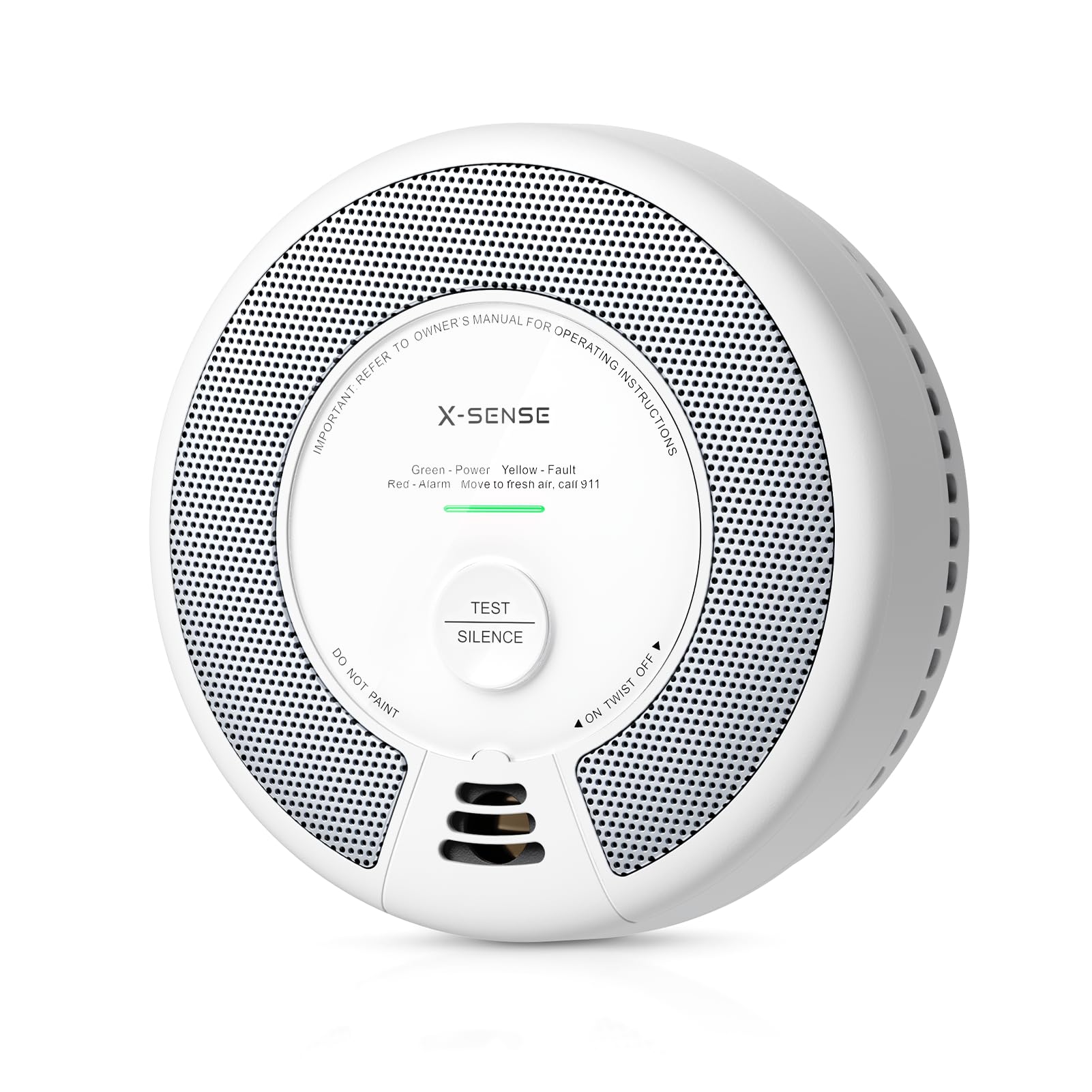
2. X-Sense Smoke & Carbon Monoxide Alarm, SC06, 1-Pack
The combo with a live CO readout and a bracket wide enough to hide ugly old screw holes.
This unit is built for the person replacing an old alarm whose mounting left stains or extra holes. Its extra-large 5.7-inch (145 mm) bracket covers far more wall than standard plates, so the install looks clean with no patching or painting. The built-in self-test runs automatically every 60 seconds, checking the sensors, electronics, and battery for you. Owners praise its reliability — a detail the review data confirms, with no false alarms reported — and the easy 2-screw installation.
The easy-to-read LCD is the standout: it shows real-time CO levels and battery life at a glance, but stays off during standby so it won’t light up your hallway at night. It is certified to UL 217 and UL 2034, and the 10-year sealed lithium battery means a decade of protection with no battery changes. The recurring gripe is mounting: some find it easy, others hit issues with the mounting points, so check your ceiling type before committing.
This is the pick for a bedroom or hallway where you want visible CO level confirmation and a clean finish.. It will not interconnect with other units, so buy it for a single critical spot.
Standout strengths
- Large 5.7-inch bracket hides old screw holes and ceiling stains
- LCD shows real-time CO levels and battery life, staying dark during standby
- Automatic self-test every 60 seconds
Watch for
- Mounting gets mixed feedback, with some hitting issues on mounting points
- Standalone only — no wireless interconnection or Wi-Fi
Choose this for: a hallway or bedroom where a live CO readout and a clean, patch-free install matter most.
skip it if: you need your alarms to talk to each other across the whole home.
3. First Alert Battery Combination Smoke & Carbon Monoxide Alarm
A wafer-thin design that looks far nicer on your ceiling than the chunky units of the past.
If you care about how your ceiling looks, this is the one. The First Alert SMCO200 is only 1 inch deep — half the depth of a standard alarm — and owners upgrading older units note “the slim design looks much nicer than bulky older units, and installation only took a few minutes.” It runs on AA batteries (included), so you can swap them yourself, and the end-of-life warning tells you when the whole unit needs replacing after roughly a decade.
First Alert’s Precision Detection sensing technology is designed to reduce cooking nuisance alarms while still giving early warning in a real fire. The review data shows quality and battery life as the top praises, with one owner noting the 10-year battery life (referring to the alarm’s overall lifespan between replacements). The honest caveat: while owners love the dual protection, a noticeable share report frequent false alarms — so placement away from bathrooms and direct stove steam matters.
This is the pick for a design-conscious homeowner who wants a low-profile unit with replaceable batteries and trusts a heritage safety brand..
Why it stands out
- Slim 1-inch profile is half the depth of a standard alarm
- AA batteries included, so you can replace power yourself
- Precision Detection reduces cooking nuisance alarms
Consider this
- Frequent false alarms are the most common owner complaint — placement is key
- Durability gets negative mention, so treat it gently
Grab it for: a visible spot where a slim, modern look and easy battery swaps win the day.
Think twice if: your kitchen or bathroom is directly adjacent and steam is a constant.
4. Kidde Smoke & CO Detector, AA Battery-Powered, 30CUDR-V, 1 Pack
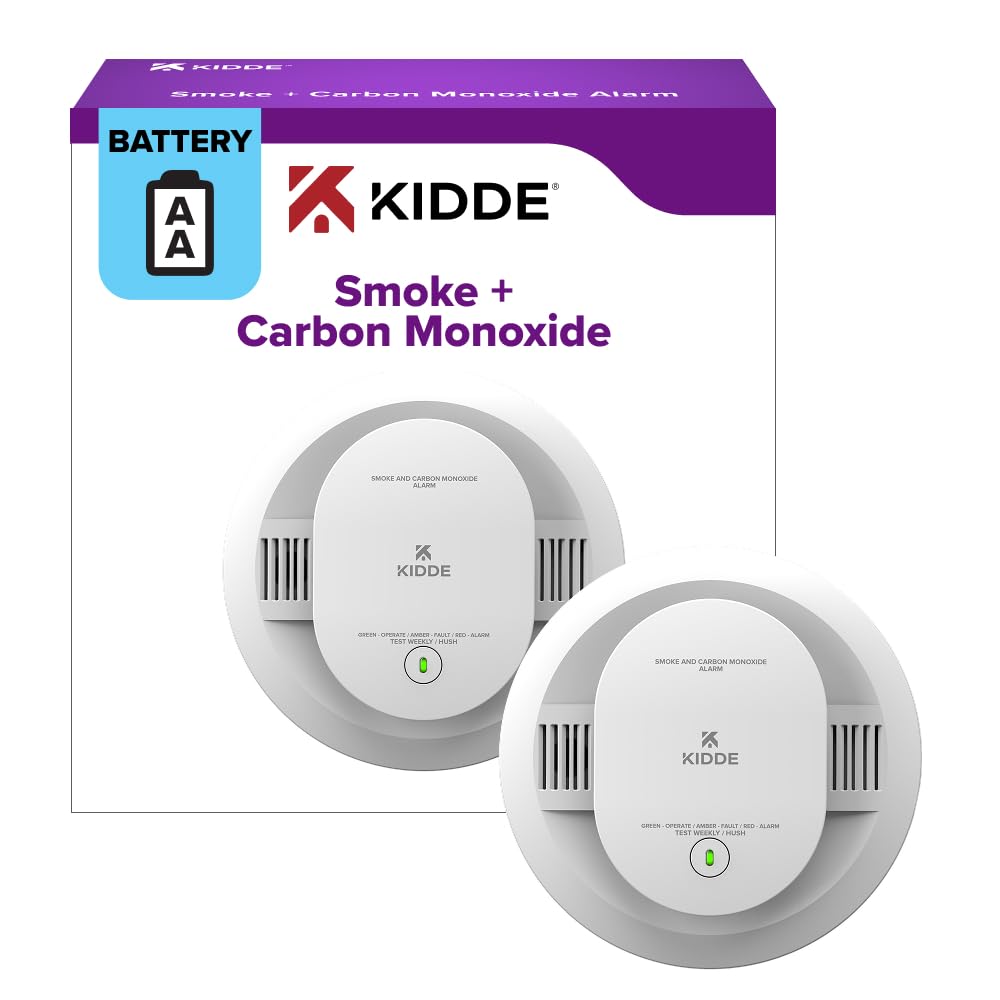
Kidde’s workhorse 2-in-1 that pairs accuracy with genuinely reduced false alarms.
This is the no-nonsense option for whole-home coverage. The 30CUDR detects both smoke and CO with advanced sensing engineered for over 25% faster smoke detection, and it’s the same core platform as the voice-alert version but without the spoken warnings. It sounds a loud 85-decibel alarm with a red LED light that makes the warning visible even from across a room. Owners describe it as plug-and-play and easy to install, with the biggest praise landing on accuracy.
Unlike some competitors, this one actively works to reduce false alarms — the advanced sensing distinguishes real smoke from everyday cooking or steam, which is the top reason people rip detectors off their ceilings in frustration. It runs on two AA batteries included in the box and carries a 10-year limited warranty. The review data does show some mixed reliability feedback, with a few units going off randomly or showing a fault light in dusty environments — one owner fixed a false alert by blowing compressed air into the unit, so keep it clear of remodeling dust.
This is the solid, dependable pick for someone who wants Kidde’s engineering without paying for voice features they don’t need.
Core strengths
- Advanced sensing distinguishes real smoke from cooking and steam
- Over 25% faster smoke detection for earlier warning
- 85 dB alarm with red LED light for clear visual alert
Small caveats
- Reliability gets mixed feedback, with rare random alarms
- Dust from remodeling can cause false alerts — blow it out with air
Pick this for: a straightforward, accurate detector that doesn’t nag you about burnt toast.
Choose elsewhere if: you specifically want a voice alert to name the hazard.
5. Kidde Smoke & Carbon Monoxide Detector, AA Battery Powered, Voice Alerts, 900-CUDR-V

A self-checking 2-in-1 whose LED lights and voice warnings keep you informed around the clock.
This is the most security-minded pick of the Kidde trio because it never stops checking itself. The 24/7 self-testing components constantly verify the device is operating as expected — though Kidde is clear it’s not a substitute for a manual push test. The LED indicators give you a color-coded health report at a glance: green for normal operation, amber for an operating error, and red for smoke, fire, or CO. A firefighter of 30 years even recommended it to one owner..
The voice alarm announces the hazard type — “Fire!” for smoke, “Warning Carbon Monoxide” for CO, or “Low Battery” — and the mounting bracket installs in 4 orientations for flexibility. It is UL Listed with a 10-year limited manufacturer warranty on the alarm itself. The honest caveat: while quality is the top praise, reliability gets mixed feedback in the review data, with a few units throwing constant false alerts after a few months — so buy from a source with a good return policy and test it right after installing.
This is the pick for someone who wants constant awareness of their detector’s health, not just an alarm that goes off when it’s too late..
The big wins
- 24/7 self-testing components constantly check device operation
- LED indicators show green for normal, amber for error, red for danger
- Voice alerts name the hazard: Fire, CO, or Low Battery
Fair warning
- Reliability is mixed, with some units giving false alerts after months
- Mounting holes are 3″ vs a standard 3.25″, so drilling may be needed
Reach for this if: you value constant self-monitoring and color-coded status you can see from across the room.
Pass on it if: you want to reuse existing mounting holes without any drilling.
6. X-Sense Interconnected Smoke and CO Detector Combo, SC01-W, 3-Pack
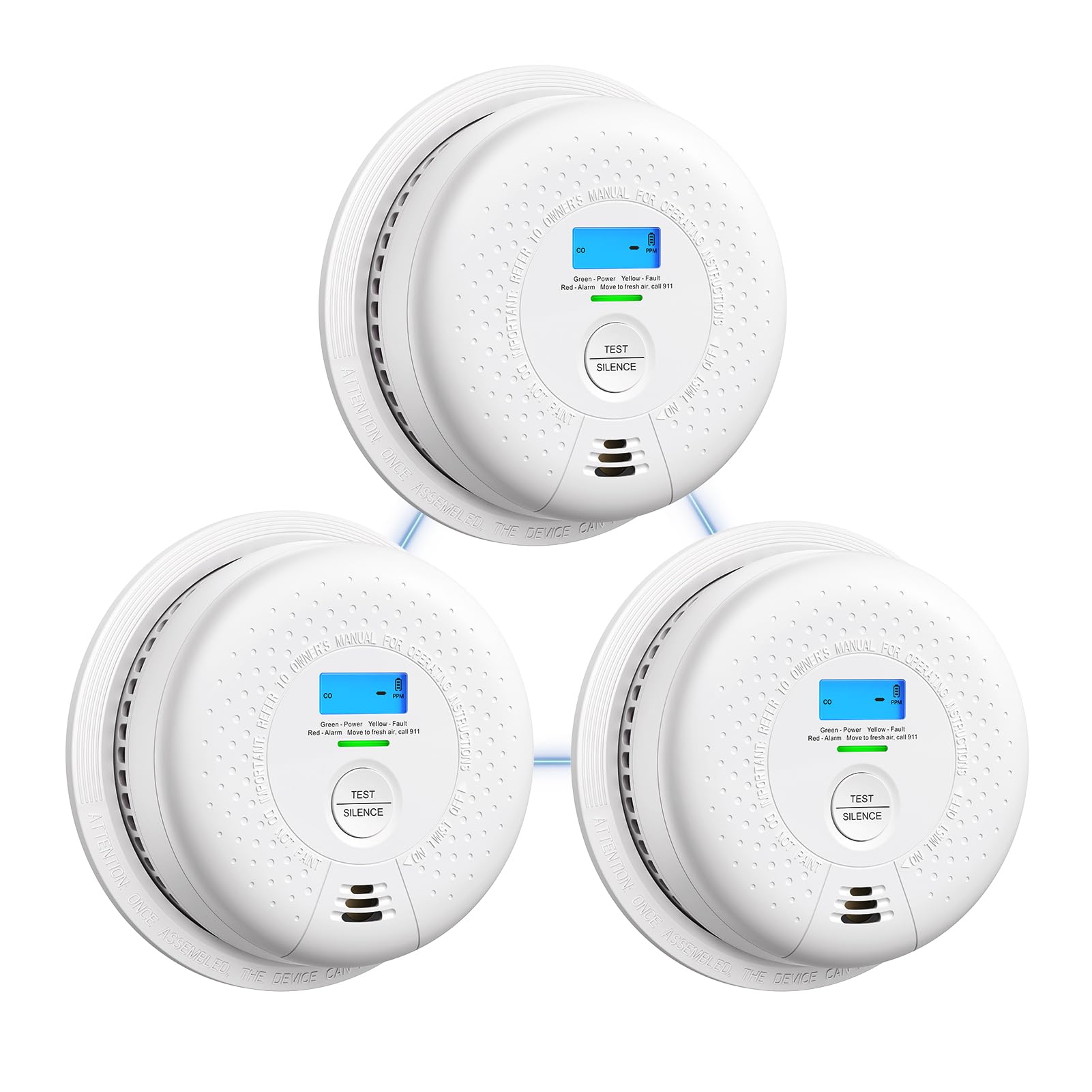
Three linked detectors that all scream at once, so a basement fire wakes the whole floor.
This is the multi-room solution for a larger home. The SC01-W supports wireless interconnection — when one alarm detects a threat, all linked alarms activate simultaneously, which is critical if a fire starts in the basement while your family sleeps upstairs. Up to 18 Link+ devices can be interlinked for maximum coverage, and owners confirm the setup is simple: “I just needed a Phillips screwdriver.” Each unit carries a 10-year sealed lithium battery, so the whole system runs maintenance-free for a decade.
Owners praise easy installation, straightforward connectivity, and the LCD that displays CO levels, with one noting the alarm triggered loudly during a small oven fire while ignoring normal frying smoke — exactly the discrimination you want. It is certified to UL 217 and UL 2034. The honest caveat: the mounting plate is a touch small for a round electrical box, so one owner needed a 5-inch cover to bridge the gap, and the silence button only quiets one unit briefly, so on a real CO event you’ll need to clear the air to fully reset it.
This is the pick for anyone who wants whole-home protection without running wires between floors.
What you gain
- Wireless interconnection means all alarms sound when one detects a threat
- Up to 18 Link+ devices can be linked for full-house coverage
- LCD displays CO levels and 10-year sealed battery per unit
Watch for
- Mounting plate may be small for a round electrical box — plan a cover
- Silence button only quiets one unit briefly during an alarm event
Choose this for: a multi-level home where you want every floor to hear the alarm instantly without any wiring.
pass on it if: you only need a single room protected and won’t use the interconnection.
Understanding the Specs
UL 217 and UL 2034 Certifications
These are the safety benchmarks that actually matter. UL 217 is the standard for smoke detectors, and UL 2034 covers carbon monoxide alarms. A unit carrying both labels has been independently tested to detect these threats within required timeframes. Skip any detector without these marks — it’s a cheap way to risk your family’s safety.
Sealed 10-Year Battery vs Replaceable AA/9V
A sealed 10-year lithium battery means the unit is powered for its entire working life, then prompts you to replace the whole alarm. This removes the human failure point — forgetting to change batteries. Replaceable AA or 9V units cost less upfront and let you swap power yourself, but they rely on your memory. Most safety experts prefer sealed units to eliminate the risk of forgotten battery changes..
FAQ
How often should I test a battery smoke and CO detector?
Will a battery detector work during a power outage?
What is the difference between a photoelectric and an ionization smoke sensor?
How long does a 10-year sealed battery actually last?
Can I replace just the battery in a sealed 10-year unit?
What does wireless interconnection do that a standalone unit doesn’t?
Will a combo detector trigger a false alarm from cooking or steam?
What does an 85 dB alarm rating mean in real terms?
How do I know if my smoke detector is too old and needs replacing?
Can I install multiple battery detectors on one floor?
Final Thoughts: The Verdict
If you want one dependable pick, the battery carbon monoxide and smoke detector winner is the BRK SC9120B because it eases the single biggest pain in this category: replacing an old unit without a rewire, all while syncing with your existing hardwired alarms on pure battery power. If you want to stop silencing false alarms every time you cook and forget about batteries for a decade, grab the X-Sense SC06. And if you are covering a multi-level home, the X-Sense SC01-W 3-pack is the one to reach for, because its wireless interconnection means every floor hears the warning instantly — and with nearly 400 owners backing it, the confidence is well earned.
How We Picked
We do not accept paid placement. Every pick is matched to a real buyer and a real use-case; we do not hands-on test units.
Sources & Methodology
Specifications: manufacturer listings and product documentation. Review insights: verified customer reviews, as of September 2026. Pricing: not shown on this page (it changes often); check the current price via the retailer link.
As an Amazon Associate, KitchPrep earns from qualifying purchases. This does not affect which products we feature.
Related Guides
