
Specs are compiled from manufacturer listings and verified buyer reviews and can change over time — please confirm the key details on the product page before buying.
When the grid goes down, you do not lose your lights first — you lose your fridge, your Wi-Fi, and your heat. A whole-house battery backup stores electricity in big lithium batteries and feeds it back to your home’s circuits the moment utility power cuts out. The picks below cover the realistic range: portable stations you wheel into place yourself, and expandable battery-plus-inverter kits that run your breaker panel.
I’m Mohammad Maruf — the founder and writer behind KitchPrep. This guide is built by comparing the manufacturers’ published specifications and the patterns across verified customer reviews, so you get each pick’s real strengths and trade-offs instead of marketing spin.
You will see capacity measured in watt-hours (Wh) and output measured in watts — the first decides how long you last, the second decides what can run at once. For a real outage, that mix is what keeps your home lit, and this breakdown of a battery backup whole house setup explains which unit fits your panel.
Our Picks at a Glance

How To Choose The Best Battery Backup Whole House
Whole-house backup is not one product — it is a small system. You are buying stored energy, an inverter that turns that stored DC power into household AC power, and a way to get the electricity into your breaker panel. Get those three right and an outage becomes a non-event.
Start with watt-hours, then watts
Capacity in watt-hours tells you how long you can run your essential load. A fridge, a router, and some lights draw a few hundred watts, so a 5,000Wh to 10,000Wh pack can carry you for days of light use. Output in watts tells you what can run at the same time — a well pump or a central AC needs far more than a phone charger does.
Decide portable versus hardwired
A portable power station rolls where you need it and needs no electrician. A battery-plus-inverter kit wires into your panel and behaves more like permanent home infrastructure. Portable suits renters and quick setup; hardwired suits owners who want automatic failover.
Check the voltage your big appliances need
Many heavy appliances — dryers, ovens, central air conditioners — run on 240V. If your unit only outputs 120V, those stay dark no matter how much energy you store. Split-phase 240V output is the feature that open up a genuinely normal-feeling outage.
Quick Comparison
| Model | Best For | Capacity | Output Power | Battery Type | Amazon |
|---|---|---|---|---|---|
| Anker SOLIX F3800 + Home Power Panel★ Best Overall | Whole-home backup with EV charging | 3,840Wh (expandable to 26.9kWh) | 6,000W | LiFePO4 | Amazon |
| ECO-WORTHY 48V 5120Wh + 5000W InverterBudget Champion | Budget whole-home kit | 5120Wh | 5000W | LiFePO4 | Amazon |
| ECO-WORTHY 48V 10240Wh + 5000W InverterTop Performer | DIY cabin and home backup | 10240Wh | 5000W | LiFePO4 | Amazon |
| Jackery Solar Generator 5000 Plus | Running heavy appliances | 5040Wh (expandable to 60kWh) | 7200W | LiFePO4 | Amazon |
| Anker SOLIX F3800 Plus + Panel | Fastest recharge to outage-ready | 3,840Wh (expandable to 26.9kWh) | 6,000W | LiFePO4 | Amazon |
| EF ECOFLOW DELTA Pro Ultra | Near-instant automatic failover | 6144Wh (expandable to 90kWh) | 7200W | LiFePO4 | Amazon |
| EF ECOFLOW DELTA Pro 3 + 2 Extra Batteries | Whisper-quiet indoor backup | 12kWh (expandable to 48kWh) | 4000W (6000W with X-Boost) | LFP | Amazon |
In‑Depth Reviews
1. Anker SOLIX F3800 Portable Power Station and Home Power Panel, 3,840Wh
Our pick — over 4★ from 300+ verified ratings; the strongest balance of quality and price.
The one station people wire straight into the house — and keep.
The F3800 is the pick you choose when you want a genuine whole-home backup without an electrician’s invoice. It stores 3,840Wh of LiFePO4 energy — roughly a full day of basic household power — and pushes out 6,000W. That wattage is where it beats the ECO-WORTHY 5120Wh kit, which tops out at 5000W. Its 6,000W output also beats the 5,000W ceiling of the ECO-WORTHY 10240Wh kit.
Two things owners keep coming back to. First, the dual-voltage output: 120V and 240V, so a dryer or a well pump is not left stranded. Second, the NEMA 14-50 port, which lets you plug in an EV charging cable directly — no grounding box needed. The Home Power Panel in the bundle is what makes it feel like real infrastructure rather than a big camping gadget.
What wins people over here is raw performance — it does the job it promises, power tools, well pump, RV, all day. The recurring honest note is battery drain under heavy loads: a couple of chest freezers at once will empty it faster than the spec sheet implies. Buyers report “with 2 expansion batteries, provides ~3 days continuous power without recharge” — the expandability is the real insurance policy, since 6 extra packs push it to 26.9kWh. Live in a cold-winter climate? The system throttles charging below 10C/50F, which the manual calls out clearly.
What earns the top spot
- 6,000W AC output runs dryers, well pumps, and even EV charging via the NEMA 14-50 port
- 120V / 240V dual-voltage support means no major appliance is left behind
- 3,840Wh of LiFePO4 storage with a stated 10-year lifespan
- Wi-Fi and Bluetooth app control lets you watch every power source and decide how it is used
Worth knowing before you buy
- Heavy loads drain it fast — a chest-freezer sized pull can go through capacity in a day or two of hard use
- The 3,840Wh base alone is a one-day buffer, not a one-week buffer; you will want expansion packs
- Charging slows noticeably below 10C/50F, so cold garages are not the ideal home
Reach for this if: you want a battery backup that behaves like whole-house infrastructure without paying a contractor to wire it in.
Look elsewhere if: you need week-long autonomy from the start — the base capacity is one day, and multi-day coverage means adding batteries.
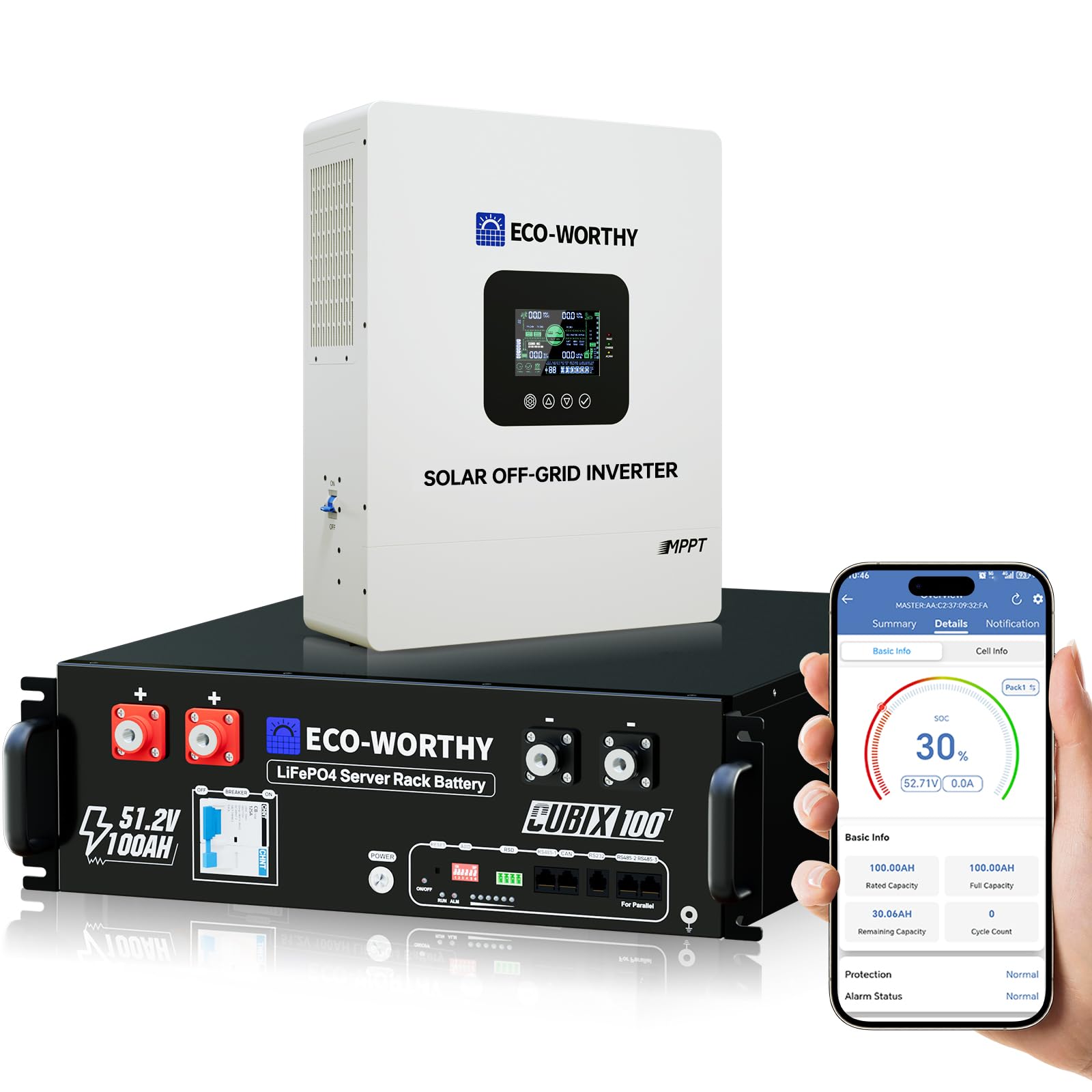
2. ECO-WORTHY 48V Home Backup Power, 5120Wh LiFePO4 Battery, AC 5000W Inverter
The entry point into hardwired home storage — and it is refreshingly simple.
This is the kit for the homeowner who wants proper 48V battery storage without the premium label. One 51.2V 100Ah LiFePO4 battery pairs with a 5000W MPPT inverter to give 5120Wh of capacity and 5000W of output — enough to keep the basic household running through an outage. It is the leanest of the ECO-WORTHY line, and the most affordable.
Two things carry the value. First, the closed-loop communication: CAN/RS485 interfaces plus multiple protocols mean the inverter and battery actually talk to each other, so the system balances itself rather than you babysitting it. Second, the safety paperwork is real — UL1973 and UL1741 testing through Intertek, plus California Energy Commission compliance. For a home that gets inspected, that matters.
The honest trade-off is setup friction. The inverter’s manual has been called contradictory, and one buyer received a box without the inverter at all. Wire routing through the three cable holes is genuinely fiddly — the system wants 3/0 AWG, 2 AWG, 6 AWG, and 10 AWG cables that you supply yourself. Get past the install and it runs strong: owners mention “charges at 25A via 5000W generator in 2.5-3 hrs; faster with higher amps.”
Where it shines: the safety certifications and the all-in-one design give you a legitimate 5120Wh home backup at the most approachable entry point in this list.
The real catch: shipping splits into multiple packages, and the manual leaves you guessing on wiring. Budget an afternoon and a helper.
The right call for: a first-time hardwired backup buyer who wants certified safety without a premium markup.
Think twice if: you want plug-and-play — this is a DIY install with real documentation gaps.
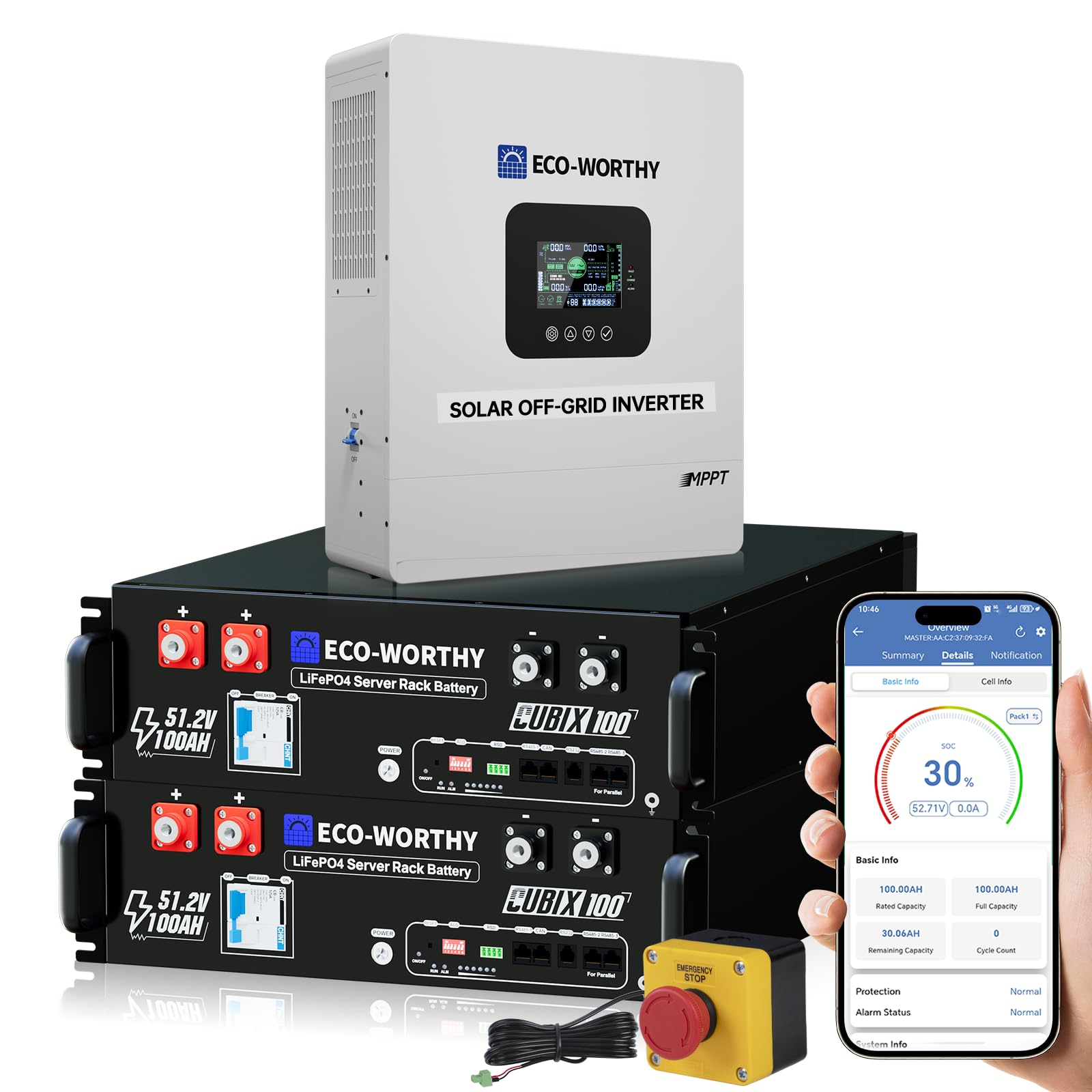
3. ECO-WORTHY 48V Home Backup Power, 10240Wh LiFePO4 Battery, AC 5000W Inverter
Double the battery, same inverter — the value play in the ECO-WORTHY family.
Here is the direct head-to-head that matters: versus the Anker SOLIX F3800 with its 3,840Wh, this ECO-WORTHY kit packs 10240Wh — a 2.7x capacity gap for roughly the same money. Two 51.2V 100Ah batteries feed one 5000W MPPT inverter, giving 10240Wh of total stored energy and 5000W of continuous output. For anyone whose main concern is “how long can I keep the fridge and heat on,” that is the number that decides.
It is not just capacity, though. The kit shares the same UL1973 and UL1741 certification as the smaller ECO-WORTHY, plus a 3-in-1 inverter that combines the inverter, a 100A MPPT charge controller, and a 100A battery charger. The closed-loop CAN/RS485 communication lets it hand off to leading solar inverters cleanly. It ships as a stack with everything you need to physically install it — the accessories are in the box, only the panel wiring is on you.
The trade-off is installation. Buyers describe a roughly two-hour setup and one that hinges on a single setting: you must cap the grid AC current at about 15A for a standard US 110V circuit, or the default trips the breaker. Get it right and customers note internet, TV, and fridge all staying alive through the outage. The recurring honest note is the manual — clearer than the smaller sibling but still not great. The supporting app tracks consumption and battery life well once connected.
Why it earns the mid-list pick
- 10,240Wh is more than double the Anker base at the same effective price point
- All-in-one 5000W inverter with a 100A MPPT controller built in
- UL1973 and UL1741 certified through Intertek, plus CEC compliance
Where it asks more of you
- Roughly a two-hour setup with one parameter that must be capped at ~15A
- Instructions are workable but not polished
- Wire routing through the three cable holes takes patience
Buy this one for: the buyer who prioritises raw watt-hours over brand-name polish.
skip it if: you need hand-holding through setup — the manual assumes some confidence.
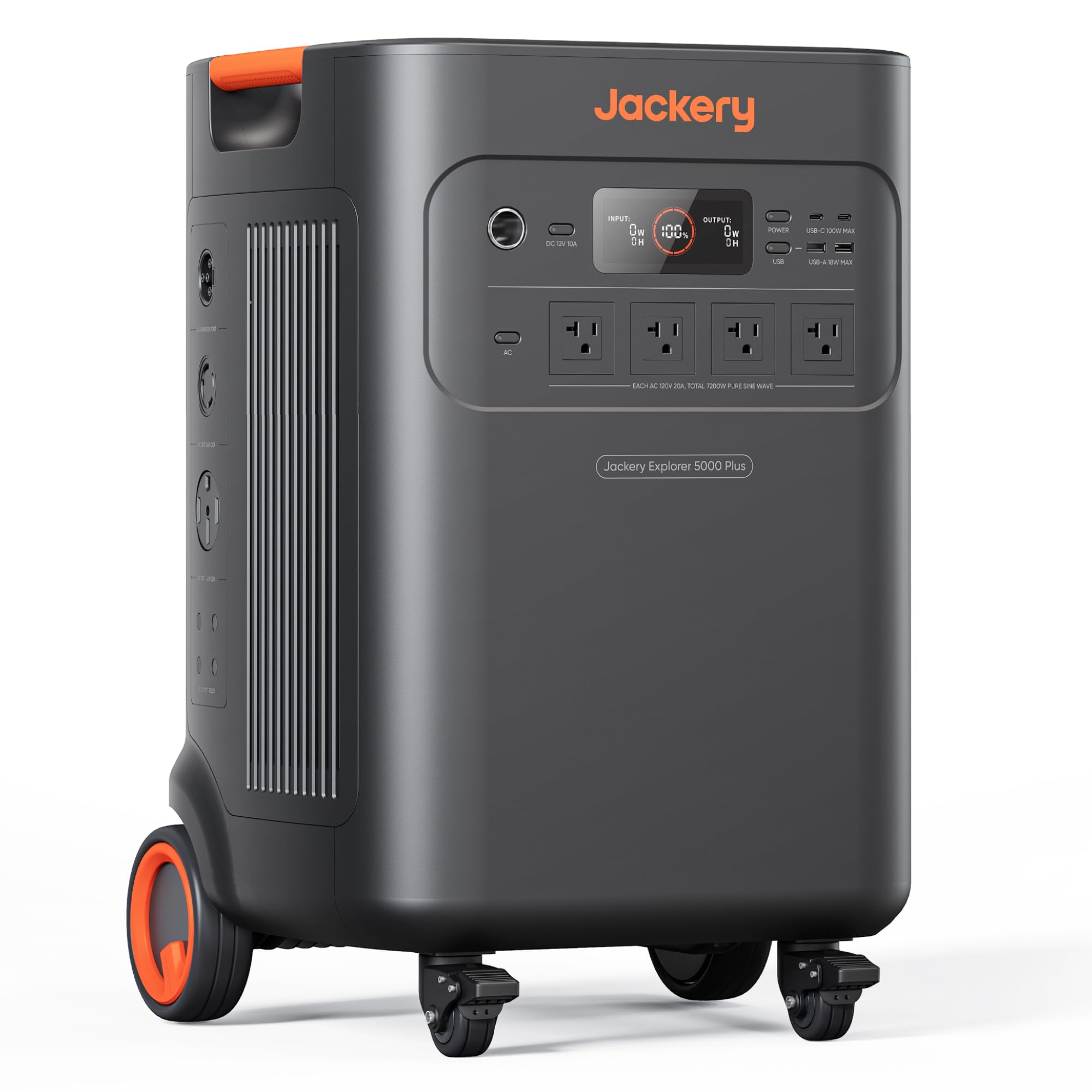
4. Jackery Solar Generator 5000 Plus Portable Power Station, 5040Wh LiFePO4, 7200W 120V/240V AC Output, Expandable to 60kWh
Big-appliance muscle with an expandable path to nearly 60kWh.
Jackery’s 5000 Plus is for the household that refuses to give up its heavy appliances during an outage. It starts at 5040Wh with a 7200W rated output and a 14,400W surge — which means it can start up a 5-ton AC or a water heater while still running a home full of electronics. The rated 7200W outruns both the ECO-WORTHY 5000W kits and the Anker SOLIX F3800’s 6,000W. Then it expands up to 60kWh, which Jackery rates for backing up a home for as long as 13 days of daily use.
Recharge speed is the other headline. With up to 4000W of solar input, it fills in roughly two hours — compatible with both high-voltage and low-voltage solar panels. It also plays nicely with the Jackery 60A Smart Transfer Switch, which covers up to 12 circuits at 120V or 6 circuits at 240V. ChargeShield 2.0 and the LFP cells are rated for 11 years of daily-use cycles.
The owner base is mostly satisfied — long-time Jackery users call this build solid and the companion app basic but workable. The one honest caution is stamina under constant load: heavy draws can eat 30% or more of the pack in a single day. Put a real load on it and plan your usage, and it does what the spec sheet says. That is not a defect; it is the physics of a portable pack doing serious work.
What stands out: the 7200W output and 14,400W surge mean no appliance is off-limits, and the 60kWh expansion ceiling gives you a future-proof path.
The one caution: heavy, continuous loads burn through capacity faster than the headline suggests. Plan circuits and runtime, not just peak wattage.
Best fit: a homeowner who wants one station that can start a 5-ton AC and still grow to match future needs.
Pass on it if: you expect it to run a whole house at full draw for days without adding batteries.
5. ECO-WORTHY 48V Home Backup Power, 10240Wh Battery, Liber 10KP 10KW Inverter
Sixty-three minutes from dead to outage-ready — the fastest recharge here.
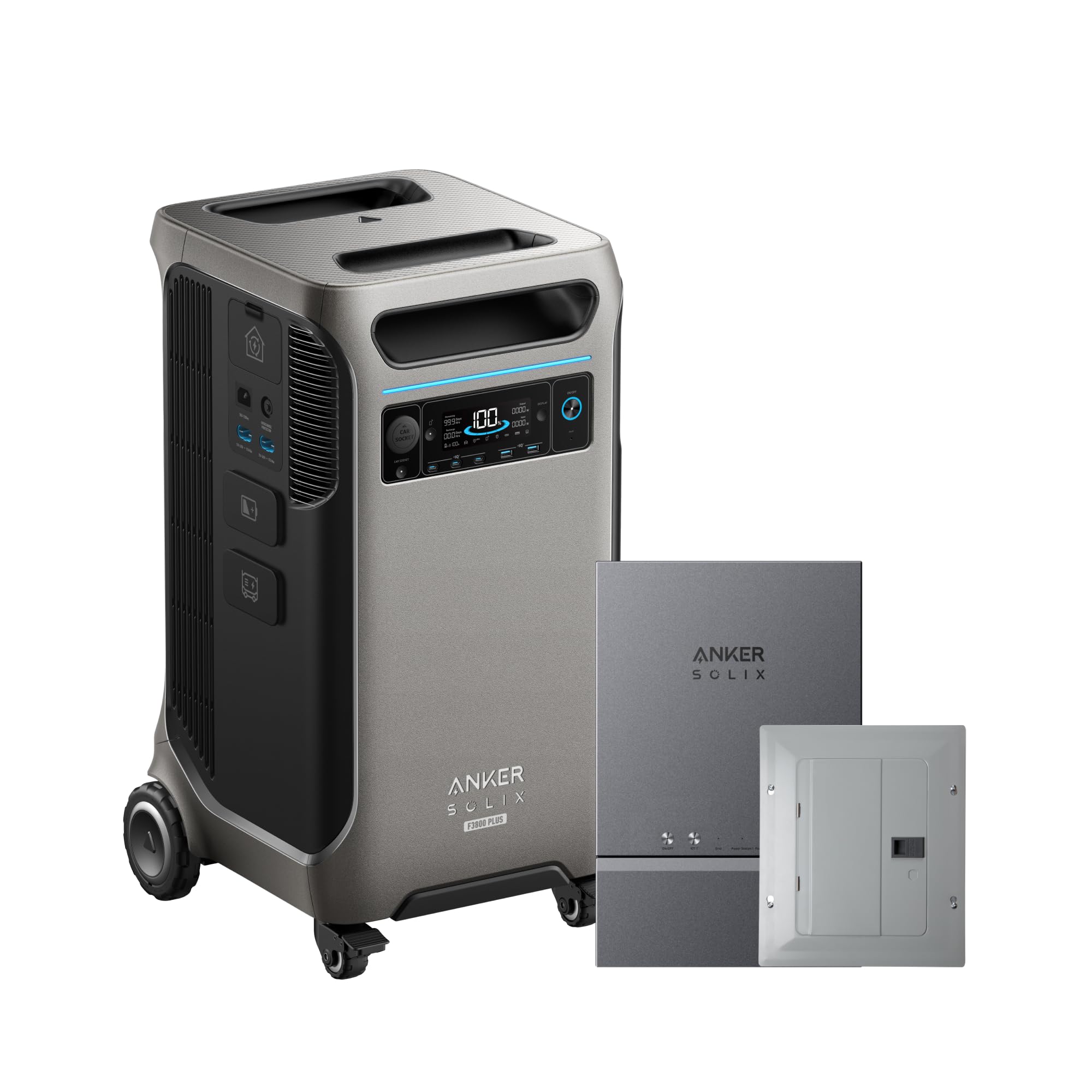
The F3800 Plus is the iteration Anker built for people who want their backup to be ready on a moment’s notice. It shares the same 3,840Wh LiFePO4 base as the standard F3800 and the same 6,000W output, but its headline spec is a 63-minute recharge from empty when combining solar and a generator. Nothing else in this list comes close to that turnaround. It also expands to 26.9kWh with six batteries, or doubles to 53.8kWh with twelve packs plus a second unit for weeks-long runtime.
Charging is flexible by design — four ways in: solar (up to 3,200W input), a 240V gas generator via a 6,000W bypass, the Home Power Panel, or a plain AC outlet. The same 120V/240V dual-voltage output runs a dryer or well pump without workarounds. It arrives as a full kit: the power station, the Home Power Panel, an AC charging cable, two solar charging cables, plus a subpanel and wiring guide. Anker backs the InfiniPower cells with a five-year warranty and a stated 10-year lifespan.
The thing owners praise most is the build quality — the fit and finish feel premium, and the Home Assistant integration path means serious DIYers can wire it into their smart home. The honest notes are packaging and support. Owner reports flag inadequate packaging for the weight, though Anker has replaced units damaged in transit. Solar panel recommendations from Anker’s own assistant have also drawn criticism — the AI pushes the 400W Anker panel even though the unit’s internal MPPT only draws 17A, so shop panels on specs, not suggestions.
Why this one stands apart
- 63-minute recharge is the fastest of any station here
- Four charge paths — solar, generator, home panel, AC outlet — you are never without an option
- The complete kit includes the Home Power Panel, subpanel, and both solar cables
Weigh these before deciding
- The 3,840Wh base is a one-day buffer; weeks of coverage means adding batteries
- Packaging has not always matched the unit’s weight — some arrives needing replacement
This is the one for: a household that wants backup ready within the hour and expandable to multi-week runtime.
Not quite right if: you need maximum capacity from the start — the fast recharge is the selling point, not the base runtime.
6. EF ECOFLOW DELTA Pro Ultra 6144Wh Power Station, 120/240V 7200W AC Output

A 20-millisecond switchover — your lights do not even flicker.
This is the pick for the buyer who wants their outage to look like it never happened. The DELTA Pro Ultra uses an online UPS design with a stated 20-millisecond transfer time — faster than you can blink — and its single 6144Wh battery is rated for two days of essential household power. Expand to fifteen batteries and the system reaches 90kWh, which EcoFlow frames as over 30 days of essential power for a standard North American household. One inverter handles 120V and 240V with a 7200W output, enough to start a 3-ton central air conditioner. Add two more inverters and you reach 21.6kW AC output.
The modular architecture is a real strength. Inverter and battery ship separately and stack how you like, which owners note makes assembly intuitive. The 20ms UPS mode keeps your NAS, servers, and entertainment gear safe from blips, and all fans stay off for the first half hour of 2000W output — genuinely silent operation for a bedroom or office. It is the only pick here the manufacturer states is certified to both UL1973 and UL9540, the standard that matters for permanent installation. Recharge from empty takes about two hours.
The honest trade-off lives in the app and the install. Shoppers say the EcoFlow app handles circuit prioritization well, but it cannot run EPS (emergency power supply) mode and scheduled failover tasks at the same time — you pick one. Physical install takes a full day and real electrician work. And the recurring honest note is a real one: standby drain does exist, and one owner found it eats a small percentage of charge per day when idle. Plan accordingly.
What earns the premium badge: the 20ms failover, the modular scalability from 6144Wh to 90kWh, and the UL1973 + UL9540 certification that suits permanent home installation.
Prepare for: a full-day install with contractor help, some daily standby drain, and the app’s limitation on running EPS mode alongside scheduling.
Best suited to: a homeowner running a permanent installation who wants automatic failover and long-term scalability.
Renters and quick-setup buyers should skip: the DELTA Pro Ultra expects to be wired in and lives up to that expectation.
7. EF ECOFLOW 12kWh Portable Power Station: DELTA Pro 3 with 2 Extra Batteries

Thirty decibels of quiet — backup you can sleep next to.
This bundle pairs a DELTA Pro 3 base with two extra batteries for 12kWh of total storage, and it does so while running quieter than a whisper-level conversation. Its 30 dB operation is quiet enough to run inside a bedroom or home office overnight. LFP cells and the IP65-rated CTC battery pack protect the chemistry, and a 5-year warranty backs it up.
Output is 4000W, scalable to 6000W with X-Boost and expandable to 12000W through the ecosystem — enough to run a 3-ton central AC or a 1 HP water pump. Recharging is deliberately flexible: seven unique and eighteen combined methods including AC wall outlets, solar panels, gas generators, EV charging piles, and the EcoFlow Smart Home Panel 2. The recharge network is the deepest in this list, so no matter what you already own, it likely plugs in. Expandability reaches 48kWh with extra batteries or smart generators.
The standout for a lot of owners is the ultra-fast 10ms switchover — that is fast enough to protect your NAS, servers, and entertainment gear from even the briefest flicker. The app tracks everything and even shows remaining runtime. On the honest side: some buyers report the extra battery can take a while to be recognized by the system, and customer service has responses that vary — a couple of owners flag it as outsourced. The base unit is also genuinely heavy — carrying it alone is a two-person job.
Its winner card: 30 dB quiet operation for bedroom-side placement, plus a 10ms switchover and the widest recharge compatibility of any station here.
Worth a look at: occasional battery-recognition delays on first setup, and a heavy base unit that expects a helper. Neither is a deal-breaker, just a heads-up.
The one to grab for: an indoor backup setup where noise matters as much as capacity.
Only pass on it if: you need maximum quiet and are also unwilling to add a second pair of hands at setup.
Understanding the Specs
Watt-hours (Wh) and battery capacity
Watt-hours tell you how much energy the battery can hold — a bigger number means longer runtime. Amp-hours (Ah) is a related metric that pairs with voltage. A “48V 100Ah” battery stores more than a “12V 100Ah” one because the voltage multiplies the amp-hour rating. When shopping, compare watt-hours across systems — that is the apples-to-apples duration number.
Wattage and 120V versus 240V
Output wattage decides what can run at the same time. 120V handles standard US outlets and light appliances; 240V covers heavy loads like dryers, ovens, and central air conditioners. If a system only offers 120V, it cannot drive a 240V appliance no matter how much battery it has. Split-phase 240V support is what makes a system feel like a normal-power outage solution rather than a smartphone-charging stopgap.
LiFePO4 chemistry and cycle life
LiFePO4 (lithium iron phosphate) is the current standard for home backup batteries. It offers more charge cycles and better thermal stability than older chemistries, which is why manufacturers quote lifespan in years and cycles. The higher the cycle rating, the longer you can keep the same battery. Depth of discharge (DoD) — how far you drain the pack between charges — also affects real-world longevity.
Inverter efficiency and certification
The inverter turns stored DC power into household AC power, and its efficiency affects how much of your solar and grid charging actually makes it into usable electricity. MPPT (maximum power point tracking) is the feature that squeezes the most energy from solar panels. Safety certifications like UL1973 and UL1741 tell you the unit has been tested for electrical safety and code compliance.
FAQ
How many watt-hours do I need for a whole-house battery backup?
Can I run a 240V appliance like a dryer or central AC from a battery backup?
How long will a LiFePO4 battery backup last before I have to replace it?
Do I need an electrician to install a battery backup?
Is a portable power station better than a battery-plus-inverter kit?
Can I recharge a home battery backup with solar panels?
How do I know a battery backup is safe to install in my home?
Can a whole-house battery backup run my central air conditioner?
What is the difference between EPS mode and UPS mode on a home battery backup?
Do I need to worry about low temperature affecting a battery backup?
Final Thoughts: The Verdict
The battery backup whole house winner remains the Anker SOLIX F3800 because it pairs 3,840Wh of expandable LiFePO4 storage (a lithium battery chemistry built for long life) with a 6,000W dual-voltage output and a Home Power Panel — which means you install it as real infrastructure, not a big portable gadget, so your whole home keeps running, and its 4.4-star rating across 320+ buyers backs that up. If you want more raw capacity per dollar and are comfortable earning your way through install, grab the ECO-WORTHY 10240Wh + 5000W Inverter — it carries 2.7x the energy of the Anker base for similar money, so you can run more appliances for longer. And for a permanent install with the fastest automatic failover in the list, the EF ECOFLOW DELTA Pro Ultra is the one to wire in — the only pick here certified to both UL1973 and UL9540 (safety standards for battery and energy storage systems). Buy the one that matches your panel, your essential load, and how much you’re willing to add later.
How We Picked
We do not accept paid placement. Every pick is matched to a real buyer and a real use-case; we do not hands-on test units.
Sources & Methodology
Specifications: manufacturer listings and product documentation. Review insights: verified customer reviews, as of September 2026. Pricing: not shown on this page (it changes often); check the current price via the retailer link.
As an Amazon Associate, KitchPrep earns from qualifying purchases. This does not affect which products we feature.
Related Guides
