
Specs are compiled from manufacturer listings and verified buyer reviews and can change over time — please confirm the key details on the product page before buying.
When you camp, overland, or drive a truck for a living, summer nights force a bad choice: sweat through the heat or burn fuel idling the engine for AC. A battery-powered unit ends that trade-off, but the specs—BTU, watts, amps, and battery bank sizes—rarely tell you if it will keep you cool until morning. You need a unit built for 12V DC power that sips electricity, not one that demands a generator. Below, you will find the battery air conditioners that genuinely run off your power bank, how much energy they actually eat, and which one fits your rig, your roof, and your sleep schedule.
I’m Mohammad Maruf — the founder and writer behind KitchPrep. This guide is built by comparing the manufacturers’ published specifications and the patterns across verified customer reviews, so you get each pick’s real strengths and trade-offs instead of marketing spin.
You’ll learn which off-grid cooling unit suits your rig, your roof space, and your battery bank so you never wake up sweaty again with a true battery air conditioner.
Our Picks at a Glance
How To Choose The Best Battery-Powered AC Unit
The biggest mistake buyers make is focusing on BTU (British Thermal Units, the raw cooling power) while ignoring how much electricity the unit needs to produce that cold air. On a battery, your usable run time is determined by watts and amps, not just raw cooling might. A unit that pulls 1000W will drain a 100Ah battery far faster than a 350W unit, even if both claim to cool a similar space.
Match the Power Draw to Your Battery Bank
Look at the unit’s wattage or amperage draw, not just its BTU, to figure out if it will run all night. For example, a unit that consumes about 350W means you can expect roughly one hour of run time per 30 amp-hours of battery capacity at 12V. If you only have a small 100Ah battery, consider a unit with a low-power ECO mode or a clear wattage rating that you can sustain.
Rooftop vs. Split vs. Portable Fit
Your vehicle’s structure dictates your options. Rooftop units need a standard 14″ x 14″ vent cutout and are best for RVs and vans with flat roofs. Split systems have an indoor unit mounted under the dash or on a wall, connected by refrigerant lines to an outdoor compressor, making them more flexible for trucks with limited roof space. Portable units like the EcoFlow can be placed anywhere but require you to manage an exhaust hose.
Hunting for Quiet and Control
If you’re sleeping in the same space the AC cools, noise is a major factor. Look for units with a decibel (dB) rating in the low 40s for sleep-friendly operation. Control methods also matter: physical buttons are reliable, but an app or remote lets you adjust settings without getting out of bed. Some units also let you switch between turbo (fast cool), eco (low power), and sleep (low noise) modes.
Quick Comparison
| Model | Best For | Cooling Power | Noise Level | Weight | Amazon |
|---|---|---|---|---|---|
| Outequip 10K BTU Rooftop★ Best Overall | Off-grid RVs & boondocking | 10,000 BTU | 40 dB | 43 lbs | Amazon |
| Treeligo 9.5K BTU Mini SplitBudget Champion | Budget truck & RV cooling | 9,500 BTU | <45 dB | 56 lbs | Amazon |
| Aspligo 10K BTU SplitNo-Idle Choice | Semi-truck cabs and no-idling | 10,000 BTU | 50 dB | 59 lbs | Amazon |
| Treeligo 12K BTU Mini Split | Large truck sleeper cabs | 10,000 BTU | 45 dB | — | Amazon |
| Bailigo 12K BTU Under Dash | Classic cars & small cabs | 12,000 BTU | <50 dB | — | Amazon |
| Gidrox 10K BTU Rooftop | Smart app control & efficiency | 10,000 BTU | 40 dB | 54 lbs | Amazon |
| Countrymod 10K BTU Rooftop | Balanced performance & efficiency | 10,000 BTU | 45-55 dB | — | Amazon |
| EcoFlow WAVE 3 | Portable cooling for tents & small spaces | 6,100 BTU | 44 dB | 32 lbs | Amazon |
In‑Depth Reviews
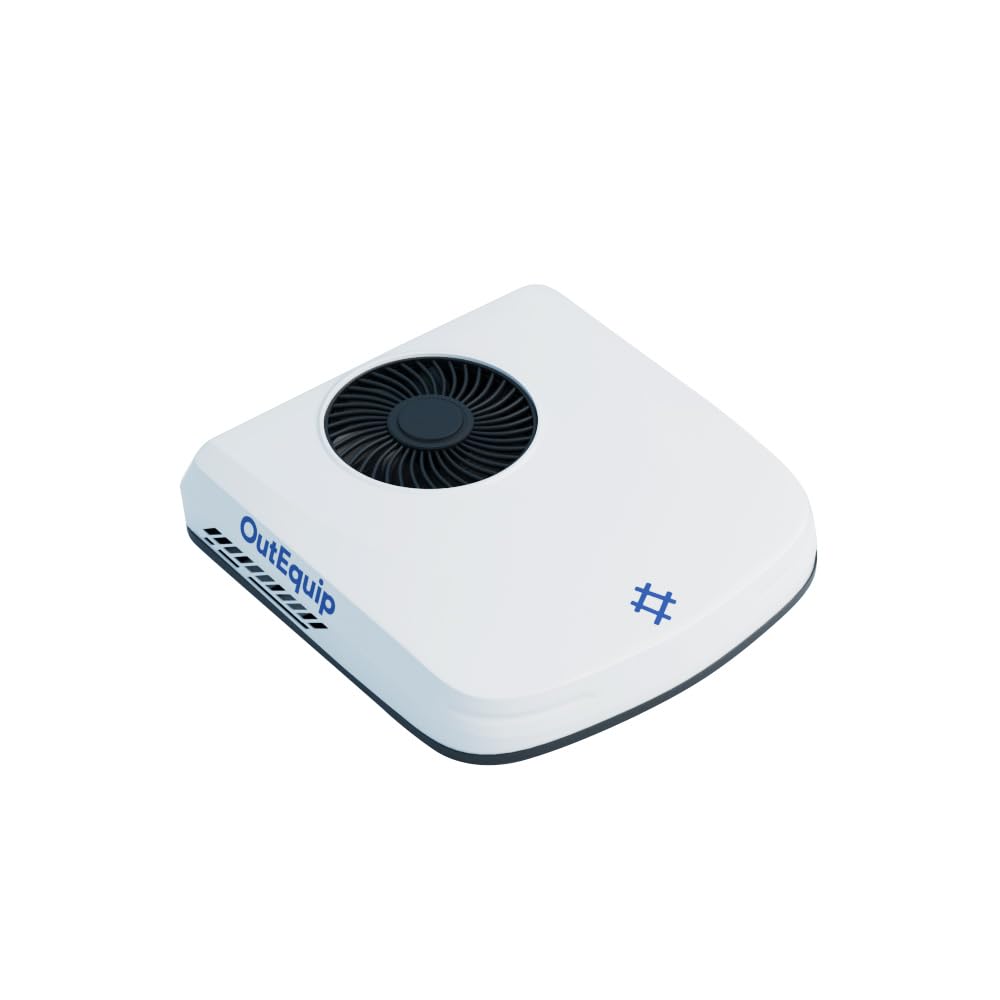
1. Outequip 12V 10,000 BTU Rooftop AC
Our pick — over 4.5★ from 100+ verified ratings; the strongest balance of quality and price.
The boondocker’s choice that cools a whole RV on battery power alone at just 40 dB.
You get real cooling power here: 10,000 BTU (British Thermal Units, the standard measure of cooling capacity) that buyers report is remarkably quiet and cold. Its inverter compressor runs directly off 12V, 24V, or 48V battery banks, so no separate inverter is needed. A built-in 4,500 BTU PTC heater adds supplemental warmth for mild cold, not freezing extremes.
At 43 lbs and only 6″ tall, this low-profile design is light enough for a solo installer to manage, which owners confirm. The included 15ft of 6 AWG wire and fuse mean you aren’t hunting for extra parts, and the ~4-hour install follows a detailed 9-step process. At 40 dB, it’s library-quiet, so it won’t disturb your sleep on hot nights.
Compared to the similar-powered Countrymod below, this unit is both lighter and quieter, beating its 45-55 dB rating with a 40 dB hum. It draws about 600W max and roughly 250W per hour in real-world use, ideal for solar boondocking. There is one honest catch: the lid screws can be hard to reach on install and the connectors are a bit fragile, so keep spares ready.
Why owners love it
- Cools on low even at 96°F, no interior drips in humid heat
- Runs on 12V/24V/48V battery or solar for true off-grid use
- Eco, sleep, and turbo modes plus a Bluetooth app
What to watch
- Install screws are tricky to reach and remove
- Heater is only supplementary, not for extreme cold
Your best bet if: you want a lightweight rooftop unit that runs a full off-grid setup without a generator; it’s the highest-rated pick for good reason.
Think twice if: you need a primary heat source for freezing winters — the 4,500 BTU heater is only for mild temperatures.
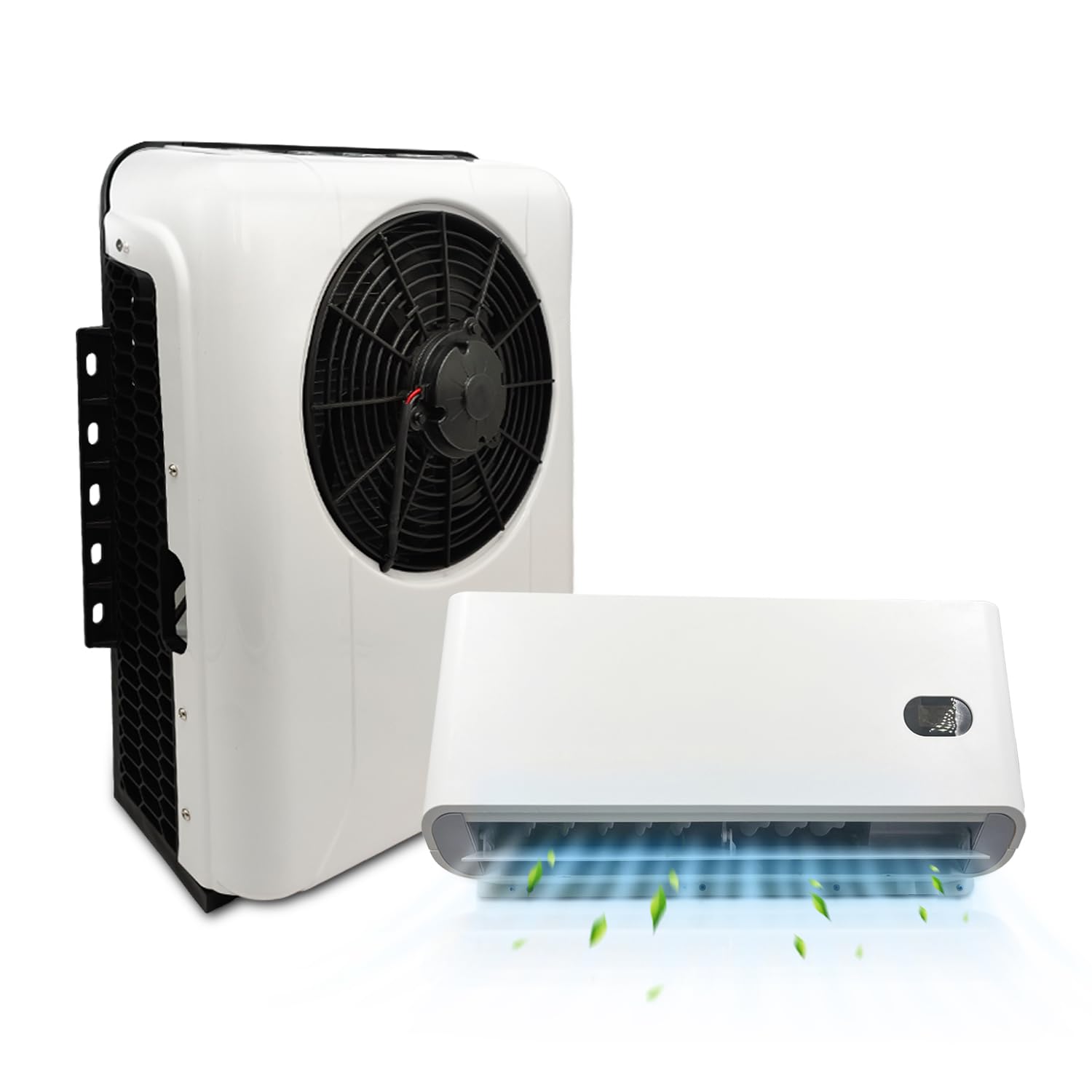
2. Treeligo 12V DC 9,500 BTU Mini Split
A true entry-level 12V split that blows ice-cold air for a fraction of the usual cost.
This Treeligo split is the most budget-friendly way into battery-powered cooling, and it still delivers 9,500 BTU of cold air. Its 350 CFM airflow spreads cooling evenly through a truck cab or small RV. Inverter technology adjusts compressor speed to save power, enabling up to 12 hours of run time on a 480Ah battery. The split design keeps the compressor outside, with the indoor unit staying below 45 dB for quiet operation.
Owners mention it blows very cold air and does “everything I hoped it would,” though it’s worth knowing it’s designed mainly for mid-roof semis and the mounting position can be unclear. A few owners mention an icing issue on the expansion valve and indoor coil, plus the controls read in Celsius only, which takes some getting used to for US buyers. The 56 lb total weight makes it a two-person job to mount, but the package includes the indoor unit, outdoor unit, and the parts needed for install.
The big gap versus the premium picks above is that it has no integrated heating — it’s a cooling-only unit. If you only need to beat the summer heat in an over-the-road truck and want to preserve your battery bank, the low entry cost and efficient 600 kilowatt-hours-per-year rating make this a smart starting point. Just remember that at 45 dB it’s slightly louder than the Outequip’s 40 dB hum.
What stands out
- Up to 12 hours of run time on a 480Ah battery bank
- Blows very cold air per verified owner reports
- Runs on your vehicle’s battery or external power
Be aware
- Controls are Celsius only
- Potential icing on the expansion valve in humid use
Reach for this if: you’re on a budget and need a 12V split for a semi or mid-roof truck; it’s the cheapest way to get genuine battery-powered AC.
Look elsewhere if: you need heating in winter or you prefer Fahrenheit temperature readouts.
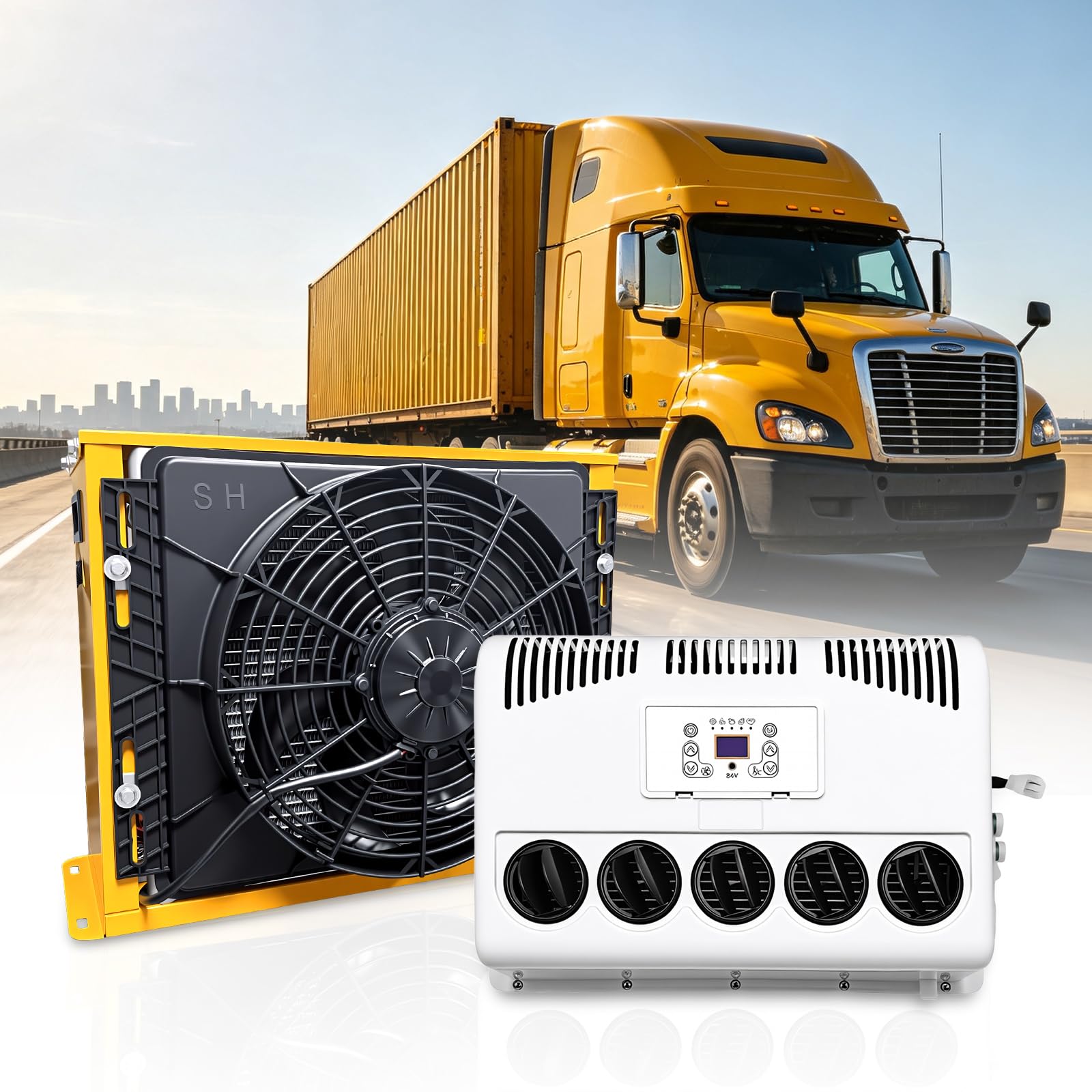
3. Aspligo 12V 10,000 BTU Split AC for Trucks
Built for the long-haul trucker who wants cab comfort without burning fuel at idle.
Professional drivers gravitate to this split system because it’s designed around the reality of overnight parking: it cools a cab without the engine running, saving a meaningful amount of fuel over a season. The 10,000 BTU output is paired with low voltage protection, which stops the unit from over-draining your battery and lets it start smoothly without straining the power source. It runs 10000 BTU of cooling, and you operate it via a clear LED display and remote control you can use from the driver’s seat.
One professional trucker documented an extensive test: with 2x300Ah LiFePO4 batteries, in 100°F outside heat and the AC set to 75°F, the system used 88% of the battery over 34 hours, then recharged in 11 hours. That kind of endurance is why owners call it good for no idling and a solid value. The internal unit noise is 50dB, which is slightly louder than our top pick at 40 dB but still quiet enough for daytime driving and nighttime sleep.
A critical fit note: this unit is designed for a minimum 350Ah battery to get about 3 hours of cooling in the day or 6 hours at night. It does not include refrigerant — you’ll need 500-550g of R134a, which a technician adds during install. While most customers note good build quality, one unit arrived with a screw that punctured a high-pressure tube, a rare defect that’s worth inspecting carefully on arrival.
Why it suits truckers
- Runs on battery with engine off, saving fuel on overnight stops
- Low voltage protection guards your battery from over-draining
- One owner ran 34 hours on a 600Ah LiFePO4 bank in 100°F heat
Check before you buy
- Refrigerant (500-550g R134a) is not included
- Needs a 350Ah+ battery for meaningful run time
Pick it for: semi-truck sleeper cabs where no-idle cooling and battery protection are the priority; it’s the unit most discussed by working drivers.
Pass on it if: you don’t have a large battery bank (350Ah minimum) or a technician to charge the refrigerant.
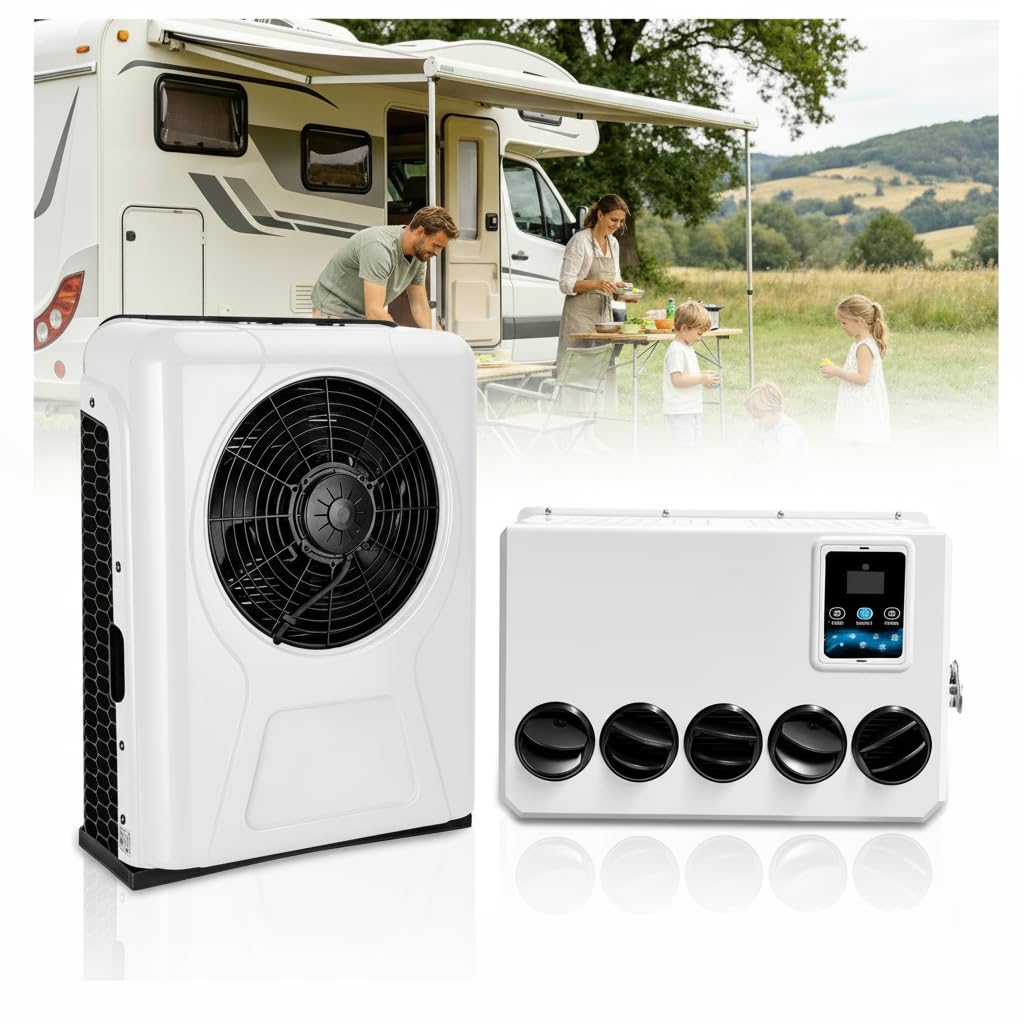
4. Treeligo 12V 12,000 BTU Truck Cab Mini Split
A powerful 12V split that leans on a 20CC scroll compressor for serious cooling muscle.
Where the smaller splits rely on gentler compressors, this unit steps up with a 20CC variable-frequency scroll compressor that pushes cooling capacity toward 3000W (about 10,000 BTU of effective work). That extra grunt matters in a large sleeper cab or hot van where weaker units struggle. It draws a hefty 60-80A of rated current, so it’s built for vehicles with substantial electrical systems or large battery banks.
The endurance story here is strong: hooked to a 480Ah battery, reviewers point out about 8 hours of run time when parked and 3-4 hours while driving. It also supports 3 modes — fast cooling, sleeping, and energy saving — so you can dial back the draw when you’re settling in for the night. Shoppers say it cools quickly and efficiently and is easy to install, with several noting it exceeded expectations for road comfort.
Compared to the Aspligo above, this unit holds a similar price tier but adds a higher 45 dB quiet rating versus 50 dB, making it the more sleep-friendly choice of the two splits. There are documented quality concerns worth acknowledging: one compressor shipped with only 25ml of oil when the spec calls for 90-125ml, and some buyers report corrosion on the control board or error codes after leaks. It’s a niche DC product with real strengths, but you should verify the compressor oil level at install.
Standout spec: The 20CC inverter scroll compressor delivers stronger, faster cooling than most 8,800 BTU units on the market, per the manufacturer.
Honest caveat: The high 60-80A draw demands a big battery, and a couple of owners flagged low compressor oil or board corrosion, so inspect carefully.
5. Bailigo 12V 12,000 BTU Under Dash AC with Heating
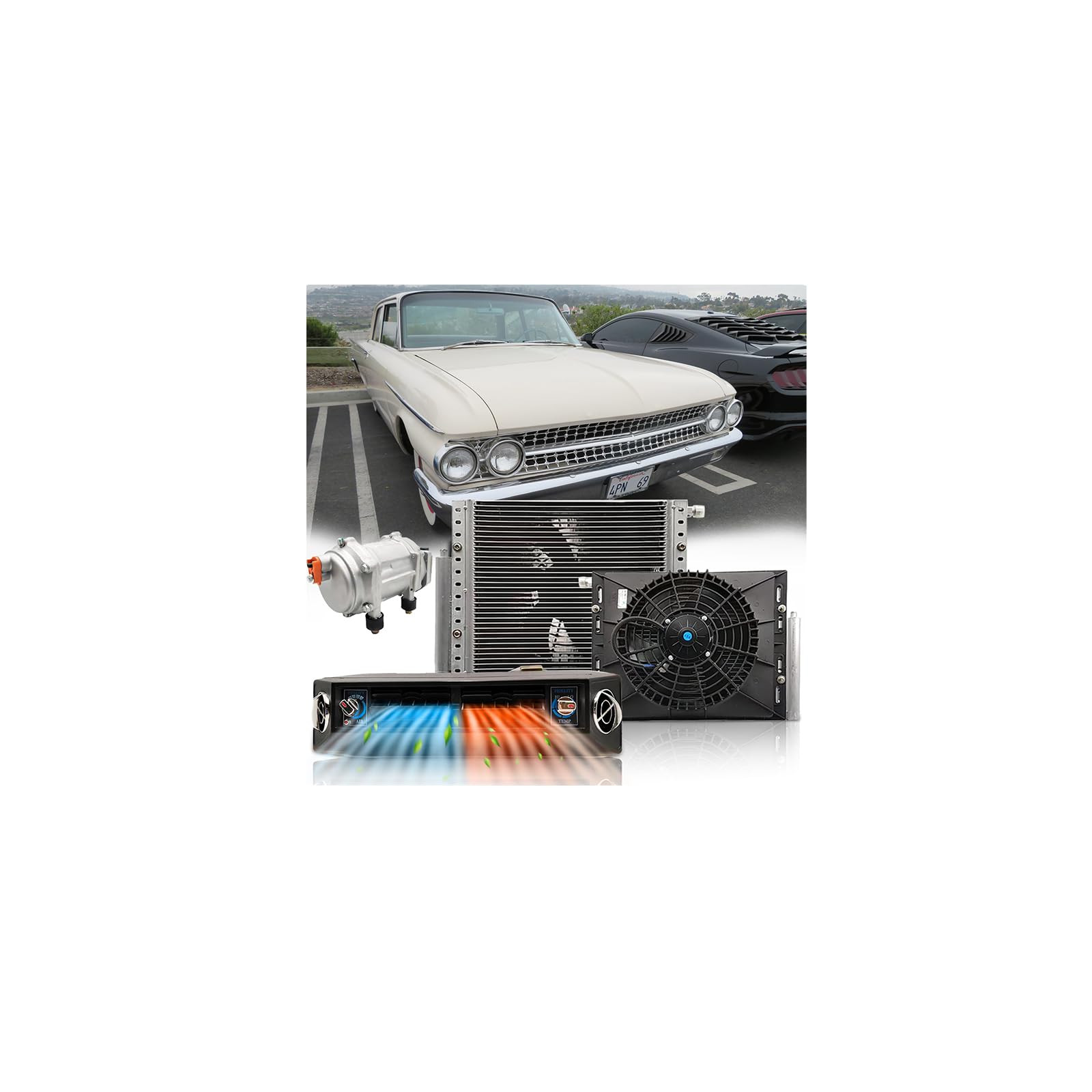
The under-dash 12V solution that brings modern cooling to classic cars and compact cabs.
If you drive a classic car or a vehicle with no roof space for a rooftop unit, this under-dash system is the answer. It consolidates the receiver dryer, condenser fan, and condenser into one 3-in-1 unit, which simplifies installation considerably — a real plus when you’re retrofitting a vintage ride. The inverter compressor intelligently adjusts its frequency to cut energy use, operating below 50 dB, and it cools with a professional-grade 20cc scroll compressor using R-134A refrigerant (not included).
The compact size (5.5″ x 12.6″ x 15.7″) lets it slide under the dash of passenger cars, RVs, vans, and even tractors without hogging legroom. Owners say it regulates interior temperature in as little as 8 minutes, and one classic car enthusiast installed it easily on a 1956 Chevy Belair with all parts included. It also works on electricity from the car battery or an external battery, so you can run it with the engine off in a parking lot.
The trade-off is the documentation: multiple owners note there are no clear instructions included, and the wiring and AC lines over 8ft require cutting and possibly new fittings. The company’s support is described as unresponsive when owners request a manual. If you’re comfortable with a DIY install or have a mechanic who can work without a guide, this is a solid path to cooling a vehicle that never came with AC.
What owners like
- 3-in-1 design simplifies installation in tight spaces
- Regulates temperature in as little as 8 minutes
- Works on car battery or external power, even with the engine off
What’s frustrating
- No instruction manual included with the kit
- Wiring lines over 8ft need cutting and new fittings
Built for: classic cars and compact vehicles lacking roof space, where a low-profile under-dash unit with heating is the only practical option.
Not for you if: you want plug-and-play installation with clear documentation; this one needs a confident DIYer.
6. Gidrox 10,000 BTU 12V Rooftop AC with APP
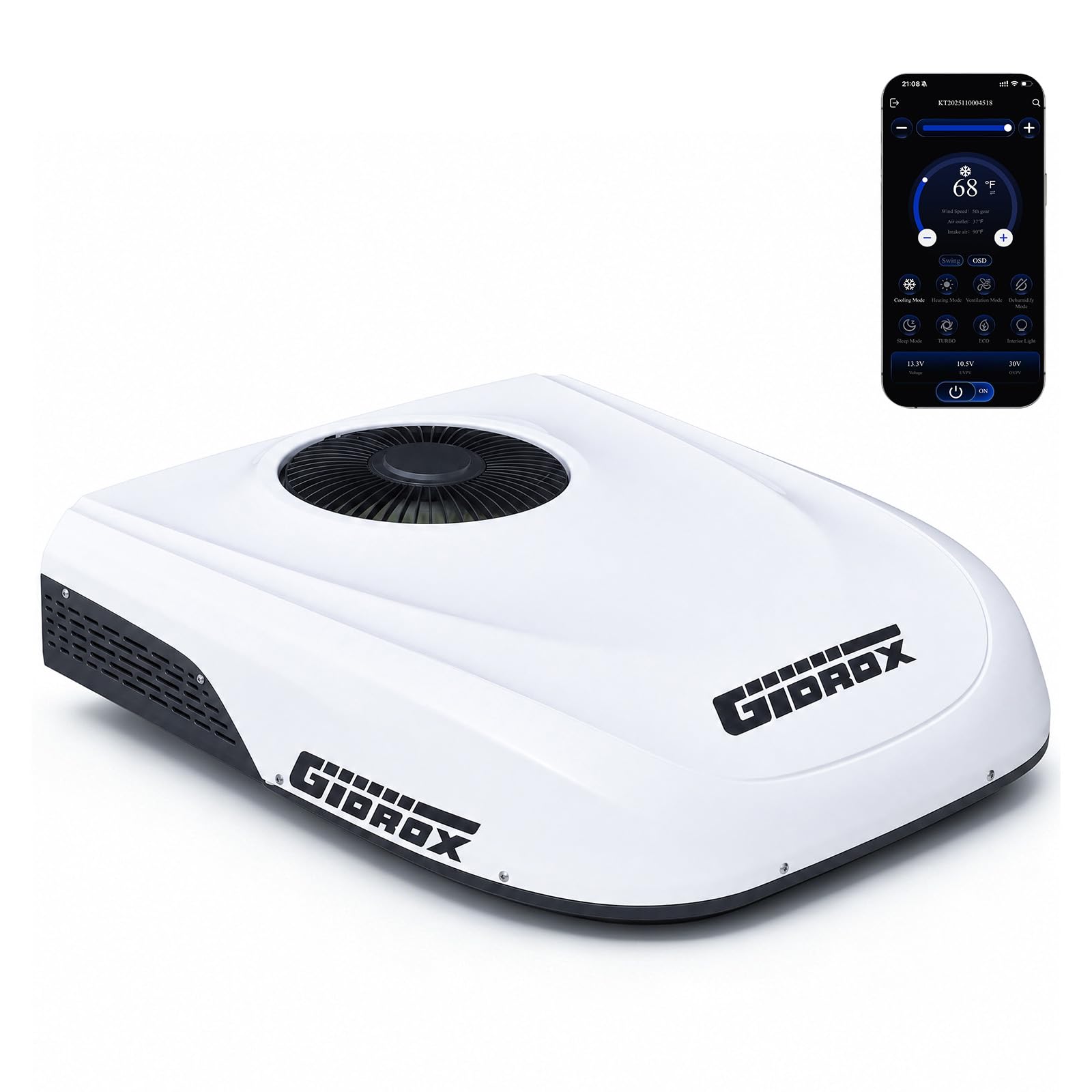
A 10,000 BTU rooftop unit that cools in 3 minutes and sips just 350W in eco mode.
RV owners who want fast cooling without wrecking their battery bank should look at this Gidrox rooftop unit. It uses inverter technology to cool your space within 3 minutes, and its tested average power consumption is only about 350W (watts, a measure of electrical draw) during nighttime operation in 30°C ambient — roughly 60% less energy than traditional AC units, per the manufacturer. That efficiency translates to all-night use when paired with a 400Ah battery (amp-hour, a measure of battery capacity).
Owners tracking the power draw confirm the numbers: eco mode runs around 350W, standard cooling about 420W, and turbo peaks at 650-700W, with an off-cycle draw of just 25-50W. That makes it a strong match for an insulated camper running on solar. It also operates at a library-quiet 40 dB in Sleep mode, so you won’t hear the compressor cycling at night.
The smart controls are its defining feature: you can run it via a Bluetooth smartphone app, an infrared remote, or the physical panel on the unit, with timers and °C/°F display options. The unit weighs 54 lbs and comes with a 19.7 ft power cable, fitting the standard 14″x14″ roof cutout with roof thicknesses between 1.5″ and 3.5″. The main quirk, per owners, is the eco mode locks at 79°F with no battery cutoff voltage setting, so you may prefer standard mode for temperature control.
Why it stands out
- 3-way control: smartphone APP, remote, and physical buttons
- Verified power draw of just 350W in eco mode
- 40 dB sleep mode for undisturbed rest
Small annoyances
- Eco mode is fixed at 79°F and can’t be adjusted
- No battery cutoff voltage setting for extra protection
Choose it for: RV owners with solar who want app-based control and the lowest nighttime power draw; it’s a quiet, efficient alternative to our top pick.
skip it if: you need a battery cutoff voltage feature or precise eco-mode temperature control.
7. Countrymod 10,000 BTU 12V Rooftop AC
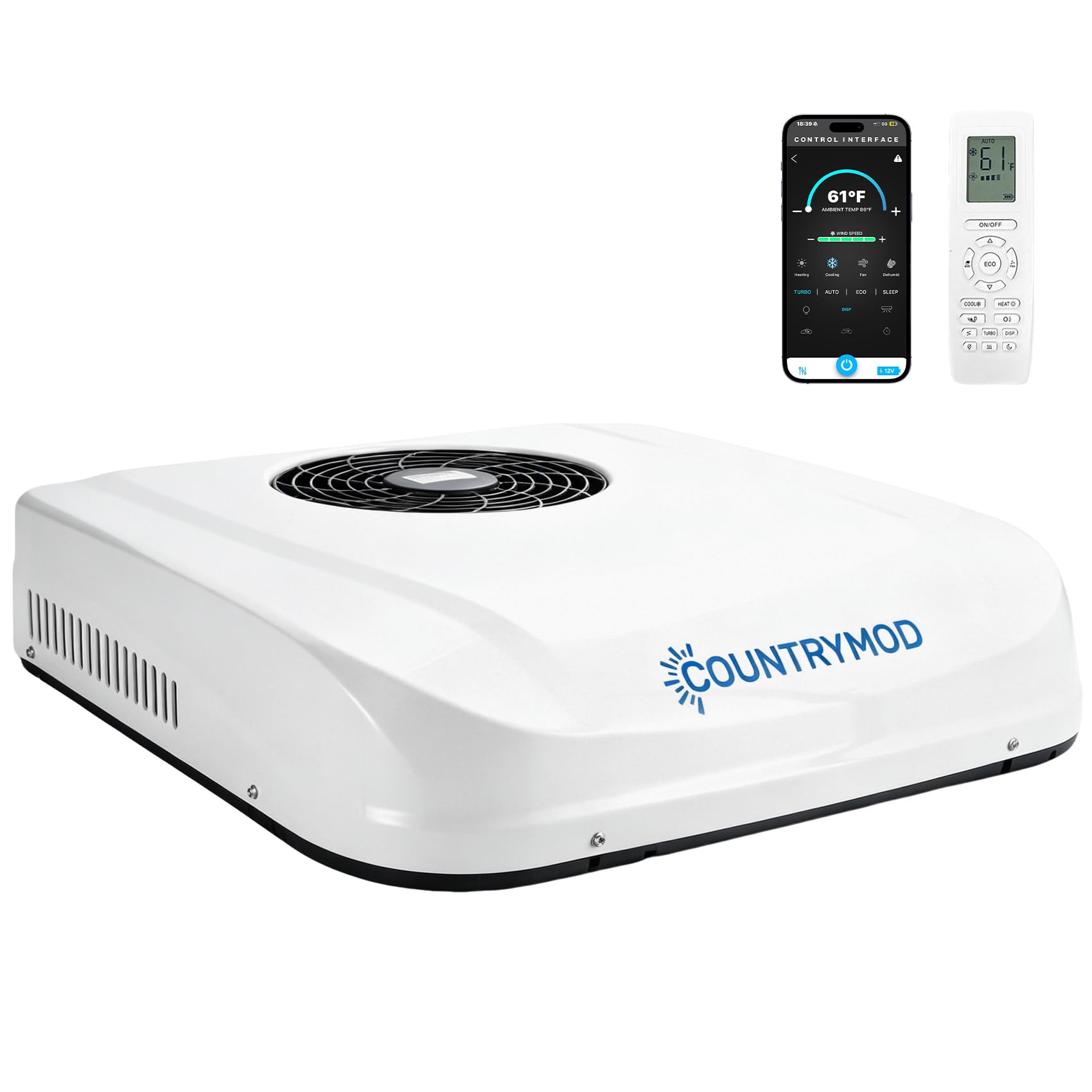
A well-reviewed rooftop that reportedly beats a 13K BTU 120V unit while drawing under 50 amps.
This Countrymod rooftop unit earns its strong reputation from real-world performance that surprises owners — several report it cools better and quieter than the 120V AC units they replaced. Its 10,000 BTU output is delivered through a 300-900W inverter design that adjusts the compressor speed to match demand, consuming only 0.3 kWh per hour with a battery life of up to 10 hours according to the manufacturer. That’s roughly 5 times more efficient than a standard 1.5 kWh/hour air conditioner.
The build quality wins praise, particularly the horizontal compressor design that reduces vibration and lowers the center of gravity for better stability on the roof. It fits a standard 14″ x 14″ roof vent and is ductless, so it doesn’t require major modifications to most RVs. Owners describe it as quiet and efficient for boondocking, with one noting a 44 dB sleep mode and power draw under 50 amps versus 150 amps for their old unit.
Setup has a recurring hardware catch: several owners needed longer bolts (8mm x 160mm) for arched roofs and had to seal the duct gap with tape. Controls include a keypad, remote, and app, giving you flexible ways to manage it. At its price tier, it is a value-focused alternative to the Gidrox above, trading the locked eco mode for a wider 45-55 dB noise range and strong owner support — buyers specifically mention responsive customer service that resolved compressor cycling issues.
Why owners rave
- Reportedly cools better than a 13K BTU 120V unit
- Runs under 50 amps for efficient boondocking
- Horizontal compressor adds stability and durability
Install notes
- Arched roofs need longer 8mm x 160mm bolts
- Requires a LiFePO4 battery to maintain proper voltage at the unit
Ideal for: RV owners replacing loud 120V units with something quieter and more efficient; the owner support is a genuine highlight per reviews.
Not for: ducted RV systems — this is a ductless roof unit, and it does favor more expensive LiFePO4 batteries.
8. EcoFlow WAVE 3 Portable AC with Battery

The cordless all-in-one that packs its own battery so you can cool anywhere, tent or truck.
Unlike every other pick in this list, the EcoFlow WAVE 3 is a self-contained portable unit with a built-in 1024Wh LFP (lithium iron phosphate) battery, so it doesn’t need to be wired into your vehicle’s electrical system at all. It delivers up to 1800W of cooling that can drop the temperature 15°F in 15 minutes under extreme heat, and it flips to 2000W of real heating when you need warmth. The battery provides up to 8 hours of cordless operation, and the 1000W fast charging brings it to full in about 75 minutes via AC, car, or solar.
This is the pick for spaces that don’t have a roof cutout or under-dash mount — think tents, truck beds, or a 100 sq ft room. Its compact 20″ luggage size with a handle makes it easy to move around, and it’s designed to cool 120-180 sq ft spaces. The app adds smart features like timers, temperature control, and a PetCare mode that automatically activates cooling if the cabin gets too hot for pets left in a vehicle.
There is an important honesty note about run time. Some owners mention excellent results — one ran it through a long power outage keeping a 100 sq ft space cool for 6 hours with 40% battery left — but others found the battery drained fast in a hot dog trailer or car. The built-in battery also makes it heavy, and the cooling output is lower than a rooftop unit at 6,100 BTU. It also uses R290 refrigerant, which the maker says reduces CO₂ emissions substantially over 10 years. This is a premium price for the convenience of cordless, portable cooling, not a replacement for a hardwired RV system.
What’s unique
- Built-in 1024Wh battery gives true cordless operation anywhere
- Both cooling and heating in one portable unit
- PetCare mode protects pets left in hot vehicles
Consider first
- Battery life varies widely; hot environments drain it fast
- Heavy with the battery, and it’s the premium-priced pick here
Best for: campers who need flexible cooling in a tent, small room, or vehicle without permanent installation; the built-in battery is the headline feature.
Reconsider if: you need sustained all-night cooling in extreme heat for a large space — a hardwired rooftop unit will outlast its battery.
Understanding the Specs
BTU vs. Wattage Draw
BTU (British Thermal Units) measures raw cooling power, while watts measure how much electricity it takes to produce that cold air. On a battery, wattage matters more. A 10,000 BTU unit that draws 350W in eco mode will run far longer than a similar unit pulling 1000W, even if both cool the same space. Check the unit’s annual energy consumption, listed as watt-hours or kilowatt-hours, to compare efficiency across models.
Battery Capacity and Amp Draw
Batteries are rated in amp-hours (Ah), telling you how much current they can supply over time. A 100Ah battery at 12V holds roughly 1,200 watt-hours, so a 350W unit could theoretically run about 3.4 hours before draining it completely. In practice, you should aim to use only about half your battery capacity to protect its lifespan, which is why units advertising run times on 400Ah or 480Ah banks are designed for serious off-grid setups.
FAQ
How long will a battery air conditioner run on a single charge or battery bank?
Will a 12V AC unit work with a standard car or truck battery?
What size battery do I need for overnight cooling?
Can I run a 12V air conditioner with solar panels?
What’s the difference between a rooftop unit and a split system for a vehicle?
Do these battery AC units provide heating too?
How loud are these battery-powered AC units while running?
Is a battery air conditioner more efficient than a standard 120V RV AC?
What is inverter technology in a DC air conditioner?
Final Thoughts: The Verdict
For most off-grid RV owners, the battery air conditioner winner is the Outequip 10K BTU Rooftop because it balances cooling power, an ultra-quiet 40 dB operation, and a light 43 lb design that runs on 12V, 24V, or 48V battery banks without a generator. If you want app-based control and the lowest eco-mode power draw at 350W, the Gidrox is a compelling smart alternative. And for campers who need true portability without wiring anything into their rig, the EcoFlow WAVE 3 with its built-in 1024Wh battery is the one to reach for.
How We Picked
We do not accept paid placement. Every pick is matched to a real buyer and a real use-case; we do not hands-on test units.
Sources & Methodology
Specifications: manufacturer listings and product documentation. Review insights: verified customer reviews, as of September 2026. Pricing: not shown on this page (it changes often); check the current price via the retailer link.
As an Amazon Associate, KitchPrep earns from qualifying purchases. This does not affect which products we feature.
Related Guides
