
Specs are compiled from manufacturer listings and verified buyer reviews and can change over time — please confirm the key details on the product page before buying.
The wrong bathroom tile removal tool cracks porcelain, gouges the subfloor, and turns a weekend job into a week. The right one lifts tile and thinset (the mortar that glues tile down) without cracking either. You have two main choices: hand pry tools that give you control and save the trim, and SDS chisel bits (bits that lock into a rotary hammer) that power through a whole floor fast. This guide sorts nine picks by tool type so you can match one to your bathroom job before buying.
I’m Mohammad Maruf — the founder and writer behind KitchPrep. This guide is built by comparing the manufacturers’ published specifications and the patterns across verified customer reviews, so you get each pick’s real strengths and trade-offs instead of marketing spin.
If your bathroom floor is bonded straight to concrete, a rotary-hammer chisel will clear it in a fraction of the time — the walk-behind stripper is only worth it for wide carpet and vinyl runs. Each pick below does one demolition task exceptionally well, and this rundown of the bathroom tile removal tool shows you which.
Our Picks at a Glance

How To Choose The Best Bathroom Tile Removal Tool
A bathroom is the hardest room in the house for tile removal. The floor is usually small, but the tile is bonded to a concrete or cement backer surface with thinset mortar (the glue that sets like stone). The walls hide a tub, a toilet flange (the ring that seals the toilet to the drain), and plumbing you cannot hit with a hammer. There is also grout (the filler between tiles), and grout transmits every strike. Your new tile will go on whatever surface is left behind — your subfloor, backer board, or mortar bed — so the removal method you choose decides both your comfort and the condition of the floor you will build on. There are two rules worth knowing before you buy anything.
Match the chisel to the hammer you already own
The shank is the part of a power chisel that slides into the hammer and locks in. Two sizes dominate: SDS-plus (found on common rotary hammers) and SDS-max (found on larger, heavier demolition hammers). A tool only fits the hammer family it was cut for. Check your hammer’s chuck before ordering, because a mismatch means the bit will not seat or will not transfer torque. If you own no hammer at all, a hand pry tool can do the entire job without one.
One piece of advice: buy the stand-alone tool, not the kit
The strongest advice in this category is to buy the tile removal tool on its own terms. If you are shopping in the budget-to-mid range, look for a solid steel body or a heat-treated bit — those are the parts that survive repeated hammer blows. Read the build: a trim puller is a pry tool for saving trim; a floor scraper is a large flat blade for stripping material; a scraper handle should be long enough that you are not hunched over.
Quick Comparison
| Model | Best For | Tool Type | Blade / Head Size | Blade Material | Amazon |
|---|---|---|---|---|---|
| Goldblatt Trim Puller★ Best Overall | Saving trim and baseboards | Hand pry tool | 4 Inch | 65Mn steel / carbon steel | Amazon |
| Bosch HS1910 Scaling ChiselWidest Chisel | Large-volume tile and mortar removal | SDS-max chisel bit | 3 In. x 12 In. | Alloy steel | Amazon |
| Firecore 4 In. x 11 In. SDS Plus ChiselBest on a Budget | Bathroom thinset and tile on a budget | SDS-plus chisel bit | 4 Inch x 11 Inch | 40CrMo alloy steel | Amazon |
| Zenith by Danco Floor Lifter | Stubborn glued floors and 2 lb hammer work | Hand pry / lifter | 14.5 in. long body | Hardened steel (48Rc) | Amazon |
| QEP 62909Q Razor Floor Stripper | Wide floor covering runs while standing | Long-handle stripper | 8 inch blade | Razor steel blade | Amazon |
| Firecore 5 In. SDS Plus Floor Scraper | Thinset and mortar on concrete | SDS-plus scraper bit | 5 Inch x 11 Inch | 65# manganese steel | Amazon |
| Bully Tools Floor Scraper 91300 | Long-reach standing scraping | Long-handle scraper | 11-gauge steel head | Alloy steel | Amazon |
| Bosch HS1418 Bulldog Floor Scraper | Fast thinset and laminate glue removal | SDS-plus scraper bit | 5 In. x 11 In. | Alloy steel | Amazon |
| Red Devil 2108 Long Handle Scraper | Corners, baseboards, and cleanup | Long-handle scraper | 4-Inch double edge | Steel | Amazon |
In‑Depth Reviews
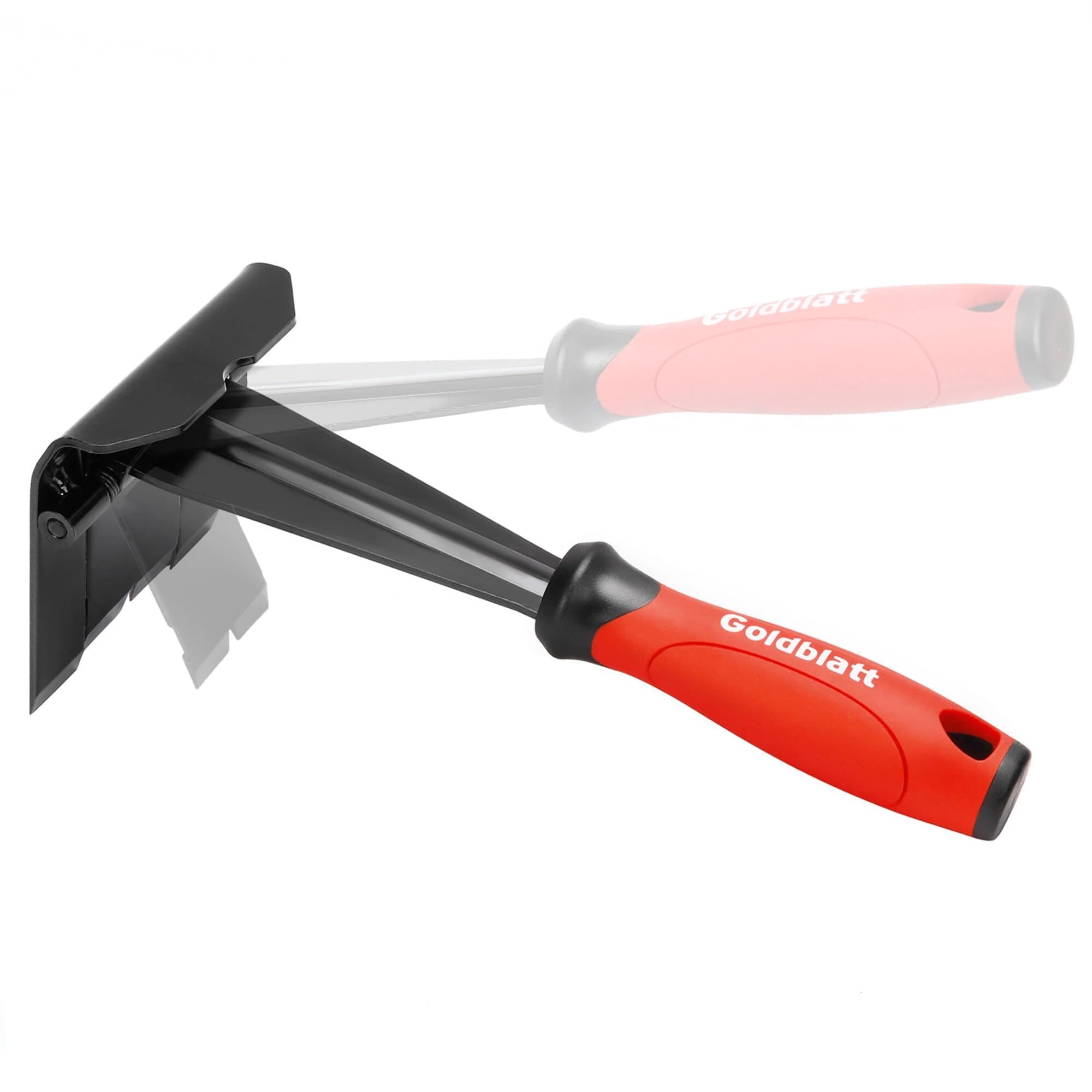
1. Goldblatt Trim Puller, 4-Inch Tile Removal Tool Baseboard Removal Tool
Our pick — over 4.5★ from 10,000+ verified ratings; the strongest balance of quality and price.
The 4-inch wedge that pries baseboards off without splintering the wall behind them.
If your bathroom remodel means pulling trim, baseboard, and tile while keeping the drywall intact, this is the tool the crew reaches for. It spreads force across a wide, flat contact area instead of a narrow crowbar tip, so pressure is distributed instead of concentrated on one spot. The built-in spring and 15-degree wedged center make separating trim from the wall quick, and the brand holds a U.S. patent on the design (patent US 11,142,921). At 1.4 pounds it is noticeably lighter than the 1.5-pound Bosch HS1910 scaling chisel, which keeps overhead and trim work easier on your wrist.
What wins people over is how cleanly it lifts tile and trim. Owners repeatedly note it removes baseboards and molding evenly, and they talk most about the trim puller’s trim-saving contact area and damage-free removal. As a buyer put it: “Worked well for removing trim on wall without dsmaging trim.” The 65Mn steel and carbon steel body has a black electrophoretic and polished finish (a coating that resists corrosion), and owners confirm the body takes repeated hammer taps. A sharp leading edge lets you tap it behind trim, and a nail notch pulls stubborn nails.
The catch is simply the job it was not built for. This is a hand pry tool, not a powered chisel, so a mortar-bed bathroom floor fused to concrete will fight you longer than a rotary hammer would. The 4.8-star rating across 10,000+ ratings reflects that almost everyone who buys it uses it exactly as intended. The wedge also works best as its 4-inch size suggests, so very wide commercial runs go faster with a long-handle scraper.
Why owners keep it in the bag
- Wide flat contact area and wedged center spread force to protect trim and wall
- Spring-loaded body and 15-degree wedge ease baseboards and tile up fast
- 65Mn carbon steel with polished finish resists corrosion and hammer strikes
Where it taps out
- Hand-powered, so a big mortar-bed floor is slower than a hammer chisel
- A few notice the 1.4-pound steel body feels heavy on long trim runs
Grab this one when: you are pulling baseboards, molding, and tile while keeping the wall and trim re-usable, and you want one tool that doubles for cabinets and countertops.
Leave it hanging when: your whole bathroom floor is thinset over slab and you want the speed of a rotary hammer.
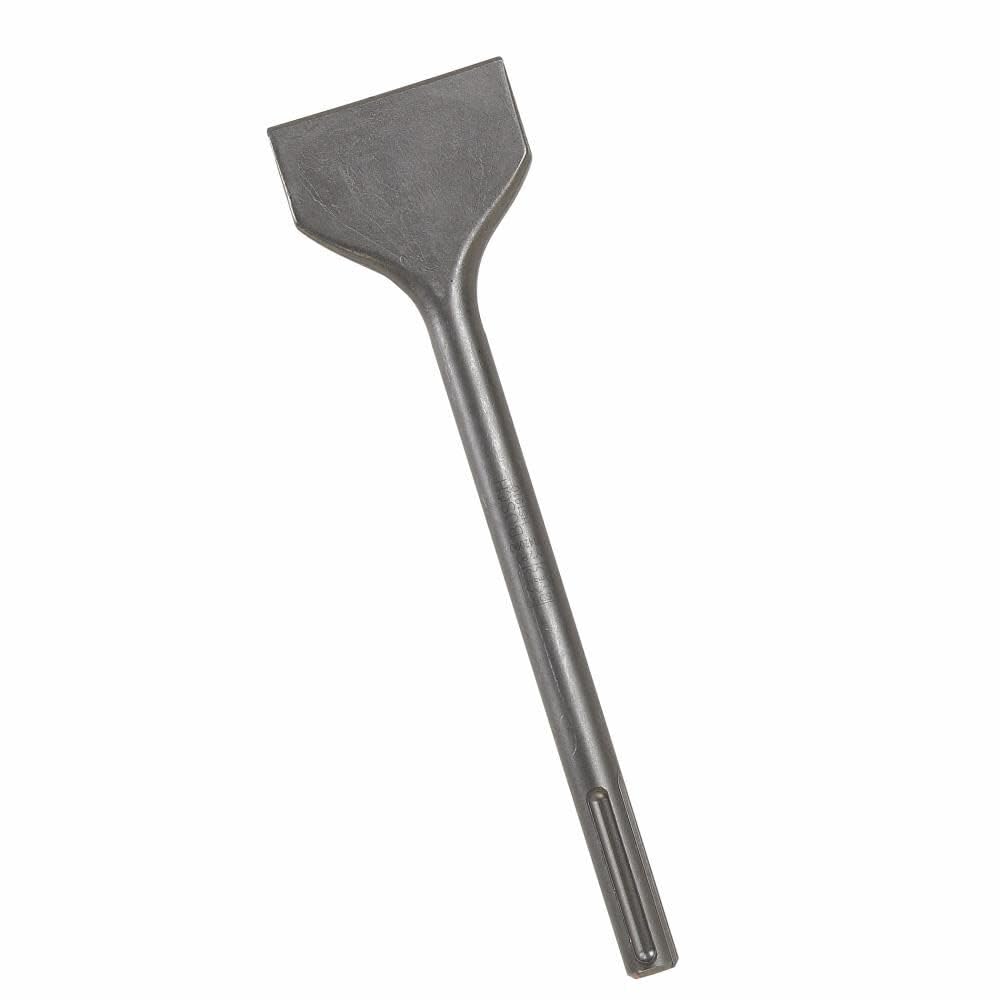
2. Bosch HS1910 Scaling Chisel 3-Inch by 12 Inch SDS max
A 3-inch-wide SDS-max chisel built to plow mortar and tile off in large sections.
For a bathroom floor bonded to concrete with a heavy mortar bed, this is the power-tool answer. Its 12-inch length and 3-inch flat alloy-steel blade drive under tile, mortar, and glazing compound and break large quantities of material loose at once. The wide design chips fast when you slide it between backer board and subfloor.
The one hard limit is the shank (the part that locks into the hammer): this chisel is cut for SDS-max hammers only, so a standard SDS-plus rotary hammer will not hold it — match it to your own tool before you buy. Owners confirm it makes demolition far easier and stays durable across multiple tear-outs, and one reports “Removed 1300 sq ft of tile; many tiles popped up in one piece, others easily broken.” What stands out is how functional it proves, with a durability and cutting-performance record that matches how owners describe it. A word of caution from the same verified review: tilt the chisel too shallow and it can gouge the foundation along with the tile.
True to a demolition bit, sharpness divides opinion and several owners wish it ran past 12 inches — a fair note, not a defect. For an SDS-plus rig there is a bolt-on alternative below.
Power where it counts: a wide 3-inch chisel that clears mortar and tile in bulk when it is bolted into a full-size SDS-max hammer.
The honest catch: SDS-max only — it simply will not seat in a smaller SDS-plus rotary hammer.
This is your bit if: you run a big SDS-max demolition hammer and want tile and mortar gone in wide strokes.
Step away if: you only own a compact SDS-plus rotary hammer — you would need a bit cut for that chank instead.
3. Firecore 4 Inch by 11 Inch SDS Plus Chisel Bit for Rotary Hammer Drill Tool
A slim 4-inch SDS-plus chisel that slips into a common rotary hammer and takes up bathroom tile.
If you already own an SDS-plus rotary hammer, this bit turns it into a tile lifter for one modest spend. The 40CrMo forged steel shank seats with a simple 10mm SDS-plus lock, so changes are fast. The beveled 4-inch blade cuts under material with less binding, and it is built for tile, laminate, thinset, rust, and mortar removal. It is also the smallest, slimmest chisel in this set — a real plus for detail work in corners and around a toilet flange where a wide bit cannot reach.
Owners find it performs far above its tier, and the value keeps coming up as the reason to buy. One summed up the whole purpose: “Needed to take up tile in bathroom. Exactly what I needed. Price was good.” Cutting time drops noticeably over prying by hand, and it handles thinset on a concrete slab cleanly. What reviewers praise most is how well it just functions — a strong practicality record for a budget bit.
On the downside, a narrower 4-inch blade covers less ground per stroke than the 5-inch Firecore scraper above — narrower is actually an advantage for corners but means more passes on open floor. It is also built for lighter chiseling and clean-up work rather than full slab demolition.
What you get for the money
- 40CrMo forged steel with heat treatment for hardness and longer life
- 10mm SDS-plus shank seats and locks in a common rotary hammer
- Slim 4-inch beveled blade reaches corners and tight spots
Keep expectations real
- 4-inch width covers less floor per stroke than a 5-inch blade
- Intended for light chipping, not heavy slabs
Made for: a DIYer with an SDS-plus rotary hammer who wants to pop bathroom tile and thinset without buying a whole new power tool.
Wrong tool if: you are stripping a wide, thick mortar bed and want a single fast pass per stroke.
4. Zenith by Danco Floor Lifter ZN700201
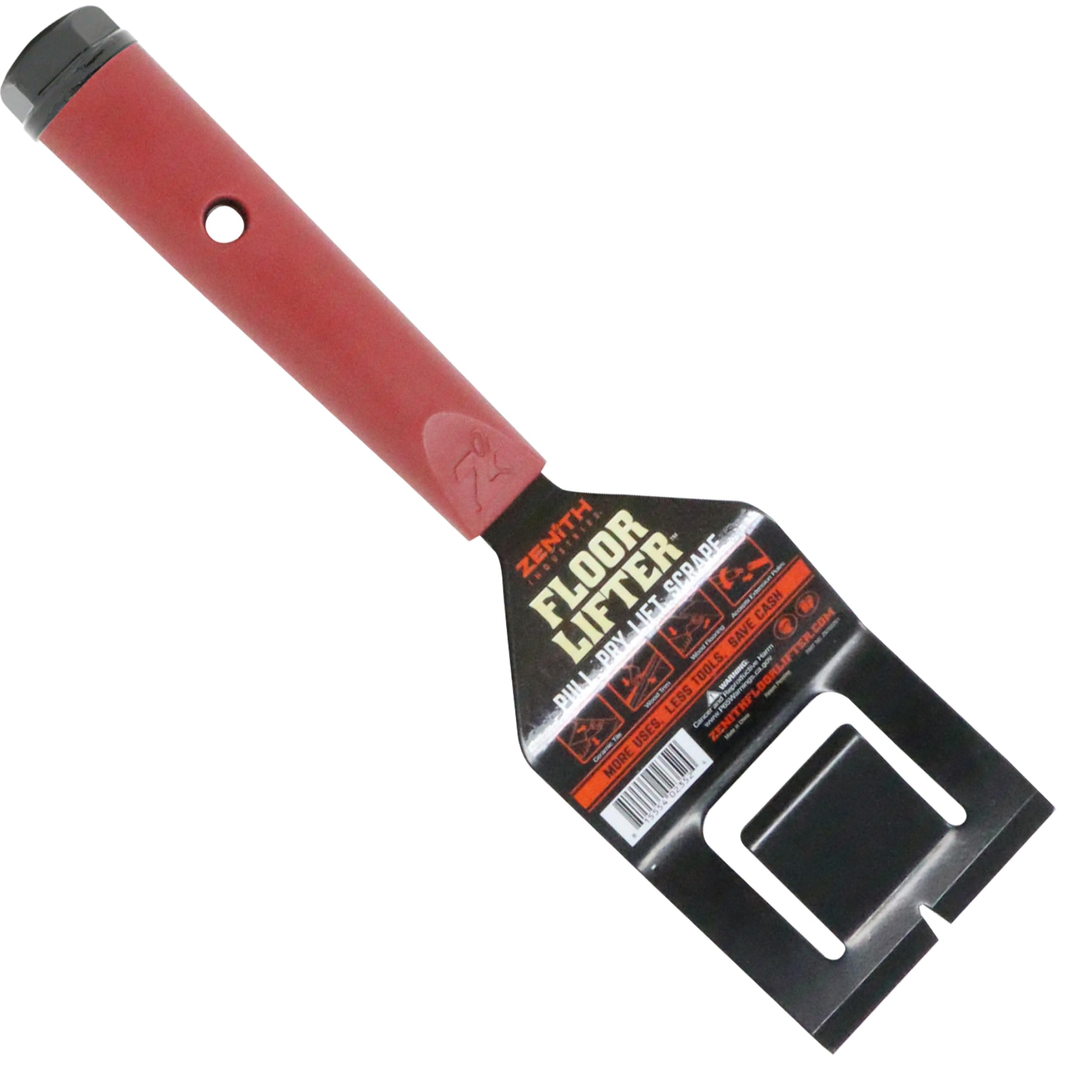
A heavier, longer pry tool that shrugs off a 2 lb sledgehammer on glued-down floors.
When tile or flooring is glued down hard, a light pry tool just skips across it. This hand lifter goes the other way: a longer body, a larger wedge angle for aggressive extraction, and 48Rc heat-treated hardened steel (a hardness rating that keeps the edge sharp), with a ground bevel edge that lets you drive it between trim and wall or use it as a shim. It handles hardwood, ceramic tile, glued countertops, and even scrapes popcorn ceilings. The cushioned EDPM handle (a rubber-like grip) absorbs shock, and the tool leans well past its 1.74 pounds to the resilient side of the hand-tool field.
Owners describe it as built for punishment — one notes it takes the direct impact of a 2 lb sledgehammer without complaint, and another deemed it dramatically easier than fighting the same job with a crowbar. It is the pick if you intend to hammer the tool through a genuinely stubborn floor. The recurring gripe is a handle bolt that works loose over time and needs retightening, plus some palm soreness on long jobs, so gloves help. It is a tool you swing with a 2 lb sledgehammer, not tap, so it will not replace a rotary-hammer bit for large mortar-bed removal.
At 1.74 pounds it is the heaviest pry tool here, and that heft is the point — mass equals hitting power. If you want a lighter tool for trim-only work, the Goldblatt trim puller above is the better feel in hand.
Brawn over finesse: hardened steel, a longer body, and a larger wedge angle make it the pick for glued-down floors that resist lighter tools.
The one maintenance note: the handle bolt can loosen under repeated hammer blows, so check and tighten it as you work.
Reach for this if: you are hammering through glued hardwood or stubborn tile and want a tool heavy enough to take the hit.
Put it back if: you only need light trim removal and would rather hold something handier.
5. QEP 62909Q 8″ Adjustable Razor Floor Stripper

A standing scrapedown tool: an 8-inch razor blade on a handle that telescopes from 3 to 6 feet.
This is the tool for pulling large areas of floor covering while you stay on your feet. The twist-lock handle telescopes from 3 ft. to 6 ft., so you can scrape vinyl, adhesive, and carpet without kneeling all day, and the 15-degree angled 8-inch blade head keeps the cutting edge flat to the floor. A deluxe cushioned grip and a canvas blade guard round it out. It is where a walk-behind approach starts.
Honest reporting matters here: opinions split sharply. Buyers who like it call it sturdy and effective — a 135-lb user got good results on 1985 vinyl-over-concrete floors and noted it saves money versus renting a machine. The recurring complaint is the handle locking mechanism, which can slip and collapse mid-job, and a few found the blade shipped reversed or dulled quickly. Because those mixed reports are a real pattern, treat this as a fit-dependent pick rather than a universal winner — which the 4.2 rating across 600+ ratings reflects honestly. If a locked, fixed handle matters most, a fiberglass long-handle scraper below avoids the twist-lock entirely.
For straightforward wide runs, though, a sharp 8-inch blade on a long handle covers ground fast. Swap in fresh blades and consider a small hardware fix on the lock, and it does its job.
The standing scrape-down: a 6-foot reach and an 8-inch blade let you strip vinyl and adhesive without crouching on the tile.
The reported weak point: the twist-lock handle can slip and the blades wear, so expect to tweak or replace parts.
Buy it if: you have wide floor-covering runs to strip and want to stay upright while you scrape.
Pass if: you need a tool that locks solidly and never needs adjusting mid-job.
6. Firecore 5 Inch x 11 Inch SDS Plus Floor Scraper

A 5-inch replaceable-blade SDS-plus scraper that spreads thinset removal across a wider swath.
When the goal is stripping thinset and mortar off a concrete slab, blade width is your best friend. This SDS-plus scraper carries a 5-inch blade that the maker says delivers 25% more material removal than standard blades, and the 65# manganese steel on a heat-treated handle is built for longer life in that abrasive work. The 10mm SDS-plus shank locks into a standard rotary hammer, and it ships with 3 spare alloy steel bolts and locknuts to fight vibration loosening. Compared with the 4-inch Firecore chisel above, that extra inch is working width on every pass.
Owners rate it highly for exactly this and consistently highlight the sharpness and the time it saves on tile and thinset. One especially strong report: it fit a hand-held Bosch hammer, took tile off an 8-by-8-foot bathroom floor down to bare concrete in no time, and trimmed the process to a fraction of the work. A remodeling crew reported buying several a year as a cost-effective replacement. What gets mentioned most is the overall quality, with scraping performance close behind.
The honest trade-off is durability, where reports split: some get long service and others mention a blade breaking under hard use. The blade is replaceable, and several owners keep one sharp. It suits thinset and mortar clean-up more than heavy first-pass demolition.
Strong points
- 5-inch blade and 25% more removal per pass than standard blades
- 65# manganese steel blade and heat-treated handle for tough mortar work
- Ships with 3 spare bolts and locknuts to resist vibrating loose
Worth knowing
- Durability reports are mixed, with some seeing a blade break under hard use
- Best on thinset clean-up rather than violent first-pass demolition
Best for: the owner whose tile is already up and who now faces a slab coated in thinset and mortar to grind clean.
Look elsewhere if: you want a single tool to smash through heavy first-pass demolition.
7. BULLY TOOLS Floor Scraper with 58-Inch Fiberglass Handle
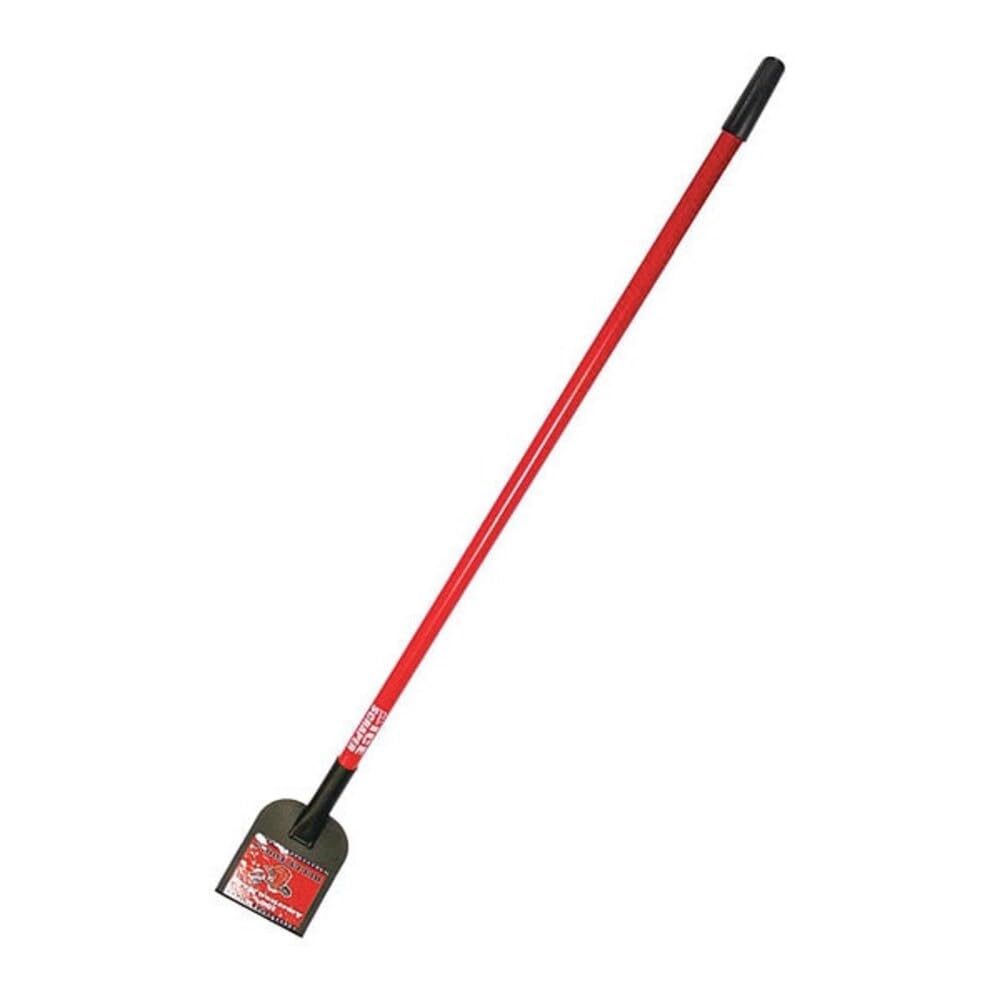
A 58-inch fiberglass-handle scraper that turns hours on your knees into minutes on your feet.
This one is about your body. The 58-inch fiberglass handle gives long reach and leverage, so scraping happens while you stand, and the extra-thick 11-gauge steel head holds firm contact against adhesive, old material, and buildup. It is 100% made in the USA and built for commercial-grade duty. At roughly a pound, the scraper is light enough to control with one hand on a long floor, and the length is what saves your back.
The reach is the standout: removal that normally means hours upright — one buyer lifted a rubber workout mat fused to a garage floor in 10 to 15 minutes versus the hours it would have taken on hands and knees. What gets praised most is the overall quality, and owners describe it as sturdy and not too heavy. A sharp beveled blade lifts stuck vinyl tiles with little upper-body strength, and it clears adhesive, staples, and carpet nail strips for subflooring.
Where owners flag a limit, it is value and durability: the head dulls with heavy cement work, though it can be restored, and heavily glued spots lift best after a hot-water soak. It is a broad, all-surface scraper for vinyl, adhesive, and carpet rather than a bathroom-tile specialist. If your job is glued-down tile rather than a wide floor covering, the Firecore 5-inch SDS-plus scraper above is the more direct tool.
What people praise
- 58-inch handle lets you scrape flooring standing upright
- Extra-thick 11-gauge steel head for firm contact on adhesive and buildup
- 100% made in the USA, commercial-grade construction
Fair caveats
- Head dulls with heavy cement work and needs periodic restoration
- Firmly glued material lifts best after loosening with a hot-water soak
Hands down your tool if: your priority is finishing a wide floor-covering job without wrecking your back and knees.
Not your tool if: you want to focus only on removing small pieces of tile
8. Bosch HS1418 5 In. x 11 In. SDS-plus Bulldog Floor Scraper

A 5-inch SDS-plus scraper with a long 11-inch shank so you scrape more upright.
For finishing a bathroom floor down to the concrete, this scraper is the clean-up specialist. Its wide 5-inch alloy-steel blade clears adhesive and thinset, and it uses locking bolt-and-nut fasteners so the blade stays secure instead of vibrating loose. The longer 11-inch shank lets you work more upright for better ergonomics over a whole floor. It locks into a standard SDS-plus rotary hammer and handles tile removal, mortar removal, and laminate glue.
Owners call it a phenomenal time-saver for stripping thinset and mortar from flooring substrates and flat surfaces. It clears stubborn thinset and grout fast, and wetting the surface first cuts the dust dramatically. What gets praised most is the overall quality, with functionality close behind. It is the premium-matched pairing for anyone already running a Bosch Bulldog-class SDS-plus hammer.
The honest caveats: durability and value reports are mixed, and the blade can get hot while the bolts and locknuts can vibrate loose and need retightening mid-job. Keep a wrench handy and it stays productive. It is a scraper for clean-up and finishing, not a sledgehammer-grade demolition tool.
Why it earns its spot
- Wide 5-inch blade and maker-stated 25% more removal per pass on thinset
- Long 11-inch shank allows more upright, comfortable scraping
- Locking bolt-and-nut fasteners hold the blade against vibration
The honest trade-off
- Some buyers report the blade heating up and fasteners needing retightening
- Durability and value reports are mixed, so treat it as a finishing tool
Right for you if: you already own a Bulldog-class SDS-plus hammer and want the smoothest floor-scraping finish for it.
Skip if: you need a first-strike demolition tool to break thick tile and heavy mortar beds.
9. Red Devil 2108 Long Handle Heavy Duty Floor Scraper, 4-Inch Double Edge Steel Blade

A 4-inch double-edge blade on a 4-foot steel handle, built to reach the corners others cannot.
Corners and baseboards are where bathroom tile removal gets fiddly, and this scraper is aimed squarely at them. Its 4-inch blade is double-edged: a sharp edge for tough materials like tile, linoleum, and carpet, and a blunt edge for cleanup without gouging the surface. The company says it reaches exactly where rotary floor sanders cannot. A 4-foot steel handle with a cushioned ergonomic grip reduces back strain and hand fatigue over long projects, and the professional-grade steel build is meant to take intensive renovation work. At 2.8 pounds it is the heaviest hand scraper here, so the heft comes with real grinding power.
Flooring crews report using these relentlessly for sheetrock dust, glue, and stuck-on trash without breaking them, and owners confirm it cuts carpet pad staples with little effort while still reaching glued linoleum. The sharp edge does demand respect — you have to keep the angle right so you do not slice into a wood floor you want to keep.
The one repeated approval and caution both concern reach and angle: the long handle keeps you standing, but the sharp edge needs a controlled angle. Value draws a split, with some calling it a bit pricey and others calling it good value for the durability — a fair reflection of a tool built to last through many jobs. If you want a lighter, trim-saving tool instead, the Goldblatt above is the lighter hand.
Where it shines
- 4-inch double-edge blade: sharp for tough material, blunt for safe cleanup
- 4-foot steel handle with cushioned grip reduces back strain and fatigue
- Reaches corners and baseboards where rotary sanders cannot
Things to respect
- Sharp edge demands a controlled angle to avoid slicing wood floors
- Heavier at 2.8 pounds, and value draws mixed opinions
Reach for it when: you need to get into bathroom corners and along baseboards without slicing the surface below.
Look elsewhere when: you want a lightweight trim tool rather than a heavy-duty floor scraper.
Understanding the Specs
Shank Compatibility: SDS-plus vs SDS-max
The shank is the metal end that locks into your rotary hammer. SDS-plus fits lighter, more common rotary hammers and is the standard on most DIY and light-pro drills; SDS-max fits larger, heavier demolition hammers. A bit only locks into the hammer family it was cut for, so match the shank to your own tool before you order. Measure the chuck, not the brand name.
Blade Material and Heat Treatment
Blade steel is what survives hammering and grinding against mortar. Look for terms like alloy steel, 40CrMo, 65# manganese, or heat-treated and hardened bodies like 48Rc — these tell you the blade was treated to resist chipping and dulling. Softer, untempered blades bend and wear quickly on thinset. For a hand tool, a hardened steel body and a ground bevel edge mean the tool can be driven into tight gaps without folding.
Handle Length and Reach
Handle length decides how much you kneel. Long fiberglass or steel handles, from a 4-foot reach up to 6 feet on a telescoping model like the QEP, let you scrape standing up, which spares your back and knees. Longer also means more leverage but more tool to maneuver in a tight bathroom. Match the length to the room, not to bragging rights.
Blade Width and Replacement
Wider blades like a 5-inch scraper cover more floor per stroke, which the maker states as 25% more removal than standard blades, so they finish open areas faster. Narrower 4-inch bits reach corners and tight spots a wide blade cannot. Replaceable-blade designs let you swap a dulled edge rather than the whole tool, which matters once thinset starts eating the edge.
FAQ
Will an SDS-plus chisel fit my rotary hammer or do I need SDS-max?
Which tool removes bathroom tile from a concrete slab fastest?
Can I remove tile without damaging the drywall behind it?
Do I need a hammer drill or can a hand tool do the job?
How do I stop the chisel from gouging the concrete under the tile?
What is the difference between a tile chisel and a floor scraper bit?
Will these tools also remove thinset and mortar after the tile is gone?
How long does a chisel bit or scraper blade last?
Do I need a long-handle scraper for a small bathroom?
Are variable-speed drills and rotary hammers suitable for this kind of work?
Final Thoughts: The Verdict
For most people taking up bathroom tile while saving the walls and trim, the winner is the Goldblatt Trim Puller because its wide, flat contact area and spring-loaded 15-degree wedge lift tile, baseboards, and molding cleanly, and it doubles for cabinets and countertops. If your floor is bonded to concrete and you want bulk speed from a rotary hammer, the Bosch HS1910 scaling chisel clears mortar and tile in wide strokes, while an SDS-plus rig should reach for the Firecore 4-inch chisel for budget-friendly bathroom tile and thinset removal. And for pulling wide floor coverings without kneeling, the long reach of the Bully Tools scraper saves your back on the big rooms. Match the tool to your surface — concrete slab, backer board, or glued-down floor — and the job stays a weekend project.
How We Picked
We do not accept paid placement. Every pick is matched to a real buyer and a real use-case; we do not hands-on test units.
Sources & Methodology
Specifications: manufacturer listings and product documentation. Review insights: verified customer reviews, as of September 2026. Pricing: not shown on this page (it changes often); check the current price via the retailer link.
As an Amazon Associate, KitchPrep earns from qualifying purchases. This does not affect which products we feature.
Related Guides
