
Specs are compiled from manufacturer listings and verified buyer reviews and can change over time — please confirm the key details on the product page before buying.
If you want the short answer: buy the Giorbello Bright White glass tile for a real glass look that survives a wet bathroom, or grab a peel-and-stick box if you rent and want it done this weekend. The rest of this page tells you which of the eight is right for your wall, your budget tier, and your skill level.
I’m Mohammad Maruf — the founder and writer behind KitchPrep. This guide is built by comparing the manufacturers’ published specifications and the patterns across verified customer reviews, so you get each pick’s real strengths and trade-offs instead of marketing spin.
Subway tile is the safest wall you can put in a bathroom, but the wrong thickness or the wrong adhesive turns a weekend job into a wall repair. This page breaks down coverage per box, tile thickness in millimeters, and how each option actually attaches, so you can sort the real bathroom subway tile from the thin stuff that looks flat in person.
Our Picks at a Glance

How To Choose The Best Bathroom Subway Tile
Two questions decide almost everything here: is this wall going to get soaked, and are you willing to mix mortar? Answer those honestly and the field drops from eight boxes to two or three.
Thickness is the durability spec nobody reads
Tile thickness is measured in millimeters (mm), and it is the single best clue to how a tile feels and cuts. An 8mm tile is a solid slab you score and snap with a proper cutter, which is why the glass and ceramic picks here sit at that number. A 3mm peel-and-stick tile is closer to a stiff sticker — fine on a dry powder-room wall, but it flexes more and shows every bump underneath.
Coverage per box, and why you always buy extra
Every listing here tells you the square footage inside one box, and none of those numbers account for waste. Corners, outlets, and the top edge all force cuts. One maker in this lineup tells you straight out to plan on cutting loss of 3 to 5 percent, and repeatedly people who run short are the ones who ordered exactly to their wall measurement.
Peel-and-stick versus real tile
Peel-and-stick is a PVC, stone-composite, or glass panel with adhesive already on the back — you peel the paper and press it on. Real tile needs thin-set mortar and grout, plus drying time. Peel-and-stick wins on speed and mess. Real tile wins on permanence and on looking correct from an inch away in a shower.
Quick Comparison
| Model | Best For | Coverage Per Box | Thickness | How It Attaches | Amazon |
|---|---|---|---|---|---|
| Giorbello Glass Subway, Bright White★ Best Overall | Real glass look in a wet shower | 5 sq. ft. (40 tiles) | 8 mm | Peel and stick | Amazon |
| Lovdeco Blue Glass Subway TileBest Color | Bathroom accent wall with color | 4 sq. ft. (32 sheets) | 8 mm | Lay-in | Amazon |
| Adedeo Glass Subway Tile, WhiteSmart Buy | Budget glass on a white wall | 4 sq. ft. (32 sheets) | 8 mm | Glue down | Amazon |
| V-MOZZA Faux Stone Peel and Stick | Renters covering a dry bathroom wall | About 13 sq. ft. (100 pieces) | 0.2 in | Peel and stick | Amazon |
| Vamos Tile Wooden Marble Grain | DIY backsplash with a real-tile look | About 12.08 sq. ft. (100 pieces) | 3 mm | Peel and stick | Amazon |
| Adedeo Beveled Mirror Glass Tile | Mirror strip behind a bathroom vanity | 5 sq. ft. (40 pieces) | 5 mm | Peel and stick | Amazon |
| Sunwings Stone Composite Subway Tile | Heat-safe wall behind a stove | 12.2 sq. ft. (100 pieces) | 0.12 in | Peel and stick | Amazon |
| Squarefeet Depot Ceramic Subway Tile | Traditional mortar install, long term | 12.5 sq. ft. (100 pieces) | — | Traditional install | Amazon |
In‑Depth Reviews
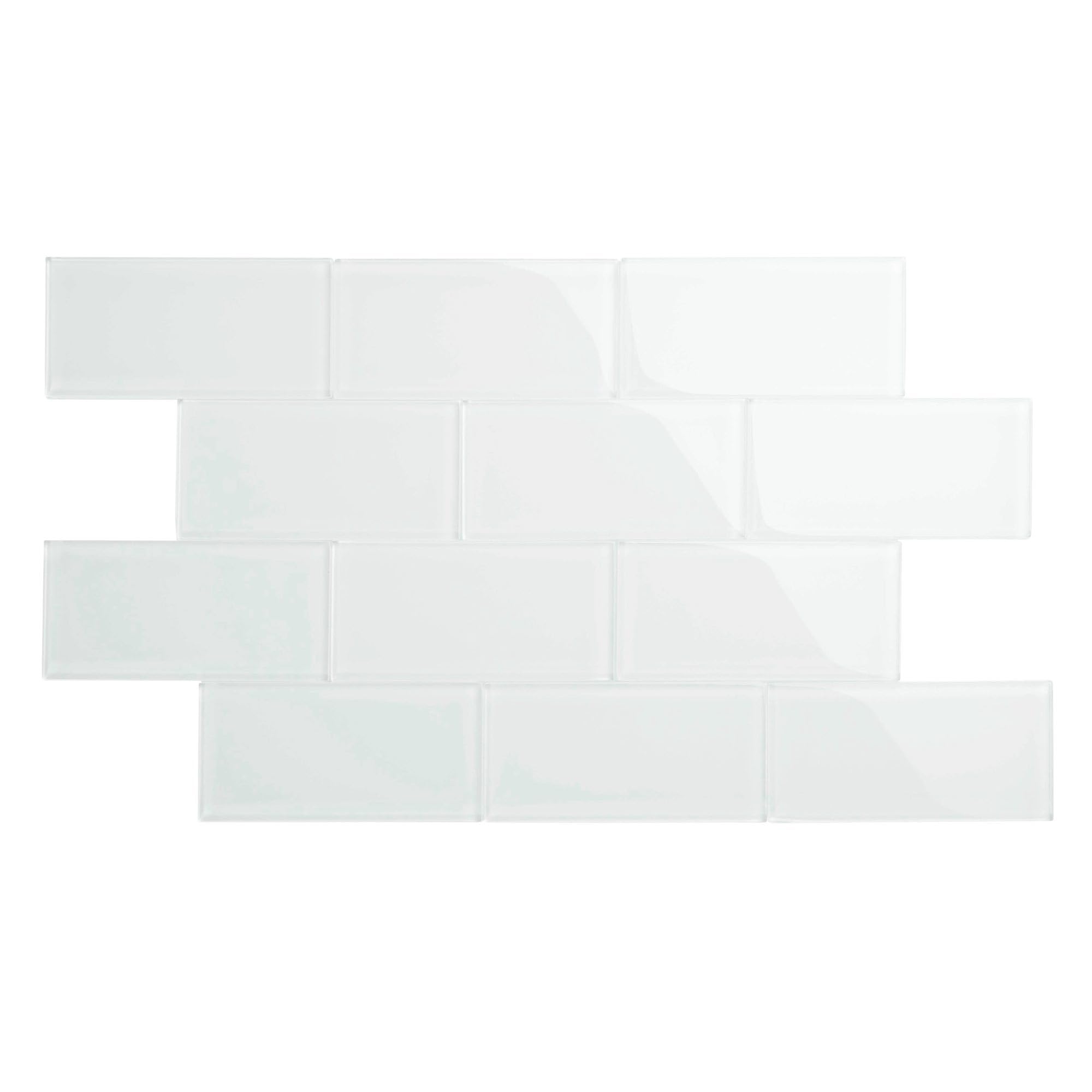
1. Giorbello Glass Subway Backsplash Tile, 3 x 6, Bright White
Our pick — 4.5★ from 600+ verified ratings; the strongest balance of quality and price.
Real 8mm glass with a polished edge, built for the wall that actually gets wet
If the shower surround is the wall you care about, this is the one. Each tile is a genuine 3 x 6 inch piece of glass at 8 millimeters thick — roughly a third of an inch, which is a solid slab compared to the flexible peel-and-stick sheets further down this list. The maker states it runs about 33% thicker than most other brands, and you can feel that in the hand: it does not bow when you press it against a wall.
One box carries 5 square feet across 40 tiles, which is more wall per box than the Lovdeco blue glass at 4 square feet. You also get a finished, polished edge that the maker describes as great for a border or trim, so the perimeter of your tile field can be this same material rather than a separate trim piece. It is rated safe for wet areas, which is the whole point of putting glass in a bathroom.
Two practical catches are worth knowing before you order. The color reads differently on different screens — the maker itself recommends buying a low-cost sample first and says each computer shows colors differently, and the color feedback from buyers is genuinely split between perfect and not-the-advertised-shade. A buyer also reported that the tiles arrive “Well-packed (foam, cardboard, paper) but 6 tiles arrived with chipped corners due to rough shipping, not seller.”
Where this tile earns its spot
- 8mm thick glass, described by the maker as 33% thicker than most other brands
- 5 sq. ft. per box across 40 tiles — the largest coverage of the three real glass options here
- Polished square edge doubles as a border or trim piece
- Stated safe for use in wet areas, which is rare among the sticky-back picks
What to plan around
- Color is the recurring disagreement — order a sample first
- Glass chips; buyers report a handful of corners arriving damaged in transit
- Heavier than the PVC sheets — this box runs 22.5 pounds, an 8.4 pound jump over the Adedeo white glass at 16.5 pounds
Reach for this if: you want a glass wall in a bathroom that sees daily steam and you are willing to order one extra box for cuts and breakage.
Think twice if: you need an exact color match to an existing fixture — the shade split in the feedback is the one thing here that is a genuine coin flip.
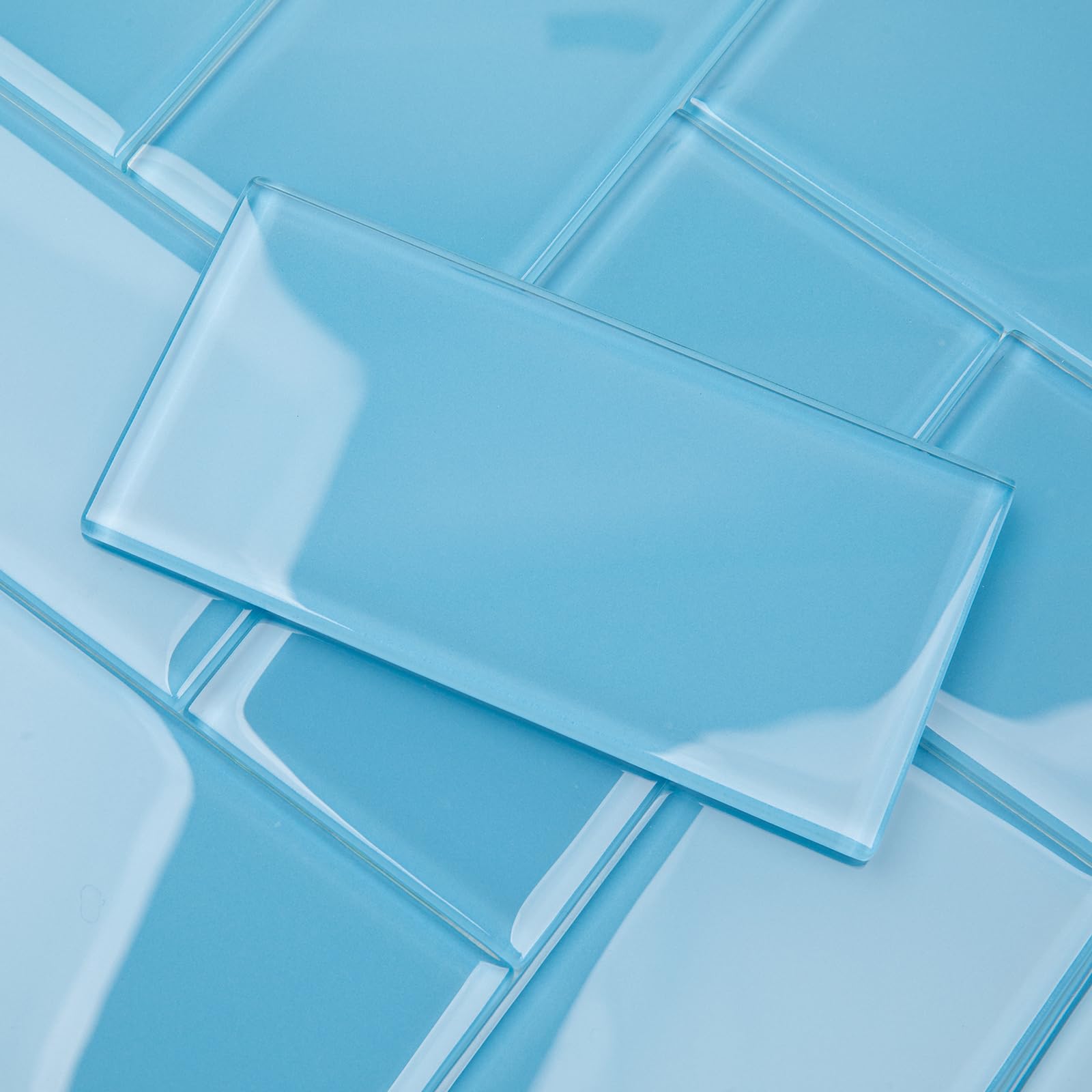
2. Lovdeco Blue Glass Subway Tile, Glass for Bathroom Kitchen Shower Backsplash Wall, 3 x 6 Inches, 4 Sq.Ft.
The one that stops being tile and starts being the reason you walk in the room
Most subway tile fades into the background. This one becomes the focal point. It uses the same 3 x 6 inch format and the same 8mm glass thickness as the Giorbello above, but the color is a blue that buyers consistently describe as looking like sea glass, with a texture and depth that plain white ceramic cannot produce.
Appearance is what buyers praise most about this tile, with build quality a close second. In plain terms: it photographs the way it looks in person, which is not something you can say about every blue tile on a screen. Owners use it as a border, a full bathroom wall, and a kitchen backsplash, and the listing is explicit about pattern freedom — subway, herringbone, or whatever layout you prefer.
On wet-wall duty the specs hold up: it carries heat resistant, rust resistant, and stain resistant callouts, and the smooth glass surface is described as easy to clean in wet areas. The blue also runs a little lighter than the listing photos in some batches — worth knowing if your fixtures are a deep navy rather than a pale blue.
Pick this when: you want the tile itself to be the design decision and you are tiling a vanity wall or a shower niche rather than a whole room.
Look elsewhere if: your layout needs maximum square footage per box and a strict white — the Adedeo and the Squarefeet Depot below both beat it on coverage-per-box simplicity for a plain white wall.
3. Glass Subway Tile 3 x 6 Inch White for Kitchen Backsplash Bathroom Wall Pack of 32 Sheets
Loose 3 x 6 tiles you lay yourself — the white glass pick for anyone on a tighter budget
This is the one that removes the design question and leaves you the install. Adedeo supplies these as loose tiles, 3 x 6 inches each, so you are not locked into a sheet pattern or a preset grout line — you set every joint yourself with glue. It is 8mm thick, the same slab thickness as the two glass picks above, and the maker says that thickness is what creates the 3D appearance and adds durability.
One box holds 4 square feet across 32 sheets. That is the same coverage as the Lovdeco blue, so if you compare the two directly you are paying for color rather than material. What you actually get physically is a smooth, non-porous glass surface — the maker’s own phrase — which is the practical reason these wipe down in seconds and do not soak up anything. It is sold as waterproof and moisture-proof and appropriate for kitchen backsplash and bathroom wall use.
The honest trade-off is chipping at the cut line. Glass does not care how careful you are being. As owners mention, “We had one chip and one break when cutting.” That is normal for any glass tile and it is exactly why you order spare. Set against that, multiple buyers describe the tile as easy to cut and beautiful once up, and one notes the process is forgiving enough for a first attempt.
The value read: 4 square feet of 8mm white glass per box, loose rather than sheeted, at a mid-range tier — the cheapest way into real glass on this list.
The cutting caveat: expect a chip or two, buy an extra box, and this stops being a problem.
Good fit for: a DIY bathroom wall where you want genuine glass and you are comfortable gluing loose tiles tile-by-tile.
Not the pick if: you want a defined grout line built into the sheet, or you are set on glass and are willing to step up to the thicker-edged Giorbello.
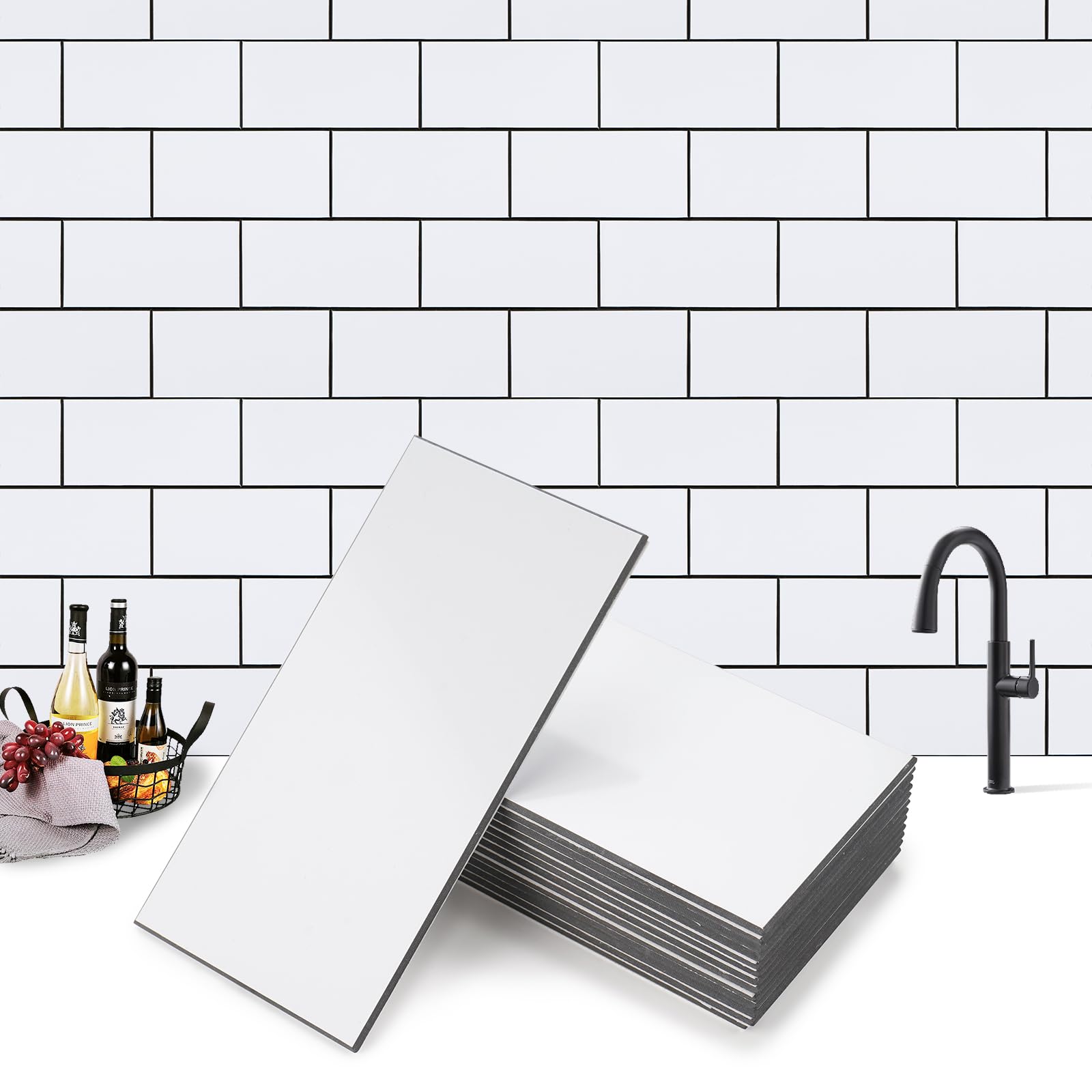
4. 100-Piece Faux Stone Peel and Stick Backsplash Tile by V-MOZZA, Glossy White
Thick 0.2-inch PVC that covers 13 square feet with no grout and no drying time
If mortar and a notched trowel are not happening in your life, start here. This is a PVC composite laminate made to imitate polished ceramic, with a square edge and a glossy white finish. The pieces run 0.2 inches thick, which is genuinely chunky for a peel-and-stick product — it stands proud off the wall instead of reading as a decal, and it is advertised as anti-scratch, high impact, and color fadeless.
The math is the real selling point: 100 pieces at 3 x 6 inches each covers about 13 square feet, the largest coverage of any sticky-back box here except the Sunwings stone composite. Installation is peel, interlock, stick — no overlap, no grout, no mess. It cuts with a sharp utility knife, and the maker points out it can go over existing ceramic or other smooth surfaces, which is how you skip demolition entirely.
Buyers praise the finished look most, then the build quality, and repeatedly say the finish reads closer to real tile than they expected. The recurring gripe is adhesion, and it is a real split in the feedback rather than a rare event: some units hold tight to the wall, and some pieces release. Clean, flat, non-porous surfaces are where this tile performs; textured or dusty walls are where it does not.
Why people install it in an afternoon: 100 interlocking pieces, 13 square feet, no grout, and the maker’s own install guidance is just peel and press.
The thing to get right: adhesion depends almost entirely on the wall surface, so prep the wall like it matters — because here, it does.
This suits: a rental or a powder room where you need a clean white bathroom wall by Sunday night and you would rather not touch a wet saw.
Pass on it if: the wall is textured, painted with a chalky finish, or inside a shower that gets direct spray — peel-and-stick wants a smooth, dry, stable surface.
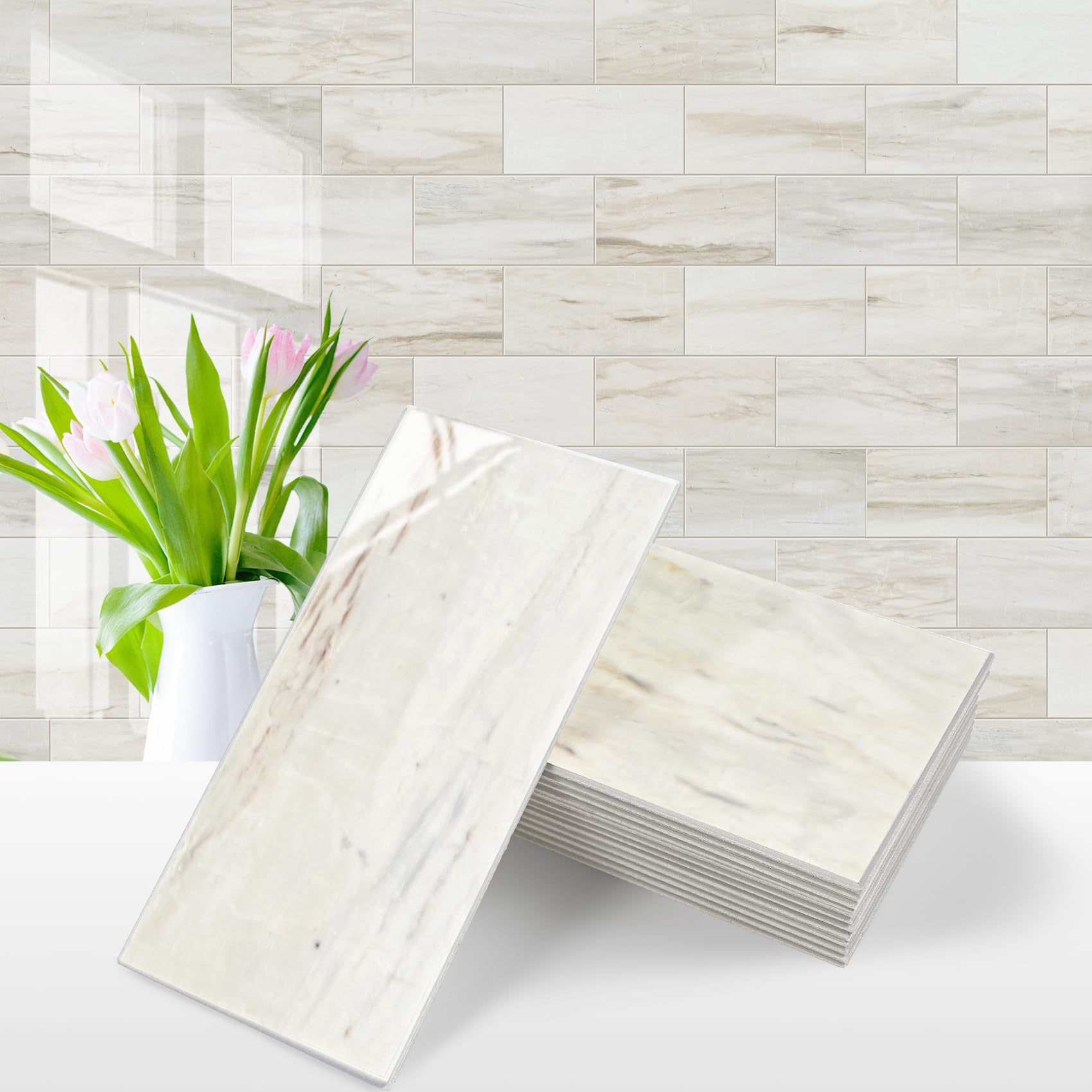
5. Vamos Tile 100-Piece Glossy Wooden Marble Grain Peel and Stick Backsplash Tile, 3”x6”
The woodgrain finish and white grout lines that fooled the neighbors
This is the pick for anyone who wants the look of a carefully grouted tile job without ever mixing grout. The pieces are printed with white grout lines built right into the pattern, so when the tiles interlock the joints read like mortar — and that is precisely what people notice. In one buyer’s telling, friends mistook the finished wall for real tile and asked for the product link.
Each piece is PVC at 3 millimeters thick, glossy, with the maker calling out anti-scratch, high impact, and color fadeless performance alongside a stain-resistant, waterproof surface that protects the wall from splash and oil. One hundred pieces cover about 12.08 square feet, and the maker is refreshingly blunt about planning: consider cutting loss of 3 to 5 percent in every DIY project. Buy the overage.
Buyers praise the quality and the finished look most, followed by how easy it is for a beginner to handle. It trims around outlets and corners with a utility knife, and the manufacturer explicitly lists behind-the-stove install among its uses. The one genuinely important caveat comes from a buyer who found the adhesive strong enough to remove when repositioning, only to learn it also took the paint with it: “Looks great, super sticky adhesive is great but WILL damage underlying paint upon removal.”
The case for this one
- Printed white grout lines, so the joints look finished without any actual grout
- 100 pieces covering about 12.08 square feet, with the maker advising only 3 to 5 percent cut loss
- Waterproof and stain-resistant facing, listed for behind the stove as well as the bathroom
- Beginner-friendly: peel, interlock, trim with a knife
Before you commit
- Adhesion feedback is split — a clean, smooth, dust-free wall is not optional
- The adhesive is close to permanent; one buyer had paint come up when repositioning
- At 3mm it is thinner than the glass picks, so it hugs the wall rather than standing off it
Choose it if: you own the wall, you want the grouted look without the grout, and you are fine treating the install as one-way.
skip it if: you rent, or you expect to change your mind about the layout halfway through — this adhesive does not offer a do-over.
6. Peel and Stick Beveled Mirror Glass Subway Tile, Silver 3 x 6 Inch (40 Pcs)
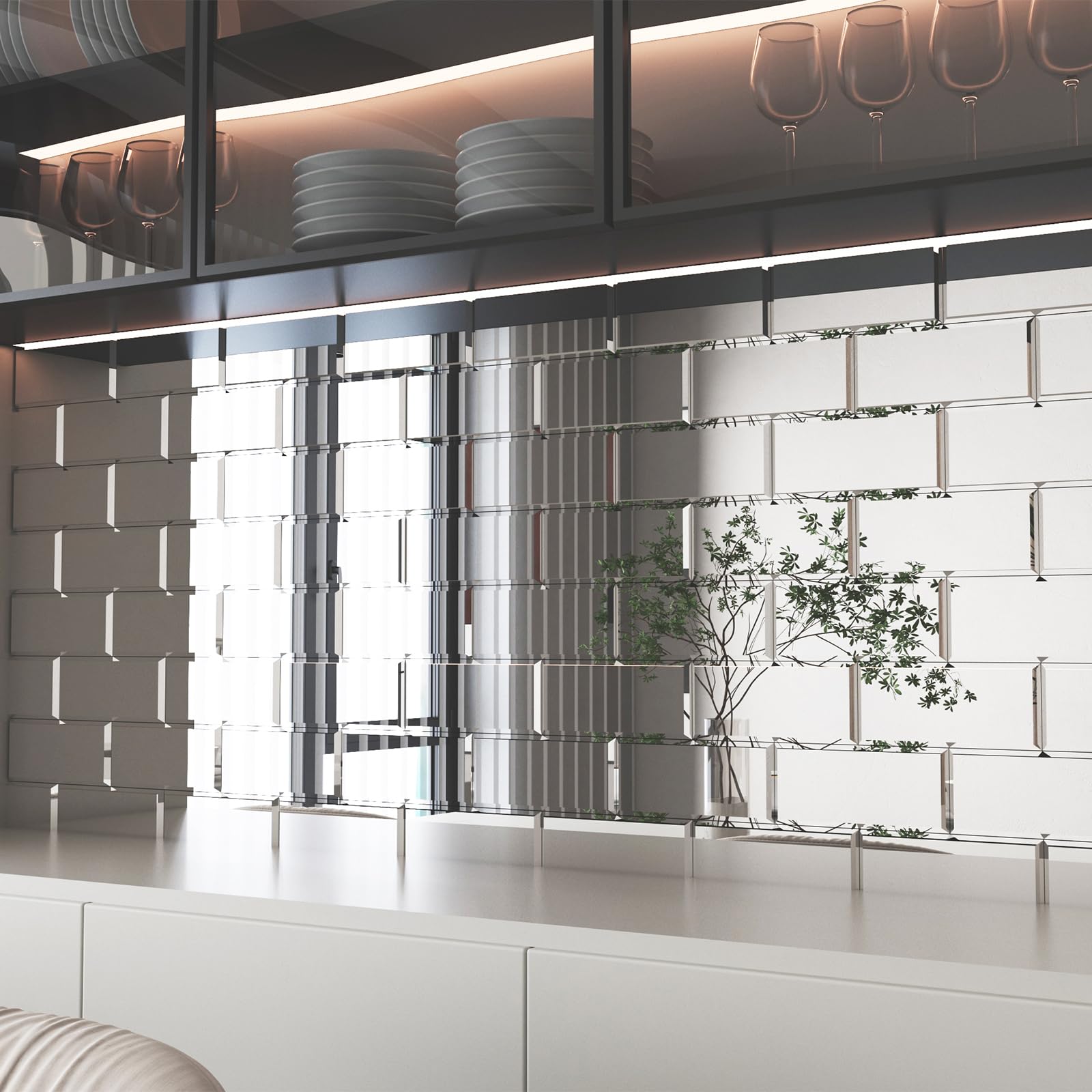
Actual mirror glass in a subway format, so the wall bounces light around the room
Nothing else on this list does what this does. These are real mirror glass tiles — not a mirrored-looking print — cut with an advanced cutting process the maker describes as producing a neat edge that resists wear, in a 3 x 6 x 1/5 inch format. Forty pieces make up the 5 square feet in a box, and the effect in a small bathroom is the one you actually want: light gets thrown back into the room instead of absorbed by the wall.
The install is the easy part. These carry a self-adhesive backing, so the maker’s pitch is simply that they are convenient and flexible to position, and the quality of that backing and construction is what owners rate highest about the product. Coverage matches the Giorbello glass box at 5 square feet, so a single box goes about as far as a mid-sized vanity wall or a mirror surround.
Be clear on the two things this tile will not do. It is a statement surface, not a field tile — 5 square feet is a border, a frame, or a feature strip, not a whole shower. And the sticky backing is the weak link: adhesion is the split issue in the feedback, with some buyers finding the tiles release, and one plausible reason given is heat near a stove or microwave loosening the glue. Keep this away from a cooktop and it behaves.
The standout detail: genuine beveled mirror glass at 5mm, 40 pieces per box, and a maker guarantee that damaged mirror tiles can be replaced for free.
The placement rule: put it where light and impact matter — around the mirror, above the vanity — and not where it takes direct heat.
Best for: a bathroom that feels dark and small, where a strip of mirror tile near the vanity changes how bright the whole room reads.
Not for: a full shower wall or anywhere near a heat source — this is an accent, and the adhesive is the part that gives way first.
7. Sunwings 100-Sheet Subway Peel and Stick Backsplash Tile, 6″ x 3″ White Mixed Stone Composite
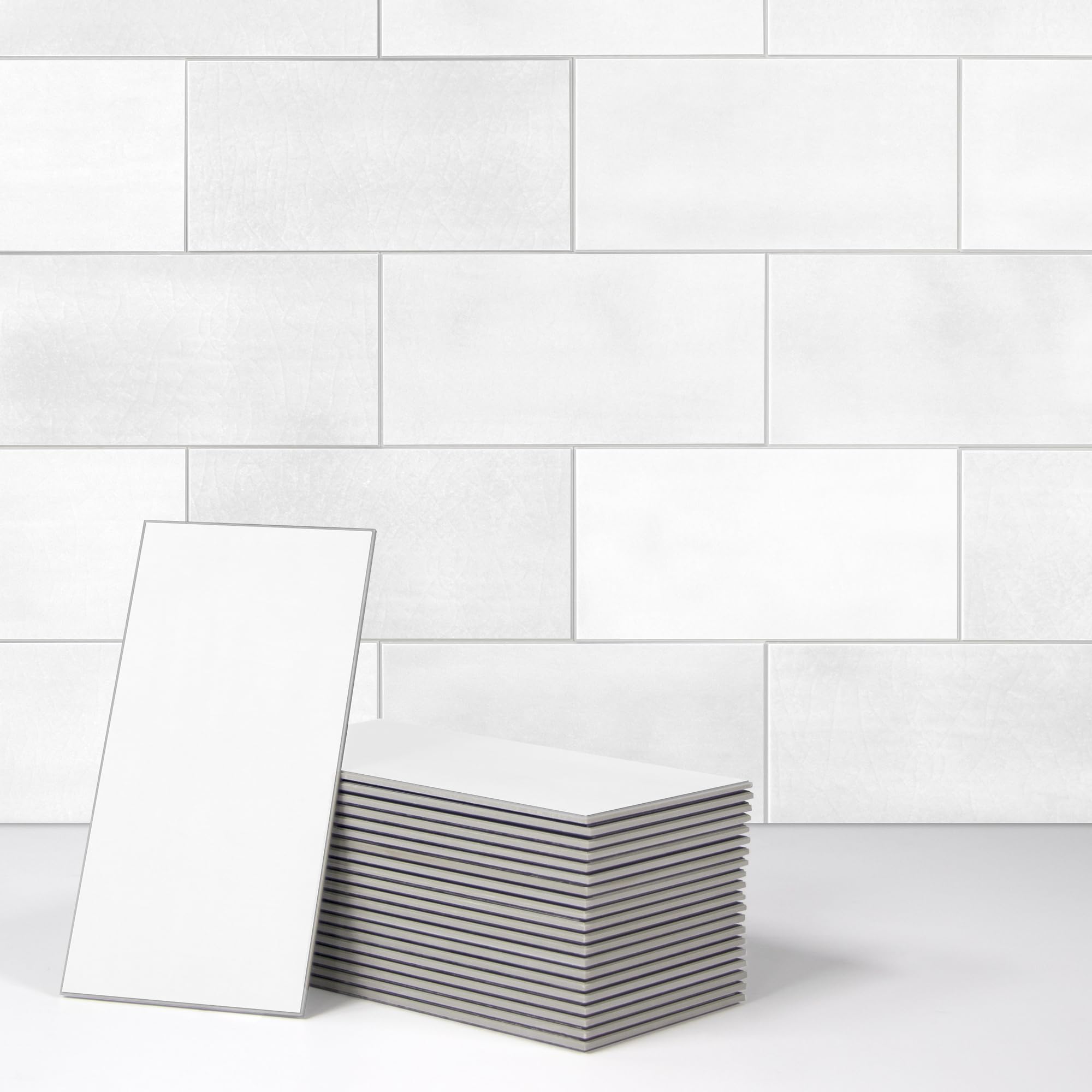
Stone composite instead of PVC, with a handmade look and a genuine heat rating
This is the one to look at if your bathroom wall sits next to a heat source or you simply dislike the plasticky feel of vinyl. The maker is pointed about the material difference: these are stone composite at 3mm thickness, and the maker explicitly states they are not PVC or gel-like tiles, and that they look almost the same as real tile. Hundred pieces at 6 x 3 x 0.12 inches cover 12.2 square feet, with the maker recommending you buy at least 10 percent overage for design cuts.
The durability story here is genuinely unusual for a peel-and-stick product. Waterproof, oil-proof, and heat resistant are all stated, and behind-the-stove installation is listed as fair game. Customers note the format in real conditions — one describes installing them in a camper and having them survive Michigan seasons of cold and heat without falling, using no extra adhesive after cleaning the wall with rubbing alcohol and letting it dry a full day. That is a genuinely demanding test, and they passed it.
The honest caveat is that this is the one pick where the material makes cutting harder. Several buyers describe the tiles as fragile when you cut them, with wasted pieces and a recommendation to finish the seams with grout because the spacing is visible once the pieces connect. The stone look also reads as a color-mixed wall rather than a uniform white — customers describe noticing multiple green tones after installation and finding them beautiful, but that is a design choice, not a neutral.
What it does better than the PVC options: a stated heat and oil resistance rating and a stone-composite body, at 12.2 square feet per 100 pieces.
The catch: cutting it is the frustrating part of the job, so budget both extra pieces and extra patience.
The right buyer: someone tiling a wall that gets hot, oily, or varies wildly in temperature, and who wants the stone look rather than a plastic one.
Look past it if: you need a crisp, uniform white field with invisible joints — this reads handmade and multicolored by design.
8. Squarefeet Depot White Glossy Ceramic Subway Tile 3×6, Made in USA (Full Box 100 Pieces)

The original article — real clay ceramic, glazed bright white, made in the United States
If you are going to do this the traditional way, do it with the real thing. This is a white clay bisque body under a bright white glaze, the classic glossy ceramic subway look, in the standard 3 x 6 inch rectangular format with a square edge. The maker states plainly that it is the original genuine subway tile manufactured in the United States — no adhesive backing, no PVC core, just fired clay and glaze.
The order math is simple and generous. It is intended for a real install — mortar and grout — and the maker lists it for renovations, new installs, and craft projects alike. Under vanity lighting, the gloss finish is what keeps ceramic looking current.
What people value here is the quality of the tile itself and, running alongside it, the price for what you get — a full box of glazed ceramic rather than a sticky sheet. Two real risks are worth knowing. Ceramic arrives in transit and can arrive poorly packed: one buyer describes tiles stacked front-to-back and scratched across every face. And there are occasional shipping snags. Both are solvable with a replacement, but they are worth a calendar reminder to inspect the box on day one rather than install day.
Why it holds up over time: 12.5 square feet of US-made glazed ceramic per box, 100 pieces at 3 x 6 inches, square edge, ready for a traditional mortar-and-grout install.
What to watch: the finish is flawless from the factory, but shipping is where it stops being flawless, so open the box before you schedule anyone.
Pick this when: it is your forever bathroom and you want a surface that is not coming off the wall in two years.
Avoid the impulse if: you wanted the no-mortar, no-mess route — this one is a genuine tiling job and it is not pretending otherwise.
Understanding the Specs
Thickness in millimeters — the durability giveaway
Thickness is the fastest way to tell a solid tile from a stiff sticker. The glass and ceramic picks here sit at 8 millimeters, and the maker of one of them states that its tile runs about 33% thicker than most other brands — a claim you can verify by feel as soon as you take it from the start. The peel-and-stick PVC options run much thinner, down to 3 millimeters, and one stone-composite option lists 0.12 inches. Thinner tile conforms to the wall more easily and is better on a tight budget. Thicker tile scores and snaps cleaner, stands off the wall, and hides more surface imperfection underneath. Neither is bad — they simply serve different walls.
Coverage per box and the overage rule
The coverage number on the listing, expressed in square feet, is the wall area one box will cover before you make a single cut. Every corner, outlet, edge, and pattern choice consumes material, and the bigger the tile the more waste a complex cut creates. One manufacturer here is direct about planning on 3 to 5 percent cutting loss, and another recommends at least 10 percent overage. The practical rule is simple: measure your wall, round up, and buy one extra box beyond your calculation. Leftover tile stores flat in a garage for years and is the only way to repair a crack later.
FAQ
Can peel and stick subway tile go inside a shower?
How do I calculate how many boxes of tile I need?
Is glass subway tile better than ceramic for a bathroom?
Will peel and stick tile damage the wall when I remove it?
Why does my glass subway tile chip when I cut it?
Do I need grout with peel and stick tile?
Can subway tile go behind a stove or near a heat source?
What is the difference between subway and herringbone layout?
How long does bathroom subway tile last?
Can I install subway tile over existing tile?
Final Thoughts: The Verdict
For most people installing the bathroom subway tile that has to survive real steam and spray, the Giorbello Bright White Glass is the one to buy — 8 millimeter glass, a polished edge that doubles as trim, and safe-for-wet-areas construction. If color is what you are after and you are tiling an accent wall, the Lovdeco Blue Glass is the one that makes people stop and look. And for a mortar-set surface that outlasts the wall, the Squarefeet Depot ceramic is the classic answer — 12.5 square feet of US-made glazed ceramic per box. Order one box more than the math says; it is the cheapest decision on this whole page.
How We Picked
We do not accept paid placement. Every pick is matched to a real buyer and a real use-case; we do not hands-on test units.
Sources & Methodology
Specifications: manufacturer listings and product documentation. Review insights: verified customer reviews, as of September 2026. Pricing: not shown on this page (it changes often); check the current price via the retailer link.
As an Amazon Associate, KitchPrep earns from qualifying purchases. This does not affect which products we feature.
Related Guides
