
Specs are compiled from manufacturer listings and verified buyer reviews and can change over time — please confirm the key details on the product page before buying.
Putting a smoke alarm in a bathroom is one of the trickiest spots in the house. A hot shower throws off the same fine airborne particles that a smoldering fire does, so an ordinary alarm screams at you every morning. The fix is a photoelectric sensor paired with smart filtering — that combination is what keeps the alarm quiet during your shower and loud when it actually matters. Every pick below runs on batteries or a sealed ten-year cell, so there is no wiring to run into a steamy room.
I’m Mohammad Maruf — the founder and writer behind KitchPrep. This guide is built by comparing the manufacturers’ published specifications and the patterns across verified customer reviews, so you get each pick’s real strengths and trade-offs instead of marketing spin.
You will see which units tolerate humidity, which ones link room to room, and where each model cuts corners. What follows is a plain-English breakdown of the best bathroom smoke detector options for damp rooms and steamy hallways.
Our Picks at a Glance

How To Choose The Best Bathroom Smoke Detector
A bathroom is a small room that fills with warm, wet air several times a day. That changes what you should look for, because an alarm that ignores humidity is the whole point here.
Sensor type decides whether your shower sets it off
A photoelectric sensor (a light beam inside a chamber that scatters when particles enter) reads smoldering, smoky fires well. It also shrugs off most shower steam better than an ionization sensor (a tiny radioactive source that reacts to fast-flaming fires). For a bathroom-adjacent hallway, photoelectric is the safer pick for fewer nuisance alarms.
Humidity tolerance and where you mount it
Steam is not the only issue — constant moisture can corrode the internals over years. Look for a unit rated for a wide humidity band, and mount it outside the shower zone. One hardwired model here is rated for 10-95% RH non-condensing (relative humidity, measured in air that is not actively condensing into droplets).
Battery style and how often you climb a ladder
A sealed ten-year lithium battery means you never swap cells, but the whole unit gets replaced at the end of its life. A removable AA or 9V battery is simpler for single-room swaps but brings the low-battery chirp back into your life. Decide which trade you would rather live with.
Quick Comparison
| Model | Best For | Sensor | Power Source | Units Per Pack | Amazon |
|---|---|---|---|---|---|
| X-Sense SD2J0AX★ Best Overall | Bedrooms and hallways near a bathroom | Photoelectric | Battery Powered | 3 | Amazon |
| SITERWELL GS525ABest Value | Quick kitchen-side protection | Photoelectric | Battery Powered | 1 | Amazon |
| X-Sense SD19-W | Linking old wired bases into one system | Photoelectric | Battery Powered | 1 | Amazon |
| SITERWELL GS562A | Homes with existing wiring | Photoelectric | Battery Powered | 5 | Amazon |
| Kidde 20SDR | Rentals and inspection checklists | Smoke Detector | Battery Powered | 1 | Amazon |
| Siterlink GS562A | Whole-home hardwired replacements | Photoelectric | Battery Powered | 1 | Amazon |
In‑Depth Reviews
1. X-Sense 10-Year Smoke Detector, Photoelectric Sensor, SD2J0AX
Our pick — over 4.5★ from 450+ verified ratings; the strongest balance of quality and price.
Three sealed-battery alarms that cover a hallway and the two bedrooms off it.
If your bathroom sits at the end of a hallway, this is the pick that arms that whole zone in one box. You get three detectors, each with a sealed lithium battery rated for up to 10 years — a battery rated to run the alarm for a decade without swaps. That kills the 3 a.m. low-battery chirp that sends you hunting for a ladder in the dark.
The sensing element is photoelectric, the type that reads smoldering smoke rather than fast flame. It is the reason this model handles everyday cooking fumes and steam better than an older ionization alarm. The pack is ETL listed to UL 217, an independent safety standard for smoke alarms, so the electronics have been tested to a recognized benchmark rather than self-certified.
One thing to plan for: the steam tolerance here cuts both ways. The photoelectric chamber still reacts to heavy, fast steam, so keep this detector near the bathroom door rather than over the tub. Buyers report “Works too well. Loud and very sensitive. Make sure to not put it close to a bathroom. Steam from hot showers will definitely trigger it!” That is a placement note, not a defect — and the same sensitivity is why it catches real smoke fast. Its 4.8″ diameter face also covers the same footprint as most older units, so you can often swap without touching paint.
Where it earns its keep
- Sealed lithium battery runs the alarm for up to 10 years, so no annual cell swap
- Photoelectric sensor cuts cooking and light-steam nuisance trips
- Three units in one box covers a hallway plus two bedrooms
- Self-test and one-button silence keep weekly checks simple
What to size up first
- No wireless linking — each alarm works alone, so they do not sound together
- Placement matters in a steam-heavy room; fast shower steam can still trip it
- Replacing the whole unit is the end-of-life move, since the battery is sealed
Buy it when: you want a hallway-and-bedrooms set that needs zero battery maintenance for a decade.
Think twice when: you want every alarm in the house to sound at once — this model works independently and has no interconnection.
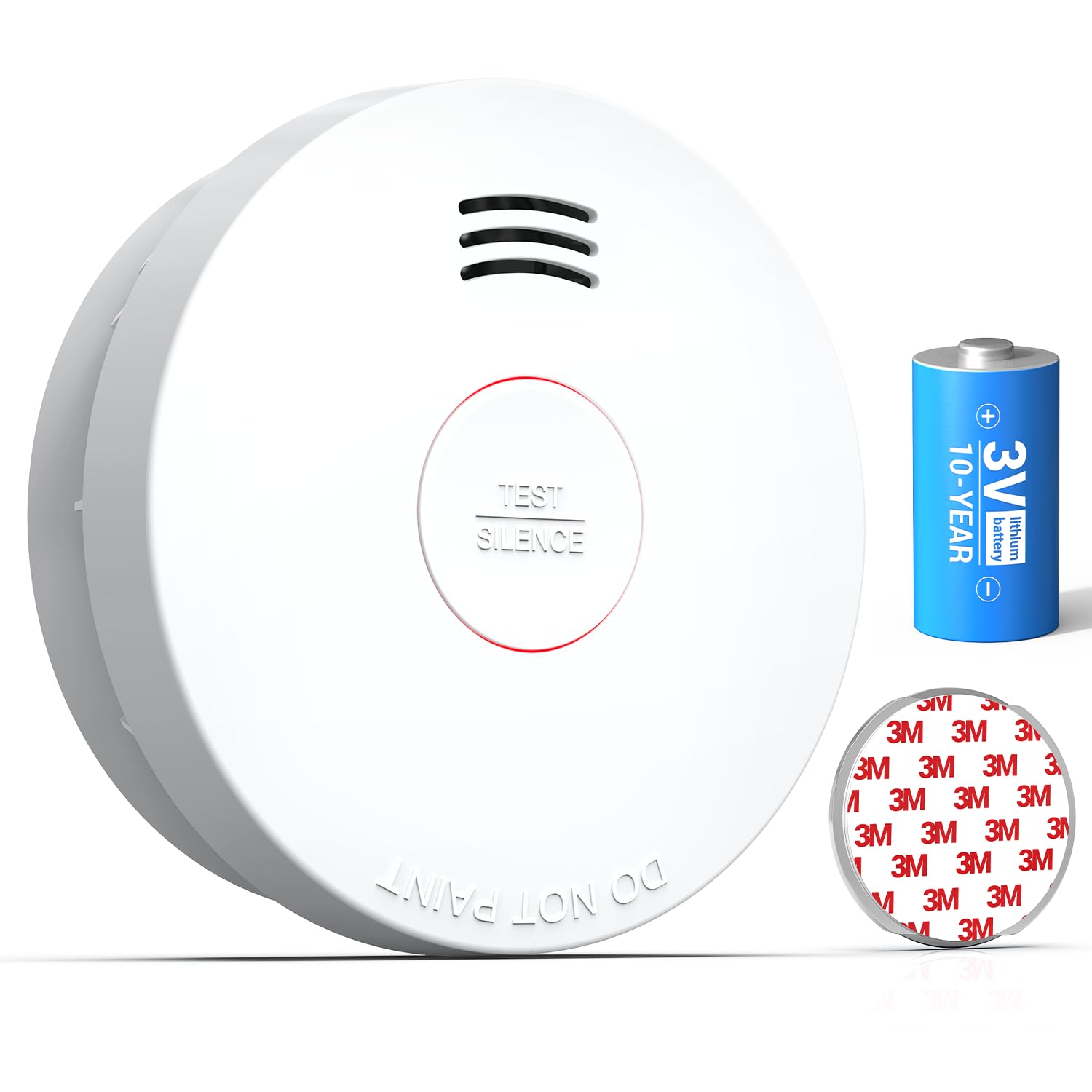
2. SITERWELL Smoke Detector 10 Year Battery Smoke Alarm Fire Detectors
A single low-profile alarm you can stick up with a magnet and never think about again.
This one is built for a fast, no-tools install in a small space. A sealed 3V lithium battery is rated for 10 years and the unit warns you when it is running low. The alarm hits 85 decibels, loud enough to carry across rooms and wake sleepers. You can mount it on a wall or ceiling with either the included screws or the magnetic kit, which is handy in a rental where you cannot drill.
Its photoelectric sensor is tuned toward slow, smoldering fires, the kind that build light smoke before they break into flame. SITERWELL also runs an tune sensing algorithm meant to filter out daily steam and cooking smoke. That filtering is exactly why this model suits a room near a bathroom or kitchen, where you want the alarm live without it crying wolf over every bit of moisture.
The honest caveat is the housing. At 3.93″ across and 1.38″ deep, it is noticeably smaller than the unit it often replaces, and that smaller face can read as flimsy to anyone used to a chunkier alarm. Its operating window also leans on the narrow side, so an unheated attic is not its home. As buyers put it, one physical test showed the photoelectric response trailing a dual-sensor alarm — expected behavior for smoldering-fire detection, and ideal in a kitchen where false trips are the daily battle.
Mounting freedom: the magnetic fastener is the standout feature — it lets you position and reposition the alarm without hardware, and the low battery and fault warnings do the maintenance nagging for you.
Worth grabbing if: you are covering one bathroom-adjacent room and want the install done in minutes without a drill.
Look elsewhere if: you need a chunky, full-size face or you intend to place a detector in a cold, unconditioned space.
3. X-Sense Interconnected Smoke Detector, 10-Year Battery, SD19-W, 1-Pack
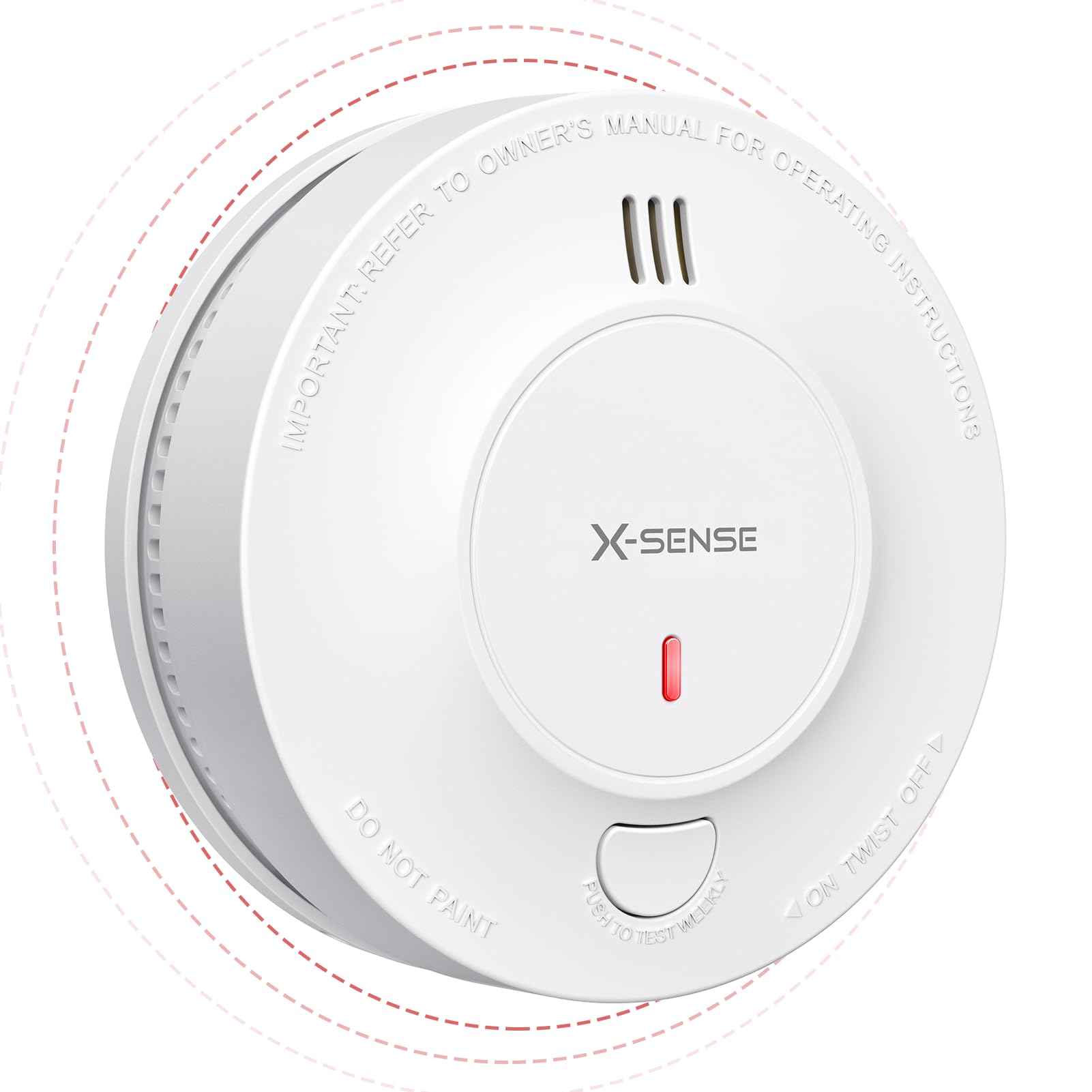
One alarm hears smoke, and every linked unit in the house starts shouting.
The feature that defines this detector is the wireless link. When one unit senses smoke, the whole chain sounds together, so a fire in the basement wakes someone on the second floor. You can pair it with up to 18 compatible X-Sense Link+ alarms, including the SC07-W, SC01-W, and SC06-W, which means you can build the system out one room at a time instead of buying it all at once.
It runs on a sealed lithium battery rated for up to 10 years, so the low-battery chirp disappears from your routine for a decade. Pairing is done by hand: press the button four times on one unit and twice on another after it flashes. It is a small bit of fiddling, then you leave it alone. The housings even mount to existing Firex bases, which saves patching and repainting if you are replacing older heads.
Range is the pleasant surprise. Linking held across a home with one unit upstairs and others down, and it carried through multiple barriers without dropping. The photoelectric sensing means it is less trigger-happy around cooking and light steam, which matters if a bathroom shares a wall with the kitchen. The trade-off is that this is one alarm in the box — the linking leverage is wasted if you only ever install a single unit. A stray loose component has also been reported in a multi-pack, so give each unit a gentle shake before you mount it.
What it brings to the house
- Links up to 18 alarms so the entire home sounds at once
- Sealed 10-year battery removes annual cell changes
- Mounts to existing Firex bases, cutting install time
- Photoelectric sensing eases nuisance trips near cooking
Set your expectations
- Single unit per pack — you pay the link premium per alarm
- Setup is a manual button-press routine, not a one-tap app pairing
- Occasional loose hardware has shown up inside the housing
The match for: a multi-floor home where you want every alarm to go off at once, not just the one nearest the smoke.
Pass it by if: you are protecting a single room and have no intention of adding more alarms later.
4. SITERWELL Smoke Detector Photoelectric Smoke Alarm 9V Battery Backup
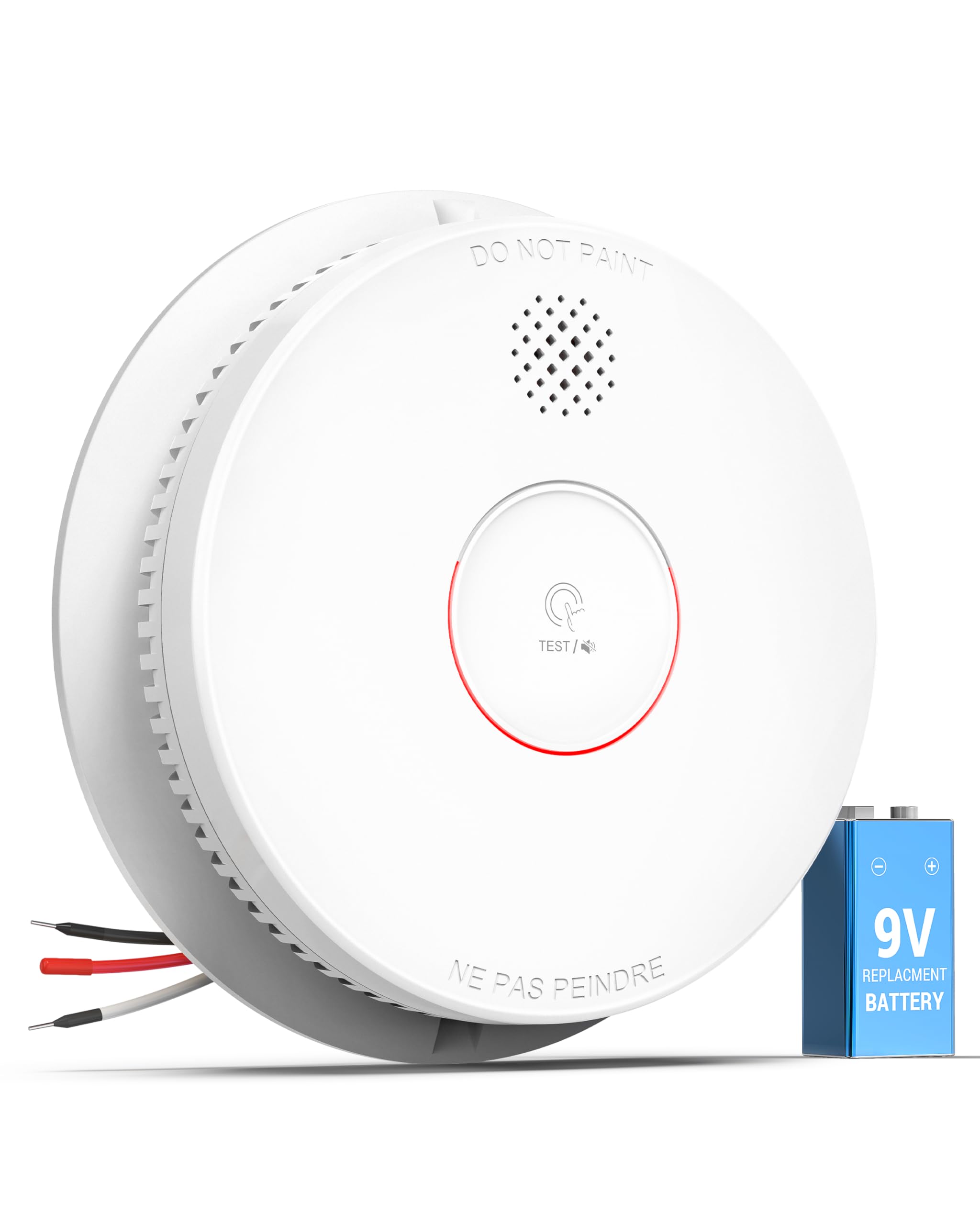
The wired option that keeps watching your hallway even when the power drops out.
If your home already has alarm wiring, this is the one that slots in. It draws 120V AC from the house circuit and carries a 9V battery backup, so a power cut does not leave you blind. It interconnects with up to 12 alarms, all sounding together at more than 85 decibels when any one unit detects smoke.
The humidity rating is what makes it a sensible fit near a bathroom. It is rated for 10-95% RH non-condensing — the percentage of moisture in the air it can handle as long as droplets are not forming on the electronics. That is a wide band, and it means a steamy hallway will not shorten the unit’s life. The sensing tech is tuned to smolder slowly and to shrug off cooking fumes, so it stays quiet through daily kitchen work.
The nuisance-control feature worth knowing is a Do Not Disturb mode. If the unit flags low voltage or a fault, pressing the test button mutes it for roughly ten hours. The green LED stays steadily lit in normal operation and the red LED flashes every 40 seconds. The catch: bad units do happen. One owner went through repeated beeping after a short install period and never resolved it, and a seller-side defect report has surfaced before. That is the small tail of the curve, not the norm, and a 10-year product life backs the mainstream experience.
Why the wiring matters: the wall plate fits most smoke detectors on the market, so a swap often needs no new mounting hardware — just mind the live circuit and cut the breaker first.
Night-time peace: the roughly ten-hour Do Not Disturb mute is the detail that keeps a low-battery fault from ruining your sleep.
Choose it for: a wired home where you want continuous coverage plus a backup battery and a wide humidity rating.
Skip the hassle if: you have no existing alarm circuit — this is not a battery-only unit and needs AC power to run.
5. Kidde Smoke Detector, AA Battery-Powered, 20SDR, 1 Pack
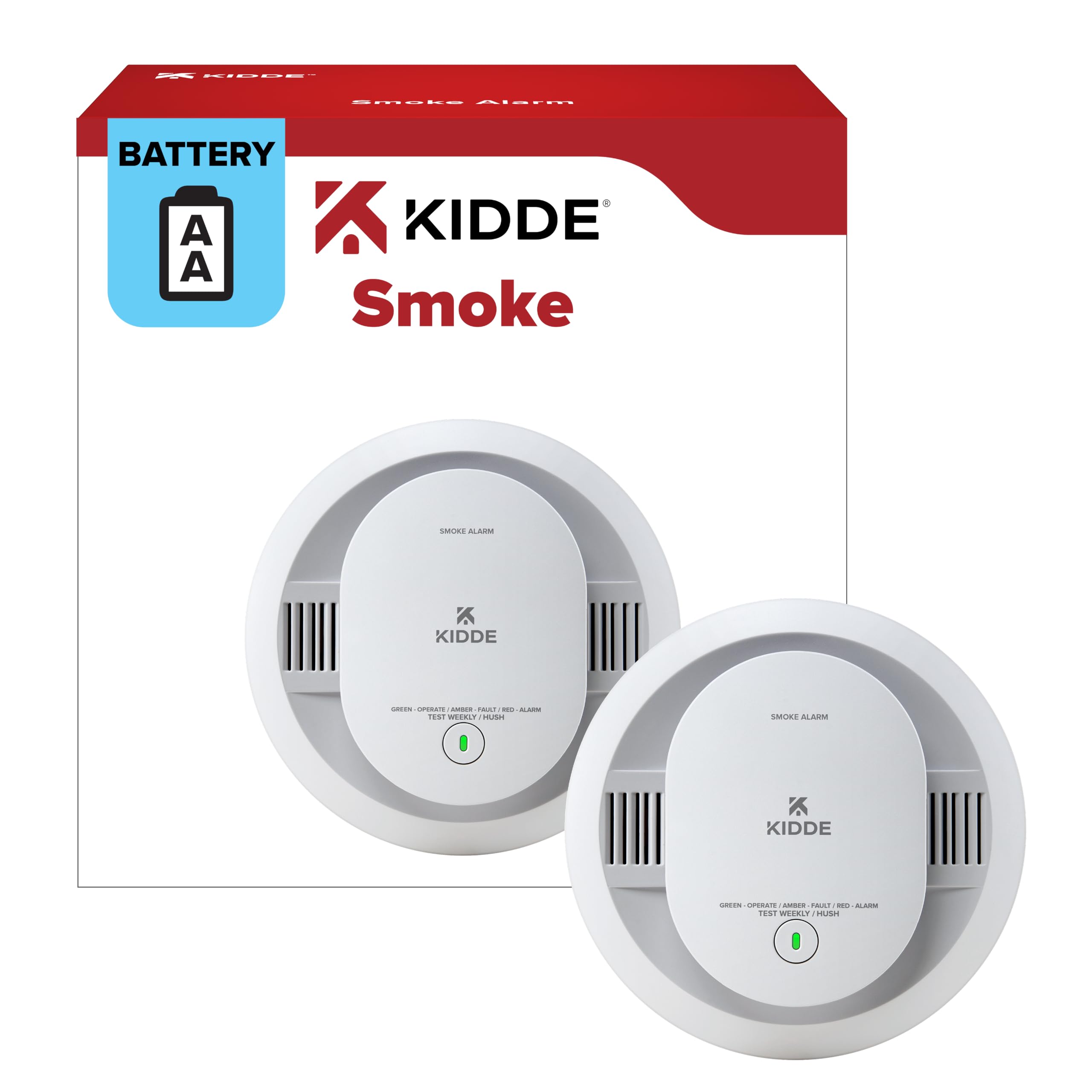
A familiar shape that drops into rental units and inspection checklists with zero fuss.
This detector is the low-drama pick. It runs on two AA batteries that come in the box, so there is no wiring, no harness, and nothing to figure out. Kidde rates the 20SDR as detecting smoke over 25% faster than its prior sensing, and it fires an 85-decibel alarm with a red LED visual cue.
The sensing package here is built to tell real smoke from everyday cooking or steam, which is the whole reason to pick a detector near a bathroom or kitchen. It is tested to UL 217 10th Edition and FCC standards. The test and hush button does double duty: it checks the alarm works, and it mutes a false trip temporarily without switching the detector off.
What owners flag most is quality — and this is the one detector in the lineup where the sentiment is genuinely split rather than a stray complaint. Some describe the build as amazing, others as not worth keeping, and reliability reports run the same way. A few of the rougher notes come from units that failed within a couple of months. That split is worth knowing before you buy, especially if you are installing a fleet of them. The included AA batteries keep this a five-minute install, and a 10-year limited warranty from the purchase date backs the hardware.
Why it stays popular
- Two AA batteries included, so it mounts and works the same day
- 85-decibel alarm with a red LED for a visual alert
- Hush button mutes a nuisance trip without disabling the unit
- 10-year limited warranty from purchase date
Honest heads-up
- Owner sentiment on build quality is genuinely mixed, not one-sided
- AA cells mean you will be swapping batteries down the line
- The green status light has drawn insects in some homes, a fixable nuisance
Reach for this if: you want a brand you recognize and a battery install you can finish before your coffee cools.
Consider an alternative if: you dislike battery swaps or want a sealed unit you truly never touch.
6. Siterlink Hardwired Interconnected Smoke Detectors, GS562A, 1 Pack
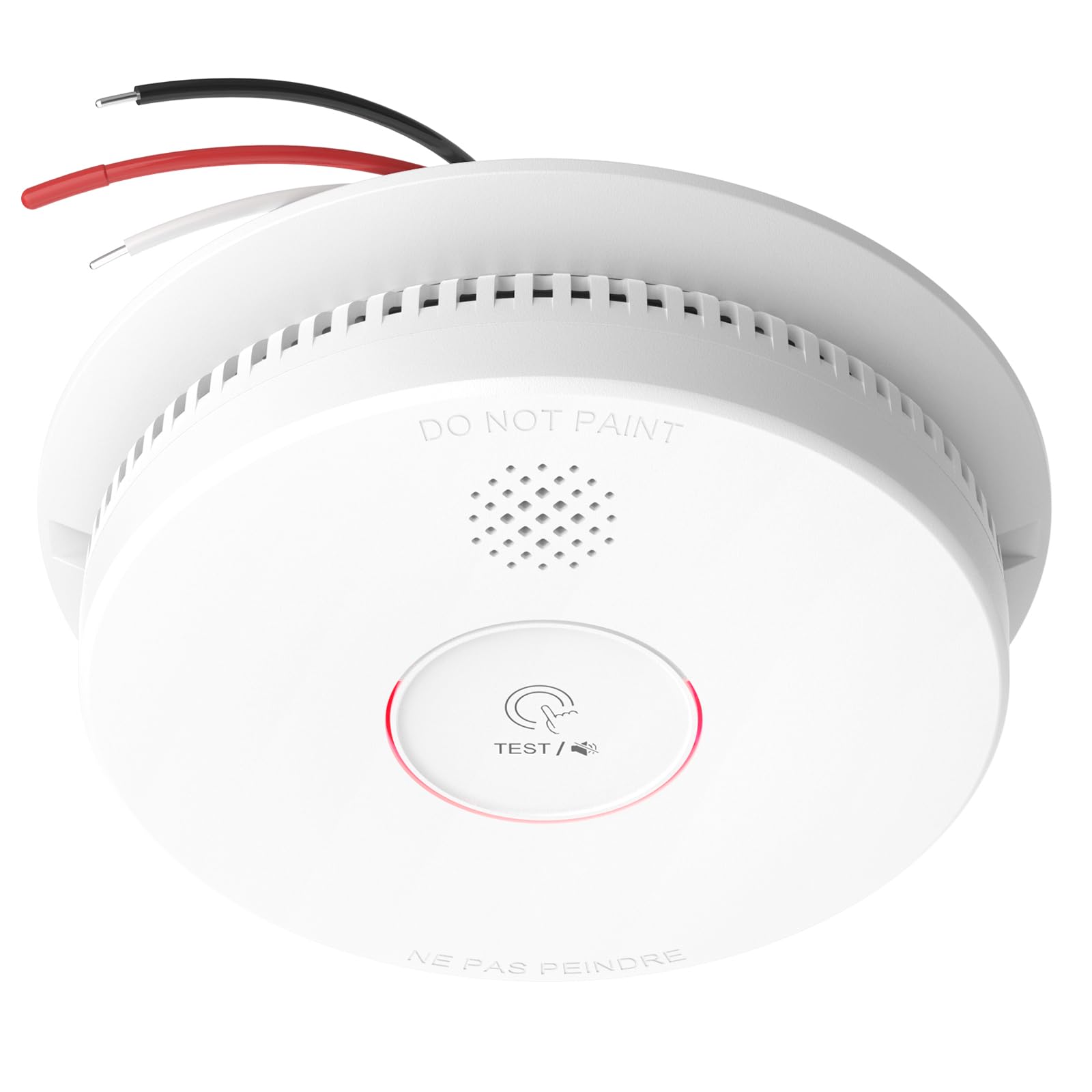
The smooth-swapping wired unit that lets one alarm wake the whole house at once.
For a house that is already wired for alarms, this model does the job without drama. It runs on 120V AC and holds a 9V battery backup, so an outage or a storm does not take your protection offline. The interconnect feature ties it to the rest of your system — when one unit sounds, they all sound, which means a fire in the basement still reaches the upstairs hallway.
Its sensing gear is tuned to read the surrounding environment and cut the false alarms that cooking sets off, which is the daily annoyance you want gone in a hallway near a kitchen or bath. The one-touch silence mode mutes the unit for up to 10 hours, so a low-battery alert or a false trip will not keep you up. The LED indicator is built in and hidden, with a soft glow that stays visible without lighting up the room — a sensible touch for a kid’s bedroom.
Sizing up the install is the key step here. The connector plug and mounting base are different from the head you are replacing, so a swap means changing out the pigtail and the base. Budget roughly 20 minutes per unit, and cut the breaker first because the circuit is live. The payoff is a strong, loud, sensitive system that links cleanly across every floor. It edges out the SITERWELL hardwired pick on overall owner satisfaction, though both share the same 120V AC design.
The linking payoff: a single detection triggers every alarm in the chain, so the warning reaches sleeping family members on other levels without a second thought.
The right call for: homeowners replacing an aging wired system and wanting every floor wired into one network.
Plan ahead if: you expect a plug-and-play swap — the connector and base both change, so budget a short rewiring session.
Understanding the Specs
Photoelectric Vs. Ionization Sensing
A photoelectric alarm uses a light beam inside a chamber that scatters when smoke particles enter. It reads slow, smoldering fires well and tends to ignore the light haze of a hot shower. An ionization alarm reacts to fast, flaming fires but is quicker to trip on steam and cooking. For a room near a bathroom, photoelectric sensing is usually the calmer neighbor.
10-Year Battery And Product Life
A sealed lithium battery rated for up to 10 years powers the alarm across its whole life, so you never swap cells. The trade-off is that the battery is not replaceable — when the unit’s life is up, you replace the detector. A removable AA or 9V cell is the opposite: easier single-room swaps, but the low-battery chirp comes back around.
Hush And Silence Buttons
A hush button temporarily mutes the alarm when cooking or bathroom steam sets it off, without switching the detector off. Some models let the mute run for up to 10 hours, which is long enough to get through the night or a burst of humidity. The detector keeps watching after the mute ends, so safety coverage continues.
Interconnected Vs. Standalone Alarms
A standalone alarm works alone and sounds only when its own sensor trips. An interconnected alarm links to others, so one detection sets off every linked unit. That matters on a multi-level home where a fire in the basement needs to reach a sleeping family member upstairs. Interconnected models often pair to a set number of alarms, adjustable over time.
FAQ
Can I install a smoke detector directly inside a bathroom?
Will shower steam set off a photoelectric smoke detector?
How long does a ten-year battery smoke alarm actually last?
Do I need a wired alarm or can a battery-powered one handle a bathroom area?
What does UL 217 listed mean on a smoke alarm?
How many alarms can an interconnected system link together?
Will a smoke detector near the kitchen go off every time I cook?
How often should I test a bathroom smoke detector?
Can high humidity damage a smoke alarm over time?
What is the difference between a standalone and an interconnected alarm?
Final Thoughts: The Verdict
If one pick covers most homes, it is the X-Sense SD2J0AX — three photoelectric alarms, a sealed battery rated for up to 10 years, and a loud, sensitive sensor that earns the crowd’s confidence at 4.6 stars across 400+ owners. For a whole-home network where every alarm sounds at once, the X-Sense SD19-W links up to 18 units and replaces the old bases you already have. And if you are swapping old wired heads, reach for the Siterlink GS562A — it leads on owner satisfaction and keeps working through a power cut.
How We Picked
We do not accept paid placement. Every pick is matched to a real buyer and a real use-case; we do not hands-on test units.
Sources & Methodology
Specifications: manufacturer listings and product documentation. Review insights: verified customer reviews, as of September 2026. Pricing: not shown on this page (it changes often); check the current price via the retailer link.
As an Amazon Associate, KitchPrep earns from qualifying purchases. This does not affect which products we feature.
Related Guides
