
Specs are compiled from manufacturer listings and verified buyer reviews and can change over time — please confirm the key details on the product page before buying.
Stepping out of a hot shower into a wall of fog is a daily nuisance, and a noisy, rattling exhaust fan only makes it worse. A ventilation-only unit solves both problems at once, clearing moisture without adding a chorus of buzzing to your morning routine. The best bathroom exhaust fan without light pulls the steam out quickly and hums so quietly in the background that you might forget it is running.
I’m Mohammad Maruf — the founder and writer behind KitchPrep. This guide is built by comparing the manufacturers’ published specifications and the patterns across verified customer reviews, so you get each pick’s real strengths and trade-offs instead of marketing spin.
We have separated the quietest, most powerful ventilation-only models on the market, and the bathroom exhaust fan without light that tops our list delivers whisper-quiet 1.0-sone operation at a price that makes it a crowd favorite.
Our Picks at a Glance

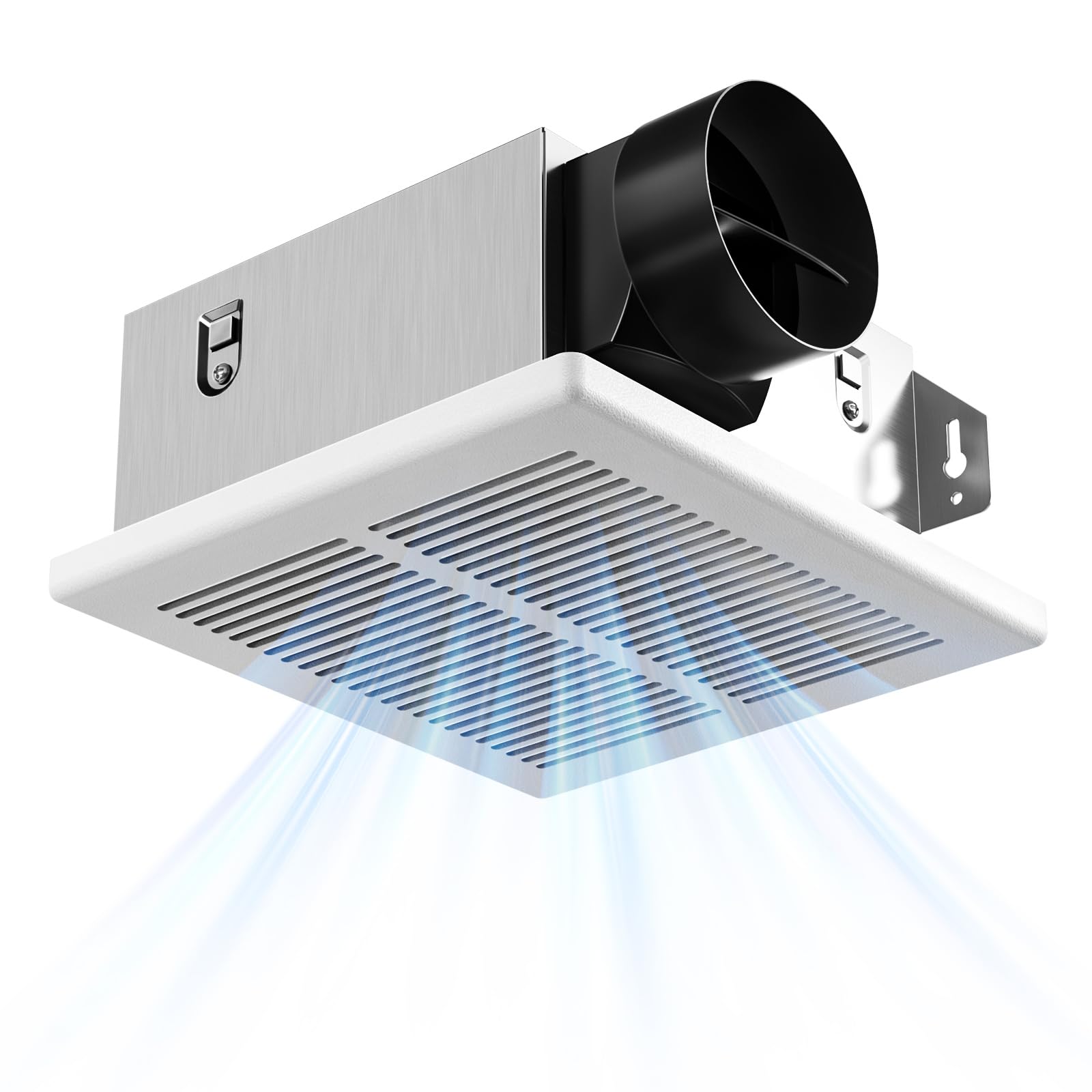

How To Choose The Best Ventilation-Only Bathroom Fan
Your ceiling space is a simple matchmaking game between two numbers: how many cubic feet of air the fan moves (CFM) and how much area you need to clear. The common rule is that for bathrooms up to 100 square feet, you want roughly 1 CFM for every square foot of floor space to avoid lingering moisture.
Match airflow to your room size
A 50 CFM fan suits a small powder room or half bath where steam is rare. A 70 to 80 CFM fan is the everyday workhorse for a standard shower bathroom. If you have a large master bath or a soaking tub, you will want 100 CFM or more to pull the humidity out before it settles on mirrors and paint.
Decode the quiet numbers
Sones measure how loud a fan sounds to the human ear, not raw decibels. A rating of 1.0 sone is a faint whisper you barely notice, while anything above 3.0 sones starts to sound like a loud conversation. For a bathroom you use early in the morning, prioritize a fan rated at or below 1.0 sone so the hum never becomes a daily annoyance.
Quick Comparison
| Model | Best For | Airflow | Noise | Install Type | Amazon |
|---|---|---|---|---|---|
| Ventline V2270-50★ Best Overall | Exact old-part swap | 50 CFM | — | Ceiling mount | Amazon |
| Amico 80 CFMAlso Great | Tight 2×6 framing | 80 CFM | 1.0 sones | No attic access | Amazon |
| Harrier Hardware 70 CFMBudget Champion | Budget quiet comfort | 70 CFM | 2.0 sones | Joist mount | Amazon |
| Delta BreezSlim SLM50 | Retrofitting old boxes | 50 CFM | 1.0 sone | No attic access | Amazon |
| KAZE APPLIANCE SNP100 | Large rooms, low hum | 100 CFM | 0.8 sones | No attic access | Amazon |
| Panasonic WhisperRemodel | Renovation projects | 110 CFM | 0.3/0.8 sones | From below ceiling | Amazon |
| Air King BFQ110 | Continuous operation | 100 CFM | 3.5 sones | Snap-in ceiling | Amazon |
| Homewerks 7140-80 | Simple DIY upgrades | 80 CFM | 1.5 sones | No attic access | Amazon |
| POWERENG 141 CFM | High-moisture rooms | 141 CFM | 0.7 sones | Ceiling mount | Amazon |
In‑Depth Reviews
1. Ventline V2270-50 Breeze 360 Non-Lighted Fan
Our pick — over 4.5★ from 700+ verified ratings; the strongest balance of quality and price.
A side-discharge 50 CFM fan that is the drop-in fix for owners of the Ventline V2270-50, with internal parts that swap in minutes.
This is the rare fan that functions as its own spare part. Owners who have a tired V2270-50 report the motor, impeller, and support plate clip out and the new ones clip in, with one noting the whole internal swap takes about 2 minutes once the cover is off. The existing housing stays put, which makes this an unusually fast and clean repair.
The side-exhaust design pushes 50 CFM of air through a 3-inch duct, and the unit carries a rough opening diameter of 8 inches. Buyers call the fit perfect and an exact replacement, noting the white finish disappears into the ceiling. Its 115V AC power rating is the standard for straightforward wiring swaps.
Noise feedback is mixed—one owner puts it bluntly: “It’s noisey and doesn’t move a ton of air quickly.” Yet that same buyer stayed satisfied, saying it runs quieter than the worn-bearing fan it replaced and fits easily. If you have a small bathroom needing a direct swap, this trade-off is often worth it; it’s not for you if you need near-silent operation for a large space.
The biggest selling point
- Drop-in replacement internals revive your existing ceiling housing
- Easy clip-out design means a 2-minute motor swap for DIYers
- Perfect 8-inch rough opening fit for a clean installation
Keep expectations in check
- 50 CFM airflow is modest, best for compact bathrooms
- Noise is average, not whisper-quiet, and air movement is gradual
Best if: you already own a V2270-50 and want to revive it with fresh internals instead of tearing out the whole assembly.
Look elsewhere if: you are starting from scratch and need a fan that clears a large, heavily used bathroom quickly.
2. Amico Bathroom Exhaust Fan 80 CFM
For a standard bathroom, this 80 CFM (cubic feet per minute—the volume of air it moves each minute) fan delivers a straightforward, low-noise upgrade without extra features you won’t use.
You get a genuine 80 CFM of airflow for rooms up to 80 square feet, and it runs at just 1.0 sones (a noise level about as loud as a quiet library whisper). The motor does not interrupt a bath soak, and owners describe the operation as barely noticeable, which is exactly the point of dedicated ventilation.
The housing depth of 4 inches is the standout engineering here. An electrician reports it slides straight into tight 2×6 framing (a cavity only about 5.5 inches deep) without any modification, a space where most standard fans will not fit. The 4.3-pound weight and slide-in wiring make it a genuine one-person job from the room side, with no attic trip required.
Its metal and polycarbonate body with an aluminum finish feels sturdy and professional, and buyers repeatedly call it well-built for the price. Reviewers report it swaps in smoothly for older failing units, though some note it runs louder than premium fans that cost nearly three times as much.
What wins people over
- 80 CFM airflow clears steam quickly without sounding like a jet engine
- Fits skinny 2×6 ceiling cavities where bulkier units cannot go
- Tool-free slide-in wiring simplifies a DIY install from below
Who should think twice
- Not the absolute quietest fan on the market, just a very good one
- Best suited to small half baths and powder rooms rather than huge master suites
Grab it if: you want a genuinely quiet 80 CFM upgrade that installs from the room side, no ladder-to-the-attic gymnastics needed.
Look elsewhere if: you are chasing near-silence at any cost and have the budget for a premium ultra-low-sone model.
3. Harrier Hardware Bathroom Exhaust Fan 70 CFM
A corrosion-resistant 70 CFM value pick that proves affordable ventilation does not have to mean rattling noise.
At roughly 40 decibels (about the level of a quiet room or soft rainfall), this fan is notably quieter than the contractor-grade units it often replaces. Buyers report it moves plenty of air for small spaces, pulling steam and fog away effectively while running at a modest 2.0-sone hum that fades into the background.
The galvanized steel housing is engineered for the worst-case scenario — direct moisture over a shower or tub. It is UL Listed for installation in those damp spots when wired to a GFCI circuit, meaning you can mount it right above the spray without worrying about rust taking hold in the humid air.
Build quality draws honest mixed feedback here: many praise the solid construction and easy wiring, while a smaller group flags the plastic connectors as flimsy. The cost-conscious buyer embraces it as exactly what they hoped it would be for the price, and it slips into the same 7-inch class footprint as earlier fans.
Why it earns its keep
- Corrosion-resistant steel housing shrugs off moist bathroom air
- Quick-connect wiring and joist-mount holes speed up installation
- 2.0-sone operation is quiet enough for a bedroom-adjacent bath
Where it cuts corners
- Motor is not a separate swappable part, so a failure means replacing the whole unit
- Some owners find the included plastic electrical connectors underwhelming
Reach for it when: budget matters and you need dependable, quiet ventilation in a moisture-heavy spot like a shower alcove.
skip it if: you want a fan whose motor you can replace in isolation years down the road.
4. DELTA BreezSlim SLM50 Exhaust Bath Fan

A slim-profile 50 CFM powerhouse with a DC motor built to run for 70,000 hours continuously.
The 1.0-sone noise rating puts this in genuinely quiet territory, and owners confirm the difference is audible — they describe it as roughly 0.8 sones in practice, quieter than the Broan units it typically replaces. The fan circulates fresh air for rooms up to 50 square feet and is powerful enough that one homeowner could feel air being pulled in under the door.
The real a neat extra is the retrofit design. The slim housing is built to slide into an existing old fan box from below, meaning no attic access is required. One detail-oriented owner details a full DIY retrofit into an ancient Broan 688 housing in about an hour, using common hand tools and a roll of aluminum tape. It was the only unit that fit their cramped space after testing five different fans.
The DC motor runs on a fraction of the energy of an AC motor, with the maker claiming energy savings of up to 85%. If you install it on a timer switch, you can leave it running for 10 to 60 minutes to fully purge humidity without babysitting it.
The clever bits
- Fits inside existing old fan boxes, saving a full ceiling demolition
- DC motor holds its 1.0-sone whisper for a claimed 70,000 hours
- Strong airflow feels like a much larger unit than 50 CFM suggests
Know before you buy
- Rated for smaller spaces, so a large master bath will need more CFM
- No built-in humidity sensor, so consider pairing with a timer switch
Perfect for: anyone with an old fan box and no attic who wants a meaningful quiet upgrade without cutting new drywall.
Not the one if: you need to ventilate a sprawling bathroom beyond 50 square feet of floor space.
5. KAZE APPLIANCE SNP100 Ventilation Fan

A 100 CFM workhorse that clears a shower’s worth of steam in about ten minutes, at a near-silent 0.8 sones.
The 26 GA galvanized steel housing is built to resist rust, protecting the motor in the humid air it is designed to remove. It pushes a strong 100 CFM of airflow for bathrooms up to 100 square feet, and owners are quick to note it prevents mirror fogging entirely during a shower instead of merely reducing it.
Quiet is the headline: at 0.8 sones, it sits below the 1.0-sone benchmark that typically defines a very quiet fan. Owners mention the motor itself is hushed, with only a mild air-rush sound that you notice on start-up and forget within a minute. The detachable 4-inch polymeric duct includes a back-draft damper, which stops cold outside air from sneaking back in when the fan is off.
Installation does not demand attic access if you are near a joist — the heavy-duty triple-point mounting brackets adjust up to 24-inch joist centers for flexible placement. Customers note one recurring pitfall: over-tightening the plastic duct adapter can deform the internal flapper, so a gentle hand is required during setup.
What makes it a pro pick
- 0.8-sone operation is genuinely whisper-quiet for a 100 CFM unit
- Rust-resistant painted steel housing suits moist environments
- Adjustable brackets mount cleanly on up to 24-inch joist centers
Handle with care
- Plastic duct adapter can warp if you over-tighten it during install
- Quiet but not silent — owners note a faint airflow sound on high
Choose this for: medium-to-large bathrooms where you want serious moisture removal without the roar of a traditional high-CFM fan.
Think again if: your ceiling opening is an unusual size that the standard 9 x 9-inch footprint will not cover.
6. Panasonic WhisperRemodel 110 CFM
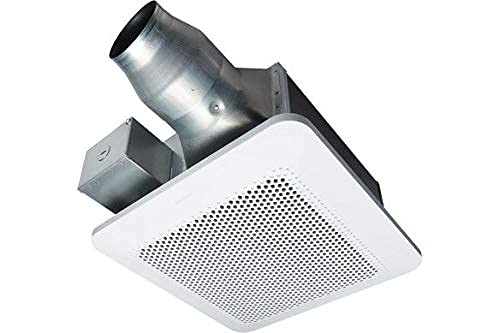
The renovation specialist, with a low-profile housing that fits older 2×6 framing and runs at a barely-there 0.3 sones.
This is the fan for remodelers who have torn out a ceiling and found shallow joists where modern fans simply will not fit. The thin, low-profile housing is designed specifically for older 2×6 construction, and the Flex-Z Fast bracket locks in from below the ceiling so you never need to crawl into the attic.
What owners rave about is how easy it is to forget the fan is on. The 0.8-sone rating is near-silent, and many report they check twice to confirm it is actually running because it makes so little sound. One buyer with sensitive hearing says it keeps the bathroom dry and pulls moisture so effectively that using the vent no longer feels like a chore.
The Pick-A-Flow selector is a unique flexibility win — you can set it to run at either 80 or 110 CFM to match your room size. At 110 CFM it handles large master bathrooms, and dropping it to 80 CFM keeps things efficient in a smaller space. The ENERGY STAR certification backs up the efficiency story.
The renovation advantage
- Low-profile housing slides into shallow 2×6 ceiling cavities
- Flex-Z bracket enables full install from the room side, no attic needed
- Pick-A-Flow switch lets you choose 80 or 110 CFM as needed
An honest note
- Not universally whisper-quiet — a few owners find it louder than their Delta or Broan units
- Sits at a premium price point for the added install flexibility
Built for: renovation projects where shallow ceiling cavities and no-attic installs demand a specialist tool.
Pass on it if: you are on a tight budget and your ceiling has standard deep joists and easy attic access.
7. Air King BFQ110 Snap-In 100 CFM Fan

A plastic-housing 100 CFM unit built for high-moisture spots, with ducting that exits left or right to fit any joist layout.
The all-plastic housing is the defining choice here: it will never rust, which makes it a logical fit for bathrooms near salt water or with relentless humidity. The durable high-impact polymer also runs quietly, and the design is rated for continuous operation so you can run it for hours without worrying about overheating.
The 4-inch plastic duct collar includes a back-draft damper, which keeps outside air from blowing back into the room when the fan is off. You can orient the duct to the right or the left, a small but crucial flexibility that saves you from awkward duct elbows when the joists are not where you want them.
Its 3.5-sone rating is the loudest on this list, so it is not a bedroom-adjacent choice. However, reviewers point out it moves roughly twice the air of the 30-year-old units it commonly replaces, and the snap-in mounting system lets one person click it into place from below the ceiling without a helper in the attic.
Why it endures
- Rust-proof plastic housing survives salt-air and constant moisture
- Snap-in bracket installs solo from the room side in minutes
- Left or right ducting adapts to tricky joist layouts
Fair warning
- At 3.5 sones it is clearly audible, closer to a loud fan than a whisper
- An occasional unit arrives with loose motor screws causing rattle until tightened
Reach for it when: you need a rugged, budget-friendly 100 CFM fan for a utility space or a humid coastal bathroom where rust is the real enemy.
pass on it if: quiet operation is non-negotiable for a bathroom next to a bedroom or living area.
8. Homewerks 7140-80 Ceiling Mount Bath Fan

A corrosion-resistant 80 CFM fan that fits standard ceiling openings and installs entirely from the room side.
The 7140-80 is the everyday upgrade for a medium bathroom, rated at 80 CFM with a 1.5-sone noise level that owners consistently describe as remarkably quiet — not a jet engine, as one put it. The galvanized steel construction resists the corrosion that slowly eats cheaper fans in humid air, and the modern grille avoids the dated look of older contractor units.
The no-cut design is the selling point for DIYers. With a ceiling opening of 7-1/2 by 7-1/4 inches and a 4-inch round duct connector, it snaps into standard cutouts without extra modification work. Owners praise the clear instructions and the snap-in assembly, noting the whole job goes quickly once the old unit is out.
It delivers strong, effective steam removal during showers, and shoppers say the room clears noticeably faster than before. The one recurring quirk is the plastic airflow valve, which some find audible as it flutters when the fan runs. A minor trade-off for a unit that otherwise draws consistent praise for power and value.
What earns its place
- 80 CFM clears shower steam fast enough to prevent fog and mold
- Galvanized steel housing resists rust in humid conditions
- No-cut snap-in design fits standard 7-1/2-inch openings easily
A small quirk
- The plastic airflow valve makes a faint fluttering sound while running
- Not the quietest on this list, just a solidly quiet performer
Ideal for: a straightforward DIY swap in a standard cutout where you can see the ceiling opening from the room side.
look elsewhere if: the faint sound of the vent flap would drive you crazy in a silent bathroom.
9. POWERENG 141 CFM Ventilation Fan

A big-square-footage heavyweight that moves 141 CFM for rooms up to 141 square feet while humming at just 0.7 sones.
This is the fan you reach for when a standard 80 CFM unit simply will not cut it. The 141 CFM airflow is the highest on this list, designed for large bathrooms or rooms up to 141 square feet where heavy steam and odors accumulate fast. Buyers report it strips moisture out of the air quickly, keeping surfaces from feeling damp after a long shower.
For a fan moving that much air, the 0.7-sone rating is striking — buyers describe a low white-noise hum rather than a mechanical roar. The 45W motor is energy-lean, and built-in heat protection automatically shuts the unit down if internal temperatures climb, adding a safety margin against prolonged high-temperature operation.
The square 13-inch grille is sleek and modern, with a white finish that blends into most bathroom ceilings. Three colored wires (brown, blue, and yellow for ground) keep the wiring straightforward. Note the physical size: with a mounting hole of 10.8 x 10.8 inches, measure your opening carefully before committing, as this is not a drop-in replacement for a standard 9-inch fan cutout.
Where it dominates
- 141 CFM is the highest airflow here, clearing large rooms fast
- 0.7-sone operation stays quiet even at that high volume
- Heat protection auto-shuts the motor at unsafe temperatures
Check the fit first
- Oversized 10.8 x 10.8-inch mounting hole needs careful measuring
- One buyer found their unit noisier than the sone rating suggests and weak on suction
Grab it for: oversized bathrooms and steam-heavy spaces where maximum airflow is the priority.
Measure first if: your ceiling has a standard 9-inch opening, since this frame is substantially larger.
Understanding the Specs
Airflow (CFM)
CFM stands for cubic feet per minute, the measure of how much air the fan moves. As a rule of thumb, you want roughly 1 CFM for every square foot of bathroom floor space. A 50 CFM fan suits a small powder room, an 80 CFM unit handles a standard shower bath, and large master suites often need 100 CFM or more to clear steam before it settles on surfaces.
Noise (Sones)
Sones measure perceived loudness, where each whole-number increase sounds roughly twice as loud. A rating of 1.0 sone is a faint whisper that disappears into the background, while 3.0 sones sounds like a normal conversation and becomes clearly audible. For a fan near a bedroom or living space, look for 1.0 sone or lower so the ventilation never interrupts your routine.
FAQ
How many CFM do I need for a standard bathroom without a light?
What does a sone rating mean for the noise level?
Can I install a no-light exhaust fan without attic access?
Will a non-lighted fan fit in my existing ceiling hole?
Is a bathroom fan without a light allowed over a shower or tub?
What is the difference between a DC motor and an AC motor fan?
Can a ventilation-only fan help prevent mold and mildew?
How long does a bathroom exhaust fan motor last?
What size duct does a light-free exhaust fan need?
Is a fan without a light more energy efficient than a combo unit?
Final Thoughts: The Verdict
The clear winner for nearly every standard bathroom is the Amico 80 CFM — it nails the quiet 1.0-sone operation that matters most while fitting into tight framing that stumps other fans. If budget is the deciding factor, the Harrier Hardware 70 CFM delivers corrosion-resistant quiet for less. For a large or renovation-heavy space, the Panasonic WhisperRemodel brings adjustable 110 CFM airflow in a frame built for shallow old ceilings. Whichever you pick, make sure the CFM matches your square footage so the moisture actually leaves the room.
How We Picked
We do not accept paid placement. Every pick is matched to a real buyer and a real use-case; we do not hands-on test units.
Sources & Methodology
Specifications: manufacturer listings and product documentation. Review insights: verified customer reviews, as of September 2026. Pricing: not shown on this page (it changes often); check the current price via the retailer link.
As an Amazon Associate, KitchPrep earns from qualifying purchases. This does not affect which products we feature.
Related Guides
