
Basmati rice is the “make-or-break” grain. When it’s right, it’s fragrant, fluffy, and elegant—each long grain standing tall, separate, and lightly springy. When it’s wrong, it turns into a soft pile that smells fine but eats like disappointment. That’s why buying a rice cooker for basmati isn’t about chasing a long feature list—it’s about chasing consistency.
Here’s the truth most buying guides dodge: many “great” rice cookers are great for short-grain, jasmine, or generic white rice, but they can still struggle with long-grain basmati because basmati is less forgiving. The water line that works for sushi rice can push basmati into mush. A keep-warm cycle that’s perfect for sticky rice can dry basmati at the edges. And a cooker that vents too aggressively can break delicate long grains as they expand and settle.
This guide is built for people who actually care about the rice on the plate. I’m going to show you what matters most for basmati: how a cooker handles soaking and “rest,” how it manages condensation, whether it has a long-grain program (or at least a smart algorithm that behaves like one), and how the inner pot and lid design affect aroma, texture, and cleanup. If you want a best basmati rice cooker you can rely on week after week—this is the deep dive that gets you there.
How to Choose the Best Basmati Rice Cooker for Your Kitchen
If you’re reading this, you’re probably already done with guessing. You want basmati that tastes like it came from a restaurant that respects rice—aromatic, fluffy, and never gummy. The good news: you don’t need a “luxury” machine to get there. You need the right kind of machine, and you need to understand what makes basmati a little different.
1. Decide your “basmati reality”: daily rice, weekly batches, or occasional sides
Most people buy the wrong size because they think in “cups uncooked” instead of “how I actually eat rice.” Here’s a more honest way:
- Occasional sides (1–2 people): A 2–3 cup uncooked capacity is perfect. You’ll get fresher rice, faster cycles, and less leftover dryness.
- Regular dinners (2–4 people): A 4–6 cup uncooked capacity is the sweet spot for basmati, especially if you like to serve rice as the base of the meal.
- Meal prep or entertaining: Go 5.5–6 cups uncooked (or bigger) so you can cook a full batch without packing rice too tightly.
Basmati hates crowding. If your basket is packed, steam can’t circulate evenly and you’ll see two issues: broken grains on top and dense, slightly under-hydrated rice at the bottom. Bigger capacity often equals better texture—not because “more is better,” but because a wider pot allows a thinner rice bed.
2. Look for “long-grain intelligence,” not just a button that says “white rice”
A basmati-friendly cooker usually has at least one of these:
- Long-grain / jasmine / mixed-grain programs that adjust heat and rest time for longer grains.
- Micom / fuzzy logic that can sense and adapt through the cook (this matters when your rice is drier, fresher, older, or soaked).
- Texture choices (soft/regular/firm) so you can tune basmati to “pilaf fluffy” or “curry bowl tender.”
Basic switch cookers can still make good basmati, but you’ll do more manual work: consistent measuring, rinsing, and sometimes a little trial-and-error with water. If you want basmati that’s repeatable even when you’re distracted, smart programs are worth it.
3. The lid and steam system matter more than most people realize
Basmati’s aroma is part of the experience—but steam management controls texture. Here’s what separates “good” from “wow”:
- Detachable inner lid: makes cleaning easy and helps prevent old starch odors from haunting future batches.
- Condensation control: better cookers reduce dripping back onto the rice, which is a common cause of soggy top layers.
- Clean vent path: if the vent is messy, it’s not just annoying—spillovers can dilute the aroma and create inconsistent doneness.
4. Inner pot build: thickness and coating are texture tools
This is where basmati people quietly win. A thicker pot (or a well-designed heat system) stabilizes temperature so the cooker doesn’t swing wildly when water is absorbed. For basmati, stability helps the grains lengthen without splitting.
- Thicker pots usually improve evenness, especially on larger batches.
- Ceramic-style nonstick tends to release rice cleanly and makes gentle fluffing easier (less scraping = fewer broken grains).
- Clear measurement lines sound boring, but they’re a daily-use feature. Hard-to-read lines are the #1 “why is my rice inconsistent?” complaint.
5. Keep-warm quality is a big deal for basmati
Many cookers can cook rice. Not all can hold basmati beautifully. If you routinely cook earlier in the day and serve later, prioritize:
- Extended keep warm modes that hold gently without drying the edges.
- Reheat functions that revive rice without turning it mushy.
- Moisture-friendly design—better lids and heat control keep basmati from turning “chalky” after an hour.
Quick Comparison: 15 Best Basmati Rice Cooker Picks
Use this table to quickly spot the cooker that matches your household size, your texture preferences, and how much you care about “set it and forget it” features like delay timers and high-quality keep-warm. Then scroll down for the deep reviews—where the real differences show up.
On smaller screens, swipe or scroll sideways to see the full table.
| Model | Type | Capacity (uncooked) | Best match | Amazon |
|---|---|---|---|---|
| COSORI Rice Cooker 10 Cup (18‑in‑1) | Micom / fuzzy | 10 cups | Best overall balance of texture, versatility, and easy cleanup | Amazon |
| TOSHIBA OriginTaste 5.5‑Cup (15‑in‑1) | Fuzzy + 3D heat | 5.5 cups | Weekly basmati cookers who want “fluffy every time” without fuss | Amazon |
| CUCKOO Micom CR‑0675FG (6‑Cup) | Micom / fuzzy | 6 cups | Families who want strong keep-warm + simple, reliable programs | Amazon |
| Zojirushi NS‑ZCC10 Neuro Fuzzy (5.5‑Cup) | Premium fuzzy | 5.5 cups | Rice perfectionists who want restaurant-level basmati texture | Amazon |
| Zojirushi NS‑LGC05XB Micom (3‑Cup) | Premium compact | 3 cups | Small households who still want long-grain intelligence | Amazon |
| Toshiba Mini Rice Cooker (3‑Cup) | Fuzzy mini | 3 cups | Couples who want compact, consistent basmati (and oatmeal too) | Amazon |
| COMFEE’ Rice Cooker (6‑Cup, 11 presets) | Fuzzy logic | 6 cups | Family batches + easy menus in a portable footprint | Amazon |
| COMFEE’ Compact 2‑Qt (6‑in‑1) | Digital multi | 4 cups | Small families who want rice + steaming + slow cook in one | Amazon |
| Instant Pot Duo Mini 3‑Qt (7‑in‑1) | Pressure multi | — | Fast basmati + full meals when you want one pot to do it all | Amazon |
| Hamilton Beach 37518 (Rinse + Steam Basket) | Digital basic+ | 4 cups | People who want easy rinsing + steaming without extra tools | Amazon |
| Aroma ARC‑954SBD “Professional” (STS) | Digital + sauté | 4 cups | Flavor builders: pilaf, spiced rice, and “one pot” meals | Amazon |
| Aroma ARC‑914SBD Digital (Sensor Logic) | Budget digital | 4 cups | Reliable everyday basmati on a simple, proven platform | Amazon |
| Aroma ARC‑5204SB Digital Multicooker | Budget multi | 4 cups | Set-it-and-forget-it rice + oatmeal + steaming basics | Amazon |
| Aroma ARC‑5204SB (Alt listing above) | Same core | 4 cups | If you like Aroma’s interface and want a dependable backup cooker | Amazon |
| GreenLife Digital 1.5‑Qt (PFAS‑Free Ceramic) | Mini ceramic | 2 cups | Dorms, singles, and “healthy nonstick” shoppers | Amazon |
In‑Depth Reviews: 15 Standout Rice Cookers for Basmati
This is where we stop pretending all rice cookers are the same. For each model, I’m focusing on the things that actually change your daily results: grain separation, aroma retention, keep-warm behavior, and whether the cooker feels like a helpful kitchen partner—or a needy gadget.
1. COSORI Rice Cooker 10 Cup (18‑in‑1) – The “Everything Works” Option

If you want a cooker that behaves like a calm, competent adult in your kitchen, this is it. The COSORI’s strength isn’t a gimmick. It’s the combination of a smart cooking process, a ceramic-coated inner pot that’s easy to live with, and an interface that’s genuinely friendly—especially if you cook multiple grains and want repeatable outcomes.
For basmati, the real win is consistency across different “basmati realities”: freshly bought rice, older pantry rice, rinsed-only, and rinsed-plus-soaked. Good micom logic keeps the heat curve from being too aggressive early (which can split grains) and it usually builds in a more thoughtful rest at the end. That last part is what most cheap cookers miss: basmati doesn’t just need to “finish cooking,” it needs to settle and dry slightly so it fluffs cleanly instead of clumping.
Owners also love the ceramic pot for a practical reason: basmati rice is long and delicate, and you want to fluff gently with a soft paddle. A surface that releases easily means you’re not scraping the bottom to free stuck rice—which is where grain breakage starts.
Why you’ll like it
- Versatility without chaos – The functions are actually useful (rice, grains, oats, steam, sauté, slow cook) without feeling like a confusing science project.
- Ceramic inner pot – Easy release, easy cleanup, and it encourages gentle fluffing (a big deal for long-grain basmati).
- Warm mode that doesn’t punish you – Many owners report it holds rice well without turning it crusty around the edges.
- Guided interface – Clear display, logical flow, and it’s easy to teach to family members without writing “kitchen rules.”
Good to know
- Water lines can be subtle for some users. If you value speed and certainty, using a measuring cup for water is the most consistent workaround.
- Large capacity is great, but basmati texture is best when you don’t pack the pot—cook a comfortable layer, not a dense brick.
- Steamer basket is stainless and roomy, but some people wish it were shallower for certain “rice underneath + steam above” combos.
Ideal for: households that cook basmati often, want reliable texture, and also like the idea of one cooker doing rice, oats, grains, and easy one-pot meals.
2. TOSHIBA OriginTaste 5.5‑Cup (15‑in‑1) – “Fluffy, Separate, and Effortless”
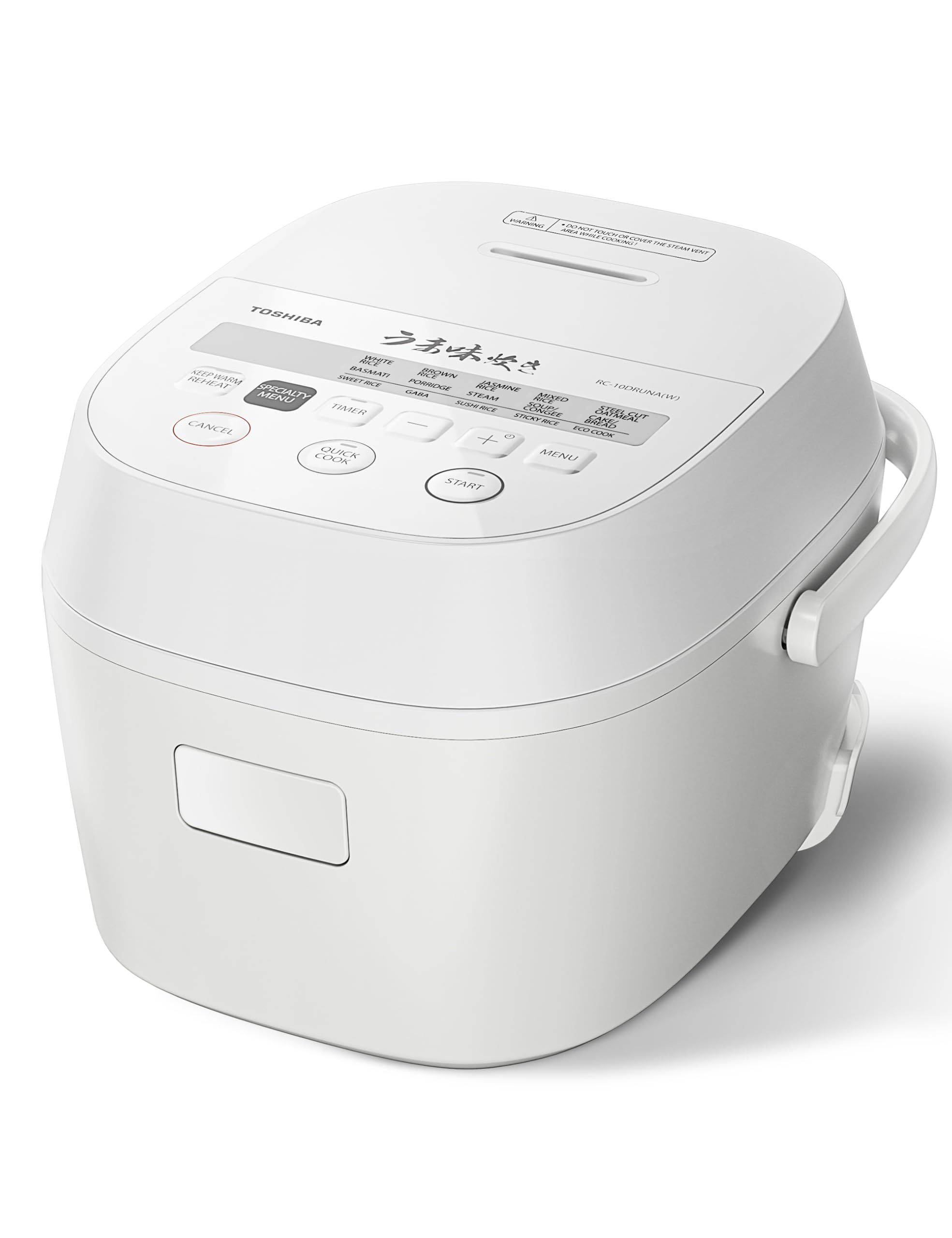
Toshiba’s modern rice cookers tend to hit a very satisfying middle: smart enough to feel premium, but not so complicated that you need a weekend to learn it. The OriginTaste model is a great example. It’s built around the idea that heating should be uniform, and uniformity is basmati’s best friend—because it reduces the “top is perfect, bottom is dense” problem that shows up when heat isn’t distributed well.
In real-world use, this kind of cooker shines for weekly batch basmati. You load, choose the right setting, and it simply delivers— without boiling over, without scorching, without that odd “wet but still firm” middle that usually means the cooker’s heat curve was too harsh. Several owners specifically talk about the relief of not babysitting rice and getting clean, separated grains that fluff easily.
Where it needs a little respect: basmati dishes with extra ingredients (like boxed seasoned rice, pasta mixes, or oil-heavy pilafs) can be messier in any smart rice cooker because starchy foam changes how the vent behaves. For plain basmati or lightly seasoned basmati, this Toshiba is in its element.
Why it stands out
- Reliable basmati texture – Excellent for fluffy, separate grains when you rinse and measure consistently.
- Great “set it and forget it” feel – Timer + keep warm help dinner timing without hovering.
- Solid pot build – A thicker pot helps stabilize cooking, which reduces grain splitting on long rice.
- Easy cleanup mindset – Nonstick pot and removable vent parts make it less annoying to maintain.
Good to know
- Like many non-dishwasher inner pots, it rewards gentle cleaning (soft sponge, no metal utensils).
- If you do “recipe rice” with lots of additives, expect a bit more vent cleanup—plain rice is its happiest path.
- The pot can be hot when the cycle ends. If you like to lift and pour immediately, keep a mitt nearby.
Ideal for: people who cook basmati regularly and want a smart cooker that nails the basics with minimal effort and excellent everyday reliability.
3. CUCKOO Micom CR‑0675FG (6‑Cup) – Strong Keep‑Warm, Easy Daily Rice

Cuckoo is a brand that takes “rice is the meal” seriously, and you can feel that in how the cooker behaves. The CR‑0675FG is a micom/fuzzy logic unit that’s designed to cook rice well first, then make daily life easier: warming that doesn’t wreck your batch, cleaning modes that make the cooker feel less gross over time, and a simple set of menus that most people actually use.
For basmati, Cuckoo’s advantage is control. It tends to avoid the super-aggressive boil that can cause long grains to rub, break, and compact. When the cooker transitions into warm mode, it generally holds rice in a more stable way than basic digitals—meaning if dinner gets delayed, your basmati is more likely to stay pleasant instead of drying at the edges.
This is also one of those “buy it for the household” machines. If you want a cooker your partner, teenager, or roommate can use without turning basmati into paste, a stable micom platform helps a lot.
Why families love it
- Keep-warm that holds up – Great if dinner timing is messy and rice needs to wait without suffering.
- Easy rice success – Put rice + water in, pick a mode, walk away. It’s forgiving compared to basic switch cookers.
- Auto-clean feature – Helpful for odor control and keeping the cooker feeling “fresh” after frequent use.
- Good batch size – Enough capacity for family meals without making the cooker feel huge on the counter.
Good to know
- Like most nonstick pots, you’ll want to use plastic/silicone utensils only to preserve the coating.
- If you never use warm mode and only cook tiny batches, the capacity can feel bigger than you need.
- Some users wish it came with a dedicated steaming tray—this model is more “rice-first” than “steam everything.”
Ideal for: families and frequent rice eaters who want dependable basmati and a warm mode that doesn’t punish them for being busy.
4. Zojirushi NS‑ZCC10 Neuro Fuzzy (5.5‑Cup) – The “Rice People Were Right” Cooker

This is the cooker people mention like it’s a personality trait. And honestly, that’s not random hype—Zojirushi earns its reputation because it produces a specific kind of rice: cleanly separated, evenly cooked, and consistently fragrant. The Neuro Fuzzy logic is designed to make micro-adjustments, and those small adjustments show up in the bowl.
For basmati, the magic isn’t that it “cooks rice.” It’s that it tends to land in the sweet spot between tender and structured. You know that perfect basmati bite where the grain is fully cooked but still distinct? That’s the texture zone Zojirushi does well. It’s also the kind of machine you can set on a timer and trust—especially if you like rice ready when you walk in the door.
Another underappreciated win: the warm modes. A lot of cookers keep rice warm by just… keeping it warm. Zojirushi’s warm behavior is more nuanced, and many owners report they can hold rice far longer than they expected without it drying out aggressively. That’s huge for basmati because basmati tends to lose its softness faster than stickier rices.
Why it’s beloved
- Beautiful grain separation – Basmati comes out fluffy, distinct, and “restaurant clean” when you rinse well.
- Excellent warm + reheat cycles – Helpful if you cook early and serve later, or if you love leftovers that still taste right.
- Thoughtful pot shape – The spherical pan design helps with even heating and consistent doneness.
- Quality-of-life details – Clear interface, timer logic that feels smart, and little touches (like a retractable cord on some Zojirushi models) that make daily use smoother.
Good to know
- It’s not a “fast rice” machine. Quality cycles can take longer, but that’s part of why texture is so good.
- It’s a premium buy, so it makes the most sense if you cook rice often (weekly at minimum, ideally more).
- If you mainly cook tiny portions, you may prefer the compact Zojirushi model instead.
Ideal for: anyone who eats basmati constantly, values perfect texture, and wants a cooker that feels like the final stop rather than a stepping stone.
5. Zojirushi NS‑LGC05XB Micom (3‑Cup) – Small Batch, Big Brain

If you cook basmati in smaller portions, the NS‑LGC05XB is one of the smartest purchases you can make. Small cookers can be tricky: tiny pots heat faster, and faster heating can be rough on delicate long grains. This Zojirushi counters that with a micom brain and a menu that includes long-grain white rice—exactly the kind of “this was designed for your rice” option that makes basmati easier.
Where this cooker shines is weeknight rhythm. You cook half a cup to a couple cups uncooked, you fluff, you eat, and the pot cleans up easily. You’re not dealing with a huge appliance, and you’re not tempted to cook giant batches that go dry by day two. It’s an intentional “small, perfect, repeat” machine.
It also has a strong reputation for oatmeal and GABA brown rice, which matters if your household wants healthier breakfasts without extra gadgets. But even if you never touch those modes, the long-grain support alone is enough to justify this model for basmati lovers with limited space.
Why it’s special
- Long-grain white setting – A practical advantage for basmati texture and consistency.
- Compact but capable – Great for small kitchens without giving up “premium rice cooker behavior.”
- Excellent for small batches – Less leftover dryness, better freshness, and faster daily workflow.
- Easy storage – A fold-down handle + compact footprint make it less annoying to live with.
Good to know
- Small capacity means it’s not ideal for big family dinners unless you’re okay cooking twice.
- Like many premium cookers, it rewards reading the manual once so you understand menu choices.
- It’s built for quality, not speed—though small batches naturally finish faster than big ones.
Ideal for: singles and couples who love basmati and want premium, repeatable results without buying a big countertop unit.
6. Toshiba Mini Rice Cooker (3‑Cup) – Tiny, Reliable, and Surprisingly “Grown-Up”
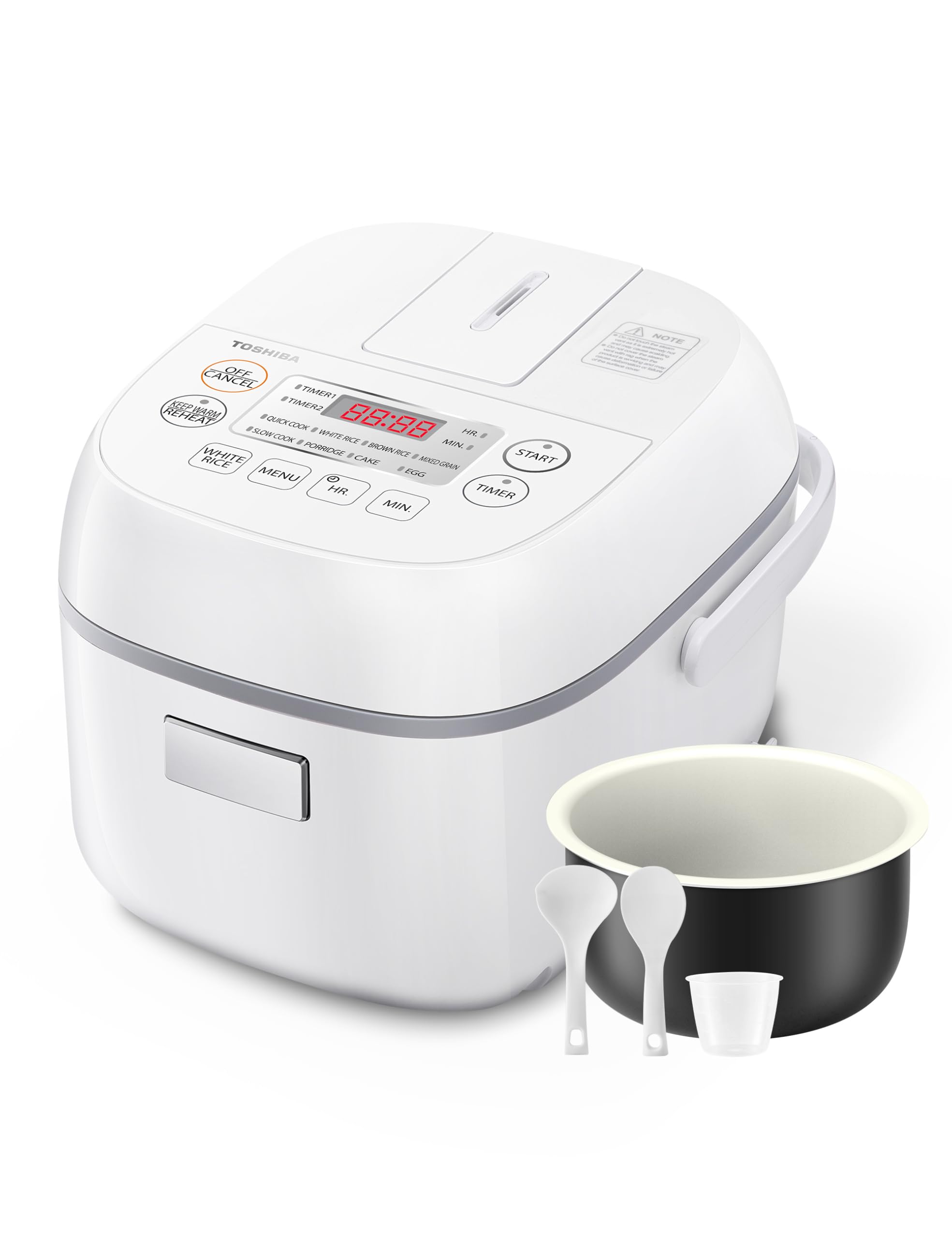
This little Toshiba has a loyal fan base for a reason: it behaves like a “real” rice cooker, not a toy. It’s compact, has fuzzy logic, and it tends to hit consistent texture without the drama of overboil and scorched bottoms. For basmati, that matters because small cookers are where inconsistency usually shows up first.
Real-life owners love that it adjusts its cooking time rather than blindly following a fixed timer. That’s exactly what you want if you switch between different basmati brands or if your rice is sometimes freshly bought and sometimes older. It also earns points for build quality (a sturdy pot, a clean interface, and removable parts that make it less gross over time).
If you’re the kind of person who secretly likes crispy rice at the bottom, this may not be your dream machine. Its nonstick design and temperature control tend to prevent that “toasty layer.” But for most basmati eaters, that’s actually a win—because the goal is fluffy, aromatic grains, not crust.
What it does really well
- Consistent texture – Owners repeatedly mention “perfect every time,” especially on plain rice and oats.
- Compact footprint – Great for apartments, dorms, and anyone who hates countertop clutter.
- Good program variety – White rice, brown, mixed grain, porridge, slow cook, even cake/egg modes for experimentation.
- Quality pot feel – The inner pot is often praised as sturdy with a nice nonstick finish.
Good to know
- If you want a “steam above while rice cooks below” setup every week, check whether the included accessories match your habits.
- Some people find the power cord short—plan a spot near an outlet.
- Like any nonstick pot, it needs gentle tools and gentle cleaning.
Ideal for: anyone who wants a small, dependable fuzzy-logic cooker that makes basmati consistently fluffy without taking over the kitchen.
7. COMFEE’ Rice Cooker (6‑Cup, 11 presets) – Big Enough, Smart Enough, Easy Enough

The “sweet spot” for a lot of households is exactly this kind of machine: 6 cups uncooked, fuzzy logic, a clear touch panel, and enough presets to cover real life (white rice, brown, sushi, steaming, soups, sauté). What makes it basmati-friendly is the combination of capacity and adaptability. You can cook a comfortable batch without crowding the pot, and the fuzzy logic helps smooth out the differences between rice brands and batch sizes.
Owners who admit they were “bad at rice” often become rice-cooker evangelists after using a cooker like this. That’s not because it’s magical—it’s because it removes the most common failure points: too much heat too early, poor timing, and inconsistent warm behavior.
I also like this category of cooker for basmati meal prep. If you cook basmati for lunches, you want a warm mode that holds texture long enough for dinner, but you also want rice that cools and reheats well. A consistent cook (not overhydrated) cools better and doesn’t turn mushy when reheated.
Why it’s a smart buy
- Fuzzy logic consistency – Helps basmati come out repeatable even when your routine isn’t perfect.
- Family capacity – Enough for 3–6 people without forcing you into a huge countertop footprint.
- Convenient presets – Sushi, soup/stew, sauté, steam—useful if you like one-pot meals and flavored rice.
- Portable design – Handle makes it easier to move and store, which matters in smaller kitchens.
Good to know
- “Quick rice” on smart cookers is usually “faster than standard,” not “instant.” Plan rice earlier than your main dish until you learn the timing.
- Some users mention condensation when opening the lid—keep a towel nearby and open away from cabinets.
- For ultra-small batches, a 3-cup cooker may give you slightly better texture simply because it’s sized for that job.
Ideal for: families who want a fuzzy-logic cooker that’s practical, versatile, and forgiving—especially if basmati is a frequent side or base.
8. COMFEE’ Compact 2‑Qt (6‑in‑1) – Small Footprint, Real Meal Potential

This is a genuinely useful category: a compact cooker that can do rice and also act like a mini slow cooker and steamer. If you want basmati plus a simple weekly routine—rice, steamed vegetables, maybe dumplings or fish—this style of cooker is a workhorse.
For basmati specifically, it’s not about fancy algorithms. It’s about consistent heat, a nonstick pot that cleans easily, and a “keep warm” mode that keeps your rice ready while you finish the rest of your meal. Owners talk about it being easy, durable-feeling, and surprisingly capable across rice capacities—from small to full. That range matters because basmati texture can shift when you scale up or down; a cooker that handles both is a calmer purchase.
One expert-level tip with basmati in this style of cooker: don’t chase extra water to make it “softer.” Instead, let it rest after cooking with the lid closed for 10 minutes, then fluff. Resting makes the rice feel tender without turning it sticky.
What you get
- Compact and practical – Fits smaller counters but still makes meaningful batches.
- Steam + rice workflow – Steam veggies or protein while basmati cooks below for easy meals.
- Easy cleanup – Nonstick pot and dishwasher-friendly accessories reduce daily friction.
- Good “starter cooker” – Friendly for people who don’t want to learn a complex menu system.
Good to know
- Basic programs mean you may do a tiny bit of water-ratio tuning for your specific basmati brand.
- If you want long-grain presets, look at Zojirushi’s compact model or a more advanced micom unit.
- Like many compact cookers, the water lines may be less visible than you’d like—measuring water can be more consistent.
Ideal for: small households that want basmati plus steaming and simple “set it and forget it” meals in one compact appliance.
9. Instant Pot Duo Mini 3‑Qt (7‑in‑1) – When You Want Fast Basmati + Full Meals

A pressure cooker isn’t a traditional “rice cooker experience,” but it can be an excellent basmati tool—especially if you value speed and one-pot meals. Basmati in a pressure cooker tends to cook with less water than stovetop methods, and when you get your ratio right, the rice comes out fluffy and aromatic with surprisingly clean grain separation.
The Duo Mini is particularly useful because smaller Instant Pots are easier to manage for rice: less risk of scorching from a tiny batch in a huge pot, and faster pressure cycles than larger models. Owners often buy it as a sidekick for small households and quickly realize it’s enough for a full dinner: braised chicken, lentils, soups, plus rice.
The basmati learning curve is real, though. Pressure cooking rewards precision: rinse well, measure well, and respect the rest time (natural release and a short steam-dry rest after). Once you dial it in, it’s a powerful “rice + real food” system.
Why it can be great for basmati
- Fast and efficient – Great when you want rice and dinner without running multiple burners.
- High versatility – Pressure cook, slow cook, sauté, steam—this is more “meal system” than rice-only appliance.
- Small size advantage – Better suited to 1–2 cups of rice than huge pressure cookers.
- Easy stainless pot – No coating to baby, and it’s dishwasher-safe in many setups.
Good to know
- It’s not “hit rice button and forget forever.” You’ll want a reliable basmati method and a little practice.
- Pressure cookers include preheat and pressure build time; total time isn’t just “cook minutes.”
- If you love long keep-warm rice, traditional rice cookers usually hold basmati more gracefully.
Ideal for: small households that want quick basmati and also want the ability to cook complete meals with one compact appliance.
10. Hamilton Beach 37518 – The Rinse Basket Trick That Makes You Cook More Rice

Here’s a funny truth: the biggest reason people stop cooking basmati isn’t the cooking—it’s the rinsing, the extra bowl, the dripping, the mess. Hamilton Beach quietly solves that with a basket that doubles as a rinse/colander and a steamer. That single design choice makes the whole workflow smoother.
From an “expert basmati” point of view, rinsing matters because it removes surface starch that can make long grains clump. If you’re the kind of person who sometimes skips rinsing because it’s annoying, this cooker can literally improve your rice by removing the friction that causes you to cut corners.
Performance-wise, it’s a straightforward digital cooker: it cooks, it switches to warm, it does what it says. The real value is the routine it encourages: rinse right, steam veggies above, and serve a full meal with less kitchen chaos.
Why it’s smarter than it looks
- Rinse + steam basket – Makes proper basmati rinsing easier, and steaming above is effortless.
- One-touch programs – Simple controls that reduce “button anxiety.”
- Good family size – Fits everyday meals without being bulky.
- Easy cleanup – Removable parts and a practical layout make it less annoying to maintain.
Good to know
- Like many budget-friendly digitals, the water lines/cup markings may not be as readable as you’d like—measuring water can help consistency.
- It’s not a high-end micom machine, so basmati perfection may take a tiny bit of ratio tuning for your brand.
- If you want specialized long-grain programs, consider Zojirushi or a more advanced fuzzy-logic model.
Ideal for: people who want a simple, practical rice cooker that makes rinsing and steaming easier—so you actually use it more often.
11. AROMA ARC‑954SBD “Professional” – Sauté‑Then‑Simmer for Pilaf‑Style Rice

If you mostly eat plain basmati, you can skip this. But if you love basmati pilaf, jeera rice, spiced rice, or “rice with stuff in it,” Aroma’s STS approach is genuinely useful. Sauté‑then‑simmer lets you bloom aromatics (onion, cumin, spices) before the cooker shifts into a controlled simmer/cook phase. That’s how you build flavor without dirtying another pot.
This is the kind of cooker that helps you cook like you mean it. Instead of dumping rice and hoping, you build a base, then let the cooker finish evenly. And because basmati is aromatic, it rewards that flavor-building step more than many other rices.
One thing owners mention across Aroma digitals: vent behavior can get a little messy if you overload or if your rice is extra starchy. The fix is simple: rinse well, don’t overfill, and when cooking very foamy recipes, start with a slightly smaller batch until you learn how your unit vents.
Why it’s a flavor person’s pick
- Sauté‑then‑simmer workflow – Great for pilaf-style basmati, spiced rice, and one-pot meals.
- Simple digital control – Easy programs plus the flexibility to build flavor first.
- Good capacity for daily meals – Works well for couples and small families.
- Steaming support – Useful if you like vegetables or fish alongside rice.
Good to know
- Start rice earlier in your meal flow—some digital cycles take longer than you’d expect.
- Vent spillover can happen if recipes are very starchy or the pot is too full; rinsing and not crowding helps.
- If you only want “perfect plain basmati,” a micom/fuzzy logic cooker may feel more effortless.
Ideal for: cooks who want basmati as a flavor base—pilaf, spiced rice, and one-pot meals—without juggling extra cookware.
12. AROMA ARC‑914SBD Digital – The “Reliable Little Helper” Cooker

Aroma has been a gateway rice cooker for a lot of households, and the ARC‑914SBD is the type of unit that earns its keep by being simple and consistent. You get a small digital panel, a handful of programs that cover real needs (white, brown, steam, and a faster mode), and an automatic keep warm.
For basmati, this model is about fundamentals. If you rinse well and measure water consistently, it can produce nicely fluffy basmati—especially for everyday meals. Owners routinely mention reliability and ease: no scorching, no babysitting, and easy steaming while rice cooks below.
The “expert move” with basmati on basic digitals: treat the included cup seriously. Many rice cookers use a smaller “rice cup” standard rather than a full U.S. cup. If you switch measuring systems midstream (rice measured one way, water measured another), your basmati texture becomes unpredictable fast.
Why it’s a strong value
- Simple digital reliability – Great results with minimal effort once you learn your ratio.
- Steam tray included – Easy “rice + veg” meals without extra pots.
- Hands-off cooking – Auto keep-warm and straightforward presets help beginners succeed.
- Compact size – Fits small kitchens and stores easily.
Good to know
- The pot markings can be hard to see for some users; measuring water can solve that instantly.
- Different rices need slightly different water—basmati is forgiving if you rinse and rest, but expect a tiny learning curve.
- Faster modes can trade a bit of texture for speed; use them when you must, not when you’re chasing perfection.
Ideal for: anyone who wants a dependable, no-nonsense rice cooker for everyday basmati, plus simple steaming—without paying for premium features.
13. AROMA ARC‑5204SB Digital Multicooker – Easy Rice, Oatmeal, and One‑Pot Comfort

This Aroma model is for people who want rice as a rhythm: set it, go live your life, and come back to a warm meal base. It’s a compact multicooker with automated controls for rice, grains, steaming, and slow cooking—exactly the kind of machine that quietly replaces “stovetop babysitting” with something calmer.
For basmati, it’s a solid platform if you do two things: rinse well and build a consistent measurement habit. Once you do, you can repeat the same basmati texture every time, then use the cooker’s delay timer so rice finishes right when dinner does. That timing alone makes weeknights feel easier.
If you like breakfast routines, this is also the type of cooker that makes oatmeal and hot cereal feel effortless. That matters because once the cooker earns counter space, it stays in your life longer—and the more you use it, the more value you get from it.
Why it earns its spot
- Great “set it and forget it” vibe – Simple programs and a timer that fits real schedules.
- Steaming support – Easy way to turn rice into a complete meal.
- Reliable everyday rice – Good basmati texture when you rinse and measure consistently.
- Versatile comfort cooking – Oatmeal and slow-cooked dishes expand its usefulness.
Good to know
- Budget cookers vary most in keep-warm quality; if you hold rice for many hours, premium cookers do it more gracefully.
- Clean the spill/condensation areas regularly so old starch doesn’t create odors.
- Like many digitals, it may take longer than you expect—start rice early until you learn the timing.
Ideal for: anyone who wants budget-friendly basmati plus oatmeal and steaming in a simple, daily-use multicooker.
14. AROMA ARC‑5204SB (Same Core Model) – A Smart “Second Cooker” for Busy Kitchens
Sometimes the smartest “upgrade” isn’t upgrading—it’s adding a second cooker when your kitchen runs on rice. If you meal prep, entertain, or cook multiple grains, having a second, dependable rice cooker means you can run basmati in one pot and something else in the other: oatmeal, quinoa, a slow-cooked sauce, or steamed vegetables for a crowd.
This is also a practical move for households with picky eaters. One person wants plain basmati, another wants spiced rice, someone else wants oatmeal—fine. Two cookers solve that without turning dinner into a juggling act.
Because the ARC‑5204SB is straightforward and compact, it’s one of those models people are comfortable “assigning” tasks to: make rice, keep warm, don’t complain. That reliability is a form of value—especially when you already own a primary cooker and you need a supporting player.
Why a second cooker can be a power move
- Two things at once – Run basmati while you slow-cook a curry base, steam veggies, or cook another grain.
- Simple, easy to teach – Great for family members who won’t use complicated menus.
- Good portion size – Useful for side dishes and smaller “support” batches.
- Meal-prep friendly – Lets you keep rice warm while you portion the rest of your meals.
Good to know
- If you’re only buying one cooker and basmati perfection is your goal, you may prefer a fuzzy logic or premium micom model.
- As with all Aroma units, keep vents and spill areas clean for long-term happiness.
- Delay timer is fantastic—just remember it counts toward total time, so plan ingredients accordingly.
Ideal for: busy kitchens that already cook rice frequently and want a reliable second unit for sides, meal prep, or separate rice styles.
15. GreenLife Digital 1.5‑Qt – Tiny, Cute, and Great for Solo Basmati

If you live alone, cook for one, or just want a tiny rice station for basmati and grains, GreenLife’s little cooker is charming—and surprisingly capable. It’s compact, has one-touch presets for common grains, and uses a ceramic nonstick pot that many shoppers prefer for everyday “low fuss” cooking.
For basmati, the key is portion discipline. This cooker is happiest when you respect its size: rinse rice well, don’t overload, and give the rice a short rest after cooking before you fluff. Owners often mention they add a small tweak to timing for their preference, which is normal in mini cookers—tiny pots are more sensitive to rice age, soaking, and brand.
This is also a great “learning cooker.” If you’re new to basmati, starting with small batches teaches you what “right” looks like without wasting rice. Once you learn your ratio and routine, it becomes a reliable daily tool.
Why it’s a great small pick
- Very compact – Perfect for dorms, small apartments, offices, and minimalist counters.
- Ceramic nonstick pot – Easy cleanup and easy rice release for gentle fluffing.
- Simple presets – White rice, brown rice, quinoa, oats—covers real life without overcomplication.
- Good warm behavior – Many users report it holds rice without burning, especially for smaller batches.
Good to know
- Pot markings can be hard to see for some users; using a flashlight or measuring water is a common workaround.
- Mini capacity means it’s not ideal for entertaining or meal prep for multiple people.
- For “premium basmati perfection,” a micom/fuzzy logic unit with long-grain settings is still the gold standard.
Ideal for: solo cooks and small-space kitchens that want a compact cooker with a ceramic pot and reliable everyday basmati portions.
How Rice Cookers Actually Work (and Why Basmati Can Be Tricky)
If you understand one simple idea, you’ll cook better basmati in any machine: rice cookers don’t “know rice,” they know water. Most basic cookers use a physics trick: as long as there’s free water, the temperature stays around boiling. When the water is absorbed or evaporated, temperature rises, and the cooker switches modes. More advanced cookers add sensors and algorithms to manage heat in stages.
Why basmati needs a slightly different mindset
- Long grains break more easily when the boil is too aggressive or the rice bed is overcrowded.
- Surface starch causes clumping—rinsing matters more for basmati if you want that classic separation.
- Basmati benefits from rest after cooking so moisture redistributes and grains fluff cleanly.
- Keep-warm can dry the edges because basmati has less “stickiness” to protect it from moisture loss.
The best basmati bowls usually come from a cooker that either has long-grain intelligence (a dedicated long-grain mode) or has stable, gentle heat control (micom/fuzzy logic). The goal isn’t “hotter” or “faster.” The goal is controlled hydration.
My basmati “lock-in” routine (works on most cookers)
- Rinse until water runs clearer – not forever, just enough to remove the powdery surface starch.
- Optional soak – if you have time, soaking helps grains lengthen and reduces breakage.
- Measure consistently – use the same system for rice and water (rice cup vs. U.S. cup).
- Rest after cooking – leave the lid closed 10 minutes, then fluff gently.
- Fluff, don’t stir – lift and fold with a paddle to keep grains long and intact.
When you do those five things, even budget cookers can make excellent basmati. Premium cookers just do it with less effort and more forgiveness.
FAQ: Best Basmati Rice Cooker Questions, Answered
Do I really need a special setting for basmati?
Why does my basmati come out sticky in a rice cooker?
Is ceramic nonstick actually useful for rice?
How important is the keep-warm function for basmati?
What’s the easiest way to get “restaurant fluffy” basmati every time?
Final Thoughts: Choose Your Best Basmati Rice Cooker Match
A great rice cooker doesn’t just “cook rice.” It gives you a calm, repeatable result that frees your brain for everything else: the curry, the grilled chicken, the vegetables, the actual life you’re living. And when basmati is your staple, the right machine quietly upgrades your meals every week.
If you came here looking for the best basmati rice cooker and you want a confident, satisfying decision—use this shortcut:
- Want the most balanced, do-it-all pick? Go with the COSORI Rice Cooker 10 Cup. It’s versatile, easy to clean, and consistently delivers fluffy rice without feeling complicated.
- Want a “texture-first” cooker that feels effortless? The TOSHIBA OriginTaste 5.5‑Cup is a fantastic everyday machine for basmati lovers who want reliability and smart heating.
- Need a family-friendly cooker with excellent warm behavior? Look at the CUCKOO CR‑0675FG for strong “daily rice” performance and a cooker that fits busy schedules.
- Want premium basmati perfection? Choose the Zojirushi NS‑ZCC10 Neuro Fuzzy. If you cook rice often, it’s the kind of purchase you stop thinking about—because it just keeps delivering.
- Short on space but still picky about basmati? The compact Zojirushi NS‑LGC05XB or the Toshiba Mini are great small-batch options that don’t feel like compromises.
Pick the size you’ll actually use, prioritize the kind of “brain” you want (basic digital vs. micom/fuzzy logic), and choose a cooker you’ll happily clean. Do that, and basmati becomes the easiest part of dinner—not the stressful one.
