
Specs are compiled from manufacturer listings and verified buyer reviews and can change over time — please confirm the key details on the product page before buying.
Your sump pump basin is the bucket that sits in the hole in your basement floor, collecting groundwater so your pump can push it out. If that bucket cracks, corrodes, or collapses, your pump fails and water wins. The right pick depends on material, capacity, and whether it fits the space you are digging — and this guide cuts straight to the basins that hold up under real soil pressure.
I’m Mohammad Maruf — the founder and writer behind KitchPrep. This guide is built by comparing the manufacturers’ published specifications and the patterns across verified customer reviews, so you get each pick’s real strengths and trade-offs instead of marketing spin.
Find the right basin for a sump pump with a breakdown of capacity, materials, and the honest fit notes that decide whether your install goes smoothly or becomes a redo project.
Our Picks at a Glance


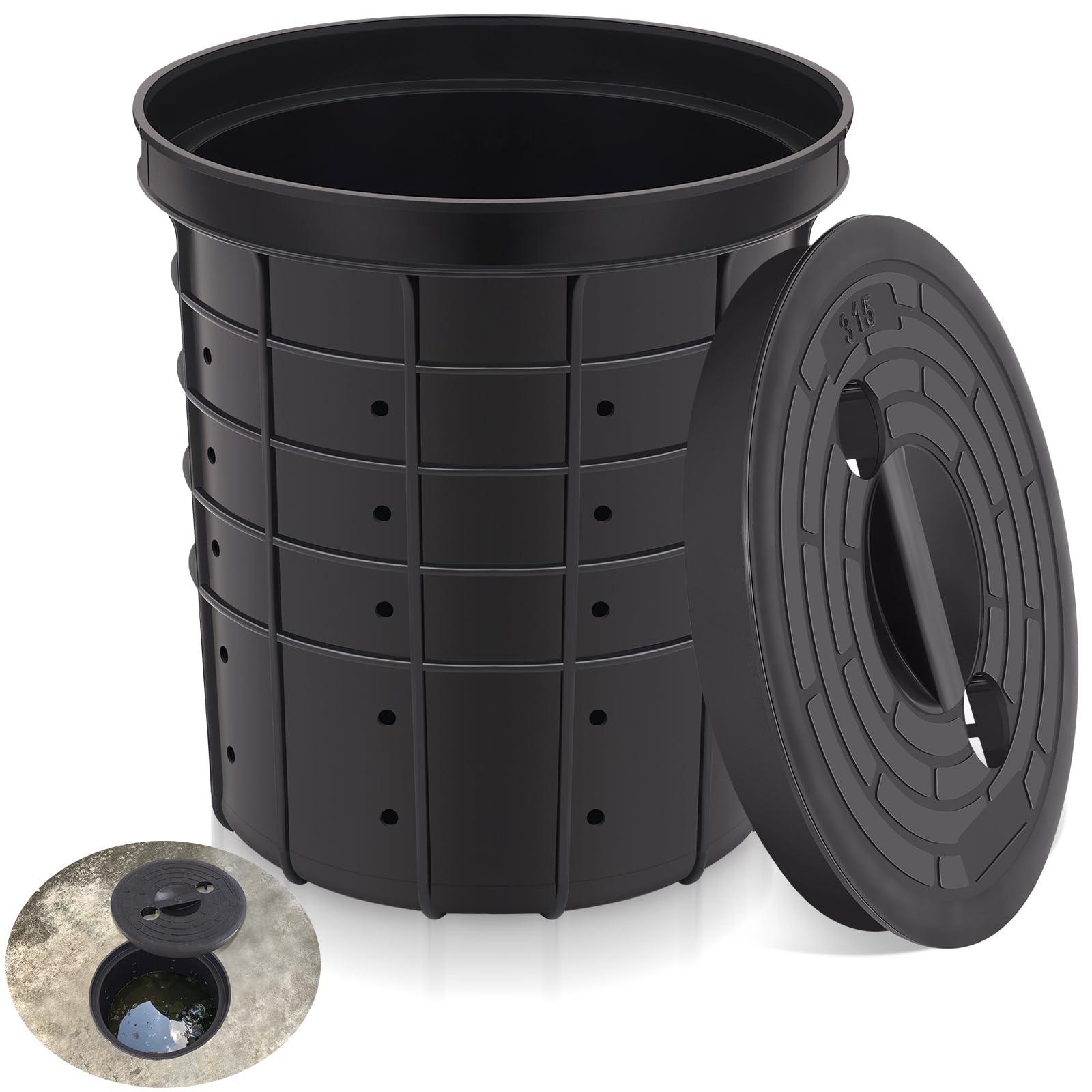
How To Choose The Best Basin for a Sump Pump
A basin’s job is simple: hold water long enough for the pump to eject it, and survive being buried in wet soil for decades. Getting that wrong means a flooded basement or a pump that short-cycles itself to death. Here are the three decisions that matter most before you dig.
Material: Why Steel Loses Underground
Corrosion is the silent killer in sump pits. Structural foam and polyethylene resist corrosion far better than steel, which rusts out in wet soil over years. The trade-off is that foam basins are lighter and easier to damage with a careless drop, so handle them like the precision part they are.
Capacity and Diameter: Match the Pump, Not the Hole
Capacity controls how often your pump cycles. A 20-gallon basin gives the pump room to breathe and is the minimum for most residential setups, while a 22-gallon unit gives extra buffer before the float switch trips. The critical number is the opening diameter — a tethered float switch needs space to swing freely, so an 18″ opening is the safe zone for those pumps while a 13″ opening suits compact utility setups.
Pre-Drilled vs. Drill-Your-Own
Some basins arrive with factory-drilled holes ready for drainage tile, while others are solid so you can cut your own pattern. Pre-drilled saves an afternoon of work and keeps the hole pattern even for consistent water inflow. The catch is that pre-drilled holes are not always where your specific drain line lands, so solid-wall basins offer more placement freedom at the cost of labor.
Quick Comparison
| Model | Best For | Capacity | Opening Diameter | Material | Amazon |
|---|---|---|---|---|---|
| Parts2O FPW73-19★ Best Overall | Tethered float pumps | 20-Gallon | 18″ | Structural foam | Amazon |
| Zoeller 31-0444Premium Pick | Dual-pump setups | 22-Gallon | 22″ | Polyethylene | Amazon |
| Memorywuu 13″ BasinBest Value | Compact utility spots | — | 15″ | Plastic | Amazon |
| Mindoub Medium Basin | Tight crawl spaces | — | 13″ | Plastic | Amazon |
| Crawl Space Door Systems | Small access doors | — | 12″ | Plastic | Amazon |
| JACKEL SF22A | Outdoor low spots | 22.5-Gallon | 18″ | HDPE foam | Amazon |
| JACKEL SF22A-DR | Commercial-grade installs | 22.5-Gallon | 18″ | HDPE foam | Amazon |
| Crawl Space DIY 20-Gal | Foundation drainage | 20-Gallon | — | Plastic | Amazon |
In‑Depth Reviews
1. Parts2O FPW73-19 18-Inch Sump Basin
Our pick — over 4.5★ from 100+ verified ratings; the strongest balance of quality and price.
The basin with the wide 18″ mouth that lets a tethered float switch swing free without jamming.
If your pump uses a tethered float switch (a floating ball that rises and falls with the water level), this basin’s 18″ opening gives that ball the room it needs to move without snagging the wall. The 20-gallon capacity gives the pump enough water to run a full cycle instead of short-cycling. Its structural foam construction (a rigid, moisture-proof plastic) shrugs off the water that eats steel — buyers who swapped from a corroded steel basin call it a lifetime fix, as one owner put it: “My last sump pump basin was steel and it has completely corroded… This one ought to last a lifetime.”
Owners consistently praise the basin’s durability and sturdiness in reviews. One install in a crawlspace involved cutting 4″ holes for drainage tile and drilling side holes below the footer, and the basin handled the backfill pressure without complaint. It even paired cleanly with a 1/3 hp Zoeller pump plus a backup unit, so there is room for a dual-pump future.
The trade-off is the holes — the photo shows pre-cut holes, but the basin arrives solid, so you will be cutting or drilling your own drainage pattern. That is not a defect, it is placement freedom, but it does add an afternoon of work. The basin measures in at 6 pounds compared to the 2-pound Parts2O below, so it feels reassuringly substantial when you carry it to the pit.
Why owners love it
- 18″ opening fits tethered float switches easily
- Structural foam resists corrosion for decades
- 20-gallon capacity smooths pump cycling
Plan around this
- No pre-cut holes — drilling required
- Trim lip may be needed for tight doorways
Reach for this if: you want the proven residential standard with room for a tethered float pump and don’t mind drilling your own drainage holes.
Look elsewhere if: you want a drop-in, pre-drilled install with zero prep work.
2. Zoeller 31-0444 Sump Basin, 22-Gallon
The 22-gallon heavyweight that swallows a dual-pump setup and holds its shape under soil pressure.
If you run a pump plus a battery backup — a common insurance policy for outage-prone areas — this basin’s 22-gallon capacity and 22″ rim give you the interior space to fit both units without them crowding each other. Buyers report installing a Wayne WSS30VN system with dual pumps and still having room to drill custom drainage slits. The polyethylene body (a smooth, corrosion-resistant plastic) is exactly what you want when the alternative is a cheap basin that flexes and collapses over time.
Owners consistently praise this basin’s sturdiness, noting it is far more sturdy than budget alternatives. The one consistent note is that the lid is sold separately — owners mention “The basin is sturdy and well built. My only complaint is the lid is sold separately.” Factor that into your parts list before you start the install. Also worth knowing: it ships without packaging, and the plastic is brittle in cold weather, so a hard drop in winter could crack it. Most units arrive perfect, but treat it gently on delivery day.
At 28″L x 21″W x 21″H, this is a large footprint — one buyer had to return it because it was too big for their space. Measure your pit before committing. If you have the room, the extra capacity and dual-pump compatibility make this a genuinely future-proof choice.
Strong points
- 22-gallon capacity fits dual pump setups
- smooth polyethylene resists corrosion
- Holds shape where cheap basins flex
Watch outs
- Lid sold separately
- Large footprint needs a big pit
- Ships without protective packaging
Pick this when: you plan a primary pump plus backup and need the interior room to fit both.
Think twice if: your pit is tight, or you want a single-shipment kit with the lid included.
3. Sump Pump Basin with Lid Holes, Black, 13 x 11.4 x 15 Inch
The ready-to-bury package with 40 pre-drilled holes and a two-hole cover in one box.
This is the pick for anyone who wants to skip the drilling entirely. With 40 drilled holes at 5/16″ each and a cover with two 1.7-inch openings for the discharge pipe and power cord, it arrives ready to lower into the pit. Customers note it as “Excellent product. Fit my application perfectly” — the kind of easy fit you want when the hole is already dug and the concrete is curing. The robu plastic body handles sewage pump and utility pump duty across crawl spaces, yards, patios, and driveways.
The included lid is the standout value here, because many basins at this size sell the cover separately. The cover’s two holes are sized for a standard discharge setup, so you avoid the common headache of cutting your own pipe opening. At 6 pounds it has a solid, heavy feel that inspires confidence when you set it in place.
The dimensions are 14.96″L x 12.99″W x 11.42″H, making it a compact unit for confined spots rather than a high-capacity pit. It is a utility-grade basin, not a 22-gallon monster, so match your expectations to its modest footprint.
Ready to go
- 40 factory-drilled drainage holes
- Lid with two pipe openings included
- Heavy-weight build at 6 pounds
Keep in mind
- Compact 11.42″ height limits capacity
- Best for utility pumps, not large pits
Choose this for: a fast, drill-free install with the lid sorted in one box.
Pass if: you need a high-capacity pit for a powerful primary pump.
4. 13 x 10.2 x 15” Medium Perforated Sump Pump Basin and Lid Combo
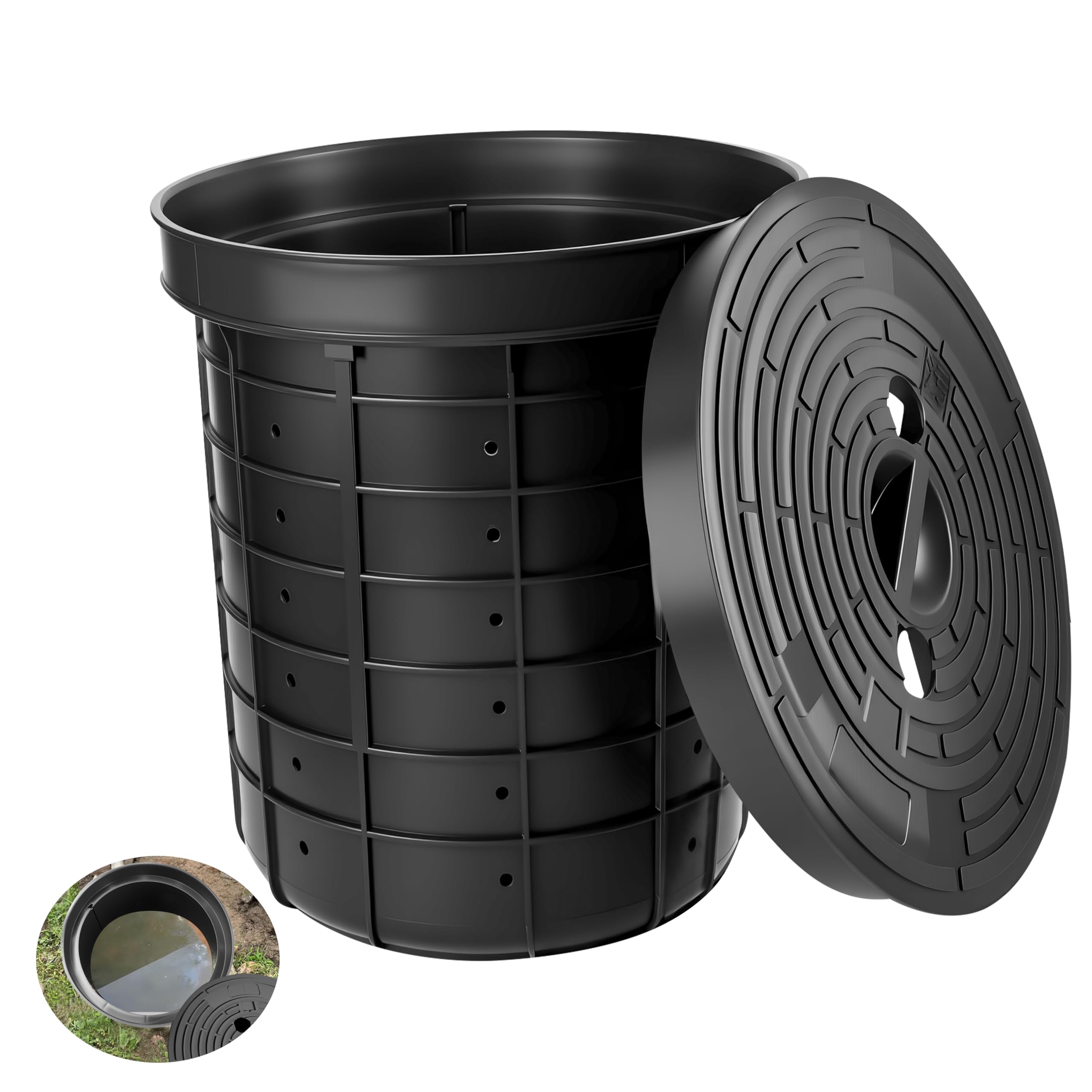
A 13-inch-wide basin with 360° water intake built for tight spots where big pits won’t fit.
The headline here is the 360° water intake: strategically placed perforations pull water from every side of the surrounding soil, relieving hydrostatic pressure that would otherwise push against your foundation. For a crawl space or a window well where space is tight, the 13″ x 10.2″ x 15″ footprint slips into spots a 22-inch basin never will. The high-density plastic with integrated structural ribs is built to resist lateral soil pressure and keep its shape during long-term underground use.
The included lid has pre-cut openings for the discharge pipe and power cord, plus a textured non-slip surface that keeps debris from falling into the basin. The whole combo arrives ready for immediate installation, so you are not hunting for a separate cover. One owner used it in a window well for flood prevention and found it larger than a 5-gallon bucket — plenty of volume for a utility or pool pump.
Weighing 2.77 kg (about 6 pounds), it is compact but solid. The one recurring note is that the factory holes could be larger — reviewers point out they can be drilled out if needed. For most setups the standard hole pattern works fine, but plan for a drill if your drainage tile has big openings.
What stands out
- 360° perforations for even intake
- Pre-cut lid with cord and pipe openings
- Reinforced ribs resist soil pressure
Small caveats
- Holes may need enlarging for large tile
- Medium size limits pump choice
Grab this if: you are working in a confined crawl space or window well and want even water intake all around.
skip it if: your installation needs the capacity of a full-size pit.
5. Two-Piece Sump Pump Bucket for Crawl Spaces

The patented two-piece design that separates into halves so it fits through a standard crawl space door.
This is the problem-solver for the tightest access: standard one-piece basins are too bulky to fit through most crawl space openings, but this two-piece bucket splits in half and reassembles on-site with pre-drilled flanges and bolts — no special tools, and a watertight seal when properly assembled. At 15″ tall x 12″ wide assembled, it is built specifically for restricted installations where nothing else will go.
The design thinking continues inside. An integrated raised floor improve your pump off the basin bottom for better water pickup and keeps sand and silt away from the pump intake — a real advantage in sandy or silty soil where sediment kills pumps early. The patent (US PATENT 10,443,224 B1) covers the complementing receptacle components, so this is not a repurposed hardware-store bucket. It pairs with standard crawl space pumps including the Zoeller M53.
Buyers praise the easy assembly and the lack of steel to rust, though a couple note the lid holes are tight — the power cord hole is snug for a plug, and the discharge pipe opening may need widening for a larger connector. Plan for minor hole adjustments. At 5 pounds it is light to carry, which makes sense for a unit designed to be hauled into tight spaces.
Why it works
- Two-piece split fits through small doors
- Raised floor keeps sediment out of the pump
- No steel components to corrode
Before you buy
- Lid holes may need enlarging
- 12″ width is smaller than standard basins
Get this for: a crawl space with a small access door where a one-piece basin physically will not fit.
Look past it if: you have open access and want a larger, simpler single-piece install.
6. JACKEL SF22A Sump Basin 22 Gallon Capacity 18 in. ID x 24 in. H
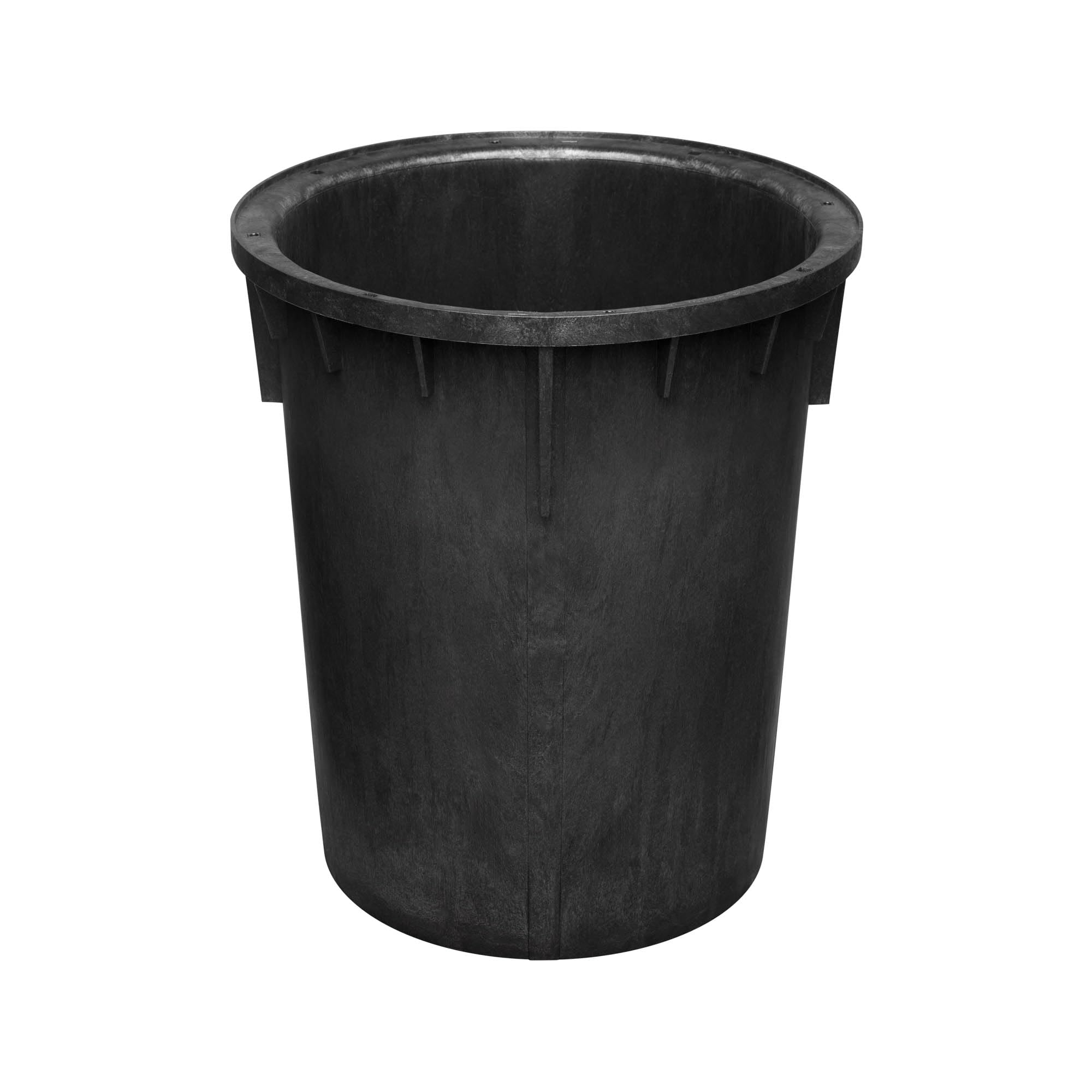
The deep 24-inch-tall basin that sits in low outdoor spots and shrugs off sand pressure.
This basin is the outdoor specialist. With an 18″ inner diameter and a 24″ height, it reaches deep into the ground — ideal for a low area outside a basement door where water pools. One owner dug a large hole surrounded by marble stone with 6 inches on all sides and below, drilled holes on sides and bottom, and let water flow straight in. The 22.5-gallon capacity gives serious buffer before the pump kicks on.
The injection polyethylene structural foam is thick, and the gas-and-radon-tight, odor-free construction matters if radon mitigation is part of your plan. Buyers in sandy Florida report this is one of the few basins that withstands the pressure of sand that collapses other products. The thick construction feels like a permanent fixture rather than a disposable bucket.
The catch is the lid: it is not included, and shoppers say needing a 20.5″ lid from a separate source. Also, this version has no pre-drilled drain holes, so be ready to drill your own pattern. If you want the same basin with factory-drilled holes, that is the next pick in this guide.
Built for outdoors
- 24″ height reaches deep low spots
- 22.5-gallon capacity for high water volume
- Gas and radon tight construction
Plan for it
- Lid sold separately (20.5″ size)
- No pre-drilled holes
Reach for this if: you are draining a low outdoor area and want a deep, sand-resistant pit.
Choose the drilled version if: you want to skip the hole-cutting work.
7. JACKEL SF22A-DR Drilled Sump Basin 18 in. ID x 24 in. H

The commercial-grade, factory-drilled basin that one piece of molded foam makes exceptionally strong.
This is the basin buyers call “a great commercial grade sump pit” — and the mold is the reason. It is molded as one single piece of HDPE structural foam, which eliminates the weak seams that let cheaper basins flex and crack. The factory-drilled holes mean it is ready for quick installation, and the non-corrosive nylon-encapsulated threaded inserts give you a solid anchor point for screwing in the cover. It is made in the USA, which matters to owners who want domestic manufacturing.
Owners praise the basin’s durability, noting the cover sits flush with concrete and supports substantial weight. The basin is thick and heavy-duty enough that owners who were unhappy with big-box-store options made this their pick. It is a rather large basin, so be prepared for the digging — this is not a small retrofit unit.
The lid is separate for this model too, and the size is 20.5″ if you go direct. Buyers report the cover and flange fit perfectly as a set, doing the job right the first time. This is the pick for a one-and-done commercial-grade install.
What makes it great
- Single-piece molded foam for strength
- Factory-drilled holes, ready to install
- Nylon-encapsulated inserts for cover screws
Consider this
- Large size requires significant digging
- Lid not included
Pick this when: you want a commercial-grade, factory-drilled basin that will not need redoing.
Skip if: your pit is small or you are on a budget for a temporary fix.
8. Crawl Space DIY Sump Pump Basin with Lid, 20 Gallon Perforated Sump Basin Bucket

The 22-inch-tall 20-gallon basin with a snap-on lid that muffles pump noise while keeping debris out.
This is the dedicated crawl-space and foundation drainage specialist. The 20-gallon capacity is paired with pre-drilled holes that let groundwater enter evenly, reducing hydrostatic pressure and standing water around foundations. The 22-inch-tall profile adds capacity while staying compatible with standard crawl space pits. It is built for encapsulation, foundation waterproofing, and perimeter drain systems — DIY or contractor ready.
The included snap-on lid is a real feature, not an afterthought: owners mention it helps muffle sump pump noise, a nice bonus in a crawl space directly under living areas. In one install, a submersible pump drained a crawl space with 6″ of standing water with solid results. Owners praise the reinforced plastic construction for handling long-term underground use.
The honest caveat comes from a yard install where the basin floated sideways despite concrete weights, causing the pump to shut off — so if you are burying this in a high-groundwater yard rather than a contained crawl space pit, anchor it properly. One owner also lost top screws during a flood access, so consider keeping spares. These are fit notes, not defects, for the right crawl-space application.
Solid features
- Snap-on lid reduces pump noise
- Pre-drilled holes for even intake
- 20-gallon capacity suits crawl spaces
Fit notes
- Can float in loose yard soil without anchoring
- Screws on lid may need backups
Choose this for: a contained crawl space or foundation pit where the included noise-dampening lid is a bonus.
Look elsewhere if: you are burying it in an open yard without a solid anchor setup.
Understanding the Specs
Capacity: 20 vs 22 Gallons
Capacity dictates how often your pump cycles. A 20-gallon basin fills and triggers the float switch less frequently than a 5-gallon bucket, which wears the pump out slower. A 22-gallon unit adds even more buffer, which matters if you have a high water table or a powerful pump that can empty a small pit in seconds. Match the capacity to your pump’s flow rate and your local water conditions.
Opening Diameter and Float Switches
The opening diameter determines which pumps fit. A tethered float switch — a ball on a wire that rises with the water — needs room to swing freely, so an 18″ opening is the safe minimum. A 13″ or smaller opening suits compact vertical-float pumps that rise straight up. Measure your pump’s float swing before you pick a basin, or you risk a switch that jams against the wall.
Material: Structural Foam vs Plastic
Structural foam and polyethylene resist corrosion far better than steel, which rusts out in wet soil over years. HDPE structural foam is injection-molded into a single piece, making it exceptionally strong and rigid underground. Thinner plastic basins are lighter and cheaper but may flex under soil pressure. Lighter weight is easier to carry but can be brittle in cold weather, so handle carefully on delivery day.
Pre-Drilled Holes vs Solid Walls
Pre-drilled holes let groundwater enter the basin evenly and save you an afternoon of drilling. Solid-wall basins give you full control over hole placement to match your drainage tile exactly. The trade-off is labor: cutting your own holes takes time and a steady hand. Decide based on whether your drain lines are already in known positions, or if you want flexibility to adapt on-site.
FAQ
Will a sump pump basin fit through a standard crawl space door?
What size basin do I need for a pump with a tethered float switch?
Is a 20-gallon basin big enough for a residential sump pump?
Why choose structural foam over steel for a sump basin?
Do all sump basins come with a lid?
Should I buy a basin with pre-drilled holes or drill my own?
Can I use a sump pump basin outside for yard drainage?
What is the difference between the JACKEL SF22A and SF22A-DR?
Final Thoughts: The Verdict
For most people, the basin for a sump pump to buy is the Parts2O FPW73-19 — its 18″ opening and 20-gallon capacity cover the widest range of residential pumps, and the corrosion-proof foam is a genuine lifetime fix. If you are running a pump plus a battery backup, the Zoeller 31-0444 gives you the 22-gallon room to fit both. And for a commercial-grade, factory-drilled install you never touch again, the JACKEL SF22A-DR is the strongest single-piece pit on this list — the crowd favorite with the durability owners rave about across 100+ ratings.
How We Picked
We do not accept paid placement. Every pick is matched to a real buyer and a real use-case; we do not hands-on test units.
Sources & Methodology
Specifications: manufacturer listings and product documentation. Review insights: verified customer reviews, as of September 2026. Pricing: not shown on this page (it changes often); check the current price via the retailer link.
As an Amazon Associate, KitchPrep earns from qualifying purchases. This does not affect which products we feature.
Related Guides
